Feeling uncertain about what to expect in your upcoming interview? We’ve got you covered! This blog highlights the most important Front Loader Operation interview questions and provides actionable advice to help you stand out as the ideal candidate. Let’s pave the way for your success.
Questions Asked in Front Loader Operation Interview
Q 1. Describe your experience operating various types of front loaders.
My experience with front loaders spans over a decade, encompassing a wide range of models and applications. I’ve operated wheel loaders from various manufacturers, including Caterpillar, John Deere, and Komatsu, with capacities ranging from small, compact machines used in landscaping to large, heavy-duty models employed in construction and demolition projects. I’m also proficient with skid steer loaders, which offer greater maneuverability in confined spaces. Each machine presents unique operational characteristics, such as differing hydraulic response times, steering mechanisms, and lifting capacities, requiring adjustments to operating techniques for optimal efficiency and safety.
For instance, operating a large Caterpillar 980 wheel loader for moving large volumes of earth in a quarry requires a different approach compared to operating a smaller Bobcat skid steer for landscaping projects. The former necessitates precise control and awareness of the machine’s considerable reach and weight, while the latter focuses on dexterity and precision in a compact space. I’ve adapted my skills seamlessly across these diverse types, demonstrating my versatility and expertise.
Q 2. Explain the pre-operation checks you perform on a front loader.
Pre-operation checks are paramount for ensuring safe and efficient operation. My routine begins with a visual inspection, checking for any signs of damage or leaks in hydraulic lines, tires, and the structural components. I meticulously check fluid levels – engine oil, hydraulic fluid, coolant, and transmission fluid – ensuring they are within the manufacturer’s specified ranges. I then verify the functionality of all controls – steering, lift arms, bucket controls, and lights – ensuring smooth and responsive operation. I pay close attention to the brakes and horn, making sure they function correctly. Finally, I conduct a thorough safety check of the cab and operator’s station, ensuring that all safety features, such as seatbelts and safety harnesses are in good working order.
Think of it like a pre-flight checklist for an airplane; every detail matters. Skipping even a minor step could compromise safety and efficiency.
Q 3. How do you ensure the stability of the front loader during operation?
Maintaining stability is critical, especially with heavy loads. I consistently assess the terrain, avoiding uneven surfaces or slopes that could lead to tipping. I distribute the load evenly within the bucket, avoiding overloading or off-center weight distribution. Before lifting, I carefully observe the load’s weight and center of gravity, making sure it’s within the machine’s operational parameters. During movement, I maintain slow, controlled speeds, especially when maneuvering around turns or obstacles. I always avoid abrupt movements or jerky operation that could destabilize the machine.
Imagine trying to carry a heavy box – you’d hold it close to your body and walk steadily. The same principle applies; it’s all about controlled movements and balanced weight distribution.
Furthermore, understanding the machine’s weight limits and load charts is crucial. Overloading can dramatically reduce stability and lead to accidents.
Q 4. Describe your experience working with different attachments for front loaders.
My experience extends to working with a variety of front loader attachments, significantly expanding the machines’ versatility. I’m proficient in using buckets of various sizes and configurations, including light material buckets, heavy-duty buckets, and specialized buckets for specific tasks like demolition or trenching. I’m also experienced with forks for handling palletized materials, grapple attachments for handling logs or debris, and snow plows for winter maintenance. Each attachment requires understanding its specific operational characteristics and safety considerations.
For example, a grapple attachment requires a different approach to lifting and maneuvering compared to a bucket. It’s crucial to know how to precisely grip and release materials safely. My ability to adapt to these various attachments showcases my comprehensive skill set.
Q 5. What safety procedures do you follow while operating a front loader?
Safety is my top priority. I always wear appropriate personal protective equipment (PPE), including a hard hat, safety glasses, gloves, and high-visibility clothing. Before starting any operation, I conduct a thorough site assessment, identifying potential hazards and planning a safe route. I maintain a safe distance from other personnel and equipment, using hand signals or two-way radios for effective communication. I avoid working under suspended loads or performing risky maneuvers. Regular maintenance checks and adherence to the manufacturer’s safety guidelines are integral to my operational practices.
Think of it as a layered approach: personal safety, site awareness, communication, and equipment maintenance all contribute to a safe work environment.
Q 6. How do you handle unexpected mechanical issues during operation?
When faced with unexpected mechanical issues, my first response is to immediately stop the machine and assess the situation. If the problem is minor, and I’m trained to address it, I’ll follow established troubleshooting procedures. However, if the issue is beyond my expertise or poses a safety risk, I’ll immediately report the problem to my supervisor and follow the company’s established reporting procedures. I’ll secure the area and ensure no one approaches the malfunctioning equipment until it is deemed safe.
Safety is always paramount. I wouldn’t attempt a repair that could potentially worsen the situation or compromise safety. It’s about knowing your limits and seeking expert assistance when needed.
Q 7. Explain your understanding of load capacity and weight distribution.
Understanding load capacity and weight distribution is crucial for safe and efficient operation. Every front loader has a designated maximum load capacity, which I never exceed. This information is typically found in the operator’s manual and on load charts displayed on the machine. I always refer to these resources, especially when handling heavier materials. Weight distribution is equally critical; an unbalanced load can severely affect stability. I ensure the load is evenly distributed within the bucket, to prevent tipping or damage.
It’s similar to loading a cargo ship; understanding weight limits and even distribution is essential to prevent capsizing. I apply this same understanding of physics and balance to my front loader operation.
Q 8. How do you navigate tight spaces and challenging terrain with a front loader?
Navigating tight spaces and challenging terrain with a front loader requires a combination of skill, careful planning, and awareness of the machine’s limitations. It’s not just about brute force; it’s about finesse.
Firstly, I always assess the terrain before I even start the engine. This involves checking for obstacles like ditches, uneven ground, or underground utilities. I also consider the load I’ll be carrying and its weight distribution – a heavier load requires more caution and slower movements.
- Slow and Steady Wins the Race: In tight spaces, speed is the enemy. I use slow, controlled movements, making precise adjustments to the steering and bucket. Sudden movements can easily lead to accidents or damage to the equipment or surroundings.
- Strategic Positioning: Before entering a confined area, I make sure I have a clear exit route planned. I also try to position the loader to maximize my maneuverability, using my mirrors and peripheral vision effectively.
- Bucket Control: The bucket isn’t just for scooping; it’s a vital part of maneuvering. By carefully controlling the bucket’s angle and position, I can use it to help navigate obstacles or gently nudge myself out of tight spots.
- Terrain Awareness: On uneven ground, I adjust my speed and approach angle accordingly. I avoid sharp turns or sudden braking that could cause the loader to tip or lose traction. I also utilize the machine’s differential lock, if available, for increased stability on difficult terrain.
For example, during a recent project, we had to move materials through a narrow pathway surrounded by newly planted trees. By carefully maneuvering the front loader and using the bucket to gently clear branches that were close to the path, I was able to complete the task without damaging the trees or the machine.
Q 9. Describe your experience with different types of loading materials.
My experience encompasses a wide range of loading materials, each requiring a different approach to ensure efficiency and safety.
- Bulk Materials: I’m proficient in handling materials like gravel, sand, topsoil, and aggregates. These require a smooth, controlled approach to avoid spillage and maintain a consistent load.
- Palletted Goods: I have experience loading and unloading pallets, which requires precision to avoid damage to the goods and the machine’s forks or bucket. This involves understanding weight distribution to ensure stability.
- Loose Materials: Materials like wood chips, mulch, or scrap materials require a different technique to prevent spillage and ensure the material is loaded efficiently and evenly. This often involves multiple passes and careful adjustment of the bucket.
- Hazardous Materials: I have training in handling hazardous materials, following strict safety protocols and adhering to all relevant regulations for securing and transporting such substances. This includes understanding material safety data sheets (MSDS).
I always consider the material’s properties – density, size, and potential hazards – before beginning the loading process. Each material demands a tailored technique to optimize efficiency and minimize the risk of accidents or damage.
Q 10. How do you maintain optimal fuel efficiency while operating a front loader?
Maintaining optimal fuel efficiency in a front loader is crucial for cost-effectiveness and environmental responsibility. It’s about driving smart, not just hard.
- Smooth Operation: Avoiding sudden acceleration and braking is key. Gentle movements conserve fuel and reduce wear and tear on the machine. Think of it like driving a car; aggressive driving burns through fuel quickly.
- Appropriate Gear Selection: Choosing the correct gear for the task is crucial. Using a higher gear when possible reduces engine RPM and fuel consumption. A low gear is necessary only when dealing with heavy loads or significant inclines.
- Load Optimization: Carrying only the appropriate load for the task optimizes fuel consumption. Overloading puts unnecessary strain on the engine and reduces efficiency. Aim for a consistent, balanced load.
- Regular Maintenance: Properly maintained equipment, including air filters and engine components, operates more efficiently and consumes less fuel. This is an ongoing process, not a one-time fix.
- Engine Idle Time Reduction: Minimizing idle time saves significant fuel. Turn off the engine when taking breaks or during extended periods of inactivity.
For example, on a large grading project, I deliberately planned my routes to minimize unnecessary travel. By optimizing the number of trips and using the appropriate gear, I could significantly reduce fuel consumption, showcasing the benefits of efficient operation.
Q 11. What is your experience with preventative maintenance on front loaders?
Preventative maintenance is the cornerstone of reliable and safe front loader operation. It’s about catching small issues before they become major problems.
- Daily Inspections: Before each shift, I perform a thorough inspection of the machine, checking fluid levels (engine oil, hydraulic oil, coolant), tire pressure, belts, hoses, and any signs of damage or leaks. A quick visual check can often prevent catastrophic failure.
- Scheduled Maintenance: I adhere to the manufacturer’s recommended maintenance schedule, including oil changes, filter replacements, and lubrication of moving parts. These scheduled checks are vital for keeping the equipment running optimally.
- Component Checks: I regularly inspect components like the bucket, hydraulic system, and steering mechanism for signs of wear and tear. Early detection of problems allows for timely repairs, preventing major breakdowns.
- Documentation: I maintain accurate records of all maintenance activities, including dates, tasks performed, and any parts replaced. This documentation is essential for tracking maintenance history and troubleshooting.
A proactive approach is key here. I’ve avoided costly repairs and downtime by detecting and addressing small problems early on. For example, a small hydraulic leak I noticed during a routine inspection was repaired before it caused a significant issue, saving considerable time and money.
Q 12. Explain your understanding of relevant safety regulations and compliance.
Safety is paramount in front loader operation. I have a thorough understanding of and strict adherence to all relevant safety regulations and compliance standards.
- Personal Protective Equipment (PPE): I always wear appropriate PPE, including safety glasses, hard hats, gloves, and high-visibility clothing. This is non-negotiable.
- Pre-Operation Checks: Before starting any work, I complete a thorough pre-operational inspection to identify and address any potential hazards. This includes checking the machine’s overall condition and the work area.
- Safe Operating Procedures: I strictly follow all safe operating procedures, including proper lifting techniques, load capacity limits, and speed restrictions, especially in confined spaces.
- Communication: Effective communication with other workers on site is vital to prevent accidents. This is elaborated upon in the following answer.
- Emergency Procedures: I’m fully trained in emergency procedures, including how to respond to spills, equipment malfunctions, and accidents. I also know how to use safety equipment such as fire extinguishers.
- Compliance with Regulations: I stay updated on all relevant safety regulations and legislation, ensuring all my actions comply with the latest standards. This may involve attending safety training courses or regular updates on workplace safety standards.
My commitment to safety isn’t just about following rules; it’s about ensuring a safe working environment for myself and my colleagues. Safety is a personal responsibility that I take very seriously.
Q 13. Describe a time you had to troubleshoot a problem with a front loader.
During a recent project, the front loader’s hydraulic system developed a leak, resulting in a significant loss of hydraulic pressure. This immediately impacted the machine’s ability to lift heavy loads.
My troubleshooting process followed these steps:
- Safety First: I immediately secured the area, preventing anyone from approaching the machine and ensuring safety until the problem was resolved. This includes informing my supervisor of the issue.
- Visual Inspection: I began with a thorough visual inspection of the hydraulic lines and fittings, looking for any signs of damage or leaks. I carefully inspected the hydraulic fluid reservoir, noting if there was a significant decrease in fluid levels.
- Identify the Leak: I quickly identified a leak in a hydraulic hose near the bucket cylinder. It was a small crack, easily overlooked.
- Temporary Fix (if possible): Due to the critical nature of the job, I, under supervision, applied a temporary hose clamp to help reduce the leak until a permanent solution could be implemented. I ensured everyone was aware of the temporary fix and the necessary precautions.
- Report and Repair: I reported the issue to the maintenance team, providing details of the problem and the temporary fix I applied. The hose was promptly replaced by qualified personnel, restoring full hydraulic function.
This experience highlighted the importance of regular maintenance checks, which often reveal potential problems before they lead to major malfunctions. Quick thinking and attention to detail can prevent significant issues and costly downtime.
Q 14. How do you communicate effectively with other workers on the site?
Effective communication is the cornerstone of any successful construction project. On site, clear and concise communication prevents accidents and ensures efficient workflow.
- Hand Signals: I’m proficient in using standardized hand signals to communicate with spotters or other operators when visibility is limited or verbal communication is difficult.
- Two-Way Radios: I utilize two-way radios to communicate with other workers across the site, coordinating activities and relaying information quickly and efficiently.
- Pre-Task Briefings: I participate in pre-task briefings to understand the day’s plan, potential hazards, and the roles of each team member. This helps eliminate confusion and miscommunication.
- Clear and Concise Language: I use clear and concise language when communicating, avoiding jargon and ensuring everyone understands the message. If something is unclear, I ask clarifying questions.
- Active Listening: Active listening is crucial. This ensures I understand the other party’s instructions and concerns, preventing misunderstandings that could lead to safety risks.
For example, on one job site, I used hand signals to communicate with a spotter directing the placement of large concrete blocks. This coordinated approach prevented damage to the blocks and ensured safety for everyone involved. Effective communication is a team effort and is essential to completing a job safely and efficiently.
Q 15. How do you ensure the safety of pedestrians and other equipment operators?
Safety is paramount in front loader operation. My approach is multifaceted, prioritizing proactive measures over reactive ones. Before starting any work, I conduct a thorough site inspection, identifying potential hazards like uneven terrain, overhead obstructions, and the presence of other personnel or equipment. I establish clear communication protocols with others on the site, using hand signals and radios to ensure everyone is aware of my movements. I maintain a safe operating speed, adjusting it based on visibility, terrain, and the presence of others. I also ensure all safety features on the machine are in proper working order, including lights, horns, and seatbelts. For example, on a recent project involving road construction, I designated a flagger to direct traffic and pedestrian movement while I was operating near a public road, thereby creating a secure working environment for everyone involved.
Furthermore, I actively avoid blind spots by carefully maneuvering the loader and using mirrors effectively. I always adhere to the company’s safety regulations and follow established procedures. Regular safety training keeps me updated on best practices and ensures I’m always working at the highest safety standard.
Career Expert Tips:
- Ace those interviews! Prepare effectively by reviewing the Top 50 Most Common Interview Questions on ResumeGemini.
- Navigate your job search with confidence! Explore a wide range of Career Tips on ResumeGemini. Learn about common challenges and recommendations to overcome them.
- Craft the perfect resume! Master the Art of Resume Writing with ResumeGemini’s guide. Showcase your unique qualifications and achievements effectively.
- Don’t miss out on holiday savings! Build your dream resume with ResumeGemini’s ATS optimized templates.
Q 16. Describe your experience working with different types of terrain.
My experience encompasses a wide range of terrain types. I’ve operated front loaders on everything from smooth, compacted surfaces like asphalt and concrete to rough, uneven ground including rocky slopes, muddy fields, and sandy areas. Each type of terrain demands a different operational approach. For instance, on steep inclines, I adjust my speed and carefully control the machine’s balance to prevent tipping. In muddy conditions, I might choose a wider bucket or use a lower gear to maintain traction. On rocky terrain, I operate more cautiously and avoid abrupt movements that could damage the machine or the ground.
Adaptability is key. I constantly assess the ground conditions and adjust my operating techniques accordingly. I’m proficient in using different attachments to maximize efficiency and safety in varied environments. For instance, I’ve used special tires designed for improved traction on loose surfaces to prevent getting stuck.
Q 17. What are the different types of front loader buckets and their applications?
Front loader buckets come in various designs, each suited for specific applications. Some of the most common types include:
- General Purpose Buckets: These are versatile and used for a wide variety of tasks, including material handling, loading, and excavation.
- Light Material Buckets: Designed with a larger capacity and often lighter construction, they’re ideal for handling lighter materials such as sand, gravel, and topsoil.
- Heavy Duty Buckets: Built for strength and durability, these are used for moving heavier materials like rocks, demolition debris, and compacted soil. They’re often equipped with reinforced teeth.
- Rock Buckets: These have a reinforced design with aggressive teeth for breaking up and moving large rocks and boulders.
- Grading Buckets: These have a flat bottom and a smooth, curved cutting edge, optimized for precise grading and leveling work.
- Clamshell Buckets: These have two hinged halves that open and close, making them particularly effective for picking up and placing loose materials.
The choice of bucket depends heavily on the specific material being handled and the nature of the task.
Q 18. How do you select the appropriate bucket for a specific task?
Selecting the right bucket involves carefully considering the task at hand. The primary factors I consider are:
- Material Type: The density and type of material will dictate the bucket’s strength and capacity requirements. A light-material bucket is unsuitable for moving rocks, while a rock bucket would be overkill for handling topsoil.
- Task Requirements: Am I excavating, loading trucks, grading, or performing another specific task? Different buckets are optimized for different jobs. A grading bucket provides precise control, while a general purpose bucket is useful in many situations.
- Material Volume: The required bucket capacity needs to match the volume of material needing to be moved. Overloading a bucket reduces efficiency and could cause damage to the machine.
- Terrain Conditions: Rough terrain might require a more robust bucket design that can withstand impacts.
For example, when loading gravel into trucks, I would select a general purpose bucket of appropriate size. But if I need to level a construction site, I would opt for a grading bucket.
Q 19. Explain your understanding of hydraulic systems in front loaders.
Hydraulic systems are the backbone of front loaders, responsible for powering the bucket’s movements and steering. The system typically consists of a hydraulic pump, control valves, hydraulic cylinders, and hoses. The pump generates pressure, which the control valves direct to the appropriate hydraulic cylinders. These cylinders, in turn, convert hydraulic pressure into linear motion, operating the arms and bucket. A well-maintained hydraulic system is essential for smooth operation and optimal performance. Understanding the system involves knowing how to identify leaks, check fluid levels, and understand the basics of pressure and flow.
I’m familiar with troubleshooting common hydraulic problems, such as leaks, slow response times, and loss of pressure. For example, if I notice a slow response from the bucket, I might suspect a problem with the hydraulic lines, the pump, or a malfunctioning valve. Knowing how to inspect and diagnose issues prevents delays and ensures the machine’s safe operation.
Q 20. Describe your experience working in different weather conditions.
Operating a front loader in different weather conditions requires adaptability and careful planning. In cold weather, I ensure that the machine’s fluids are properly winterized to prevent freezing. I also pay close attention to ice and snow, adjusting my driving style to prevent slips and slides. In hot weather, I stay hydrated and take regular breaks to avoid heat exhaustion. I also monitor engine temperatures more closely to ensure efficient cooling.
Rain and mud present significant challenges. Reduced visibility necessitates slower operating speeds and increased caution. Mud can significantly reduce traction; I might select a lower gear to maintain control and prevent wheel slippage. My experience includes working through various weather events and maintaining safe operations across a wide range of conditions.
Q 21. How do you maintain accurate records of your work and operating hours?
Accurate record-keeping is vital for productivity and accountability. I use a combination of digital and physical methods to track my work. Daily log sheets record my operating hours, the type of work performed, materials moved, and any issues encountered. This information is then transferred to a computerized system, often integrated with the machine itself. This system may also log operational data like fuel consumption and engine hours.
Maintaining accurate records allows for efficient project management, cost tracking, and equipment maintenance scheduling. For example, monitoring operating hours allows for proactive scheduling of routine maintenance, preventing unexpected breakdowns and downtime. The detailed logs also serve as a crucial source of information for analysis and improvement of operational efficiency.
Q 22. Explain your understanding of the limitations of front loader operations.
Front loader operations, while incredibly versatile, have inherent limitations. These primarily stem from the machine’s physical capabilities and the operating environment.
- Maneuverability: Front loaders, especially larger ones, have limited turning radius and can struggle in tight spaces. This necessitates careful planning and awareness of surroundings, especially on construction sites or in confined yards.
- Ground Conditions: Soft or uneven ground can significantly impact stability and operational efficiency. For example, working on a muddy site can lead to wheel spin and reduced traction, requiring slower speeds and more careful maneuvering. Conversely, rocky terrain can cause damage to the machine’s undercarriage.
- Payload Capacity: Each front loader has a maximum load capacity. Exceeding this limit is dangerous and can lead to structural damage or tipping. Accurate weight estimation and responsible loading practices are crucial.
- Visibility: The loader’s structure can obstruct the operator’s view, particularly when handling large loads. This requires extra caution and reliance on mirrors and backup cameras, especially during loading and unloading procedures.
- Reach and Stability: Reaching too far to the sides or extending the bucket too high can lead to instability and potential tipping, especially on uneven ground or slopes. Operators need a good understanding of their machine’s limits.
Understanding these limitations is paramount for safe and efficient operation. It’s a matter of knowing the machine’s capabilities and working within them to avoid accidents.
Q 23. How do you adhere to company safety policies and procedures?
Safety is my top priority. I meticulously adhere to all company safety policies and procedures. This includes regular pre-operational checks of the machine, ensuring all safety devices are functioning correctly, such as seatbelts, emergency stops, and horn.
I always wear the appropriate Personal Protective Equipment (PPE), including hard hats, safety glasses, high-visibility clothing, and steel-toe boots. Before starting any task, I conduct a thorough site assessment to identify potential hazards, like underground utilities, uneven terrain, or obstacles.
I strictly follow speed limits and maintain a safe distance from other workers and equipment. I communicate clearly with fellow workers using hand signals or two-way radios to coordinate activities and avoid accidents. Furthermore, I immediately report any safety concerns or incidents to my supervisor, ensuring prompt corrective action. I believe proactive safety measures are vital for preventing incidents and ensuring everyone returns home safely.
Q 24. Describe your experience working with GPS or other guidance systems.
I have extensive experience using GPS guidance systems in front loader operations. These systems enhance precision and efficiency, particularly in tasks requiring accurate placement of materials.
For example, in landscaping or earthmoving projects, GPS allows for precise grading and contouring of land, minimizing the need for rework. The system often provides real-time feedback, guiding the operator to achieve the desired level or slope. In stockpile management, GPS can assist in precise material placement, optimizing space utilization and reducing material spillage.
Beyond GPS, I’m also familiar with other guidance systems, such as laser-guided systems used for precise grading and leveling. These systems offer different levels of accuracy and precision, depending on the specific application and project requirements. The ability to utilize various guidance systems significantly improves my effectiveness and accuracy in executing complex tasks.
Q 25. How do you respond to emergency situations while operating a front loader?
Responding effectively to emergencies is crucial in front loader operation. My first priority is always safety. In the event of a malfunction, I would immediately stop the machine, activate the emergency brakes, and turn off the engine. I would then assess the situation to determine the extent of the problem and whether there is any immediate danger.
If it’s a minor issue, I might attempt a simple fix, but if it’s a more serious problem (like hydraulic failure or a fire), I would immediately contact my supervisor and emergency services, providing them with the exact location and details of the situation. I would ensure the immediate area is secured to prevent access by others. I would also follow any company-specific emergency procedures, which might include evacuation protocols or the use of fire extinguishers.
For example, if a fire breaks out, I would use a fire extinguisher to try to contain the fire, while simultaneously contacting emergency services. If someone is injured, I’d prioritize their safety by administering first aid (if trained) and contacting medical services.
Q 26. What is your experience with loading and unloading trucks or trailers?
I have considerable experience loading and unloading trucks and trailers with various materials, from aggregates and dirt to construction debris and recycled materials. This involves carefully maneuvering the front loader to position the bucket accurately, ensuring safe and efficient transfer of materials without damaging the truck or trailer.
My experience includes working with different types of trailers, including dump trucks, flatbed trailers, and lowboy trailers. I’m aware of the weight limits and stability considerations of each type, and I adjust my loading technique accordingly to prevent overloading or tipping. I always communicate with the truck driver to coordinate loading and ensure they are aware of the loader’s movements.
Efficient loading and unloading involve strategically positioning the truck or trailer, optimizing the angle of the bucket for smooth transfer, and minimizing spillage. Careful planning, communication, and an understanding of the weight limits are key to safe and efficient material handling.
Q 27. Describe your experience working with different types of control systems.
I’m proficient in operating front loaders with various control systems, including mechanical, hydraulic, and electro-hydraulic systems. Mechanical systems, while simpler, require more physical effort and precision. Hydraulic systems, on the other hand, provide smoother and more precise control, enhancing productivity.
Electro-hydraulic systems offer even greater control and precision, often incorporating advanced features like joystick controls and automatic features. I am adept at adapting to different systems and understanding their specific nuances. Understanding the control systems allows for efficient operation and prevents damage to the machine and materials.
For example, familiarity with the responsiveness and sensitivity of different hydraulic systems is crucial for smooth and accurate bucket movements. Knowing how to adjust the controls for different tasks, such as fine grading versus heavy lifting, enhances efficiency and safety. My experience covers a wide range of systems, allowing me to quickly adapt and operate effectively in diverse situations.
Q 28. How do you plan your work to ensure maximum efficiency and safety?
Planning is essential for efficient and safe front loader operation. Before starting any task, I conduct a thorough site assessment, identifying potential hazards and optimizing the workflow. This includes considering factors such as ground conditions, material location, access routes, and the proximity of other equipment and personnel.
I then develop a work plan outlining the sequence of operations, including the loading and unloading points, material handling procedures, and any necessary safety precautions. I estimate the time required for each task and adjust the plan accordingly. Efficient planning minimizes downtime and improves productivity.
For example, before loading a truck, I will consider the best approach to avoid unnecessary maneuvering, reducing fuel consumption and wear and tear on the machine. If working on a slope, I will plan the loading sequence to minimize the risk of tipping. Careful pre-planning significantly contributes to maximizing efficiency and guaranteeing a safe work environment.
Key Topics to Learn for Your Front Loader Operator Interview
- Machine Operation & Controls: Understanding the various controls, levers, and pedals; safe and efficient operation techniques; pre-operational checks and safety procedures.
- Load Handling & Stability: Proper loading techniques to maximize efficiency and minimize risk of spills or damage; understanding load weight and center of gravity; safe maneuvering of heavy loads.
- Maintenance & Troubleshooting: Basic preventative maintenance procedures; recognizing common mechanical issues; understanding the importance of reporting malfunctions promptly.
- Safety Regulations & Procedures: Adherence to all workplace safety regulations; understanding emergency protocols; safe operation around other equipment and personnel.
- Site Awareness & Navigation: Efficient movement within a job site; understanding site limitations and potential hazards; safe operation in various terrain conditions.
- Communication & Teamwork: Effective communication with supervisors and other workers; teamwork in a busy work environment; understanding hand signals and communication protocols.
- Environmental Considerations: Understanding environmental regulations and best practices; minimizing environmental impact of operations.
Next Steps: Unlock Your Career Potential
Mastering Front Loader Operation opens doors to a rewarding career with excellent earning potential and opportunities for advancement. A strong resume is crucial for showcasing your skills and experience to potential employers. Creating an ATS-friendly resume, optimized for Applicant Tracking Systems, significantly increases your chances of landing an interview.
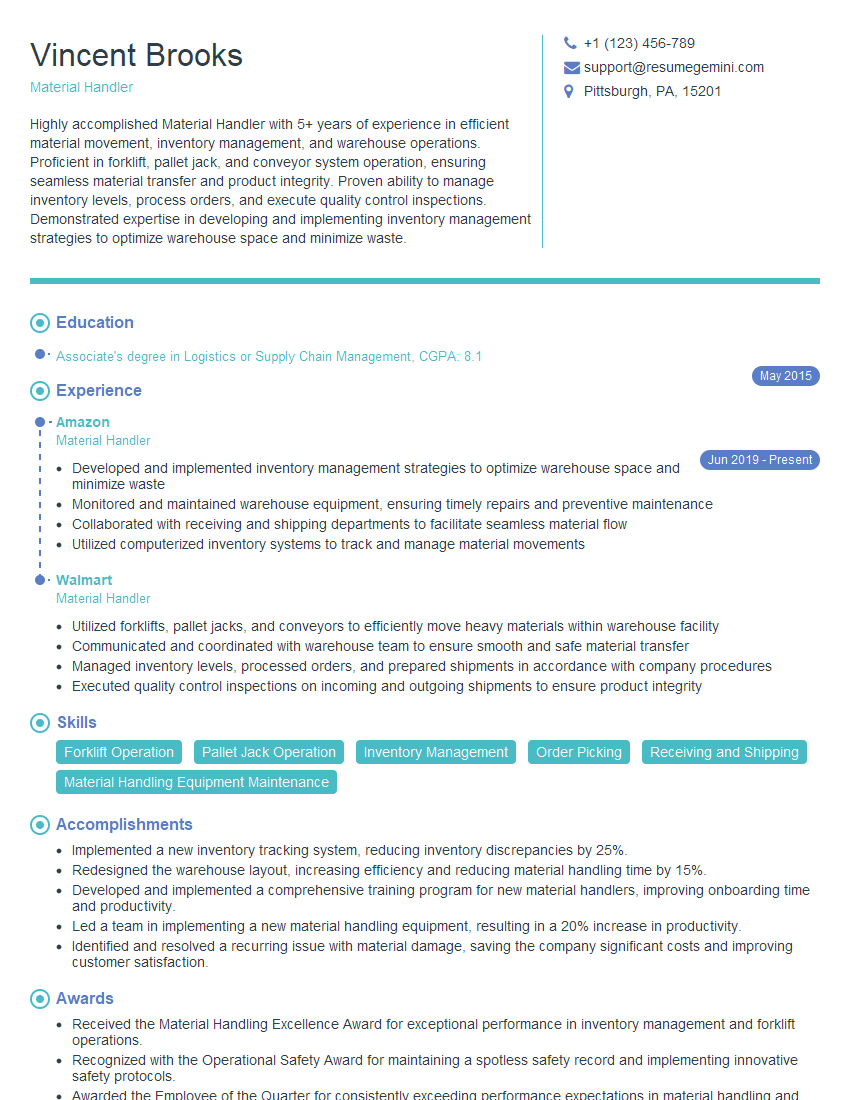
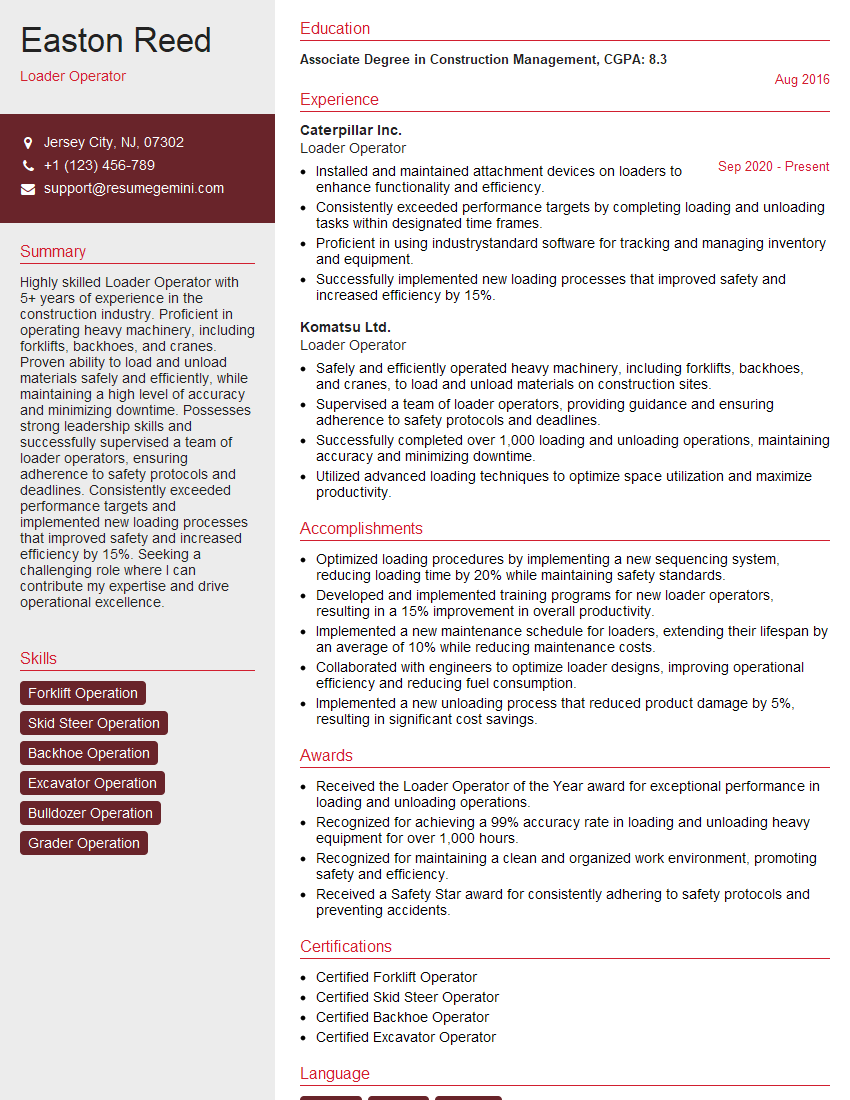
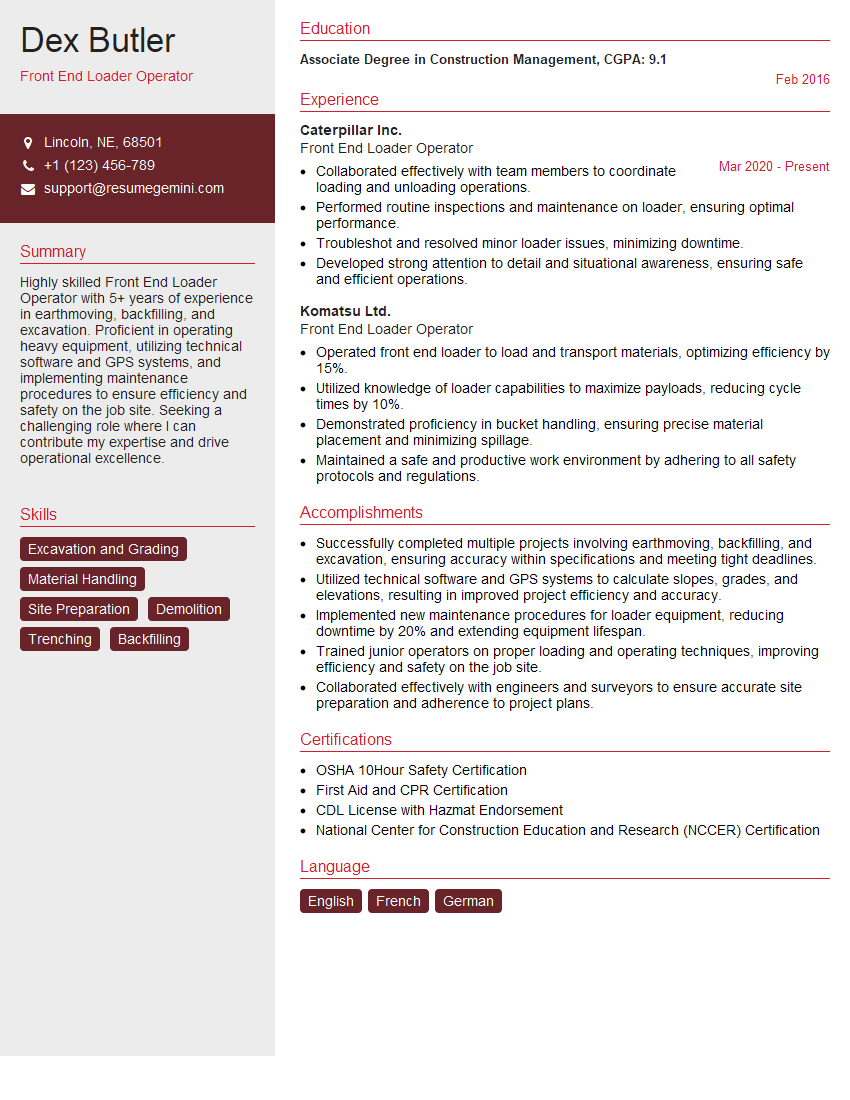
To help you build a compelling and effective resume, we recommend using ResumeGemini. ResumeGemini provides the tools and resources to craft a professional document that highlights your qualifications and experience in a way that grabs recruiters’ attention. Examples of resumes tailored specifically for Front Loader Operator positions are available for your review, providing valuable templates and guidance.


Explore more articles
Users Rating of Our Blogs
Share Your Experience
We value your feedback! Please rate our content and share your thoughts (optional).
What Readers Say About Our Blog
Very informative content, great job.
good