Are you ready to stand out in your next interview? Understanding and preparing for Fruit Harvesting Techniques interview questions is a game-changer. In this blog, we’ve compiled key questions and expert advice to help you showcase your skills with confidence and precision. Let’s get started on your journey to acing the interview.
Questions Asked in Fruit Harvesting Techniques Interview
Q 1. Describe your experience with different fruit harvesting methods.
My experience encompasses a wide range of fruit harvesting methods, tailored to the specific fruit and its growing environment. I’ve worked extensively with hand-harvesting, which is ideal for delicate fruits like berries and cherries, requiring careful selection of ripe fruit to maintain quality. I’m also proficient in mechanical harvesting, using machines like shakers and conveyors for larger-scale operations with fruits like apples and citrus. The choice of method depends on factors such as fruit type, terrain, labor costs, and desired yield. For example, in a steep vineyard, hand-harvesting might be the only feasible option, while large-scale apple orchards often utilize mechanical harvesters for efficiency. I’ve even utilized a combination of methods, hand-harvesting the highest-quality fruit while using machinery for the rest. This hybrid approach maximizes both efficiency and quality control.
Q 2. What are the optimal harvesting times for various fruits?
Optimal harvesting time varies significantly depending on the fruit. It’s not just about calendar dates but also about the fruit’s physiological maturity. For example, strawberries are best harvested when they are fully colored and have a firm but slightly soft texture, usually early in the morning when they’re coolest. Apples, on the other hand, reach optimal flavor and storage potential when they show a combination of color change and firmness, often later in the season. Citrus fruits are harvested based on their size and color; oranges, for instance, require specific sugar content that’s determined through testing. I rely heavily on maturity indices, specific physiological markers of fruit development, to determine the precise harvesting time for each fruit. This ensures that we harvest at peak quality and not just at a convenient time. We often use tools like refractometers to measure sugar content which is a vital indicator of ripeness for many fruits.
Q 3. How do you ensure the quality and safety of harvested fruit?
Ensuring quality and safety is paramount. We begin with careful selection of ripe fruits only, avoiding bruised or damaged specimens. Proper handling techniques minimize damage during harvesting, and we use appropriate containers and transportation methods to prevent bruising or spoilage. We also prioritize hygiene –clean hands, clean tools, and appropriate attire – to reduce contamination risks. Regular field inspections help catch problems early. For example, if we notice any signs of disease or pest infestation, we can take immediate action to prevent widespread contamination. Pre-cooling the fruit immediately after harvest is crucial for extending its shelf life and maintaining its freshness and quality. Finally, thorough quality control checks at the packing house ensure that only the highest quality fruit makes it to the market. Think of it like baking a cake – each step matters for the final result.
Q 4. Explain your knowledge of post-harvest handling procedures.
Post-harvest handling is crucial for preserving fruit quality. It starts immediately after harvest. The process typically involves cleaning, sorting (removing damaged or undersized fruit), pre-cooling (to slow down respiration and reduce decay), and packaging. The type of packaging depends on the fruit and its destination. For example, delicate berries might require special cushioning, while robust apples can tolerate simple cartons. Proper storage conditions are critical – controlled atmosphere storage, for instance, can significantly extend the shelf life of some fruits. Temperature and humidity are meticulously controlled to maintain freshness and prevent spoilage. We meticulously track every step of the process, ensuring traceability and responsible stewardship from orchard to consumer. In essence, post-harvest handling is an extension of the harvesting process itself, ensuring the fruit’s quality remains pristine.
Q 5. What are the common challenges faced during fruit harvesting?
Fruit harvesting faces numerous challenges. Weather is a major factor; unexpected rain, heat waves, or frost can significantly impact yields and quality. Pest and disease infestations can decimate crops if not controlled effectively. Labor shortages are a persistent issue, particularly during peak harvesting seasons. The availability of skilled labor is also a challenge. Mechanical harvesting can present its own set of problems, such as damage to the fruit and increased equipment costs. Finally, market fluctuations and pricing can affect the profitability of the entire process. Addressing these challenges requires careful planning, proactive management, and adaptability. For instance, using efficient irrigation systems can mitigate weather-related risks, while implementing Integrated Pest Management (IPM) minimizes the need for chemical pesticides.
Q 6. How do you manage a harvest crew effectively?
Managing a harvest crew effectively requires clear communication, fair compensation, and strong leadership. I begin by providing thorough training on proper harvesting techniques and safety procedures. Clear roles and responsibilities are assigned, and each team member understands their contribution to the overall success. I regularly monitor progress and provide constructive feedback, addressing issues promptly. Fair and competitive wages are essential to maintaining morale and attracting skilled labor. Open communication channels encourage feedback and problem-solving, which is crucial for maintaining team cohesion and productivity. Motivating the crew through recognition and incentives boosts efficiency and team spirit. It’s about creating a positive and collaborative work environment where everyone feels valued and contributes their best.
Q 7. What safety measures do you employ during fruit harvesting?
Safety is paramount. Before any harvesting begins, we conduct thorough safety briefings covering potential hazards, proper use of equipment, and emergency procedures. Personal protective equipment (PPE) such as gloves, safety glasses, and sturdy footwear is mandatory. We ensure that all machinery is properly maintained and operated by trained personnel. First-aid kits are readily available on-site, and we have established protocols for handling injuries or emergencies. We pay close attention to ergonomics to prevent repetitive strain injuries. Regular inspections of the work area identify and mitigate potential hazards. We also emphasize the importance of taking breaks to avoid fatigue and heat exhaustion. A safe and healthy workforce is a productive workforce. By proactively addressing safety concerns, we minimize risks and create a work environment where everyone can return home safe at the end of the day.
Q 8. Describe your experience with various harvesting tools and equipment.
My experience with harvesting tools and equipment spans a wide range, from traditional hand-held tools to sophisticated mechanized systems. I’m proficient in using hand-held clippers for delicate fruits like berries and cherries, ensuring minimal damage to the fruit and surrounding branches. For larger fruits such as apples and oranges, I’ve extensively utilized various types of ladders, including orchard ladders and telescopic poles, to safely reach higher branches. In larger-scale operations, I’ve worked with mechanical harvesters, including shaker systems for tree fruits and self-propelled harvesters for ground crops like strawberries. These machines significantly improve harvesting speed and efficiency, especially in large orchards and farms. My experience also includes post-harvest handling equipment such as sorting tables, conveyors, and packaging machines, which play a crucial role in maintaining fruit quality and preparing it for market.
- Hand tools: Pruners, secateurs, picking bags, ladders.
- Mechanical harvesters: Shaker systems, self-propelled harvesters, robotic harvesters (increasingly common).
- Post-harvest equipment: Sorting tables, conveyors, washing and grading machines, packaging equipment.
For example, when harvesting delicate blueberries, using a soft-bristled picking basket prevents bruising. In contrast, the powerful shaking action of a mechanical apple harvester requires careful calibration to avoid damaging the fruit while maximizing yield.
Q 9. How do you identify ripe and ready-to-harvest fruit?
Identifying ripe and ready-to-harvest fruit is crucial for optimal quality and shelf life. It’s not just about visual cues; it involves a multi-sensory approach. Factors such as color, firmness, aroma, and even sound can provide valuable clues. For example, perfectly ripe strawberries are deep red, slightly soft to the touch, and emit a sweet fragrance. Apples may reach their optimal ripeness when they easily separate from the branch with a slight twist. The ‘feel’ is critical; an overly firm fruit might be underripe, whereas an overly soft one may be overripe or damaged. Some fruits exhibit specific color changes—for example, the transition from green to yellow in bananas. For certain fruits, I use specialized tools such as a refractometer to measure the sugar content (Brix level), providing a quantitative measure of ripeness.
Each fruit has unique characteristics indicating optimal ripeness. Experience allows for quick identification, but knowledge of the specific variety being harvested is essential. Using a combination of visual inspection, tactile assessment, and sometimes instrumental measurements leads to harvesting the highest quality fruit.
Q 10. How do you handle damaged or substandard fruit?
Handling damaged or substandard fruit is essential to prevent spoilage and maintain the quality of the overall harvest. Damaged fruit is immediately separated from the good quality produce to prevent contamination. This often involves a visual inspection during or immediately after harvest. Depending on the extent of damage and the type of fruit, different strategies are employed. Slightly damaged fruits might be sold at a discounted price or used for processing (e.g., juicing or canning). Severely damaged fruits, however, must be disposed of properly to avoid attracting pests or diseases. Methods include composting or discarding in designated areas according to local regulations. Proper handling practices, such as using cushioned containers and minimizing drops, helps reduce damage during the harvest and subsequent transport.
For instance, in a strawberry harvest, any fruit exhibiting mold, significant bruising, or insect damage is immediately removed. These are then discarded according to safe disposal methods, preventing the spread of fungal diseases or attracting pests to the remainder of the crop.
Q 11. Explain your understanding of different fruit grading standards.
Fruit grading standards vary depending on the fruit type, market destination, and specific customer requirements. However, common grading standards are based on factors like size, color, shape, and freedom from defects. For example, apples might be graded according to diameter (e.g., extra large, large, medium, small), and color uniformity (e.g., predominantly red, partially red, mostly green). Defects such as bruises, blemishes, or insect damage are also carefully assessed, often resulting in different grades. These grades dictate price and market destination—higher grades fetch better prices and are often targeted for retail markets, while lower grades might be processed or used in other applications.
Standards are often set by industry organizations or government agencies and are usually documented in detailed specifications. Adherence to these standards is crucial for maintaining quality and meeting consumer expectations. Many modern fruit packing facilities use automated grading systems utilizing optical sensors and computer vision to rapidly and objectively classify fruits.
Q 12. What are the environmental factors affecting fruit harvesting?
Environmental factors significantly impact fruit harvesting, affecting both the quality and quantity of the harvest. Temperature is a critical factor; extreme heat can cause sunburn and reduce the shelf life of the fruit, while frost can damage the fruit and even kill the plants. Rainfall can affect both the harvest timing and the quality of the fruit, as excessive rain can cause cracking, rotting, or disease. Sunlight is crucial for fruit development, with insufficient sunlight resulting in smaller or poorly colored fruits. Humidity levels play a significant role in fungal diseases, and strong winds can damage the fruit on the tree or plant.
For example, a sudden heatwave during grape harvest can reduce sugar accumulation and negatively affect the wine quality. Similarly, heavy rainfall just before apple harvest can cause the fruit to split and increase susceptibility to fungal diseases.
Q 13. How do you adapt to changing weather conditions during harvest?
Adapting to changing weather conditions during harvest is paramount. This involves close monitoring of weather forecasts and flexible scheduling. If rain is predicted, harvesting operations may be temporarily halted to avoid damage to the fruit or unsafe working conditions. Conversely, extreme heat might necessitate early morning or late evening harvesting to protect workers from heat stress. Protective gear, such as hats, sunscreen, and rain gear, is essential for worker safety and comfort. In some cases, the use of specialized equipment or techniques may be required. For example, windbreaks might be used to protect the fruit from strong winds, or specialized harvesting techniques may be employed during wet conditions to minimize damage.
In a citrus harvest, a sudden downpour might necessitate moving the harvesting team indoors or halting operations until the rain subsides, preventing the harvested fruit from becoming soaked and reducing its quality.
Q 14. What is your experience with yield estimations and forecasting?
Yield estimations and forecasting are crucial for planning harvest operations, resource allocation, and market predictions. This involves a combination of techniques, including historical data analysis, visual assessments, and the use of predictive models. Historical data on past yields, weather patterns, and other relevant factors are analyzed to identify trends and predict future yields. Visual assessments of the orchard or field provide a real-time evaluation of fruit set and development. Advanced techniques, including remote sensing using drones or satellites, can provide large-scale assessments of crop health and yield potential. Predictive models incorporate various factors to generate more precise yield forecasts.
For example, by analyzing historical data on apple yield, combined with current weather conditions and visual assessment of fruit size and development, a farmer can estimate the total yield for the upcoming season, allowing for efficient planning of labor, storage space, and marketing strategies.
Q 15. How do you ensure efficient fruit transport and storage?
Efficient fruit transport and storage are crucial for maintaining quality and minimizing losses. It’s a multi-stage process beginning at harvest and extending through delivery to market or processing facilities.
Harvesting Practices: Gentle handling during picking is paramount. We use appropriate containers – padded bins for delicate fruits like berries, and sturdy crates for apples or oranges – to prevent bruising. Fruits are sorted immediately to remove damaged or substandard produce.
Refrigerated Transportation: Rapid cooling is key to slowing down enzymatic activity and respiration, thus extending shelf life. Refrigerated trucks are essential, especially for long-distance transport. The temperature needs to be carefully monitored and adjusted based on the fruit type. For example, bananas are more sensitive to chilling injury than apples, requiring a higher temperature.
Controlled Atmosphere Storage (CAS): For longer-term storage, CAS is often employed. This involves modifying the atmosphere within storage facilities by reducing oxygen and increasing carbon dioxide levels. This slows down respiration and ripening, significantly extending shelf life. Each fruit type has optimal CAS conditions that must be precisely maintained.
Proper Storage Facilities: Storage facilities must be well-ventilated, clean, and maintain appropriate temperature and humidity levels. Regular checks for pests and diseases are also vital.
For example, during a recent apple harvest, we implemented a new system of padded bins and refrigerated trucks. This resulted in a 15% reduction in bruising and a 10% increase in the percentage of premium-grade apples reaching the market.
Career Expert Tips:
- Ace those interviews! Prepare effectively by reviewing the Top 50 Most Common Interview Questions on ResumeGemini.
- Navigate your job search with confidence! Explore a wide range of Career Tips on ResumeGemini. Learn about common challenges and recommendations to overcome them.
- Craft the perfect resume! Master the Art of Resume Writing with ResumeGemini’s guide. Showcase your unique qualifications and achievements effectively.
- Don’t miss out on holiday savings! Build your dream resume with ResumeGemini’s ATS optimized templates.
Q 16. Describe your experience with mechanized harvesting techniques.
My experience with mechanized harvesting spans over fifteen years, encompassing various technologies across diverse fruit types. I’ve worked with everything from self-propelled harvesters for tree fruits like apples and cherries to automated picking robots for delicate berries and grapes. Each technology presents unique challenges and advantages.
Shaking Systems: These are commonly used for tree fruits, gently shaking the branches to detach ripe fruit which then falls onto catching mechanisms. The key is to calibrate the shaking intensity to minimize fruit damage and ensure efficient collection.
Automated Picking Robots: Robotics is rapidly evolving in fruit harvesting. While still expensive, they offer the potential to significantly reduce labor costs and improve efficiency, particularly for delicate fruits that are susceptible to damage during manual harvesting. Computer vision and AI are key components in guiding the robots to identify and pick ripe fruit.
Harvest Aids: Smaller-scale mechanization involves the use of tools such as pruning shears with collecting baskets, which can increase efficiency without requiring large-scale investments in technology. These are frequently used for labor-intensive jobs like selective harvesting of smaller quantities of premium-quality fruits.
In one project, we transitioned from manual harvesting of cherries to a mechanized system. This resulted in a 30% increase in harvesting speed, but careful attention to post-harvest handling remained essential to prevent damage from the automated process.
Q 17. Explain your knowledge of different pruning techniques for fruit trees.
Pruning is a fundamental practice influencing fruit yield, quality, and tree health. Different techniques serve specific objectives depending on the fruit type, age of the tree, and desired outcome.
Training: Young trees need careful training to establish a strong framework, preventing overcrowding and promoting sunlight penetration. This usually involves selecting a central leader and shaping the branches to create an open structure.
Renewal Pruning: Older trees require rejuvenation through renewal pruning, which involves removing old, unproductive branches to stimulate growth of new shoots and fruit spurs.
Thinning: This involves removing excess fruits to prevent overcrowding and improve the size and quality of remaining fruits. It’s especially crucial for fruits like apples and pears.
Heading Back: This involves cutting back the tips of branches to encourage branching and increase fruit production.
For example, in a citrus orchard, we employ a combination of thinning and heading back to ensure optimal fruit size and yield. Different pruning schedules were implemented for younger and older trees, taking into account their varying growth patterns.
Q 18. How do you prevent fruit damage during harvesting and transportation?
Preventing fruit damage during harvesting and transportation requires meticulous attention to detail throughout the process.
Careful Harvesting Techniques: Training pickers in gentle handling is crucial. This includes using appropriate tools and avoiding dropping or throwing fruit. Using soft padding in collection containers helps to cushion the fruit and prevent bruising.
Proper Container Selection: Selecting the right type and size of containers is vital. Containers should be sturdy, well-ventilated, and appropriate for the fruit type. For example, delicate berries require padded containers whereas larger fruits like watermelons can be handled in more robust crates.
Careful Loading and Unloading: Fruits should be carefully loaded and unloaded to avoid crushing or jarring. Using ramps and ensuring even weight distribution can minimize damage during transport.
Temperature and Humidity Control: Maintaining appropriate temperature and humidity levels during transport and storage is essential in preventing spoilage and decay.
One instance where we experienced reduced fruit damage was by implementing a training program for harvesters focusing on gentle handling techniques. The results showed a 20% reduction in damaged fruit compared to the previous year.
Q 19. What are your strategies for maximizing fruit yield?
Maximizing fruit yield is a multifaceted endeavor involving a range of strategies:
Optimal Planting Density: Appropriate spacing between trees allows for adequate sunlight and nutrient uptake. Overcrowding leads to reduced yield and fruit quality.
Soil Management: Maintaining soil fertility through fertilization and proper irrigation is vital. Soil testing is essential to determine nutrient deficiencies.
Pest and Disease Management: Implementing effective pest and disease management programs protects the crop and maximizes yield. This might involve integrated pest management (IPM) strategies to minimize reliance on pesticides.
Pruning and Training: Appropriate pruning techniques, as discussed earlier, improve fruit set and size.
Pollination: Ensuring adequate pollination is critical. This might involve planting pollinator-friendly plants or introducing honeybees.
In one orchard, by implementing a comprehensive soil management plan and employing IPM strategies, we increased the yield by 15% over three years.
Q 20. How do you maintain accurate records of harvested fruit?
Maintaining accurate records of harvested fruit is crucial for inventory management, financial tracking, and quality control. We utilize a combination of manual and digital methods:
Harvest Records: Detailed harvest records are kept for each picking, including the date, quantity harvested, fruit variety, and any quality notes (e.g., size grading, defects). This is often done using handheld devices or tablets in the field.
Weighing and Grading: Accurate weighing scales and grading systems are employed to determine quantity and quality. This ensures consistency and minimizes discrepancies.
Data Entry and Management: Data from the field is then entered into a central database or spreadsheet, allowing for easy retrieval and analysis. This might involve custom software or off-the-shelf solutions.
Reporting: Regular reports are generated summarizing harvest data, providing valuable insights into yield, quality, and potential areas for improvement.
We implemented a new data management system a few years ago which automated data entry and reporting and increased efficiency by reducing manual data processing by 40%.
Q 21. How do you deal with labor shortages during peak harvest seasons?
Labor shortages during peak harvest seasons are a common challenge. Strategies to mitigate this include:
Mechanization: Increasing the use of mechanized harvesting techniques, as discussed earlier, can significantly reduce reliance on manual labor.
Temporary Workers: Hiring temporary workers through agencies specializing in agricultural labor is a common practice. This requires careful planning and adherence to relevant labor laws.
Worker Incentives: Offering competitive wages, bonuses, and benefits can attract and retain workers. Creating a positive work environment also enhances morale and productivity.
Collaboration: Collaborating with other farms or organizations to share resources and labor can help alleviate shortages.
Improved Efficiency: Optimizing harvesting processes to improve efficiency can reduce the overall labor requirements.
Last season, we partnered with a local community college to recruit student workers during the peak harvest season. This provided a reliable source of labor and also offered valuable work experience to the students.
Q 22. What is your experience with various pest and disease management practices in relation to harvesting?
Pest and disease management is crucial for successful fruit harvesting. My experience encompasses a wide range of integrated pest management (IPM) strategies, prioritizing preventative measures over reactive ones. This includes:
- Regular scouting and monitoring: Identifying potential threats early, like aphids on apple trees or fungal diseases on berries, is key. We use visual inspections, traps, and sometimes even sophisticated sensors to detect problems before they escalate.
- Cultural controls: These are practices that manipulate the growing environment to discourage pests and diseases. Examples include proper pruning to improve airflow and sunlight penetration, reducing humidity which inhibits fungal growth, and using resistant or tolerant cultivars. I’ve personally overseen the implementation of these techniques on several large-scale orchards resulting in a significant reduction in pesticide use.
- Biological controls: Introducing beneficial insects like ladybugs to control aphid populations or using specific bacteria to combat specific diseases. This approach minimizes environmental impact and promotes biodiversity within the orchard ecosystem.
- Chemical controls (when necessary): Using pesticides as a last resort, always adhering to label instructions and integrating them with other IPM strategies. This includes careful selection of targeted pesticides to minimise harm to beneficial insects and the environment. For example, instead of a broad-spectrum insecticide, we might use a pheromone trap to disrupt the mating cycles of a specific pest.
Successful IPM requires meticulous record-keeping and continuous evaluation of effectiveness. I am experienced in using data-driven decision making to adjust strategies based on the specifics of the current growing conditions and pest pressure.
Q 23. Describe your experience with different types of fruit packaging.
My experience with fruit packaging spans a variety of materials and techniques, always prioritizing the preservation of fruit quality and extending shelf life. This includes:
- Rigid containers: Plastic crates and punnets are common for delicate fruits like berries and stone fruit, offering protection during transport and handling. The choice of plastic type depends on factors like recyclability and oxygen permeability.
- Flexible packaging: Bags, pouches, and flow wraps are used for larger quantities, often incorporating modified atmosphere packaging (MAP) to slow down ripening and extend freshness. This technology carefully controls the levels of oxygen, carbon dioxide, and nitrogen within the packaging to create an environment that inhibits microbial growth and slows down respiration.
- Sustainable packaging: I have been involved in sourcing and implementing environmentally friendly packaging materials, including biodegradable plastics and recycled cardboard. This commitment extends to reducing overall packaging weight and streamlining the supply chain to minimize waste.
- Branding and labeling: Packaging design is critical for marketing and consumer appeal. I have experience in collaborating with design teams to create attractive and informative labels that comply with all relevant regulations regarding ingredient lists, nutritional information, and traceability.
The best packaging solution always depends on the specific fruit, its intended market, and the desired shelf life. The selection process considers factors like cost, sustainability, and protection against damage during transportation.
Q 24. How do you comply with food safety regulations during fruit harvesting?
Food safety is paramount in fruit harvesting. Compliance starts with good agricultural practices (GAPs) and extends throughout the entire harvesting and post-harvest process. This involves:
- Worker hygiene: Implementing strict handwashing protocols and providing appropriate protective clothing (gloves, hairnets) to prevent contamination.
- Equipment sanitation: Regularly cleaning and sanitizing harvesting equipment to eliminate the possibility of cross-contamination from one batch to another.
- Field sanitation: Maintaining clean harvesting areas, free from debris and potential sources of contamination such as animal waste.
- Traceability: Maintaining detailed records of harvesting locations, dates, and workers involved to facilitate rapid identification and recall of produce in case of any contamination event. We use barcode and RFID technology for improved traceability.
- Temperature control: Rapid cooling of harvested fruit to maintain quality and safety. This often involves pre-cooling facilities on the farm, followed by cold chain management throughout transport and storage.
- Compliance with regulations: Staying updated with all relevant food safety regulations, like those set by the FDA or equivalent bodies, and ensuring compliance throughout all operations.
Regular audits and training programs are vital to maintaining consistently high food safety standards. I am well-versed in all aspects of food safety best practices and have been instrumental in maintaining the highest possible level of food safety across numerous projects.
Q 25. What are your experience with using GPS or GIS technology in fruit harvesting?
GPS and GIS technology have revolutionized precision agriculture, and I have extensive experience in leveraging these tools for optimizing fruit harvesting. Specific applications include:
- Precision mapping: Creating detailed maps of orchards to identify areas with varying fruit maturity levels or specific soil conditions. This allows for targeted harvesting efforts, maximizing yield and minimizing waste.
- Yield monitoring: Using sensors and GPS data to track yields in real-time. This data can then be used to make informed decisions about resource allocation and harvesting schedules.
- Route optimization: Planning efficient harvesting routes to minimize travel time and fuel consumption. GIS software can analyze various factors like terrain, road conditions, and fruit distribution to determine the most efficient path.
- Harvest scheduling: Combining GPS data on fruit maturity with weather forecasts to determine optimal harvesting windows. This helps to prevent over- or under-ripening and ensures consistently high quality fruit is harvested.
My proficiency in using GIS software, coupled with my knowledge of agricultural practices, has led to improved operational efficiency and overall productivity in several fruit harvesting projects.
Q 26. Describe a time you solved a problem during a fruit harvest.
During a particularly challenging blueberry harvest, we encountered a significant labor shortage due to unexpected illness among the picking crew. The harvest window for blueberries is incredibly short, and delaying picking would have resulted in substantial losses. My solution involved:
- Immediate assessment: I quickly evaluated the extent of the labor shortfall and the remaining harvest volume.
- Resource allocation: I re-allocated existing crew members to prioritize the most ripe sections of the field.
- Temporary labor recruitment: I contacted local temp agencies and agricultural labor pools to secure additional workers, emphasizing the urgency and offering a competitive wage.
- Streamlining operations: I made small, temporary changes to our harvesting processes to increase efficiency. For example, I implemented a system for quicker sorting of harvested berries.
- Communication: I ensured clear and consistent communication with both the existing and new crew members regarding expectations and procedures.
Through quick thinking, efficient resource management, and effective communication, we successfully completed the harvest with minimal losses and maintained the quality of the berries. This experience highlighted the importance of adaptability and proactive problem-solving in high-pressure situations.
Q 27. How do you prioritize tasks during a busy harvest season?
Prioritizing tasks during a busy harvest season requires a structured approach. I typically use a combination of techniques:
- Prioritization matrix: Categorizing tasks based on urgency and importance using a matrix. High-urgency, high-importance tasks (like picking ripe fruit before it spoils) take precedence.
- Time blocking: Allocating specific time blocks for different tasks to ensure efficient use of time and resources. For example, dedicating mornings to picking and afternoons to sorting and packing.
- Delegation: Effectively delegating tasks to team members based on their skills and availability, which helps in spreading the workload.
- Contingency planning: Anticipating potential problems (equipment malfunction, weather changes) and having backup plans in place to avoid major disruptions.
- Regular communication: Maintaining open communication with the team to keep everyone informed about progress, priorities, and any adjustments in the plan.
This multi-pronged strategy ensures that critical tasks are completed on time, while still allowing for flexibility and adaptation to unexpected events.
Q 28. What are your salary expectations for this role?
My salary expectations are commensurate with my experience and expertise in fruit harvesting techniques, as well as the specific responsibilities and compensation structure of this role. I am open to discussing a competitive salary range based on a comprehensive overview of the position and the company’s compensation package. I am confident that my contributions will significantly benefit your organization.
Key Topics to Learn for Fruit Harvesting Techniques Interview
- Fruit Identification and Maturity Assessment: Understanding the visual cues and techniques to determine optimal harvest time for various fruits, considering factors like color, size, firmness, and sugar content. Practical application: Demonstrating proficiency in using refractometers or other maturity testing tools.
- Harvesting Methods and Equipment: Familiarity with different harvesting techniques, from hand-picking to mechanical harvesting, including the appropriate selection of equipment based on fruit type, terrain, and scale of operation. Practical application: Explaining the advantages and disadvantages of different harvesting methods and their impact on fruit quality and yield.
- Post-Harvest Handling and Storage: Understanding the critical steps involved in handling harvested fruit to minimize damage and maintain quality, including proper cleaning, sorting, grading, and packing techniques. Practical application: Describing best practices for preventing bruising, decay, and other post-harvest losses.
- Safety Procedures and Regulations: Knowledge of relevant safety regulations and best practices for working in orchards and during the harvesting process, including proper use of personal protective equipment (PPE) and awareness of potential hazards. Practical application: Outlining safety protocols for preventing injuries and ensuring compliance with industry standards.
- Yield Optimization and Efficiency: Understanding the principles of efficient harvesting practices to maximize yield while minimizing costs and waste. Practical application: Discussing strategies for improving harvesting speed and reducing labor costs without compromising fruit quality.
- Environmental Considerations: Awareness of sustainable harvesting practices and their impact on the environment, including minimizing soil compaction and water usage. Practical application: Explaining techniques that promote ecological responsibility in fruit harvesting.
Next Steps
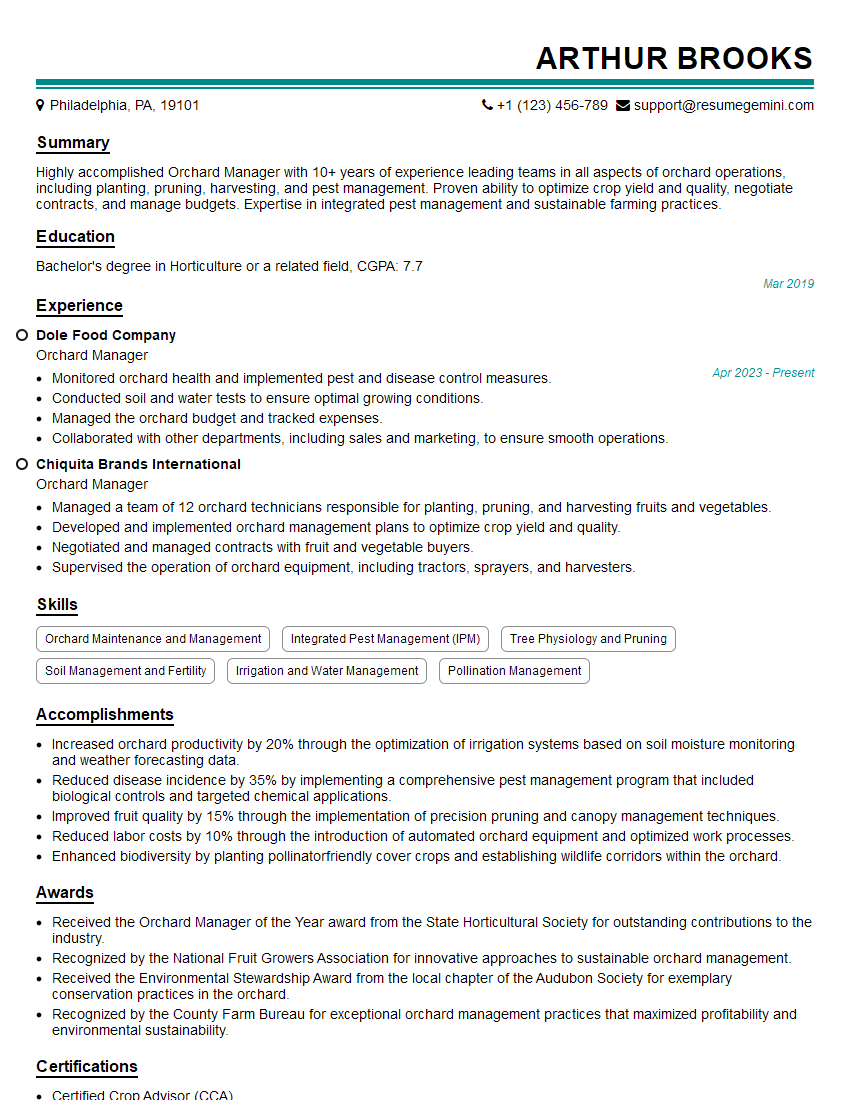
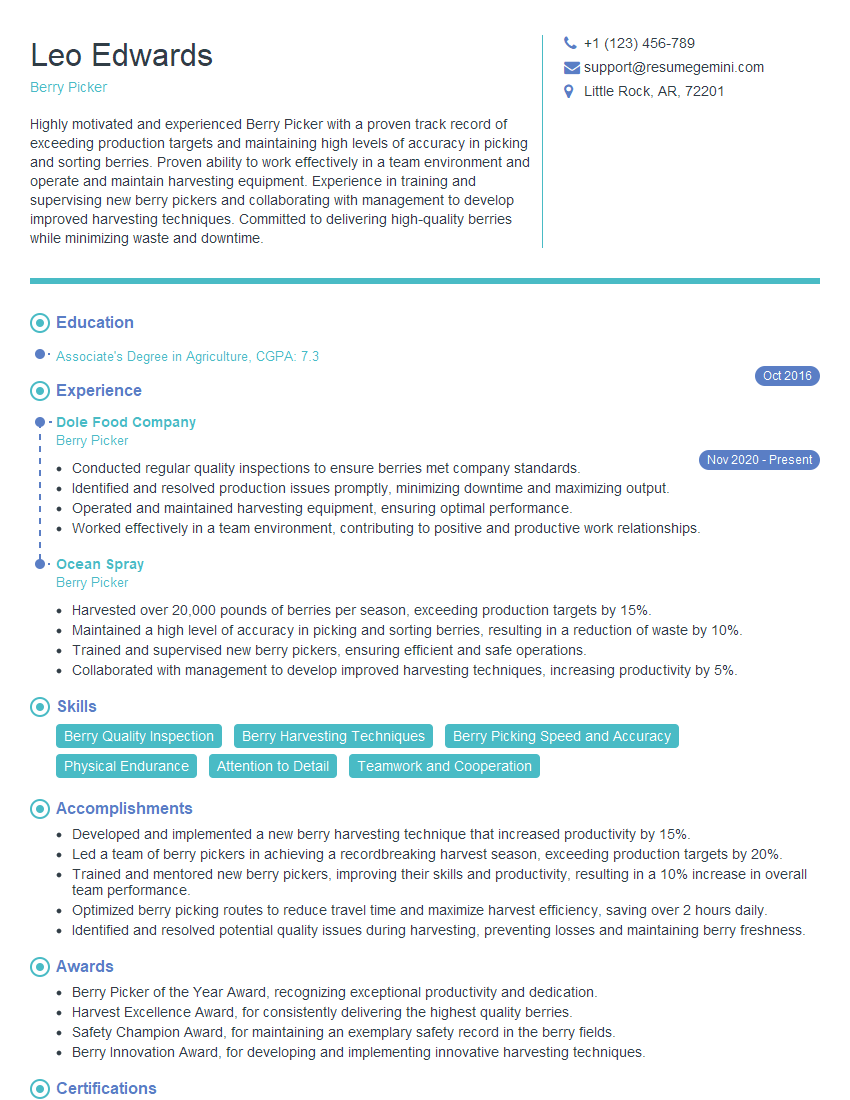
Mastering Fruit Harvesting Techniques is crucial for career advancement in the agricultural sector, opening doors to specialized roles and increased earning potential. A well-crafted resume is your key to unlocking these opportunities. Creating an ATS-friendly resume is essential for getting your application noticed by potential employers. ResumeGemini is a trusted resource that can help you build a professional and effective resume tailored to the specific requirements of Fruit Harvesting Techniques jobs. Examples of resumes tailored to this field are available to help you craft a compelling application.

Explore more articles
Users Rating of Our Blogs
Share Your Experience
We value your feedback! Please rate our content and share your thoughts (optional).
What Readers Say About Our Blog
Very informative content, great job.
good