Are you ready to stand out in your next interview? Understanding and preparing for Fuel Cell Manufacturing interview questions is a game-changer. In this blog, we’ve compiled key questions and expert advice to help you showcase your skills with confidence and precision. Let’s get started on your journey to acing the interview.
Questions Asked in Fuel Cell Manufacturing Interview
Q 1. Explain the different types of fuel cells and their applications.
Fuel cells are electrochemical devices that convert chemical energy directly into electricity. Unlike combustion engines, they do this without burning fuel, resulting in higher efficiency and lower emissions. Several types exist, each with unique characteristics and applications:
- Proton Exchange Membrane (PEM) Fuel Cells: These use a polymer membrane to conduct protons, typically operating at low temperatures (80-100°C). Their applications range from portable power sources (laptops, cell phones) to automotive applications (fuel cell vehicles) and stationary power generation.
- Solid Oxide Fuel Cells (SOFCs): These operate at high temperatures (600-1000°C), using a ceramic electrolyte to conduct oxygen ions. Their high operating temperature allows for internal reforming of fuels like natural gas, making them suitable for stationary power generation and potentially large-scale power plants.
- Alkaline Fuel Cells (AFCs): These utilize an alkaline electrolyte (e.g., potassium hydroxide solution) and typically operate at lower temperatures than SOFCs. They’ve been used in space applications due to their high power density, but are less common commercially due to sensitivity to carbon dioxide.
- Phosphoric Acid Fuel Cells (PAFCs): These employ phosphoric acid as the electrolyte and operate at intermediate temperatures (150-200°C). They are mainly used for stationary power generation, offering a good balance between efficiency and durability.
- Direct Methanol Fuel Cells (DMFCs): These directly oxidize methanol fuel at the anode, eliminating the need for a separate reformer. They are suitable for portable power applications, but their lower power density and methanol crossover issues are limitations.
The choice of fuel cell type depends heavily on the specific application, considering factors like power output requirements, operating temperature, fuel availability, cost, and efficiency.
Q 2. Describe the manufacturing process of a proton exchange membrane (PEM) fuel cell.
Manufacturing a PEM fuel cell is a multi-step process involving precise control over material properties and assembly techniques. The process typically involves:
- Catalyst Layer Deposition: Platinum-group metal catalysts (platinum, platinum-ruthenium alloys) are deposited onto a gas diffusion layer (GDL) using techniques like ink-coating, spraying, or sputtering. This forms the catalyst layer, crucial for the electrochemical reactions.
- Membrane Preparation: The proton exchange membrane (PEM), typically Nafion®, is carefully handled to avoid damage. It’s often treated to improve hydration and conductivity.
- Membrane Electrode Assembly (MEA) Fabrication: The catalyst-coated GDLs (anode and cathode) are hot-pressed together with the PEM to form the MEA. This is a critical step, requiring precise control of temperature and pressure to ensure good contact and avoid membrane damage.
- MEA Integration: The MEA is then integrated into the fuel cell stack, which includes bipolar plates for distributing fuel and oxidant, collecting electricity, and managing water.
- Stack Assembly: Bipolar plates are precisely aligned and joined with the MEA to complete the stack. Sealing is crucial to prevent gas leaks and ensure efficient operation.
- Testing and Quality Control: Rigorous testing is performed at each stage, including electrochemical characterization, performance evaluation, and durability testing to ensure the quality and performance of the final product.
Think of it like building a layered cake: each layer (catalyst, membrane, GDL) needs to be perfectly formed and meticulously placed to create a functional and efficient fuel cell.
Q 3. What are the key challenges in scaling up fuel cell production?
Scaling up fuel cell production presents significant challenges:
- High Cost of Materials: Platinum group metals (PGMs) are expensive, particularly platinum, which is the most common catalyst. Reducing PGM loading or finding alternative catalysts is crucial for cost reduction.
- Complex Manufacturing Processes: The precise control required for MEA fabrication adds complexity and manufacturing costs. Automation and improved process efficiency are needed for mass production.
- Quality Control and Consistency: Maintaining consistent quality across large-scale production is difficult. Robust quality control systems and advanced characterization techniques are essential to ensure high performance and durability.
- Supply Chain Management: Securing a reliable supply chain for critical materials like membranes and catalysts is vital for large-scale production.
- Durability and Lifetime: Ensuring long-term durability and performance is a key challenge. Understanding and mitigating degradation mechanisms is crucial for widespread adoption.
Overcoming these challenges requires innovation in materials science, manufacturing processes, and quality control to enable the cost-effective mass production of high-performance fuel cells.
Q 4. How do you ensure the quality and durability of fuel cell components?
Ensuring the quality and durability of fuel cell components requires a multi-pronged approach:
- Material Selection and Characterization: Careful selection of materials with high chemical stability, mechanical strength, and electrochemical activity is crucial. Rigorous material characterization is performed to ensure quality and consistency.
- Process Optimization: Optimizing manufacturing processes to minimize defects and ensure uniform properties is essential. Techniques like statistical process control (SPC) and design of experiments (DOE) are employed.
- Quality Control Testing: Implementing stringent quality control measures at each manufacturing stage, including visual inspection, electrochemical testing, and material analysis, is vital.
- Accelerated Durability Testing: Simulating real-world operating conditions in accelerated tests helps evaluate long-term performance and identify potential failure modes before deployment.
- Non-Destructive Evaluation (NDE): NDE techniques, such as X-ray imaging or ultrasound, can be used to detect defects in components without causing damage.
Think of it like building a bridge – you wouldn’t build it without thorough testing and quality control at each stage to ensure its structural integrity and long lifespan.
Q 5. What are the common failure modes of fuel cells, and how can they be prevented?
Common failure modes in fuel cells include:
- Catalyst Degradation: Platinum nanoparticles can agglomerate, reducing surface area and catalytic activity. This can be mitigated through the use of catalyst support materials and optimized operating conditions.
- Membrane Degradation: PEMs can degrade due to chemical attack, mechanical stress, and water management issues. Proper hydration control and material selection are key to preventing this.
- Gas Crossover: Fuel and oxidant can leak across the membrane, reducing efficiency and increasing degradation. Improved membrane selectivity can minimize this issue.
- Flooding: Liquid water buildup in the pores of the electrodes can block gas flow and reduce performance. Proper water management strategies are crucial.
- Corrosion: Corrosion of bipolar plates or other components can lead to performance loss and potential failures. The use of corrosion-resistant materials is essential.
Preventing these failure modes requires careful design and material selection, process optimization, and robust testing protocols. Understanding the root causes of failures allows for proactive measures to enhance fuel cell durability and lifespan.
Q 6. Explain the role of catalysts in fuel cell operation.
Catalysts play a vital role in fuel cell operation by accelerating the electrochemical reactions at the anode and cathode. In a PEM fuel cell, the anode catalyst oxidizes the fuel (e.g., hydrogen) and the cathode catalyst reduces the oxidant (e.g., oxygen). Without catalysts, these reactions would be too slow to generate a significant electric current.
Platinum-group metals (PGMs), particularly platinum, are commonly used due to their high catalytic activity. The catalyst is typically dispersed on a high surface area support material (e.g., carbon black) to maximize its effectiveness. The catalyst facilitates the following reactions:
- Anode (Oxidation):
2H₂ → 4H⁺ + 4e⁻(Hydrogen oxidation) - Cathode (Reduction):
O₂ + 4H⁺ + 4e⁻ → 2H₂O(Oxygen reduction)
The choice of catalyst and its structure significantly impacts the overall fuel cell performance, efficiency, and durability. Research continues to focus on developing more cost-effective and durable catalysts to reduce the reliance on expensive platinum.
Q 7. Discuss the importance of membrane electrode assembly (MEA) in fuel cell performance.
The Membrane Electrode Assembly (MEA) is the heart of a fuel cell, being the core electrochemical component responsible for converting chemical energy into electricity. It consists of the proton exchange membrane (PEM) sandwiched between the anode and cathode catalyst layers. The MEA’s performance directly influences the overall fuel cell’s efficiency, power density, and durability.
The MEA’s critical role is to:
- Conduct Protons: The PEM selectively transports protons from the anode to the cathode, completing the electrical circuit.
- Facilitate Electron Transfer: The catalyst layers provide sites for electrochemical reactions, generating electrons that flow through the external circuit.
- Separate Reactants: The PEM effectively prevents the mixing of fuel and oxidant, which would lead to combustion rather than electrochemical conversion.
Optimizing the MEA’s design and manufacturing process is key to achieving high-performance fuel cells. This includes controlling catalyst loading, optimizing catalyst layer structure, and ensuring good interfacial contact between the components. Defects in the MEA can dramatically impact its performance and lead to fuel cell failure.
Q 8. What are the different materials used in fuel cell construction, and what are their properties?
Fuel cell construction utilizes a variety of materials, each chosen for its specific properties to optimize performance and durability. The core components – the anode, cathode, and electrolyte – require materials with excellent electrochemical activity, conductivity, and chemical stability under operating conditions.
- Electrodes (Anode & Cathode): Often made from platinum (Pt) or platinum-group metals (PGMs) alloys, supported on high surface area carbon materials. Platinum acts as a catalyst, facilitating the electrochemical reactions. Alternatives like non-PGM catalysts are being actively researched to reduce costs. Their properties include high catalytic activity, good electrical conductivity, and corrosion resistance.
- Electrolyte: The electrolyte’s role is to conduct ions (protons or hydroxide ions) between the electrodes while preventing electron flow. Common materials include proton exchange membranes (PEMs) like Nafion (a perfluorinated sulfonic acid polymer), which exhibits high proton conductivity, good chemical stability, and low gas permeability. Other options include solid oxide electrolytes (SOEs) made from ceramic materials like yttria-stabilized zirconia (YSZ), which operate at high temperatures.
- Bipolar Plates: These plates distribute reactants, collect current, and manage water and heat. They’re often made from graphite composites or metallic materials like stainless steel. Desired properties include high electrical conductivity, chemical inertness, good mechanical strength, and corrosion resistance.
- Gaskets/Seals: Essential for preventing gas leakage and maintaining the integrity of the fuel cell stack. Materials like PTFE (polytetrafluoroethylene) or other elastomers are commonly used due to their chemical inertness and sealing capabilities.
The choice of material is a delicate balance. For instance, while platinum is an excellent catalyst, its high cost drives research into less expensive alternatives. Similarly, the electrolyte must balance conductivity with durability and gas impermeability.
Q 9. How do you test and characterize the performance of a fuel cell?
Testing and characterizing fuel cell performance is crucial to ensure efficiency and longevity. It involves a multi-faceted approach encompassing various parameters. We typically use specialized equipment to measure key performance indicators (KPIs).
- Polarization Curves: These measure the cell voltage as a function of current density. This reveals information about activation losses, ohmic losses, and concentration losses, helping pinpoint areas for improvement.
- Electrochemical Impedance Spectroscopy (EIS): This technique uses small AC signals to analyze the impedance of the fuel cell at different frequencies. This provides insights into the various resistances and capacitances within the cell, allowing for a detailed analysis of its internal processes. Think of it like a detailed electrical checkup for the fuel cell.
- Gas Chromatography (GC): We use GC to measure the composition of the gases entering and exiting the fuel cell. This helps to determine the efficiency of the electrochemical reactions and identify any gas leaks.
- Durability Testing: This involves long-term operation under various conditions (e.g., varying current density, temperature, humidity) to assess the cell’s degradation rate and lifetime. We might run accelerated stress tests to simulate long-term degradation more quickly.
Data from these tests are then analyzed to optimize the cell design, material selection, and operating conditions.
Q 10. Describe your experience with different fuel cell testing methodologies.
My experience encompasses a range of fuel cell testing methodologies, both in laboratory and pilot scale environments. I’ve extensively used the techniques mentioned earlier—polarization curves, EIS, and GC—as well as other methods like:
- Single Cell Testing: This involves testing individual fuel cells to understand their intrinsic performance characteristics before integration into a stack. This isolates potential problems to specific components.
- Stack Testing: Once single cells are optimized, we move to stack testing, evaluating the performance of multiple cells connected in series. This introduces challenges related to gas distribution, thermal management, and current collection across multiple cells.
- Accelerated Stress Tests (ASTs): To reduce the time needed for durability testing, we employ ASTs that accelerate degradation processes. This involves subjecting the fuel cell to high stress conditions (e.g., high current density cycling, rapid temperature changes) to simulate years of operation in a shorter timeframe.
For example, in one project, we used EIS to identify a high-frequency impedance peak that indicated poor contact between the gas diffusion layer and the catalyst layer. By modifying the manufacturing process to improve this contact, we significantly enhanced the performance and durability of the fuel cell.
Q 11. Explain the concept of fuel cell stack design and optimization.
Fuel cell stack design and optimization are critical for achieving high power output, efficiency, and durability. It’s like designing a complex skyscraper, where every structural element must be optimized for overall strength and stability.
Optimization involves several key aspects:
- Cell Arrangement: Cells are typically arranged in series to achieve the desired voltage. The arrangement itself can influence performance and uniformity of current distribution within the stack.
- Flow Field Design: The flow fields within the bipolar plates guide the reactant gases (fuel and oxidant) to the catalyst layers. Optimization aims for uniform gas distribution, minimizing pressure drops and ensuring efficient reactant utilization. A poorly designed flow field can lead to significant performance losses.
- Thermal Management: Fuel cells generate heat during operation. Efficient thermal management is crucial to maintain optimal operating temperature and prevent overheating, which can cause degradation. This often involves integrating cooling systems into the stack design.
- Compression: Uniform compression of the stack components is necessary to maintain good contact between the different layers and ensure proper sealing. This directly impacts the performance and durability.
Optimization often involves computational fluid dynamics (CFD) modeling and experimental validation to refine the design iteratively. The goal is a stack that balances high performance with compact size, low weight, and cost-effectiveness.
Q 12. What are the different types of bipolar plates used in fuel cells?
Bipolar plates are a crucial component of fuel cell stacks, serving as both current collectors and reactant distributors. Different materials and designs offer unique advantages and disadvantages.
- Graphite Composites: These are widely used due to their good electrical conductivity, corrosion resistance, and machinability. They can be customized with various flow field designs. However, they can be brittle and relatively expensive.
- Metallic Bipolar Plates: Metals like stainless steel offer high electrical conductivity and mechanical strength. They are also generally cheaper than graphite. However, corrosion resistance can be a challenge, especially in the presence of humidified gases. Coatings are often applied to enhance corrosion resistance.
- Metal-Based Composites: These combine the properties of metals and other materials to optimize cost, performance, and durability. For example, a metal matrix composite might incorporate carbon fibers to enhance strength and conductivity.
The choice of bipolar plate material and design depends on factors such as the type of fuel cell, operating temperature, cost considerations, and desired performance characteristics. It’s a critical design decision that directly impacts overall stack performance and lifetime.
Q 13. How do you manage the thermal management of a fuel cell system?
Thermal management in fuel cell systems is crucial because efficient heat removal is essential for maintaining the optimal operating temperature and preventing degradation. Overheating can severely damage the fuel cell components, while suboptimal temperatures can reduce performance.
Techniques for thermal management include:
- Liquid Cooling: This involves circulating a coolant (e.g., water) through channels integrated into the bipolar plates or around the stack. This is a highly effective method for high-power fuel cell systems.
- Air Cooling: Simpler and less expensive than liquid cooling, air cooling can be suitable for lower-power applications. However, it’s less efficient for high-power systems.
- Heat Pipes: These passive heat transfer devices effectively transport heat from the fuel cell stack to a heat sink. They are particularly useful in applications where space is limited.
- Thermoelectric Cooling: This method uses the Seebeck effect to remove heat from the fuel cell stack. It’s less common but can be highly efficient in specific applications.
The optimal thermal management strategy depends on the specific application and power requirements. In many cases, a combination of techniques may be employed to optimize performance and durability.
Q 14. Discuss the importance of humidity control in fuel cell operation.
Humidity control plays a vital role in fuel cell operation, particularly for proton exchange membrane (PEM) fuel cells. The membrane’s proton conductivity is highly dependent on its hydration level. Insufficient hydration leads to reduced conductivity, lower performance, and increased membrane degradation. Excessive hydration can cause flooding and performance losses.
Humidity control strategies include:
- Humidification of Reactant Gases: The fuel (hydrogen) and oxidant (oxygen or air) gases are often humidified before entering the fuel cell. This can be achieved by bubbling the gases through water or using humidifiers.
- Water Management: Effective water management is crucial. This involves balancing water production during the electrochemical reaction with water removal to prevent flooding. Strategies for water removal include appropriate flow field design and the use of gas purge systems.
- Membrane Selection: Different membranes exhibit varying degrees of hydrophilicity and hydration tolerance. Choosing a membrane with appropriate properties is critical for optimal performance and durability.
Precise control over humidity is essential for ensuring high performance, long-term stability, and minimizing degradation of the PEM fuel cell. Maintaining the right balance is key to avoiding performance issues and prolonging the fuel cell’s lifespan.
Q 15. What are the safety considerations in fuel cell manufacturing and operation?
Safety in fuel cell manufacturing and operation is paramount, encompassing various aspects from material handling to finished product deployment. The primary concerns revolve around the flammable and potentially explosive nature of hydrogen fuel, and the corrosive nature of certain components and byproducts.
- Hydrogen Handling: Leak detection systems are crucial. We use sensors throughout the manufacturing process and in operational settings to monitor hydrogen levels and trigger alarms if concentrations reach dangerous levels. Proper ventilation and emergency shutdown mechanisms are essential. Strict adherence to safety protocols during hydrogen storage, transportation, and fueling is non-negotiable. Training programs for all personnel are mandatory and cover emergency procedures.
- Electrolyte Management: Many fuel cell types utilize corrosive electrolytes. Personal protective equipment (PPE), including gloves, goggles, and respirators, is mandatory for workers handling these materials. Proper disposal procedures are followed to prevent environmental contamination. Specialized containers and handling techniques minimize the risk of spills and leaks.
- High-Pressure Systems: Fuel cells operate under high pressure. Components must be rigorously tested to withstand these conditions. Regular inspections and maintenance are crucial to prevent failures that could lead to leaks or explosions. We employ robust pressure relief valves and redundant safety systems to prevent catastrophic failures.
- Electrical Safety: High voltages are often present in fuel cell systems. Appropriate safety measures, including electrical isolation procedures and grounding techniques, are implemented to prevent electrical shocks and fires. Proper training on lockout/tagout procedures is mandatory.
Regular safety audits and inspections, combined with a strong safety culture, are fundamental to minimizing risks in fuel cell manufacturing and operation. We strive for a zero-incident record through continuous improvement and employee engagement.
Career Expert Tips:
- Ace those interviews! Prepare effectively by reviewing the Top 50 Most Common Interview Questions on ResumeGemini.
- Navigate your job search with confidence! Explore a wide range of Career Tips on ResumeGemini. Learn about common challenges and recommendations to overcome them.
- Craft the perfect resume! Master the Art of Resume Writing with ResumeGemini’s guide. Showcase your unique qualifications and achievements effectively.
- Don’t miss out on holiday savings! Build your dream resume with ResumeGemini’s ATS optimized templates.
Q 16. Explain your experience with automation and robotics in fuel cell manufacturing.
My experience with automation and robotics in fuel cell manufacturing is extensive. I’ve overseen the implementation of robotic systems for several key processes, significantly improving efficiency, precision, and safety.
- Automated Membrane Electrode Assembly (MEA) Production: Robotic arms are used to precisely dispense catalyst inks onto gas diffusion layers, significantly increasing the consistency and quality of MEAs. This reduces manual handling and minimizes the risk of human error. The robots also perform automated stacking and sealing of MEAs.
- Automated Component Handling: Automated guided vehicles (AGVs) and robotic arms are used to transport and handle fuel cell components between different stages of the manufacturing line, optimizing material flow and minimizing production time.
- Automated Testing and Inspection: Robots perform automated testing of fuel cells, including performance testing, leak testing, and visual inspection. This ensures consistent quality control and reduces the reliance on manual labor for these tasks.
Integrating these robotic systems also requires careful consideration of programming, maintenance, and integration with other equipment. For example, we implemented a sophisticated data acquisition system to monitor robotic performance and production parameters in real-time, allowing for proactive adjustments and troubleshooting. The transition to automation required significant initial investment but has resulted in a substantial return on investment through increased productivity and reduced operational costs.
Q 17. How do you ensure the efficient supply chain for fuel cell components?
Efficient supply chain management for fuel cell components is crucial for ensuring timely production and maintaining cost competitiveness. My approach involves a multi-faceted strategy focusing on supplier relationships, inventory management, and risk mitigation.
- Strategic Partnerships: We cultivate strong relationships with key suppliers, fostering collaboration and ensuring a reliable supply of high-quality materials. This includes regular communication, joint planning, and performance monitoring.
- Inventory Optimization: We employ just-in-time (JIT) inventory management principles to minimize storage costs and reduce the risk of obsolescence. This requires close coordination with suppliers to ensure timely delivery of materials.
- Supplier Diversification: We diversify our supplier base to mitigate risks associated with single-source dependencies. This reduces our vulnerability to supply disruptions and price fluctuations.
- Quality Control: Robust quality control measures are implemented throughout the supply chain, starting from raw material sourcing and extending to the delivery of components to our manufacturing facility. This ensures we receive high-quality materials that meet our stringent standards.
Effective communication and information sharing are crucial for ensuring supply chain efficiency. We utilize advanced software systems to track inventory levels, manage orders, and monitor supplier performance in real time. Proactive risk assessment and mitigation planning help us to prepare for potential disruptions.
Q 18. Describe your experience with quality control and assurance in a manufacturing environment.
Quality control and assurance are paramount in fuel cell manufacturing. My experience involves implementing a multi-layered approach that encompasses all stages of the production process, from incoming materials inspection to final product testing.
- Incoming Material Inspection: We meticulously inspect all incoming materials to ensure they meet our strict quality standards. This includes chemical analysis, dimensional measurements, and visual inspections.
- In-Process Quality Control: We conduct regular quality checks at various stages of the manufacturing process. This allows us to identify and rectify any defects early on, preventing them from propagating through the production line.
- Statistical Process Control (SPC): We use SPC techniques to monitor key process parameters and identify trends that may indicate potential quality problems. This provides a data-driven approach to quality management.
- Final Product Testing: Each fuel cell undergoes rigorous testing to ensure it meets our performance specifications. This includes performance testing under various operating conditions, leak testing, and durability testing.
- Traceability: A robust traceability system is in place, allowing us to track the origin and history of each component and fuel cell. This facilitates root cause analysis in case of quality issues.
Our commitment to quality is reflected in our ISO 9001 certification, demonstrating our adherence to internationally recognized quality management standards. Continual improvement is a core principle, and we regularly review our processes and implement enhancements based on data analysis and feedback.
Q 19. How do you troubleshoot issues related to fuel cell performance?
Troubleshooting fuel cell performance issues requires a systematic and methodical approach. It often involves a combination of diagnostic techniques and analysis to pinpoint the root cause of the problem.
- Performance Data Analysis: We begin by carefully reviewing performance data, such as voltage, current, and power output, to identify anomalies or deviations from expected behavior.
- Visual Inspection: A visual inspection of the fuel cell stack, including the MEAs and other components, can often reveal physical defects or signs of degradation.
- Gas Analysis: Analyzing the composition of the fuel and oxidant gases can help to identify leaks or imbalances in the gas supply.
- Electrochemical Impedance Spectroscopy (EIS): EIS is a powerful technique for characterizing the electrochemical properties of fuel cells and identifying internal resistances that may be impacting performance.
- Advanced Diagnostics: In more complex cases, advanced diagnostic tools may be employed, such as infrared thermography to detect temperature gradients and micro-computed tomography (micro-CT) to visualize internal structures.
Troubleshooting often requires a collaborative effort, involving engineers, technicians, and scientists with diverse expertise. Effective communication and documentation are crucial to ensure that findings are accurately recorded and communicated, facilitating problem resolution and preventing future occurrences.
Q 20. What are your strategies for improving the efficiency of fuel cell manufacturing processes?
Improving the efficiency of fuel cell manufacturing processes involves a continuous effort to optimize various aspects of the production line.
- Lean Manufacturing Principles: Implementing lean manufacturing principles, such as eliminating waste, reducing cycle times, and improving workflow, can significantly enhance efficiency. This includes Value Stream Mapping (VSM) to identify bottlenecks and areas for improvement.
- Process Automation: Further automation of key manufacturing steps, such as MEA fabrication and stack assembly, can reduce manual labor, improve consistency, and increase throughput.
- Advanced Materials and Processes: Exploring and implementing advanced materials and manufacturing processes, such as additive manufacturing (3D printing) for specific components, can potentially improve performance and reduce production costs.
- Data Analytics and Process Optimization: Leveraging data analytics to monitor process parameters and identify areas for optimization can lead to significant efficiency gains. This includes using statistical methods and machine learning algorithms to predict and prevent quality issues.
- Continuous Improvement Programs: Implementing continuous improvement programs, such as Six Sigma or Kaizen, fosters a culture of ongoing optimization and empowers employees to identify and implement improvements.
The goal is to achieve a balance between speed, quality, and cost. Data-driven decision-making is key to achieving sustained improvements in efficiency. We regularly benchmark our processes against industry best practices to identify opportunities for innovation and improvement.
Q 21. Discuss the environmental impact of fuel cell technology.
Fuel cell technology offers significant environmental benefits compared to traditional combustion engines, primarily due to its zero-emission potential at the point of use.
- Reduced Greenhouse Gas Emissions: Fuel cells produce electricity through an electrochemical reaction, primarily generating water vapor as a byproduct. This significantly reduces greenhouse gas emissions compared to fossil fuel-based power generation.
- Improved Air Quality: The absence of combustion eliminates the release of harmful pollutants, such as nitrogen oxides (NOx) and particulate matter, leading to improved air quality.
- Potential for Renewable Energy Integration: Fuel cells can be powered by various fuels, including hydrogen produced from renewable sources such as solar and wind power. This facilitates the integration of renewable energy into the energy mix.
- Energy Efficiency: Fuel cells exhibit high energy efficiency compared to internal combustion engines, resulting in less energy wasted as heat.
However, the environmental impact of fuel cell technology also depends on the method of hydrogen production. Producing hydrogen from fossil fuels can still contribute to greenhouse gas emissions. Therefore, the focus is on developing and deploying green hydrogen production technologies to maximize the environmental benefits of fuel cells. Lifecycle assessments are crucial for evaluating the overall environmental impact, considering all stages from raw material extraction to disposal.
Q 22. Explain the economic aspects of fuel cell manufacturing and deployment.
The economics of fuel cell manufacturing and deployment are complex, involving high initial capital costs balanced against long-term operational benefits and environmental advantages.
High Initial Costs: Manufacturing fuel cells, especially those using platinum group metals (PGMs) as catalysts, requires sophisticated equipment and precise processes, leading to high upfront investment. The cost of materials, particularly PGMs, significantly impacts the overall price. Research and development continue to push for cost reductions through material substitutions and improved manufacturing techniques, such as cheaper catalysts and more efficient membrane electrode assemblies (MEAs).
Long-Term Operational Benefits: Once deployed, fuel cells offer advantages like reduced operational costs compared to internal combustion engines, particularly in applications requiring continuous power, like backup power systems or stationary power generation. This is due to lower fuel consumption and reduced maintenance needs. However, the lifespan and durability of fuel cells are crucial factors influencing this long-term cost-effectiveness.
Environmental Advantages and Subsidies: The clean energy production of fuel cells aligns with environmental regulations and sustainability initiatives. Government subsidies and tax incentives often support fuel cell deployment, aiming to accelerate the transition to cleaner energy technologies and stimulate the growth of this industry. However, the availability and scale of these incentives vary significantly by region and government policy.
Economies of Scale: As fuel cell manufacturing scales up, we can anticipate a decrease in the cost per unit. This is a crucial aspect of making fuel cells commercially viable across various sectors. Mass production and optimized manufacturing processes are key factors driving down costs.
Example: A large-scale deployment of fuel cells in a fleet of buses would lead to significant long-term cost savings due to reduced fuel consumption and emissions, despite the higher initial investment compared to purchasing diesel buses. The economic viability ultimately depends on a thorough lifecycle cost analysis factoring in all these aspects.
Q 23. What are the future trends in fuel cell technology and manufacturing?
Future trends in fuel cell technology and manufacturing are focused on improving performance, durability, cost-effectiveness, and expanding applications.
- High-Temperature Fuel Cells: Research into solid oxide fuel cells (SOFCs) and molten carbonate fuel cells (MCFCs) is ongoing, aiming to improve efficiency and potentially utilize a wider range of fuels, including biogas. These high-temperature systems can offer better energy conversion efficiency but present challenges in material durability and thermal management.
- Non-Platinum Catalysts: Significant effort is devoted to finding cost-effective replacements for platinum-group metals in fuel cell catalysts. Researchers are exploring various materials like non-precious metals, metal oxides, and alloys to improve catalytic activity and reduce reliance on expensive PGMs.
- Advanced Materials: Development of more durable and efficient membrane electrode assemblies (MEAs) through improvements in membrane materials, catalyst layers, and electrode structures. This also includes exploring alternative membrane materials beyond Nafion, the current industry standard.
- Digitalization and AI: Adoption of digital twins and machine learning algorithms for optimization of fuel cell design, manufacturing processes, and predictive maintenance. This can lead to greater efficiency and improved product quality.
- Fuel Flexibility: Exploration of fuel cells that can utilize diverse fuel sources, such as hydrogen derived from renewable sources, ammonia, and biogas. This addresses concerns over hydrogen storage and transportation infrastructure.
- Miniaturization and Integration: Developments in micro-fuel cells and integrated fuel cell systems for portable and mobile applications, creating opportunities in various sectors including consumer electronics and portable power systems.
These trends are interconnected and aim to overcome the challenges currently hindering widespread adoption of fuel cell technology. The successful integration of these advancements will be crucial in achieving cost competitiveness and driving market penetration.
Q 24. Describe your experience with different fuel cell modeling and simulation tools.
My experience encompasses a range of fuel cell modeling and simulation tools, both commercially available and open-source. I am proficient in using COMSOL Multiphysics for detailed electrochemical modeling, simulating the intricate processes within a fuel cell, such as mass transport, charge transfer, and heat generation.
I’ve also utilized ANSYS Fluent for computational fluid dynamics (CFD) simulations, focusing on optimizing flow fields and minimizing pressure drops within the fuel cell stack. Furthermore, my experience includes using specialized fuel cell software packages such as FuelCellSim and more specialized in-house developed codes for specific aspects of fuel cell design and optimization. These tools provide valuable insights into performance characteristics, and they are essential in designing improved fuel cell systems.
Example: In a recent project, I used COMSOL to optimize the catalyst layer thickness in a proton exchange membrane fuel cell (PEMFC) to maximize power density. By varying parameters within the simulation, I identified an optimal thickness that balanced catalytic activity and mass transport limitations, improving the overall fuel cell performance.
Q 25. How do you stay updated on the latest advancements in fuel cell technology?
Staying updated on advancements in fuel cell technology requires a multi-faceted approach.
- Academic Journals and Conferences: I regularly read publications in leading journals such as the Journal of the Electrochemical Society, Energy & Environmental Science, and International Journal of Hydrogen Energy. Attending international conferences, such as the Fuel Cell Seminar and the International Conference on Fuel Cell Science, Engineering and Technology, allows me to directly interact with researchers and industry experts.
- Industry Reports and Publications: I follow market research reports from firms specializing in the fuel cell sector. These reports provide valuable insights into market trends, technological advancements, and investment activities.
- Online Resources and Networks: I actively engage with online communities and professional networks dedicated to fuel cell technology, such as LinkedIn groups and online forums, to access the latest news and developments.
- Patents and Databases: Monitoring patent databases allows me to track new innovations and technologies being developed in the fuel cell field. This provides a glimpse into the future trajectory of the technology.
This combination of active reading, networking, and database monitoring ensures I maintain a current and comprehensive understanding of the advancements in fuel cell technology.
Q 26. What are your salary expectations for this role?
My salary expectations for this role are commensurate with my experience and skills in fuel cell manufacturing, project management, and modeling. Considering my extensive background and proven track record of success, my expected salary range is between [Insert Salary Range] annually. I am open to discussing this further based on the specific responsibilities and benefits package offered.
Q 27. Describe your experience with project management in a fuel cell context.
My project management experience in the fuel cell context spans the entire lifecycle, from initial concept and design through prototyping, testing, and validation.
Example: In a recent project focused on developing a PEMFC stack for a stationary power application, I led a team of engineers and technicians. My responsibilities included:
- Defining project scope and objectives, creating detailed project plans, and establishing timelines.
- Managing budgets, resources, and risks associated with the project.
- Collaborating with cross-functional teams, including material scientists, electrochemists, and mechanical engineers.
- Overseeing the fabrication, testing, and optimization of the fuel cell stack.
- Tracking project progress, addressing challenges, and ensuring timely completion within budget and performance targets.
I am proficient in using project management methodologies like Agile and Waterfall, tailoring my approach to the specific project requirements. I utilize project management software like MS Project to effectively manage tasks, track progress, and allocate resources. My ability to manage technical complexities, coordinate diverse teams, and deliver high-quality results on time and within budget is a key strength.
Q 28. What is your understanding of the current market for fuel cell technology?
The current market for fuel cell technology is experiencing a period of growth, driven by increasing demand for clean energy and improvements in fuel cell performance and cost.
Key Market Segments: The major market segments include:
- Transportation: Fuel cells are increasingly being used in buses, trucks, and potentially in passenger vehicles, with hydrogen fuel cell electric vehicles (FCEVs) gaining traction.
- Stationary Power Generation: Fuel cells provide reliable and clean power for backup power systems, microgrids, and distributed generation applications.
- Portable Power: Smaller fuel cells are being used in portable devices, particularly in military and specialized applications.
- Material Handling: Fuel cells are being deployed in forklifts and other material handling equipment.
Challenges and Opportunities: Despite this growth, challenges remain. The cost of fuel cells, particularly the high price of platinum group metal catalysts, continues to be a barrier. The lack of widespread hydrogen refueling infrastructure also hinders the adoption of fuel cell vehicles. However, ongoing technological advancements, government support, and increasing environmental concerns are creating significant opportunities for market expansion. The future of the fuel cell market is strongly tied to advancements in catalyst technology, cost reduction strategies, and development of hydrogen production and distribution infrastructure.
Key Topics to Learn for Fuel Cell Manufacturing Interview
- Fuel Cell Types and Principles: Understand the fundamental differences between PEMFCs, SOFCs, DMFCs, and AFCs. Be prepared to discuss their operating principles, advantages, and limitations.
- Membrane Electrode Assembly (MEA) Fabrication: Describe the process of MEA manufacturing, including catalyst layer deposition, membrane selection, and quality control techniques. Discuss challenges related to MEA durability and performance.
- Electrocatalyst Materials and Synthesis: Explain the role of electrocatalysts in fuel cell reactions. Be familiar with different catalyst materials (Pt, Pd, etc.) and their synthesis methods. Discuss strategies for improving catalyst activity and stability.
- Fuel Cell Stack Design and Integration: Understand the design considerations for fuel cell stacks, including bipolar plates, flow field design, and thermal management. Discuss the integration of fuel cells into complete systems.
- Manufacturing Processes and Automation: Describe various manufacturing techniques used in fuel cell production, such as roll-to-roll processing, screen printing, and inkjet printing. Discuss the role of automation in improving efficiency and reducing costs.
- Quality Control and Testing: Explain the importance of quality control in fuel cell manufacturing. Be familiar with different testing methods used to assess the performance and durability of fuel cells, including electrochemical characterization and accelerated stress tests.
- Materials Science and Engineering Principles: Demonstrate a strong understanding of materials science principles relevant to fuel cell components, including corrosion resistance, thermal stability, and mechanical properties.
- Troubleshooting and Problem-Solving: Be prepared to discuss approaches to troubleshooting common issues encountered during fuel cell manufacturing and operation. This includes analyzing performance data and identifying potential sources of failure.
Next Steps
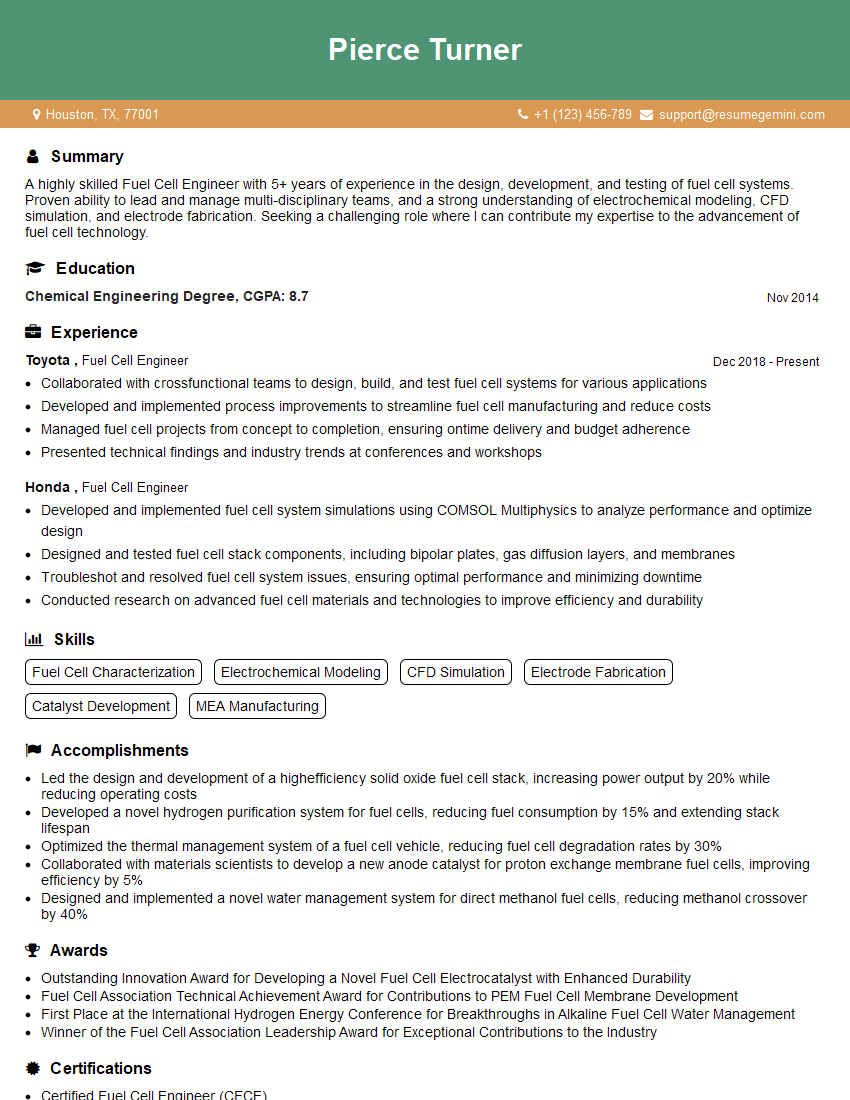
Mastering fuel cell manufacturing opens doors to a dynamic and rapidly growing industry. A strong foundation in these core concepts is crucial for securing your dream role and driving innovation in clean energy technology. To maximize your job prospects, it’s essential to create a compelling and ATS-friendly resume that highlights your skills and experience effectively. We recommend leveraging ResumeGemini, a trusted resource for building professional resumes that stand out. ResumeGemini provides examples of resumes tailored specifically to the Fuel Cell Manufacturing industry, helping you present your qualifications in the best possible light.
Explore more articles
Users Rating of Our Blogs
Share Your Experience
We value your feedback! Please rate our content and share your thoughts (optional).
What Readers Say About Our Blog
Very informative content, great job.
good