The thought of an interview can be nerve-wracking, but the right preparation can make all the difference. Explore this comprehensive guide to Functional Safety (ISO 26262) interview questions and gain the confidence you need to showcase your abilities and secure the role.
Questions Asked in Functional Safety (ISO 26262) Interview
Q 1. Explain the different Automotive Safety Integrity Levels (ASILs) and their significance.
Automotive Safety Integrity Levels (ASILs) are a classification scheme defined in ISO 26262 to specify the required safety integrity for a given automotive function. They represent the severity of potential hazards associated with a system’s malfunction. The higher the ASIL, the more stringent the safety requirements.
- ASIL A: Lowest severity. The potential harm is minor. Think of a malfunctioning window regulator – inconvenient, but not dangerous.
- ASIL B: Moderate severity. A malfunction could lead to minor injuries or significant vehicle damage. An example might be a faulty parking assist system causing a minor collision.
- ASIL C: High severity. A malfunction could result in serious injuries or fatalities. This might apply to a malfunctioning braking system.
- ASIL D: Highest severity. A malfunction is highly likely to lead to severe injuries or fatalities. This ASIL level is reserved for the most critical functions, such as the main airbag deployment system.
The significance of ASILs lies in driving the development process. Higher ASILs necessitate more rigorous testing, verification, and validation techniques, leading to increased development costs and complexity.
Q 2. Describe the process of Hazard Analysis and Risk Assessment (HARA).
Hazard Analysis and Risk Assessment (HARA) is a systematic process to identify potential hazards in a system and assess their associated risks. It’s a crucial step in the ISO 26262 process, laying the foundation for safety requirements definition.
The process typically involves these steps:
- Hazard Identification: Systematically identifying potential hazards that could lead to unintended behavior and harm.
- Hazard Analysis: Analyzing each identified hazard to understand its causes, severity, and potential consequences. This might involve brainstorming sessions, Failure Modes and Effects Analysis (FMEA), or Fault Tree Analysis (FTA).
- Risk Assessment: Evaluating the likelihood of each hazard occurring and combining it with the severity of its consequences to determine the overall risk.
- Risk Control: Determining appropriate measures to mitigate or eliminate the identified risks. This could involve design modifications, safety mechanisms, or warnings.
Example: In the development of an Advanced Driver-Assistance System (ADAS), HARA would identify hazards such as unintended acceleration, lane departure, or collision avoidance failure. By analyzing each hazard, assigning probabilities and severities, and mitigating risks through appropriate software and hardware design, a safer system can be created.
Q 3. How do you determine the ASIL level for a given system or function?
Determining the ASIL level for a system or function requires a structured approach, typically involving a hazard analysis and risk assessment. It’s a multi-faceted evaluation considering the severity, probability, and controllability of hazards.
The process generally involves:
- Identifying potential hazards: What can go wrong?
- Estimating the severity of each hazard: What are the potential consequences (injury, property damage, etc.)?
- Estimating the probability of occurrence: How likely is each hazard to occur during the vehicle’s lifespan?
- Evaluating the controllability: How easily can the hazard be mitigated through design or other means?
- Combining these factors: Using a pre-defined table or matrix based on ISO 26262, these three factors (severity, probability, controllability) are combined to determine the ASIL level.
Example: A malfunction in the brake system could cause a severe accident (high severity), occur with low probability due to redundancy and safety mechanisms, but could be difficult to control if a major part fails (low controllability). Depending on the numerical values assigned to these aspects, this might result in an ASIL B or ASIL C.
Q 4. What are the key differences between safety requirements and functional requirements?
While both functional and safety requirements define what a system should do, they differ significantly in their focus and implications:
- Functional Requirements: Specify the intended functionality of a system. They describe what the system *should* do under normal operating conditions. Example: “The headlights shall illuminate when the light switch is activated.”
- Safety Requirements: Specify how the system should behave to prevent or mitigate hazards. They focus on avoiding unintended behavior and ensuring safe operation, even in the case of malfunctions. Example: “The headlight system shall not fail in a way that impairs visibility in the event of a single point failure.”
The key difference lies in their objectives: functional requirements focus on normal operation, whereas safety requirements focus on preventing or reducing risks associated with failures.
Q 5. Explain the concept of safety goals and how they relate to ASIL decomposition.
Safety goals are high-level objectives defining the intended safety behavior of a system. They describe the desired safety outcome and guide the development process. ASIL decomposition involves breaking down the overall safety goals into smaller, manageable safety requirements, each assigned a specific ASIL level.
Example: A safety goal might be “Prevent uncontrolled acceleration.” This goal then gets decomposed into several safety requirements at different ASIL levels. For example, requirements related to the throttle control system might be ASIL D, while those related to a less critical auxiliary system might only require ASIL A. Each requirement is traced back to this higher-level goal and its contribution to meeting the overall safety objectives is demonstrably proven.
ASIL decomposition ensures that safety measures are implemented proportionately to the risk associated with each function, optimizing the development effort while guaranteeing the required level of safety.
Q 6. Describe your experience with Fault Tree Analysis (FTA) and its application in ISO 26262.
Fault Tree Analysis (FTA) is a top-down, deductive technique used to systematically identify combinations of events that could lead to a specific undesired event (top event). It’s a powerful tool in ISO 26262 for identifying potential failures and assessing their contribution to system-level risks. I have extensive experience using FTA software tools to construct and analyze fault trees for complex systems.
Application in ISO 26262: FTA is often employed during the hazard analysis and risk assessment phase to identify potential failure scenarios. By building a fault tree, engineers can graphically represent the different ways a hazard could occur, making it easier to identify the critical contributing factors. This allows prioritization of safety requirements and effective mitigation strategies.
Example: For an electric power steering system, an FTA could be constructed for the top event “Loss of steering assist.” The tree would depict various contributing factors such as power supply failures, software errors, and sensor malfunctions, allowing quantification of their probabilities and contribution to the risk.
Q 7. How do you manage safety requirements throughout the entire vehicle development lifecycle?
Managing safety requirements throughout the vehicle development lifecycle is critical for ensuring that the final product meets the required safety standards. My approach involves integrating safety requirements management into all phases:
- Concept and System Design: Identifying hazards and assigning ASIL levels, defining safety goals and top-level requirements. Establishing traceability from safety goals to individual safety requirements.
- Software and Hardware Development: Developing safety mechanisms and implementing requirements, conducting safety analysis (e.g., FMEA, FTA) at each design stage.
- Verification and Validation: Performing extensive testing and simulations to verify that requirements are met and the system functions as intended, even under fault conditions. This often includes using both hardware-in-the-loop (HIL) and software-in-the-loop (SIL) testing.
- Production and Operation: Monitoring the performance of the system in the field and taking corrective actions if safety issues are detected.
Throughout the lifecycle, maintaining traceability between safety requirements, design elements, test cases, and verification results is crucial for demonstrating compliance with ISO 26262.
This is often supported by specialized safety requirement management tools which help track changes, ensure consistency and maintain complete traceability.
Q 8. Explain the concept of safety mechanisms and their role in mitigating hazards.
Safety mechanisms are features or functions designed to reduce or eliminate hazards. Think of them as the ‘safety net’ in a complex system. They’re implemented to prevent hazardous events or mitigate their consequences if they do occur. Their role is crucial in mitigating hazards by intervening at different levels, preventing accidents, reducing their severity, or limiting their impact.
- Prevention: A seatbelt in a car prevents ejection during a collision. This is a preventative safety mechanism.
- Mitigation: Airbags reduce the severity of injuries in a car accident. This is a mitigating safety mechanism.
- Limitation: A pressure relief valve in a pressure vessel prevents over-pressurization, limiting the potential for catastrophic failure. This is a limiting safety mechanism.
The effectiveness of safety mechanisms depends on their design, implementation, and proper functioning. ISO 26262 provides a framework for selecting and implementing appropriate safety mechanisms based on the Automotive Safety Integrity Level (ASIL) of the hazard.
Q 9. What are the key considerations for safety verification and validation activities?
Safety verification and validation (V&V) activities are critical for ensuring that the safety requirements are met throughout the entire lifecycle. Key considerations include:
- Coverage: V&V activities must cover all aspects of the system, including hardware, software, and interactions between components. This needs to be planned methodically, considering the ASIL level.
- Independence: The V&V team should be independent from the development team to ensure objectivity and unbiased assessment. This helps catch blind spots.
- Traceability: A clear and auditable trail linking requirements, design, implementation, and V&V activities is essential for demonstrating compliance. This involves creating comprehensive documentation.
- ASIL Level: The rigor of V&V activities is directly proportional to the ASIL level. Higher ASIL levels demand more extensive and rigorous V&V.
- Tool Qualification: If tools are used in the V&V process (e.g., simulation software), their qualification and suitability must be established to ensure reliable results.
- Documentation: Comprehensive documentation of all V&V activities, including plans, results, and deviations, is crucial for demonstrating compliance and supporting future maintenance.
Ignoring these considerations can lead to insufficient safety measures, resulting in potential hazards and failures that compromise safety.
Q 10. Describe different safety verification methods (e.g., analysis, testing, simulation).
Several safety verification methods are employed in ISO 26262, often in combination:
- Fault Tree Analysis (FTA): A top-down deductive technique identifying combinations of events that can lead to a specific hazardous event. It visually represents potential failure paths.
- Failure Mode and Effects Analysis (FMEA): A bottom-up inductive approach that systematically identifies potential failure modes of individual components and their effects on the system. It’s used for risk assessment and prioritizing safety improvements.
- Hazard Analysis and Risk Assessment (HARA): The initial step identifying potential hazards and evaluating their risks. This helps prioritize safety requirements and define ASIL levels.
- Software Unit/Integration Testing: Verifying the correct functioning of individual software units and their interactions. Unit tests are often coded to automate checks.
- Hardware-in-the-loop (HIL) Simulation: Testing embedded software by simulating the real-world environment and interactions with hardware components.
- Software-in-the-loop (SIL) Simulation: Similar to HIL but without physical hardware, ideal for early testing and prototyping.
- Formal Methods: Rigorous mathematical techniques (e.g., model checking) to verify software properties and demonstrate the absence of specific faults. These methods are particularly suitable for high-ASIL systems.
The choice of verification method depends on the ASIL level, the complexity of the system, and the available resources. A combination of methods is generally employed for comprehensive verification.
Q 11. Explain the importance of safety metrics and how they are used to monitor progress.
Safety metrics are quantitative measures that track the progress of safety activities and provide insights into the effectiveness of safety measures. They help monitor the effectiveness of the safety process. Examples include:
- Number of open safety issues: Tracks the number of unresolved safety concerns throughout the development process.
- Defect density: Measures the number of defects per lines of code (LOC) or other relevant metrics. It indicates the reliability of the software.
- Test coverage: Percentage of code executed during testing. Higher coverage indicates broader verification but doesn’t guarantee fault-free operation.
- Mean Time Between Failures (MTBF): Predicts the average time between failures, providing an indication of system reliability.
- Safety Integrity Level (SIL) achievement: Tracks progress towards meeting required safety goals, showing if targets are on track or adjustments are needed.
Safety metrics are used to make informed decisions, identify areas needing improvement, allocate resources effectively, and demonstrate compliance with safety standards. Regular monitoring and reporting on safety metrics are crucial for continuous improvement.
Q 12. How do you address safety concerns related to software and hardware components?
Addressing safety concerns related to software and hardware components requires a multi-faceted approach based on ISO 26262 guidelines. This includes:
- Hardware: Utilizing robust hardware components with well-defined failure rates. Redundancy and fault tolerance mechanisms are implemented to mitigate single-point failures. Regular testing and validation of hardware components are also crucial.
- Software: Employing secure coding guidelines, static and dynamic code analysis, unit and integration tests to find potential problems. Formal methods and model checking may be used for higher ASIL levels. Design for safety with appropriate error handling and fail-safe mechanisms are crucial.
- Component Selection: Rigorous selection of qualified components (hardware and software) with documented failure rates and safety certifications. This ensures that the building blocks of the system meet the required safety standards.
- Safety Requirements: Clearly defining safety requirements for both hardware and software early in the development process. These requirements must be traceable through the entire development lifecycle.
Throughout development, regular reviews and audits ensure that safety requirements are being met. Proper documentation is essential for traceability and demonstrating compliance.
Q 13. Describe your experience with safety analysis techniques such as FMEA (Failure Mode and Effects Analysis).
I have extensive experience with FMEA (Failure Mode and Effects Analysis). It’s a systematic, proactive method used to identify potential failure modes in a system, analyze their effects, and estimate their severity, probability, and detectability. This information is combined into a Risk Priority Number (RPN), which helps prioritize mitigation efforts.
In practice, I lead teams in conducting FMEA workshops. We use a structured approach:
- Define the System/Component: Clearly define the scope of the FMEA, specifying the system or component under analysis.
- Identify Potential Failure Modes: Brainstorm potential failure modes for each component, considering all possible causes and effects.
- Effects Analysis: Determine the effects of each failure mode on the system’s functionality and safety.
- Severity Rating: Assign a severity rating (e.g., 1-10 scale) to each effect based on its impact on safety.
- Occurrence Rating: Estimate the probability of each failure mode occurring.
- Detection Rating: Assess the likelihood of detecting each failure mode before it causes harm.
- Risk Priority Number (RPN) Calculation: Calculate the RPN (Severity x Occurrence x Detection) for each failure mode.
- Mitigation Actions: Develop mitigation strategies to reduce the RPN for high-risk failure modes.
- Implementation and Verification: Implement the mitigation actions and verify their effectiveness.
The FMEA process helps proactively identify and mitigate potential hazards, contributing significantly to the overall safety of the system. The results are documented thoroughly and regularly reviewed and updated.
Q 14. How do you handle safety-critical situations during the development process?
Handling safety-critical situations during development requires a well-defined process and a proactive mindset. My approach focuses on:
- Incident Reporting and Investigation: Establish a clear procedure for reporting and investigating safety-critical incidents or near misses. This helps identify root causes and prevent recurrence.
- Root Cause Analysis (RCA): Conduct thorough RCA to determine the underlying causes of safety-critical incidents, going beyond superficial explanations.
- Corrective Actions: Develop and implement effective corrective actions to address the identified root causes and prevent similar incidents in the future. This includes updating processes, documentation, and software/hardware.
- Change Management: Implement a robust change management process to ensure that any changes to the system are thoroughly evaluated for safety implications before implementation.
- Risk Assessment and Mitigation: Regularly assess the risks associated with the system and implement appropriate mitigation strategies.
- Safety Review Boards: Establish a safety review board composed of experts from different disciplines to review safety-critical aspects of the development process.
Proactive risk management, thorough incident investigation, and a strong safety culture are crucial for effectively handling safety-critical situations and ensuring the safety of the final product. Transparency and open communication are essential to foster a proactive safety environment.
Q 15. Explain the role of safety culture in achieving ISO 26262 compliance.
A strong safety culture is the bedrock of ISO 26262 compliance. It’s not just about ticking boxes; it’s a mindset that permeates every level of the organization, from engineering to management. It fosters a proactive approach to safety, where identifying and mitigating risks is prioritized above all else. Think of it like this: a building’s structural integrity depends not only on the materials used but also on the meticulous work of the builders. Similarly, a safe automotive system requires a dedicated team with a shared commitment to safety.
Key elements of a safety-conscious culture include:
- Open Communication: Encouraging employees to report hazards without fear of retribution. This requires clear channels of communication and trust between team members.
- Proactive Risk Management: Regularly identifying and assessing potential hazards throughout the product lifecycle, not just at the end. This involves hazard analysis and risk assessment (HARA) at every stage of development.
- Continuous Improvement: Regularly reviewing processes and safety measures to identify areas for improvement. This includes learning from near-misses and incidents to prevent future occurrences.
- Competence and Training: Ensuring that all team members have the necessary skills and knowledge to perform their tasks safely and to understand the implications of their work on the overall safety of the system. This includes training on ISO 26262 standards and relevant safety methodologies.
Without a robust safety culture, even the most meticulously designed safety mechanisms can be undermined by human error, negligence, or a lack of commitment. For instance, a team that prioritizes speed over safety might cut corners, leading to a compromised safety system.
Career Expert Tips:
- Ace those interviews! Prepare effectively by reviewing the Top 50 Most Common Interview Questions on ResumeGemini.
- Navigate your job search with confidence! Explore a wide range of Career Tips on ResumeGemini. Learn about common challenges and recommendations to overcome them.
- Craft the perfect resume! Master the Art of Resume Writing with ResumeGemini’s guide. Showcase your unique qualifications and achievements effectively.
- Don’t miss out on holiday savings! Build your dream resume with ResumeGemini’s ATS optimized templates.
Q 16. What are the key challenges in implementing ISO 26262 in a real-world project?
Implementing ISO 26262 presents numerous challenges in real-world projects. These challenges often stem from a combination of technical, organizational, and cultural factors.
- High Costs and Time Overhead: The rigorous processes required by ISO 26262 significantly increase development time and costs. Extensive documentation, testing, and verification activities are necessary, pushing project budgets and timelines.
- Complexity of Safety Requirements: Defining and managing safety requirements across various subsystems and software components can be highly complex. Ensuring traceability and consistency across the entire system poses a significant challenge.
- Tool Selection and Integration: Finding and integrating suitable safety-critical tools for various stages of development (requirements management, design, testing, etc.) can be challenging. Effective integration across different tools and teams is crucial.
- Managing Change Requests: Modifications introduced during the development process can impact safety. A robust change management process needs to be established to ensure that changes are properly evaluated and documented to maintain safety integrity.
- Skill Gaps: A lack of skilled personnel with expertise in functional safety methodologies and tools can be a significant hurdle. Adequate training and recruitment are essential.
- Collaboration across Teams: Efficient collaboration between hardware and software development teams, testing teams, and safety managers is vital to success. Clear communication channels and well-defined roles are necessary.
For example, a project I worked on faced significant delays due to the integration of diverse safety-critical tools. Overcoming this required careful planning, extensive training, and collaboration with the tool vendors.
Q 17. Describe your experience with safety management tools and techniques.
My experience encompasses a wide range of safety management tools and techniques. I’ve worked extensively with requirements management tools such as DOORS and Jama Software to capture, trace, and manage safety requirements. These tools help in maintaining traceability throughout the V-model.
For hazard analysis and risk assessment (HARA), I’ve utilized techniques like Failure Mode and Effects Analysis (FMEA), Fault Tree Analysis (FTA), and Hazard and Operability Study (HAZOP). These techniques help in systematically identifying potential hazards and evaluating their associated risks.
In terms of verification and validation, I’ve used various tools and techniques, including static analysis tools for software code, simulation tools for system-level testing, and hardware-in-the-loop (HIL) testing to evaluate safety-critical functions under realistic conditions. We also used model-based development (MBD) which significantly improved traceability.
Furthermore, I’m proficient in using defect tracking tools to manage identified issues and track their resolution, ensuring that safety-related problems are addressed promptly and effectively. A well-documented workflow involving regular safety reviews helped improve the overall quality of the final product.
Q 18. How do you ensure traceability of safety requirements throughout the development process?
Traceability of safety requirements is paramount in ISO 26262 compliance. It ensures that every safety requirement is addressed throughout the entire development lifecycle, from initial concept to final product validation. Think of it as a clear and unbroken chain of evidence demonstrating that all safety concerns have been adequately addressed.
We achieve this through a combination of:
- Unique Identifiers: Assigning unique identifiers to each safety requirement and linking them to design specifications, test cases, and verification results. This ensures that every requirement can be easily traced across all development stages.
- Requirements Management Tools: Utilizing tools like DOORS or Jama Software to manage and track requirements, providing a central repository for all safety-related information and automatically managing traceability links.
- Version Control: Implementing strict version control for all documents and artifacts to maintain a clear history of changes and their impact on safety.
- Traceability Matrix: Creating a traceability matrix that visually depicts the relationships between different safety artifacts, enabling easy identification of gaps or inconsistencies.
- Model-Based Development (MBD): Using MBD techniques helps establish strong traceability links between requirements, models, and code. Changes in the model are automatically reflected in the code, minimizing the risk of divergence.
For instance, a requirement might state “The braking system must stop the vehicle within X meters at Y speed.” This requirement would be linked to design specifications outlining the braking system’s components, test cases verifying its performance, and test results demonstrating that the requirement is met. This chain ensures that if a change is made, its impact on this particular requirement can be easily evaluated and documented.
Q 19. What are the key differences between ISO 26262 and other functional safety standards?
While ISO 26262 is specifically tailored for the automotive industry, other functional safety standards exist for different domains. The key differences lie in the specific hazards, risk levels, and regulatory requirements associated with each industry.
- IEC 61508: This is the generic functional safety standard for electrical/electronic/programmable electronic safety-related systems. ISO 26262 is essentially a sector-specific adaptation of IEC 61508 for automotive applications. It incorporates specific automotive hazards and context.
- IEC 62061 (Machinery): Addresses functional safety for machinery, focusing on risks associated with mechanical hazards.
- EN 50128 (Railway): Covers the functional safety of railway systems, dealing with the unique challenges and hazards of railway operation.
- DO-178C (Aviation): Dedicated to airborne systems, emphasizing high levels of reliability and safety in aviation applications.
The key distinctions usually involve the level of detail in hazard analysis, the required safety integrity levels (SILs or ASILs), and the specific methods and techniques recommended for verification and validation. For example, the acceptable failure rates and the specific testing rigor might differ significantly across industries.
Q 20. Explain the concept of a safety case and its importance in demonstrating compliance.
A safety case is a structured argument demonstrating that the safety requirements of a system have been adequately addressed. It provides a comprehensive overview of all safety-related activities and their outcomes, showing that the necessary precautions have been taken to prevent or mitigate potential hazards.
It’s essentially a formal document that:
- Identifies potential hazards: Through hazard analysis and risk assessment.
- Describes safety requirements: Defining what needs to be done to mitigate these hazards.
- Explains how these requirements are met: Through the design, implementation, and verification processes.
- Provides evidence of compliance: Presenting verification and validation results, test reports, and other relevant documentation.
The importance of a safety case lies in its ability to provide a clear and auditable record demonstrating compliance with the relevant safety standard (ISO 26262 in this case). It allows for independent review and assessment of the safety integrity of the system, building confidence that the system is adequately safe for its intended use. Without a strong safety case, it’s difficult to confidently assert that the system meets the required safety standards.
Think of it as a legal defense for the safety of your system; it systematically presents all the evidence supporting the claim that the system is safe.
Q 21. How do you manage changes to safety requirements during the development process?
Managing changes to safety requirements during development is critical to maintain the safety integrity of the system. A robust change management process is essential to ensure that any modifications are properly assessed and don’t introduce new risks or compromise existing safety mechanisms.
Our approach typically includes:
- Change Request Process: A formal process for submitting, reviewing, and approving change requests. This includes assessing the impact of the proposed change on safety and determining the necessary actions to maintain safety integrity.
- Impact Assessment: A thorough assessment of the proposed change’s impact on existing safety requirements, design, and verification activities. This helps in identifying potential risks and determining the level of effort required for re-verification.
- Risk Re-assessment: Re-evaluating the risks associated with the system after the change is implemented. This might involve updating the hazard analysis and risk assessment documentation.
- Verification and Validation: Conducting additional verification and validation activities to ensure that the safety requirements are still met after the change. This could include additional testing, simulations, or analysis.
- Documentation: Maintaining detailed records of all changes, their impact on safety, and the steps taken to mitigate any potential risks. This ensures complete traceability and auditability.
Imagine a change request to add a new feature to a car’s infotainment system. While seemingly unrelated to safety, it might introduce new risks (e.g., distractions for the driver). Our process would involve carefully assessing these risks, updating the safety requirements if necessary, and conducting testing to ensure the added feature doesn’t compromise driving safety. All changes are then documented to maintain full traceability.
Q 22. Describe your experience with safety reporting and documentation.
Safety reporting and documentation are crucial for maintaining a traceable record of safety-related activities throughout a project’s lifecycle. My experience encompasses creating and managing various safety-related documents, including hazard analyses (e.g., FMEAs – Failure Mode and Effects Analyses), safety requirements specifications, test plans and reports, and safety case documentation. I’m proficient in using tools like Jira and Confluence for efficient tracking and collaboration. For instance, in a previous project involving an automotive braking system, I spearheaded the creation of a comprehensive FMEA, identifying potential hazards and their severity, probability, and detectability. This FMEA was meticulously updated throughout the development process, ensuring complete traceability of identified risks and mitigation strategies. This detailed documentation allowed us to effectively manage safety risks and comply with ISO 26262 requirements.
I’m also experienced in managing deviation requests and ensuring proper change control procedures are followed. This involves rigorous review and approval processes to maintain the safety integrity of the system. I believe meticulous documentation, combined with proactive risk management, is fundamental to achieving the highest safety standards.
Q 23. How do you ensure that your work complies with ISO 26262 standards?
Ensuring compliance with ISO 26262 involves a systematic approach that permeates every stage of the development lifecycle. This starts with a thorough hazard analysis and risk assessment to determine the Automotive Safety Integrity Level (ASIL) for each system function. Based on the determined ASIL, we select appropriate safety requirements, design methods, and verification and validation techniques. We utilize a safety-oriented development process, such as V-model or Agile with safety considerations embedded, to ensure continuous monitoring and control of safety-related aspects.
Throughout the development process, we maintain a rigorous documentation trail that includes safety requirements, design descriptions, test plans, and results. Regular safety reviews are conducted to evaluate compliance and identify potential safety issues. Traceability matrices are used to connect requirements to design elements, tests, and verification evidence. This approach guarantees a clear and auditable path from initial hazard analysis to final system verification, demonstrating compliance with ISO 26262.
Further, we ensure that all our tools and processes are appropriate for the ASIL level. This includes using safety-certified tools and following guidelines for coding standards (e.g., MISRA C) and configuration management. Regular training on ISO 26262 is mandatory for all team members to maintain awareness and competency. We consider ISO 26262 not just a set of standards, but a framework that fosters a safety culture within the entire team.
Q 24. Explain the concept of safety integrity level (SIL) and its relation to ASIL.
ASIL (Automotive Safety Integrity Level) and SIL (Safety Integrity Level) are both crucial metrics for quantifying the required safety level for a given function or system. While both define the necessary level of safety, they are used in different contexts. ASIL, specific to ISO 26262 in the automotive industry, categorizes hazards based on the severity of potential harm, probability of occurrence, and controllability. It’s a qualitative assessment resulting in four levels: ASIL A (lowest), ASIL B, ASIL C, and ASIL D (highest).
SIL, on the other hand, is a more general term often used in other safety standards like IEC 61508 for functional safety in industrial systems. It’s a quantitative measure that defines the probability of dangerous failure. Similar to ASIL, it also has multiple levels (typically SIL 1 to SIL 4), where SIL 4 represents the highest safety integrity. The relationship is that the ASIL level determined for an automotive function dictates the minimum required SIL level for the safety-related systems implementing that function. For example, an ASIL D requirement would necessitate the implementation of systems with at least SIL 4 integrity.
The key difference lies in their application and how the levels are determined. ASIL focuses on hazard analysis and risk assessment in the automotive domain, while SIL represents the quantitative level of safety integrity needed to achieve the ASIL requirement. Both are equally vital for ensuring functional safety and preventing hazardous situations.
Q 25. What are the different methods for testing safety-related software?
Testing safety-related software requires a multifaceted approach ensuring thorough verification and validation. Methods include:
- Unit Testing: Testing individual software modules in isolation to verify their correctness.
- Integration Testing: Testing the interaction between different modules to ensure proper integration.
- System Testing: Testing the entire system to ensure it meets all requirements, including safety requirements.
- Static Analysis: Analyzing the source code without executing it to detect potential errors, such as coding standard violations (e.g., MISRA C violations).
- Dynamic Analysis: Executing the software and monitoring its behavior to detect runtime errors, using tools such as code coverage analysis and fault injection.
- Formal Verification: Using mathematical techniques to prove the correctness of the software based on its specifications.
- Software-in-the-Loop (SIL) testing: Testing the software using a simulated environment.
- Hardware-in-the-Loop (HIL) testing: Testing the software interacting with real or simulated hardware.
The choice of methods depends on the ASIL level. Higher ASIL levels require more rigorous testing, including the use of formal methods and more extensive coverage analysis. Furthermore, independent verification and validation (IV&V) is crucial for high ASIL levels, involving a separate team to review and test the software.
Q 26. How do you incorporate safety considerations into the design of embedded systems?
Incorporating safety considerations into embedded systems design is paramount. This begins with a thorough hazard analysis and risk assessment to identify potential hazards and their associated ASIL levels. Based on this analysis, we implement safety mechanisms throughout the design process. This includes:
- Redundancy: Employing redundant hardware and software components to increase system reliability. For example, using dual processors with independent monitoring and voting mechanisms.
- Diversification: Using different hardware and software architectures to reduce the probability of common-mode failures.
- Fault Detection and Mitigation: Implementing mechanisms to detect and handle faults, such as watchdog timers and error handling routines.
- Safety-related software design: Following coding guidelines (MISRA C) and using safe coding practices, avoiding potentially unsafe functions or constructions.
- Safety Requirements Specification: Defining and documenting clear and precise safety requirements that are traceable to hazards and ASIL levels.
Throughout the design process, we prioritize safety mechanisms over performance optimization to guarantee that safety is never compromised. Regular reviews and audits ensure compliance with safety standards and identify potential design weaknesses. Using a structured design process helps manage complexity and ensures that safety considerations are not overlooked.
Q 27. Describe your experience with safety-related hardware design and selection.
My experience with safety-related hardware design and selection focuses on ensuring that the hardware components meet the required safety integrity levels. This involves selecting components with appropriate certifications (e.g., ISO 26262 compliant microcontrollers), designing hardware with built-in fault tolerance mechanisms (such as redundancy and error detection), and performing rigorous hardware testing to verify its reliability and safety. I’ve worked on projects that required the use of specialized hardware components such as safety microcontrollers with built-in diagnostics and safety mechanisms.
Selecting components requires a deep understanding of their specifications and limitations. We analyze datasheets carefully to ensure that the components meet the functional safety requirements. We also evaluate the supplier’s quality management system and their track record to ensure that they can provide reliable and certified components. For example, in a project involving an advanced driver-assistance system (ADAS), I played a key role in selecting and qualifying a safety-certified microcontroller that met the stringent requirements for ASIL D.
Hardware design considerations include the use of appropriate protection mechanisms against environmental hazards like electromagnetic interference (EMI) and electrostatic discharge (ESD). We also employ design techniques like proper grounding and shielding to minimize the risk of hardware failures.
Q 28. How do you ensure the independence of safety verification and validation activities?
Ensuring the independence of safety verification and validation (V&V) activities is critical for achieving a high level of confidence in the safety of the system. This is achieved through organizational separation and clearly defined responsibilities. Ideally, the team responsible for developing the system should not be responsible for verifying its safety. This independence prevents potential bias and ensures an objective assessment of the system’s safety. In practice, this can be achieved by:
- Using separate teams: Different teams handle development and V&V activities.
- Employing external experts: Outsourcing V&V activities to an independent organization with expertise in functional safety.
- Formal review processes: Establishing a formal process for reviewing V&V activities and documentation.
- Clear documentation: Maintaining comprehensive documentation for all V&V activities.
The independence of the V&V process is crucial for impartiality and reduces the risk of overlooking safety-critical flaws. By separating these processes, we maximize the chances of identifying and mitigating potential safety hazards, ensuring compliance with functional safety standards and contributing to the overall safety of the system.
Key Topics to Learn for Functional Safety (ISO 26262) Interview
Landing your dream Functional Safety role requires a solid understanding of ISO 26262. This isn’t just about memorizing standards; it’s about demonstrating your ability to apply these principles in real-world scenarios. Focus your preparation on these key areas:
- Hazard Analysis and Risk Assessment (HARA): Understand different HARA methods, how to identify potential hazards in automotive systems, and how to assess and mitigate risks effectively. Practice applying these methods to hypothetical scenarios.
- Safety Requirements Specification and Management: Learn how to translate hazards into concrete safety requirements, trace these requirements throughout the development lifecycle, and manage changes effectively. Consider the challenges of balancing safety with other project constraints.
- Safety Architectural Design: Explore different safety architectures (e.g., hardware redundancy, software diversity) and how to select the appropriate architecture based on Automotive Safety Integrity Level (ASIL). Be prepared to discuss the trade-offs involved.
- Safety Verification and Validation: Understand the various techniques used to verify and validate the safety of automotive systems, including testing methods, simulations, and analyses. Be ready to explain how these methods contribute to demonstrating compliance with ISO 26262.
- ASIL Decomposition and Determination: Master the process of decomposing high-level ASIL requirements into lower-level requirements and the rationale behind ASIL determination. This demonstrates your understanding of risk propagation.
- Safety Cases and Documentation: Understand the importance of meticulous documentation and the creation of a compelling safety case that demonstrates compliance with ISO 26262. Prepare to discuss the structure and content of a safety case.
- Fault Injection and Fault Tolerance: Explore methods for injecting faults into systems to assess their resilience and the mechanisms employed to achieve fault tolerance. Discuss various fault tolerance techniques and their limitations.
Next Steps
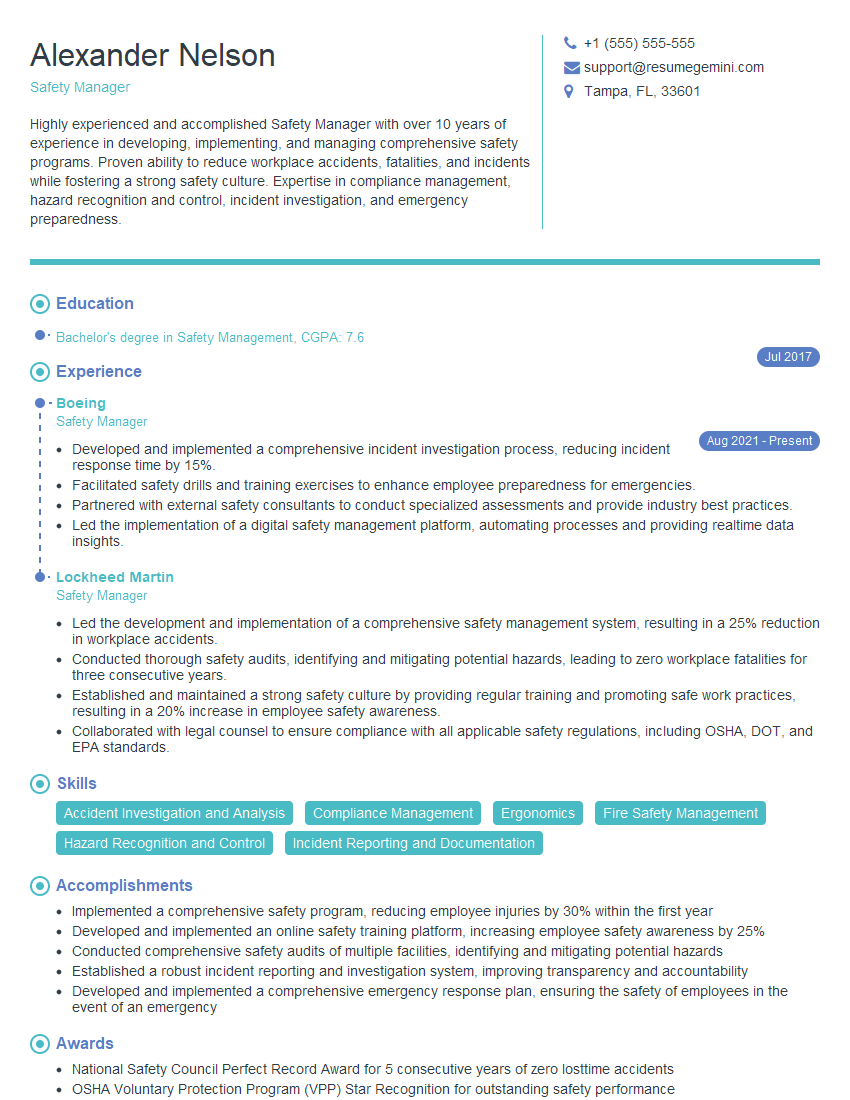
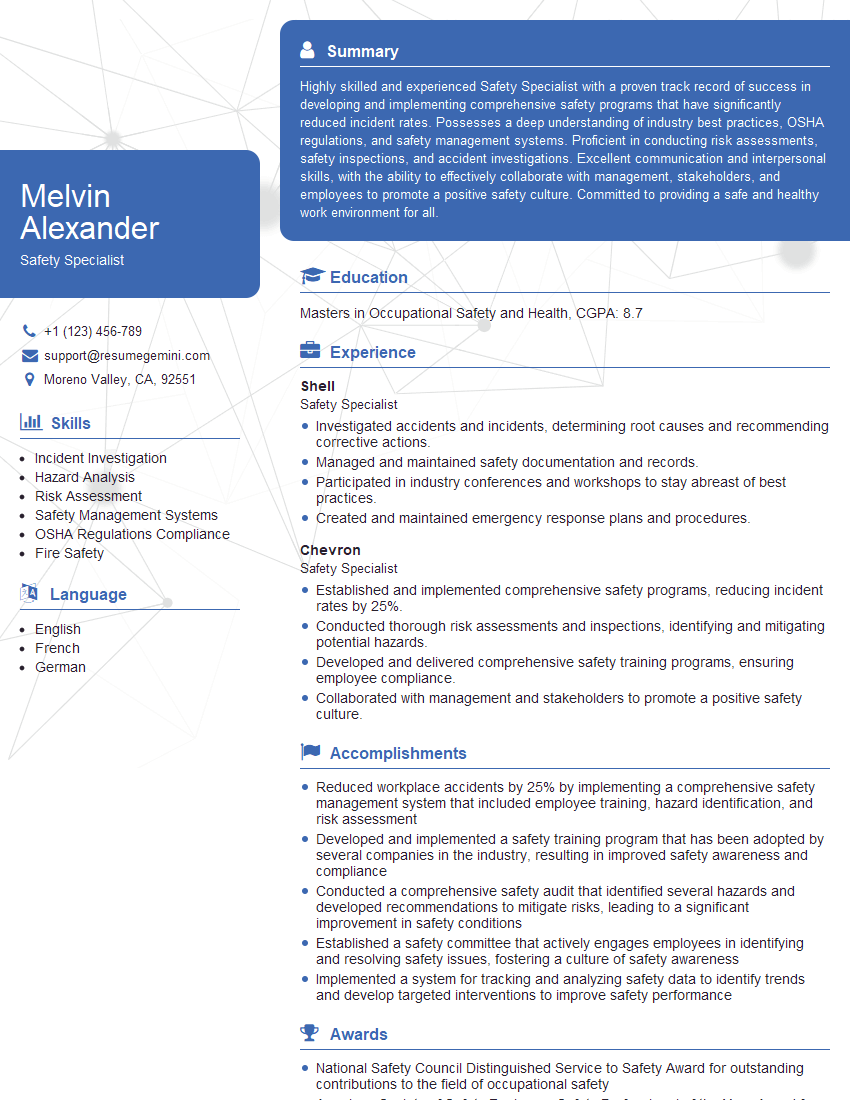
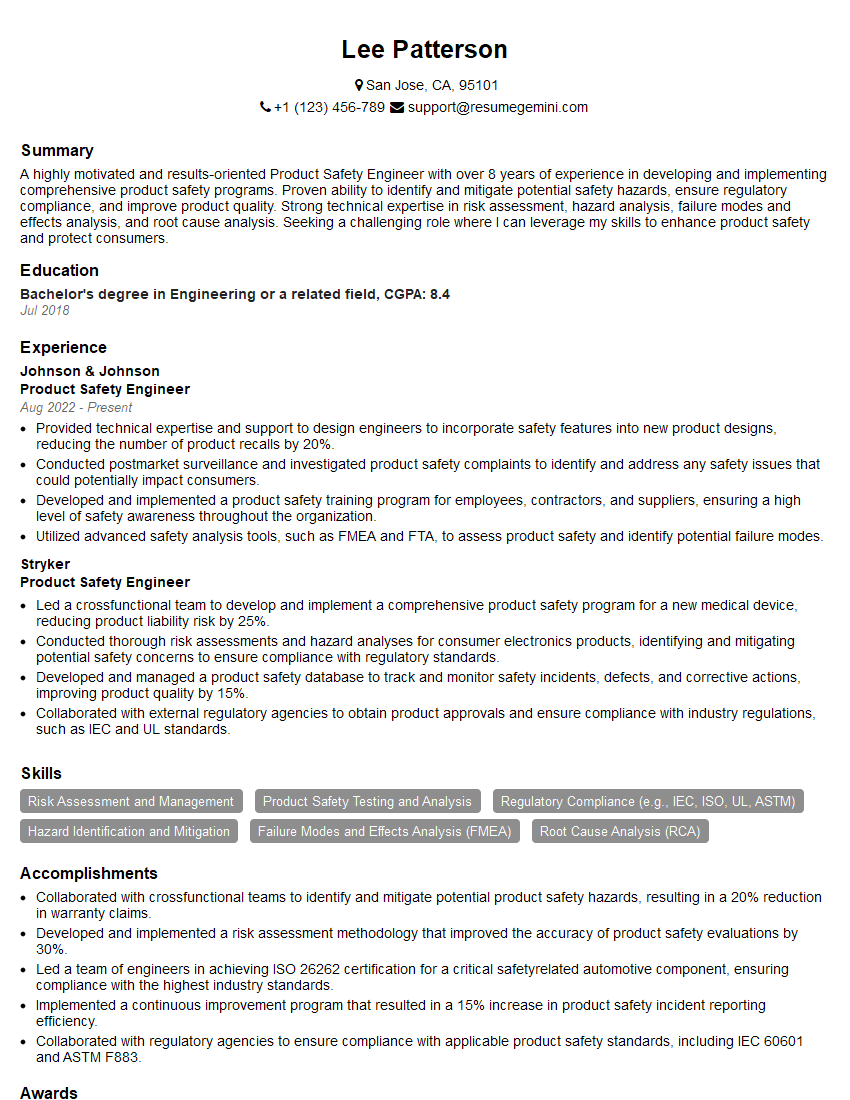
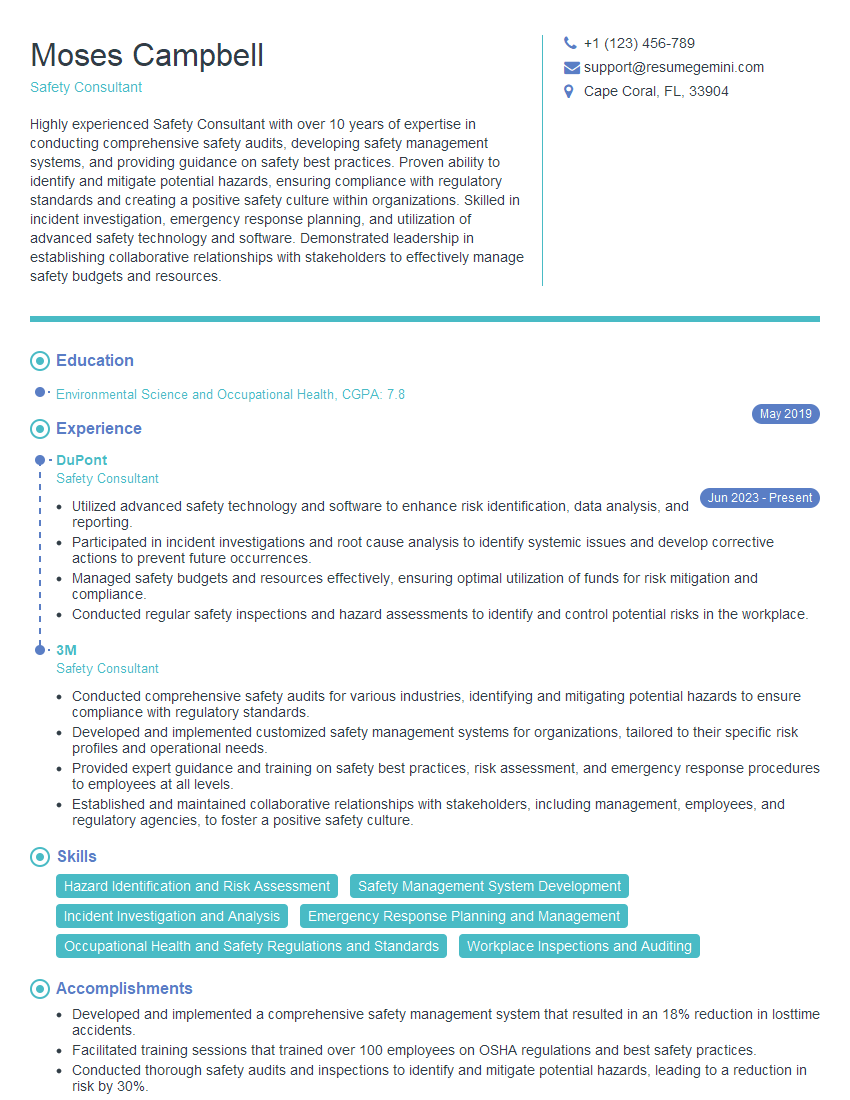
Mastering Functional Safety (ISO 26262) is crucial for a successful and rewarding career in the automotive industry. It opens doors to challenging and impactful roles, showcasing your expertise in a critical area of vehicle development. To maximize your job prospects, it’s equally important to present your skills effectively. Building an ATS-friendly resume is key to getting your application noticed. We strongly recommend leveraging ResumeGemini to create a professional and impactful resume that highlights your Functional Safety expertise. ResumeGemini provides examples of resumes tailored to Functional Safety (ISO 26262) roles, helping you showcase your qualifications effectively.
Explore more articles
Users Rating of Our Blogs
Share Your Experience
We value your feedback! Please rate our content and share your thoughts (optional).
What Readers Say About Our Blog
Very informative content, great job.
good