Unlock your full potential by mastering the most common Fundraising and Budgeting interview questions. This blog offers a deep dive into the critical topics, ensuring you’re not only prepared to answer but to excel. With these insights, you’ll approach your interview with clarity and confidence.
Questions Asked in Fundraising and Budgeting Interview
Q 1. Describe your experience with developing and managing fundraising budgets.
Developing and managing fundraising budgets requires a strategic approach that balances ambitious goals with realistic resource allocation. My experience involves creating comprehensive budgets that encompass all aspects of fundraising, from marketing and event costs to staff salaries and technology expenses. This includes:
Needs Assessment: I begin by carefully assessing the organization’s fundraising needs, considering both short-term and long-term objectives.
Revenue Projections: I develop realistic revenue projections based on historical data, current market conditions, and anticipated fundraising initiatives. This involves analyzing past campaign performance and forecasting future contributions.
Expense Budgeting: I meticulously budget all anticipated expenses, categorizing them to ensure transparency and accountability. This involves identifying potential cost-saving opportunities while ensuring the quality of our fundraising efforts.
Contingency Planning: A crucial element is building in contingency funds to handle unexpected expenses or revenue shortfalls. This ensures the budget remains adaptable to changing circumstances.
Regular Monitoring: Throughout the fundraising year, I consistently monitor budget performance, identifying any variances and adjusting strategies as needed. This involves regular meetings with the finance team to review performance.
For example, in my previous role, I successfully managed a $2 million fundraising budget, exceeding our targets by 15% through a combination of strategic grant applications and successful major donor cultivation.
Q 2. How do you prioritize fundraising initiatives based on resource allocation?
Prioritizing fundraising initiatives requires a data-driven approach that aligns with organizational goals and available resources. I employ a multi-step process:
Strategic Alignment: I begin by aligning fundraising initiatives with the organization’s overall strategic plan. This ensures that our fundraising efforts directly support our mission and objectives.
Return on Investment (ROI) Analysis: I analyze the potential ROI of each initiative, considering factors such as cost, potential revenue, and the likelihood of success. This involves careful assessment of past performance and future market trends.
Resource Availability: I carefully evaluate the resources required for each initiative, including staff time, marketing costs, and technology needs. This ensures that we allocate resources efficiently and effectively.
Risk Assessment: I assess the potential risks associated with each initiative, considering factors such as market volatility and competition. This mitigates potential losses and ensures we focus on achievable goals.
Prioritization Matrix: I utilize a prioritization matrix to rank initiatives based on their strategic importance, potential ROI, and resource requirements. This offers a clear visual representation of which initiatives to prioritize.
Think of it like investing: you wouldn’t invest all your money in one high-risk, high-reward venture; instead, you diversify your portfolio. Similarly, we diversify our fundraising efforts, balancing high-potential initiatives with lower-risk, more guaranteed revenue streams.
Q 3. Explain your process for forecasting fundraising revenue.
Forecasting fundraising revenue is a crucial part of budget development. My process involves:
Historical Data Analysis: I start by analyzing historical fundraising data, identifying trends and patterns in giving behavior. This gives a baseline for future predictions.
Market Research: I conduct market research to understand the current economic climate, the competitive landscape, and donor demographics. This ensures our forecasts are informed and realistic.
Campaign Performance Analysis: I analyze the performance of past fundraising campaigns, identifying what worked well and what could be improved. This allows us to refine strategies for better results.
Donor Segmentation: I segment our donor base based on giving history and other relevant factors. This enables us to create more targeted fundraising campaigns and improve accuracy in revenue projections.
Scenario Planning: I develop multiple revenue scenarios, considering various levels of success and potential setbacks. This builds flexibility into our budget and helps us prepare for different outcomes.
For instance, I might create three scenarios: optimistic, realistic, and pessimistic, each with different revenue projections, allowing for adaptable budget management.
Q 4. How do you track and report on fundraising progress against budget?
Tracking and reporting on fundraising progress against budget requires a robust system of data collection and analysis. My approach includes:
Regular Monitoring: I regularly monitor fundraising progress against the budget, using a dedicated fundraising management system or spreadsheet. This allows for early identification of any variances.
Key Performance Indicators (KPIs): I track key performance indicators (KPIs) such as donation amounts, number of donors, conversion rates, and average gift size. This provides a comprehensive overview of progress.
Variance Analysis: I conduct regular variance analysis, identifying the reasons for any differences between actual and budgeted figures. This allows for corrective actions and better future planning.
Reporting: I prepare regular reports on fundraising progress, including both financial and narrative summaries. These reports are shared with stakeholders to ensure transparency and accountability.
Data Visualization: I use data visualization tools (like charts and graphs) to present fundraising progress in an easily understandable format. This enhances communication and helps stakeholders quickly grasp the key takeaways.
For example, I might use a dashboard to visually represent our progress towards our annual fundraising goal, highlighting key areas of success and areas requiring attention.
Q 5. What metrics do you use to measure the success of fundraising campaigns?
Measuring the success of fundraising campaigns goes beyond simply looking at the total amount raised. I use a range of metrics to gain a holistic understanding of campaign effectiveness:
Total Revenue Raised: This is a fundamental metric, providing a clear indication of the financial success of the campaign.
Number of Donors: This helps assess the reach of the campaign and the growth of the donor base.
Average Gift Size: This metric indicates the effectiveness of our messaging and donor cultivation efforts.
Donor Retention Rate: This measures the percentage of donors who continue to support the organization over time.
Cost per Acquisition (CPA): This helps determine the efficiency of the fundraising efforts by analyzing the cost of acquiring each new donor.
Return on Investment (ROI): This metric provides a comprehensive assessment of the campaign’s overall financial return.
Net Promoter Score (NPS): This measures donor satisfaction and loyalty, providing insights into the long-term impact of the campaign.
By analyzing these metrics together, we can get a comprehensive understanding of a campaign’s success and identify areas for improvement in future initiatives.
Q 6. Describe your experience with grant writing and proposal development.
Grant writing and proposal development are critical skills in fundraising. My experience spans writing successful grant proposals for various foundations and government agencies. This involves:
Identifying Funding Opportunities: I diligently research potential funding sources, matching their priorities with our organization’s needs and programs.
Needs Assessment and Program Design: I thoroughly assess our organization’s needs and design programs that align with the funder’s interests.
Compelling Narrative Development: I develop a compelling narrative that clearly articulates our mission, the problem we address, our proposed solution, and the expected impact.
Budget Development: I create detailed and justifiable budgets that align with the funder’s guidelines and demonstrate fiscal responsibility.
Proposal Submission and Follow-up: I meticulously prepare and submit proposals, adhering to all deadlines and requirements, and follow up with funders to track progress.
For example, I successfully secured a $500,000 grant from a major foundation to support a new community outreach program. This involved extensive research, a compelling proposal, and strong follow-up communication.
Q 7. How do you identify and cultivate potential major donors?
Identifying and cultivating potential major donors requires a strategic approach that combines research, relationship building, and personalized communication. My process includes:
Research and Identification: I utilize various resources to identify potential major donors, including wealth screening databases, philanthropic publications, and internal donor records.
Donor Profiling: I create detailed donor profiles, analyzing their giving history, interests, and philanthropic priorities.
Relationship Building: I cultivate relationships with potential major donors through personalized communication, such as invitations to events, informative newsletters, and personal phone calls.
Strategic Cultivation: I develop a tailored cultivation plan for each potential major donor, outlining the steps to build a strong relationship and secure a significant gift.
Stewardship and Engagement: I maintain consistent communication and engagement with major donors, expressing gratitude for their support and keeping them informed about the organization’s progress.
For instance, I identified a potential major donor through research, learned about their passion for environmental conservation (which aligned with our organization’s mission), and cultivated a relationship by inviting them to a site visit and showcasing our impact. This led to a significant contribution exceeding expectations.
Q 8. How do you build and maintain relationships with donors?
Building and maintaining strong donor relationships is the cornerstone of successful fundraising. It’s not just about securing a donation; it’s about cultivating a genuine connection based on trust and shared values. I approach this through a multi-faceted strategy:
- Personalized Communication: I believe in moving beyond generic emails. I tailor communication to each donor, acknowledging their past contributions and highlighting how their support made a tangible impact. This might involve a handwritten thank-you note, a personalized email update, or a phone call.
- Regular Engagement: I maintain consistent contact, not just when I need a donation. This includes sending newsletters, event invitations, and progress reports showcasing the organization’s achievements and the impact of donor contributions. For example, I might share compelling stories of individuals whose lives have been changed through the organization’s work.
- Transparency and Accountability: Donors want to know their money is being used effectively. I provide regular, transparent updates on how funds are being utilized, demonstrating impact through concrete data and compelling storytelling.
- Cultivation and Stewardship: I invest time in cultivating relationships with potential and existing donors. This involves identifying their philanthropic interests and aligning them with the organization’s mission. Stewardship includes showing gratitude for their support and making them feel valued.
- Donor Recognition: Publicly recognizing donors, both large and small, is crucial. This can include listing names in newsletters, creating recognition events, or naming facilities or programs in their honor.
Think of it like building any strong relationship – it requires consistent effort, open communication, and genuine care.
Q 9. What strategies do you use to diversify fundraising revenue streams?
Diversifying fundraising revenue streams is crucial for financial stability and resilience. Over-reliance on a single source can leave an organization vulnerable. My approach involves a strategic blend of techniques:
- Individual Giving: Cultivating relationships with major donors, while also engaging smaller donors through online platforms and direct mail campaigns.
- Corporate Partnerships: Forming relationships with corporations for sponsorships, grants, and employee giving programs. For example, I’ve successfully negotiated sponsorships for events in exchange for branding opportunities.
- Grant Writing: Researching and applying for grants from foundations, government agencies, and other philanthropic organizations. This requires carefully crafting compelling proposals demonstrating the organization’s impact and need.
- Events: Organizing fundraising events like galas, auctions, and walks/runs to generate income and engage supporters.
- Planned Giving: Engaging with donors interested in making long-term commitments through bequests, charitable gift annuities, or trusts. This requires careful planning and communication to ensure the donor’s wishes are met.
- Crowdfunding: Utilizing online platforms to reach a wider audience and harness the power of social media to amplify fundraising efforts.
By diversifying, the organization is less susceptible to downturns in any single revenue stream, creating a more sustainable financial model.
Q 10. How do you handle budget overruns or shortfalls?
Budget overruns and shortfalls require immediate attention and strategic problem-solving. My approach is systematic:
- Identify the Root Cause: First, I thoroughly investigate the reasons for the overrun or shortfall. Was it due to unexpected expenses, lower-than-anticipated donations, or inaccurate projections?
- Develop a Corrective Action Plan: Based on the root cause, I develop a detailed plan to address the issue. This might involve identifying areas for cost savings, renegotiating contracts, or intensifying fundraising efforts.
- Prioritize Expenses: If a shortfall exists, I prioritize essential programs and services, potentially delaying or scaling back non-critical initiatives.
- Seek Additional Funding: If necessary, I explore additional funding sources, such as emergency grants, appeals to donors, or securing additional sponsorships.
- Transparency and Communication: I maintain open and honest communication with stakeholders, including staff, board members, and donors, about the situation and the corrective actions being taken.
- Preventative Measures: Moving forward, I implement stronger budget controls, improve forecasting accuracy, and strengthen contingency planning to minimize the likelihood of future overruns or shortfalls. This might include using more sophisticated budgeting software or implementing regular budget review meetings.
Handling these situations requires a calm, analytical approach combined with decisive action.
Q 11. Explain your experience with using fundraising software or databases.
I have extensive experience using fundraising software and databases, including Raiser’s Edge, DonorPerfect, and Blackbaud NXT. My expertise extends beyond basic data entry; I leverage these tools for strategic fundraising management.
- Data Management: I utilize the software to manage donor information, track contributions, and segment donors based on giving history and other relevant factors. This allows for targeted fundraising campaigns and personalized communications.
- Reporting and Analysis: I leverage the reporting features to analyze fundraising performance, identify trends, and assess the effectiveness of different fundraising strategies. For example, I might track the return on investment for different fundraising campaigns.
- Campaign Management: I use these systems to manage fundraising campaigns from start to finish, including planning, execution, and evaluation. This ensures efficiency and effective tracking of progress.
- Integration: I’ve successfully integrated fundraising software with other systems, such as accounting software and email marketing platforms, to streamline workflows and improve data accuracy.
My proficiency in these tools allows me to efficiently manage large donor databases, analyze fundraising data, and optimize our fundraising strategies for maximum impact.
Q 12. How do you ensure compliance with all relevant regulations in fundraising?
Ensuring compliance with all relevant fundraising regulations is paramount. I stay informed about applicable laws and regulations at the local, state, and federal levels. My approach includes:
- Regular Training: I participate in ongoing professional development to stay up-to-date on current regulations and best practices. This helps me avoid legal and ethical pitfalls.
- Policy Development and Implementation: I work with legal counsel to ensure that the organization’s fundraising policies and procedures comply with all relevant laws, such as those related to donor privacy, solicitation, and charitable tax exemptions.
- Record Keeping: I maintain meticulous records of all donations, expenditures, and fundraising activities, ensuring transparency and accountability. This makes audits smoother and minimizes the risk of non-compliance.
- Regular Audits: I actively participate in regular internal and external audits to identify and address any potential compliance issues.
- Data Security: I implement strict data security measures to protect donor information and comply with privacy regulations such as GDPR and CCPA.
Compliance is not just a legal requirement; it’s essential for maintaining donor trust and ensuring the long-term sustainability of the organization.
Q 13. How do you allocate funds across different fundraising programs?
Allocating funds across different fundraising programs requires a strategic and data-driven approach. I use a multi-step process:
- Define Program Goals and Objectives: I clearly define the goals and objectives for each fundraising program, ensuring they align with the organization’s overall strategic plan.
- Assess Resource Needs: For each program, I assess the resources needed – personnel, materials, technology, etc. – to achieve the stated objectives.
- Prioritize Programs: I prioritize programs based on their potential to achieve the organization’s strategic goals, their alignment with donor interests, and their cost-effectiveness.
- Develop a Budget: I develop a detailed budget that allocates funds to each program based on its prioritized needs and potential for return on investment.
- Monitor and Evaluate: I regularly monitor program performance and evaluate the effectiveness of fund allocation. This allows for adjustments based on actual results.
- Data-Driven Decision Making: I rely on data and analytics to inform fund allocation decisions, ensuring resources are directed towards the most impactful programs.
This process ensures that funds are allocated efficiently and effectively to maximize the organization’s fundraising impact.
Q 14. Describe a time you had to make a difficult decision regarding budget allocation.
In my previous role, we faced a significant budget shortfall due to unexpected economic downturn. We had planned an ambitious capital campaign to renovate our facility, but donations were significantly lower than projected. This forced a difficult decision regarding budget allocation.
After careful analysis of the situation, I recommended a phased approach to the renovation project. This meant delaying some less critical aspects of the renovation, while still proceeding with essential upgrades to ensure the facility’s functionality and safety. It also involved exploring alternative funding sources and proactively communicating with donors about the situation and the revised plan. This transparency helped maintain donor confidence and ultimately secured additional funding.
While it was difficult to delay some aspects of the renovation, the phased approach proved successful. It ensured the completion of essential upgrades while safeguarding the organization’s financial stability. It also reinforced the importance of contingency planning and proactive communication in handling unexpected challenges.
Q 15. How do you assess the ROI of different fundraising activities?
Assessing the Return on Investment (ROI) of fundraising activities is crucial for maximizing efficiency and impact. It’s not simply about the total dollars raised, but rather the net gain after considering all expenses. I approach this by establishing clear, measurable goals for each activity before implementation. For example, a planned gala might aim to raise $50,000, but also improve brand awareness (measured by social media engagement and media coverage).
My process involves these steps:
- Define Measurable Goals: Clearly define both financial and non-financial goals (e.g., number of new donors, increased brand visibility).
- Track Expenses: Meticulously track all direct and indirect costs associated with each activity (staff time, venue rental, marketing materials, etc.). This often requires using project management software to allocate expenses correctly.
- Calculate Net Revenue: Subtract total expenses from total revenue generated by the activity.
- Assess Non-Financial Returns: Quantify the non-financial returns whenever possible. For instance, if the gala resulted in 100 new donors, I’d calculate the potential lifetime value of those donors to estimate the long-term ROI.
- Compare ROI Across Activities: By calculating the ROI for different fundraising methods (e.g., direct mail, online campaigns, events), I can compare their effectiveness and allocate resources accordingly. A higher ROI indicates a more efficient use of funds.
Example: Let’s say a direct mail campaign cost $5,000 and generated $20,000 in donations. The ROI would be (($20,000 – $5,000) / $5,000) * 100% = 300%. This is significantly higher than an event that raised $15,000 but cost $12,000, yielding a 25% ROI. This data informs future fundraising strategy by prioritizing high-ROI activities.
Career Expert Tips:
- Ace those interviews! Prepare effectively by reviewing the Top 50 Most Common Interview Questions on ResumeGemini.
- Navigate your job search with confidence! Explore a wide range of Career Tips on ResumeGemini. Learn about common challenges and recommendations to overcome them.
- Craft the perfect resume! Master the Art of Resume Writing with ResumeGemini’s guide. Showcase your unique qualifications and achievements effectively.
- Don’t miss out on holiday savings! Build your dream resume with ResumeGemini’s ATS optimized templates.
Q 16. What is your experience with financial forecasting and planning?
Financial forecasting and planning are fundamental to successful fundraising. My experience includes developing multi-year financial projections, budgeting for various fundraising initiatives, and analyzing historical data to inform future predictions. I use both qualitative and quantitative data – understanding the overall economic climate as well as analyzing previous fundraising successes and failures.
My approach involves:
- Data Analysis: Analyzing past fundraising performance, including donor demographics, giving patterns, and the effectiveness of different fundraising strategies.
- Scenario Planning: Creating multiple financial scenarios (best-case, worst-case, and most likely) to anticipate potential fluctuations and prepare contingency plans.
- Budgeting and Allocation: Developing detailed budgets for different fundraising activities, ensuring alignment with overall organizational goals.
- Regular Monitoring and Adjustment: Tracking actual results against projections and making necessary adjustments throughout the year. This often includes using spreadsheet software and specialized fundraising management systems for detailed tracking.
In a previous role, I successfully forecasted a 15% increase in donations for the following year, which was crucial in securing new funding commitments. This accuracy was achieved by analyzing donor engagement trends and refining our communication strategies.
Q 17. How do you prepare a comprehensive fundraising budget?
Preparing a comprehensive fundraising budget requires a thorough understanding of the organization’s fundraising goals, anticipated expenses, and potential revenue streams. It’s more than just listing expected income and expenses; it’s a roadmap for achieving fundraising objectives.
My approach involves:
- Defining Fundraising Goals: Clearly outlining specific, measurable, achievable, relevant, and time-bound (SMART) goals for the fundraising period.
- Estimating Revenue: Projecting income from various sources such as individual giving, grants, corporate sponsorships, and events. This involves researching previous performance and market trends. It’s crucial to be realistic in revenue projections – overly optimistic projections can be detrimental.
- Detailing Expenses: Identifying and quantifying all anticipated expenses, including staff salaries (dedicated to fundraising), marketing and communications costs, event expenses, and administrative overhead directly related to fundraising.
- Allocating Resources: Strategically allocating funds to different fundraising activities based on their projected ROI and alignment with overall goals.
- Building in Contingency: Including a contingency fund to accommodate unexpected expenses or shortfalls in revenue.
- Regular Review and Adjustment: Monitoring the budget regularly and adjusting it as needed based on actual performance and changing circumstances.
I typically use spreadsheet software or dedicated budgeting software to create and manage fundraising budgets, allowing for easy tracking and reporting. This also allows for simple “what-if” analysis to model the impact of changes in income or expense projections.
Q 18. How familiar are you with different budgeting methods (e.g., zero-based budgeting)?
I’m familiar with various budgeting methods, including zero-based budgeting (ZBB), incremental budgeting, and activity-based budgeting. Each has its strengths and weaknesses, and the best approach depends on the organization’s size, complexity, and specific needs.
Zero-based budgeting (ZBB) requires justifying every expense from scratch each year, rather than simply increasing last year’s budget. This approach promotes efficiency by forcing a careful evaluation of every expenditure. However, it can be time-consuming.
Incremental budgeting, on the other hand, starts with the previous year’s budget and makes adjustments based on anticipated changes. It’s faster and simpler but may perpetuate inefficient spending habits.
Activity-based budgeting allocates resources based on specific activities and their costs. This is particularly useful for organizations with diverse fundraising activities.
My experience has shown that a blended approach, often combining elements of ZBB and activity-based budgeting, can be most effective. For example, I might use ZBB for evaluating large, discretionary expenses while using activity-based budgeting to allocate resources across different fundraising campaigns.
Q 19. Describe your experience with variance analysis and reporting.
Variance analysis and reporting are crucial for evaluating the effectiveness of a fundraising budget and identifying areas for improvement. It involves comparing actual results against budgeted figures to understand the reasons for any discrepancies.
My approach involves:
- Identifying Variances: Calculating the difference between actual and budgeted figures for both revenue and expenses.
- Analyzing Variances: Investigating the causes of significant variances. For instance, a shortfall in donations might be due to a less successful fundraising campaign or a change in donor behavior.
- Preparing Variance Reports: Creating clear and concise reports that summarize the variances and their underlying reasons.
- Developing Corrective Actions: Based on the variance analysis, proposing and implementing corrective actions to improve future performance.
Example: If actual donations are significantly lower than budgeted, I would investigate possible causes such as reduced donor engagement, ineffective marketing strategies, or changes in the economic environment. This analysis informs future budgeting decisions and ensures more accurate projections.
I often utilize data visualization tools to create clear and informative variance reports, making it easier to identify trends and patterns.
Q 20. How do you manage donor data and ensure data integrity?
Managing donor data and ensuring data integrity are paramount for effective fundraising. Accurate and up-to-date data allows for targeted communication, personalized outreach, and improved donor relationships, ultimately leading to increased donations and donor loyalty.
My strategies include:
- Data Collection and Entry: Implementing robust data collection procedures to ensure accurate and consistent data entry. This includes using standardized forms and employing data validation checks.
- Data Cleansing and Validation: Regularly cleaning and validating the database to identify and correct errors, ensuring data accuracy.
- Data Security: Implementing strong security measures to protect sensitive donor information, complying with all relevant data privacy regulations.
- Data Segmentation: Segmenting the donor database based on demographics, giving history, and other relevant factors to enable targeted fundraising campaigns.
- CRM Integration: Utilizing a Customer Relationship Management (CRM) system to centralize and manage donor data effectively. This allows for automated communication, personalized outreach, and better tracking of donor interactions.
In a past role, I implemented a new CRM system that improved data accuracy by 20% and increased the effectiveness of our targeted fundraising campaigns.
Q 21. How do you utilize financial statements to inform fundraising strategies?
Financial statements provide invaluable insights into an organization’s financial health and can inform strategic fundraising decisions. By analyzing these statements, I can gain a better understanding of the organization’s needs, its capacity for fundraising, and its overall financial sustainability.
How I utilize financial statements:
- Assessing Financial Health: Reviewing the balance sheet, income statement, and cash flow statement to assess the organization’s financial stability and identify any potential risks or opportunities.
- Identifying Funding Gaps: Analyzing the organization’s financial needs to identify areas where additional funding is required.
- Determining Fundraising Priorities: Using the financial data to prioritize fundraising efforts and allocate resources to initiatives that best align with the organization’s strategic goals.
- Demonstrating Accountability: Providing financial reports to donors and stakeholders to demonstrate the responsible use of funds.
- Measuring Impact: Using financial data to measure the impact of fundraising efforts and demonstrate the organization’s effectiveness.
For example, analyzing a balance sheet might reveal a high level of debt, suggesting the need to focus on fundraising efforts that strengthen the organization’s financial position. Similarly, analyzing the income statement might illuminate a funding gap in a particular program, informing the prioritization of fundraising for that specific area.
Q 22. What is your experience with capital campaigns?
Capital campaigns are intensive fundraising efforts focused on securing significant donations to fund major projects or initiatives. My experience encompasses all phases, from initial planning and feasibility studies to securing major gifts and managing the campaign’s closeout. For example, in my previous role at the City Symphony Orchestra, I spearheaded a $15 million capital campaign to build a new concert hall. This involved creating a comprehensive fundraising plan, identifying and cultivating major donors, managing a dedicated campaign team, and regularly reporting on progress to the board. We successfully surpassed our goal by 10%, exceeding expectations and securing the orchestra’s future for decades to come. Another significant campaign involved securing endowment funding for a university scholarship program, where I focused on building relationships with high-net-worth individuals and foundations.
- Feasibility studies: Assessing the likelihood of success.
- Donor identification & cultivation: Building relationships with potential donors.
- Solicitation strategies: Developing and implementing approaches for securing gifts.
- Campaign management: Overseeing all aspects of the campaign.
- Reporting & stewardship: Tracking progress and maintaining donor relationships.
Q 23. How do you handle donor inquiries and concerns regarding budget transparency?
Donor transparency is paramount. I handle inquiries and concerns with open communication and a commitment to providing clear, concise information. I begin by actively listening to the donor’s concerns, acknowledging their perspective, and then systematically addressing their specific questions. If the question involves complex financial details, I provide a simplified explanation and offer to follow up with more detailed documentation if necessary. I believe in proactive transparency; providing regular updates on budget allocation and project progress ensures donors feel valued and informed. For instance, I’ve created customized dashboards for major donors to visualize how their contributions are directly impacting the organization’s mission. This proactive approach fosters trust and builds stronger donor relationships.
- Active listening: Understanding the donor’s perspective.
- Clear communication: Using plain language, avoiding jargon.
- Data visualization: Utilizing charts and graphs to present financial information clearly.
- Follow-up: Providing additional information as needed.
- Proactive communication: Regularly updating donors on project progress and budget allocation.
Q 24. What are some common challenges you face in fundraising and budgeting?
Fundraising and budgeting present unique challenges. One significant hurdle is securing funding in an unpredictable economic climate. Unexpected expenses or decreased donations can severely impact budgets. Another challenge is balancing the organization’s needs with donor priorities. It’s crucial to craft a compelling narrative that resonates with donors while remaining fiscally responsible. Finally, effective fundraising requires building and maintaining strong relationships with numerous stakeholders – donors, board members, staff – which demands significant time and effort. For example, securing grants often involves navigating complex application processes and demonstrating a strong alignment between the organization’s mission and grant criteria. Another example is managing donor expectations, balancing their desire for impact with the realities of budget constraints.
Q 25. How do you collaborate with other departments to align fundraising efforts with organizational goals?
Collaboration is key to aligning fundraising efforts with organizational goals. I foster a collaborative environment by regularly meeting with departmental heads to discuss their needs and priorities. This ensures our fundraising strategies directly support their objectives. For example, when working with the program department, we jointly identify program needs and then develop a fundraising strategy that specifically addresses those needs, showcasing tangible outcomes to potential donors. This approach ensures that the fundraising process directly contributes to the organization’s overall mission and strategic plan. We use shared project management tools to track progress and ensure everyone is aligned with goals and timelines.
Q 26. Describe your experience with creating and presenting financial reports to stakeholders.
I have extensive experience creating and presenting financial reports to diverse stakeholders, including boards of directors, executive teams, and major donors. My reports are tailored to the audience, using clear and concise language, avoiding technical jargon whenever possible. I utilize data visualization techniques—charts, graphs, and infographics—to present complex information in an easily digestible format. For example, for a board meeting, I might focus on high-level summaries and key performance indicators (KPIs), while for a major donor, I might provide a more detailed breakdown of how their contribution has been used. I always ensure my reports are accurate, timely, and complete, building trust and credibility with stakeholders.
Q 27. What are your salary expectations for this role?
My salary expectations for this role are commensurate with my experience and skills, and are in the range of $120,000 to $150,000 annually. I am open to discussing this further based on the specific responsibilities and benefits package offered.
Q 28. What are your long-term career goals in fundraising and budgeting?
My long-term career goals involve becoming a leader in the field of fundraising and budget management. I aspire to leverage my expertise to lead fundraising teams in larger organizations, implementing innovative strategies and maximizing fundraising potential. I am also keen to contribute to the development of best practices within the field and share my knowledge through mentorship and professional development opportunities. Ultimately, I want to make a significant contribution to organizations that are making a positive impact on society.
Key Topics to Learn for Fundraising and Budgeting Interview
- Fundraising Strategies: Understanding diverse fundraising models (major gifts, grants, crowdfunding, events) and their application to different organizational contexts. Consider the strengths and weaknesses of each approach.
- Budget Development & Management: Creating realistic and achievable budgets, incorporating fundraising projections, managing expenses effectively, and tracking progress against targets. Practice analyzing budget variances and proposing corrective actions.
- Donor Relations & Stewardship: Cultivating strong relationships with donors, understanding donor motivations, and implementing effective stewardship strategies to maximize donor retention and future giving. This includes understanding different donor communication styles.
- Financial Reporting & Analysis: Preparing clear and concise financial reports for stakeholders, analyzing fundraising performance, identifying trends, and using data to inform future fundraising strategies. Practice interpreting key financial metrics.
- Grant Writing & Proposal Development: Understanding the grant application process, crafting compelling proposals that align with funder priorities, and effectively communicating the impact of your organization’s work. This includes understanding different grant writing styles and the importance of concise proposal writing.
- Fundraising Technology & Data Management: Utilizing CRM systems and other technologies to manage donor information, track fundraising progress, and improve efficiency. Understanding data privacy and security best practices is vital.
- Ethical Considerations in Fundraising: Understanding best practices for ethical fundraising, complying with regulations, and maintaining donor trust and transparency.
Next Steps
Mastering fundraising and budgeting skills opens doors to rewarding careers with significant impact. A strong understanding of these areas is highly sought after by non-profit organizations and other sectors. To stand out, craft an ATS-friendly resume that effectively highlights your skills and experience. ResumeGemini is a trusted resource to help you build a professional resume that showcases your capabilities. Examples of resumes tailored to Fundraising and Budgeting roles are available to provide you with inspiration and guidance. Take the next step in advancing your career – build a compelling resume today!
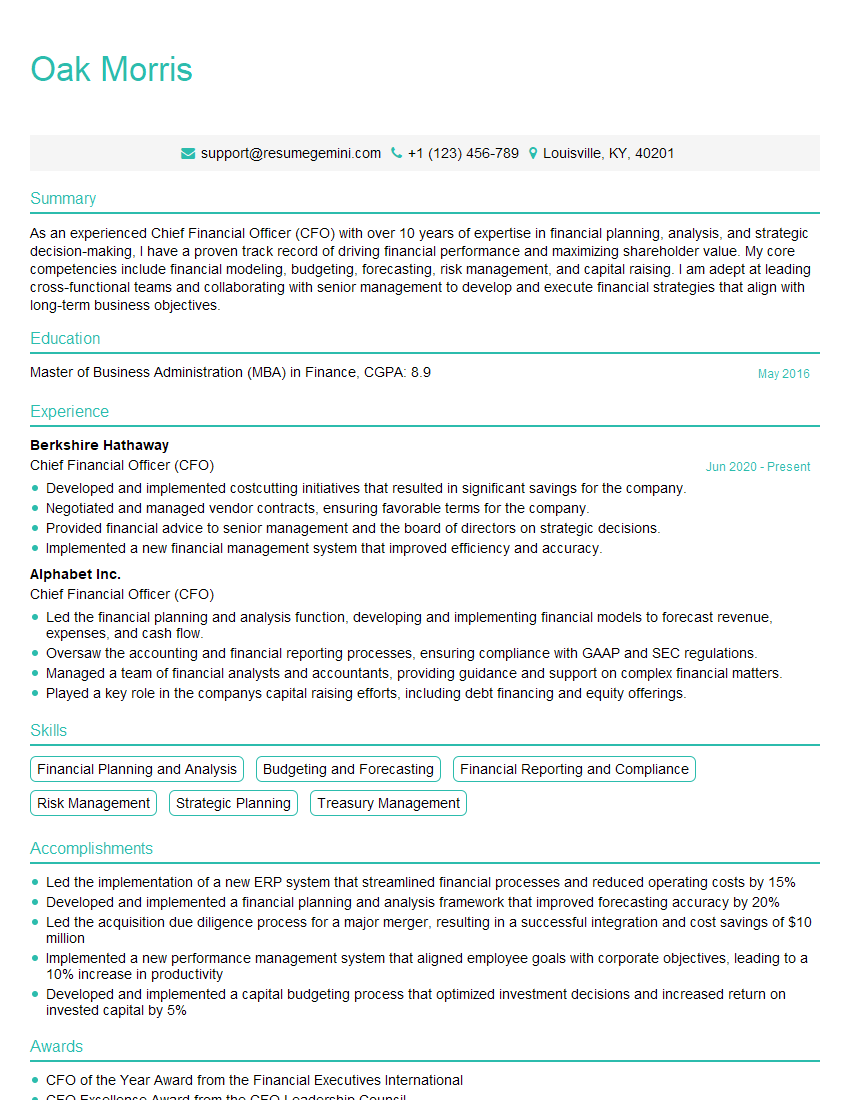
Chief Financial Officer (CFO) Resume Sample
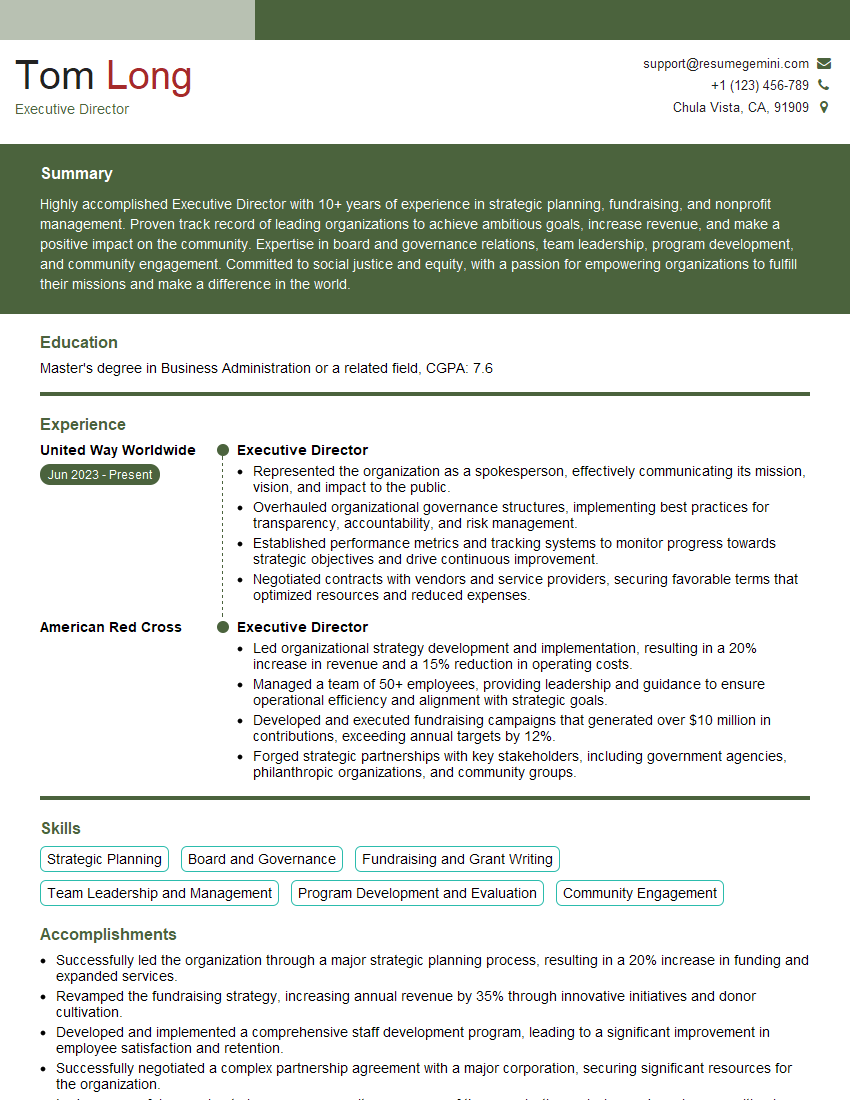
Executive Director Resume Sample
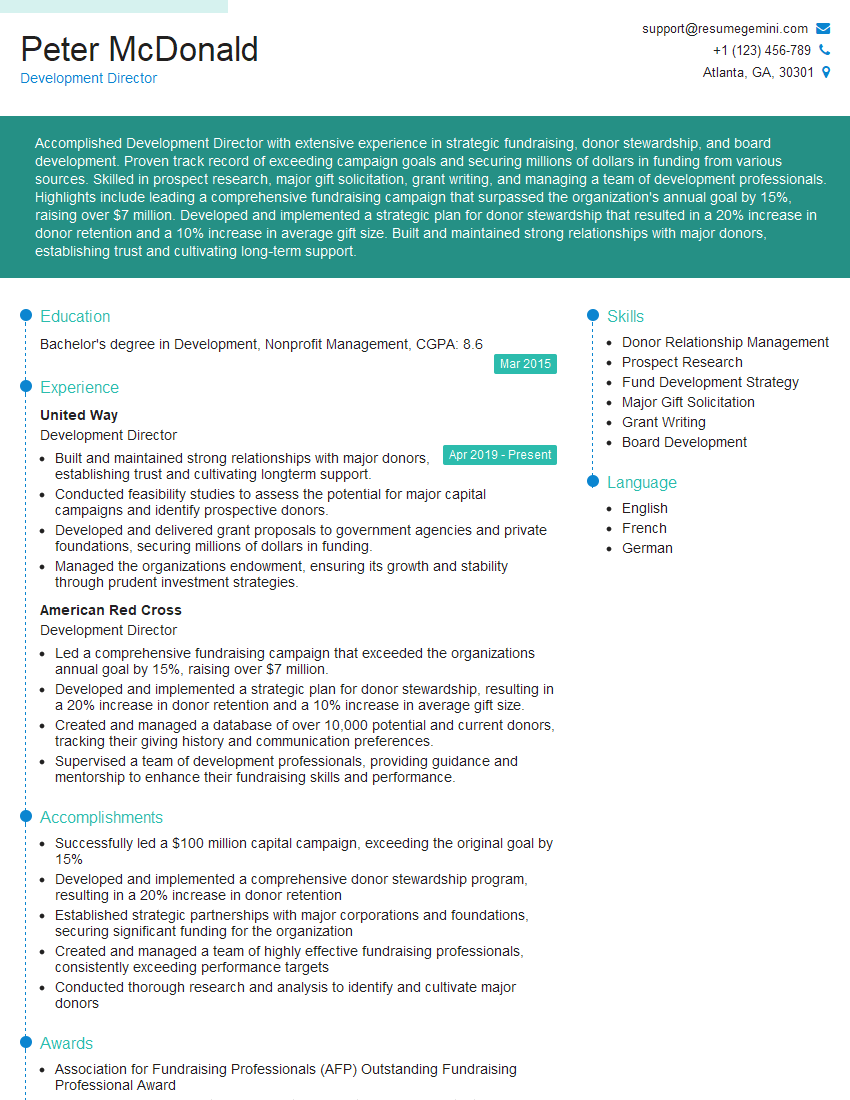
Development Director Resume Sample
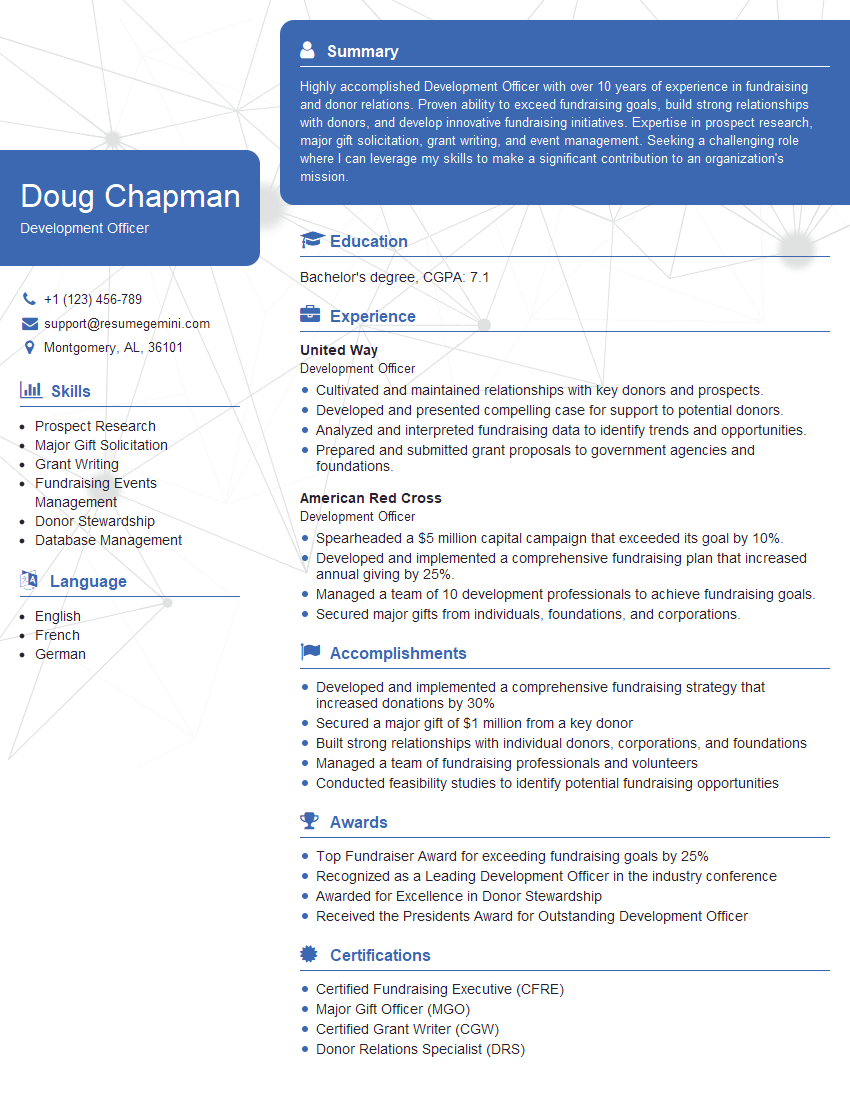
Development Officer Resume Sample
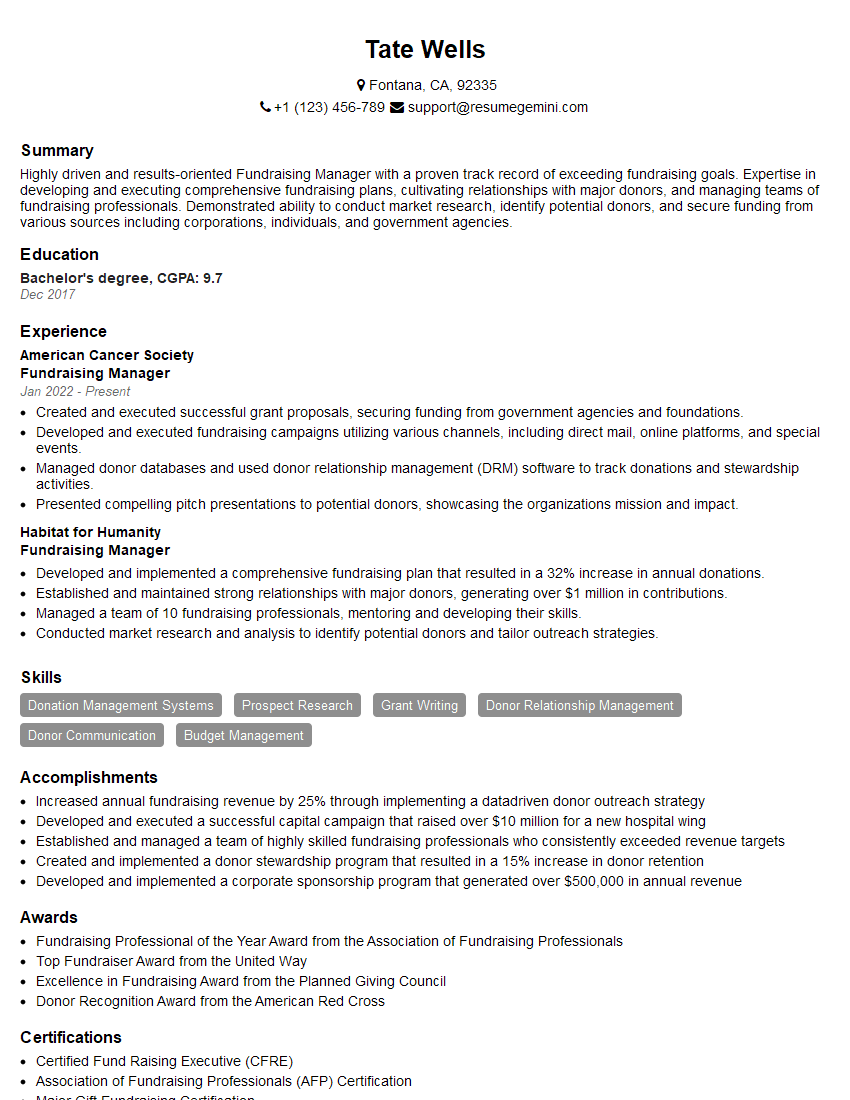
Fundraising Manager Resume Sample
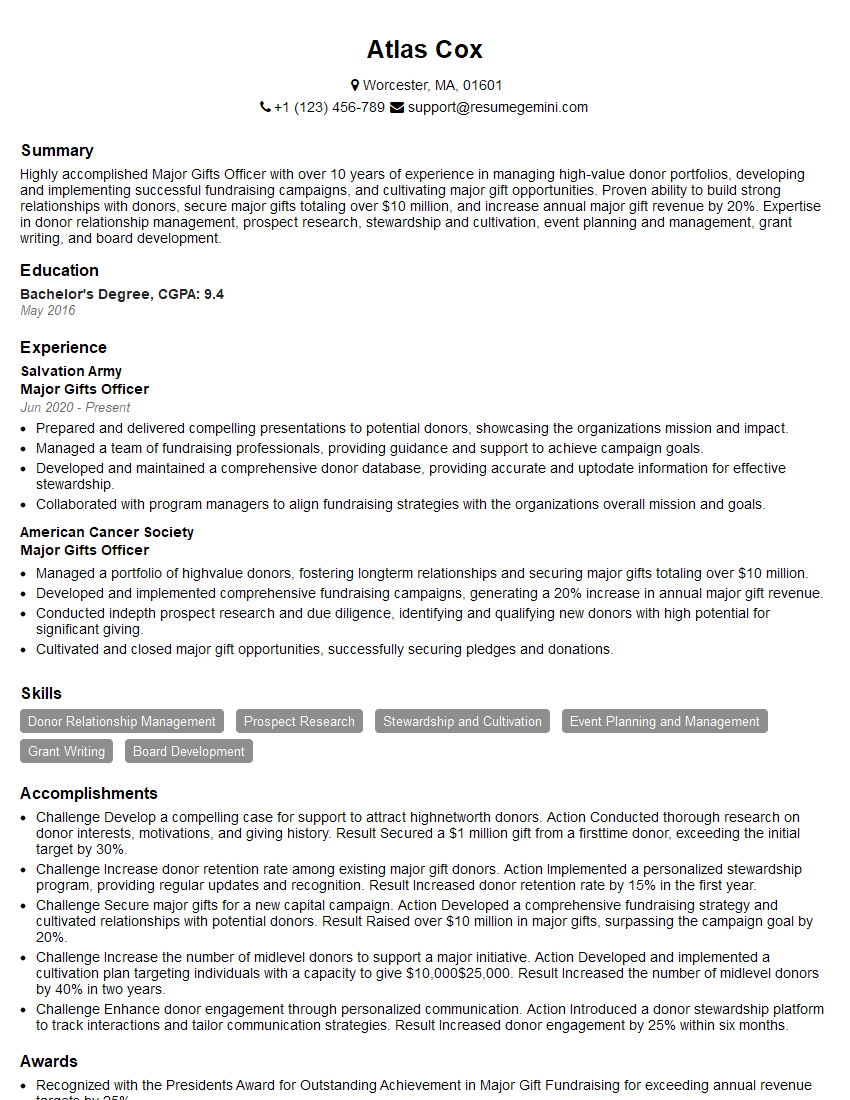
Major Gifts Officer Resume Sample
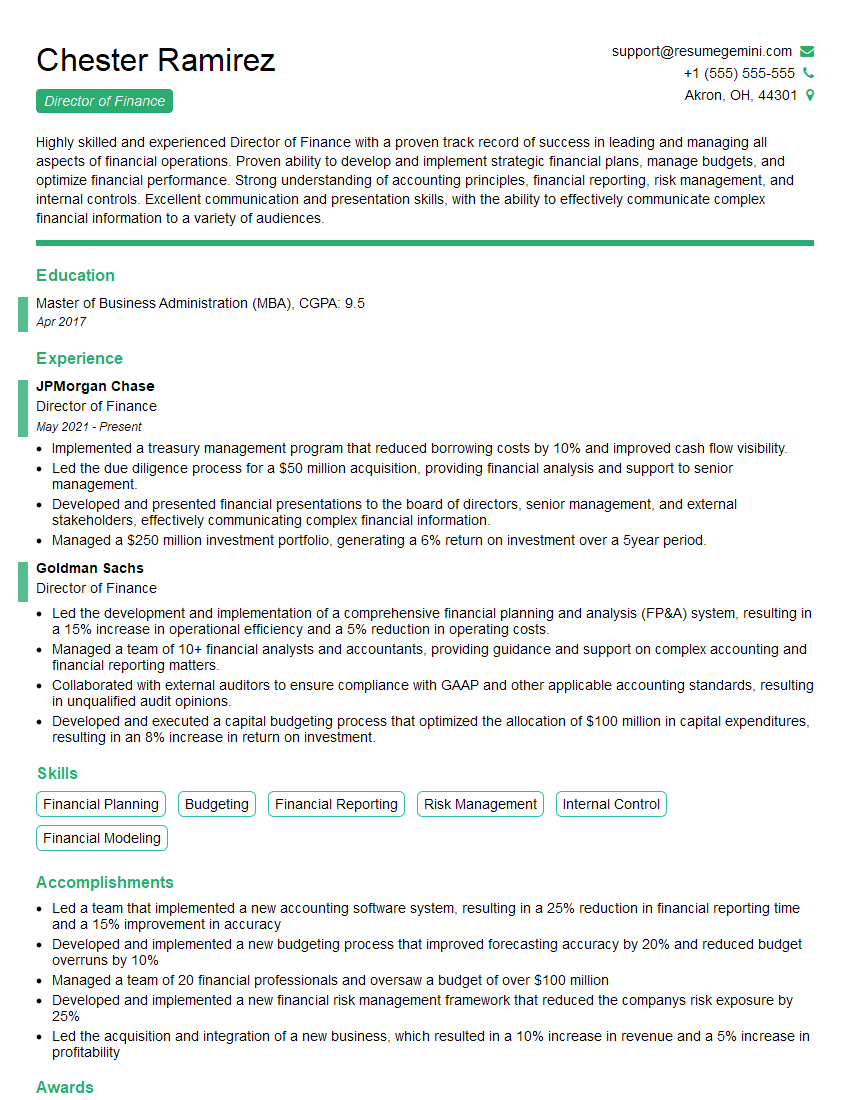
Director of Finance Resume Sample
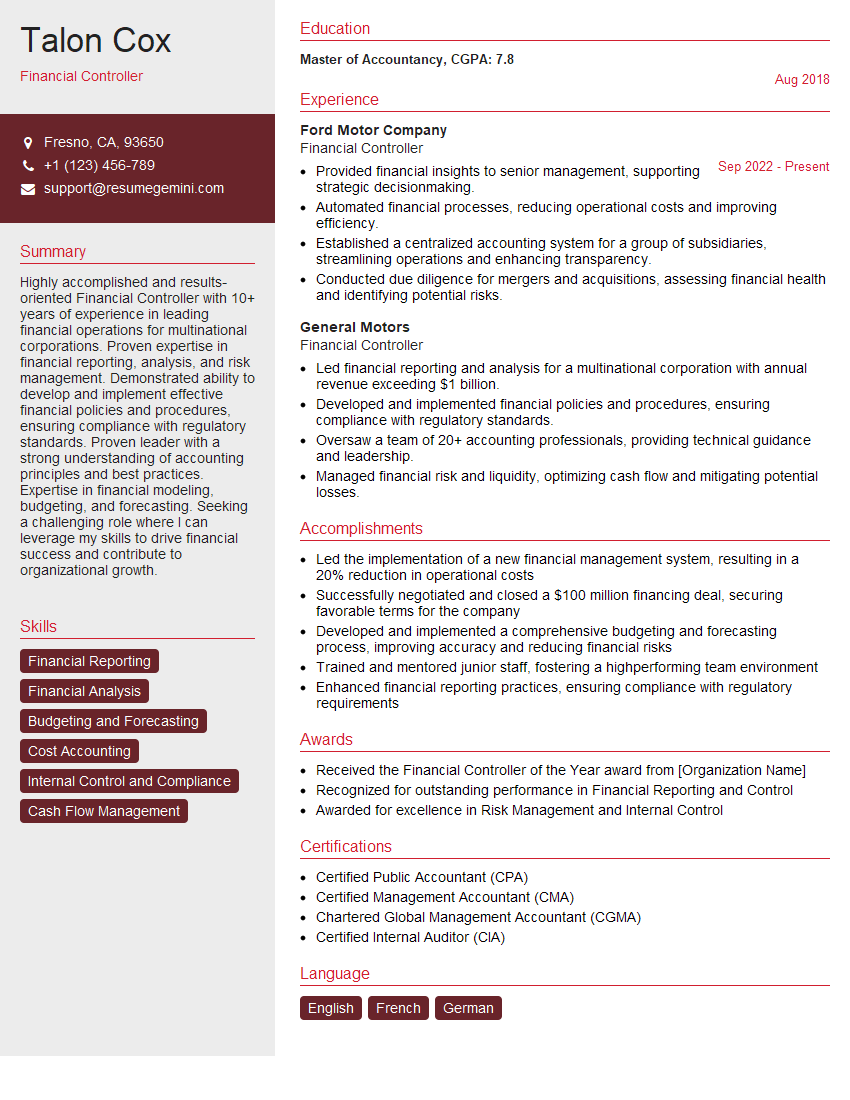
Financial Controller Resume Sample

Budget Manager Resume Sample
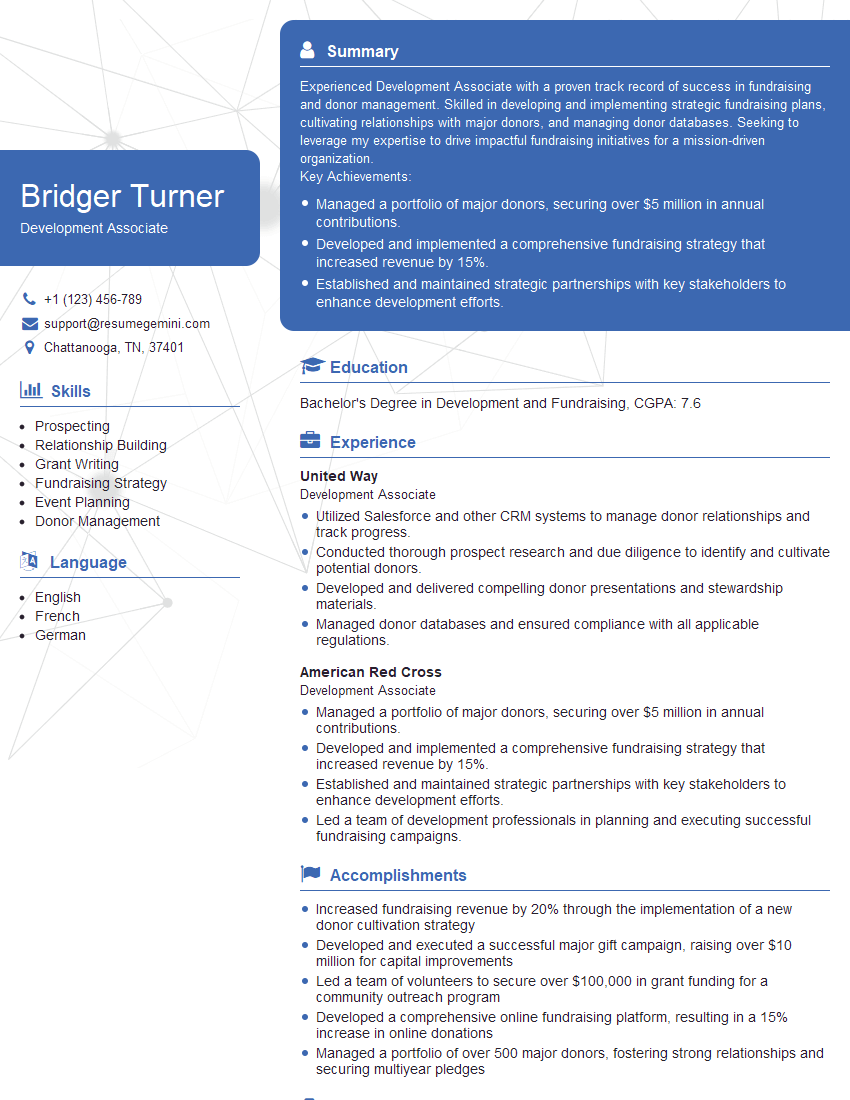
Development Associate Resume Sample
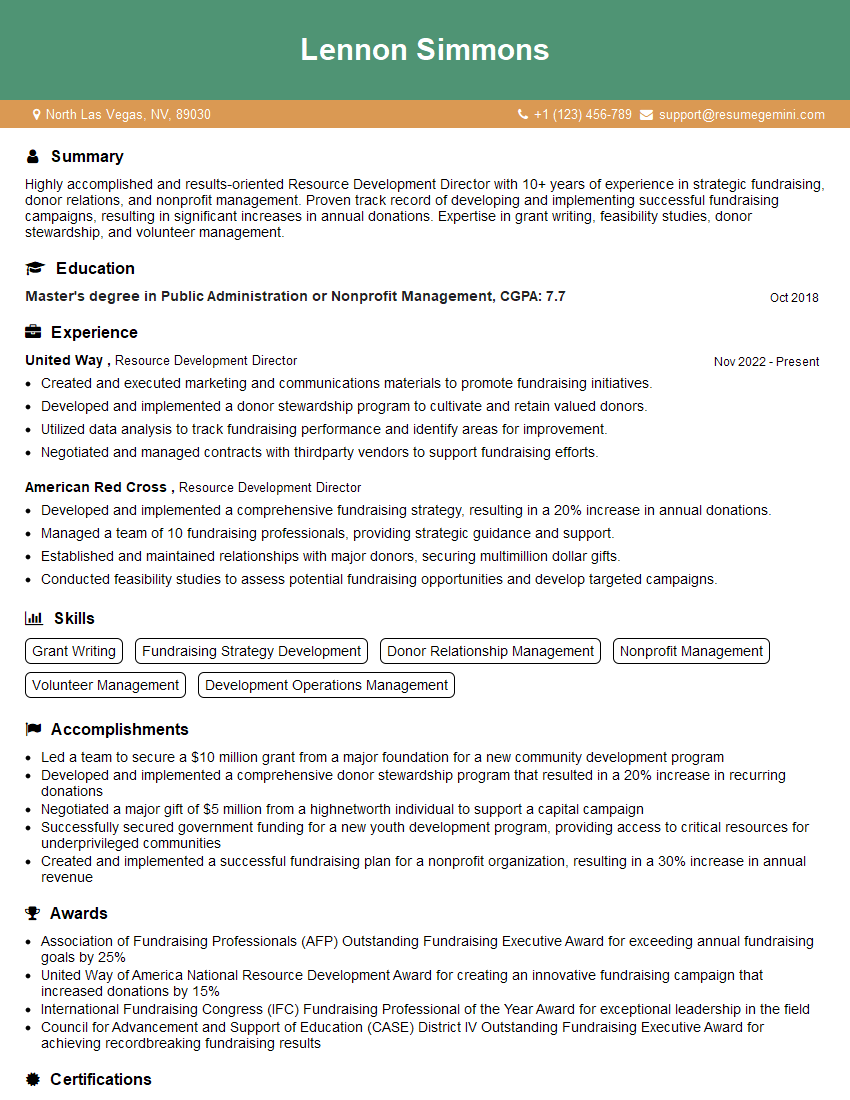
Resource Development Director Resume Sample
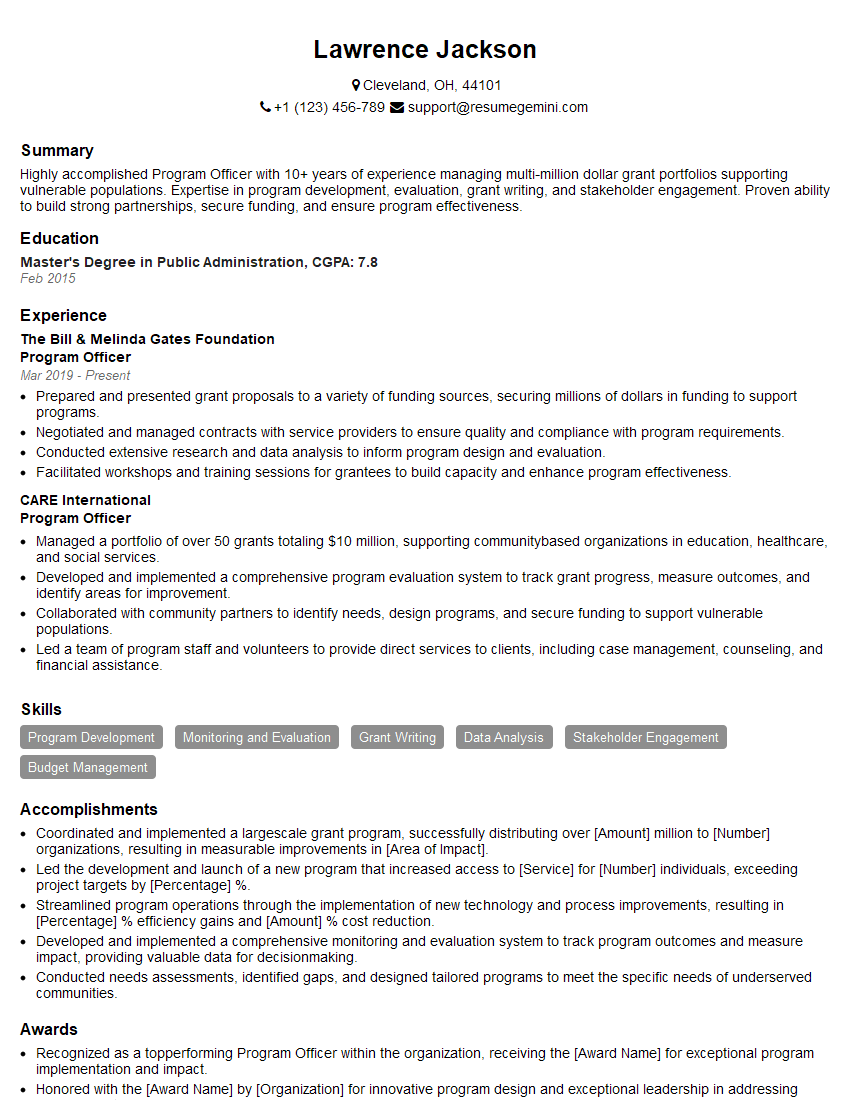
Program Officer Resume Sample
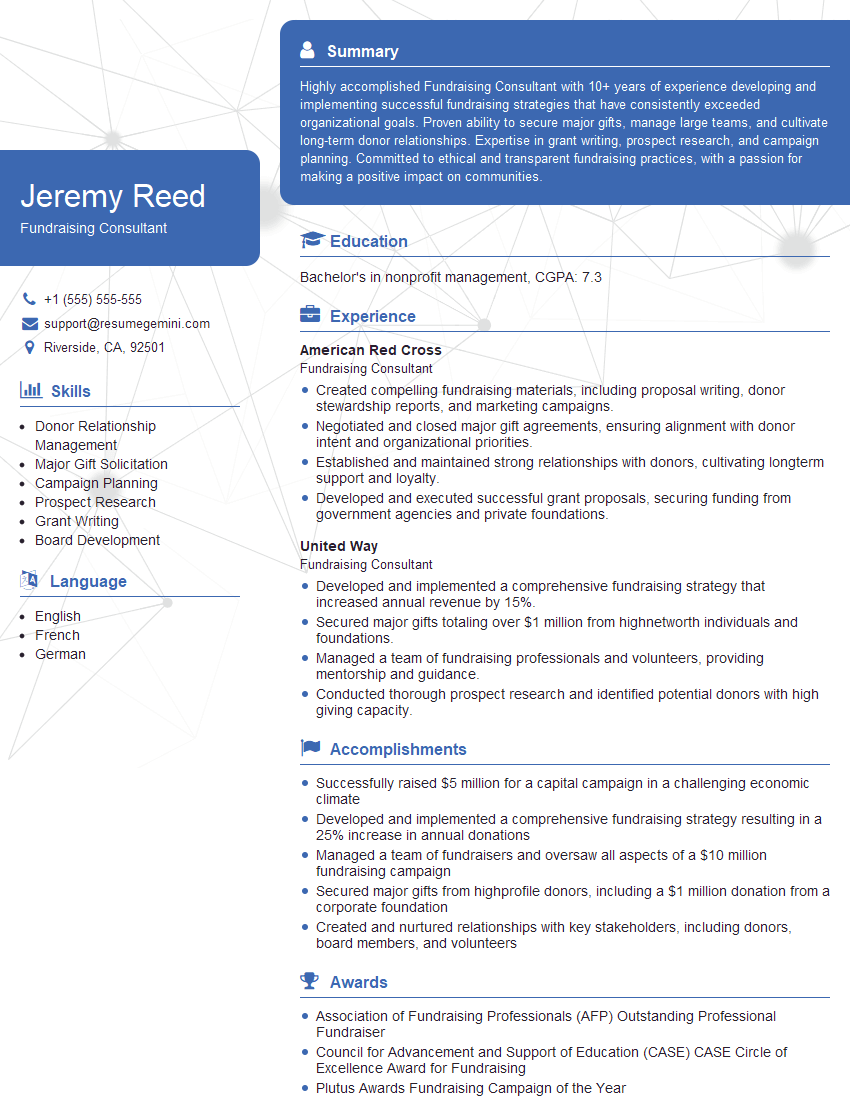
Fundraising Consultant Resume Sample
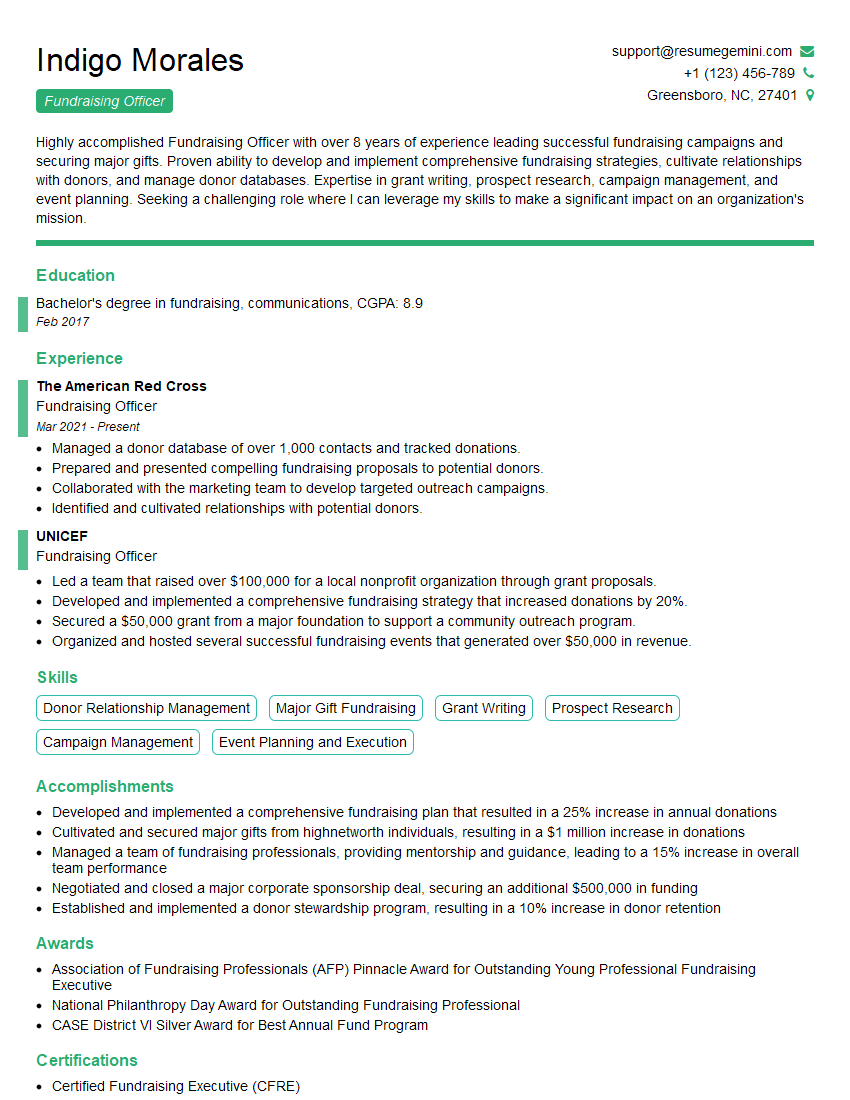
Fundraising Officer Resume Sample
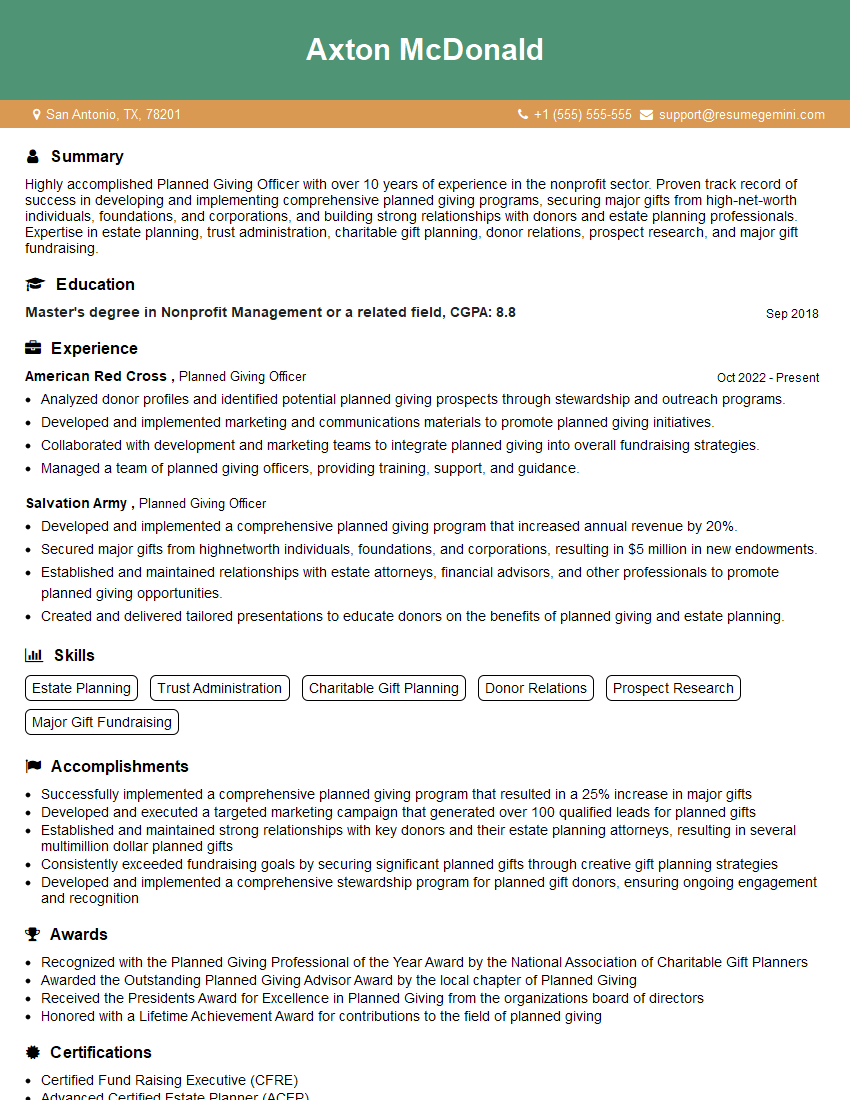
Planned Giving Officer Resume Sample
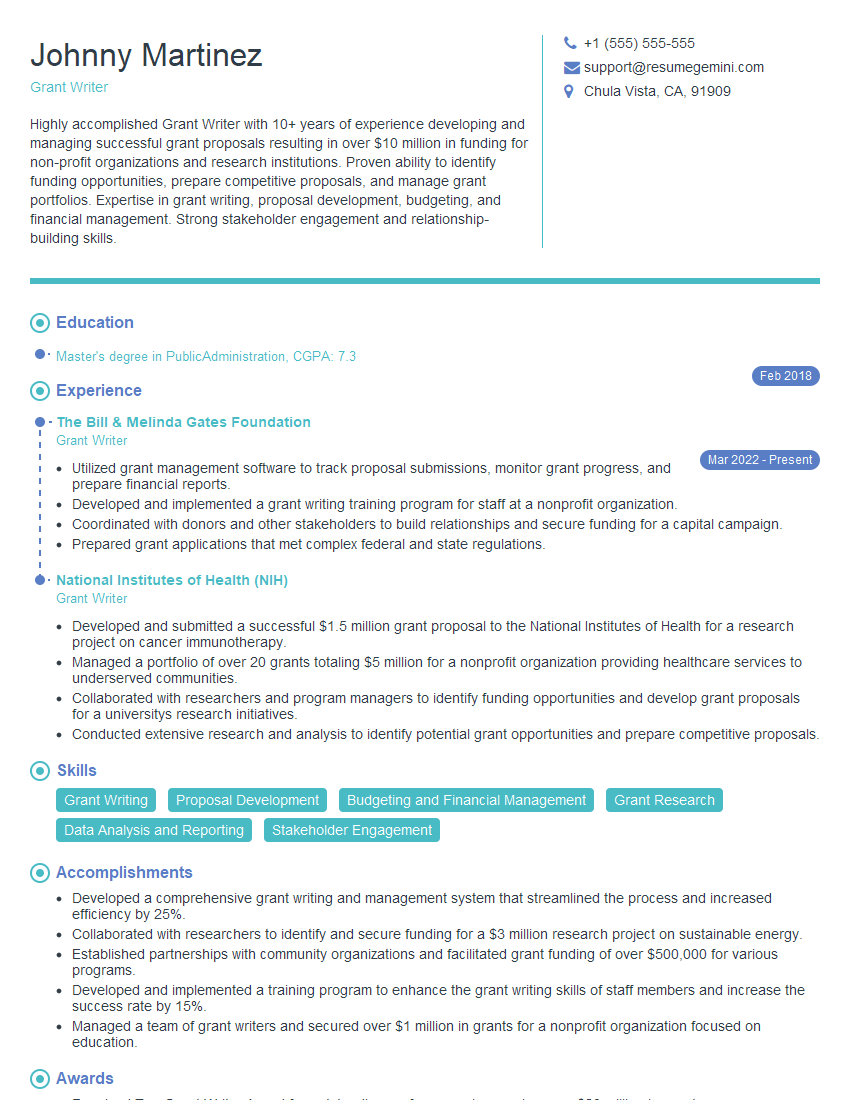
Grant Writer Resume Sample
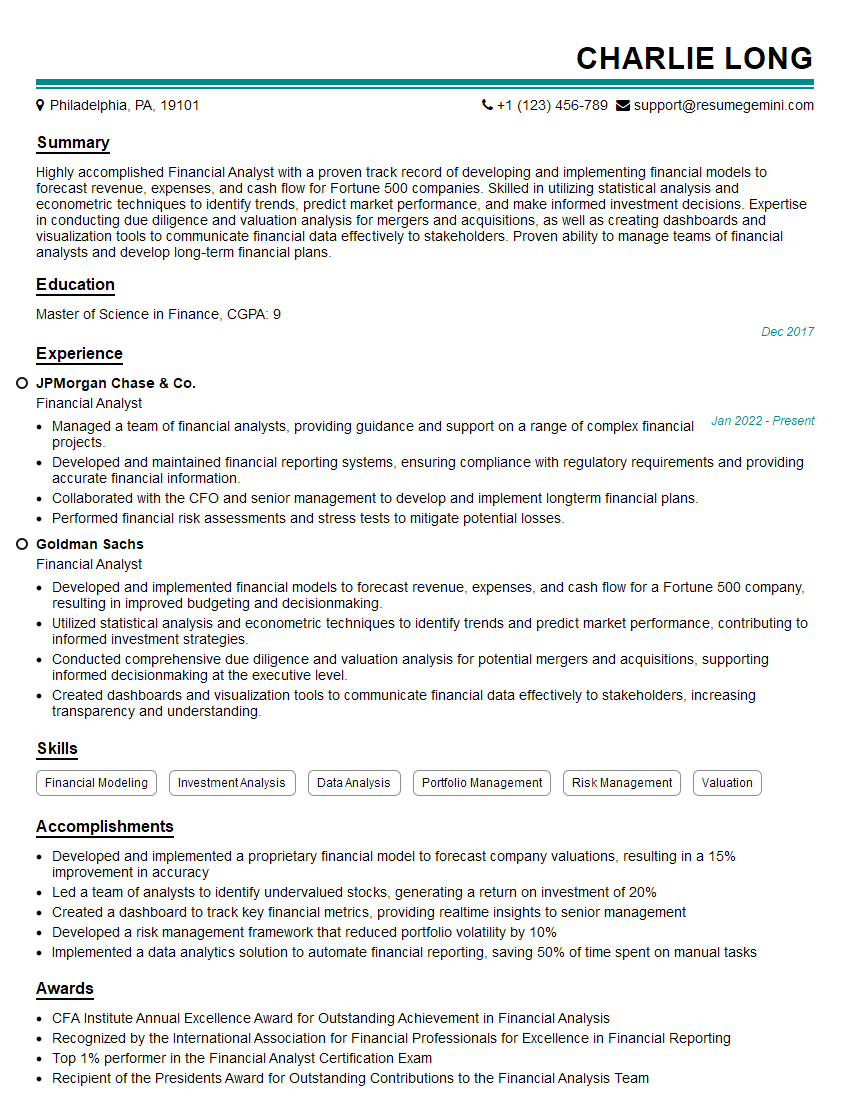
Financial Analyst Resume Sample
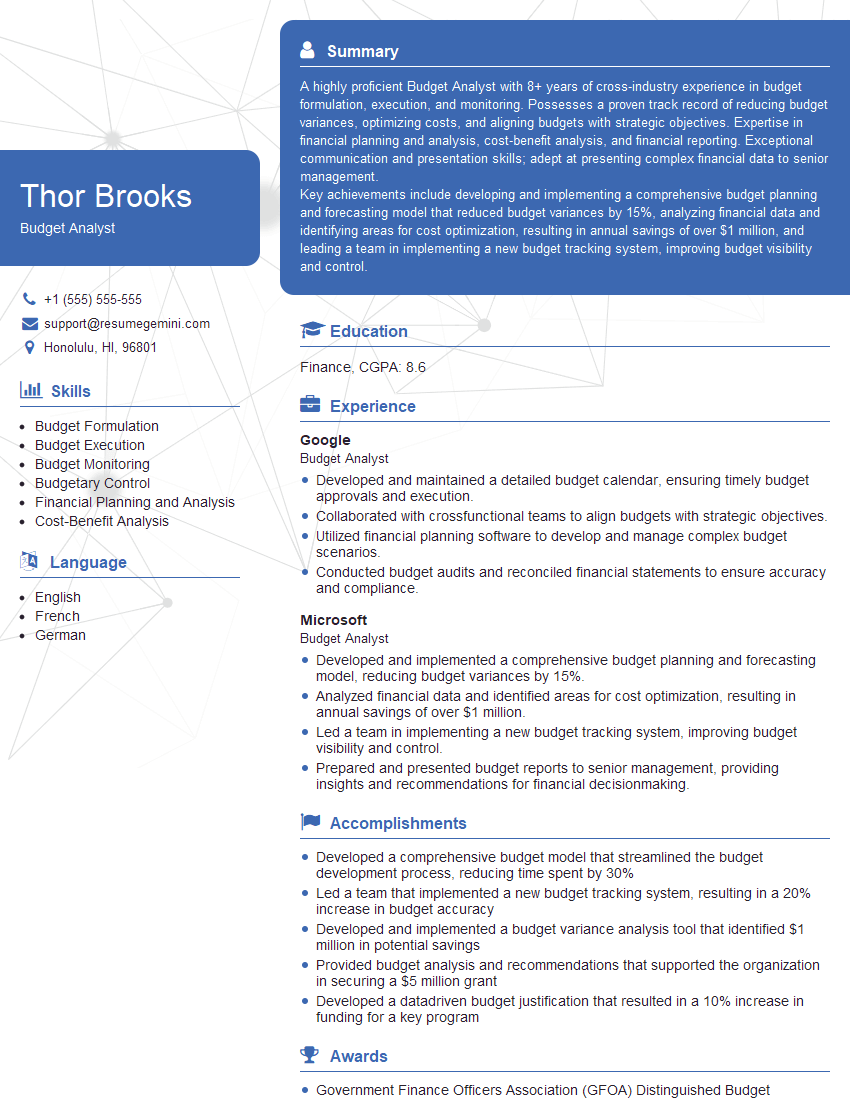
Budget Analyst Resume Sample
- Chief Financial Officer (CFO)
- Executive Director
- Development Director
- Development Officer
- Fundraising Manager
- Major Gifts Officer
- Director of Finance
- Financial Controller
- Budget Manager
- Development Associate
- Resource Development Director
- Program Officer
- Fundraising Consultant
- Fundraising Officer
- Planned Giving Officer
- Grant Writer
- Financial Analyst
- Budget Analyst
Explore more articles
Users Rating of Our Blogs
Share Your Experience
We value your feedback! Please rate our content and share your thoughts (optional).
What Readers Say About Our Blog
good