Cracking a skill-specific interview, like one for Fur Finishing, requires understanding the nuances of the role. In this blog, we present the questions you’re most likely to encounter, along with insights into how to answer them effectively. Let’s ensure you’re ready to make a strong impression.
Questions Asked in Fur Finishing Interview
Q 1. Explain the different types of fur finishes.
Fur finishing encompasses a variety of processes aimed at enhancing the appearance, feel, and durability of fur. These processes can be broadly categorized into several types, each serving a unique purpose.
- Shearing: Trimming the fur to achieve a uniform length and create a specific texture.
- Glazing: A process that adds shine and luster to the fur.
- Plumping: Restoring the natural fullness and loft of the fur.
- Dyeing: Changing the natural color of the fur to a desired shade.
- Finishing treatments: These include processes like water-repellent treatments, anti-static treatments, or other specialized treatments to improve the performance and longevity of the fur.
The specific finishing techniques used will depend on the type of fur, its intended use, and the desired aesthetic.
Q 2. Describe the process of shearing fur.
Shearing fur is a precision process that involves carefully trimming the fur fibers to a consistent length. It’s crucial for creating a uniform appearance and specific textures, influencing the final look and feel of the garment. Think of it like a meticulous haircut for your fur!
The process typically involves using specialized shearing machines with adjustable blades. The height of the blades is carefully calibrated based on the type of fur and the desired finish. For example, a longer shear might be used for a plush, luxurious feel, while a shorter shear might be used for a sleek, modern look. Experienced shearers possess an artistic eye and understand how different shearing techniques can impact the texture and density of the fur.
The process is done carefully to avoid damaging the guard hairs and underfur. The shearer often works in sections, ensuring evenness and minimizing any variations in length.
Q 3. What are the key considerations when glazing fur?
Glazing fur involves applying a solution to the fur that enhances its shine and luster, giving it a glossy and luxurious appearance. The key considerations when glazing include:
- Type of fur: Different furs respond differently to glazing. Some furs might be more receptive to glazing than others.
- Glazing solution: The composition of the glazing solution is critical. It should be carefully selected based on the type of fur to avoid damage or undesirable effects. It often involves a mixture of water, emulsifiers and sometimes other finishing agents to condition the fur.
- Application method: The glazing solution is usually applied evenly by hand or with specialized machinery to avoid streaking or unevenness.
- Drying process: The fur needs to be dried carefully to avoid any damage to the fibers. This often involves a slow, controlled drying process.
- Quality control: Regular inspections are crucial to ensure consistent results and to identify any defects early in the process.
Improper glazing can lead to dullness, discoloration, or even damage to the fur. A skilled finisher will carefully select the appropriate solution and techniques to achieve optimal results.
Q 4. How do you ensure the quality and consistency of fur finishing?
Ensuring quality and consistency in fur finishing requires a meticulous approach at every stage of the process. This involves a combination of skilled craftsmanship, precise techniques, and rigorous quality control measures.
- Skilled Personnel: Experienced and trained personnel are crucial to handle delicate fur with precision and care.
- Standardized Procedures: Following well-defined, documented procedures for each step, from shearing to glazing, helps maintain consistency across batches.
- Regular Inspections: Frequent inspections throughout the process can identify and address any defects early on, reducing waste and ensuring high-quality output.
- Consistent Supplies: Using high-quality, consistent materials, such as shearing blades and glazing solutions, is essential for consistent results.
- Equipment Calibration: Regularly calibrating and maintaining machinery ensures consistent performance and avoids variations in the finishing process.
By employing a combination of these strategies, fur finishers can produce consistent, high-quality results that meet or exceed customer expectations.
Q 5. What are the common defects in fur finishing and how are they corrected?
Common defects in fur finishing include uneven shearing, inconsistent glazing, discoloration, matting, and damage to individual fibers.
- Uneven Shearing: This can be corrected by re-shearing the affected areas, ensuring careful attention to detail.
- Inconsistent Glazing: This can be addressed by carefully re-applying the glazing solution to the uneven areas and ensuring consistent drying.
- Discoloration: This is often a result of uneven dyeing or improper handling of chemicals and requires careful re-dyeing, perhaps with specific color correction techniques. In some cases, the damage may be irreversible.
- Matting: This can be partially corrected by careful combing or brushing of the affected areas to restore the natural fullness. Sometimes, specialized treatments are required.
- Fiber Damage: This is often difficult to correct and may result in areas of the fur needing to be carefully removed or replaced.
The ability to identify and correct these defects requires a keen eye and the experience to implement appropriate corrective measures.
Q 6. Explain the process of fur plumping and its importance.
Fur plumping is a crucial finishing process that restores the natural fullness and loft of the fur. Think of it as giving the fur a luxurious boost of volume!
The process typically involves using specialized machinery or hand techniques to gently fluff and separate the fur fibers. This allows air to circulate within the fur, restoring its original thickness and creating a more appealing, voluminous appearance. It’s especially important for furs that have been compressed or flattened during storage or processing.
The importance of fur plumping lies in its ability to enhance the overall quality and aesthetic appeal of the fur. A plump, full fur looks more luxurious, feels softer, and drapes better in garments. Without plumping, the fur may appear thin, flat, and less desirable.
Q 7. Describe different methods for dyeing fur.
Fur dyeing can be achieved through various methods, each with its own advantages and disadvantages. The choice of method depends on factors such as the type of fur, the desired color, and the desired level of colorfastness.
- Immersion dyeing: This is the most common method, where the fur is completely immersed in a dye bath. This method allows for even color penetration, but can sometimes cause slight changes in the fur’s texture.
- Brush dyeing: This method involves applying the dye directly to the fur using a brush, allowing for more control over the color application and creating interesting effects. It’s less common for large-scale production.
- Spray dyeing: This method uses a spray gun to apply dye evenly to the surface. It is often used for touch-ups or smaller dyeing jobs.
Regardless of the method used, careful control of the dyeing process, including temperature, time, and dye concentration, is critical to achieving consistent and high-quality results. Following proper safety precautions when handling dyes is also essential.
Q 8. How do you determine the appropriate finishing techniques for different fur types?
Selecting the right finishing techniques for fur hinges on understanding the fur’s inherent properties. Different fur types – from the delicate softness of mink to the robust texture of fox – demand tailored approaches. The key is to enhance the natural beauty and durability without damaging the pelts.
- Fur Type Analysis: I begin by meticulously assessing the fur’s density, fiber length, luster, and overall condition. A thick, robust fur like sable might withstand more aggressive brushing techniques, while a delicate fur like chinchilla requires a gentler hand.
- Desired Finish: The desired final look dictates the chosen techniques. Do we aim for a plush, luxurious feel, or a sleek, modern finish? This directly impacts the choice of processes, such as glazing, shearing, or tipping.
- Example: For a luxurious mink coat, I’d prioritize techniques that maintain the fur’s natural luster, perhaps using a light glazing to enhance shine and ensure uniformity. For a more modern fox stole, I might use shearing to create a specific texture and shape.
This systematic approach ensures the fur receives the optimal treatment, maximizing its beauty and longevity.
Q 9. What safety precautions are necessary when handling fur during finishing?
Safety is paramount in fur finishing. The materials used and processes involved demand strict adherence to safety protocols to protect both the workers and the valuable fur itself.
- Respiratory Protection: Many finishing processes, such as spraying glazes or using certain chemicals, generate airborne particles or fumes. Therefore, respirators are essential.
- Eye Protection: Protective eyewear is crucial to prevent injury from flying particles or chemical splashes.
- Hand Protection: Gloves are necessary to protect hands from sharp tools, chemicals, or irritants found in some finishing agents.
- Proper Ventilation: Work areas need excellent ventilation to remove potentially harmful fumes and dust. This is particularly critical when using solvents or sprays.
- Chemical Handling: All chemicals should be handled according to their respective safety data sheets (SDS). This includes proper storage, disposal, and usage procedures.
Regular safety training and audits ensure a safe and productive work environment. I always prioritize safety to prevent accidents and maintain high-quality craftsmanship.
Q 10. Explain your experience with different fur finishing tools and machinery.
My experience spans a wide range of fur finishing tools and machinery. I’m proficient in using both traditional hand tools and modern, automated equipment.
- Hand Tools: I’m skilled in using shears for trimming and shaping, plucking tools for creating specific textures, and brushes for cleaning and glazing. Understanding the nuances of hand techniques allows for precise control and bespoke finishing.
- Automated Machinery: My experience includes operating machinery such as shearing machines for creating uniform nap lengths, drum tumblers for cleaning and conditioning pelts, and glazing machines for enhancing luster. These machines significantly improve efficiency while maintaining quality.
- Specific Example: I’ve successfully used a high-speed shearing machine to create a very short, modern nap on a batch of fox fur, achieving a consistent finish that would have been incredibly time-consuming with hand tools. I also have extensive experience maintaining and troubleshooting these machines to minimize downtime.
This combination of traditional craftsmanship and advanced technology allows for flexibility and efficiency in handling diverse finishing tasks.
Q 11. How do you manage finishing processes to meet production deadlines?
Meeting production deadlines in fur finishing requires meticulous planning and efficient execution. I employ a structured approach that combines careful scheduling, process optimization, and effective teamwork.
- Detailed Scheduling: I create a detailed production schedule that maps out each stage of the finishing process, including task allocation, timelines, and resource allocation.
- Process Optimization: I continuously evaluate and improve the finishing processes to enhance efficiency. This might involve streamlining workflows, implementing automation where appropriate, or optimizing the use of machinery.
- Teamwork and Communication: Effective communication and collaboration are crucial. I ensure clear communication with the team, providing clear instructions and addressing any challenges promptly.
- Monitoring and Adjustment: Regular monitoring of the progress is essential to identify any potential delays and make adjustments as needed. This proactive approach minimizes disruptions and keeps the project on track.
For instance, on a recent large order, we faced a slight delay in receiving a key chemical. By immediately adjusting the schedule and prioritizing tasks, we managed to deliver the finished product on time, minimizing the impact of the unexpected delay.
Q 12. Describe your experience with quality control in fur finishing.
Quality control is integral to my approach to fur finishing. I employ a multi-stage quality assurance system to guarantee consistently high standards.
- Incoming Inspection: The process starts with a thorough inspection of the raw fur to assess its condition and identify any defects. This helps to prevent issues from propagating through the finishing process.
- In-Process Checks: Regular checks are conducted at each stage of the finishing process to identify and correct any problems early on. This prevents costly rework at later stages.
- Final Inspection: A rigorous final inspection ensures the finished product meets the required quality standards. This typically involves checking for uniformity, color consistency, and the absence of defects.
- Documentation: Maintaining meticulous records is crucial. This ensures traceability throughout the process and helps to identify potential areas for improvement.
My commitment to quality control is unwavering, as it is fundamental to maintaining the reputation of our work and ensuring client satisfaction.
Q 13. How do you handle customer complaints or issues related to fur finishing?
Handling customer complaints requires a professional and empathetic approach. My goal is to resolve issues efficiently and maintain positive relationships.
- Active Listening: I start by carefully listening to the customer’s concerns, seeking to understand their perspective fully.
- Thorough Investigation: I thoroughly investigate the complaint, examining the finished product and reviewing the relevant production records. This identifies the root cause of the issue.
- Solutions and Follow-Up: I propose appropriate solutions, which might involve remaking the item, offering a partial refund, or providing a suitable alternative. I always follow up with the customer to ensure they are satisfied with the resolution.
- Continuous Improvement: I use customer feedback as an opportunity for continuous improvement, identifying areas where processes or training could be refined to prevent similar issues from arising in the future.
For example, a complaint about inconsistent color led to a review of our dye process, resulting in an improved procedure and better color consistency across all subsequent batches.
Q 14. What are your skills in identifying and grading different types of fur?
Identifying and grading different types of fur requires a keen eye for detail and extensive experience. I’ve developed a strong understanding of fur characteristics, allowing for accurate classification and quality assessment.
- Visual Inspection: I assess the fur’s color, luster, density, fiber length, and overall texture. These visual cues provide initial clues to its type and quality.
- Tactile Examination: I carefully feel the fur’s texture, softness, and suppleness, noting its overall feel. This provides valuable insights beyond visual observation.
- Grading Standards: I use established grading standards to classify the fur based on quality. These standards consider factors like pelt size, damage, and overall condition.
- Experience and Knowledge: My years of experience have honed my skills in fur identification and grading, enabling me to distinguish subtle differences between various fur types and assess their market value.
I can confidently differentiate between different species such as mink, fox, sable, and chinchilla, and accurately grade the pelts according to established industry standards. This expertise is essential for selecting the right furs for specific projects and ensuring the quality of the finished product.
Q 15. Describe your experience working with different types of fur adhesives.
My experience with fur adhesives spans a wide range, from traditional water-based glues to more advanced solvent-based and hot-melt options. The choice of adhesive depends heavily on the type of fur, the substrate (e.g., leather, fabric), and the desired final effect. Water-based glues are generally preferred for their environmental friendliness and ease of cleanup, although they may have longer drying times and less initial tack. Solvent-based adhesives offer superior strength and faster drying, but require careful ventilation due to fumes and can be more challenging to work with. Hot-melt adhesives provide instant bonding, ideal for quick repairs or applications where speed is crucial, but they require specialized equipment and can be less flexible.
For example, I’ve used water-based glues successfully for attaching fox fur trim to a garment, relying on the adhesive’s flexibility to prevent cracking during wear. Conversely, for a demanding application like attaching a large, heavy pelt to a display stand, a high-strength solvent-based adhesive was necessary to ensure durability and prevent slippage. Proper preparation of both the fur and the substrate is vital with any adhesive to ensure a strong, lasting bond. This includes cleaning the surfaces and applying the adhesive evenly to maximize adhesion.
Career Expert Tips:
- Ace those interviews! Prepare effectively by reviewing the Top 50 Most Common Interview Questions on ResumeGemini.
- Navigate your job search with confidence! Explore a wide range of Career Tips on ResumeGemini. Learn about common challenges and recommendations to overcome them.
- Craft the perfect resume! Master the Art of Resume Writing with ResumeGemini’s guide. Showcase your unique qualifications and achievements effectively.
- Don’t miss out on holiday savings! Build your dream resume with ResumeGemini’s ATS optimized templates.
Q 16. Explain the importance of proper fur storage and handling.
Proper fur storage and handling are paramount to maintaining the quality and longevity of the fur. Improper storage can lead to damage from insects, mold, or physical deterioration. Think of fur as a delicate textile that needs special care. Ideal conditions include a cool, dry, and well-ventilated environment. Direct sunlight, high humidity, and extreme temperatures should all be avoided, as they can cause fading, discoloration, and weakening of the fibers.
Fur should be stored flat, preferably in breathable fabric bags or containers, to prevent crushing or matting. When handling fur, it’s crucial to avoid pulling or tugging on the fibers, as this can cause damage or breakage. Regular inspections for signs of damage or infestation are vital, and prompt action should be taken if any issues are detected. For instance, I recall a project where improper storage led to moth damage on a valuable chinchilla pelt. Careful attention to storage and handling prevented similar occurrences in subsequent projects.
Q 17. What are your troubleshooting skills in relation to fur finishing problems?
Troubleshooting in fur finishing often involves identifying the root cause of problems such as shedding, discoloration, uneven texture, or adhesive failure. My approach is systematic: first, I carefully examine the finished piece to pinpoint the exact location and nature of the problem. Next, I review the entire finishing process, from initial preparation to the final steps, to identify potential points of failure.
For example, if I encounter excessive shedding, I might check for improper handling during the finishing process or consider the quality of the fur itself. Discoloration could be due to improper cleaning, exposure to sunlight, or chemical reactions with other materials. Uneven texture might indicate inconsistent application of finishing chemicals or improper drying techniques. In each case, I work backward through the process to pinpoint the source of the issue and develop a solution, which may involve re-working portions of the piece or even starting again if necessary. Maintaining meticulous records during each project is also critical for effective troubleshooting.
Q 18. How do you maintain the integrity of fur during the finishing process?
Maintaining the integrity of fur during the finishing process requires a delicate balance between achieving the desired aesthetic and preserving the fur’s natural beauty and durability. This involves careful selection of finishing chemicals, gentle handling techniques, and precise control of environmental factors such as temperature and humidity. It’s akin to sculpting with a delicate material; rough handling will ruin the work.
Specific techniques include using low-pressure steam to soften and fluff the fur, careful application of finishing chemicals to avoid over-saturation or uneven application, and meticulous attention to drying methods to prevent damage or warping. For instance, when working with delicate furs like mink, I prefer gentler cleaning methods and avoid harsh chemicals that could damage the delicate fibers. Regularly inspecting the fur throughout the process allows for early detection and correction of any potential issues, ultimately preserving the quality and integrity of the finished product.
Q 19. What are your knowledge of relevant industry regulations and standards concerning fur?
My knowledge of industry regulations and standards concerning fur includes familiarity with CITES (Convention on International Trade in Endangered Species) regulations, which govern the international trade of endangered and threatened animal species. This includes understanding the required documentation and permits for handling furs derived from regulated species. I also stay updated on national and regional regulations regarding fur labeling, ethical sourcing, and the use of chemicals in fur processing.
Furthermore, I’m aware of standards relating to the environmental impact of fur processing, including the responsible disposal of chemicals and waste materials. Staying abreast of these regulations and industry best practices ensures that my work adheres to legal and ethical requirements. Regular professional development and engagement with industry associations keeps my knowledge current. This proactive approach minimizes risks and maintains professionalism.
Q 20. How do you ensure the ethical sourcing of fur materials?
Ethical sourcing of fur materials is a critical aspect of my work. I prioritize suppliers who can provide documentation demonstrating that the fur was obtained through humane and sustainable practices. This includes verification that the animals were raised in accordance with animal welfare standards or were sourced from sustainable trapping programs, with appropriate licenses and certifications. In some cases, I utilize traceable and certified sustainable fur sources.
Transparency is key. I always inquire about the origin and handling of the fur, verifying the legitimacy of the suppliers and ensuring they adhere to ethical standards. If a supplier cannot provide clear documentation or demonstrate ethical practices, I will not source materials from them. My commitment to ethical sourcing reflects my respect for animal welfare and environmental responsibility.
Q 21. Describe your experience with different finishing chemicals and their applications.
My experience encompasses a range of finishing chemicals, each serving a specific purpose. These include detergents for cleaning, dyes for color enhancement, and conditioners for improving texture and sheen. The selection of a specific chemical depends on the type of fur, the desired outcome, and the environmental considerations. Water-based options are generally preferred for their reduced environmental impact.
For example, I’ve used specialized detergents to remove grease and dirt from raw pelts without damaging the fur fibers. Dyes are carefully selected to ensure colorfastness and prevent fading or discoloration over time. Conditioners help restore the natural luster and softness of the fur, adding to its overall quality and appeal. I am meticulous in following manufacturers’ instructions, using appropriate safety precautions, and ensuring proper ventilation to minimize any potential hazards. A thorough understanding of the properties of each chemical is essential to its effective and safe use.
Q 22. Explain the process of nape trimming in fur finishing.
Nape trimming in fur finishing is a crucial step to ensure a garment’s neat and aesthetically pleasing appearance. The nape, or the back of the neck area, often has uneven fur length or density. Trimming this area involves carefully removing excess fur to create a smooth, even transition between the fur and the collar or neckline. It requires precision and a keen eye for detail to maintain the natural look and feel of the fur.
The process usually starts with assessing the nape area. We identify areas needing trimming based on length and density variations. Then, using sharp, specialized shears, we trim the fur gradually, working in small sections to avoid creating noticeable patches. The technique depends on the fur type; some furs require more delicate trimming than others. For instance, a mink coat’s nape needs a more subtle touch than a chinchilla’s, which may tolerate slightly more aggressive trimming depending on the style and design.
Imagine sculpting a hairstyle – it’s about achieving a balanced, natural look, not just removing excess length. Once trimmed, we comb the nape area to ensure a flawless finish. This final step reveals the improved lines and enhances the overall quality of the garment.
Q 23. How do you ensure the color consistency in dyed furs?
Color consistency in dyed furs is paramount for a high-quality finish. Achieving this requires meticulous control throughout the dyeing process, starting with the selection of the fur itself. Uniformity in the raw fur is key—furs with consistent fiber structure and density will dye more evenly.
We use precise dye formulations and carefully controlled dyeing parameters, including temperature and time, to ensure consistent color absorption. The dye bath is monitored closely to guarantee uniform distribution. Pre-treatments, such as cleaning and degreasing the furs, are critical to ensure the dye bonds evenly to the fibers. Additionally, proper agitation and monitoring of the dye bath are essential to prevent uneven dye penetration.
After dyeing, a rigorous quality check is necessary. We inspect the finished furs under standardized lighting conditions to identify any inconsistencies in color. Slight variations are sometimes addressed through targeted re-dyeing or blending techniques. Accurate color matching, through colorimetric analysis, ensures consistent shades across different batches of fur, which is crucial when working on large-scale projects, such as fur coats or accessories.
Q 24. Describe your experience in working with high-value fur garments.
I’ve had extensive experience working with high-value fur garments, specifically those made from sable, chinchilla, and mink. Working with these luxury furs requires an exceptional level of skill and precision. The slightest imperfection can drastically affect the value of the garment. For instance, I recall working on a bespoke sable coat for a private client. The sable was of exceptional quality, and the client expected absolute perfection. The entire process, from the initial assessment of the fur to the final inspection, needed to be handled with extreme care.
Beyond the technical skills, handling high-value items requires a meticulous approach to prevent damage. That means understanding the sensitivities of various types of fur, proper handling techniques, and utilizing appropriate tools and equipment. We also work closely with the designers and clients, understanding their expectations and ensuring they’re satisfied throughout the entire process. The focus is on preserving the natural beauty of the fur while achieving the desired aesthetic effect – a balance between craftsmanship and client satisfaction.
Q 25. What is your understanding of different fur grading systems?
Fur grading systems are standardized methods for assessing the quality of raw furs. They generally consider factors like luster, color, density, length, and overall condition. Different grading systems exist depending on the fur type and the industry norms. For example, the system for grading mink fur might differ from the one used for fox.
A common approach involves assigning numerical grades or letter grades based on a set of criteria. For example, a higher grade might indicate a richer color, denser fur, and longer pile length. These grading systems are crucial in determining the price and value of the raw fur. Understanding these systems helps me select the best quality furs for projects and predict the final look and feel of the finished product. This ensures I can meet client expectations and maintain a consistent level of quality.
Furthermore, familiarity with different grading standards is essential when collaborating with international suppliers and manufacturers. Variations in grading practices can be significant across countries and regions, and knowing these variations allows for effective communication and efficient sourcing.
Q 26. What are the challenges associated with finishing exotic furs?
Finishing exotic furs presents unique challenges due to their diverse characteristics. These furs often have unique textures, densities, and sensitivities that require specialized techniques. For instance, the scales on a snakeskin require careful handling to avoid damage during cleaning and finishing. Similarly, the delicate nature of certain bird skins demands a gentler approach than that used for robust furs like bear or wolf.
One of the main difficulties lies in the availability of suitable cleaning and dyeing products. Many exotic furs require specialized treatments to avoid discoloration or damage. The lack of readily available materials often necessitates experimentation and careful testing to find optimal solutions. Another challenge is the often complex and intricate structures of these furs, making processes like shearing or plucking demanding tasks requiring highly skilled technicians. Maintaining the unique texture and integrity of the fur is crucial while ensuring that the finished product meets the necessary quality standards.
Q 27. How do you adapt your techniques for different fur thicknesses and textures?
Adapting techniques for different fur thicknesses and textures is fundamental to effective fur finishing. The approach to finishing a thick, dense fur like fox is vastly different from that of a thin, delicate fur like ermine. For thick furs, we might use more robust tools and techniques, possibly employing more aggressive shearing or plucking to achieve the desired effect. With thin furs, however, a more gentle touch and precise tools are essential to avoid damaging the fur.
For example, shearing a thick fur coat might involve using larger shears to quickly and effectively remove excess fur, whereas delicate furs would require smaller shears and precise, controlled movements. The same principle applies to other finishing techniques such as dyeing, cleaning, and combing. We must adjust the chemicals used in the cleaning and dyeing processes, the time and temperature of the application, and the pressure and type of brushes used in combing to accommodate the different characteristics of various furs.
In essence, successful fur finishing is all about understanding the specific properties of each fur type and adapting the techniques accordingly. It’s about knowing when to be assertive and when to be gentle, a balance of skill and sensitivity.
Q 28. Explain your experience with sustainable fur finishing practices.
Sustainable fur finishing practices are increasingly important in our industry. This involves minimizing environmental impact at every stage of the process. We prioritize the use of eco-friendly cleaning agents, dyes, and finishing products, reducing water consumption during cleaning and dyeing, and ensuring responsible waste disposal.
We’re constantly evaluating and improving our processes to reduce waste, implement closed-loop systems where feasible and support the use of responsibly sourced furs. This includes working with suppliers who adhere to ethical and sustainable harvesting practices. Documenting these practices is a key part of providing transparency and assurance to our clients who are increasingly concerned about the ethical and environmental impact of their purchases. Transparency and traceability are pivotal in this new era of sustainable practices.
Furthermore, we actively seek out opportunities to educate others within the industry about the importance of sustainable fur finishing. Collaboration and knowledge sharing are essential for driving wider adoption of these crucial practices, ensuring a healthier future for our industry.
Key Topics to Learn for Fur Finishing Interview
- Fur Types & Properties: Understanding different fur types (e.g., mink, fox, rabbit), their characteristics (shedding, density, texture), and how these impact finishing processes.
- Pre-Finishing Processes: Knowledge of cleaning, sorting, and grading furs; understanding the importance of pre-treatment for optimal finishing results.
- Dyeing & Coloring Techniques: Familiarization with various dyeing methods (e.g., drum dyeing, spray dyeing), color theory, and achieving consistent, high-quality color results.
- Finishing Techniques: Understanding processes like shearing, plucking, glazing, and brushing; knowledge of the effect of each technique on the final appearance and feel of the fur.
- Quality Control & Inspection: Ability to identify defects, understand quality standards, and perform thorough inspections to ensure consistent product quality.
- Finishing Equipment & Machinery: Familiarity with common machinery used in fur finishing (e.g., shearing machines, dyeing vats), their operation, and maintenance.
- Safety Regulations & Practices: Understanding and adhering to safety protocols and regulations within the fur finishing environment.
- Problem-Solving & Troubleshooting: Ability to identify and resolve common issues encountered during the finishing process, such as color inconsistencies or texture problems.
- Sustainability & Ethical Considerations: Awareness of environmental concerns and ethical practices within the fur industry.
Next Steps
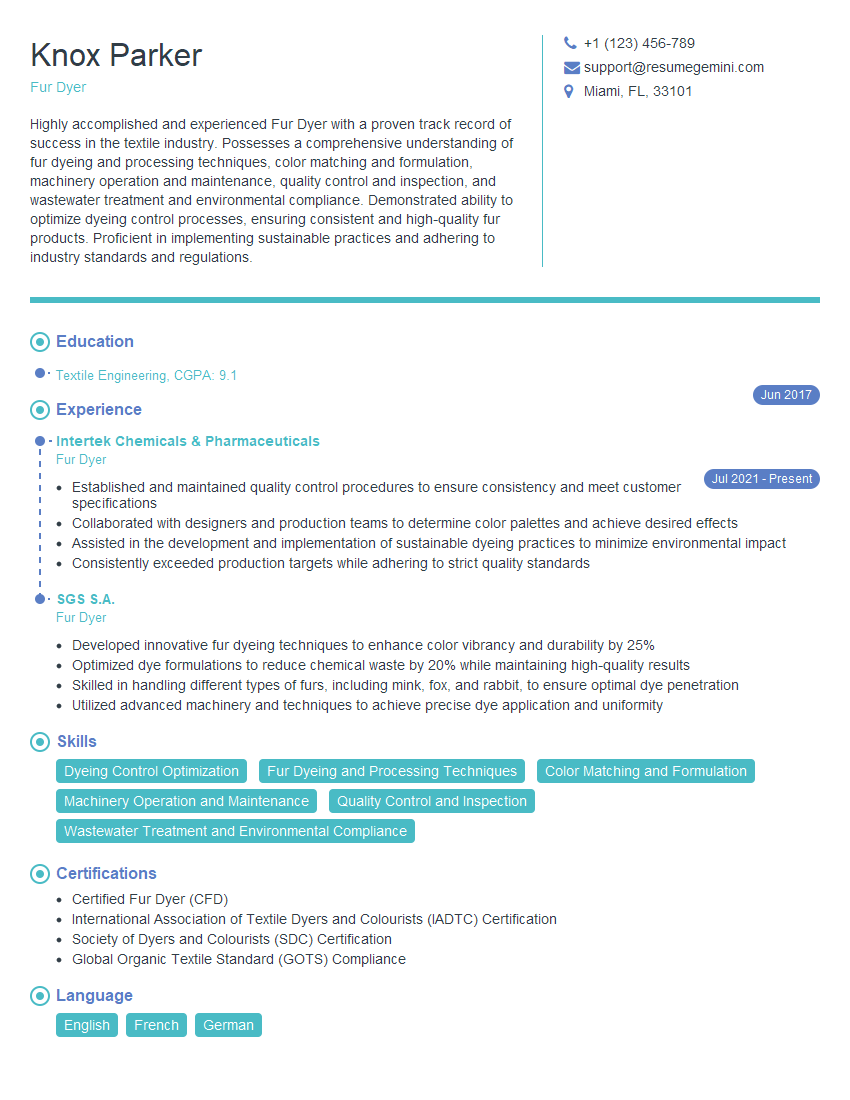
Mastering fur finishing techniques opens doors to exciting career opportunities in the luxury fashion and garment industries. A strong understanding of these processes is highly valued by employers, leading to greater job security and advancement potential. To maximize your chances of landing your dream role, focus on creating an ATS-friendly resume that highlights your skills and experience effectively. ResumeGemini is a trusted resource to help you build a professional and impactful resume that gets noticed. Examples of resumes tailored to the Fur Finishing industry are available to help you craft the perfect application.




Explore more articles
Users Rating of Our Blogs
Share Your Experience
We value your feedback! Please rate our content and share your thoughts (optional).
What Readers Say About Our Blog
Very informative content, great job.
good