Are you ready to stand out in your next interview? Understanding and preparing for Furniture Packing interview questions is a game-changer. In this blog, we’ve compiled key questions and expert advice to help you showcase your skills with confidence and precision. Let’s get started on your journey to acing the interview.
Questions Asked in Furniture Packing Interview
Q 1. Describe your experience with different packing materials (e.g., bubble wrap, packing peanuts, blankets).
My experience with various packing materials is extensive, encompassing everything from basic bubble wrap to specialized foam padding and heavy-duty moving blankets. I understand the properties of each material and their suitability for different furniture types and fragility levels.
- Bubble Wrap: Ideal for smaller, more delicate items like table lamps or picture frames, providing excellent cushioning against impact. I often use multiple layers for extra protection.
- Packing Peanuts: Excellent for filling void spaces in boxes to prevent shifting and damage during transit. I prefer biodegradable peanuts for environmental reasons. However, they’re less effective for cushioning heavier items.
- Moving Blankets: These are indispensable for protecting larger furniture pieces like sofas and armchairs against scratches and abrasions. Their thick padding provides significant shock absorption.
- Foam Sheets & Corner Protectors: These offer specialized protection for corners and edges, preventing chipping and breakage, particularly crucial for antique or delicate furniture.
- Kraft Paper: Used extensively as a base layer for wrapping before adding other cushioning materials; it prevents surface scratches and provides extra strength.
Choosing the right material is crucial; it’s not a one-size-fits-all approach. For instance, a fragile antique mirror would necessitate a combination of foam sheets, bubble wrap, and a sturdy wooden crate, while a sturdy wooden chair might only need moving blankets and corner protectors.
Q 2. How do you prioritize packing fragile items versus bulkier items?
Prioritizing fragile items over bulkier ones is a fundamental aspect of efficient and safe furniture packing. Fragile items require more attention and specialized protection to prevent damage during the move. My process typically involves:
- Inventory and Assessment: I start by carefully identifying all fragile items (e.g., glass-topped tables, mirrors, delicate sculptures) and assess their fragility level.
- Fragile-First Approach: I pack these items first, ensuring they’re individually wrapped with utmost care, using appropriate materials (bubble wrap, foam, custom crates).
- Strategic Placement: Once packed, fragile items are carefully placed in the moving truck, avoiding areas prone to extreme movement or impact. They’re often surrounded by bulkier items as added protection.
- Bulkier Items as Buffer: Bulkier, less fragile items (e.g., sofas, dressers) are then packed, strategically using them to cushion the fragile items already secured.
- Proper Labeling: All boxes containing fragile items are clearly labeled as such (‘FRAGILE,’ ‘HANDLE WITH CARE,’ ‘THIS SIDE UP’) to ensure careful handling by movers.
Think of it like building a protective fortress: the most vulnerable parts are secured first, then the outer layers are added for further protection.
Q 3. Explain your process for wrapping and protecting furniture legs and corners.
Protecting furniture legs and corners is critical to prevent damage. My process involves:
- Corner Protectors: I begin by applying foam or cardboard corner protectors to all vulnerable corners and edges. These are available in various sizes and materials to fit different furniture styles.
- Leg Wrapping: Furniture legs are individually wrapped using bubble wrap or foam padding to safeguard against scratches and impacts. For particularly ornate or delicate legs, I might use additional layers or custom-fit sleeves.
- Padding and Blankets: After wrapping individual legs, I often use moving blankets or thick padding to cover the entire furniture piece, further securing the legs and adding a layer of protection against scratches and bumps.
- Strategic Box Placement (for smaller items): For smaller items with legs, I might use custom boxes designed to secure and protect legs during transit.
Imagine wrapping a precious vase – you wouldn’t just wrap it haphazardly, you’d carefully pad and secure every part to prevent damage. The same principle applies to furniture legs and corners.
Q 4. What techniques do you use to prevent scratches and damage during packing?
Preventing scratches and damage during packing requires a meticulous approach. My techniques include:
- Protective Layers: Always start with a base layer of kraft paper before adding other padding materials. This prevents direct contact between the furniture and harsher materials.
- Careful Wrapping: Use smooth, non-abrasive materials like bubble wrap and moving blankets. Avoid materials that could snag or scratch the furniture’s finish.
- Strategic Padding: Place padding material between furniture pieces when packing multiple items in a single box or crate to prevent them from rubbing together.
- Proper Tape Usage: Avoid using excessive tape that might pull or damage the furniture’s finish. Use masking tape, or tape specifically designed for delicate surfaces.
- Clean Surfaces: Make sure surfaces are clean before packing to avoid transferring dirt or debris that might cause scratches.
- Use of Furniture Slides: For heavier pieces, using furniture sliders can minimize surface friction and scratching during movement.
The goal is to create a ‘cushioned cocoon’ around each piece, preventing it from making any contact with other items that could cause damage. This is especially important when dealing with antique or high-value furniture.
Q 5. How familiar are you with different types of crating materials and techniques?
My familiarity with crating materials and techniques is extensive. I’m proficient in using various materials, including plywood, particleboard, and even custom-milled lumber depending on the item’s size, weight, and fragility.
- Plywood Crates: Most commonly used for larger, heavier, or more fragile items, offering strong protection against impact and moisture.
- Particleboard Crates: A more economical option suitable for less fragile items, though less durable than plywood.
- Custom-Milled Lumber: Used for particularly large or oddly shaped items requiring bespoke protection.
- Interior Padding: Crates are always lined with appropriate padding (foam sheets, bubble wrap) to further cushion the item within the crate.
- Strapping and Bracing: Once the item is secured inside the crate, it’s further reinforced with strapping and bracing to prevent shifting during transit.
The choice of crating materials and techniques is highly dependent on the specific piece of furniture. A delicate antique grandfather clock would require a custom-built crate with superior shock absorption, while a more robust piece of furniture might only need a simple plywood crate.
Q 6. Describe your experience with disassembling and reassembling furniture.
Disassembling and reassembling furniture is a frequent part of my job, and I possess the necessary skills and tools to handle this efficiently and safely. My approach involves:
- Careful Disassembly: I begin by carefully examining the furniture piece to understand its construction and identify any potential challenges in disassembly. I always take photos during the process for accurate reassembly.
- Proper Tool Usage: I use the appropriate tools – screwdrivers, wrenches, etc. – ensuring they’re in good condition to prevent damage to the furniture.
- Organized Storage: All removed parts (screws, bolts, etc.) are carefully bagged and labeled according to the furniture piece and their location, ensuring easy reassembly.
- Protective Packaging: Disassembled parts are individually wrapped and protected to prevent scratches and damage during transit.
- Safe Reassembly: Upon arrival at the destination, I reverse the disassembly process, ensuring the furniture is reassembled accurately and securely.
I’ve handled everything from simple bookcases to complex, antique furniture requiring precision and patience. My experience ensures that the furniture is both safely transported and reassembled to its original condition.
Q 7. How do you handle oversized or oddly shaped furniture items?
Handling oversized or oddly shaped furniture requires creative problem-solving and specialized techniques. My approach involves:
- Custom Crating: For truly unusual shapes or sizes, I often create custom-built crates designed to fit the furniture perfectly. This ensures secure containment and prevents damage during transit.
- Specialized Padding: I utilize specialized padding (foam blocks, custom-cut sheets) to fill any voids within the crate and prevent movement. This is crucial for preventing damage to delicate or unusually shaped furniture.
- Secure Strapping: Robust strapping is critical for securing oversized items within crates or on pallets to prevent shifting during transportation.
- Specialized Equipment: Depending on size and weight, I may utilize specialized equipment such as heavy-duty dollies, straps, and sometimes even forklifts for safe loading and unloading.
- Route Planning: For extremely large or awkwardly shaped pieces, meticulous route planning is essential to ensure that the furniture can be moved safely through doorways and hallways.
Remember that planning is key. For these types of items, thorough preparation and planning are crucial to ensure a safe and successful move.
Q 8. What safety precautions do you take when packing heavy furniture?
Safety is paramount when handling heavy furniture. My approach begins with a thorough risk assessment before I even touch the piece. This involves identifying potential hazards like uneven surfaces, obstacles in the moving path, and the weight and dimensions of the furniture itself. I always use appropriate lifting techniques, avoiding twisting or bending my back. For very heavy items, I utilize equipment like furniture dollies and hand trucks, ensuring they’re in good working order and properly secured. Teamwork is crucial; I always have a spotter, especially when navigating tight corners or stairs. We communicate clearly and use signals to coordinate movements smoothly and prevent accidents. Wearing appropriate safety gear like gloves and sturdy footwear is non-negotiable. For example, recently when moving a large antique armoire, we employed a four-person lift with a dolly to smoothly transport it down a staircase, preventing any strain or damage.
Q 9. How do you label and inventory packed furniture for easy identification and tracking?
Clear labeling and inventory are essential for efficient tracking and to prevent confusion or misplacement. I use a consistent labeling system for every item, including a unique identification number. This number is clearly marked on both the furniture and its corresponding inventory sheet. The inventory sheet details the item’s description (e.g., ‘Queen-sized oak bed frame,’ ‘Brown leather armchair’), the unique ID number, the contents of any individual drawers or compartments, any pre-existing damage noted (with photographs), and its final destination. For larger pieces, I also use color-coded labels to further streamline the sorting process at the delivery location. For instance, ‘Bedroom-Red’ tags would make sorting significantly faster.
Q 10. Explain your experience with loading and unloading furniture onto trucks or vans.
My experience with loading and unloading spans various vehicle types, from small vans to large moving trucks, and even sea containers. The process begins with strategic planning. I always begin by placing heavier, bulkier items at the bottom and towards the front of the vehicle for better weight distribution and stability. I secure the furniture using appropriate straps, ropes, and padding to prevent shifting during transit. I leverage ramps and other loading equipment safely and efficiently. Proper placement is vital to maximize space and prevent damage. I always make sure fragile items are well-protected and positioned to minimize risk of damage from shifting. I remember one instance where we were loading a large antique piano; we carefully cushioned it, secured it with multiple straps, and placed it against the truck’s wall to prevent movement. The same methodical approach applies to unloading, where safety and efficiency are paramount.
Q 11. What are your strategies for efficient space utilization in packing trucks or containers?
Efficient space utilization is key to cost-effectiveness and smooth logistics. My strategy involves a combination of careful planning and practical techniques. Before loading, I create a visual plan of the truck’s interior, visualizing how different pieces will fit. I prioritize placing large items first to establish a solid foundation. I use various techniques to maximize space, like nesting smaller boxes within larger ones, or fitting smaller items snugly around larger ones. Utilizing protective padding between items not only protects furniture but fills gaps and prevents shifting. For example, when moving sofas and armchairs, I would place blankets or bubble wrap between the pieces. By carefully optimizing the space, you’re not only saving on transport costs but also reducing the risk of damage during transit.
Q 12. Describe your experience working with different types of packing equipment (e.g., dollies, hand trucks).
I’m proficient in using various packing equipment, including furniture dollies, hand trucks, appliance sliders, and furniture pads. Each tool has its application and I select the appropriate one based on the weight, size, and fragility of the furniture. For instance, appliance sliders are ideal for moving heavy appliances across hard floors without scratching them. Dollies are great for maneuvering larger furniture pieces, and hand trucks are excellent for transporting heavier items over longer distances. Regular maintenance and inspection of the equipment are vital to ensure safety and efficiency. A broken wheel on a dolly can lead to an accident, therefore regular checks are mandatory before any job.
Q 13. How do you handle situations where furniture is damaged during the packing process?
Damage during packing is an unfortunate possibility. My approach involves meticulous documentation. Any damage is immediately documented with photos and a detailed description, noting the location and extent of the damage. This information is immediately communicated to the client, and the steps to handle the claim outlined. This transparent approach is vital for managing expectations and resolving the situation fairly. Depending on the extent and cause of damage, repair solutions, replacement of damaged parts, or compensation arrangements will be made in line with client expectations and contractual agreement.
Q 14. How do you ensure the correct materials are used for packing different types of furniture (e.g., wood, upholstered, glass)?
Selecting the right packing materials is crucial for protecting different furniture types. For wooden furniture, I use furniture pads and blankets to prevent scratches and dents. For upholstered furniture, I utilize stretch wrap to maintain its shape and prevent tearing or soiling. Glass items require significant protection; I use bubble wrap, corner protectors, and plenty of padding. Fragile items are always placed in sturdy boxes. Specific materials are chosen based on the individual piece’s needs, such as using acid-free paper for antique furniture to prevent discoloration. Using appropriate materials prevents damage and ensures that the furniture arrives at its destination in the best possible condition. Using the right materials also reduces the time needed for packing, increasing efficiency.
Q 15. What is your process for securing packed furniture to prevent shifting during transit?
Securing packed furniture is paramount to prevent damage during transit. My process involves a multi-layered approach, focusing on both individual item protection and overall load stabilization. Think of it like building a sturdy, shock-absorbing fortress around each piece.
Individual Item Protection: I begin by wrapping each piece individually with appropriate padding – bubble wrap, foam sheets, or quilted blankets depending on the fragility of the item. For example, delicate antique furniture gets more layers than a sturdy modern table.
Corner and Edge Protection: I pay special attention to corners and edges, using corner protectors and edge guards to prevent chipping or scratching. Think of these as the armor plating for vulnerable points.
Internal Bracing: For larger or more complex pieces, I use internal bracing – strategically placed wooden supports or foam inserts to maintain structural integrity and prevent movement within the packaging. This is like adding support beams to a building.
External Crating (when necessary): For particularly fragile or valuable items, I create custom wooden crates that provide complete protection. This is our ultimate fortress, offering supreme protection against bumps and shocks.
Load Stabilization within the vehicle: Finally, once the individual pieces are packed, I ensure they are secured within the transport vehicle (truck, container, etc.) using appropriate straps, wedges, and padding to prevent shifting. Imagine it as using ropes and supports to keep everything firmly in place during transit.
Career Expert Tips:
- Ace those interviews! Prepare effectively by reviewing the Top 50 Most Common Interview Questions on ResumeGemini.
- Navigate your job search with confidence! Explore a wide range of Career Tips on ResumeGemini. Learn about common challenges and recommendations to overcome them.
- Craft the perfect resume! Master the Art of Resume Writing with ResumeGemini’s guide. Showcase your unique qualifications and achievements effectively.
- Don’t miss out on holiday savings! Build your dream resume with ResumeGemini’s ATS optimized templates.
Q 16. Describe your experience with international shipping regulations for furniture.
International shipping of furniture requires meticulous attention to detail, complying with various regulations and customs procedures. My experience includes navigating different countries’ phytosanitary regulations (concerning the prevention of plant pests and diseases). This often involves obtaining necessary certificates to ensure items are free from harmful organisms before shipment.
I am familiar with the International Maritime Organization (IMO) regulations for containerized shipping, including proper labeling and documentation requirements. I’ve also handled documentation for fumigation certificates and other relevant requirements needed for specific countries. Each shipment is treated as a unique project requiring detailed research to ensure compliance.
For example, shipping antique furniture to Europe might require CITES (Convention on International Trade in Endangered Species) documentation if the piece contains materials from endangered species. I have successfully managed these complex requirements many times, ensuring smooth and legal international transport.
Q 17. How do you adapt your packing techniques based on different transportation methods (e.g., truck, container, air freight)?
Adapting packing techniques to different transportation methods is crucial for successful delivery. Each method presents unique challenges regarding shock, vibration, and handling.
Truck Shipping: For truck shipments, the focus is on preventing movement within the truck bed. I use robust straps and padding to secure the furniture, minimizing the impact of road bumps and turns.
Container Shipping: Container shipments necessitate more robust packing, as the furniture will be subject to more significant movement and stacking. Crating is often necessary, along with load stabilization within the container using bracing and fillers to prevent shifting.
Air Freight: Air freight requires lightweight packaging to minimize transportation costs, while still providing adequate protection. This might involve using lighter-weight materials like high-density foam and specialized air freight crates.
In all cases, detailed documentation of the packing process and contents ensures efficient handling and reduces the risk of damage or loss.
Q 18. How familiar are you with various types of furniture (e.g., antiques, modern, custom-made)?
My experience encompasses a wide range of furniture types, each demanding a unique approach to packing and handling.
Antique Furniture: Requires extreme care due to age, fragility, and often unique construction. I utilize specialized padding, custom crating, and climate-controlled shipping where appropriate.
Modern Furniture: Generally more robust, but still requires careful wrapping and protection of vulnerable parts. The use of standard packing materials is typically sufficient.
Custom-Made Furniture: Often involves working closely with the manufacturer to understand the piece’s construction and specific requirements. Special care is taken in disassembly and reassembly to prevent damage.
I’ve successfully handled pieces ranging from delicate Victorian sideboards to modern minimalist designs, always prioritizing the unique needs of each item.
Q 19. How do you maintain inventory control during the packing process?
Maintaining inventory control is essential to ensure all items are accounted for throughout the packing process and after delivery. I utilize a combination of physical and digital methods.
Detailed Inventory Sheets: Before packing begins, I create a detailed inventory sheet listing each piece, its dimensions, condition, and any specific handling instructions. This serves as my master document.
Barcoding or Numbering: Each item is labeled with a unique identifier (barcode or number) corresponding to the inventory sheet. This allows for easy tracking and verification.
Digital Inventory Management: I utilize inventory management software to input data and generate reports. This provides real-time tracking and facilitates reconciliation.
Regular Audits: I conduct regular audits to verify the accuracy of the inventory and identify any discrepancies early in the process.
This layered approach minimizes the risk of loss or misplacement during packing and transportation, ensuring accountability from beginning to end.
Q 20. How do you ensure the timely and efficient completion of packing tasks?
Timely and efficient completion of packing tasks requires careful planning and execution. My approach focuses on several key areas:
Detailed Scheduling: I create a detailed schedule based on the volume of furniture, complexity of the packing, and available resources. This includes assigning tasks and setting realistic deadlines.
Efficient Team Work: For larger projects, I assemble a competent team, assigning tasks based on individual skills and experience. Clear communication and coordination are essential for maintaining efficiency.
Optimization of Packing Space: I’m skilled in optimizing packing space, ensuring efficient use of materials and minimizing waste. This reduces packing time and transportation costs.
Contingency Planning: I always include a buffer in the schedule to address unforeseen issues or delays. This helps maintain the project timeline and prevent stress.
By following these strategies, I consistently deliver on time and within budget, ensuring client satisfaction.
Q 21. What is your experience with using packing lists and inventory sheets?
Packing lists and inventory sheets are integral to my process. They serve as essential documentation for tracking items, ensuring accuracy, and facilitating communication throughout the project lifecycle.
Packing Lists: Provide a detailed list of contents within each package, carton, or crate. This information is crucial for both the packing team and the receiving party.
Inventory Sheets: Offer a comprehensive overview of all items being moved, including descriptions, quantities, and condition. This is my primary record-keeping tool.
Integration: I ensure seamless integration between packing lists and inventory sheets, allowing for easy cross-referencing and verification of contents.
Digital Versions: I utilize digital versions of these documents for easier sharing, storage, and analysis. This facilitates smooth communication and efficient problem-solving.
My proficiency in creating and managing these documents ensures accurate inventory tracking, facilitates smooth transitions, and minimizes the risk of errors or discrepancies.
Q 22. Describe your experience working as part of a team during the furniture packing process.
Teamwork is crucial in furniture packing. Think of it like a well-oiled machine – each person has a specific role, and coordinated effort leads to a smooth and efficient process. In my experience, effective teamwork involves clear communication, defined roles (disassembly, wrapping, loading, etc.), and mutual respect for each other’s skills. For instance, in one project, we had a team of four: one specialized in dismantling large furniture, another in delicate item wrapping, one focused on loading the truck strategically, and myself overseeing the overall process and quality control. This division of labor ensured faster packing while minimizing the risk of damage.
- Clear Communication: Regular check-ins, especially during complex tasks, ensure everyone’s on the same page.
- Defined Roles: Each team member knows their responsibility, preventing confusion and overlap.
- Mutual Respect: Acknowledging each person’s contribution fosters a positive work environment and improves efficiency.
Q 23. How do you communicate effectively with clients or colleagues regarding packing procedures?
Effective communication is paramount. I always prioritize clarity and transparency. With clients, I begin with a thorough assessment of their furniture and needs, explaining the process step-by-step, addressing any concerns proactively. This might involve showing examples of packing materials or discussing specific protection methods for delicate items. With colleagues, concise and precise communication is key. For instance, if a piece of furniture requires special handling, I’ll use clear, unambiguous instructions and visual aids if necessary. I also encourage open dialogue, allowing team members to raise concerns or suggest improvements.
- Active Listening: Understanding client needs and addressing their anxieties.
- Visual Aids: Using diagrams or photos for complex instructions.
- Regular Updates: Keeping clients and colleagues informed of progress.
Q 24. What steps do you take to ensure the safety and security of packed furniture during storage?
Safety and security during storage are non-negotiable. We use a multi-layered approach. First, every item is carefully wrapped in protective materials like bubble wrap, blankets, and corner protectors to prevent scratches and impacts. Then, furniture is strategically packed within the storage unit, utilizing space efficiently and preventing shifting. We use sturdy boxes for smaller items and ensure that fragile objects are cushioned and separated from heavier ones. Finally, the storage unit itself is secured with appropriate locks and, depending on the client’s preference and the storage facility’s security features, additional security measures like alarms or surveillance might be considered. It’s like building a fortress around the furniture, protecting it from any potential damage or theft.
- Protective Wrapping: Utilizing appropriate materials for different furniture types.
- Strategic Packing: Efficient space usage to minimize shifting.
- Secure Storage: Using proper locks and considering additional security measures.
Q 25. What is your understanding of industry-standard packing procedures and best practices?
My understanding of industry-standard procedures includes adherence to safety regulations, proper materials usage, efficient packing techniques, and meticulous record-keeping. Best practices emphasize minimizing damage and streamlining the process through optimized workflows and the use of specialized equipment when necessary. For example, using furniture sliders to prevent scratches on floors during movement or employing specialized stretch wrap for large items are common best practices. I regularly update my knowledge by attending industry workshops and staying informed about new materials and techniques.
- Safety Regulations: Adhering to all relevant health and safety guidelines.
- Proper Materials: Using high-quality packing materials suited for the task.
- Efficient Techniques: Employing optimized workflows for maximum efficiency.
- Record Keeping: Maintaining detailed inventories and packing lists.
Q 26. How do you prioritize speed and efficiency while maintaining quality and safety standards?
Balancing speed and efficiency with quality and safety requires a strategic approach. It’s not about rushing; it’s about optimizing the process. This includes careful planning, using the right tools, and employing efficient techniques. For example, pre-planning the packing order, assigning roles effectively, and using specialized tools like furniture dollies dramatically improves efficiency. However, speed should never compromise safety. If a task requires extra care to prevent damage, taking the necessary time is crucial. Think of it like a marathon, not a sprint – consistent pace and careful execution lead to the best results.
- Careful Planning: Pre-planning the packing order to streamline the process.
- Right Tools: Using appropriate tools and equipment to enhance efficiency.
- Efficient Techniques: Employing optimized packing methods.
- Prioritization: Focusing on tasks that maximize speed without compromising safety.
Q 27. What measures do you take to protect yourself from injuries during the packing process?
Protecting myself from injuries is a top priority. This involves using proper lifting techniques, wearing appropriate protective gear (gloves, safety shoes), and taking breaks to avoid fatigue. I always assess the environment for hazards before starting work, making sure walkways are clear and the work area is well-lit. Heavy items are moved using dollies or other lifting aids. Proper posture and body mechanics are crucial to prevent back injuries. Regular stretching and staying hydrated also contribute to injury prevention. It’s all about working smarter, not harder, and prioritizing my safety.
- Proper Lifting Techniques: Using correct posture and body mechanics.
- Protective Gear: Wearing gloves, safety shoes, and other necessary equipment.
- Hazard Assessment: Identifying and mitigating potential risks.
- Regular Breaks: Avoiding fatigue to prevent accidents.
Q 28. How do you handle unexpected problems or challenges that arise during the packing process?
Unexpected problems can arise, like a piece of furniture being damaged or a missing part. My approach is calm and systematic. First, I assess the situation accurately. If a piece is damaged, I document it thoroughly with photos and inform the client immediately. I then explore solutions, like finding replacement parts or arranging for repairs. For missing parts, I retrace my steps, checking the packing materials or contacting the client for verification. Communication is vital here; keeping both the client and team informed helps prevent escalation and maintains trust. My goal is to find a workable solution quickly and efficiently, maintaining transparency throughout.
- Calm Assessment: Accurately evaluating the situation before acting.
- Thorough Documentation: Recording details of the problem, including photos.
- Solution Exploration: Exploring options to resolve the issue efficiently.
- Open Communication: Keeping all parties informed.
Key Topics to Learn for Furniture Packing Interview
- Disassembly and Reassembly: Understanding the process of safely disassembling furniture (beds, tables, etc.) and packing components for transport, including knowledge of various tools and techniques. Practical application: Demonstrating proficiency in handling different furniture types and materials (wood, metal, glass).
- Packing Materials and Techniques: Selecting appropriate packing materials (bubble wrap, blankets, cardboard, corner protectors) based on furniture type and fragility. Practical application: Explaining strategies for maximizing protection and minimizing damage during transit.
- Efficient Packing Strategies: Optimizing space within moving boxes and trucks to maximize efficiency and prevent damage. Practical application: Describing methods for stacking and securing items to prevent shifting during transport.
- Inventory Management: Accurately documenting and tracking packed items, including labeling and creating inventories for easy reference. Practical application: Explaining processes to ensure no items are lost or damaged during the move.
- Safety Procedures: Adhering to safety protocols when handling heavy furniture, using appropriate lifting techniques, and ensuring workplace safety. Practical application: Describing your experience following safety regulations and preventing injuries.
- Damage Prevention and Mitigation: Identifying potential risks of damage during the packing process and implementing preventative measures. Practical application: Explaining how you would handle a situation where furniture is unexpectedly damaged.
Next Steps
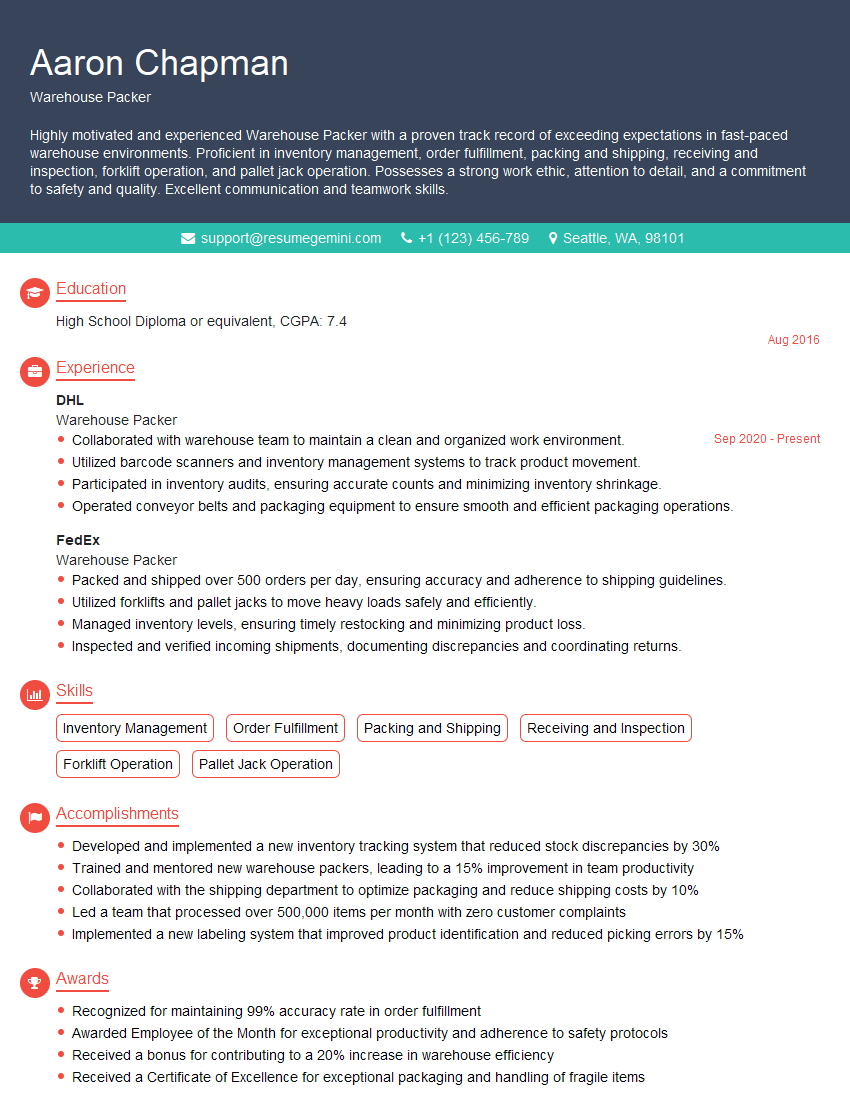
Mastering furniture packing opens doors to a rewarding career with opportunities for growth within the moving and relocation industry. A strong resume is crucial for showcasing your skills and experience to potential employers. Creating an ATS-friendly resume ensures your application is effectively screened by Applicant Tracking Systems, significantly increasing your chances of landing an interview. ResumeGemini is a trusted resource for building professional, impactful resumes tailored to your specific industry. We provide examples of resumes specifically designed for Furniture Packing professionals to help you present yourself effectively.
Explore more articles
Users Rating of Our Blogs
Share Your Experience
We value your feedback! Please rate our content and share your thoughts (optional).
What Readers Say About Our Blog
Very informative content, great job.
good