Every successful interview starts with knowing what to expect. In this blog, we’ll take you through the top Furniture Padding interview questions, breaking them down with expert tips to help you deliver impactful answers. Step into your next interview fully prepared and ready to succeed.
Questions Asked in Furniture Padding Interview
Q 1. What types of padding materials are commonly used in furniture upholstery?
The world of furniture padding is diverse, offering a range of materials each with unique properties. Common choices include polyurethane foam, the workhorse of the industry, known for its versatility and affordability. Memory foam, a more recent addition, provides excellent conforming support and pressure relief, ideal for high-end applications. Polyester fiberfill offers a softer, fluffier feel, often used as a secondary layer to add comfort or to shape curves. Other options include natural materials like cotton batting (offering breathability but requiring more maintenance), and even recycled materials are becoming increasingly popular for eco-conscious designs. The selection depends heavily on the piece’s intended use, budget, and desired aesthetic.
- Polyurethane Foam: The most widely used due to its cost-effectiveness and ability to be molded into various densities and shapes.
- Memory Foam: Excellent for conforming to body contours and pressure point relief, but can be more expensive.
- Polyester Fiberfill: Used for softness and shaping, often in conjunction with foam.
- Cotton Batting: A natural option providing breathability, but susceptible to clumping and requires more care.
Q 2. Explain the process of cutting and shaping padding for a curved surface.
Cutting and shaping padding for curved surfaces is a crucial skill. It requires precision and an understanding of material properties. For example, when working with a curved chair back, I would first create a pattern from heavy-duty paper, carefully tracing the exact shape and dimensions. This pattern acts as a template. Then, I use an electric carving knife or a very sharp utility knife to cut the foam precisely following the pattern. For more complex curves, I might use a combination of cutting and sculpting techniques, carefully removing small amounts of foam to achieve the desired shape. The final step often involves smoothing any rough edges to ensure a seamless fit under the upholstery fabric. Think of it like sculpting with foam – it’s about careful removal rather than aggressive cutting.
For intricate shapes, I sometimes use specialized foam carving tools that offer more control and precision. Regardless of the technique, accuracy is paramount to ensure a comfortable and aesthetically pleasing final product.
Q 3. How do you ensure proper padding density for optimal comfort and support?
Proper padding density is key to ensuring both comfort and support. Too little padding results in an uncomfortable, hard piece of furniture. Too much padding can lead to sagging and an overall sloppy look. The desired density depends on several factors: the type of furniture, the intended use, and the style. A plush sofa will require a higher density of softer foam than a firm office chair. I often use a combination of foams, layering different densities to achieve the perfect balance. For instance, a high-density base layer can provide structural support, topped with a layer of softer, lower-density foam for comfort. I carefully consider the ILD (Indentation Load Deflection) rating of the foam, which measures firmness, to select the right type for the application. Think of it like building a layered cake – each layer serves a specific purpose to create the perfect end result.
Q 4. Describe your experience with different types of foam padding (e.g., polyurethane, memory foam).
I have extensive experience with various foam types, notably polyurethane and memory foam. Polyurethane foam is my go-to for most projects due to its versatility, affordability, and ease of working with. Its density can be customized to meet different needs, from firm seating to plush cushions. Memory foam, however, excels in pressure relief and conforms to the body shape, making it perfect for high-end furniture and applications where superior comfort is a priority. However, it’s more expensive and can be more challenging to work with because of its higher density and tendency to retain heat. The choice between them depends largely on the client’s budget and the desired level of comfort and support. I’ve also experimented with other foams like high-resilience foam for increased durability in high-traffic areas.
Q 5. What are the common challenges encountered during padding installation, and how do you address them?
Padding installation can present several challenges. Uneven surfaces are a common issue; I address this by carefully shaping the padding to match the contours of the furniture frame, often using additional layers to compensate for irregularities. Another challenge is achieving consistent thickness and preventing wrinkles; meticulous planning and precise cutting techniques help mitigate this. Sometimes, the fabric can be too tight or too loose, which can affect the overall look and feel of the piece. I address this by ensuring proper fabric preparation and using appropriate stapling techniques. And finally, unexpected issues with the underlying structure can arise—if the underlying frame is warped, I’ll have to address that before installing the padding to ensure a comfortable and structurally sound final result. Careful planning, preparation, and problem-solving are critical in overcoming these hurdles.
Q 6. How do you determine the appropriate thickness of padding for a specific furniture piece?
Determining the appropriate padding thickness is crucial for the final piece’s comfort and aesthetics. I consider the overall design of the furniture piece, its function, and the desired level of firmness. A plush sofa will naturally require thicker padding than a slimline armchair. The type of foam used also plays a role; higher-density foams might require less thickness to achieve the same level of support as lower-density foams. I often consult design specifications and work closely with designers to ensure the padding complements the overall style and function of the piece. Ultimately, the thickness is a balance of comfort, aesthetics, and structural integrity.
Q 7. Describe your experience working with different fabric types and their impact on padding selection.
Different fabric types significantly influence padding selection. For example, a heavy, structured fabric like velvet might hide minor irregularities in padding, allowing for slightly less precise cutting. Lighter fabrics like linen, however, reveal imperfections more readily, requiring precise padding shaping. Furthermore, fabrics with a high drape (like silk) may require additional padding to prevent sagging, while fabrics with less drape (like a tightly woven canvas) might need less. The fabric’s texture and weight dictate how the padding will be perceived, which impacts the overall feel and look of the final product. My experience working with various fabrics has refined my ability to select and shape padding to complement the chosen fabric, achieving the perfect harmony between comfort and visual appeal.
Q 8. Explain the importance of proper stapling techniques in securing padding to the furniture frame.
Proper stapling is the backbone of secure and long-lasting upholstery. Think of it like the foundation of a house – if it’s not solid, the whole thing will crumble. Improper stapling can lead to sagging, bunching, and ultimately, the premature failure of your upholstery.
The key is using the right staple gun for the job, selecting staples appropriate for the material thickness, and employing a consistent, overlapping pattern. I typically use a pneumatic staple gun for efficiency, but for delicate fabrics, a manual one is necessary. Staples should be placed approximately 1-2 inches apart, depending on the padding’s density and the fabric’s weight. Importantly, the staples must penetrate fully into the frame, securing the padding firmly without tearing the fabric.
For instance, when padding a chair back, I’ll start at the bottom, working my way up in overlapping rows, ensuring each staple is firmly set. If you’re using a curved surface, you might need to use smaller staples or adjust the angle of insertion. Neglecting this can lead to the padding becoming loose, causing discomfort and requiring expensive repairs down the line.
Q 9. How do you handle irregular shapes or complex curves during padding installation?
Handling irregular shapes and curves requires adaptability and precision. It’s like sculpting with fabric and padding! You can’t simply apply padding in one flat layer; you need to contour it. My approach involves careful pre-cutting of the padding to roughly match the shape and then using a combination of techniques to achieve a perfect fit.
For instance, when upholstering an antique chair with a deeply curved back, I start by creating a pattern of the area from the existing padding. Then I cut the new padding material, adding extra material for adjustment. This is often done in layers to achieve the proper thickness and shape. I use smaller, more frequent staples, angled to conform to the curves. In some cases, I might use padding glue to secure the edges and ensure the padding conforms to any complicated curves and contours.
Sometimes, I’ll even use a combination of padding materials. For example, a high-density foam might be layered beneath a softer, more plush material to create a cushion with both support and comfort. This layered approach requires extra attention to detail in stapling and adhesive application.
Q 10. Describe your experience with hand-sewing vs. machine-sewing techniques in upholstery padding.
Both hand-sewing and machine-sewing have their place in upholstery padding. The choice often depends on the project’s scale, the fabric type, and the desired finish. Hand-sewing offers unparalleled precision and control, especially when working with delicate fabrics or intricate designs. It’s a more time-consuming process, ideal for smaller pieces or high-end restoration where perfection is paramount. Think of it as the fine art of upholstery.
Machine sewing, on the other hand, is faster and more suitable for large-scale projects or when dealing with sturdy fabrics. It provides consistent stitching and is great for tasks like attaching layers of batting or creating seams for tailored padding. It’s the efficient craftsman’s approach. For example, I’ll use a machine to sew together large pieces of padding for a sofa, but hand-sewing might be preferable for finishing edges on an antique chair seat. Each technique requires a different level of skill and understanding of materials. Sometimes, a combination of the two is most effective.
Q 11. What safety precautions do you take when using sharp tools or machinery during padding installation?
Safety is paramount in my work. Sharp tools and machinery demand respect and careful handling. I always wear safety glasses to protect my eyes from flying staples or fabric fragments. My work area is well-lit and organized to prevent accidental cuts or slips. When using power tools like staple guns or sewing machines, I always ensure they are properly maintained and operated according to the manufacturer’s instructions.
When handling knives or other sharp implements, I use a cutting mat to protect my work surface and always keep my fingers clear of the blade. Before beginning any project, I inspect my tools to ensure they’re in good working order and free from defects. This proactive approach minimizes risks and creates a safer working environment. It’s about understanding the inherent dangers and employing simple but effective safety measures. Negligence in this area is unacceptable.
Q 12. How do you ensure consistent quality in your padding work?
Consistent quality is achieved through meticulous attention to detail, from initial material selection to final finishing touches. I start by using high-quality padding materials sourced from reliable suppliers. This ensures uniform density and durability. My cutting and stapling techniques are standardized to maintain evenness and prevent sagging or bunching. I always double-check my measurements and patterns to ensure an accurate fit.
Regular tool maintenance plays a crucial role. Sharpened blades and well-maintained staple guns make for cleaner, more efficient work. And finally, I maintain a rigorous quality control checklist at every step. Before handing over a completed project, I conduct a thorough final inspection to identify any defects and correct them. My clients deserve the best and this methodical approach ensures it.
Q 13. Describe your experience with different types of padding glue or adhesives.
My experience encompasses a wide range of padding glues and adhesives, each suited for different applications and materials. I use spray adhesives for bonding large surfaces like batting layers. These offer even coverage but require good ventilation. For more precise application or when working with delicate fabrics, I prefer a water-based adhesive. These offer a more controlled application and provide excellent adhesion without the harsh fumes of solvent-based products.
I have also worked with hot melt adhesives for faster bonding and specialized glues designed for specific materials like foam rubber or polyurethane. Selecting the right glue is crucial; the wrong choice can lead to discoloration, poor adhesion, or even damage to the fabric. Knowing the properties of each adhesive and its compatibility with the materials being used is essential for achieving a professional result. For example, I might use a high-strength contact cement for bonding leather or vinyl padding, but a gentler adhesive for delicate fabrics.
Q 14. How do you handle damaged or worn-out padding during furniture restoration?
Restoring damaged or worn-out padding requires a careful assessment of the extent of the damage. If the damage is minor, like small tears or thinning, I might be able to repair it by patching or adding a supplemental layer of padding. This is often done using suitable adhesives or carefully hand-sewing patches in place. For example, I might patch a small hole in a chair cushion with a piece of similar padding material, carefully blending it in with the existing material.
However, if the padding is severely deteriorated or damaged beyond repair, complete replacement is necessary. This involves carefully removing the old padding, assessing the underlying structure of the furniture, and then installing new padding using appropriate techniques for the furniture style and material. Replacement often involves matching the density and type of padding to the original, so the final result looks and feels authentic. It’s about bringing that piece of furniture back to its former glory.
Q 15. Explain the differences between batting, felt, and foam padding materials.
Batting, felt, and foam are all used as padding in furniture, but they differ significantly in their properties and applications. Think of them as three distinct layers in a cake, each contributing something unique to the final product.
- Batting: This is a fluffy, soft material, usually made from cotton, polyester, or a blend. It’s excellent for creating a comfortable, cushioned feel. Imagine the soft layer in a quilt – that’s similar to batting’s function in upholstery. It’s often used as a top layer for softness and drape.
- Felt: Felt is a non-woven fabric made by matting, condensing and pressing fibers together. It’s denser than batting and provides more structure and support. Think of it as the firm layer in a multi-layered cake, adding stability. It’s often used as an interfacing layer to prevent sagging or to provide a smooth surface for the top fabric.
- Foam: Foam padding comes in various densities and thicknesses. It offers superior support and resilience compared to batting and felt. Imagine the sturdy base of the cake – that’s what foam provides in furniture. It can be used in various thicknesses depending on the desired level of cushioning and support, from high-density foam for firm seating to lower-density foam for softer cushioning.
In short, batting provides softness, felt provides structure, and foam provides support. The combination of these materials, along with their thickness and placement, is crucial for achieving the desired comfort and longevity of the upholstered piece.
Career Expert Tips:
- Ace those interviews! Prepare effectively by reviewing the Top 50 Most Common Interview Questions on ResumeGemini.
- Navigate your job search with confidence! Explore a wide range of Career Tips on ResumeGemini. Learn about common challenges and recommendations to overcome them.
- Craft the perfect resume! Master the Art of Resume Writing with ResumeGemini’s guide. Showcase your unique qualifications and achievements effectively.
- Don’t miss out on holiday savings! Build your dream resume with ResumeGemini’s ATS optimized templates.
Q 16. How do you calculate the amount of padding needed for a given project?
Calculating padding needs requires careful measurement and consideration of the furniture’s shape and the desired thickness. It’s not a simple calculation, but rather a process that involves several steps.
- Detailed Measurements: Measure all surfaces that require padding – seat cushions, backrests, arms, etc. Break down complex shapes into smaller, manageable sections for easier calculation.
- Padding Thickness: Determine the desired thickness of padding for each section. This depends on factors like the type of furniture, the desired level of comfort, and the overall design. Thicker padding is generally needed for comfort, whereas thinner padding might be preferred for sleeker designs.
- Material Allowance: Account for seam allowance and waste. Add extra material (typically 5-10%, depending on the complexity of the shape) to account for any cutting errors or adjustments needed during installation.
- Pattern Making (if necessary): For complex shapes, creating patterns is crucial to ensure accurate cutting and efficient material use. This might involve draping the material over the furniture and marking the required dimensions.
- Calculation: Once you have the precise measurements, calculate the total area needed for each padding material. For rectangular shapes, it’s simple multiplication (length x width). For curved surfaces, approximation methods or pattern pieces may be necessary.
For example, if you need to pad a rectangular seat cushion that measures 24 inches by 36 inches and you require 4 inches of foam, you’ll need at least 24 x 36 x 4 cubic inches of foam. Remember to add extra for waste, as noted above. This process ensures that you have enough padding without excessive waste.
Q 17. What is your experience with using different types of padding tools and equipment?
My experience with padding tools and equipment is extensive. I’m proficient in using a wide range of tools, from basic hand tools to specialized power equipment. My expertise covers both manual and automated techniques, making me adaptable to various project scales and requirements.
- Hand Tools: I’m highly skilled in using utility knives, shears, measuring tapes, and various types of staplers for precise cutting and secure attachment of padding materials. These are indispensable for intricate work and smaller projects.
- Power Tools: I’m experienced with using pneumatic staplers for efficient fastening on larger surfaces and electric cutting tools for precise cuts in foam and other materials. This speeds up the process significantly for large projects.
- Specialized Equipment: I’ve worked with specialized foam cutting machines for high-volume projects, and I have a strong understanding of their safety protocols. The capability to precisely shape foam improves both efficiency and quality.
For example, when working with high-density foam, using an electric knife ensures clean, even cuts to avoid damaging the foam’s structure. Conversely, for delicate fabrics and smaller furniture pieces, a sharp utility knife is more appropriate to prevent tearing.
Q 18. How do you troubleshoot common padding installation problems (e.g., wrinkles, uneven surfaces)?
Troubleshooting padding installation problems requires a methodical approach. Let’s address two common issues: wrinkles and uneven surfaces.
- Wrinkles: Wrinkles often result from improper stretching or insufficient padding. Here’s how to tackle them:
- Identify the Cause: Determine if the wrinkles are due to insufficient material, improper stretching, or a combination of both.
- Re-measure and Recut (if needed): If the material is too small, re-measure and cut a larger piece. This is often the simplest solution for minor wrinkling.
- Smooth and Restretch: Carefully smooth out the wrinkles, starting from the center and working outwards. Ensure that the padding is properly stretched and secured during installation.
- Strategic Placement of Staples: Use a strategic pattern for staple placement (avoid over-stapling in one area). This will maintain even tension and prevent future wrinkles.
- Uneven Surfaces: Uneven surfaces are often caused by improper padding distribution or underlying structural issues.
- Assess the Cause: Check if the underlying frame is level and stable. A non-level frame will always lead to uneven padding.
- Address Structural Issues (if needed): Repair any structural issues within the frame before installing padding. This may require adjustments or reinforcements.
- Even Padding Distribution: Ensure the padding is evenly distributed. Start by placing the largest pieces, making sure they’re correctly positioned before adding smaller pieces. Carefully check alignment during the process.
- Adjust Padding Thickness: Use shims or additional padding to level out uneven areas if necessary.
Remember that prevention is key. Careful measurement, proper material selection, and attentive installation are essential to avoid these problems in the first place.
Q 19. Describe your experience with working on different styles of furniture (e.g., antique, modern).
My experience spans a broad range of furniture styles, from delicate antique pieces to modern, minimalist designs. Each style presents unique challenges and requires a specialized approach.
- Antique Furniture: Working with antiques demands meticulous care and attention to detail. Often, the goal isn’t just to add padding, but to preserve the original integrity of the piece. I have experience in using traditional techniques to repair and pad antique furniture while maintaining its historical value. I might even source historically accurate materials.
- Modern Furniture: Modern furniture styles often incorporate innovative materials and unconventional designs. This requires adaptability and the ability to work with a wider range of materials and techniques. For instance, high-density foam and memory foam are more common in modern pieces, requiring specialized cutting and installation methods.
One memorable project involved restoring an antique Victorian chaise lounge. The original horsehair padding had deteriorated, requiring delicate removal and replacement with a historically appropriate alternative while maintaining the original shape and structure. On the other hand, I recently completed a project reupholstering a contemporary sofa, using high-density foam and innovative fabric choices to achieve a specific aesthetic.
Q 20. How do you maintain the quality and cleanliness of your workspace?
Maintaining a clean and organized workspace is crucial for efficiency and safety. It’s also a matter of professional pride. I employ a multi-pronged strategy to ensure both.
- Regular Cleaning: I regularly clean the workspace, removing dust, debris, and fabric scraps. I have designated areas for different types of materials to avoid cross-contamination.
- Organized Storage: Tools and materials are stored in designated areas, keeping them readily accessible but preventing clutter. This minimizes the time spent searching for tools during a project.
- Waste Management: I have a system for properly disposing of waste materials, adhering to environmental regulations and best practices for recycling and disposal of foam, fabric, and other related materials.
- Safety Precautions: I maintain a safe workspace, using appropriate safety equipment (like gloves and eye protection) and following safety procedures for using power tools.
A clean and organized workspace doesn’t just look professional; it significantly improves efficiency. I can find the tools I need quickly, minimizing project downtime and increasing accuracy.
Q 21. What are your strategies for managing time effectively during padding installation?
Effective time management is critical in furniture padding. My approach combines careful planning with efficient execution.
- Detailed Project Planning: Before starting a project, I create a detailed plan, outlining all steps involved, estimating the time required for each, and identifying potential bottlenecks. This helps me allocate time effectively.
- Prioritization: I prioritize tasks based on urgency and importance. I tackle the most crucial elements first, to prevent delays in the overall project timeline.
- Efficient Workflows: I optimize my workflows to minimize wasted time and movement. This includes pre-cutting materials, organizing tools efficiently, and using power tools where appropriate to enhance efficiency without compromising quality.
- Regular Breaks: I incorporate short, regular breaks into my schedule to maintain focus and avoid burnout. This ensures that I maintain accuracy and efficiency throughout the entire project.
- Realistic Scheduling: I avoid over-scheduling and allow for unexpected delays. This prevents rushed work and maintains the quality of the project.
For example, on large projects, I might break down the work into smaller, manageable sections, assigning specific timeframes to each. This makes tracking progress easier, identifies any potential delays early, and ensures that the project stays on schedule.
Q 22. Explain your experience working on large-scale upholstery projects.
My experience with large-scale upholstery projects spans over 15 years, encompassing everything from high-volume residential furniture production to bespoke commercial installations. I’ve been involved in projects requiring hundreds, even thousands, of padding units, demanding meticulous planning and efficient execution. This involved coordinating teams, managing material procurement, and ensuring consistent quality across all pieces. For example, on a recent contract for a hotel chain, we upholstered over 500 headboards, all requiring precise padding to meet their exacting design specifications. This required not just skill in padding application but also careful scheduling to meet tight deadlines and maintain quality control throughout the entire process.
One key element of my approach to large-scale projects is breaking down the task into manageable modules. We create detailed work orders specifying material requirements, padding techniques, and quality checkpoints for each phase. This allows for clear communication within the team and helps identify and resolve potential bottlenecks early on. We utilize project management software to track progress, manage resources, and ensure everything stays on schedule.
Q 23. How do you prioritize tasks and manage your workload effectively?
Effective task prioritization and workload management are critical for success in this field. I use a combination of techniques, including the Eisenhower Matrix (urgent/important), to categorize tasks and allocate resources appropriately. Time-sensitive, high-priority tasks, such as meeting urgent deadlines for a client, naturally take precedence. I also employ Kanban-style boards to visualize the workflow and identify potential roadblocks. This allows me to easily re-allocate resources or adjust schedules as needed. For example, if a certain type of padding material is delayed, I can immediately shift focus to other tasks that don’t depend on it, preventing project delays.
Beyond project management tools, I emphasize proactive communication with the team and clients. Regularly scheduled meetings and progress reports help keep everyone informed and address any potential issues promptly. My strong organizational skills allow me to efficiently handle multiple projects simultaneously while maintaining a high level of quality.
Q 24. What are your preferred methods for measuring and marking padding patterns?
Accurate measuring and marking are fundamental to successful padding. My preferred methods involve a combination of traditional and modern techniques. I start by creating precise templates using heavy-duty paper or durable plastic, ensuring accurate representation of the furniture piece. I utilize measuring tapes, rulers, and squares for precise measurements, double-checking all dimensions. For complex curves or intricate designs, I might employ flexible measuring tools or even digital modeling software to create detailed patterns.
Once the templates are ready, I use a combination of chalk lines, marking pencils, and sometimes even laser measuring tools to transfer the patterns to the padding material itself. The choice of tools depends on the material’s type and the complexity of the design. For example, when working with delicate fabrics or foam, I prefer gentler methods like chalk lines to avoid damage. I always maintain a detailed record of my measurements and markings, ensuring consistency and accuracy throughout the process.
Q 25. How do you stay up-to-date with the latest trends and techniques in furniture padding?
Staying current in the ever-evolving field of furniture padding requires continuous learning and engagement. I subscribe to relevant trade publications, attend industry conferences and workshops, and actively participate in online forums and communities dedicated to upholstery and furniture design. This helps me keep abreast of new materials, techniques, and technological advancements.
For instance, I recently attended a workshop on using new sustainable padding materials, including recycled foam and plant-based alternatives. I also regularly explore innovative tools and techniques, such as computer-aided design (CAD) software for creating complex padding patterns, enhancing both efficiency and precision. Keeping updated ensures my skills are always relevant and I can offer my clients the best possible solutions.
Q 26. Describe a time you had to adapt your padding techniques to accommodate a unique design challenge.
One project involved creating custom padding for a series of uniquely shaped armchairs with asymmetrical designs and highly sculpted forms. Standard padding techniques wouldn’t work; the curves and angles were too complex. The challenge was to achieve a smooth, uniform, and comfortable finish while maintaining the integrity of the chair’s artistic design.
My solution involved a multi-layered approach. I first created a series of precisely fitted foam core pieces that mimicked the armchair’s contours. Then, I used thinner layers of high-density foam and soft padding materials to fill in the gaps and create a seamless surface. The final layer was a soft, breathable fabric chosen to complement the chair’s overall aesthetic. The result was exceptionally comfortable and visually stunning seating, a testament to adapting traditional skills to meet a unique design challenge.
Q 27. How do you ensure the longevity and durability of your padding installations?
Ensuring longevity and durability starts with material selection. I prioritize high-quality, resilient padding materials like high-density foams and durable fabrics. The choice of material depends on the intended use and the anticipated stress the padding will endure. For high-traffic areas, I’ll choose more robust materials than those for a less frequently used piece. Proper preparation of the furniture frame is also essential – any damage or instability can compromise the padding’s lifespan.
Careful application of the padding itself is crucial. I ensure proper density and thickness, avoiding any wrinkles or uneven areas. Accurate sewing and fastening techniques prevent slippage or sagging. Finally, I advise clients on proper care and maintenance of their upholstered furniture. Things like regular vacuuming, avoiding direct sunlight, and using protective covers can significantly prolong the life of the padding and the overall piece.
Q 28. What are your salary expectations for this role?
My salary expectations are commensurate with my experience and expertise in this specialized field. Considering my 15 years of experience, proven track record on large-scale projects, and deep understanding of advanced padding techniques, I am seeking a salary range between $80,000 and $100,000 annually. This reflects my contributions to project success and the value I bring to your organization. I am also open to discussing a comprehensive compensation package that might include benefits and bonuses.
Key Topics to Learn for Furniture Padding Interview
- Material Science: Understanding different padding materials (foam, fiberfill, down, etc.), their properties (density, resilience, durability), and suitability for various furniture types.
- Manufacturing Processes: Familiarize yourself with the cutting, shaping, and assembly processes involved in creating furniture padding, including automated and manual techniques.
- Quality Control: Learn about inspection methods to ensure padding meets quality standards, including density checks, dimensional accuracy, and seam integrity.
- Sustainability and Eco-Friendly Materials: Explore the use of recycled and sustainable materials in furniture padding and their impact on the environment.
- Cost Analysis and Optimization: Understand how material selection, production methods, and waste reduction impact the overall cost of furniture padding.
- Design and Ergonomics: Learn how padding contributes to the comfort, support, and overall design aesthetics of furniture pieces.
- Troubleshooting and Problem Solving: Develop your ability to identify and solve common issues related to padding materials, manufacturing processes, and quality control.
- Health and Safety Regulations: Understand relevant safety standards and regulations pertaining to handling materials and operating machinery in padding production.
- Industry Trends and Innovations: Stay updated on the latest trends and new technologies impacting the furniture padding industry.
Next Steps
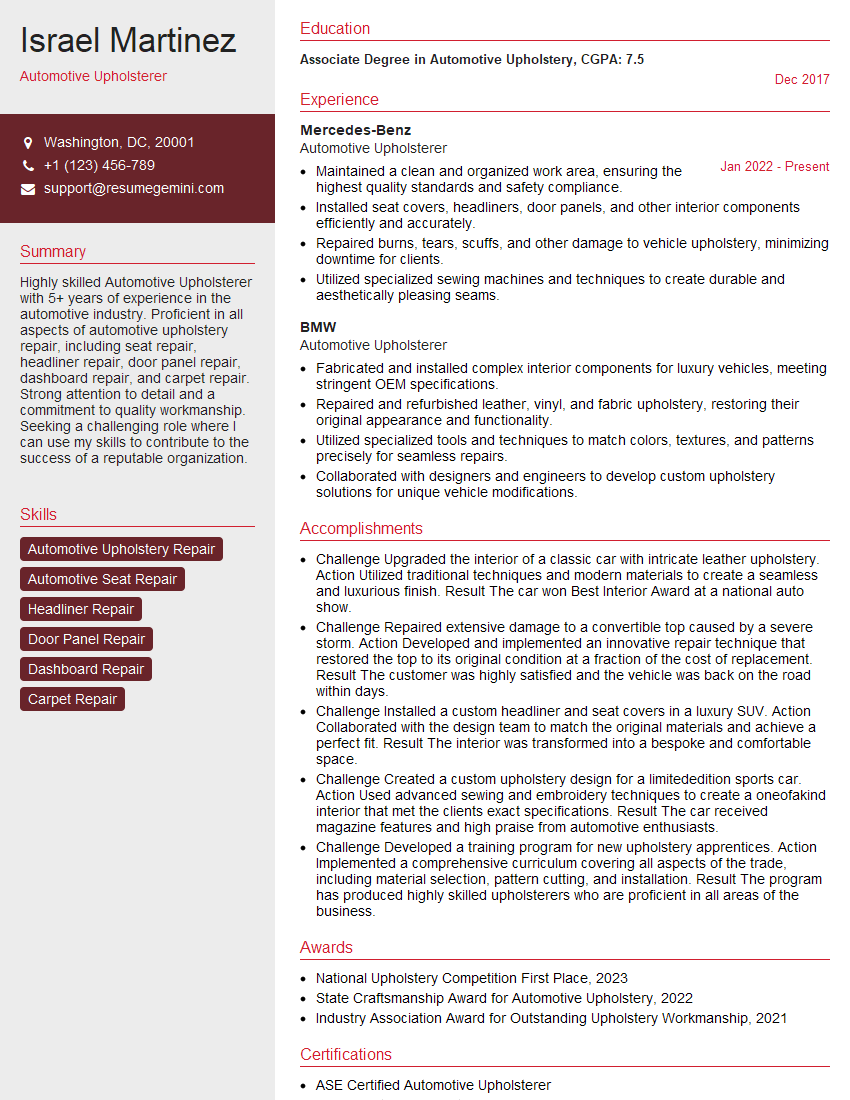
Mastering the intricacies of furniture padding opens doors to exciting career opportunities within the manufacturing, design, and supply chain sectors. A strong understanding of this field demonstrates valuable technical skills and problem-solving abilities. To maximize your job prospects, create an ATS-friendly resume that highlights your expertise. We highly recommend using ResumeGemini to build a professional and impactful resume that gets noticed. ResumeGemini offers tailored resume examples specific to the furniture padding industry, helping you showcase your skills effectively.
Explore more articles
Users Rating of Our Blogs
Share Your Experience
We value your feedback! Please rate our content and share your thoughts (optional).
What Readers Say About Our Blog
Very informative content, great job.
good