Feeling uncertain about what to expect in your upcoming interview? We’ve got you covered! This blog highlights the most important Gemba Walks and Shop Floor Management interview questions and provides actionable advice to help you stand out as the ideal candidate. Let’s pave the way for your success.
Questions Asked in Gemba Walks and Shop Floor Management Interview
Q 1. Describe your experience conducting Gemba Walks.
My experience with Gemba Walks spans over a decade, encompassing various manufacturing and service industries. I’ve led Gemba Walks in automotive assembly plants, food processing facilities, and even software development teams. Early in my career, I participated in Gemba Walks primarily as an observer, learning the techniques and the importance of firsthand observation. Over time, I progressed to leading and facilitating these walks, mentoring team members and guiding them in identifying waste and areas for improvement. For example, during a Gemba Walk at a food processing plant, I witnessed firsthand the bottlenecks in the packaging line due to a poorly designed workstation layout. This observation, directly from the Gemba (the actual place of work), led to a significant improvement in efficiency.
In another instance, working with a software development team, I observed developers spending excessive time searching for information due to poor documentation. The Gemba Walk highlighted the need for improved internal communication and knowledge management systems.
Q 2. What are the key objectives of a Gemba Walk?
The key objectives of a Gemba Walk are multifaceted, all revolving around gaining a deep understanding of the current state of a process. Primarily, it aims to:
- Identify waste and inefficiencies: This includes identifying areas where time, resources, or materials are wasted. Think excess inventory, unnecessary movements, or flawed processes.
- Understand the process firsthand: Direct observation allows for a better grasp of the process flow, the challenges faced by workers, and potential areas for improvement. It’s far more insightful than simply reviewing reports.
- Gather data for problem-solving: Gemba Walks aren’t just about observation; they’re about collecting data points that can be used to formulate solutions. Photos, videos, and even simple notes can be powerful tools.
- Improve communication and collaboration: It fosters communication between management and frontline workers, building trust and encouraging collaborative problem-solving.
- Promote continuous improvement: Gemba Walks are not one-time events; they form part of a broader continuous improvement strategy, allowing for ongoing monitoring and adjustment.
Q 3. How do you prepare for a Gemba Walk?
Preparation for a Gemba Walk is crucial for its success. It’s not about showing up and ‘winging it.’ Effective preparation involves:
- Defining the scope: Clearly identify the specific area or process to be observed. Vague objectives lead to unfocused walks.
- Setting clear objectives: What questions need to be answered? What specific problems are you trying to solve? For example, ‘reduce packaging line downtime by 15%’ or ‘improve the accuracy of order fulfillment’.
- Gathering background information: Review existing data, process maps, and any relevant documentation. This provides context for your observations.
- Identifying key personnel: Invite relevant workers and supervisors to participate. Their insights are invaluable.
- Planning the route and timing: Decide on the specific areas to visit and the duration of the walk. Avoid disrupting operations unnecessarily.
- Preparing necessary tools: Bring a notebook, camera, measuring tape (where appropriate), and any other tools needed to gather data efficiently.
Q 4. What are the essential elements of a successful Gemba Walk?
A successful Gemba Walk is characterized by several key elements:
- Focused observation: Pay close attention to the details of the process, identifying areas of potential improvement. Don’t be afraid to get your hands dirty.
- Active listening: Engage with the workers, listen to their concerns, and understand their perspectives. This is crucial for effective problem-solving.
- Data collection: Use visuals like photos and videos to document your findings. Note down data points like cycle times, defect rates, and wait times.
- Respectful engagement: Treat the workers with respect, understanding their work is challenging and showing gratitude for their time.
- Follow-up actions: A Gemba Walk isn’t complete without establishing clear actions based on findings and assigning responsibility for implementing these actions.
- Open communication: Share findings and proposed improvements with the team, obtaining their input for the implementation plan.
Q 5. How do you ensure objectivity during a Gemba Walk?
Objectivity during a Gemba Walk is paramount. To maintain objectivity:
- Avoid pre-conceived notions: Enter the Gemba with an open mind, allowing observations to shape your understanding rather than imposing your own ideas.
- Focus on facts, not opinions: Base your conclusions on the data collected, not subjective opinions or assumptions.
- Ask open-ended questions: Encourage workers to share their experiences and perspectives, avoiding leading questions that might influence their responses.
- Observe multiple times: One visit is insufficient to fully understand a process. Multiple visits allow you to observe variations and better assess typical workflow.
- Use multiple data sources: Don’t rely solely on visual observation; collect data such as cycle times, defect rates, and worker feedback.
- Seek diverse perspectives: Engage with people at different levels within the organization, obtaining varying points of view.
Q 6. How do you document findings from a Gemba Walk?
Documentation is key to translating Gemba Walk observations into actionable improvements. Effective documentation includes:
- Detailed notes: Record observations, measurements, and any relevant data points. Include timestamps to show when observations were made.
- Photographs and videos: These provide visual records of the process and problem areas, making communication much more effective.
- Process maps: Visually represent the workflow, highlighting bottlenecks and inefficiencies.
- Data tables: Organize quantitative data, such as cycle times, defect rates, and wait times, in a clear and concise manner.
- Worker feedback: Document conversations and insights from the workers, paying attention to their suggestions and concerns.
- Action items: Clearly define the improvements needed and assign responsibilities.
I typically use a combination of digital and physical tools – a tablet for notes and photos, and a physical notebook for quick sketching and jotting down observations. This allows for easy access and sharing of information post-walk.
Q 7. How do you translate Gemba Walk observations into actionable improvements?
Translating Gemba Walk observations into actionable improvements involves a structured approach:
- Analyze findings: Review all collected data – notes, photos, videos, worker feedback – and identify recurring patterns and root causes of problems.
- Prioritize improvements: Focus on the issues with the greatest impact and feasibility. Use tools like Pareto charts to prioritize effectively.
- Develop solutions: Brainstorm potential solutions with the team, considering cost, time, and resource constraints.
- Create an action plan: Document the proposed improvements, assign responsibilities, set deadlines, and define metrics for success.
- Implement and monitor: Put the solutions into action, carefully monitoring the results and making adjustments as needed. Use data to track progress and make informed decisions.
- Standardize improvements: Once a successful improvement is validated, it should be documented and standardized as a best practice to prevent future regressions.
For example, if a Gemba Walk reveals a bottleneck at a specific workstation, the action plan might include redesigning the workstation layout, providing additional training to workers, or investing in new equipment. The monitoring phase would then track improvements in cycle times and worker satisfaction.
Q 8. Explain your understanding of Shop Floor Management principles.
Shop Floor Management (SFM) is a systematic approach to managing manufacturing operations that focuses on continuous improvement and problem-solving directly on the shop floor. It emphasizes a data-driven, visual management system, empowering frontline workers to identify and resolve issues quickly. Key principles include:
- Visual Management: Using visual cues like charts, graphs, and Kanban boards to make key performance indicators (KPIs) readily apparent.
- Standardized Work: Defining best practices and documenting them for consistent execution and quality control.
- Gemba Walks: Regular, structured visits to the shop floor to observe processes, identify problems, and engage with workers.
- Continuous Improvement (Kaizen): Fostering a culture of ongoing improvement through small, incremental changes.
- Problem Solving: Using structured problem-solving methodologies like 5 Whys or A3 reporting to address root causes of issues.
- Empowerment: Giving frontline workers the authority and responsibility to identify and fix problems.
In essence, SFM shifts from a reactive to a proactive approach, preventing problems before they arise rather than addressing them only after they’ve caused significant disruption.
Q 9. How do you identify and prioritize improvement areas on the shop floor?
Identifying and prioritizing improvement areas requires a combination of data analysis and direct observation during Gemba Walks. I start by:
- Data Review: Analyzing key performance indicators (KPIs) such as production efficiency, defect rates, lead times, and safety incidents. Trends and outliers in these metrics pinpoint potential problem areas.
- Gemba Walks: Observing the actual work processes firsthand. This allows me to identify bottlenecks, inefficiencies, and safety hazards that may not be readily apparent from data alone. I look for visual cues such as excessive inventory, long queues, or cluttered workstations.
- Worker Input: Actively soliciting feedback from frontline workers. They are often the most knowledgeable about daily challenges and potential improvements. I use open-ended questions to encourage them to share their perspectives.
- Prioritization Matrix: Once potential improvement areas are identified, I use a prioritization matrix (e.g., impact vs. effort) to rank them based on their potential impact and the resources required to address them. High-impact, low-effort areas are tackled first.
For example, if data shows a spike in defect rates on a specific assembly line, a Gemba Walk would reveal the root cause – perhaps a faulty tool or a lack of standardized work instructions.
Q 10. How do you measure the effectiveness of improvements implemented after a Gemba Walk?
Measuring the effectiveness of improvements implemented after a Gemba Walk requires tracking the relevant KPIs before and after the changes. This needs to be done consistently and accurately.
- Establish Baselines: Before implementing any changes, collect baseline data on the relevant KPIs. This provides a benchmark against which to measure improvement.
- Track KPIs: After implementing the improvements, continuously monitor the same KPIs to see if there is a positive change. This could involve collecting data daily, weekly, or monthly depending on the nature of the improvement.
- Statistical Analysis: Utilize statistical methods (e.g., control charts) to determine if the observed improvements are statistically significant or due to random variation.
- Visual Management: Display the before-and-after data using visual management tools (e.g., charts, graphs) to clearly demonstrate the impact of the implemented changes.
For instance, if a Gemba Walk identified a bottleneck at a specific machine, and implementing a new process resulted in a 20% reduction in cycle time (with statistical significance), that is a clear measure of success.
Q 11. Describe a time you used data to identify a problem on the shop floor.
In a previous role, we experienced consistently high scrap rates in the injection molding process. Initial investigations focused on operator error, but the data told a different story. We analyzed data from our Manufacturing Execution System (MES) focusing on machine parameters, cycle times, and material usage. The data revealed a strong correlation between increased scrap rates and variations in the injection pressure. Further investigation uncovered a minor malfunction in the pressure regulator. Addressing this mechanical issue reduced scrap rates by 45% within a month.
Q 12. How do you handle resistance to change during implementation of improvements?
Resistance to change is common during any improvement initiative. Addressing it requires a combination of empathy, communication, and engagement. I approach it using these strategies:
- Understand Concerns: Actively listen to and address the concerns of those resisting change. Often, resistance stems from fear of the unknown, job insecurity, or mistrust.
- Transparent Communication: Clearly communicate the rationale behind the changes, the expected benefits, and the process for implementation. Involve workers in the planning and execution stages to increase buy-in.
- Pilot Programs: Implement changes on a smaller scale before a full-scale rollout. This allows for testing, feedback collection, and adjustments before widespread adoption.
- Training and Support: Provide adequate training and ongoing support to ensure workers feel confident in their ability to adapt to the new processes.
- Celebrate Successes: Acknowledge and celebrate early successes to build momentum and demonstrate the value of the changes.
It’s important to remember that change is a process, and not everyone will adopt it immediately. Consistent communication and demonstrating the positive impact are crucial for overcoming resistance.
Q 13. What are some common challenges encountered during Gemba Walks?
Several challenges can arise during Gemba Walks:
- Time Constraints: Scheduling time for Gemba Walks can be difficult, especially in busy production environments. This requires careful planning and prioritization.
- Data Collection Challenges: Insufficient or inaccurate data can hamper effective problem identification. This highlights the importance of having well-defined KPIs and reliable data collection systems.
- Lack of Worker Participation: If workers feel that their input is not valued, they may be less likely to participate actively in Gemba Walks. Fostering trust and creating a culture of open communication is key.
- Interpreting Observations: It is vital to have experienced individuals conducting the Gemba Walks who can accurately interpret what they observe and differentiate between symptoms and root causes.
- Follow-up and Action: Without a clear plan for follow-up actions and assigning responsibility for implementing changes, Gemba Walks can become unproductive exercises.
Overcoming these challenges requires careful planning, clear communication, and a commitment to follow-up action.
Q 14. How do you ensure safety during a Gemba Walk?
Safety is paramount during Gemba Walks. To ensure safety, I adhere to these practices:
- Risk Assessment: Conduct a thorough risk assessment before the walk to identify potential hazards and implement appropriate safety measures.
- Personal Protective Equipment (PPE): Ensure that all participants wear the appropriate PPE for the specific work environment, such as safety glasses, steel-toed shoes, or hearing protection.
- Observe Safety Procedures: Adhere strictly to all existing safety procedures and regulations in the facility. This demonstrates respect for safety and reduces the risk of incidents.
- Limited Group Size: Keep the group size small to avoid overcrowding and to ensure that everyone can safely observe the process.
- Trained Escorts: If necessary, utilize trained personnel from the shop floor as escorts to ensure that participants are aware of potential hazards and follow safety protocols.
Safety should never be compromised during a Gemba Walk. Prioritizing safety ensures a productive and incident-free experience for all participants.
Q 15. Explain your understanding of Lean Manufacturing principles.
Lean Manufacturing is a philosophy focused on eliminating waste and maximizing value for the customer. It’s about streamlining processes, reducing inventory, and improving efficiency across the entire value stream. The core principles revolve around identifying and eliminating seven types of waste, often remembered by the acronym TIMWOOD:
- Transportation: Unnecessary movement of materials.
- Inventory: Excess materials or work-in-progress.
- Motion: Unnecessary movement of people or equipment.
- Waiting: Idle time for machines or people.
- Overproduction: Producing more than needed.
- Over-processing: Performing more work than necessary.
- Defects: Errors and rework.
Implementing Lean often involves using tools like value stream mapping to visualize the flow of materials and processes, identifying bottlenecks and areas for improvement. For example, in a manufacturing setting, Lean might involve optimizing the layout of the factory floor to minimize material handling, reducing batch sizes to minimize inventory, or implementing quality control measures to reduce defects.
Career Expert Tips:
- Ace those interviews! Prepare effectively by reviewing the Top 50 Most Common Interview Questions on ResumeGemini.
- Navigate your job search with confidence! Explore a wide range of Career Tips on ResumeGemini. Learn about common challenges and recommendations to overcome them.
- Craft the perfect resume! Master the Art of Resume Writing with ResumeGemini’s guide. Showcase your unique qualifications and achievements effectively.
- Don’t miss out on holiday savings! Build your dream resume with ResumeGemini’s ATS optimized templates.
Q 16. How do you apply 5S principles during a Gemba Walk?
The 5S methodology (Sort, Set in Order, Shine, Standardize, Sustain) is a cornerstone of Lean and a vital part of Gemba Walks. During a Gemba Walk, we apply 5S principles to observe and address immediate improvements on the shop floor.
- Sort (Seiri): We identify and remove unnecessary items from the workspace. During the walk, if we see excess inventory, tools, or paperwork, we note it for removal or relocation.
- Set in Order (Seiton): We organize the remaining items for easy access and efficient workflow. We look for areas where better organization could improve workflow. For example, a poorly organized tool rack slowing down technicians.
- Shine (Seiso): We clean the workspace to maintain a high level of cleanliness and identify potential problems. During the walk, dirt or spills are flagged for immediate cleaning. This also often reveals hidden maintenance needs.
- Standardize (Seiketsu): We establish standards for maintaining order and cleanliness, using visual aids like labels and shadow boards. The walk highlights where existing standards are not being followed, providing opportunity for refinement.
- Sustain (Shitsuke): We establish a system to maintain improvements over time. The Gemba Walk helps to reinforce these standards and address any deviations.
For example, during a Gemba Walk in a machining shop, I might observe excess coolant spills (Shine), leading to a discussion on improved storage and regular cleaning (Standardize and Sustain). Or a cluttered work area would trigger a discussion about eliminating unnecessary tools (Sort) and creating a more organized layout (Set in Order).
Q 17. How do you use visual management tools on the shop floor?
Visual management makes it easy to see the status of work and identify problems quickly. On the shop floor, we use various tools to achieve this:
- Andon Boards: These display real-time information on production status, including machine downtime and quality issues. A visual indication of a problem allows for rapid response.
- Kanban Systems: These use visual signals (cards or lights) to manage the flow of materials. A simple visual system for controlling inventory and preventing overproduction.
- Shadow Boards: These clearly outline the location and quantity of tools, making it easy to spot missing items. This aids in tool control and maintenance.
- Charts and Graphs: We use these to track key performance indicators (KPIs) such as production output, defect rates, and cycle times. Visualized data provides a clear overview of shop floor performance.
- 5S Visual Aids: Labeled shelves, tool storage areas, and color-coded zones clearly indicate where things should be located.
For instance, a Kanban system for a specific part would indicate when more parts are needed based on the number of cards in the system. This prevents overproduction of parts.
Q 18. Describe your experience with Kaizen events.
Kaizen events are focused improvement workshops, typically lasting a few days, that bring together a cross-functional team to address a specific problem or improve a particular process. I’ve participated in numerous Kaizen events, focusing on everything from reducing machine downtime to improving the efficiency of assembly lines.
A typical Kaizen event begins with clearly defining the problem and setting measurable goals. We then use tools like value stream mapping to analyze the current process and identify waste. Team brainstorming sessions help to generate improvement ideas, which are then tested and implemented using a rapid prototyping approach. The event concludes with a formal presentation of the results and a plan for sustaining the improvements.
In one event, we tackled a bottleneck in the paint process, discovering that inadequate drying time was leading to significant rework. By implementing a simple change to the drying process, we reduced rework by 40% and increased overall throughput. The success of this event was documented and shared with other teams to promote knowledge sharing.
Q 19. How do you foster a culture of continuous improvement on the shop floor?
Fostering a culture of continuous improvement requires a multi-faceted approach. It’s not just about implementing tools and techniques; it’s about changing mindsets and behaviors. Key strategies include:
- Empowerment: Giving shop floor personnel the authority and resources to identify and solve problems.
- Training: Providing training on Lean principles, problem-solving techniques, and the use of visual management tools.
- Recognition and Rewards: Acknowledging and rewarding individuals and teams for their contributions to continuous improvement. This could include small monetary incentives or public recognition.
- Open Communication: Creating a safe environment where people feel comfortable sharing ideas and concerns without fear of retribution. Gemba walks are particularly useful here.
- Leadership Commitment: Visible and active support from management is crucial in driving continuous improvement initiatives. Management needs to be actively participating in the improvement efforts.
By creating a culture where improvement is seen as a continuous journey, not a project, we ensure that the shop floor is constantly evolving and becoming more efficient.
Q 20. How do you communicate effectively with shop floor personnel?
Effective communication on the shop floor is critical for success. I use a variety of methods to ensure clear and concise communication, including:
- Active Listening: Truly listening to what shop floor personnel have to say, asking clarifying questions, and showing genuine interest in their input. This builds trust and fosters open communication.
- Visual Aids: Using visual aids such as charts, diagrams, and photos to illustrate points and make information easier to understand. This ensures that all team members, regardless of their technical knowledge, are on the same page.
- Regular Meetings: Holding regular meetings (daily stand-ups, weekly huddles) to discuss progress, identify roadblocks, and share information. These meetings can be short and focused on tangible items for discussion.
- Informal Communication: Making time for informal chats and conversations with shop floor personnel to build rapport and understand their perspectives. This often brings up information that formal meetings would miss.
- Two-way Communication: Ensuring that communication flows in both directions – from management to the shop floor and vice-versa.
By actively engaging in conversations, seeking their input and providing regular feedback, we can foster a collaborative environment where everyone feels valued and heard.
Q 21. How do you use Gemba Walks to support problem-solving?
Gemba Walks are invaluable for problem-solving because they allow us to observe problems firsthand, rather than relying on secondhand information. This direct observation leads to a more accurate understanding of the root cause of a problem.
The process typically involves:
- Identifying the Problem: Clearly defining the problem we are trying to solve.
- Planning the Walk: Determining the areas to visit and the people to speak with. Knowing who to talk to is essential.
- Conducting the Walk: Observing processes, talking to personnel, and gathering data. This includes using a checklist and taking notes.
- Analyzing the Data: Reviewing the collected data to identify root causes. Utilizing tools like 5 Whys or Fishbone diagrams can help here.
- Developing Solutions: Brainstorming and implementing solutions based on the root cause analysis. Focusing on solutions that are quickly implemented is crucial.
- Following Up: Monitoring the effectiveness of the implemented solutions and making adjustments as needed. Regular Gemba walks help to ensure that solutions are effective and maintained.
For example, if production is consistently below target, a Gemba Walk might reveal a poorly maintained machine (leading to frequent stoppages) or a lack of training amongst operators. By directly observing and talking to the operators, the root cause could be accurately identified, leading to efficient and effective solutions.
Q 22. How do you integrate Gemba Walks with other improvement methodologies?
Gemba Walks, meaning ‘the real place’ in Japanese, are incredibly effective when integrated with other improvement methodologies. They’re not a standalone solution but a powerful tool to enhance their effectiveness. For example, combining Gemba Walks with Lean principles allows for the direct observation and elimination of waste (Muda). Similarly, integrating them with Six Sigma helps pinpoint the root causes of defects and variation, validating data gathered during the walk. A Gemba Walk can be a crucial step in the Define, Measure, Analyze, Improve, Control (DMAIC) cycle of Six Sigma, providing the ‘Measure’ and ‘Analyze’ phases with critical visual data. In the context of Kanban, Gemba Walks can reveal bottlenecks in the workflow visualized on the Kanban board, enabling immediate action. Ultimately, the integration creates a synergistic effect, enhancing the effectiveness of each methodology.
For instance, imagine a manufacturing plant using Lean principles. A Gemba Walk could identify unnecessary movement of materials (transportation waste), prompting the implementation of a new layout based on the 5S methodology (Sort, Set in Order, Shine, Standardize, Sustain). This direct observation through a Gemba Walk adds concrete evidence to support the proposed Lean improvements.
Q 23. Describe your experience with different types of Gemba Walks (e.g., focused, problem-solving).
My experience encompasses various Gemba Walk types, each tailored to a specific objective. Focused Gemba Walks target a specific problem or process, allowing for in-depth analysis. For example, if a production line experiences frequent stoppages, a focused Gemba Walk would concentrate on that specific line, observing the workflow and interviewing operators to identify bottlenecks. Problem-solving Gemba Walks are designed to address a known issue, using the walk as a fact-finding mission, involving team members in brainstorming solutions on the shop floor. I’ve also conducted broader Gemba Walks to gain a holistic understanding of the entire operation, identifying broader systemic issues. Process improvement Gemba Walks focus on optimizing an entire process or value stream, not just a specific problem. The choice depends entirely on the context and desired outcome.
In one project, a focused Gemba Walk on a packaging line revealed a poorly designed workstation causing repetitive strain injuries among workers. This led to workstation redesign and a significant reduction in injuries. Another example is a problem-solving Gemba Walk where we identified the root cause of frequent machine breakdowns in a production cell, resulting in the implementation of a preventative maintenance schedule.
Q 24. How do you use Gemba Walks to identify root causes of problems?
Identifying root causes during a Gemba Walk requires a systematic approach. We utilize tools like the 5 Whys, fishbone diagrams (Ishikawa diagrams), and process mapping to delve deeper than surface-level observations. The key is to ask open-ended questions of the shop floor workers, encouraging them to share their perspectives and insights. By combining direct observation with worker input, we can effectively move from symptoms to root causes.
For example, if a Gemba Walk reveals high scrap rates, instead of simply noting the high scrap rate, we’d delve deeper: Why is the scrap rate high? (Poor material quality). Why is the material quality poor? (Faulty supplier). Why are we using that supplier? (Lowest cost, ignoring quality). Why isn’t quality prioritized over cost? (Lack of management support). The 5 Whys method helps drill down to underlying issues.
Q 25. How do you track the progress of improvements implemented after a Gemba Walk?
Tracking progress post-Gemba Walk is crucial for demonstrating value and ensuring sustainability. We use a combination of methods, including visual management tools like dashboards, scorecards, and Kanban boards. These clearly show progress towards established goals. We also set Key Performance Indicators (KPIs) specific to the problems identified during the walk, enabling quantitative measurement of improvement. Regular follow-up Gemba Walks are essential to monitor progress and make necessary adjustments. This cyclical approach ensures continued improvement and avoids backsliding.
For instance, if a Gemba Walk revealed excessive wait times for parts, a KPI could be ‘average wait time reduction’. We’d track this KPI weekly, using visual management to monitor progress and identify any delays in implementation. Regular follow-up walks would ensure the solutions are effective and identify any unforeseen issues.
Q 26. How do you involve shop floor workers in the Gemba Walk process?
Involving shop floor workers is paramount to a successful Gemba Walk. They possess the firsthand knowledge and experience that are invaluable to the process. We ensure their active participation by treating them as key stakeholders, not just observers. This starts with clearly communicating the purpose of the walk and emphasizing the value of their contributions. We encourage open discussion and actively listen to their insights. We often involve them in identifying problems, proposing solutions, and monitoring progress. Their involvement fosters a sense of ownership and commitment, crucial for long-term success.
A helpful technique is to use a structured Gemba Walk checklist involving workers in generating the checklist items and actively noting observations during the walk. Their direct input adds a sense of ownership and helps in generating valuable data and insights during the walk.
Q 27. What are some common mistakes to avoid during a Gemba Walk?
Common mistakes during Gemba Walks include: Lack of preparation: Failing to define clear objectives and questions beforehand renders the walk unproductive. Insufficient worker involvement: Treating workers as passive observers rather than active participants minimizes the value of their experience. Focusing solely on problems: Overlooking positive aspects can create a negative atmosphere and miss opportunities for learning. Not taking notes or documenting findings: This leads to lost information and prevents effective tracking of progress. Ignoring data and relying solely on observations: Combining observations with quantifiable data provides a more comprehensive picture. Rushing the process: A hurried walk prevents deep understanding and meaningful engagement with workers.
Avoiding these mistakes requires careful planning, active engagement with workers, documentation of findings, and a balance between problem identification and positive reinforcement.
Q 28. How do you ensure that Gemba Walks add value and aren’t just a time-consuming exercise?
Ensuring Gemba Walks add value requires a clear focus on achieving specific, measurable, achievable, relevant, and time-bound (SMART) objectives. Before the walk, we establish clear goals and define the expected outcomes. These objectives should align with broader business goals and improvement initiatives. We also track KPIs related to these objectives to demonstrate the return on investment (ROI). Regular evaluation and feedback mechanisms ensure the process remains relevant and efficient. Ultimately, the value of a Gemba Walk is measured by its impact on process improvement, efficiency gains, and employee engagement.
For example, if a Gemba Walk identifies a bottleneck in a production line, the value is demonstrated by measuring the improvement in throughput after implementing the recommended solutions. This could be quantified by reduced lead times, higher output, or reduced defects. The value is not in the walk itself, but in the positive changes resulting from the action taken based on the insights gained.
Key Topics to Learn for Gemba Walks and Shop Floor Management Interview
- Understanding Gemba: Defining “Gemba” and its significance in operational efficiency. Learn to articulate the philosophy and its application in various contexts.
- Conducting Effective Gemba Walks: Mastering observation techniques, active listening, and effective questioning to identify problems and opportunities for improvement. Practice structuring a Gemba walk with clear objectives and a defined scope.
- Problem Identification and Root Cause Analysis: Develop your skills in identifying operational bottlenecks, inefficiencies, and safety hazards during Gemba walks. Practice applying root cause analysis techniques (e.g., 5 Whys, Fishbone diagrams) to uncover the underlying causes of identified problems.
- Data Collection and Analysis: Learn how to effectively gather data during Gemba walks, using various methods such as visual observations, checklists, and interviews. Understand how to analyze this data to support observations and recommendations.
- Implementing Improvement Plans: Discuss your approach to translating findings from Gemba walks into actionable improvement plans. This includes prioritizing improvements, assigning responsibilities, and establishing metrics for success.
- Communication and Collaboration: Highlight your ability to effectively communicate findings and recommendations to various stakeholders, including management, team members, and other departments. Demonstrate your experience collaborating to implement improvements.
- Shop Floor Management Principles: Understand Lean Manufacturing principles, Six Sigma methodologies, and other relevant frameworks for continuous improvement. Be prepared to discuss how these principles relate to Gemba walks and overall shop floor management.
- Safety and Compliance: Showcase your understanding of safety regulations and procedures within a shop floor environment. Explain how Gemba walks contribute to a safer and more compliant workplace.
Next Steps
Mastering Gemba Walks and Shop Floor Management is crucial for career advancement in operations, manufacturing, and related fields. It demonstrates a practical, hands-on approach to problem-solving and continuous improvement, highly valued by employers. To significantly boost your job prospects, create an ATS-friendly resume that highlights these skills. ResumeGemini is a trusted resource to help you build a compelling and effective resume. We provide examples of resumes tailored to Gemba Walks and Shop Floor Management to guide you. Take advantage of these resources to showcase your expertise and land your dream role.

Operations Manager Resume Sample
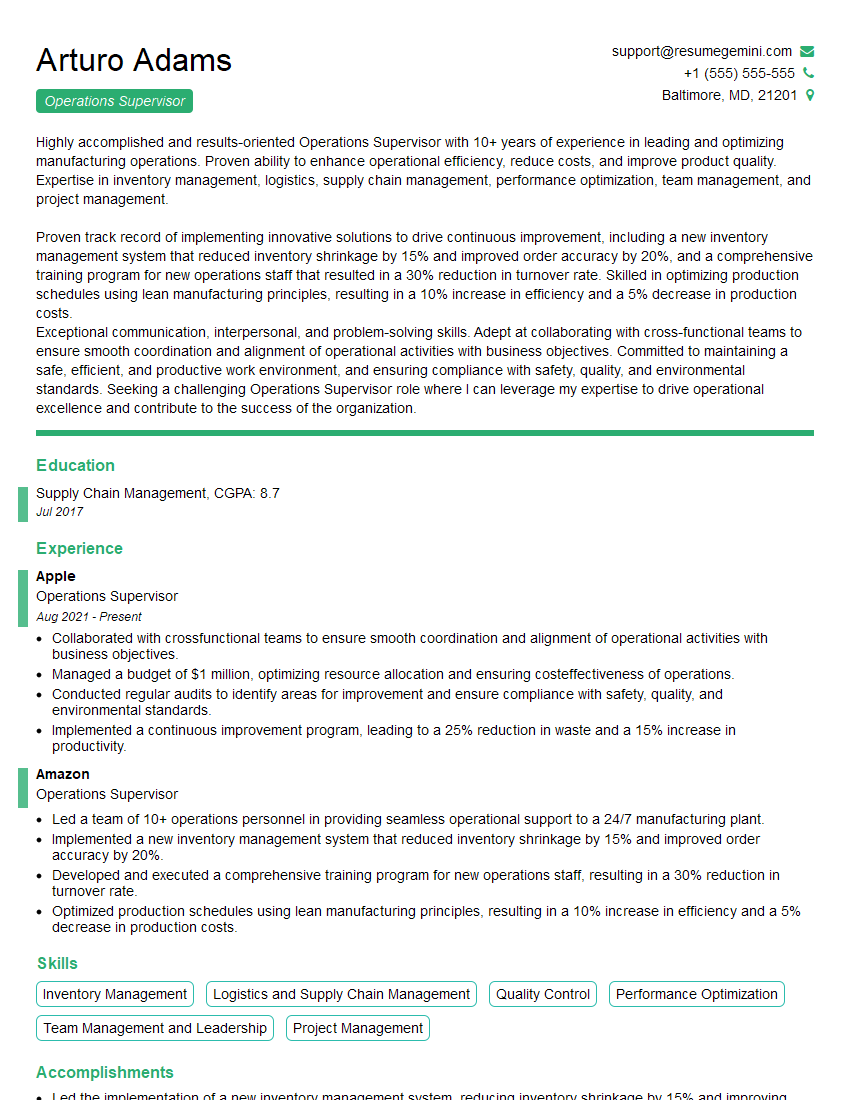
Operations Supervisor Resume Sample
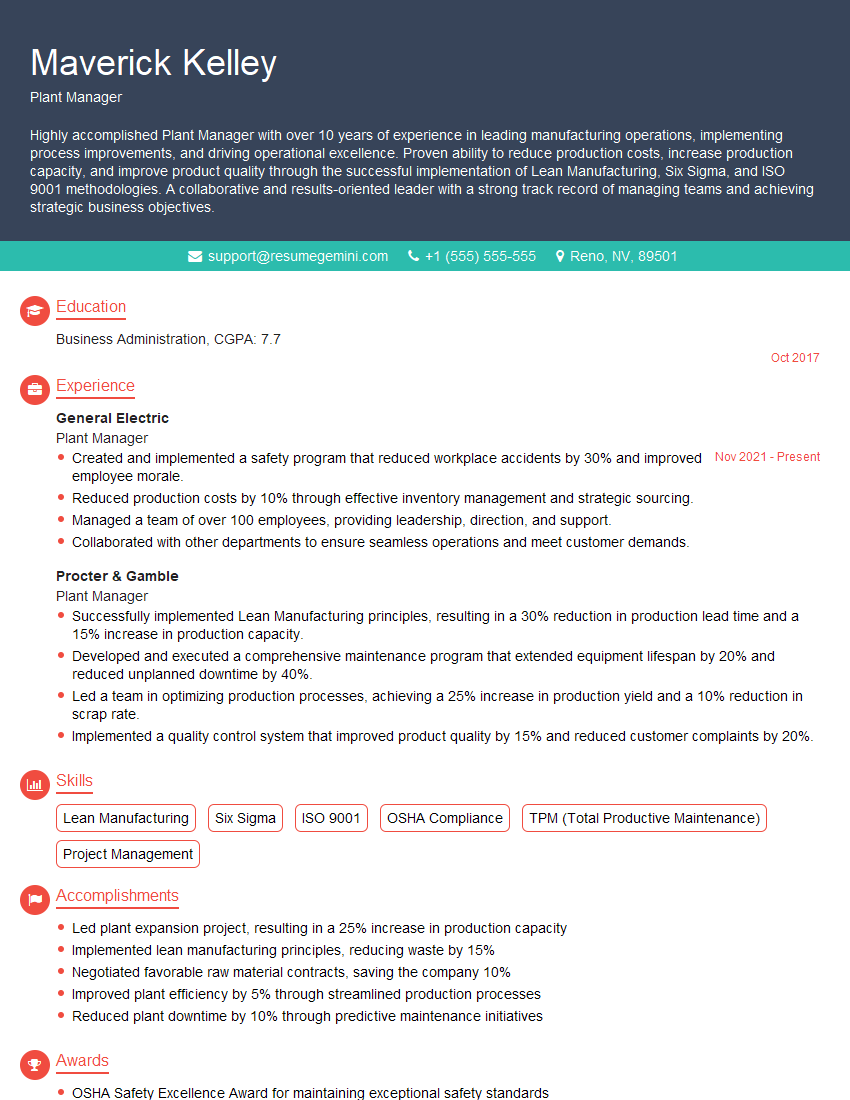
Plant Manager Resume Sample
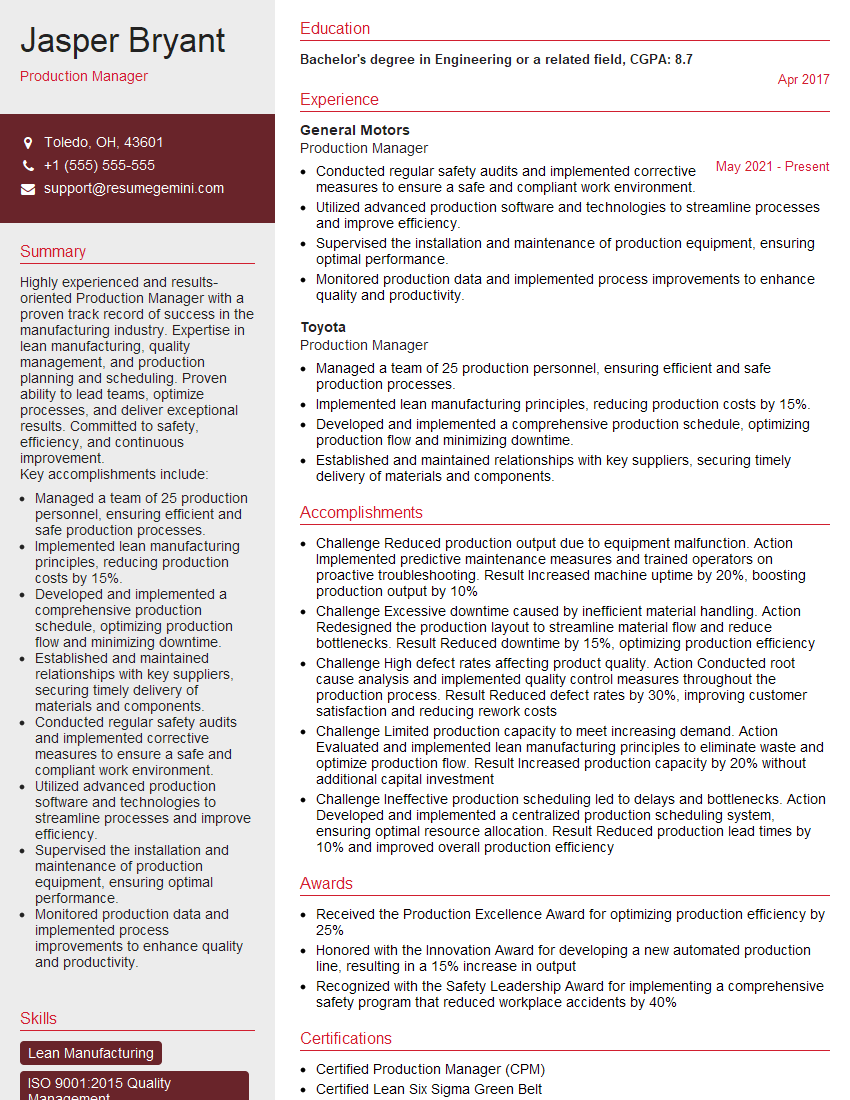
Production Manager Resume Sample
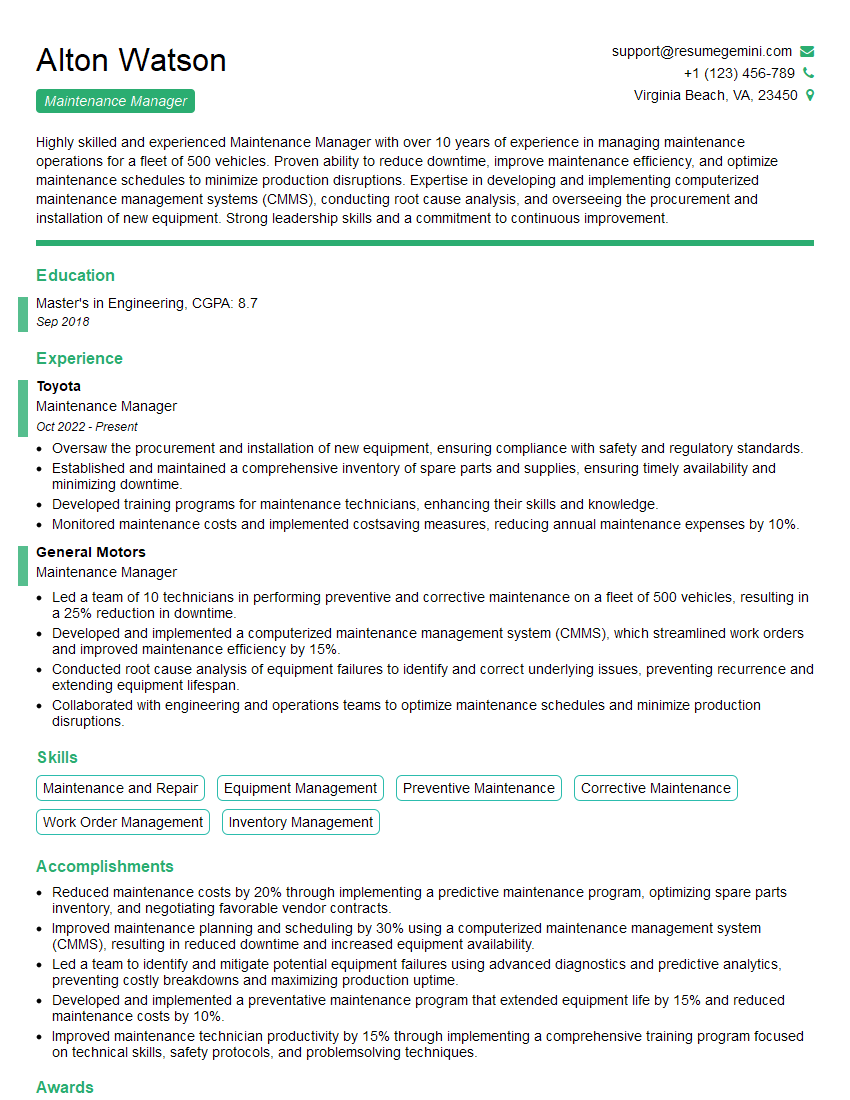
Maintenance Manager Resume Sample
Manufacturing Manager Resume Sample
Quality Manager Resume Sample
Quality Control Supervisor Resume Sample
Production Supervisor Resume Sample
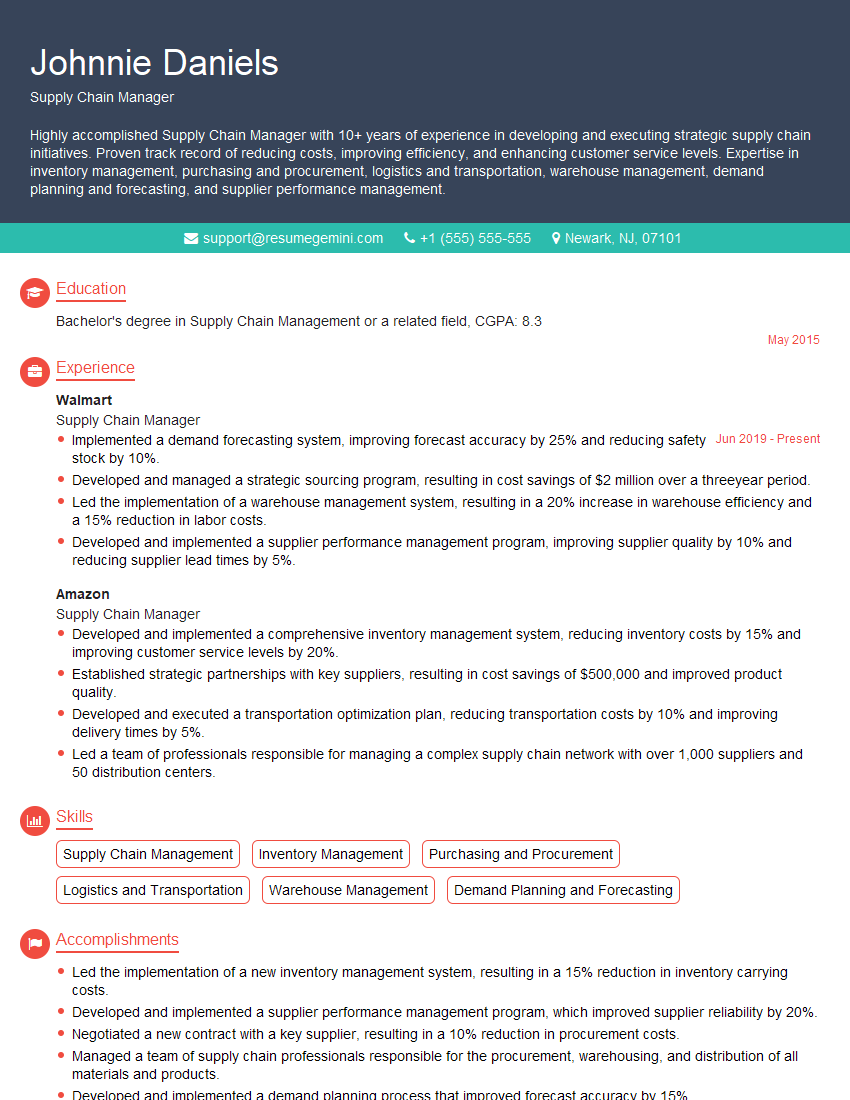
Supply Chain Manager Resume Sample
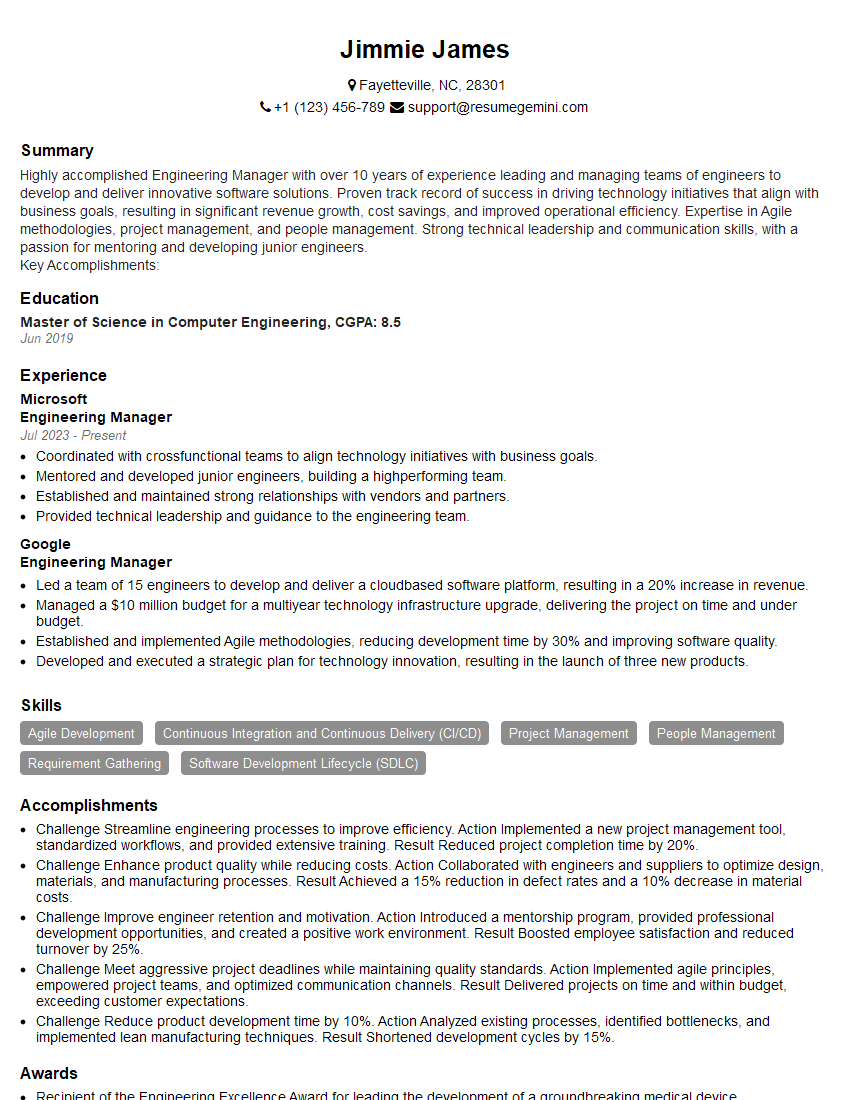
Engineering Manager Resume Sample
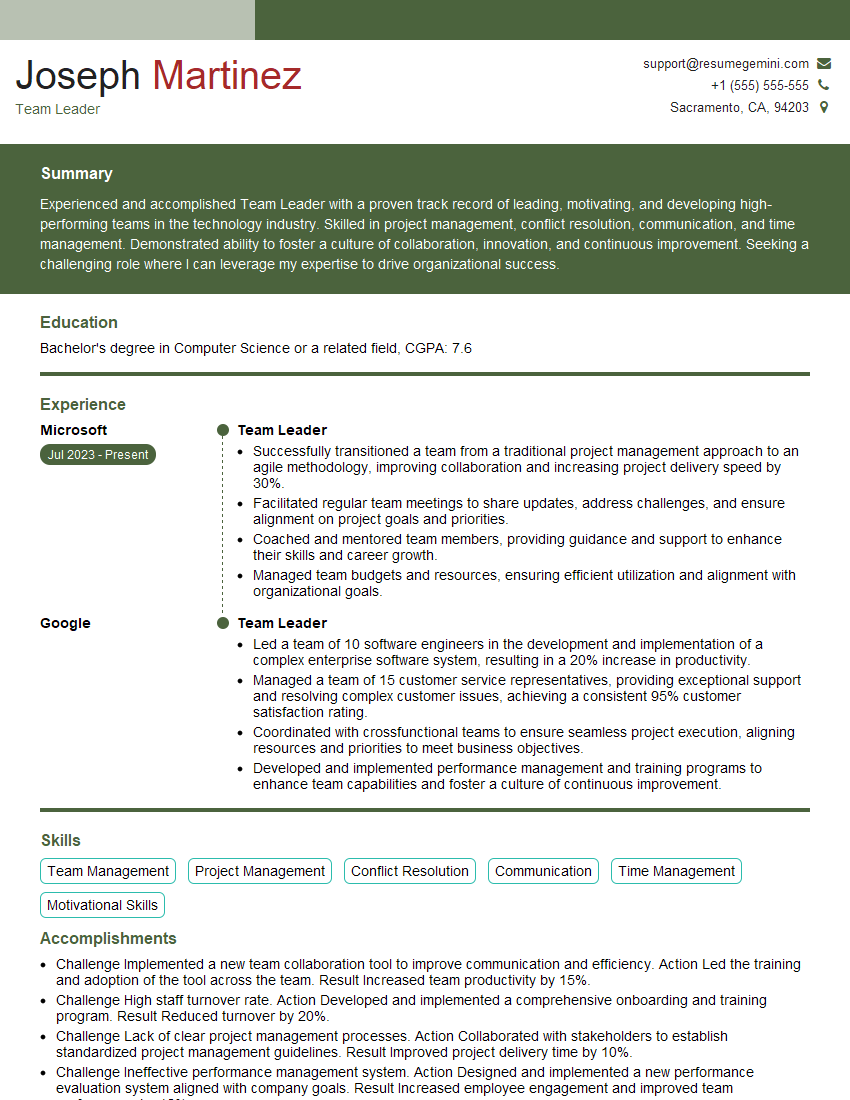
Team Leader Resume Sample
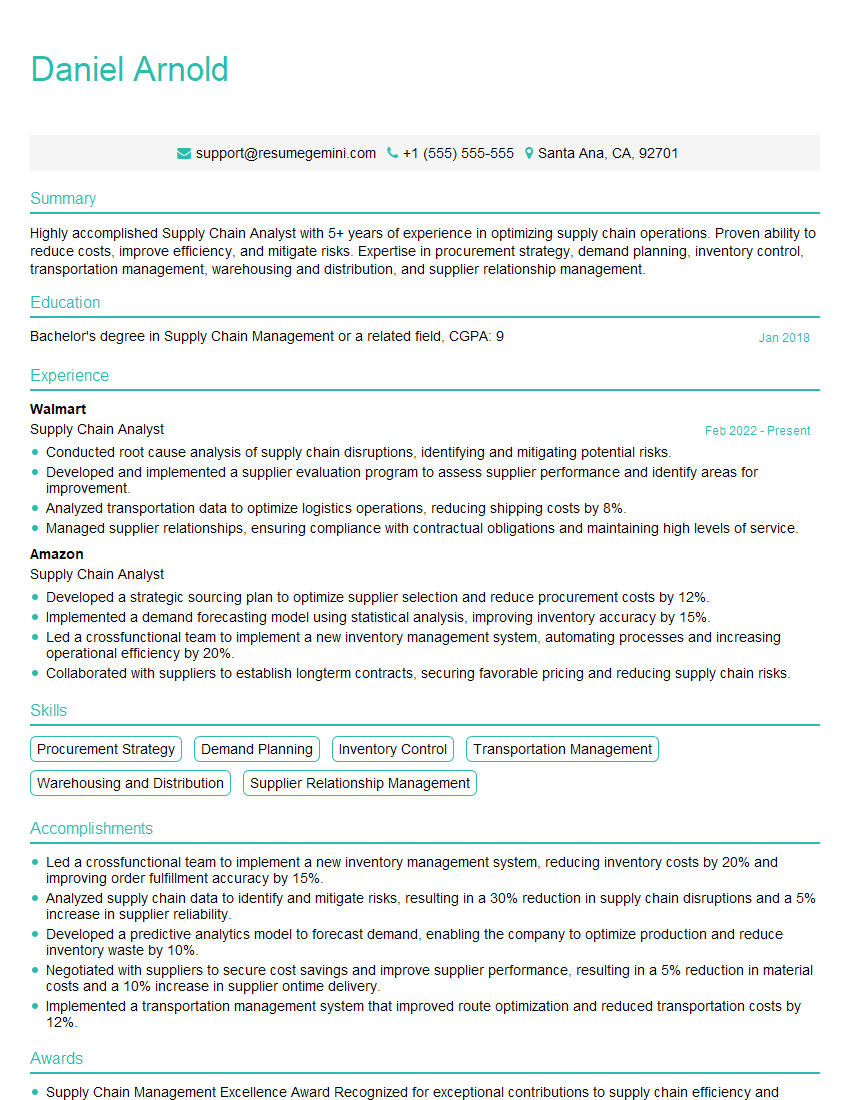
Supply Chain Analyst Resume Sample
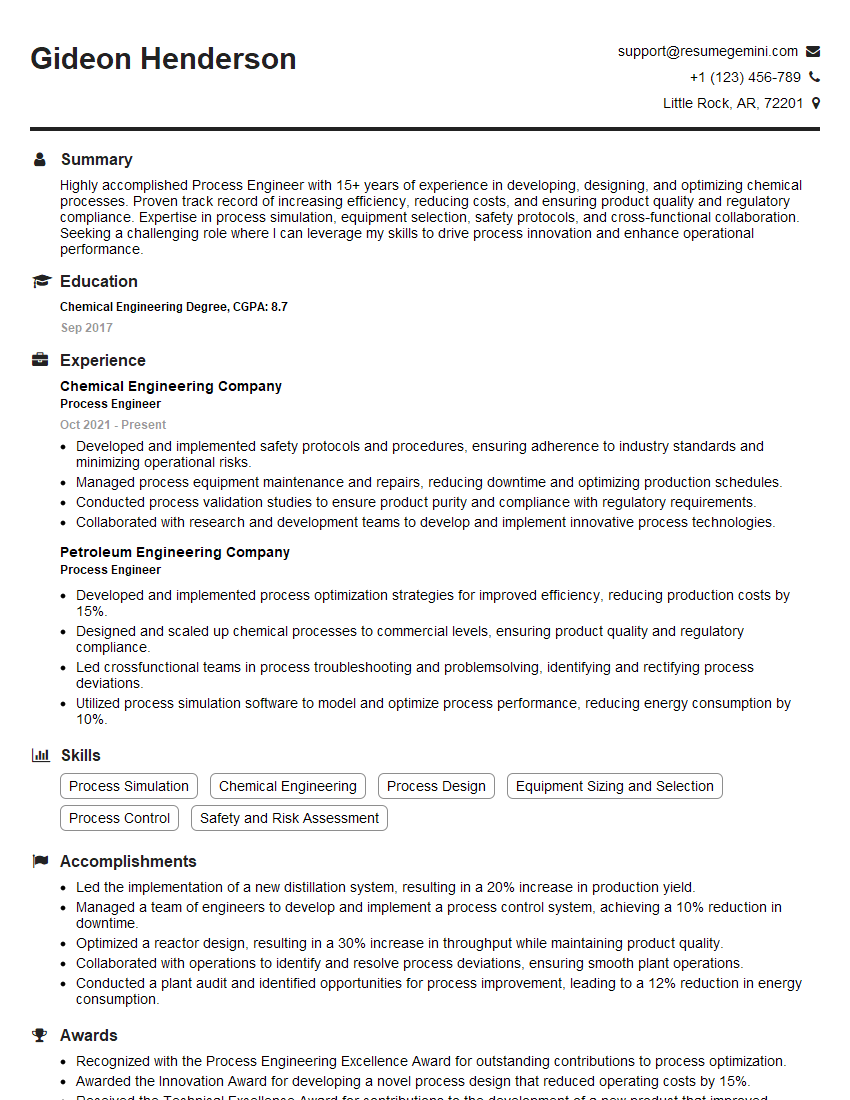
Process Engineer Resume Sample
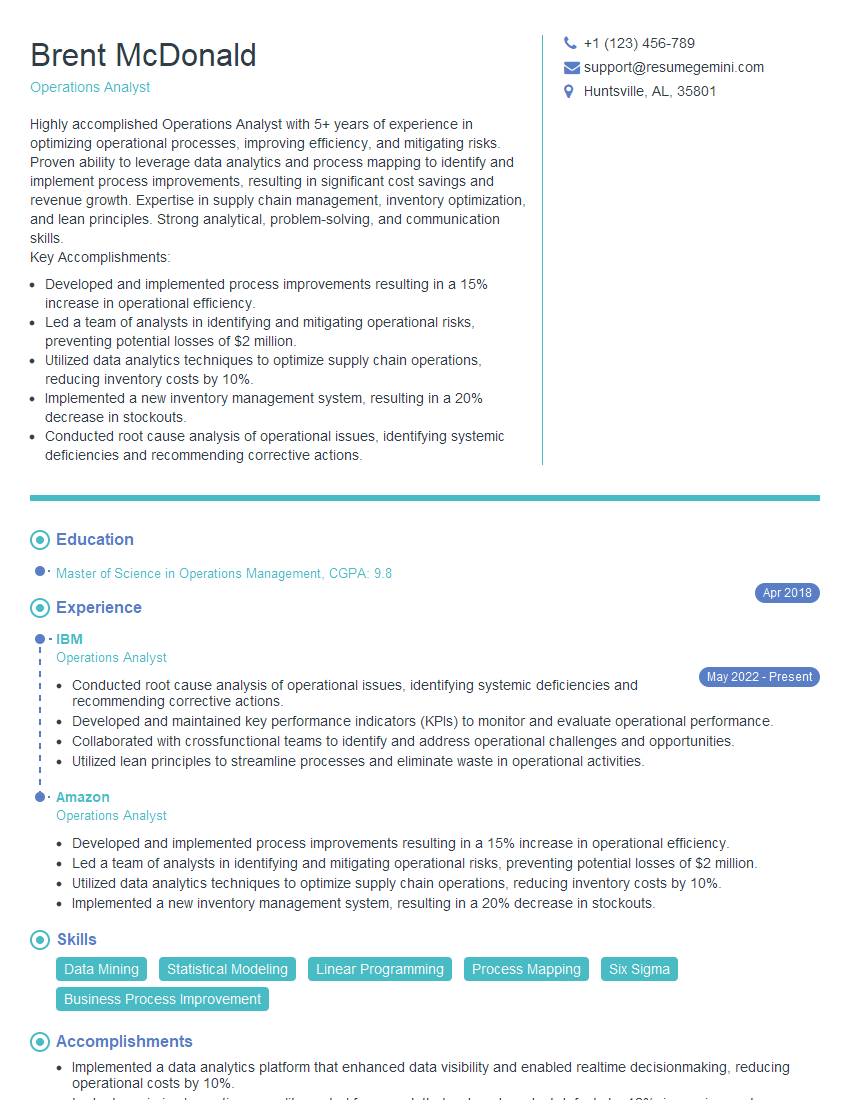
Operations Analyst Resume Sample
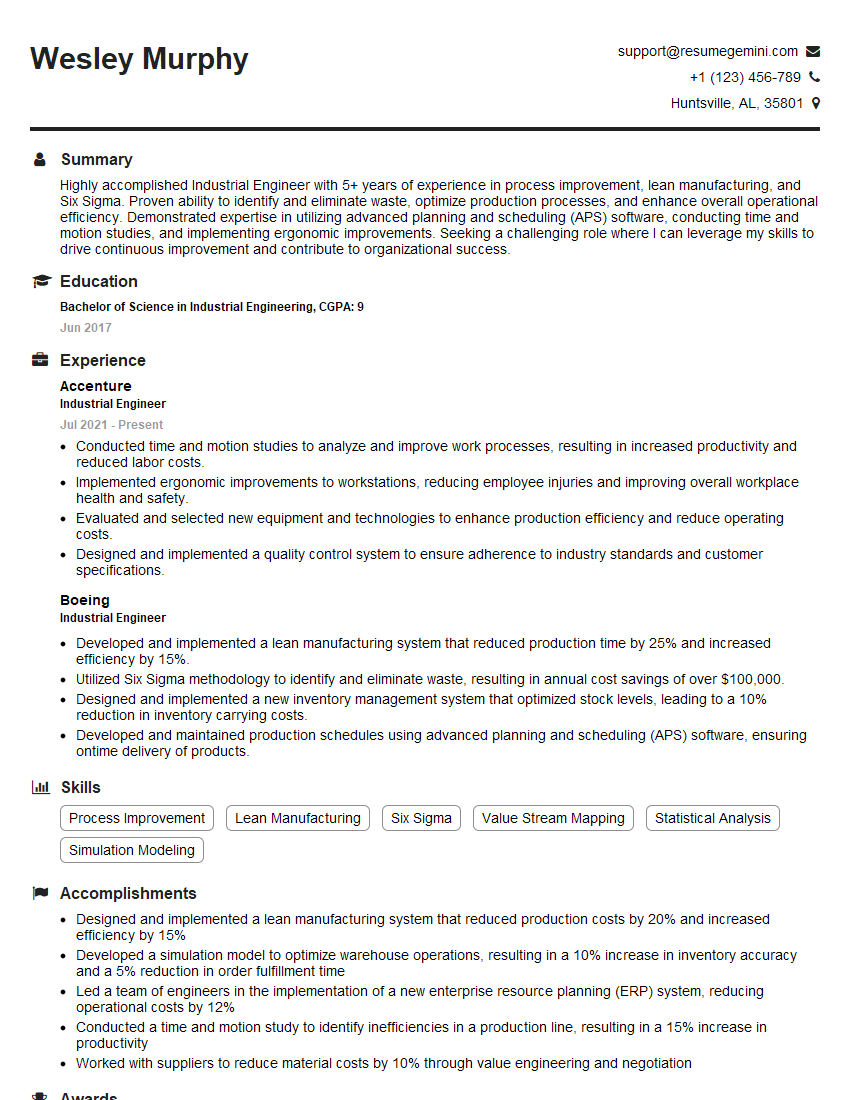
Industrial Engineer Resume Sample
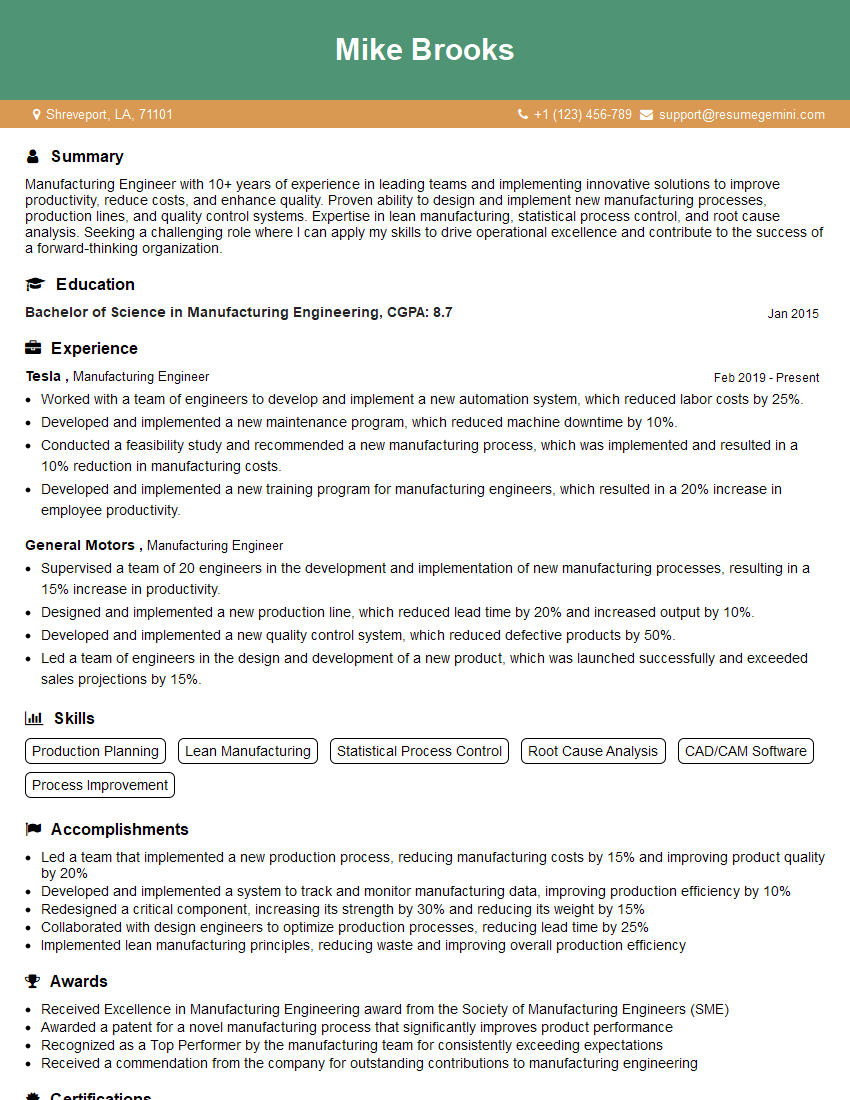
Manufacturing Engineer Resume Sample
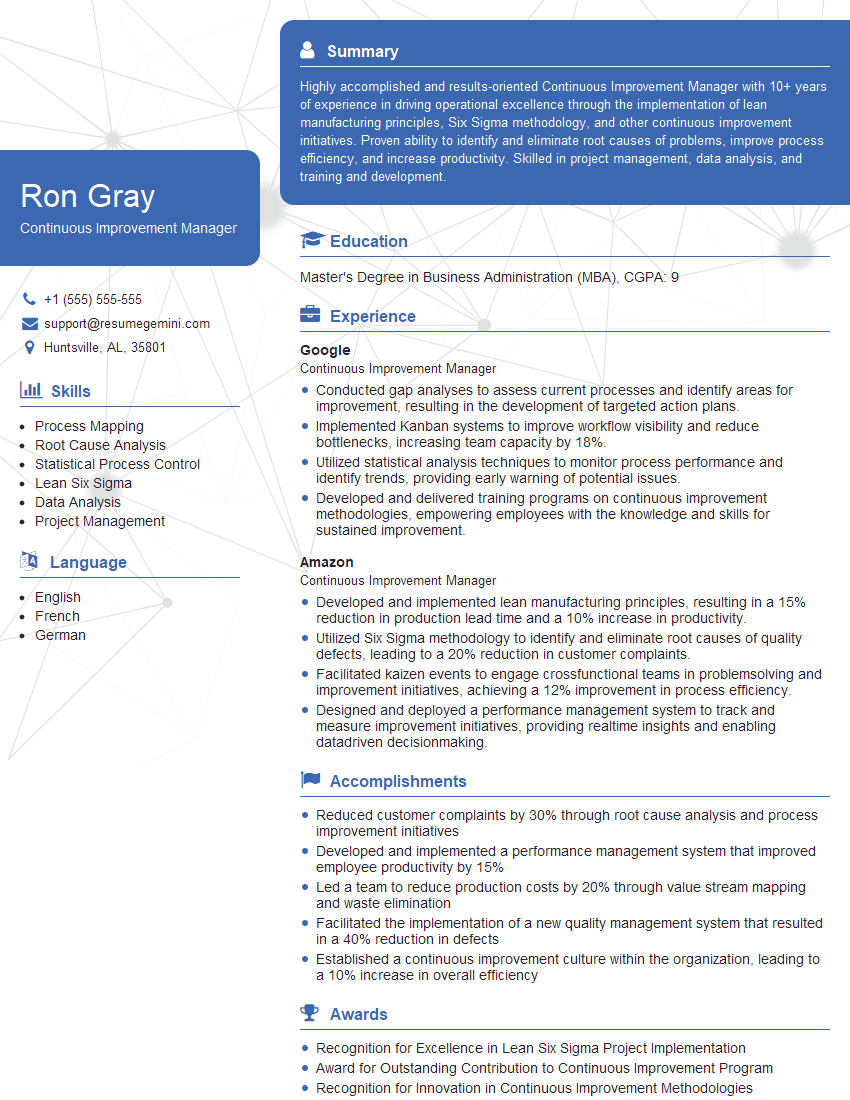
Continuous Improvement Manager Resume Sample
- Operations Manager
- Operations Supervisor
- Plant Manager
- Production Manager
- Maintenance Manager
- Manufacturing Manager
- Quality Manager
- Quality Control Supervisor
- Production Supervisor
- Supply Chain Manager
- Engineering Manager
- Team Leader
- Supply Chain Analyst
- Process Engineer
- Operations Analyst
- Industrial Engineer
- Manufacturing Engineer
- Continuous Improvement Manager
Explore more articles
Users Rating of Our Blogs
Share Your Experience
We value your feedback! Please rate our content and share your thoughts (optional).
What Readers Say About Our Blog
Very informative content, great job.
good