The thought of an interview can be nerve-wracking, but the right preparation can make all the difference. Explore this comprehensive guide to Genetics and Breeding Selection interview questions and gain the confidence you need to showcase your abilities and secure the role.
Questions Asked in Genetics and Breeding Selection Interview
Q 1. Explain the concept of heritability in quantitative genetics.
Heritability in quantitative genetics refers to the proportion of phenotypic variation in a population that is attributable to genetic differences among individuals. Imagine you’re growing sunflowers; some are tall, some are short. Heritability tells us how much of that height difference is due to their genes versus their environment (like soil quality or sunlight). A high heritability means a large portion of the variation is genetic, while a low heritability means the environment plays a bigger role.
It’s crucial to understand that heritability is a population-specific statistic; it doesn’t describe the heritability of a single individual’s trait. It also doesn’t imply that a trait is entirely determined by genetics; even highly heritable traits are influenced by the environment. For instance, the heritability of human height is high, yet nutrition and health significantly impact an individual’s final height.
Q 2. Describe different methods for estimating heritability.
Several methods estimate heritability, each with its strengths and limitations. Common approaches include:
- Parent-offspring regression: This method compares the average phenotype of parents to the average phenotype of their offspring. A steeper slope indicates higher heritability. For example, if tall parents consistently produce taller offspring, the heritability of height is likely high.
- Full-sib analysis: This involves comparing the phenotypic similarity of siblings reared in different environments. High similarity suggests high heritability, as environmental effects are minimized.
- Half-sib analysis: Similar to full-sib analysis but compares siblings that share only one parent. This method is particularly useful when parents are difficult to manage or track.
- Twin studies (in humans and some animal models): Comparing phenotypic differences between monozygotic (identical) and dizygotic (fraternal) twins helps separate genetic and environmental effects. Greater similarity in monozygotic twins points to higher heritability.
The choice of method depends on the species, available data, and resources. For example, parent-offspring regression is relatively easy to conduct but may be less accurate than twin studies in certain situations.
Q 3. What are the advantages and disadvantages of using phenotypic selection?
Phenotypic selection, choosing individuals based solely on their observable traits (phenotype), is a straightforward breeding method. However, it has both advantages and disadvantages:
- Advantages: Simple and inexpensive to implement; doesn’t require advanced genetic knowledge or technology; directly improves the average phenotype of the population.
- Disadvantages: Inefficient if heritability is low, as environmental factors heavily influence the phenotype; susceptible to environmental influences; can be slow and less effective in complex traits influenced by multiple genes and gene interactions; risks discarding superior genotypes with poor phenotypes due to environmental stress.
For example, selecting the tallest corn plants for seed might be effective if height is highly heritable, but if drought conditions affected plant growth, you might accidentally select plants that are tall only under ideal conditions and perform poorly in droughts.
Q 4. Explain the principles of marker-assisted selection (MAS).
Marker-assisted selection (MAS) uses DNA markers linked to genes affecting traits of interest to enhance selection efficiency. These markers act as signposts, indicating the presence or absence of beneficial alleles. Imagine having a map that highlights genes responsible for disease resistance in a plant. MAS allows us to select plants with the marker, and thus the desirable gene, even if the plant doesn’t show the phenotype until later stages of growth, saving time and resources.
MAS relies on identifying QTL (quantitative trait loci) or specific genes associated with the trait, and developing DNA markers linked to these genes. Breeders then screen individuals for these markers, selecting those with the desirable marker alleles. This approach is particularly useful for traits with low heritability or that are difficult or expensive to phenotype. For example, MAS is used in breeding disease-resistant varieties of rice, selecting plants with markers linked to disease resistance genes, even if they aren’t currently exposed to the pathogen.
Q 5. How does genomic selection differ from MAS?
While both MAS and genomic selection (GS) leverage genetic markers, they differ significantly in their approach:
- MAS focuses on individual markers linked to specific QTLs affecting the trait of interest. It’s a targeted approach that requires prior knowledge about the genes and QTL influencing the trait.
- GS uses a large number of markers across the entire genome to predict the breeding value of an individual. It doesn’t require prior knowledge of specific genes or QTL, instead utilizing genome-wide association studies (GWAS) and predictive models to assess an individual’s genetic potential. Think of it as a holistic approach that considers the cumulative effect of many small genetic effects across the whole genome.
In essence, MAS is like using a detailed map to locate specific landmarks, while GS is like using satellite imagery to assess the entire landscape.
Q 6. Discuss the role of quantitative trait loci (QTL) mapping in breeding programs.
Quantitative trait loci (QTL) mapping plays a crucial role in breeding programs by identifying genomic regions associated with quantitative traits (traits influenced by multiple genes and environment). This process involves identifying markers linked to genes influencing the trait and mapping their locations on the genome. This knowledge is crucial for implementing MAS and improving the efficiency and accuracy of breeding efforts.
QTL mapping strategies, such as linkage analysis and association mapping, help pinpoint genes or regions of the genome that contribute to the variation of a complex trait. Once identified, this information allows for the development of markers linked to favorable alleles. For instance, identifying QTLs for yield in wheat enables selection of individuals with favorable alleles for increased yield, resulting in higher-yielding varieties.
Q 7. What are the challenges in applying genomic selection in plant breeding?
Despite the promise of genomic selection (GS), several challenges hinder its widespread application in plant breeding:
- High initial costs: Genotyping a large number of individuals can be expensive, requiring significant investment in technology and infrastructure.
- Computational demands: Analyzing large datasets generated from GS requires powerful computational resources and specialized expertise.
- Population structure and linkage disequilibrium: Population structure and patterns of linkage disequilibrium can affect the accuracy of GS predictions. This is particularly challenging in diverse populations or with limited historical data.
- Environmental interactions: GS models can struggle to account for complex genotype-by-environment interactions, which can lead to inaccurate predictions in different environments.
- Lack of reference populations: Developing accurate GS models requires substantial reference populations with both phenotypic and genotypic data, which may not be available for all crops or traits.
Overcoming these challenges requires continued advancements in genotyping technologies, development of robust statistical methods, and collaborations between researchers, breeders, and technology providers.
Q 8. Describe different methods for genomic prediction.
Genomic prediction utilizes an individual’s genomic information to estimate its breeding value – its genetic merit for a particular trait. Several methods exist, each with its strengths and weaknesses.
Genome-wide association studies (GWAS): This method identifies specific genomic regions associated with the trait of interest. Think of it like searching for specific genes influencing height. Once identified, these regions can be used to predict the breeding value of individuals. However, GWAS often only explain a small portion of the total genetic variation.
Genomic best linear unbiased prediction (GBLUP): This is a widely used method that considers the overall genomic relationship between individuals. Imagine it like assessing similarity based on the entire genome. It’s robust and less susceptible to false positives compared to GWAS, but it might miss important effects of individual genes.
Bayesian methods: These statistical approaches, like BayesB or BayesCπ, allow for the estimation of the effects of individual markers. This provides higher resolution but requires significant computational power and careful parameter tuning. Think of it as a fine-grained analysis, allowing for the identification of both major and minor gene effects.
Machine learning methods: More recent approaches utilize machine learning algorithms like Support Vector Machines (SVM) or Neural Networks. These can capture complex interactions between genes and environment, but require large datasets and careful validation to avoid overfitting.
The choice of method depends on factors like the size of the dataset, computational resources, and the nature of the trait being predicted. For example, GBLUP is a good starting point for large datasets, while Bayesian methods are useful for identifying specific genes with large effects.
Q 9. Explain the concept of linkage disequilibrium (LD) and its importance in breeding.
Linkage disequilibrium (LD) refers to the non-random association of alleles at different loci. In simpler terms, it means that certain gene variants tend to be inherited together more often than expected by chance. Imagine two genes sitting close together on a chromosome; they’re more likely to be passed on as a pair than genes far apart. This is due to the physical proximity of the genes on the chromosome.
LD is crucial in breeding because it allows us to use markers (DNA sequences) linked to genes of interest to indirectly select for favorable alleles. We can identify a marker that is consistently associated with a desirable trait (like disease resistance). By selecting individuals possessing the marker, we increase the probability of selecting individuals carrying the favorable allele, even without directly testing for the trait itself. This is significantly faster and often cheaper than directly phenotyping for each trait, particularly in cases where phenotypic assessment is complex or expensive (e.g., disease resistance in plants).
The extent of LD varies across genomes and populations. Higher LD facilitates marker-assisted selection, but extensive LD can also limit the accuracy of genomic selection.
Q 10. How does inbreeding affect genetic diversity and performance?
Inbreeding, the mating of closely related individuals, reduces genetic diversity. This is because inbred individuals share a large proportion of their genes, reducing the number of different alleles present in the population. Think of it like shuffling a deck of cards – repeated shuffling with only a small subset of cards will eventually result in a very similar arrangement.
The effect on performance is often negative, a phenomenon known as inbreeding depression. This is due to the increased homozygosity (having two identical alleles at a locus) of deleterious recessive alleles. These alleles, when present in a single copy, may have little or no effect, but when homozygous, they can result in reduced fitness, lower yield, increased disease susceptibility, etc. For example, inbred lines of corn often show reduced yield and vigor compared to their outbred counterparts.
However, inbreeding can be strategically used in plant breeding to create homozygous lines which are then used to create hybrid varieties (heterosis) displaying superior performance compared to their parents. This is because the initial inbreeding is followed by a cross between inbred lines leading to a combination of favorable alleles and masking of deleterious alleles from each parent.
Q 11. Explain the difference between additive and non-additive gene effects.
Gene effects can be broadly classified into additive and non-additive effects.
Additive effects: These are the effects of individual alleles that sum up to determine the overall phenotype. Imagine building with LEGOs – each brick contributes independently to the final structure. The phenotype is simply the sum of each allele’s individual effect.
Non-additive effects: These involve interactions between alleles at the same locus (dominance) or different loci (epistasis). Dominance refers to the situation where one allele masks the effect of another allele at the same gene. Epistasis occurs when the effect of one gene depends on the presence of alleles at another gene. Think of this as a more complex LEGO structure, where the arrangement and interaction of bricks create emergent properties not immediately obvious from individual bricks alone. For example, one gene might activate another or suppress its expression.
Understanding these effects is crucial for breeding. Additive effects are easier to predict and select for, while non-additive effects add complexity to selection strategies. Breeding for traits largely governed by additive effects is often more straightforward than for those heavily influenced by non-additive interactions.
Q 12. What are the ethical considerations in using genetic modification in breeding?
The use of genetic modification (GM) in breeding raises several ethical considerations:
Environmental risks: Concerns exist about the potential for GM organisms to negatively impact the environment, such as the development of herbicide-resistant weeds or the unintended effects on non-target organisms.
Human health risks: Although extensive testing is conducted, concerns remain about potential unforeseen consequences for human health from consuming GM foods.
Socioeconomic impacts: The use of GM technology may lead to increased corporate control over agriculture, potentially disadvantaging smaller farmers.
Labeling and consumer choice: The transparency of labeling GM products is crucial, allowing consumers to make informed choices aligned with their values.
Gene flow: The possibility of gene transfer from GM crops to wild relatives raises concerns about the potential for ecological disruption. This needs careful risk assessment.
Addressing these concerns requires rigorous scientific research, transparent regulatory processes, and open public dialogue to ensure responsible development and application of GM technology.
Q 13. Describe the role of molecular markers in characterizing genetic diversity.
Molecular markers are DNA sequences with known locations on the genome. They are used to characterize genetic diversity by identifying variations in DNA sequences among individuals or populations. These variations can be single nucleotide polymorphisms (SNPs), microsatellites, or other types of DNA markers.
The process involves genotyping individuals for a set of markers and then analyzing the data to assess genetic diversity using different measures, such as:
Allelic richness: Number of different alleles at a locus.
Heterozygosity: Proportion of heterozygous individuals at a locus.
Genetic distance: Measure of the genetic difference between individuals or populations.
Population structure analysis: To identify distinct populations or subpopulations within a larger group.
For example, if we are studying apple diversity, we can use SNP markers to identify different apple varieties and quantify their genetic relationships. This information is useful for selecting parents for breeding programs aiming to introduce novel traits or improve existing varieties.
Q 14. How can you evaluate the effectiveness of a breeding program?
Evaluating the effectiveness of a breeding program requires a multi-faceted approach. Key factors to assess include:
Genetic gain: This measures the improvement in the average genetic merit of the population over time for the traits of interest. It’s often expressed as the percentage improvement per generation.
Selection intensity: This refers to the proportion of the population selected for breeding, reflecting the stringency of selection. Higher intensity leads to greater genetic gain but may also reduce genetic diversity.
Heritability: This describes the proportion of phenotypic variation due to genetic factors. Higher heritability simplifies selection as phenotype is a better reflection of genotype.
Accuracy of selection: This measures how well the selection process identifies superior individuals. Factors like the number of individuals assessed, the accuracy of phenotypic evaluation, and the presence of environmental effects influence this.
Economic return: Ultimately, a successful program needs to deliver positive economic returns. This requires considering the costs of breeding activities and comparing them to the increased value of improved products.
Stability of performance: Evaluating performance across different environments and years is crucial to ensure the consistency of genetic gains.
Analyzing these factors provides a comprehensive assessment of the breeding program’s efficiency and guides improvements for future strategies.
Q 15. What are the key steps involved in developing a new crop variety?
Developing a new crop variety is a complex process that typically involves several key steps. Think of it like baking a cake – you need the right ingredients and careful execution for a successful outcome. First, we start with germplasm collection, gathering diverse plant materials with desirable traits. Next is selection and characterization, rigorously evaluating the collected germplasm for traits like yield, disease resistance, and nutritional content. Then comes hybridization, where we cross selected parents to combine their desirable traits. This is followed by selection across multiple generations, carefully choosing plants with the best combinations of traits. We employ rigorous evaluation in field trials, comparing the new lines against existing varieties under various environmental conditions. Finally, we conduct registration and release, adhering to strict regulatory requirements before making the new variety available to farmers.
- Example: Developing a drought-tolerant maize variety might involve crossing a high-yielding line with a drought-tolerant wild relative, followed by multiple generations of selection under water-stressed conditions.
Career Expert Tips:
- Ace those interviews! Prepare effectively by reviewing the Top 50 Most Common Interview Questions on ResumeGemini.
- Navigate your job search with confidence! Explore a wide range of Career Tips on ResumeGemini. Learn about common challenges and recommendations to overcome them.
- Craft the perfect resume! Master the Art of Resume Writing with ResumeGemini’s guide. Showcase your unique qualifications and achievements effectively.
- Don’t miss out on holiday savings! Build your dream resume with ResumeGemini’s ATS optimized templates.
Q 16. How do you manage genetic drift in a breeding population?
Genetic drift, the random fluctuation of gene frequencies within a population, is a major concern in plant breeding. Imagine a small group of friends; if only a few of them have a certain trait (like liking a specific type of music), that trait’s representation might change dramatically by chance as the group grows or shrinks. Similarly, in a small breeding population, alleles (different forms of a gene) can be lost simply due to random chance. To manage this, we employ several strategies. Increasing population size is crucial; a larger population buffers against random fluctuations. Controlled mating systems, like carefully planned crosses, can minimize random allele loss. Careful selection, focusing on maintaining genetic diversity even while selecting for specific traits, is also important. Finally, we can use genetic monitoring tools to track allele frequencies and ensure diversity isn’t declining unexpectedly.
Q 17. Explain different strategies for controlling inbreeding depression.
Inbreeding depression, the reduced fitness in offspring from closely related parents, is a significant challenge. It’s like repeatedly using the same baking recipe – eventually, the cake might lose its quality. We use several strategies to counter it. Crossbreeding, mating unrelated individuals, is the most effective way to restore genetic diversity. This can be achieved through various methods like line crossing (crossing two inbred lines), hybrid breeding (creating F1 hybrids), or synthetic varieties (creating populations from multiple parents). Population improvement programs focusing on maximizing the genetic diversity of a breeding population also assist in managing inbreeding depression. Finally, marker-assisted selection can help identify and select superior individuals, even if they result from inbreeding, while minimizing the fitness loss.
Q 18. Describe the use of pedigree analysis in breeding programs.
Pedigree analysis is like creating a family tree for your plants. It’s a crucial tool that visually represents the lineage of individuals in a breeding program. This record tracks the parentage of individuals and their phenotypic traits (observable characteristics) across generations. This detailed record allows breeders to trace desirable traits, predict the performance of progenies, identify superior individuals, and make informed breeding decisions. We can identify families with superior performance, predict the probability of inheriting desired genes, and design crosses to achieve specific combinations of traits. For instance, if a particular family consistently shows high yield and disease resistance, we know it’s a valuable source of genes for future breeding.
Q 19. Discuss the application of CRISPR-Cas9 in crop improvement.
CRISPR-Cas9 is a revolutionary gene-editing technology that allows precise modifications to a plant’s genome. Imagine having a highly accurate pair of molecular scissors to make targeted changes to the DNA. We can knock out undesirable genes (for example, those conferring susceptibility to diseases) or insert new genes (for instance, genes conferring herbicide tolerance). This precision surpasses traditional breeding methods and allows us to create crops with enhanced traits more efficiently. Examples include developing disease-resistant varieties, improving nutritional value, or enhancing stress tolerance. The precision also allows us to improve a single trait, unlike traditional breeding which might introduce unwanted changes alongside the intended change. However, ethical considerations and regulatory approval processes are crucial aspects of its application.
Q 20. How can you assess the environmental impact of a new breed?
Assessing the environmental impact of a new breed requires a holistic approach. It’s not enough to just consider yield; we must also assess its effects on biodiversity, water usage, pesticide application, and greenhouse gas emissions. This assessment requires carefully designed field trials that compare the new breed with existing varieties. Life cycle assessments (LCAs) are invaluable, evaluating the environmental impacts of the entire production process, from seed production to harvest and beyond. We need to analyze factors like fertilizer and pesticide use, water consumption, energy needs, and the potential for soil erosion or habitat loss. Moreover, we must consider the potential for gene flow to wild relatives and the implications of that. This is very important for the overall sustainability and responsible use of the new breed.
Q 21. What are the challenges in breeding for disease resistance?
Breeding for disease resistance presents several significant challenges. Pathogens (disease-causing organisms) constantly evolve, making it a continuous arms race. A variety resistant to a disease today might become susceptible tomorrow due to pathogen evolution. This is further complicated by the polygenic nature of disease resistance (resistance often depends on multiple genes). Finding sources of resistance, especially broad-spectrum resistance, can be difficult, particularly in crops with narrow genetic diversity. The durability of resistance is also an issue. Using multiple resistance genes and integrating various management strategies helps to prolong the effectiveness of resistance. Furthermore, there’s the concern about the potential development of new, more virulent pathogens as a result of deployment of single resistance genes. Utilizing diverse disease management strategies in conjunction with resistant varieties is crucial.
Q 22. Explain different methods for evaluating the genetic merit of animals.
Evaluating the genetic merit of animals is crucial for successful breeding programs. We aim to identify individuals with superior genes that will pass on desirable traits to their offspring. This is done using a combination of methods, leveraging both pedigree information and genomic data.
- Pedigree Analysis: This traditional method uses the animal’s ancestry to estimate its breeding value. We look at the performance of relatives – parents, siblings, offspring – to infer the animal’s likely genetic merit. For example, if an animal’s parents both had high milk production, we expect the animal to also have good milk production potential. However, this approach is limited by the accuracy of recorded data and the influence of environmental factors.
- Performance Testing: This involves directly measuring an animal’s performance for a specific trait. For example, measuring milk yield in dairy cows, or growth rate in beef cattle. This provides a direct measure of the animal’s phenotype, but it doesn’t fully capture the animal’s genetic potential, as the phenotype is influenced by both genetics and environment.
- Progeny Testing: This is a powerful method where the performance of an animal’s offspring is used to estimate its breeding value. It’s particularly useful for traits that are difficult or expensive to measure directly in the parent. For example, assessing the fertility of a bull by looking at the fertility of his daughters. This method is time-consuming and requires a large number of offspring.
- Genomic Selection (GS): This cutting-edge technique uses DNA markers across the entire genome to predict breeding values. GS utilizes massive datasets of genotypes and phenotypes to build statistical models that predict the genetic merit of an individual based on its DNA profile. This allows for earlier and more accurate selection compared to traditional methods.
Often, a combination of these methods is employed to get a more comprehensive and accurate assessment of an animal’s genetic merit. For instance, pedigree information can be combined with genomic data to improve the accuracy of breeding value predictions.
Q 23. How do you select for multiple traits simultaneously in breeding programs?
Selecting for multiple traits simultaneously is a key challenge and goal in animal breeding. Focusing solely on one trait can lead to undesirable outcomes in others. For example, selecting only for high milk production in dairy cows might negatively impact their fertility or health. We employ several strategies to achieve this:
- Index Selection: This is a common approach that combines multiple traits into a single index. Each trait is weighted according to its economic importance and heritability. Animals are ranked based on their index scores, providing a balanced selection across multiple traits. For example, an index might consider milk yield, fat content, protein content, and somatic cell count in dairy cows, giving each trait a specific weight based on its market value and impact on farm profitability.
- Multiple-Trait BLUP (Best Linear Unbiased Prediction): This statistical method allows for the simultaneous estimation of breeding values for multiple traits, accounting for the genetic correlations between them. It offers a more sophisticated approach than index selection, especially when dealing with complex genetic relationships between traits.
- Genomic Selection for Multiple Traits: This extends the power of genomic selection to incorporate multiple traits. Advanced statistical models are used to predict breeding values for multiple traits simultaneously, leveraging the vast amount of genomic data available.
The choice of method depends on factors like the number of traits, their genetic correlations, the availability of data, and the computational resources. Careful consideration of these factors is crucial to optimize the selection process and achieve a balanced genetic improvement across multiple traits.
Q 24. What is the role of statistical modeling in breeding programs?
Statistical modeling is the backbone of modern breeding programs. It allows us to analyze complex data, predict genetic merit, and optimize selection strategies. It’s essential for handling the large datasets generated by modern technologies like genomic selection.
- Linear Mixed Models (LMMs): These are commonly used to account for both genetic and environmental effects on animal performance. They allow us to separate the genetic component from the environmental noise, leading to more accurate estimates of breeding values.
- Bayesian Methods: These methods offer a flexible framework for analyzing complex datasets, incorporating prior knowledge and uncertainty. They are particularly useful in genomic selection, where we deal with high-dimensional data and complex genetic architectures.
- Machine Learning Algorithms: Recent advancements in machine learning have led to the application of techniques like support vector machines and neural networks in breeding programs. These algorithms can handle non-linear relationships between genotypes and phenotypes, potentially improving prediction accuracy.
Statistical modeling is used to:
- Estimate breeding values
- Predict genomic breeding values
- Assess genetic correlations between traits
- Design optimal mating strategies
- Evaluate the effectiveness of selection programs
Without proper statistical modeling, we’d struggle to make sense of the vast amounts of data generated in modern animal breeding, hindering the efficiency and progress of breeding programs.
Q 25. How do you handle missing data in genomic selection analysis?
Missing data is a common problem in genomic selection analysis, often due to genotyping failures or missing phenotypic records. Ignoring missing data can lead to biased estimates and reduced prediction accuracy. Several strategies are used to handle this:
- Imputation: This involves predicting the missing genotypes or phenotypes based on the available data. Various imputation methods exist, ranging from simple methods like mean imputation to more sophisticated approaches that leverage genomic relationships between individuals. Genomic imputation uses the linkage disequilibrium between markers to estimate missing genotypes, often achieving impressive levels of accuracy.
- Multiple Imputation: This generates multiple plausible imputed datasets, which are then analyzed separately. The results are then combined to obtain a final estimate that reflects the uncertainty associated with the imputed data.
- Mixed Model Approaches: Linear mixed models can be adapted to handle missing data using techniques like maximum likelihood or restricted maximum likelihood estimation.
- Data Filtering: A simple but potentially less effective strategy involves removing individuals or markers with excessive missing data. However, this can lead to a reduction in the amount of available information and potentially bias the analysis.
The best approach to handling missing data depends on the amount and pattern of missing data, the data structure, and the computational resources available. Often a combination of methods is employed to minimize bias and maximize the use of available information.
Q 26. Discuss the importance of data management in breeding programs.
Data management is the cornerstone of any successful breeding program. It involves the collection, storage, cleaning, and analysis of vast amounts of data related to animal performance, pedigree, and genotypes. Effective data management is essential for accurate genetic evaluation and efficient selection.
- Data Collection: Accurate and consistent data collection is critical. This includes precise recording of phenotypic traits, pedigree information, and genomic data. Standardized protocols and data entry systems are essential to ensure data quality.
- Data Storage: Secure and efficient data storage is crucial to protect the integrity of the data. Databases are commonly used for data management, providing structured storage and retrieval of information. Cloud-based solutions are becoming increasingly popular due to their scalability and accessibility.
- Data Cleaning: Raw data often contains errors, inconsistencies, and missing values. Data cleaning involves identifying and correcting these errors to ensure the accuracy of the analysis. This might involve manual checks, automated error detection, or imputation methods.
- Data Security: Protecting data from unauthorized access and ensuring data privacy are crucial considerations. Appropriate security measures must be implemented to safeguard the data integrity and comply with regulations.
- Data Analysis: The collected and cleaned data is used for various analyses, including genetic evaluation, prediction of breeding values, and the design of mating strategies. Statistical software and computational resources are essential for conducting these analyses.
Poor data management can lead to inaccurate genetic evaluations, inefficient selection strategies, and ultimately, slower genetic progress. Investing in robust data management infrastructure and practices is crucial for the long-term success of any breeding program.
Q 27. Explain the concept of population structure and its implications for breeding.
Population structure refers to the pattern of genetic variation within and among subpopulations. In animal breeding, this is influenced by factors like geographic location, mating strategies, and breed history. Understanding population structure is crucial because it can significantly impact breeding program effectiveness.
- Impact on Genetic Evaluation: Ignoring population structure can lead to biased estimates of breeding values and genetic parameters. This is because individuals within the same subpopulation tend to be more genetically similar than individuals from different subpopulations. Failure to account for this can lead to inaccurate predictions of breeding values and inefficient selection.
- Inbreeding Depression: Population structure can lead to increased inbreeding, which can reduce fitness and productivity. Inbreeding occurs when closely related animals mate, increasing the probability of homozygosity for deleterious recessive alleles. This can result in reduced performance and increased susceptibility to diseases.
- Genetic Diversity: Population structure influences genetic diversity. Subpopulations with limited genetic exchange might experience reduced genetic diversity, making them vulnerable to environmental changes and diseases. Maintaining sufficient genetic diversity is essential for long-term adaptability and resilience of animal populations.
Strategies for addressing population structure include:
- Structured Association Mapping: This statistical approach accounts for population structure when performing genome-wide association studies. This helps to identify genes that are truly associated with traits of interest, rather than those showing spurious associations due to population structure.
- Optimal Mating Strategies: Breeding programs can incorporate strategies to minimize inbreeding and maintain genetic diversity while simultaneously selecting for desirable traits. This might involve using pedigree information to identify unrelated individuals for mating or employing genetic diversity measures to guide mating decisions.
Ignoring population structure can severely hinder the efficiency and effectiveness of breeding programs. Therefore, understanding and addressing population structure is critical for successful breeding programs.
Q 28. How can you evaluate the economic feasibility of a breeding program?
Evaluating the economic feasibility of a breeding program is essential to ensure its long-term sustainability and profitability. This involves assessing the costs and benefits associated with the program and determining if the benefits outweigh the costs.
- Cost Analysis: This involves identifying and quantifying all costs associated with the breeding program. These costs can include labor, equipment, feed, veterinary care, genotyping costs, data management, and personnel salaries. A detailed breakdown of costs is necessary to provide a comprehensive assessment.
- Benefit Analysis: This focuses on quantifying the benefits generated by the breeding program. These benefits might include increased production (e.g., milk yield, growth rate), improved product quality, reduced disease incidence, and increased market value of animals. Economic models are frequently used to estimate the economic value of these benefits.
- Return on Investment (ROI): The ROI is a key metric used to evaluate the economic feasibility of the breeding program. It is calculated as the ratio of net benefits to total costs. A positive ROI indicates that the program is economically viable. A high ROI signifies a program that generates substantial economic returns.
- Cost-Benefit Analysis: This method compares the total costs and benefits of the program to determine whether the benefits justify the costs. It often involves using discounted cash flow analysis to consider the time value of money.
- Sensitivity Analysis: This involves assessing how changes in key parameters (e.g., costs, benefits, genetic progress) affect the overall economic viability of the program. It helps to understand the uncertainty associated with the economic projections and identify areas where improvements could enhance the program’s economic return.
Economic feasibility assessments are crucial for making informed decisions about the design, implementation, and continuation of breeding programs. By carefully evaluating the costs and benefits, stakeholders can ensure that the program aligns with economic objectives and maximizes its long-term value.
Key Topics to Learn for Genetics and Breeding Selection Interview
- Mendelian Genetics: Understanding fundamental principles of inheritance, including segregation and independent assortment. Practical application: Predicting phenotypic ratios in crosses.
- Quantitative Genetics: Exploring the genetic basis of complex traits and their heritability. Practical application: Designing selection programs for improved crop yield or disease resistance.
- Population Genetics: Analyzing gene frequencies and their changes within populations. Practical application: Understanding the impact of inbreeding and genetic drift on breeding programs.
- Molecular Markers and QTL Mapping: Utilizing molecular markers to identify genes controlling traits of interest. Practical application: Marker-assisted selection (MAS) for efficient breeding.
- Breeding Strategies: Comparing different breeding methods (e.g., mass selection, pedigree selection, genomic selection). Practical application: Choosing the most appropriate breeding strategy for a given species and trait.
- Genetic Engineering and Biotechnology: Understanding the application of genetic modification techniques in breeding. Practical application: Developing genetically modified crops with enhanced characteristics.
- Statistical Analysis in Breeding: Analyzing breeding data using appropriate statistical methods. Practical application: Evaluating the effectiveness of different selection strategies.
- Plant/Animal Breeding Programs: Understanding the complexities of designing and managing breeding programs. Practical application: Developing a detailed breeding plan for a specific objective.
Next Steps
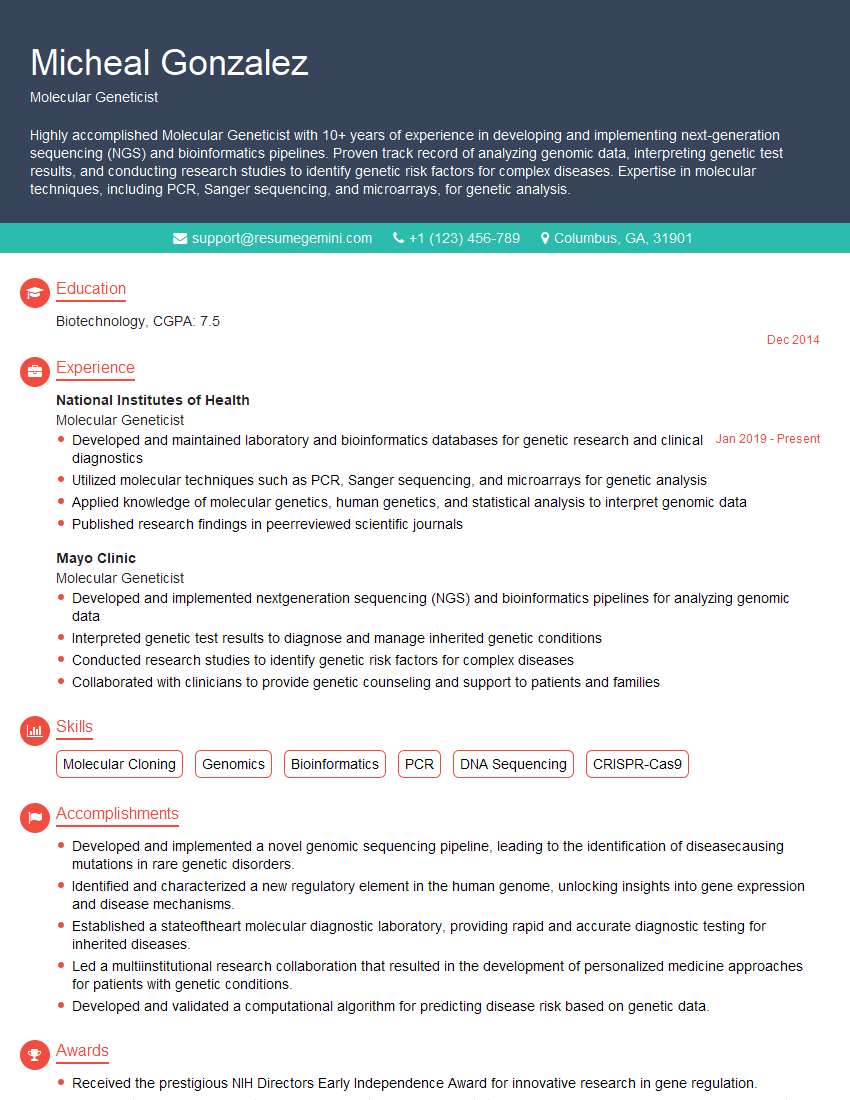
Mastering Genetics and Breeding Selection opens doors to exciting careers in agriculture, biotechnology, and research. A strong understanding of these principles is crucial for success in this competitive field. To significantly enhance your job prospects, creating an ATS-friendly resume is paramount. ResumeGemini is a trusted resource that can help you build a professional and impactful resume tailored to showcase your expertise in Genetics and Breeding Selection. We provide examples of resumes specifically designed for this field to help guide you. Take the next step towards your dream career today!


Explore more articles
Users Rating of Our Blogs
Share Your Experience
We value your feedback! Please rate our content and share your thoughts (optional).
What Readers Say About Our Blog
Very informative content, great job.
good