Interviews are more than just a Q&A session—they’re a chance to prove your worth. This blog dives into essential GeOasis interview questions and expert tips to help you align your answers with what hiring managers are looking for. Start preparing to shine!
Questions Asked in GeOasis Interview
Q 1. Explain the different types of data that can be imported into GeOasis.
GeOasis is a powerful platform capable of importing a wide variety of geological and geophysical data. Think of it like a digital filing cabinet for all your subsurface information. The types of data it handles can be broadly categorized:
- Well Data: This includes essential information from boreholes, such as well logs (e.g., GR, resistivity, porosity, density), pressure and temperature data, and lithological descriptions. Importing this data allows us to build a detailed understanding of subsurface properties at specific locations.
- Seismic Data: GeOasis can import seismic reflection and refraction data, usually in SEG-Y format. This provides a large-scale image of the subsurface structure and is crucial for identifying geological features like faults and folds. Imagine it as a sort of subsurface X-ray.
- Surface Data: This includes geological maps, outcrop data, and topographic information. This gives crucial context by adding surface geology interpretations to the subsurface data.
- Geological Models: You can even import existing geological models from other software packages, allowing for integration and comparison of results.
- Petrophysical Data: This encompasses lab measurements on core samples, providing detailed information about rock properties like permeability and porosity – critical for reservoir simulation.
The specific import process varies depending on the data type, often involving choosing the correct format and defining the coordinate system and units. GeOasis provides robust tools to manage and validate the imported data, ensuring accuracy and consistency.
Q 2. Describe your experience with GeOasis’s gridding and interpolation techniques.
Gridding and interpolation are fundamental to creating continuous models from discrete data points in GeOasis. Think of it like connecting the dots, but in three dimensions. My experience includes using various methods available in GeOasis:
- Kriging: A geostatistical method that considers both the spatial distribution and variability of the data. It’s excellent for creating smooth surfaces while accounting for uncertainty, which is particularly useful for interpolation of reservoir properties like porosity and permeability.
- Inverse Distance Weighting (IDW): A simpler method where the value at a grid point is determined by a weighted average of nearby data points. It’s computationally less intensive than Kriging but might not capture complex spatial correlations as effectively.
- Nearest Neighbor: The most straightforward method, assigning the value of the nearest data point to each grid node. While simple, it can result in abrupt changes and is often used for initial visualizations.
The choice of method depends on the nature of the data and the desired outcome. For instance, Kriging is usually preferred when dealing with spatially correlated data like porosity, while IDW might suffice for preliminary gridding of elevation data. I have extensively used GeOasis’s built-in tools to compare the results from different gridding techniques, selecting the most appropriate based on validation and error analysis.
Q 3. How would you use GeOasis to create a 3D geological model?
Building a 3D geological model in GeOasis is a multi-step process, often iterative and requiring geological interpretation alongside the technical aspects. It’s like sculpting a virtual subsurface. Here’s a typical workflow:
- Data Import and Preprocessing: Import all relevant data – well logs, seismic data, geological maps. This step involves cleaning and validating the data to ensure consistency.
- Horizon Picking: Identify key geological horizons (e.g., top and base of reservoir layers) on seismic data. This establishes the framework for the model.
- Fault Interpretation: Identify and map faults using seismic data and well logs. This is crucial as faults control fluid flow and compartmentalize reservoirs.
- Gridding and Interpolation: Create continuous surfaces representing the identified horizons and other geological parameters (e.g., top and base of reservoir, thickness, porosity).
- Model Building: Use the created surfaces to construct a 3D geological model. This involves creating solids (geological bodies) bounded by the horizons and faults. GeOasis provides powerful tools for this.
- Model Validation: Compare the model to the input data to ensure it’s geologically reasonable and consistent. This often involves iterative refinement and adjustments.
Throughout the process, geological knowledge and interpretation are essential. For example, understanding the depositional environment and tectonic history helps to constrain the model and make geologically plausible decisions.
Q 4. What are the common workflows for reservoir simulation within GeOasis?
Reservoir simulation workflows in GeOasis typically involve integrating geological models with reservoir simulation software. This allows us to predict reservoir performance under various scenarios. Here’s a common workflow:
- Geological Model Creation: Develop a detailed 3D geological model using GeOasis, including facies modeling and property assignment.
- Data Export: Export the geological model data in a format compatible with the chosen reservoir simulator (e.g., Eclipse, CMG). GeOasis handles various export formats.
- Reservoir Simulation Setup: Use the reservoir simulator to define fluid properties, reservoir parameters, and production scenarios.
- Simulation Run: Run the reservoir simulation to predict fluid flow, pressure distribution, and production performance.
- Results Analysis and Interpretation: Analyze the simulation results, generating reports and visualizations to evaluate reservoir performance under different operating conditions.
- Model Updating: Compare simulation results with actual production data and update the model to refine the reservoir characterization and improve future predictions. GeOasis aids in the analysis and interpretation by visualizing the results alongside the geological model.
This iterative process allows for a continuous improvement of our understanding of the reservoir and its behavior.
Q 5. Explain your experience with GeOasis’s visualization tools and how you’ve used them to interpret data.
GeOasis offers a range of visualization tools crucial for interpreting geological and geophysical data. Imagine it as a powerful microscope for subsurface information. My experience includes using:
- Cross-sections: Visualizing the subsurface across different planes, allowing us to examine the geological layers and structures. This is like cutting through the earth to view the inner workings.
- 3D Views: Rotating and zooming through the 3D model, allowing for a detailed understanding of the spatial relationships between different geological features. It offers a holistic perspective of the subsurface.
- Well Log Plots: Displaying well log data alongside the geological model, providing a direct link between point measurements and the broader geological context.
- Property Maps: Generating maps of different reservoir properties (e.g., porosity, permeability) at different horizons, revealing spatial variations and patterns.
- Animation: Creating animated sequences to visualize changes over time, such as fluid flow or pressure changes during a reservoir simulation. This helps in understanding dynamic processes.
By combining these visualization techniques, I’ve been able to effectively interpret complex subsurface data, identify critical features, and communicate my findings clearly to stakeholders.
Q 6. How do you handle data inconsistencies or errors within GeOasis?
Data inconsistencies and errors are inevitable in geoscience projects. Handling them effectively requires a systematic approach. In GeOasis, I typically address these issues through:
- Data Validation: Thoroughly checking imported data for inconsistencies, outliers, and errors. This involves using GeOasis’s built-in tools to identify and flag problematic data points. It’s like a quality control check for your data.
- Data Cleaning: Addressing identified errors. This might involve correcting obvious mistakes, interpolating missing values, or removing outliers based on geological context. This involves thoughtful decisions considering the nature of the data.
- Data Transformation: Transforming data to a consistent format, including unit conversions and coordinate system transformations. GeOasis offers tools to streamline this process.
- Geological Interpretation: Leveraging geological understanding to assess the plausibility of data. Sometimes, inconsistencies are flagged due to actual geological features rather than errors. A thorough understanding helps to distinguish between the two.
- Sensitivity Analysis: Assessing the impact of data uncertainties on model results. This helps to evaluate the robustness of the model and identify areas where additional data acquisition might be beneficial.
GeOasis’s interactive environment helps visualize and understand these issues, making the process of detection, correction, and validation significantly easier and more transparent.
Q 7. Describe your experience with GeOasis’s uncertainty analysis tools.
Uncertainty analysis is crucial in geoscience, as subsurface data is inherently uncertain. GeOasis assists in performing uncertainty analysis using various techniques:
- Stochastic Simulation: Generating multiple realizations of the geological model by varying input parameters according to their uncertainty distributions. This provides a range of possible outcomes, rather than a single deterministic result.
- Monte Carlo Simulation: A specific type of stochastic simulation where random samples of input parameters are used to generate many model realizations. The results reveal the probability distribution of model outputs and uncertainties.
- Sensitivity Analysis: Determining the impact of individual input parameters on model outputs. This helps identify the most influential parameters and focus on reducing uncertainties associated with them.
My experience includes using these techniques to quantify uncertainty associated with reservoir properties (e.g., porosity, permeability), and consequently the impact on reservoir simulation predictions. This allows us to present results with associated uncertainty ranges, providing a more realistic and comprehensive evaluation of reservoir performance.
Q 8. How familiar are you with GeOasis’s reporting and documentation features?
GeOasis offers robust reporting and documentation capabilities crucial for managing and communicating reservoir models. Its reporting features go beyond simple data tables; you can generate custom reports incorporating maps, cross-sections, well logs, and other data visualizations. This is invaluable for conveying complex geological interpretations to a broader audience, including stakeholders, clients, and regulatory bodies.
For instance, I’ve used GeOasis to create comprehensive reports summarizing reservoir characterization work, including detailed descriptions of facies distribution, petrophysical properties, and uncertainty analysis. These reports often include interactive elements, allowing users to explore data dynamically. The documentation features facilitate version control and traceability, making collaborative workflows easier and ensuring data integrity. This is especially critical in large-scale projects where multiple geologists and engineers contribute to the model development.
GeOasis’s ability to export data in various formats (e.g., PDF, Excel, images) further enhances its reporting flexibility, allowing seamless integration with other software and workflows.
Q 9. How would you use GeOasis to perform a sensitivity analysis on a reservoir model?
Performing a sensitivity analysis in GeOasis involves systematically varying input parameters of a reservoir model to assess their impact on key output variables, like hydrocarbon reserves or production forecasts. This helps identify critical uncertainties and understand which parameters most influence the model’s predictions.
My approach typically involves using GeOasis’s built-in functionality for creating multiple model realizations. I would begin by defining the parameters to be varied (e.g., porosity, permeability, net-to-gross ratio) and their ranges. GeOasis allows you to easily create multiple realizations by stochastically sampling these parameters within their defined ranges.
Then, I would run reservoir simulations for each realization, and GeOasis’s analysis tools allow for easy comparison of the results. This comparison might involve plotting histograms of predicted reserves, comparing production profiles, or using other statistical methods to quantify the influence of each parameter. For instance, I might create scatter plots showing the correlation between a specific parameter and the ultimate recovery factor. This visualization provides critical insights for risk assessment and decision-making in field development.
Q 10. Describe your experience with different types of geological modeling in GeOasis.
My experience in GeOasis encompasses a wide range of geological modeling techniques. I’m proficient in creating both deterministic and stochastic models, adapting the approach to the specific geological setting and data availability.
- Structural Modeling: I regularly build structural models using fault interpretation, creating realistic fault networks and using these to control the subsequent stratigraphic modeling. I use GeOasis’s tools for interpolating faults, defining fault properties, and incorporating seismic data to ensure geological realism.
- Stratigraphic Modeling: I have experience building stratigraphic models using various techniques, including object-based modeling and sequential indicator simulation (SIS). Object-based modeling is particularly useful for representing complex channel systems and other depositional features, while SIS is ideal for incorporating uncertainty into the model.
- Facies Modeling: GeOasis allows for detailed facies modeling, where different rock types and their properties are defined and spatially distributed based on geological interpretations and data. I use this often to integrate well log data, core descriptions, and seismic attributes.
The choice of modeling technique depends on factors such as data quality, the complexity of the geological setting, and the objectives of the study. GeOasis’ flexibility makes it suitable for a wide variety of these approaches.
Q 11. Explain your experience in building and validating geological models in GeOasis.
Building and validating geological models in GeOasis is an iterative process, requiring careful attention to data quality and geological understanding. I begin by thoroughly reviewing all available data, including well logs, seismic data, core descriptions, and geological reports. This forms the foundation for creating a conceptual geological model.
Next, I use GeOasis to translate this conceptual model into a digital representation. This involves creating structural frameworks, defining stratigraphic units, assigning properties (e.g., porosity, permeability), and simulating the spatial distribution of geological features. Throughout this process, I regularly check for inconsistencies and errors. GeOasis’s visualization tools are invaluable for this step, enabling me to easily identify and correct any issues.
Validation is crucial. I compare the model predictions to available data (e.g., well test data, production history) to assess its accuracy. This may involve quantitative comparisons (e.g., using statistical measures) and qualitative assessments (e.g., comparing the model’s facies distribution to geological cross-sections). Discrepancies between the model and observations often highlight areas needing improvement, prompting adjustments to the model parameters or even the underlying geological interpretation.
An example: In a recent project, initial model predictions significantly overestimated oil production. Validation against production data revealed an issue with the permeability model in a specific reservoir layer. By refining the permeability distribution based on additional data analysis, we significantly improved the model’s predictive power.
Q 12. How would you use GeOasis to analyze well test data?
Analyzing well test data in GeOasis involves integrating the data into the reservoir model and using the software’s capabilities to interpret the results. This typically involves several steps.
- Data Import and Preprocessing: First, well test data (e.g., pressure, flow rate) are imported into GeOasis. This may require some preprocessing to ensure data quality and consistency.
- History Matching: GeOasis enables history matching, where the reservoir model’s parameters are adjusted to match the observed well test data. This is an iterative process that requires adjusting parameters like permeability and porosity to improve the match between the model and the observed pressure and flow rate behaviors.
- Reservoir Simulation: After history matching, reservoir simulation can be used to predict future performance based on the calibrated model. This aids in optimizing well placement and production strategies.
- Uncertainty Analysis: GeOasis allows for incorporating uncertainty into the analysis. By creating multiple realizations of the model, we can quantify the uncertainty associated with the well test interpretation and production forecasts.
For instance, I might use GeOasis to analyze pressure buildup tests to determine reservoir permeability. The software allows me to visualize the pressure data, fit appropriate models (e.g., using type curves), and estimate permeability values.
Q 13. Describe your experience with GeOasis’s workflow automation capabilities.
GeOasis offers powerful workflow automation capabilities that significantly enhance efficiency and reproducibility. These capabilities include scripting and the use of pre-defined workflows.
Scripting allows automating repetitive tasks. For instance, I’ve used Python scripting within GeOasis to automate the creation of multiple model realizations, the running of reservoir simulations, and the generation of reports. This eliminates manual intervention, reduces the risk of human error, and speeds up the entire modeling process. This is especially important when dealing with large datasets or complex models, which can take considerable time and effort to process manually.
GeOasis also provides pre-defined workflows for common tasks, such as creating geological models, running simulations, and generating reports. These workflows streamline the modeling process, providing a structured approach and minimizing the need for manual configuration.
In a large-scale project, automation significantly improves efficiency. For example, imagine generating hundreds of reservoir simulations for a stochastic uncertainty analysis. Automation through scripting drastically reduces the time required compared to manual execution, allowing for a more comprehensive and robust uncertainty assessment.
Q 14. Explain your process for quality control and assurance of data in GeOasis.
Quality control and assurance (QA/QC) of data in GeOasis is a critical aspect of ensuring the reliability of the reservoir model. My QA/QC process is comprehensive and involves several steps.
- Data Validation: Before importing data into GeOasis, I rigorously validate its quality and consistency. This involves checking for outliers, missing values, and inconsistencies within and between different datasets. Data cleaning and error correction are crucial steps at this stage.
- Data Transformation: Depending on the data format, transformation might be necessary to ensure compatibility with GeOasis. This includes unit conversions, data reformatting, and ensuring the data is in a consistent structure.
- Model Validation: As mentioned earlier, the model itself is rigorously validated against available data to assess its accuracy and reliability. This involves comparing the model’s predictions with observed data (e.g., well test data, production history).
- Documentation: Detailed documentation of the data and modeling process is essential for tracking changes, ensuring transparency, and maintaining traceability. This includes documenting the data sources, the methods used, the assumptions made, and the results obtained.
- Peer Review: Ideally, peer review of the data and model is conducted to ensure the quality and consistency of the work.
This multi-layered QA/QC approach minimizes errors and ensures the reliability and validity of the final reservoir model, building trust and confidence in the results.
Q 15. How would you troubleshoot common issues encountered in GeOasis?
Troubleshooting in GeOasis often involves a systematic approach. It begins with understanding the error message, if any. Then, we check the data integrity – are the input files correctly formatted and complete? Are there inconsistencies between different datasets? For example, a common issue is a mismatch in grid dimensions between a geological model and a simulation model. This can lead to unexpected results or outright crashes. I’d meticulously check the project settings, especially the units and coordinate systems to ensure consistency. Next, I’d investigate the workflow itself. Is there a logical error in the sequence of operations? Have I inadvertently overwritten crucial data? I might break the workflow down into smaller, manageable steps to pinpoint the exact point of failure. Finally, I’d leverage GeOasis’s logging functionalities to review the processing history for clues. If all else fails, I’d consult the official documentation and, if necessary, reach out to Schlumberger support.
Let’s say a simulation unexpectedly terminates. My troubleshooting would involve:
- Checking the GeOasis log files for error messages and stack traces.
- Verifying the input data (petrophysical properties, grid dimensions, boundary conditions) for inconsistencies or errors.
- Inspecting the simulation parameters (timestep, solver settings, etc.) to rule out any improper configurations.
- Testing a simpler, smaller-scale model to isolate the problem.
Career Expert Tips:
- Ace those interviews! Prepare effectively by reviewing the Top 50 Most Common Interview Questions on ResumeGemini.
- Navigate your job search with confidence! Explore a wide range of Career Tips on ResumeGemini. Learn about common challenges and recommendations to overcome them.
- Craft the perfect resume! Master the Art of Resume Writing with ResumeGemini’s guide. Showcase your unique qualifications and achievements effectively.
- Don’t miss out on holiday savings! Build your dream resume with ResumeGemini’s ATS optimized templates.
Q 16. What are the advantages and limitations of using GeOasis for reservoir modeling?
GeOasis offers several advantages for reservoir modeling. Its strong visualization capabilities allow for a deep understanding of the subsurface, enabling quick identification of critical areas such as faults or high permeability zones. The integrated workflow simplifies the process from initial data import to final simulation and interpretation, reducing the need for external tools and minimizing data transfer errors. Its advanced simulation capabilities, including both black-oil and compositional models, allow for detailed reservoir behavior analysis. The software is also known for its robust handling of complex geology, handling faults and unconformities with ease.
However, limitations do exist. The software has a steep learning curve, requiring significant training and expertise. Licensing costs can be substantial, potentially making it inaccessible to smaller companies. While GeOasis handles complex geology well, extremely large and complex models can push the limits of its computational resources, leading to longer processing times. Furthermore, GeOasis’s proprietary format can sometimes limit interoperability with other software packages, although this is mitigated by its export options.
Q 17. Compare and contrast GeOasis with other reservoir modeling software.
GeOasis is a powerful, integrated reservoir simulation platform, but differs significantly from other software like CMG, Eclipse, and Petrel. While all these software packages offer reservoir simulation capabilities, GeOasis stands out with its tightly integrated workflow and visualization tools. CMG and Eclipse, for instance, are often considered stronger in terms of the sheer range of simulation models available, but may require more manual data handling between different modules. Petrel, like GeOasis, provides an integrated environment, but emphasizes geological modeling more extensively than GeOasis’s focus on simulation and coupled workflows. GeOasis excels in its ability to quickly create and visualize 3D geological models and directly couple these models to sophisticated reservoir simulators. Choosing the best software depends on the specific project needs and available resources. For example, a project focused on highly detailed compositional simulation might benefit from CMG’s broader capabilities, while a project needing fast visualization and integrated geological modeling may favor GeOasis.
Q 18. Describe your experience with GeOasis’s integration with other software applications.
My experience involves seamless integration of GeOasis with several software applications. I’ve routinely used it with Petrel for importing geological models and with other data management systems for incorporating well test data and production history. The ability to export and import data in standard formats like LAS and SEGY ensures compatibility. GeOasis also integrates well with various visualization and reporting tools for generating high-quality presentations and reports of the simulation results. Data exchange between GeOasis and other applications is usually straightforward, although sometimes requires careful attention to data units and coordinate systems. For example, I’ve used custom scripts to automate the transfer of results from GeOasis simulations to Excel for further analysis and reporting. This integrated approach reduces manual data handling and decreases the likelihood of errors.
Q 19. How would you use GeOasis to assess the impact of different development scenarios?
Assessing the impact of different development scenarios in GeOasis involves a multi-step process. First, I’d create a base-case reservoir model, incorporating all available geological and petrophysical data. Then, I’d define various development scenarios, such as changes in well placement, injection rates, or production strategies. These scenarios are then implemented in GeOasis by modifying the simulation parameters accordingly. Each scenario is simulated using GeOasis’s reservoir simulator, and the results are carefully analyzed using its visualization and reporting tools. Key performance indicators (KPIs) like cumulative oil production, net present value (NPV), and water cut are compared across different scenarios to assess their relative merits and guide optimal decision-making. For instance, we might compare a scenario with horizontal wells versus vertical wells, or different water injection strategies to optimize hydrocarbon recovery. This quantitative analysis allows for a data-driven approach to reservoir management.
Q 20. How familiar are you with GeOasis’s scripting capabilities (e.g., Python)?
I’m proficient in GeOasis’s scripting capabilities, primarily using Python. I’ve used Python extensively to automate repetitive tasks, such as pre-processing data, setting up simulations, and post-processing results. This automation significantly improves efficiency and reduces human error. For example, I’ve written scripts to automatically generate input files for simulations based on various parameter combinations, creating a batch processing workflow. This enables running multiple simulations with minimal manual intervention, saving considerable time. I’m also comfortable utilizing GeOasis’s API to customize workflows and develop specific tools to address unique project requirements. Using Python, I can extract key data from simulation results and generate custom reports, tailoring the output to the specific needs of stakeholders. This allows for in-depth analysis beyond the standard GeOasis reporting features.
#Example Python Script (Illustrative):
import geoasis_api
# ... code to interact with GeOasis using the API ...
Q 21. Explain your experience with creating and managing projects in GeOasis.
My experience in creating and managing projects in GeOasis involves establishing a clear project structure from the outset. This includes creating well-organized directories for input data, project files, and output results. I pay close attention to data naming conventions to ensure consistency and avoid confusion. Within GeOasis itself, I meticulously document the project’s workflow, including the steps taken, the assumptions made, and any modifications implemented. This detailed record ensures transparency and reproducibility of the results. I regularly back up the project files to prevent data loss and ensure business continuity. Proper project management in GeOasis, just like in any other reservoir modeling software, is crucial to maintain efficiency and reduce the risk of errors. This systematic approach saves time and minimizes the potential for mistakes during the project lifecycle.
Q 22. Describe your experience with the different data formats supported by GeOasis.
GeOasis supports a wide array of data formats crucial for subsurface modeling. My experience encompasses working with LAS files (for well logs), SEGY files (for seismic data), various grid formats like SURPAC and Petrel grids, and of course, GeOasis’s native database format. I’ve also extensively used other formats like Excel spreadsheets for inputting geological data, and various image formats for incorporating maps and cross-sections.
For example, I’ve successfully integrated well log data from multiple wells, each in a slightly different LAS format, by using GeOasis’s data import wizard and its built-in quality control features to handle inconsistencies. This ensured data consistency and accuracy for subsequent modeling processes. Another example involves converting legacy seismic data from SEGY format into GeOasis’s internal representation for visualization and integration with other geological information. This ability to handle diverse formats is essential for building comprehensive and accurate subsurface models.
Q 23. How would you use GeOasis to estimate reserves?
Estimating reserves in GeOasis involves a multi-step process that leverages its capabilities for volumetric calculations and uncertainty analysis. First, I build a robust 3D geological model using interpreted seismic data, well logs, and geological maps. This includes defining geological horizons, faults, and assigning petrophysical properties (porosity, permeability, water saturation) to each geological unit. GeOasis facilitates this process through its powerful visualization tools and modeling algorithms.
Next, I use the ‘Reserve Estimation’ module to calculate hydrocarbon volumes. This usually involves defining reservoir boundaries and employing various methods like the deterministic volumetric method or probabilistic methods (Monte Carlo simulations) to incorporate uncertainty into my estimates. I then use GeOasis’s reporting tools to generate detailed reserve reports, including P10, P50, and P90 values, alongside sensitivity analyses on critical parameters, providing a comprehensive and well-supported estimate of the reserves. For example, in a recent project, employing Monte Carlo simulation in GeOasis helped us to quantify the uncertainty associated with our reserve estimates, leading to a more robust decision-making process.
Q 24. How would you use GeOasis to communicate geological models to non-technical stakeholders?
Communicating complex geological models to non-technical stakeholders requires careful consideration. In GeOasis, I leverage its visualization capabilities to create clear and concise presentations. I avoid technical jargon and instead use simple, relatable analogies. For instance, I might use cross-sections that visually show the layers of rock and where the hydrocarbons are located, comparing them to layers of a cake.
Furthermore, GeOasis allows the generation of interactive 3D models that stakeholders can explore themselves, fostering understanding. I utilize readily understandable charts and graphs, summarizing key findings on reserves or production potential. I also create custom reports with plain language explanations of complex results. This approach combines visual representations and clear communication strategies to bridge the gap between technical expertise and stakeholder comprehension.
Q 25. Describe your experience with GeOasis’s collaboration features.
GeOasis offers robust collaboration features that I’ve found invaluable in team projects. Its integrated version control system allows multiple users to work on the same project concurrently, tracking changes and resolving conflicts efficiently. We use the built-in commenting features to discuss interpretations and potential modifications. In addition, GeOasis supports data sharing through its secure servers, enabling team members, even those in different locations, to access the most up-to-date model. For example, I recently collaborated on a project where multiple geologists in different countries worked concurrently using GeOasis’s collaborative features, enabling timely decision making during the exploratory phase.
Furthermore, the ability to export data in various formats allows integration with other collaborative platforms, further enhancing teamwork and communication. This seamless collaboration process streamlines the workflow and significantly improves project efficiency and reduces miscommunication.
Q 26. Explain your process for data management and organization within GeOasis.
Data management and organization within GeOasis are crucial for efficient workflows. My process begins with a well-defined project structure, establishing clear naming conventions for all data files, including well logs, seismic surveys, and geological maps. I use GeOasis’s database management tools to create organized datasets, linking related data through well identifiers and spatial coordinates. This ensures data integrity and simplifies retrieval.
Regular data backups are essential, and I schedule automatic backups to maintain data security and prevent loss. Metadata management is also critical, ensuring that each dataset is well-documented with its source, date, and relevant information. This meticulous approach ensures data traceability and facilitates audit trails. Furthermore, I utilize GeOasis’s data validation tools to check for inconsistencies and errors, maintaining high data quality throughout the project.
Q 27. How would you use GeOasis to optimize well placement?
Optimizing well placement in GeOasis relies on integrating multiple data sources and leveraging its advanced modeling and simulation tools. I start by building a high-quality 3D geological model incorporating all available data, including seismic interpretations, well logs, and geological constraints. I then use reservoir simulation capabilities within GeOasis (or by linking to external simulators) to model fluid flow and predict production performance under various well placement scenarios.
GeOasis allows for the creation of various well trajectories, enabling me to test different locations and configurations. By comparing the simulated production performance for each scenario, I identify the optimal well placement that maximizes hydrocarbon recovery while considering factors like drilling costs and reservoir heterogeneity. This approach leads to more efficient drilling programs and increased profitability.
Q 28. What are your preferred methods for validating results obtained from GeOasis?
Validating results from GeOasis involves a multifaceted approach focusing on both data quality and model accuracy. First, I rigorously check the quality of input data using GeOasis’s built-in validation tools, ensuring consistency and identifying any potential errors or outliers. Then, I compare the model’s predictions with historical production data (if available) to assess its predictive capability. Discrepancies might suggest issues with model parameters or underlying assumptions.
Sensitivity analysis is crucial to understand how variations in input parameters affect model predictions. Additionally, I employ cross-validation techniques by comparing the results against independent data sets, if available, to ensure robustness. For example, I might compare predicted reservoir properties with those derived from independent core analysis data. This multifaceted approach ensures that the results obtained from GeOasis are reliable and support confident decision making.
Key Topics to Learn for GeOasis Interview
- Data Import and Management: Understanding various data formats supported by GeOasis, data validation techniques, and efficient data loading strategies. Practical application: Preparing and importing diverse geological datasets for analysis.
- Geostatistical Analysis: Mastering techniques like kriging, co-kriging, and variogram analysis. Practical application: Creating accurate subsurface models for resource estimation.
- Reservoir Modeling: Building and interpreting static and dynamic reservoir models within GeOasis. Practical application: Simulating fluid flow and predicting reservoir performance.
- Visualization and Interpretation: Utilizing GeOasis’s visualization tools to effectively communicate geological and reservoir information. Practical application: Creating compelling presentations for stakeholders.
- Workflow Automation: Understanding scripting capabilities within GeOasis to streamline repetitive tasks. Practical application: Developing automated workflows for improved efficiency.
- Uncertainty Analysis: Assessing the uncertainty associated with geological models and interpretations. Practical application: Quantifying risk and managing uncertainty in decision-making.
- Geocellular Modeling: Building and refining 3D geological models using GeOasis. Practical application: Creating realistic representations of subsurface formations.
Next Steps
Mastering GeOasis significantly enhances your career prospects in the geoscience industry, opening doors to exciting roles in exploration, production, and research. To maximize your chances of landing your dream job, it’s crucial to present your skills effectively. Creating an ATS-friendly resume is essential for getting your application noticed by recruiters. We highly recommend using ResumeGemini, a trusted resource, to build a professional and impactful resume that highlights your GeOasis expertise. Examples of resumes tailored to GeOasis positions are available to help you get started.

Data Analyst Resume Sample
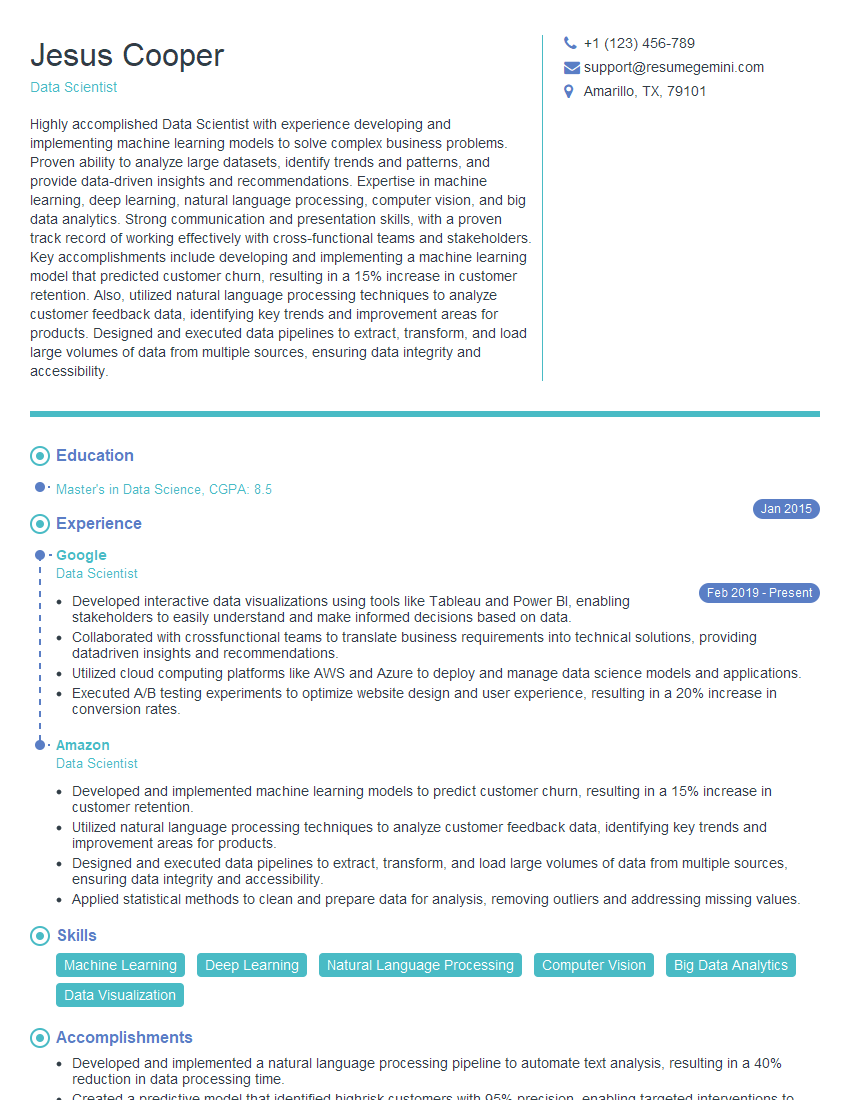
Data Scientist Resume Sample
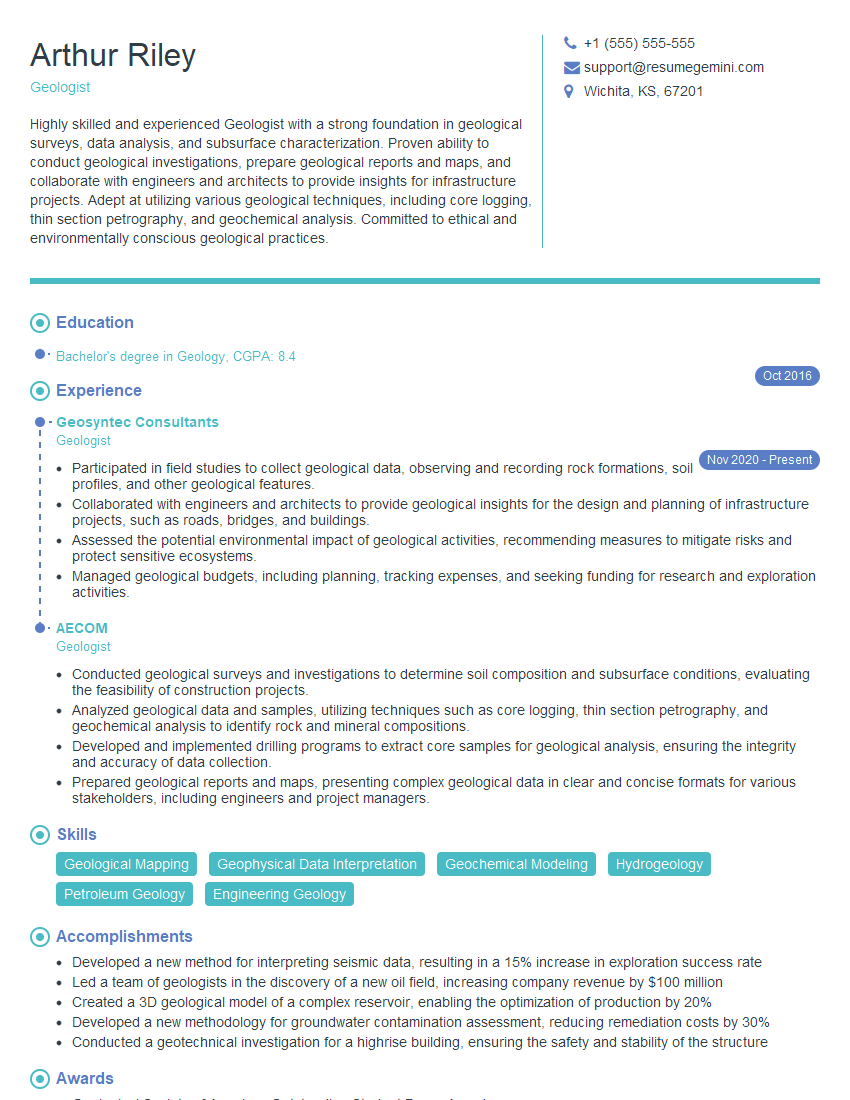
Geologist Resume Sample
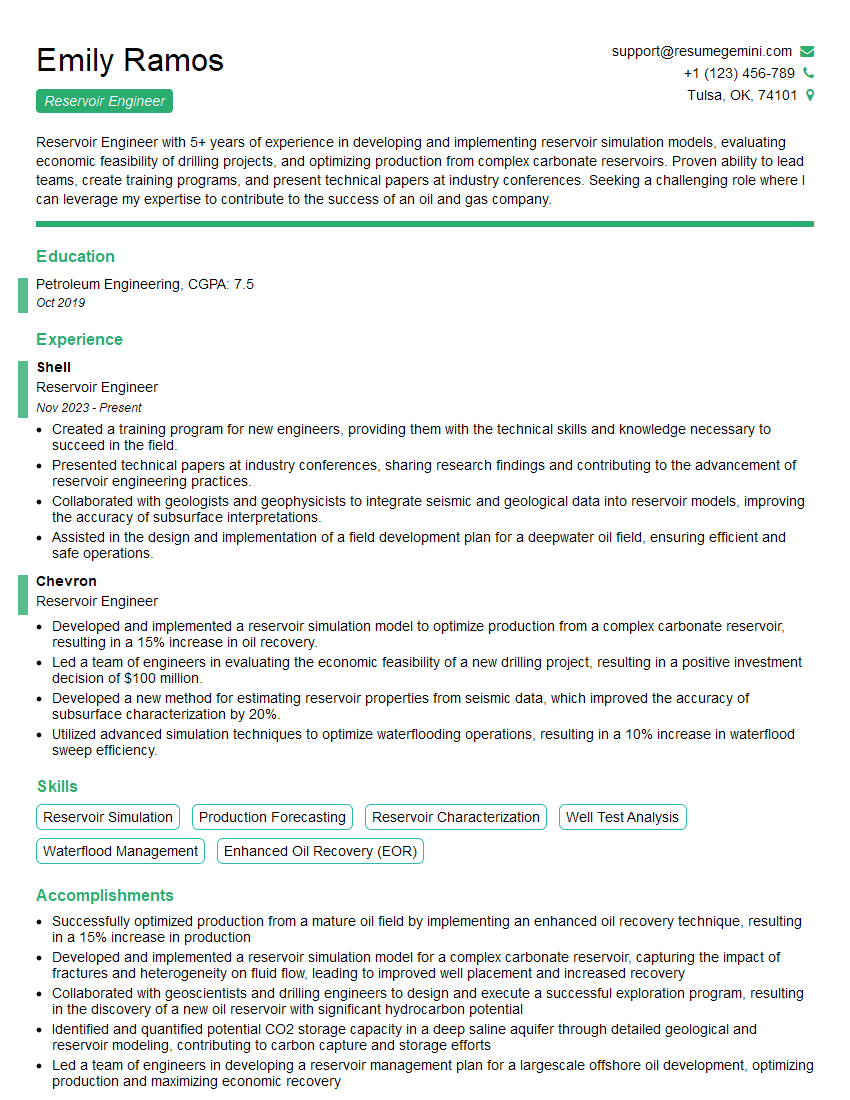
Reservoir Engineer Resume Sample

Field Engineer Resume Sample
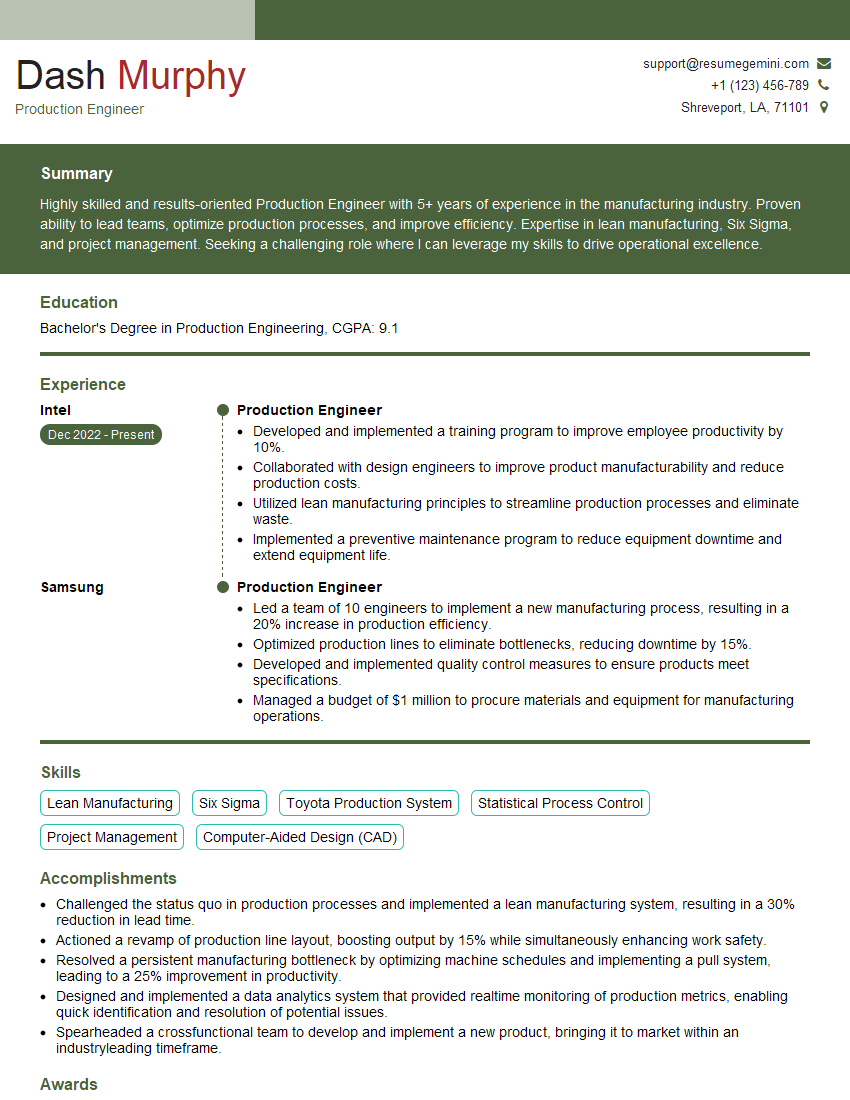
Production Engineer Resume Sample
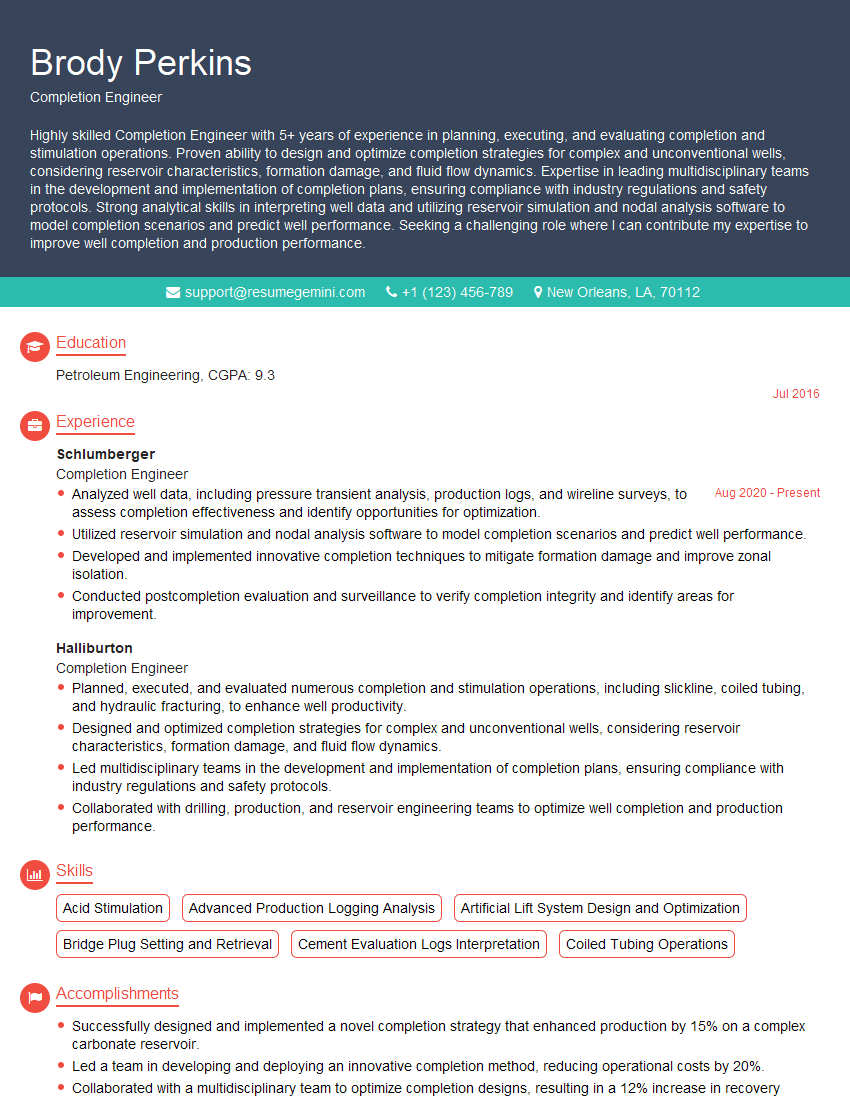
Completion Engineer Resume Sample

Drilling Engineer Resume Sample

Petroleum Engineer Resume Sample
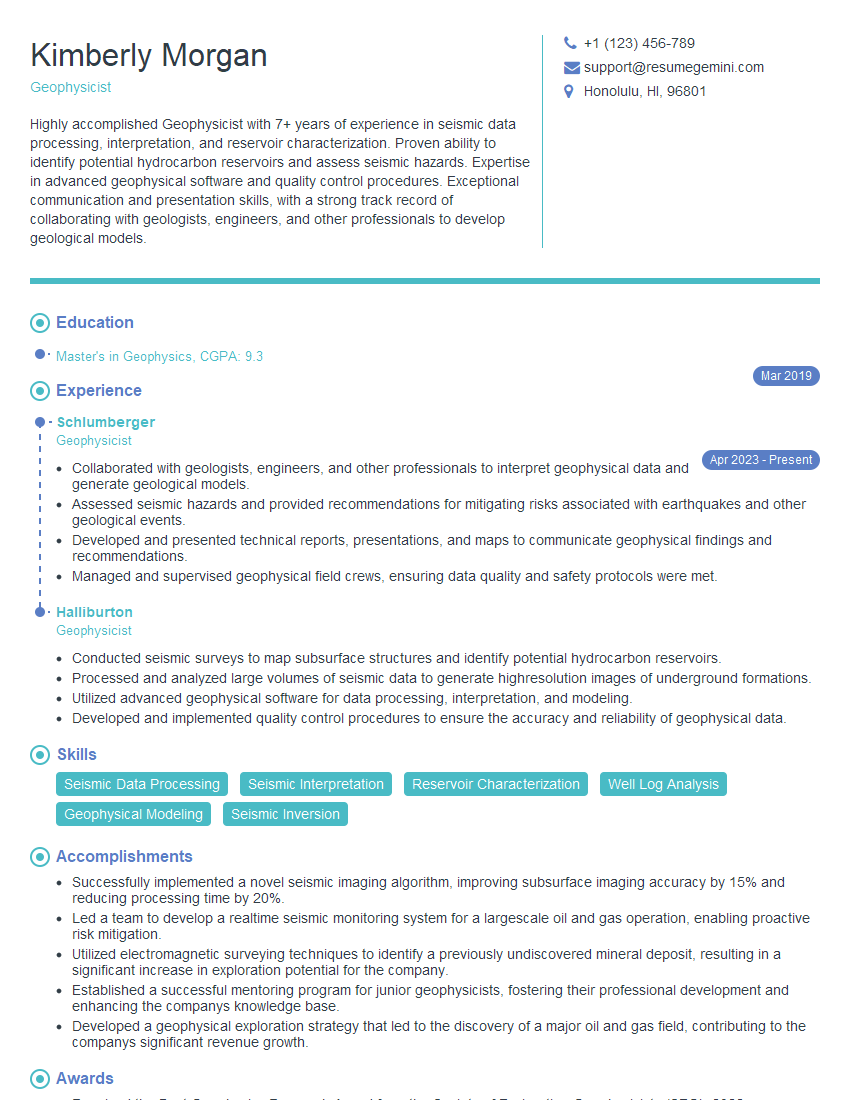
Geophysicist Resume Sample
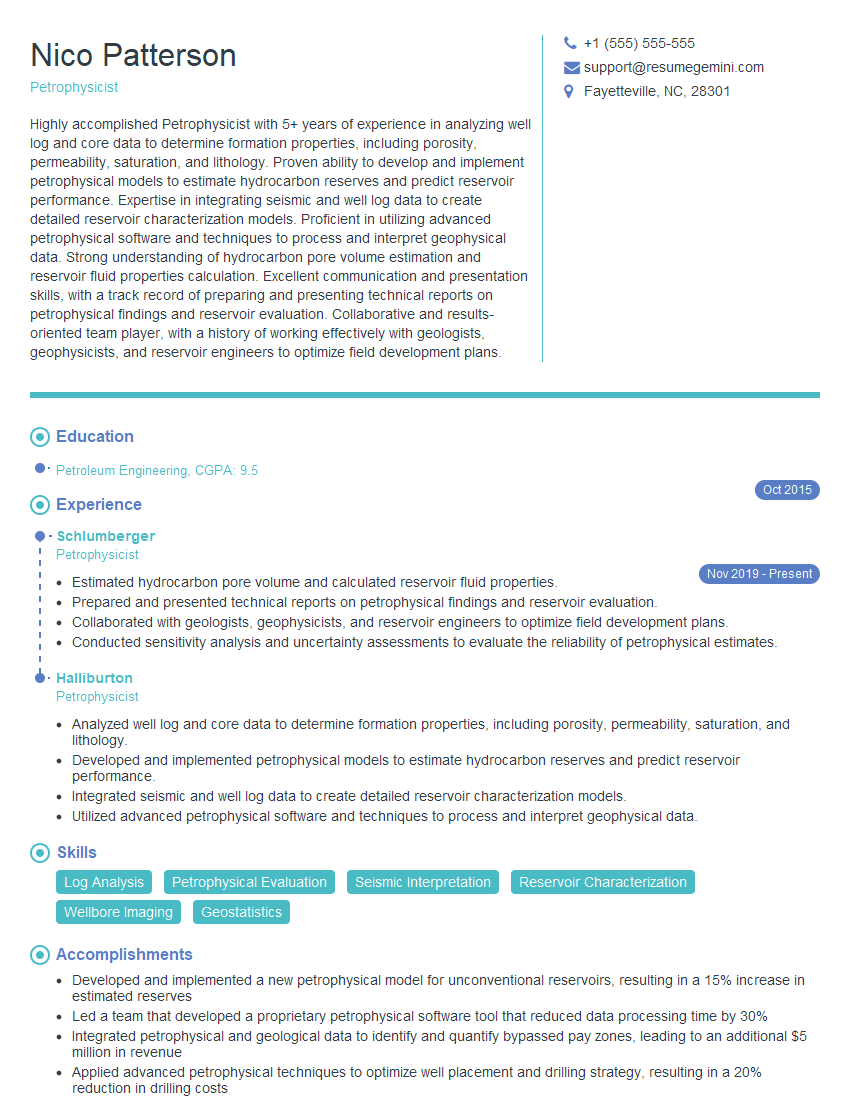
Petrophysicist Resume Sample
Explore more articles
Users Rating of Our Blogs
Share Your Experience
We value your feedback! Please rate our content and share your thoughts (optional).
What Readers Say About Our Blog
Very informative content, great job.
good