Interviews are more than just a Q&A session—they’re a chance to prove your worth. This blog dives into essential Geographic Awareness interview questions and expert tips to help you align your answers with what hiring managers are looking for. Start preparing to shine!
Questions Asked in Geographic Awareness Interview
Q 1. Explain the difference between geographic coordinates and projected coordinates.
Geographic coordinates and projected coordinates are two fundamentally different ways of representing locations on the Earth’s surface. Think of it like this: geographic coordinates are like giving someone directions using latitude and longitude, while projected coordinates are like giving them a map with specific x and y values.
Geographic Coordinates: These use a spherical coordinate system based on latitude and longitude. Latitude measures the angle north or south of the equator (ranging from -90° to +90°), and longitude measures the angle east or west of the Prime Meridian (ranging from -180° to +180°). These coordinates are independent of any specific map projection and represent a location’s absolute position on the Earth’s three-dimensional surface. For example, 34.0522° N, 118.2437° W represents a location in Los Angeles.
Projected Coordinates: These are planar coordinates, meaning they represent locations on a two-dimensional map. Since the Earth is a sphere (approximately), we must project the 3D surface onto a 2D plane, inevitably introducing some distortion. This projection transforms geographic coordinates into x and y values within a specific coordinate system (e.g., UTM, State Plane). The choice of projection significantly impacts the accuracy and characteristics of the resulting map, with different projections minimizing different types of distortion (distance, area, shape, direction).
The key difference is that geographic coordinates are absolute and location-specific, while projected coordinates are relative to a chosen map projection and its inherent distortions.
Q 2. Describe the various map projections and their applications.
Map projections are mathematical transformations that convert the Earth’s three-dimensional surface onto a two-dimensional plane. Many different projections exist, each with its strengths and weaknesses regarding distortion. The choice of projection depends heavily on the intended use of the map.
- Cylindrical Projections (e.g., Mercator): These project the Earth onto a cylinder. The Mercator projection is famous for preserving direction but severely distorts area, particularly at higher latitudes. It’s commonly used for navigation because straight lines represent constant compass bearings.
- Conical Projections (e.g., Albers Equal-Area): These project the Earth onto a cone. Albers Equal-Area projections preserve area but distort shape and direction, making them suitable for thematic mapping where area representation is crucial (e.g., population density maps).
- Azimuthal Projections (e.g., Stereographic): These project the Earth onto a plane tangent to a point on the globe. They preserve direction from the central point but distort area and shape as distance from the center increases. They are often used for mapping polar regions.
- Compromise Projections (e.g., Robinson): These attempt to balance distortions across different properties. The Robinson projection is a widely used compromise projection that minimizes distortion across the globe but doesn’t perfectly preserve any single property.
Applications vary widely. Navigation uses Mercator; thematic mapping often employs equal-area projections; and polar regions may use azimuthal projections. The selection process carefully considers the intended application and the type of distortion that can be tolerated.
Q 3. What are the common data formats used in Geographic Information Systems (GIS)?
Geographic Information Systems (GIS) utilize various data formats to store and manage spatial data. These formats can be broadly categorized into vector and raster data.
- Vector Data: Represents geographic features as points, lines, and polygons. Common formats include:
- Shapefile (.shp): A popular, widely supported format storing geographic features with associated attribute data.
- GeoJSON (.geojson): A text-based format that’s becoming increasingly popular for its flexibility and interoperability, particularly in web applications.
- GeoPackage (.gpkg): A more modern, open format designed to consolidate multiple spatial data elements into a single file.
- Raster Data: Represents geographic features as a grid of cells or pixels, each with a value. Common formats include:
- GeoTIFF (.tif): A widely used format for storing raster data with geographic referencing information.
- JPEG (.jpg): While not specifically a GIS format, it’s frequently used to store imagery (satellite images, aerial photos).
- GRID (ESRI): A proprietary format used primarily in ESRI’s ArcGIS software.
In addition to these primary formats, there are numerous other specialized formats used for specific data types, such as elevation data (DEM) or point cloud data (LAS).
Q 4. How would you handle spatial data inconsistencies in a GIS project?
Handling spatial data inconsistencies is a crucial aspect of GIS project success. Inconsistencies can stem from various sources, including data from different sources, different projections, differing data collection methods, or errors during data processing.
Here’s a multi-step approach:
- Data Discovery and Assessment: Identify potential inconsistencies by reviewing metadata, examining data visualizations, and performing basic quality checks.
- Data Cleaning and Transformation: Correct obvious errors and inconsistencies. This might involve resolving conflicting attribute data, standardizing data formats, and projecting data into a common coordinate system.
- Geoprocessing Techniques: Employ GIS tools to address more complex inconsistencies. This could include using spatial joins to integrate data from multiple sources, using tools to identify and remove duplicate features, or employing spatial interpolation to fill in gaps in data.
- Data Validation and Verification: Implement quality checks at every stage to ensure that the corrections made don’t introduce new errors. Compare results to known ground truth data where possible.
- Documentation: Maintain a clear record of all data cleaning and transformation steps. This documentation is vital for reproducibility, future data updates, and for tracking the accuracy of the final data product.
For instance, if you have two datasets representing the same road network but with slightly different geometries, you’d need to employ tools like spatial overlay to integrate and reconcile the differences, perhaps using a spatial tolerance to account for minor positional variations.
Q 5. Explain the concept of spatial autocorrelation.
Spatial autocorrelation refers to the degree to which values of a variable at different locations are similar. Imagine a map showing house prices: if houses in close proximity tend to have similar prices, that indicates strong spatial autocorrelation. Conversely, if house prices vary randomly across the map, then there is weak spatial autocorrelation.
High spatial autocorrelation suggests that there are spatial processes influencing the variable’s distribution. This pattern is not random; it reflects underlying spatial relationships. For example, proximity to amenities (schools, parks), environmental factors (soil quality, elevation), or even socioeconomic factors can all create spatial autocorrelation.
Understanding spatial autocorrelation is crucial because ignoring it can lead to flawed statistical analyses. Traditional statistical methods often assume that data points are independent, a condition violated when substantial spatial autocorrelation exists. Geospatial analysis techniques account for spatial dependence explicitly, yielding more accurate and reliable results.
Measuring spatial autocorrelation involves using statistics like Moran’s I or Geary’s C. These statistics assess the correlation between a variable’s values at different locations considering their spatial proximity. This is often visualized using Moran scatterplots.
Q 6. Describe different types of spatial analysis techniques (e.g., overlay, buffering).
Spatial analysis techniques utilize the spatial relationships between geographic features to extract information and gain insights. Several common techniques are:
- Overlay Analysis: Combines two or more datasets based on their spatial location. This allows for the identification of areas where features from different datasets intersect or coincide. For example, overlaying a land-use map with a soil-type map can identify areas suitable for specific agricultural practices.
- Buffering: Creates zones around geographic features based on a specified distance. This helps identify areas within a certain distance of a feature. For example, buffering a river can identify the floodplain area, which is valuable for planning and risk assessment.
- Network Analysis: Analyzes spatial relationships within a network, like a road system. This is used to find the shortest path, optimal routes, or service areas. For instance, determining the best location for emergency service facilities involves network analysis to minimize response times.
- Proximity Analysis: Determines the spatial relationships between features based on distance. This can involve measuring distances between points, identifying nearest neighbors, or calculating density.
- Spatial Interpolation: Estimates values at unsampled locations based on values at nearby sampled locations. This is particularly useful when working with sparse data, such as weather stations or elevation points.
Each technique addresses specific analytical needs. Overlay helps identify overlaps; buffering identifies proximity zones; network analysis optimizes routes; and proximity analysis determines spatial relationships based on distance. The selection of the appropriate technique depends on the research question and the nature of the data.
Q 7. How would you determine the optimal location for a new facility using GIS?
Determining the optimal location for a new facility using GIS involves a multi-step process that integrates spatial analysis techniques with other relevant factors.
- Define Objectives and Criteria: Clearly define the facility’s purpose and identify the key factors influencing location selection (e.g., proximity to customers, access to transportation, cost of land, environmental regulations).
- Data Acquisition and Preparation: Gather relevant spatial data layers (e.g., population density, road networks, land use, environmental constraints) and ensure they’re in a compatible format and projection.
- Spatial Analysis: Employ various spatial analysis techniques. For example, use proximity analysis to assess distances to potential customer bases. Network analysis might determine accessibility. Overlay analysis could combine various factors into a suitability map.
- Weighting and Scoring: Assign weights to different criteria based on their importance. This allows for a quantitative assessment of locations based on the combined influence of all relevant factors.
- Suitability Modeling: Combine the weighted criteria into a single suitability map. Higher values indicate locations that better satisfy the defined criteria. This often involves techniques like weighted linear combination or fuzzy logic.
- Site Selection and Evaluation: Identify potential locations within the high-suitability areas and perform a more detailed evaluation considering factors not easily captured in the GIS analysis (e.g., zoning regulations, political considerations).
For example, locating a new hospital might involve overlaying population density, road accessibility, and land availability to identify areas with high population density, good road access, and suitable land for development. The weighting of these factors will depend on the specific priorities of the healthcare provider.
Q 8. What are the key considerations when designing a geodatabase?
Designing a geodatabase involves careful consideration of several key factors to ensure data integrity, efficiency, and scalability. Think of it like building a house – you need a solid foundation and well-planned layout.
- Data Model: Choosing the right data model (e.g., relational, object-oriented) is crucial. A relational model, like that used in many enterprise systems, is good for structured data with clear relationships between tables. Object-oriented models are more flexible and useful for complex spatial objects.
- Spatial Reference System (SRS): Selecting the appropriate coordinate system (e.g., UTM, WGS84) is paramount. Inconsistent SRS can lead to inaccurate spatial analysis and map rendering. For example, using a local projected coordinate system is better for regional analysis than a global geodetic system.
- Data Structure: Organizing data into feature classes and tables is essential. This involves defining attributes (data fields) for each feature and setting relationships between tables. Imagine organizing a city’s data: you might have separate feature classes for roads, buildings, and parcels, all linked by shared attributes like address or parcel ID.
- Data Volume and Storage: Consider the size of the geodatabase and how it will grow over time. Choosing the right storage method (e.g., file geodatabase, enterprise geodatabase) influences performance and accessibility. A file geodatabase is suitable for smaller projects, whereas an enterprise geodatabase is ideal for large, collaborative projects.
- Metadata: Comprehensive metadata is crucial for data discoverability, understanding, and quality control. This includes descriptions of the data, its source, accuracy, and projection. It’s like providing clear instructions on how to use and interpret the data.
Q 9. What are some common errors encountered during GIS data processing?
Errors during GIS data processing are common and can significantly impact the accuracy and reliability of results. These errors range from simple data entry mistakes to complex topological inconsistencies.
- Data Errors: These are inaccuracies in the attribute or spatial data itself. For instance, a misspelled address or incorrectly digitized boundary. Data cleaning and validation are essential to catch these.
- Projection and Coordinate System Issues: Using different coordinate systems without proper transformation can lead to significant spatial misalignment. This is like trying to fit a square peg into a round hole. Always verify the projection.
- Topology Errors: These involve inconsistencies in spatial relationships, such as overlapping polygons or gaps between lines. They often occur during digitization and need topological editing.
- Data Format Incompatibility: Using incompatible data formats can prevent proper processing. For example, attempting to directly merge shapefiles and GeoPackages without conversion will fail.
- Spatial Autocorrelation: Ignoring the spatial dependency of data can lead to flawed statistical analysis. A common mistake is applying ordinary least squares regression without considering spatial autocorrelation.
Regular data validation, careful projection management, and using appropriate geoprocessing tools are critical to minimize these errors.
Q 10. Explain the difference between raster and vector data.
Raster and vector data are two fundamental data models used in GIS to represent geographic features. They differ fundamentally in how they store spatial information.
Raster data stores spatial information as a grid of cells or pixels, each containing a value representing a specific attribute. Think of a digital image – each pixel has a color value. Raster data is excellent for representing continuous phenomena like elevation or temperature.
Vector data stores spatial information as points, lines, and polygons. Each feature has its own defined geometry and associated attributes. Think of a map showing roads, buildings, and rivers – these are all easily represented as lines and polygons. Vector data is good for representing discrete features.
Choosing the right data model depends on the specific application. For example, satellite imagery is best represented as raster data, while street networks are usually represented as vector data.
Q 11. How do you ensure data accuracy and quality in a GIS project?
Ensuring data accuracy and quality is paramount in any GIS project. It’s the foundation for reliable analysis and decision-making.
- Data Source Assessment: Carefully evaluating the reliability and accuracy of the data sources is crucial. Consider the source’s reputation, the methodology used for data collection, and the known limitations.
- Data Validation and Cleaning: Regularly check for errors, inconsistencies, and outliers in the data. This might involve using tools to detect spatial errors or manually inspecting the data for inaccuracies.
- Metadata Management: Maintaining complete and accurate metadata is essential. It provides information on the data’s provenance, accuracy, and limitations.
- Data Transformation and Projection: Ensure that all data uses a consistent coordinate system and that any necessary transformations are performed accurately. A mistake here can throw off entire analyses.
- Quality Control Checks: Implement regular quality control checks throughout the project lifecycle, including visual inspection, statistical analysis, and comparison with other data sources. These checks prevent the propagation of errors.
Imagine building a skyscraper – you wouldn’t use faulty materials. Similarly, unreliable data will compromise the quality of your GIS project.
Q 12. What is georeferencing and why is it important?
Georeferencing is the process of assigning geographic coordinates (latitude and longitude) to points on an image or map that doesn’t initially have them. It’s like giving an address to something without a pre-defined location.
It’s essential because many datasets, such as scanned maps or aerial photographs, are initially not georeferenced. Georeferencing allows these datasets to be integrated with other geographically referenced data, enabling spatial analysis and visualization within a GIS environment. For example, an old historical map can be georeferenced to be overlaid with modern street maps to identify changes over time.
The process involves identifying control points (points with known coordinates) on the image and in a reference dataset. A transformation is then applied to align the image to the reference dataset. Accuracy is dependent on the number and quality of control points selected.
Q 13. Describe your experience with different GIS software packages (e.g., ArcGIS, QGIS).
I have extensive experience with both ArcGIS and QGIS, two leading GIS software packages. My experience with ArcGIS spans from basic data entry and manipulation to advanced geoprocessing and spatial analysis. I’ve used it for tasks such as creating custom map layouts, performing spatial joins, and implementing advanced spatial statistical methods using spatial analyst tools. I am also proficient in using ArcPy for scripting and automating geoprocessing workflows.
QGIS, being an open-source alternative, has become a valuable tool in my repertoire. It’s a robust platform capable of handling large datasets. I’ve utilized QGIS for tasks including raster processing, image classification, and network analysis. Its plugin ecosystem enables the customization of workflows for various specialized tasks. I appreciate QGIS for its flexibility and its accessible nature, allowing for more efficient collaboration.
My familiarity extends to other software packages like Global Mapper for terrain data analysis and PostGIS for database management within PostgreSQL.
Q 14. How would you interpret spatial patterns from a choropleth map?
A choropleth map displays data aggregated across geographic areas using different shades or colors to represent different values. Interpreting spatial patterns from a choropleth map requires careful consideration of several factors.
- Data Aggregation: Understand how the data is aggregated. Are the values averages, sums, or percentages? The aggregation method significantly influences the observed patterns.
- Spatial Distribution: Observe the spatial distribution of values. Are there clusters of high or low values? Are there sharp boundaries or gradual transitions?
- Spatial Context: Consider the spatial context of the data. What factors might explain the observed patterns? For example, a choropleth map showing income levels might show higher values in urban areas and lower values in rural areas.
- Map Scale and Resolution: The map’s scale and resolution influence the level of detail visible. A large-scale map may reveal local patterns that are not apparent on a small-scale map.
- Data Limitations: Be aware of any limitations of the data, such as data accuracy, spatial resolution, or temporal changes.
For example, a choropleth map displaying population density might reveal high densities in urban centers and lower densities in rural areas. This pattern is explained by the concentration of employment and other urban amenities.
Q 15. What are the ethical considerations in using geographic data?
Ethical considerations in using geographic data are paramount. We’re dealing with information that often reveals sensitive details about individuals, communities, and environments. Think about location data tied to personal devices – revealing someone’s movements can have significant privacy implications. Similarly, mapping socioeconomic data could inadvertently expose vulnerable populations to discrimination or targeted marketing.
- Privacy: Anonymizing data while preserving its analytical value is crucial. Techniques like data aggregation or differential privacy can help. We must always be mindful of data minimization – only collecting and using the data absolutely necessary.
- Bias and Fairness: Geographic data often reflects existing societal biases. For example, using historical census data to predict future needs might perpetuate inequalities if those historical biases aren’t addressed. Careful data cleaning and algorithmic fairness checks are essential.
- Transparency and Accountability: Being transparent about data sources, methodology, and potential limitations builds trust. It’s also crucial to acknowledge potential biases and their impact on the analysis. This ensures accountability for the use and interpretation of geographic information.
- Data Security: Protecting geographic data from unauthorized access or misuse is vital. Robust security protocols, access controls, and encryption are necessary to prevent data breaches and maintain confidentiality.
For instance, imagine using GPS data to track the movement of endangered animals. While beneficial for conservation, it could inadvertently reveal their locations to poachers. Ethical considerations dictate careful planning to minimize these risks.
Career Expert Tips:
- Ace those interviews! Prepare effectively by reviewing the Top 50 Most Common Interview Questions on ResumeGemini.
- Navigate your job search with confidence! Explore a wide range of Career Tips on ResumeGemini. Learn about common challenges and recommendations to overcome them.
- Craft the perfect resume! Master the Art of Resume Writing with ResumeGemini’s guide. Showcase your unique qualifications and achievements effectively.
- Don’t miss out on holiday savings! Build your dream resume with ResumeGemini’s ATS optimized templates.
Q 16. Explain the concept of spatial interpolation.
Spatial interpolation is a crucial technique in Geographic Information Systems (GIS) used to estimate values at unsampled locations based on known values at sampled locations. Imagine you have temperature readings from a few weather stations; interpolation helps you predict the temperature at locations between those stations. It bridges the gaps in your data, creating a continuous surface.
Several methods exist, each with strengths and weaknesses:
- Inverse Distance Weighting (IDW): This method assumes that closer points have a stronger influence on the interpolated value. The weight given to each known point decreases as the distance from the unknown point increases.
- Kriging: A more sophisticated geostatistical method that considers both the distance and spatial autocorrelation (the statistical relationship between values at different locations) of the data. It provides estimates along with associated uncertainties.
- Spline interpolation: This method fits a smooth surface through the known points, minimizing the overall curvature. It’s good for creating visually pleasing surfaces but might not accurately reflect the underlying spatial patterns.
The choice of method depends on the characteristics of the data and the research question. For instance, Kriging is preferred when dealing with spatially correlated data like soil properties, whereas IDW might suffice for simpler cases.
Q 17. How do you address scale issues in spatial analysis?
Scale is a fundamental issue in spatial analysis, referring to the relationship between the size of a feature on a map and its size in reality. Scale issues arise because the same analysis might yield different results at different scales. A pattern visible at a local scale might disappear at a national scale, and vice versa.
Addressing scale issues requires careful consideration:
- Data Aggregation: Combining smaller units into larger ones (e.g., aggregating individual census tracts into counties) can simplify analysis but can also mask local variations.
- Multi-scale Analysis: Performing the same analysis at multiple scales allows for a comprehensive understanding of the phenomenon being studied. This helps identify scale-dependent patterns.
- Choosing Appropriate Spatial Resolution: Selecting a suitable resolution (e.g., the size of pixels in a raster image) is essential. Too coarse a resolution might miss important details, while too fine a resolution might lead to excessive data and computational challenges.
- Understanding the Limitations of Data: Recognizing that data collected at a particular scale may not be suitable for analysis at other scales is crucial. For example, data collected at a street level might not be suitable for regional analysis.
Imagine analyzing crime rates. At a neighborhood scale, you might identify specific hotspots. At a city scale, those hotspots might appear less significant compared to other, larger patterns. A multi-scale analysis provides a more complete picture.
Q 18. What is a spatial join and how is it performed?
A spatial join is a GIS operation that combines attributes from two layers based on their spatial relationship. Think of it as matching information from two different datasets based on location. For instance, you might have a layer of census tracts and another of crime incidents. A spatial join would link crime statistics to each census tract based on which tract each crime occurred in.
There are different types of spatial joins:
- One-to-one: Each feature in one layer is joined to at most one feature in the other layer (e.g., joining points to polygons).
- One-to-many: One feature in one layer is joined to multiple features in the other layer (e.g., joining a polygon to multiple points within it).
- Many-to-one: Multiple features in one layer are joined to one feature in the other layer (less common).
Performing a spatial join typically involves specifying the type of spatial relationship (e.g., intersects, contains, closest) and the joining attribute fields. Most GIS software packages provide tools to perform spatial joins through their graphical user interface or command-line interface. The specific syntax varies depending on the software, but generally involves selecting the two layers and defining the join criteria.
Q 19. Explain the difference between a point, line, and polygon feature.
In GIS, features represent geographic objects. Point, line, and polygon are three fundamental feature types:
- Point: Represents a single location with x and y coordinates. Think of it as a dot on a map, representing something like a tree, a well, or a city. A point has no dimension – it only marks a position.
- Line: Represents a linear feature with length but negligible width. Examples include roads, rivers, or pipelines. A line connects two or more points.
- Polygon: Represents an area with defined boundaries. Examples include countries, lakes, or parcels of land. It’s essentially a closed line that encloses a space.
Understanding the differences is crucial for choosing appropriate spatial analysis techniques. For example, proximity analysis is readily applied to points, while area calculations are relevant to polygons.
Q 20. What are the challenges of working with large geographic datasets?
Working with large geographic datasets presents several challenges:
- Storage and Management: Storing and managing terabytes or even petabytes of spatial data requires specialized infrastructure and efficient data management strategies. Cloud-based solutions and distributed databases are often employed.
- Data Processing: Analyzing large datasets demands powerful computing resources and optimized algorithms to avoid excessive processing times. Parallel processing and distributed computing frameworks are needed.
- Data Visualization: Displaying and visualizing huge datasets can be computationally intensive and might require techniques like data aggregation, simplification, or rendering optimization to achieve acceptable performance.
- Data Quality: Ensuring data consistency, accuracy, and completeness in massive datasets is a major undertaking, requiring meticulous quality control and validation procedures.
For instance, analyzing global satellite imagery requires robust cloud computing infrastructure and efficient data handling to extract meaningful insights. Dealing with the volume and complexity requires expertise in both GIS and high-performance computing.
Q 21. How would you visualize spatial relationships using GIS?
GIS offers a wealth of tools for visualizing spatial relationships. The choice of visualization method depends on the nature of the data and the relationships you want to highlight:
- Choropleth Maps: Use color shading to represent data values across different geographic areas (e.g., showing population density by county).
- Dot Density Maps: Use dots to represent the frequency of a phenomenon within a geographic area (e.g., showing the concentration of businesses).
- Isoline Maps: Connect points of equal value to create contour lines (e.g., showing elevation contours or air pollution levels).
- Cartograms: Distort the shapes of geographic areas to emphasize a data value (e.g., showing country size based on population instead of land area).
- 3D Visualization: Provides a more immersive representation of spatial data, especially useful for terrain modeling or visualizing urban environments.
- Network Analysis Visualizations: Show relationships between points connected by lines (e.g., visualizing transportation networks or social connections).
For example, to visualize the relationship between crime rates and socioeconomic indicators, you could use a choropleth map showing crime rates and overlay it with another map showing socioeconomic data. This allows for a visual comparison of the spatial patterns of both variables, revealing potential correlations.
Q 22. Describe your experience with remote sensing data and its applications.
Remote sensing involves acquiring information about the Earth’s surface without physical contact. I have extensive experience working with various remote sensing data, including satellite imagery (Landsat, Sentinel, MODIS) and aerial photography. My applications have spanned diverse fields. For example, I’ve used multispectral imagery from Landsat 8 to monitor deforestation in the Amazon rainforest, analyzing changes in vegetation indices like NDVI (Normalized Difference Vegetation Index) over time. This allowed for precise quantification of deforestation rates and identification of hotspots needing immediate attention. In another project, I utilized LiDAR data to create high-resolution digital elevation models (DEMs) for flood risk assessment in a coastal city. This involved processing point cloud data to generate accurate terrain representations, which were then integrated into hydrological models to predict flood inundation zones.
Beyond these specific examples, my experience encompasses image classification (supervised and unsupervised), change detection analysis, object-based image analysis (OBIA), and the integration of remote sensing data into GIS environments for spatial analysis. I am proficient in various software packages such as ENVI, ArcGIS Pro, and QGIS for processing and analyzing this type of data.
Q 23. How would you use GIS to support decision-making in a specific industry?
Let’s consider the transportation industry. GIS is crucial for optimizing logistics and improving efficiency. Imagine a large delivery company needing to plan the most efficient routes for its fleet of vehicles. Using GIS, we can incorporate various layers of spatial data: road networks, traffic patterns (obtained from real-time feeds or historical data), delivery locations, and even real-time vehicle locations via GPS tracking. This allows us to build sophisticated route optimization models, minimizing fuel consumption, travel time, and overall operational costs.
Furthermore, GIS can help analyze delivery patterns to identify areas with high demand, optimize warehouse locations, and predict potential delays based on predicted traffic congestion. By integrating different data sources and performing spatial analysis, we can generate actionable insights that support data-driven decision-making for the company. For example, a heatmap visualizing delivery density could help identify areas requiring additional resources or optimized delivery schedules.
Q 24. What is your experience with geospatial databases (e.g., PostGIS)?
PostGIS, a spatial extension for PostgreSQL, is a powerful tool I’ve used extensively for managing and analyzing geospatial data. I’m comfortable working with various spatial data types within PostGIS, including points, lines, and polygons, and understand how to perform spatial queries and analysis directly within the database. This is highly efficient for large datasets, avoiding the need to constantly import and export data to other GIS software.
For example, I’ve used PostGIS to build a spatial database for managing a network of utility lines (electricity, gas, water). This involved storing the spatial location of each line segment, along with associated attributes (e.g., pipe diameter, material, maintenance history). PostGIS then allowed me to perform sophisticated spatial queries, such as finding all lines within a certain distance of a proposed construction project or identifying overlapping lines to prevent conflicts. I’m proficient in writing SQL queries incorporating spatial functions to perform these kinds of analyses.
Beyond querying, I can also leverage PostGIS for spatial data processing, such as geometric operations (e.g., buffer creation, intersection, union) and the creation of spatial indices for improved query performance. This provides a robust and scalable solution for managing and analyzing massive geospatial datasets.
Q 25. Describe your proficiency in using spatial statistics.
My proficiency in spatial statistics is quite advanced. I regularly apply various techniques to analyze spatial patterns and relationships within geospatial data. This involves understanding concepts like spatial autocorrelation, spatial heterogeneity, and the impact of spatial dependence on statistical inferences. I’m experienced with methods such as:
- Point pattern analysis: Assessing the spatial distribution of points (e.g., crime locations, tree locations) and testing for clustering or randomness using techniques like Ripley’s K-function.
- Geostatistics: Interpolating spatial data (e.g., temperature, rainfall) using methods like kriging to create continuous surfaces from scattered point measurements.
- Spatial regression models: Analyzing the relationships between spatial variables, accounting for spatial autocorrelation to avoid biased estimates (e.g., modeling the relationship between house prices and proximity to parks).
I’m adept at using statistical software packages like R and Python (with libraries like spdep and geostat) to perform these analyses and interpret the results. Understanding these techniques is vital for making sound inferences from geospatial data, ensuring the analysis avoids biases introduced by spatial dependencies.
Q 26. Explain the concept of topology in GIS.
Topology in GIS refers to the spatial relationships between geographic features. It’s more than just the location of features; it defines how features connect, overlap, and relate to each other. Think of it as defining the ‘rules’ governing how features interact spatially. A simple example would be a road network. Topology ensures that roads connect correctly at intersections, preventing gaps or overlaps. This is essential for network analysis, such as routing or tracing utility lines.
Topological relationships are explicitly defined and stored within a GIS database. Common topological relationships include adjacency (features sharing a boundary), connectivity (features connected at nodes), and containment (one feature completely within another). Maintaining topological integrity is crucial for data accuracy and reliability; for example, it prevents errors in spatial analysis or map rendering caused by incorrectly connected or overlapping features. In practical terms, topology is vital for many GIS tasks, including network analysis, spatial query operations, and map generalization.
Q 27. How would you handle spatial data from different sources with varying accuracy?
Handling spatial data from disparate sources with varying accuracy requires a careful and methodical approach. The first step is data assessment: rigorously evaluating the accuracy, resolution, and projection of each dataset. This often involves examining metadata and potentially performing accuracy assessments.
Then, data transformation is crucial: converting data to a common coordinate system (projection) and a consistent data format. Dealing with differing resolutions might involve resampling or aggregation techniques. If dealing with significant discrepancies in accuracy, I’d employ techniques such as weighted averaging, where higher accuracy data receives greater weight in the combined dataset.
Finally, data integration and analysis. This could involve creating a geodatabase that integrates the different layers, taking into account the inherent uncertainties. Visualizing the integrated data allows for a qualitative assessment, and statistical analysis can be employed to quantify the uncertainty and biases present in the merged dataset. Transparency and documentation are key – meticulously recording the sources, transformations, and any assumptions made throughout the process are paramount for reproducibility and understanding the limitations of the results.
Key Topics to Learn for Geographic Awareness Interview
- Spatial Reasoning: Understanding and interpreting maps, charts, and geographic data. Practical application: Analyzing spatial relationships between different geographic features to solve problems.
- Geographic Information Systems (GIS): Familiarity with GIS software and techniques for data manipulation, analysis, and visualization. Practical application: Using GIS to identify patterns and trends in geographic data for informed decision-making.
- Cartography and Map Projection: Understanding different map projections and their implications for spatial accuracy. Practical application: Selecting the appropriate map projection for a specific task and interpreting distortions.
- Geographic Data Analysis: Techniques for analyzing geographic data, including statistical methods and spatial analysis tools. Practical application: Identifying clusters, outliers, and spatial relationships within geographic datasets.
- Geocoding and Spatial Referencing: Converting addresses and place names into geographic coordinates. Practical application: Integrating location data into other datasets for comprehensive analysis.
- Remote Sensing and Imagery Interpretation: Understanding the principles of remote sensing and interpreting satellite and aerial imagery. Practical application: Extracting geographic information from remotely sensed data.
- Geographic Modeling and Simulation: Building and using geographic models to simulate real-world processes and predict future outcomes. Practical application: Assessing the impact of environmental changes or urban development.
Next Steps
Mastering Geographic Awareness is crucial for career advancement in numerous fields, offering opportunities for impactful contributions and significant growth. A strong understanding of these concepts will significantly enhance your interview performance and open doors to exciting career prospects. To maximize your chances, it’s vital to create an ATS-friendly resume that effectively showcases your skills and experience. ResumeGemini is a trusted resource to help you build a professional and impactful resume that gets noticed. We provide examples of resumes tailored to Geographic Awareness to help you craft a compelling application.

Logistics Analyst Resume Sample

Real Estate Analyst Resume Sample
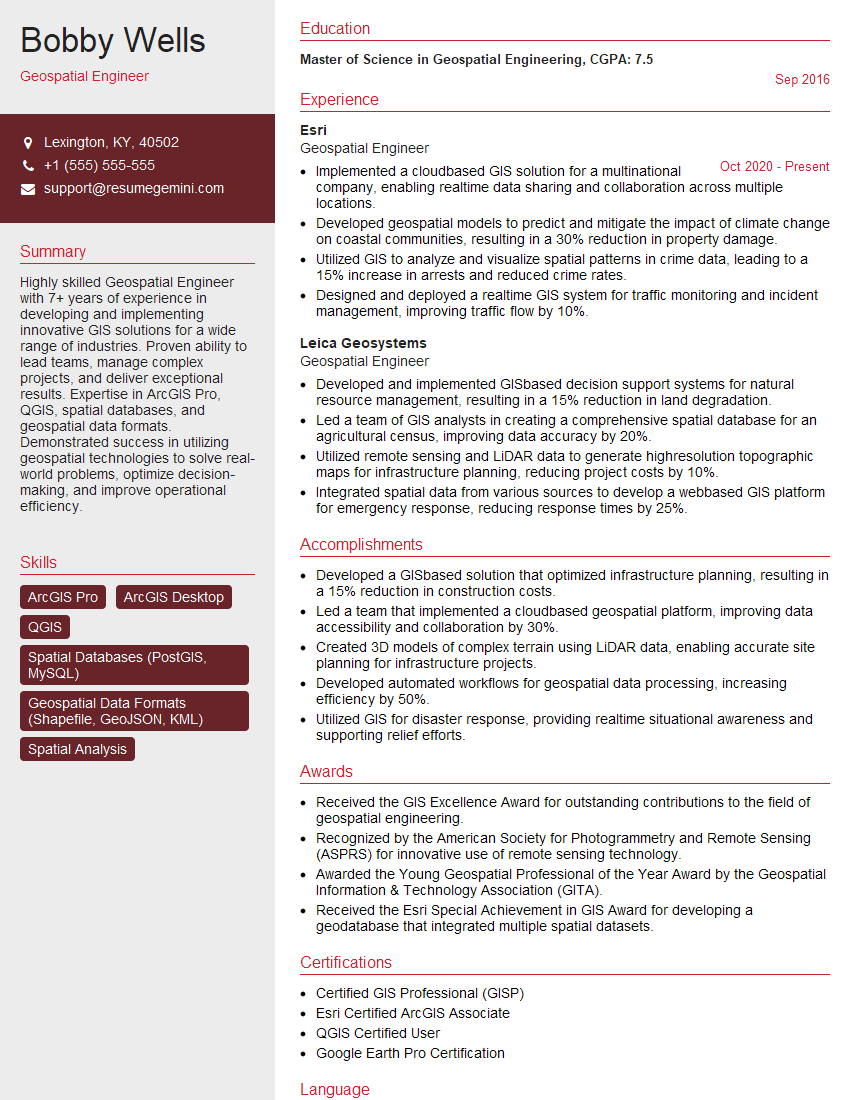
Geospatial Engineer Resume Sample

Cartographer Resume Sample
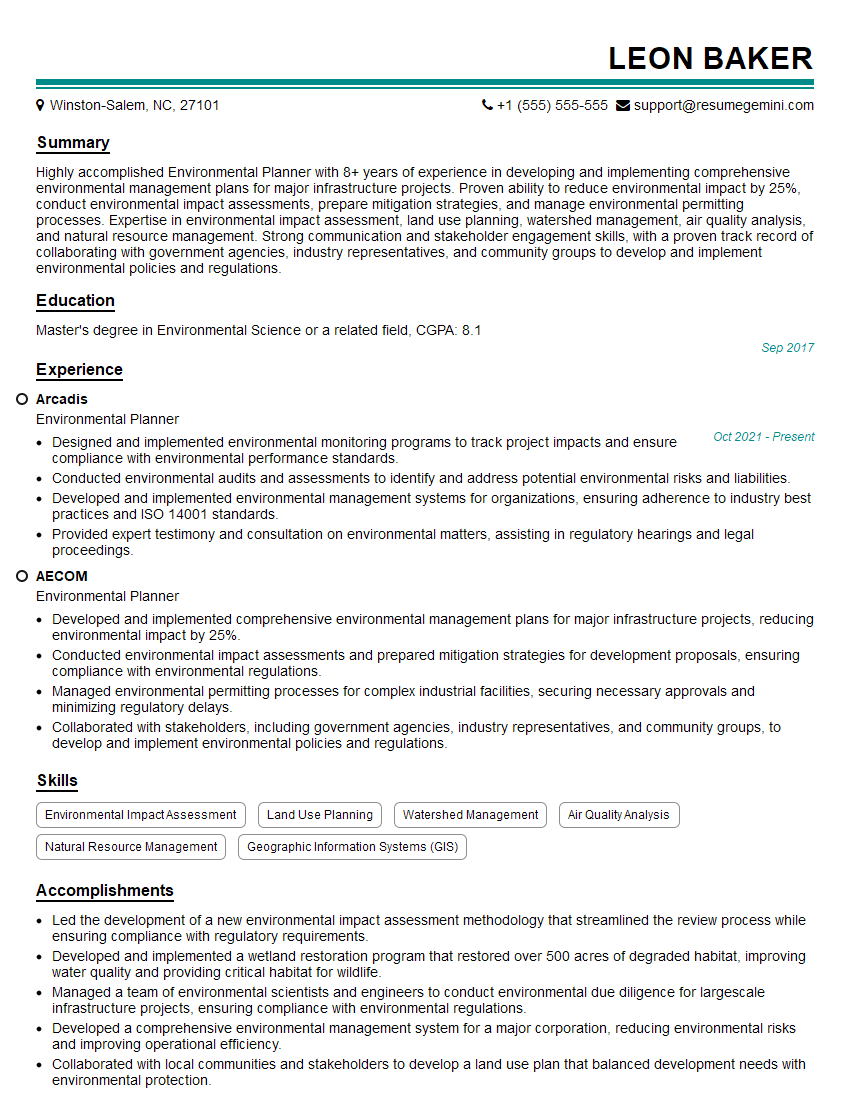
Environmental Planner Resume Sample

Surveyor Resume Sample
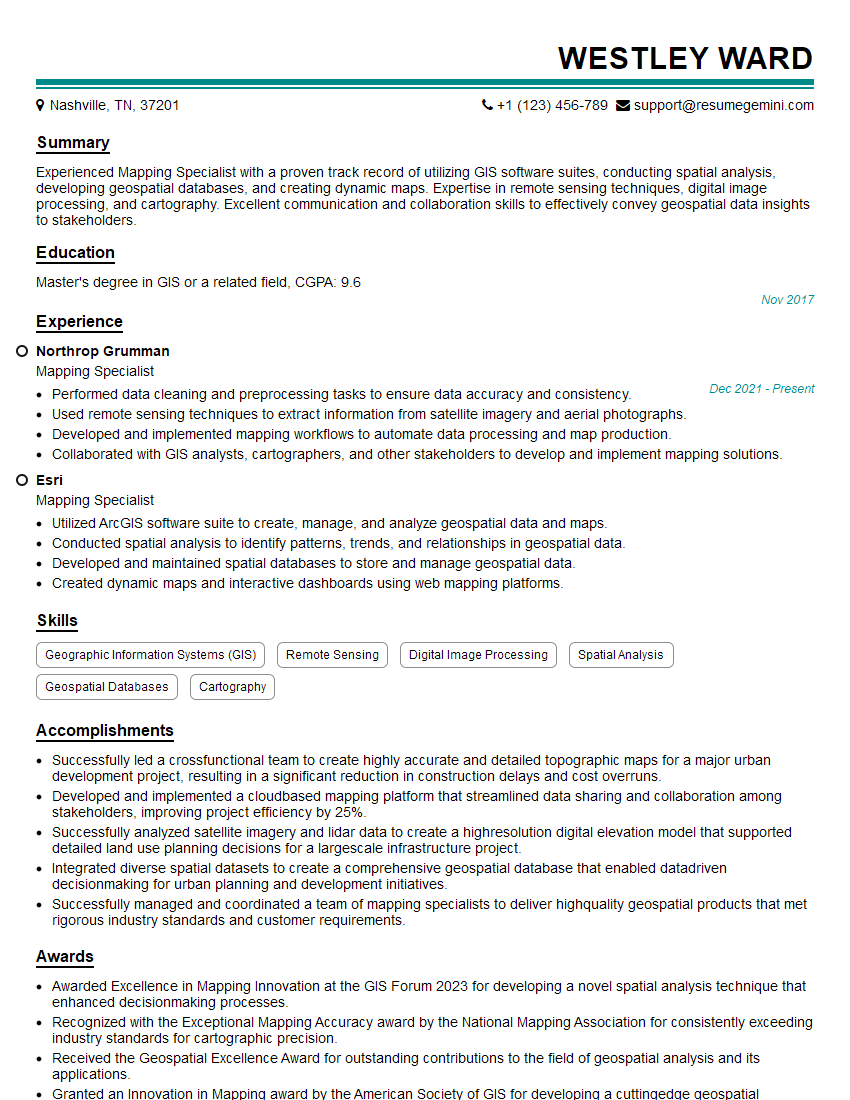
Mapping Specialist Resume Sample

Remote Sensing Specialist Resume Sample
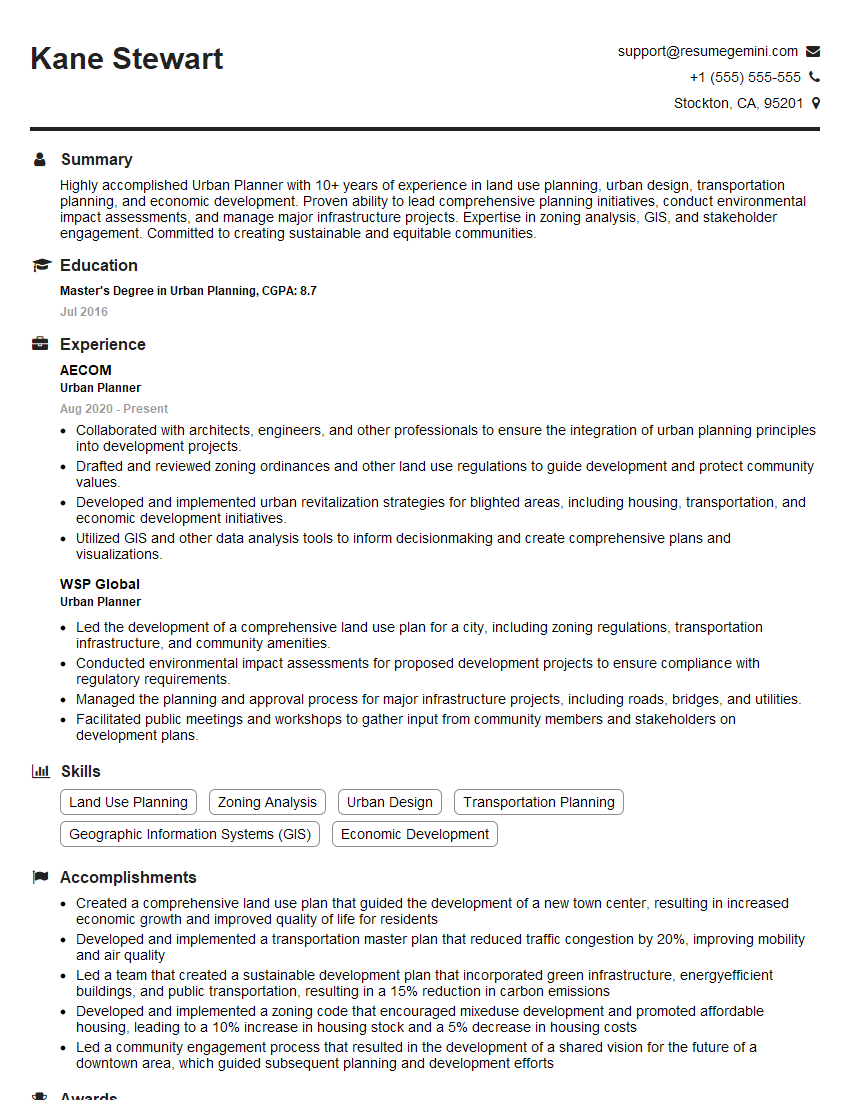
Urban Planner Resume Sample

Geographer Resume Sample
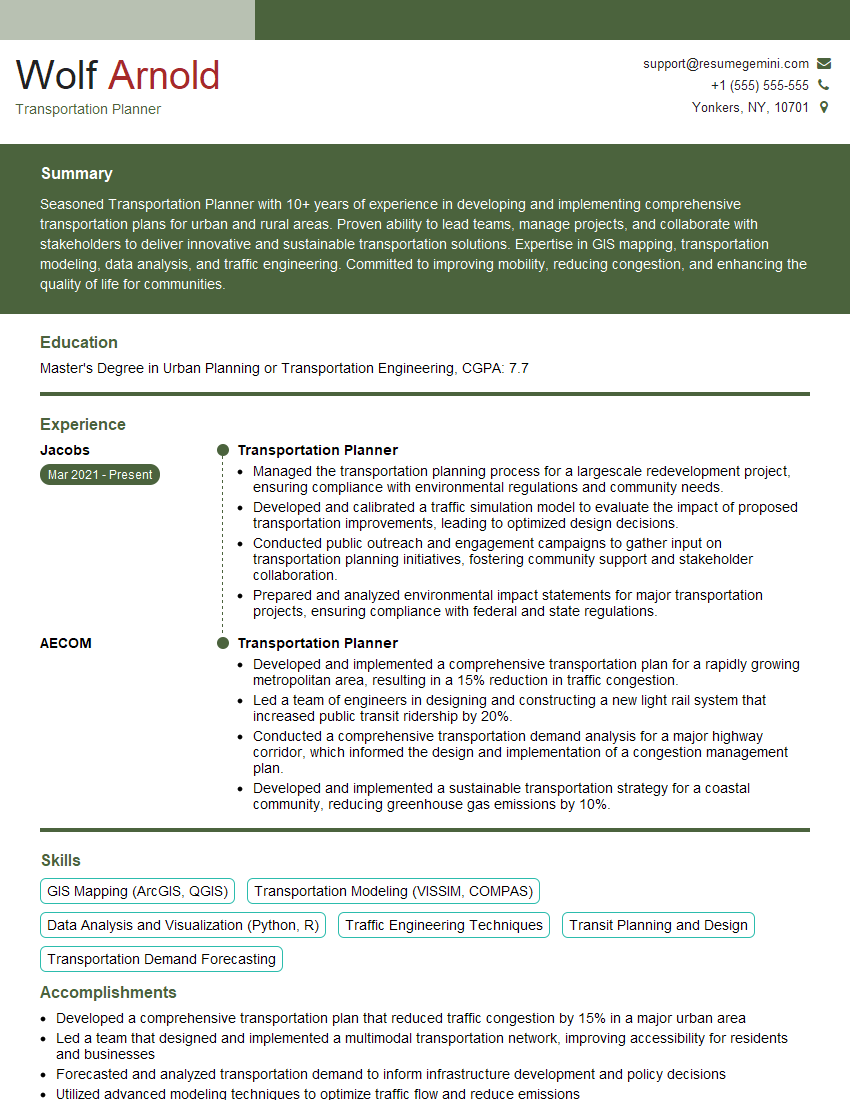
Transportation Planner Resume Sample
Explore more articles
Users Rating of Our Blogs
Share Your Experience
We value your feedback! Please rate our content and share your thoughts (optional).
What Readers Say About Our Blog
Very informative content, great job.
good