Are you ready to stand out in your next interview? Understanding and preparing for Geotechnical Drilling interview questions is a game-changer. In this blog, we’ve compiled key questions and expert advice to help you showcase your skills with confidence and precision. Let’s get started on your journey to acing the interview.
Questions Asked in Geotechnical Drilling Interview
Q 1. Explain the different types of geotechnical drilling methods and their applications.
Geotechnical drilling employs various methods, each suited to specific ground conditions and project needs. The choice depends on factors like soil type, depth, required sample quality, and budget. Here are some common methods:
- Auger Drilling: Uses a rotating auger to extract soil samples. Suitable for shallow depths and relatively soft, unconsolidated soils. Think of it like a giant corkscrew. This method is cost-effective but limited in depth and sample quality for cohesive soils.
- Wash Boring: Uses a circulating fluid (usually water) to carry cuttings to the surface. Suitable for a wide range of soil conditions, including those with cobbles and gravels. It’s like using a high-pressure water jet to loosen and bring the soil up. The sample quality can be lower than other methods.
- Rotary Drilling: Employs a rotating drill bit to penetrate the ground, with or without drilling fluid. This is versatile and can reach significant depths, making it suitable for diverse soil and rock conditions. Think of a dentist’s drill, but on a much larger scale. It’s used for both soil and rock sampling.
- Percussion Drilling: Uses repeated blows from a heavy weight to break up the ground, ideal for hard, rocky formations. This is like hammering a chisel into a stone. It produces fragmented samples.
- Sonic Drilling: Uses high-frequency vibrations to penetrate the ground, minimizing disturbance to the soil structure and useful for very sensitive soils and environmental sampling. It’s like using sound waves to break through.
Each method provides different sample quality and information. The auger method is best for undisturbed samples in soft soil, while the wash boring method can work in varied soil conditions but is not the ideal choice for detailed sample analysis.
Q 2. Describe the process of selecting the appropriate drilling method for a specific project.
Selecting the appropriate drilling method is crucial for project success. It’s a multi-step process:
- Project Goals: Define the project’s objectives. What information is needed? Depth of investigation? Required sample quality (undisturbed vs. disturbed)?
- Site Investigation: Conduct a preliminary site reconnaissance to assess ground conditions. Existing geological maps, aerial photography, and historical data can help.
- Soil and Rock Type: Determine the prevalent soil and rock types at the site. This influences the choice of drilling method. For instance, auger drilling is unsuitable for bedrock.
- Groundwater Conditions: Evaluate the presence and level of groundwater. This impacts the choice of drilling fluid and method to avoid wellbore collapse.
- Budget and Time Constraints: Different methods have varying costs and durations. Balance cost-effectiveness with project requirements.
- Regulatory Requirements: Adhere to local regulations and environmental guidelines, which might dictate specific methods or safety protocols.
For example, if investigating a shallow foundation on soft clay, auger drilling might suffice. However, for a deep foundation in bedrock, rotary drilling with appropriate drilling fluid would be necessary. A detailed geotechnical report that summarizes the findings of the site investigation is crucial for this decision.
Q 3. What are the key considerations for ensuring the safety of drilling operations?
Safety is paramount in geotechnical drilling. Key considerations include:
- Risk Assessment: Conduct a thorough risk assessment before commencing any drilling activities. Identify potential hazards (e.g., ground collapse, equipment malfunction, hazardous materials).
- Site Preparation: Ensure the site is adequately prepared. Clear obstructions, establish a safe working area, and implement traffic control measures.
- Equipment Inspection: Regularly inspect and maintain drilling equipment to ensure it is in safe working order. This includes the drilling rig, safety equipment and associated machinery.
- Personal Protective Equipment (PPE): Provide and enforce the use of appropriate PPE for all personnel, including hard hats, safety glasses, hearing protection, and high-visibility clothing. A thorough risk assessment will highlight the necessary PPE and other safety requirements.
- Emergency Procedures: Develop and communicate clear emergency procedures. Ensure personnel know how to respond to various incidents (e.g., equipment failure, ground collapse, injury).
- Training: Ensure all personnel involved in the drilling operations are adequately trained and competent in safe operating procedures. Documentation of training for the staff is crucial.
Ignoring these precautions can lead to serious accidents and injuries. A safe work environment needs to be prioritized at all times.
Q 4. How do you ensure accurate sample retrieval and handling during drilling?
Accurate sample retrieval and handling are vital for reliable geotechnical analysis. Several steps ensure this:
- Appropriate Drilling Method: Select a drilling method that minimizes sample disturbance. Undisturbed samples are essential for accurate determination of soil properties.
- Sample Collection Techniques: Employ proper sample collection techniques, including using split-spoon samplers or Shelby tubes for undisturbed samples. Careful handling is needed to avoid damaging samples.
- Sample Labeling and Documentation: Meticulously label each sample with relevant information (e.g., depth, date, location, drilling method). Detailed field logs are crucial for tracking samples and their context.
- Sample Transportation and Storage: Transport samples carefully to prevent damage or contamination. Store samples appropriately to maintain their integrity (e.g., refrigeration for moisture-sensitive samples).
- Chain of Custody: Maintain a chain of custody to ensure sample integrity and traceability throughout the testing process. This is especially important for legal or regulatory reasons.
Compromised sample integrity can lead to inaccurate test results and compromised project decisions. This process is critical for minimizing mistakes.
Q 5. What are the common challenges encountered during geotechnical drilling and how do you address them?
Geotechnical drilling often encounters challenges:
- Unexpected Ground Conditions: Encountering unexpected soil or rock layers can require method adjustments or even project delays. For example, encountering unexpected bedrock requires switching to a more powerful drilling method.
- Groundwater Issues: High groundwater levels can cause borehole instability or make it difficult to obtain quality samples. This needs to be managed using the correct drilling fluid.
- Difficult Access: Limited access to the drilling site (e.g., confined spaces or congested areas) can pose logistical challenges and impact safety. Careful planning is required.
- Equipment Malfunctions: Equipment failure can cause delays and potentially compromise safety. Regular maintenance and backup equipment are essential.
- Environmental Concerns: Drilling operations must adhere to environmental regulations. For example, handling and disposal of drilling fluids should be done safely.
Addressing these challenges requires experience, adaptability, and careful planning. Contingency plans for different scenarios should always be in place. For example, having alternative drilling methods planned in case of unexpected ground conditions can prevent project delays.
Q 6. Explain the importance of borehole logging and the different types of logs used.
Borehole logging is essential for documenting subsurface conditions, providing critical information for engineering design and analysis. Different types of logs provide specific information:
- Lithological Logging: Describes the visual characteristics of the soil or rock layers encountered (e.g., color, texture, grain size). This provides a basic understanding of the stratigraphy.
- Standard Penetration Test (SPT): Measures the resistance of the soil to penetration by a standard split-spoon sampler, providing an indication of soil strength and density.
- Cone Penetration Test (CPT): Measures the resistance to penetration of a cone-shaped probe, providing continuous data on soil strength and stratigraphy.
- Downhole Geophysical Logging: Employ various geophysical techniques (e.g., electrical resistivity, natural gamma) to determine parameters like groundwater levels, soil resistivity, and porosity.
Different types of logs should be considered based on the objectives of the investigation and the type of information required. The combination of lithological logs and in-situ tests such as the SPT and CPT provides a complete subsurface characterization.
Q 7. How do you interpret geotechnical drilling data to inform engineering design?
Interpreting geotechnical drilling data informs engineering design by providing the critical information needed to make sound decisions. The process typically involves:
- Data Compilation: Compile all collected data, including borehole logs, laboratory test results, and other relevant information.
- Data Analysis: Analyze the data to characterize the soil and rock strata. This involves determining soil properties (e.g., shear strength, compressibility, permeability), rock properties (e.g., strength, stiffness), and groundwater conditions.
- Geotechnical Modeling: Develop geotechnical models to simulate the behavior of the ground under different loading conditions. This could use software such as PLAXIS or ABAQUS.
- Design Recommendations: Based on the analysis and modeling, make recommendations for the design of foundations, earth retaining structures, and other geotechnical engineering works. This might include selecting foundation types, determining dimensions, and designing ground improvement measures.
- Uncertainty and Risk Assessment: Consider the uncertainty inherent in geotechnical data and address potential risks in the design. This might involve using factor of safety or probabilistic analysis.
For instance, data showing low shear strength might lead to the design of a shallow foundation with wider spread footings. Similarly, high groundwater levels might require special drainage measures for a basement excavation. A well-interpreted dataset should provide enough confidence to make reliable design decisions and avoid costly mistakes.
Q 8. Describe your experience with different drilling rigs and equipment.
My experience encompasses a wide range of drilling rigs and equipment, from small, portable rigs suitable for shallow investigations to large, powerful rigs capable of deep boreholes in challenging conditions. I’m proficient with both rotary and percussion drilling methods. For example, I’ve extensively used hollow stem auger rigs for environmental sampling, where the continuous sampling aspect is crucial. For deeper investigations and rock coring, I have experience with various types of rotary rigs, including those using diamond core bits and reverse circulation drilling systems. My experience also extends to cable percussion rigs for overburden investigations in areas with high groundwater levels. I’m also familiar with various ancillary equipment like mud pumps, sample handling equipment, and downhole logging tools, crucial for ensuring safe and efficient drilling operations.
- Hollow Stem Augers: Ideal for continuous sampling in unconsolidated soils.
- Rotary Drilling Rigs (with diamond core bits): Essential for obtaining high-quality rock cores.
- Reverse Circulation Drilling Rigs: Excellent for drilling in challenging conditions and recovering cuttings efficiently.
- Cable Percussion Rigs: Well-suited for drilling in very loose soils and unconsolidated formations.
Q 9. What are the limitations of different drilling methods?
Each drilling method has its limitations. For instance, auger drilling is efficient in soft soils but struggles with cobbles, boulders, and bedrock. Rotary drilling, while versatile, can be less efficient in very soft or loose soils. Percussion drilling is effective in hard rock but can be slow and less precise in softer formations. Furthermore, the depth limitation varies depending on the rig and the ground conditions. Environmental concerns also dictate the suitability of specific methods. For example, the use of drilling fluids can have implications for groundwater contamination, which needs careful management.
- Auger Drilling: Limited depth and effectiveness in hard or rocky formations.
- Rotary Drilling: Can be inefficient in very loose soils, and costly for shallow investigations.
- Percussion Drilling: Less precise than rotary methods and can be slow in softer materials.
Choosing the right method involves careful site investigation, understanding the anticipated ground conditions, and balancing factors like cost, efficiency, and environmental impact. It’s a crucial decision that significantly impacts project success and budget.
Q 10. How do you manage variations in soil and rock conditions during drilling?
Managing variations in soil and rock conditions requires adaptability and careful planning. Before drilling, I always review available geotechnical reports and conduct thorough site reconnaissance to anticipate potential challenges. During drilling, constant monitoring of drilling parameters (e.g., rotary speed, torque, penetration rate) is crucial. Changes in these parameters often indicate shifts in ground conditions. We might encounter unexpected boulders, requiring a change to percussion drilling or a larger diameter bit. We adapt by changing drilling techniques, tools, or even the rig itself. For example, if we encounter unexpectedly high groundwater, we might need to change to a system using drilling mud to control the flow of water. Documentation is critical; we meticulously record all changes and observations to maintain accurate geological logs.
In essence, it is about proactive adaptation and a flexible approach. We don’t just react to changes, we anticipate them, prepare for them, and adjust our strategy accordingly.
Q 11. Explain the procedure for conducting standard penetration tests (SPT).
The Standard Penetration Test (SPT) is a widely used in-situ dynamic penetration test that measures the resistance of the soil to penetration. It provides valuable information about the soil’s density and strength. The procedure involves driving a split-barrel sampler into the ground using a 63.5 kg (140 lb) hammer falling from a height of 76 cm (30 inches). The number of blows required to drive the sampler 30 cm (12 inches) into the ground is recorded as the N-value. The N-value is crucial for classifying soil types and estimating their engineering properties. Before starting, the borehole is advanced to the desired depth, and the sampler is carefully lowered into position. The hammer is then raised and allowed to fall, and the blows are counted until the sampler is driven to the required depth. The entire procedure is meticulously recorded, and potential deviations from the standard protocol are noted and investigated.
The SPT is a foundational test in geotechnical engineering; the derived N-value gives us insights into the soil’s relative density, which is a key parameter in foundation design.
Q 12. Describe your experience with different types of soil sampling techniques.
My experience includes various soil sampling techniques, selected based on the project’s requirements and soil conditions. For undisturbed samples, we use Shelby tubes, which are thin-walled tubes that minimize soil disturbance. These are particularly important for laboratory testing requiring accurate representation of the in-situ soil structure. For disturbed samples, where the focus is on grain size distribution and other bulk properties, we might use a variety of split-barrel samplers or even hand augers. In rock formations, we obtain core samples using diamond core bits to ensure high-quality, representative samples for further analysis. Each technique has strengths and weaknesses, and the selection process always prioritizes obtaining samples that accurately represent the soil conditions encountered.
- Shelby Tubes: Obtain undisturbed samples for sensitive soil properties.
- Split-Barrel Samplers: Obtain disturbed samples useful for grain-size analysis.
- Diamond Core Bits: Obtain rock core samples for strength testing and geological analysis.
Q 13. How do you maintain the quality control of drilling operations?
Maintaining quality control in drilling operations is paramount. It involves meticulous record-keeping, regular equipment calibration and maintenance, and adherence to established procedures. We use standardized logging forms to document all aspects of the drilling process, including borehole location, depths, drilling methods used, soil descriptions, and any deviations from planned procedures. Regular calibration checks on the drilling rig and testing equipment (e.g., the SPT hammer) ensure accurate measurements. The drilling team undergoes regular training to maintain proficiency in safe and efficient drilling practices. We also conduct periodic quality checks on the collected samples to verify their integrity and representativeness. This includes visual inspections and comparison with in-situ observations.
A robust quality control system safeguards the reliability of the data, crucial for making informed decisions about geotechnical design and construction.
Q 14. What are the environmental considerations for geotechnical drilling projects?
Environmental considerations are crucial in geotechnical drilling. We adhere strictly to all environmental regulations and permits. Our primary focus is preventing groundwater contamination. This includes careful management of drilling fluids, ensuring proper disposal and avoiding spills. We utilize environmentally friendly drilling fluids whenever possible. Noise and dust control are also important, especially in populated areas. We employ measures to minimize noise pollution, such as using quieter equipment or scheduling work during less sensitive times. Dust control measures may involve water sprays or other dust suppression techniques. We also prioritize site restoration after the completion of drilling works to minimize the impact on the surrounding environment. All waste materials are carefully handled and disposed of responsibly in accordance with relevant regulations.
Sustainable practices are integral to our operations, ensuring the protection of the environment and the long-term viability of our projects.
Q 15. How do you deal with unexpected ground conditions during drilling?
Dealing with unexpected ground conditions during drilling is a crucial aspect of geotechnical engineering. It requires adaptability, experience, and a thorough understanding of subsurface conditions. We anticipate potential challenges by carefully reviewing pre-drilling site investigations such as geological reports and geophysical surveys. However, surprises are inevitable. Imagine drilling into what was expected to be a uniform clay layer, only to encounter unexpected bedrock at a shallower depth than predicted.
Our response involves a multi-step process:
- Immediate Assessment: We stop drilling and carefully assess the situation. This includes visually inspecting the retrieved samples and adjusting the drilling parameters.
- Problem Identification: We pinpoint the exact nature of the unexpected condition. Is it a lens of harder material, a change in soil type, or an unforeseen obstacle like buried debris? This step often involves using additional tools, such as downhole cameras, to investigate.
- Mitigation Strategy: Based on our assessment, we develop a mitigation strategy. This might involve changing drilling methods (e.g., switching to a different type of drill bit or using a different drilling technique), adjusting drilling fluids, or incorporating more sophisticated ground investigation methods.
- Documentation: All changes, challenges encountered, and corrective actions are meticulously documented in our drilling logs. This information is critical for future analysis and project planning.
For instance, encountering unexpected groundwater inflow might necessitate altering the drilling fluid system, potentially by increasing its density to prevent borehole collapse or employing a bentonite slurry to seal the formation. Each challenge demands a tailored solution, ensuring the integrity of the data and the safety of the crew.
Career Expert Tips:
- Ace those interviews! Prepare effectively by reviewing the Top 50 Most Common Interview Questions on ResumeGemini.
- Navigate your job search with confidence! Explore a wide range of Career Tips on ResumeGemini. Learn about common challenges and recommendations to overcome them.
- Craft the perfect resume! Master the Art of Resume Writing with ResumeGemini’s guide. Showcase your unique qualifications and achievements effectively.
- Don’t miss out on holiday savings! Build your dream resume with ResumeGemini’s ATS optimized templates.
Q 16. Explain the importance of maintaining accurate drilling records.
Maintaining accurate drilling records is paramount for several reasons. It’s the foundation for geotechnical engineering projects, ensuring that the design and construction phases rely on accurate data. Think of it as the lifeblood of the project, providing the essential information for the engineers to make crucial decisions.
- Data Integrity: Accurate records guarantee that the data used for design is reliable. Errors or omissions can lead to incorrect interpretations, potentially compromising the stability of structures and safety of projects.
- Legal and Regulatory Compliance: Detailed records meet legal and regulatory requirements for geotechnical projects. This includes documenting safety measures, equipment used, and any encountered problems.
- Future Reference: Accurate records are valuable for future reference. If unforeseen issues arise later, the logs are the vital resource for understanding past events and informed problem-solving.
- Quality Control: Drilling records play a key role in quality control. By closely monitoring them, we identify discrepancies and ensure the drilling process meets required standards.
We maintain detailed records including depth, soil type, groundwater levels, drilling parameters, and any encountered obstacles. The level of detail is dictated by the project scope and regulatory requirements. Without this rigour, the analysis and interpretation would be unreliable.
Q 17. How do you ensure the health and safety of your crew during drilling operations?
Ensuring the health and safety of the crew is my utmost priority. This is more than just following safety regulations; it’s a commitment to a safe work environment. I employ a layered approach:
- Pre-Job Planning: Thorough site inspections identify potential hazards like overhead power lines, unstable ground conditions, and traffic risks. Risk assessments are performed and mitigation strategies are developed before drilling commences.
- Job Site Safety: We enforce a strict safety culture. All crew members are fully briefed on safety procedures, and PPE (Personal Protective Equipment) is mandatory. Regular toolbox talks address specific safety concerns relevant to the ongoing work.
- Equipment Maintenance: Regular inspections of drilling equipment ensure it is in optimal working order, minimizing risks of malfunction or injury. Well-maintained equipment reduces mechanical failures, a common source of accidents.
- Emergency Preparedness: We have established procedures to handle emergencies. This involves establishing communication protocols, access to first aid, and clear escape routes. We regularly practice emergency procedures to ensure the team knows what to do in a real situation.
- Continuous Monitoring: I personally monitor the crew’s performance and adherence to safety regulations throughout the entire drilling process. Proactive identification of potential problems and prompt corrective actions are vital.
The safety of the team is non-negotiable. The effectiveness of safety measures is consistently reviewed and improved based on lessons learned from experience and industry best practices.
Q 18. Describe your experience with different types of drilling fluids.
My experience encompasses a wide range of drilling fluids, each selected based on the specific project requirements. The choice of drilling fluid is crucial as it impacts borehole stability, sample quality, and the efficiency of the drilling process.
- Water-Based Fluids: These are the most common, simple, and economical. They are suitable for many soil types but can be less effective in certain conditions such as unstable formations.
- Polymer-Based Fluids: These provide improved viscosity and reduce friction, useful in deeper, more challenging formations. They offer enhanced borehole stability, especially in sandy or silty soils.
- Bentonite Slurries: Used primarily for their sealing and stabilizing properties, they are excellent for maintaining borehole stability in fractured formations or when dealing with groundwater issues. They provide an effective seal, preventing cave-ins.
- Air or Foam: Air or foam is used in specific conditions where minimizing water contamination is essential, like in sensitive environmental settings. However, they are less effective in cohesive soils.
For example, when drilling in a sandy aquifer, a heavier polymer-based fluid would be preferred to prevent sand incursion into the borehole and maintain a stable column of drilling fluid. Choosing the right fluid requires understanding the ground conditions and project goals.
Q 19. What are the factors influencing the selection of drilling fluids?
The selection of drilling fluids is dictated by several interacting factors, making it a crucial decision in project planning. The wrong choice can lead to costly delays, compromised data, and safety issues.
- Soil Type: The type of soil significantly influences the choice. Cohesive soils may require a less viscous fluid, while loose sands need a denser fluid for stability.
- Groundwater Conditions: High groundwater pressure necessitates a denser fluid to prevent borehole collapse. The presence of contamination may necessitate the use of non-toxic fluids.
- Drilling Method: The drilling method used influences fluid properties. For instance, rotary drilling often uses different fluids than percussion drilling.
- Environmental Concerns: Environmental regulations and project sensitivity dictate the fluid choice. Biodegradable fluids are often preferred in environmentally sensitive areas.
- Sample Quality: The type of fluid must ensure the integrity of retrieved samples for accurate laboratory testing.
A thorough understanding of the subsurface conditions and relevant environmental considerations are vital in determining the most appropriate drilling fluid. This selection is often an iterative process, sometimes requiring adjustments during drilling to optimize performance.
Q 20. Explain the role of geotechnical drilling in foundation design.
Geotechnical drilling plays a fundamental role in foundation design. It provides the critical subsurface information necessary to design safe, stable, and economical foundations. Imagine designing a skyscraper without knowing the properties of the ground it rests upon – impossible, and potentially disastrous.
The data obtained through geotechnical drilling allows engineers to:
- Determine Soil Properties: Drilling provides soil samples for laboratory testing, revealing crucial properties like shear strength, compressibility, and permeability. This informs the design of foundations capable of withstanding anticipated loads.
- Identify Groundwater Levels: Groundwater levels are essential for foundation design. High groundwater can significantly influence the design and potentially lead to issues like buoyancy or erosion.
- Locate Bedrock: Determining bedrock depth is vital, as it is often a strong foundation layer. This knowledge helps in designing deep foundations that effectively transfer structural loads.
- Detect Potential Hazards: Drilling helps uncover potential hazards like voids, cavities, or weak layers that could jeopardize foundation stability.
- Inform Foundation Type Selection: Based on the soil properties, the data guides the selection of suitable foundation types. For example, strong bedrock may allow for shallow foundations, while weak soils may necessitate deeper piles or caissons.
In essence, geotechnical drilling provides the ground truth, ensuring the foundation design is appropriate for the site conditions. It prevents costly overdesign or, worse, foundation failure.
Q 21. How do you interpret and analyze CPT data?
Cone Penetration Testing (CPT) data provides valuable insight into subsurface conditions. Interpreting CPT data requires a careful analysis of the cone resistance (qc), sleeve friction (fs), and pore water pressure (u) data obtained during the test. Think of it as a detailed scan of the ground, revealing its layered structure and strength.
Interpretation and analysis usually involves:
- Visual Inspection: Initially, we visually inspect the CPT data graphs, noting variations in qc, fs, and u values to identify different soil layers. Changes in these parameters usually signify a change in soil type or properties.
- Correlation with other data: CPT data is often correlated with borehole data (soil samples, standard penetration tests) to improve the accuracy of interpretation. This integration provides a comprehensive picture of subsurface conditions.
- Empirical Correlations: Empirical correlations are used to classify soil types based on CPT data. There are various established correlations that relate CPT parameters to soil properties like grain size, density, and strength.
- Software Analysis: Specialized geotechnical software assists in the analysis and interpretation. These programs can automate calculations, generate profiles, and aid in the classification of soil layers.
- Engineering Judgement: Experienced engineers use their professional judgment to interpret the CPT data within the context of the project goals and site conditions. This combines the quantitative data with qualitative observations to reach a sound interpretation.
For instance, high qc values indicate dense or stiff soils, while low values signify softer soils. High fs values may indicate the presence of clay, whereas a low ratio of fs/qc could suggest sandy soils. The integration of all these observations leads to a reliable interpretation of the subsurface profile.
Q 22. Describe your experience working with different geological formations.
My experience spans a wide range of geological formations, from unconsolidated soils like clays and sands to highly fractured bedrock and weathered rock formations. I’ve worked extensively in areas with diverse soil profiles, including those exhibiting high plasticity, significant groundwater influence, and varying degrees of stratification. For instance, a recent project involved drilling through layers of dense glacial till interspersed with pockets of highly saturated clay, demanding careful selection of drilling techniques and equipment to prevent borehole collapse. In another project, we encountered extensive fractured basalt requiring specialized drilling methods to maintain borehole stability and accurate sample recovery. This variety of experience has provided me with a robust understanding of different drilling challenges and how to adapt my approach to specific geological conditions.
- Consolidated Formations: Experienced with drilling through bedrock using techniques like core drilling, rotary air blast, and percussion drilling.
- Unconsolidated Formations: Proficient in drilling through sands, silts, and clays using techniques like auger drilling, hollow stem auger drilling, and mud rotary drilling.
- Groundwater Conditions: Experienced in managing groundwater inflows during drilling through the use of appropriate drilling muds and casing techniques.
Q 23. What software or tools do you use for data analysis and reporting?
Data analysis and reporting are crucial aspects of geotechnical drilling. I routinely utilize software like Rocscience RS2 for slope stability analysis, Plaxis for finite element analysis of soil behavior, and GINT for managing and interpreting borehole logs. For data visualization and report generation, I use Microsoft Excel and ArcGIS to create professional, easily understandable reports that accurately reflect project findings. I also use specialized software for managing drilling parameters and logging data in real-time, ensuring accuracy and efficiency on site. These tools allow me to not only analyze the data but also present the findings in a clear and concise manner to clients and other stakeholders.
Q 24. Describe a challenging geotechnical drilling project you worked on and how you overcame the challenges.
One particularly challenging project involved drilling boreholes in a steep, heavily vegetated hillside for a proposed highway expansion. The unstable soil conditions, coupled with the challenging terrain, presented several hurdles. Initial attempts using conventional methods resulted in frequent borehole collapses. To overcome these challenges, we implemented a multi-pronged approach. First, we conducted a detailed site investigation using ground penetrating radar (GPR) to better understand the subsurface conditions before drilling. Based on this information, we adapted our drilling method to a more controlled approach using a combination of mud rotary drilling with specialized casing systems designed for high-angle drilling. Secondly, we implemented rigorous safety protocols and employed experienced drillers well-versed in challenging terrain drilling. This meticulous planning and adaptation of techniques allowed us to successfully complete the project while maintaining safety and accuracy.
Q 25. How do you maintain communication and coordination with other project team members?
Effective communication and coordination are paramount in geotechnical drilling. I maintain open communication with the project team through regular meetings, daily progress reports, and collaborative use of project management software. I prioritize clear, concise reporting of daily activities, any encountered challenges, and any adjustments made to the drilling plan. I also actively participate in pre-construction meetings and regularly consult with engineers and geologists to ensure that the drilling program aligns with project goals and that any changes in ground conditions are effectively addressed. Clear and proactive communication allows the entire team to stay informed and work efficiently towards project success.
Q 26. What are your salary expectations for this position?
My salary expectations for this position are commensurate with my experience and skills within the industry. I’m open to discussing a competitive salary range that reflects the responsibilities and challenges of this role and aligns with the market rate for experienced geotechnical drillers with my qualifications.
Q 27. What are your career goals in geotechnical drilling?
My career goals involve continued growth and advancement within the field of geotechnical drilling. I’m particularly interested in gaining more experience in complex projects involving challenging ground conditions, potentially specializing in techniques like directional drilling or deep foundation drilling. I also aim to enhance my leadership skills and contribute to mentoring junior colleagues to foster a culture of safety and professional excellence within the field.
Q 28. What are your strengths and weaknesses as a geotechnical driller?
My strengths lie in my problem-solving abilities and my adaptable approach to challenging situations. I’m proficient in a wide range of drilling techniques and possess a strong understanding of geotechnical principles. I also excel at working effectively under pressure and maintaining a strong focus on safety. A potential area for development is expanding my knowledge of the latest advancements in automated drilling and data acquisition systems. I’m actively working on this through professional development courses and ongoing self-learning to further enhance my skillset.
Key Topics to Learn for Your Geotechnical Drilling Interview
- Drilling Methods: Understand the principles and applications of various drilling techniques (e.g., rotary, percussion, auger drilling) including their suitability for different soil conditions and project requirements. Consider the advantages and limitations of each method.
- Soil Sampling Techniques: Master the procedures for obtaining undisturbed and disturbed samples, the importance of sample quality, and the different types of samplers used (e.g., Shelby tube, split-spoon sampler). Be prepared to discuss sample handling and preservation methods.
- Borehole Logging and Data Interpretation: Learn how to accurately record borehole logs, including soil descriptions, groundwater levels, and any encountered obstructions. Practice interpreting this data to assess subsurface conditions and potential geotechnical challenges.
- Geotechnical Instrumentation: Familiarize yourself with various in-situ testing methods (e.g., Standard Penetration Test (SPT), Cone Penetration Test (CPT)) and their applications in characterizing soil properties. Understand how the data obtained informs geotechnical design.
- Health and Safety Regulations: Demonstrate a strong understanding of relevant health and safety procedures and regulations specific to geotechnical drilling operations. This includes risk assessment, personal protective equipment (PPE), and emergency response protocols.
- Project Planning and Management: Be prepared to discuss your experience (if any) in planning and managing geotechnical drilling projects, including aspects like site logistics, resource allocation, and adherence to schedules and budgets.
- Data Analysis and Reporting: Understand how to effectively analyze geotechnical data, present findings in clear and concise reports, and communicate technical information to both technical and non-technical audiences.
Next Steps: Unlock Your Geotechnical Drilling Career
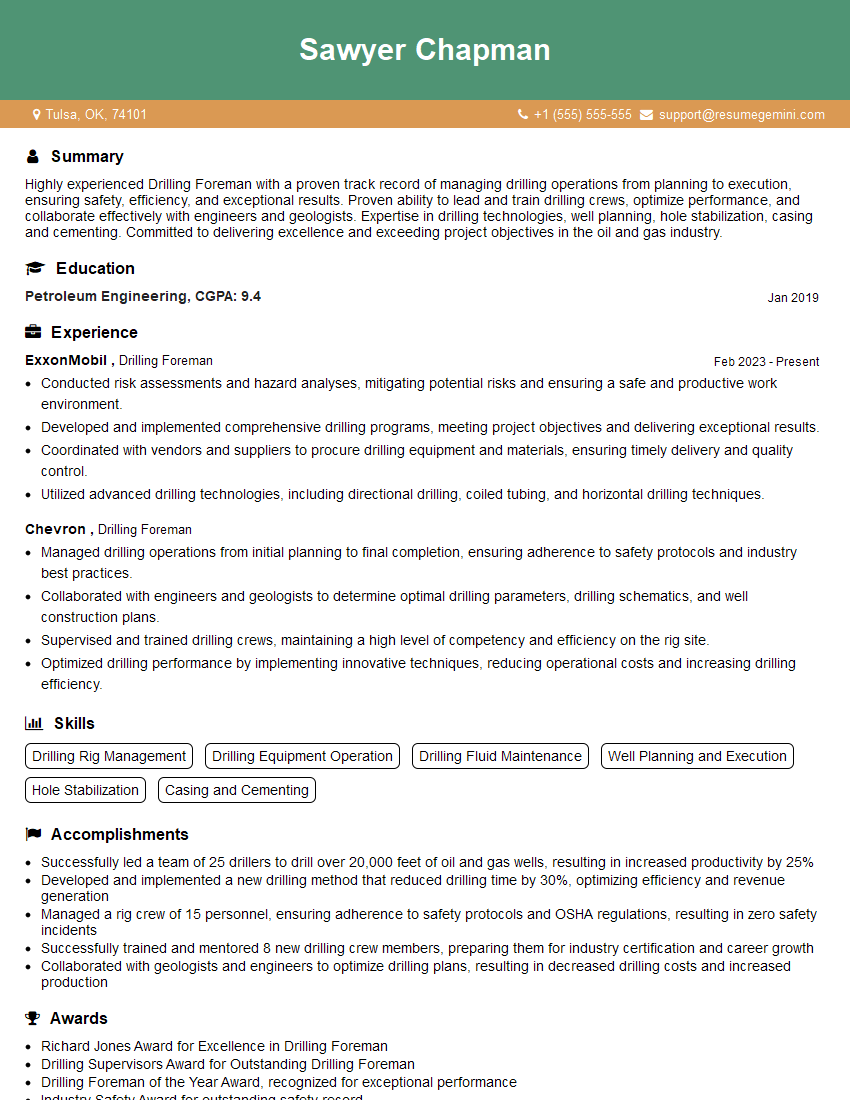
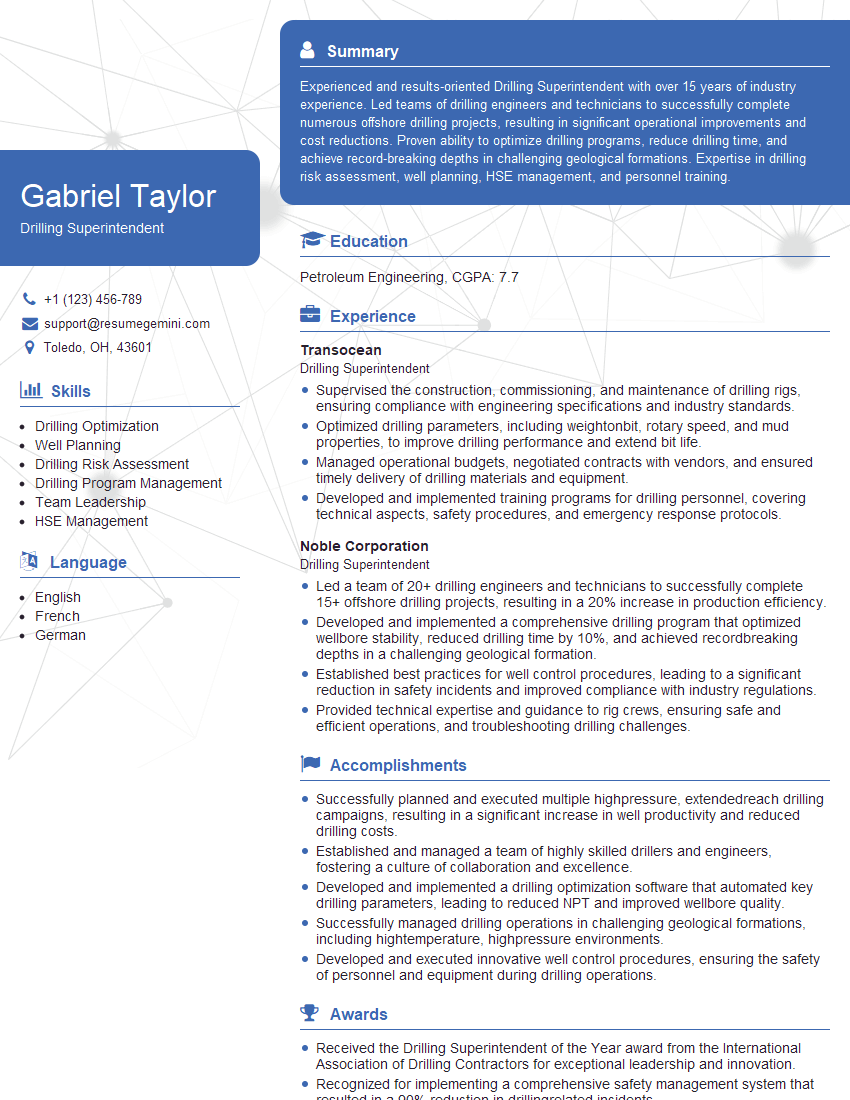
Mastering geotechnical drilling is a key to opening doors to exciting career opportunities in the construction, environmental, and engineering sectors. To maximize your chances of landing your dream job, it’s crucial to present yourself effectively. Creating an ATS-friendly resume is the first step. This ensures your application gets noticed by recruiters and hiring managers. We strongly recommend leveraging ResumeGemini to build a professional and impactful resume. ResumeGemini provides valuable tools and resources, including examples of resumes tailored specifically to Geotechnical Drilling roles, to help you present your skills and experience in the best possible light. Take the next step towards your successful career today!
Explore more articles
Users Rating of Our Blogs
Share Your Experience
We value your feedback! Please rate our content and share your thoughts (optional).
What Readers Say About Our Blog
Very informative content, great job.
good