Cracking a skill-specific interview, like one for Gitlab CI/CD, requires understanding the nuances of the role. In this blog, we present the questions you’re most likely to encounter, along with insights into how to answer them effectively. Let’s ensure you’re ready to make a strong impression.
Questions Asked in Gitlab CI/CD Interview
Q 1. Explain the architecture of a GitLab CI/CD pipeline.
The GitLab CI/CD pipeline architecture is a sophisticated system designed for automating software development workflows. Imagine it as an assembly line for your code. At its core, it involves several key components working together: GitLab Server, the central brain; .gitlab-ci.yml, the blueprint; GitLab Runners, the workers; and your source code repository, the raw materials. The server receives triggers (like code pushes), interprets the .gitlab-ci.yml file, dispatches jobs to runners, and monitors the entire process. Runners execute the defined jobs, and the server collects the results, providing you with a clear view of your pipeline’s progress and status. The entire system is built on a robust and scalable foundation, allowing you to handle projects of any size and complexity.
Q 2. Describe the .gitlab-ci.yml file and its key components.
The .gitlab-ci.yml file is the heart of your GitLab CI/CD pipeline. This YAML file, located in the root directory of your project, acts as a configuration script, defining the entire pipeline’s structure and behavior. Think of it as the recipe for your automated build, test, and deployment process. Key components include:
stages: Defines the phases of your pipeline (e.g.,build,test,deploy).jobs: Specifies individual tasks within each stage (e.g., running unit tests, building a Docker image, deploying to staging).variables: Allows you to define reusable values used throughout the pipeline (e.g., API keys, database credentials).before_scriptandafter_script: These sections define commands executed before and after each job (e.g., installing dependencies).artifacts: Specify files or directories to be passed between jobs (e.g., compiled binaries, test reports).
Example:
stages: - build - test - deploy build_job: stage: build script: - make build test_job: stage: test script: - make test deploy_job: stage: deploy script: - kubectl apply -f deployment.yamlQ 3. How do you define stages, jobs, and artifacts in a GitLab CI/CD pipeline?
In GitLab CI/CD, stages represent sequential phases in your pipeline. Jobs within a stage run concurrently unless dependencies specify otherwise. Jobs are the individual tasks performed during a stage. Finally, artifacts are files or directories created during a job that are passed to subsequent jobs. Imagine building a house: stages could be ‘foundation,’ ‘framing,’ ‘roofing’; jobs might be ‘pour concrete,’ ‘install beams,’ ‘lay shingles’; artifacts would be the partially completed house at each stage.
Example defining stages, jobs, and artifacts in .gitlab-ci.yml:
stages: - build - test - deploy build: stage: build script: - make build artifacts: paths: - build/my-app test: stage: test script: - make test needs: - build deploy: stage: deploy script: - kubectl apply -f build/my-app/deployment.yaml needs: - testQ 4. What are GitLab runners and how do they work?
GitLab Runners are the workhorses of the CI/CD system. These are small programs that execute the jobs defined in your .gitlab-ci.yml file. They act as agents, picking up tasks from the GitLab server and running them on various execution environments. Think of them as individual construction workers, each specializing in a particular aspect of building your project. They can be installed on your own servers or virtual machines or leverage cloud-based infrastructure for scaling and reliability.
Q 5. Explain different types of GitLab runners (e.g., shell, Docker, Kubernetes).
GitLab Runners come in different flavors, each suited to specific needs:
- Shell Runner: The simplest type, executes jobs directly on the runner’s operating system. Good for simple scripts and tasks but lacks isolation. Imagine a general contractor who does all the work themselves.
- Docker Runner: Executes jobs inside Docker containers, providing isolation and reproducibility across different environments. This is like having specialized subcontractors who build specific parts in their own controlled environment. It ensures consistency regardless of the runner’s host OS.
- Kubernetes Runner: Leverages Kubernetes clusters for running jobs as pods, enabling superior scalability and resource management. This is like having a massive construction company with many specialized teams and resources to handle large-scale projects efficiently.
Choosing the right runner type depends on your project’s complexity, security requirements, and resource needs.
Q 6. How do you handle parallel jobs in GitLab CI/CD?
Parallel jobs in GitLab CI/CD significantly speed up your pipeline. To achieve parallelism, define multiple jobs within the same stage. GitLab will automatically execute these jobs concurrently, provided you have enough runners available. For instance, you might have multiple test jobs running against different databases or browsers, all happening at once. You define this parallelism implicitly by listing multiple jobs under the same stage.
Example:
stages: - test test_chrome: stage: test script: - make test BROWSER=chrome test_firefox: stage: test script: - make test BROWSER=firefoxQ 7. How do you manage dependencies between jobs in a pipeline?
Managing dependencies between jobs ensures that jobs execute in the correct order. You achieve this using the needs keyword in your .gitlab-ci.yml file. This specifies which jobs must complete successfully before another job can start. Think of a construction project where the foundation must be laid before building walls. This ensures that the outcome of a job is available to dependent jobs.
Example:
stages: - build - test build_job: stage: build script: - make build artifacts: paths: - build/output test_job: stage: test script: - make test needs: - build_jobQ 8. Describe different ways to trigger a GitLab CI/CD pipeline.
GitLab CI/CD pipelines can be triggered in several ways, each suited to different workflows. Think of it like starting a machine – you can flip a switch manually, or have it automatically start based on certain conditions.
- Push events: This is the most common trigger. Whenever you push code to a GitLab repository, the pipeline automatically starts. This is perfect for continuous integration, where every commit kicks off automated tests and builds.
- Merge requests: Pipelines can be triggered when a merge request is created or updated. This allows you to run tests and builds specifically on proposed changes before merging them into the main branch, ensuring higher code quality.
- Scheduled pipelines: You can schedule pipelines to run at specific times or intervals, such as daily backups or nightly builds. This is ideal for tasks that don’t need to be triggered by code changes.
- API triggers: You can programmatically trigger pipelines using the GitLab API. This is extremely useful for integrating with other systems or automating complex workflows, such as deploying to production only after successful testing in a staging environment.
- Webhooks: External systems can trigger pipelines by sending webhooks to GitLab. Imagine connecting your pipeline to a monitoring system – if a critical error occurs, the webhook can automatically launch a debugging pipeline.
- Tags: Pushing a tag to a repository can trigger a pipeline. This is often used for releasing specific versions of your software.
For example, to trigger a pipeline on every push to the main branch, you would include a .gitlab-ci.yml file with a job that specifies a only section like this:
only: - mainQ 9. Explain how to use variables in GitLab CI/CD.
Variables are crucial for making your CI/CD pipelines flexible and reusable. They act like placeholders that you can fill with different values depending on the environment or specific needs. Think of them as customizable settings for your automated process.
- Predefined variables: GitLab provides predefined variables like
CI_PROJECT_ID,CI_COMMIT_REF_NAME, and others that automatically provide information about the pipeline’s context. - Project variables: These are defined within the project’s settings and are available to all pipelines within that project. They are ideal for storing environment-specific configurations without hardcoding them into the
.gitlab-ci.ymlfile. - Environment variables: These are defined at the environment level (e.g., staging, production) and are only accessible to pipelines running in that specific environment. This is excellent for segregating secrets and configurations.
- File variables: Variables can be loaded from files, useful for managing large sets of configurations. This improves organization and readability, especially for complex setups.
- CI/CD variables: These variables are defined directly within the
.gitlab-ci.ymlfile and are only available within the scope of that specific job or stage. This ensures that variables are only accessible where needed, enhancing security.
Example of using a project variable named DATABASE_URL in your .gitlab-ci.yml:
before_script: - echo "Connecting to database: $DATABASE_URL" - psql -d $DATABASE_URL -c "SELECT 1;"Q 10. How do you secure sensitive information (e.g., passwords, API keys) in your pipelines?
Protecting sensitive information is paramount. GitLab offers several ways to securely manage secrets within your pipelines, ensuring that they aren’t accidentally exposed in your code or logs.
- Project-level variables (masked): Store sensitive data as project variables and mark them as ‘masked’. This prevents their values from being displayed in the pipeline logs, improving security. Think of it like hiding a password behind asterisks.
- Environment variables: Store sensitive information specific to certain environments (e.g., production database credentials) as environment variables within the relevant environment. This limits access based on the environment.
- GitLab CI/CD variables (masked): Similar to project variables, you can define masked CI/CD variables directly within the
.gitlab-ci.yml, but use them cautiously as they may be exposed if the file is not managed properly. - External Key Management Systems (KMS): Integrate with a dedicated key management service (like HashiCorp Vault or AWS Secrets Manager) to manage and rotate secrets centrally. This approach offers advanced security features like auditing and access control.
- Avoid hardcoding: Never hardcode secrets directly into your
.gitlab-ci.ymlfile. Always use the mechanisms described above.
Remember, regular rotation of secrets is critical for enhancing security.
Q 11. How do you handle caching in GitLab CI/CD?
Caching speeds up your pipelines by storing and reusing previously downloaded or generated artifacts. This dramatically reduces build times and resource consumption. It’s like having a well-organized toolbox – you don’t need to search for each tool every time.
GitLab CI/CD allows you to cache directories, files, or even entire dependencies. You define what to cache in your .gitlab-ci.yml using the cache keyword.
Example of caching Node.js dependencies:
cache: paths: - node_modules/This instruction tells GitLab to cache the node_modules directory. If the same dependencies are needed in a subsequent pipeline run, GitLab will restore them from the cache instead of downloading them again. This significantly accelerates build times, especially for large projects.
You can define multiple cache keys for different types of artifacts and specify cache policies (such as how long to keep the cache).
Q 12. Explain the concept of artifacts and how to utilize them in a pipeline.
Artifacts are the output of your CI/CD jobs. They are essentially files or directories that are produced during a pipeline run and can be passed on to subsequent jobs or even downloaded manually. Think of them as the ‘products’ created by each stage of the process.
Example uses:
- Passing build output to deployment: A build job can produce a compiled application package (e.g., a Docker image). This artifact can then be consumed by a deployment job, which will use the artifact to deploy the application to the target environment.
- Sharing test results: Test jobs can produce reports (e.g., JUnit XML files). These artifacts can be archived and analyzed to assess the quality of the code changes.
- Distributing release packages: A release job can create distributable packages (e.g., an installer, a zip archive). These artifacts can be downloaded and used by end users.
Using artifacts in your .gitlab-ci.yml involves defining the artifacts section within your job, specifying the paths to the files or directories that should be stored as artifacts.
artifacts: paths: - dist/my-application.zipSubsequent jobs can access artifacts through the $CI_PROJECT_DIR directory.
Q 13. How do you implement testing strategies (unit, integration, end-to-end) within GitLab CI/CD?
Implementing a robust testing strategy is essential for delivering high-quality software. GitLab CI/CD provides the infrastructure to integrate various testing levels seamlessly into your pipeline.
- Unit tests: These test individual units (functions, classes, modules) of your code in isolation. They are typically fast, easy to write, and help pinpoint errors early in the development cycle. They are usually executed as part of the build process.
- Integration tests: These tests check how different parts of your system interact with each other. They ensure that components work correctly together. They are typically more complex than unit tests and may require setting up mock dependencies.
- End-to-end (E2E) tests: These simulate a real user experience, testing the entire application flow from start to finish. They provide comprehensive coverage but can be more time-consuming and fragile compared to other testing types.
You can organize these tests into separate stages within your pipeline. For example:
stages: - build - test - deploy build_job: stage: build script: - npm install - npm run build unit_tests: stage: test script: - npm test integration_tests: stage: test script: - npm run integration-test e2e_tests: stage: test script: - npm run e2e-test deploy_job: stage: deploy script: - ... deployment steps ...Q 14. Describe different strategies for deploying applications using GitLab CI/CD.
GitLab CI/CD offers various deployment strategies, each tailored to different needs and levels of risk. Think of these as different delivery methods – some are fast and risky, others are slower but more secure.
- Canary deployments: Deploy your application to a small subset of users or servers first. Monitor its performance and stability before rolling it out to the entire infrastructure. This minimizes the impact of potential issues.
- Blue/green deployments: Maintain two identical environments (blue and green). Deploy the new version to the inactive environment (e.g., green). Once testing is complete, switch traffic from the active (blue) to the inactive (green) environment. If issues occur, you can quickly switch back to the blue environment.
- Rolling deployments: Gradually update your application on your servers, one by one. This minimizes downtime and allows for quick rollback if necessary.
- A/B testing deployments: Deploy multiple versions of your application simultaneously and route traffic to each version based on a set of rules. This allows you to compare performance and user engagement across different versions.
- Direct deployments: A straightforward approach where the application is directly deployed to the production environment. This is typically faster but riskier. Use this only when confident in the quality of the release.
The choice of deployment strategy will depend on factors like the application’s criticality, infrastructure complexity, and risk tolerance.
Q 15. How do you manage different environments (development, staging, production) in your pipelines?
Managing different environments in GitLab CI/CD is crucial for a smooth and reliable deployment process. We achieve this primarily through the use of variables and different stages within our .gitlab-ci.yml file. Each environment (development, staging, production) gets its own stage, and we use environment variables to specify the target server, database credentials, and other environment-specific configurations.
For instance, we might have a development stage that deploys to a development server using a set of development variables, then a staging stage that deploys to a staging server using staging-specific variables, and finally a production stage for production deployment. This ensures that each environment maintains its own independent settings. We can also leverage GitLab’s environment features to manage and control deployments to each environment, allowing for easy rollback and improved visibility.
Example:
stages: - build - deploy_dev - deploy_staging - deploy_prod deploy_dev_job: stage: deploy_dev variables: DEPLOY_SERVER: dev-server.example.com DATABASE_URL: dev-db.example.com script: - echo 'Deploying to development...' - # Deployment commands deploy_staging_job: stage: deploy_staging variables: DEPLOY_SERVER: staging-server.example.com DATABASE_URL: staging-db.example.com script: - echo 'Deploying to staging...' - # Deployment commands deploy_prod_job: stage: deploy_prod variables: DEPLOY_SERVER: prod-server.example.com DATABASE_URL: prod-db.example.com script: - echo 'Deploying to production...' - # Deployment commands Career Expert Tips:
- Ace those interviews! Prepare effectively by reviewing the Top 50 Most Common Interview Questions on ResumeGemini.
- Navigate your job search with confidence! Explore a wide range of Career Tips on ResumeGemini. Learn about common challenges and recommendations to overcome them.
- Craft the perfect resume! Master the Art of Resume Writing with ResumeGemini’s guide. Showcase your unique qualifications and achievements effectively.
- Don’t miss out on holiday savings! Build your dream resume with ResumeGemini’s ATS optimized templates.
Q 16. Explain how to implement rollback strategies in GitLab CI/CD.
Implementing rollback strategies in GitLab CI/CD is essential for mitigating risks associated with faulty deployments. A robust rollback strategy involves several key steps. Firstly, we need to version our deployments. This might involve tagging releases in Git or using a deployment management tool to track different deployments.
Secondly, we need a mechanism to revert to a previous successful deployment. This often involves using a separate job in our .gitlab-ci.yml file that triggers a rollback process. This process could involve restoring a previous version of the application from a backup, deploying a previously successful artifact, or using a tool like Kubernetes to roll back to a previous deployment.
Finally, we need monitoring and alerting to detect deployment issues quickly. If a problem is detected, the rollback job can be triggered automatically or manually. GitLab’s environment features help manage and track these deployments effectively making rollback simpler and more efficient.
Example (Conceptual):
rollback_job: stage: rollback when: manual # Or on failure of a specific job script: - echo 'Rolling back to previous version...' - # Rollback commands (e.g., restoring from backup) Q 17. How do you monitor and troubleshoot pipeline failures?
Monitoring and troubleshooting pipeline failures in GitLab CI/CD requires a multi-faceted approach. GitLab itself provides excellent built-in tools for monitoring pipelines. The pipeline view shows the status of each job, logs, and any errors encountered. Detailed logs are essential for debugging; make sure your jobs are logging relevant information.
If a job fails, examining its logs provides the first clue to the problem. Common issues include code errors, dependency problems, or infrastructure limitations. GitLab’s error messages are typically very informative.
Beyond GitLab’s built-in tools, consider integrating with external monitoring systems such as Prometheus or Datadog to track pipeline performance metrics and get alerts on issues. These systems can provide broader context and potentially alert you before problems even manifest within the pipeline itself.
Troubleshooting Strategy:
- Examine the logs: Start with the logs of the failed job. Look for error messages, stack traces, and any unusual output.
- Check dependencies: Ensure all dependencies (libraries, services) are correctly installed and accessible.
- Inspect infrastructure: Verify the health of the underlying infrastructure (servers, networks).
- Use debugging tools: Employ debuggers or logging frameworks to understand the flow of execution in your code.
- Consult documentation: Refer to relevant documentation for the tools and technologies involved in your pipeline.
Q 18. How do you integrate GitLab CI/CD with other tools (e.g., monitoring systems, chatbots)?
Integrating GitLab CI/CD with other tools expands its capabilities and enhances the overall DevOps workflow. GitLab offers robust integration capabilities via its API and various plugins. Here are some examples:
- Monitoring Systems (Prometheus, Datadog, Grafana): These tools can receive pipeline metrics to provide comprehensive insights into performance and stability. You can use the GitLab API to send metrics to your monitoring dashboards.
- Chatbots (Slack, Microsoft Teams): Integrate your pipeline with a chatbot to receive notifications about pipeline status changes, failures, and success. This ensures timely issue identification.
- Deployment tools (Kubernetes, Ansible): Automate deployments by integrating with tools managing your infrastructure. This can streamline the deployment process across environments.
- Issue tracking systems (Jira, Bugzilla): Automatically create or update issues when pipelines fail, linking the pipeline to the relevant issue for quick resolution.
The integration mechanisms often involve using webhooks, APIs, or specific GitLab integrations provided by the external tools. Configuration typically involves setting up webhooks to send events to the external system or using the API to send data directly. The specifics will depend on the tools being integrated.
Q 19. Explain the concept of GitLab CI/CD triggers.
GitLab CI/CD triggers determine when a pipeline is initiated. They provide flexibility beyond simply pushing code. There are several types of triggers:
- Push triggers: The most common type; a pipeline runs automatically when code is pushed to a repository.
- Merge request triggers: A pipeline runs when a merge request is created or updated.
- Pipeline triggers: One pipeline can trigger another. This is useful for chaining pipelines together for more complex workflows.
- Scheduled triggers: Pipelines can be scheduled to run at specific intervals (e.g., daily backups). This is achieved using cron syntax.
- External triggers: Pipelines can be triggered by external events via API calls. This allows integration with other systems.
Understanding triggers is essential for automating processes and aligning your CI/CD pipeline to your development lifecycle.
Q 20. How do you handle pipeline failures and retries?
Handling pipeline failures and retries involves a combination of strategies aimed at both immediate resolution and long-term prevention. The first step is to carefully examine the pipeline logs to understand the root cause of the failure. GitLab’s detailed logs provide valuable information.
For transient issues (e.g., network hiccups), retry mechanisms are beneficial. You can configure jobs to retry a certain number of times before failing. This is often configured within the job definition in your .gitlab-ci.yml file.
For persistent failures, automated alerts are crucial. Integrate your pipeline with a monitoring system or chatbot to receive immediate notifications about failures. This allows swift intervention and avoids delays in fixing problems.
Example of retries:
my_job: script: - my_command retry: 3 This configures the my_job to retry up to 3 times if it fails.
Beyond retries, implementing robust error handling within your code and ensuring the stability of your dependencies are proactive measures to minimize failures.
Q 21. Explain the difference between `before_script` and `script` in .gitlab-ci.yml
Both before_script and script are used to define commands that run within a job in GitLab CI/CD, but they differ significantly in their execution timing and scope.
before_script: These commands run before thescriptcommands of each job. They are executed once per job, regardless of how many stages that job runs through. They’re typically used for tasks such as setting up the environment (e.g., installing dependencies, configuring settings) which must be performed before the main tasks of the job.script: These are the main commands that define the core functionality of the job. They are executed afterbefore_scriptcommands. These commands contain the essential instructions for building, testing, and deploying your application.
Example:
my_job: before_script: - apt-get update -yq - apt-get install -yq nodejs npm script: - npm install - npm test In this example, before_script installs Node.js and npm, setting up the environment for the subsequent script commands (npm install and npm test).
Using before_script effectively promotes code reusability and cleaner job definitions by separating environment setup from the job’s primary tasks.
Q 22. How do you use GitLab CI/CD for infrastructure as code (IaC)?
GitLab CI/CD excels at managing Infrastructure as Code (IaC) by treating infrastructure definitions (like Terraform or Ansible configurations) as code within your repository. This allows you to version, review, and automate the deployment and management of your infrastructure, just like you do with application code.
Here’s how it works:
- Version Control: Store your IaC configuration files (e.g.,
terraform.tf,ansible.yaml) in your GitLab repository. - CI/CD Pipeline: Define a CI/CD pipeline in your
.gitlab-ci.ymlfile. This pipeline will execute the IaC tools (Terraform, Ansible, etc.) to provision, update, or destroy infrastructure based on your configuration. - Stages: Structure your pipeline into stages like ‘plan’, ‘apply’, and ‘destroy’. The ‘plan’ stage will generate a preview of the changes, allowing for review before applying changes. ‘Apply’ executes the deployment, and ‘destroy’ cleanly removes the infrastructure.
- Variables and Secrets: Securely store sensitive information such as cloud provider credentials as GitLab CI/CD variables or secrets. This prevents hardcoding credentials directly into your IaC files.
Example: A simple Terraform pipeline might look like this:
stages: - plan - applyjobs: plan: stage: plan script: - terraform init - terraform plan artifacts: paths: - terraform.plan apply: stage: apply script: - terraform apply "terraform.plan"This setup ensures that infrastructure changes are tracked, reviewed, and deployed in a repeatable and auditable manner, significantly reducing manual effort and the risk of errors.
Q 23. Explain the role of GitLab’s built-in registry for container images.
GitLab’s built-in container registry is a crucial component for streamlining your CI/CD workflow. It provides a secure and efficient way to store, manage, and deploy container images directly within the GitLab ecosystem, eliminating the need for external registry solutions.
Key benefits include:
- Integration: Seamless integration with GitLab CI/CD allows for automated image building, tagging, and deployment as part of your pipeline.
- Security: Images are stored securely within GitLab, leveraging GitLab’s access controls and security features.
- Efficiency: Reduces latency by eliminating the need to push and pull images from external registries.
- Versioning: Supports image tagging and versioning, enabling easy rollback and management of different image versions.
During the CI/CD process, the pipeline can build a container image using tools like Docker, tag it appropriately (e.g., with the Git commit hash), and push it directly to the GitLab registry. This image can then be used in subsequent stages of the pipeline for deployment or other processes. This whole process is centralized and simplified within the GitLab environment.
Q 24. Describe how to implement a canary deployment strategy using GitLab CI/CD.
Canary deployments involve gradually rolling out a new version of your application to a small subset of users (the ‘canary group’) before deploying it to the entire production environment. This allows you to identify and address any issues early on, minimizing the impact of a potential failure.
In GitLab CI/CD, you can achieve canary deployments by using features like environment-specific deployment strategies and manual approvals. You would typically have separate environments defined in GitLab, like ‘canary’ and ‘production’.
Implementation Steps:
- Define Environments: Create separate environments in GitLab for ‘canary’ and ‘production’.
- Deploy to Canary: Your CI/CD pipeline deploys the new version to the ‘canary’ environment. This stage might involve deploying to a specific server group or using features of your load balancer.
- Monitoring: Closely monitor the canary deployment for any issues – performance degradation, errors, etc. Automated monitoring tools integrated with GitLab can assist here.
- Manual Approval: After verifying the canary deployment’s stability, manually approve the deployment to the ‘production’ environment. GitLab allows for manual approvals using environment-specific gates within the pipeline.
- Deploy to Production: Once approved, the pipeline deploys the new version to the full ‘production’ environment. You might consider using a rollout strategy where a percentage of production traffic is gradually shifted to the new version.
Using this approach minimizes risk and provides ample opportunity to validate a new release before widespread deployment. This significantly increases the confidence in your release process.
Q 25. How do you integrate security scanning into your GitLab CI/CD pipeline?
Integrating security scanning into your GitLab CI/CD pipeline is crucial for building secure applications. GitLab provides several built-in security features and integrations to achieve this.
Here’s how to do it:
- Static Application Security Testing (SAST): Use GitLab’s built-in SAST features (or integrate with SAST tools like SonarQube) to analyze your code for vulnerabilities during the build stage. Add a job to your
.gitlab-ci.ymlthat runs the SAST tool and reports on findings. Fail the pipeline if critical vulnerabilities are discovered. - Dynamic Application Security Testing (DAST): Integrate DAST tools (like OWASP ZAP) to perform runtime security testing on your application after deployment. This stage often happens after deployment to a staging or testing environment.
- Software Composition Analysis (SCA): Use GitLab’s SCA features (or integrate with tools like Snyk) to identify vulnerabilities in your project’s dependencies. This is vital for detecting vulnerabilities in open-source libraries.
- Container Scanning: If using container images, integrate container scanning to identify vulnerabilities within your images before deploying them. GitLab’s container scanning capability can be used for this purpose.
- Security Policies: Define security policies within GitLab to enforce certain security standards. You might require passing all security scans before allowing deployment to production.
By incorporating these steps, you can proactively identify and address security vulnerabilities throughout your development lifecycle, improving the overall security posture of your applications.
Q 26. Explain how to use GitLab CI/CD for blue/green deployments.
Blue/green deployments are a release strategy where two identical environments (blue and green) exist. At any given time, one environment (e.g., blue) is live, while the other (green) is a staging environment. To deploy a new version, you deploy it to the inactive environment (green), test it thoroughly, and then switch traffic from the active (blue) to the inactive (green) environment.
Implementing this with GitLab CI/CD requires environment management and some infrastructure orchestration (e.g., using Kubernetes, cloud provider features, or even simple scripting).
Implementation Steps:
- Environments: Define ‘blue’ and ‘green’ environments in GitLab.
- Deploy to Inactive Environment: Your CI/CD pipeline deploys the new version to the inactive environment (e.g., green). Automated testing should be included in this stage.
- Manual Approval: A manual approval stage is usually needed before switching traffic.
- Traffic Switching: This is typically done through infrastructure-level changes: changing DNS records, load balancer rules, or Kubernetes ingress rules. This step should be part of the GitLab pipeline (though perhaps handled by separate scripts).
- Rollback: If any issues are found after switching, traffic can be easily switched back to the previous (blue) environment.
Blue/green deployments are highly reliable because they provide a quick and easy rollback mechanism. They minimize downtime and risks compared to other deployment strategies.
Q 27. How do you optimize GitLab CI/CD pipelines for performance and efficiency?
Optimizing GitLab CI/CD pipelines for performance and efficiency is vital for reducing costs and improving developer productivity. Here are some key strategies:
- Parallelism: Use GitLab CI/CD’s parallel processing capabilities to run jobs concurrently. This significantly reduces the overall pipeline execution time.
- Caching: Leverage caching mechanisms to store and reuse frequently accessed artifacts (e.g., dependencies, build outputs). This prevents redundant downloads and builds.
- Efficient Runners: Use appropriate runners (virtual machines, containers) with sufficient resources (CPU, memory, storage). Under-provisioned runners can lead to slow execution times.
- Optimize Scripting: Write efficient scripts that avoid unnecessary operations. Use tools optimized for your task and avoid redundant commands.
- Use GitLab CI/CD features: Leverage GitLab’s built-in features (such as artifacts, caches, and custom images) for efficient pipeline management. These are optimized for this environment.
- Job Strategy: Carefully structure jobs to minimize dependencies, allowing for greater parallelism. Avoid unnecessary jobs or steps that add to processing time.
- Monitoring & Analysis: Use GitLab’s built-in analytics to monitor your pipeline performance. Identify bottlenecks and areas for optimization based on actual usage data.
A well-optimized pipeline should execute quickly and efficiently, minimizing the time it takes to get code from commit to production.
Q 28. Describe your experience with implementing GitLab CI/CD in a complex environment.
In a previous role, we implemented GitLab CI/CD for a microservices architecture consisting of over 50 independent services. Each service had its own repository and CI/CD pipeline, creating a complex network of interdependent deployments. The challenge was ensuring smooth and reliable deployments across all services while minimizing downtime and preventing cascading failures.
We addressed this complexity by:
- Modular Pipelines: We designed modular pipelines, breaking down complex deployments into smaller, manageable stages. This enhanced observability and simplified debugging.
- Canary Deployments: We adopted canary deployment strategies for critical services to mitigate risk and ensure smooth rollouts.
- Automated Testing: We implemented rigorous automated testing at various stages of the pipeline (unit, integration, end-to-end), significantly reducing the risk of bugs.
- Infrastructure as Code: We used IaC (Terraform) to manage the infrastructure, ensuring consistency and repeatability across environments.
- Monitoring & Alerting: We implemented comprehensive monitoring and alerting to proactively identify and address issues.
- Version Control: Strict version control (Git) was enforced to track changes and ensure that deployments could be easily rolled back if necessary.
This layered approach to CI/CD ensured that our complex deployment process was well-controlled, streamlined, and resilient to issues. The experience provided a strong understanding of the importance of proper planning, modularity, and rigorous testing in managing large-scale, complex systems using GitLab CI/CD.
Key Topics to Learn for Gitlab CI/CD Interview
- GitLab CI/CD Fundamentals: Understanding the core concepts – pipelines, stages, jobs, runners, and their interactions. Practical application: Designing a simple CI/CD pipeline for a personal project.
- .gitlab-ci.yml Configuration: Mastering the syntax and structure of the configuration file, including defining stages, jobs, scripts, and artifacts. Practical application: Configuring a pipeline to automatically build, test, and deploy a web application.
- Runners and Execution Environments: Understanding different runner types (shared, specific, group), and how to configure them for various tasks. Practical application: Setting up a runner on your local machine and a cloud-based runner.
- Variables and Environments: Effectively using variables for configuration management and managing different deployment environments (development, staging, production). Practical application: Implementing secure variable management for sensitive credentials.
- Testing and Integration: Integrating testing strategies (unit, integration, end-to-end) within the CI/CD pipeline. Practical application: Creating a pipeline that runs automated tests before deployment.
- Artifacts and Deployments: Managing artifacts (build outputs) and deploying applications to various environments. Practical application: Configuring artifact storage and automating deployment to a server or cloud platform.
- Security and Best Practices: Implementing security measures (e.g., code scanning, vulnerability analysis) and following best practices for efficient and reliable CI/CD. Practical application: Integrating security scanning tools into your pipeline.
- Troubleshooting and Debugging: Developing skills to identify and resolve common issues within GitLab CI/CD pipelines. Practical application: Analyzing pipeline logs to pinpoint errors and implement fixes.
Next Steps
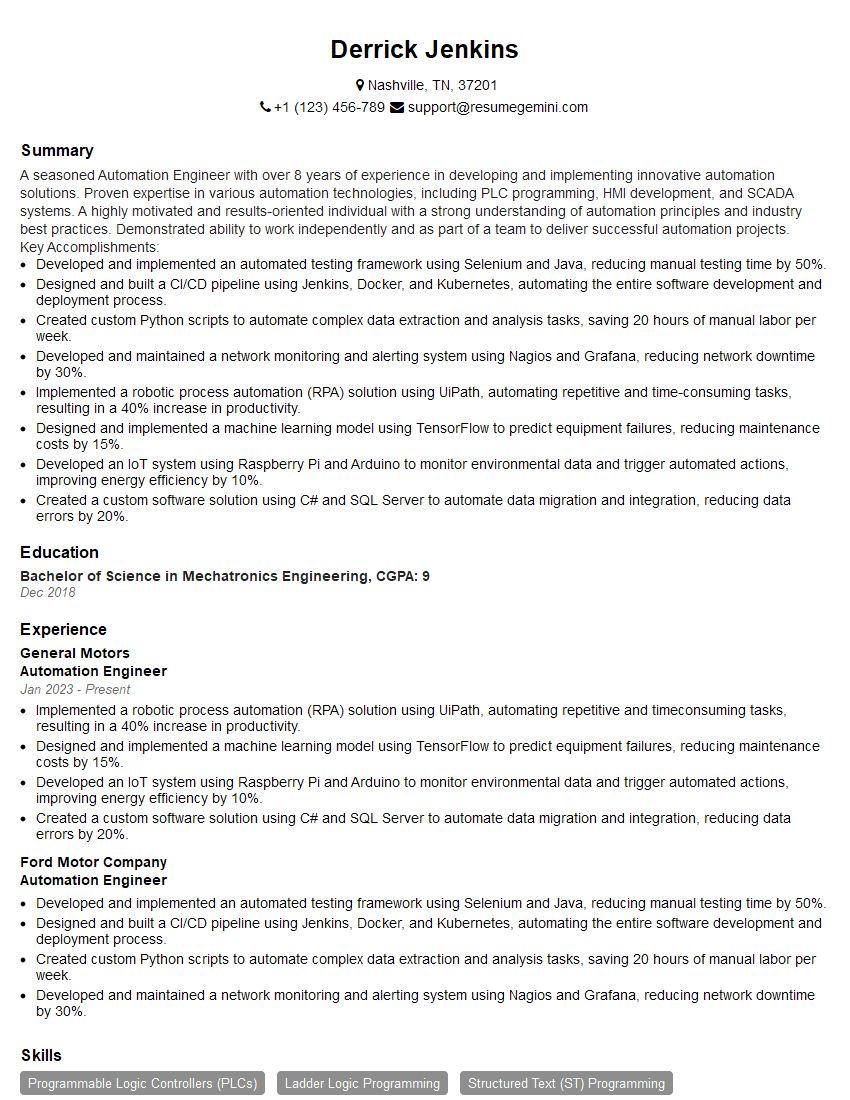
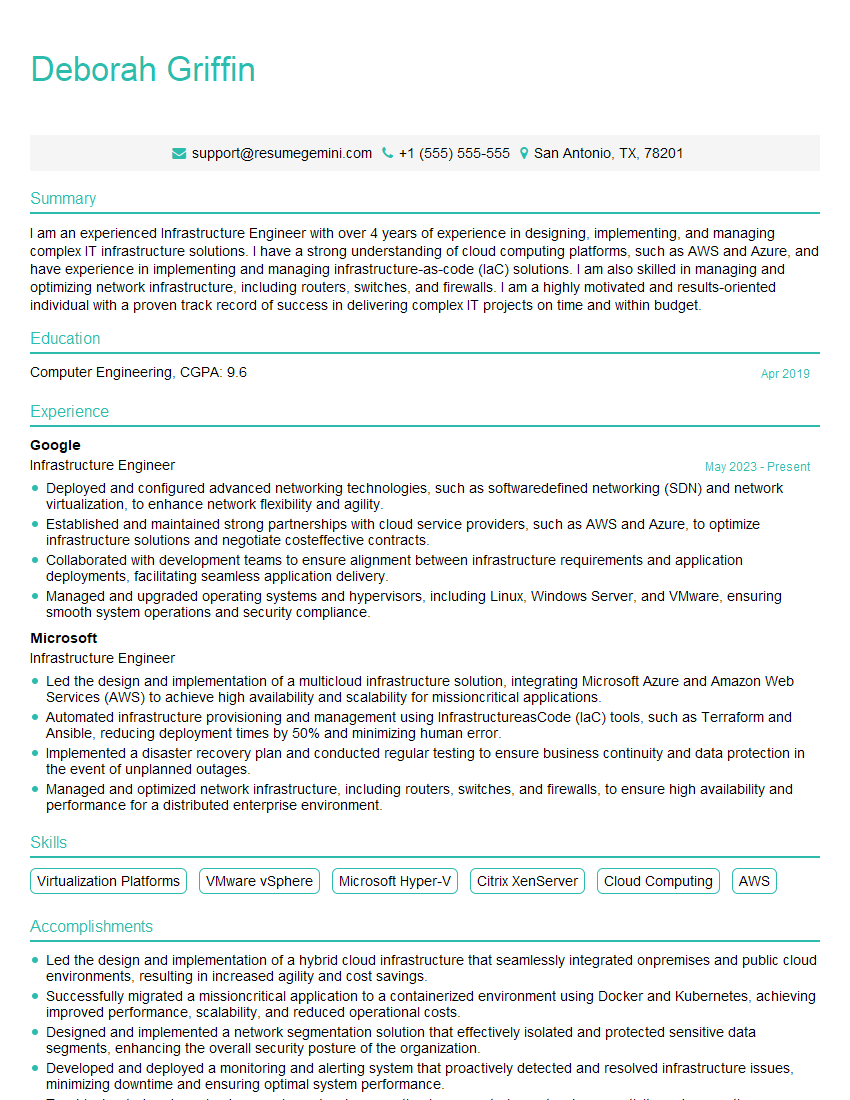
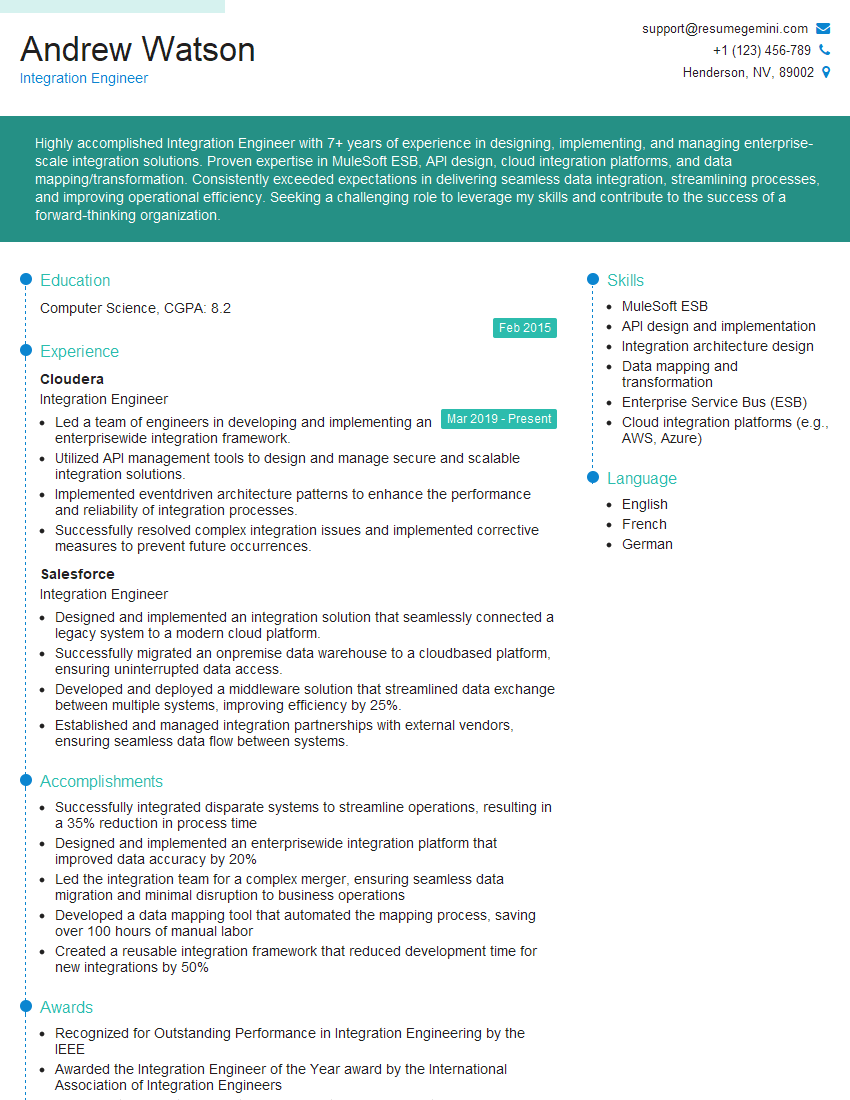
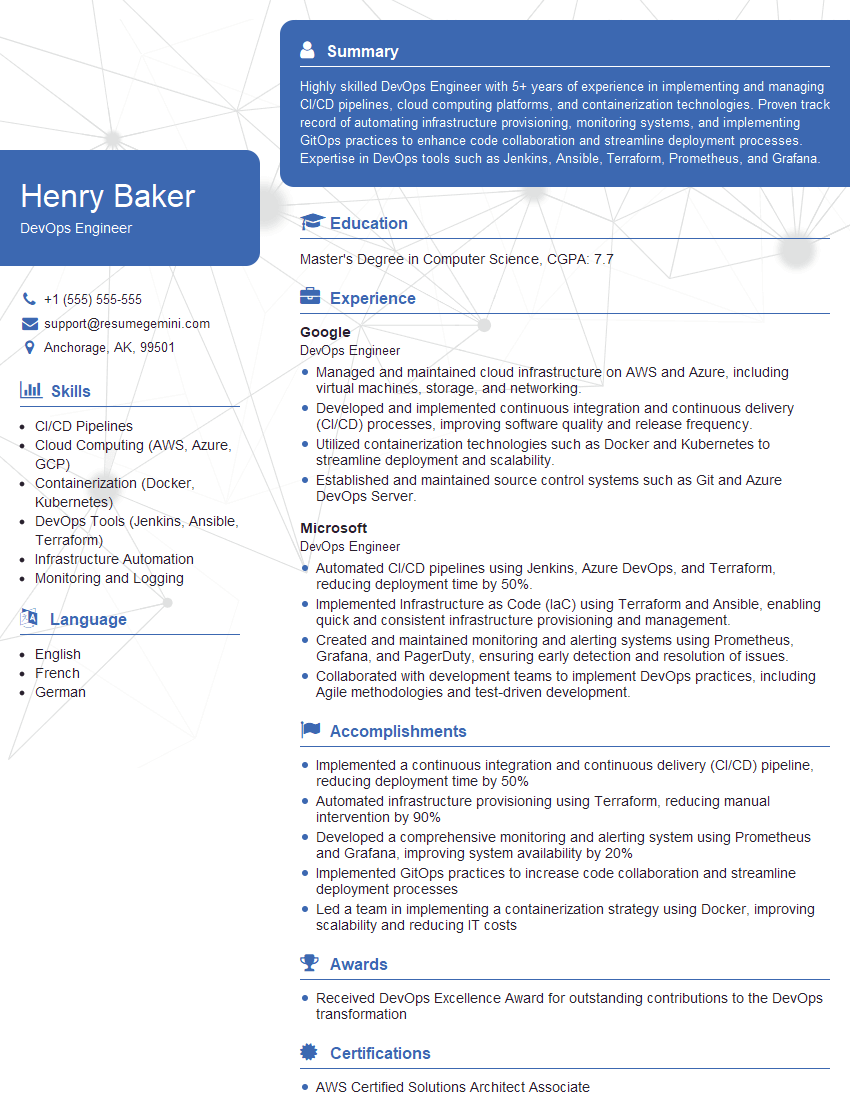
Mastering GitLab CI/CD is a highly sought-after skill that significantly enhances your career prospects in DevOps and software engineering. It demonstrates your ability to automate processes, improve efficiency, and deliver high-quality software. To maximize your chances of landing your dream role, create an ATS-friendly resume that clearly showcases your skills and experience. ResumeGemini is a trusted resource that can help you build a professional and impactful resume. They even provide examples of resumes tailored to GitLab CI/CD roles, giving you a head start in your job search.
Explore more articles
Users Rating of Our Blogs
Share Your Experience
We value your feedback! Please rate our content and share your thoughts (optional).
What Readers Say About Our Blog
Very informative content, great job.
good