Interviews are opportunities to demonstrate your expertise, and this guide is here to help you shine. Explore the essential Glass Handling Equipment Operation interview questions that employers frequently ask, paired with strategies for crafting responses that set you apart from the competition.
Questions Asked in Glass Handling Equipment Operation Interview
Q 1. Describe your experience operating various types of glass handling equipment.
Throughout my career, I’ve operated a wide range of glass handling equipment, from basic manual handling tools like suction cups and lifters to sophisticated automated systems. This includes experience with:
- Vacuum lifters: These are essential for handling large, delicate glass sheets. I’m proficient in operating various models, understanding their capacity limits and the importance of proper pad placement to avoid damage.
- Conveyor systems: I’m skilled in operating and troubleshooting different types of conveyors, including roller, belt, and chain conveyors, adjusting speeds and ensuring smooth glass transport.
- Forklifts (specifically those equipped for glass handling): I have extensive experience operating forklifts with specialized attachments for safely transporting glass pallets and bundles. This includes understanding weight distribution and appropriate lifting techniques.
- Robotic arms and automated guided vehicles (AGVs): My experience extends to newer automated systems, encompassing programming, maintenance, and troubleshooting. I’ve worked with systems used for loading, unloading, and precise placement of glass panels in manufacturing processes.
- Crane systems: I’ve worked with overhead cranes and specialized glass-handling cranes, understanding load limits, proper rigging techniques, and safe operating procedures for larger glass pieces.
Each piece of equipment demands a specific skillset and understanding of its limitations. I always prioritize safety and efficiency in my operation of these systems.
Q 2. What safety procedures do you follow when operating glass handling equipment?
Safety is paramount in glass handling. My safety procedures are meticulous and always follow company protocols and industry best practices. These include:
- Personal Protective Equipment (PPE): Always wearing safety glasses, gloves, and steel-toe boots. Depending on the task, additional PPE like hard hats and cut-resistant sleeves are used.
- Pre-operational checks: Thoroughly inspecting equipment before each use, checking for any malfunctions, loose parts, or damage. This includes checking vacuum pressure, conveyor belts, and forklift hydraulics.
- Proper lifting techniques: Using appropriate equipment and techniques to avoid strain and injury. This is especially crucial when handling heavier glass pieces.
- Awareness of surroundings: Maintaining a constant awareness of the environment to avoid collisions with other workers or equipment. This involves using appropriate signaling techniques and communication protocols.
- Following lockout/tagout procedures: Properly isolating equipment before performing maintenance or repairs to prevent accidental activation.
- Emergency procedures: Understanding and practicing emergency procedures, including reporting accidents and injuries immediately.
Think of it like this: every glass panel is a precious cargo, and handling it safely is my top priority.
Q 3. Explain the process of loading and unloading glass sheets onto conveyors.
Loading and unloading glass sheets onto conveyors requires precision and care to avoid breakage. The process generally involves:
- Preparation: Ensuring the conveyor is running at the correct speed and the surface is clean and free of debris. Checking that the glass sheets are properly supported and secured to their pallets or carriers.
- Positioning: Carefully positioning the glass sheet at the conveyor’s entry point. This may require using suction cups or other handling tools to ensure controlled and stable movement.
- Gentle placement: Slowly lowering the sheet onto the conveyor, avoiding any sudden impacts or jerky movements. Proper alignment is crucial to prevent tipping or sliding.
- Monitoring: Observing the sheet’s movement along the conveyor. Adjusting the speed if needed to ensure smooth transport and prevent any accumulation of other materials in its way.
- Unloading: Similarly, unloading involves careful removal from the conveyor at the designated point. Using appropriate tools and techniques to support the sheet during the transfer.
Imagine it as carefully guiding a boat into a canal: slow, controlled movements are key to a smooth transfer.
Q 4. How do you identify and address malfunctions in glass handling machinery?
Identifying and addressing malfunctions is a crucial skill. My approach involves a systematic process:
- Identify the problem: Observe the malfunction closely to determine the exact nature of the issue. Is the equipment making unusual noises? Is it failing to function properly? Is there an error code?
- Isolate the source: Narrow down the potential causes. Is it a mechanical problem, electrical fault, or software glitch?
- Consult manuals and documentation: Review the equipment’s manuals, schematics, and maintenance logs for troubleshooting guidance. This frequently will provide diagnostic codes, potential failure points, and corrective actions.
- Perform basic checks: Check electrical connections, hydraulic fluid levels, belts, and other easily accessible components for obvious issues.
- Seek assistance if needed: If unable to resolve the issue independently, I consult with colleagues or maintenance personnel for expert help. Sometimes bringing in experienced mechanics is crucial to repair more complex machinery.
Troubleshooting is like solving a puzzle. By systematically eliminating possibilities, the solution usually becomes apparent. Proper documentation of all repairs helps in preventing future issues.
Q 5. What are the common causes of glass breakage during handling, and how do you prevent them?
Glass breakage during handling is often caused by several factors:
- Improper handling techniques: Dropping, bumping, or applying excessive force are common culprits.
- Sharp edges and corners: Edges can chip or crack easily if not handled carefully. Protective materials and appropriate handling techniques are vital here.
- Temperature fluctuations: Rapid changes in temperature can cause thermal stress, leading to breakage. Controlling the environmental conditions is a preventative strategy.
- Internal stress in the glass: Manufacturing defects can cause internal stresses that make the glass more susceptible to breakage. Regular quality control checks help eliminate this.
- Contamination: Dirt, dust, or other debris on the glass surface can create weak points. Keeping the glass clean prevents this.
Prevention involves careful attention to detail throughout the handling process: using the correct equipment, employing cautious techniques, and maintaining a clean and controlled environment. The goal is to minimize the risk at every stage of the process.
Q 6. Describe your experience with automated glass handling systems.
I have significant experience with automated glass handling systems, particularly those used in high-volume manufacturing environments. This includes:
- Robotic arms: I’ve worked with various robotic systems for precise picking, placing, and sorting of glass panels. My experience extends to programming and troubleshooting these systems, adapting them to different tasks and product variations.
- Automated guided vehicles (AGVs): I’ve managed and operated AGVs for transporting glass pallets throughout facilities, optimizing their routes and schedules for maximum efficiency. This involved understanding their routing software and safety protocols.
- Integrated systems: I’m familiar with integrated systems that combine robotic arms, AGVs, and other automated machinery for seamless glass handling from raw materials to finished product. I’ve worked with systems using barcode scanners, PLCs, and other technology for inventory management and efficient operations.
Automated systems drastically improve efficiency and reduce the risk of human error, but they demand a strong understanding of both their mechanical and software components.
Q 7. How do you ensure the safe and efficient transport of glass panels of varying sizes and weights?
Safe and efficient transport of glass panels of varying sizes and weights requires a multi-faceted approach:
- Appropriate equipment selection: Choosing the right equipment based on the size, weight, and fragility of the glass. This might involve suction cups, forklifts, cranes, or specialized transport cradles.
- Proper packaging and support: Using appropriate packaging materials, including edge protectors, dividers, and protective layers, to prevent movement and damage during transport.
- Secure loading and unloading: Following safe loading and unloading techniques, ensuring that the glass is properly secured and supported to prevent shifting or tipping.
- Controlled transportation: Maintaining a steady and controlled speed and avoiding sudden movements or impacts during transport. This is crucial for preventing breakage, especially with fragile glass.
- Route planning: Planning the transport route to minimize bumps, turns, and vibrations. Avoiding harsh or uneven terrain.
Think of it like transporting a delicate piece of art: every step requires careful consideration and execution to ensure its safe arrival.
Q 8. What is your experience with different types of glass (e.g., tempered, laminated)?
My experience encompasses a wide range of glass types, focusing on the handling nuances specific to each. Tempered glass, known for its strength due to thermal treatment, requires extra care to avoid chipping or breakage during handling. This involves using specialized suction cups with appropriate pressure and ensuring smooth, controlled movements. Laminated glass, composed of multiple layers bonded together, presents a different challenge. While more resistant to shattering, it can be susceptible to delamination if subjected to excessive force or impact. Therefore, handling techniques need to focus on minimizing pressure points and avoiding sharp bends. Furthermore, I’m familiar with the characteristics of annealed glass (standard float glass), and specialty glasses like borosilicate glass (known for its heat resistance) each demanding unique handling procedures based on their properties. I’ve worked with both thin and thick glass sheets, understanding the different pressures and support mechanisms needed for each.
For instance, during one project involving large tempered glass panels for a skyscraper, we used a specially designed vacuum lifter with multiple suction points to ensure even distribution of weight and prevent breakage. With laminated glass, we employed soft padding and protective films to minimize the risk of surface damage or delamination during transport and installation.
Q 9. Explain the importance of regular maintenance checks for glass handling equipment.
Regular maintenance is paramount in ensuring the safe and efficient operation of glass handling equipment. Neglecting this can lead to malfunctions, increased downtime, and, critically, safety hazards. My approach to maintenance includes a preventative strategy, incorporating daily, weekly, and monthly checks.
- Daily Checks: Visual inspection for any obvious damage, checking fluid levels (hydraulic systems), and lubricating moving parts.
- Weekly Checks: More thorough inspection, including testing safety features like emergency stops and load sensors.
- Monthly Checks: Comprehensive checks involving disassembly, cleaning, and lubrication of critical components. This often includes specialized tools and procedures specific to each machine.
Think of it like maintaining a car; regular oil changes, tire rotations, and inspections prevent major breakdowns and ensure smooth performance. Similarly, regular maintenance extends the lifespan of glass handling equipment, minimizes costly repairs, and keeps the workplace safe.
Q 10. Describe your troubleshooting skills when dealing with equipment malfunctions.
My troubleshooting approach is systematic and methodical. When a malfunction occurs, my first step is to ensure the safety of personnel by isolating the affected equipment and establishing a safe perimeter. Then, I systematically investigate the problem by checking for:
- Obvious visual signs: Loose connections, damaged parts, fluid leaks.
- Sensor readings: Checking the outputs from pressure sensors, limit switches, and other sensors to determine the root cause.
- Operational logs: Examining operational data from the machine’s onboard computer to identify any anomalies or error codes.
For example, if a robotic arm malfunctions, I might first check its power supply, then the control signals, and then inspect the arm’s mechanical components for any obstructions or damage. My experience enables me to pinpoint the problem quickly, reducing downtime and preventing further damage. I utilize diagnostic tools and manuals, but also rely on my practical experience to identify less obvious problems. Often, a seemingly simple issue like a clogged filter can cascade into more significant problems if left unaddressed.
Q 11. How do you prioritize safety in a fast-paced glass handling environment?
Safety is my top priority in a fast-paced glass handling environment. It’s not just about following procedures, it’s about creating a safety-conscious culture. My approach involves a multi-faceted strategy:
- Strict adherence to safety protocols: Always wearing appropriate PPE (Personal Protective Equipment), such as safety glasses, gloves, and steel-toe boots, and using safety harnesses when working at heights.
- Regular safety training: Ensuring all team members are fully trained on safe operating procedures and emergency response protocols.
- Proactive risk assessment: Identifying potential hazards before they occur and implementing preventative measures.
- Clear communication: Maintaining clear communication between team members to avoid accidents and ensure everyone is aware of potential risks.
In one instance, we were installing large glass panels on a high-rise building. I implemented a comprehensive safety plan involving detailed risk assessments, regular safety briefings, and strict adherence to the use of safety harnesses and fall protection equipment. This prevented any accidents during the installation process and ensured a safe working environment for the entire team.
Q 12. What is your experience with robotic glass handling systems?
I have significant experience with robotic glass handling systems, specifically with their programming, operation, and maintenance. My experience includes working with various robotic arms and grippers designed for handling delicate glass sheets. This includes programming robots to execute precise movements for tasks like picking, placing, and stacking glass, ensuring minimal risk of damage. I understand the intricacies of robot programming languages and vision systems that are integral for accurate and efficient glass manipulation.
For example, I was involved in implementing a robotic system for automated glass loading in a production line. This involved integrating the robotic system with other equipment, programming the robot for precise movements and object recognition, and implementing safety features to prevent collisions and accidents. This automated system significantly improved efficiency and reduced the risk of human error.
Q 13. How familiar are you with different types of glass cutting and polishing machines?
My familiarity with glass cutting and polishing machines spans various types, including automated CNC (Computer Numerical Control) machines and more traditional manual cutting machines. CNC machines offer precision and efficiency, especially for complex cuts and shapes. I have experience programming these machines using CAD/CAM software to generate cutting paths based on specific design requirements. Manual cutting machines, while less precise, are still essential for specific applications and require a high degree of skill and precision.
Polishing machines, crucial for achieving high-quality finishes, come in different configurations; some are automated, while others require manual operation. My experience includes working with both, understanding the different abrasive materials and techniques used to achieve specific surface finishes. Understanding the nuances of these machines, from blade sharpness to polishing pad selection, directly affects the quality of the finished glass product.
Q 14. Explain the process of inspecting glass for defects after handling.
Inspecting glass for defects after handling is critical to ensure quality control. The process typically involves a multi-stage approach, combining visual inspection with potentially specialized tools.
- Visual Inspection: This is the first step, examining the glass for chips, cracks, scratches, and other surface imperfections under various lighting conditions.
- Specialized Tools: For more detailed inspection, tools like microscopes might be used to detect microscopic flaws. Polarized light can highlight stress points in tempered glass.
- Measurement Tools: Verifying the dimensions and flatness of the glass often requires precision measuring tools.
A systematic approach, following a predetermined checklist, ensures consistent inspection quality. Any detected defects are carefully documented, often with photographs, to aid in identifying root causes of the damage and to facilitate repairs or replacements. This attention to detail maintains product quality and protects against potential safety risks that might arise from defects in later applications.
Q 15. What are your experience levels with different types of glass handling equipment (e.g., cranes, forklifts, vacuum lifters)?
My experience with glass handling equipment is extensive and spans various types. I’m proficient in operating overhead cranes, specifically those equipped with specialized glass handling attachments like vacuum lifters and spreader beams. I’ve also got significant experience with forklift operation, particularly using specialized forks and attachments designed for safe glass transport. Furthermore, I’m adept at using smaller, more maneuverable vacuum lifters for handling individual sheets or smaller glass components. My experience includes working with both manual and automated systems, allowing me to adapt to different workplace environments and project needs.
For instance, in a previous role, I regularly used a 50-ton overhead crane to lift and position large glass panels for a high-rise building facade project. The precision required in that setting, coupled with the necessary safety precautions, really honed my skills. In another project, I utilized smaller vacuum lifters to handle intricate glass mosaics, demonstrating my versatility in handling diverse glass types and sizes.
Career Expert Tips:
- Ace those interviews! Prepare effectively by reviewing the Top 50 Most Common Interview Questions on ResumeGemini.
- Navigate your job search with confidence! Explore a wide range of Career Tips on ResumeGemini. Learn about common challenges and recommendations to overcome them.
- Craft the perfect resume! Master the Art of Resume Writing with ResumeGemini’s guide. Showcase your unique qualifications and achievements effectively.
- Don’t miss out on holiday savings! Build your dream resume with ResumeGemini’s ATS optimized templates.
Q 16. How do you ensure compliance with safety regulations and company policies while operating equipment?
Safety is paramount in glass handling. I strictly adhere to all relevant OSHA regulations, company safety policies, and manufacturer guidelines for each piece of equipment. This includes daily pre-operational checks, ensuring all safety features are functional. For example, I always check the load capacity of the crane before lifting glass, ensuring it doesn’t exceed the safe working load. I also meticulously follow lockout/tagout procedures when performing maintenance or repairs on equipment, preventing accidental starts. Furthermore, I ensure a safe working environment for myself and others by implementing traffic management strategies during glass transport, like clearly marked pathways and designated personnel to control access.
Reporting any unsafe conditions or near misses is part of my routine. I firmly believe that proactive reporting is key to preventing accidents. I actively participate in safety training sessions and stay updated on the latest safety standards and best practices.
Q 17. Describe your experience with the use of Personal Protective Equipment (PPE) while handling glass.
Appropriate PPE is non-negotiable when handling glass. This consistently includes safety glasses or goggles to protect against flying debris, cut-resistant gloves to prevent lacerations, and steel-toe boots to protect against dropped objects. Depending on the task and the type of glass, I might also use full-body harnesses when working at heights with overhead cranes, or specialized hearing protection when using certain equipment. Furthermore, I ensure that my PPE is in good condition and replaced regularly. I wouldn’t think of handling glass without it.
Remember, even a small piece of glass can cause significant injury. It’s not just about complying with regulations; it’s about personal safety and protecting my colleagues.
Q 18. How do you handle unexpected situations or emergencies during glass handling operations?
Handling unexpected situations requires quick thinking and decisive action. If a piece of glass breaks or an equipment malfunction occurs, my immediate priority is ensuring the safety of myself and others by clearing the area and alerting my supervisor. I follow established emergency procedures, which typically include activating the emergency stop on the equipment, and if necessary, contacting emergency services. Depending on the situation, securing the damaged glass to prevent further breakage or injury might also be required. Thorough documentation of the event, including the circumstances and any injuries, is essential for follow-up investigation and prevention of future incidents.
For example, if a vacuum lifter malfunctions mid-lift, my training kicks in. I know to slowly and carefully lower the glass using emergency controls, always prioritizing a controlled descent over a potentially hazardous drop.
Q 19. Describe your experience working with different types of glass thicknesses and sizes.
My experience encompasses a wide range of glass thicknesses and sizes. I’ve worked with extremely thin, delicate glass used in artistic applications, as well as thick, heavy-duty glass used in architectural projects and industrial settings. The handling techniques vary significantly depending on the glass properties. Thinner glass requires more delicate handling, often using specialized suction cups or soft padding to prevent breakage, whereas thicker glass requires appropriate lifting equipment with sufficient load capacity. Regardless of size and thickness, appropriate padding and secure attachments are crucial to prevent damage or injury during transport and placement.
A memorable project involved handling unusually large and thick tempered glass panels for a museum installation. The careful planning and execution, including the use of heavy-duty cranes and specialized glass handling attachments, were critical to successful completion without any damage.
Q 20. How do you maintain accurate records and documentation related to glass handling operations?
Maintaining accurate records is crucial for accountability and efficient operations. I meticulously document all glass handling activities, including the type of glass, quantity, dimensions, source and destination, equipment used, and any incidents or near misses. This documentation usually takes the form of detailed work orders, inspection reports, and daily logs. These records are maintained electronically using company-provided software and digitally signed where necessary. This system helps track materials, monitor equipment usage, and improve safety procedures. Accurate record keeping also aids in troubleshooting, identifying areas for improvement, and fulfilling compliance requirements.
Regularly reviewing these records allows for identification of trends and potential issues, thereby enabling proactive adjustments to procedures to maximize safety and efficiency.
Q 21. How do you communicate effectively with your team and supervisors regarding glass handling procedures?
Effective communication is key to a safe and productive work environment. I maintain open communication channels with my team and supervisors, clearly explaining procedures, potential risks, and any challenges encountered. This includes pre-job briefings to discuss the plan and any special considerations, real-time communication during the operation using hand signals or radios, and post-job debriefings to analyze performance and identify areas for improvement. I am always receptive to feedback and proactively communicate any concerns or changes to the plan to prevent misunderstandings or delays. This ensures everyone is on the same page, contributing to a safe and efficient workflow.
For example, communicating the load weight and dimensions of a glass panel to the crane operator before lifting is vital to prevent accidents. Clear communication avoids confusion and ensures everyone understands their responsibilities and how their actions affect the entire process.
Q 22. Explain your understanding of the different types of glass defects and their causes.
Glass defects can significantly impact the quality and usability of the final product. Understanding their causes is crucial for preventing them. They broadly fall into categories based on their visual appearance and underlying causes.
- Surface Defects: These are visible on the glass surface. Examples include scratches (caused by improper handling or abrasive contact), stones (inclusions of foreign materials from the melting process), bubbles (trapped gas during manufacturing), and chips (mechanical damage during handling or processing).
- Internal Defects: These occur within the glass structure itself and are often harder to detect visually without specialized equipment. Examples include cords (streaks of different refractive index), seeds (small, crystalline inclusions), and devitrification (partial crystallization, leading to a milky appearance).
- Dimensional Defects: These relate to the overall shape and dimensions of the glass. Examples include warpage (curvature or bending), uneven thickness, and size variations.
Understanding the root cause is critical. For instance, scratches are often due to poor handling practices – using inappropriate tools or inadequate protection. Bubbles are usually a problem in the melting process and require adjustments in temperature or pressure. Addressing these root causes is key to improving overall quality.
Q 23. What are your strategies for improving efficiency and productivity in glass handling?
Improving efficiency and productivity in glass handling relies on a multi-pronged approach focusing on people, processes, and equipment.
- Optimize workflows: Analyzing the current process and identifying bottlenecks is crucial. This might involve streamlining material flow, reducing unnecessary movements, or implementing lean manufacturing principles. For example, redesigning a workstation to minimize the distance a worker needs to move could significantly reduce handling time.
- Invest in automation: Automated systems like robotic arms, automated guided vehicles (AGVs), and conveyor systems can drastically increase throughput and reduce the risk of human error. This is particularly beneficial in high-volume production settings.
- Invest in proper training: Training staff in safe and efficient handling techniques, including proper lifting and ergonomic practices, is crucial. This prevents injuries and improves overall productivity. A well-trained team is a faster team.
- Regular equipment maintenance: Preventative maintenance ensures equipment operates at peak efficiency, minimizing downtime and production delays. Scheduling routine checks and servicing can prevent costly unexpected breakdowns.
- Implement data-driven tracking: Monitoring key performance indicators (KPIs) like cycle time, defect rates, and throughput allows for continuous improvement. This data provides concrete evidence to justify investments in improvements or highlight areas requiring attention.
Q 24. How do you adapt to changes in work schedules and priorities related to glass handling operations?
Adaptability is paramount in glass handling. Changes in schedules and priorities are common, driven by factors like order urgency, equipment maintenance, or unforeseen delays. My approach involves:
- Clear communication: Maintaining open communication with supervisors and colleagues ensures I’m fully aware of changing demands and can adjust my priorities accordingly. This also allows for efficient re-allocation of tasks.
- Prioritization skills: The ability to prioritize tasks based on urgency and importance is key. Understanding the critical path for production helps focus efforts effectively.
- Flexibility and willingness to learn: Glass handling processes can evolve, so a willingness to adapt to new equipment or procedures is essential. I’m comfortable quickly learning and mastering new skills.
- Proactive problem-solving: Anticipating potential problems and developing contingency plans helps minimize disruptions when schedules change. For example, if I know a piece of equipment is undergoing maintenance, I might pre-stage materials to minimize downtime.
Q 25. How do you contribute to a safe and positive work environment in a glass handling team?
Safety is paramount in a glass handling environment. My contribution to a positive and safe work environment involves:
- Strict adherence to safety protocols: I consistently follow all safety regulations, including the use of appropriate personal protective equipment (PPE) like safety glasses, gloves, and steel-toed boots.
- Proactive hazard identification: I regularly look for potential hazards and report them immediately. This could be anything from spills to faulty equipment.
- Teamwork and communication: I actively collaborate with my colleagues to ensure a safe work environment. This includes warning them about potential hazards and helping them adhere to safety procedures. A team that looks out for each other is a safe team.
- Positive attitude and support: Maintaining a positive and supportive work environment fosters a culture of safety. This involves being helpful and encouraging to my colleagues.
Q 26. What are your salary expectations for this Glass Handling Operator position?
My salary expectations are in line with the industry standard for experienced Glass Handling Operators in this region, considering my skills and experience. I am open to discussing this further and would welcome the opportunity to learn more about your compensation package.
Q 27. What are your career goals in the field of glass handling and manufacturing?
My career goals involve progressing within the glass handling and manufacturing sector, potentially specializing in automation or quality control. I’m keen to develop my technical expertise and leadership skills. Long-term, I aspire to contribute to a more efficient and sustainable glass manufacturing process.
Q 28. Are there any specific types of glass handling equipment you are particularly proficient with?
I am particularly proficient in operating automated glass handling systems, including robotic arms used for loading and unloading furnaces and conveyor systems for transporting glass sheets. My experience includes working with various types of suction cups and vacuum systems, ensuring safe and damage-free handling of delicate glass products. I also have experience with forklifts and other material handling equipment used in the safe and efficient movement of heavy glass components. I am always eager to learn and adapt to new equipment, as technology is constantly evolving within the industry.
Key Topics to Learn for Glass Handling Equipment Operation Interview
- Safety Procedures and Regulations: Understanding and adhering to all safety protocols, including lockout/tagout procedures, personal protective equipment (PPE) usage, and emergency response plans. Practical application includes describing your experience with specific safety measures in previous roles.
- Equipment Operation and Maintenance: Detailed knowledge of various glass handling equipment (e.g., robotic arms, cranes, conveyor systems, automated loaders). This includes understanding their operational principles, routine maintenance checks, and troubleshooting common malfunctions. Practical application: Explain your experience operating specific machinery, including any preventative maintenance you performed.
- Glass Properties and Handling Techniques: Knowledge of different types of glass, their fragility, and the appropriate handling techniques for each. Practical application: Discuss your understanding of how different glass types impact handling procedures and the potential for damage.
- Quality Control and Inspection: Understanding quality control procedures for ensuring the integrity of the glass throughout the handling process. This includes visual inspection, dimensional checks, and identifying defects. Practical application: Describe your experience with quality control checks and how you’ve ensured the consistent quality of handled glass.
- Automation and Robotics (if applicable): Familiarity with automated systems and robotic arms used in glass handling. This may include programming, troubleshooting, and basic maintenance. Practical application: If applicable, showcase your experience with programming or troubleshooting automated systems.
- Problem-Solving and Troubleshooting: Ability to identify and resolve issues related to equipment malfunctions, process disruptions, or safety concerns. Practical application: Describe a situation where you successfully identified and resolved a problem during glass handling.
Next Steps
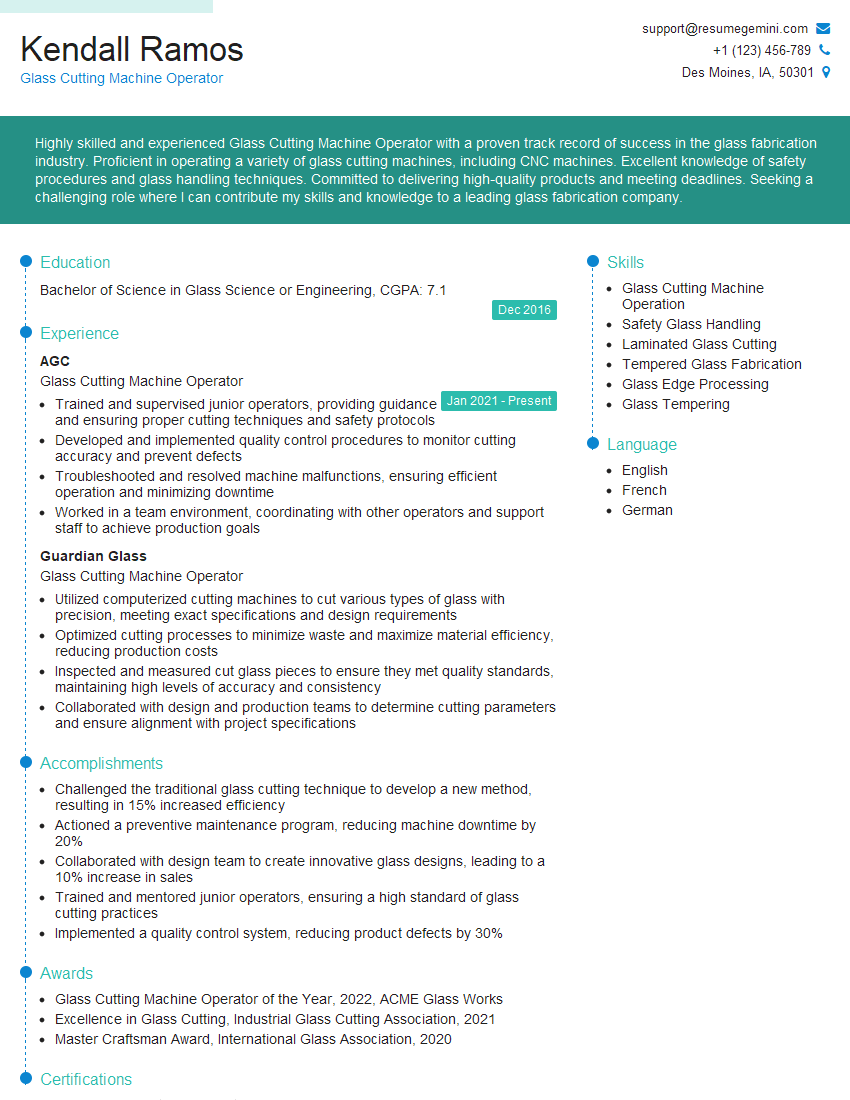
Mastering Glass Handling Equipment Operation opens doors to rewarding careers with excellent growth potential within manufacturing, construction, and other industries. A well-crafted resume is crucial for showcasing your skills and experience to potential employers. Building an ATS-friendly resume increases your chances of getting noticed by recruiters. ResumeGemini is a trusted resource to help you create a professional and effective resume that highlights your qualifications. Examples of resumes tailored to Glass Handling Equipment Operation are available to help you get started.
Explore more articles
Users Rating of Our Blogs
Share Your Experience
We value your feedback! Please rate our content and share your thoughts (optional).
What Readers Say About Our Blog
Very informative content, great job.
good