Interviews are more than just a Q&A session—they’re a chance to prove your worth. This blog dives into essential Glass Installation and Glazing interview questions and expert tips to help you align your answers with what hiring managers are looking for. Start preparing to shine!
Questions Asked in Glass Installation and Glazing Interview
Q 1. Describe your experience with different types of glass (e.g., tempered, laminated, insulated).
My experience encompasses a wide range of glass types, each with unique properties and applications. Think of it like choosing the right tool for the job – each glass type excels in certain areas.
- Tempered Glass: This is like the superhero of the glass world. It’s heat-treated to be incredibly strong, four to five times stronger than annealed glass. It’s perfect for applications where safety and impact resistance are crucial, like automotive side and rear windows, shower doors, and storefront windows. If it breaks, it shatters into small, relatively harmless granules, minimizing injury risk.
- Laminated Glass: Imagine a sandwich – two sheets of glass with a layer of polyvinyl butyral (PVB) interlayer sandwiched between them. This interlayer holds the glass together even if it cracks, preventing shattering and providing excellent security and protection from UV rays. It’s commonly used in car windshields, security windows, and hurricane-resistant glazing.
- Insulated Glass Units (IGUs): These are the energy-efficient stars. Two or more sheets of glass are separated by a hermetically sealed air or gas-filled spacer, creating a highly effective thermal barrier. They significantly reduce noise pollution and heat transfer, making them ideal for homes and buildings striving for better energy efficiency. I’ve worked extensively with Argon and Krypton filled IGUs for optimal performance.
Understanding these differences is critical for selecting the appropriate glass for any project, ensuring both safety and performance.
Q 2. Explain the process of installing a typical double-glazed window.
Installing a double-glazed window is a precise process requiring attention to detail. It’s like putting together a high-precision puzzle where every piece matters.
- Preparation: Accurate measurements are crucial. We carefully measure the window opening and prepare the frame, ensuring it’s level and plumb.
- Frame Installation: The window frame is securely installed using appropriate fasteners and sealant, ensuring a weathertight fit.
- IGU Placement: The double-glazed unit (IGU) is carefully placed into the frame, ensuring there’s no pressure or stress on the glass.
- Glazing: We use a suitable glazing compound, typically silicone, to seal the IGU within the frame, creating a watertight and airtight seal. This prevents moisture intrusion and energy loss.
- Finishing: Any excess sealant is cleaned up, and the window is checked for proper operation and sealing.
Throughout the process, we use specialized tools, like suction cups and glazing blocks, to safely handle the glass and ensure a professional, long-lasting installation.
Q 3. What safety precautions do you take when working at heights?
Safety is paramount when working at heights. It’s not just about following regulations; it’s about protecting myself and others. We never compromise on safety.
- Fall Protection: We always use appropriate fall protection equipment, such as harnesses, safety lines, and anchor points, whenever working above ground level.
- Scaffolding and Access Equipment: We use properly erected and inspected scaffolding or other access equipment, ensuring stability and secure access to the work area.
- Risk Assessment: Before starting any high-level work, we perform a thorough risk assessment, identifying potential hazards and developing a safe work plan.
- Training and Certification: All our team members are fully trained and certified in working at heights and using appropriate safety equipment.
We regularly review our safety procedures and adapt them to specific job conditions to ensure maximum safety.
Q 4. How do you measure and cut glass accurately?
Precise measurement and cutting are essential for a perfect glass fit. It’s an art and a science.
- Accurate Measurement: We use highly accurate measuring tools, such as steel tape measures and digital calipers, to determine the exact dimensions of the glass needed.
- Glass Cutting Tools: We employ specialized glass cutters, ensuring a clean, straight cut. The score must be consistent and deep enough for a clean break.
- Breaking the Glass: A controlled snap along the score line is essential to prevent chipping or shattering. This often involves using specialized tools like a running pliers or a handheld glass breaker.
- Grinding and Polishing: After cutting, the edges are carefully ground and polished to remove any sharp edges and ensure a smooth finish, preventing injuries.
Years of experience have honed our skills, allowing us to achieve incredibly precise cuts with minimal waste.
Q 5. What are the common causes of glass breakage and how can they be prevented?
Glass breakage is often preventable, but understanding the causes is key. It’s like understanding why a car breaks down – you can then prevent it from happening again.
- Impact: This is the most common cause – a direct hit from an object. Prevention: Careful handling, protective coverings, and impact-resistant glass.
- Thermal Stress: Sudden temperature changes can cause stress fractures, like rapidly heating or cooling a glass pane. Prevention: Using appropriate glass types, managing temperature fluctuations.
- Improper Installation: Poorly installed glass is vulnerable to stress and breakage. Prevention: Proper installation techniques, correct sealant and fasteners.
- Manufacturing Defects: Occasionally, there are flaws in the glass itself. Prevention: Use high-quality glass from reputable suppliers.
Regular inspections and preventative maintenance are crucial to identify potential risks before they lead to breakage.
Q 6. Describe your experience with different types of glazing systems (e.g., silicone, putty).
Different glazing systems have different strengths and applications. Selecting the right one is crucial for long-term performance and durability.
- Silicone Glazing: This is a very popular choice because it offers excellent adhesion, flexibility, and weather resistance. It’s commonly used in modern glazing applications, including IGUs. Its flexibility helps accommodate movement due to temperature changes.
- Putty Glazing: This is a more traditional method, using oil-based putty to seal the glass. While it provides a good seal, it’s less durable and flexible than silicone and is more susceptible to cracking over time. It is still used in historic restoration projects.
Choosing between these depends on factors like the type of glass, the application, and the desired longevity. Each has its pros and cons; I’ve successfully applied both throughout my career, carefully selecting the best method for the specific project.
Q 7. How do you handle challenging glass installations, such as curved or oddly shaped windows?
Curved or oddly shaped windows present unique challenges, requiring specialized techniques and materials. It’s like solving a custom puzzle that doesn’t come with instructions.
- Accurate Templating: Precise templates are crucial for accurate glass cutting and shaping. This often involves creating custom templates directly from the window opening.
- Specialized Cutting Techniques: Curved glass often requires specialized cutting equipment and techniques, sometimes involving manual grinding and polishing to achieve the desired shape.
- Careful Handling: These intricate pieces require extra care during handling and installation to avoid breakage.
- Flexible Glazing Systems: Flexible sealants like silicone are usually preferred to accommodate the curvature and prevent stress on the glass.
Through careful planning, precision techniques, and the right tools, even the most challenging glass installations can be completed successfully and safely.
Q 8. Explain your experience with different types of window frames (e.g., wood, aluminum, vinyl).
My experience encompasses a wide range of window frame materials, each with its own strengths and weaknesses. Wood frames, for instance, offer excellent insulation and a classic aesthetic, but require regular maintenance to prevent rot and warping. I’ve worked extensively with various wood types, from durable mahogany to more budget-friendly pine, understanding the need for proper sealing and finishing techniques to extend their lifespan. Aluminum frames, while durable and low-maintenance, can be less energy-efficient due to their high thermal conductivity. My experience includes working with different aluminum alloys and finishes, selecting the appropriate type for specific projects and considering factors like corrosion resistance and aesthetics. Finally, vinyl frames have become increasingly popular due to their affordability, low maintenance, and good insulating properties. I’m proficient in installing various vinyl profiles and understand the importance of proper expansion joint considerations to avoid issues with thermal expansion and contraction. Each installation requires a different approach, informed by the material’s properties and the project’s specific requirements.
- Wood: Mahogany, Pine, Oak – experience in different finishing techniques for longevity.
- Aluminum: Anodized, powder-coated – understanding of corrosion resistance and thermal bridging.
- Vinyl: Various profiles and manufacturers – knowledge of expansion and contraction properties.
Q 9. How familiar are you with building codes and regulations related to glass installation?
Adherence to building codes and regulations is paramount in glass installation. My familiarity extends to both local and national codes, including those related to energy efficiency (e.g., U-values and solar heat gain coefficient), safety (e.g., impact resistance and laminated glass requirements), and accessibility (e.g., proper window clearances for egress). I regularly consult code books and online resources to ensure compliance. For instance, in high-wind areas, I’d specify impact-resistant glass and reinforced framing to meet wind load requirements. Similarly, in areas with stringent energy codes, I would select high-performance IGUs (Insulated Glass Units) with low U-values to minimize heat loss. Understanding these codes is not just about compliance; it’s about ensuring the safety and longevity of the installation.
Q 10. Describe your experience with troubleshooting glass installation problems.
Troubleshooting is an integral part of glass installation. I’ve encountered various problems, from improperly sized frames leading to gaps and air leaks to damaged glass during transport or installation. One memorable instance involved a leaky window in a historic building. After careful inspection, we discovered the problem wasn’t the glass itself, but deteriorated caulking around the frame. Replacing the old caulking with a high-quality, UV-resistant sealant solved the problem. My systematic approach involves: 1) Visual inspection to identify the source of the problem; 2) Determining the root cause – is it a material defect, installation error, or something else?; 3) Implementing the appropriate solution, which might involve replacing damaged components, adjusting the frame, or re-sealing.
Q 11. What tools and equipment are essential for efficient glass installation?
Efficient glass installation demands a range of specialized tools and equipment. This includes various types of suction cups for safe glass handling, measuring tools (e.g., tape measures, levels, squares) to ensure precise measurements and alignment, cutting tools (e.g., glass cutters, diamond blades) for modifying glass panels if needed, sealants and caulking guns for weatherproofing, and specialized fasteners for securing the glass in the frame. Safety equipment, such as gloves, safety glasses, and cut-resistant sleeves, is crucial. Beyond the basic tools, power tools such as drills and impact drivers may be necessary for certain applications, and more sophisticated tools might be employed for specialized glazing techniques.
- Suction Cups
- Measuring Tools
- Cutting Tools
- Sealants & Caulking Guns
- Fasteners
- Safety Equipment
Q 12. How do you ensure the proper sealing and weatherproofing of installed glass?
Proper sealing and weatherproofing are critical for preventing air leaks, water infiltration, and energy loss. My process involves using high-quality sealants and caulking specifically designed for exterior applications. These sealants are chosen based on their durability, weather resistance, and adhesion to different materials. The application itself is meticulous, ensuring complete coverage of all joints and gaps between the glass and the frame. I also pay close attention to the details, such as using backer rods to create a proper sealant depth and avoid uneven application. Finally, a thorough inspection is performed to verify a watertight and airtight seal. This attention to detail prevents common problems like drafts, condensation, and potential damage to the building structure.
Q 13. Describe your experience with installing insulated glass units (IGUs).
Insulated Glass Units (IGUs) are crucial for energy efficiency. My experience involves handling various types of IGUs, from standard double-glazed units to triple-glazed units with low-E coatings and argon gas fills. The installation process requires careful handling to avoid damaging the delicate spacer bars and seals within the unit. I’m proficient in using appropriate spacers and sealants to ensure a proper seal and prevent moisture penetration. Accurate measurements and precise installation are critical to avoid problems such as bowing or breakage. Additionally, I’m familiar with various IGU configurations, such as those with integrated blinds or decorative glass patterns, which require specialized installation procedures.
Q 14. How do you handle glass disposal and recycling responsibly?
Responsible glass disposal and recycling are critical for environmental sustainability. I adhere to local regulations and work with certified recycling facilities to ensure that glass waste is handled properly. This includes separating different types of glass (e.g., tempered, laminated, float) and removing any hazardous materials before disposal. My commitment extends beyond simple disposal; I actively promote the use of recycled glass content in new glass products wherever possible, further contributing to a circular economy and minimizing environmental impact. For large-scale projects, a detailed waste management plan is developed in advance to ensure efficient and responsible handling of all materials.
Q 15. What is your experience with working with different types of sealants and adhesives?
My experience with sealants and adhesives is extensive, encompassing a wide range of products tailored to various glass types and installation contexts. I’m proficient in using silicones (both neutral cure and acetic cure), polyurethane sealants, butyl tapes, and epoxy resins. The choice of sealant depends critically on factors like the substrate material (aluminum, wood, steel), the type of glass (laminated, tempered, insulated units), and the environmental conditions (exposure to UV radiation, temperature fluctuations, moisture). For instance, silicone is versatile and commonly used for general glazing, while polyurethane offers superior strength and durability, making it ideal for structural glazing or applications requiring high movement accommodation. Butyl tape, a highly flexible adhesive, is essential for creating airtight and watertight seals in insulated glass units (IGUs). Epoxy resins, though less commonly used for general glazing, are invaluable for repairing cracked or damaged glass and creating strong bonds in specialized applications. I always adhere to manufacturer’s instructions for application, curing times, and surface preparation to ensure optimal performance and longevity.
For example, on a recent project involving a curtain wall system, we used high-performance structural silicone to achieve a seamless and weathertight seal between the glass panels and the aluminum framing. The choice of this sealant was justified by the system’s considerable movement potential due to thermal expansion and wind loading. In another instance, while working on a historic building, we carefully selected a neutral cure silicone to maintain the aesthetic integrity of the building, avoiding any discoloration or staining that an acetic cure sealant might cause.
Career Expert Tips:
- Ace those interviews! Prepare effectively by reviewing the Top 50 Most Common Interview Questions on ResumeGemini.
- Navigate your job search with confidence! Explore a wide range of Career Tips on ResumeGemini. Learn about common challenges and recommendations to overcome them.
- Craft the perfect resume! Master the Art of Resume Writing with ResumeGemini’s guide. Showcase your unique qualifications and achievements effectively.
- Don’t miss out on holiday savings! Build your dream resume with ResumeGemini’s ATS optimized templates.
Q 16. Explain your understanding of thermal performance and its relevance to glazing.
Thermal performance in glazing refers to a window’s ability to reduce heat transfer between the interior and exterior spaces. It’s crucial for energy efficiency and occupant comfort. The primary metric for evaluating thermal performance is the U-value (or U-factor), which represents the rate of heat transfer through a material. A lower U-value signifies better insulation – less heat loss in winter and less heat gain in summer. Glazing systems achieve this through several mechanisms. Insulated glass units (IGUs) employ multiple panes of glass separated by a gas-filled cavity (typically argon or krypton), creating an effective barrier against heat transfer. Low-E coatings applied to the glass surfaces are also incredibly effective. These coatings reflect infrared radiation, further reducing heat transfer.
In practical terms, a high-performing glazing system significantly impacts a building’s energy consumption. By minimizing heat loss and gain, we reduce the burden on heating and cooling systems, leading to lower utility bills and a smaller carbon footprint. During projects, I regularly consult U-value data and other thermal performance indicators to select appropriate glazing systems that meet project requirements and energy efficiency standards. For example, in climates with extreme temperature variations, specifying IGUs with low U-values and Low-E coatings is paramount.
Q 17. How do you manage time and resources effectively on a glass installation project?
Effective time and resource management on glass installation projects hinges on meticulous planning and execution. Before starting, we develop a detailed schedule that outlines task timelines, resource allocation (materials, equipment, personnel), and critical path analysis. This involves carefully reviewing architectural drawings, specifications, and site conditions to identify potential challenges and develop contingency plans. We utilize project management software to track progress, monitor costs, and maintain clear communication among team members.
Resource allocation requires careful consideration of the quantities and types of glass, sealants, framing materials, and specialized tools needed. We procure materials well in advance to avoid delays and leverage bulk purchase discounts. We also optimize the workflow on-site, ensuring a smooth sequence of operations from glass handling and cutting to installation and finishing. Continuous monitoring of progress against the schedule allows us to address any deviations promptly and adjust resource allocation as necessary. For example, a sudden delay in material delivery might require us to re-allocate manpower to other tasks to maintain the project timeline.
Q 18. Describe your experience with working on large-scale projects.
I have extensive experience working on large-scale projects, including high-rise buildings, commercial complexes, and large-scale renovations. These projects often involve hundreds of glass panels and require sophisticated coordination between multiple trades. My experience includes managing teams, coordinating deliveries, and ensuring quality control across large-scale installations. A key aspect of success in these projects is effective communication and collaboration with architects, engineers, general contractors, and subcontractors.
For example, I led the glazing installation on a 20-story high-rise where we efficiently coordinated the delivery, storage, and installation of over 500 glass panels, adhering to strict safety protocols and timelines. This involved careful planning of crane operations, staging areas, and safety measures for working at heights. We also developed a robust quality control system to ensure each panel was correctly installed and that the entire system met specified performance requirements.
Q 19. How do you prioritize safety during glass handling and installation?
Safety is paramount in glass handling and installation. We adhere to strict safety protocols throughout the entire process, starting from unloading and storage of the glass to installation and finishing. This includes using appropriate personal protective equipment (PPE), such as safety glasses, gloves, and steel-toe boots. For large panels, we use specialized lifting equipment (like suction cups and vacuum lifters) to avoid manual handling, and always follow the manufacturer’s safety guidelines for the lifting equipment.
We emphasize safe working practices, including proper scaffolding, fall protection systems, and secured work areas. Regular safety briefings and training sessions are conducted to reinforce safety procedures and ensure that everyone on the team understands and follows them. Furthermore, before commencing any installation, we conduct thorough risk assessments to identify potential hazards and develop mitigation strategies. For example, when working on elevated platforms, we always use fall arrest systems and ensure that all tools and materials are secured. We also establish clear communication protocols to ensure coordination between team members, preventing accidents caused by miscommunication.
Q 20. What is your experience with working with specialized glass (e.g., fire-rated, bulletproof)?
I have experience working with various types of specialized glass, including fire-rated glass, bulletproof glass, and laminated glass with embedded security films. These types of glass require specialized handling, installation techniques, and safety precautions. Fire-rated glass, for example, needs to be installed according to strict building codes to ensure its integrity in case of a fire. The frames and sealants used must also be fire-rated to maintain the system’s fire-resistance rating.
Similarly, bulletproof glass necessitates meticulous installation to maintain its ballistic resistance. The handling and installation process for bullet-resistant glass requires extreme care to avoid causing damage to the layers that contribute to its protective properties. I’m familiar with the various types of certifications and testing standards for these specialized glass products and ensure compliance with all relevant regulations throughout the installation process. On one project involving a high-security facility, we installed several bullet-resistant glass panels, adhering to strict protocols and undergoing rigorous testing to confirm its compliance with security standards.
Q 21. Describe your experience using specific glazing tools (e.g., suction cups, glazing knives).
I am proficient in using a variety of glazing tools, including suction cups, glazing knives, and specialized glass cutting equipment. Suction cups are essential for safely handling and moving large glass panels, particularly during installation at heights. Glazing knives are used for precision application of sealants, ensuring a smooth and even bead and creating a watertight seal. Proper use of these tools is crucial to prevent glass breakage and sealant failure. I am also experienced in using other tools like glass cutters, spacers, and rubber mallets, all of which are crucial for efficient and accurate glazing work.
For example, in the installation of large storefront windows, using high-quality suction cups with sufficient lifting capacity is critical to prevent accidents. Similarly, applying the sealant with a glazing knife, using controlled pressure and even strokes, is important to ensure optimal performance and prevent gaps that can lead to leaks.
Q 22. How do you maintain and clean your tools and equipment?
Maintaining tools and equipment is crucial for safety and efficiency in glass installation. Think of it like caring for a finely tuned instrument; neglecting it leads to poor performance and potential injury. My routine involves several key steps:
- Cleaning: After each job, I meticulously clean all tools, removing glass shards, sealant residue, and dirt. For blades, I use a dedicated cleaning solution to prevent corrosion. For suction cups, I inspect for any damage and ensure they’re free from debris.
- Inspection: I thoroughly inspect all equipment for wear and tear. This includes checking for cracks in suction cups, sharpness of blades, and the overall structural integrity of any lifting devices. Dull blades are a safety hazard and lead to uneven cuts. Damaged suction cups can lead to glass breakage.
- Lubrication: Moving parts, such as those in sealant applicators or cutting tools, need regular lubrication to ensure smooth operation and prevent premature wear. The correct lubricant is crucial; using the wrong type can damage components.
- Storage: Proper storage is essential. Tools are stored in designated cases or racks to prevent damage and keep them organized. Blades are stored separately to prevent accidental cuts.
- Regular Maintenance: Beyond daily cleaning, I schedule regular maintenance checks for more complex equipment. This may involve professional servicing for power tools or calibration of measuring instruments.
This meticulous approach not only extends the life of my tools but also ensures the safety and quality of my work. A well-maintained toolkit is an investment in professionalism and efficiency.
Q 23. How familiar are you with different types of glass breakage patterns and their causes?
Understanding glass breakage patterns is vital for diagnosing the cause of failures and preventing future incidents. Different patterns indicate distinct root causes. For example:
- Thermal Breakage: This usually results in a spiderweb or star-shaped crack radiating from a central point. It’s often caused by rapid temperature changes, perhaps from direct sunlight on one side of a large pane.
- Impact Breakage: A clear impact point with radiating cracks typically indicates a direct hit from an object. The size and extent of the damage depend on the force and the object’s characteristics.
- Edge Breakage: Chipping or cracking along the edges often suggests improper handling or faulty manufacturing (e.g., stress concentrations during the glass-making process).
- Stress Breakage: Cracks that develop without an obvious impact may indicate underlying stress within the glass pane itself, possibly due to uneven support or internal stresses from manufacturing.
Identifying the breakage pattern helps pinpoint the cause – whether it’s a design flaw, installation error, environmental factor, or accidental damage. This knowledge is crucial for determining the appropriate course of action, which could involve replacing the glass, addressing structural issues, or recommending preventative measures.
Q 24. How do you identify and address potential structural issues that might affect glass installation?
Identifying structural issues before glass installation is critical to prevent costly repairs and safety hazards. My approach involves a multi-step process:
- Site Inspection: I carefully examine the existing structure for any signs of weakness, misalignment, or instability. This includes checking for cracks in walls, uneven surfaces, and any evidence of previous water damage.
- Measurements and Calculations: Precise measurements are taken to ensure the glass will fit correctly and the supporting structure is adequate. I calculate load bearing capacity and ensure it meets the weight requirements of the glass.
- Framing Assessment: The framing needs to be strong enough and correctly aligned to support the weight of the glass. Any warping, rot, or damage needs to be addressed before installation.
- Consultation with Engineers/Architects: If I identify significant structural concerns, I immediately consult with structural engineers or architects. Their expertise ensures the project’s safety and compliance with building codes.
Addressing structural problems early on prevents future problems and ensures a safe and long-lasting installation. Neglecting this step could lead to catastrophic failure.
Q 25. What are the common challenges faced in glass and glazing work, and how do you overcome them?
Glass and glazing work presents unique challenges. Some common issues include:
- Difficult Access: Reaching awkward or high places often requires specialized equipment and safety precautions.
- Precise Measurements: Inaccurate measurements lead to costly mistakes. I use laser measuring tools and double-check all figures to minimize errors.
- Weather Conditions: Wind, rain, and extreme temperatures can significantly impact the installation process. We adapt by working around bad weather or using appropriate weather protection techniques.
- Glass Handling: Glass is fragile; proper techniques and equipment are vital to prevent breakage. I always use appropriate handling tools and follow safety procedures rigorously.
- Sealant Application: Improper sealant application leads to leaks and failures. I use the correct type of sealant for the application and ensure it is applied correctly.
Overcoming these challenges requires planning, experience, the right tools, and a commitment to safety. For example, using a cherry picker for high access, meticulous planning for complex cuts, and employing weather protection measures prevent delays and costly errors.
Q 26. What is your experience with the installation and maintenance of storefront systems?
I have extensive experience with storefront systems, including installation, maintenance, and repair. This involves working with various materials like aluminum, steel, and glass. My experience covers:
- Installation of curtain walls: This includes aligning and securing the framing system, carefully installing the glass panels, and sealing all joints to ensure weather tightness.
- Repair and maintenance of existing systems: This ranges from replacing broken glass to repairing damaged frames or replacing worn-out seals.
- Troubleshooting system failures: Identifying and solving issues such as leaks, drafts, or structural problems.
- Knowledge of various hardware components: I am familiar with different types of hinges, locks, and other hardware components used in storefront systems.
Storefront systems require precision and attention to detail; a poorly installed system is both unsightly and functionally inadequate. My expertise ensures systems are both aesthetically pleasing and structurally sound.
Q 27. How do you coordinate with other tradespeople on a construction site?
Coordination with other trades is essential for successful project completion. Clear communication and proactive planning are key. My approach involves:
- Pre-job Meetings: Attending pre-job meetings to understand the overall project schedule and the work of other trades.
- Scheduling Coordination: Coordinating my work schedule with other trades (e.g., masons, electricians, drywallers) to avoid conflicts and ensure a smooth workflow.
- Open Communication: Maintaining open communication with other tradespeople to address any issues that may arise during the project.
- Respecting Work Areas: Respecting the work areas of other trades and keeping my work area clean and organized to prevent accidents and delays.
Effective coordination prevents delays, reduces the risk of errors, and ultimately ensures a higher-quality final product. It’s all about teamwork.
Q 28. Describe a time you had to solve a complex glass installation problem. What was your approach?
I once encountered a complex problem installing a large curved glass window in a high-rise building. The window was custom-made and required incredibly precise measurements and installation to avoid breakage. The difficulty stemmed from the curved profile making it incredibly difficult to secure it safely.
My approach was systematic:
- Detailed Assessment: I thoroughly inspected the window and its supporting structure, identifying all potential challenges.
- Specialized Equipment: I sourced specialized suction cups and lifting equipment designed for handling large and unusually shaped glass.
- Step-by-Step Installation: We developed a detailed, step-by-step installation plan, ensuring every step was executed safely and precisely. This included multiple safety checks at every stage.
- Teamwork and Communication: Excellent communication within my team ensured everyone understood their role and the importance of precision.
Through careful planning, the use of specialized equipment, and meticulous execution, we successfully installed the window without incident. This experience reinforced the importance of planning, communication, and the right tools for tackling complex challenges.
Key Topics to Learn for Glass Installation and Glazing Interview
- Glass Types and Properties: Understanding the characteristics of different glass types (e.g., annealed, tempered, laminated, insulated) and their applications in various projects. This includes knowledge of their strength, thermal properties, and safety features.
- Measurement and Cutting Techniques: Accurate measurement and precise cutting of glass to specifications, minimizing waste and ensuring a perfect fit. This involves proficiency with various cutting tools and safety procedures.
- Installation Methods and Techniques: Mastering different installation methods for various glass types and applications, including window installation, curtain wall systems, shower enclosures, and storefront glazing. This includes knowledge of sealants, adhesives, and hardware.
- Safety Regulations and Practices: A thorough understanding of relevant safety regulations and best practices for handling glass, using power tools, and working at heights. This is crucial for both personal safety and project success.
- Troubleshooting and Problem-Solving: Developing the ability to identify and resolve common installation problems, such as glass breakage, sealant failure, or framing issues. This includes understanding the causes of these issues and implementing effective solutions.
- Glazing Systems and Components: Familiarity with different glazing systems (e.g., silicone, butyl), understanding the function of each component, and their proper installation. This includes knowledge of spacers, gaskets, and weather stripping.
- Tools and Equipment: Proficiency in using various hand and power tools commonly used in glass installation and glazing, including glass cutters, suction cups, and sealant applicators. This involves understanding their proper maintenance and safe operation.
Next Steps
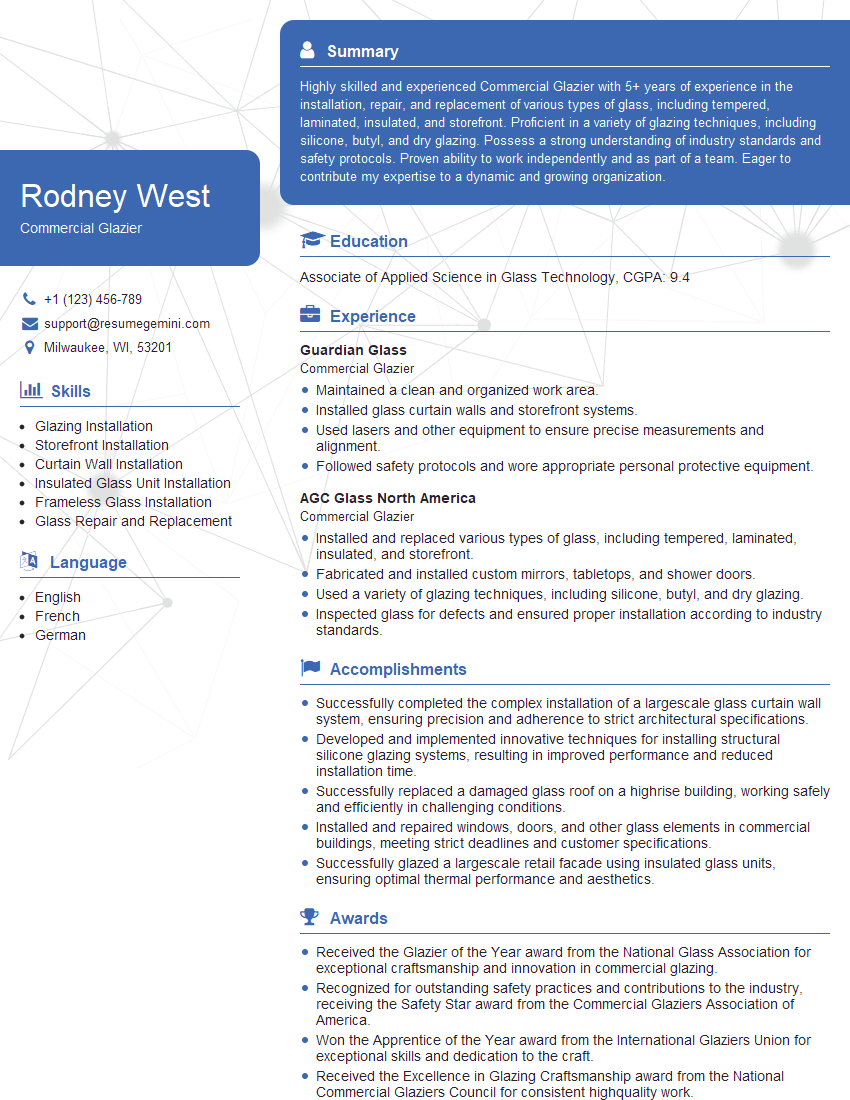
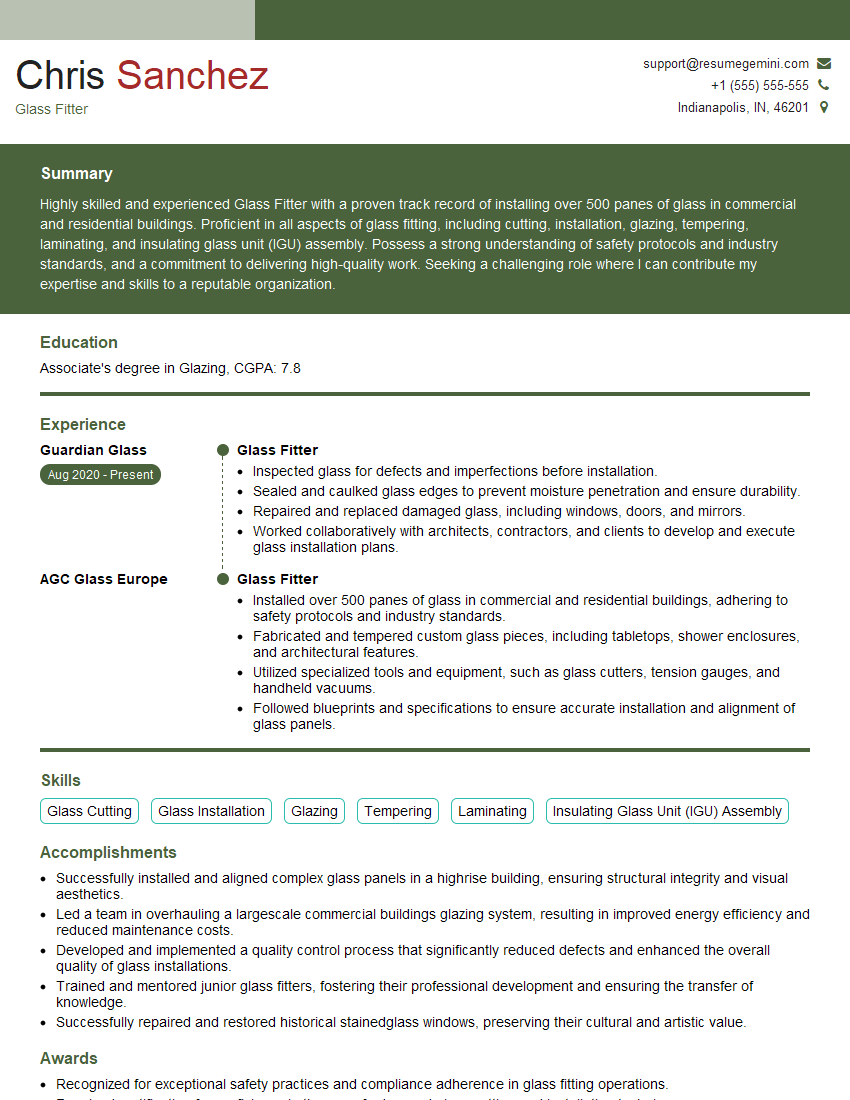
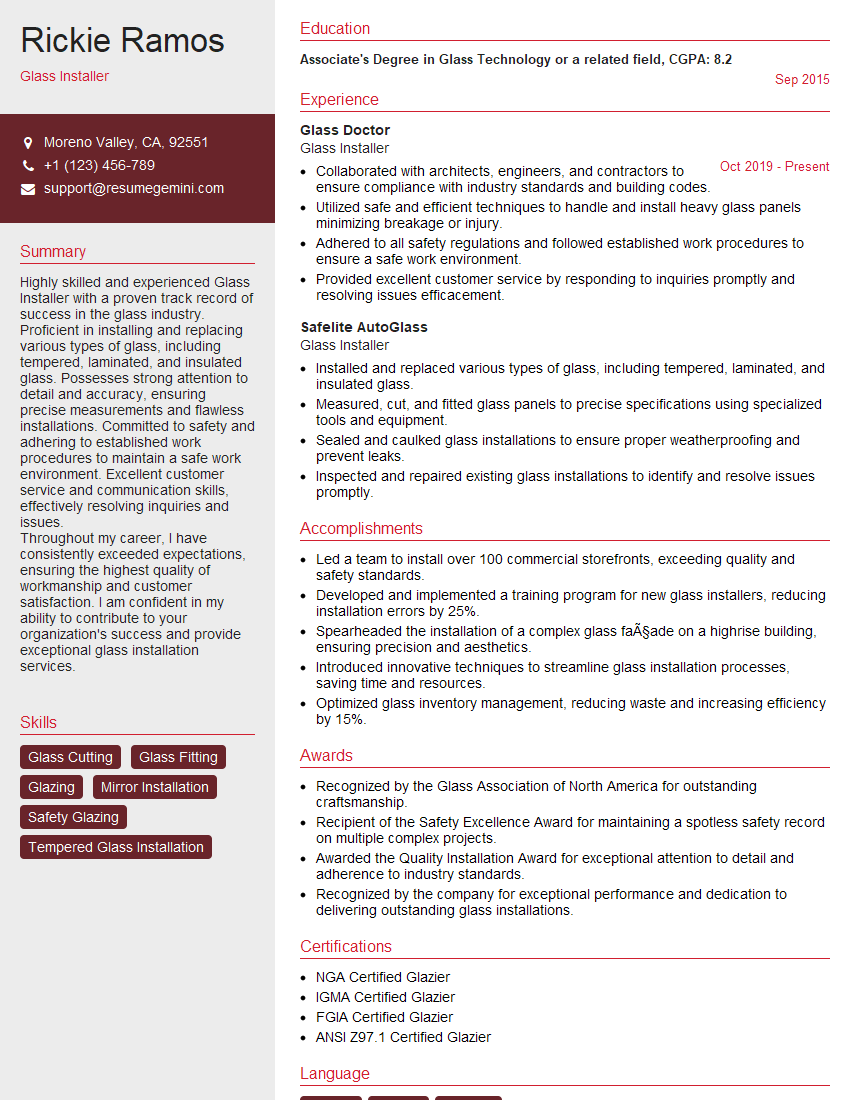
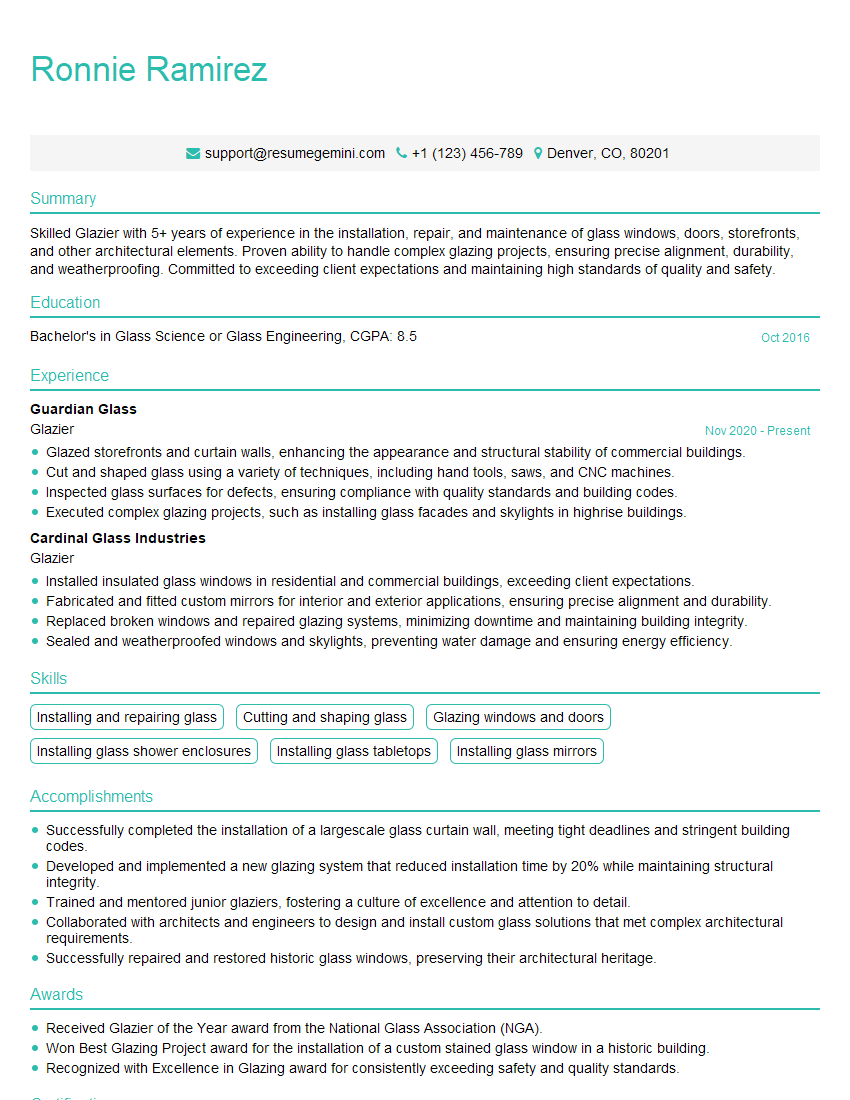
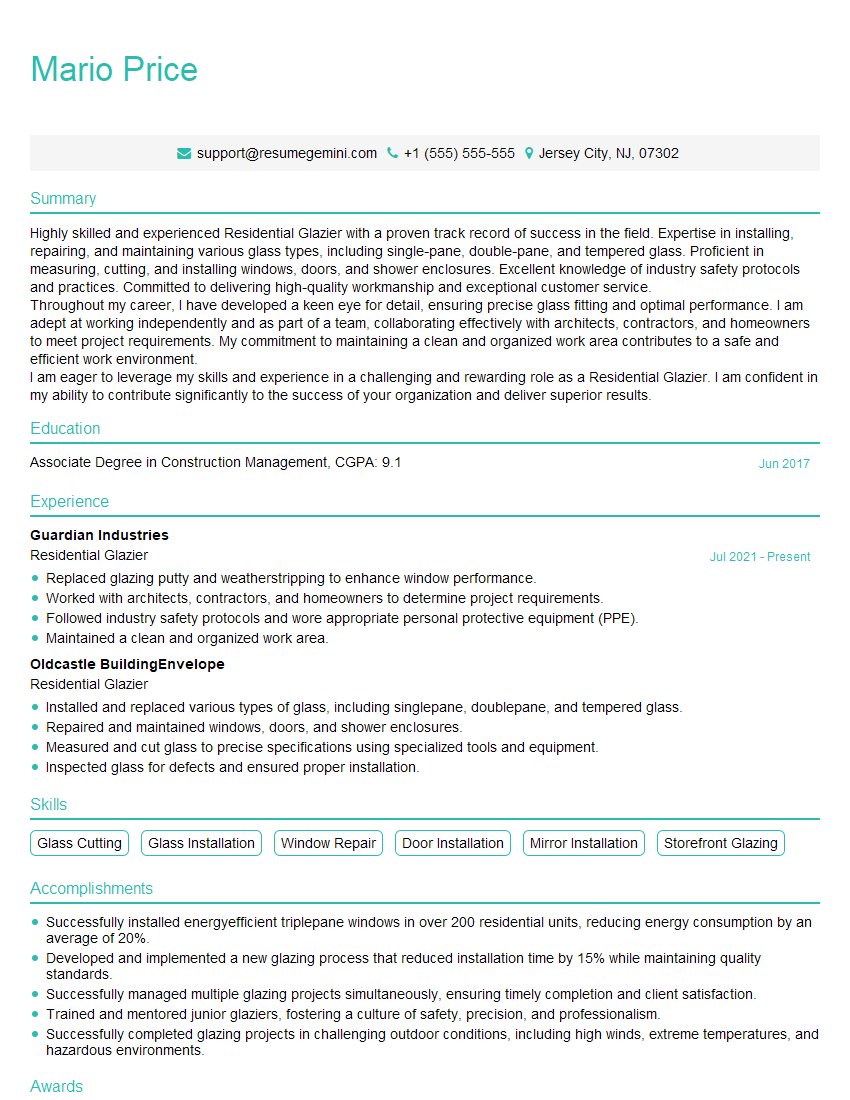
Mastering Glass Installation and Glazing opens doors to a rewarding career with excellent growth potential. As the demand for skilled professionals in this field continues to rise, showcasing your expertise through a strong resume is vital. Creating an ATS-friendly resume that highlights your skills and experience is key to securing interviews. We highly recommend using ResumeGemini to build a professional and effective resume that will impress potential employers. ResumeGemini provides examples of resumes tailored specifically to Glass Installation and Glazing, helping you present your qualifications in the best possible light.

Explore more articles
Users Rating of Our Blogs
Share Your Experience
We value your feedback! Please rate our content and share your thoughts (optional).
What Readers Say About Our Blog
Very informative content, great job.
good