The thought of an interview can be nerve-wracking, but the right preparation can make all the difference. Explore this comprehensive guide to GMP Validation interview questions and gain the confidence you need to showcase your abilities and secure the role.
Questions Asked in GMP Validation Interview
Q 1. Describe the lifecycle of a GMP validation project.
The lifecycle of a GMP validation project is a structured process ensuring systems and processes consistently meet predefined quality standards. Think of it like building a house – you wouldn’t just start laying bricks; you’d have plans, inspections, and final checks. This lifecycle typically includes these phases:
- Phase 1: User Requirement Specification (URS): This defines the needs and expectations of the system or process. It’s like creating the blueprint for your house, detailing what you need – number of rooms, size, etc.
- Phase 2: Design Qualification (DQ): This verifies that the design of the system meets the URS. This is like checking if the architect’s plans meet your initial requirements for the house.
- Phase 3: Installation Qualification (IQ): This verifies that the system is installed correctly and according to specifications. This is like verifying that the foundation and the structure of your house are built according to plan.
- Phase 4: Operational Qualification (OQ): This demonstrates that the system operates as intended across its defined operational range. This is like testing all the utilities in the house – plumbing, electricity, heating, etc., to make sure they work.
- Phase 5: Performance Qualification (PQ): This demonstrates the system consistently performs as expected under normal operating conditions. This is like checking if the house is comfortable to live in over a period of time, and that all systems work as intended.
- Phase 6: Ongoing Monitoring and Revalidation: This ensures the system continues to perform consistently and requires periodic revalidation based on risk assessment. This involves regular maintenance and periodic checks of the house to ensure everything is running smoothly.
Each phase needs detailed documentation, providing a clear audit trail throughout the entire process.
Q 2. Explain the difference between IQ, OQ, and PQ.
IQ, OQ, and PQ are three crucial stages within the validation process, each verifying a different aspect of a system or process. Imagine you’re validating a new automated filling machine:
- Installation Qualification (IQ): This focuses on verifying the correct installation of the machine. Did it arrive undamaged? Were all the components correctly assembled according to the manufacturer’s instructions? Is the machine placed correctly in the designated area with proper utilities (power, compressed air)? IQ essentially confirms you set everything up correctly.
- Operational Qualification (OQ): This verifies that the machine operates as intended within its design parameters. Does the filling mechanism work across the expected range of fill volumes? Do the sensors correctly measure and report fill levels? Are the cleaning cycles effective? OQ ensures the machine functions as specified.
- Performance Qualification (PQ): This demonstrates that the machine consistently produces the expected output over time. Over three production runs, does the filling machine consistently deliver the correct amount within the specified tolerance? Are there any deviations? PQ proves the machine maintains performance over regular operation.
These three qualifications, working together, provide a comprehensive assessment of the machine’s suitability for its intended purpose.
Q 3. What are the key elements of a validation master plan?
A Validation Master Plan (VMP) is a high-level document outlining the overall validation strategy for an organization or specific project. It’s like a master roadmap for all your validation activities. Key elements include:
- Scope: Clearly defining which systems, equipment, or processes require validation.
- Responsibilities: Assigning roles and responsibilities for each validation activity.
- Timeline: Establishing a realistic timeline for completing all validation activities.
- Methodology: Describing the approach to validation (e.g., risk-based approach).
- Documentation: Specifying the types of documents required and their format.
- Deviation Management: Outlining the procedure for handling deviations during validation.
- Review and Approval: Defining the process for reviewing and approving validation documents.
- Resource Allocation: Identifying the necessary resources (personnel, equipment, budget).
A well-defined VMP ensures consistency, reduces redundancy, and minimizes risks.
Q 4. How do you handle deviations during validation?
Deviations during validation are inevitable. The key is to manage them effectively and ensure they don’t compromise the integrity of the validation process. This is done by:
- Immediate Investigation: As soon as a deviation is identified, initiate an investigation to determine the root cause.
- Documentation: Meticulously document all aspects of the deviation, including the circumstances, investigation, conclusions, and corrective actions.
- Corrective and Preventive Actions (CAPA): Implement corrective actions to address the immediate issue and preventive actions to prevent recurrence. This might involve retraining staff, recalibrating equipment, or revising procedures.
- Impact Assessment: Determine the impact of the deviation on the overall validation process. A minor deviation may require only a simple correction, while a major deviation might require revalidation of the affected parts.
- Approval: The deviation and its resolution must be reviewed and approved by appropriate personnel.
A deviation doesn’t necessarily invalidate the entire project; the key is transparency, thorough investigation, and effective CAPA.
Q 5. Describe your experience with risk assessment in validation.
Risk assessment plays a pivotal role in GMP validation by focusing efforts where they’re most needed. Instead of validating everything equally, we prioritize based on risk. I use a structured approach, often based on ICH Q9 guidelines, involving these steps:
- Hazard Identification: What potential problems could occur in the process that could affect product quality? This involves brainstorming and reviewing historical data.
- Risk Analysis: Evaluating the likelihood and severity of each identified hazard. For example, a critical process step with a high probability of failure would have high risk.
- Risk Evaluation: Assessing the overall risk and deciding whether it’s acceptable or needs mitigation.
- Risk Control: Implementing controls to mitigate identified risks. This might involve process improvements, additional checks, or increased monitoring.
- Risk Review: Regularly reviewing the risk assessment to ensure it remains relevant and effective.
For example, in validating a cleaning procedure, a risk assessment might show a high risk of cross-contamination if the cleaning agent isn’t effective or the procedure isn’t followed correctly. This would lead to tighter controls for cleaning validation.
Q 6. Explain the principles of data integrity in validation.
Data integrity is paramount in validation. It ensures that the data collected is accurate, complete, consistent, reliable, and attributable. Think of it as the foundation of trust in your validation results. Key principles include:
- ALCOA+ Principles: Data should be Attributable, Legible, Contemporaneous, Original, and Accurate. The ‘+’ often includes Complete, Enduring, and Available.
- Change Control: Any changes to data or systems should be managed, documented, and reviewed. An example would be using version control software for electronic records.
- Audit Trails: Maintaining a comprehensive record of all changes and accesses to data.
- System Validation: Ensuring the systems used for data generation, storage, and analysis are validated to ensure their reliability. This includes software validation and data system validation.
- Data Backup and Recovery: Implementing procedures to safeguard data against loss or corruption.
Failing to adhere to these principles can lead to unreliable results, regulatory issues, and product recalls.
Q 7. How do you ensure the traceability of validation activities?
Traceability in validation is crucial for ensuring that all activities can be followed back to their origin and that the entire process can be reconstructed. This involves:
- Unique Identifiers: Assigning unique identifiers to all documents, equipment, and batches.
- Version Control: Tracking changes and revisions to documents and procedures.
- Cross-Referencing: Linking documents to each other to establish clear relationships.
- Electronic Signatures: Implementing electronic signature systems to verify authorizations and approvals.
- Document Management System: Using a centralized system to manage and store validation documents.
- Batch Records: Maintaining detailed batch records linking raw materials to the final product, capturing each stage of production and quality checks.
By implementing these systems, you can easily retrace each step of the validation process, allowing you to identify the source of any issues and ensuring complete accountability.
Q 8. What are the common challenges you face during GMP validation?
GMP validation, while crucial for ensuring product quality and safety, presents several challenges. One common hurdle is managing the sheer volume of documentation required. Maintaining comprehensive, accurate, and readily accessible records for every aspect of the validation process can be daunting. Another challenge arises from the ever-evolving regulatory landscape. Keeping up-to-date with changes in GMP guidelines and adapting validation strategies accordingly is an ongoing task. Furthermore, unexpected deviations during validation studies require careful investigation and resolution, potentially delaying project timelines. Finally, resource constraints, including budget limitations and staff expertise, can hinder effective validation execution.
- Documentation Management: Employing a robust electronic document management system (EDMS) is critical for efficient organization and retrieval of validation documents.
- Regulatory Compliance: Actively participating in industry forums and regularly reviewing regulatory updates help stay abreast of the latest changes.
- Deviation Management: Establishing clear procedures for handling deviations, including thorough investigation, root cause analysis, and corrective actions, is essential.
- Resource Allocation: Prioritization of validation activities based on risk assessment and effective resource planning are key.
Q 9. How do you manage validation documentation?
Effective validation documentation management is paramount for compliance. We utilize a combination of electronic and paper-based systems. A robust electronic document management system (EDMS) is the cornerstone, allowing for centralized storage, version control, audit trails, and easy accessibility. This EDMS is integrated with our Quality Management System (QMS) for seamless tracking and reporting. Paper-based records, such as original laboratory notebooks and equipment calibration records, are meticulously maintained in a secure, climate-controlled archive, following a defined retention policy. We adhere to strict naming conventions and document templates to ensure consistency and clarity. Regular audits and training ensure adherence to these procedures. Think of it like a library – organized, accessible, and with a clear system for managing and preserving important documents.
Example File Naming Convention: [System]_[Equipment/Process]_[Validation Type]_[Date]_Rev[Revision Number].pdfQ 10. What are your preferred validation methodologies?
My preferred validation methodologies are heavily influenced by the ICH Q2(R1) guidelines and risk-based approaches. This means we tailor our strategies to the specific process or system being validated. For example, we employ a design space approach where appropriate, focusing on understanding and controlling critical process parameters (CPPs) that significantly impact quality attributes. For simpler processes, a more traditional approach with full validation may be sufficient. But risk assessment always guides our choice. We favor approaches that emphasize process understanding and control, moving away from purely prescriptive methods. We also embrace statistical methods for data analysis and reporting, enabling objective conclusions.
- Risk-Based Approach: Prioritize validation efforts on systems and processes with the highest risk to product quality.
- Design Space: When appropriate, utilize a design space approach to understand the impact of process parameters on product quality.
- Statistical Analysis: Employ statistical methods to analyze data and draw objective conclusions.
Q 11. Explain your experience with computer system validation (CSV).
My experience with Computer System Validation (CSV) is extensive. I’ve been involved in validating a wide range of systems, from laboratory information management systems (LIMS) to manufacturing execution systems (MES) and enterprise resource planning (ERP) systems. The process typically involves defining the system’s intended use, identifying critical functions, and developing a comprehensive validation plan. This plan outlines the activities needed to demonstrate that the system operates as intended and consistently produces accurate and reliable results. The validation lifecycle often includes activities such as requirement specification, design qualification (DQ), installation qualification (IQ), operational qualification (OQ), and performance qualification (PQ). A crucial aspect is ensuring compliance with 21 CFR Part 11 where applicable. We leverage risk-based approaches to prioritize testing and focus on the most critical system functions. One memorable project involved validating a new LIMS system, where thorough testing and training were critical to successful implementation and user adoption.
Q 12. How do you validate analytical methods?
Analytical method validation is essential to ensure that our analytical tests are accurate, precise, and reliable. This process involves demonstrating that a method meets pre-defined acceptance criteria for various parameters, including specificity, linearity, range, accuracy, precision, limit of detection (LOD), limit of quantitation (LOQ), and robustness. We use standard operating procedures (SOPs) for each validated method and document all aspects of the validation process in detail. This includes sample preparation, instrumentation, calculations, and acceptance criteria. We often employ statistical methods to analyze the data and demonstrate compliance with regulatory requirements. A recent example involved validating a new HPLC method for the analysis of a key drug substance impurity. This required careful optimization of chromatographic conditions and rigorous testing to meet all acceptance criteria.
Q 13. Describe your experience with cleaning validation.
Cleaning validation is critical for preventing cross-contamination between batches and ensuring product safety. The process involves demonstrating that cleaning procedures effectively remove residues from equipment and surfaces. We use a risk-based approach to determine the appropriate cleaning validation strategy, considering the nature of the products being manufactured, the cleaning agents used, and the potential for cross-contamination. This might involve establishing acceptance criteria for residue limits based on toxicological considerations or carryover limits. We typically use non-destructive analytical methods to assess the effectiveness of the cleaning process, such as HPLC or swab testing. Sampling techniques and analytical methods are critical elements, and validation studies include a thorough assessment of the cleaning procedure’s robustness. A recent cleaning validation project involved optimizing a cleaning procedure for a highly potent active pharmaceutical ingredient (API) to minimize the risk of cross-contamination.
Q 14. How do you validate equipment and processes?
Equipment and process validation are fundamental to GMP compliance. Equipment validation demonstrates that equipment operates as intended and consistently produces products that meet quality standards. This often involves installation qualification (IQ), operational qualification (OQ), and performance qualification (PQ). Process validation, on the other hand, demonstrates that the manufacturing process consistently produces a quality product. We employ a risk-based approach, determining the critical process parameters (CPPs) and critical quality attributes (CQAs) and focusing validation efforts where they are most impactful. Process validation can involve extensive data collection and statistical analysis to demonstrate consistency and reproducibility. For example, we might validate a new tablet press by demonstrating its ability to consistently produce tablets with the correct weight, hardness, and disintegration time. Similarly, a new sterilization process might be validated through studies demonstrating its ability to consistently achieve sterility assurance levels.
Q 15. What are the regulatory requirements for GMP validation?
Regulatory requirements for GMP (Good Manufacturing Practices) validation vary depending on the specific product and geographical region. However, overarching principles remain consistent across all regulatory bodies, such as the FDA (US), EMA (Europe), and PMDA (Japan). These requirements aim to ensure that manufacturing processes consistently produce products meeting predetermined quality standards. Key aspects include:
- Defining Validation Scope: Clearly outlining which processes, equipment, and systems require validation. This often involves risk assessment to prioritize critical steps impacting product quality.
- Establishing Validation Protocols: Detailed plans specifying the methods, acceptance criteria, and tests to be conducted during validation. These protocols need to be reviewed and approved before execution.
- Executing Validation Studies: Performing the defined tests and documenting the results meticulously. This includes maintaining a comprehensive audit trail.
- Validation Reporting: Compiling a comprehensive report summarizing the study results, demonstrating compliance with acceptance criteria, and drawing conclusions on the validity of the process.
- Revalidation and Ongoing Compliance: Establishing a revalidation schedule based on factors like changes in the process, equipment, or regulatory requirements. Continuous monitoring and periodic review of validation status are vital.
For instance, the FDA’s 21 CFR Part 11 specifically addresses electronic records and signatures in validation, mandating secure systems and audit trails. Failure to meet these requirements can result in significant regulatory penalties, product recalls, and reputational damage.
Career Expert Tips:
- Ace those interviews! Prepare effectively by reviewing the Top 50 Most Common Interview Questions on ResumeGemini.
- Navigate your job search with confidence! Explore a wide range of Career Tips on ResumeGemini. Learn about common challenges and recommendations to overcome them.
- Craft the perfect resume! Master the Art of Resume Writing with ResumeGemini’s guide. Showcase your unique qualifications and achievements effectively.
- Don’t miss out on holiday savings! Build your dream resume with ResumeGemini’s ATS optimized templates.
Q 16. How do you ensure compliance with GMP guidelines?
Ensuring GMP compliance involves a multifaceted approach, encompassing robust systems, procedures, and ongoing monitoring. Think of it as a continuous cycle of improvement. Key elements include:
- Establishing a Quality Management System (QMS): A comprehensive framework defining roles, responsibilities, and procedures for all GMP-related activities. This often incorporates elements of ISO 9001.
- Standard Operating Procedures (SOPs): Detailed written instructions for every critical operation, leaving no room for ambiguity. Regular review and updates of SOPs are crucial to maintain accuracy and relevance.
- Training and Competency Assurance: Providing thorough training to all personnel involved in GMP processes, ensuring their competency to perform their tasks effectively. Regular refresher training and competency assessments are vital.
- Deviation Management: Establishing a robust system for investigating deviations from SOPs or specifications, identifying root causes, and implementing corrective and preventive actions (CAPA).
- Change Control: A formal process for managing and approving changes to validated processes, ensuring that any modification doesn’t negatively impact product quality or compliance.
- Audits and Inspections: Conducting regular internal and external audits to identify any weaknesses in the GMP system and ensure compliance with regulatory requirements.
Imagine a well-oiled machine: Each part (SOP, training, etc.) needs to function smoothly and consistently for the whole system (GMP compliance) to work efficiently. Regular maintenance (audits and reviews) prevents breakdowns and ensures long-term effectiveness.
Q 17. Describe your experience with deviation investigation and CAPA.
Deviation investigation and CAPA (Corrective and Preventive Action) are crucial for maintaining GMP compliance. When a deviation occurs (a departure from established procedures or specifications), a thorough investigation must be launched to identify the root cause. My experience involves:
- Immediate Containment: First, we isolate the affected batch or material to prevent further problems. We might quarantine the product pending the investigation.
- Root Cause Analysis: We use various tools like Fishbone diagrams, 5 Whys, and fault tree analysis to pinpoint the underlying cause of the deviation. This is not about assigning blame, but finding the systemic issues.
- CAPA Implementation: Based on the root cause analysis, we develop and implement corrective actions to address the immediate issue and preventive actions to stop it from recurring. This might involve changes to SOPs, equipment upgrades, or additional training.
- Effectiveness Verification: Once CAPA is implemented, we monitor the effectiveness to ensure it has resolved the problem. This might involve trending data to verify the corrective action’s success.
- Documentation: Every step of the deviation investigation and CAPA process is meticulously documented, providing an auditable trail for regulatory agencies.
For example, in a previous role, a deviation involving a temperature excursion in a cold storage unit was investigated. The root cause was identified as a faulty sensor. CAPA included replacing the sensor, recalibrating all sensors, and implementing a more robust temperature monitoring system with alarms. We documented every step, including the affected batches, investigations, and implemented solutions.
Q 18. How do you approach validation of automated systems?
Validating automated systems requires a comprehensive approach, going beyond traditional methods. It’s critical to address software, hardware, and the overall system integration. My experience incorporates:
- Software Validation: This includes verifying software requirements, designing test cases, and executing various tests like unit, integration, and system testing to ensure the software functions as intended. We also consider security aspects and compliance with 21 CFR Part 11.
- Hardware Validation: This confirms the proper functioning of all hardware components. Accuracy, precision, and repeatability are assessed through calibration and qualification procedures.
- System Integration Testing: This involves verifying seamless communication and data exchange between different hardware and software components. We use techniques to simulate real-world scenarios and test various error conditions.
- Risk Assessment: A thorough risk assessment identifies critical system components and functionalities that demand higher levels of validation scrutiny.
- User Acceptance Testing (UAT): Involving end-users in the testing process to validate the system’s usability and meet their specific requirements.
For instance, in the validation of an automated dispensing system, we would perform software tests to validate dosing accuracy and alarm functions. We would also calibrate the dispensing hardware and perform system integration testing to ensure seamless communication between the software, hardware, and other manufacturing systems. This is crucial as these systems often handle critical aspects of drug manufacturing.
Q 19. What is your experience with change control related to validation?
Change control related to validation is a critical aspect of maintaining GMP compliance. Any changes to validated processes or systems require a rigorous evaluation to assess their potential impact. My experience covers:
- Change Request Submission and Review: A formal procedure for requesting and evaluating changes, involving a thorough assessment of the potential impact on product quality and compliance.
- Risk Assessment: Identifying the potential risks associated with the proposed change and determining the necessary level of testing and documentation.
- Impact Assessment: Evaluating the potential impact of the change on other validated systems or processes.
- Validation Activities: Defining the necessary validation activities to ensure that the change doesn’t compromise product quality or compliance.
- Documentation and Approval: Maintaining detailed documentation of the change request, risk assessment, impact assessment, validation activities, and approval process.
Imagine a validated manufacturing process as a delicate ecosystem. Introducing a change without careful evaluation could disrupt the entire system. A robust change control process ensures that any modifications are thoroughly assessed and validated before implementation, maintaining the integrity of the manufacturing process.
Q 20. How do you handle audits related to validation?
Handling audits related to validation involves thorough preparation and proactive cooperation with auditors. My experience includes:
- Preparation: Preparing a comprehensive audit response package, including validation protocols, reports, and supporting documentation. This often involves reviewing the audit scope and identifying any potential gaps.
- Collaboration with Auditors: Providing clear and concise answers to auditors’ questions and proactively addressing any concerns raised.
- Addressing Non-conformances: Developing and implementing corrective and preventive actions to address any non-conformances identified during the audit.
- Follow-up: Following up on the audit findings and reporting on the implementation of corrective actions.
- Continuous Improvement: Using audit findings as an opportunity for continuous improvement of the GMP validation system.
A well-prepared audit demonstrates a commitment to quality and compliance. It’s an opportunity to showcase a robust GMP system and highlight proactive risk management strategies. Treating audits not as obstacles but as learning experiences helps strengthen the GMP system.
Q 21. What software or tools are you familiar with for validation?
My experience encompasses various software and tools used in GMP validation, catering to different aspects of the process. This includes:
- Validation Lifecycle Management Software: Systems such as MasterControl or Veeva Vault that help manage the entire validation lifecycle, from protocol creation to report generation. These platforms often have built-in features for document management and audit trails.
- Spreadsheet Software (e.g., Microsoft Excel): While not ideal for complex validations, spreadsheets are commonly used for data analysis, tracking, and simple documentation.
- Statistical Software (e.g., Minitab, JMP): Used for statistical analysis of validation data, such as calculating means, standard deviations, and assessing compliance with acceptance criteria.
- Data Integrity Tools: Software used for monitoring and managing data integrity throughout the validation process. This might include automated data checks, electronic signatures, and audit trails.
- LIMS (Laboratory Information Management Systems): For managing laboratory data and processes within the validation context, often essential in analytical method validations.
The choice of tools depends heavily on the complexity of the validation and the resources available. For smaller-scale validations, spreadsheets might suffice. However, for larger and more complex systems, dedicated validation lifecycle management software provides the necessary features for efficient execution and compliance.
Q 22. Describe your experience with process analytical technology (PAT).
Process Analytical Technology (PAT) is a system for designing, analyzing, and controlling manufacturing processes through timely measurements of critical quality and performance attributes of raw and in-process materials and processes with the goal of ensuring final product quality. My experience with PAT spans several years and encompasses various applications, from designing in-line near-infrared (NIR) spectroscopy for monitoring reaction completion in pharmaceutical synthesis to implementing real-time particle size analysis during granulation. I’ve been involved in the entire PAT lifecycle, from initial feasibility studies and method development and validation to technology transfer, implementation, and ongoing monitoring. I’m proficient in using PAT data for statistical process control (SPC) to identify trends and deviations, allowing for proactive intervention and improved process understanding, ultimately leading to enhanced product quality and reduced variability.
For instance, in a recent project involving the manufacturing of a solid oral dosage form, we implemented Raman spectroscopy to monitor the blend uniformity of the drug product during the blending stage. This provided real-time feedback allowing for adjustments to the blending process before proceeding to the subsequent steps which significantly reduced out-of-specification batches. This approach resulted in a considerable improvement in overall product quality and decreased the need for extensive end-product testing.
Q 23. How do you ensure the robustness of validation methods?
Robust validation methods are crucial for ensuring consistent and reliable results. To achieve robustness, we employ a multi-faceted approach that considers various factors that could influence the assay. This includes assessing the impact of variations in parameters such as temperature, humidity, reagent concentrations, instrument precision, and analyst-to-analyst variability. We use Design of Experiments (DOE) methodologies, like a full factorial or fractional factorial design, to systematically investigate these factors and determine their effect on the assay’s performance.
A key aspect is establishing acceptance criteria that account for the expected variability. These criteria are rigorously defined during the method development phase and validated through extensive testing. We use statistical tools like ANOVA to analyze the data obtained from DOE studies and to determine the acceptable ranges for the critical parameters. Any parameters found to significantly affect the assay’s performance are carefully controlled during routine testing. For example, when validating a high-performance liquid chromatography (HPLC) method, we systematically varied the column temperature, flow rate, and mobile phase composition to assess their impact on peak area, retention time, and resolution. Only after demonstrating that these variations remained within acceptable limits could we confidently declare the method as robust.
Q 24. What is your experience with statistical analysis in validation?
Statistical analysis is fundamental to all aspects of validation. My experience encompasses a wide range of statistical techniques, including descriptive statistics (mean, standard deviation, etc.), hypothesis testing (t-tests, ANOVA), regression analysis, and capability analysis (e.g., Cp, Cpk). I’m proficient in using statistical software packages like JMP, Minitab, and R to analyze data and draw meaningful conclusions. In validation, these techniques are applied to assess method performance, compare different methods, and demonstrate the capability of a manufacturing process. For example, during the validation of a cleaning process, we utilize statistical analysis to demonstrate that the residual levels of active pharmaceutical ingredients are consistently below predefined acceptance limits.
Furthermore, I’m experienced in applying statistical process control (SPC) techniques for monitoring ongoing process performance. This involves analyzing data collected during routine production to identify trends, variations, and potential problems before they escalate into major issues. Control charts (e.g., Shewhart, CUSUM) are essential tools in this process, enabling proactive interventions and enhanced quality control.
Q 25. Explain your experience with validation of sterilization processes.
My experience in sterilization validation includes both steam sterilization and dry heat sterilization. I’m well-versed in the regulatory requirements and industry best practices for validating these processes. This includes the design and execution of qualification studies (IQ, OQ, PQ) for sterilizers, the development and validation of biological indicators (BIs) and physical indicators (PIs), and the detailed analysis of sterilization cycles to ensure lethality. I’ve worked with various sterilization cycle parameters (temperature, pressure, time) and have extensive experience with analyzing data from biological indicators to demonstrate sterility assurance.
For example, during the validation of a steam sterilizer, we performed multiple cycles at various locations within the chamber to map the temperature distribution. This mapping study is crucial to identify any cold spots where microorganisms might survive. The results were used to determine the appropriate cycle parameters to ensure consistent lethality throughout the chamber. We also used BI’s to verify the effectiveness of the validated cycle over multiple batches and over a defined time period.
Q 26. Describe a time you had to troubleshoot a validation issue.
During the validation of a tablet coating process, we encountered an unexpected increase in tablet weight variation. The initial investigation focused on the coating parameters (spray rate, air flow, etc.), but no clear cause was identified. We then expanded our investigation to include the upstream processes, such as granulation and blending. This involved reviewing historical data, re-analyzing samples, and collaborating with other departments (e.g., engineering, manufacturing). We eventually discovered a problem with the granulation process – inconsistencies in the particle size distribution – that was leading to variations in the tablet coating process.
The solution involved fine-tuning the granulation process parameters, implementing stricter in-process controls, and introducing a new inline particle size analyzer. This comprehensive approach, which required meticulous data analysis, cross-functional collaboration, and a systematic investigation of all potential causes, ultimately resolved the issue and led to improvements in process understanding and enhanced product quality.
Q 27. How do you stay up-to-date with changes in GMP regulations?
Staying updated with changes in GMP regulations is paramount. I actively monitor regulatory updates from agencies like the FDA (Food and Drug Administration) and EMA (European Medicines Agency) through their websites, newsletters, and guidance documents. I also participate in industry conferences, workshops, and training sessions to stay abreast of current best practices and emerging trends. I subscribe to relevant industry journals and publications and regularly review relevant literature to stay informed about the latest regulatory developments. I also maintain a network of professional contacts within the industry to share insights and discuss relevant regulatory changes.
Furthermore, I proactively seek opportunities to participate in regulatory inspections and audits to gain firsthand experience and deepen my understanding of GMP compliance. This hands-on involvement allows for a better understanding of how regulations translate to practical application in manufacturing settings.
Q 28. What are your salary expectations?
My salary expectations are commensurate with my experience and expertise in GMP validation, which encompasses various technical skills and regulatory knowledge. Based on my qualifications and the current market rate for similar roles, my salary expectation falls within the range of [Insert Salary Range Here]. However, I am open to discussing this further based on the specific details of the role and the company’s compensation package.
Key Topics to Learn for GMP Validation Interview
- GMP Principles & Regulations: Understand the core principles of Good Manufacturing Practices (GMP) and relevant regulations (e.g., 21 CFR Part 11, EU Annex 1). Focus on their practical application in pharmaceutical and related industries.
- Validation Lifecycle: Master the stages of a validation lifecycle, from User Requirement Specifications (URS) to Process Qualification (PQ), including Installation Qualification (IQ) and Operational Qualification (OQ). Be prepared to discuss the documentation requirements at each stage.
- Validation Methods & Techniques: Familiarize yourself with various validation techniques like Design of Experiments (DOE), statistical analysis, and risk assessment methodologies. Understand their application in different validation contexts.
- Computer System Validation (CSV): Gain a strong understanding of CSV principles, including software validation, data integrity, and audit trails. Be ready to discuss specific challenges and solutions in CSV projects.
- Deviation Management & CAPA: Understand the processes for managing deviations and implementing Corrective and Preventive Actions (CAPA). Be prepared to discuss examples and best practices.
- Cleaning Validation: Learn about the principles and methodologies involved in cleaning validation, including sampling techniques, analytical methods, and acceptance criteria.
- Analytical Method Validation: Understand the principles and requirements for validating analytical methods used in GMP environments, including accuracy, precision, and linearity.
- Problem-Solving & Troubleshooting: Develop your skills in identifying, analyzing, and resolving issues related to GMP validation. Prepare to discuss case studies and practical solutions.
Next Steps
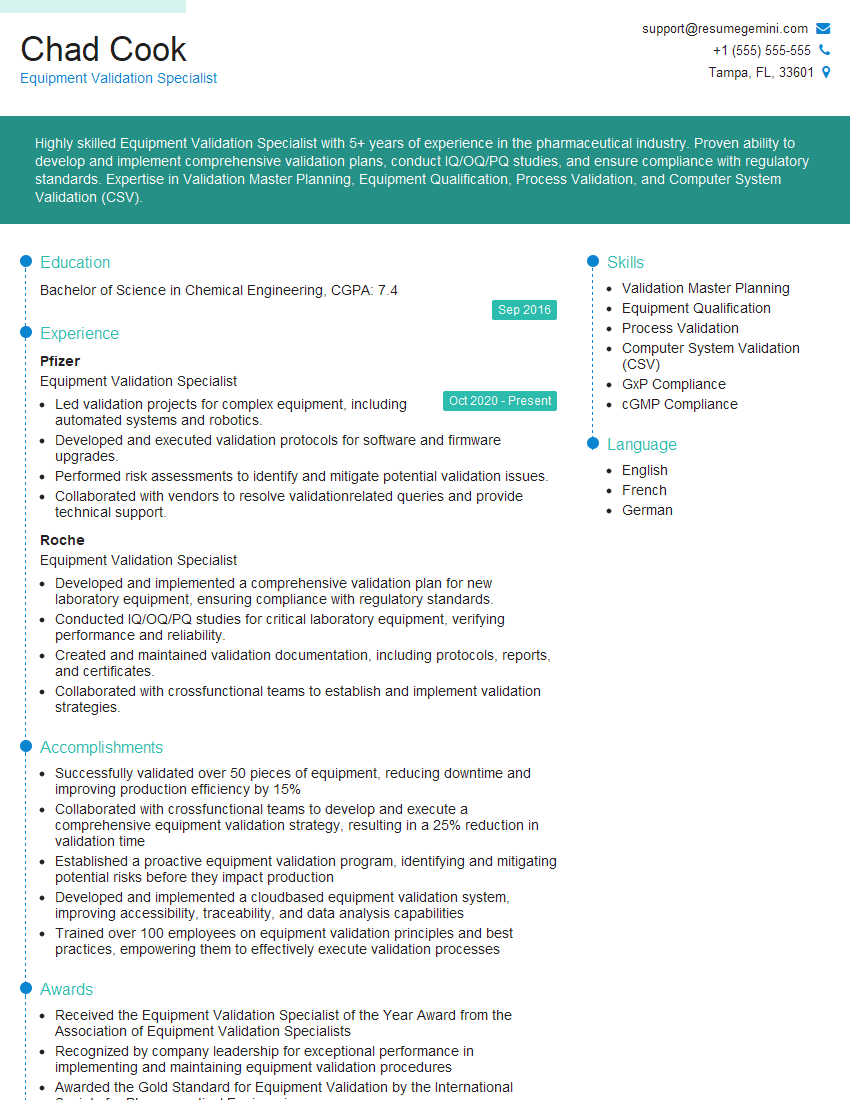
Mastering GMP Validation significantly enhances your career prospects within the pharmaceutical and related industries, opening doors to senior roles and greater responsibility. To maximize your job search success, creating a compelling and ATS-friendly resume is crucial. ResumeGemini is a trusted resource to help you build a professional and effective resume that highlights your GMP Validation expertise. Examples of resumes tailored to GMP Validation roles are available to guide you. Take the next step towards your career advancement today.
Explore more articles
Users Rating of Our Blogs
Share Your Experience
We value your feedback! Please rate our content and share your thoughts (optional).
What Readers Say About Our Blog
Very informative content, great job.
good