Interviews are opportunities to demonstrate your expertise, and this guide is here to help you shine. Explore the essential Goal Setting and Tracking interview questions that employers frequently ask, paired with strategies for crafting responses that set you apart from the competition.
Questions Asked in Goal Setting and Tracking Interview
Q 1. Explain the SMART goal framework. Provide an example.
The SMART goal framework is a powerful tool for ensuring your goals are Specific, Measurable, Achievable, Relevant, and Time-bound. This framework helps to eliminate ambiguity and provides a clear path to success.
- Specific: Your goal should be clearly defined, leaving no room for misinterpretation. Instead of ‘improve fitness,’ a SMART goal would be ‘run a 5k in under 30 minutes’.
- Measurable: Progress should be quantifiable. How will you know when you’ve achieved the goal? For the 5k example, the measurement is the time taken to complete the race.
- Achievable: The goal must be realistic and attainable given your resources and capabilities. Attempting a marathon as your first running goal might not be achievable.
- Relevant: The goal should align with your broader objectives and priorities. If your overall goal is to improve cardiovascular health, a 5k run is relevant.
- Time-bound: Set a deadline to create urgency and focus. For instance, ‘run a 5k in under 30 minutes by December 31st’.
Example: Let’s say I want to improve my public speaking skills. A SMART goal would be: ‘Deliver a confident and engaging 15-minute presentation at the next team meeting on October 27th, receiving positive feedback from at least 3 colleagues.’ This is specific, measurable (positive feedback from 3 colleagues), achievable (given sufficient preparation), relevant to my career goals, and time-bound (October 27th).
Q 2. Describe your experience with Key Performance Indicators (KPIs).
Key Performance Indicators (KPIs) are crucial for measuring progress towards goals. My experience encompasses using KPIs across various projects and teams. I’ve worked with both quantitative KPIs, such as sales revenue, website traffic, or customer churn rate, and qualitative KPIs, such as customer satisfaction scores or employee engagement levels. I understand the importance of selecting the right KPIs based on the specific goal and context. For example, when launching a new marketing campaign, I might track website clicks, lead generation, and conversion rates as key indicators of success. In a project management context, KPIs might include task completion rates, project budget adherence, and on-time delivery. I’m proficient in data analysis and visualization, allowing me to effectively track, interpret, and present KPI data to stakeholders. I also have experience in setting realistic KPI targets and adjusting them as needed based on performance and changing circumstances.
Q 3. How do you measure the success of a goal?
Measuring goal success involves comparing the actual results against the predefined targets and assessing whether the goal has been achieved. This often involves reviewing the KPIs established at the beginning of the project. For example, if the goal was to increase website traffic by 20% in a quarter, we would compare the actual increase in traffic to the target of 20%. However, success isn’t always simply about hitting a numerical target; it’s also about the overall impact. Qualitative data, such as customer feedback or surveys, are valuable in assessing the broader effects of achieving a goal.
Let’s consider a sales target. Meeting the target is a success metric, but equally important is analyzing the customer feedback – were they satisfied with the product or service? Were there any unexpected issues? This holistic approach allows for a more comprehensive evaluation of success.
Q 4. What methods do you use to track progress towards goals?
Tracking progress towards goals involves a multifaceted approach, utilizing various methods depending on the nature of the goal. I leverage a combination of techniques:
- Project Management Software: Tools like Asana, Trello, or Jira allow for task management, progress visualization, and collaborative tracking. I use these to monitor individual and team progress against deadlines and milestones.
- Spreadsheets and Data Visualization: Excel or Google Sheets are excellent for tracking numerical data, especially KPIs. I use charts and graphs to visualize trends and identify areas needing attention.
- Regular Check-ins and Meetings: Consistent meetings and one-on-ones are critical to discuss progress, address challenges, and make necessary adjustments. I find these essential for maintaining momentum.
- Personal Journals or Digital Logs: For personal goals, a journal or a digital tracking system helps in documenting progress and reflecting on achievements and challenges.
The key is choosing the right tools and methods that are most efficient and effective for the specific goal and context. A consistent and reliable tracking system ensures accountability and promotes timely adjustments when necessary.
Q 5. How do you handle setbacks or unexpected challenges when pursuing a goal?
Setbacks are inevitable. My approach involves a structured response:
- Acknowledge and Analyze: The first step is to honestly assess the setback. What went wrong? What factors contributed to the problem?
- Adjust the Plan: Based on the analysis, revise the plan. This might involve adjusting the timeline, resources, or even the goal itself. Flexibility is key.
- Seek Support: Don’t hesitate to seek help from colleagues, mentors, or supervisors. A fresh perspective can be invaluable.
- Learn from the Experience: Every setback is a learning opportunity. Document what happened, what you learned, and how you can avoid similar issues in the future.
- Maintain Motivation: It’s crucial to stay positive and focused. Reiterate your commitment to the goal and celebrate small wins along the way.
For example, if I experience a delay in a project due to unforeseen circumstances, I would carefully analyze the reasons for the delay, adjust the project schedule accordingly, communicate the changes to stakeholders, and identify strategies to prevent similar delays in the future.
Q 6. Describe a time you had to adjust goals mid-project. What was your process?
During a recent marketing campaign, our initial goal was to achieve a 15% increase in lead generation within three months. However, after the first month, our progress was significantly below target. We analyzed the campaign performance, identifying a problem with our targeting strategy. Our process involved:
- Data Analysis: We reviewed the campaign data, focusing on key metrics such as click-through rates, conversion rates, and audience demographics.
- Problem Identification: We pinpointed that our targeting was too broad, leading to wasted ad spend and low conversion rates.
- Strategy Adjustment: We refined our targeting criteria, focusing on specific demographics and interests that showed higher engagement.
- Communication: We communicated the changes and the revised timeline to all stakeholders.
- Monitoring and Evaluation: We closely monitored the campaign performance after the adjustments and made further tweaks as needed. We ultimately achieved a 10% increase in lead generation by the end of the three-month period, demonstrating adaptability and problem-solving skills.
While we didn’t reach the initial 15% target, we adapted successfully, leading to a positive outcome despite the initial setback.
Q 7. How do you ensure alignment between individual and team goals?
Aligning individual and team goals is crucial for team effectiveness. I utilize several strategies:
- Top-Down Goal Setting: Start with overarching team objectives, then break them down into smaller, manageable goals for individual team members. Ensure everyone understands how their individual contributions support the larger team goals.
- Collaborative Goal Setting: Involve team members in the goal-setting process to foster ownership and commitment. This ensures goals are realistic and attainable, reflecting team capabilities and expertise.
- Regular Communication and Feedback: Consistent communication through regular meetings and progress updates helps to keep everyone informed and aligned. Feedback mechanisms allow for course correction and ensure everyone remains focused.
- Visual Goal Tracking: Use visual tools like Kanban boards or project management software to display team progress and individual contributions, ensuring everyone can see how their work fits into the bigger picture.
- Celebrating Successes: Recognizing and rewarding team achievements reinforces the importance of alignment and fosters a positive team environment.
This ensures that everyone is working towards the same objectives, maximizing efficiency and contributing to collective success. Transparent communication and collaborative goal setting build team cohesion and foster a shared sense of purpose.
Q 8. What tools or software have you used for goal setting and tracking?
Throughout my career, I’ve utilized a variety of tools for goal setting and tracking, adapting my approach based on project complexity and team size. For individual goals, I often rely on simple, yet effective methods like a dedicated notebook or digital calendar with reminders. For larger projects or team initiatives, I’ve found sophisticated software invaluable.
Trello: Excellent for visualizing workflows, breaking down large tasks into smaller, manageable steps, and tracking progress visually using Kanban boards. I’ve used this extensively for project management, allowing for easy collaboration and progress monitoring.
Asana: Similar to Trello, Asana offers robust features for task assignment, deadlines, and progress reporting. Its reporting features provide a clear overview of team performance and potential bottlenecks.
Microsoft Project: For highly complex projects with intricate dependencies, Microsoft Project’s Gantt charts are unmatched for visualizing timelines and resource allocation. I’ve used this for projects requiring precise scheduling and risk management.
Google Sheets/Excel: While seemingly basic, spreadsheets are incredibly versatile. I often use them to create custom dashboards for tracking key metrics, visualizing progress against targets, and performing data analysis.
The choice of tool depends on the context. For personal goals, simplicity is key. For team projects, collaboration and reporting features are paramount.
Q 9. Explain the importance of regular progress reviews.
Regular progress reviews are crucial for maintaining momentum and ensuring goals are achieved effectively. They serve as checkpoints to assess performance, identify obstacles, and make necessary adjustments. Think of it like navigating with a map; regular check-ins ensure you’re still on the right track and aren’t veering off course.
Early Problem Detection: Regular reviews allow for early detection of potential problems or roadblocks. This proactive approach prevents minor issues from escalating into major setbacks.
Motivation Boost: Seeing progress, even small increments, is incredibly motivating. Progress reviews provide a tangible sense of accomplishment, fueling continued effort.
Course Correction: If progress is lagging, reviews offer the opportunity to adjust strategies, reallocate resources, or seek additional support. It’s a chance to refine the approach and enhance chances of success.
Accountability: Regular reviews foster a sense of accountability, both for individuals and teams. The structured process encourages focused effort and commitment to achieving targets.
For instance, in a previous project, a monthly progress review revealed a critical dependency was delayed. This allowed us to proactively adjust the timeline and mitigate potential impacts on the overall project delivery.
Q 10. How do you motivate yourself and others to achieve goals?
Motivating oneself and others to achieve goals requires a multifaceted approach that combines intrinsic and extrinsic rewards, clear communication, and a supportive environment.
Intrinsic Motivation: Connecting goals to personal values and aspirations is crucial. When individuals understand the ‘why’ behind a goal, they are more likely to stay committed. For instance, framing a sales target not just as a number, but as a means to achieving a desired lifestyle or supporting a cause, increases engagement.
Extrinsic Motivation: While intrinsic motivation is paramount, strategically using extrinsic rewards, such as bonuses, recognition, or opportunities for advancement, can further enhance motivation. However, these should be used judiciously and fairly to avoid demotivation.
Positive Reinforcement: Regularly acknowledging and celebrating achievements, both big and small, reinforces positive behaviors and boosts morale. This includes providing constructive feedback focusing on strengths and areas for improvement.
Clear Communication & Support: Establishing clear expectations, providing regular feedback, and offering support to overcome obstacles are essential for maintaining team motivation.
Leading by Example: Demonstrating commitment and hard work sets a positive tone and encourages others to follow suit.
In a past team project, I used a combination of public acknowledgment of milestones reached, small team celebrations, and regular one-on-one check-ins to provide both individual support and team motivation.
Q 11. How do you identify and prioritize goals?
Identifying and prioritizing goals is a structured process requiring clarity, strategic thinking, and a robust framework. I typically employ a combination of methods:
SMART Goals: This is my foundation. Goals need to be Specific, Measurable, Achievable, Relevant, and Time-bound. Vague goals lead to diffused effort and lack of progress. For example, instead of ‘improve sales,’ a SMART goal would be ‘increase sales by 15% in the next quarter by implementing a new marketing campaign.’
Prioritization Matrices: Tools like Eisenhower Matrix (urgent/important) or MoSCoW method (Must have/Should have/Could have/Won’t have) help categorize and prioritize goals based on their urgency and importance.
Value Alignment: Aligning goals with broader organizational objectives ensures focus on the most impactful areas. This helps prevent pursuing goals that do not contribute significantly to overall success.
Resource Assessment: Realistic goal setting requires considering available resources (time, budget, personnel). Overambitious goals, without the necessary resources, lead to frustration and failure.
By systematically applying these methods, I can create a prioritized list of achievable goals that aligns with overall strategic objectives and available resources.
Q 12. Describe your experience with using data to inform goal setting and tracking.
Data-driven goal setting and tracking is crucial for informed decision-making and improved performance. I’ve extensively used data to inform every stage of the process:
Baseline Data: Before setting goals, I analyze existing data to establish a baseline. This provides a realistic starting point and helps set achievable targets. For instance, analyzing past sales figures helps set realistic sales targets for the next period.
Goal Setting: Data informs the specificity and measurability of goals. Instead of setting vague targets, I use historical data and market trends to establish quantifiable goals.
Progress Monitoring: I regularly track key performance indicators (KPIs) and other relevant metrics to monitor progress against goals. This allows for timely identification of deviations from the planned path.
Performance Analysis: Data analysis helps pinpoint the root causes of performance gaps. This enables informed adjustments to strategies, resource allocation, and processes.
For example, in a previous marketing campaign, data analysis revealed that a specific ad channel was underperforming. This insight led to a reallocation of resources to more effective channels, significantly improving the campaign’s ROI.
Q 13. How do you communicate progress updates to stakeholders?
Communicating progress updates effectively is crucial for maintaining transparency, fostering collaboration, and securing buy-in from stakeholders. My approach is tailored to the audience and the context:
Regular Reporting: I establish a regular cadence of updates (weekly, bi-weekly, monthly) depending on the project’s complexity and stakeholder needs.
Clear and Concise Communication: I avoid technical jargon and focus on delivering key information in a clear and concise manner, using visuals like charts and graphs where appropriate.
Targeted Communication: I tailor the level of detail and the communication channel based on the stakeholder’s role and interest. High-level summaries are suitable for senior management, while more detailed reports are provided to project teams.
Multiple Channels: I leverage various communication channels, including email, project management software, presentations, and regular meetings, to ensure effective dissemination of information.
Proactive Communication: I proactively communicate potential challenges or delays, providing proposed solutions or mitigation strategies. This demonstrates transparency and allows stakeholders to provide support or adjust expectations.
For instance, in a large project, I used a combination of weekly email updates for senior management, bi-weekly team meetings for detailed progress reviews, and a project management software for tracking individual task progress.
Q 14. How do you deal with conflicting priorities when setting goals?
Conflicting priorities are inevitable in any setting. Addressing them requires a structured approach focusing on prioritization and communication.
Prioritization Framework: Utilize a prioritization framework like the Eisenhower Matrix to objectively evaluate the urgency and importance of each goal. This allows for rational decision-making.
Resource Allocation: Carefully assess the resources required for each goal and allocate them based on priority. This may involve delaying less critical goals or re-allocating resources from lower-priority items.
Trade-off Analysis: Consider the potential trade-offs associated with prioritizing one goal over another. Understanding the implications of each decision helps make more informed choices.
Stakeholder Negotiation: If conflicting priorities involve different stakeholders, open and honest communication is vital. Collaboration and negotiation can help reach a mutually acceptable solution.
Documentation: Documenting decisions and their rationale ensures clarity and transparency, minimizing future conflicts.
For example, faced with conflicting deadlines on two projects, I used the Eisenhower Matrix to prioritize the project with the most significant impact on overall strategic objectives. I then communicated this decision to all stakeholders, outlining the rationale and addressing their concerns.
Q 15. What are some common pitfalls in goal setting, and how do you avoid them?
Common pitfalls in goal setting often stem from a lack of clarity, realism, or accountability. Setting vague goals like “be more productive” is ineffective. Failing to break down large goals into smaller, manageable steps also hinders progress. Another pitfall is neglecting to track progress regularly, leading to a loss of motivation and momentum. Finally, a lack of alignment between personal goals and organizational objectives can lead to wasted effort.
- Avoid vagueness: Use the SMART framework (Specific, Measurable, Achievable, Relevant, Time-bound). Instead of “be more productive,” aim for “increase client calls by 10% by the end of Q3.”
- Break down large goals: Divide a large project into smaller, manageable tasks. This provides a sense of accomplishment as you complete each step.
- Regular tracking and review: Use tools like project management software, spreadsheets, or even a simple journal to monitor progress. Schedule regular review meetings to assess progress and adjust the plan as needed.
- Ensure alignment: Clearly define how individual goals contribute to broader team and organizational objectives.
Career Expert Tips:
- Ace those interviews! Prepare effectively by reviewing the Top 50 Most Common Interview Questions on ResumeGemini.
- Navigate your job search with confidence! Explore a wide range of Career Tips on ResumeGemini. Learn about common challenges and recommendations to overcome them.
- Craft the perfect resume! Master the Art of Resume Writing with ResumeGemini’s guide. Showcase your unique qualifications and achievements effectively.
- Don’t miss out on holiday savings! Build your dream resume with ResumeGemini’s ATS optimized templates.
Q 16. How do you ensure goals are realistic and achievable?
Ensuring goals are realistic and achievable requires a thorough self-assessment and a realistic understanding of available resources and constraints. This involves considering both internal and external factors that might influence success. One effective technique is to use a ‘backward planning’ approach, starting from the desired outcome and working backward to identify the necessary steps.
- Self-assessment: Honestly evaluate your skills, experience, and available time. Are you capable of achieving this goal given your current resources?
- Resource assessment: Consider available time, budget, technology, and support. If resources are limited, adjust the goal accordingly.
- Backward planning: Define the end goal, then break it down into smaller milestones with deadlines. This creates a clear path to success.
- Consult with others: Seek feedback from trusted colleagues or mentors to gain an objective perspective on the feasibility of your goals.
For example, if your goal is to learn a new programming language, realistically assess your available learning time each week, identify the resources (online courses, books) you’ll need, and set achievable milestones (e.g., complete module 1 by week 3, build a simple app by week 6).
Q 17. How do you handle situations where a goal is not met?
When a goal isn’t met, it’s crucial to avoid dwelling on failure and instead focus on learning and improvement. This involves a thorough analysis of what went wrong, identifying factors that contributed to the shortfall, and adjusting strategies accordingly. It’s important to remember that setbacks are a normal part of the process.
- Analyze the situation: Identify factors that contributed to not meeting the goal (lack of time, resources, unforeseen challenges, inaccurate planning).
- Identify lessons learned: What could you have done differently? What strategies worked well, and which ones didn’t?
- Adjust the plan: Revise the goal or the approach to achieving it based on your learnings. This might involve breaking down the goal further, seeking additional support, or allocating more resources.
- Maintain motivation: Remember that setbacks are temporary. Focus on what you’ve learned and use it to improve future goal setting and execution.
For instance, if you failed to meet a sales target, analyze whether the marketing campaign was effective, if the sales team had the right training, or if external market factors influenced sales. This analysis will help you refine your strategy for future targets.
Q 18. Describe your experience with cascading goals within an organization.
Cascading goals involves aligning individual goals with team goals, which in turn align with organizational objectives. This creates a clear chain of accountability and ensures everyone is working towards a common purpose. My experience in cascading goals involved developing a framework to translate high-level strategic objectives into specific, measurable targets for each department and individual.
- Strategic alignment: Start with overall organizational objectives, then break them down into departmental goals.
- Team goal setting: Each department translates their objectives into team-specific goals.
- Individual goal setting: Individual goals directly support team and departmental goals.
- Regular communication and feedback: Ensure ongoing communication and alignment across all levels.
- Performance monitoring: Track progress at all levels and make adjustments as needed.
For example, if the organization’s goal is to increase market share, the marketing department might have a goal to launch a new campaign. Individual team members within marketing might have specific responsibilities like content creation or social media management, directly contributing to the department’s goal and the overall organizational objective.
Q 19. How do you measure the ROI of goal-oriented initiatives?
Measuring the ROI of goal-oriented initiatives requires a clear understanding of the intended outcomes and the resources invested. This involves quantifying both the benefits achieved and the costs incurred. This can involve both financial and non-financial metrics depending on the nature of the goals.
- Define key performance indicators (KPIs): Identify metrics that directly measure the impact of the initiative on the desired outcomes.
- Track progress against KPIs: Monitor progress regularly and collect relevant data.
- Calculate the cost of the initiative: Include all resources invested (time, money, materials).
- Calculate the return: Compare the value of the achieved benefits against the cost of the initiative.
- Consider qualitative factors: Account for non-financial benefits, such as improved employee morale or enhanced brand reputation.
For example, if a company invests in a new training program to improve employee productivity, you could measure ROI by tracking the increase in output per employee after the training, comparing it to the cost of the program (training materials, trainer fees, employee time).
Q 20. How do you incorporate feedback into the goal-setting process?
Incorporating feedback into the goal-setting process is essential for ensuring that goals are realistic, relevant, and achievable. This should be a continuous process, not a one-time event. Feedback can come from various sources, including supervisors, colleagues, and even clients.
- Solicit feedback: Actively seek feedback from relevant stakeholders throughout the goal-setting process.
- Use feedback to refine goals: Adjust goals based on the insights received, ensuring they are realistic and relevant.
- Provide regular progress updates: Share progress with stakeholders to solicit ongoing feedback and ensure alignment.
- Create a culture of feedback: Foster an environment where feedback is encouraged and valued.
For example, if you’re setting sales goals, you can ask your sales team for their input on achievable targets, and regularly check in with them on progress and any challenges they face. This collaborative approach helps to improve goal setting and overall success.
Q 21. Explain the difference between leading and lagging indicators.
Leading indicators predict future performance, while lagging indicators reflect past performance. Leading indicators help you anticipate problems or opportunities and take proactive steps to address them. Lagging indicators help you understand what happened, but they’re too late to prevent issues.
- Leading indicators: These are early warning signs that indicate future success or failure. Examples include customer satisfaction scores, employee engagement, market trends, and sales pipeline.
- Lagging indicators: These measure past performance and show the results of actions already taken. Examples include sales revenue, customer churn rate, market share, and profit margins.
Consider a manufacturing company. A leading indicator might be the number of defective products produced on the assembly line. A lagging indicator would be the number of customer returns due to faulty products. By addressing the leading indicator (defective products), the company can prevent the lagging indicator (customer returns).
Q 22. What’s your experience with using different goal-setting methodologies (e.g., OKRs, Objectives and Key Results)?
My experience with goal-setting methodologies is extensive, encompassing various frameworks like OKRs (Objectives and Key Results) and others. OKRs, in particular, have proven highly effective in aligning teams around ambitious goals. They break down large objectives into smaller, measurable key results. For example, an Objective might be ‘Increase market share,’ with Key Results like ‘Increase website traffic by 20%,’ ‘Improve conversion rates by 15%,’ and ‘Secure 5 new key partnerships.’ I’ve also utilized other methods like the SMART goal framework (Specific, Measurable, Achievable, Relevant, Time-bound), which provides a robust structure for defining clear and attainable goals. The choice of methodology depends heavily on the context – the organizational structure, the nature of the project, and the team’s preferences. I adapt my approach based on these factors, ensuring the chosen framework facilitates progress and fosters a shared understanding of expectations.
Beyond OKRs and SMART goals, I’ve successfully implemented Agile methodologies with their iterative approach, which works particularly well in dynamic environments. This involves setting short-term, achievable goals that can be adjusted based on progress and feedback. Each approach has its strengths and weaknesses, and my experience enables me to select and tailor the best fit for any situation.
Q 23. How do you ensure accountability for achieving goals?
Accountability is crucial for goal achievement. My approach involves a multi-faceted strategy. First, I ensure that goals are collaboratively defined and agreed upon by all stakeholders. This shared ownership fosters intrinsic motivation. Second, regular progress reviews and check-ins are scheduled, providing opportunities to discuss challenges, celebrate successes, and make necessary adjustments. These meetings aren’t just for reporting; they’re for problem-solving and collaboration. Third, I utilize tracking tools (discussed further in a later response) to monitor progress transparently. This creates a clear picture of performance and allows for early identification of potential issues. Finally, I emphasize the importance of clear consequences for not meeting goals, while also focusing on support and coaching to help individuals overcome obstacles. The key is finding a balance between accountability and support, fostering a culture of responsibility without creating a fear-based environment.
Q 24. How do you stay organized and manage multiple goals simultaneously?
Managing multiple goals simultaneously requires a structured approach. I use a combination of techniques including prioritization matrices (like Eisenhower Matrix – Urgent/Important), time blocking, and task management systems. I prioritize tasks based on their urgency and importance, allocating specific time blocks for each. This ensures focused attention on critical goals while still addressing less urgent but important tasks. Visual tools, like Kanban boards (physical or digital), are invaluable for visualizing the workflow and progress across all goals. These tools allow me to easily see which tasks are in progress, which are blocked, and which are completed, providing a holistic view of my progress toward multiple objectives. Breaking down large goals into smaller, manageable tasks also helps in overcoming the feeling of being overwhelmed.
Q 25. Describe your experience with using project management software for goal tracking.
I have extensive experience using various project management software for goal tracking, including Asana, Trello, Jira, and Monday.com. My choice of software depends on the project’s needs and team size. For instance, Trello’s Kanban-style interface is great for visualizing workflow and progress in smaller teams. Jira, with its more robust features, is better suited for larger projects requiring complex task management and issue tracking. I’m proficient in utilizing features like task assignments, deadlines, progress tracking, and reporting within these platforms. I also leverage the reporting features to generate progress updates for stakeholders and identify potential bottlenecks. The key is to select the right tool and utilize its functionalities effectively to maximize efficiency and transparency.
Q 26. How do you adapt your goal-setting strategies to different team dynamics?
Adapting goal-setting strategies to different team dynamics is essential for success. I assess team members’ strengths, weaknesses, communication styles, and preferences to tailor the approach. For instance, a highly collaborative team might thrive using a shared goal-setting platform and frequent check-ins, whereas a more independent team might benefit from individual goal setting with regular progress updates. I ensure that goals are challenging yet attainable, considering each team member’s capabilities and workload. Open communication is key; I foster an environment where team members feel comfortable expressing concerns and contributing to the goal-setting process. This ensures buy-in and increases the likelihood of success.
Q 27. How do you identify and remove roadblocks to achieving goals?
Identifying and removing roadblocks is a continuous process. My approach involves proactive monitoring of progress, regular communication with team members, and actively seeking feedback. When a roadblock emerges (e.g., lack of resources, technical issues, or unforeseen challenges), I follow a structured problem-solving process: 1. Identify the roadblock: clearly define the nature of the obstacle. 2. Analyze the cause: determine the root cause of the problem. 3. Brainstorm solutions: generate potential solutions collaboratively. 4. Evaluate options: assess the feasibility and impact of each solution. 5. Implement the chosen solution: put the best solution into action. 6. Monitor and evaluate: track the effectiveness of the solution and make adjustments as needed. This iterative process ensures that roadblocks are addressed efficiently, minimizing their impact on goal achievement.
Q 28. What are your preferred methods for visualizing progress towards goals?
I prefer methods that offer both a high-level overview and detailed granular views of progress. Visualizing progress helps maintain motivation and facilitates early identification of potential issues. I frequently use Gantt charts for project timelines, showing the dependencies between tasks and the overall progress. Kanban boards offer a real-time view of the workflow and allow for easy identification of bottlenecks. Progress bars in project management software provide a quick snapshot of completion percentages. I also utilize dashboards that combine different visualization techniques, providing a comprehensive overview of progress across multiple projects and goals. The choice of visualization method depends on the context, but the goal is always to make progress clear, accessible, and motivating for the team.
Key Topics to Learn for Goal Setting and Tracking Interview
- SMART Goals Framework: Understanding and applying the SMART (Specific, Measurable, Achievable, Relevant, Time-bound) criteria for effective goal setting. Practical application: Analyzing existing goals and revising them to meet SMART criteria.
- Goal Prioritization Techniques: Learning methods like Eisenhower Matrix (urgent/important) or MoSCoW (Must have, Should have, Could have, Won’t have) to effectively manage multiple goals. Practical application: Demonstrating ability to prioritize tasks and goals in a hypothetical scenario.
- Tracking and Measurement Methods: Exploring various methods for monitoring progress, including using project management software, spreadsheets, or personal dashboards. Practical application: Discussing the pros and cons of different tracking approaches and selecting the most appropriate method for a specific context.
- Metrics and KPIs: Defining relevant Key Performance Indicators (KPIs) for goal tracking and aligning them with overall objectives. Practical application: Developing KPIs for a given project or role and explaining how they would be used to measure success.
- Addressing Roadblocks and Challenges: Identifying potential obstacles and developing proactive strategies for overcoming them. Practical application: Presenting solutions for common challenges like resource constraints, changing priorities, or unexpected setbacks.
- Reporting and Communication: Effectively communicating progress and challenges to stakeholders. Practical application: Describing different reporting formats and choosing the best approach for different audiences.
- Continuous Improvement and Iteration: Understanding the iterative nature of goal setting and the importance of adapting strategies based on feedback and results. Practical application: Explaining how to adjust goals and plans based on performance data.
Next Steps
Mastering Goal Setting and Tracking is crucial for career advancement, demonstrating your ability to be proactive, results-oriented, and highly organized. These skills are highly valued by employers across various industries. To significantly boost your job prospects, create an ATS-friendly resume that highlights your achievements and quantifiable results. We strongly encourage you to leverage ResumeGemini, a trusted resource for building professional resumes that stand out. Examples of resumes tailored to showcasing expertise in Goal Setting and Tracking are available to help you get started.
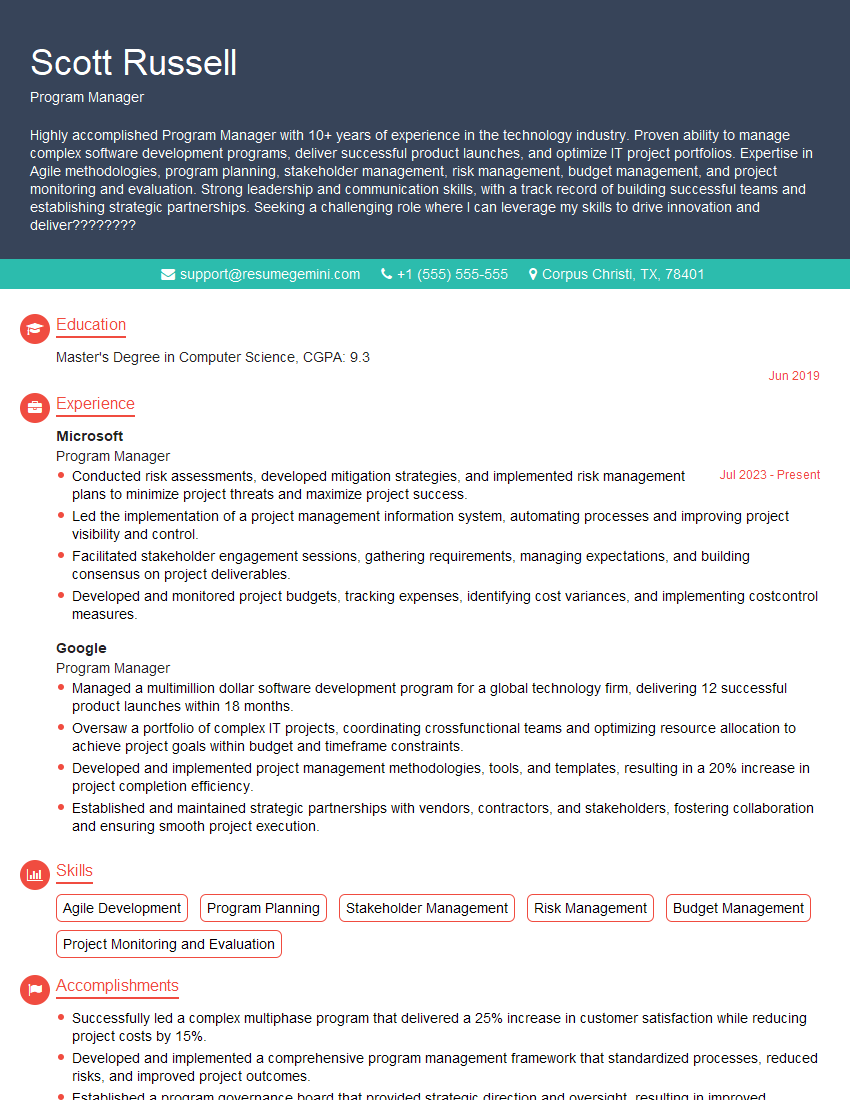
Program Manager Resume Sample
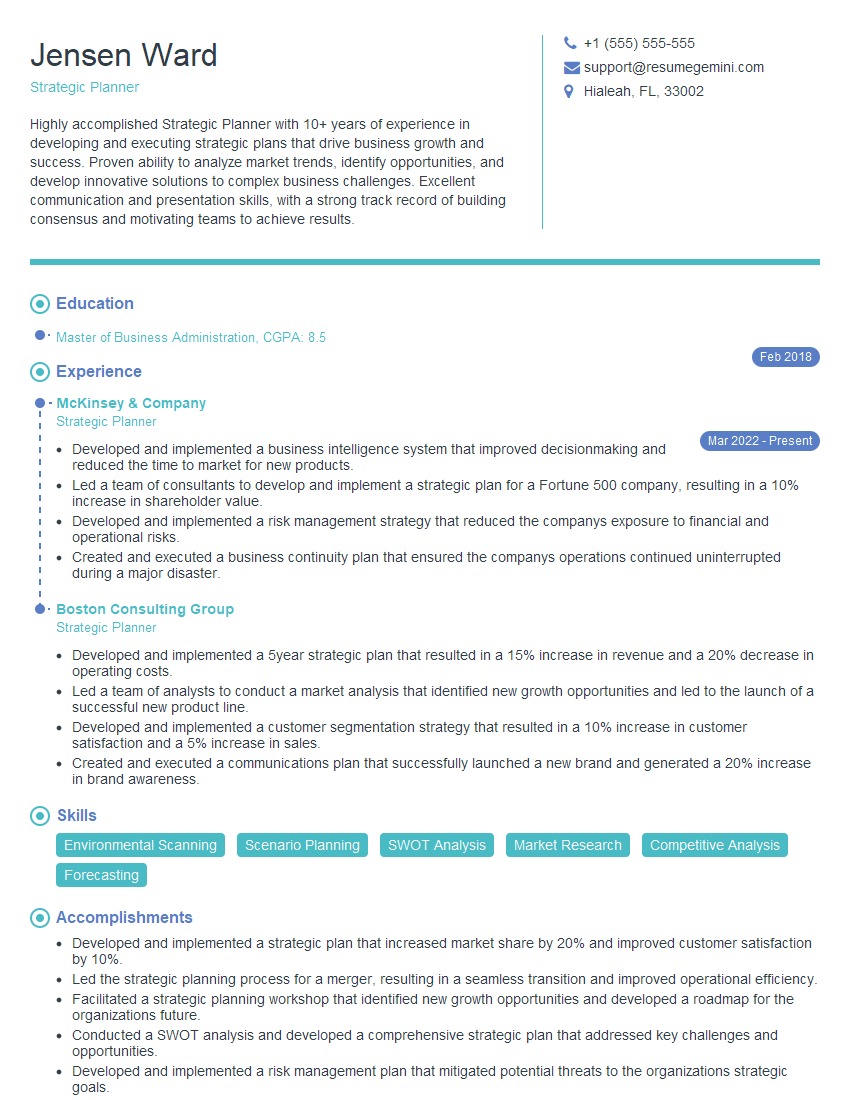
Strategic Planner Resume Sample
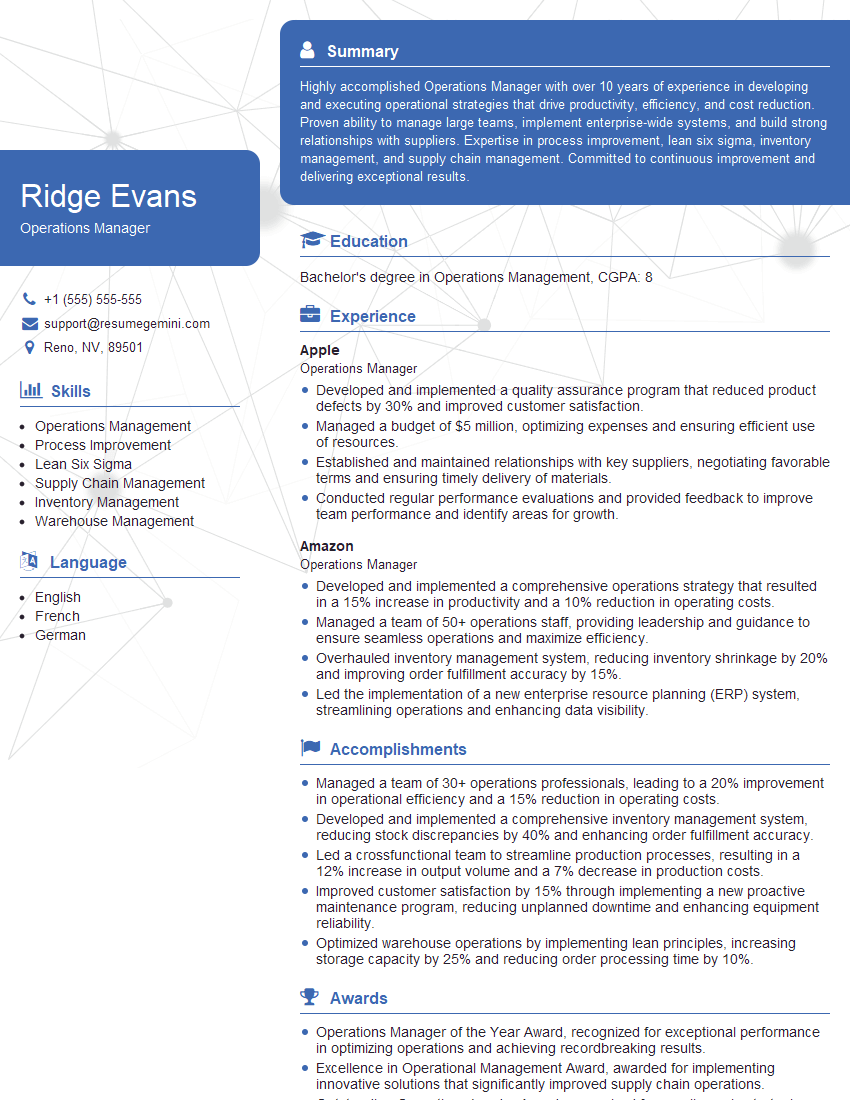
Operations Manager Resume Sample
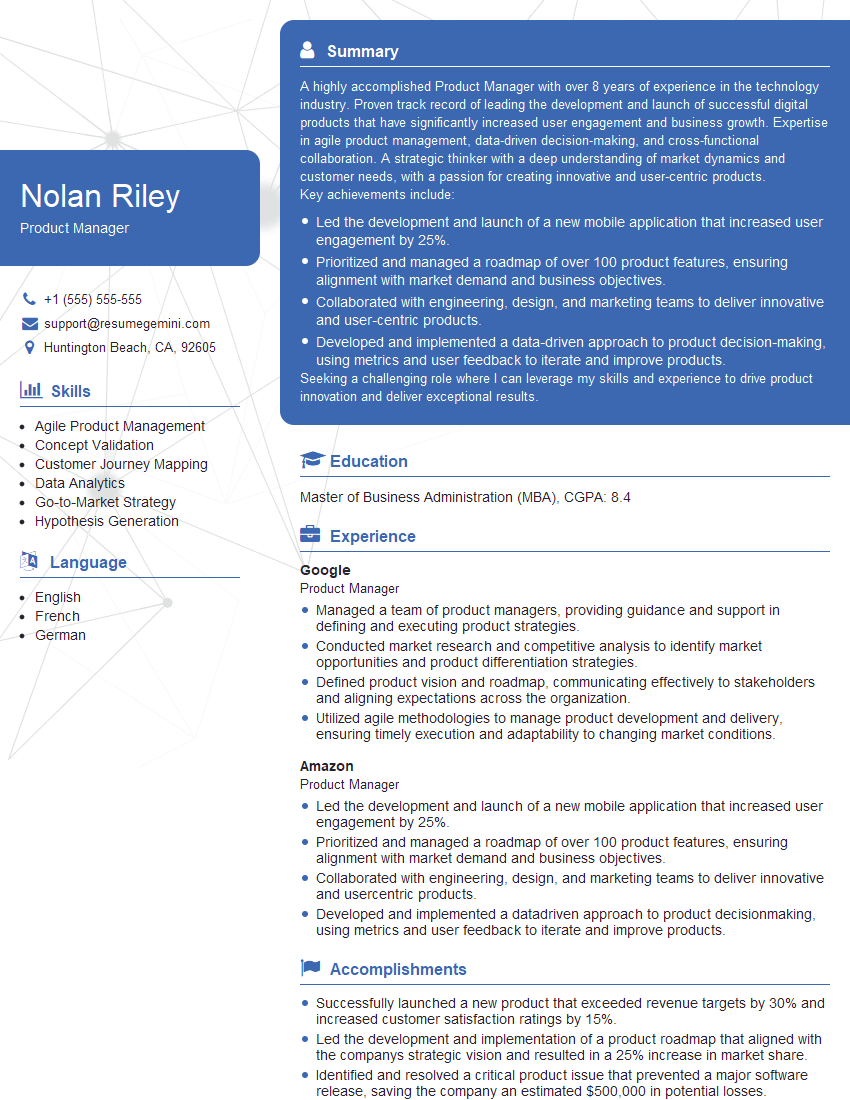
Product Manager Resume Sample
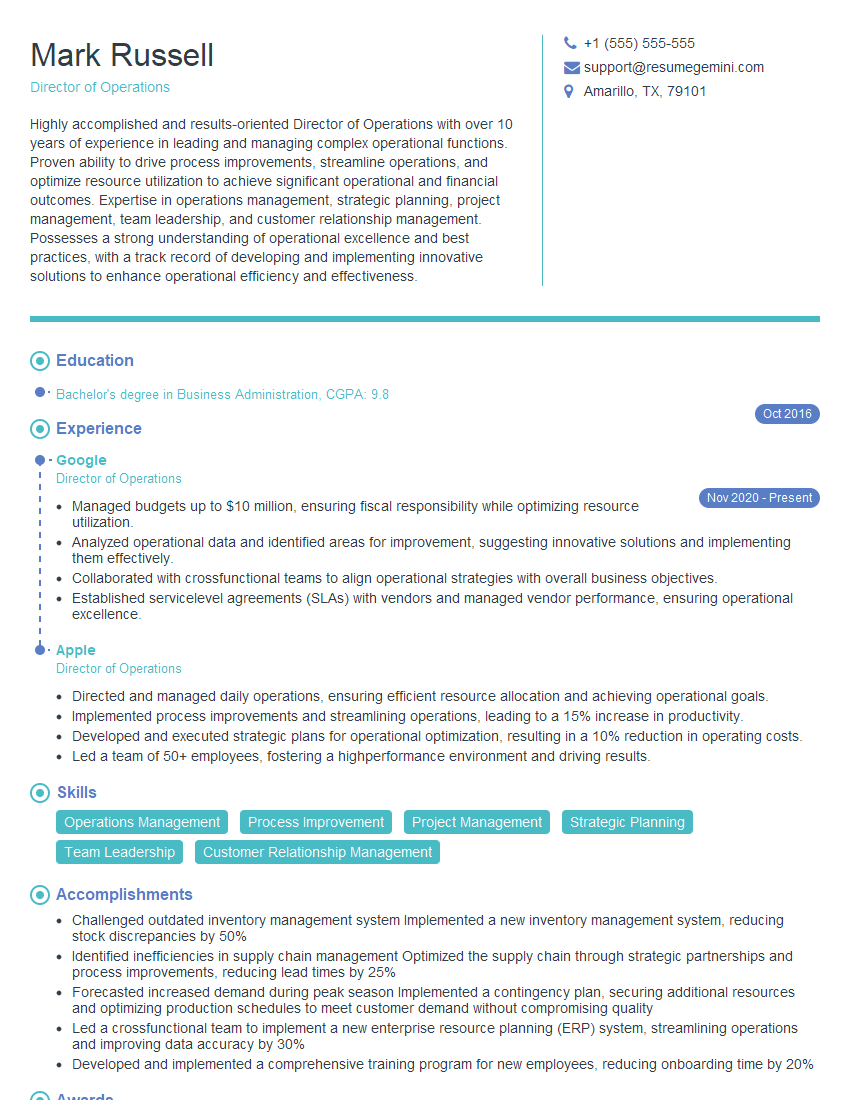
Director of Operations Resume Sample
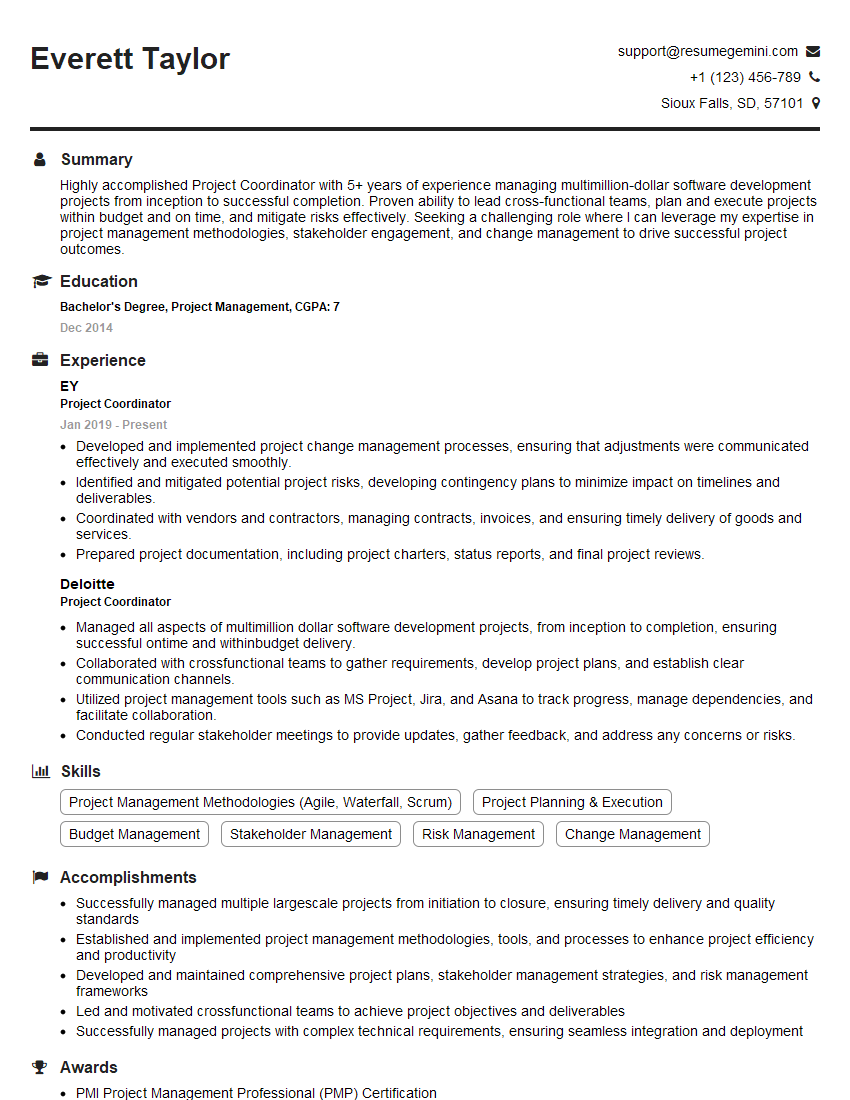
Project Coordinator Resume Sample

Chief of Staff Resume Sample
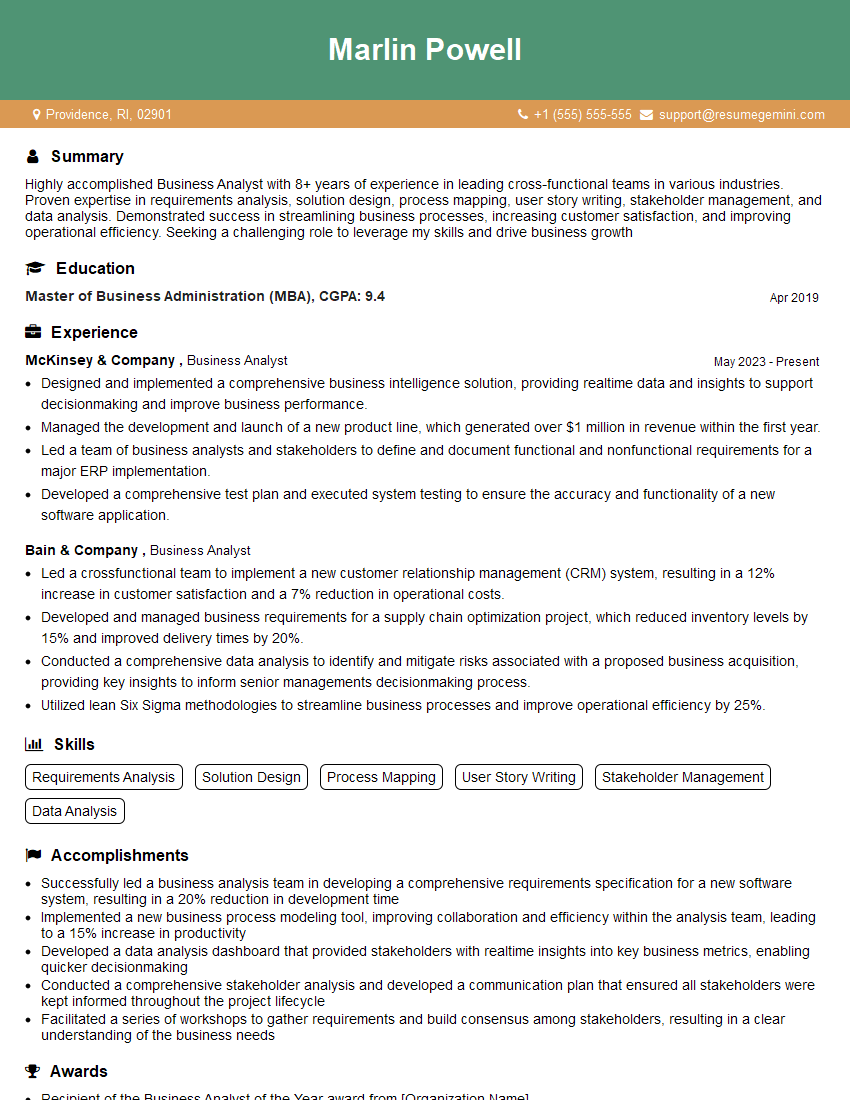
Business Analyst Resume Sample
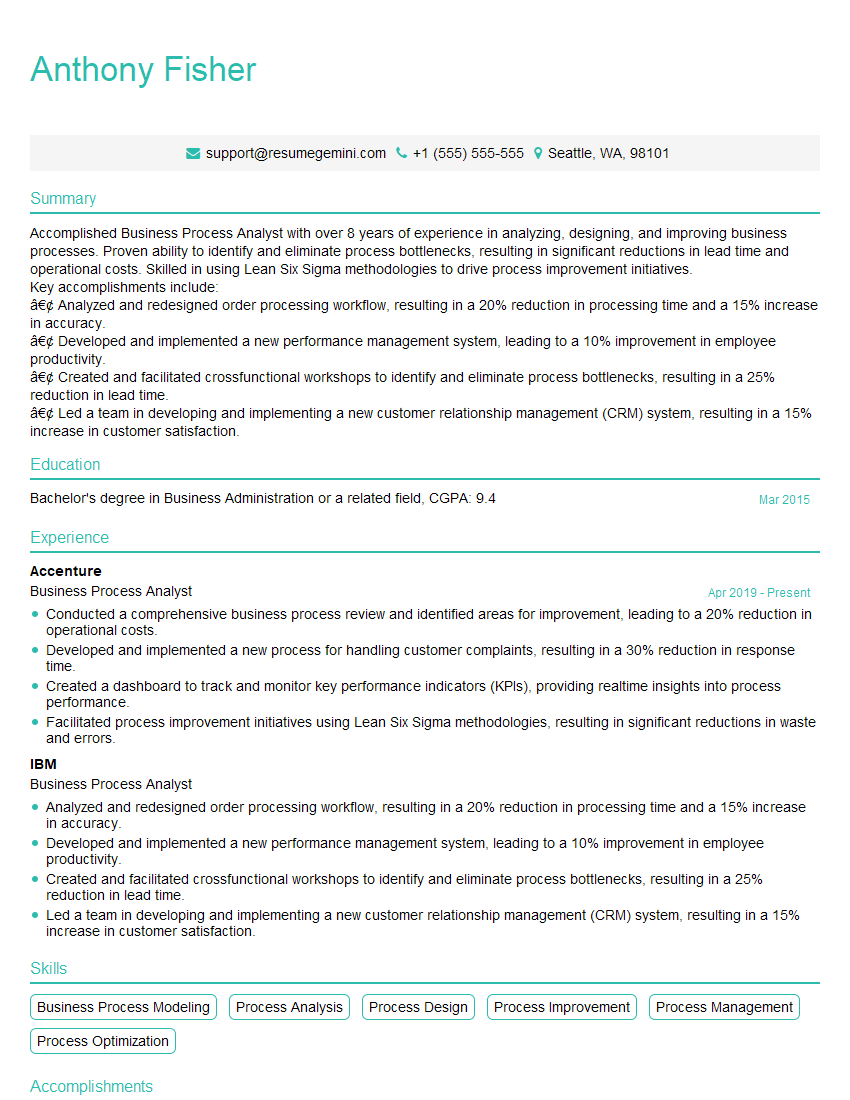
Business Process Analyst Resume Sample
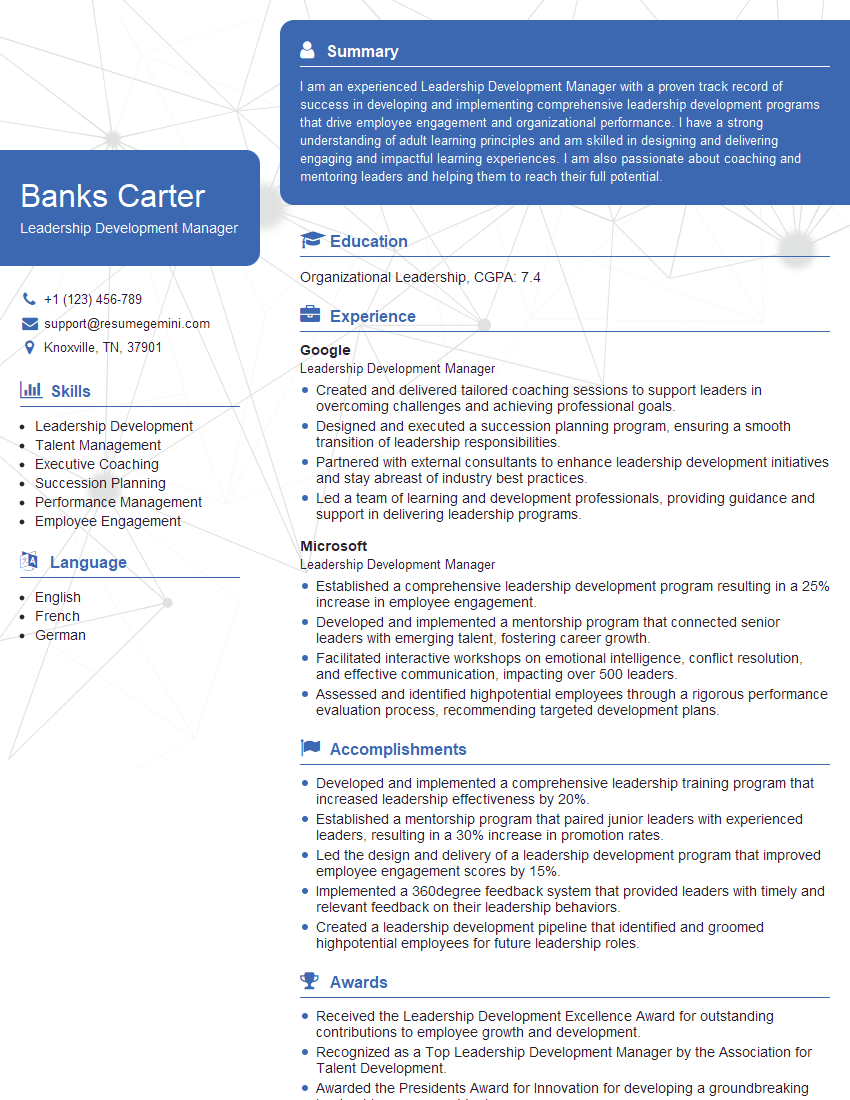
Leadership Development Manager Resume Sample
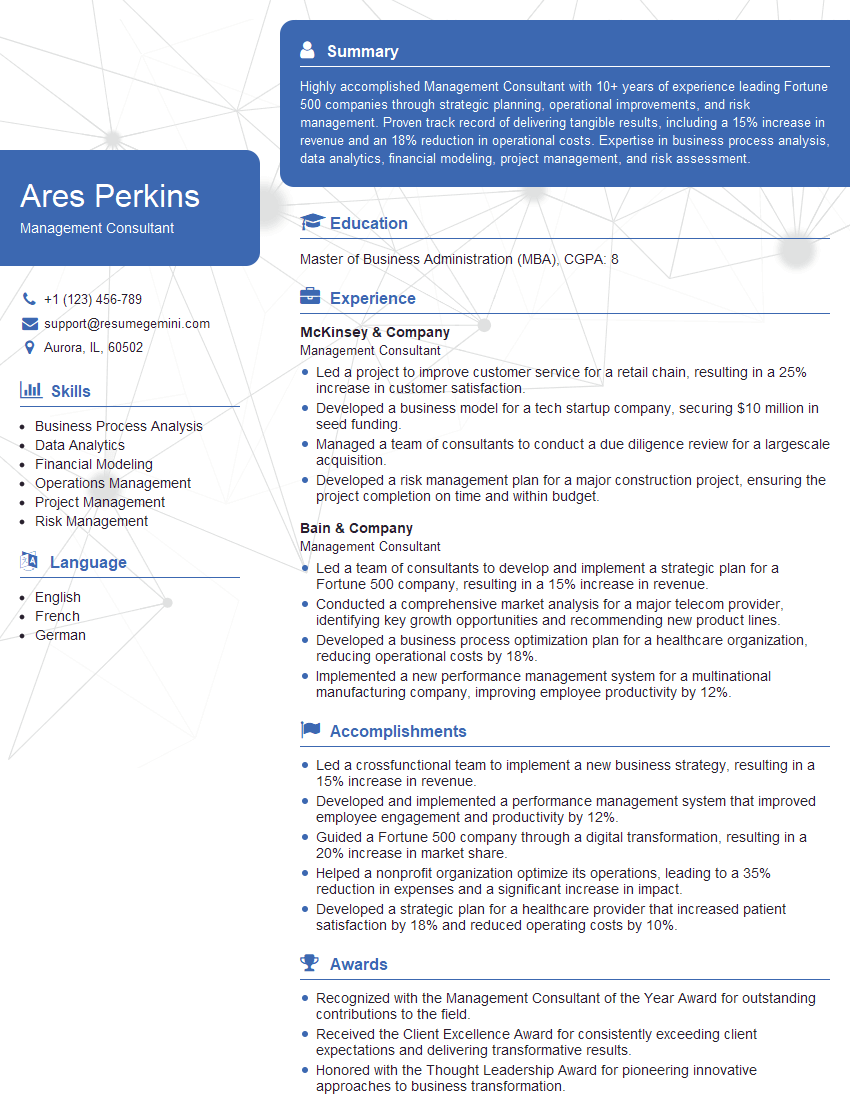
Management Consultant Resume Sample
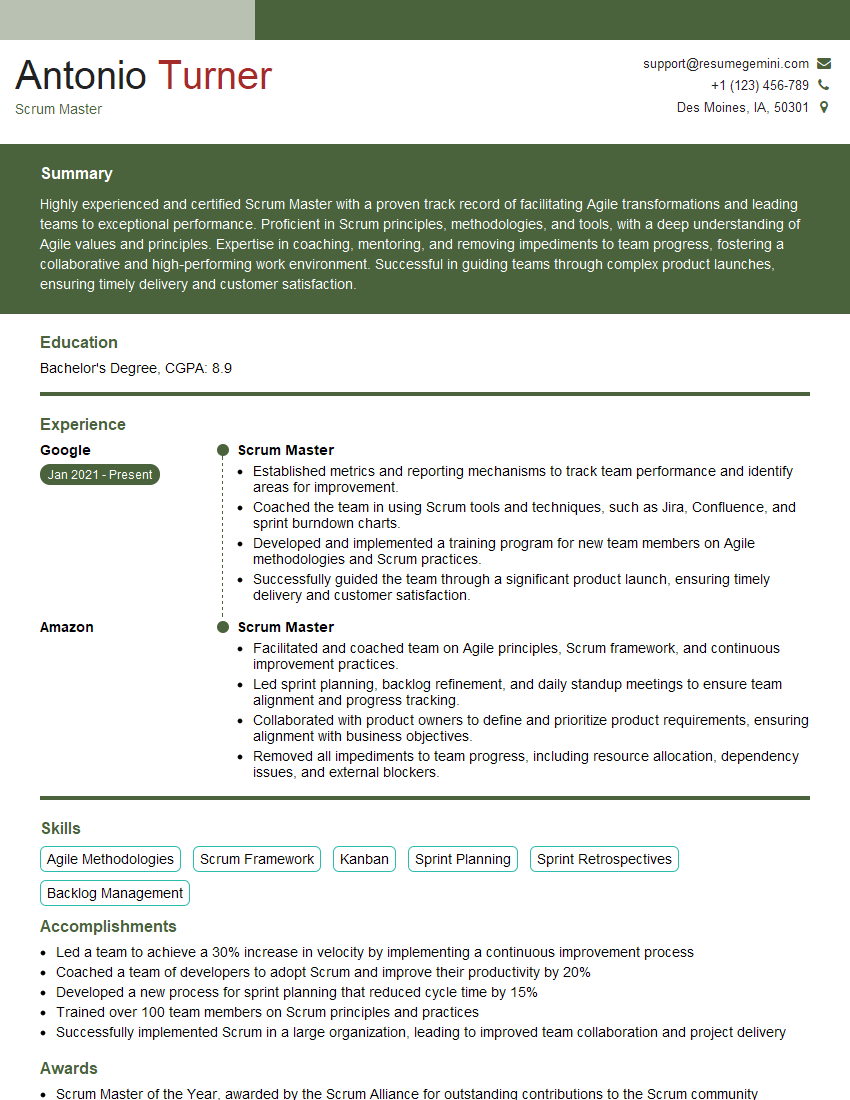
Scrum Master Resume Sample
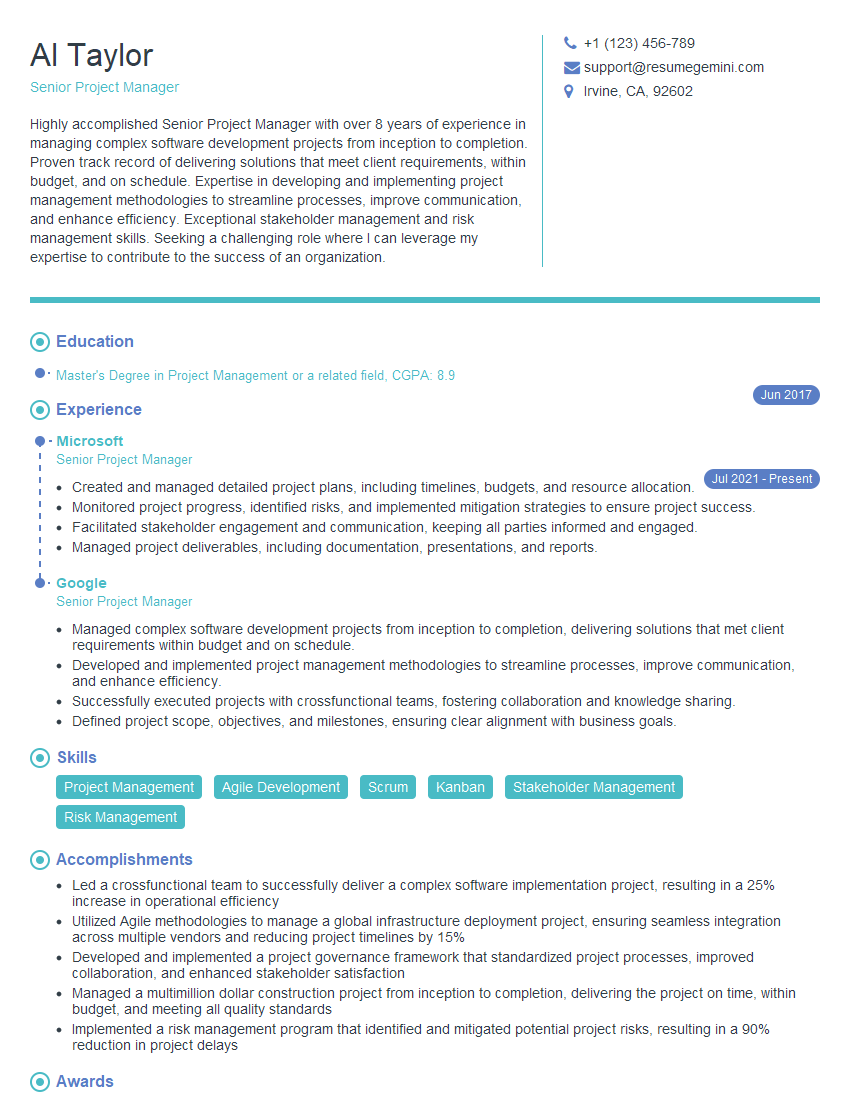
Senior Project Manager Resume Sample
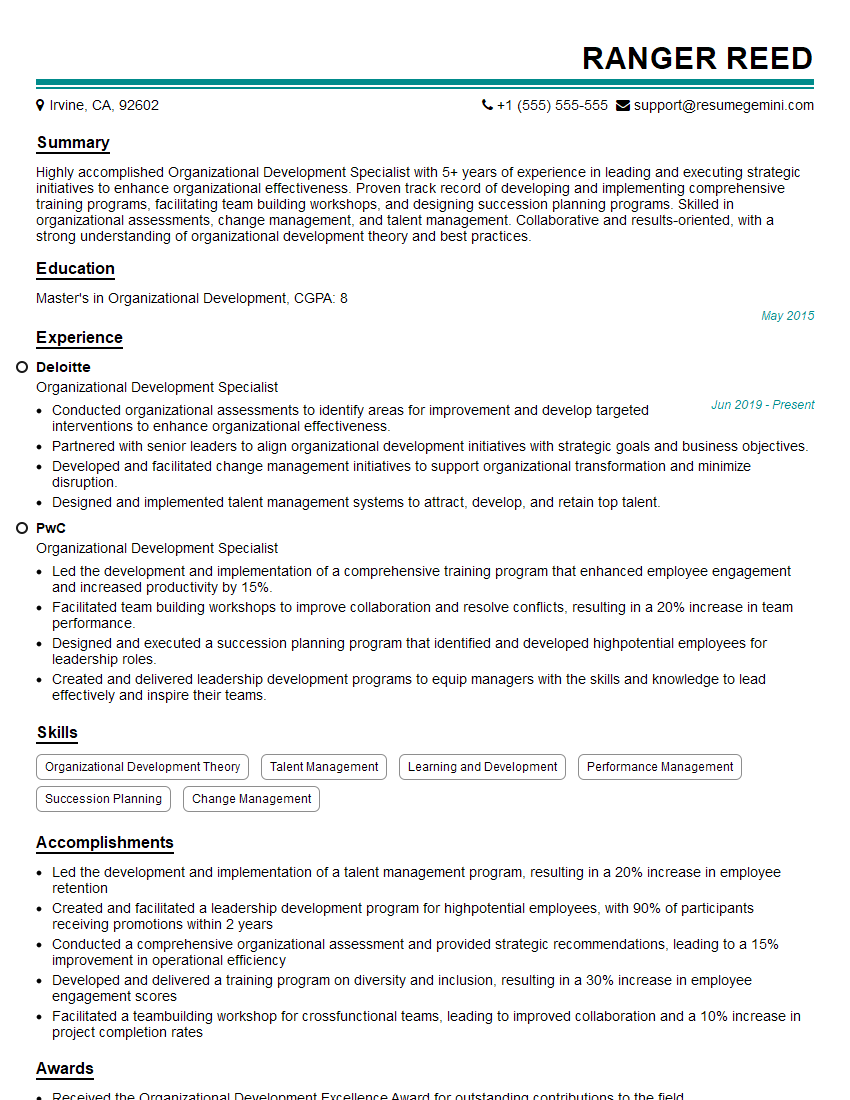
Organizational Development Specialist Resume Sample
Explore more articles
Users Rating of Our Blogs
Share Your Experience
We value your feedback! Please rate our content and share your thoughts (optional).
What Readers Say About Our Blog
Very informative content, great job.
good