Feeling uncertain about what to expect in your upcoming interview? We’ve got you covered! This blog highlights the most important Golf Course Design interview questions and provides actionable advice to help you stand out as the ideal candidate. Let’s pave the way for your success.
Questions Asked in Golf Course Design Interview
Q 1. Describe your experience with different turfgrass species suitable for golf courses.
Selecting the right turfgrass is paramount in golf course design, impacting playability, maintenance needs, and environmental impact. My experience encompasses a wide range of species, each with its own strengths and weaknesses.
- Zoysia: Known for its fine texture, excellent wear tolerance, and relatively low maintenance needs, Zoysia is ideal for high-traffic areas like fairways and roughs in warmer climates. However, it can be slower to recover from stress.
- Bermudagrass: A very popular choice, especially in the southern US, Bermudagrass boasts rapid growth, excellent wear tolerance, and a dark green color. It requires more intensive maintenance, including frequent mowing and fertilization.
- Bentgrass: Prized for its fine texture and putting surface quality, bentgrass is the gold standard for greens in many cooler climates. It’s more susceptible to disease and requires meticulous care, including precise mowing height and careful irrigation management. Creeping bentgrass is commonly used on putting greens for its superior putting characteristics.
- Festuca: A robust and adaptable species, fescue varieties are often used in roughs and less trafficked areas due to their drought tolerance and ability to thrive in various soil conditions. Fine fescues are suitable for putting greens under challenging environmental conditions.
In my designs, I carefully consider the climate, soil conditions, budget, and desired aesthetic to choose the optimal turfgrass blend or species. For instance, a course located in a high-altitude, cool climate might utilize a hard fescue blend for roughs and a meticulously maintained bentgrass putting surface, while a course in the subtropical south may rely predominantly on Bermudagrass.
Q 2. Explain your approach to designing greens for optimal playability and maintenance.
Designing greens requires a delicate balance between playability and maintainability. My approach prioritizes creating fast, true surfaces while minimizing maintenance demands. This involves:
- Careful selection of turfgrass: As discussed previously, choosing the right bentgrass variety is key for greens, balancing speed, smoothness and disease resistance.
- Precise grading and contouring: Subtle undulations add visual interest and challenge, but excessive slopes can hinder putting and increase maintenance difficulty. I use sophisticated modeling software to ensure optimal drainage and prevent water pooling on the putting surface.
- Strategic bunkering: Well-placed bunkers can shape the green, define pin positions, and provide visual interest, while also influencing ball roll and shaping shot approaches.
- Optimal green size and shape: The size and shape of the green dictate the strategy and difficulty of approaching the hole. My goal is to provide strategic challenges without rendering the green unplayable or overly difficult to maintain.
- Sustainable maintenance practices: Incorporating water-wise irrigation strategies and promoting natural pest control practices reduces the need for chemical inputs and minimizes environmental impact.
For example, I might design a green with subtle breaks and strategically placed bunkers to enhance the challenge without sacrificing playability or requiring excessive maintenance. The size of the green would be proportional to the overall strategy of the hole and the skill level of the target golfer.
Q 3. How do you incorporate environmental considerations into your golf course designs?
Environmental sustainability is at the forefront of my design philosophy. I strive to create courses that minimize environmental impact and promote biodiversity.
- Water conservation: This includes employing efficient irrigation systems, using drought-tolerant turfgrasses, and employing water harvesting techniques where possible. I utilize water audit software to track water usage and identify areas for improvement.
- Energy efficiency: Reducing energy consumption through the use of electric equipment and implementing strategies for energy-efficient maintenance practices is important.
- Protecting natural habitats: Minimizing land disturbance, preserving existing trees and wetlands, and creating wildlife corridors are crucial. I work closely with environmental consultants to assess the ecological impact of the project and implement mitigation strategies.
- Reducing chemical inputs: Promoting integrated pest management (IPM) practices, which utilizes natural pest control methods, reduces the reliance on chemical pesticides and fertilizers.
- Sustainable construction practices: This includes sourcing local materials, recycling construction waste, and minimizing the use of harmful chemicals during the construction process.
For example, I might incorporate a rainwater harvesting system to supplement irrigation needs or design the course to minimize tree removal, preserving existing ecosystems wherever feasible.
Q 4. What software and tools are you proficient in for golf course design and modeling?
Proficiency in specialized software is crucial for effective golf course design. I am highly proficient in:
- AutoCAD: Used for creating detailed site plans, grading maps, and construction drawings.
- Civil 3D: A powerful tool for 3D modeling, surface analysis, and volume calculations, essential for earthworks and grading design.
- GIS software (e.g., ArcGIS): Facilitates the analysis of site data, including topography, soil conditions, and environmental features.
- Specialized golf course design software (e.g., Planimetrics): These programs offer tools for creating realistic renderings, calculating distances, and designing features like bunkers and greens.
In addition to software, I utilize surveying equipment like GPS units and total stations to accurately capture site data and ensure precise design implementation. These tools, combined with my experience and knowledge, allow me to create innovative and sustainable golf course designs.
Q 5. Describe your experience with golf course irrigation system design and management.
Irrigation system design and management are critical for maintaining healthy turfgrass and ensuring optimal playing conditions. My experience covers all aspects, from initial design to ongoing management.
- System design: This involves selecting appropriate sprinkler heads, pump sizes, and piping materials based on factors like turfgrass type, soil conditions, and water pressure. I use hydraulic modeling software to simulate water flow and optimize system performance.
- Water source evaluation: Determining a reliable and sustainable water source is crucial, considering factors such as well capacity, surface water availability, and water rights.
- Smart irrigation technologies: Incorporating weather-based irrigation controllers, soil moisture sensors, and remote monitoring systems enhances efficiency and minimizes water waste.
- Maintenance and optimization: Regular system inspections, adjustments, and repairs are crucial to maintaining optimal performance and preventing breakdowns.
For example, in a recent project, I designed a highly efficient irrigation system that utilized weather sensors to automatically adjust watering schedules based on daily rainfall and evapotranspiration rates. This significantly reduced water consumption without compromising turf health.
Q 6. How do you manage site constraints such as topography, soil conditions, and water resources?
Site constraints are inherent in golf course design, demanding creative problem-solving. My approach involves a thorough site analysis and strategic design adaptations.
- Topography: I utilize 3D modeling to analyze the terrain and incorporate natural features into the course layout, minimizing earthworks while creating interesting and challenging holes. Steep slopes might be utilized for dramatic elevation changes or incorporated into natural hazards.
- Soil conditions: Thorough soil testing informs decisions on turfgrass selection, drainage design, and potential amendment strategies to ensure optimal turf growth. Poorly draining soils might require extensive drainage systems.
- Water resources: Careful consideration is given to water availability and restrictions. Water conservation strategies are prioritized, including the selection of drought-tolerant turfgrasses and the implementation of efficient irrigation systems. Water harvesting techniques can help supplement water resources.
For example, on a site with challenging topography, I might design holes that follow the natural contours of the land, creating visually appealing holes while minimizing the need for extensive grading. In a water-scarce region, I would prioritize drought-tolerant turf species and employ advanced irrigation technologies to minimize water consumption.
Q 7. Explain your understanding of drainage design and its impact on golf course playability.
Effective drainage design is crucial for maintaining healthy turf and ensuring year-round playability. Poor drainage leads to disease, turf damage, and unplayable conditions.
- Surface drainage: Proper grading and contouring are essential to direct surface runoff away from playing areas. This often involves creating swales or ditches to channel water to designated drainage points.
- Subsurface drainage: In areas with poor soil drainage, subsurface drainage systems, consisting of perforated pipes and gravel, are installed to remove excess water from the soil profile.
- Stormwater management: Integrating stormwater management techniques, such as detention ponds or bioretention areas, helps to control runoff and prevent erosion.
- Drainage system design software: Specialized software is used to model water flow and optimize drainage system design.
I always ensure that the drainage system is integrated seamlessly into the overall course design, minimizing its visual impact while maximizing its effectiveness. A well-designed drainage system not only prevents waterlogging but also protects the environment by reducing the risk of water pollution from fertilizers and pesticides. Ignoring drainage leads to problems ranging from localized ponding which slows play, to extensive saturation affecting the overall health of the course.
Q 8. Discuss your experience with budgeting and cost estimation for golf course projects.
Budgeting and cost estimation for golf course projects is a critical aspect demanding meticulous planning and detailed understanding of various factors. It’s not just about adding up costs; it’s about forecasting potential contingencies and ensuring the project remains financially viable throughout its lifecycle.
My process begins with a thorough site analysis, including soil testing, environmental impact assessments, and detailed topographical surveys. This data feeds into the design phase, where I utilize specialized software to generate accurate cost estimates for earthworks, irrigation, landscaping, construction materials, and labor. I break down the budget into manageable categories like:
- Land Acquisition & Site Preparation: This includes clearing, grubbing, and any necessary land leveling.
- Construction: This encompasses the shaping of greens, tees, fairways, bunkers, and the installation of drainage systems.
- Irrigation: This involves the design and installation of the entire irrigation infrastructure, including pumps, pipes, and sprinklers.
- Landscaping: This includes seeding, sodding, and planting trees and shrubs.
- Clubhouse and Support Facilities: If applicable, this includes the construction or renovation of the clubhouse, pro shop, and other supporting structures.
- Contingency: A crucial element, allowing for unexpected issues or price fluctuations.
Throughout the process, I maintain regular communication with clients, providing transparent updates and addressing any concerns proactively. For instance, on a recent project, we identified a significant underground rock formation during excavation, impacting our initial budget. By clearly communicating this challenge and exploring alternative solutions, we successfully mitigated the cost overrun and kept the project on track.
Q 9. Describe your process for collaborating with clients, contractors, and other stakeholders.
Collaboration is the cornerstone of successful golf course design. My approach involves fostering open communication and establishing clear roles and responsibilities from the outset. I believe in active listening and incorporating clients’ visions while leveraging my expertise to create a practical and aesthetically pleasing design.
With clients, I hold regular meetings, presenting design iterations and seeking feedback at every stage. Transparency and clear communication are paramount. I use visual aids like 3D models and renderings to effectively convey the design’s essence.
With contractors, I maintain detailed specifications and drawings, ensuring clarity on scope and expectations. Regular site visits allow for real-time problem-solving and adjustments. I encourage open dialogue to ensure the construction process is efficient and adheres to the design vision.
Other stakeholders like environmental consultants, regulatory agencies, and local communities are involved as needed. I proactively engage them early in the process to address potential concerns and ensure compliance with all relevant regulations. For example, on one project, we collaborated closely with an environmental agency to minimize the impact on a nearby wetland, resulting in a design that satisfied both environmental and aesthetic objectives.
Q 10. How do you ensure the sustainability and long-term maintenance of your golf course designs?
Sustainability and long-term maintenance are integral to my design philosophy. It’s about creating a course that is both environmentally responsible and economically viable for years to come. This involves several strategies:
- Water Conservation: Employing efficient irrigation systems, such as smart sensors and weather-based controllers, minimizes water usage. Selecting drought-tolerant grasses further reduces water demand.
- Natural Resource Management: Incorporating native plant species minimizes the need for fertilizers and pesticides, protecting biodiversity and reducing environmental impact. Careful consideration of drainage patterns reduces erosion and runoff.
- Waste Management: Utilizing recycled materials where feasible reduces the environmental footprint. Implementing strategies to manage and recycle waste generated during construction and maintenance.
- Reduced Chemical Usage: Employing Integrated Pest Management (IPM) techniques minimizes reliance on harmful chemicals. This holistic approach prioritizes prevention and only uses chemicals as a last resort.
- Energy Efficiency: Where applicable, incorporating renewable energy sources for clubhouse and maintenance facilities. Utilizing energy-efficient lighting and appliances reduces operational costs and the carbon footprint.
I work closely with maintenance professionals to ensure that the chosen grasses and landscaping are manageable and cost-effective to maintain over time. A well-designed course, built with sustainable practices in mind, will require less intensive maintenance, saving both time and money in the long run.
Q 11. What is your experience with different golf course styles and their design considerations?
My experience encompasses a wide range of golf course styles, each presenting unique design considerations. Understanding these nuances is crucial for creating a course that meets specific needs and objectives.
- Traditional/Classic: These courses emphasize strategic play, demanding precision and shot-making skills. Design considerations include undulating greens, strategically placed bunkers, and varied terrain. Think of iconic courses like St Andrews.
- Modern/Resort: Often characterized by wider fairways, larger greens, and a more forgiving design, appealing to a broader range of players. These courses often incorporate dramatic landscaping and water features.
- Links: These courses are shaped by wind, sand, and natural terrain. Design considerations focus on utilizing natural features and creating a challenging, yet aesthetically pleasing, layout.
- Parkland: These courses use mature trees and park-like settings to create a picturesque and enjoyable experience. Strategic tree placement, water features, and carefully shaped greens are central.
- Desert: These courses adapt to arid climates, utilizing drought-resistant grasses and emphasizing strategic bunkering and natural land formations. Water conservation is a key design consideration.
Each style demands a unique approach. For example, a links course demands a keen understanding of wind patterns to create challenging holes, whereas a parkland course might prioritize creating visually stunning vistas while maintaining strategic complexity.
Q 12. How do you incorporate natural features into a golf course design?
Incorporating natural features into golf course design is crucial for creating aesthetically pleasing and environmentally responsible courses. My approach involves a careful assessment of the existing landscape to identify opportunities to highlight natural elements while creating a playable and engaging course.
This involves:
- Preserving Existing Trees and Vegetation: Whenever possible, I aim to preserve mature trees and integrate them into the design, rather than removing them. This reduces costs, enhances aesthetics, and supports biodiversity.
- Utilizing Existing Landforms: I strive to shape the course around natural contours and undulations, minimizing the need for extensive earthworks. This reduces environmental impact and construction costs.
- Incorporating Water Features: Natural streams, ponds, and lakes can be creatively incorporated to enhance the visual appeal and strategic play. Careful consideration is given to the ecological impact and water management.
- Protecting Wetlands and Sensitive Habitats: I work closely with environmental consultants to ensure that the design minimizes impact on sensitive ecosystems. This often involves avoiding construction in environmentally sensitive areas and employing mitigation measures.
For example, on a recent project, we incorporated a meandering stream into the design, creating a visually stunning feature and reducing the need for artificial water hazards. This created a more natural and ecologically sensitive course.
Q 13. Describe your experience with golf course construction techniques and materials.
My experience with golf course construction techniques and materials is extensive. Understanding these aspects is critical for delivering a high-quality, durable, and aesthetically pleasing course.
This involves knowledge of:
- Earthworks: This includes land clearing, grading, shaping of greens, fairways, and bunkers. Techniques range from traditional methods to sophisticated earth-moving equipment.
- Drainage: Effective drainage systems are critical for preventing waterlogging and ensuring playable conditions. This includes the installation of subsurface drainage, surface drains, and swales.
- Irrigation: Modern irrigation systems are highly sophisticated, utilizing smart technologies for water conservation. Materials include pipes, valves, sprinklers, and pumps.
- Turfgrass Management: Selecting the appropriate grass species for the climate and soil conditions is crucial. This involves knowledge of grass establishment, fertilization, and disease management.
- Bunkers: Construction involves careful shaping and the selection of appropriate materials to ensure proper drainage and playability. This includes sand selection, liner installation, and shaping techniques.
- Materials: A wide range of materials are used, including various types of soil, sand, grasses, irrigation components, and construction materials. Choosing sustainable and high-quality materials is crucial.
I work closely with experienced contractors and construction teams, ensuring adherence to high standards and the use of best practices throughout the construction process.
Q 14. How do you address challenges related to erosion control and soil stabilization?
Erosion control and soil stabilization are critical aspects of golf course design and construction, particularly in areas with slopes or sensitive ecosystems. Addressing these challenges involves a multi-faceted approach:
- Proper Grading and Drainage: Careful grading and the design of appropriate drainage systems minimizes water runoff and erosion. This involves creating swales, berms, and other features to channel water away from sensitive areas.
- Vegetative Stabilization: Planting appropriate vegetation helps to bind the soil and prevent erosion. This involves selecting native species that are adapted to the local climate and soil conditions.
- Erosion Control Blankets and Mats: These materials provide temporary protection to exposed soil surfaces during construction, giving vegetation time to establish itself.
- Soil Amendments: Improving soil structure through amendments like compost or other organic matter enhances its stability and reduces erosion susceptibility.
- Check Dams and Sediment Basins: These structures can be installed in watercourses to trap sediment and reduce erosion downstream.
- Mulching: Applying mulch to exposed soil surfaces helps retain moisture, suppress weeds, and reduce erosion.
On a recent project, we employed a combination of these techniques, including contouring, vegetative stabilization, and erosion control blankets, to prevent erosion on steep slopes and protect a nearby stream. The result was a course that was both playable and environmentally responsible.
Q 15. Explain your understanding of golf course regulations and permitting processes.
Navigating the regulatory landscape of golf course design is crucial. It involves understanding and adhering to local, regional, and sometimes national environmental regulations, zoning laws, and permitting processes. This includes, but isn’t limited to, obtaining permits for land clearing, water usage, wetland impacts, and construction.
The process typically starts with a thorough environmental impact assessment, which identifies potential ecological concerns and proposes mitigation strategies. Then, detailed plans, including site surveys, drainage plans, and landscape architecture designs, are submitted to the relevant authorities for review and approval. Each jurisdiction has its own specific requirements, so working closely with environmental consultants and local government agencies is critical throughout the process. For example, in some areas, special permits might be needed for endangered species protection or to manage water resources sustainably. Delays can occur if permits are not submitted correctly or if environmental concerns aren’t adequately addressed. Therefore, proactive planning and thorough documentation are essential to ensure a smooth and timely permitting process.
Career Expert Tips:
- Ace those interviews! Prepare effectively by reviewing the Top 50 Most Common Interview Questions on ResumeGemini.
- Navigate your job search with confidence! Explore a wide range of Career Tips on ResumeGemini. Learn about common challenges and recommendations to overcome them.
- Craft the perfect resume! Master the Art of Resume Writing with ResumeGemini’s guide. Showcase your unique qualifications and achievements effectively.
- Don’t miss out on holiday savings! Build your dream resume with ResumeGemini’s ATS optimized templates.
Q 16. Describe your experience with using GIS and CAD software in golf course design.
GIS (Geographic Information Systems) and CAD (Computer-Aided Design) software are indispensable tools in modern golf course design. GIS allows for detailed analysis of the site’s topography, soil conditions, and existing vegetation, facilitating informed decisions regarding course layout and drainage. I use GIS to create digital elevation models (DEMs), which are crucial for determining the best locations for greens, tees, and fairways, while also assessing potential environmental challenges.
CAD software, on the other hand, is used to create precise architectural drawings, including detailed plans for bunkers, greens, and water features. I use CAD to refine the course layout, experimenting with different hole designs and configurations to optimize playability and aesthetics. The integration of GIS and CAD allows me to seamlessly move between site analysis and design, creating a cohesive and efficient workflow. For instance, I can directly import GIS data into my CAD software to ensure accurate representation of terrain features, thereby reducing the likelihood of errors during construction. This collaborative approach significantly enhances precision and minimizes potential issues during the construction phase.
Q 17. How do you ensure accessibility for golfers with disabilities in your designs?
Accessibility is paramount in my designs. I strive to create courses that are enjoyable and playable for golfers of all abilities, including those with disabilities. This involves adhering to the Americans with Disabilities Act (ADA) guidelines and other relevant accessibility standards. Key aspects include ensuring wide cart paths for wheelchair accessibility, strategically placing benches for rest stops, providing accessible restrooms and parking, and designing greens and fairways with gentle slopes to avoid excessive difficulty for golfers with mobility impairments.
Furthermore, I consider the use of alternative tee boxes to allow golfers of varying skill levels and physical capabilities to participate fully. For example, forward tees can reduce the length of the course, creating a less strenuous playing experience. The design also incorporates features such as accessible pathways to approach the greens, allowing golfers using wheelchairs to easily navigate their shots. I actively collaborate with accessibility consultants to ensure all my designs meet the highest standards of inclusivity.
Q 18. What is your approach to designing bunkers for strategic play and aesthetics?
Bunkers are strategic elements that shape the play and visual appeal of a golf course. My approach is to integrate them seamlessly into the landscape, employing a variety of shapes, sizes, and placements to create challenges and visual interest. Strategic bunker placement forces golfers to make careful shot selections, rewarding well-executed shots while penalizing errors. For example, a strategically placed bunker can guard the front of a green, forcing golfers to shape their approach shots precisely.
Aesthetics are also key. I use varying depths, slopes, and textures to provide visual diversity. The type of sand used also plays a role in the bunker’s aesthetic appeal; it can enhance the overall look. For example, choosing a white sand can make a bunker appear more dramatic, while a darker sand can create a softer look. Ultimately, the placement, design, and visual impact of bunkers are critical in creating a course that is both challenging and beautiful. I strive for a balance of strategic function and visual appeal, ensuring that bunkers are not merely obstacles but integral components of a memorable golfing experience.
Q 19. Describe your understanding of the interplay between golf course design and overall landscape architecture.
Golf course design is intrinsically linked to landscape architecture. A golf course is not just a playing field, but an integrated part of the wider landscape. My approach emphasizes creating a harmonious relationship between the course and its surroundings. This means carefully considering the existing topography, vegetation, and water features, and integrating the course design seamlessly into the natural environment.
I often work with landscape architects to develop a holistic design that considers the impact of the course on the surrounding ecosystem. This can involve using native plant species to reduce maintenance requirements, creating wetlands to improve water quality, and preserving existing trees and natural features. For example, I’ve incorporated existing woodlands and lakes into course designs to minimize environmental disruption and create a visually appealing and ecologically sensitive layout. This holistic approach ensures that the golf course enhances, rather than detracts from, the beauty and integrity of the surrounding landscape.
Q 20. How do you handle changes in scope or budget during a golf course project?
Handling changes in scope or budget is a common challenge in large-scale projects like golf course design. My approach involves establishing clear communication channels between the client, the construction team, and myself. We regularly review the project’s progress against the initial plan, making adjustments as needed. I use a phased approach, breaking down the project into manageable stages, to allow for greater flexibility and easier adaptation to changes.
Value engineering is a critical tool for addressing budget constraints. This involves identifying areas where costs can be reduced without significantly compromising the quality or functionality of the design. For example, we might explore less expensive materials for cart paths or adjust the design to minimize earthmoving costs. Changes in scope are carefully evaluated to assess their impact on the project timeline and budget. Any modification must be formally documented and approved by all stakeholders before implementation. This structured process ensures that any changes are managed efficiently and transparently, maintaining the integrity of the project while staying within budget.
Q 21. How do you prioritize aesthetics, playability, and sustainability in your designs?
Balancing aesthetics, playability, and sustainability is essential to creating a truly exceptional golf course. My design philosophy prioritizes integrating these three elements organically rather than treating them as separate entities. Aesthetics are not merely superficial; they contribute to the overall experience and enjoyment of the game. A beautiful course with aesthetically pleasing landscapes enhances the player’s enjoyment.
Playability focuses on creating a challenging yet fair course that caters to golfers of all skill levels. Sustainability is crucial in today’s world. I incorporate water-wise irrigation systems, utilize native vegetation to reduce water and maintenance needs, and minimize the use of pesticides and fertilizers. For instance, I might utilize a water-harvesting system to collect and reuse rainwater for irrigation, which reduces dependence on municipal water sources. Ultimately, a successful design is a harmonious blend of all three elements, resulting in a course that is both visually stunning, enjoyable to play, and environmentally responsible.
Q 22. Describe your experience with evaluating the environmental impact of a golf course project.
Evaluating the environmental impact of a golf course is paramount. It’s not just about aesthetics; it’s about minimizing disruption to the existing ecosystem and ensuring long-term sustainability. My approach involves a multi-stage process starting with a thorough site assessment. This includes analyzing soil composition, identifying existing flora and fauna, assessing water resources, and understanding the local climate. We then use this data to inform design choices. For example, we might select native, drought-resistant grasses to reduce water consumption and pesticide use. We meticulously plan for stormwater management, potentially incorporating bioswales or retention ponds to filter runoff and prevent pollution. Furthermore, we actively seek opportunities to enhance biodiversity, perhaps by creating wildlife corridors or incorporating wetlands. We also conduct detailed impact assessments, predicting potential effects on water quality, air quality, and habitat, and we explore mitigation strategies to minimize negative consequences. A crucial step is engaging with local environmental agencies and stakeholders throughout the process, ensuring transparency and compliance with relevant regulations. For instance, on a recent project near a sensitive wetland, we adjusted the course layout significantly to avoid impacting the natural area, opting for a more compact design and incorporating native plantings to act as a buffer zone. The result was a course with reduced environmental footprint and a stronger connection to its surroundings.
Q 23. Explain your understanding of various construction methods for different golf course features.
Construction methods vary significantly depending on the specific feature. For greens, we often use a sophisticated process involving layers of sand, topsoil, and specialized grass seed. The sand layer provides excellent drainage, crucial for maintaining healthy turf. We’ll often utilize GPS-guided machinery for precise grading and leveling, ensuring a consistent playing surface. For bunkers, shaping is key, with choices between traditional hand-raking or employing heavy machinery for larger-scale projects. The type of sand used is crucial, impacting drainage and playability. Fairway construction often involves extensive earthmoving, shaping the land to create desirable undulations and strategic challenges. We might use laser-guided grading to achieve the desired slopes and contours. Water features demand careful planning. We consider factors like liner type (clay, rubber, or PVC) to minimize leakage and maintain water quality. We also incorporate features such as spillways and overflow areas to prevent flooding. For pathways and cart paths, the choices range from concrete to asphalt to compacted gravel, the selection dictated by budget and environmental factors. For example, permeable paving can minimize runoff, aligning with sustainable design practices. Each element requires a detailed plan, specifying materials, techniques, and timelines to ensure efficient and high-quality construction.
Q 24. What are your strategies for creating unique and memorable golf course experiences?
Creating memorable golf experiences involves far more than just challenging play. It’s about crafting a holistic environment that engages all the senses and provides a unique and enjoyable experience for each golfer. This starts with a thoughtful understanding of the site’s natural features. For example, incorporating dramatic elevation changes, stunning views, and interesting water features can create a truly unforgettable round. Strategic bunkering, subtly placed hazards, and creative green designs add an element of challenge and excitement. But the memorable aspect also extends beyond the course itself. I believe in creating an overall atmosphere through thoughtful landscaping, architectural elements that blend seamlessly with the natural environment, and the overall ‘feel’ of the place. The design should tell a story. One project I worked on involved using old stone walls and reclaimed wood in the clubhouse and cart paths, which added a historical charm and a connection to the local heritage. Another example was incorporating a beautifully restored historical building into a new course layout, making it the centerpiece and a focal point of the whole project. The creation of distinct and varied holes, providing a sense of progression and surprise, further enhances the playing experience. The aim is to create a journey, not just a game.
Q 25. How do you incorporate modern trends and technologies into your golf course designs?
Modern trends and technologies play a significant role in contemporary golf course design. GPS-guided machinery allows for incredibly precise grading and construction, leading to better-quality playing surfaces and reduced construction time. GIS (Geographic Information Systems) software helps in analyzing site data, optimizing course layout, and assessing environmental impacts with greater accuracy. 3D modeling software enables clients to visualize the completed course in detail, allowing for adjustments and refinements before construction begins. Furthermore, advancements in turfgrass science inform the selection of grasses that are more drought-tolerant and disease-resistant, leading to more sustainable courses. Smart irrigation systems using sensors and weather data optimize water usage, conserving resources and reducing costs. The integration of mobile applications that provide players with real-time course information, scorekeeping, and GPS guidance are increasingly common. We even explore the possibility of integrating renewable energy sources, such as solar panels, into the course infrastructure. The use of these technologies not only improves efficiency and sustainability but also enhances the overall player experience, creating a more interactive and engaging round of golf.
Q 26. Describe your experience with presenting your designs to clients and stakeholders.
Presenting designs effectively to clients and stakeholders requires a multi-faceted approach. I begin by establishing a clear understanding of their vision, goals, and budget. I use high-quality visuals, including 3D renderings, aerial perspectives, and detailed plans, to effectively communicate the design’s key features. Presentations are carefully structured, starting with an overview of the project’s context and objectives, followed by a detailed exploration of the design features, highlighting the creative concepts and sustainable considerations. I emphasize the playability of the course, showcasing strategic elements and highlighting the potential for memorable experiences. I actively encourage client feedback, fostering collaboration and addressing concerns promptly. A crucial element is demonstrating the financial feasibility of the project, presenting a clear breakdown of costs and potential returns. Effective communication and responsiveness to client needs are essential, creating a collaborative and transparent design process. One memorable presentation involved creating a virtual reality experience, allowing clients to ‘walk’ the course before construction commenced—a highly impactful way to showcase the design vision.
Q 27. How do you manage risks and potential challenges during the construction phase?
Managing risks during the construction phase involves meticulous planning and proactive mitigation. This starts with a detailed risk assessment, identifying potential problems such as weather delays, material shortages, cost overruns, and environmental issues. We develop contingency plans to address each identified risk. For example, having alternative material suppliers in place minimizes the impact of potential shortages. Regular site inspections and progress meetings with the construction team allow for early identification and resolution of issues. Maintaining open communication with all stakeholders keeps everyone informed and ensures collaboration in overcoming challenges. We use robust project management software to track progress, costs, and resources. Effective change management processes are crucial for handling unforeseen circumstances and alterations to the original design. For instance, unexpected ground conditions might necessitate adjustments to the drainage system, requiring prompt decision-making and cost adjustments. A strong emphasis on safety protocols and adherence to regulations ensures the well-being of the construction team and protects against potential liabilities. Careful documentation throughout the construction phase is essential for dispute resolution and managing any potential claims.
Q 28. How do you measure the success of a completed golf course design?
Measuring the success of a completed golf course design is a multifaceted process. It’s not just about the aesthetics; it’s about the overall player experience and the course’s long-term viability. Key metrics include player satisfaction, measured through surveys and feedback. The course’s financial performance, including revenue generation and operational costs, is another important indicator. We also assess the environmental impact, monitoring water usage, energy consumption, and biodiversity. The course’s playability and the level of challenge it provides are judged through tournament play and player reviews. Long-term success hinges on the course’s ability to adapt to changes in climate and play style. Sustainable practices, such as reduced water consumption and integrated pest management, are crucial for maintaining the course’s ecological integrity and reducing operational costs in the long run. Finally, the overall community impact is evaluated, considering the course’s contribution to local tourism and economic development. By combining quantitative data with qualitative feedback, we gain a holistic understanding of the project’s success, allowing for continual improvement and refinement in future projects.
Key Topics to Learn for Your Golf Course Design Interview
- Site Analysis & Selection: Understanding factors like topography, soil conditions, water resources, and environmental impact assessments. Practical application: Analyzing a site plan and identifying potential challenges and opportunities.
- Course Layout & Design Principles: Mastering concepts like strategic bunkering, green design, fairway shaping, and routing to create a challenging and enjoyable playing experience. Practical application: Sketching a preliminary course layout and justifying design choices.
- Construction & Management: Familiarity with construction techniques, budgeting, project management, and ongoing course maintenance. Practical application: Describing your experience with coordinating construction projects or managing a team.
- Sustainability & Environmental Considerations: Understanding environmentally friendly practices in golf course design, including water conservation, native plantings, and minimizing chemical use. Practical application: Discussing specific sustainable design strategies you’ve implemented or would implement.
- Playability & Aesthetics: Balancing the challenge of the course with the enjoyment of the player. Considering the overall aesthetic appeal of the course and its integration with the surrounding landscape. Practical application: Explaining how you would design a course that caters to different skill levels.
- Regulations & Compliance: Knowledge of relevant building codes, environmental regulations, and professional standards. Practical application: Describing your approach to navigating regulatory hurdles in a design project.
- Software & Technology: Proficiency in CAD software (e.g., AutoCAD, Civil 3D) and other relevant design tools. Practical application: Demonstrating your ability to use design software to create and present accurate plans and renderings.
Next Steps
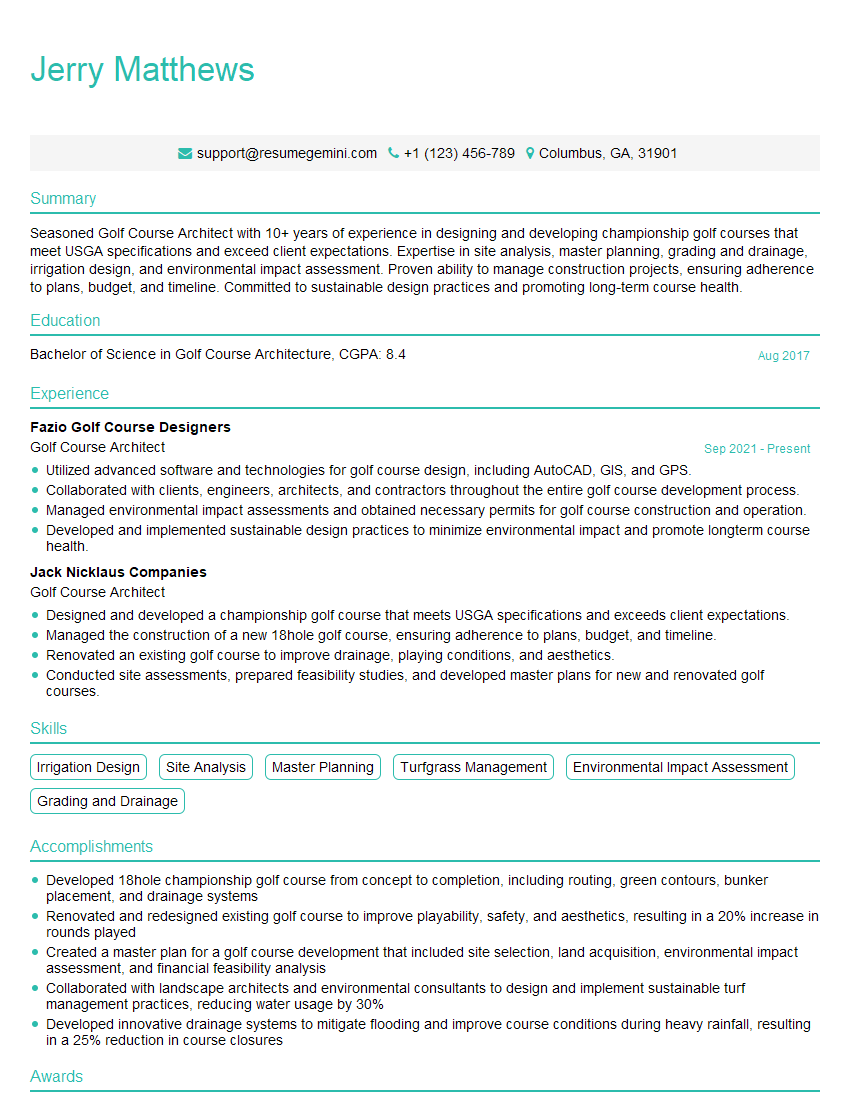
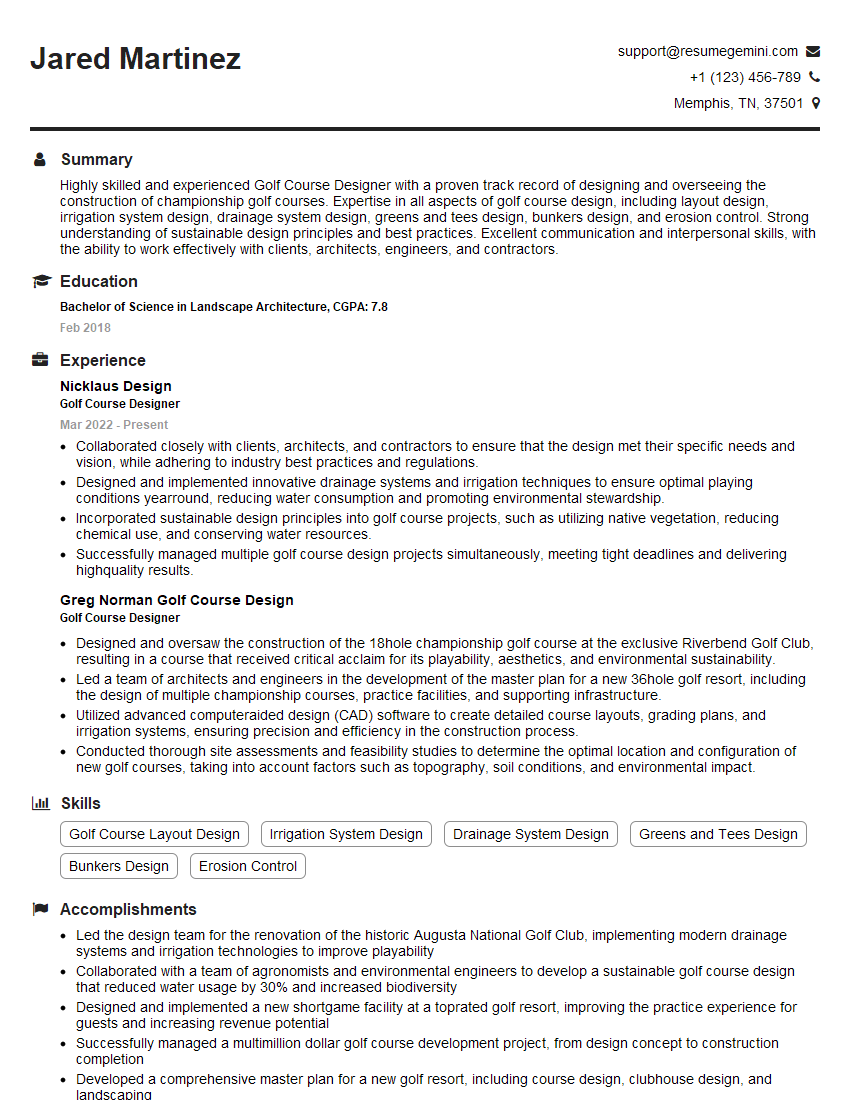
Mastering Golf Course Design opens doors to a rewarding career filled with creative challenges and the opportunity to shape landscapes and experiences for golfers worldwide. To maximize your job prospects, it’s crucial to present your skills and experience effectively through a well-crafted, ATS-friendly resume. ResumeGemini is a trusted resource to help you build a professional resume that showcases your unique qualifications. We provide examples of resumes tailored specifically to Golf Course Design to help you get started. Take advantage of these resources to make a lasting impression on potential employers.
Explore more articles
Users Rating of Our Blogs
Share Your Experience
We value your feedback! Please rate our content and share your thoughts (optional).
What Readers Say About Our Blog
Very informative content, great job.
good