Unlock your full potential by mastering the most common Grapevine Canopy Management interview questions. This blog offers a deep dive into the critical topics, ensuring you’re not only prepared to answer but to excel. With these insights, you’ll approach your interview with clarity and confidence.
Questions Asked in Grapevine Canopy Management Interview
Q 1. Explain the importance of proper grapevine canopy management.
Proper grapevine canopy management is crucial for maximizing grape quality and yield. Think of the canopy as a factory; it needs the right amount of sunlight, air circulation, and water to produce the best possible product (grapes). Without proper management, the factory can become inefficient, leading to lower yields, poorer quality fruit, and increased susceptibility to disease.
Effective canopy management ensures that sunlight penetrates evenly throughout the canopy, allowing for optimal photosynthesis. It also improves air circulation, reducing humidity and the risk of fungal diseases. Finally, it allows for better water management, preventing water stress and promoting healthy vine growth.
Q 2. Describe different canopy management techniques and their applications.
Several canopy management techniques are employed, often in combination, depending on the grape variety, climate, and desired outcome. These include:
- Leaf Pulling/Thinning: Manually removing leaves to improve light penetration and air circulation, particularly around the fruit zone. This is labor-intensive but highly effective for targeted improvement.
- Shoot Positioning/Training: Guiding and tying shoots to optimize canopy structure and exposure to sunlight. Techniques include vertical shoot positioning (VSP) and bilateral cordon training. The goal is a balanced canopy allowing for even ripening.
- Hedging/Pruning: Regular pruning during the growing season to control shoot growth and maintain the desired canopy shape and density. This helps to prevent overcrowding and promote uniform ripening.
- Mechanical Canopy Management: Utilizing machinery such as leaf removers, hedgers, and selective shoot removal systems for large-scale operations. This speeds up the process significantly but requires careful calibration to avoid damage.
For example, in a hot, dry climate, leaf pulling might be used to reduce shading and protect grapes from sunburn, while in a humid climate, hedging might be prioritized to enhance air circulation and prevent fungal diseases.
Q 3. What are the key factors to consider when choosing a canopy management system?
Choosing the right canopy management system requires careful consideration of several factors:
- Grape Variety: Different grape varieties have different canopy growth habits and sunlight requirements. Some varieties naturally produce dense canopies, requiring more intensive management.
- Climate: Hot, sunny climates may require more leaf removal to prevent sunburn, while cooler, cloudier climates might need less intervention to maximize light capture.
- Soil Type and Water Availability: Well-drained soils with ample water will support more vigorous growth, necessitating a more robust canopy management strategy.
- Training System: The chosen training system (e.g., VSP, cordon) influences the canopy structure and dictates the appropriate management techniques.
- Labor and Equipment Resources: The availability of labor and machinery influences the feasibility of different canopy management approaches. Mechanical systems are efficient for large vineyards but may be impractical for small-scale operations.
For instance, a vineyard in a humid region prone to downy mildew might prioritize canopy management techniques that promote air circulation and reduce humidity, while a vineyard in a dry climate might focus on strategies that optimize light capture and prevent sunburn.
Q 4. How does canopy management impact fruit quality and yield?
Canopy management significantly impacts both fruit quality and yield. Proper management leads to improved fruit quality through:
- Enhanced Sunlight Exposure: Better light penetration results in improved photosynthesis, leading to higher sugar levels, richer flavor development, and better color.
- Reduced Disease Pressure: Improved air circulation minimizes humidity, thus reducing the risk of fungal diseases.
- Even Ripening: Uniform sunlight exposure across the canopy promotes more consistent ripening of grapes.
Regarding yield, well-managed canopies generally lead to higher yields due to:
- Increased Fruit Set: Optimal light penetration and reduced shading enhances the fruit set process.
- Improved Berry Size: Better sunlight exposure results in larger, more uniform berries.
- Reduced Fruit Loss: Proper management minimizes disease and reduces the risk of berry damage from sunburn.
A poorly managed canopy, on the other hand, can lead to reduced yield and poor quality due to shading, disease, and uneven ripening.
Q 5. Discuss the role of sunlight penetration in canopy management.
Sunlight penetration is paramount in canopy management. It’s the lifeblood of photosynthesis, the process by which grapevines convert sunlight into energy for growth and fruit production. Think of sunlight as the energy source for the grapevine’s ‘factory’.
The goal is to achieve optimal light interception across the canopy, ensuring that all fruit-bearing zones receive sufficient light. This is achieved through various techniques like leaf pulling, shoot positioning, and hedging, which aim to create a balanced canopy that neither overly shades nor exposes the fruit to excessive light (leading to sunburn).
Tools like light meters can be employed to measure light penetration within the canopy, guiding decisions on the intensity of canopy management interventions. The optimal amount of sunlight varies depending on the grape variety and the climate.
Q 6. Explain the relationship between canopy management and disease control.
Canopy management plays a critical role in disease control. Excessive canopy density creates a humid microclimate, which is ideal for the development of fungal diseases like powdery mildew and downy mildew. These diseases can significantly reduce yield and compromise fruit quality.
By improving air circulation and reducing humidity through techniques like leaf pulling, hedging, and shoot thinning, canopy management significantly reduces the risk of these diseases. A well-managed canopy creates a less hospitable environment for fungal pathogens to thrive.
Furthermore, improved light penetration promotes faster drying of foliage after rain, further reducing the risk of fungal infection. Integrated pest management strategies often incorporate canopy management as a crucial component for disease control, minimizing the need for chemical interventions.
Q 7. How does canopy management influence vine water stress?
Canopy management directly influences vine water stress. An overly dense canopy can create shading, leading to reduced transpiration and potentially increased water stress, particularly during hot, dry periods. Conversely, excessive leaf removal can increase transpiration and potentially exacerbate water stress.
Effective canopy management aims to strike a balance. It focuses on optimizing light penetration and air circulation without excessively increasing the vine’s water loss. This balance is crucial for maintaining optimal vine water status and ensuring efficient water use.
Proper irrigation strategies should always be considered in conjunction with canopy management to mitigate the risks of both water stress and excessive vegetative growth. Monitoring vine water status through techniques like stem water potential measurements can help fine-tune irrigation and canopy management practices.
Q 8. What are the common challenges associated with grapevine canopy management?
Grapevine canopy management, while crucial for optimal fruit production, presents several significant challenges. These challenges often intertwine and necessitate a holistic approach to overcome.
- Maintaining the Balance: Finding the right balance between sunlight penetration, airflow, and leaf area is a constant juggling act. Too much shade leads to poor fruit development, while too little leaf area restricts photosynthesis and yield.
- Disease and Pest Management: Dense canopies create ideal environments for fungal diseases like powdery mildew and downy mildew, as well as pest infestations. Proper canopy management is key to mitigating these risks.
- Varietal Differences: Different grape varieties have varying canopy architecture requirements. A training system suitable for one variety might be unsuitable for another.
- Environmental Factors: Weather conditions, particularly rainfall and sunlight intensity, greatly influence canopy development and require adaptive management strategies. For example, excessive rainfall can lead to fungal diseases, demanding more frequent leaf removal.
- Labor Costs: Canopy management is labor-intensive, involving pruning, training, leaf removal, and other tasks. Finding efficient and cost-effective strategies is essential for vineyard profitability.
Successfully navigating these challenges requires a deep understanding of viticulture, meticulous observation, and adaptability to changing conditions.
Q 9. Describe your experience with various training systems (e.g., vertical shoot positioning, spur-pruned cordon).
My experience spans a wide range of training systems, each with its strengths and weaknesses. I’ve worked extensively with both vertical shoot positioning (VSP) and spur-pruned cordon systems, adapting them to various vineyard sites and grape varieties.
- Vertical Shoot Positioning (VSP): VSP is particularly effective in maximizing sunlight exposure and airflow, which is crucial for disease prevention and fruit ripening. I’ve used VSP successfully with varieties like Cabernet Sauvignon and Chardonnay, adjusting the shoot spacing and leaf removal based on the vine’s vigor and the prevailing environmental conditions. The key is to manage the density to avoid excessive shading of the lower fruit zones.
- Spur-Pruned Cordon: This system is well-suited for varieties that produce strong basal buds, leading to compact and manageable canopies. I’ve found it particularly advantageous in areas prone to strong winds, as the lower cordon provides stability. However, it requires meticulous pruning to maintain uniform fruit distribution and avoid overcropping.
In my experience, choosing the right training system is not a one-size-fits-all proposition. It depends heavily on the specific grape variety, soil conditions, climate, and economic considerations. I always prioritize systems that optimize both yield and quality.
Q 10. How do you monitor canopy development and make adjustments throughout the growing season?
Monitoring canopy development is an ongoing process, starting well before budbreak and continuing throughout the growing season. My approach involves a combination of visual observation and data collection.
- Visual Assessment: Regular walks through the vineyard allow for a comprehensive assessment of vine vigor, shoot growth, leaf area, and fruit set. I pay close attention to symptoms of disease, pest infestations, and any irregularities in canopy structure.
- Data Collection: I employ various tools such as measuring tapes to assess shoot length and leaf area index (LAI). In addition, specialized software can be integrated to monitor canopy structure, growth patterns, and the effectiveness of various management practices.
- Adjustments: Based on my observations and data, I make timely adjustments to canopy management practices. This might involve leaf removal, shoot positioning, or targeted pruning to optimize sunlight penetration and airflow.
The frequency of monitoring increases during critical periods, such as fruit set and ripening, ensuring timely interventions and optimal fruit quality.
Q 11. Explain the use of leaf removal techniques and their effects.
Leaf removal, or leaf thinning, is a crucial technique to improve light penetration into the canopy, leading to better fruit ripening, color development, and reduced disease incidence. However, it must be done strategically, avoiding excessive removal that can compromise the vine’s overall health.
- Techniques: Leaf removal can be performed manually or mechanically. Manual removal is more precise, allowing for targeted leaf removal from specific areas of the canopy. Mechanical leaf removal is faster but less precise and can potentially damage developing fruit or shoots if not properly calibrated.
- Effects: Strategic leaf removal leads to improved fruit quality attributes, such as increased sugar accumulation, improved color, and a reduction in berry rot. It also creates better airflow, reducing humidity within the canopy and consequently the risk of fungal diseases.
- Considerations: The extent of leaf removal depends on factors like variety, climate, and the specific objectives. Excessive leaf removal can reduce photosynthesis, negatively impacting overall vine health and fruit production. It’s crucial to maintain a balance to optimize both fruit quality and vine vigor.
I often use a phased approach to leaf removal, starting with removal of leaves that severely shade the fruit zone and gradually removing more leaves as the fruit develops. The goal is always to maximize fruit exposure while minimizing the risk to the vine’s health.
Q 12. How do you manage canopy density to optimize fruit production?
Managing canopy density is paramount for optimizing fruit production. The ideal density balances the need for sufficient leaf area for photosynthesis with the requirement for good sunlight penetration and airflow to reduce disease and improve fruit quality.
- Assessment: Canopy density is assessed through various methods, including visual estimation, leaf area index (LAI) measurements, and specialized software. LAI, in particular, provides a quantitative measure of leaf area per unit ground area.
- Strategies: Managing canopy density involves a range of techniques. These include appropriate pruning, shoot positioning, leaf removal, and, in some cases, hedging. The goal is to create an open canopy with adequate spacing between shoots and leaves to allow for optimal light penetration and airflow.
- Optimization: The optimal canopy density varies depending on the grape variety, climate, and training system. A denser canopy might be acceptable in cooler climates, while in warmer climates, a more open canopy is often preferred. The key is to tailor the management practices to the specific conditions of the vineyard.
I frequently use a combination of these techniques to fine-tune canopy density throughout the growing season, ensuring that the canopy structure supports the production of high-quality fruit.
Q 13. Discuss the impact of pruning on canopy structure and fruit quality.
Pruning plays a pivotal role in shaping the canopy structure and directly influences fruit quality. It’s a fundamental aspect of canopy management that affects yield, fruit size, and berry composition.
- Canopy Structure: Pruning defines the framework of the vine, influencing its overall size, shape, and density. Different pruning techniques lead to vastly different canopy structures. For instance, cane pruning creates a more open canopy compared to spur pruning, which results in a more compact structure. This structural influence has implications for light penetration, airflow, and disease management.
- Fruit Quality: Pruning impacts fruit quality by affecting both the quantity and quality of the fruit produced. Overcropping, resulting from insufficient pruning, often leads to smaller berries, lower sugar content, and reduced flavor intensity. Conversely, appropriate pruning helps to concentrate resources on fewer, higher-quality berries.
- Balance: The optimal pruning strategy needs to carefully balance yield and fruit quality. While heavier pruning reduces yield, it generally improves fruit quality by reducing competition for resources among the remaining fruit. Conversely, insufficient pruning reduces fruit quality.
The art of pruning lies in finding the sweet spot that maximizes both yield and quality, which requires experience and a thorough understanding of the specific grape variety and growing conditions.
Q 14. How do you use technology (e.g., sensors, software) in canopy management?
Technology is increasingly transforming grapevine canopy management, offering both efficiency and precision. I utilize a range of technological tools to enhance my management practices.
- Sensors: Sensors such as those measuring leaf area index (LAI), light penetration, and temperature within the canopy provide valuable quantitative data for informed decision-making. This data allows for more targeted interventions and a better understanding of canopy microclimate.
- Software: Specialized software programs enable the analysis of sensor data and the creation of 3D canopy models. These models allow for a visual representation of canopy structure and aid in simulating the effects of different management practices, allowing for optimization of the interventions before implementation.
- Remote Sensing: Drone imagery and satellite data provide a high-level perspective of the vineyard, enabling the identification of variations in canopy density and health across large areas. This data assists in identifying problem areas and making strategic management decisions.
- Precision Viticulture: Integration of these technologies promotes precision viticulture, enabling site-specific management based on the actual conditions of each vine or section of the vineyard rather than employing a generalized approach.
The use of technology is transforming canopy management from a labor-intensive, often guesswork-based process to one characterized by data-driven precision and optimization. This allows for improved efficiency, reduced costs, and the production of higher-quality fruit.
Q 15. What are the environmental considerations in canopy management?
Environmental considerations in grapevine canopy management are paramount for sustainable and productive viticulture. We must carefully balance vine growth with the natural environment to optimize fruit quality and yield while minimizing negative impacts.
- Water Use Efficiency: Canopy management directly influences water consumption. A well-managed canopy allows for better sunlight penetration and air circulation, reducing the risk of fungal diseases and improving water use efficiency. Techniques like leaf removal and shoot positioning can significantly reduce water stress during drought periods.
- Pest and Disease Management: A dense canopy creates a humid microclimate favorable for fungal diseases like powdery mildew and downy mildew. Proper canopy management, including pruning and leaf removal, improves airflow, reducing humidity and disease pressure. It also improves pesticide efficacy by ensuring better spray coverage.
- Sunlight Exposure: Grapevine fruit quality is heavily dependent on sunlight exposure. Optimal canopy management ensures sufficient sunlight reaches the fruit zone for proper ripening and sugar accumulation. Excessive shading leads to smaller berries, reduced sugar content, and poor fruit quality.
- Soil Health: Canopy management indirectly affects soil health. Proper vine training systems, such as vertical shoot positioning (VSP), minimize soil compaction from machinery traffic and improve soil aeration. Reduced disease pressure also means less need for chemical interventions, contributing to better soil microbial activity.
- Biodiversity: Minimizing chemical inputs through effective canopy management promotes beneficial insect populations and maintains biodiversity within the vineyard ecosystem.
Career Expert Tips:
- Ace those interviews! Prepare effectively by reviewing the Top 50 Most Common Interview Questions on ResumeGemini.
- Navigate your job search with confidence! Explore a wide range of Career Tips on ResumeGemini. Learn about common challenges and recommendations to overcome them.
- Craft the perfect resume! Master the Art of Resume Writing with ResumeGemini’s guide. Showcase your unique qualifications and achievements effectively.
- Don’t miss out on holiday savings! Build your dream resume with ResumeGemini’s ATS optimized templates.
Q 16. Explain your understanding of different pruning methods.
Pruning is a fundamental aspect of grapevine canopy management, shaping the vine’s structure and influencing its productivity and fruit quality. Different pruning methods aim to achieve specific goals depending on the grape variety, climate, and desired yield.
- Short Pruning: This method involves leaving only a few buds (2-6) on each cane, resulting in a smaller canopy and higher fruit quality due to improved sunlight penetration. It’s suitable for varieties that produce a large number of buds per cane.
- Long Pruning: This technique leaves more buds (8-15) per cane, resulting in a larger canopy with potentially higher yields but possibly lower fruit quality due to increased competition for resources. It’s often used in less sunny climates or with varieties having fewer buds per cane.
- Cane Pruning: This common method involves selecting canes from the previous year’s growth and pruning them to a desired length. The remaining buds will produce new shoots and fruit.
- Spur Pruning: This technique involves pruning to short spurs (2-3 buds) left directly on the older wood. It maintains a smaller and more compact canopy.
- Head Pruning: Used mainly for older vines, head pruning involves cutting back the main stem or trunk to encourage new growth.
The choice of pruning method requires careful consideration of several factors, including the variety’s growth habit, desired yield, and local climatic conditions. For example, a vigorous variety in a sunny climate might benefit from short pruning, while a less vigorous variety in a cool climate may require long pruning.
Q 17. How do you assess the effectiveness of your canopy management practices?
Assessing the effectiveness of canopy management practices is crucial for optimizing vineyard performance. We use a multi-faceted approach combining quantitative and qualitative assessments.
- Yield Monitoring: Regularly tracking yield per vine or per hectare provides a direct measure of productivity. Trends in yield over time reflect the impact of canopy management practices.
- Berry Analysis: Analyzing berry size, sugar content (Brix), acidity, and other quality parameters helps determine if canopy management is delivering the desired fruit quality.
- Visual Assessment: Regular observation of canopy characteristics like leaf area, shoot vigor, and fruit exposure provides valuable qualitative information on the effectiveness of different techniques. This includes checking for excessive shading or sunscald.
- Disease Incidence: Monitoring the incidence of fungal diseases like powdery mildew and downy mildew serves as an indicator of the success of canopy management in maintaining good airflow and reducing humidity.
- Growth Modeling Software: Advanced techniques involve using specialized software to model vine growth and predict the impact of various canopy management strategies. This allows for proactive adjustments to optimize outcomes.
By combining these assessment methods, we gain a holistic understanding of how our practices are impacting yield, fruit quality, and disease control. This data is then used to refine our strategies for future seasons.
Q 18. How do you address issues such as excessive shading or sunscald?
Excessive shading and sunscald are common issues in grapevine canopies, impacting both yield and fruit quality. Addressing these challenges requires a proactive approach.
- Excessive Shading: This is tackled primarily through timely pruning and leaf removal. Targeted removal of leaves in the fruit zone improves sunlight penetration to enhance berry ripening. Techniques like hedging (trimming the tops of the canopy) also aid in regulating canopy density and improving light distribution. If the issue is due to poor vine spacing, replanting or changing training systems may be necessary.
- Sunscald: This occurs when intense sunlight directly scorches the fruit. Sunscald is mitigated by appropriately managing canopy density to provide shade without creating excessive shading. Strategies include careful leaf positioning, utilizing shading nets, or selecting appropriate vine training systems.
An example of a practical solution is using a combination of techniques: In a high-density vineyard experiencing shading, we might use a combination of leaf removal in the fruit zone and hedging to improve light penetration while preventing sunscald. Regular monitoring and adjusting canopy management throughout the growing season is essential to prevent these issues.
Q 19. Describe your experience with shoot positioning techniques.
Shoot positioning techniques are crucial for optimizing light interception and fruit exposure, thereby influencing yield and quality. My experience encompasses various techniques, each with its own advantages and disadvantages.
- Vertical Shoot Positioning (VSP): This is a widely used system where shoots are trained vertically along a trellis wire. It improves light penetration, simplifies canopy management, and facilitates mechanical harvesting.
- Geneva Double Curtain (GDC): This system features two curtains of foliage on either side of the trellis wires, providing excellent shade management and protection against sunscald. It requires more initial investment and skill in training, but it often results in improved fruit quality.
- Single Curtain: A simpler system than GDC, with one curtain of foliage on one side of the trellis. Offers a good compromise between ease of management and fruit quality.
The effectiveness of shoot positioning depends greatly on the grape variety, climate, and available resources. For instance, a variety with compact growth would thrive under VSP, while one with extremely vigorous growth might benefit from GDC. The training system needs to be tailored to the specific vineyard’s context.
Q 20. How do you manage canopy during periods of extreme weather?
Extreme weather events pose significant challenges to grapevines and require proactive management strategies. Canopy management plays a crucial role in mitigating the adverse effects.
- Heat Waves: During extreme heat, maintaining adequate canopy density to provide some shade can help prevent sunscald and reduce water stress. However, it’s crucial to avoid excessive shading that would negatively impact ripening. Techniques like leaf removal to improve air circulation around the fruit zone become crucial here.
- Frost Protection: In frost-prone areas, canopy management techniques can enhance frost protection. Delaying budbreak through pruning and training can minimize frost damage. Furthermore, techniques like using wind machines or irrigation to create a microclimate are often combined with appropriate canopy management.
- High Winds: In windy areas, the canopy’s structure must be able to withstand strong winds. Stronger trellis systems and appropriate training methods are needed. Proper pruning can create a more resilient canopy that won’t be easily damaged.
- Hailstorms: Hail protection nets can reduce the impact of hailstorms. While not strictly canopy management, the interaction between the net and the canopy must be considered to avoid excessive shading or damage.
Effective canopy management during extreme weather necessitates a thorough understanding of the local climate and the specific vulnerabilities of the grape variety. Proactive measures and the use of appropriate strategies are crucial for minimizing losses.
Q 21. Describe your experience with different trellis systems.
Trellis systems provide structural support for grapevines, influencing canopy development and management. My experience encompasses a range of trellis systems, each suited to different environments and viticultural practices.
- Vertical Shoot Positioning (VSP): A simple, widely used system characterized by vertical shoots attached to a trellis wire. It is easy to manage, promotes good light penetration, and is well-suited for mechanical harvesting.
- Geneva Double Curtain (GDC): This system features two curtains of foliage, creating a more shaded canopy. It’s excellent for protecting fruit from sunscald and improving fruit quality, particularly in warm climates, but it demands more labor and expertise in training.
- Lyre: A more complex system involving overhead wires creating a “lyre” shape. Often used for varieties requiring more structural support.
- T-Bar/Head-Trained: Simple systems, usually for less vigorous varieties or in areas with less space.
The selection of a trellis system is a crucial decision, heavily influenced by factors such as climate, grape variety, soil type, and desired yield. For example, in areas with high winds, a stronger trellis system like a T-bar or a robust GDC might be preferred, whereas VSP may be suitable for milder climates with less vigorous varieties.
Q 22. How do you balance yield and quality through canopy management?
Balancing yield and quality in grapevine canopy management is a delicate act of optimization. It’s about ensuring sufficient leaf area for photosynthesis to produce high yields while maintaining appropriate fruit exposure to sunlight for optimal ripening and quality. Too much leaf cover (dense canopy) can lead to poor fruit ripening, increased disease susceptibility, and reduced sugar accumulation, impacting quality. Conversely, insufficient leaf area (sparse canopy) can compromise yield potential.
We achieve this balance through several techniques:
- Shoot Thinning: Removing excess shoots early in the season allows for better light penetration and airflow, preventing shading and fungal diseases. Think of it like pruning a tree to allow sunlight to reach all the branches and fruit.
- Leaf Pulling/Tucking: Strategically removing leaves around the fruit zone improves sunlight exposure and air circulation. This is particularly important in dense varieties. It’s like gently opening curtains to let the sunshine reach the fruit.
- Hedging/Topping: Maintaining a consistent canopy height and width through hedging or topping ensures uniformity and easier access for sunlight, harvesting, and pest control.
- Fruit Zone Management: This focuses on maintaining optimal leaf-to-fruit ratios in the specific areas around the bunches. It’s like providing the fruit with just the right amount of shade and sun.
The optimal balance varies greatly depending on the grape variety, climate, and desired wine style. For example, a high-quality Cabernet Sauvignon might benefit from more aggressive leaf removal to enhance fruit ripening, while a high-yield Chardonnay might require a slightly denser canopy to ensure adequate photosynthetic capacity.
Q 23. What is your experience with mechanical canopy management techniques?
My experience with mechanical canopy management techniques spans over 15 years, encompassing a wide range of tools and technologies. I’ve extensively used:
- Mechanical Hedgers: These are highly efficient for maintaining canopy height and width, particularly in larger vineyards. Their precision can be fine-tuned to adjust the canopy architecture based on the variety and growth stage.
- Leaf Removal Machines: While not always as precise as manual leaf pulling, these machines significantly reduce labor costs, especially in large-scale operations. It’s crucial to use them strategically, focusing on specific areas where leaf removal is most beneficial to prevent excessive canopy thinning.
- Automated Guided Vehicles (AGVs) with integrated canopy management tools: These represent the cutting edge of precision viticulture. AGVs can perform a variety of canopy management tasks autonomously, leading to improved efficiency and reduced labor demands. Data collected by the AGVs also aids in refining canopy management strategies.
I’ve found that the best approach often involves a combination of mechanical and manual techniques. For example, using a mechanical hedger for initial shaping, followed by manual leaf pulling for fine-tuning in specific areas, enables us to optimize both speed and precision. The choice of technique also depends on factors such as vineyard size, topography, and the specific needs of the grape variety.
Q 24. How do you manage pest and disease pressures related to canopy management?
Effective canopy management is a crucial component of integrated pest and disease management (IPM). A well-managed canopy promotes better air circulation and light penetration, which are vital in minimizing disease pressure. Think of it as improving the vineyard’s ‘immune system’.
- Reduced Humidity: Good air circulation through proper canopy management reduces humidity levels, hindering the development of fungal diseases such as powdery mildew and downy mildew. This is especially important in humid climates.
- Increased Sunlight: Adequate sunlight exposure on leaves and fruit helps prevent fungal diseases and reduces the risk of botrytis bunch rot.
- Improved Insecticide/Fungicide Efficacy: A well-managed canopy improves the effectiveness of pesticide applications. Sprays can penetrate more easily and reach their target, reducing the need for higher application rates.
- Early Detection and Monitoring: Canopy management practices should be integrated with regular scouting and monitoring for pest and disease incidence. This allows for timely intervention and reduces the need for extensive control measures.
In my experience, combining preventative canopy management with a strategic IPM program using biopesticides and other sustainable approaches is far more effective than relying solely on chemical controls.
Q 25. Explain your understanding of the relationship between canopy management and vine vigor.
Vine vigor, referring to the growth rate and overall health of the vine, is intimately linked to canopy management. The goal is to manage the canopy to achieve the *optimal* level of vigor, not necessarily the *highest* vigor. Excessive vigor can lead to reduced fruit quality and yield, while insufficient vigor can compromise both yield and fruit production.
Canopy management influences vine vigor through:
- Light Interception and Photosynthesis: A well-managed canopy promotes efficient light interception, maximizing photosynthesis and providing the energy for vigorous growth. However, too much shading can limit photosynthesis and reduce vigor.
- Nutrient Partitioning: Canopy management affects how the vine allocates resources. A dense canopy can lead to excessive vegetative growth at the expense of fruit production. By managing the canopy, we can redirect resources towards fruit development.
- Water Use Efficiency: Proper canopy management can improve water use efficiency by reducing water stress during periods of drought. This ensures the vines have enough water to maintain adequate vigor.
Balancing vine vigor is crucial for quality fruit production. Overly vigorous vines may produce lower quality fruit, while weakly vigorous vines may yield poorly. Finding the sweet spot through appropriate canopy management is essential for achieving high-quality yields.
Q 26. How do you integrate canopy management with other vineyard operations?
Canopy management is not an isolated operation; it’s intricately interwoven with other vineyard practices. Effective integration is essential for overall vineyard success.
- Pruning: Pruning sets the framework for the canopy, determining the number of shoots and the overall structure. Canopy management follows up on the initial pruning structure.
- Training Systems: The chosen training system (e.g., vertical shoot positioning, lyre) dictates the desired canopy architecture and guides canopy management techniques.
- Irrigation: Irrigation management impacts vine vigor, which, in turn, affects canopy development. Coordination between irrigation and canopy management is crucial to optimize water use and prevent stress.
- Fertilization: Nutrient availability influences vine growth and canopy development. Balanced fertilization and canopy management work in concert to achieve the desired level of vigor.
- Harvesting: A well-managed canopy facilitates easier access for harvesting, reducing labor costs and preventing damage to the fruit.
Effective integration requires careful planning and coordination. For example, vigorous pruning might necessitate more intensive canopy management later in the season, while efficient irrigation can reduce the need for extensive leaf removal to mitigate drought stress.
Q 27. Describe a time you had to solve a complex canopy management problem. What was the solution and outcome?
In a vineyard experiencing unusually high rainfall, we encountered severe powdery mildew infection despite our regular fungicide application program. The dense canopy created ideal conditions for the fungus to thrive, leading to significant yield and quality losses. The problem was not solely the disease, but also the canopy structure that exacerbated it.
Our solution was a multi-pronged approach:
- Emergency Leaf Removal: We implemented immediate and aggressive leaf removal, specifically targeting the lower canopy and areas with high humidity to improve air circulation. This involved both manual and mechanical techniques, prioritizing areas with the most severe infection.
- Fungicide Re-evaluation: We re-evaluated our fungicide program, transitioning to a preventative strategy using a combination of fungicides with different modes of action, timed to coincide with periods of high humidity and rainfall.
- Canopy Architecture Adjustment: For the following season, we adjusted our pruning and training systems to encourage a more open canopy architecture, minimizing shading and improving air movement. We opted for a more open training system that enhanced air circulation within the canopy.
The outcome was remarkably positive. The emergency leaf removal successfully curbed the spread of powdery mildew, minimizing further losses. The adjusted canopy architecture and revised fungicide program proved effective, significantly reducing infection rates in subsequent seasons. Yields and fruit quality returned to their pre-infection levels, demonstrating the importance of adapting canopy management strategies to respond to environmental challenges.
Key Topics to Learn for Grapevine Canopy Management Interview
- Understanding Vine Architecture: Learn the different training systems (e.g., vertical shoot positioning, cordon systems) and their impact on fruit production and quality. Consider the implications of different vine architectures on yield, sunlight exposure, and disease management.
- Canopy Management Techniques: Explore various techniques like leaf removal, hedging, and shoot positioning. Understand the practical application of these techniques to optimize light interception, air circulation, and fruit development. Be prepared to discuss the trade-offs and considerations for each method.
- Relationship Between Canopy Management and Fruit Quality: Analyze how canopy management directly influences grape quality parameters such as sugar accumulation, acidity, and phenolic compounds. Be ready to explain the impact of different canopy management strategies on these vital aspects.
- Disease and Pest Management in Relation to Canopy: Discuss how canopy structure affects disease incidence and pest pressure. Explore integrated pest management strategies within the context of canopy management to minimize chemical interventions while maximizing grape health.
- Environmental Factors and Canopy Management: Understand how factors such as climate, soil type, and water availability influence the optimal canopy management strategies for a given vineyard. Be able to adapt your approach based on specific environmental conditions.
- Yield Optimization through Canopy Management: Explain how adjusting canopy density and structure can directly affect yield and fruit quality. Be prepared to discuss methods for balancing yield and quality.
- Technological Advancements in Canopy Management: Familiarize yourself with modern technologies used in canopy management, such as precision viticulture tools and data-driven decision-making. Demonstrate an understanding of how these technologies can improve efficiency and precision.
Next Steps
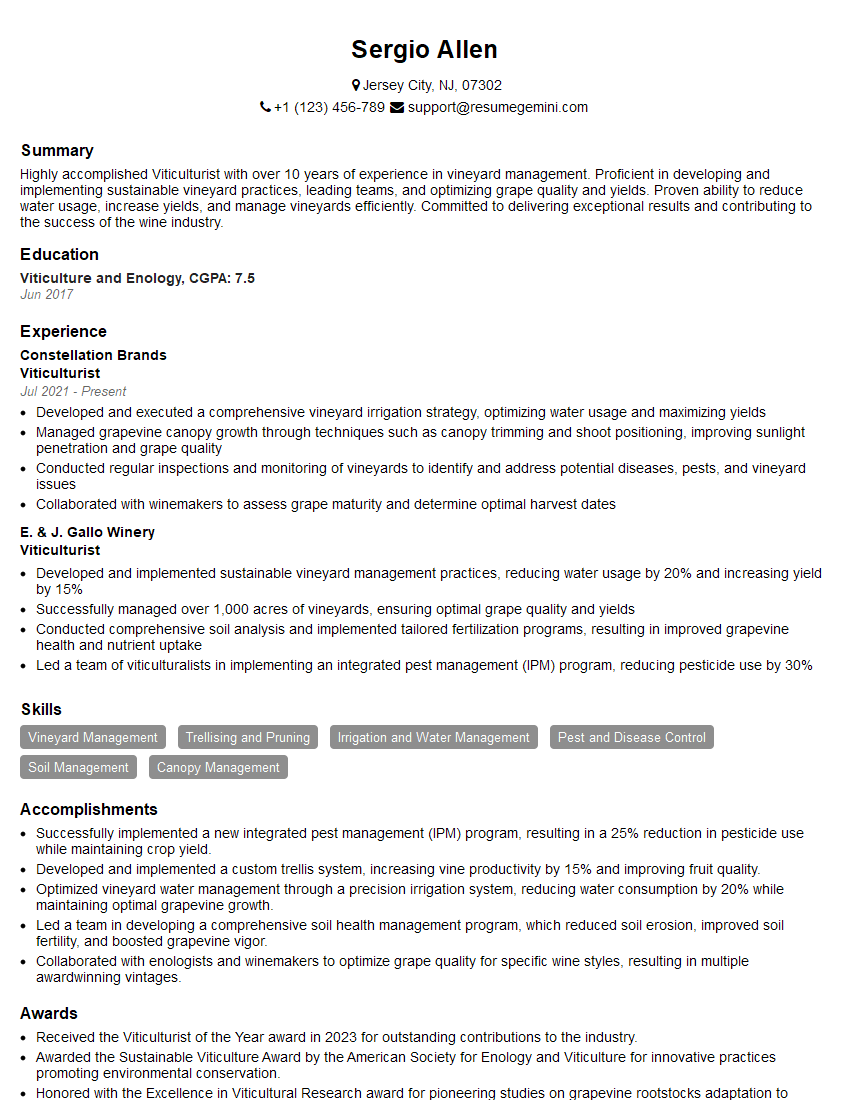
Mastering Grapevine Canopy Management is crucial for career advancement in the viticulture and winemaking industries. A deep understanding of these principles demonstrates your expertise and commitment to producing high-quality grapes. To increase your chances of landing your dream role, create an ATS-friendly resume that highlights your skills and experience effectively. ResumeGemini is a trusted resource to help you build a professional and impactful resume that stands out from the competition. Examples of resumes tailored to Grapevine Canopy Management are available to further guide you. Take this opportunity to showcase your knowledge and make a strong impression on potential employers.
Explore more articles
Users Rating of Our Blogs
Share Your Experience
We value your feedback! Please rate our content and share your thoughts (optional).
What Readers Say About Our Blog
Very informative content, great job.
good