Are you ready to stand out in your next interview? Understanding and preparing for Grapevine Pest and Disease Identification interview questions is a game-changer. In this blog, we’ve compiled key questions and expert advice to help you showcase your skills with confidence and precision. Let’s get started on your journey to acing the interview.
Questions Asked in Grapevine Pest and Disease Identification Interview
Q 1. Describe the life cycle of Pierce’s disease bacterium.
Pierce’s disease, caused by the bacterium Xylella fastidiosa, has a fascinating and complex life cycle. It’s not a simple bacteria-to-plant infection; it involves a vector.
The cycle begins when the bacterium resides within the xylem vessels of infected grapevines and other host plants. These are the water-conducting tissues of the plant. The bacteria then multiply within the xylem. Crucially, the bacterium can’t spread directly from plant to plant, needing a vector, most commonly the glassy-winged sharpshooter (Homalodisca vitripennis), though other leafhoppers and spittlebugs can also transmit it.
When a sharpshooter feeds on an infected plant, it ingests the bacteria. The bacteria then colonize the insect’s salivary glands. When this infected insect subsequently feeds on a healthy grapevine, it injects the bacteria into the plant’s xylem, initiating a new infection. The bacteria then multiply within the xylem of the new host, repeating the cycle. This makes controlling Pierce’s disease difficult, as we need to target both the bacteria and the vector insects.
Q 2. Explain the symptoms of downy mildew in grapevines.
Downy mildew, caused by the oomycete Plasmopara viticola, is a devastating grapevine disease. Its symptoms can vary depending on the stage of infection and environmental conditions, but generally include:
- On leaves: Initially, small, oily, yellow-green spots appear on the upper leaf surface. These spots subsequently develop into angular, yellow lesions that can coalesce, covering large portions of the leaf. On the underside of the leaf, a fuzzy, white to grayish-purple growth (sporulation) will be visible – this is the mycelium of the fungus.
- On shoots: Young shoots may become stunted and distorted, showing yellowing and wilting.
- On berries: Berries may exhibit brown spots, rot, and may even drop prematurely. Depending on the stage of berry development, you might see a greyish-purple coating on the berries, similar to the leaf undersides.
Early identification is crucial for effective control. Look for those characteristic oily spots on the upper leaf surface, followed by the telltale fuzzy growth underneath – that’s a strong indicator of downy mildew.
Q 3. What are the key distinguishing features of powdery mildew vs. downy mildew?
Powdery and downy mildew, while both causing significant damage to grapevines, have distinct differences. Think of them like this: Powdery mildew is a surface problem; downy mildew is a systemic one.
- Powdery Mildew (Erysiphe necator): This fungus grows on the *surface* of the leaves, shoots, and berries. The most obvious symptom is a white, powdery coating that looks exactly like dusting flour on the plant parts. It doesn’t penetrate the leaf tissue as deeply as downy mildew.
- Downy Mildew (Plasmopara viticola): This oomycete (it’s not actually a fungus, but behaves similarly) penetrates the *leaf tissue*. It causes yellow or brown lesions on the upper leaf surface and a fuzzy, white growth on the underside. It requires free moisture (dew, rain) for spore germination and infection.
The location of the visible fungal growth (surface for powdery, underside for downy) is a key distinguishing feature. Also, the appearance – powdery vs. fuzzy – is very different.
Q 4. List five common grapevine pests and their control methods.
Here are five common grapevine pests and control methods:
- Phylloxera (Daktulosphaira vitifoliae): This aphid-like insect attacks roots and leaves. Control involves using resistant rootstocks.
- Grapevine Leafhoppers (various species): These insects can transmit diseases. Control methods include insecticides and cultural practices aimed at reducing insect populations (e.g., sanitation).
- Grape Berry Moths (Lobesia botrana): Larvae bore into berries, causing significant damage. Monitoring traps, pheromone lures, and appropriate insecticides are used for control. Sanitation practices post-harvest are also important.
- Japanese Beetles (Popillia japonica): Adults feed on leaves, causing defoliation. Handpicking, insecticidal soaps, and biological controls (e.g., nematodes) are common management strategies.
- Birds: They damage berries directly. Netting or other physical barriers provide protection.
Remember that integrated pest management (IPM) strategies often combine multiple methods to minimize reliance on any single pesticide.
Q 5. How do you diagnose grapevine leafroll disease?
Diagnosing grapevine leafroll disease (GLRD), caused by several viruses transmitted by grafting and mealybugs, relies on a combination of visual symptoms and laboratory testing.
Visual Symptoms: These can be subtle and variable. They often include leafroll (the leaves roll upwards or downwards along the midrib), reddening of leaves, and uneven ripening of berries (some berries ripening earlier than others). The symptoms are more pronounced during warmer periods. Note that these symptoms can also be caused by other factors, so it’s not a definitive diagnosis.
Laboratory Testing: This is essential for confirmation. ELISA (enzyme-linked immunosorbent assay) or PCR (polymerase chain reaction) tests can detect the presence of specific GLRD viruses in plant tissue samples. This is particularly important as several different viruses cause leafroll. A sample of the suspected grapevine’s leaves is sent to a diagnostic lab for analysis.
Q 6. What are the integrated pest management (IPM) strategies for managing grapevine pests?
Integrated Pest Management (IPM) for grapevines emphasizes a holistic approach to pest and disease control. It aims to minimize economic, health, and environmental risks. It’s about finding the right balance!
Key IPM strategies include:
- Monitoring: Regular scouting for pests and diseases to detect problems early.
- Cultural Controls: Practices that prevent or suppress pest and disease development, such as proper vineyard sanitation, pruning to improve air circulation, and water management.
- Biological Controls: Using beneficial insects, nematodes, or other natural enemies to control pests. This can include introducing predators of certain pests.
- Chemical Controls: Insecticides or fungicides are used judiciously, only when necessary and with target-specific products to minimize environmental impact. The goal is to use these only when monitoring shows thresholds are exceeded.
- Resistant Varieties: Choosing grapevine varieties that exhibit some level of resistance to common pests and diseases.
IPM is not a one-size-fits-all solution. It requires careful planning, monitoring, and adaptation based on specific vineyard conditions and the prevailing pest pressures.
Q 7. Describe the role of scouting in effective pest and disease management.
Scouting is the foundation of effective pest and disease management. Think of it as your vineyard’s health check-up. It involves systematically inspecting grapevines for signs of pest and disease activity.
How Scouting Works: Scouting includes visually inspecting leaves, shoots, berries, and the soil for damage, pests, and diseases. The frequency and intensity of scouting depend on the specific pest and disease pressure in a particular region and during the growing season. You’ll take samples of leaves or berries when necessary for further testing in a lab.
Importance: Early detection is key. Scouting allows for timely intervention, preventing minor problems from escalating into major outbreaks or epidemics. This leads to more effective control measures and minimizes potential economic loss. For example, discovering downy mildew early, at the leafspot stage, allows for preventative measures to prevent widespread infection. Waiting until the fuzzy growth is abundant could result in severe yield loss.
Q 8. Explain the importance of proper sanitation in preventing grapevine diseases.
Proper sanitation is crucial in preventing grapevine diseases because it minimizes the inoculum – the amount of disease-causing pathogens present in the vineyard. Think of it like cleaning your kitchen to prevent food poisoning; removing sources of infection reduces the chance of disease outbreaks.
- Removing infected plant debris: Fallen leaves, infected berries, and dead canes harbor many pathogens. Removing and destroying this material prevents the pathogens from overwintering and infecting new growth the following season. This is particularly important for fungal diseases like downy mildew and powdery mildew.
- Pruning and training: Proper pruning improves air circulation within the canopy, reducing humidity, which is a major factor in the development of many fungal diseases. Training the vines to maximize sunlight penetration also helps.
- Soil management: Maintaining clean soil around the vines helps to reduce soilborne diseases. This can involve practices like removing weeds, which can act as alternate hosts for some pathogens.
- Equipment sanitation: Cleaning and disinfecting pruning shears and other vineyard equipment between vines and blocks helps prevent the spread of diseases from infected to healthy plants. A simple solution of bleach and water can be effective.
By implementing these sanitation practices, you significantly reduce the risk of disease outbreaks, minimizing the need for chemical interventions and promoting sustainable viticulture.
Q 9. What are the environmental factors that influence the severity of grapevine diseases?
Environmental factors play a significant role in the severity of grapevine diseases. Think of it as providing ideal conditions for a pathogen to thrive – just like a weed needs sunlight and water to grow.
- Temperature: Many fungal diseases, like downy mildew, require specific temperature ranges for optimal development. Warm, humid conditions are usually favorable. Conversely, some diseases are more prevalent in cooler, wetter periods.
- Humidity and rainfall: High humidity and frequent rainfall provide the moisture necessary for the germination of many fungal spores, facilitating disease spread. This is why diseases like powdery mildew are often more severe in humid climates.
- Sunlight: Insufficient sunlight can reduce plant vigor, making the vine more susceptible to disease. Conversely, excessive sun can stress plants and lead to sunscald, making them more vulnerable to certain infections.
- Wind: Wind can help spread spores and bacteria, facilitating disease transmission between vines. It can also contribute to the desiccation of infected tissues, potentially slowing down disease progression in some cases.
- Soil conditions: Poor soil drainage, leading to waterlogged conditions, can encourage the development of root diseases. Soil pH can also influence the susceptibility of vines to certain pathogens.
Understanding these environmental influences allows for better disease forecasting and the implementation of preventative measures tailored to specific climatic conditions. For example, during periods of high humidity and rainfall, increased fungicide applications might be necessary.
Q 10. How do you choose appropriate pesticides or fungicides for grapevine pest and disease control?
Choosing appropriate pesticides or fungicides requires careful consideration of several factors. It’s like choosing the right tool for a job – using a hammer to screw in a screw won’t work well.
- Disease identification: Accurate identification of the pathogen is paramount. Different diseases require different control measures. This often requires laboratory diagnosis for confirmation.
- Efficacy and safety: Select products proven effective against the target pathogen, considering their safety for humans, beneficial insects, and the environment. Look for products with low toxicity and appropriate Environmental Protection Agency (EPA) registration.
- Resistance management: Choose products with different modes of action to prevent the development of pathogen resistance. Rotating fungicides with different active ingredients is crucial.
- Application timing: Consider the disease cycle and apply products at critical times, such as during periods of high disease risk based on weather conditions and disease forecasting models.
- Product compatibility: Ensure compatibility with other pesticides or fertilizers that may be applied simultaneously. Incorrect mixing can lead to reduced effectiveness or phytotoxicity (plant damage).
Consulting with a local agricultural extension agent or a viticulture specialist can provide valuable guidance on appropriate product selection and application strategies.
Q 11. Describe the proper application techniques for grapevine pesticides and fungicides.
Proper application techniques are crucial to maximize efficacy and minimize environmental impact. Applying pesticides or fungicides inefficiently is like watering a plant with a leaky hose – you waste resources and don’t get the best result.
- Calibration: Accurately calibrate application equipment to ensure uniform coverage and the correct dosage. This is critical to avoid both under-application (ineffective control) and over-application (environmental damage).
- Spray coverage: Ensure thorough coverage of all plant surfaces, including the undersides of leaves. This is especially important for diseases like downy mildew, whose spores are on the undersides.
- Weather conditions: Avoid applying pesticides or fungicides during periods of high winds, rain, or extreme temperatures. This can lead to drift, wash-off, or reduced efficacy.
- Personal protective equipment (PPE): Always wear appropriate PPE, including gloves, goggles, and a respirator, to protect yourself from exposure.
- Application timing: Apply products at the appropriate growth stage of the vine and according to the label instructions for optimal results.
Following these techniques ensures efficient use of pesticides and fungicides, improving their efficacy and minimizing environmental impacts.
Q 12. What are the safety precautions to consider when working with pesticides and fungicides?
Safety precautions are paramount when handling pesticides and fungicides. These chemicals are potent and can be harmful if not handled properly. Think of them like handling strong chemicals in a laboratory setting – safety is the top priority.
- Personal protective equipment (PPE): Always wear appropriate PPE, including gloves, goggles, respirators (especially when applying dusts or concentrates), and protective clothing to minimize skin and respiratory exposure.
- Label instructions: Carefully read and follow all label instructions before, during, and after application. This includes application rates, mixing instructions, and safety precautions.
- Storage: Store pesticides and fungicides in a secure, locked location out of reach of children and pets. Follow proper storage instructions to prevent degradation or contamination.
- Disposal: Dispose of empty containers and unused pesticides according to local regulations. Never dump them down the drain or in the trash.
- Emergency response: Have a plan in place for emergency situations, including knowing where to find safety data sheets (SDS) and having access to emergency medical services.
Prioritizing safety ensures the health and well-being of vineyard workers and protects the surrounding environment.
Q 13. How do you interpret disease severity ratings?
Disease severity ratings are used to quantify the extent of disease infection within a vineyard. It’s like grading a test – a higher score means more severe infection.
These ratings often utilize scales (e.g., 0-5, 1-9), where 0 typically represents no disease and higher numbers indicate increasing severity. The specific criteria used to assign ratings vary depending on the disease and the scale adopted. For example, a scale might consider the percentage of infected leaves, berries, or shoots.
Interpreting these ratings is crucial for disease management decisions. A high severity rating indicates a need for intervention, possibly including fungicide applications, while a low rating might suggest preventative measures are sufficient. Regular assessments, using standardized protocols, allow for accurate tracking of disease progression and help in evaluating the effectiveness of disease control strategies.
Examples of visual guides or descriptions often accompany these ratings to assist with accurate assessment. For instance, a rating scale for downy mildew might include images demonstrating the progression of leaf lesions from small spots to extensive necrosis.
Q 14. Explain the principles of resistance management for grapevine pests and diseases.
Resistance management is crucial to the long-term effectiveness of pest and disease control. If we don’t manage resistance, our treatments will eventually become ineffective, much like antibiotic resistance in humans.
The key principles of resistance management include:
- Avoid overuse: Minimize the use of any single pesticide or fungicide to prevent the selection of resistant strains. Avoid applying prophylactically (before disease onset) unless absolutely necessary.
- Rotation: Rotate among fungicides with different modes of action to delay the development of resistance. This is a key strategy to keep pathogens from developing a tolerance to any one treatment.
- Integration: Employ integrated pest management (IPM) strategies, combining cultural practices (sanitation, pruning), biological control (beneficial insects, microorganisms), and chemical control (pesticides, fungicides) in a coordinated manner. This minimizes reliance on any single strategy.
- Monitoring: Regularly monitor pest and disease populations to assess their susceptibility to control measures. This allows for quick identification and response to resistant strains.
- Resistant varieties: Where available, utilize grapevine varieties that exhibit inherent resistance or tolerance to specific pests or diseases. This is a sustainable, long-term solution.
Implementing these principles ensures the continued effectiveness of control measures, preserving the options available for disease management and promoting sustainable viticulture.
Q 15. What are the economic thresholds for common grapevine pests and diseases?
Economic thresholds in grapevine pest and disease management represent the pest or disease population density or severity level at which control measures become economically justified. It’s the point where the cost of the damage caused by the pest or disease exceeds the cost of implementing control methods. These thresholds vary significantly depending on factors like grape variety, market price of grapes, the cost of control measures (pesticides, labor), and the specific pest or disease.
- Powdery Mildew: Thresholds often focus on the percentage of infected leaves or bunches, with treatment recommended when a certain percentage is reached, usually dependent on the grape growth stage. For instance, treatment might be initiated when 10-20% of leaves show infection in the early stages of growth, rising to a higher percentage closer to harvest to minimize chemical residues.
- Pierce’s Disease: Given the devastating nature and lack of effective curative treatments, management strategies focus on prevention, with economic thresholds centered on preventing the spread rather than treating infected plants. This involves measures such as vector (glassy-winged sharpshooter) control and removing infected vines.
- Grapevine Leafroll-Associated Viruses (GLRaV): Economic thresholds are less defined, focusing on preventing further spread through rogueing (removing infected vines) and planting certified virus-free material. Economic impacts are indirect due to yield reduction and quality loss over several years.
- Phylloxera: Similar to Pierce’s Disease, management is primarily preventative, employing resistant rootstocks. Economic thresholds would concern the cost of replanting versus the ongoing yield losses from susceptible rootstocks.
Precise economic thresholds are often determined through research trials and local experience and will be adapted based on the specific vineyard and environmental conditions. Consult with your local agricultural extension office or viticulture specialist for the most appropriate thresholds in your region.
Career Expert Tips:
- Ace those interviews! Prepare effectively by reviewing the Top 50 Most Common Interview Questions on ResumeGemini.
- Navigate your job search with confidence! Explore a wide range of Career Tips on ResumeGemini. Learn about common challenges and recommendations to overcome them.
- Craft the perfect resume! Master the Art of Resume Writing with ResumeGemini’s guide. Showcase your unique qualifications and achievements effectively.
- Don’t miss out on holiday savings! Build your dream resume with ResumeGemini’s ATS optimized templates.
Q 16. How do you monitor grapevine health using various methods?
Monitoring grapevine health involves a multi-pronged approach combining visual inspections, sampling techniques, and potentially sophisticated technologies. Regular and thorough monitoring is key to early detection and effective management.
- Visual Inspections: This is the cornerstone, involving regular walks through the vineyard to visually assess vines for signs of pests (e.g., insect damage, webbing), diseases (e.g., leaf spots, wilting), and nutrient deficiencies (e.g., chlorosis, necrosis). Note the severity and distribution of symptoms.
- Sampling: For more detailed assessment, sample leaves, shoots, or bunches to examine under magnification for microscopic pests or disease pathogens. This allows for accurate identification and quantification of the problem.
- Traps: Pheromone traps (discussed further in a later question) are effective for monitoring insect populations. Sticky traps can also monitor populations of smaller pests and disease vectors.
- Remote Sensing: Advanced techniques like aerial imaging (using drones or satellites) and hyperspectral imaging can provide a large-scale overview of vineyard health, detecting subtle changes in leaf color or vigor that might indicate stress.
- Soil Testing: Analyzing soil samples helps determine nutrient levels and pH, enabling proactive nutrient management to prevent deficiencies.
The frequency of monitoring depends on several factors, including the vineyard’s history of pest and disease problems, the current weather conditions, and the grape growing stage. More frequent monitoring is generally needed during periods of stress and critical growth stages (flowering and fruit set).
Q 17. Describe the importance of record-keeping in pest and disease management.
Record-keeping is crucial for effective pest and disease management in vineyards. It provides a detailed history of vineyard health, allowing for informed decision-making and long-term success. Accurate records allow you to track the occurrence of pests and diseases, the effectiveness of treatments, and the overall yield and quality of the grapes.
- Pest and Disease Occurrence: Detailed records of when and where specific pests or diseases were observed are essential to predict future outbreaks and tailor preventative measures. Include observations such as the severity of infection and the area affected.
- Treatment Applications: Maintain a precise log of all pesticides, fungicides, or other control measures used, including the product name, application rate, date, and method of application. This is critical for compliance with regulations and for assessing the efficacy of different treatments.
- Weather Data: Climate plays a significant role in pest and disease development. Keeping records of temperature, rainfall, and humidity helps to understand the environmental conditions that favor particular problems.
- Yield and Quality Data: Tracking the quantity and quality of grape production (e.g., sugar levels, berry size) reveals the impact of pests, diseases, and management practices on the overall profitability of the vineyard.
Consistent, accurate, and readily accessible records are invaluable for identifying trends, evaluating the long-term effectiveness of management strategies, and adapting practices as needed. Consider using a spreadsheet, dedicated vineyard management software, or a combination of both to store this information effectively.
Q 18. How do you differentiate between biotic and abiotic causes of grapevine damage?
Differentiating between biotic and abiotic causes of grapevine damage is critical for selecting the appropriate management strategies. Biotic causes are living organisms, such as pests, diseases, and weeds. Abiotic causes are non-living environmental factors.
- Biotic Damage: This often involves visible signs of attack, such as insect feeding holes, fungal growth, bacterial ooze, or viral symptoms like leaf mottling or discoloration. Identifying the specific organism responsible requires careful observation and possibly laboratory testing.
- Abiotic Damage: This often presents as a more general pattern of stress across several vines or throughout the vineyard. Common causes include frost damage (dead or blackened tissue), herbicide injury (localized necrosis), nutrient deficiencies (chlorosis, leaf margins burning), water stress (wilting, leaf drop), sunscald (bleached or damaged fruit), and hail damage (physical injury). The damage patterns are usually uniform and not associated with localized infection.
Example: If you observe localized brown spots on leaves with a distinct pattern, accompanied by fungal growth, it’s likely a fungal disease (biotic). However, if most of the vines are exhibiting uniform leaf scorch and wilting, the cause is probably abiotic, such as drought stress. Carefully examine the symptoms, their distribution, and consider the environmental conditions to reach an accurate diagnosis.
Q 19. Explain the use of pheromone traps in grapevine pest management.
Pheromone traps utilize synthetic pheromones—chemicals that mimic the mating scents of female insects—to attract and trap male insects. This is a valuable tool for monitoring insect populations and managing grapevine pests.
- Monitoring: By counting the number of insects caught in the traps over time, you can track population levels, predict potential outbreaks, and determine the effectiveness of control measures. This allows for targeted interventions instead of broad-spectrum pesticide applications.
- Pest Management: In some cases, mass trapping can reduce pest populations significantly by disrupting mating and reproduction. This approach is often used in conjunction with other methods like biological control or carefully targeted pesticide use.
- Timing Control Measures: Pheromone traps help determine the optimal time to implement control measures based on the detected population levels. This ensures interventions are taken when they are most effective and minimizes the need for unnecessary treatments.
Example: For grapevine moths (like Lobesia botrana), pheromone traps are used extensively. Monitoring trap catches helps determine when to spray insecticides to protect the grapes, only when the pest populations exceed a certain threshold. This reduces the environmental impact and the potential development of insecticide resistance.
Q 20. Describe the role of beneficial insects in grapevine pest control.
Beneficial insects play a vital role in integrated pest management (IPM) systems in vineyards, providing a natural and sustainable method of pest control. These insects prey on or parasitize various grapevine pests, reducing the need for chemical insecticides.
- Predators: Ladybugs, lacewings, and certain species of spiders consume significant numbers of aphids, mites, and other small pests. Their presence helps keep pest populations in check naturally.
- Parasitoids: Tiny wasps and flies lay their eggs on or inside other insects, eventually killing the host. These are particularly effective against various moth larvae and other damaging pests.
Promoting Beneficial Insects: Creating a habitat that supports beneficial insects is crucial for successful IPM. This can involve planting flowering plants to provide nectar and pollen sources, reducing pesticide use, and providing suitable overwintering sites. Introducing beneficial insects directly can also be effective in specific situations, but requires careful consideration and expert advice.
Example: The introduction of Trichogramma wasps, a parasitoid, is a common biological control strategy against grapevine moths. These tiny wasps parasitize the eggs of the moths, preventing the development of new generations.
Q 21. What are the common symptoms of nutrient deficiencies in grapevines?
Nutrient deficiencies in grapevines often manifest as visible symptoms on the leaves, shoots, or fruit. Accurate diagnosis requires careful observation and may involve soil testing to confirm the deficiency.
- Nitrogen (N) Deficiency: Leaves become pale green or yellowish, starting with the older leaves. Growth is stunted, and yields are reduced. Severe deficiency can lead to premature leaf drop.
- Potassium (K) Deficiency: Symptoms typically appear on older leaves first as yellowing or browning along the edges, sometimes curling or rolling. Fruit may be smaller and of lower quality.
- Phosphorus (P) Deficiency: Older leaves might show dark green or purplish coloration. Growth is slow, and plants may appear stunted. Fruit ripening may be delayed.
- Magnesium (Mg) Deficiency: Interveinal chlorosis (yellowing between the leaf veins) is a characteristic symptom, often starting on older leaves. Leaves may become brittle and prone to premature leaf drop.
- Iron (Fe) Deficiency: Causes interveinal chlorosis, but it typically starts on the younger leaves first. The veins often remain green, creating a distinct contrast with the yellowed leaf tissue.
- Boron (B) Deficiency: Can cause various symptoms, including cracked berries, stunted shoots, and distorted leaves.
The severity and specific symptoms of nutrient deficiency can vary depending on the degree of deficiency and the grape variety. Soil testing provides a quantitative measure of nutrient levels, enabling targeted applications of fertilizers to correct deficiencies. Always consult with a soil testing laboratory for interpretation and recommendation on fertilizer application rates.
Q 22. How do you differentiate between pest damage and disease symptoms?
Distinguishing between pest damage and disease symptoms in grapevines requires a keen eye and understanding of the subtle differences. Pest damage is typically characterized by visible physical signs of insect or mite activity, such as holes in leaves, webbing, or the presence of insects themselves. Disease symptoms, on the other hand, often manifest as discoloration, wilting, lesions, or unusual growths on plant tissues. These symptoms are usually caused by fungal, bacterial, or viral pathogens.
- Pest Damage Example: Leafroller caterpillars create characteristic rolled-up leaves, leaving behind frass (insect droppings). You might also see visible caterpillars inside the rolled leaves.
- Disease Symptom Example: Downy mildew presents as oily, yellow-green lesions on the upper leaf surface, often accompanied by a fuzzy, purplish-gray growth on the underside of the leaf.
It’s important to note that sometimes pest damage can weaken the plant and make it more susceptible to disease, or a disease can make the plant more vulnerable to pest infestation. A thorough examination, often involving a hand lens for closer inspection, is crucial for accurate diagnosis.
Q 23. Explain the use of resistant rootstocks in managing grapevine diseases.
Resistant rootstocks play a critical role in managing grapevine diseases, particularly those affecting the root system such as phylloxera and certain soilborne fungal pathogens. These rootstocks are specifically bred or selected for their resistance to specific diseases. By grafting a desired scion (the upper part of the vine, bearing the fruit) onto a resistant rootstock, the entire plant gains protection. This is particularly vital for phylloxera, a devastating root-feeding aphid that can completely wipe out a vineyard if untreated.
For example, certain rootstocks show resistance to phylloxera through physiological mechanisms that prevent the insect from feeding effectively or through their tolerance to root damage. Others exhibit resistance to fungal pathogens through the production of defense compounds or physical barriers within their root systems.
The choice of rootstock depends on the specific diseases prevalent in the region and the soil conditions. Growers work closely with viticulturists and plant pathologists to select the most appropriate rootstock for their specific circumstances. Proper planting and management practices also support the effectiveness of the resistant rootstock.
Q 24. Describe your experience with grapevine disease diagnostics.
My experience with grapevine disease diagnostics spans over [Number] years. I’ve developed a comprehensive approach that integrates visual inspection in the vineyard, laboratory analysis, and grower interviews. Visual inspection starts with a thorough assessment of the vineyard, looking for symptoms on leaves, canes, fruit, and roots. I then collect samples of affected tissues and send them to a certified laboratory for further testing, where we use various methods to identify the pathogens.
- Microscopy: Used to identify fungal structures or bacterial cells.
- Molecular diagnostics (PCR): To detect specific DNA or RNA sequences of pathogens, offering highly sensitive and specific detection of various diseases.
- Serological tests (ELISA): To detect the presence of specific viral antigens.
The laboratory results, coupled with the visual observations and information gathered from the grower (e.g., vineyard history, management practices), are crucial for accurate disease identification and providing tailored management recommendations.
Q 25. What software or tools do you use for analyzing pest and disease data?
For analyzing pest and disease data, I utilize a combination of software tools and databases. This includes Geographic Information Systems (GIS) software to map vineyard locations and disease outbreaks, allowing for spatial analysis of disease spread. I also use statistical software packages (such as R or SAS) for data analysis and modelling, helping to identify trends and relationships between environmental factors, management practices, and disease incidence.
Specialized databases, both commercial and publicly available, are invaluable for accessing information on disease occurrence, pathogen identification, and pest management strategies. These tools help me track pest and disease prevalence over time and correlate those findings with environmental variables to develop predictive models that aid in risk assessment.
Q 26. How do you communicate pest and disease management recommendations to growers?
Effective communication with growers is paramount. I employ a multi-faceted approach to convey pest and disease management recommendations, tailoring my communication style to the individual grower’s experience level and preferences. This includes:
- On-site visits and demonstrations: Directly showing growers the problem and demonstrating the most effective control measures.
- Clear and concise reports: Providing detailed, yet easily understandable, reports outlining the diagnosis, management recommendations, and expected outcomes.
- Educational workshops and training: Offering comprehensive training sessions on various aspects of grapevine pest and disease management, promoting knowledge sharing among growers.
- Use of visual aids and diagrams: Simple, easy-to-understand images help clarify complex concepts.
Open communication and active listening are crucial to ensure the growers feel comfortable implementing the recommended strategies, and are actively involved in the management process.
Q 27. Describe a situation where you had to troubleshoot a challenging pest or disease problem.
One particularly challenging case involved a vineyard experiencing significant yield loss and unusual leaf symptoms. Initial observations suggested several potential diseases, including esca and black foot. However, the symptoms didn’t perfectly align with any known disease. We conducted extensive laboratory analyses, including molecular diagnostics, and found a combination of factors at play.
It turned out to be a combination of a less common fungal disease (Botryosphaeria dieback), exacerbated by poor drainage and rootstock incompatibility. The solution involved improved drainage practices, tailored fungicide application, and recommending a rootstock change for future plantings. This case highlighted the importance of considering multiple factors and the need for thorough diagnostics to pinpoint the true cause of the problem.
Q 28. How do you stay updated on the latest research and best practices in grapevine pest and disease management?
Staying current in this field requires continuous learning. I regularly review scientific journals and research publications on grapevine pest and disease management. I attend international and national conferences, workshops, and symposia to learn about the latest findings and engage with other experts.
Membership in professional organizations such as the American Phytopathological Society and similar organizations provides access to ongoing research, newsletters, and expert networks. I also actively participate in online forums and discussions with colleagues, allowing for knowledge sharing and rapid response to emerging issues.
Key Topics to Learn for Grapevine Pest and Disease Identification Interview
- Visual Identification: Mastering the visual identification of common grapevine pests (e.g., phylloxera, leafhoppers, mites) and diseases (e.g., downy mildew, powdery mildew, esca).
- Life Cycles and Biology: Understanding the life cycles and biology of key pests and pathogens to predict outbreaks and develop effective management strategies.
- Disease Diagnostics: Developing proficiency in using diagnostic tools and techniques to accurately identify diseases, including laboratory methods and field observations.
- Integrated Pest Management (IPM): Applying principles of IPM, including scouting, monitoring, and implementing appropriate control measures while minimizing environmental impact.
- Impact Assessment: Assessing the economic and environmental impact of pest and disease outbreaks on grape production.
- Sampling Techniques: Developing expertise in proper sampling techniques for accurate pest and disease assessment in vineyards.
- Chemical and Biological Control: Understanding the application and limitations of chemical and biological control methods for managing grapevine pests and diseases.
- Resistance Management: Implementing strategies to prevent the development of pesticide resistance in pest populations.
- Vineyard Sanitation and Hygiene: Understanding the importance of vineyard sanitation practices in minimizing disease pressure.
- Data Analysis and Reporting: Analyzing data from pest and disease monitoring programs and presenting findings effectively to stakeholders.
Next Steps
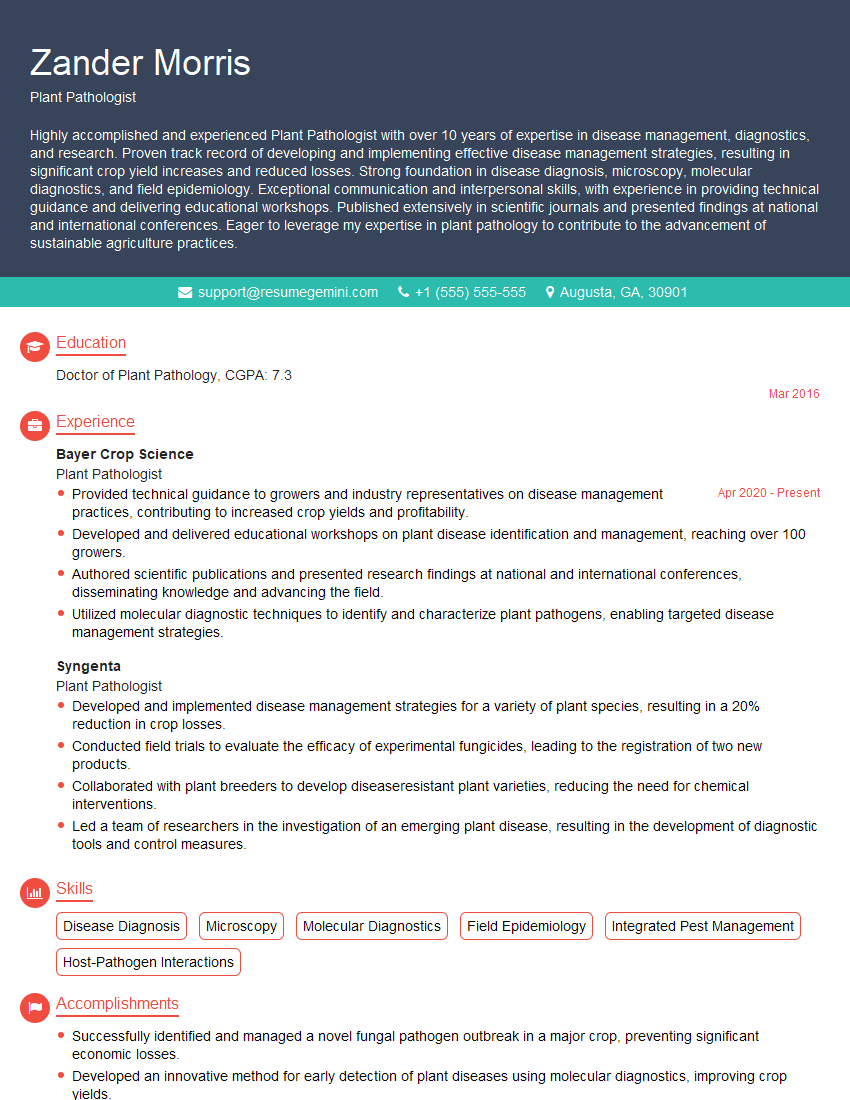
Mastering Grapevine Pest and Disease Identification is crucial for career advancement in viticulture and related fields. A strong understanding of these topics will significantly enhance your expertise and marketability. To stand out to potential employers, create an ATS-friendly resume that highlights your skills and experience effectively. ResumeGemini is a trusted resource that can help you build a professional and impactful resume, optimizing it for Applicant Tracking Systems (ATS). ResumeGemini provides examples of resumes tailored to the specific needs of Grapevine Pest and Disease Identification professionals, allowing you to create a document that showcases your unique qualifications.




Explore more articles
Users Rating of Our Blogs
Share Your Experience
We value your feedback! Please rate our content and share your thoughts (optional).
What Readers Say About Our Blog
Very informative content, great job.
good