The thought of an interview can be nerve-wracking, but the right preparation can make all the difference. Explore this comprehensive guide to Grazing Management and Rotational Grazing interview questions and gain the confidence you need to showcase your abilities and secure the role.
Questions Asked in Grazing Management and Rotational Grazing Interview
Q 1. Describe the principles of rotational grazing.
Rotational grazing is a grazing management system where livestock are moved systematically between different paddocks or grazing areas. The core principle is to allow pastures to rest and recover after grazing, promoting plant regrowth and overall pasture health. This cyclical movement prevents overgrazing in any one area, leading to improved forage quality, increased carrying capacity, and a more resilient pasture ecosystem.
Q 2. Explain the benefits of rotational grazing compared to continuous grazing.
Compared to continuous grazing, where livestock have unrestricted access to a pasture, rotational grazing offers several significant advantages. Firstly, it leads to improved pasture productivity. By allowing pastures to rest, plants have time to recover, resulting in denser, more vigorous growth and higher yields of better-quality forage. Secondly, it enhances soil health. Reduced soil compaction from concentrated grazing and increased root growth improve soil structure and water infiltration. Thirdly, it reduces weed pressure. Rest periods give desirable grasses a competitive advantage over weeds. Lastly, it often leads to improved animal health and performance due to increased forage quality and reduced parasite loads. Imagine a farmer’s field: with continuous grazing, the plants are constantly nibbled, weakening them. Rotational grazing is like giving them a ‘vacation’ – allowing them to recover and become stronger and more productive.
Q 3. How do you determine the appropriate stocking rate for a pasture?
Determining the appropriate stocking rate – the number of animals per unit area of pasture – is crucial for successful rotational grazing. It involves carefully considering several factors:
- Pasture productivity: This is determined by factors such as soil type, rainfall, species composition, and pasture management practices. Higher productivity supports higher stocking rates.
- Animal type and size: Different animal types (e.g., cows, sheep, goats) have different grazing habits and nutrient requirements, influencing stocking rates.
- Forage quality: Higher-quality forage can support a higher stocking rate than lower-quality forage.
- Desired level of residual forage: Leaving sufficient plant material after grazing is critical for pasture recovery. This residual should usually be approximately 4 inches of height.
- Grazing period: The length of time animals graze a paddock affects the appropriate stocking rate. Shorter grazing periods generally allow for higher stocking rates.
One common method is to estimate the carrying capacity of the pasture (the maximum number of animals it can sustain) based on forage production and animal requirements, then adjust this based on your management goals (e.g., achieving a certain level of residual forage).
Q 4. What are the key factors to consider when designing a rotational grazing system?
Designing an effective rotational grazing system involves several key considerations:
- Paddock size and number: Paddock size should be appropriate for the number of animals and the grazing period. The number of paddocks determines the length of the grazing cycle.
- Water sources: Ensuring adequate water access in each paddock is crucial. This might involve installing water troughs or strategically placing paddocks near natural water sources.
- Access to mineral supplements and salt: Provide supplements in easily accessible locations.
- Fence design and maintenance: Durable and well-maintained fences are essential to manage livestock movement efficiently.
- Grazing schedule: A well-defined grazing schedule is essential for controlling grazing intensity and duration in each paddock.
- Species selection: Choose appropriate plant species that are suitable to your climate and soil conditions, with attention to drought tolerance or resilience to flooding.
Careful planning considering these factors ensures a smooth and effective rotational grazing system.
Q 5. How do you monitor pasture health and make adjustments to grazing management?
Regular monitoring is critical for successful pasture management. Methods include:
- Visual assessments: Regularly inspect paddocks for signs of overgrazing, weed encroachment, or other pasture health issues.
- Forage yield measurements: Estimate the amount of forage available using techniques like clipping quadrats to track productivity.
- Plant species composition analysis: Identify the proportion of desirable and undesirable plant species in your pasture.
- Soil testing: Periodic soil tests can identify nutrient deficiencies that might affect pasture health.
Based on this information, adjustments may include altering stocking rates, changing the grazing schedule, implementing fertilization practices, or introducing new plant species to improve pasture diversity and resilience.
Q 6. What are the different types of grazing systems, and what are their advantages and disadvantages?
Several grazing systems exist, each with its own advantages and disadvantages:
- Continuous grazing: Animals graze freely in a single pasture. Advantages: Simple to manage. Disadvantages: Overgrazing, reduced pasture productivity, soil compaction.
- Rotational grazing (as described above): Animals are moved between paddocks. Advantages: Improved pasture health, increased productivity. Disadvantages: Requires more infrastructure (fencing).
- Strip grazing: Animals are given access to only a small strip of pasture each day, moving daily. Advantages: Extremely high intensity, excellent weed control. Disadvantages: Requires significant infrastructure and daily management.
- Cell grazing: Similar to strip grazing but involves even smaller, more frequent moves. Advantages: Intensive grazing, improved nutrient cycling. Disadvantages: Requires very careful planning and monitoring.
The best system depends on factors such as pasture type, climate, resources, and management capabilities.
Q 7. How do you manage grazing during periods of drought or excessive rainfall?
Managing grazing during periods of drought or excessive rainfall requires flexibility and adaptation:
- Drought: Reduce stocking rates to prevent overgrazing of the limited forage available, provide supplemental feed if necessary, and potentially utilize drought-tolerant plant species.
- Excessive rainfall: Monitor for waterlogging, consider temporary relocation of animals to drier areas to prevent pasture damage, and assess the need for drainage improvements to prevent soil erosion.
In both scenarios, close monitoring of pasture conditions and animal health is crucial to make informed decisions and minimize potential losses.
Q 8. Describe your experience with pasture improvement techniques.
Pasture improvement is crucial for maximizing livestock production and environmental sustainability. My approach focuses on a holistic system, addressing soil health, plant diversity, and grazing management simultaneously. This involves several key techniques.
- Overseeding: Introducing desirable forage species into existing pastures to enhance productivity and resilience. For example, I might overseed a pasture dominated by low-quality grasses with legumes like clover to improve nitrogen fixation and overall forage quality.
- Prescribed Burning: Carefully controlled burns can rejuvenate pastures by removing dead material, stimulating new growth, and controlling invasive weeds. However, this requires careful planning and adherence to safety regulations and local guidelines.
- Fertilization: Strategic application of fertilizers, particularly those rich in phosphorus and potassium, can boost forage production. Soil testing is essential to determine nutrient deficiencies and avoid over-fertilization, which can harm the environment. I prefer using organic fertilizers whenever possible.
- Weed Control: Managing weeds is critical. This might involve targeted herbicide application in extreme cases, but I primarily focus on competitive exclusion through improved pasture management and encouraging vigorous growth of desirable plant species.
- Improved Grazing Management: This is arguably the most important technique. Rotational grazing, which I’ll discuss further, prevents overgrazing and promotes the development of a diverse and healthy plant community.
I always tailor my pasture improvement plan to the specific site conditions, considering factors like climate, soil type, and the desired livestock type. For example, a pasture in a dry region will require different management strategies than a pasture in a humid area.
Q 9. How do you incorporate soil health into your grazing management plan?
Soil health is the cornerstone of sustainable grazing management. My approach integrates several practices to improve and maintain soil health.
- Rotational Grazing: This prevents overgrazing, allowing soil to rest and recover. The livestock’s hooves help aerate the soil, and manure deposition adds organic matter, improving soil structure and fertility.
- Cover Cropping: Planting cover crops during periods of pasture rest adds organic matter, prevents soil erosion, and suppresses weeds. I often use a mix of legumes and grasses tailored to the soil type and climate.
- No-Till Grazing: Minimizing soil disturbance is critical. Avoid plowing or excessive tillage. This protects soil structure and enhances the activity of beneficial soil organisms.
- Manure Management: Properly managing livestock manure is crucial. It should be evenly distributed across the pasture to maximize its benefits. Composting manure can enhance its value and reduce nutrient runoff.
- Soil Testing: Regular soil testing allows me to monitor soil health and adapt my grazing and fertilizer management strategies accordingly. This helps ensure that the soil’s nutrient levels are optimal for healthy plant growth.
Imagine the soil as a living organism – it needs the right balance of nutrients, water, and oxygen to thrive. My goal is to create conditions that encourage this vibrant soil ecosystem, leading to healthier pastures and more productive livestock.
Q 10. What are the common challenges associated with rotational grazing, and how do you overcome them?
Rotational grazing, while highly beneficial, presents some challenges. However, careful planning and management can mitigate these issues.
- Infrastructure Costs: Setting up a rotational grazing system requires fencing and water infrastructure. This initial investment can be significant, but the long-term benefits typically outweigh the costs.
- Pasture Planning and Management: Dividing the pasture into paddocks and managing grazing time requires careful planning and monitoring. This can be labor-intensive, particularly on large operations.
- Weed Control: Overgrazing in one area can create conditions favorable for weed infestations. Careful grazing management and weed control strategies are needed.
- Parasite Management: Intensive grazing in a limited area can increase the risk of internal parasite buildup. A robust parasite control plan including pasture rotation, targeted treatments and strategic livestock movements is critical.
- Predator Control: Concentrating livestock in smaller areas can make them more vulnerable to predators. This might require measures to protect livestock, such as guard animals or improved fencing.
I overcome these challenges through careful planning, using appropriate technology (like electric fencing for flexibility), regular monitoring, and adaptive management techniques. For example, I might adjust paddock sizes or grazing times based on pasture growth and weather conditions. It’s a constant process of observation, adjustment and learning.
Q 11. How do you measure and assess the effectiveness of your rotational grazing system?
Measuring the effectiveness of rotational grazing involves both quantitative and qualitative assessments.
- Forage Yield and Quality: Regularly measuring forage yield and conducting forage quality analysis (e.g., using a near-infrared spectrometer) helps determine the system’s impact on pasture productivity.
- Animal Performance: Monitoring animal weight gain, milk production, and reproductive rates provides insights into the quality and quantity of forage available. A well-managed system should result in improved livestock performance.
- Soil Health Indicators: Regular soil testing to assess organic matter content, nutrient levels, and water infiltration rates helps evaluate the system’s impact on soil health. I also consider indicators like earthworm population and soil structure.
- Plant Diversity: Assessing the species composition and diversity of the pasture is crucial. A healthy pasture should exhibit a range of plant species, indicating good grazing management.
- Weed Pressure: Monitoring weed density and assessing their impact on forage production provides insights into the effectiveness of weed control measures.
Data collection is essential. I use spreadsheets, farm management software and even simple notebooks to track key indicators. Regularly reviewing this data allows me to make informed management decisions and fine-tune the rotational grazing system for optimal performance.
Q 12. Explain the role of grazing in carbon sequestration.
Grazing plays a significant role in carbon sequestration, the process of capturing and storing atmospheric carbon dioxide (CO2) in plants and soils. Healthy grasslands act as significant carbon sinks.
- Photosynthesis: Grazing animals consume plants, which during photosynthesis absorb CO2 from the atmosphere. This carbon is incorporated into plant tissues and roots.
- Root Growth: Proper grazing management stimulates root growth, enhancing the transfer of carbon to the soil. Healthy root systems increase soil organic carbon storage.
- Soil Organic Matter: Animal manure and plant residues contribute to soil organic matter, which is a crucial component of soil carbon sequestration. Healthy soil organisms aid in this process.
- Reduced Tillage: Minimizing soil disturbance through no-till practices protects existing soil carbon and prevents its release into the atmosphere. Rotational grazing naturally supports this.
Rotational grazing, by promoting a healthy and diverse plant community and improving soil health, significantly enhances carbon sequestration. It’s a natural and effective way to help mitigate climate change. Imagine the vast carbon storage potential of managed grasslands across the globe!
Q 13. How do you integrate wildlife management into your grazing strategies?
Integrating wildlife management into grazing strategies requires a holistic approach, considering both livestock and wildlife needs.
- Habitat Diversity: Creating a mosaic of habitats within the grazing system – for example, by leaving areas of un-grazed vegetation – provides diverse habitats for various wildlife species.
- Strategic Grazing: Adjusting grazing intensity and timing to allow for wildlife foraging can promote coexistence. For example, strategically managing grazing around nesting areas of birds.
- Water Sources: Ensuring access to water sources for both livestock and wildlife is essential. This might involve installing additional water troughs or strategically managing existing water sources.
- Predator Control (Selective): Managing predator populations to protect livestock might necessitate balancing livestock safety with the overall health of the ecosystem. Understanding the roles predators play within the ecosystem is vital.
- Collaboration: Collaborating with wildlife agencies and conservation organizations can provide valuable insights and support for integrated management strategies.
My goal is to create a system that is both productive for livestock and supportive of a thriving wildlife population. This benefits biodiversity and overall ecosystem health. For instance, leaving buffer strips along watercourses helps both wildlife and water quality.
Q 14. What are the economic considerations of implementing rotational grazing?
Implementing rotational grazing involves both initial and ongoing economic considerations.
- Initial Investment: The primary upfront cost involves establishing the necessary fencing and water infrastructure. This can be substantial, depending on the size and complexity of the operation. Government subsidies or shared costs among farmers can ease this burden.
- Labor Costs: Managing a rotational grazing system requires more labor compared to continuous grazing. This involves moving livestock, monitoring pasture conditions, and maintaining fences. Efficient grazing management tools and technology can mitigate this.
- Increased Production: The higher forage quality and increased animal production associated with rotational grazing translate to higher income. Improved livestock health reduces veterinary costs.
- Reduced Input Costs: Improved soil health can lead to lower fertilizer and herbicide needs, reducing input costs over time.
- Long-Term Sustainability: The long-term sustainability benefits of rotational grazing, including improved soil health and carbon sequestration, translate into reduced environmental costs and increased resilience to climate change.
A thorough cost-benefit analysis is essential before implementing rotational grazing. While initial investments can be substantial, the long-term economic benefits, coupled with environmental and social advantages, often make it a highly worthwhile investment.
Q 15. How do you manage weed control in a rotational grazing system?
Weed control in rotational grazing is a proactive, integrated approach, leveraging the grazing animals themselves as a primary tool. It’s not about eradication, but about managing weed populations to a level where they don’t significantly impact pasture productivity or animal health.
- Strategic Grazing: Properly timed and managed grazing can suppress weeds. For example, grazing a paddock when weeds are flowering or seeding reduces their ability to reproduce. This requires careful observation of weed lifecycle and grazing animal preferences.
- Pasture Species Selection: Choosing competitive pasture grasses and legumes is crucial. These plants establish dense canopies that out-compete weeds for sunlight, water, and nutrients. For instance, using tall fescue can help shade out many broadleaf weeds.
- Targeted Herbicide Use (if necessary): In some cases, strategic and targeted herbicide applications might be needed, but this should be a last resort. It’s essential to follow all label instructions carefully and only treat specific problem areas. A spot treatment approach, rather than blanket spraying, minimizes environmental impact.
- Rest and Recovery: Adequate rest periods for paddocks are vital. This allows desirable plants to recover and compete more effectively, suppressing weeds. Overgrazing weakens the pasture, leaving it vulnerable to weed invasion.
For example, on a farm I managed, we tackled a stubborn infestation of dandelion using a combination of intensive grazing by sheep in early spring (to target the rosettes), followed by a period of rest to allow desirable grasses to recover. We supplemented this with spot herbicide application where sheep grazing was ineffective.
Career Expert Tips:
- Ace those interviews! Prepare effectively by reviewing the Top 50 Most Common Interview Questions on ResumeGemini.
- Navigate your job search with confidence! Explore a wide range of Career Tips on ResumeGemini. Learn about common challenges and recommendations to overcome them.
- Craft the perfect resume! Master the Art of Resume Writing with ResumeGemini’s guide. Showcase your unique qualifications and achievements effectively.
- Don’t miss out on holiday savings! Build your dream resume with ResumeGemini’s ATS optimized templates.
Q 16. Describe your experience with grazing infrastructure, such as fencing and water sources.
Grazing infrastructure is the backbone of efficient rotational grazing. I’ve extensive experience designing and implementing systems for various landscapes and herd sizes.
- Fencing: Durable, well-maintained fencing is paramount. I prefer electric fencing due to its flexibility and cost-effectiveness. It allows for smaller paddocks, crucial for effective rotational grazing. Proper fence design includes considering terrain, livestock behavior (e.g., whether they are prone to climbing or digging under fences), and the need for gateways for efficient paddock management.
- Water Sources: Reliable access to water is essential. This often involves installing troughs, strategically placed to minimize walking distances for the animals. In areas with limited water availability, water trucking or rainwater harvesting systems may be needed. I’ve implemented systems using both gravity-fed troughs and submersible pumps in different settings.
In one project, we implemented a polywire electric fencing system with strategically placed troughs and strategically designed water access points. This dramatically improved grazing efficiency and animal distribution across the pastures, leading to better utilization of available forage.
Q 17. How do you use technology to improve grazing management?
Technology significantly enhances grazing management precision. I use a variety of tools to optimize grazing decisions.
- GPS Mapping and GIS: GPS mapping helps create accurate paddock boundaries, measure pasture areas, and track grazing patterns. GIS software can then analyze this data to optimize paddock sizes and rotation schedules.
- Livestock Monitoring Systems: GPS collars or ear tags can track animal movement, providing insights into grazing behavior and identifying potential health issues. This allows for more targeted interventions.
- Pasture Monitoring Apps: These apps assist in visually monitoring pasture health and growth using images, enabling better decisions on stocking rates and grazing periods.
- Data Analysis and Modeling: Sophisticated software packages are used to analyze gathered data, including grazing history, soil conditions, and weather patterns. This supports predictive modeling to optimize grazing strategies and minimize waste.
For instance, we employed a grazing management software that, based on pasture growth rates and livestock performance, automatically recommended adjustments to grazing schedules, leading to a notable increase in overall pasture productivity.
Q 18. What are the key indicators of healthy pastures?
Healthy pastures exhibit several key indicators. These indicators reflect both the plant community and the soil health underpinning it.
- Species Diversity: A diverse mix of grasses and legumes indicates a resilient and productive pasture. Monocultures are vulnerable to disease and environmental stresses.
- Plant Vigor: Healthy plants are robust, leafy, and show no signs of disease or stress. This means good colour, and a good density of tillers.
- Ground Cover: Ideally, the soil surface should be largely covered by plants, reducing soil erosion and weed encroachment. Bare patches indicate potential problems.
- Root Development: A strong, extensive root system is essential for nutrient uptake and drought resilience. This is often assessed indirectly via plant vigor and overall pasture density.
- Soil Health Indicators: This includes factors like soil structure, organic matter content, and nutrient levels. Healthy soil supports healthy plants.
Imagine a pasture with deep green, lush grasses and legumes, minimal bare ground, and a dense plant canopy. That visually communicates a healthy, productive pasture ecosystem.
Q 19. How do you monitor livestock health in relation to grazing management?
Monitoring livestock health is integral to effective grazing management. Poor grazing management directly impacts animal well-being.
- Regular Visual Inspections: Daily observation of livestock for signs of illness, injury, or nutritional deficiencies is essential. This includes checking for lameness, weight loss, or unusual behavior.
- Body Condition Scoring: Regularly assessing body condition scores (BCS) helps determine if animals are receiving adequate nutrition from the pasture.
- Parasite Monitoring: Regular fecal egg counts or other diagnostic tests can detect internal parasites and inform decisions about parasite control strategies. Overgrazing can exacerbate parasite problems.
- Data Recording and Analysis: Maintaining accurate records of animal health, including BCS, treatment records, and mortality rates, helps track trends and identify potential issues related to grazing management practices.
For example, a sudden drop in BCS across the herd might indicate a nutritional deficiency in the pasture, requiring adjustment to grazing management practices or supplemental feeding.
Q 20. Explain your understanding of pasture species selection and management.
Pasture species selection and management are crucial for long-term pasture productivity and resilience. The choice depends on several factors: climate, soil type, livestock type, and intended grazing system.
- Climate Adaptation: Choosing species adapted to local rainfall, temperature, and frost conditions is essential. Drought-tolerant species are selected for arid regions, while cold-hardy species are chosen for colder climates.
- Soil Considerations: Different plant species thrive in different soil types. Legumes are often incorporated to improve soil fertility through nitrogen fixation. For instance, clover thrives in well-drained soils, while ryegrass is more tolerant of wetter conditions.
- Livestock Preferences: The palatability of different species to the livestock should be taken into account. Animals tend to selectively graze certain species, so a diverse mix helps ensure balanced consumption.
- Management Practices: Species selection needs to consider the intended grazing management. For example, a rotational grazing system might benefit from a mixture of fast-growing and slow-growing species to ensure continuous forage availability.
In one instance, we introduced a mix of tall fescue, white clover, and orchardgrass to a farm with well-drained soils and a temperate climate. This mixture provided good palatability for the cattle, improved soil fertility, and maintained good ground cover throughout the grazing season.
Q 21. How do you adapt your grazing plan to different soil types and climates?
Adapting grazing plans to varying soil types and climates is fundamental to successful grazing management. A ‘one-size-fits-all’ approach rarely works.
- Soil Type Assessment: Conduct a soil test to determine nutrient levels, pH, and texture. This guides species selection and fertilizer application strategies. For example, sandy soils require different management than clay soils.
- Climate Considerations: Rainfall patterns and temperature significantly affect pasture growth. In drier regions, grazing intensity must be carefully controlled to avoid overgrazing. In wetter regions, drainage may need to be considered to prevent waterlogging.
- Grazing Intensity Adjustments: Stocking rate needs to be adapted based on pasture growth rates, which are directly influenced by climate and soil conditions. Higher stocking rates are sustainable only in highly productive environments.
- Supplemental Feeding: In periods of drought or low pasture growth, supplemental feeding may be necessary to ensure animal health and maintain target weights.
- Rest and Recovery Periods: Adjusting rest periods based on climatic conditions is also important. Longer rest periods might be needed after periods of drought to allow for better pasture recovery.
For example, in a project involving a farm with contrasting soil types (sandy loam and clay loam), we implemented different stocking rates and grazing durations for each soil type, ensuring sustainable grazing practices across the entire farm, based on pasture growth capacity and soil moisture levels.
Q 22. What is your experience with different grazing paddocks designs?
My experience encompasses a wide range of grazing paddock designs, tailored to specific land conditions and management objectives. I’ve worked with everything from simple rectangular paddocks to more complex designs incorporating waterways, riparian buffers, and varying paddock sizes to accommodate diverse forage types and livestock needs.
- Rectangular Paddocks: These are the most basic, easy to manage, and cost-effective. They are ideal for smaller operations or where terrain is relatively flat.
- Strip Grazing: This involves dividing paddocks into long, narrow strips, allowing for frequent moves and maximizing grazing efficiency. It’s particularly effective for managing high-density grazing.
- Keyline Paddocks: These designs utilize contour lines and water harvesting techniques to optimize water distribution and forage production, especially beneficial in areas with water scarcity.
- Variable-Sized Paddocks: This approach uses different paddock sizes to cater to varying forage growth rates and livestock needs. For instance, a larger paddock might be used for less productive areas, while smaller paddocks are reserved for high-quality forage.
Choosing the right design is crucial. For example, I once helped a rancher transition from rectangular paddocks to a keyline system, resulting in a 30% increase in water availability and a 15% improvement in forage production.
Q 23. Describe your experience with grazing plan development and implementation.
Developing and implementing grazing plans requires a detailed understanding of the land, livestock, and management goals. My approach involves a multi-step process:
- Assessment: This includes a thorough evaluation of soil type, forage species, water resources, and carrying capacity. We also assess the client’s livestock type, herd size, and management preferences.
- Plan Development: Based on the assessment, we create a detailed grazing plan, specifying paddock size, grazing periods, rest periods, and livestock movement schedules. This often involves using software to model grazing patterns and optimize forage utilization.
- Implementation: We work with the landowner to implement the plan, which includes fencing, water infrastructure improvements, and training on grazing management techniques. Regular monitoring is crucial during this stage.
- Monitoring and Adjustment: We continuously monitor forage growth, livestock performance, and soil health. The plan is regularly reviewed and adjusted as needed based on these observations. This adaptive management approach is essential for long-term success.
For instance, I recently helped a dairy farmer implement a rotational grazing system that reduced their reliance on supplemental feed by 20% and improved milk production.
Q 24. How do you communicate grazing management plans to landowners or other stakeholders?
Effective communication is key to successful grazing management. I use a variety of methods to ensure landowners and stakeholders understand the plan and its benefits:
- Visual Aids: Maps, diagrams, and photographs help illustrate the grazing plan and its implementation. I often use GIS software to create maps showing paddock boundaries, water sources, and livestock movement routes.
- On-Site Demonstrations: Walking through the property and demonstrating grazing techniques provides hands-on learning and helps build confidence in the plan.
- Written Reports: A clear and concise report outlining the grazing plan, its rationale, and expected outcomes is essential for documentation and record-keeping.
- Workshops and Training: Organizing workshops or providing one-on-one training helps landowners and their staff develop the skills to manage the grazing system independently.
- Open Communication: Regular meetings and phone calls allow for open communication, addressing concerns and making necessary adjustments.
I always emphasize the long-term benefits of sustainable grazing practices, such as improved soil health, water conservation, and increased profitability.
Q 25. Explain your understanding of grazing regulations and best practices.
Understanding grazing regulations and best practices is critical for responsible land management. This involves familiarity with:
- Environmental Regulations: These might include water quality standards, riparian zone protection, and endangered species considerations. I make sure all activities comply with local, state, and federal regulations.
- Best Management Practices (BMPs): These guidelines promote sustainable grazing, focusing on soil health, water conservation, and minimizing environmental impact. I utilize these BMPs to guide my recommendations.
- Livestock Grazing Laws: These regulations govern issues like fence maintenance, livestock movement, and public access. I ensure that all aspects of the grazing plan conform to these regulations.
- Soil and Water Conservation Measures: Erosion control, nutrient management, and water quality protection are key aspects of sustainable grazing. I incorporate these principles into every grazing plan.
For example, I helped a rancher navigate complex permitting requirements for riparian buffer restoration, ensuring the project complied with all regulations while achieving its ecological goals.
Q 26. How do you address grazing conflicts with neighbours or other land users?
Grazing conflicts can arise from issues like fence disputes, livestock trespass, or disagreements over water rights. My approach to resolving these conflicts is proactive and collaborative:
- Open Communication: I encourage open and respectful dialogue between the involved parties to understand each person’s concerns and perspectives.
- Mediation: If direct communication fails, I may act as a mediator, facilitating discussions and helping find mutually acceptable solutions.
- Documentation: Maintaining clear records of agreements, boundaries, and grazing schedules helps prevent future misunderstandings.
- Legal Advice: In cases where amicable solutions are unattainable, I recommend seeking legal counsel to protect the client’s interests.
I have successfully mediated several neighbour disputes involving grazing rights, leading to agreements that benefitted both parties and ensured sustainable land management.
Q 27. What are your skills in data analysis related to grazing management?
Data analysis plays a crucial role in effective grazing management. My skills include:
- Forage Inventory and Assessment: I use various techniques, including visual estimations, clipping samples, and remote sensing, to assess forage quantity and quality.
- Livestock Performance Monitoring: I track data such as weight gain, milk production, and reproductive rates to evaluate the effectiveness of the grazing management plan.
- Soil Health Monitoring: I use soil tests to assess nutrient levels, organic matter content, and other indicators of soil health.
- Statistical Analysis: I use statistical methods to analyze data and draw meaningful conclusions about the impact of different grazing strategies.
- Software Proficiency: I’m proficient in using various software packages for data analysis, including spreadsheets, statistical software, and GIS software.
I recently used data analysis to demonstrate the significant improvement in soil health and forage productivity resulting from the implementation of a rotational grazing system on a particular farm.
Q 28. How do you stay updated on the latest research and best practices in grazing management?
Staying updated on the latest research and best practices is crucial in this dynamic field. My strategies include:
- Professional Organizations: I’m an active member of professional organizations like the Society for Range Management, attending conferences and workshops to learn about new research and technologies.
- Scientific Publications: I regularly read peer-reviewed journals and research papers to stay informed about the latest findings in grazing management.
- Online Resources: I utilize online databases and resources to access information on best practices and case studies.
- Networking: I engage in networking with other professionals in the field to share knowledge and experiences.
- Continuing Education: I participate in continuing education programs and workshops to maintain and enhance my expertise.
By constantly learning and adapting, I can provide the most effective and sustainable grazing management solutions for my clients.
Key Topics to Learn for Grazing Management and Rotational Grazing Interview
- Principles of Grazing Management: Understanding carrying capacity, stocking rate, and grazing intensity. Explore the impact of different grazing systems on pasture health and animal performance.
- Rotational Grazing Systems: Mastering the design and implementation of various rotational grazing systems (e.g., cell grazing, strip grazing). Learn to calculate paddock sizes and grazing periods based on forage growth and animal needs.
- Forage Species and Management: Gain in-depth knowledge of common pasture species, their nutritional value, and management practices to optimize forage production. Understand the role of soil fertility and weed control in pasture health.
- Livestock Behavior and Grazing Patterns: Learn how livestock grazing behavior impacts pasture utilization and management strategies. Understand techniques to improve pasture distribution and reduce overgrazing.
- Monitoring and Evaluation: Mastering techniques for monitoring pasture growth, animal performance, and overall grazing system effectiveness. Develop skills in data analysis and interpretation to inform management decisions.
- Sustainable Grazing Practices: Understand the principles of sustainable grazing management, including water conservation, soil health improvement, and biodiversity enhancement.
- Problem-Solving in Grazing Management: Develop your ability to diagnose and solve common problems related to pasture degradation, overgrazing, and weed infestations. Practice formulating effective solutions based on scientific principles and practical experience.
- Economic Considerations: Understand the economic factors influencing grazing management decisions, including feed costs, animal production, and land values. Learn to perform basic cost-benefit analyses related to grazing management strategies.
Next Steps
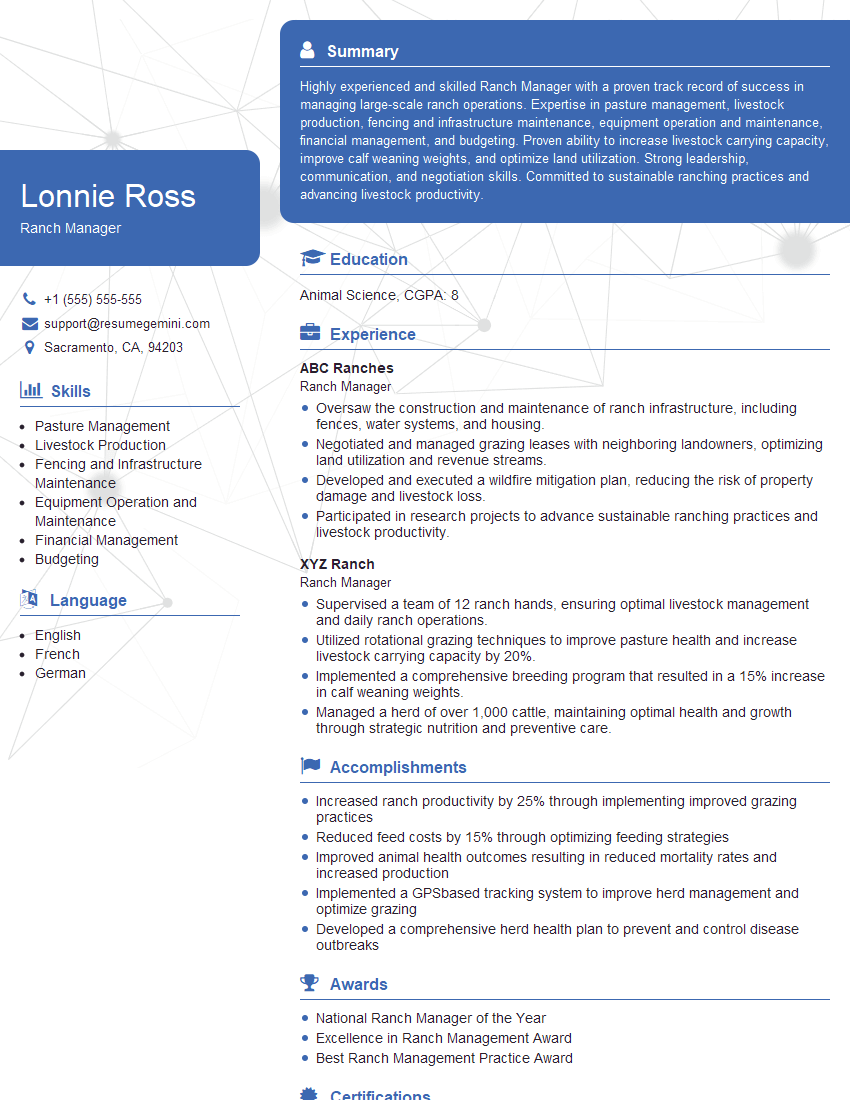
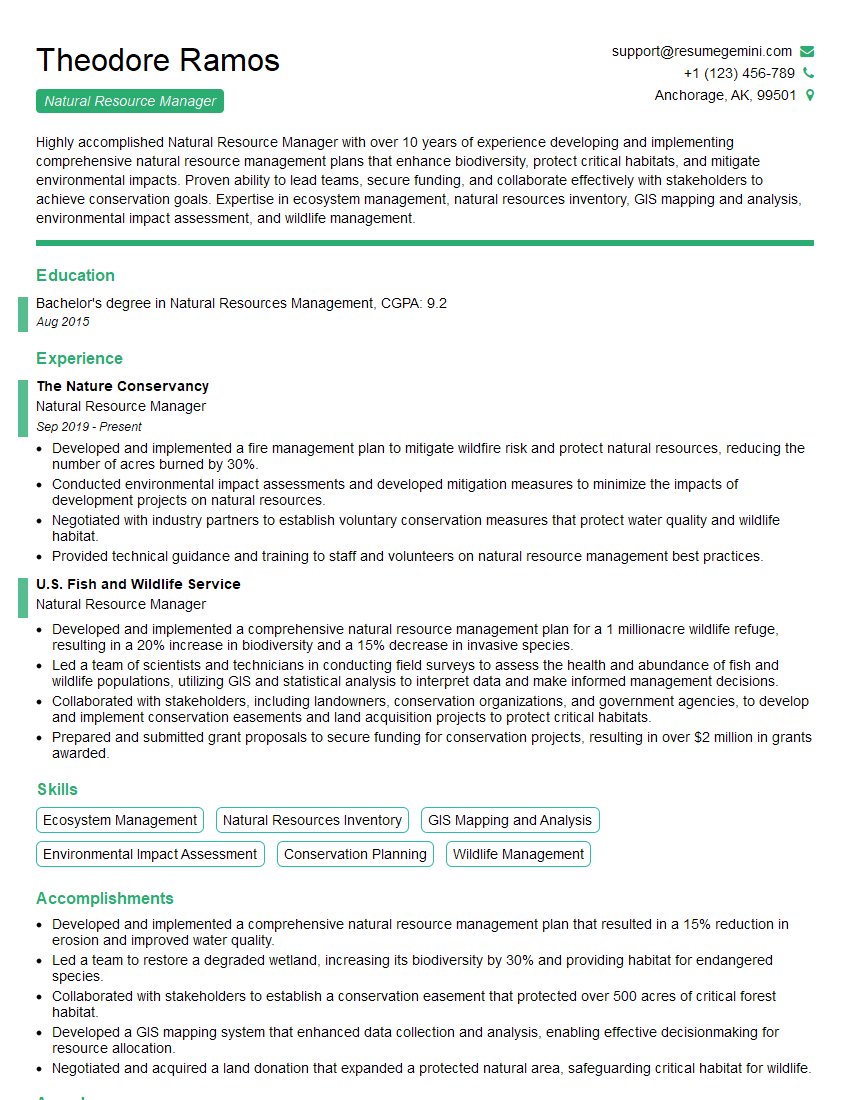
Mastering Grazing Management and Rotational Grazing is crucial for career advancement in agriculture and environmental stewardship. A strong understanding of these principles will significantly enhance your marketability and open doors to exciting opportunities. To maximize your job prospects, it’s essential to create an ATS-friendly resume that highlights your skills and experience effectively. ResumeGemini is a trusted resource to help you build a professional and impactful resume. They provide examples of resumes tailored to Grazing Management and Rotational Grazing, ensuring your application stands out from the competition. Take advantage of these resources to present yourself as the ideal candidate.

Explore more articles
Users Rating of Our Blogs
Share Your Experience
We value your feedback! Please rate our content and share your thoughts (optional).
What Readers Say About Our Blog
Very informative content, great job.
good