The thought of an interview can be nerve-wracking, but the right preparation can make all the difference. Explore this comprehensive guide to Ground Fire Fighting interview questions and gain the confidence you need to showcase your abilities and secure the role.
Questions Asked in Ground Fire Fighting Interview
Q 1. Describe your experience with different types of ground fire suppression techniques.
Ground fire suppression techniques are diverse, adapting to fuel type, topography, and weather conditions. My experience encompasses a wide range, from direct attack methods to indirect attack strategies. Direct attack involves directly engaging the flames, often using water or foam. This is effective on smaller, less intense fires. Indirect attack, conversely, focuses on removing fuel ahead of the fire’s path, creating control lines to prevent further spread. This is crucial for larger, rapidly spreading fires. I’ve extensively used both approaches, employing techniques like beating out flames with shovels, applying water using pumps and hoses, and constructing firebreaks with hand tools. I’ve also worked with prescribed burns to create controlled burns that reduce the amount of flammable material, effectively preventing larger wildfires.
For instance, during a recent wildfire, we utilized a combination of direct and indirect attacks. We used hand crews to construct fire lines in areas with lighter fuels, then deployed water tenders to cool down hot spots directly engaging the flames. In areas with heavier fuels, we focused on indirect attack methods, creating a fuel break to prevent further progression.
Q 2. Explain the process of establishing fire lines.
Establishing fire lines is a critical step in containing a wildfire. It involves creating a barrier that prevents the fire from spreading. This can be accomplished through a variety of methods. First, we must identify the perimeter of the fire and assess the most appropriate location for a fire line, considering factors like fuel type, topography, and wind direction. Next, we clear all combustible materials – grass, shrubs, leaves, and branches – from a swathe of land, ideally several feet wide, down to bare earth. This creates a fuel-free zone that acts as a firebreak. The tools used can range from hand tools like shovels and rakes, for smaller lines, to bulldozers for larger ones. Once the fire line is established, it is crucial to monitor it and reinforce it as needed.
Consider a scenario where the fire is approaching a densely wooded area. Here, we’d focus on creating a wide fire line, potentially using heavy equipment to clear brush and expose mineral soil. If the fire is moving quickly up a steep slope, we might use more narrow fire lines, utilizing hand tools to remove fuel quickly.
Q 3. How do you assess fire behavior and predict its spread?
Assessing fire behavior and predicting its spread is paramount for effective fire suppression. We use a variety of factors in this assessment, including weather conditions (wind speed and direction, temperature, humidity), fuel type and density (how much fuel is available and how easily it ignites), topography (slope, aspect, and elevation), and the fire’s current behavior (rate of spread, intensity, and flame height). The combination of these factors gives us a clear understanding of the fire’s potential behavior. To predict spread, we use fire behavior models and maps that incorporate these factors. This often involves using weather forecasts, fuel maps, and topographical data to simulate the fire’s potential spread.
For example, strong winds increase the rate of spread and may cause spot fires, while high humidity reduces the intensity. Steep slopes tend to accelerate fire spread, whereas flat terrain makes prediction easier. I have used several software programs and models to estimate fire spread, allowing us to focus our resources effectively. This predictive capability is crucial for deploying resources effectively and preventing the fire from getting out of control.
Q 4. What are the different types of fire suppression equipment and their applications?
A wide array of fire suppression equipment is used in ground fire fighting, each with a specific application. Hand tools, such as shovels, rakes, axes, and pulaskis, are fundamental for creating fire lines and suppressing small fires. Pumps and hoses are used to apply water or foam to the fire. Water tenders transport large quantities of water to the fire line. Bulldozers and other heavy equipment are often employed to create large fire breaks or construct containment lines, especially in areas with dense vegetation. Specialized equipment includes drip torches (for prescribed burns), foam applicators, and air compressors. The selection of equipment depends on the size, intensity, location, and accessibility of the fire.
For instance, in a remote area with difficult access, we might rely more on hand tools and lighter equipment. On larger, more intense wildfires, we would use heavy machinery and specialized equipment and water tenders to ensure an efficient and safe response.
Q 5. Describe your experience with using hand tools in fire suppression.
My experience with hand tools in fire suppression is extensive. I’m proficient in using shovels for digging fire lines, rakes for removing fuel, axes for felling trees, and pulaskis for creating a combination of chopping and digging. Hand tools are invaluable for creating precise fire lines, especially in areas where heavy equipment is inaccessible or would cause damage to the environment. They also play a vital role in initial attack and mopping up operations, ensuring complete fire suppression and preventing flare-ups. Proper technique and teamwork are vital when using hand tools to ensure efficiency and safety.
For example, during a recent wildfire, I worked with a crew using hand tools to construct a fire line on a steep, rocky hillside. The precision required to remove fuel without causing soil erosion or injury required years of experience and skilled teamwork.
Q 6. How do you ensure the safety of yourself and your crew during fire suppression operations?
Safety is our paramount concern during fire suppression operations. We adhere to strict safety procedures and protocols, which include regular safety briefings, use of appropriate personal protective equipment (PPE), and continuous communication within the crew. PPE includes fire-resistant clothing, gloves, helmets, eye protection, and respirators. We establish clear communication channels and assign roles and responsibilities, ensuring that each crew member understands their tasks and safety procedures. Regular checks of equipment and the fire’s behavior are crucial. We also use lookout positions to monitor the fire’s progression and alert crew members of any potential hazards. The establishment of escape routes and safety zones is also mandatory. Before initiating suppression efforts, these are identified and regularly reviewed.
If conditions change unexpectedly, we know our escape routes and fallback positions, minimizing any risks. This training enables rapid and coordinated responses to unexpected fire behavior changes and potential hazards.
Q 7. Explain your understanding of fire safety regulations and procedures.
My understanding of fire safety regulations and procedures is comprehensive. I’m familiar with local, regional, and national regulations governing fire suppression operations, including those related to permits, safety protocols, and environmental protection. These regulations often vary depending on jurisdiction and cover areas such as wildland fire prevention, prescribed burning, and the handling of fire-suppression equipment. I am also aware of and follow the National Fire Protection Association (NFPA) standards. Adherence to these regulations ensures the safety of both firefighters and the environment. Thorough knowledge of these guidelines ensures safety and legality in every operation. It is crucial to review and adapt practices based on the latest information and updates to these standards.
For instance, understanding permit requirements for prescribed burns is critical to ensure compliance. Likewise, adhering to regulations on the use of chemicals in fire suppression protects both firefighters and the environment. Failure to comply with these standards can result in severe consequences, including accidents and legal liabilities.
Q 8. How do you communicate effectively during a fire emergency?
Effective communication during a fire emergency is paramount for safety and efficiency. It’s not just about shouting instructions; it’s about clear, concise, and consistent messaging across all team members and command levels. We use a multi-faceted approach.
Radio Communication: Our primary tool is the radio. We use standardized codes and terminology (e.g., ICS – Incident Command System) to avoid ambiguity. For example, instead of saying “The fire’s spreading fast,” we’d use a more precise report like “Incident Alpha, requesting additional resources; fire exhibiting rapid rate of spread in the southwest sector.”
Face-to-Face Briefings: Before engaging in any operation, we have pre-fire briefings to discuss strategies, assign roles, and identify potential hazards. During operations, direct communication is crucial, ensuring everyone understands their tasks and the overall plan.
Situation Reports: Regular updates to command are essential. These reports clearly describe the fire’s behavior, the resources deployed, and any challenges encountered. This ensures coordinated action across the entire operation.
Non-Verbal Communication: In high-stress situations, visual cues like hand signals can be crucial. We use a predetermined set of signals for quick and effective communication in noisy or hazardous environments.
Imagine a situation where a fire is rapidly approaching a structure. Clear radio communication about the impending danger allows everyone to take appropriate safety measures, ensuring personnel evacuation and protection of property. Effective communication is the backbone of any successful fire suppression operation.
Q 9. Describe your experience working in diverse team environments during fire suppression.
Throughout my career, I’ve worked with incredibly diverse teams, comprising individuals with varying experience levels, cultural backgrounds, and skill sets. Working effectively in these environments necessitates adaptability and strong interpersonal skills.
Respect for Diversity: I actively listen to and value the perspectives of every team member. Their unique experiences and skills bring valuable insights to problem-solving and strategy development. For instance, someone with experience in a different geographical area might have valuable insight into fire behavior specific to their region.
Shared Goals: We establish a clear understanding of our shared objectives from the outset. This creates a sense of unity and purpose, motivating the team toward a common goal. Everyone understands their role in the bigger picture, regardless of experience.
Open Communication: I foster an environment where team members feel comfortable expressing their concerns, ideas, and challenges without hesitation. This ensures everyone is heard and promotes a proactive approach to problem-solving. This is especially vital during the pressure cooker environment of large wildfires.
Mentorship and Collaboration: I actively mentor less experienced team members, guiding them and sharing my expertise. Simultaneously, I actively seek to learn from more experienced colleagues, creating a culture of continuous learning and improvement. This collaborative approach benefits the entire team.
In one particular instance, while working on a large wildfire, our team included firefighters from various states, each with their unique approaches and equipment. By fostering open communication and mutual respect, we successfully coordinated our efforts, adapting to different techniques and strategies, ultimately achieving success in containing the fire.
Q 10. How do you handle stressful situations during a fire incident?
Firefighting inherently involves high-pressure situations. My approach focuses on maintaining composure, leveraging training, and prioritizing safety.
Training and Preparedness: Extensive training equips us with the skills and knowledge to handle various scenarios. This preparedness reduces anxiety and boosts confidence in our abilities. Regular drills and simulations prepare us for high-stress environments.
Risk Assessment: I always prioritize a thorough risk assessment before and during any operation. Understanding the potential dangers allows us to mitigate risks and proactively address them, reducing overall stress. This involves factors such as weather conditions, terrain, and fuel types.
Teamwork and Support: Reliance on my team is key. Open communication and mutual support create a strong sense of cohesion, reducing individual stress levels. We operate as a unit, supporting each other both physically and emotionally.
Self-Care and Stress Management: Recognizing the importance of self-care, I incorporate stress management techniques into my routine, such as physical exercise and mindfulness practices. This helps maintain mental and physical resilience, improving performance under pressure.
For instance, during a particularly intense structure fire, maintaining clear communication with my crew, coupled with a systematic approach to extinguishing the flames, helped us to bring the fire under control quickly and safely, minimizing stress and maximizing our collective effort.
Q 11. What is your understanding of fire weather and its impact on fire behavior?
Fire weather plays a crucial role in determining fire behavior. Understanding its impact is essential for effective fire suppression. Factors such as temperature, humidity, wind speed and direction, and precipitation significantly influence the spread, intensity, and overall behavior of a wildfire.
Temperature: Higher temperatures increase the flammability of fuels, leading to faster fire spread and more intense burning.
Humidity: Low humidity dries out vegetation, making it more susceptible to ignition and rapid combustion. High humidity has the opposite effect.
Wind: Wind is a major driver of wildfire spread. Strong winds can rapidly accelerate fire progression and cause unpredictable fire behavior, such as spotting (embers carried by wind that ignite new fires ahead of the main fire front).
Precipitation: Rainfall reduces fuel moisture, but prolonged drought can increase fire risk. Recent rain can temporarily reduce fire risk but needs careful consideration as it can also create deceptive conditions.
For example, a wildfire on a hot, dry, windy day will spread significantly faster and more intensely than one on a cool, humid day with light winds. Fire weather forecasts are crucial for strategic fire management and resource allocation. We use these forecasts to predict fire behavior, identify high-risk areas, and develop effective suppression strategies.
Q 12. Explain your experience with using maps, compasses, and GPS in fire suppression operations.
Maps, compasses, and GPS are vital tools for navigating and managing fire suppression operations, especially in remote or challenging terrain.
Maps: Topographic maps provide essential information on elevation, terrain features, vegetation types, and water sources. This knowledge helps in strategic planning, resource deployment, and firefighter safety.
Compasses: Compasses are essential for determining direction, especially when GPS is unavailable or unreliable. They are crucial for maintaining accurate bearings and coordinating movement within the fire perimeter, particularly in dense smoke or poor visibility.
GPS: GPS devices provide precise location information, enabling accurate tracking of fire perimeters, resource deployment, and firefighter locations. This is crucial for effective communication and coordination during large-scale fire incidents. Using GIS (Geographic Information Systems) software with GPS data can create real-time maps that are used in tactical decision-making.
During a recent wildfire, we relied heavily on GPS and GIS to track the fire’s progression. Accurate location data allowed us to deploy resources efficiently, ensuring that crews were positioned strategically to contain the fire’s spread. The combination of maps, compasses, and GPS enabled precise coordination and maximized the effectiveness of our efforts.
Q 13. How do you identify and control potential fire hazards?
Identifying and controlling potential fire hazards is a proactive approach to fire prevention and safety. This involves a multi-pronged strategy.
Regular Inspections: Regular inspections of equipment, buildings, and surrounding areas help detect and address potential hazards early on. This includes checking for fuel build-up, faulty wiring, and other potential ignition sources.
Fuel Management: Managing vegetation and fuel sources around structures and in high-risk areas is critical. This can involve controlled burns, clearing brush, and creating defensible space. This reduces the potential for rapid fire spread.
Public Awareness: Educating the public about fire safety, including responsible campfire practices, discarding cigarettes properly, and maintaining appropriate distances from heat sources, plays a vital role in preventing human-caused fires.
Equipment Maintenance: Regular maintenance and inspection of firefighting equipment ensure its readiness and reliability when needed. This includes checking hoses, pumps, and other crucial components.
For example, in a rural area with a high risk of wildfires, we would implement fuel management strategies like prescribed burns to reduce the amount of available fuel. Additionally, regular community outreach programs help educate residents about fire prevention measures and safe practices.
Q 14. Describe your experience with mop-up operations and post-fire rehabilitation.
Mop-up operations and post-fire rehabilitation are crucial phases in fire management, ensuring long-term safety and environmental recovery.
Mop-up Operations: This involves extinguishing remaining embers, hotspots, and smoldering fuels to prevent re-ignition. It also involves patrolling the fire perimeter to identify and address any flare-ups. It can last for days or even weeks depending on the size and intensity of the fire.
Post-Fire Rehabilitation: This focuses on restoring the affected ecosystem and mitigating the environmental impacts of the fire. This can include erosion control, re-seeding, and protecting water resources. It also involves assessing the structural damage to properties and facilitating necessary repairs.
After a major wildfire, we conduct thorough mop-up operations to ensure complete extinguishment of the fire. This involved careful monitoring of the burn area for hotspots and using various techniques like hand tools and water to extinguish remaining embers. Post-fire rehabilitation was implemented to minimize erosion in areas where the vegetation had been removed. This included measures like seeding native grasses and installing erosion control structures to protect the soil and prevent further damage.
Q 15. How do you recognize signs of fatigue and stress in yourself and your crew?
Recognizing fatigue and stress in myself and my crew is paramount to safety and effectiveness in ground fire fighting. It’s not just about physical exhaustion; it’s also about mental and emotional strain. We look for several key indicators. Physically, we watch for things like decreased reaction time, slower movements, increased errors, and persistent physical complaints beyond normal aches and pains. Mentally, we look for irritability, poor concentration, difficulty making decisions, increased anxiety, and changes in sleep patterns. We also monitor for signs of emotional distress such as withdrawal, apathy, or unusual emotional outbursts. We use a buddy system where crew members are encouraged to look out for each other and report concerns. Regular breaks, hydration, and proper nutrition are also crucial. We also utilize brief daily check-ins, allowing individuals to honestly assess their well-being without pressure. If we suspect someone is struggling, we immediately address the issue, offering support and possibly recommending rest or seeking professional help.
Career Expert Tips:
- Ace those interviews! Prepare effectively by reviewing the Top 50 Most Common Interview Questions on ResumeGemini.
- Navigate your job search with confidence! Explore a wide range of Career Tips on ResumeGemini. Learn about common challenges and recommendations to overcome them.
- Craft the perfect resume! Master the Art of Resume Writing with ResumeGemini’s guide. Showcase your unique qualifications and achievements effectively.
- Don’t miss out on holiday savings! Build your dream resume with ResumeGemini’s ATS optimized templates.
Q 16. What is your understanding of incident command systems?
Incident Command Systems (ICS) are the standardized organizational structure for managing emergencies, including wildfires. Think of it as a well-organized army tackling a complex problem. ICS provides a clear chain of command, defined roles and responsibilities, and efficient communication protocols. Key components include the Incident Commander (overall leader), Operations Section (managing fire suppression tactics), Planning Section (analyzing the situation and developing strategies), Logistics Section (providing resources like water and equipment), and Finance/Administration Section (managing budgets and records). Each section has specific branches and units, depending on the incident’s size and complexity. Effective ICS ensures everyone works together cohesively, minimizes confusion, and optimizes resource allocation. In my experience, effective ICS drastically improves efficiency, prevents duplication of effort, and ultimately leads to safer and more successful fire suppression efforts. I’ve personally used ICS on numerous large-scale wildfires, and its structure is essential for coordinating the actions of hundreds of firefighters from various agencies.
Q 17. Describe your experience with using different types of fire retardants.
My experience includes using various fire retardants, each with unique properties and applications. Phosphate-based retardants are common; they work by creating a barrier that slows fire spread. They’re effective but can have environmental impacts, so careful application is crucial. I’ve also used polymer-based retardants, which tend to be more environmentally friendly. These create a film that reduces flammability. The choice of retardant depends on factors like fire behavior, vegetation type, and environmental concerns. The application method varies as well – from air tankers dropping large quantities to ground crews using pumps and hoses for more precise application. I’ve been trained in the safe handling and application of each type, always prioritizing environmental protection alongside fire suppression. A critical factor in the selection process is environmental impact; we frequently weigh the benefits of suppression against potential harm to water sources and sensitive ecosystems.
Q 18. How do you manage fuel breaks and other fire control measures?
Fuel breaks are essential fire control measures. They’re strategically planned and constructed barriers that interrupt the continuity of fuels, slowing or stopping wildfire progression. We use a variety of methods to create them. This can include creating wide cleared areas, strategically removing vegetation, or using natural barriers like rivers and roads. Their effectiveness depends on their design, placement, and maintenance. We regularly inspect and maintain existing fuel breaks, ensuring they remain effective. Other fire control measures include controlled burns (prescribed fires) that reduce fuel loads before wildfire season. Water sources are also crucial, and we work closely with water management authorities to ensure sufficient resources are available for fire suppression. We also use firebreaks—smaller, tactical lines created on the fire’s edge to contain its spread. Careful planning and coordination of these control measures are critical to successful fire management, often involving advanced predictive modeling and real-time assessment of fire behavior.
Q 19. Explain your understanding of the different fire classifications (Class A, B, C, etc.).
Fire classifications categorize fires based on the type of fuel involved and the extinguishing agent required. Class A fires involve ordinary combustible materials like wood, paper, and cloth – they are extinguished primarily with water. Class B fires involve flammable liquids like gasoline and oil – these require extinguishing agents that interrupt the chemical chain reaction, such as foam or dry chemical powder. Class C fires involve energized electrical equipment – power must be shut off before extinguishing with an appropriate agent (typically a dry chemical or CO2). Class D fires involve combustible metals like magnesium and titanium – these require specialized extinguishing agents that prevent reactions with air. Class K fires involve cooking oils and greases – these also require specialized agents that prevent reignition. Understanding these classifications is fundamental for choosing the right suppression techniques and equipment. It is a foundational principle for safe and efficient fire suppression. In my experience, misidentification can have dangerous consequences, so proper training and constant vigilance are essential.
Q 20. Describe your experience with wildland-urban interface (WUI) fires.
Wildland-urban interface (WUI) fires present unique challenges. These fires occur in areas where wildlands meet human development. The mix of natural fuels and human-made structures creates a high-risk environment. Homes, outbuildings, and landscaping can readily ignite and rapidly spread the fire. Effective WUI fire management involves a combination of strategies, including defensible space creation (clearing vegetation around homes), building codes that promote fire-resistant construction, public education programs, and aggressive initial attack strategies. I’ve seen firsthand how quickly a WUI fire can spread through dense brush and dry vegetation, then engulf homes. This underscores the importance of community preparedness and collaboration between fire agencies, land management agencies, and residents. Effective communication and community engagement are critical for success in these situations, as is proactive planning rather than only reacting to an event.
Q 21. What is your understanding of the different types of fuels that contribute to wildfires?
Wildfires are fueled by a variety of materials, broadly categorized as fuels. Live fuels include grasses, shrubs, trees, and other living vegetation. Dead fuels encompass dead leaves, branches, logs, and other organic matter. Fuel characteristics like type, size, moisture content, and arrangement significantly influence fire behavior. For example, fine fuels like grasses ignite easily and burn rapidly, while larger fuels like logs burn more slowly but can produce intense heat. Fuel moisture is crucial; drier fuels ignite and burn more readily. Fuel arrangement refers to how fuels are spaced; continuous fuels allow fires to spread easily, while discontinuous fuels can create natural barriers. Understanding fuel types and characteristics is essential for predicting fire behavior, planning suppression strategies, and developing effective fuel management practices. This understanding is vital in planning the best response to a particular fire. For example, the strategy for a grass fire in open country will be fundamentally different than a fire in dense forest with large dead logs.
Q 22. How do you use weather information to plan fire suppression strategies?
Weather is paramount in ground fire fighting. Understanding weather patterns directly impacts fire behavior and dictates our suppression strategies. For instance, wind speed and direction are critical; strong winds can rapidly spread a fire, requiring us to prioritize flanking and strategic burnout operations to create firebreaks ahead of the main blaze. Relative humidity impacts fuel moisture – drier conditions mean faster burning fires, necessitating aggressive initial attack and potentially aerial support. Temperature influences fuel flammability and fire intensity. We use readily available weather forecasts and, increasingly, real-time data from weather stations deployed on the fire line to constantly adapt our tactics. For example, if a forecast predicts increasing winds in the afternoon, we might concentrate our resources on the most vulnerable flanks in the morning, preemptively establishing control lines before the winds shift the fire’s behavior. We often incorporate this data into Geographic Information Systems (GIS) to visualize the fire’s spread potential under varying weather conditions.
Q 23. Describe your experience with working in remote and challenging terrains.
I have extensive experience operating in remote and challenging terrains, including mountainous regions with steep slopes, dense forests with limited access, and swampy lowlands. This often involves using specialized equipment like all-terrain vehicles (ATVs) and helicopters for personnel and equipment transport. One particular incident involved battling a wildfire in a remote canyon. Access was extremely limited, requiring us to hike several miles with heavy equipment to reach the fire’s edge. This highlighted the importance of meticulous planning, efficient resource allocation, and the physical fitness and resilience of the firefighting team. We employed hand-line techniques and strategic use of water drops from helicopters in tandem to effectively contain and suppress the fire given the challenging terrain.
Q 24. How do you conduct a size-up of a fire scene?
Conducting a size-up is the crucial first step in any fire incident. It’s a rapid assessment of the situation to inform strategic decision-making. My size-up process follows a structured approach: I first assess the fuel type and load (what’s burning and how much), the fire behavior (rate of spread, intensity, direction), and the topography (slope, obstacles, access). I then identify potential threats to life and property and determine available resources (personnel, equipment, water sources). I also consider weather conditions (wind, humidity, temperature) and the potential for spread. For example, a fire in a steep, dry canyon with strong winds presents a very different challenge than a slow-moving fire in a damp meadow. The size-up dictates our initial attack strategy and informs our subsequent resource requests and tactical decisions. It’s a dynamic process that continues to evolve as the situation unfolds.
Q 25. What is your experience with personal protective equipment (PPE) for firefighting?
Personal Protective Equipment (PPE) is non-negotiable in ground firefighting. My experience includes regular use and maintenance of structural firefighting gear (helmets, bunker coats, pants, gloves, boots), wildland fire protective clothing (Nomex), eye protection, and respiratory protection (SCBA – Self-Contained Breathing Apparatus). I’m proficient in inspecting PPE for damage or wear before each operation and understand the importance of proper fit and function for maximum protection. Regular training reinforces safe donning and doffing procedures and emphasizes the critical role PPE plays in mitigating risks like burns, lacerations, and inhalation injuries. We routinely undergo fit testing for SCBAs to ensure a tight seal, preventing the inhalation of harmful smoke and gases. The proper use and maintenance of PPE is directly linked to firefighter safety and operational effectiveness.
Q 26. How do you maintain and inspect fire suppression equipment?
Maintaining and inspecting fire suppression equipment is critical for operational readiness and firefighter safety. This includes regular checks of water pumps, hoses, nozzles, hand tools (axes, shovels, pulaskis), and communication systems. We perform pre-operational checks before every deployment, verifying water pressure, hose integrity, and tool sharpness. We follow stringent maintenance schedules for engines and other equipment, ensuring that all components are functioning correctly. We also conduct post-incident inspections to identify any damage or needed repairs. Documentation of all inspections and maintenance is crucial for accountability and identifying potential equipment failures early on. Proactive maintenance prevents breakdowns during critical incidents, ensuring the reliability of our equipment and the safety of the firefighting team.
Q 27. Explain your knowledge of emergency medical procedures in a fire incident.
My training encompasses emergency medical response (EMR) within the context of fire incidents. I am First Aid and CPR certified and proficient in providing basic life support. I understand the unique challenges of providing medical care in a hazardous environment and am trained in extrication techniques, handling trauma injuries, and assessing and managing smoke inhalation. This involves working closely with Emergency Medical Services (EMS) personnel to ensure a seamless transition of care. We practice regular scenarios that simulate injured firefighters or civilians trapped in burning buildings. These drills help us refine our skills and work efficiently as a team during stressful and time-sensitive situations. The safety of individuals involved in a fire incident is a top priority, and effective EMR is critical for improving survival rates and minimizing long-term consequences.
Q 28. Describe your experience with collaborating with other agencies during large-scale fire events.
Effective collaboration is essential during large-scale fire events. My experience involves working closely with various agencies, including other fire departments, law enforcement, emergency management agencies, and public health officials. This requires clear communication, coordination, and a shared understanding of roles and responsibilities. We utilize incident command systems (ICS) to establish a unified command structure and facilitate efficient resource allocation and communication. For instance, during a large forest fire, we might collaborate with the local sheriff’s department for road closures and evacuations, work with other fire crews for strategic deployment and containment, and rely on aerial support from state or federal agencies. This collaborative approach maximizes efficiency, optimizes resource utilization, and ensures the safety of both firefighters and the public.
Key Topics to Learn for Ground Fire Fighting Interview
- Fire Behavior and Prediction: Understanding fire spread, fuel types, weather influences, and topography’s role in fire behavior. This includes predicting fire growth and potential dangers.
- Fire Suppression Techniques: Mastering various methods of extinguishing ground fires, including hand tools, water application strategies, and the use of firebreaks. Practical application includes scenarios involving different fuel types and terrain.
- Safety Procedures and Regulations: In-depth knowledge of safety protocols, personal protective equipment (PPE), communication systems, and emergency response procedures. This includes understanding and applying relevant regulations and standards.
- Equipment Operation and Maintenance: Familiarity with various ground fire fighting equipment, including pumps, hoses, tools, and vehicles. This extends to routine maintenance, troubleshooting, and safe operation.
- Teamwork and Communication: Understanding the importance of effective communication within a fire fighting team, including clear instructions, efficient coordination, and maintaining situational awareness.
- Incident Command System (ICS): Knowledge of ICS principles and how they apply to ground fire fighting operations, including roles, responsibilities, and communication within the incident management structure.
- Post-Fire Activities: Understanding procedures for monitoring extinguished fires, assessing damage, and preventing reignition. This includes techniques for securing the area and reporting findings.
- Environmental Considerations: Awareness of the environmental impact of fire suppression efforts and techniques for minimizing negative consequences on ecosystems.
Next Steps
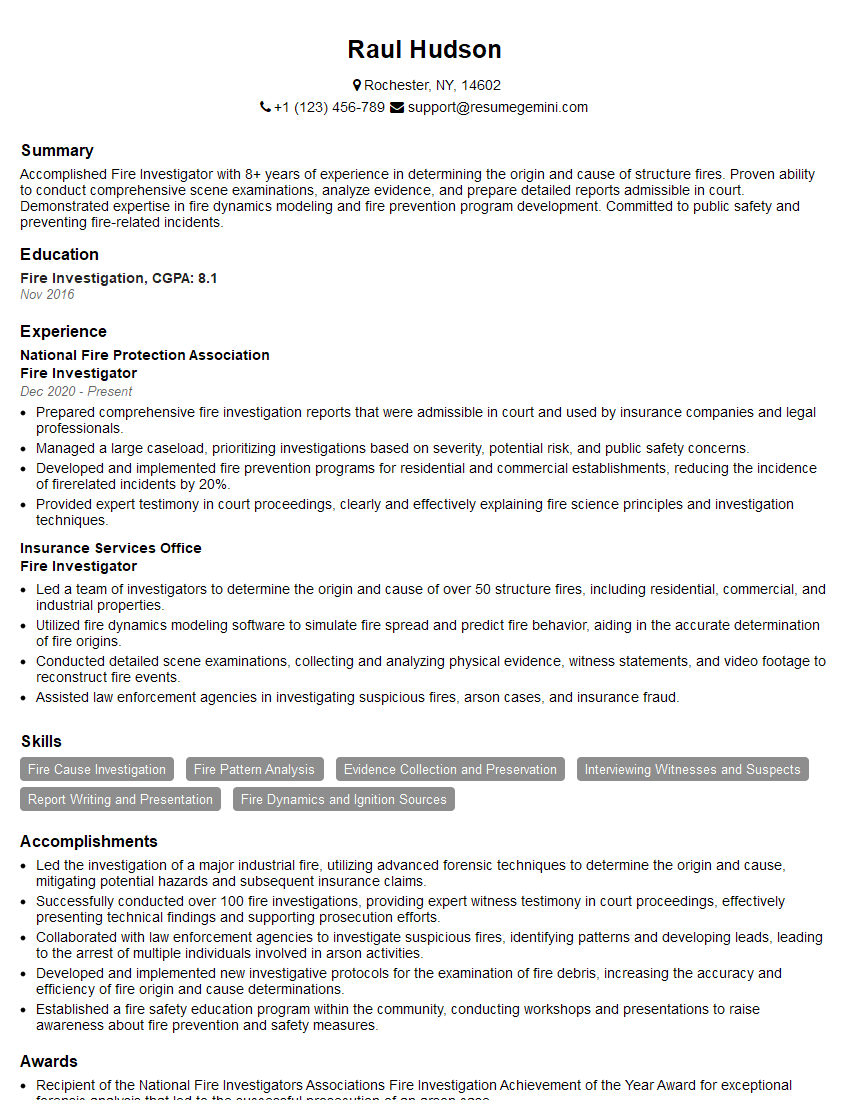
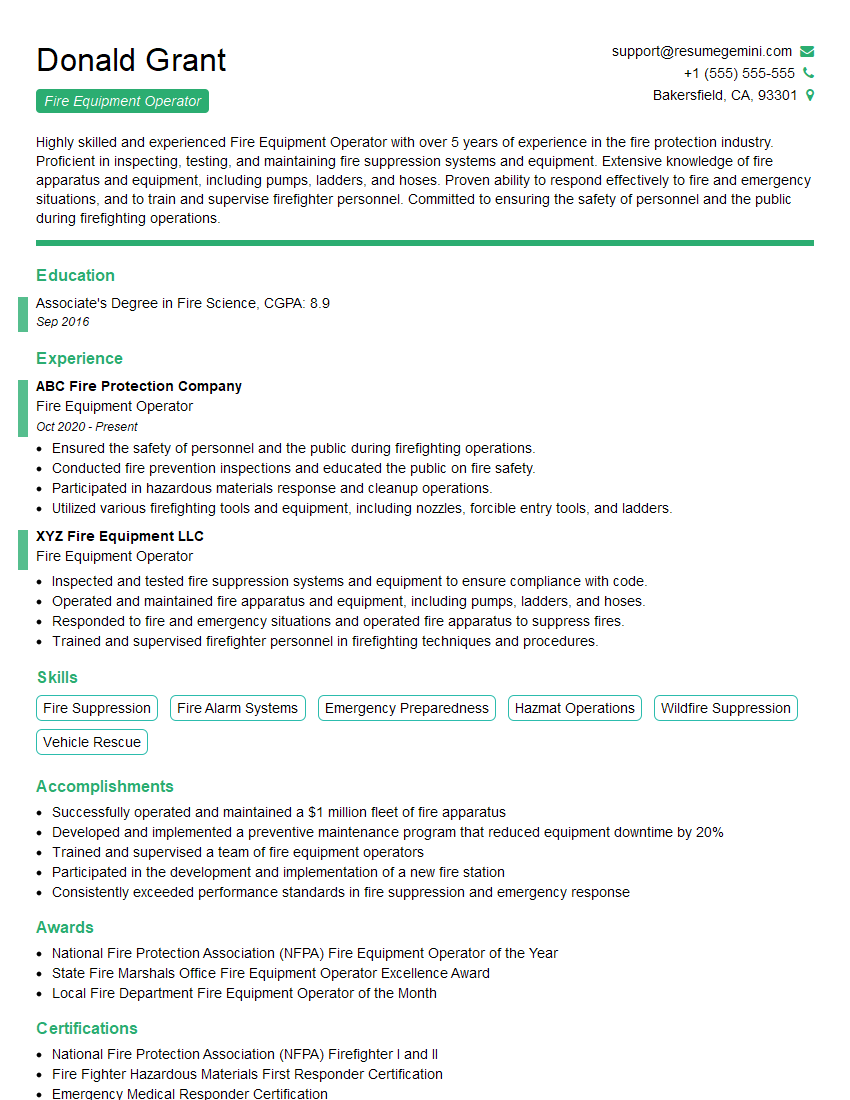
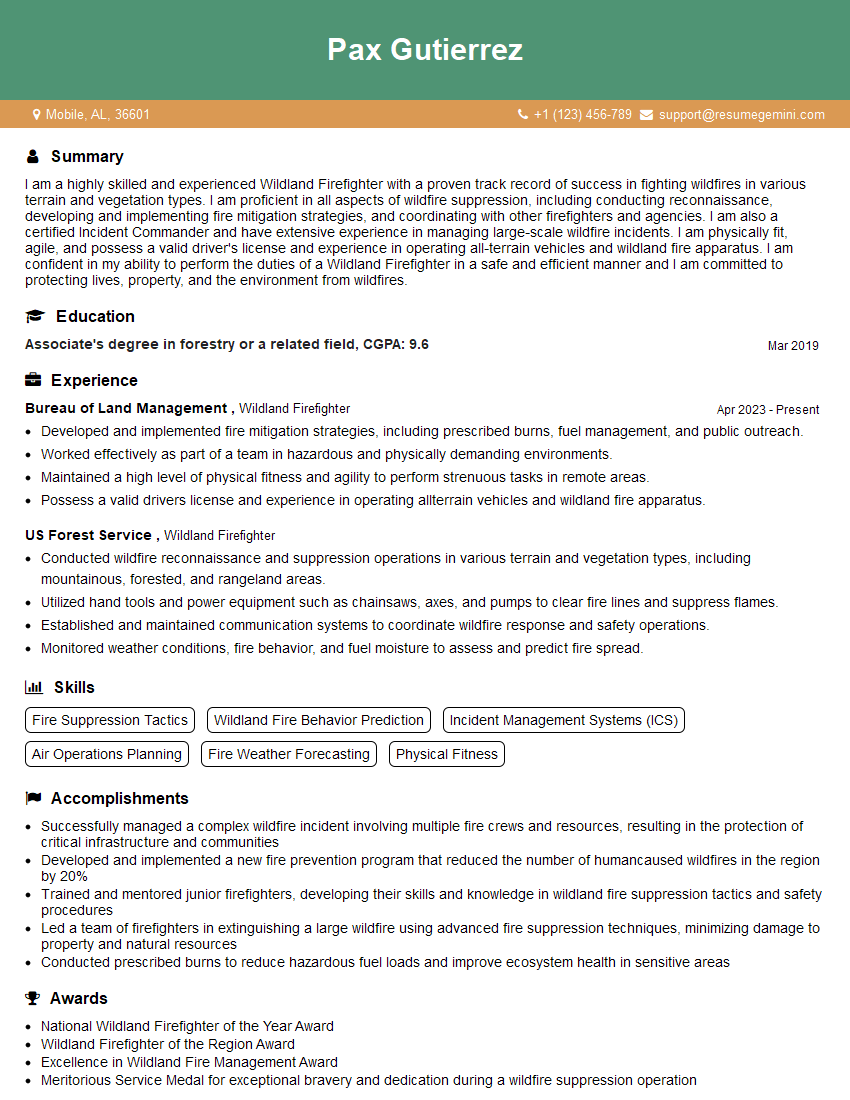
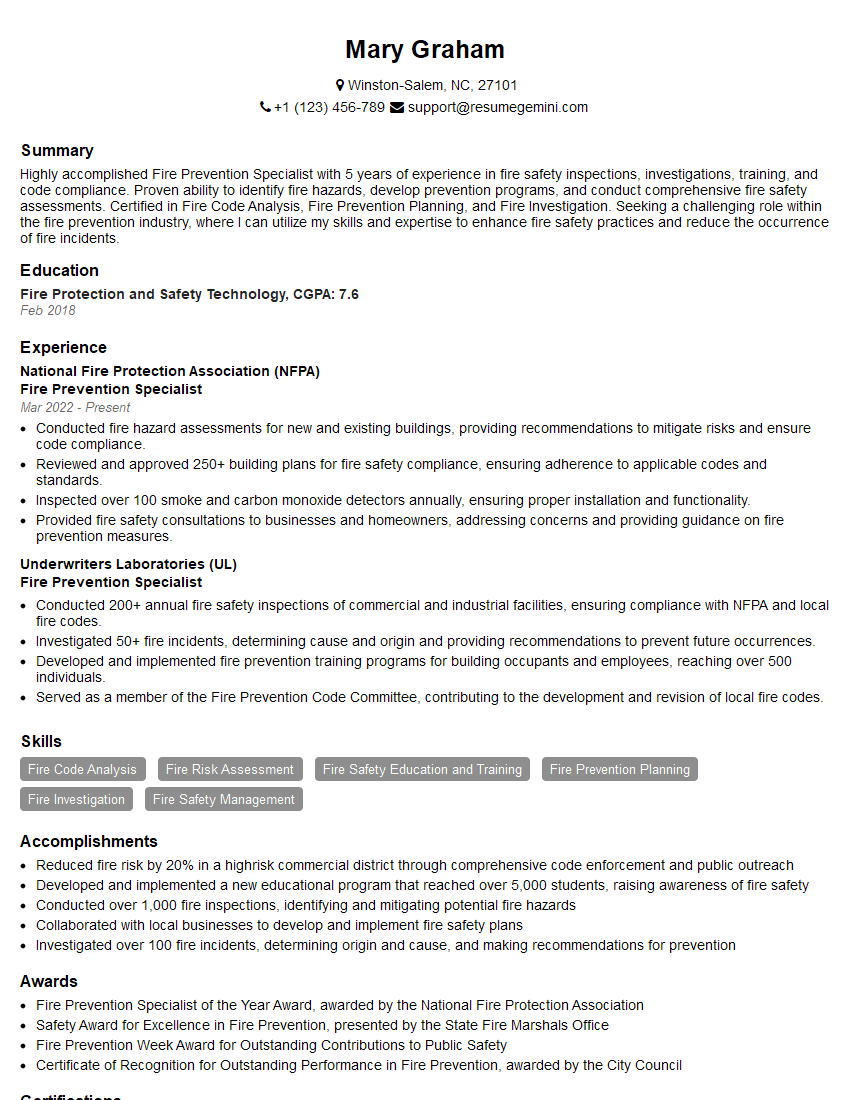
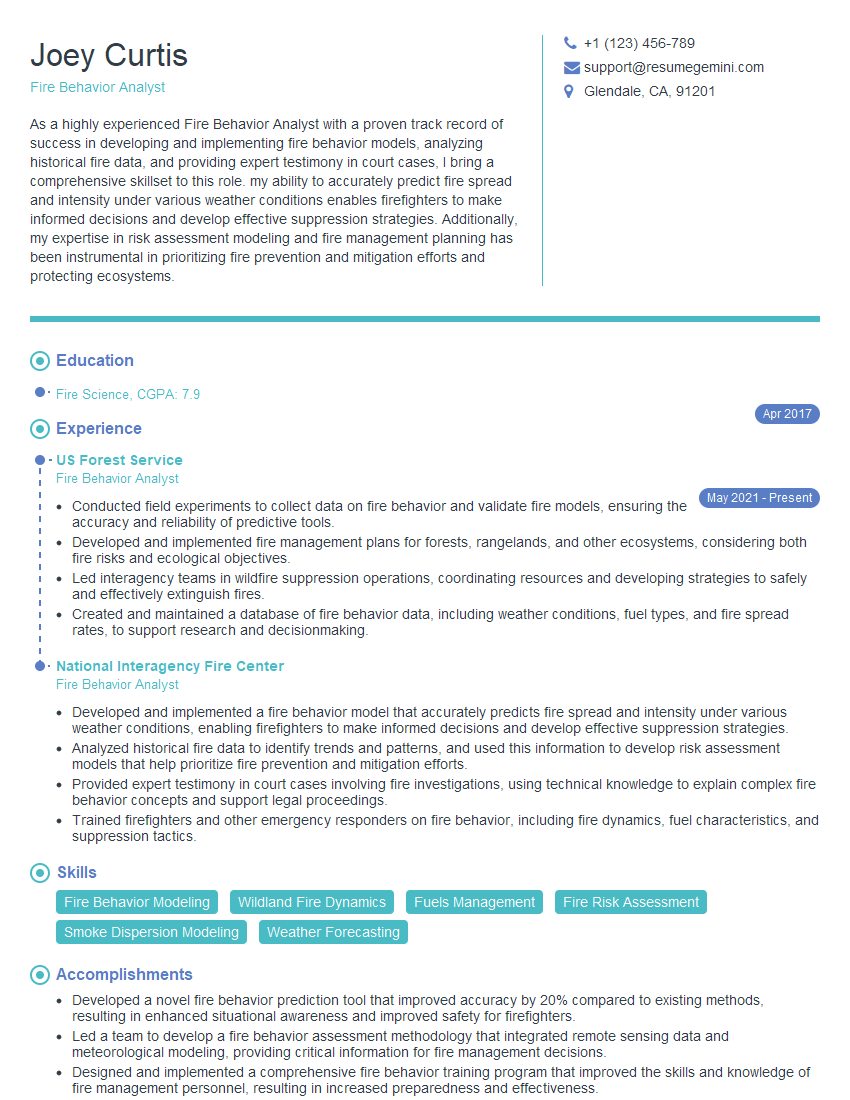
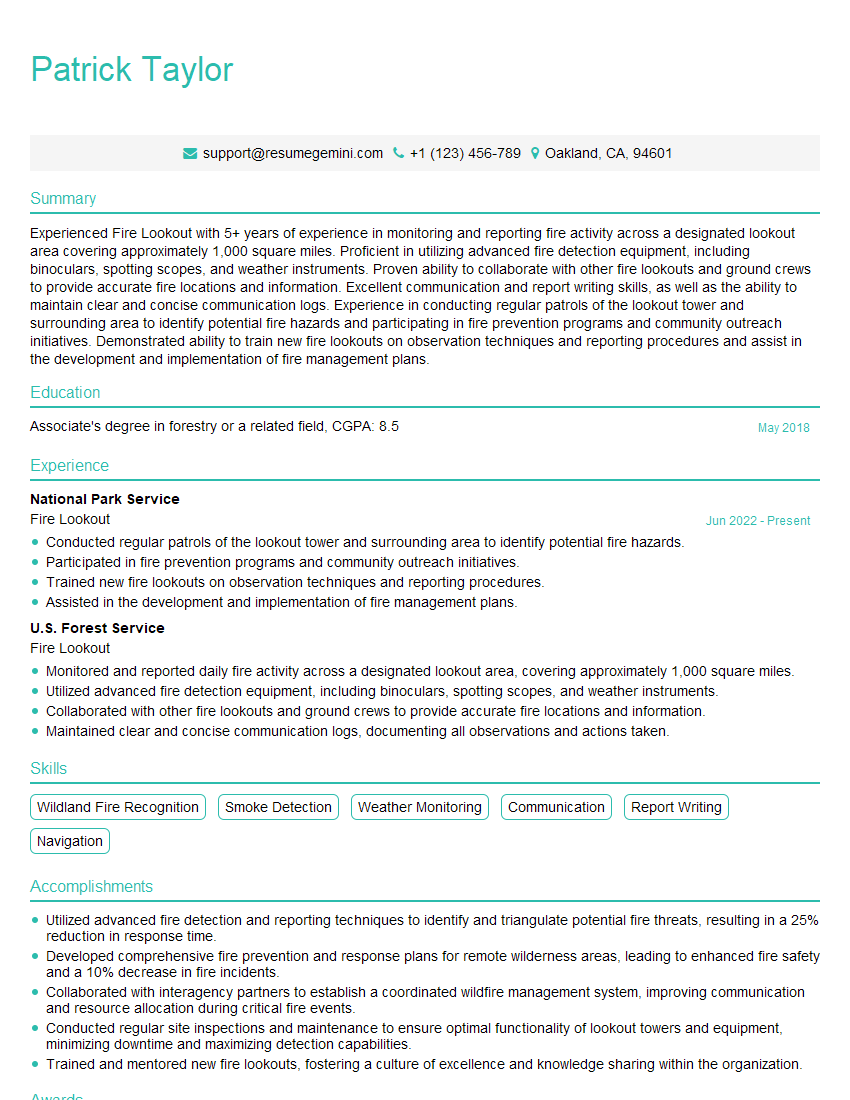
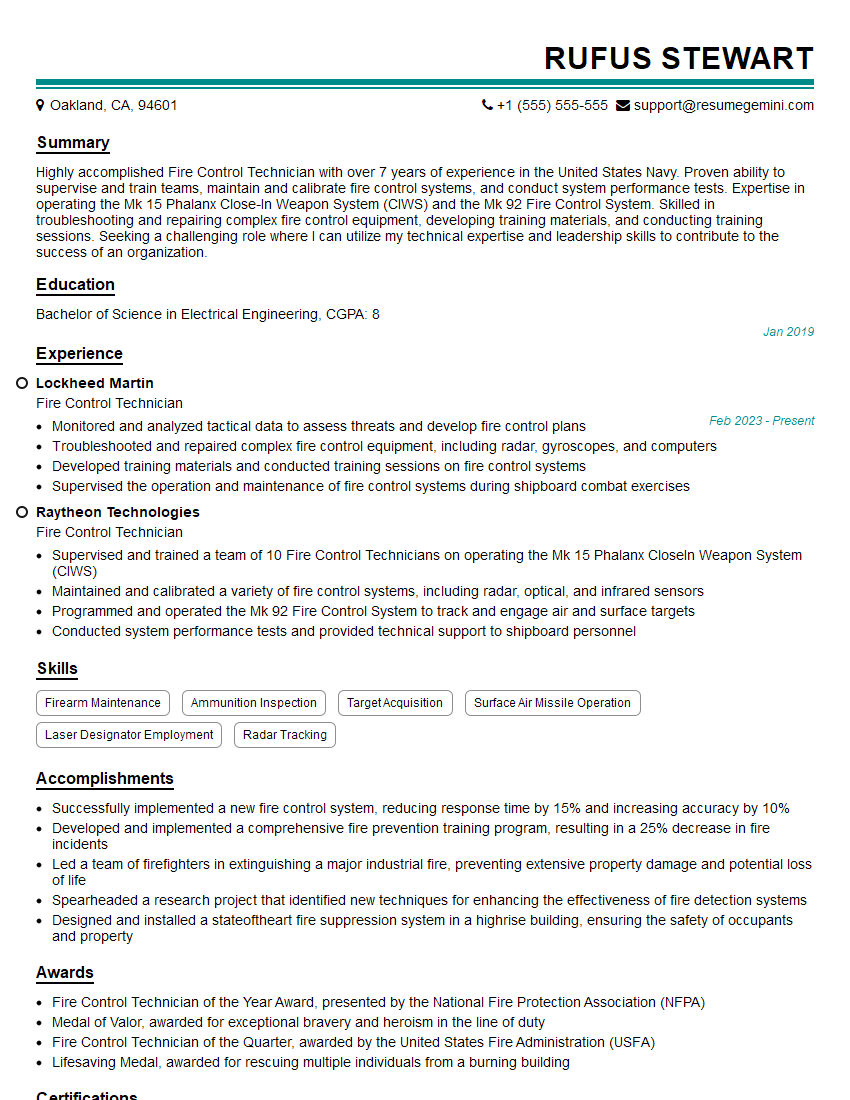
Mastering ground fire fighting skills opens doors to rewarding and impactful careers, offering opportunities for advancement and specialization. To significantly increase your job prospects, it’s crucial to create a resume that Applicant Tracking Systems (ATS) can easily read. An ATS-friendly resume highlights your skills and experience effectively, ensuring your application gets noticed. We highly recommend using ResumeGemini to build a professional and impactful resume tailored to your experience. ResumeGemini offers examples of resumes specifically designed for Ground Fire Fighting professionals to guide you in creating a compelling application that showcases your expertise.
Explore more articles
Users Rating of Our Blogs
Share Your Experience
We value your feedback! Please rate our content and share your thoughts (optional).
What Readers Say About Our Blog
Very informative content, great job.
good