Feeling uncertain about what to expect in your upcoming interview? We’ve got you covered! This blog highlights the most important Ground Surveillance Radar Operation interview questions and provides actionable advice to help you stand out as the ideal candidate. Let’s pave the way for your success.
Questions Asked in Ground Surveillance Radar Operation Interview
Q 1. Explain the difference between pulse-Doppler and continuous-wave radar.
The core difference between pulse-Doppler and continuous-wave (CW) radar lies in how they transmit and receive signals. Pulse-Doppler radar transmits short bursts of radio waves (pulses), allowing it to measure both the range and radial velocity of a target. Think of it like a camera taking snapshots – each pulse provides a ‘snapshot’ of the target’s position. The Doppler effect, the change in frequency due to relative motion, is used to determine the target’s speed. CW radar, conversely, transmits a continuous signal. It measures velocity primarily, by detecting the Doppler shift in the received signal. Imagine a siren approaching – the pitch changes; CW radar uses this principle. Pulse-Doppler is superior for ground surveillance because it provides both range and velocity information crucial for distinguishing between moving targets (vehicles, people) and stationary clutter (buildings, trees). CW radar, while simpler, lacks the range information necessary for effective ground surveillance.
In essence: Pulse-Doppler provides range and velocity; CW radar primarily provides velocity. Pulse-Doppler is the dominant technology in modern ground surveillance.
Q 2. Describe the principles of target detection and tracking in ground surveillance radar.
Target detection and tracking in ground surveillance radar are complex processes. Detection involves identifying echoes from targets amidst clutter and noise. This typically uses signal processing techniques like moving target indication (MTI) to suppress stationary clutter. Once a target is detected, tracking algorithms estimate its position and velocity over time. This is achieved by associating successive detections and using filtering techniques (like Kalman filtering) to smooth out noisy measurements and predict future target positions. The radar constantly compares received signals to a threshold; if the signal strength exceeds the threshold, a target is detected. Tracking algorithms use this detection data to generate continuous track files, providing a history of the target’s movement.
Think of it like watching a baseball game. Detection is spotting the ball against the background (clutter), and tracking is following its trajectory. Accurate tracking depends on factors like radar update rate (how often the radar takes ‘snapshots’), antenna scanning pattern and the sophistication of the tracking algorithm.
Q 3. What are the common types of ground clutter and how are they mitigated?
Ground clutter refers to unwanted radar echoes from stationary objects like buildings, trees, hills, and terrain. Common types include:
- Surface Clutter: Reflections from the ground itself.
- Volume Clutter: Reflections from objects within a volume of space, like trees or foliage.
- Chaff Clutter: Deliberately deployed metallic strips to confuse radar systems.
Mitigation techniques are crucial for effective ground surveillance. These include:
- Moving Target Indication (MTI): This technique cancels out stationary clutter by comparing successive radar pulses. It works exceptionally well for detecting moving targets.
- Clutter Filtering: Advanced digital signal processing techniques that use adaptive filters to suppress clutter based on its characteristics.
- Doppler processing: Using the Doppler shift to differentiate between moving targets and stationary clutter. Moving targets have a different Doppler frequency shift than stationary objects.
- Space-Time Adaptive Processing (STAP): A sophisticated method that combines spatial and temporal filtering to achieve high clutter rejection. It’s particularly effective in complex clutter environments.
The choice of mitigation technique depends on the specific clutter environment and radar parameters.
Q 4. Explain the concept of range resolution and how it impacts radar performance.
Range resolution refers to the radar’s ability to distinguish between two targets located at different distances. A radar with high range resolution can separate closely spaced targets, while a low resolution radar might see them as a single target. It’s determined by the pulse width (τ) of the transmitted signal. A shorter pulse width translates to better range resolution. The relationship is approximately given by:
Range Resolution ≈ cτ/2where c is the speed of light. For example, a radar with a 1 µs pulse width has a range resolution of approximately 150 meters. Poor range resolution can lead to missed detections or inaccurate target location. In ground surveillance, high range resolution is crucial for separating multiple targets close together and distinguishing between targets and clutter.
Q 5. How does weather affect ground surveillance radar performance?
Weather significantly impacts ground surveillance radar performance. Rain, snow, and fog attenuate (reduce) the radar signal, decreasing the detection range. This is because the radar waves are scattered and absorbed by the atmospheric particles. Heavy precipitation can even mask targets completely. Additionally, weather phenomena like strong winds can induce unwanted signal fluctuations, affecting detection and tracking accuracy. Another important impact is the presence of anomalous propagation. Under certain atmospheric conditions (temperature inversions), radar waves can be refracted, leading to unusual propagation paths and potentially resulting in ground clutter that appears as a false target or distorting the actual target’s location. Careful consideration of weather conditions is essential for effective ground surveillance.
Q 6. Describe different radar antenna types and their applications.
Various antenna types are used in ground surveillance radar, each with unique characteristics and applications:
- Parabolic Reflectors (Dish Antennas): These provide high gain and narrow beamwidth, excellent for long-range detection and accurate target location. Their steerability allows scanning over a wide area.
- Phased Array Antennas: These use multiple radiating elements controlled electronically to form and steer the radar beam. They offer high speed electronic scanning capabilities and can track multiple targets simultaneously, ideal for demanding surveillance scenarios.
- Slotted Waveguide Arrays: These are compact, lightweight antennas often used in applications requiring a specific beam shape or polarization. They’re frequently found in airborne or mobile radar systems.
- Horn Antennas: Simple, broadband antennas with moderate gain. They are often used as feed antennas for larger reflectors or as part of smaller radar systems.
The choice of antenna depends on the specific application requirements including range, resolution, field of view, and cost considerations.
Q 7. Explain the role of signal processing in ground surveillance radar.
Signal processing is the backbone of modern ground surveillance radar. It’s responsible for extracting meaningful information from the received radar signals, which are often weak and contaminated with noise and clutter. Key signal processing steps include:
- Pulse Compression: Increases range resolution by transmitting long pulses with specific modulation and then compressing them digitally in the receiver.
- Moving Target Indication (MTI): Removes stationary clutter by comparing successive pulses.
- Doppler Processing: Separates moving targets from stationary clutter based on their Doppler frequency shift.
- Clutter Filtering: Suppresses remaining clutter using adaptive filtering techniques.
- Target Detection: Identifies target echoes by comparing signal strength to a threshold.
- Target Tracking: Estimates target position and velocity using Kalman filtering or similar techniques.
- Data Fusion: Combines data from multiple sensors (radars, cameras) to improve overall performance.
Advanced signal processing algorithms are vital for achieving high detection probability, accurate target location, and efficient clutter suppression in challenging environments.
Q 8. What are the common sources of radar interference and how are they addressed?
Radar interference, also known as clutter, significantly impacts the performance of ground surveillance radar systems. It’s essentially unwanted signals that mask or obscure the targets we’re trying to detect. Common sources include:
- Atmospheric phenomena: Rain, snow, fog, and even birds can scatter radar signals, creating false echoes.
- Ground clutter: Reflections from buildings, trees, hills, and other ground features are a major source of interference, especially close to the radar.
- Chaff: Deliberately deployed metallic strips or fibers designed to overwhelm the radar with false returns. This is a common tactic in electronic warfare.
- Other radars: Signals from nearby radar systems operating on similar frequencies can interfere with the desired signal.
- Man-made objects: Moving vehicles, aircraft, and even power lines can create clutter, especially in areas with high traffic density.
Addressing these challenges involves a multi-pronged approach. We employ techniques like:
- Moving Target Indication (MTI): This filters out stationary clutter by comparing successive radar pulses, only detecting changes in the signal representing moving targets.
- Clutter rejection filters: These digital filters use sophisticated algorithms to analyze the signal characteristics and suppress clutter based on its spatial and temporal properties. They can distinguish between slowly moving clutter and fast moving targets.
- Frequency agility: Switching rapidly between different frequencies minimizes the impact of interference that is fixed to a specific frequency.
- Spatial filtering: Techniques such as beamforming and digital beamforming help focus the radar energy towards the area of interest and minimize unwanted returns from other directions.
- Polarization diversity: Using different polarization states of the transmitted signal can help reduce clutter from specific types of surfaces.
For example, in a coastal surveillance scenario, sea clutter (waves) can be significant. Using MTI along with a clutter rejection filter tuned to the frequency spectrum characteristic of sea waves, helps to isolate and detect actual ships.
Q 9. How do you calibrate and maintain a ground surveillance radar system?
Calibration and maintenance are crucial for accurate and reliable radar operation. Calibration ensures the radar system is producing accurate measurements of range, bearing, and velocity. This involves comparing radar measurements with known, precisely located reference points.
The process typically includes:
- Internal self-tests: Many modern radars perform internal tests on their components to detect faults. Such tests check the functionality of the transmitter, receiver, antenna, and signal processing units.
- Signal calibration: This involves using precise test signals to adjust the radar’s sensitivity and accuracy in measuring signal strength, time delay and frequency.
- Antenna alignment: The antenna’s position and orientation needs to be precisely aligned to ensure accurate direction finding.
- Range calibration: involves checking the accuracy of distance measurements usually done with a known target at a precise distance.
- Velocity calibration: uses a target with known velocity to test the accuracy of speed measurements.
Regular maintenance encompasses:
- Routine inspections: This involves checking for any physical damage, loose connections, or signs of wear and tear on the antenna, cabling, and equipment.
- Environmental monitoring: Checking for excessive moisture, dust, or temperature fluctuations that might affect the performance.
- Software updates: Keeping the radar’s software updated is vital for optimal performance, bug fixes and new feature implementation.
- Component replacements: Periodically replacing critical components (e.g., transmitters and receivers) to maintain optimal performance. The replacement cycles depend on the equipment’s design and expected lifespan.
For instance, in a military application, a scheduled calibration ensures that the radar can accurately track incoming missiles. Failure to maintain the system could result in inaccurate targeting and compromised defence.
Q 10. What are the safety precautions associated with operating ground surveillance radar?
Operating ground surveillance radar involves several safety precautions due to the high-power radio frequency (RF) emissions. Direct exposure to these signals can cause serious harm. Safety protocols include:
- Restricted access: The radar site should be clearly marked with warning signs and access restricted to authorized personnel only. This usually involves physical barriers and security measures.
- RF exposure limits: Personnel must adhere to RF exposure limits set by regulatory bodies. This often involves wearing appropriate personal protective equipment (PPE).
- Interlocks and safety devices: The system should be equipped with safety interlocks that prevent accidental operation while maintenance or adjustments are taking place.
- Emergency shutdown procedures: Personnel need to be well-versed in emergency procedures to quickly shut down the system in case of a malfunction or emergency.
- Training and awareness: Comprehensive training on safety procedures is essential to ensure that all operators understand the potential hazards and how to minimize them. Safety training may also include emergency first aid if personnel have to respond to a malfunctioning system.
Imagine a scenario where someone inadvertently approaches the radar’s antenna during operation. This could lead to severe burns or other injuries due to high-power RF radiation. Therefore, strict adherence to safety protocols is paramount.
Q 11. Explain the concept of false alarms in radar and how to reduce them.
False alarms in radar occur when the system detects a target where none exists. This is often due to clutter, noise, or system malfunction. False alarms can overwhelm operators, reducing their effectiveness and potentially leading to missed genuine targets.
Reducing false alarms is a key area of radar system design and operation. Techniques used include:
- Improved clutter rejection: Advanced signal processing techniques, as described earlier, are crucial to filter out clutter echoes.
- Constant False Alarm Rate (CFAR) detectors: These adaptive detectors adjust their thresholds based on the level of noise and clutter present in the environment. They maintain a consistent rate of false alarms even when the noise level varies. This helps to avoid missing real targets in noisy environments.
- Spatial filtering: Using beamforming to focus the radar energy narrows the radar signal and helps to suppress interference from a wider range. This minimizes clutter and false alarms.
- Target tracking algorithms: Using predictive target tracking algorithms helps to identify targets by observing their trajectory. Isolated events (like a momentary noise burst) that don’t conform to a tracked trajectory are easily filtered out.
- Data fusion: Combining data from multiple sensors (radar, infrared, etc.) helps to cross-validate detections and reduce false alarms.
For example, a low-flying bird might initially trigger a false alarm. However, a CFAR detector and a target tracking algorithm would quickly identify it as a non-threatening object since it doesn’t follow the typical trajectory of a moving vehicle.
Q 12. Describe different types of radar displays and their functionalities.
Ground surveillance radars utilize various display types to present the detected information to the operator. The choice of display depends on the specific application and the desired level of detail:
- Plan Position Indicator (PPI): This classic radar display shows a top-down view of the surveillance area. Targets are plotted as dots or symbols, their position determined by range and bearing. It’s commonly used for a quick overview of the scanned area.
- Range-Altitude Indicator (RHI): This display presents a vertical slice of the radar’s view, showing range and altitude of targets. It’s useful for detecting high altitude targets, such as aircraft.
- A-scope: A simple, one-dimensional display showing the range to a target as a function of time. It shows the amplitude of the reflected signal as a vertical displacement.
- B-scope: Presents range and azimuth (bearing) information as a two-dimensional presentation, useful for understanding target location in a specific slice of the radar’s scan.
- Modern digital displays: These systems use computer processing to generate more detailed displays including features such as digital maps, target identification overlays, and integrated tracking information, allowing operators to view multiple radar sources on one display.
For instance, air traffic control might use a PPI display to monitor aircraft movements in their airspace, while a military operator might prefer a digital display integrating radar data with friendly force positions for situational awareness.
Q 13. How do you interpret radar data to identify targets and threats?
Interpreting radar data involves analyzing the signals received from the radar to identify targets and assess potential threats. This includes determining several key attributes:
- Range: The distance to the target, determined by the time it takes for the radar signal to travel to the target and back.
- Bearing: The direction of the target relative to the radar, determined by the antenna’s position when the signal is received.
- Velocity: The target’s speed and direction of movement, determined using techniques like Doppler radar processing.
- Target size and shape: The radar cross-section (RCS) gives an indication of the target’s size and reflectivity. More advanced radars can provide a more detailed shape estimate.
- Target characteristics: This can include things like type of target (aircraft, vehicle, etc.), if the radar is equipped with additional target identification features.
Modern systems often employ automated target recognition techniques using algorithms that classify targets based on their characteristics. However, experienced operators still play a critical role in validating these automatic identifications, especially in complex situations with heavy clutter.
For example, a large, slow-moving target with a consistent RCS might be identified as a ship. By observing its velocity and trajectory, operators can further classify it as a cargo ship or a warship. The specific data and the level of detail depend on the type of radar and its processing capabilities.
Q 14. Explain the principles of electronic countermeasures (ECM) and counter-countermeasures (ECCM).
Electronic countermeasures (ECM) are techniques used to jam or deceive radar systems. Electronic counter-countermeasures (ECCM) are methods used to mitigate the effects of ECM.
ECM examples include:
- Jamming: Transmitting powerful signals on the same frequency as the radar to overwhelm it, making it difficult to detect targets. This can be a barrage of noise over the frequency band, or a more precise jamming signal designed to match the radar’s signal to create interference.
- Deception: Generating false radar targets or altering the apparent position, velocity, or other characteristics of real targets. This can involve generating radar reflections that mimic actual objects, causing the radar to misinterpret the situation.
- Chaff: As mentioned earlier, this is a form of passive jamming that uses metallic strips or fibers to create many false returns, overwhelming the radar.
ECCM techniques aim to counteract ECM. These include:
- Frequency agility: Quickly changing the operating frequency to avoid jamming signals.
- Pulse agility: Varying the pulse repetition frequency (PRF) to make it more difficult for jammers to effectively disrupt the signal.
- Adaptive signal processing: Using techniques like CFAR and MTI to suppress interference while maintaining target detection.
- Signal processing techniques: Methods like frequency filtering and space-time adaptive processing (STAP) are used to cancel out interfering signals by taking into account their frequency, direction, and time characteristics.
- Direction finding: Precisely locating the source of jamming signals to either avoid it or counter it more effectively.
Imagine a scenario where an aircraft is trying to evade detection. It might use jamming to disrupt the radar signal. The ground surveillance radar, however, might use frequency agility to switch frequencies, making it less susceptible to the jamming, while utilizing STAP to identify and cancel out the remaining interference.
Q 15. What is the role of radar in air traffic control?
Radar plays a crucial role in air traffic control by providing real-time surveillance of aircraft positions. Air traffic controllers rely on radar data to maintain safe separation between aircraft, guide them along designated routes, and manage traffic flow, especially in busy airspace. Think of it like a ‘bird’s-eye view’ of the sky, allowing controllers to see where all the planes are, their altitude, and their speed.
Different types of radar systems contribute to this. Primary radar transmits signals and receives the reflections from aircraft, providing range and bearing information. Secondary radar, on the other hand, interrogates transponders on board aircraft, receiving information such as altitude, identity, and flight status, adding another layer of accuracy and detail to the overall picture. This combination ensures safe and efficient air traffic management.
Career Expert Tips:
- Ace those interviews! Prepare effectively by reviewing the Top 50 Most Common Interview Questions on ResumeGemini.
- Navigate your job search with confidence! Explore a wide range of Career Tips on ResumeGemini. Learn about common challenges and recommendations to overcome them.
- Craft the perfect resume! Master the Art of Resume Writing with ResumeGemini’s guide. Showcase your unique qualifications and achievements effectively.
- Don’t miss out on holiday savings! Build your dream resume with ResumeGemini’s ATS optimized templates.
Q 16. What are the limitations of ground surveillance radar?
Ground surveillance radar, while essential, has limitations. One major limitation is its susceptibility to weather conditions. Heavy rain, snow, or even dense fog can significantly attenuate (weaken) the radar signal, reducing range and accuracy. Clutter from ground objects like buildings and terrain can also mask aircraft targets, especially at low altitudes. Furthermore, radar’s range is finite; it can’t ‘see’ aircraft beyond its maximum detection range.
Another limitation is the potential for false targets, or ‘ghost targets,’ caused by anomalous signal reflections or interference. Finally, radar data resolution may not always be sufficient to accurately distinguish closely spaced aircraft, especially in high-traffic environments. Regular system calibration and advanced signal processing techniques are crucial to mitigating these limitations.
Q 17. Explain the process of troubleshooting a malfunctioning radar system.
Troubleshooting a malfunctioning radar system follows a systematic approach. I start with a thorough check of the system’s power supply and all connections, ensuring everything is correctly powered and wired. This is often the source of simple problems. Next, I’ll review the system’s logs and error messages for any clues. These logs often provide valuable insights into the nature of the malfunction.
Further steps involve checking the antenna system’s integrity, including the physical structure and the rotational mechanism. Signal strength and quality are then assessed using specialized test equipment. Depending on the symptoms, this may involve checking the transmitter, receiver, and signal processing components. In many cases, specialized diagnostic software helps pinpoint the faulty module or component. Finally, I’d consult the system’s technical manuals and, if necessary, seek support from the manufacturer. This methodical approach ensures efficient fault identification and resolution, minimizing downtime and ensuring system reliability.
Q 18. Describe your experience with different radar frequency bands.
My experience encompasses various radar frequency bands, each with its own advantages and disadvantages. I’ve worked extensively with S-band (around 2-4 GHz) systems, commonly used for air traffic control due to their good balance between range and resolution. I’ve also had experience with X-band (around 8-12 GHz) systems, which offer higher resolution but shorter range, making them suitable for shorter-range surveillance or weather radar applications. Finally, I am familiar with the operational characteristics of L-band (around 1-2 GHz) systems, which provide longer range but reduced resolution, often used in long-range search radars.
The choice of frequency band depends on the specific application. For example, while S-band is preferable for ATC because of its acceptable trade-off between range and resolution, X-band might be better for weather radar as it’s less affected by atmospheric conditions.
Q 19. How do you ensure the accuracy and reliability of radar data?
Ensuring the accuracy and reliability of radar data is paramount. This begins with regular calibration of the radar system against known standards and using precise measurement techniques to verify the accuracy of its measurements. We employ advanced signal processing algorithms to filter out noise and clutter, improving target detection and tracking accuracy. Cross-referencing radar data with other sources, such as ADS-B (Automatic Dependent Surveillance-Broadcast) data from aircraft transponders, provides independent verification and enhances reliability.
Furthermore, rigorous maintenance and preventative measures are critical. Regular inspections and scheduled maintenance minimize the risk of equipment failure and ensure optimal performance. Continuous monitoring of system parameters, using automated alerts for anomalies, also contributes to maintaining data integrity. By implementing these robust procedures, we can guarantee the highest level of accuracy and reliability in the radar data we use.
Q 20. What is your experience with radar data analysis software?
I have extensive experience with various radar data analysis software packages. This includes software for displaying radar data on maps, processing raw data for target detection and tracking, and generating reports. My proficiency extends to using tools for analyzing radar performance metrics and identifying areas for improvement. I am also familiar with software that allows integration of radar data with other sensor sources, providing a comprehensive situational awareness picture.
For example, I’ve used software packages that allow for sophisticated target filtering, reducing clutter and improving target identification. I am also comfortable working with software that aids in identifying and resolving discrepancies between radar data and other sensor outputs. Proficiency in these tools is crucial for efficient data analysis, informed decision-making, and optimizing system performance.
Q 21. How do you maintain situational awareness during radar operation?
Maintaining situational awareness during radar operation involves a multifaceted approach. I constantly monitor the radar display, looking for unusual patterns, unexpected movements, or potential conflicts between aircraft. I also correlate radar data with other sources of information, such as weather reports, air traffic control communications, and NOTAMs (Notices to Airmen). This helps build a comprehensive understanding of the operational environment.
Furthermore, I utilize advanced software tools that provide automated alerts for potential hazards or anomalies. These tools flag situations requiring immediate attention, such as aircraft deviating from their assigned flight path or approaching dangerously close to each other. Through diligent monitoring, data correlation, and timely responses to alerts, I maintain a robust awareness of the dynamic airspace environment, enabling me to proactively address potential threats and ensure safe air traffic flow.
Q 22. Describe your experience with radar system integration and testing.
My experience with radar system integration and testing spans over a decade, encompassing various projects from initial design and component selection to final system validation and deployment. I’ve worked on everything from small, portable systems to large, complex, multi-sensor networks. A key aspect of my role is ensuring seamless integration between hardware and software components. This involves rigorous testing procedures, including environmental testing (temperature extremes, humidity, etc.), electromagnetic compatibility (EMC) testing, and functional testing under diverse operational conditions. For example, in one project, we encountered unexpected interference from a nearby radio transmitter. Through systematic testing and signal analysis, we identified the source of the interference and implemented effective countermeasures, ensuring the radar system’s continued reliable operation. We use various tools and techniques, including automated test equipment and specialized software for data acquisition and analysis to thoroughly validate the system’s performance against predefined specifications.
One particularly challenging project involved integrating a new type of phased array antenna with an existing signal processing unit. The initial integration tests revealed significant performance discrepancies. Through careful investigation, we identified a mismatch in the impedance of the antenna and the signal processing unit. Addressing this issue required modifying the antenna matching network and adjusting the signal processing parameters. Subsequent testing verified the successful integration, resulting in improved signal quality and range.
Q 23. Explain the concept of target identification and classification using radar.
Target identification and classification using radar involves analyzing the radar returns (echoes) to determine the type and characteristics of the detected objects. This is a complex process that often combines multiple radar parameters. We often use techniques like Micro-Doppler analysis to distinguish between humans and other objects based on subtle movements.
- Range and Velocity: Basic measurements providing initial target location and movement data.
- Doppler Shift: Change in frequency of the reflected signal, indicating target radial velocity (movement towards or away from the radar).
- Signal Strength (Amplitude): Provides information about the target’s size and reflectivity (Radar Cross Section or RCS).
- Polarization: Analysis of the reflected signal’s polarization can help discriminate between different target types (e.g., metal vs. dielectric materials).
- Micro-Doppler Signatures: Subtle frequency modulations within the radar return caused by moving parts on the target (e.g., a person walking). These signatures can be very helpful in distinguishing between different types of objects, particularly in differentiating humans from inanimate objects.
For instance, distinguishing between a car and a pedestrian relies on differences in their RCS, velocity, and micro-Doppler signatures. A car will typically have a much stronger RCS and a distinct Doppler signature compared to a pedestrian, who might also exhibit characteristic micro-Doppler shifts from their walking motion. Advanced algorithms and machine learning techniques are increasingly used to automate the identification and classification process, improving accuracy and speed.
Q 24. What are the ethical considerations related to the use of ground surveillance radar?
Ethical considerations in ground surveillance radar are paramount. The potential for misuse must be carefully considered. Privacy concerns are foremost; deploying radar systems needs to respect the privacy rights of individuals. This involves careful consideration of the radar’s coverage area, data retention policies, and the security measures to protect against unauthorized access and misuse. Furthermore, there’s the potential for bias in algorithms used for target classification, leading to inaccurate or discriminatory outcomes. Transparency in radar operations and data usage is vital to build public trust and ensure responsible deployment. We must also consider the potential for the technology to be used in a way that infringes upon civil liberties, therefore, robust oversight and regulation are needed to prevent such misuse.
For example, the collection and storage of personal data obtained through radar surveillance should be subject to strict regulations and ethical guidelines. Data minimization (only collecting necessary data), purpose limitation (using data only for its intended purpose), and appropriate data security measures are essential.
Q 25. How do you handle unexpected situations or equipment malfunctions during operation?
Handling unexpected situations or equipment malfunctions requires a systematic and methodical approach. My training emphasizes a layered approach, starting with immediate actions to mitigate the problem, followed by a thorough investigation to determine the root cause and prevent future occurrences. The first step involves a rapid assessment of the situation to determine the nature of the malfunction and its potential impact. This might involve checking system logs, reviewing sensor data, and visually inspecting the equipment for any obvious signs of damage. Then, we implement established procedures for troubleshooting – perhaps switching to a backup system or isolating the faulty component to limit disruption.
For instance, if a sudden power outage occurs, we immediately switch to backup power sources. A detailed log of the event is created, including timestamps and any relevant sensor data. This information is analyzed later to understand the cause of the outage. In case of sensor malfunction, we have pre-defined diagnostic procedures and protocols to isolate the issue. These might involve running built-in self-tests or utilizing external diagnostic tools to pinpoint the problem. After addressing the immediate issue, a root cause analysis is conducted to ensure corrective actions prevent future occurrences.
Q 26. Describe your experience with different radar platforms and their capabilities.
My experience encompasses a range of radar platforms, including:
- Monostatic Radars: These systems transmit and receive signals from the same antenna. They’re relatively simple and cost-effective, suitable for short-range applications.
- Bistatic Radars: Transmit and receive antennas are spatially separated, enhancing certain capabilities and offering resilience to jamming.
- Multistatic Radars: Utilize multiple transmitters and receivers, providing enhanced detection and tracking capabilities, especially in cluttered environments.
- Phased Array Radars: Employ multiple antenna elements to electronically steer the beam, enabling rapid scanning and tracking of multiple targets.
- Frequency Modulated Continuous Wave (FMCW) Radars: Transmit a continuous wave signal with a linearly increasing frequency, offering high-resolution range measurements. These are commonly used in short-range applications, such as automotive radar.
Each platform has its strengths and weaknesses, and the selection depends on specific application requirements. For example, phased array radars are well-suited for air surveillance due to their ability to rapidly scan a wide area, whereas FMCW radars are better suited for short-range applications such as collision avoidance systems in vehicles, due to their high-resolution range measurement capabilities.
Q 27. What are the latest advancements in ground surveillance radar technology?
Ground surveillance radar technology is constantly evolving. Some key advancements include:
- Improved Signal Processing Algorithms: Advanced algorithms employing machine learning and artificial intelligence are enhancing target detection, classification, and tracking performance, particularly in cluttered environments.
- Miniaturization and Cost Reduction: Advances in microelectronics are making radar systems smaller, lighter, and more affordable, expanding their deployment potential.
- Increased Integration with Other Sensors: Fusion of radar data with other sensor modalities (e.g., cameras, LiDAR) provides a more comprehensive situational awareness, improving accuracy and reducing uncertainties.
- Advanced Antenna Technologies: Development of novel antenna designs (e.g., metamaterials, software-defined antennas) are improving radar performance in terms of range, resolution, and beam shaping.
- Cognitive Radar: Systems that can adapt their operating parameters in real-time based on the surrounding environment and detected threats, optimizing performance dynamically.
These advancements are expanding the applications of ground surveillance radar in diverse fields, including security, border control, traffic management, and environmental monitoring. For example, the integration of radar with AI is leading to more autonomous systems capable of detecting and tracking threats with minimal human intervention.
Q 28. Explain your understanding of radar signal processing algorithms.
My understanding of radar signal processing algorithms is extensive, covering various techniques from basic signal detection and filtering to advanced algorithms for target tracking and classification. These algorithms are crucial for extracting meaningful information from the raw radar data. These algorithms address the challenges of extracting useful information from noisy radar signals. Common techniques include:
- Pulse Compression: Improves range resolution by transmitting long pulses with a coded waveform and correlating the received signal to compress the pulse.
- Moving Target Indication (MTI): Filters out stationary clutter (e.g., ground reflections) to enhance detection of moving targets. This usually involves using a delay-line canceller that subtracts successive radar returns, reducing the stationary clutter signals.
- Space-Time Adaptive Processing (STAP): Combines spatial and temporal filtering to suppress both clutter and jamming signals, improving target detection in complex environments.
- Kalman Filtering: A recursive algorithm used for estimating the state (position, velocity, etc.) of a target based on noisy measurements. It is an effective way to track moving objects, even with interruptions in the radar signal.
//Example of a simple moving average filter (a basic filtering algorithm) function movingAverage(data, windowSize) { let result = []; for (let i = 0; i < data.length; i++) { let sum = 0; for (let j = Math.max(0, i - windowSize + 1); j <= i; j++) { sum += data[j]; } result.push(sum / Math.min(i + 1, windowSize)); } return result; }
These algorithms are implemented using specialized software and hardware to process the vast amounts of data generated by radar systems. The choice of algorithm depends on the specific application and the nature of the radar system.
Key Topics to Learn for Ground Surveillance Radar Operation Interview
- Radar Principles: Understanding fundamental radar concepts like wave propagation, pulse repetition frequency (PRF), and signal processing techniques.
- System Operation: Familiarize yourself with the operational aspects of ground surveillance radar systems, including antenna operation, signal transmission and reception, and data processing.
- Target Detection and Tracking: Learn about various algorithms and techniques used for target detection, classification, and tracking in complex environments. Consider the challenges of clutter rejection and false alarm mitigation.
- Data Interpretation and Analysis: Develop your skills in interpreting radar data displays, identifying potential threats, and extracting meaningful information for decision-making.
- System Maintenance and Troubleshooting: Understanding basic maintenance procedures, common system failures, and troubleshooting techniques is crucial. Familiarity with diagnostic tools is beneficial.
- Safety Procedures: Know the safety regulations and procedures associated with operating and maintaining ground surveillance radar systems.
- Communication and Teamwork: Radar operation often involves collaboration. Be prepared to discuss your teamwork skills and ability to communicate effectively within a team environment.
- Ethical Considerations: Understand the ethical implications of radar technology and its use in surveillance operations.
Next Steps
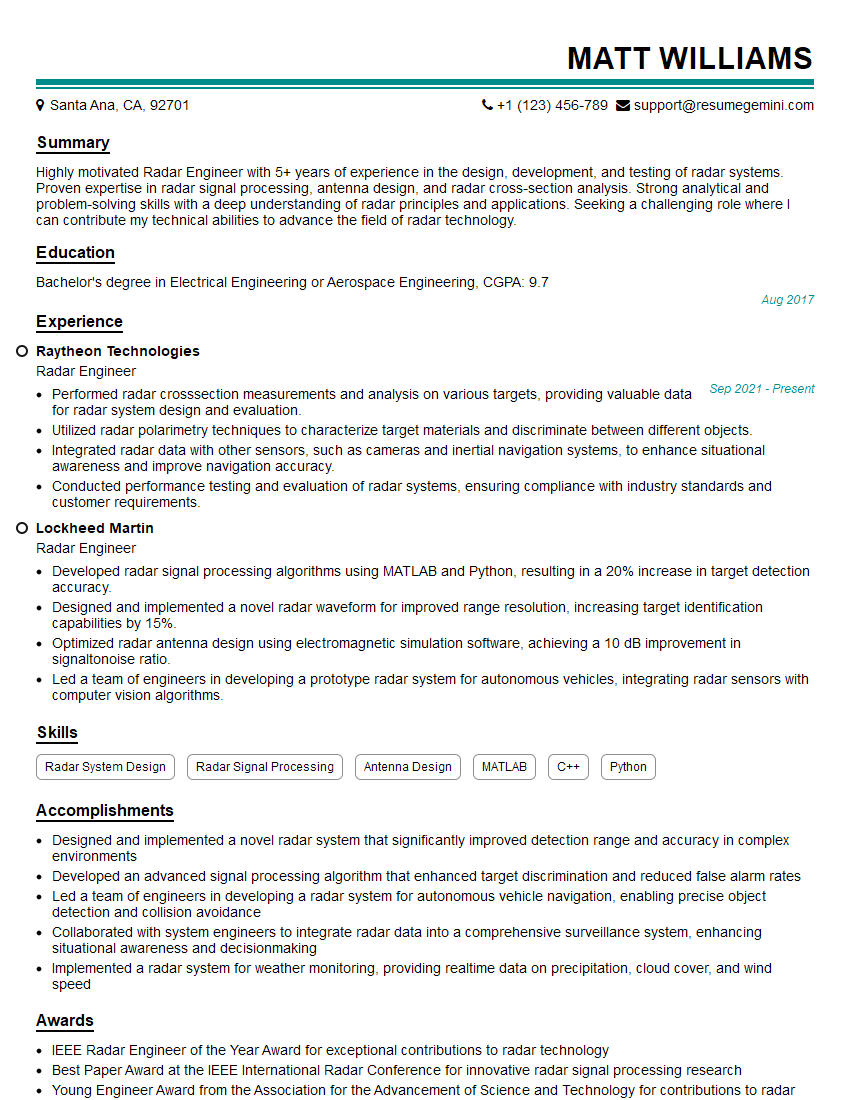
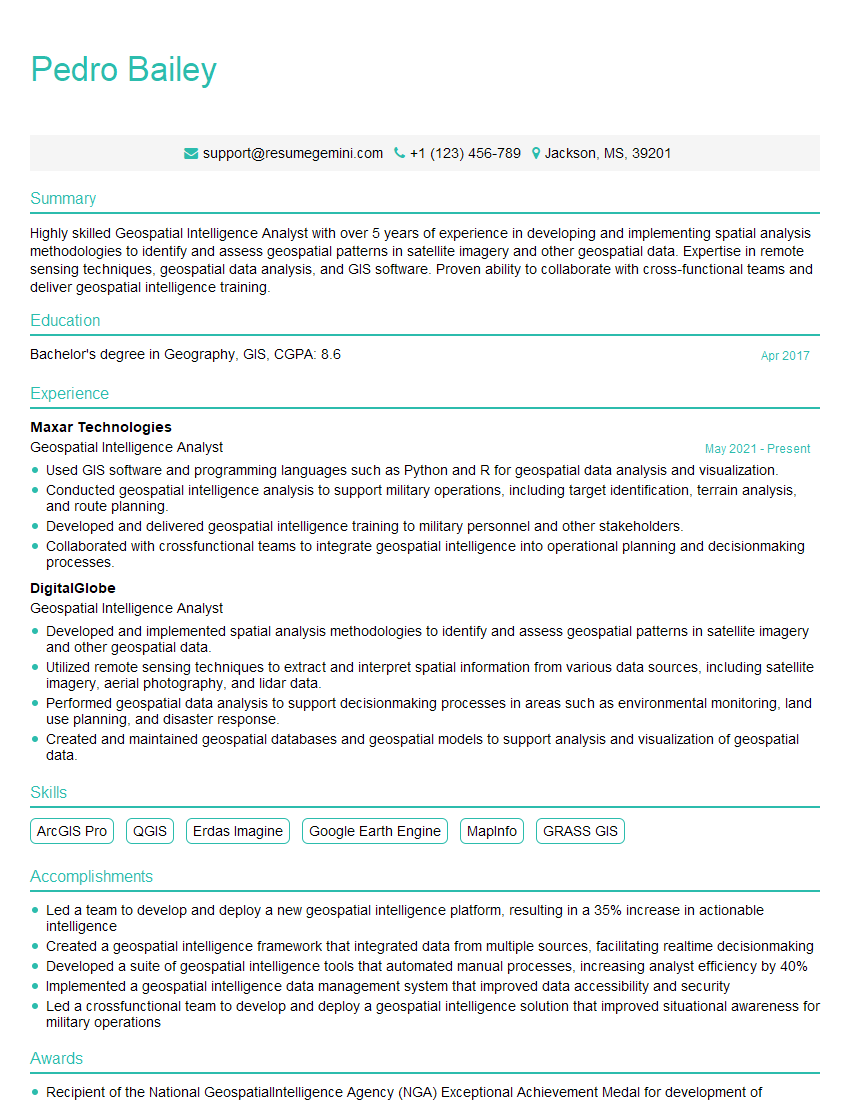
Mastering Ground Surveillance Radar Operation opens doors to exciting career opportunities in defense, security, and aviation. A strong understanding of these systems demonstrates valuable technical expertise and problem-solving skills highly sought after by employers. To significantly boost your job prospects, invest time in crafting an ATS-friendly resume that effectively highlights your qualifications. ResumeGemini is a trusted resource that can help you create a compelling and professional resume tailored to the specific requirements of Ground Surveillance Radar Operation roles. Examples of resumes tailored to this field are available within ResumeGemini to guide your efforts.

Explore more articles
Users Rating of Our Blogs
Share Your Experience
We value your feedback! Please rate our content and share your thoughts (optional).
What Readers Say About Our Blog
Very informative content, great job.
good