Preparation is the key to success in any interview. In this post, we’ll explore crucial Gunnery Procedures interview questions and equip you with strategies to craft impactful answers. Whether you’re a beginner or a pro, these tips will elevate your preparation.
Questions Asked in Gunnery Procedures Interview
Q 1. Explain the principles of projectile motion.
Projectile motion is the curved path a projectile follows after being launched. It’s governed by two independent motions: horizontal motion (constant velocity unless air resistance is significant) and vertical motion (affected by gravity). Understanding these principles is crucial for accurate gunnery.
Imagine throwing a baseball. The horizontal distance it travels depends on its initial horizontal velocity and the time it stays in the air. The vertical motion is dictated by gravity; the ball goes up, slows, stops, and falls back down, accelerating the whole way. This curved path, influenced by both gravity and initial velocity, is the essence of projectile motion.
In gunnery, we use complex ballistic equations to account for factors like air density, wind speed, and the Earth’s rotation (Coriolis effect) to predict a projectile’s trajectory accurately. These corrections are vital to hitting a target at long ranges.
Q 2. Describe the different types of gunnery fire control systems.
Gunnery fire control systems are sophisticated systems designed to accurately aim and fire weapons. They can be broadly categorized into:
- Manual Fire Control Systems: These rely heavily on the gunner’s skill and judgment, using basic tools like rangefinders, optical sights, and ballistic charts. They are simpler but less accurate, especially at longer ranges.
- Semi-Automatic Fire Control Systems: These automate some aspects, such as computing range and elevation, but still require gunner input for target designation and final adjustments. They increase accuracy and speed compared to manual systems.
- Automatic Fire Control Systems: These systems automate nearly all aspects of the firing process, including target acquisition, tracking, rangefinding, and firing solutions. They are used in modern tanks, warships, and aircraft. Radar, sophisticated sensors, and powerful computers are essential components.
For example, a modern tank’s fire control system incorporates a laser rangefinder, a ballistic computer, and a sophisticated stabilization system to ensure accurate firing, even on the move.
Q 3. What are the factors affecting the accuracy of gunfire?
Many factors influence gunfire accuracy. Some key factors include:
- Environmental Conditions: Wind speed and direction, air density (temperature and humidity), and even the Earth’s rotation (Coriolis effect) all significantly impact projectile trajectory.
- Weapon System Condition: The weapon’s condition – barrel wear, sight alignment, and proper functioning of mechanisms – directly affects accuracy. Proper maintenance is paramount.
- Ammunition Quality: Variations in ammunition characteristics like propellant consistency and projectile shape affect flight stability and accuracy.
- Gunner Skill: The gunner’s skill in aiming, target tracking, and compensating for environmental conditions plays a vital role.
- Target Characteristics: The size and type of target impact the likelihood of a hit. A smaller, moving target is naturally harder to hit than a large, stationary one.
For instance, a strong headwind can significantly reduce the range of a projectile, while a poorly maintained weapon can lead to dispersion and inaccuracy.
Q 4. How do you calculate ballistic trajectory?
Calculating ballistic trajectories involves complex equations that account for gravity, air resistance, and other environmental factors. These are typically solved using computers or specialized ballistic calculators. A simplified approach for shorter ranges, ignoring air resistance, uses basic physics equations:
Horizontal distance (Range): Range = v₀ₓ * t (where v₀ₓ is initial horizontal velocity and t is time of flight)
Vertical distance (Height): Height = v₀ᵧ * t - 0.5 * g * t² (where v₀ᵧ is initial vertical velocity, g is acceleration due to gravity, and t is time)
More accurate calculations utilize numerical methods and complex ballistic models that incorporate factors like air density, wind, and the Coriolis effect. Specialized software or tables are used in professional gunnery.
Q 5. Explain the concept of range and deflection.
Range and deflection are fundamental terms in gunnery.
- Range: The horizontal distance between the weapon and the target. Accurate range determination is critical for setting the correct firing solution.
- Deflection: The angular correction applied to the weapon’s aim to compensate for the target’s movement and environmental factors like wind. It’s the adjustment made to the weapon’s pointing in a direction perpendicular to the range.
Imagine a ship firing at another moving ship. The range is the distance between them. The deflection would account for the movement of the target ship, wind affecting the projectile’s path, and the Earth’s rotation, ensuring the projectile accurately hits the target rather than simply travelling the distance to the target’s previous position.
Q 6. What are the different types of ammunition used in modern weaponry?
Modern weaponry uses a wide variety of ammunition types, categorized by purpose and design:
- High-Explosive (HE): Designed to create a blast and fragmentation effect, causing damage through pressure waves and shrapnel.
- High-Explosive Incendiary (HEI): Combines high explosives with an incendiary filler, causing both blast damage and fires.
- Armor-Piercing (AP): Designed to penetrate armored targets. Various sub-types exist, such as APFSDS (Armor-Piercing Fin-Stabilized Discarding Sabot) and APHE (Armor-Piercing High-Explosive).
- Armor-Piercing Incendiary (API): Combines armor-piercing capabilities with an incendiary effect.
- Tracer: Contains a tracer element that leaves a visible trail, aiding in aiming and observing the projectile’s flight path.
- Illuminating: Designed to illuminate a target area at night.
The specific type of ammunition used depends on the target, the weapon system, and the mission objective.
Q 7. Describe the procedures for weapon system maintenance.
Weapon system maintenance is critical for ensuring accuracy, safety, and reliability. Procedures generally follow a structured approach:
- Daily Inspection: A routine visual check of the weapon, its components, and ammunition for any signs of damage or wear. This includes checking for cleanliness and proper lubrication.
- Periodic Maintenance: More in-depth checks and cleaning at regular intervals, often involving disassembly and inspection of internal parts. This might include replacing worn components.
- Specialized Maintenance: More complex procedures, typically conducted by trained specialists, that involve calibration, testing, and repair of intricate mechanisms. This might include replacing parts or adjusting critical elements such as the firing pin or sights.
- Repair and Replacement: This involves replacing damaged or worn-out components with new parts. Strict protocols and quality control are essential here.
Consistent, thorough maintenance not only prevents malfunctions but also significantly impacts the accuracy and effectiveness of weapon systems. Failure to adhere to these procedures can lead to serious consequences, from misfires to catastrophic failures in the field.
Q 8. Explain the safety procedures for handling firearms.
Firearm safety is paramount and hinges on unwavering adherence to fundamental principles. Treating every weapon as if it were loaded, regardless of its actual state, is the cornerstone of safe handling. This means never pointing a firearm at anything you don’t intend to destroy, keeping your finger off the trigger until you’re on target and ready to fire, and always being sure of your target and what’s beyond it. Before handling any firearm, you must perform a thorough visual and physical inspection to ensure it’s unloaded. This includes checking the chamber, magazine well, and any other areas where ammunition could be present. Safe storage is equally critical; firearms should be stored unloaded and securely locked away, ideally in a gun safe, inaccessible to unauthorized individuals, especially children.
Think of it like this: Imagine you’re handling a loaded firearm in a crowded room. Even a minor slip or unexpected movement could have disastrous consequences. Following these rules is not merely a suggestion; it’s a life-saving necessity.
Q 9. What are the different types of gunnery sights?
Gunnery sights are the aiming devices used to direct the weapon’s fire onto the target. Different types cater to various weapon systems and operational contexts. Common types include:
- Iron sights: The simplest form, consisting of a front and rear sight aligned to visually pinpoint the target. They are reliable and mechanically straightforward but less accurate at long ranges.
- Optical sights: These use lenses and reticles to magnify the target and provide greater precision, particularly at longer distances. Examples include telescopic sights and reflex sights.
- Digital sights: Modern systems often incorporate digital technology, providing rangefinding, ballistic calculations, and other advanced features. These systems offer improved accuracy and reduced shooter error.
- Fire control systems: In larger weapon systems like naval guns or tanks, integrated fire control computers calculate aiming solutions, taking into account various factors such as range, wind, and target movement.
The choice of sight depends on the specific weapon system, the intended application, and the desired level of accuracy. A sniper rifle might use a high-magnification optical sight, whereas a submachine gun might rely on iron sights or a low-magnification reflex sight.
Q 10. How do you adjust for windage and elevation?
Adjusting for windage (horizontal) and elevation (vertical) is crucial for accurate fire. Windage corrects for the effect of wind pushing the projectile off course; elevation compensates for gravity’s pull on the projectile, ensuring it reaches the intended target distance. These adjustments are typically made using knobs or dials on the weapon’s sighting system.
For example, if a strong wind is blowing from the right, you would adjust the windage to the left to counteract the wind’s effect, moving the point of impact to the right. Elevation adjustments increase or decrease the angle of the weapon’s barrel to account for distance to the target. This often involves using range tables or ballistic calculators that provide precise adjustments based on factors like range, projectile type, and environmental conditions.
Many modern systems automate these corrections, but understanding the underlying principles is still critical for effective gunnery.
Q 11. What are the limitations of different gunnery systems?
Gunnery systems, despite their sophistication, have inherent limitations. These include:
- Range limitations: All projectiles have a maximum effective range beyond which accuracy becomes unreliable due to factors like air resistance and gravity.
- Environmental factors: Wind, temperature, humidity, and atmospheric pressure significantly affect projectile trajectory, introducing errors that must be compensated for.
- Weapon system wear: Over time, weapon systems can experience wear and tear that affects accuracy. Regular maintenance and calibration are vital to mitigate this.
- Target movement: Tracking and hitting a moving target presents a considerable challenge, particularly at long ranges. Sophisticated fire control systems help compensate for target movement, but they’re not perfect.
- Technological limitations: Even the most advanced systems have limitations in their computational capabilities and sensor accuracy. These limitations can lead to errors in aiming solutions.
Understanding these limitations is crucial for setting realistic expectations and developing effective strategies to mitigate their effects.
Q 12. Describe the process of target acquisition and tracking.
Target acquisition and tracking are crucial steps in effective gunnery. Target acquisition involves locating and identifying the target, while tracking involves maintaining a continuous aim at the moving target to maintain accurate fire.
Acquisition often begins with reconnaissance or intelligence to locate a potential target. Once located, the target is identified and its coordinates or bearing are determined. Tracking involves continuously adjusting the weapon’s aim to keep the reticle on the target, compensating for its movement and any environmental effects.
Modern systems frequently use advanced sensors like radar and laser rangefinders to assist with target acquisition and tracking. Operators also rely on visual observation, interpreting data from various sensors to maintain accurate fire. In a fast-paced environment, smooth coordination between operators and efficient data interpretation are crucial.
Q 13. How do you calculate the time of flight for a projectile?
Calculating the time of flight (TOF) for a projectile is essential for accurate fire, especially for moving targets. The TOF depends on several factors, including the projectile’s initial velocity, the range to the target, and the effects of gravity and air resistance.
Simple calculations, neglecting air resistance, can be made using basic physics: Distance = Velocity * Time. Rearranging gives: Time = Distance / Velocity. However, this is a simplification. More accurate calculations involve complex ballistic equations considering gravity, air density, and the projectile’s ballistic coefficient. These calculations are often performed by fire control computers, which account for various environmental factors to achieve high accuracy.
For instance, a higher initial velocity means a shorter time of flight for a given range. Conversely, a headwind will increase the TOF, while a tailwind will decrease it. Accurate TOF calculation is critical for predicting where the target will be when the projectile arrives.
Q 14. Explain the role of a fire control computer.
A fire control computer (FCC) is a sophisticated system that processes data from various sensors and calculates the necessary aiming solutions to accurately engage targets. It receives inputs such as target range, bearing, speed, wind conditions, and weapon characteristics.
Using complex algorithms, the FCC calculates the necessary corrections for elevation, windage, and projectile drop to compensate for environmental factors and target motion. It then outputs the aiming data to the weapon’s sighting system, guiding the gunner to hit the target. This process significantly enhances accuracy and reduces the workload on the gunner, allowing for faster and more precise engagements.
Modern FCCs are often integrated into larger weapon systems and can manage multiple targets simultaneously, providing enhanced situational awareness and response capabilities.
Q 15. What are the effects of different environmental factors on projectile trajectory?
Environmental factors significantly impact projectile trajectory. Think of it like throwing a baseball – wind, temperature, and even humidity can alter its path. In gunnery, these effects are even more critical due to the longer distances and higher velocities involved.
Wind: Crosswinds deflect the projectile sideways, while headwinds and tailwinds affect its range. A strong headwind will shorten the range, while a tailwind will extend it. We use wind data, often gathered from meteorological stations or sensors, to compensate for these effects in our firing solutions.
Temperature: Higher temperatures decrease air density, resulting in less air resistance and a slightly longer range. Conversely, lower temperatures increase air density and reduce range. This is because the projectile is essentially ‘fighting’ through the air, and denser air provides more resistance.
Humidity: High humidity can slightly increase air density, having a similar effect to lower temperatures, though the impact is generally less significant than temperature or wind.
Coriolis Effect: For long-range shots, the rotation of the Earth (Coriolis effect) must be considered. It causes a deflection of the projectile to the right in the Northern Hemisphere and to the left in the Southern Hemisphere. The amount of deflection increases with range and latitude.
We incorporate these environmental factors into ballistic calculations using sophisticated fire control systems and range tables, ensuring accurate targeting despite changing conditions. Failing to account for these variables can lead to significant misses.
Career Expert Tips:
- Ace those interviews! Prepare effectively by reviewing the Top 50 Most Common Interview Questions on ResumeGemini.
- Navigate your job search with confidence! Explore a wide range of Career Tips on ResumeGemini. Learn about common challenges and recommendations to overcome them.
- Craft the perfect resume! Master the Art of Resume Writing with ResumeGemini’s guide. Showcase your unique qualifications and achievements effectively.
- Don’t miss out on holiday savings! Build your dream resume with ResumeGemini’s ATS optimized templates.
Q 16. Describe the procedures for conducting live-fire exercises.
Live-fire exercises are meticulously planned and executed to ensure safety and effectiveness. They are not undertaken lightly. Every step is governed by strict procedures and safety regulations.
Planning: This stage involves detailed target selection, range safety planning, ammunition accounting, and the development of detailed firing schedules. We meticulously map the area, identifying potential hazards and establishing clear communication channels.
Safety Briefing: Before the exercise begins, all personnel receive a comprehensive safety briefing emphasizing the risks associated with live fire. This includes proper weapon handling, communication protocols, and emergency procedures.
Range Setup: The range is set up according to pre-determined safety protocols. This includes establishing clear safety zones, designating firing positions, and ensuring proper target backstops.
Ammunition Handling: Ammunition is handled with extreme care, following strict procedures for storage, transport, and loading. Each round is accounted for meticulously to ensure there are no missing or unaccounted-for rounds.
Execution: Firing is conducted in a controlled manner, with clear communication between the firing crews and safety officers. All personnel observe established safety rules throughout the exercise.
Post-Exercise: After the exercise concludes, a thorough post-exercise review is carried out. Ammunition is secured and accounted for. The range is inspected to ensure it is clear of unexploded ordnance. The entire process is documented for auditing and continuous improvement.
Safety is paramount. A single lapse in procedure can have devastating consequences. We use comprehensive checklists and adhere strictly to regulations at every stage.
Q 17. How do you manage ammunition supply and storage?
Ammunition management is critical to gunnery operations. It encompasses proper storage, handling, accounting, and supply chain management, all dictated by stringent safety regulations. Think of it as managing a highly volatile and valuable inventory.
Storage: Ammunition is stored in climate-controlled, secure facilities designed to prevent deterioration and accidental detonation. These facilities are typically equipped with fire suppression systems and are protected from unauthorized access.
Handling: Ammunition is handled with utmost care, following strict safety protocols to minimize the risk of accidents. This includes avoiding impacts, using appropriate handling equipment, and wearing protective gear.
Accounting: A rigorous accounting system is implemented to track the quantity, type, and location of all ammunition. This system ensures that ammunition is properly accounted for throughout its lifecycle, from procurement to disposal.
Supply Chain: A reliable supply chain is crucial to ensure that adequate ammunition is available when and where it’s needed. This involves establishing effective relationships with suppliers and developing robust logistics systems to facilitate timely delivery.
Improper ammunition management can lead to supply shortages, safety hazards, and potentially disastrous consequences during operations.
Q 18. Explain the principles of damage control in relation to gunnery operations.
Damage control in gunnery operations involves minimizing the effects of damage to equipment or personnel caused by malfunctions, accidents, or enemy action. It’s all about minimizing losses and maintaining operational capability. Think of it as a swift response team ensuring the system can still function.
Emergency Procedures: Clear emergency procedures must be in place for various scenarios, including weapon malfunctions, fires, and injuries. These procedures must be regularly practiced and updated.
Fire Suppression: Effective fire suppression systems are crucial to preventing and controlling fires that can result from malfunctions or enemy action.
First Aid and Evacuation: Personnel must be trained in first aid and emergency evacuation procedures to ensure that casualties are dealt with promptly and efficiently.
Repair and Recovery: Procedures must be in place for the repair and recovery of damaged equipment. This may involve on-site repairs or the replacement of damaged components.
Damage Assessment: A rapid and thorough damage assessment is vital for prioritizing repair efforts and determining the extent of the impact on operational capability.
Damage control is not just about reacting to problems; it’s about proactive planning and preparation that enables a rapid and effective response to various contingencies.
Q 19. What are the different types of gunnery errors?
Gunnery errors can stem from various sources, impacting accuracy and effectiveness. Understanding these errors is crucial for improving marksmanship and system performance.
Human Error: This is the most common source of error, encompassing improper aiming, incorrect data input, faulty communication, and poor decision-making. Human factors training is crucial to mitigate these errors.
Equipment Malfunction: Faulty equipment, such as malfunctioning sensors, fire control systems, or weapon components, can lead to significant inaccuracies. Regular maintenance and equipment checks are paramount.
Environmental Factors: As discussed earlier, wind, temperature, humidity, and the Coriolis effect can all influence projectile trajectory and introduce errors. Accurate meteorological data and appropriate ballistic calculations are essential.
Data Errors: Incorrect input of data, such as range, azimuth, elevation, or wind speed, can drastically affect accuracy. Data validation and verification are crucial steps in the firing process.
Analyzing the types of errors encountered helps pinpoint areas for improvement in training, equipment maintenance, and operational procedures.
Q 20. How do you troubleshoot malfunctions in fire control systems?
Troubleshooting fire control system malfunctions requires a systematic approach, combining technical knowledge with diagnostic skills. It’s a process of elimination that relies on understanding the system’s architecture and component functions.
Identify the Malfunction: First, clearly identify the nature of the malfunction – is it a display issue, a sensor problem, or a computational error? This requires careful observation and data analysis.
Consult Diagnostics: Most modern fire control systems have built-in diagnostic tools that can help pinpoint the source of the malfunction. These tools provide error codes and status reports.
Visual Inspection: A visual inspection of the system’s components can reveal obvious problems such as loose connections, damaged wires, or physical obstructions.
Component Testing: If necessary, individual components of the fire control system can be tested to isolate the faulty element. This may involve using specialized test equipment.
Documentation: Thorough documentation of the troubleshooting process is essential for future reference and to facilitate repairs.
Effective troubleshooting relies on understanding the system’s architecture and the interdependencies between components. A methodical approach minimizes downtime and ensures rapid restoration of operational capability.
Q 21. Describe the use of advanced targeting technologies.
Advanced targeting technologies are revolutionizing gunnery, enhancing accuracy and effectiveness. These technologies leverage sophisticated sensors, computing power, and data fusion techniques to provide highly accurate targeting solutions.
GPS-aided Inertial Navigation Systems (GINS): These systems combine GPS data with inertial measurement units (IMUs) to provide highly accurate position and orientation data, even in GPS-denied environments. This significantly enhances the accuracy of targeting solutions.
Laser Rangefinders: Laser rangefinders measure the distance to the target precisely, eliminating range estimation errors. Some systems also incorporate laser designators for precision-guided munitions.
Thermal Imaging: Thermal imaging systems allow for target acquisition and tracking in low-light or adverse weather conditions, extending operational capabilities beyond visual limitations.
Data Fusion: Modern fire control systems integrate data from multiple sensors, such as radar, laser rangefinders, and thermal imagers, to produce a comprehensive and accurate picture of the target environment. This allows for improved target identification and tracking.
Predictive Algorithms: Sophisticated algorithms predict target movement and compensate for environmental factors, such as wind and projectile drift, leading to improved accuracy.
The integration of these advanced technologies significantly enhances the precision and effectiveness of gunnery operations across various platforms and scenarios.
Q 22. How do you ensure compliance with safety regulations during gunnery operations?
Ensuring compliance with safety regulations during gunnery operations is paramount. It’s not just about following rules; it’s about protecting lives and preventing accidents. This involves a multi-layered approach.
- Pre-operation Checks: Thorough inspections of all weapons, ammunition, and equipment are mandatory before any firing begins. This includes verifying ammunition type, checking for defects, and ensuring proper functionality of safety mechanisms. We use checklists and standardized procedures to ensure nothing is overlooked. Think of it like a pre-flight checklist for a plane – meticulous and essential.
- Designated Safety Officer: A dedicated safety officer oversees all operations, ensuring adherence to protocols, and immediately halting operations if any safety violation is observed. Their role is critical in maintaining a safe working environment.
- Controlled Environment: Gunnery ranges are designed with safety in mind. This includes specific firing lines, backstops to prevent stray rounds, and clear communication channels between personnel. Imagine a carefully designed sports field, only instead of athletes, we’re handling potentially lethal weapons.
- Ammunition Handling: Strict protocols govern ammunition storage, transport, and handling to prevent accidental discharges or mishaps. Every round is accounted for, and proper handling procedures are rigorously enforced. This is arguably the most crucial aspect of safety, as even a single lapse can have catastrophic consequences.
- Emergency Procedures: Well-defined emergency procedures must be in place, including evacuation plans and response protocols for accidents or malfunctions. Regular drills ensure personnel are prepared and react effectively in crisis situations. This is akin to fire drills in a building; we practice so we can react instinctively and effectively.
Non-compliance results in immediate corrective action, potentially including suspension of operations, disciplinary action, and retraining.
Q 23. Explain the concept of burst fire and its tactical application.
Burst fire is a firing mode where multiple rounds are discharged in rapid succession, with a short pause between bursts. It’s not a continuous stream like automatic fire. The tactical application hinges on maximizing effect while conserving ammunition.
Tactical Applications:
- Suppression: Bursts can effectively suppress enemy fire, forcing them to take cover while your team advances or maneuvers.
- Target Acquisition: Short bursts allow for more precise target acquisition compared to full automatic fire, especially in moving targets.
- Ammunition Conservation: By using short bursts, you significantly reduce the amount of ammunition expended, extending your operational time.
- Accuracy: Controlled bursts enhance accuracy, reducing the spread of shots compared to fully automatic fire. This is especially crucial at longer ranges.
Imagine a scenario where a squad needs to breach a building. Short, controlled bursts can suppress enemy fire while providing covering fire for the breaching team. The bursts temporarily neutralize the enemy’s ability to effectively return fire, allowing the assault team to move in.
Q 24. What are the common causes of weapon malfunctions?
Weapon malfunctions are a serious concern, and understanding their causes is crucial for preventing them. Common causes include:
- Ammunition Issues: Damaged, faulty, or improperly loaded ammunition is a significant contributor to malfunctions. This can include issues like a squib load (a round that ignites the primer but fails to propel the bullet), or a deformed cartridge.
- Mechanical Failures: Wear and tear, lack of proper maintenance, and damage to internal components can cause malfunctions. This could involve a broken extractor, a damaged firing pin, or a malfunctioning bolt.
- Improper Cleaning and Maintenance: Neglecting proper cleaning and lubrication can lead to jams, malfunctions, and ultimately, weapon failure. Dirt, grime, and excessive wear can interfere with the weapon’s mechanics.
- Environmental Factors: Extreme temperatures, dust, mud, and water can all contribute to weapon malfunctions. These elements can cause jamming, corrosion, or prevent proper functioning.
- Operator Error: Improper handling, incorrect loading procedures, and failure to follow proper maintenance routines are common causes of malfunctions. Human error can be a significant factor.
Prevention involves rigorous maintenance, proper ammunition handling, and comprehensive training for operators.
Q 25. How do you perform a weapons system check before firing?
A weapons system check before firing is non-negotiable. It’s a systematic process that ensures the weapon is safe and functions correctly. The exact procedure varies depending on the weapon system, but generally involves the following steps:
- Visual Inspection: Carefully examine the weapon for any visible damage, signs of wear, or loose parts. Look for cracks, dents, or any abnormalities.
- Bore Check: Ensure the barrel is clear of obstructions. Using a bore brush and cleaning rod, check for any debris or blockages.
- Function Check: Dry-fire the weapon (without ammunition) to check the operation of the trigger, bolt, and other mechanisms. Ensure all moving parts function smoothly. This verifies the basic operational integrity of the system.
- Ammunition Check: Verify the ammunition type matches the weapon, is compatible, and is not damaged. Inspect cartridges for any defects or anomalies before loading.
- Safety Checks: Confirm all safety mechanisms are engaged and functioning correctly. This ensures the weapon can’t fire accidentally.
- Magazine Check: If applicable, check the magazine for proper function, ensuring rounds are loaded correctly and the magazine feeds smoothly.
After the weapon check, we conduct a trial run (if appropriate) with live ammunition at a designated location to ensure everything functions smoothly under real-world conditions.
Q 26. What are the responsibilities of a gunnery crew?
A gunnery crew’s responsibilities are multifaceted and demanding, focusing on teamwork and precise execution. Roles vary depending on the size and type of weapon system but generally include:
- Gunner/Crew Commander: The leader of the crew, responsible for overall safety, target acquisition, and weapon operation. They make critical decisions about firing solutions and overall crew coordination.
- Assistant Gunner/Loader: Assists the gunner, loading ammunition, and maintaining the weapon’s readiness. They provide support and back up for the gunner.
- Spotter: Observes the target, provides range estimations, and relays information to the gunner. They are essential for effective targeting.
- Ammunition Handler: Responsible for safe ammunition handling, storage, and supply to the gun crew. Their meticulous attention to detail is crucial for safe operations.
- Maintenance Personnel: If applicable, personnel are assigned to maintain and repair the weapon systems. Their skills in maintaining the weapon’s operational status contribute to the overall effectiveness of the operation.
Effective teamwork and clear communication are vital for the successful and safe execution of gunnery operations.
Q 27. Describe the procedures for reporting malfunctions and accidents.
Reporting malfunctions and accidents is critical for safety and analysis. The procedure involves immediate action and detailed documentation.
- Immediate Actions: Secure the weapon, ensure the safety of personnel, and provide first aid if necessary. The priority is always safety and damage control.
- Incident Report: A detailed report is compiled, outlining the circumstances of the malfunction or accident, including date, time, location, weapon type, ammunition used, personnel involved, and a comprehensive description of the event.
- Chain of Command: The report follows the established chain of command, ensuring appropriate levels of management are informed.
- Investigation: A formal investigation might be conducted to determine the root cause of the malfunction or accident and to prevent similar incidents in the future.
- Maintenance Logs: All incidents, malfunctions, and maintenance actions are recorded in detailed logs. This provides critical information for future analysis and preventative measures.
- Corrective Actions: Based on the findings of the investigation, appropriate corrective actions, such as repairs, training updates, or equipment modifications are implemented.
Thorough reporting and analysis are essential for maintaining operational safety and improving gunnery procedures.
Key Topics to Learn for Gunnery Procedures Interview
- Weapon Systems Familiarity: Understanding the theoretical operation and practical limitations of various weapon systems relevant to your field. This includes maintenance procedures and safety protocols.
- Firing Procedures & Safety Regulations: Mastering the step-by-step procedures for safe and effective weapon deployment, encompassing pre-firing checks, target acquisition, and post-firing actions. Thoroughly understanding and applying all relevant safety regulations is crucial.
- Ballistics and Trajectory: A strong grasp of the principles governing projectile motion, including factors influencing accuracy and range. Be prepared to discuss practical applications of ballistic calculations and adjustments.
- Target Acquisition and Tracking: Demonstrate knowledge of techniques and technologies used to identify, locate, and track targets. This includes understanding the limitations and capabilities of different targeting systems.
- Communication Protocols: Understanding and effectively communicating during gunnery operations, including clear and concise terminology and efficient coordination with team members.
- Troubleshooting and Problem Solving: Be prepared to discuss how you would approach and resolve potential malfunctions or unexpected situations during gunnery procedures. Showcase your analytical and problem-solving skills.
- Data Analysis and Interpretation: Understanding how to interpret data from various sources (e.g., sensors, logs) to assess weapon performance and make necessary adjustments.
- Maintenance and Repair: Familiarity with routine maintenance procedures and troubleshooting common issues with weapon systems.
Next Steps
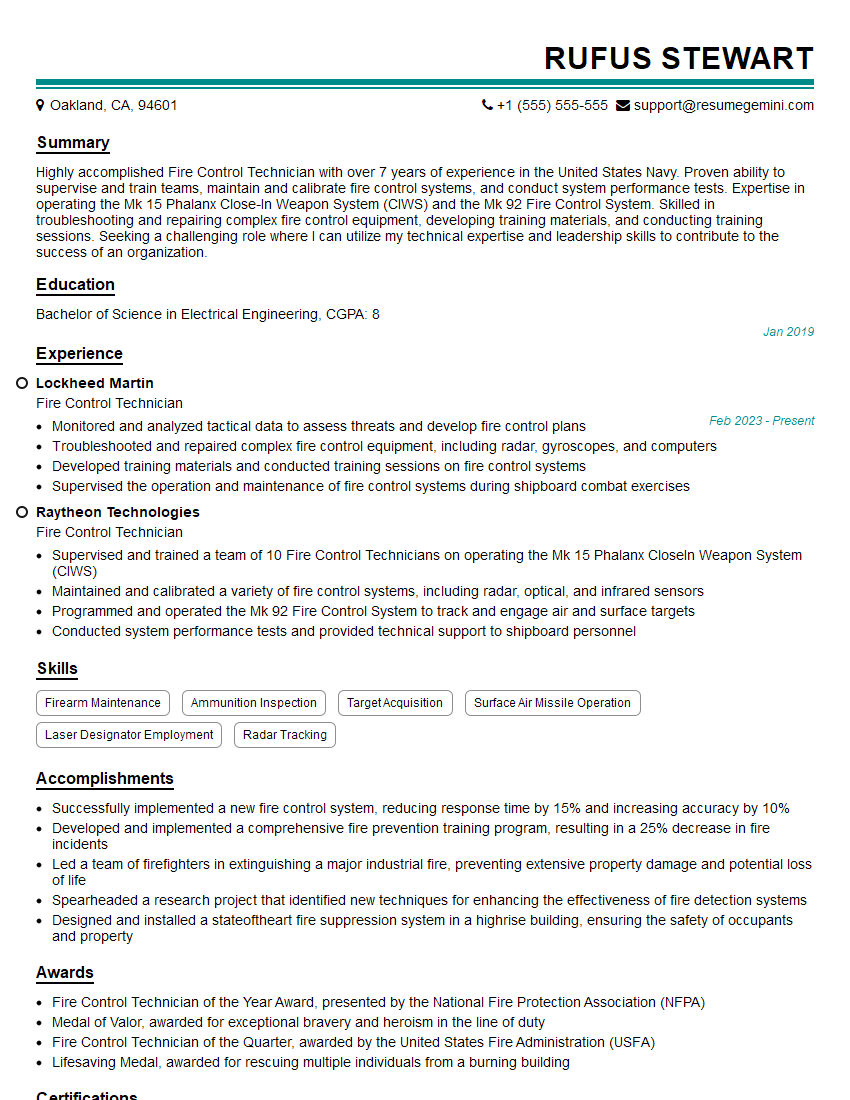
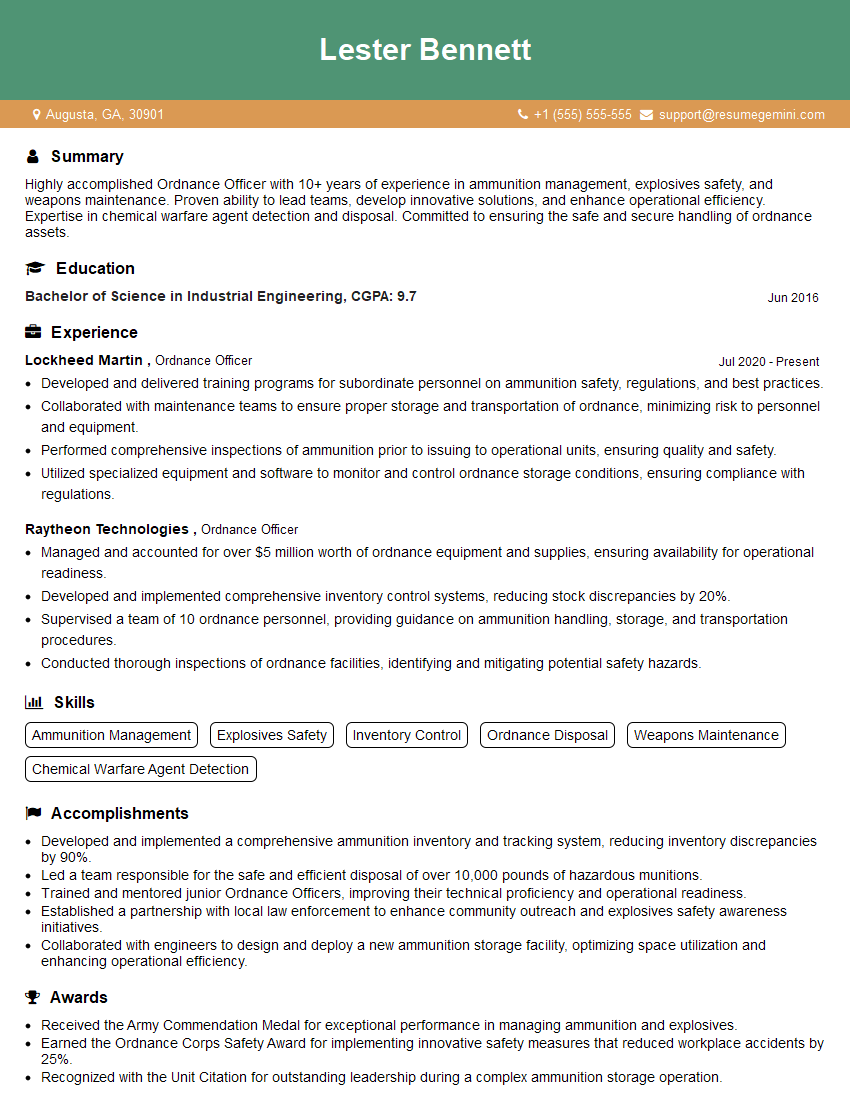
Mastering Gunnery Procedures is vital for career advancement in this specialized field. A strong understanding of these procedures demonstrates competence, professionalism, and a commitment to safety. To maximize your job prospects, it’s essential to present your skills effectively through a well-crafted, ATS-friendly resume. ResumeGemini is a trusted resource that can help you create a compelling resume showcasing your expertise. We provide examples of resumes tailored to Gunnery Procedures to help you get started.

Explore more articles
Users Rating of Our Blogs
Share Your Experience
We value your feedback! Please rate our content and share your thoughts (optional).
What Readers Say About Our Blog
Very informative content, great job.
good