The right preparation can turn an interview into an opportunity to showcase your expertise. This guide to Hand and Machine Sewing interview questions is your ultimate resource, providing key insights and tips to help you ace your responses and stand out as a top candidate.
Questions Asked in Hand and Machine Sewing Interview
Q 1. What types of sewing machines are you familiar with?
My experience encompasses a wide range of sewing machines, from basic mechanical models to advanced computerized machines. I’m proficient with both domestic and industrial sewing machines. This includes machines from various brands like Singer, Brother, Janome, and industrial models from Juki and Pfaff. I’m familiar with their unique features, maintenance needs, and capabilities for different sewing projects, from delicate embroidery to heavy-duty quilting.
- Mechanical Machines: These machines offer a fundamental understanding of sewing mechanics and are ideal for learning basic stitch types and techniques. I appreciate their simplicity and reliability.
- Computerized Machines: These machines provide advanced stitch options, programmable functions, and often include features like automatic needle threading and tension adjustment. This makes complex projects more efficient.
- Industrial Machines: My experience with industrial machines focuses on their high-speed capabilities, durability, and adaptability to specialized tasks. For example, I’ve worked with machines specifically designed for button sewing or topstitching.
Q 2. Describe your experience with different sewing machine needles.
Selecting the right needle is crucial for successful sewing. Different fabrics and stitch types require different needle types. Needle sizes are indicated by numbers, with smaller numbers indicating finer needles and larger numbers for thicker needles.
- Universal Needles: These are versatile needles suitable for most woven fabrics. They’re my go-to for everyday sewing.
- Ballpoint Needles: Designed for knit fabrics, their rounded tip prevents snagging or damaging the fabric’s fibers.
- Stretch Needles: Similar to ballpoint needles but even more suitable for stretchy fabrics like Lycra or jersey.
- Jeans Needles: Their strong design and extra sharp point can easily penetrate thick, heavy-duty fabrics like denim.
- Embroidery Needles: These needles have a shorter shaft and are designed for delicate embroidery work on various fabrics.
Choosing the wrong needle can lead to broken needles, skipped stitches, or damaged fabric. It’s crucial to always check the needle size recommendation based on the fabric type and sewing project.
Q 3. Explain the process of threading a sewing machine.
Threading a sewing machine might seem daunting, but it’s a straightforward process once you understand the steps. The exact process varies slightly depending on the machine’s model, but the general principle remains the same. Think of it like guiding a thread through a carefully designed maze.
- Raise the Presser Foot and Needle: This allows for easy thread passage.
- Insert the Bobbin: Place the bobbin in the designated bobbin case, ensuring it’s properly seated.
- Thread the Upper Tension Assembly: Guide the thread through the designated tension discs and up to the take-up lever.
- Thread the Needle: Use the needle threading mechanism (if your machine has one) or manually thread the needle from front to back.
- Lower the Presser Foot and Needle: The machine is now ready for stitching.
Always consult your machine’s manual for specific instructions, as different models may have slightly varying threading paths. A well-threaded machine is the foundation of a successful sewing project.
Q 4. How do you troubleshoot common sewing machine problems (e.g., skipped stitches, jammed needle)?
Troubleshooting is a critical skill for any sewer. Here’s how I approach common problems:
- Skipped Stitches: This can be due to incorrect needle type, bent needle, improper tension, or a dull needle. I’d check the needle first, then adjust the tension, and if needed, change the needle to the correct type for the fabric.
- Jammed Needle: Often caused by a bent needle or attempting to sew through too many layers of fabric. Remove the jammed needle immediately. I’d examine the needle for bending and replace it. Also, consider reducing fabric layers if the project allows.
- Broken Needle: This can happen due to using the wrong needle for the fabric, sewing too fast, or hitting something like a pin while sewing. Replace the broken needle immediately. A broken needle can damage the machine.
- Inconsistent Stitch Length: This might be because of inconsistent feed dog action (the part feeding the fabric), or problems with the stitch length dial. Cleaning and lubricating the feed dogs or checking/adjusting the dial usually solves this.
Before jumping to conclusions, always start with the simplest solutions, like checking the needle and thread tension. Keeping your machine clean and well-maintained will minimize the occurrence of problems.
Q 5. What different types of stitches do you know and when would you use each?
I’m familiar with a variety of stitch types, each suited to specific applications:
- Straight Stitch: The most basic stitch, excellent for seams, topstitching, and basting.
- Zigzag Stitch: Used for finishing raw edges, seams on stretchy fabrics, and decorative purposes.
- Overlock Stitch (Serger Stitch): Creates a neat, professional finish on raw edges, preventing fraying. Often requires a serger machine.
- Blind Hem Stitch: Creates an invisible hem, particularly useful for garment hems.
- Buttonhole Stitch: Creates a functional and aesthetically pleasing buttonhole.
- Satin Stitch: Creates dense, even stitching, often used for embroidery and applique.
The choice of stitch depends entirely on the project’s requirements. For instance, a straight stitch would suffice for a simple tote bag seam, whereas a blind hem stitch is crucial for a professional-looking dress hem.
Q 6. Describe your experience with hand-sewing techniques (e.g., running stitch, backstitch, blind stitch).
Hand-sewing offers a level of control and precision that machine sewing can’t always match, particularly for fine details or when working in confined spaces. My experience includes a variety of techniques:
- Running Stitch: A quick and simple stitch, ideal for basting or gathering.
- Backstitch: A strong, secure stitch for seams and repairs, created by stitching backward over the previous stitch.
- Slip Stitch: Invisible stitch for neat finishing work, often used to close seams or attach facings.
- Blind Stitch: Creates an almost invisible hemline and is my go-to technique for professional-looking hems on garments.
- Catch Stitch: Used to attach different types of fabrics or to attach trim pieces.
Hand-sewing skills are invaluable, and I often combine hand-sewing with machine sewing in projects to create a balanced and effective workflow.
Q 7. What fabrics are you most comfortable working with?
My experience spans a broad range of fabrics, but I’m particularly comfortable working with:
- Cotton: A versatile fabric, easy to sew with and suitable for a wide range of projects.
- Linen: Though slightly more challenging due to its tendency to fray, the result is a beautiful, high-quality garment.
- Silk: Requires a gentle touch and specific needle/thread choices, but it produces luxurious results.
- Wool: Can be tricky to sew as it can be slippery, but I’ve gained confidence sewing with various types of wool, including flannel, tweed and felt.
- Knit Fabrics: These fabrics require specific techniques, like using ballpoint needles to avoid damage.
My comfort level with a fabric is not just about its texture, but my experience with handling its properties during sewing. I am constantly learning about new materials and techniques for working with them.
Q 8. How do you select the appropriate needle and thread for different fabrics?
Selecting the right needle and thread is crucial for a successful sewing project. The fabric’s weight, fiber content, and weave all dictate the appropriate choices. Think of it like choosing the right tool for a specific job; a delicate needle for silk wouldn’t work well on heavy canvas.
- Fabric Weight: Lightweight fabrics like silk or chiffon require fine needles (sizes 60/8-70/10) and thin threads, while heavier fabrics like denim or canvas need stronger needles (sizes 90/14-110/18) and heavier threads.
- Fiber Content: Natural fibers like cotton, linen, and wool often benefit from universal needles, while synthetic fabrics such as polyester or nylon may require needles designed for synthetics to prevent skipped stitches or broken needles.
- Weave: Loosely woven fabrics might require a sharper needle to penetrate the fibers cleanly, while tightly woven fabrics may need a slightly rounded needle to avoid snagging.
For example, I once worked on a project requiring delicate embroidery on silk charmeuse. Using a size 70/10 needle and a fine silk thread ensured the stitches were barely visible, resulting in a flawless finish. In contrast, sewing a canvas tote bag required a size 110/18 needle and heavy-duty polyester thread for durability and strength.
Q 9. How do you measure and cut fabric accurately?
Accurate fabric measurement and cutting are fundamental. Inaccurate cutting leads to ill-fitting garments. I always utilize a sharp rotary cutter, cutting mat, and a good quality ruler. Precision is paramount.
- Pre-Washing: Before cutting, always pre-wash the fabric to account for shrinkage. This prevents the final garment from shrinking after it’s been sewn.
- Pattern Placement: Carefully position patterns on the fabric, ensuring correct grainlines (lengthwise, crosswise, bias) are followed. This is vital for proper drape and fit.
- Accurate Cutting: Use a sharp rotary cutter and ruler for straight, precise cuts. Avoid pulling or stretching the fabric during cutting. Smooth, even cuts contribute significantly to the project’s neatness and prevents unintended distortions in the final product.
- Notch and Mark: Utilize notches and markings on the pattern pieces to aid in accurate assembly and alignment during the sewing process.
I remember once a client had a custom-made blouse altered. Due to inaccurate initial measurements, the sleeves were too tight. By meticulously re-measuring and re-cutting the sleeve pattern pieces, and adding seam allowances, I was able to rectify this, showcasing the importance of precise measurements and pattern usage.
Q 10. Explain your experience with pattern making and alteration.
Pattern making and alteration are essential skills. I’m proficient in drafting basic patterns and adapting commercial patterns to individual needs, including altering for fit and style changes. I leverage my understanding of body measurements and construction techniques.
- Drafting: I have experience in drafting basic slopers (foundation patterns) for various garments, then modifying these slopers to create unique designs.
- Adapting Commercial Patterns: I can easily adjust existing patterns to account for different body types, sizes, and style preferences (e.g., adding sleeves, changing necklines, altering lengths).
- Altering for Fit: I address fitting issues, such as adjusting shoulder width, waistline, and hip circumference, through pattern adjustments before cutting into fabric.
For instance, I recently adjusted a commercial dress pattern for a client who needed a longer torso and a higher waistline. This involved carefully adding length to the bodice pieces while making corresponding adjustments to maintain balance. The alterations ensured a perfect fit and a garment that accentuated her physique beautifully.
Q 11. How do you ensure the accuracy and consistency of your sewing?
Accuracy and consistency in sewing rely on several key factors. Attention to detail throughout the entire process is key, from preparation to finishing touches.
- Precise Cutting and Marking: Accurate cutting and clear pattern markings help ensure consistent seam allowances and accurate garment assembly.
- Consistent Stitching: Maintaining a consistent stitch length, tension, and even feed of fabric through the sewing machine minimizes skipped stitches or puckering.
- Pressing: Regular pressing during construction helps maintain accuracy and prevent distortion. Pressing seams open or to one side keeps the garment looking professional.
- Check and Adjust: Regularly check the fit as you sew, making adjustments as needed. It’s better to make minor alterations early than to deal with major issues later.
A common problem I’ve encountered is uneven seam allowances. By employing a consistent technique for measuring and cutting, and using my seam guide on my machine, I ensure consistent seam allowances, resulting in a professionally-finished garment.
Q 12. Describe your experience with different types of seams (e.g., French seam, flat-felled seam).
Different seams serve various purposes. The choice depends on the garment type, fabric weight, and desired aesthetic.
- French Seam: This seam is ideal for fine fabrics where a clean, invisible finish is needed. It encloses raw edges within the seam, ensuring a professional and durable finish.
- Flat-Felled Seam: This strong and durable seam is best suited for heavier fabrics like denim or canvas. It’s used in items requiring resilience and a clean finish on the outside.
- Seam Variations: Other common seams include basic seams (for quick construction), Hong Kong seams (for a clean, neat finish on woven fabrics), and welt seams (for added structure). Each has its application.
For a delicate silk blouse, a French seam would be my go-to choice to create a seamless, elegant finish. On the other hand, I would opt for a flat-felled seam when constructing durable workwear, prioritizing strength and lasting durability.
Q 13. How do you finish seam allowances professionally?
Professional seam finishing prevents fraying and enhances the garment’s overall appearance. Techniques depend on fabric type and the type of seam used.
- Serging/Overlocking: This is a fast method for preventing fraying on most fabrics, creating a professional and neat edge.
- Zigzag Stitch: A simple zigzag stitch prevents fraying effectively on most fabrics. This is a quick solution often used for basic seams.
- Pinked Edges: On fabrics that don’t fray easily, pinking shears can create a decorative and functional finish.
- Bound Seams: Bias tape is used to encase raw edges offering both durability and aesthetics, ideal for heavier or delicate fabrics requiring a refined finish.
For instance, I might use a serger for a cotton garment, while I’d carefully hand-finish delicate silk seams with a fine blind stitch, ensuring the seams remain invisible and the garment maintains its luxury.
Q 14. How do you handle different types of closures (e.g., zippers, buttons, hooks and eyes)?
Closures are functional and aesthetic components. Proper application depends on garment type and design.
- Zippers: I am proficient in installing various zippers, including centered, invisible, and lapped zippers, adapting techniques depending on the fabric and zipper type.
- Buttons: I can sew buttons by hand or machine, choosing the appropriate thread and technique (e.g., shank buttons, standard buttons) depending on the button and fabric.
- Hooks and Eyes: These are simple yet crucial; placement and secure attachment are key for a well-functioning closure.
- Other Closures: I am also familiar with other closures like snaps, toggles, and Velcro, using them where appropriate and ensuring durability and ease of use.
When sewing a tailored jacket, I’d carefully install a centered zipper for a clean, professional look. A simple blouse, might utilise hand-sewn buttons for a more delicate, personalized finish. Understanding the mechanics and aesthetics of different closures is crucial for creating well-functioning and stylish garments.
Q 15. Describe your experience with industrial sewing machines.
My experience with industrial sewing machines spans over 15 years, encompassing various models from Juki, Singer, and Brother. I’ve worked extensively with high-speed, heavy-duty machines used for mass production, as well as more specialized machines for tasks like buttonhole stitching and embroidery. I’m proficient in threading, adjusting tension, needle selection, and troubleshooting common malfunctions. For example, I once diagnosed and repaired a malfunctioning Juki industrial machine by identifying a worn feed dog, a common issue in high-volume production. Replacing the part restored optimal performance. I’m comfortable working with different types of industrial sewing machine, including those with direct drive motors and computerized controls. My experience extends to both single-needle and multi-needle machines, allowing me to handle a wide variety of projects and materials.
Career Expert Tips:
- Ace those interviews! Prepare effectively by reviewing the Top 50 Most Common Interview Questions on ResumeGemini.
- Navigate your job search with confidence! Explore a wide range of Career Tips on ResumeGemini. Learn about common challenges and recommendations to overcome them.
- Craft the perfect resume! Master the Art of Resume Writing with ResumeGemini’s guide. Showcase your unique qualifications and achievements effectively.
- Don’t miss out on holiday savings! Build your dream resume with ResumeGemini’s ATS optimized templates.
Q 16. What safety precautions do you take while operating sewing machines?
Safety is paramount when operating sewing machines. My routine always begins with a thorough machine inspection, ensuring the needle is securely fastened, the presser foot is correctly aligned, and the area around the machine is clear of obstructions. I always use the appropriate needle for the fabric type to prevent breakage and injury. I keep my fingers away from the needle plate and moving parts while the machine is running, and I never leave a running machine unattended. I also wear safety glasses to protect my eyes from flying debris and maintain proper posture to avoid strain. For industrial machines, I follow all lockout/tagout procedures and regularly check safety guards are in place and functioning correctly. Regular cleaning and maintenance also contributes to safety by preventing unexpected malfunctions.
Q 17. How do you maintain and clean your sewing machines?
Maintaining and cleaning my sewing machines is an ongoing process. After each use, I remove lint and fabric scraps from the bobbin case, feed dogs, and around the needle plate using a small brush. I lubricate moving parts according to the machine’s manual, typically with specialized sewing machine oil. I regularly inspect the needles for damage or bending and replace them as needed. Periodically, I’ll perform a more thorough cleaning, including removing the needle plate and bobbin case for a more detailed cleaning. For example, I know how to properly clean the hook assembly on a rotary hook machine, preventing timing issues and ensuring smooth operation. Preventative maintenance is key – understanding the internal workings allows early identification of potential problems. This proactive approach prevents costly repairs and ensures reliable machine performance.
Q 18. What is your experience with sergers/overlock machines?
I have extensive experience with sergers/overlock machines, using them to create professional-looking seams with clean, finished edges. I’m proficient in adjusting the stitch length, differential feed, and knife settings to achieve the desired result. This is crucial for various fabrics and projects. I understand how different tensions affect the seam finish, and I know how to troubleshoot common serger problems like looping, skipped stitches, and broken threads. I regularly use sergers for creating professional-grade garments, particularly those requiring a clean and stretch-resistant finish like athletic wear or swimwear. I’ve also utilized sergers to create decorative edges, adding a unique visual element to projects. The knowledge of both domestic and industrial sergers allows me to handle a wide range of applications and production requirements.
Q 19. How do you interpret sewing patterns?
Interpreting sewing patterns involves understanding both the graphical representation and the accompanying instructions. I start by reviewing the pattern’s sizing chart to select the correct size based on my measurements. Then, I carefully study the pattern pieces, identifying their names and markings. The notches, grainlines, and other markings are essential for accurate placement. I then refer to the instruction booklet to understand the construction steps, following the sequence outlined. If a pattern includes any technical illustrations, I analyze them thoroughly to understand how each step is executed. For instance, I recently created a jacket from a complex pattern that involved many small pieces and complicated steps; meticulous reading of the instructions and precise placement of pattern pieces ensured the success of the project. I’m skilled at adapting patterns to different fabrics and personal preferences, for instance, widening or narrowing seams to personalize the fit.
Q 20. How do you work with different types of interfacing?
Different interfacings provide various levels of support and structure, significantly influencing the final garment. I select interfacing based on the fabric weight, project requirements, and desired drape. For example, lightweight fusible interfacing is suitable for delicate fabrics like silk or chiffon, offering minimal support without adding bulk. Medium-weight interfacings are appropriate for blouses and skirts, providing moderate shape retention. Heavy-weight interfacings, such as woven interfacings, are better suited for structured garments, such as jackets or coats, offering significant support. I understand the application of both fusible and sew-in interfacings. Fusible interfacings make the process quicker, but sew-in interfacings are often preferable for fabrics that are sensitive to high heat or for projects requiring a high degree of precision and control over the placement of the interfacing. Knowing how to choose and apply the right interfacing is critical for creating professional-looking garments.
Q 21. How do you create professional hems?
Creating professional hems involves a multi-step process, starting with precise cutting and finishing. The choice of hem depends on the fabric and garment type. For example, a simple rolled hem is suitable for lightweight fabrics, offering a clean and delicate finish. A double-fold hem is more common for medium-weight fabrics, providing a stronger and more durable finish. For heavier fabrics or more formal garments, a blind hem might be preferred to maintain a seamless appearance. After the hem is prepared, I carefully press it to create a crisp and even edge, and ensure the hem is consistent throughout the garment. Consistent stitch length and accurate placement are important for achieving a neat and professional finish, adding to the overall quality of the project.
Q 22. How do you manage your time efficiently while sewing?
Efficient time management in sewing is crucial for meeting deadlines and maintaining a healthy work-life balance. My approach involves meticulous planning and prioritization. Before starting any project, I create a detailed plan, breaking down the task into smaller, manageable steps. This allows me to track progress and identify potential bottlenecks. For example, if I’m making a complex garment, I’ll first create a pattern, then cut the fabric, sew the individual pieces, and finally, finish the garment with details like buttonholes and hems. Each stage is timed, and I utilize techniques like batching similar tasks – for instance, I’ll sew all the seams of one type before moving to another – to minimize setup time. I also allocate specific time blocks for sewing, ensuring I’m focused and uninterrupted. This prevents wasted time switching between tasks and helps me maintain a consistent workflow.
Furthermore, I regularly review my schedule and adjust as needed, using tools like to-do lists or project management software to stay organized. This adaptable system lets me quickly respond to unexpected issues, such as fabric shortages or equipment malfunctions, without derailing the entire project. Regular breaks are also built into my schedule to avoid burnout and maintain accuracy.
Q 23. What is your experience with working on large-scale projects?
I have extensive experience working on large-scale sewing projects, including the production of custom costumes for theatrical performances and the creation of large textile art installations. These projects often involve intricate designs, demanding precision and collaboration. On one particular occasion, I was tasked with creating over 50 identical costumes for a historical reenactment. To manage the scale, I implemented a highly organized system. This included developing efficient cutting and sewing methods using templates and industrial sewing machines, and delegating tasks to a skilled team while maintaining strict quality control. Each team member focused on a specific aspect of the costume production – for instance, one team would focus on the main garment, another on embellishments, and a third on quality checks – maximizing efficiency and ensuring consistency across all garments. The success of the project hinged on thorough planning, clear communication, and efficient resource management.
Q 24. What is your experience with different sewing machine attachments?
My experience with sewing machine attachments is comprehensive. I’m proficient with a wide range of attachments, including zipper feet, buttonhole feet, blind hem feet, rolled hem feet, and gathering feet. Each attachment significantly enhances efficiency and precision. For instance, the zipper foot allows for clean, even zipper installation, while the buttonhole foot guarantees uniform and accurately sized buttonholes. The blind hem foot creates virtually invisible hems on delicate fabrics, and the gathering foot allows for effortless creation of ruffles and gathers. I regularly incorporate these attachments into my work, adapting my technique based on the project requirements. I also understand how to maintain and care for these attachments, ensuring their longevity and optimal performance. My familiarity with different brands and models of sewing machines also allows me to quickly adapt to varying equipment.
Q 25. Describe your experience with embroidery or other decorative stitching techniques.
Embroidery and decorative stitching techniques are integral parts of my sewing skillset. I’m adept at various embroidery techniques, including free-motion embroidery, appliqué, and machine embroidery using digital designs. For instance, I’ve used free-motion embroidery to create intricate floral patterns on garments, and appliqué to add decorative elements to quilts. I’m also experienced in using different embroidery threads to achieve varied textures and effects. My familiarity with digital embroidery software allows me to create unique and personalized designs, and I’m proficient in transferring these designs onto fabric using digitizers and embroidery machines. Additionally, I’m experienced with decorative stitches on my sewing machine, which I utilize to enhance the aesthetic appeal of my projects. These skills allow me to add a distinct artistic touch to garments and other textile projects.
Q 26. How do you assess the quality of your work?
Assessing the quality of my work involves a multi-faceted approach that incorporates both objective and subjective evaluations. Objectively, I check for accurate seam allowances, consistent stitching, appropriate finishes, and the correct fitting of components. I also examine the fabric for any damage or imperfections. Subjectively, I assess the overall aesthetic appeal of the finished product, checking for the balance of design elements and the overall coherence of the project. I often review my work under different lighting conditions and from various angles to ensure the quality is consistent throughout. If there are any discrepancies, I don’t hesitate to rework sections to attain the desired standard. I use a combination of visual inspection, tactile assessment (checking for fabric tension and seam strength), and objective measurements to ensure that the finished product meets my quality standards and those of the client.
Q 27. How do you handle difficult or challenging fabrics?
Working with challenging fabrics requires specialized techniques and knowledge. For example, when sewing with delicate fabrics like silk or chiffon, I use fine needles, a walking foot or a special presser foot to prevent puckering and damage. For slippery fabrics, using a spray starch or using pins strategically, helps to control and manipulate the material efficiently. Working with heavy fabrics such as denim or canvas demands stronger needles and potentially adjusting the stitch length and tension for optimal results. I also tailor my cutting techniques to suit the fabric – using rotary cutters for even cuts on heavy fabrics, and sharp, fine-point shears for delicate materials. I always pre-wash and press the fabric before cutting to prevent shrinkage and to maintain uniform texture throughout the sewing process. The key is understanding the specific characteristics of the fabric and adapting my techniques accordingly.
Q 28. What are your strengths and weaknesses as a sewer?
My strengths lie in my meticulous attention to detail, my creativity, and my ability to adapt to different fabrics and techniques. I enjoy tackling complex projects and finding innovative solutions to challenges. For example, I once had to recreate a historically accurate garment with limited pattern information, utilizing my creativity and research skills to achieve a successful outcome. My weakness, if I were to pinpoint one, is occasionally struggling with prioritizing tasks when faced with multiple deadlines. I’m actively working on improving this by implementing more rigorous project management techniques. This includes utilizing project management apps and breaking down larger projects into smaller, manageable tasks with set deadlines. This systematic approach ensures that I efficiently manage my workload and meet deadlines consistently, even when faced with numerous projects.
Key Topics to Learn for Hand and Machine Sewing Interview
- Hand Sewing Techniques: Mastering basic stitches (running stitch, backstitch, blanket stitch, etc.), understanding stitch selection for different fabrics and projects, and demonstrating knowledge of hand sewing tools and their proper use.
- Machine Sewing Techniques: Operating various sewing machines (e.g., straight stitch, zigzag stitch, buttonhole stitch), understanding machine maintenance and troubleshooting, and demonstrating proficiency in different sewing machine functions (e.g., tension adjustment, needle selection).
- Fabric Selection and Properties: Understanding different fabric types (cotton, silk, wool, synthetics), their properties (drape, weight, texture), and appropriate needle and thread choices for each.
- Pattern Interpretation and Construction: Reading and understanding sewing patterns, accurately cutting fabric, assembling garment pieces, and understanding pattern alterations.
- Seam Finishing Techniques: Knowing various seam finishes (serging, pinking, zigzagging) and understanding their impact on garment durability and appearance.
- Problem-Solving and Troubleshooting: Identifying and resolving common sewing machine issues (e.g., skipped stitches, broken needles), adapting to unexpected challenges during projects, and demonstrating a methodical approach to problem-solving.
- Safety Procedures: Demonstrating knowledge of safe sewing practices, including proper needle handling, machine maintenance and use of safety equipment.
- Garment Construction and Design: Understanding the principles of garment construction, including darts, pleats, and other design elements, and demonstrating an understanding of basic garment design principles.
Next Steps
Mastering both hand and machine sewing skills is crucial for career advancement in numerous fields, opening doors to exciting opportunities in fashion design, textile arts, tailoring, and more. To stand out from the competition, a well-crafted resume is essential. An ATS-friendly resume significantly improves your chances of getting your application noticed. We strongly encourage you to utilize ResumeGemini to build a professional and impactful resume that showcases your skills effectively. ResumeGemini offers examples of resumes tailored to Hand and Machine Sewing, providing you with templates and guidance to create a document that highlights your abilities and experience perfectly.
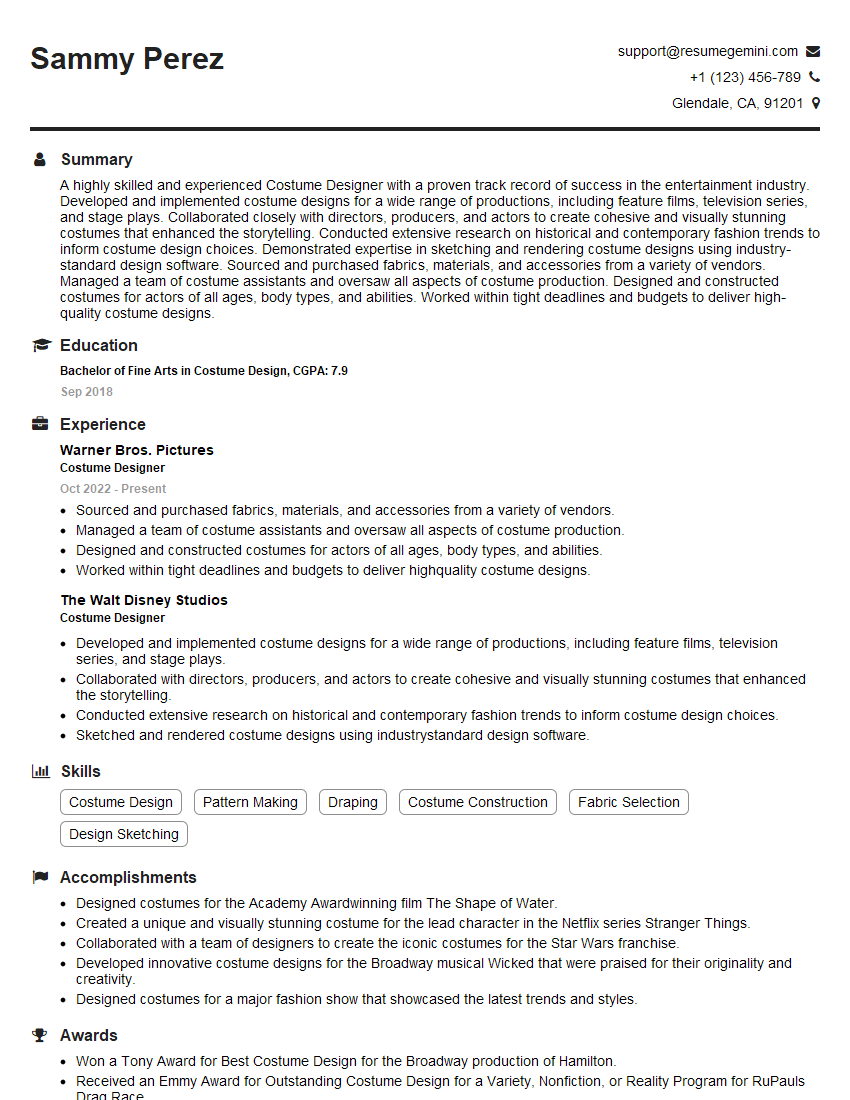
Costume Designer Resume Sample
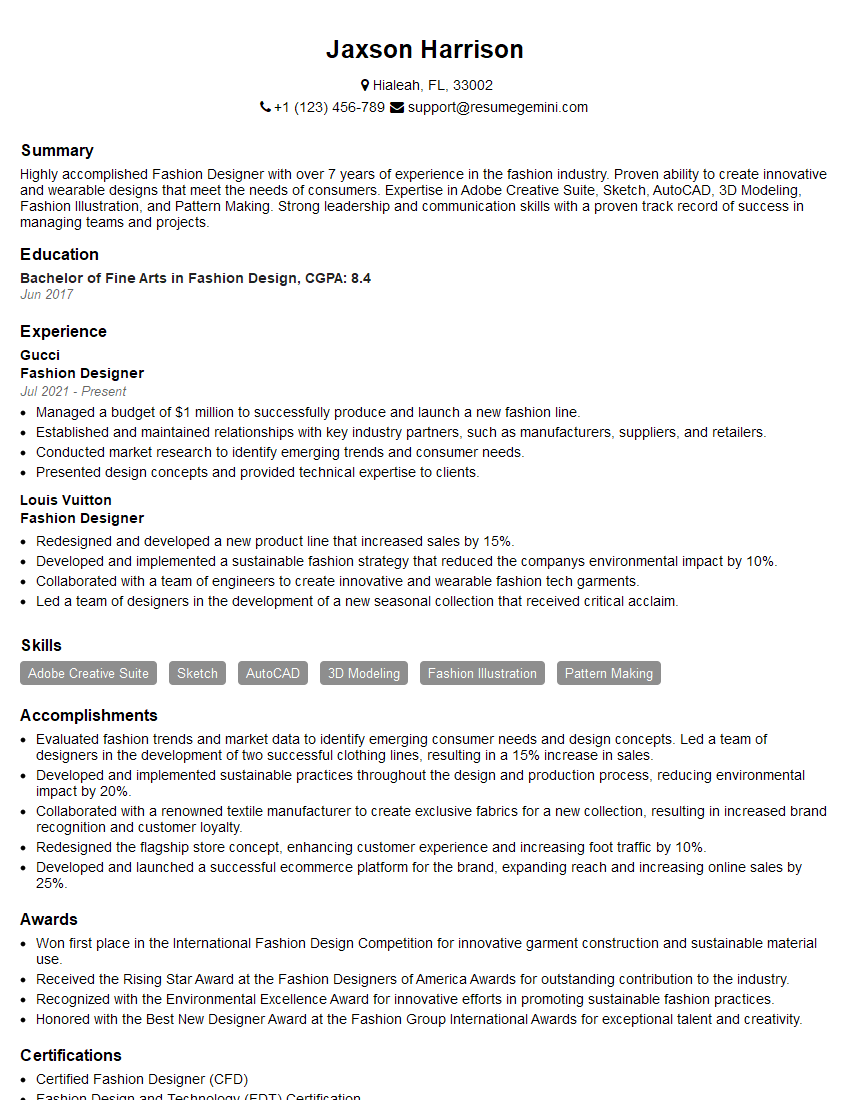
Fashion Designer Resume Sample
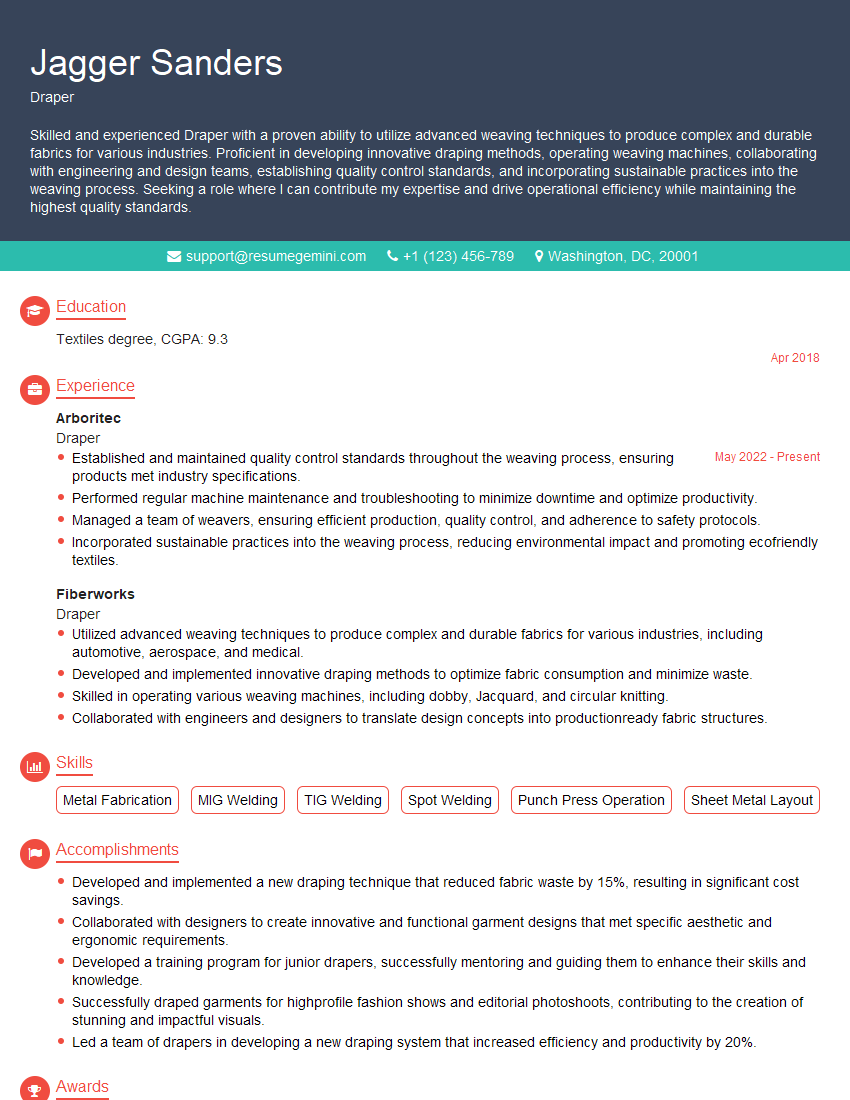
Draper Resume Sample
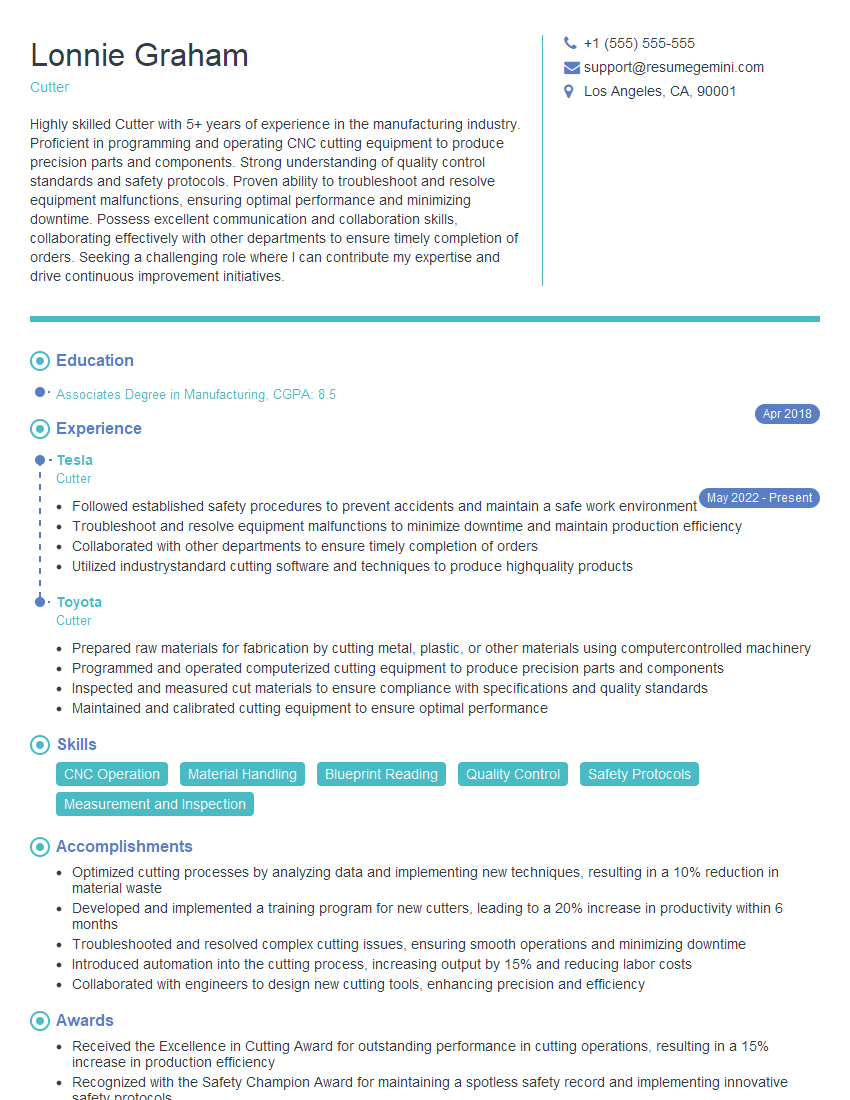
Cutter Resume Sample
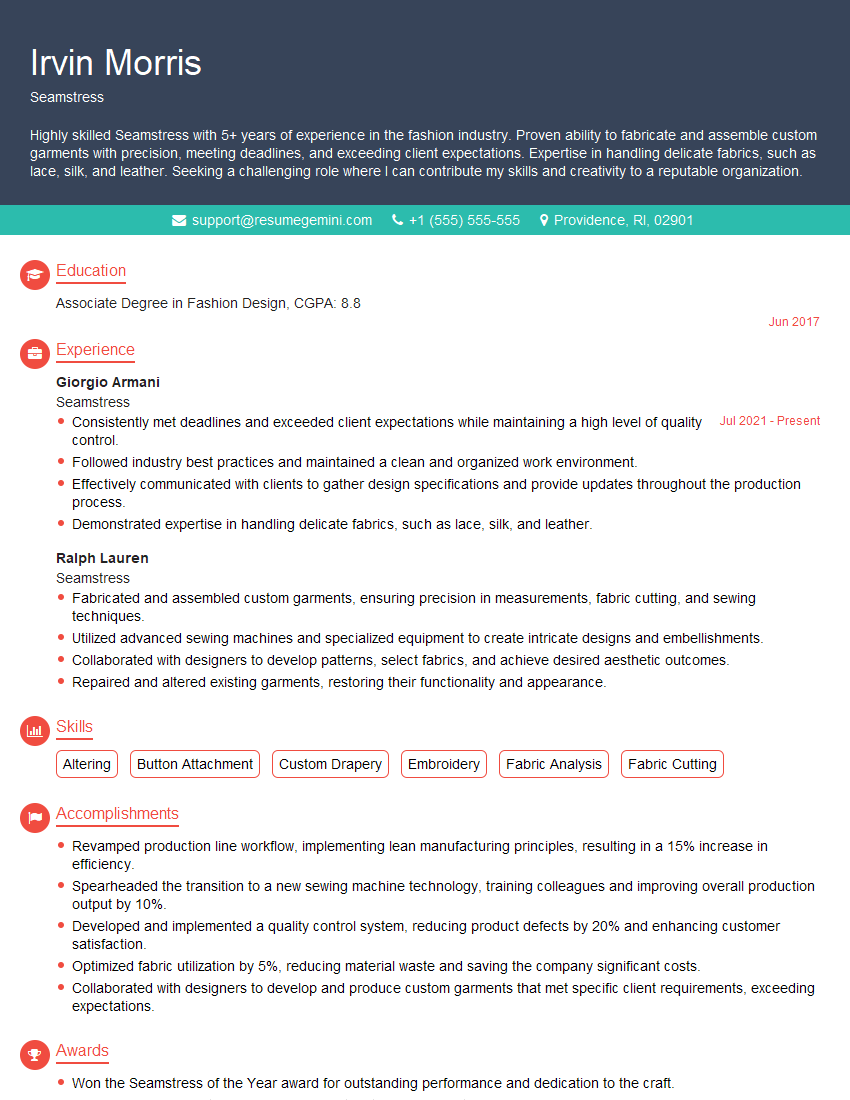
Seamstress Resume Sample
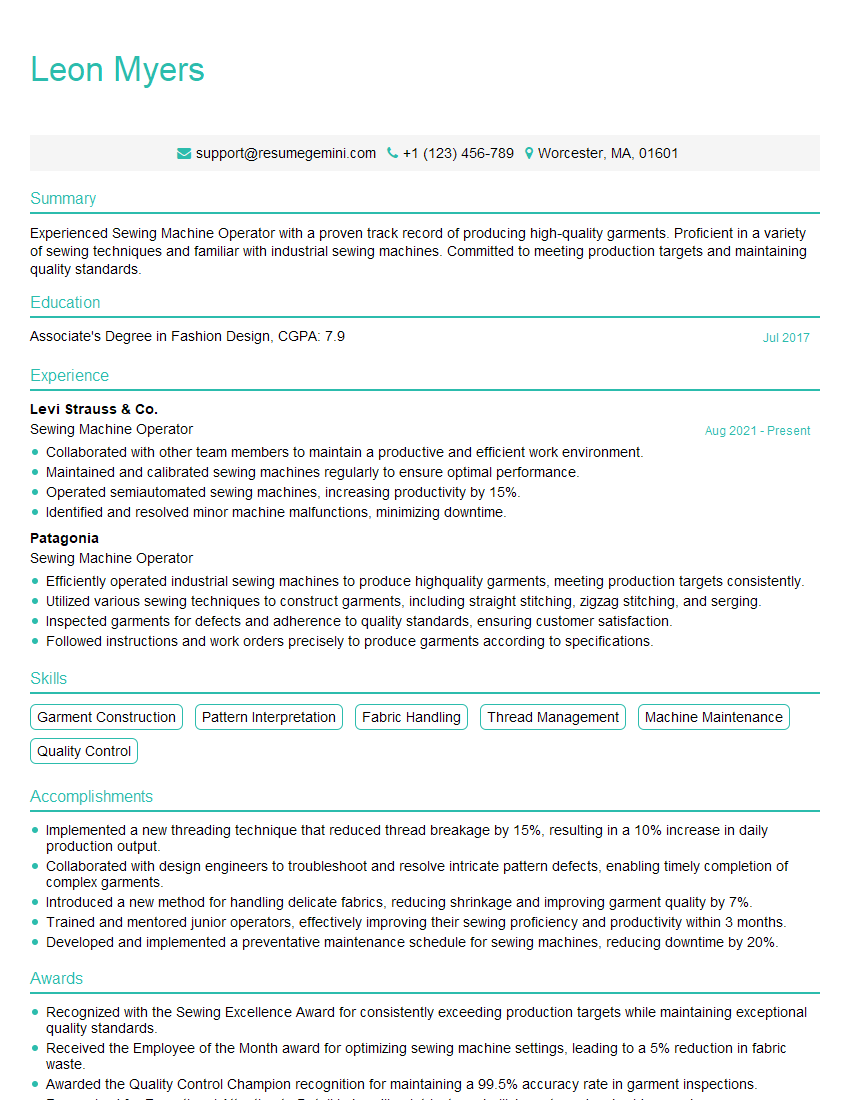
Sewing Machine Operator Resume Sample
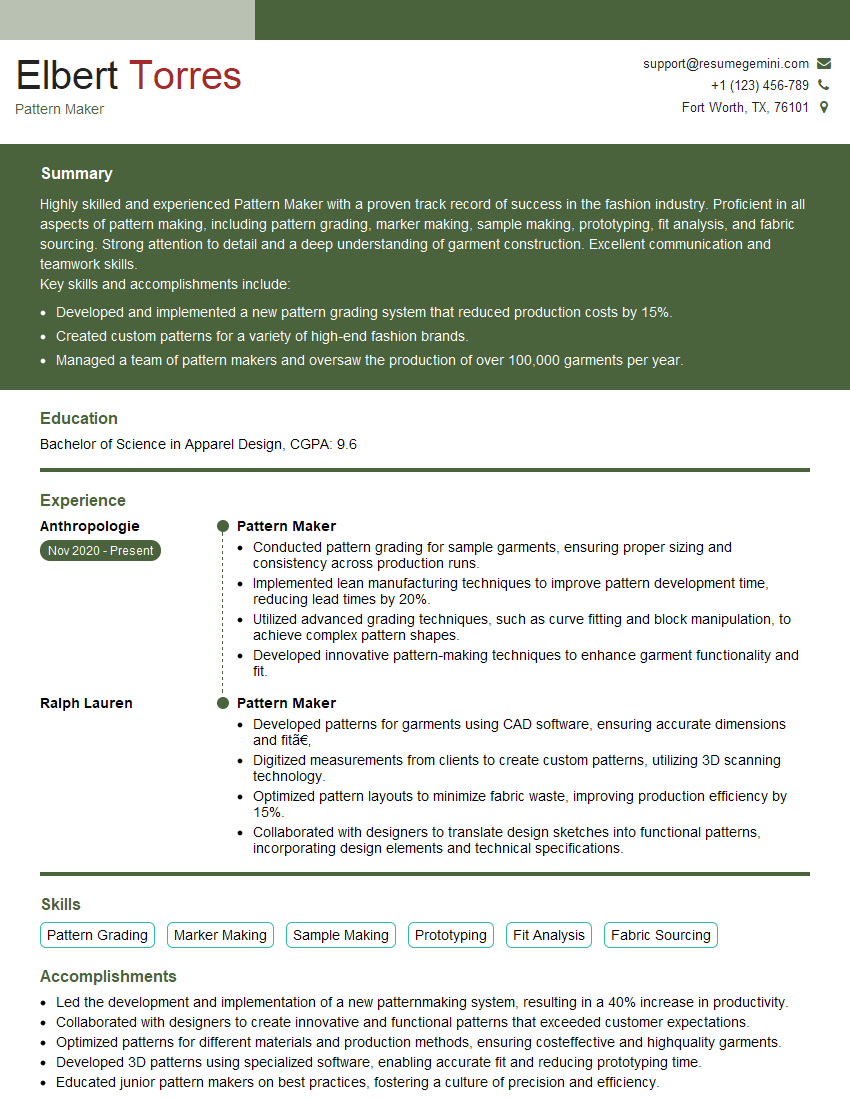
Pattern Maker Resume Sample
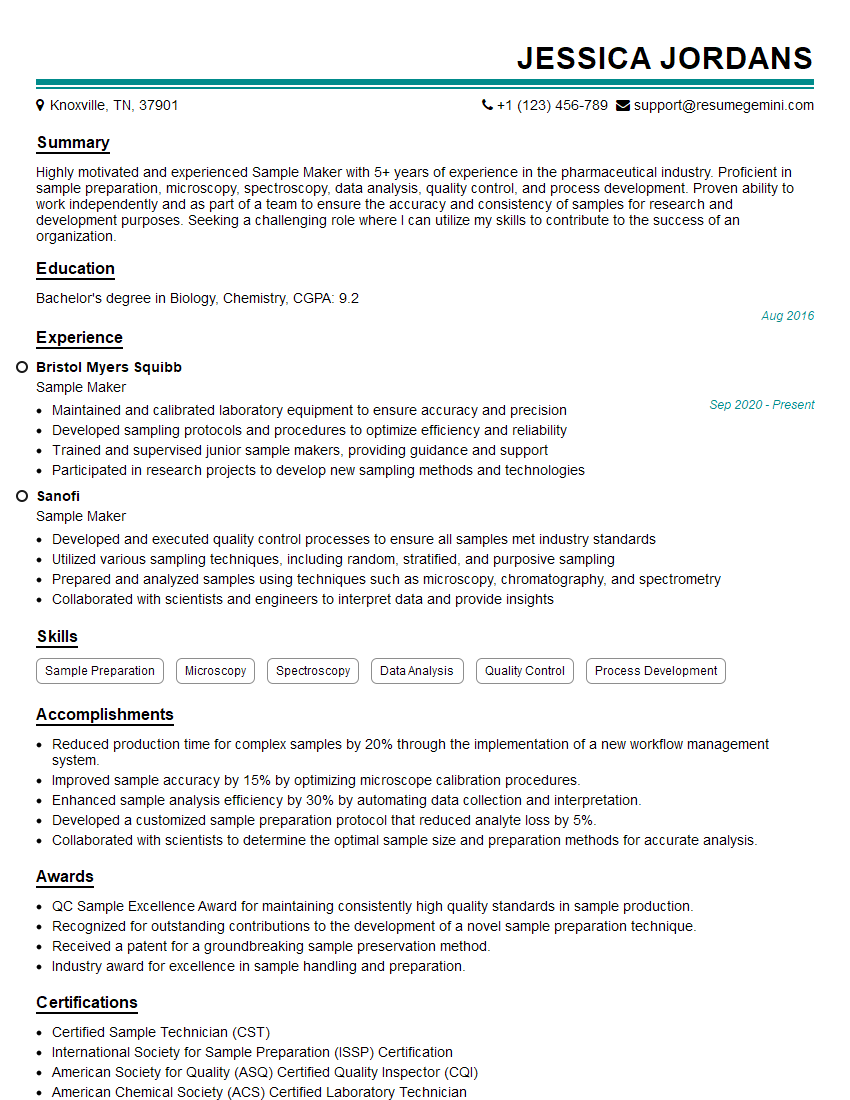
Sample Maker Resume Sample

Stitcher Resume Sample
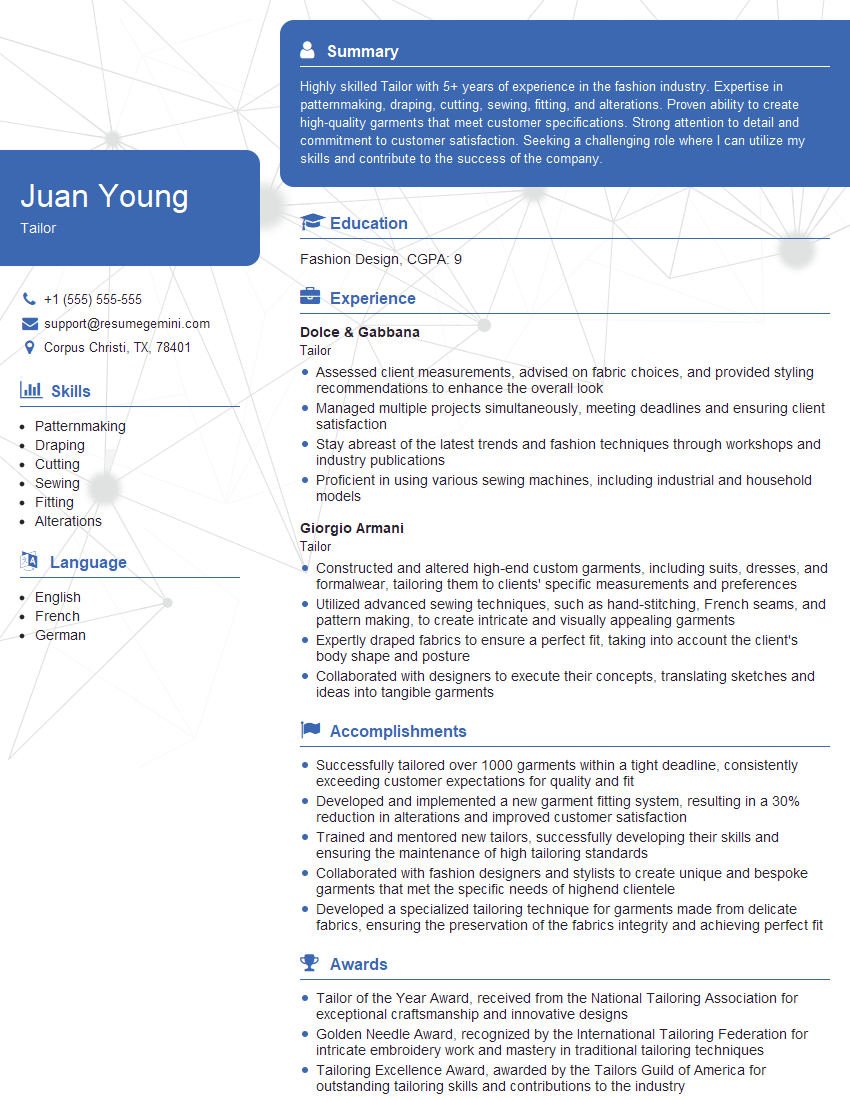
Tailor Resume Sample

Embroidery Specialist Resume Sample
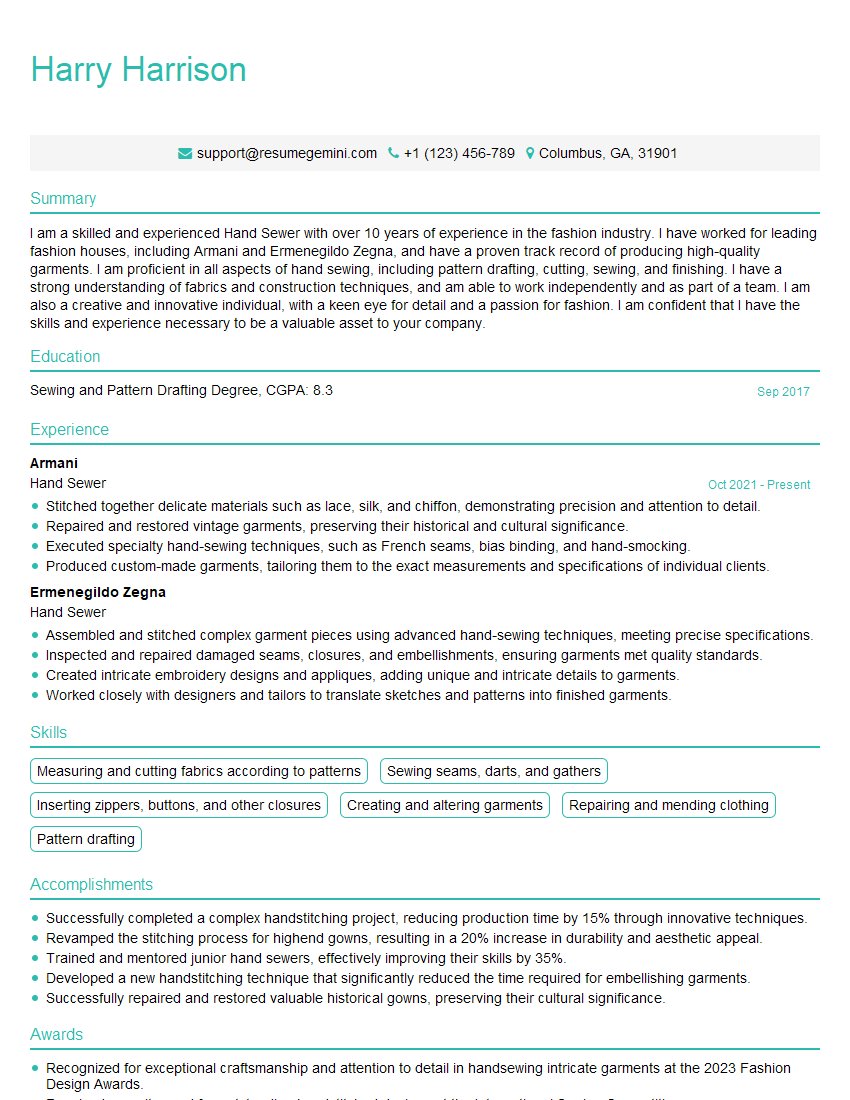
Hand Sewer Resume Sample
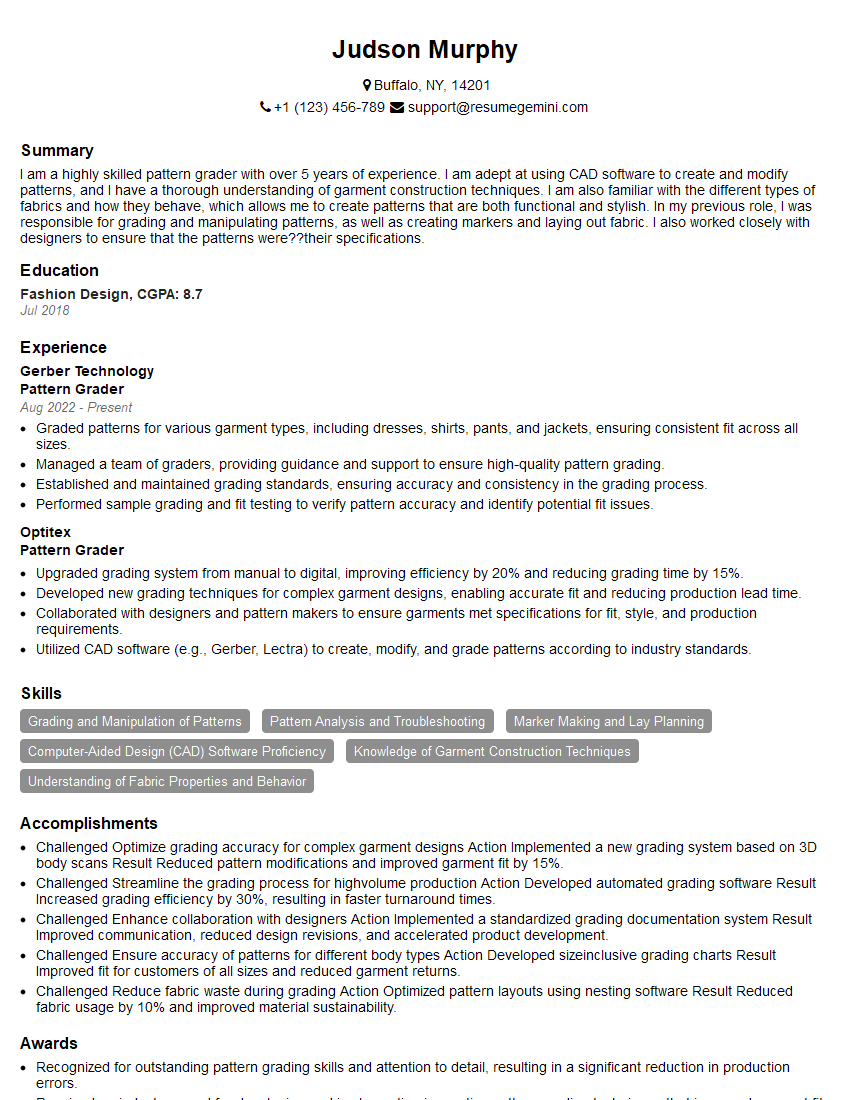
Pattern Grader Resume Sample
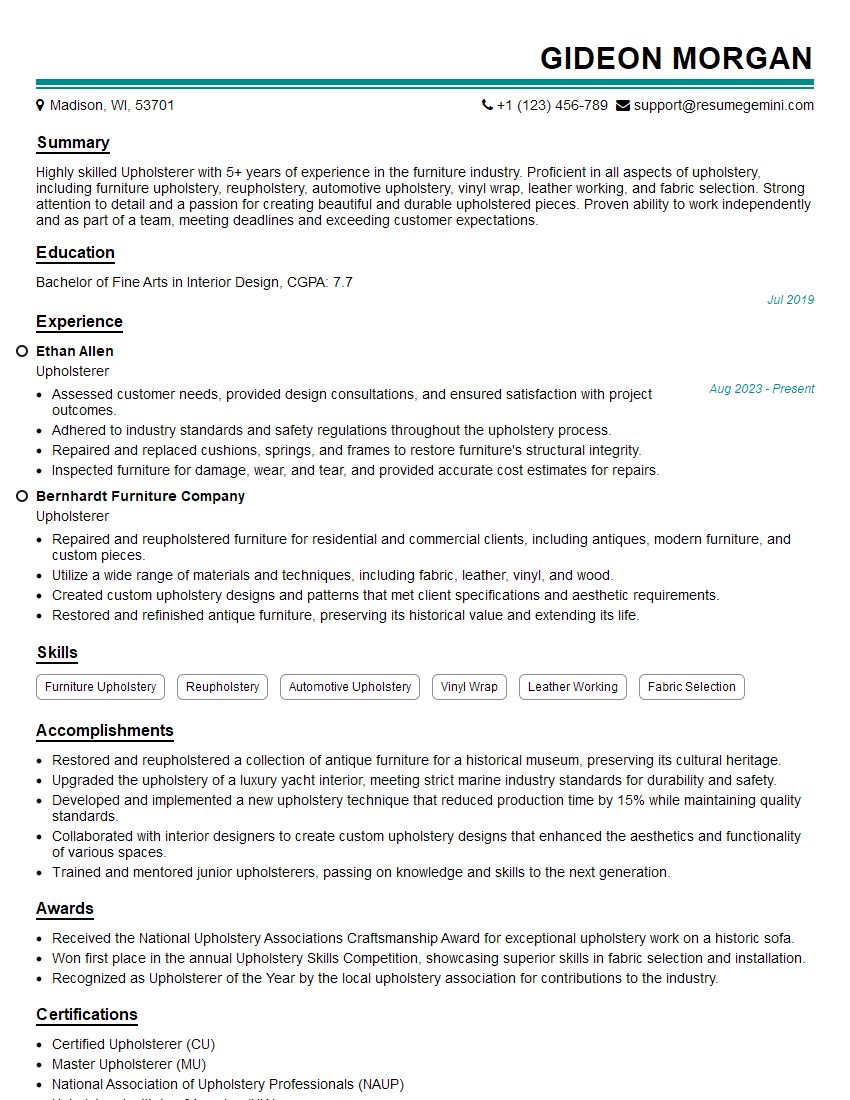
Upholsterer Resume Sample
Explore more articles
Users Rating of Our Blogs
Share Your Experience
We value your feedback! Please rate our content and share your thoughts (optional).
What Readers Say About Our Blog
Very informative content, great job.
good