Interviews are more than just a Q&A session—they’re a chance to prove your worth. This blog dives into essential Hard Cover Binding interview questions and expert tips to help you align your answers with what hiring managers are looking for. Start preparing to shine!
Questions Asked in Hard Cover Binding Interview
Q 1. Describe the different types of hardcover book binding.
Hardcover book binding encompasses several methods, each offering a unique balance of durability and aesthetic appeal. The choice depends on factors like book size, page count, and budget.
- Case Binding: This is the most common method for high-quality hardcover books. It involves sewing the sections together, creating a text block, then attaching this block to the cover boards (the case). This offers excellent durability and allows for a robust spine.
- Perfect Binding: While typically associated with softcover books, perfect binding can also be adapted for hardcover books with relatively few pages. The pages are glued together along the spine’s edge, and a cover is wrapped around the block. It’s less durable than case binding but is cost-effective for thinner books.
- Spiral Binding/Wire-O Binding: These methods are rarely used for hardcover books due to their less professional appearance and lower durability, but they could be applied in specialized cases such as calendars or very thick books where opening is crucial.
- Saddle Stitch Binding: Again, uncommon for hardcover books due to the lack of spine structure and limited page count capability.
Think of case binding as constructing a sturdy house, whereas perfect binding is more akin to assembling a well-crafted booklet. Each has its place, depending on the project’s needs.
Q 2. Explain the process of casemaking in hardcover binding.
Casemaking is the crucial process of creating the protective cover for a hardcover book. It involves several key steps:
- Cover Board Preparation: The cover boards (usually made of cardboard or binder’s board) are cut to the precise dimensions. This requires accurate measurements to ensure a perfect fit around the text block.
- Cover Material Application: The chosen cover material (cloth, leather, or paper) is precisely adhered to the cover boards. This often involves careful alignment and smoothing to avoid wrinkles or air bubbles.
- Headbands and Spine Lining: Headbands (decorative fabric pieces at the top and bottom of the spine) are glued in place. The spine is then lined with a protective material like buckram or other cloth to add strength and provide a smooth surface for printing and other embellishments.
- Case Construction: The cover boards are carefully folded and glued together to form the protective case. Accurate folding and gluing are critical for proper alignment and a professional finish.
- Finishing: Any additional embellishments, such as foil stamping or embossing, are applied to the cover. This enhances the book’s visual appeal and brand identity.
Imagine casemaking as building a custom frame for a valuable painting – each step is crucial in creating a beautiful and protective enclosure.
Q 3. What are the key materials used in hardcover binding?
The materials used in hardcover binding are diverse and contribute significantly to the book’s final quality and durability. Here are some key materials:
- Cover Boards: These provide the structural foundation of the cover. Common materials include binder’s board (a heavy-duty paperboard), chipboard (a less expensive alternative), and even rigid plastics in some specialized cases.
- Cover Materials: The outer covering adds aesthetic appeal and protection. Options include cloth (linen, cotton, or book cloth), leather, and various types of paper. The choice depends on the budget and desired look and feel.
- Endpapers: These are sheets of paper that attach the cover to the text block. They typically have a decorative pattern or design.
- Adhesives: Different adhesives are used at various stages, from securing the text block to attaching the cover. The choice depends on the specific application and required bonding strength (more on this later).
- Thread: Used for sewing the sections together in case binding to form a robust text block. Different thread materials (linen, cotton, etc.) offer varying strength and aesthetics.
- Headbands: Decorative fabric pieces add a touch of elegance and protect the spine.
Choosing the right materials ensures both the longevity and the visual appeal of the finished book.
Q 4. How do you ensure accurate spine measurements for hardcover books?
Accurate spine measurements are paramount in hardcover binding to ensure a proper fit and avoid gaps or overlaps between the cover and the text block. Several methods ensure accuracy:
- Precise Page Count and Thickness Measurement: Carefully count the pages and measure the thickness of the completed text block using a specialized gauge. This measurement is critical in determining spine width.
- Allowance for Glue and Compression: Add an allowance to the text block thickness to account for the glue used in binding and the compression that occurs during the process. This allowance is typically determined through experience and knowledge of the materials used.
- Spine Width Calculation: Use a formula (often provided by binding equipment manufacturers) that incorporates the page thickness, glue allowance, and desired spine width to ensure the correct sizing of the cover boards.
- Test Binding: It’s a good practice to perform a test binding with a small sample to fine-tune the measurements and ensure the accuracy of the calculations before binding the entire project.
Inaccurate spine measurements can lead to a poorly fitting cover, creating an unprofessional and potentially damaged book. Precise measurement is a cornerstone of quality hardcover binding.
Q 5. Describe the different types of adhesives used in hardcover binding.
Various adhesives are crucial in different stages of hardcover binding. The choice depends on the materials being bonded, the required strength, and the drying time.
- Hot Melt Adhesives: These are commonly used for adhering the cover material to the cover boards and for casemaking. They offer fast setting times and strong bonds.
- PVAc (Polyvinyl Acetate) Emulsions: These water-based adhesives are often used for perfect binding or for adhering endpapers. They are less aggressive than hot melts and offer good flexibility.
- PUR (Polyurethane Reactive) Adhesives: These are high-performance adhesives known for their extremely strong bonds and excellent resistance to moisture and aging. Often used for high-quality case binding.
- Animal Glue: Historically used, it is less common now due to its limitations and ethical considerations. However, it still finds use in certain high-end applications.
Selecting the appropriate adhesive is critical to ensure strong, durable, and aesthetically pleasing results. Improper adhesion can lead to cover detachment or other issues.
Q 6. What are the common issues encountered during the hardcover binding process and how do you resolve them?
Several issues can arise during hardcover binding. Addressing them promptly and effectively is crucial for quality control.
- Inconsistent Glue Application: Uneven glue distribution can lead to weak adhesion and cover detachment. This can be avoided through careful application techniques and regular machine maintenance.
- Wrinkles or Air Bubbles in Cover Material: These are aesthetic flaws caused by improper application of cover material. They are best prevented through careful smoothing and appropriate pressure application.
- Improper Spine Alignment: This results in an uneven spine and poor appearance. Careful attention to detail during casemaking and binding is key to avoid this.
- Text Block Misalignment: If the text block isn’t properly aligned within the case, it can result in an uneven spine and poor overall presentation. This can be corrected by adjusting the text block before it is glued to the case.
- Page Creasing or Damage: This can occur due to pressure during binding. Proper techniques and adequate machine adjustment mitigate this.
Solutions often involve troubleshooting the process, checking the equipment, and adjusting techniques. Preventive measures, such as quality material selection and consistent operator training, are also crucial.
Q 7. Explain the importance of quality control in hardcover binding.
Quality control is paramount in hardcover binding to ensure the final product meets the required standards of durability, aesthetics, and overall quality. It ensures a consistent and professional output.
- Regular Equipment Maintenance: Ensuring that the binding equipment is properly calibrated and maintained minimizes issues such as uneven glue application or inaccurate spine alignment.
- Material Inspection: Inspecting materials like cover boards and cover materials before they are used ensures that they meet the quality standards and avoids defects.
- In-Process Inspections: Regular checks during the binding process can identify and address issues early, preventing major problems later. This could be a visual inspection at various stages.
- Final Product Inspection: A thorough examination of the final product ensures it meets all specifications, including proper spine alignment, even glue application, and the absence of defects.
- Documentation: Keeping detailed records of the binding process and any adjustments made allows for traceability and helps identify and address recurring problems.
Think of quality control as the safety net during construction; it catches errors and prevents structural collapse, resulting in a beautiful and long-lasting book.
Q 8. How do you handle variations in paper thickness during binding?
Handling variations in paper thickness during binding is crucial for a professional finish. Different paper stocks, even within the same grade, can have slight thickness variations. This impacts the final book’s spine and overall appearance. We address this in several ways:
- Careful Paper Selection: We specify paper with consistent thickness tolerances from reputable suppliers. This minimizes the initial variation.
- Accurate Book Sectioning: We meticulously measure and section the book’s text blocks to ensure even thickness across all sections. Inconsistent sectioning will exacerbate thickness variations.
- Adjustable Machinery: Our bookbinding machines are equipped with adjustable pressure settings. This allows us to compensate for slight thickness differences during sewing and gluing. We might need to fine-tune the pressure for each individual book or batch.
- Experienced Operators: Our skilled operators have the experience to recognize and adjust for even subtle variations in paper thickness. They’re trained to spot potential problems early in the process.
For example, if we’re working with a batch of books where one section is noticeably thicker than others, we might slightly adjust the glue application on that section to ensure a uniform spine.
Q 9. What are the safety precautions you take while operating bookbinding machinery?
Safety is paramount in our bookbinding operation. We adhere to strict safety protocols to protect our team. These include:
- Machine Guards: All machinery is equipped with safety guards to prevent accidental contact with moving parts. These guards are regularly inspected and maintained.
- Personal Protective Equipment (PPE): Employees wear appropriate PPE, including safety glasses, gloves, and hearing protection, depending on the task. We provide regular training on proper PPE usage.
- Lockout/Tagout Procedures: Before performing any maintenance or repairs, we strictly follow lockout/tagout procedures to ensure machinery is completely de-energized and secured.
- Regular Maintenance: Our machinery undergoes regular maintenance to identify and address potential hazards before they become accidents. We also provide regular safety training to our staff.
- Emergency Procedures: All employees are trained in emergency procedures, including how to use fire extinguishers and first-aid kits. We conduct regular drills to ensure preparedness.
Think of it like this: safety isn’t just a rule, it’s an ingrained part of our culture. We don’t just follow safety guidelines; we actively promote a safety-conscious environment.
Q 10. What are the different types of sewing methods used in hardcover binding?
Several sewing methods are used in hardcover binding, each with its own advantages and disadvantages. The choice depends on the book’s requirements, such as page count and desired durability:
- Smyth-sewing: This is a very strong and durable method, ideal for longer books. Sections are sewn together through the folds using a single chain of stitching along the spine.
- Perfect Binding: Used for shorter books with relatively fewer pages, pages are glued to a cover. Less durable than Smyth-sewing.
- Concertina (Accordion) Binding: Pages are folded in a zig-zag pattern creating a concertina effect. Typically used for shorter books or brochures.
- Case Binding: This isn’t a sewing method itself, but a crucial element where the text block created through sewing (often Smyth-sewing) is then glued to the cover boards.
For example, a high-quality novel would likely use Smyth-sewing for its superior durability and lay-flat capabilities, while a short booklet might be perfect bound.
Q 11. How do you calculate the cost of materials for a hardcover binding project?
Calculating material costs for a hardcover binding project involves a detailed breakdown of all components. It’s not just about the raw materials; it also includes accounting for waste and potential variations in material pricing.
We typically use a spreadsheet or a dedicated costing software. The calculation includes:
- Paper Cost: This depends on the paper type, weight, and quantity required. We factor in overage to account for potential spoilage during printing and cutting.
- Cover Board Cost: The cost varies greatly depending on the type and thickness of the cover board (e.g., binder’s board, chipboard). We consider the dimensions of the book for accurate calculation.
- Cloth/Leather Cost: If the cover is cloth or leather, the cost is determined by the type and quantity of material. Allowances for waste are critical.
- Thread Cost: For sewn bindings, the thread cost is calculated based on the length of thread needed per book.
- Glue & Adhesive Cost: The type of glue and amount required affect this cost.
- Endpapers Cost: The cost of the endpapers is calculated based on the type and quantity.
- Headbands Cost (if applicable): The cost of the headbands is based on material and quantity.
We always add a contingency to the final cost calculation to account for unexpected price fluctuations or material shortages.
Q 12. Explain the process of headbanding and its significance in hardcover books.
Headbanding is a crucial finishing process in hardcover bookbinding. It involves attaching a decorative band of fabric or other material to the spine’s top and bottom edges. This headband serves both aesthetic and functional purposes:
- Aesthetic Appeal: Headbands enhance the book’s visual appeal, providing a sophisticated touch to the spine. It’s a fine detail that marks a high-quality book.
- Reinforcement: Headbands strengthen the spine at the point where the cover meets the text block, preventing wear and tear from repeated handling.
- Protection: The headband acts as a buffer, protecting the spine from damage and offering a more durable edge for handling.
The process involves gluing the headband onto the spine before the cover is attached. The choice of headband material, color, and style contributes to the overall design of the book. Think of it like a crown for the book, adding a touch of elegance and protection.
Q 13. Describe the different types of cover boards used in hardcover binding and their applications.
Various cover boards are used in hardcover binding, each with specific properties suitable for different applications:
- Binder’s Board: This is a very common choice, offering a good balance of strength, rigidity, and affordability. It’s ideal for most hardcover books.
- Chipboard: A less expensive option, chipboard is less rigid than binder’s board. Suitable for less demanding applications or when cost is a major factor.
- Cotton-reinforced Board: More durable and sturdy than standard binder’s board, suitable for books that need extra protection or will receive significant handling.
- Speciality Boards: Various speciality boards are also available, such as those with textured surfaces or special finishes, offering unique aesthetic features.
The choice of cover board directly impacts the book’s durability and visual appeal. A high-quality, demanding book like a limited edition art book might use a stronger, more expensive board, whereas a standard trade paperback might use more economical options.
Q 14. How do you ensure proper alignment during the casemaking process?
Ensuring proper alignment during the casemaking process (attaching the cover to the text block) is vital for a professional-looking book. Imperfect alignment results in a sloppy, unprofessional appearance. We achieve precise alignment through a combination of techniques:
- Precise Cutting and Scoring: We use high-precision cutting and scoring machines to ensure accurate dimensions of both the cover and text block. Slight variations here will cause alignment issues later.
- Jig and Fixture Usage: Casemaking machines often use jigs and fixtures to hold the components in precise alignment before gluing and pressing.
- Careful Glue Application: Consistent and accurate glue application is critical. Uneven glue can cause shifting and misalignment.
- Experienced Operators: Our trained operators have the skill and experience to identify and correct any misalignment during the casemaking process.
- Quality Control Checks: We perform rigorous quality control checks at each stage, including visual inspection after casemaking, to identify and rectify any alignment problems before the books move to the next stage.
Think of it as assembling a precision instrument; every step must be meticulously aligned for the final result to be flawless.
Q 15. What are the different types of endpapers and how are they applied?
Endpapers are the sheets of paper that adhere the book’s cover to its text block. They serve both an aesthetic and a structural purpose, protecting the book’s contents and adding a touch of elegance. There are various types, each offering unique properties.
- Traditional Endpapers: These are made from relatively lightweight paper, often with a subtle texture. They’re the most common and economical choice. Think of the plain, off-white endpapers you see in many paperback and hardcover books.
- Colored Endpapers: Offer a pop of color to complement the book’s design, enhancing its visual appeal. These can range from solid colors to more elaborate patterns.
- Marbled Endpapers: Feature a swirled pattern created by floating pigments on a liquid surface, providing a unique, artistic touch. They’re often seen in high-quality, luxury books.
- Patterned Endpapers: Can include various designs, from subtle textures to elaborate artwork, printed onto the paper. This gives a wide degree of customizability.
Applying endpapers involves carefully aligning and adhering them to both the inside of the cover boards and the outside of the text block. This is often done using a paste or adhesive, ensuring a strong, even bond. Precision and proper alignment are crucial to avoid visible seams or misalignments.
Career Expert Tips:
- Ace those interviews! Prepare effectively by reviewing the Top 50 Most Common Interview Questions on ResumeGemini.
- Navigate your job search with confidence! Explore a wide range of Career Tips on ResumeGemini. Learn about common challenges and recommendations to overcome them.
- Craft the perfect resume! Master the Art of Resume Writing with ResumeGemini’s guide. Showcase your unique qualifications and achievements effectively.
- Don’t miss out on holiday savings! Build your dream resume with ResumeGemini’s ATS optimized templates.
Q 16. How do you troubleshoot issues with cover board cracking or warping?
Cover board cracking or warping is a common issue in hardcover binding, often stemming from improper handling of materials or environmental factors. Troubleshooting involves identifying the root cause and implementing corrective actions.
- Humidity and Temperature Fluctuations: Cover boards are sensitive to changes in humidity. Excessive moisture can cause warping, while dryness can lead to cracking. Maintaining a stable environment is crucial. Consider a climate-controlled storage area.
- Incorrect Adhesive Application: Uneven or excessive adhesive can create stress points, causing cracking or warping. Proper adhesive application techniques are paramount.
- Poor Quality Cover Board: Inferior quality cover board might be more susceptible to cracking and warping. Opting for higher-grade boards from reputable suppliers can mitigate this.
- Excessive Pressure During Binding: Applying too much pressure during the casing-in process (where the cover is attached to the text block) can lead to damage. Proper pressure regulation on machinery is important.
Solutions involve addressing these root causes. For example, if humidity is the problem, implement climate control. If the adhesive is the issue, refine application techniques. Damaged books might require re-binding if the damage is severe.
Q 17. What is the significance of spine finishing in hardcover binding?
Spine finishing is crucial in hardcover binding as it significantly impacts the book’s overall aesthetics, durability, and shelf appeal. It’s the final step in preparing the spine for the cover to be adhered, and the quality directly reflects on the book.
- Aesthetics: Spine finishing enhances the book’s visual appeal. It’s where titles, author names, and other identifying information are presented, often through techniques like foil stamping or embossing, creating a professional look.
- Durability: Proper spine finishing protects the text block from damage and wear during handling. This ensures the book withstands regular use and storage. Consider the impact of different techniques, for example, a simple glued spine might be less durable than one with a robust head and tailband.
- Shelf Appeal: An attractive, well-finished spine is vital for books on display in bookstores or libraries. The spine’s appearance directly impacts a reader’s initial impression.
Consider a book with a poorly finished spine – the textblock might be exposed, or the spine itself might be damaged. This impacts both shelf life and aesthetics. Conversely, a well-finished spine immediately communicates professionalism and quality.
Q 18. Explain the process of applying foil stamping to a hardcover book.
Foil stamping is a technique used to apply metallic or colored foil to the cover, creating a visually striking and tactile effect. It’s a common embellishment for hardcover books.
- Design Preparation: The design to be foiled is created digitally and sent to a specialized machine.
- Foil Selection: The appropriate type of foil (metallic, colored, etc.) is chosen to match the book’s design.
- Die Creation: A metal die is created, replicating the design. This die is used to press the foil onto the cover.
- Foil Stamping Machine: The cover is placed in the foil stamping machine, which uses heat and pressure to transfer the foil from the roll onto the cover, using the die as a guide.
- Quality Control: The stamped covers are checked for any imperfections, ensuring consistent quality and sharp imprints.
Think of the elegant gold lettering on a classic novel – that’s likely foil stamping. This technique is widely used for creating luxury books and adding a touch of class. The quality of the foil, the die and the machine are key elements to success.
Q 19. How do you maintain and clean bookbinding machinery?
Regular maintenance and cleaning of bookbinding machinery are essential for optimal performance, longevity, and safety.
- Regular Cleaning: Daily cleaning involves removing dust, paper scraps, and adhesive residue. Use appropriate cleaning solutions and tools, specific to the machinery and its components.
- Lubrication: Moving parts should be lubricated regularly with appropriate lubricants, preventing wear and tear. The frequency of lubrication depends on the machine and manufacturer’s guidelines.
- Inspection: Regular inspections check for worn parts, loose screws, or any damage. This preventative maintenance avoids potential breakdowns.
- Calibration: Certain machines require periodic calibration to ensure accuracy and consistency. This often involves adjusting pressure settings, temperature controls, or other parameters.
- Professional Maintenance: Periodic professional maintenance should be scheduled to address more complex tasks, such as replacing worn parts or performing thorough inspections.
Imagine a machine with clogged rollers or dull blades – that significantly impacts the quality of the binding and the efficiency of the production process. Preventative maintenance ensures both quality and productivity.
Q 20. What are the common causes of cover slippage in hardcover books?
Cover slippage, where the cover separates from the text block, is a frustrating defect in hardcover binding. Several factors can contribute to this:
- Insufficient Adhesive: If the adhesive isn’t applied correctly or isn’t strong enough, the cover won’t adhere properly, leading to slippage.
- Poor Quality Adhesive: Using an inappropriate or low-quality adhesive weakens the bond between the cover and text block.
- Incorrect Case-in Process: Errors during the casing-in process, where the cover is attached to the text block, can result in a weak bond.
- Environmental Factors: Extreme temperatures or humidity can weaken the adhesive bond over time, causing slippage.
- Cover Board Issues: A warped or damaged cover board can prevent proper adhesion.
To prevent slippage, use high-quality adhesive, ensure proper application, follow the correct casing-in procedure, and store books in a stable environment. Regular quality control during production is crucial to catch problems early.
Q 21. Describe the process of applying embossing to a hardcover book.
Embossing is a technique that creates a raised design on the cover, adding texture and visual interest. It’s often used in conjunction with foil stamping to enhance the book’s elegance and appeal.
- Design Preparation: Similar to foil stamping, the design needs to be prepared digitally and translated into a metal die.
- Die Creation: A specialized die, often made of brass or steel, is crafted, replicating the design in a raised relief. The precision of this die is crucial to the final result.
- Embossing Machine: The cover is placed into an embossing machine, which uses heat and pressure to press the die into the cover material, creating the raised design.
- Counter Die: A counter die is used in conjunction with the primary die to ensure an even impression and prevent damage to the cover material.
- Quality Control: The embossed covers are inspected to check for consistency and quality of the raised design.
Imagine a book cover with a textured floral design subtly raised from the surface – that’s embossing. It gives a luxurious, tactile feel, significantly improving the overall visual and tactile quality of the final product.
Q 22. How do you identify and correct stitching defects?
Identifying and correcting stitching defects in hardcover binding requires a keen eye and understanding of the process. Stitching is crucial for the book’s structural integrity; flaws can lead to pages falling out or an uneven spine. Defects typically arise from inconsistent thread tension, incorrect needle placement, or faulty machinery.
- Visual Inspection: A thorough visual check of the spine is the first step. Look for loose stitches, uneven stitching, skipped stitches (where the needle doesn’t catch the thread), or broken threads. Imagine inspecting a seam on a finely tailored garment – the same attention to detail applies here.
- Testing the Stitch Strength: Gently pull on sections of the stitching to assess strength. Any noticeable looseness indicates a problem.
- Identifying the Root Cause: If defects are numerous, investigate the sewing machine settings – thread tension, needle size, and stitch length are crucial. Inspect the sewing machine itself for any mechanical issues, like a bent needle or worn-out parts.
- Correction: Depending on the severity, defects might require re-stitching sections of the spine. Sometimes, a small number of loose stitches can be carefully reinforced by hand. For widespread issues, the whole section might require restitching.
For example, I once had a batch of books with inconsistent stitching due to a faulty tensioner on the sewing machine. After identifying the issue, we repaired the machine, adjusted the settings, and successfully restitched the affected books.
Q 23. How do you manage a backlog of orders in the bindery?
Managing a backlog in the bindery requires a systematic approach that prioritizes efficiency and communication. A backlog can quickly become overwhelming if not handled correctly.
- Prioritization: We use a job ticketing system to prioritize orders based on deadlines, client importance, and order size. Urgent orders are always addressed first.
- Resource Allocation: We assess our current resources – machinery, personnel, and materials – to determine the optimal workflow. Overtime may be necessary for particularly large backlogs, and we would also evaluate if additional personnel or equipment is needed in the long term.
- Process Optimization: We continuously review our binding process to identify bottlenecks. Lean manufacturing principles help eliminate waste and improve efficiency. For example, we might streamline the glue application process or optimize machine settings for faster throughput.
- Communication: Keeping clients informed is vital. Regular updates on their order status help manage expectations. We use a project management tool to communicate with clients about any potential delays.
- Quality Control: Even with a backlog, quality cannot be compromised. We implement quality checks at each stage of the binding process to ensure consistent standards.
In one instance, a sudden surge in orders nearly overwhelmed us. By implementing overtime, temporarily outsourcing some tasks, and optimizing our workflow, we successfully cleared the backlog within a reasonable timeframe while maintaining quality.
Q 24. Explain the use of different types of glues (e.g., PUR, EVA) in hardcover binding.
Different glues are employed in hardcover binding depending on the desired properties and the budget. The choice of glue significantly impacts the book’s durability, aesthetics, and the binding process itself.
- PUR (Polyurethane Reactive): PUR glue is known for its exceptional strength and flexibility. It creates a strong bond between the cover and the text block, resulting in a durable book that can withstand frequent use. It’s ideal for high-quality books that need to lay flat and withstand many openings and closings. However, it’s more expensive and requires specialized equipment.
- EVA (Ethylene Vinyl Acetate): EVA glue is a more affordable option and offers good adhesion. It’s commonly used for books that won’t experience extensive use, such as academic texts or trade paperbacks. While less durable than PUR, it still offers adequate strength for many applications.
The choice between PUR and EVA often depends on the client’s budget and the intended use of the book. For instance, a high-end coffee table book would benefit from the superior strength of PUR glue, while a textbook might use EVA glue for cost-effectiveness.
Q 25. Describe your experience with different types of bookbinding machinery (specify examples).
My experience encompasses a wide range of bookbinding machinery. Proficiency with this equipment is crucial for efficient and high-quality production. I’ve worked with:
- Casemaking Machines: These automate the creation of the book cover, including the cover boards, fabric covering, and spine preparation. Examples include the Horizon BQ-470 and the Muller Martini Vareo perfect binder.
- Sewing Machines: Different types of sewing machines are used for various stitching styles (e.g., Smyth sewing for high-quality books, side stitching for lower-cost applications). I have experience with both manual and automated sewing machines.
- Collating Machines: These machines ensure accurate gathering of pages before binding, preventing missing pages or incorrect order. High-speed collators increase efficiency in high-volume production.
- Adhesive Binding Machines: These apply glue to the spine to attach the cover to the text block. Experience with different types (e.g., PUR, EVA) is essential.
- Trimming Machines: After binding, the books need precise trimming to create clean edges. I’m familiar with both three-knife and four-knife trimmers.
Operating and maintaining this equipment requires both technical knowledge and practical skills. Regular maintenance is crucial for preventing breakdowns and ensuring optimal performance.
Q 26. What are the environmental considerations in the hardcover binding process?
Environmental considerations are increasingly important in hardcover binding. Minimizing waste and choosing sustainable materials are key aspects of responsible production.
- Waste Reduction: Implementing efficient processes helps minimize material waste. We carefully measure and utilize materials to avoid excess. Scraps are often recycled or repurposed when possible.
- Sustainable Materials: Using recycled materials for boards, cloth, and paper reduces environmental impact. Choosing glues with lower VOC (volatile organic compound) emissions also contributes to cleaner production.
- Energy Efficiency: Our facility utilizes energy-efficient machinery and practices to reduce electricity consumption.
- Wastewater Management: Proper handling and treatment of wastewater from the glue application process are vital to protect water sources.
- Responsible Disposal: We follow proper procedures for the disposal of hazardous materials, such as solvents and glues.
We are actively exploring the use of more sustainable materials and processes to minimize our ecological footprint. For example, we are currently investigating the use of plant-based adhesives as an alternative to traditional petroleum-based glues.
Q 27. How would you address a client complaint regarding the quality of a hardcover book?
Addressing a client complaint requires a professional and empathetic approach. The goal is to resolve the issue while maintaining a positive relationship.
- Listen Carefully: Actively listen to the client’s concerns, taking notes and showing genuine empathy for their frustration.
- Investigate Thoroughly: Examine the book to identify the source of the complaint. Was there a manufacturing defect? Did the damage occur during shipping? This often requires reviewing production records and images.
- Offer a Solution: Depending on the nature of the complaint, solutions might include replacing the book, offering a refund, or providing a discount on future orders.
- Communicate Clearly: Explain the findings of the investigation and the proposed solution clearly and concisely. Keep the client informed throughout the process.
- Follow Up: After resolving the issue, follow up with the client to ensure their satisfaction and to prevent future occurrences.
I once had a client complain about a cover that was slightly misaligned. After investigating, we determined a minor issue with the casemaking machine that was promptly rectified. We replaced the affected book, apologized for the inconvenience, and offered a small discount on their next order. The client appreciated the prompt and professional handling of the situation.
Q 28. How do you stay updated on the latest trends and technologies in hardcover binding?
Staying updated in a dynamic field like hardcover binding requires continuous learning and engagement with the industry.
- Industry Publications: I regularly read trade journals and magazines dedicated to printing and bookbinding. These publications often feature new technologies and best practices.
- Trade Shows and Conferences: Attending industry events provides an opportunity to network with professionals, see new equipment demonstrations, and learn about the latest trends firsthand.
- Online Resources: Websites, online forums, and webinars provide valuable information on new technologies and techniques.
- Supplier Relationships: Maintaining close relationships with suppliers keeps me updated on new materials and equipment.
- Continuing Education: Participating in workshops and training courses ensures my skills remain sharp and that I am familiar with the latest innovations.
For example, I recently attended a workshop on the latest advancements in PUR glue technology. This knowledge allows us to offer clients the most durable and aesthetically pleasing binding options available.
Key Topics to Learn for Hard Cover Binding Interview
- Materials and their Properties: Understanding different types of cover boards (e.g., binder’s board, chipboard), cloth, and paper, and their suitability for various binding applications. Knowing the impact of material choices on the final product’s durability and aesthetics.
- Case Making Techniques: Mastering the process of creating the cover, including scoring, cutting, hinging, and gluing. Familiarity with different case-making methods and their advantages and disadvantages.
- Section Sewing and Gathering: Understanding various section sewing methods (e.g., perfect binding, saddle stitching, case binding) and their implications for book structure and durability. Proficiency in gathering and preparing sections for casing-in.
- Casing-in Techniques: Thorough understanding of the process of attaching the sewn sections to the cover, including the application of adhesives and ensuring a strong and visually appealing spine.
- Finishing Techniques: Knowledge of different finishing options such as headbands, endpapers, and stamping, and their impact on the overall book presentation. Understanding quality control measures at each stage.
- Equipment and Machinery: Familiarity with common machinery used in hard cover binding, including their operation and maintenance. Troubleshooting common equipment issues.
- Quality Control and Problem Solving: Identifying and resolving common binding defects. Understanding quality control checks throughout the process to ensure a high-quality final product.
- Production Planning and Efficiency: Understanding production scheduling, optimizing workflow, and minimizing waste.
Next Steps
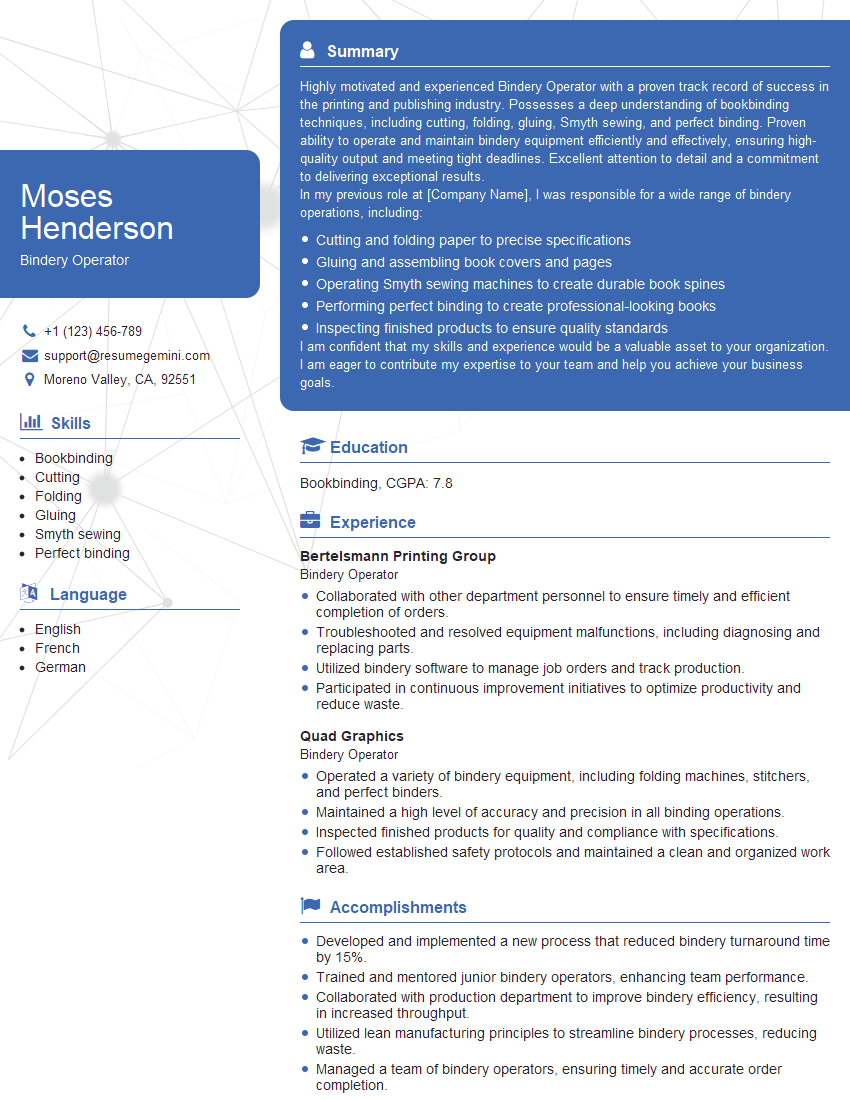
Mastering hard cover binding opens doors to exciting career opportunities in publishing, printing, and bookbinding. A strong understanding of these techniques demonstrates valuable skills and attention to detail, highly sought after by employers. To maximize your job prospects, create an ATS-friendly resume that highlights your expertise. ResumeGemini is a trusted resource to help you build a professional and impactful resume. We offer examples of resumes tailored to the hard cover binding industry to guide you in crafting your own compelling application.
Explore more articles
Users Rating of Our Blogs
Share Your Experience
We value your feedback! Please rate our content and share your thoughts (optional).
What Readers Say About Our Blog
good