Preparation is the key to success in any interview. In this post, we’ll explore crucial Harvesting Yield Optimization interview questions and equip you with strategies to craft impactful answers. Whether you’re a beginner or a pro, these tips will elevate your preparation.
Questions Asked in Harvesting Yield Optimization Interview
Q 1. Explain the concept of ‘harvest index’ and its significance in yield optimization.
The harvest index is a crucial concept in yield optimization. It’s simply the ratio of economic yield (the part of the plant we harvest, like grains or fruits) to the total biomass produced by the plant. A higher harvest index means a larger proportion of the plant’s energy is going into the parts we want, leading to increased efficiency and yield.
For example, imagine two wheat plants. Both produce the same total biomass, but Plant A has a harvest index of 0.5 (50% of its biomass is grain), while Plant B has a harvest index of 0.3 (30% is grain). Plant A is clearly more efficient and will produce a higher grain yield. Improving the harvest index is a key target in crop breeding and management programs, as it directly translates to more harvestable product per unit of resources used.
Q 2. Describe different methods for assessing crop health and predicting yield.
Assessing crop health and predicting yield involves a combination of techniques. Visual inspections are a starting point, allowing farmers to identify obvious signs of stress like disease or nutrient deficiency. More sophisticated methods include:
- Remote Sensing: Drones or satellites equipped with sensors capture images and spectral data that can reveal hidden crop stress. Analysis of this data can provide insights into plant vigor, water stress, and nutrient levels, ultimately helping to predict yield.
- Ground-Based Sensors: These devices, placed directly in the field, measure soil moisture, temperature, and other factors. This data, combined with weather information, can improve irrigation scheduling and predict potential yield losses.
- Crop Modeling: Sophisticated computer models integrate various data sources (weather, soil, genetics, management practices) to simulate crop growth and predict yield under different scenarios. This allows farmers to explore ‘what-if’ scenarios and optimize their strategies.
- Yield Monitoring: During harvest, yield monitors on combines provide real-time data on yield variations across the field. This information can help pinpoint areas needing improvement in future growing seasons.
These methods, often used in conjunction, paint a comprehensive picture of crop health and help farmers make data-driven decisions to optimize yield.
Q 3. What are the key factors influencing crop yield, besides genetics?
While genetics play a foundational role, numerous other factors strongly influence crop yield. These include:
- Nutrient Availability: Proper fertilization is critical. Nutrient deficiencies can severely limit growth and yield.
- Water Availability: Adequate water is essential for photosynthesis and overall plant health. Drought stress can dramatically reduce yield.
- Soil Health: Healthy soil provides optimal conditions for root growth, nutrient uptake, and water retention. Soil structure, organic matter content, and microbial activity all play crucial roles.
- Pest and Disease Management: Effective pest and disease control is vital to minimize yield losses. Integrated pest management strategies are crucial for sustainable yield improvements.
- Climate Conditions: Temperature, rainfall, and sunlight levels greatly impact crop growth and yield. Extreme weather events can cause significant losses.
- Weed Control: Weeds compete with crops for resources, reducing yield. Effective weed management strategies are essential.
Managing these factors effectively, in addition to selecting high-yielding varieties, is crucial for achieving optimal harvest yields.
Q 4. How can precision farming technologies improve harvest yield?
Precision farming technologies revolutionize yield optimization by enabling site-specific management. This means applying inputs (fertilizers, water, pesticides) precisely where and when they’re needed, maximizing efficiency and minimizing environmental impact.
- GPS-guided machinery: Enables accurate application of inputs, reducing overlap and waste.
- Variable rate technology: Allows for adjusting input rates based on real-time data on soil conditions and crop needs.
- Sensor networks: Monitor soil moisture, temperature, and other parameters, providing data for precise irrigation and fertilization scheduling.
- Remote sensing and data analytics: Provide insights into crop health and yield potential, guiding management decisions.
For example, a farmer using variable rate technology can apply more fertilizer to areas showing nitrogen deficiency, optimizing nutrient use and improving yield in those specific areas without over-fertilizing other parts of the field.
Q 5. Discuss the role of soil health in optimizing harvest yield.
Soil health is paramount for optimizing harvest yield. Healthy soil supports robust root systems, enhances nutrient uptake, improves water retention, and promotes beneficial microbial activity. Key aspects of soil health include:
- Organic Matter: High organic matter content improves soil structure, water holding capacity, and nutrient availability.
- Soil Structure: Good soil structure ensures proper aeration and drainage, promoting root growth and microbial activity.
- Biodiversity: A diverse soil microbiome contributes to nutrient cycling, disease suppression, and improved overall soil health.
- Nutrient Levels: Balanced nutrient levels are essential for optimal plant growth and yield.
Practices like cover cropping, no-till farming, and crop rotation help improve soil health, leading to increased and more sustainable yields over the long term. A farmer with healthy soil can expect more consistent yields, even during periods of stress, compared to one with degraded soil.
Q 6. Explain various irrigation techniques and their impact on yield.
Various irrigation techniques influence yield significantly. The choice depends on factors like climate, soil type, and crop water requirements.
- Flood Irrigation: Water is applied across the entire field, often inefficient and leading to waterlogging.
- Furrow Irrigation: Water flows in furrows between crop rows. Simple but can be inefficient and lead to uneven water distribution.
- Drip Irrigation: Water is delivered directly to the plant roots through a network of tubes and emitters. Very efficient, minimizing water waste and maximizing water use.
- Sprinkler Irrigation: Water is sprayed overhead, mimicking rainfall. Effective but can be less efficient than drip irrigation and susceptible to water loss through evaporation.
- Subsurface Irrigation: Water is applied below the soil surface, minimizing evaporation losses and improving water use efficiency.
Selecting the appropriate irrigation technique based on specific circumstances is crucial for maximizing yield and minimizing water consumption. For example, drip irrigation is particularly suitable for arid regions and high-value crops where water conservation and efficient nutrient delivery are critical.
Q 7. How can you use remote sensing data to improve harvest planning and execution?
Remote sensing data, acquired through satellites or drones, offers valuable insights for improved harvest planning and execution. This data provides a bird’s-eye view of the entire field, revealing spatial variations in crop health and yield potential.
- Yield Prediction: Spectral indices derived from remote sensing data can be used to predict yield at the field or even sub-field level, allowing for optimized harvest routing and resource allocation.
- Harvest Optimization: Identifying areas with high and low yields allows for prioritized harvesting, ensuring that high-yield areas are harvested first to minimize losses.
- Logistics Planning: Remote sensing data can aid in planning logistics, such as identifying optimal routes for harvesting equipment and determining the number of harvesters needed based on the spatial distribution of crop maturity.
- Post-Harvest Analysis: Remote sensing data acquired before and after harvest can be used to assess the impact of various management practices on yield, providing valuable feedback for future seasons.
By integrating remote sensing data with other sources of information, farmers can make informed decisions throughout the growing season and harvest period, ultimately leading to more efficient and profitable harvests.
Q 8. Describe your experience with yield mapping and its applications.
Yield mapping is a precision agriculture technique that uses GPS-enabled machinery and sensors to create a map of a field, showing the variation in crop yield across different areas. This allows farmers to pinpoint high-yielding and low-yielding zones. Imagine it like a detailed heatmap of your field’s productivity.
My experience includes extensive work with yield monitors on combines, generating yield maps for various crops like corn, soybeans, and wheat. We use this data to identify patterns and understand the factors influencing yield variations. For example, a lower-yielding area might indicate issues like poor soil drainage, nutrient deficiency, or pest infestation. This targeted information guides future management decisions, making resource allocation much more efficient.
Applications extend beyond identifying problem areas. We use yield maps to:
- Variable rate fertilization: Apply fertilizer precisely to match the needs of each zone, optimizing nutrient use and reducing environmental impact.
- Site-specific management: Tailor irrigation, pest control, and other practices to specific areas based on their yield potential.
- Data analysis for long-term planning: Track yield trends over years to identify long-term patterns, helping in crop rotation and varietal selection.
Q 9. What are the major challenges in post-harvest handling and how can they be mitigated?
Post-harvest handling is crucial for preserving crop quality and minimizing losses. Major challenges include:
- Mechanical damage: Rough handling during harvesting and transportation can lead to bruising, cuts, and other damage, reducing the marketability and shelf life of produce. For example, improperly adjusted combine settings can lead to significant grain breakage.
- Spoilage and decay: Inadequate storage conditions (temperature, humidity) promote fungal and bacterial growth, causing rapid deterioration. A lack of proper ventilation in storage facilities can lead to increased moisture and the subsequent development of molds.
- Pest infestation: Infestation by insects, rodents, and other pests leads to losses, contamination, and reduced quality. This is particularly crucial for grains and stored produce.
- Inefficient processing: Inefficient cleaning, sorting, and grading can lead to significant yield losses and reduced product quality.
Mitigation strategies involve:
- Careful handling: Proper training of workers, use of appropriate equipment (e.g., gentle conveyors), and optimized harvesting techniques to minimize mechanical damage.
- Controlled environment storage: Utilizing cold storage, controlled atmosphere storage, and proper ventilation to slow down spoilage.
- Pest management: Implementing effective pest control measures, including sanitation, fumigation, and the use of appropriate pesticides.
- Improved processing techniques: Investment in modern processing equipment and efficient sorting systems to minimize losses during processing.
Q 10. Explain the importance of data analytics in harvesting yield optimization.
Data analytics is the backbone of modern harvesting yield optimization. It allows us to move beyond simple observations to a data-driven approach. Think of it as using advanced detective work to uncover hidden patterns in your field’s performance.
By analyzing data from various sources (yield maps, soil sensors, weather data, etc.), we can identify correlations, predict yields, and fine-tune management practices. For example, data analytics can reveal that a specific soil type combined with a particular planting density consistently leads to higher yields under certain weather conditions. This enables precise adjustments for improved outcomes.
Specifically, data analytics helps in:
- Identifying limiting factors: Pinpointing specific factors (e.g., nutrient deficiency, water stress, pest pressure) restricting yield.
- Predictive modeling: Forecasting yields based on historical data and current conditions, enabling proactive management decisions.
- Optimizing resource allocation: Efficiently allocating resources like water, fertilizers, and pesticides based on precise needs.
- Improving decision-making: Providing data-driven insights to support strategic planning and operational efficiency.
Q 11. How can you integrate various data sources (e.g., weather, soil sensors) for yield prediction?
Integrating diverse data sources for yield prediction involves using sophisticated statistical models and machine learning techniques. Imagine a complex puzzle where each data source is a piece, and the complete picture is the yield prediction.
The process typically involves:
- Data acquisition: Gathering data from various sources like weather stations (temperature, rainfall, humidity), soil sensors (moisture, nutrient levels), satellite imagery (vegetation indices), and yield monitors (historical yield data).
- Data preprocessing: Cleaning and preparing the data, handling missing values, and transforming data into a suitable format for analysis.
- Model development: Choosing an appropriate statistical model or machine learning algorithm (e.g., regression models, neural networks) to predict yield based on the integrated data.
- Model training and validation: Training the model on historical data and validating its accuracy on a separate dataset.
- Yield prediction: Using the trained model to predict yields based on current conditions and expected future weather patterns.
For instance, a model might combine soil moisture data from sensors with weather forecasts to predict potential drought stress and its impact on yield. The accuracy of such predictions depends on the quality and quantity of data, as well as the sophistication of the chosen model.
Q 12. Describe your experience with different types of harvesting equipment and their limitations.
My experience encompasses a range of harvesting equipment, including combines for grains, harvesters for fruits and vegetables, and specialized equipment for specific crops. Each type has its strengths and limitations.
For example, combines are highly efficient for large-scale grain harvesting but can cause significant losses if not properly adjusted for different crop types and conditions. Fruit harvesters are gentler on delicate produce but are often slower and more labor-intensive compared to combines. The choice of equipment depends on crop type, scale of operation, terrain, and budget.
Limitations often include:
- Cost: High initial investment costs, especially for advanced equipment with GPS and automation features.
- Maintenance: Regular maintenance and repair are critical to ensure optimal performance and minimize losses.
- Operational expertise: Skilled operators are required to maximize efficiency and minimize damage.
- Environmental impact: Certain types of equipment (e.g., large combines) can have significant environmental impacts, including soil compaction and fuel consumption.
- Crop-specific limitations: Some harvesters are designed for specific crops and are not suitable for others.
Q 13. How do you identify and address nutrient deficiencies that impact crop yield?
Identifying nutrient deficiencies starts with careful observation of crop symptoms, supplemented by soil and tissue testing. Think of it like a doctor diagnosing a patient: we look for visible clues and then conduct tests to confirm.
Visual symptoms: Chlorosis (yellowing) or necrosis (tissue death) can indicate specific nutrient deficiencies. For example, nitrogen deficiency often results in pale green or yellow leaves, while phosphorus deficiency might manifest as stunted growth and dark green leaves. These symptoms are often crop-specific.
Soil testing: Provides information about the overall nutrient content of the soil. We analyze samples to determine the levels of essential nutrients like nitrogen, phosphorus, potassium, and micronutrients.
Tissue testing: Analyzing plant tissues (leaves, stems) to assess nutrient uptake and identify deficiencies even if soil levels appear adequate. This method provides a direct measure of nutrient availability to the plant.
Addressing deficiencies: Once identified, deficiencies are addressed through:
- Fertilization: Applying fertilizers containing the deficient nutrients, often tailored to specific needs based on soil and tissue tests.
- Soil amendments: Improving soil structure and fertility through practices like adding organic matter (e.g., compost) to enhance nutrient availability.
- Crop rotation: Rotating crops to improve soil health and nutrient balance.
Q 14. What are your strategies for optimizing planting density and spacing?
Optimizing planting density and spacing is a critical factor influencing yield. It’s about finding the ‘Goldilocks’ zone – not too crowded, not too sparse. Think of it like arranging seedlings in a garden; too close and they compete for resources, too far and you waste space.
Factors influencing optimal density and spacing include:
- Crop type: Different crops have different requirements based on their growth habit and resource needs.
- Soil type and fertility: Richer soils may support higher densities compared to less fertile soils.
- Climate: Hotter and drier climates may benefit from lower densities to reduce competition for water.
- Variety: Different varieties of the same crop may have different optimal planting densities.
Strategies for optimization:
- Field trials: Conducting small-scale trials to test different planting densities and spacing patterns under local conditions.
- Simulation modeling: Using computer simulations to predict yield responses to different planting densities based on environmental factors.
- Precision planting technology: Using GPS-guided planting equipment to ensure consistent spacing and density across the field.
- Data analysis: Analyzing historical yield data to identify optimal planting densities for different zones within a field.
Q 15. Explain your approach to managing pests and diseases to protect yield.
Managing pests and diseases is crucial for maximizing harvest yield. My approach is multifaceted and relies on a combination of preventative measures and reactive strategies. It’s like being a detective, constantly monitoring for threats and deploying the right countermeasures.
Preventative Measures: This includes implementing robust crop rotation to disrupt pest life cycles, selecting disease-resistant crop varieties, and maintaining optimal field hygiene to minimize disease spread. For example, rotating between corn, soybeans, and wheat can significantly reduce the build-up of specific pests and diseases in the soil.
Monitoring and Early Detection: Regular scouting of fields – visually inspecting plants for signs of infestation or disease – is critical for early detection. This allows for timely intervention before significant yield losses occur. Using tools like pheromone traps to monitor insect populations aids in this process.
Integrated Pest Management (IPM): IPM is the cornerstone of my approach. It prioritizes the use of biological control agents (like beneficial insects or nematodes) and cultural practices before resorting to chemical pesticides. This reduces the environmental impact and the risk of developing pesticide resistance. For instance, introducing ladybugs to control aphid populations is a highly effective IPM technique.
Chemical Control (as a last resort): When necessary, I use chemical pesticides judiciously, following label instructions carefully and employing the least toxic option to minimize environmental impact and protect beneficial organisms.
This integrated strategy ensures a sustainable and effective pest and disease management program, maximizing yield while minimizing risks.
Career Expert Tips:
- Ace those interviews! Prepare effectively by reviewing the Top 50 Most Common Interview Questions on ResumeGemini.
- Navigate your job search with confidence! Explore a wide range of Career Tips on ResumeGemini. Learn about common challenges and recommendations to overcome them.
- Craft the perfect resume! Master the Art of Resume Writing with ResumeGemini’s guide. Showcase your unique qualifications and achievements effectively.
- Don’t miss out on holiday savings! Build your dream resume with ResumeGemini’s ATS optimized templates.
Q 16. How do you evaluate the ROI of different yield optimization techniques?
Evaluating the ROI of yield optimization techniques requires a careful cost-benefit analysis. It’s like comparing different investment options – you need to weigh the potential returns against the initial investment.
Cost Assessment: This includes the cost of inputs (seeds, fertilizers, pesticides, labor), equipment, and any specialized technologies employed. For example, precision agriculture technologies like GPS-guided tractors have initial high costs, but potential long-term savings in fuel and fertilizer.
Yield Increase Measurement: Accurate yield data is essential. This involves precise yield mapping, which can be achieved through manual harvesting and weighing or by employing advanced yield monitors on harvesting equipment.
Benefit Calculation: The increased yield is translated into a monetary value based on market prices. Subtracting the costs from the increased revenue gives the net profit.
ROI Calculation: The ROI is calculated as (Net Profit / Total Investment) * 100%. A higher ROI indicates a more effective and profitable yield optimization technique.
Risk Assessment: It’s vital to assess the risks associated with each technique. For instance, a drought-resistant crop variety might have higher initial costs, but it offers better protection against yield losses from unpredictable weather.
By carefully evaluating these factors, we can make data-driven decisions about which yield optimization techniques will provide the greatest return on investment for a specific farm or growing operation.
Q 17. Describe your experience using crop modeling software.
Crop modeling software has become an indispensable tool in modern agriculture. I have extensive experience using various programs, such as DSSAT and APSIM, to simulate crop growth and predict yields under different conditions. It’s like having a crystal ball for agriculture.
Scenario Planning: I use these tools to explore the impact of different management practices (e.g., varying planting density, fertilization rates, irrigation schedules) on yield. This allows for optimizing strategies before implementation in the field, reducing risks and maximizing potential.
Climate Change Adaptation: These models are invaluable for assessing the vulnerability of crops to climate change impacts, such as increased temperatures, altered rainfall patterns, and more frequent extreme weather events. We can then explore options to adapt to these challenges.
Precision Agriculture Integration: Many crop modeling softwares integrate with precision agriculture technologies, allowing for site-specific management recommendations based on factors such as soil variability and yield history. This maximizes the efficiency of resource utilization.
Data Analysis and Visualization: The software provides comprehensive data analysis and visualization capabilities, helping us to identify trends and patterns in crop growth and yield, and to refine management strategies accordingly.
By leveraging the power of crop modeling software, we can make more informed decisions, enhance efficiency, and improve the sustainability of agricultural practices.
Q 18. How do you handle unexpected weather events during harvest?
Unexpected weather events during harvest can significantly impact yields. My approach is to be prepared and adapt quickly to changing conditions. It’s a bit like navigating a stormy sea – you need to be flexible and have a plan B.
Weather Monitoring: Constant monitoring of weather forecasts is critical. This allows for proactive adjustments to harvesting plans, such as speeding up harvesting operations if rain is imminent or delaying if conditions are too harsh.
Harvesting Equipment Readiness: Ensuring harvesting equipment is in top condition and ready to operate efficiently is paramount. This includes regular maintenance and timely repairs.
Alternative Harvesting Strategies: Having alternative strategies in place is crucial for mitigating potential losses. This might involve adjusting harvesting parameters (e.g., changing combine settings to minimize grain losses in wet conditions) or employing alternative harvesting techniques.
Post-Harvest Management: Proper post-harvest handling and storage is vital to minimize losses after the harvest is completed. This includes drying grain promptly to prevent spoilage and ensuring adequate storage facilities to protect the harvested yield.
Being prepared and adaptable allows us to minimize the impact of unexpected weather events and secure as much of the yield as possible, even under challenging circumstances.
Q 19. What are the key metrics you use to track and evaluate harvest yield performance?
Tracking and evaluating harvest yield performance relies on a suite of key metrics. It’s like having a dashboard that shows the performance of your agricultural operation.
Yield per unit area (e.g., bushels per acre): This is the most fundamental metric, indicating the overall productivity of the crop.
Harvest index: This represents the proportion of total biomass that is harvested as grain. A higher harvest index signifies efficient resource allocation.
Grain quality parameters: This includes factors like moisture content, protein content, and test weight, which directly impact the market value of the harvest.
Harvest efficiency: This measures the speed and effectiveness of the harvesting operation, considering factors like machine downtime and losses during harvesting.
Cost per unit of yield: This metric calculates the cost of production relative to the yield obtained, providing insights into the profitability of the operation.
By monitoring these metrics, I can identify areas for improvement, optimize resource allocation, and ultimately enhance the overall efficiency and profitability of the harvest.
Q 20. Explain your knowledge of different crop varieties and their yield potential.
Understanding different crop varieties and their yield potential is paramount for maximizing returns. It’s like choosing the right tools for the job.
Variety Selection Criteria: My choice of crop variety is based on several factors, including yield potential under specific environmental conditions, disease and pest resistance, maturity date, and quality characteristics. For example, choosing a drought-tolerant variety in arid regions is critical.
Adapting to Climate: Selecting varieties that are adapted to the local climate and soil conditions is essential for achieving optimal yields. This might involve using heat-tolerant varieties in hotter regions or varieties resistant to specific soilborne diseases.
Hybrid vs. Open-Pollinated Varieties: I consider the trade-offs between hybrid varieties (often higher yielding but requiring new seed purchases annually) and open-pollinated varieties (potentially lower yielding but allowing for seed saving). This choice depends on the specific circumstances and goals of the operation.
Variety Trials: I leverage data from variety trials and on-farm demonstrations to assess the performance of different varieties in real-world conditions before making large-scale planting decisions.
This ensures the best possible match between crop variety and environment, resulting in the highest possible yield.
Q 21. Describe your experience with sustainable agriculture practices for yield optimization.
Sustainable agriculture practices are not just an ethical imperative, they’re also crucial for long-term yield optimization. It’s about building a healthy and productive system for the future.
Soil Health Management: Practices like cover cropping, no-till farming, and crop rotation improve soil structure, fertility, and water retention, leading to healthier plants and higher yields. Cover crops, for example, prevent soil erosion and add nutrients back into the soil.
Integrated Pest Management (IPM): Minimizing reliance on chemical pesticides is crucial for long-term sustainability and protecting beneficial insects and pollinators, contributing to healthier ecosystems.
Precision Agriculture: Using technology to optimize inputs like water and fertilizer reduces waste and environmental impact while maximizing the efficiency of resource utilization.
Water Management: Employing efficient irrigation techniques like drip irrigation helps reduce water consumption while providing crops with the necessary water for optimal growth.
Biodiversity Enhancement: Maintaining diverse plant communities within and around the farm supports beneficial insects, pollinators, and other organisms, creating a healthier and more resilient agroecosystem.
By adopting sustainable practices, we can build a more resilient, environmentally friendly, and profitable agricultural system, securing higher and more consistent yields over the long term.
Q 22. How do you assess the impact of climate change on harvest yield and implement adaptation strategies?
Assessing the impact of climate change on harvest yield requires a multi-faceted approach. We begin by analyzing historical yield data alongside climate data (temperature, rainfall, extreme weather events) to identify correlations. This might involve statistical modeling to predict future yield reductions under various climate change scenarios. For example, we might find a strong negative correlation between prolonged drought periods and wheat yield in a specific region.
Adaptation strategies are then implemented based on these findings. These strategies might include:
- Shifting planting dates: Adjusting planting schedules to avoid periods of predicted extreme heat or drought.
- Selecting climate-resilient crop varieties: Utilizing crop breeds that are more tolerant to drought, heat stress, or pests exacerbated by climate change. This often involves working with plant breeders and agricultural research institutions.
- Implementing water-efficient irrigation techniques: Adopting drip irrigation or other methods to minimize water waste and improve water use efficiency. This is especially crucial in arid and semi-arid regions.
- Improving soil health: Healthy soils have better water retention and nutrient cycling capacity, enhancing resilience to climate variability. Practices like cover cropping and no-till farming are beneficial.
- Diversifying crops: Planting a range of crops can reduce the risk of widespread yield losses due to climate-related events affecting a single crop.
For instance, in a region prone to increased flooding, we might advise farmers to switch to flood-tolerant rice varieties and implement improved drainage systems.
Q 23. Explain your understanding of different soil types and their influence on crop growth.
Understanding soil types is fundamental to yield optimization. Different soils vary significantly in their physical and chemical properties, directly affecting crop growth. These properties include:
- Texture: The proportion of sand, silt, and clay dictates water retention, drainage, and aeration. Sandy soils drain quickly, while clay soils retain water but can become compacted.
- Structure: The arrangement of soil particles influences root penetration and water movement. Good soil structure allows for adequate aeration and root growth.
- pH: The acidity or alkalinity of the soil affects nutrient availability. Most crops thrive within a specific pH range.
- Nutrient content: The levels of essential nutrients like nitrogen, phosphorus, and potassium impact crop yields. Deficiencies can be addressed through fertilization.
- Organic matter content: Organic matter improves soil structure, water retention, and nutrient availability.
For example, a farmer cultivating tomatoes in sandy soil would need to implement frequent irrigation and consider using organic matter to improve water retention. In contrast, a farmer with clay soil might need to address drainage issues to prevent root rot.
Soil testing is crucial for determining the specific characteristics of a field, allowing for tailored management practices optimized for each soil type. This involves analyzing samples to determine texture, pH, and nutrient content.
Q 24. How do you balance yield optimization with environmental sustainability?
Balancing yield optimization with environmental sustainability is a crucial aspect of modern agriculture. The goal is not just to maximize yields but to do so in a way that minimizes negative environmental impacts. This requires a holistic approach integrating various strategies:
- Precision agriculture techniques: Utilizing GPS, sensors, and data analytics to optimize fertilizer and pesticide application, reducing waste and environmental pollution.
- Integrated pest management (IPM): Implementing environmentally friendly methods to control pests, minimizing the use of harmful pesticides.
- Conservation tillage: Reducing soil disturbance through no-till or minimal tillage practices, improving soil health and reducing erosion.
- Cover cropping: Planting cover crops during fallow periods to improve soil health, prevent erosion, and suppress weeds.
- Crop rotation: Rotating different crops in a field helps to maintain soil fertility, reduce pest and disease pressure, and improve soil health.
- Water management: Implementing efficient irrigation techniques to minimize water waste and conserve water resources.
For instance, a farmer might use precision agriculture to apply nitrogen fertilizer only where needed, reducing nitrogen runoff into waterways. This balances the need for high yields with minimizing the environmental impact of fertilizer overuse.
Q 25. Describe your experience in using GIS for field mapping and yield analysis.
Geographic Information Systems (GIS) are invaluable tools for field mapping and yield analysis. I have extensive experience using GIS software (e.g., ArcGIS, QGIS) to:
- Create field maps: Mapping field boundaries, soil types, elevation, and other relevant features.
- Analyze yield data: Overlaying yield data on field maps to identify areas of high and low productivity.
- Assess environmental factors: Integrating data on climate, soil conditions, and other environmental factors to identify areas suitable for specific crops.
- Optimize resource allocation: Using GIS to plan efficient fertilizer and pesticide application, irrigation scheduling, and harvesting routes.
- Monitor crop health: Integrating remotely sensed data (e.g., from drones or satellites) into GIS for monitoring crop health and identifying stress factors.
For example, in a large farming operation, I used GIS to map yield variations across multiple fields. By overlaying soil data and elevation maps, I identified areas with poor drainage leading to reduced yields. This information allowed for targeted interventions like drainage improvements and soil amendment in specific areas, leading to a significant yield increase.
Q 26. How do you ensure accurate data collection and processing for yield optimization?
Accurate data collection and processing are paramount for effective yield optimization. This involves a multi-step process:
- Standardized data collection methods: Using consistent methodologies for collecting data across all fields, using calibrated equipment for yield monitoring.
- Data validation and quality control: Implementing checks to ensure data accuracy and consistency, identifying and correcting errors.
- Data integration: Combining data from various sources (e.g., yield monitors, weather stations, soil sensors) into a unified database.
- Data analysis and interpretation: Utilizing statistical methods and data visualization techniques to extract meaningful insights from the data.
- Data security and management: Implementing appropriate security measures to protect data integrity and confidentiality.
For instance, before starting data collection, we calibrate all yield monitors to ensure consistent measurement across different harvesters. We also use automated checks to identify outliers or inconsistencies in the data which may indicate malfunctioning equipment. This ensures the data used for analysis is reliable.
Q 27. What are your strategies for improving the efficiency of harvesting operations?
Improving the efficiency of harvesting operations involves optimizing various aspects of the process:
- Equipment selection and maintenance: Choosing appropriate harvesting equipment for the specific crop and field conditions, ensuring regular maintenance to minimize downtime.
- Optimized harvesting routes: Planning efficient harvesting routes to minimize travel time and fuel consumption. This often involves using GPS-guided equipment and field mapping software.
- Efficient labor management: Optimizing the number of workers and their tasks to maximize productivity.
- Real-time monitoring and control: Utilizing technology such as GPS tracking and yield monitoring systems to monitor harvesting progress and make adjustments as needed.
- Post-harvest handling and storage: Efficiently transporting and storing the harvested crop to minimize losses and maintain quality.
For example, using GPS-guided harvesters can reduce overlaps and missed areas, significantly increasing harvesting efficiency. Regular equipment maintenance ensures minimal downtime, contributing to faster and smoother harvesting operations. Proper post-harvest handling also minimizes spoilage, leading to improved yields.
Key Topics to Learn for Harvesting Yield Optimization Interview
- Crop Physiology and Growth Stages: Understanding the impact of plant development on yield potential and the optimal harvesting windows.
- Harvesting Techniques and Equipment: Familiarize yourself with various harvesting methods (e.g., mechanical, manual) and their implications on yield and quality. Analyze the efficiency and cost-effectiveness of different equipment.
- Data Acquisition and Analysis: Learn to interpret yield data from various sources (sensors, field records, etc.) to identify trends and areas for improvement. Mastering data visualization techniques is crucial.
- Precision Agriculture and Technology: Explore the use of GPS, remote sensing, and other technologies to optimize harvesting strategies and minimize losses.
- Post-Harvest Handling and Storage: Understand the processes involved in handling and storing harvested crops to maintain quality and minimize spoilage, impacting overall yield value.
- Yield Modeling and Prediction: Develop an understanding of using statistical models and predictive analytics to forecast yields and optimize harvesting schedules.
- Economic and Financial Analysis: Assess the cost-benefit analysis of different harvesting strategies and their impact on profitability.
- Sustainability and Environmental Impact: Understand the environmental considerations associated with harvesting practices and explore methods for sustainable yield optimization.
- Problem-Solving and Decision-Making: Practice applying your knowledge to real-world scenarios, focusing on identifying challenges, analyzing data, and developing effective solutions.
Next Steps
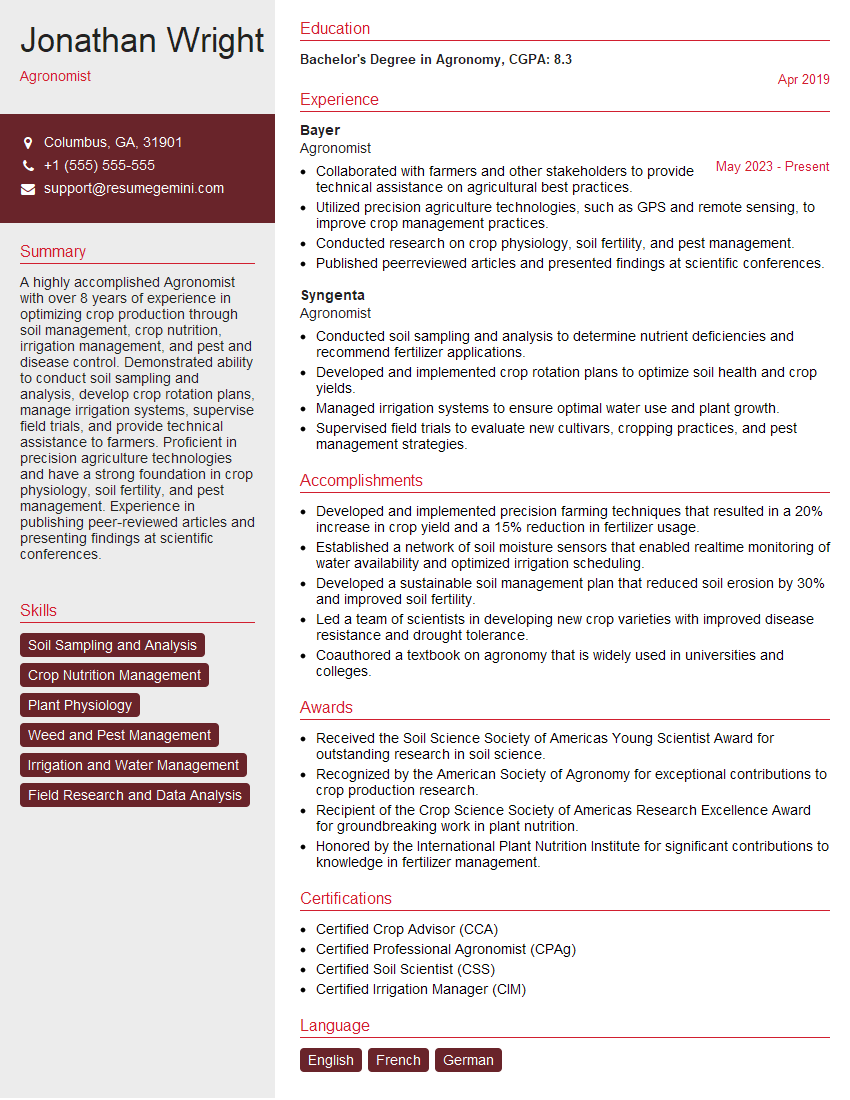
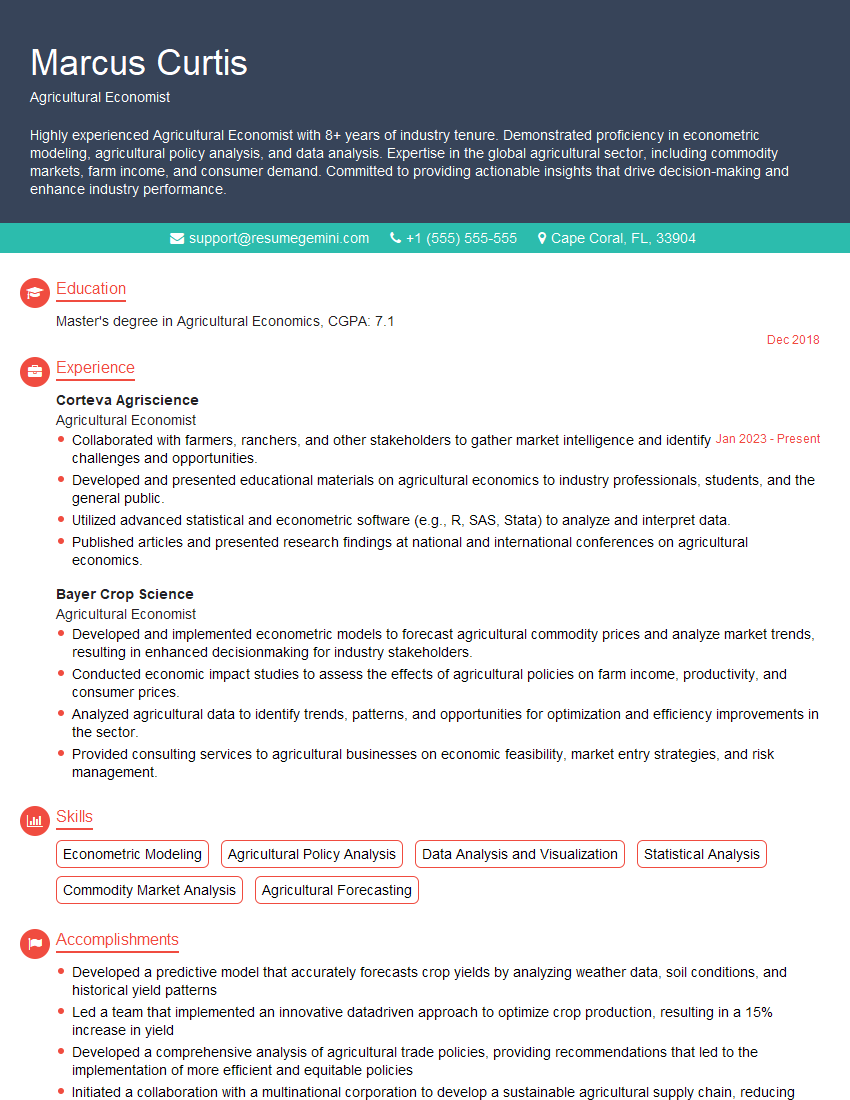
Mastering Harvesting Yield Optimization is crucial for career advancement in the agricultural technology sector, opening doors to exciting roles with significant impact. A strong resume is your key to unlocking these opportunities. Creating an ATS-friendly resume is vital for ensuring your application gets noticed. To help you build a compelling and effective resume, we recommend using ResumeGemini. ResumeGemini provides a user-friendly platform to craft a professional document that highlights your skills and experience. Examples of resumes tailored to Harvesting Yield Optimization are available to guide you.


Explore more articles
Users Rating of Our Blogs
Share Your Experience
We value your feedback! Please rate our content and share your thoughts (optional).
What Readers Say About Our Blog
Very informative content, great job.
good