Interviews are opportunities to demonstrate your expertise, and this guide is here to help you shine. Explore the essential Hazmat Spill Response Plans interview questions that employers frequently ask, paired with strategies for crafting responses that set you apart from the competition.
Questions Asked in Hazmat Spill Response Plans Interview
Q 1. Describe the different levels of hazardous materials.
Hazardous materials are classified into different levels based on their potential health, fire, and reactivity hazards. Think of it like a spice rack – some spices are mild (like salt), while others are extremely potent (like chili peppers). Similarly, hazmats range from relatively benign to extremely dangerous.
Common classification systems use numerical or alphabetical codes (like those used by the UN, DOT, or WHMIS). These systems categorize materials based on their properties and associated risks. For example:
- Class 1: Explosives – Substances or articles that can explode and cause severe damage.
- Class 2: Gases – Compressed, liquefied, or dissolved gases that can be flammable, toxic, or oxidizing.
- Class 3: Flammable Liquids – Liquids that easily ignite and burn.
- Class 4: Flammable Solids – Solids that can easily ignite and burn.
- Class 5: Oxidizing Substances and Organic Peroxides – Substances that can cause or enhance combustion.
- Class 6: Toxic and Infectious Substances – Substances that can cause serious illness or death.
- Class 7: Radioactive Materials – Materials that emit ionizing radiation.
- Class 8: Corrosive Substances – Substances that can cause severe damage to living tissue or materials.
- Class 9: Miscellaneous Dangerous Goods – Substances or articles that do not fall into other classes but still pose significant hazards.
Understanding these classes is crucial for determining the appropriate response measures.
Q 2. Explain the process for identifying an unknown hazardous material.
Identifying an unknown hazardous material requires a systematic approach, combining observation with the use of specialized tools and resources. Imagine you’ve discovered a suspicious substance; your first step is to carefully observe it.
- Visual Inspection: Note its physical state (solid, liquid, gas), color, odor, and any visible markings (labels, markings on containers).
- Information Gathering: Look for any accompanying documentation, shipping manifests, or safety data sheets (SDS).
- Field Test Kits: Use commercially available test kits designed to identify specific substances. These kits provide a preliminary indication of the material’s properties (e.g., pH, flammability).
- Laboratory Analysis: Send samples to a certified laboratory for more definitive identification. This is essential when dealing with dangerous or unknown substances, as this level of identification helps determine exact composition, including the concentration of any hazards present.
- Emergency Response Teams: Contact your local emergency response teams; they have the expertise and equipment to identify hazardous materials safely.
Safety is paramount throughout this process. Always prioritize your safety and the safety of others. Never attempt to handle an unknown substance without proper training and protective equipment.
Q 3. What are the key components of a comprehensive Hazmat Spill Response Plan?
A comprehensive Hazmat Spill Response Plan is like a detailed emergency plan for your specific facility. It must be customized to the potential hazards present in your area and must include:
- Pre-Planning and Prevention: Identifying potential hazards, establishing procedures for preventing spills, and developing emergency response procedures.
- Spill Reporting and Notification: Defining protocols for reporting spills to appropriate authorities (e.g., fire department, environmental agencies) and emergency contacts.
- Site Security and Control: Establishing procedures for securing the spill site, preventing unauthorized access, and evacuating personnel if necessary. This includes designating safety zones and establishing a command post.
- Personnel Roles and Responsibilities: Clearly defining the responsibilities of personnel involved in spill response, including emergency response team members, first responders, and supervisors.
- Equipment and Resources: Identifying and maintaining necessary equipment and supplies (e.g., spill kits, absorbent materials, PPE).
- Spill Containment and Control Measures: Describing specific methods for containing and controlling spills, based on the type of hazardous material involved.
- Decontamination Procedures: Outlining methods for decontaminating personnel and equipment after exposure to hazardous materials.
- Waste Disposal: Detailing procedures for the proper disposal of contaminated materials and waste.
- Training and Drills: Regular training and drills to ensure personnel are well-prepared to respond effectively in real-world scenarios.
- Post-Spill Activities: Procedures for documenting the incident, evaluating the response, and taking corrective actions to prevent future spills.
Regular review and updates are crucial to ensure its effectiveness.
Q 4. How do you determine the appropriate personal protective equipment (PPE) for a specific spill?
Selecting the appropriate PPE for a specific spill depends entirely on the hazardous material involved. It’s a crucial step, as the wrong PPE can lead to serious injury or even death. Think of PPE as your armor against the threat.
The SDS for the hazardous material will provide critical information to determine the appropriate PPE. Common types of PPE include:
- Respiratory Protection: Respirators, including air-purifying respirators (APRs) or supplied-air respirators (SARs), depending on the hazard.
- Eye Protection: Safety glasses, goggles, or face shields, to protect against splashes or fumes.
- Skin Protection: Gloves, coveralls, boots, and aprons made from appropriate materials, resistant to the specific chemical.
- Hearing Protection: Earplugs or earmuffs if the spill involves loud machinery or equipment.
Always consult the SDS for specific recommendations. Remember, PPE selection is not a one-size-fits-all approach; it’s material-specific.
Q 5. Outline the steps involved in containing a Hazmat spill.
Containing a hazmat spill involves a series of steps focused on preventing further spread and minimizing exposure. It’s a race against time to limit the damage.
- Isolate the Area: Establish a perimeter around the spill to prevent unauthorized access and further contamination. This is your first line of defense.
- Assess the Situation: Identify the hazardous material, its quantity, and the potential impact on the environment and personnel.
- Control the Source: If possible and safe to do so, stop the leak or source of the spill. This could involve shutting off valves, plugging holes, or removing the source.
- Contain the Spill: Use appropriate containment methods, such as absorbent materials, booms, dams, or berms, to prevent the spread of the spill. The method chosen depends on the material and environment.
- Notify Authorities: Contact the appropriate emergency response teams and regulatory agencies immediately. Timely notification is essential.
Remember that safety is paramount; never put yourself or others at risk. Prioritize evacuation and securing the area before taking any action.
Q 6. Explain the procedures for neutralizing a hazardous material.
Neutralizing a hazardous material is a specialized process that should only be performed by trained professionals with the proper equipment. It’s not a DIY project; improper neutralization can worsen the situation or create new hazards.
Neutralization techniques vary significantly depending on the hazardous material. Some common methods include:
- Dilution: In some cases, carefully diluting the hazardous material with water or another suitable solvent can reduce its concentration and its hazard potential.
- Chemical Reaction: Adding a neutralizing agent that reacts chemically with the hazardous material to render it less harmful.
- Absorption: Using absorbent materials to soak up the spill. This technique is most frequently used as an initial containment and control method rather than a neutralization.
It’s crucial to consult the SDS and seek expert advice before attempting any neutralization procedure. Incorrect neutralization can create new and possibly more dangerous substances.
Q 7. Describe the process for properly disposing of hazardous materials after a spill.
Proper disposal of hazardous materials after a spill is critical for protecting human health and the environment. The disposal process must comply with all applicable federal, state, and local regulations. There’s no room for shortcuts.
The steps involved usually include:
- Segregation: Separating the hazardous waste from other materials to prevent cross-contamination.
- Packaging: Placing the waste into appropriate containers that are compatible with the hazardous material and meet regulatory requirements.
- Labeling: Clearly labeling the containers with the appropriate hazard warnings and identifying the contained waste material.
- Manifest: Preparing a manifest (shipping document) detailing the type and quantity of waste, the generator, and the designated disposal facility.
- Transportation: Transporting the waste to a licensed hazardous waste disposal facility. This must be done by a licensed transporter who follows all applicable safety regulations.
- Disposal: The facility then follows proper procedures based on the waste type for ultimate disposal.
It’s essential to work with a licensed and permitted hazardous waste disposal facility to ensure compliance with all regulations.
Q 8. How do you assess the environmental impact of a Hazmat spill?
Assessing the environmental impact of a Hazmat spill involves a systematic approach, combining immediate on-site observation with more in-depth analysis. Initially, we identify the spilled material, its quantity, and the affected environment – soil, water bodies, air. We then determine the material’s properties: its toxicity, persistence (how long it remains hazardous), and mobility (how easily it spreads). For example, a spill of gasoline will rapidly evaporate and potentially contaminate groundwater, while a spill of heavy metal compounds could persist in the soil for decades, posing a long-term threat to soil organisms and potentially leaching into water sources.
Next, we conduct sampling and analysis to quantify the extent of contamination. This may involve soil testing, water quality analysis, and air monitoring. We use this data to model the spread of contamination and predict its long-term effects on the ecosystem. Factors considered include the prevailing weather conditions (wind speed, rainfall), topography, and the presence of sensitive ecological areas like wetlands or endangered species habitats. Finally, we assess the potential impact on human health, considering both direct exposure and indirect exposure through contaminated food chains or drinking water.
Consider a scenario involving a chemical spill into a river. We would not only measure the immediate concentration of the chemical in the water but also look at downstream impacts, assessing the potential harm to aquatic life and the possibility of contamination reaching drinking water supplies further down the river. This requires a detailed understanding of the river’s hydrology and the ecological community that relies on it.
Q 9. What are the legal and regulatory requirements for reporting a Hazmat spill?
Reporting a Hazmat spill is governed by stringent legal and regulatory requirements, varying by jurisdiction but generally involving immediate notification to relevant authorities. In the United States, for instance, the primary regulations are under the Comprehensive Environmental Response, Compensation, and Liability Act (CERCLA), also known as Superfund, and the Emergency Planning and Community Right-to-Know Act (EPCRA). These laws mandate reporting thresholds based on the quantity and type of hazardous material spilled.
The reporting process typically begins immediately upon discovery of the spill. We must identify the spilled substance, estimate the quantity spilled, and determine the potential for environmental and public health impacts. Notification is usually made via phone to emergency services (e.g., 911) and then followed by written reports to environmental agencies, such as the EPA (Environmental Protection Agency) or state-level equivalents. Failure to comply with these reporting requirements can result in significant penalties, including fines and legal action. Timely and accurate reporting is crucial for initiating effective response actions and minimizing harm.
For example, a spill exceeding a certain reportable quantity (RQ) of a specific hazardous substance might require immediate notification to the National Response Center (NRC) in the US, along with the local fire department and other relevant agencies. The specific requirements will depend on the nature of the hazardous material and the size of the spill.
Q 10. Explain the role of different agencies in a Hazmat spill response.
Hazmat spill response involves a coordinated effort by multiple agencies, each with specialized roles and responsibilities. The exact agencies involved will depend on the location and the nature of the spill, but common participants include:
- Emergency responders (fire department, police): First on the scene, they secure the area, protect public safety, and initiate initial containment measures.
- Environmental agencies (EPA, state equivalents): Oversee environmental assessment and remediation, ensuring compliance with environmental regulations.
- Transportation agencies (DOT, state equivalents): Involved in spills involving transportation incidents, managing the removal of damaged vehicles and ensuring transportation safety.
- Health agencies (CDC, state health departments): Assess public health risks, provide medical assistance if needed, and potentially issue health advisories.
- Specialized contractors: Often hired for cleanup, remediation, and waste disposal, bringing expertise in handling specific hazardous materials.
Effective communication and coordination between these agencies are vital for a successful response. Incident command systems (ICS) are frequently employed to ensure a unified and efficient response effort, establishing clear roles and responsibilities for each agency involved. For example, in a large-scale chemical spill, the EPA might lead the environmental assessment and remediation efforts, while the state health department monitors public health risks and coordinates medical responses.
Q 11. Describe your experience with using various spill control equipment.
My experience encompasses a wide range of spill control equipment, including absorbent materials (like booms, pads, and pillows) for containing liquid spills, various types of containment structures (dikes, berms) for preventing the spread of contaminants, and specialized equipment for specific hazardous materials. I’ve worked with vacuum trucks for removing liquids, high-pressure washers for cleaning contaminated surfaces, and specialized equipment for handling hazardous waste.
For instance, in responding to a fuel spill, I have used absorbent booms to contain the spread of the fuel across a waterway, followed by the deployment of absorbent pads to soak up the fuel. Then, we used vacuum trucks to collect the contaminated absorbent materials for disposal at a hazardous waste facility. Similarly, in dealing with a chemical spill, the selection of appropriate equipment was critical, considering the specific chemical properties and potential hazards. This might include specialized protective clothing, containment systems designed for reactive chemicals, and the use of neutralizing agents where appropriate. Each spill requires a careful assessment to determine the most effective and safe equipment for deployment.
Q 12. How do you manage personnel safety during a Hazmat spill response?
Personnel safety is paramount during a Hazmat spill response. It’s a cornerstone of any successful and responsible operation. Our safety protocols begin with a thorough hazard assessment, identifying potential risks from the spilled material itself, the environment, and the response activities. Based on this, we select appropriate personal protective equipment (PPE), including respirators, protective suits, gloves, and eye protection.
We implement strict safety procedures, such as establishing exclusion zones to protect responders and the public, using appropriate communication systems to coordinate activities, and providing regular health monitoring for responders. Training is crucial, ensuring all personnel are well-versed in handling hazardous materials, using PPE correctly, and following emergency response procedures. Regular safety briefings and debriefings are conducted to reinforce safety protocols and address any concerns.
Furthermore, we emphasize the importance of fatigue management and stress reduction techniques. Long, intense response operations can take a toll, potentially compromising safety. We rotate personnel regularly to reduce fatigue and provide mental health support to address potential psychological impacts. In short, a multi-layered approach to safety is crucial, covering equipment, training, procedures, and well-being of our response team.
Q 13. What are the common hazards associated with specific classes of hazardous materials?
Hazardous materials are classified into various classes (e.g., according to the UN’s Globally Harmonized System of Classification and Labelling of Chemicals – GHS), each posing unique hazards.
- Class 1 (Explosives): The primary hazard is explosion or detonation, resulting in blast overpressure, fragmentation, and fire.
- Class 2 (Gases): Hazards include flammability, toxicity, and asphyxiation (displacement of oxygen).
- Class 3 (Flammable liquids): Fire and explosion hazards due to flammability and vapor generation.
- Class 4 (Flammable solids, spontaneously combustible materials, substances liable to spontaneous combustion): Fire hazards due to flammability, spontaneous ignition, or reaction with water.
- Class 5 (Oxidizing agents and organic peroxides): Fire hazards, often intensifying combustion of other materials.
- Class 6 (Toxic and infectious substances): Health hazards, ranging from mild irritation to severe toxicity and infectious diseases.
- Class 7 (Radioactive materials): Radiation hazards, causing various types of health effects.
- Class 8 (Corrosive substances): Chemical burns to skin, eyes, and respiratory tract.
- Class 9 (Miscellaneous dangerous goods): A catch-all category with various hazards, such as environmental toxicity and reactivity.
Understanding these hazards is crucial for selecting appropriate PPE, containment strategies, and cleanup methods. For instance, responding to a Class 6 toxic substance spill would require specialized protective clothing and careful handling to avoid exposure. In contrast, Class 3 flammable liquid spills necessitate immediate fire suppression and containment to prevent ignition.
Q 14. How do you develop an emergency response plan for a specific facility?
Developing an emergency response plan for a specific facility is a multi-step process, beginning with a thorough hazard analysis. We identify all potential hazardous materials present on-site, assessing their quantities, properties, and potential release scenarios. This analysis should consider potential accidents, such as equipment failures, human error, natural disasters, and acts of terrorism.
Next, we identify potential vulnerable areas and pathways for spill or release. This might involve mapping the facility and assessing the terrain, proximity to water bodies, and prevailing weather patterns. Based on the hazard analysis and vulnerability assessment, we outline emergency response procedures, detailing steps to take in case of a spill or release. This includes procedures for notification, containment, cleanup, and evacuation. The plan should also include emergency contact information for relevant authorities and response teams.
The plan must include training protocols for personnel. Regular drills and exercises are conducted to ensure that everyone understands their roles and responsibilities in an emergency. We frequently conduct tabletop exercises to walk through various scenarios and identify areas for improvement. The plan is then regularly reviewed and updated to reflect changes in facility operations, new regulations, and lessons learned from past incidents or exercises. A well-developed emergency response plan is an essential element in ensuring both personnel safety and environmental protection.
Q 15. Describe your experience with conducting Hazmat spill drills and exercises.
Throughout my career, I’ve been involved in numerous Hazmat spill drills and exercises, ranging from small-scale tabletop exercises to large-scale full-scale simulations involving multiple agencies. These exercises have covered a wide spectrum of hazardous materials, including flammable liquids, corrosive chemicals, and toxic substances. For example, in one exercise simulating a chlorine gas leak at a water treatment plant, I played a crucial role in coordinating the evacuation procedures and establishing decontamination zones. Another significant exercise involved a simulated tanker truck rollover spilling benzene. Here, my focus was on containment and recovery efforts, working with teams to deploy booms and absorbents. These drills weren’t just about following procedures; they were invaluable in identifying weaknesses in our response plans and improving inter-agency communication and coordination. We regularly debriefed after each exercise, using lessons learned to refine our response strategies and update our training protocols. The emphasis is always on realistic scenarios and continuous improvement.
Career Expert Tips:
- Ace those interviews! Prepare effectively by reviewing the Top 50 Most Common Interview Questions on ResumeGemini.
- Navigate your job search with confidence! Explore a wide range of Career Tips on ResumeGemini. Learn about common challenges and recommendations to overcome them.
- Craft the perfect resume! Master the Art of Resume Writing with ResumeGemini’s guide. Showcase your unique qualifications and achievements effectively.
- Don’t miss out on holiday savings! Build your dream resume with ResumeGemini’s ATS optimized templates.
Q 16. What are the key performance indicators (KPIs) for measuring the effectiveness of a Hazmat spill response plan?
Key Performance Indicators (KPIs) for a Hazmat spill response plan’s effectiveness fall into several categories. Time-based KPIs measure the speed of response: time to detection, time to initial containment, and time to complete cleanup. Effectiveness KPIs focus on the outcome: percentage of spilled material contained, reduction in environmental impact (e.g., water contamination), and the number of injuries or fatalities avoided. Resource utilization KPIs track efficiency: cost of response, resources used (personnel, equipment), and the amount of hazardous waste generated. Compliance KPIs ensure adherence to regulations: proper documentation, compliance with safety protocols, and adherence to emergency response plans. A successful plan consistently meets or exceeds targets set for these KPIs. For instance, a target might be containment of 90% of the spilled material within 30 minutes, or zero injuries during the response. Regular monitoring of these KPIs allows for continuous improvement and optimization of the Hazmat spill response plan.
Q 17. How do you maintain and update a Hazmat Spill Response Plan?
Maintaining and updating a Hazmat Spill Response Plan is an ongoing process, not a one-time task. It requires a systematic approach that incorporates regular reviews, revisions, and training updates. The plan needs to be reviewed at least annually, or more frequently following significant incidents or regulatory changes. Updates should include reviewing and revising emergency contact lists, updating procedures based on lessons learned from past incidents (internal and external), incorporating new technologies and equipment, and adapting to changes in the types of hazardous materials handled on-site. We use a version control system to track changes and ensure all stakeholders have access to the latest version. Regular training exercises, as discussed earlier, are crucial for keeping the plan current and ensuring personnel remain proficient. Documentation of all updates and revisions is vital for regulatory compliance and demonstrates a commitment to continuous improvement.
Q 18. Explain the importance of communication during a Hazmat spill response.
Effective communication is absolutely paramount during a Hazmat spill response. It’s the backbone of a coordinated and successful operation. Clear and timely communication prevents confusion, ensures the safety of responders and the public, and facilitates efficient resource allocation. Communication channels include established emergency notification systems, two-way radios, and designated communication centers. A well-defined communication plan establishes roles and responsibilities for information dissemination, ensuring consistent messaging to all stakeholders including emergency responders, on-site personnel, the public, and regulatory agencies. Using clear, concise language, and avoiding technical jargon where possible, is essential. Regular communication updates, including status reports and safety advisories, build trust and keep everyone informed. For example, during a large spill, establishing a dedicated public information officer (PIO) to communicate with the media and the public is critical to preventing misinformation and panic.
Q 19. Describe your experience with using various sampling and analysis techniques for hazardous materials.
My experience encompasses a wide array of sampling and analysis techniques for hazardous materials. This includes collecting samples using various methods such as grab sampling, passive sampling, and composite sampling. The choice of sampling method depends on the nature of the hazardous material, the environment, and the analytical techniques to be used. I’m proficient in using specialized equipment, such as gas detection tubes, photoionization detectors (PIDs), and flame ionization detectors (FIDs) for on-site screening. I’ve also worked extensively with laboratory analysis, which can range from simple identification tests to more complex analyses such as gas chromatography-mass spectrometry (GC-MS) and high-performance liquid chromatography (HPLC) for detailed quantitative and qualitative analysis. Safety is paramount during this process; meticulous attention is paid to personal protective equipment (PPE) and proper sample handling procedures to prevent exposure and contamination. Accurate data obtained through these techniques is essential for determining the nature and extent of the contamination and informing remediation strategies.
Q 20. How do you coordinate the activities of different response teams during a large-scale Hazmat spill?
Coordinating different response teams during a large-scale Hazmat spill requires a well-defined command structure and clear communication protocols. Typically, an Incident Command System (ICS) is implemented. ICS provides a standardized framework for managing resources and personnel. My role often involves working within the ICS structure, coordinating actions of various teams such as the on-scene commander, medical teams, decontamination teams, environmental protection teams, and law enforcement. Regular briefings and updates are essential to keep all teams informed. Using a common operating picture, such as maps and real-time data displays, helps coordinate activities visually. Prioritizing tasks based on risk and urgency is crucial. For instance, securing the scene and preventing further spread of the hazardous material takes priority over cleanup in the initial phases. Clear communication through designated channels, including radio and mobile devices, is essential to maintain the flow of information and ensures that all teams are working towards the same goal. Post-incident debriefings are also important to identify areas for improvement in future responses.
Q 21. Explain your understanding of risk assessment and mitigation in the context of Hazmat spills.
Risk assessment and mitigation are fundamental components of any effective Hazmat spill response plan. Risk assessment involves identifying potential hazards, analyzing their likelihood and severity, and determining the potential consequences of a spill. This assessment considers factors such as the type and quantity of hazardous materials, location of storage or handling, environmental conditions, and potential exposure pathways. Mitigation strategies aim to reduce or eliminate the identified risks. This can involve engineering controls, such as improved containment systems or secondary containment measures, administrative controls such as stricter operating procedures and employee training, and personal protective equipment (PPE) for responders. A detailed risk assessment informs the development of emergency response procedures, including evacuation plans, spill containment strategies, and cleanup methods. Regularly reviewing and updating the risk assessment ensures that the plan remains relevant and effective. For instance, if a new hazardous material is introduced, a new risk assessment must be conducted, and the plan updated to address the associated risks. Continuous improvement is key to reducing the risk of future incidents and minimizing their potential impact.
Q 22. What are the ethical considerations in Hazmat spill response?
Ethical considerations in Hazmat spill response are paramount, focusing on protecting human life and the environment above all else. This includes:
- Prioritizing human safety: Evacuating affected populations, protecting first responders, and ensuring the well-being of all involved are top priorities. This often requires making difficult decisions, balancing risk to individuals against the broader impact of the spill.
- Environmental protection: Minimizing environmental damage through effective containment and cleanup is crucial. This involves adhering to strict regulations and using environmentally sound remediation techniques. We must strive to restore ecosystems to their pre-incident state as much as possible.
- Transparency and communication: Open and honest communication with the affected communities, media, and regulatory agencies is essential. Hiding information or downplaying the severity of a spill can have devastating consequences.
- Fairness and equity: Ensuring equitable treatment of all stakeholders, including those disproportionately affected by the spill, is vital. This often involves community engagement and addressing social justice concerns.
- Accountability and responsibility: Taking ownership of the spill response and holding accountable those responsible for the incident is crucial for preventing future occurrences. A thorough investigation is essential to identify root causes and implement preventative measures.
For example, during a chemical spill near a residential area, we prioritized evacuating vulnerable populations like the elderly and children first, even if it meant slower overall evacuation. This ethical decision, while challenging logistically, safeguarded the most vulnerable members of the community.
Q 23. How do you handle communication with the media and the public during a Hazmat spill incident?
Communication during a Hazmat spill is critical for public safety and minimizing panic. We establish a single point of contact for media inquiries, ensuring consistent messaging. Our communication strategy includes:
- Regular press briefings: Scheduled press conferences provide updates on the situation, actions being taken, and any potential risks. These are crucial to keep the public informed.
- Social media engagement: Utilizing social media platforms to disseminate timely and accurate information, as well as address public concerns and misinformation.
- Public service announcements: Radio and television announcements provide important warnings and instructions to the public about evacuation zones, shelter-in-place orders, and other safety measures.
- Community outreach: Direct communication with community leaders and affected residents through meetings, door-to-door visits, or phone calls, to provide personalized support and address specific concerns.
- Website and hotline: Establishing a dedicated website and hotline provides access to reliable information and direct channels for public inquiries.
Accuracy and transparency are key. We avoid speculation and only share verified information, correcting misinformation promptly. Think of it like building trust – clear, consistent communication minimizes fear and facilitates cooperation during a crisis.
Q 24. Describe your experience with incident command systems (ICS) in the context of Hazmat spill response.
Incident Command Systems (ICS) are fundamental to effective Hazmat spill response. My experience includes numerous deployments utilizing the ICS framework, which provides a standardized, flexible structure for managing incidents of all sizes. This involves:
- Understanding the ICS organizational structure: I’m proficient in the roles of Incident Commander, Operations Section Chief, Planning Section Chief, Logistics Section Chief, and Finance/Administration Section Chief. This allows me to effectively participate in any assigned role within the command structure.
- Effective communication and coordination: ICS emphasizes clear communication channels and coordinated actions among various agencies and personnel involved in the response. Radio communications, briefings, and debriefings are essential for efficient management.
- Resource management: ICS provides a framework for effective resource allocation, tracking equipment, personnel, and supplies involved in the response. This ensures that the necessary resources are available when and where they are needed.
- Decision-making: The ICS framework supports a structured decision-making process, ensuring that decisions are made in a timely and efficient manner based on the best available information.
- Post-incident analysis: ICS facilitates a thorough post-incident analysis, identifying areas for improvement in future responses.
For instance, in one large-scale chemical spill, my role as Operations Section Chief involved coordinating the deployment of specialized teams for containment, decontamination, and cleanup, working closely with the Incident Commander and other section chiefs to ensure a coordinated effort.
Q 25. How do you ensure compliance with relevant regulations and standards during Hazmat spill response?
Compliance with regulations and standards is critical in Hazmat spill response. This involves:
- Knowing applicable laws and regulations: I am familiar with federal, state, and local regulations governing hazardous materials, including the Emergency Planning and Community Right-to-Know Act (EPCRA), the Resource Conservation and Recovery Act (RCRA), and the Comprehensive Environmental Response, Compensation, and Liability Act (CERCLA). This knowledge ensures that our response aligns with all legal requirements.
- Adhering to safety protocols: Strict adherence to safety protocols, including personal protective equipment (PPE) requirements, emergency response procedures, and decontamination procedures, is non-negotiable. This ensures the safety of responders and the public.
- Maintaining accurate records: Detailed documentation of the incident, response activities, and waste disposal is crucial for compliance auditing and future analysis. This documentation often includes chain of custody documentation for samples.
- Regular training and updates: Ongoing training and updates on relevant regulations and best practices ensure that our team remains current on the latest safety and compliance requirements.
- Working with regulatory agencies: Collaborating effectively with regulatory agencies (e.g., EPA, OSHA) is essential for ensuring our response meets all regulatory standards and obtaining necessary permits or approvals.
We conduct regular audits and compliance checks to ensure our procedures and equipment meet all standards. This proactive approach minimizes risks and maintains regulatory compliance.
Q 26. Describe a situation where you had to make a difficult decision during a Hazmat spill response. What was the outcome?
During a railcar derailment involving a highly toxic chemical, we faced a critical decision: whether to attempt immediate containment and cleanup, risking potential exposure for responders, or to prioritize evacuation and containment of the plume while waiting for specialized equipment. The chemical was volatile and could cause serious health issues if inhaled.
After careful assessment, considering the wind direction, the potential for wider spread, and available resources, we prioritized evacuation of the immediate vicinity. This allowed us to deploy specialized equipment and personnel without risking their health. While this resulted in a wider affected area initially, it ultimately minimized human exposure and allowed for a more effective and safer cleanup operation.
The outcome was successful. We limited casualties, minimized long-term environmental damage, and successfully contained the spill. This difficult decision highlighted the importance of considering all available data and prioritizing the safety of personnel and the population.
Q 27. How do you use technology (e.g., GIS, modeling software) to support Hazmat spill response?
Technology significantly enhances Hazmat spill response. We leverage several tools:
- Geographic Information Systems (GIS): GIS mapping software allows us to visualize the spill area, analyze terrain, identify vulnerable populations, and plan evacuation routes effectively. We can overlay sensitive environmental areas onto the spill map to prioritize protection efforts.
- Modeling software: Dispersion modeling software predicts the movement of hazardous substances based on meteorological data and chemical properties. This helps us anticipate the spread of the spill and make informed decisions about evacuation zones and resource allocation.
Example: A model might predict a plume's reach within 2 hours, allowing for timely evacuation. - Real-time data acquisition: Sensors and drones can collect real-time data on air and water quality, providing valuable information for decision-making. This helps assess the severity of contamination and monitor cleanup efforts.
- Communication systems: Secure communication platforms ensure efficient coordination among responders and stakeholders. This includes radio systems, mobile data terminals, and online collaboration tools.
Using these technologies in tandem allows for a data-driven approach to Hazmat spill response, maximizing efficiency and minimizing risk.
Q 28. Explain your experience with post-incident analysis and reporting for Hazmat spills.
Post-incident analysis (PIA) is crucial for learning from mistakes and improving future responses. My experience includes conducting thorough PIAs using a structured approach:
- Fact-finding: Gathering comprehensive data through interviews with responders, reviewing incident reports, analyzing environmental monitoring data, and examining incident photos/videos.
- Identifying contributing factors: Determining root causes of the incident, including human error, equipment failure, or systemic issues.
- Evaluating the effectiveness of the response: Assessing the effectiveness of strategies and tactics used during the response, identifying strengths and weaknesses.
- Developing recommendations for improvement: Based on findings, formulating specific recommendations for improving future response plans, training protocols, and equipment.
- Reporting: Preparing a comprehensive report summarizing findings, analysis, and recommendations. This report is shared with relevant stakeholders and used to inform improvements to response plans and training materials.
A recent PIA revealed a communication breakdown between different response teams. This led to revisions in our communication protocols and additional training on multi-agency coordination, resulting in a more streamlined and efficient response plan.
Key Topics to Learn for Hazmat Spill Response Plans Interview
- Hazard Identification and Classification: Understanding the various types of hazardous materials, their properties, and the associated risks. This includes knowing how to interpret Safety Data Sheets (SDS) and utilizing resources like the Emergency Response Guidebook (ERG).
- Spill Containment and Control: Practical application of containment strategies such as damming, diking, and absorption techniques. Understanding the selection of appropriate personal protective equipment (PPE) based on the specific hazard.
- Emergency Response Procedures: Familiarity with the steps involved in initiating a spill response, including notification procedures, establishing safety perimeters, and coordinating with emergency services.
- Decontamination Procedures: Understanding the methods and techniques used to decontaminate personnel, equipment, and the affected area. This includes knowing the differences between various decontamination methods and their appropriateness for different hazards.
- Waste Management and Disposal: Proper handling, packaging, and disposal of hazardous materials and contaminated waste in accordance with relevant regulations.
- Regulatory Compliance: Knowledge of relevant federal, state, and local regulations pertaining to hazardous material spills and emergency response. This includes understanding reporting requirements and permit processes.
- Risk Assessment and Mitigation: Ability to conduct a risk assessment to identify potential hazards, evaluate risks, and develop mitigation strategies to prevent future spills.
- Incident Command System (ICS): Understanding the principles and structure of ICS and how it is applied during large-scale hazmat incidents. This includes roles and responsibilities within the ICS framework.
- Post-Incident Analysis and Reporting: Reviewing the incident to identify areas for improvement, conducting thorough documentation, and preparing incident reports for regulatory agencies.
Next Steps
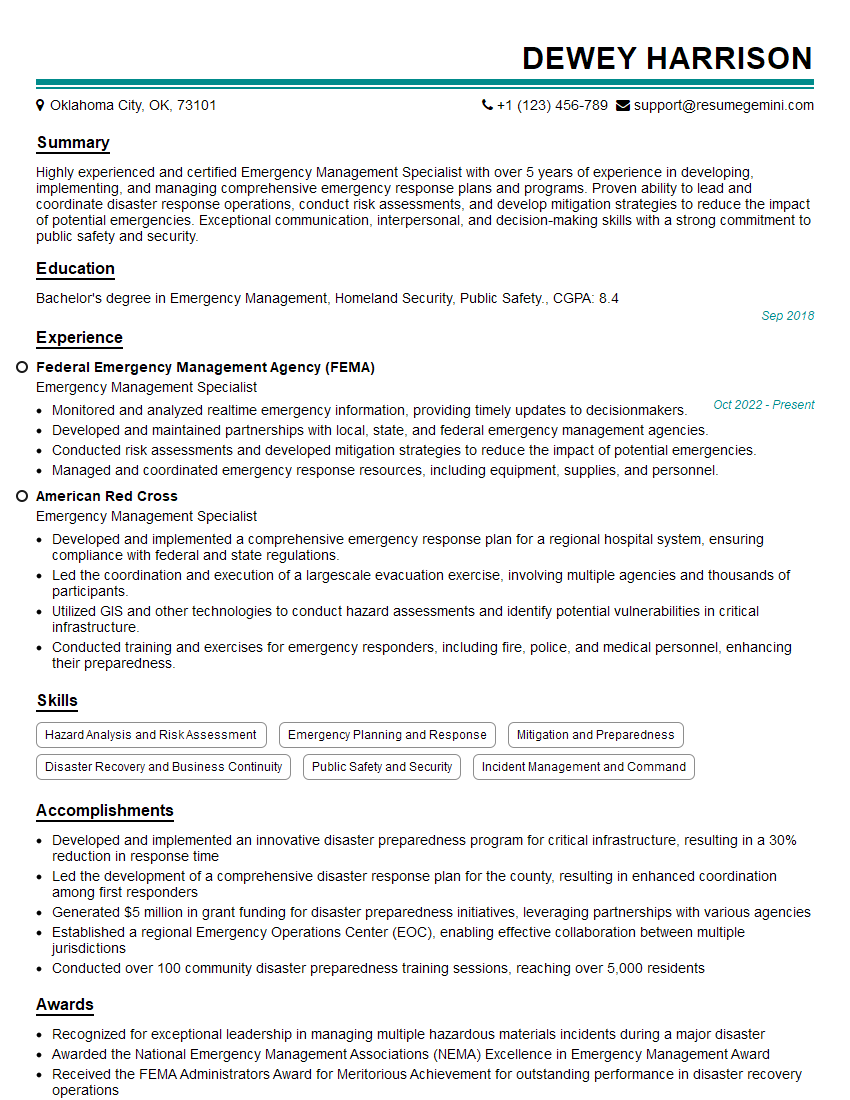
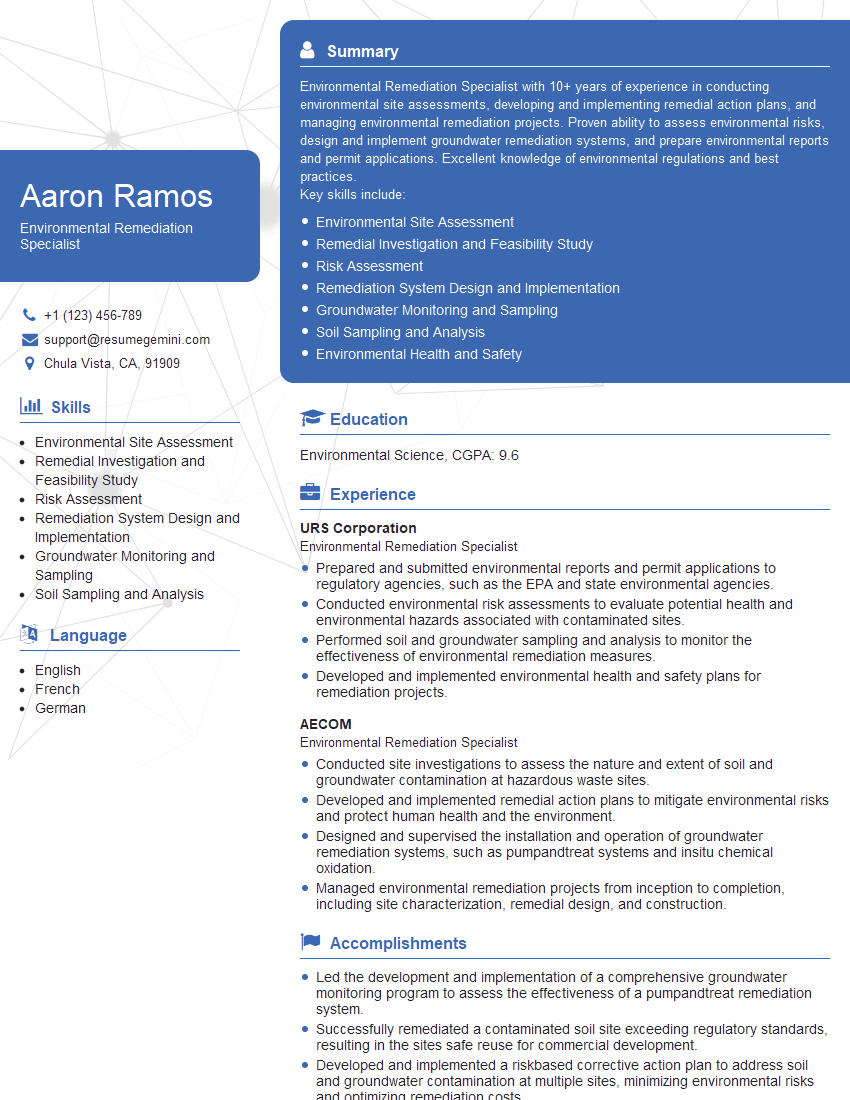
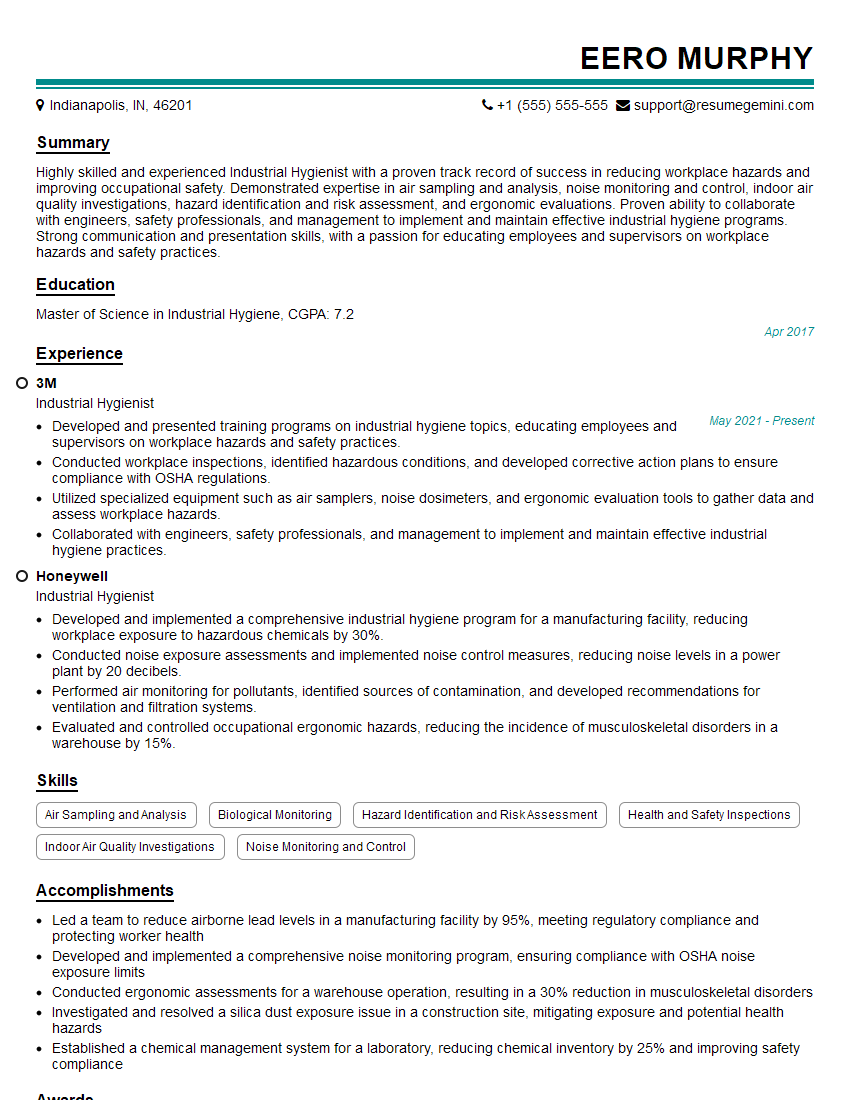
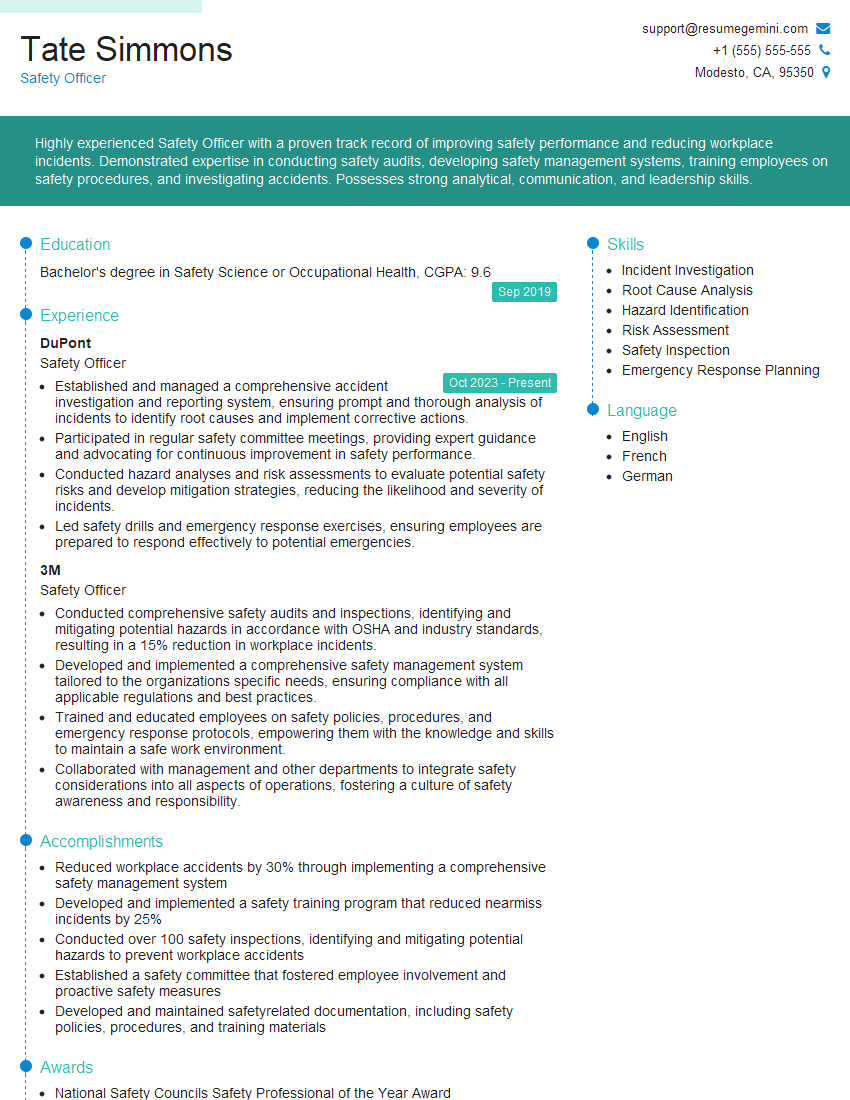
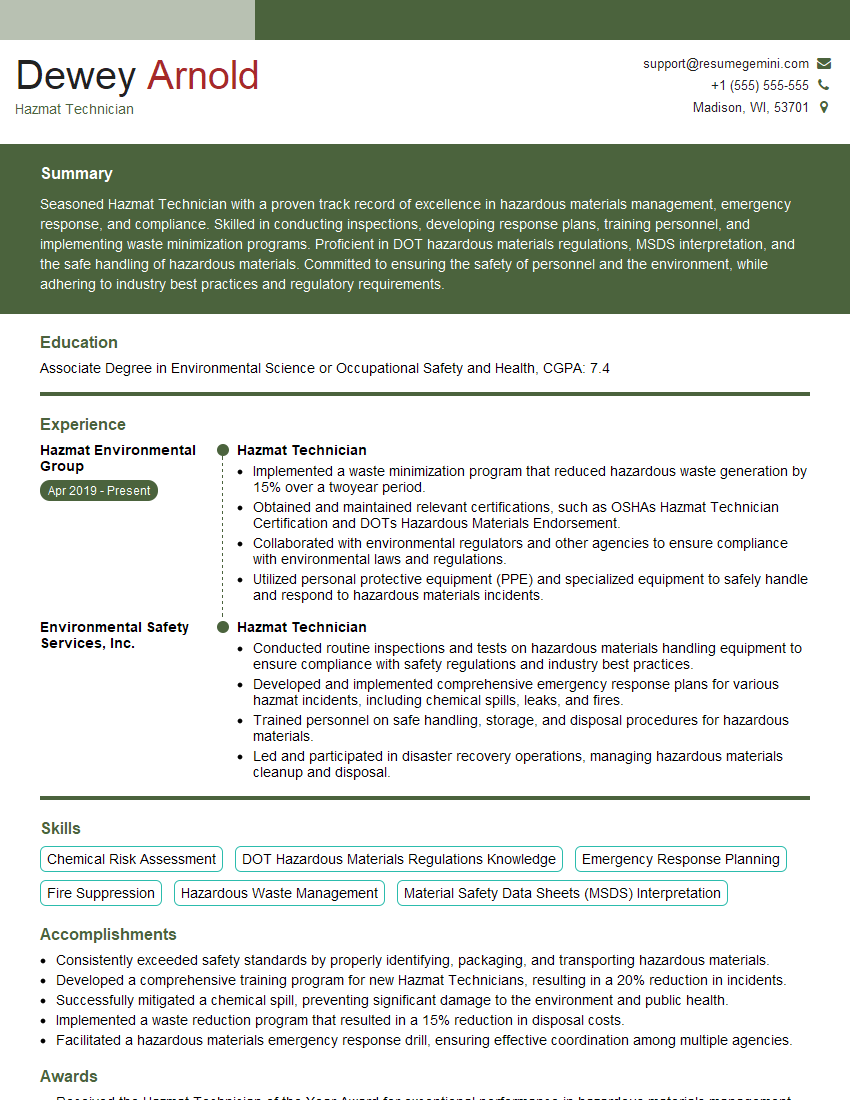
Mastering Hazmat Spill Response Plans significantly enhances your career prospects in environmental health and safety, emergency management, and related fields. A strong understanding of these procedures demonstrates critical problem-solving skills and a commitment to safety. To stand out, create an ATS-friendly resume that effectively showcases your skills and experience. ResumeGemini is a trusted resource to help you build a professional and impactful resume. Examples of resumes tailored to Hazmat Spill Response Plans are available to guide you. Investing time in crafting a strong resume will significantly increase your chances of landing your dream job.
Explore more articles
Users Rating of Our Blogs
Share Your Experience
We value your feedback! Please rate our content and share your thoughts (optional).
What Readers Say About Our Blog
good