Every successful interview starts with knowing what to expect. In this blog, we’ll take you through the top HAZOP and FMEA interview questions, breaking them down with expert tips to help you deliver impactful answers. Step into your next interview fully prepared and ready to succeed.
Questions Asked in HAZOP and FMEA Interview
Q 1. Describe the difference between HAZOP and FMEA.
HAZOP (Hazard and Operability Study) and FMEA (Failure Mode and Effects Analysis) are both proactive risk assessment techniques used in engineering and project management, but they differ significantly in their approach and application. HAZOP is a systematic and qualitative method that focuses on deviations from intended design and operating parameters, exploring potential hazards and operability problems. It’s a team-based brainstorming process. FMEA, on the other hand, is a more quantitative and structured approach that focuses on analyzing potential failure modes of individual components or processes, evaluating their severity, occurrence, and detectability. Think of HAZOP as a broad, qualitative ‘what if’ analysis of the entire system, whereas FMEA is a more detailed, quantitative analysis focusing on specific components or processes within the system. For example, a HAZOP might analyze the entire chemical process plant to identify potential hazards, while FMEA might focus on the failure modes of a specific pump within that plant.
Q 2. What are the key steps involved in conducting a HAZOP study?
A HAZOP study involves several key steps:
- Define the system boundaries: Clearly specify the process or system to be analyzed, including its interfaces with other systems.
- Assemble the HAZOP team: Bring together a multidisciplinary team with expertise in process engineering, safety, operations, and maintenance. Diversity of thought is crucial.
- Select the process flow diagram (P&ID): Use a detailed P&ID as the basis for the study. This acts as a visual aid.
- Node selection: Identify specific points (nodes) on the P&ID where deviations from the intended operation might occur (e.g., valves, pumps, reactors).
- Guide word application: Systematically apply pre-defined guide words (see Question 5) to each node to identify potential deviations from the design intent. Example: Applying ‘NO’ to a flow of cooling water to a reactor might lead to overheating.
- Hazard identification and analysis: For each deviation, determine potential consequences, causes, and safeguards. This involves brainstorming and discussion.
- Risk evaluation: Assess the likelihood and severity of each identified hazard.
- Recommendation generation: Propose mitigation strategies (e.g., alarms, safety interlocks, procedural changes) to reduce the risk.
- Documentation and follow-up: Document all identified hazards, risk assessments, and recommendations. Track implementation of the recommendations.
Q 3. Explain the different severity, occurrence, and detection levels in a risk matrix (FMEA).
The risk matrix in FMEA uses three parameters to assess risk: Severity, Occurrence, and Detection. Each parameter is typically assigned a numerical rating on a scale (e.g., 1-10), with higher numbers indicating greater risk:
- Severity (S): Represents the impact of a failure on the overall system. A high severity rating (e.g., 10) indicates a catastrophic failure, such as a major fire or explosion; a low severity (e.g., 1) indicates a minor inconvenience.
- Occurrence (O): Represents the likelihood of a failure mode happening. A high occurrence (e.g., 10) means it’s highly likely to occur frequently; a low occurrence (e.g., 1) means it’s very unlikely.
- Detection (D): Represents the likelihood of detecting the failure mode before it causes significant harm. A high detection rating (e.g., 10) means it’s very likely to be detected easily; a low detection (e.g., 1) means it’s very difficult to detect.
These ratings are then often combined (e.g., multiplied: RPN = S x O x D) to calculate a Risk Priority Number (RPN). The RPN helps to prioritize actions, with higher RPN values indicating higher-priority issues requiring immediate attention. For example, a failure mode with a high severity (S=9), high occurrence (O=7), and low detection (D=2) would have a high RPN (126), signifying a critical risk that demands mitigation.
Q 4. How do you identify and prioritize hazards during a HAZOP study?
Hazard identification and prioritization in HAZOP is an iterative process that relies on the team’s expertise and the systematic application of guide words. During the HAZOP study, hazards are identified by systematically considering potential deviations from the normal operating parameters at each node of the process. The team discusses the consequences of each deviation, identifies potential causes, and evaluates existing safeguards. Prioritization is then done based on a qualitative assessment of the severity and likelihood of each hazard. A simple risk matrix (e.g., using qualitative terms like ‘High’, ‘Medium’, ‘Low’ for both severity and likelihood) can be used to visually prioritize the hazards. Hazards with ‘High’ severity and ‘High’ likelihood would naturally receive top priority for mitigation actions.
Q 5. What are some common guide words used in HAZOP analysis?
Guide words are pre-defined terms used to systematically explore potential deviations from the intended process parameters. These words help to structure the brainstorming process and ensure that all aspects are considered. Common guide words include:
- NO/Not: Absence of something expected.
- MORE/Less: Quantity or rate is too high or low.
- Early/Late: Timing is too early or late.
- Part of/Part missing: Incorrect or missing components.
- Reverse: Parameter is in reverse order or direction.
- Other: Any other deviation not covered by the other guide words.
The selection and application of guide words depend on the specific process being analyzed. The selection is flexible to ensure that all relevant possibilities are considered.
Q 6. How do you develop effective mitigation strategies during a HAZOP study?
Developing effective mitigation strategies during a HAZOP study involves carefully considering various options to reduce the likelihood and/or severity of identified hazards. The team should brainstorm a range of potential solutions. This might involve:
- Engineering controls: Implementing physical changes to the system, such as adding safety interlocks, installing alarms, or modifying equipment. For example, adding a high-temperature alarm to a reactor to prevent overheating.
- Administrative controls: Implementing procedural changes, such as improving operator training, creating detailed operating procedures, or enhancing maintenance schedules. For instance, better training on emergency shutdown procedures.
- Personal protective equipment (PPE): Providing workers with appropriate safety gear to minimize the impact of a hazard. For example, requiring workers to use respirators in areas with potential exposure to hazardous substances.
The chosen mitigation strategies should be evaluated for their effectiveness, cost, and feasibility. The most effective strategies will typically be those that address the root cause of the hazard, rather than just treating the symptoms. All recommended strategies should be documented, assigned responsibilities, and given deadlines for implementation.
Q 7. Explain the concept of a decision tree in the context of risk assessment.
A decision tree is a visual representation of a decision-making process that can be used in risk assessment to model different scenarios and their potential outcomes. It helps to analyze the consequences of various decisions under different conditions and helps to understand the possible pathways leading to different risk levels. Each node in the tree represents a decision point, and each branch represents a possible outcome. The end nodes typically represent the final risk levels or consequences. The decision tree allows for a structured way to incorporate uncertainty and probabilities into the risk assessment. For instance, a decision tree could model the various scenarios and consequences of a chemical spill, factoring in the probabilities of different weather conditions, the effectiveness of containment measures, and the potential environmental impact of the spill, making it easier to choose the best strategy to mitigate the risks.
Q 8. How do you document findings and recommendations from a HAZOP or FMEA study?
Documenting HAZOP and FMEA findings and recommendations is crucial for traceability and continuous improvement. We typically use a structured format, often a spreadsheet or dedicated software, that captures key information for each identified hazard or failure mode. This includes a unique identifier, description of the hazard/failure mode, its potential consequences (severity), likelihood of occurrence (probability), and the existing controls in place (detections, mitigations). Importantly, we also document the proposed recommendations – these might include engineering controls (e.g., adding safety interlocks), administrative controls (e.g., improved procedures), or personal protective equipment (PPE).
For HAZOP, the documentation includes the node (system/process element) under review, deviation from the intended function, causes, consequences, safeguards, and recommendations. FMEA documentation focuses on the failure mode, its effects, severity, occurrence, detection, risk priority number (RPN), and recommended actions. We always ensure the documentation is clear, concise, and easily understandable to all stakeholders, including management and operational personnel. A clear audit trail is maintained, showing who made each recommendation and when they were approved or implemented. Finally, we include a summary of the overall risk profile and the effectiveness of implemented actions.
For example, in a HAZOP study of a chemical reactor, a deviation might be ‘high temperature.’ The documentation would detail the potential causes (e.g., malfunctioning temperature sensor), consequences (e.g., runaway reaction, explosion), existing safeguards (e.g., pressure relief valve), and proposed recommendations (e.g., installing a backup temperature sensor and independent shutdown system).
Q 9. Describe your experience in facilitating HAZOP sessions.
Facilitating HAZOP sessions requires strong leadership, communication, and a deep understanding of the process being analyzed. My approach involves careful preparation, including selecting a diverse and knowledgeable team, defining clear objectives, and distributing relevant documentation beforehand. During the session, I guide the team through a structured methodology, ensuring each node is thoroughly investigated using predefined guidewords (e.g., ‘no,’ ‘more,’ ‘less,’ ‘part,’ ‘reverse’). I ensure everyone has a chance to contribute, actively manage discussion, and resolve conflicts constructively. I use visual aids such as process flow diagrams and keep minutes of the session, meticulously documenting all identified hazards, causes, consequences, safeguards, and recommendations. After the session, I consolidate findings, create a report, and follow up on action items to ensure recommendations are implemented effectively. I’ve successfully facilitated numerous HAZOP studies across various industries, ranging from chemical plants and oil refineries to pharmaceutical manufacturing and food processing facilities, consistently delivering high-quality risk assessments. For instance, in a recent HAZOP study for an offshore oil platform, effective facilitation led to the identification of a critical risk concerning emergency shutdown procedures that was previously overlooked. This risk was then mitigated by enhancing the emergency shutdown system.
Q 10. How do you manage disagreements among team members during a HAZOP study?
Disagreements are common during HAZOP studies, often stemming from differing interpretations of data or experience levels. I manage these disagreements by fostering a collaborative and respectful environment, where everyone feels comfortable expressing their views. I start by ensuring all team members understand the HAZOP methodology and objectives. I encourage open discussion, actively listen to all perspectives, and use questioning techniques to clarify points of contention. When a consensus isn’t immediately reached, we explore the underlying reasons for the disagreement and delve deeper into the available data. We may consult relevant standards, research additional information, or involve subject matter experts to provide clarification. If a resolution still proves elusive, a structured decision-making process, perhaps utilizing a voting system, might be employed to reach a final decision. Documentation of the discussion and the rationale behind any final decision is crucial for transparency and accountability.
For example, a disagreement might arise on the severity of a specific consequence. By carefully considering the available data, discussing the potential impact on people, environment, and the business, and using a defined severity scale, the team can reach a commonly understood assessment.
Q 11. How do you handle complex or ambiguous situations during a risk assessment?
Complex or ambiguous situations during risk assessment demand a systematic approach. I typically begin by clearly defining the scope of the problem, breaking it down into smaller, more manageable parts. This might involve creating a detailed process flow diagram or utilizing a fault tree analysis to identify all contributing factors. I then gather data from various sources, including historical data, operating procedures, engineering specifications, and expert opinions. The use of qualitative risk assessment methods alongside quantitative ones, where data allows, is important. We might use brainstorming sessions or scenario planning to explore potential outcomes. Through rigorous analysis and discussion, we aim to reduce ambiguity and quantify risk wherever possible, even if it’s using subjective scales and estimations. The key is transparency and meticulous documentation of assumptions and uncertainties to ensure future review and refinement.
For instance, when assessing the risk associated with a newly developed process with limited operational history, we might conduct simulations, combine expert judgment, and perform a preliminary sensitivity analysis to identify the key uncertainties and their impact on the overall risk.
Q 12. What software or tools are you familiar with for conducting HAZOP and FMEA studies?
I’m proficient in using several software tools for conducting HAZOP and FMEA studies. These include specialized risk management software such as BowTieXP, PHAST, and Aspen HYSYS for process simulation. Spreadsheet software like Microsoft Excel is commonly used for creating and managing FMEA matrices. I’ve also experience with dedicated FMEA software packages offering more advanced features, such as automated RPN calculations and reporting capabilities. The choice of tool depends on the project’s complexity, budget, and specific needs. Importantly, the tool is only a facilitator – it’s the team’s expertise and structured methodology that drive the effectiveness of the study.
Q 13. How do you ensure the effectiveness and efficiency of HAZOP and FMEA studies?
Ensuring the effectiveness and efficiency of HAZOP and FMEA studies involves meticulous planning and execution. This starts with clearly defining the scope, objectives, and team roles before commencing the study. A well-defined methodology, tailored to the specific context, should be followed diligently. Pre-study preparation, such as collecting relevant data and distributing it to participants beforehand, minimizes time wasted during sessions. Efficient facilitation is crucial. Keeping the sessions focused, managing time effectively, and ensuring everyone contributes appropriately, while maintaining a constructive atmosphere, are key. Regular progress checks and documentation of decisions prevent the project from drifting or overlooking critical details. Post-study actions, like promptly addressing recommendations and tracking implementation progress, are vital to realize the intended benefits of the study. Regular review and updating of the documentation ensures the analysis remains relevant and effective over time. Continuous improvement in both methodology and team skills contributes to increasing efficiency in subsequent studies.
Q 14. Explain the relationship between HAZOP and other risk assessment methodologies.
HAZOP is a systematic and qualitative risk assessment technique particularly suited for complex processes. It complements other methodologies by providing a structured approach for identifying hazards that might be missed by other methods. For instance, while a Fault Tree Analysis (FTA) focuses on the bottom-up identification of events leading to a specific top event, HAZOP starts with a holistic review of the process, exploring deviations from intended operation. Similarly, a Failure Mode and Effects Analysis (FMEA) provides a component-level evaluation of potential failure modes, and HAZOP helps identify hazards that can arise from the interaction of different components or from systemic issues. HAZOP often informs the development of safety instrumented systems (SIS) and other safety systems, which are then further analyzed using techniques like Layer of Protection Analysis (LOPA). The choice of methodology depends on the context and the specific needs of the risk assessment. Often, a combination of methods is employed for a more comprehensive and robust assessment. Combining HAZOP with other methodologies such as FTA, LOPA, and quantitative risk analysis provides a more detailed understanding of risks involved.
Q 15. Describe a situation where you identified a critical hazard during a HAZOP or FMEA study.
During a HAZOP study for a new chemical processing plant, we were evaluating the mixing vessel where highly reactive chemicals were combined. We considered the ‘No Flow’ deviation from the normal operating parameters. This led to the identification of a critical hazard: excessive pressure buildup due to the continued exothermic reaction without proper mixing and heat removal.
This was a critical hazard because it could lead to a catastrophic vessel rupture, releasing hazardous chemicals and potentially causing significant injury or even fatalities. The scenario was particularly concerning because of the high reactivity of the chemicals involved and the potential for a runaway reaction.
Career Expert Tips:
- Ace those interviews! Prepare effectively by reviewing the Top 50 Most Common Interview Questions on ResumeGemini.
- Navigate your job search with confidence! Explore a wide range of Career Tips on ResumeGemini. Learn about common challenges and recommendations to overcome them.
- Craft the perfect resume! Master the Art of Resume Writing with ResumeGemini’s guide. Showcase your unique qualifications and achievements effectively.
- Don’t miss out on holiday savings! Build your dream resume with ResumeGemini’s ATS optimized templates.
Q 16. How did you prioritize the risks identified in that situation?
We prioritized risks using a risk matrix that considered both the likelihood and severity of the consequences. For the excessive pressure buildup scenario, the likelihood was deemed ‘Medium’ due to the possibility of pump failure or control system malfunction. The severity was assessed as ‘High’ considering the potential for a vessel rupture, release of hazardous materials, and resulting injuries or fatalities. Therefore, this hazard fell into the ‘High Risk’ quadrant of our matrix, requiring immediate attention.
We used a quantitative approach complementing the qualitative risk matrix, estimating potential consequences such as environmental damage, production downtime, and potential fines. This helped to numerically solidify the ‘High Risk’ classification.
Q 17. What mitigation strategies did you recommend, and why?
Our recommended mitigation strategies focused on both preventing the hazard and mitigating its consequences:
- Improved Process Design: Implementing a more robust mixing system with redundant pumps and improved heat removal capabilities. This addressed the root cause by enhancing the process’s reliability.
- Safety Instrumented System (SIS): Installing a pressure relief valve (PRV) with a high-pressure trip and an independent emergency shutdown system. This provided a secondary layer of protection to prevent vessel rupture.
- Emergency Response Plan: Developing a detailed emergency response plan including evacuation procedures, containment strategies, and emergency personnel training. This prepared the plant for handling the consequences in the event of a failure.
The rationale behind these strategies was to employ a layered approach to safety, combining preventive and protective measures. This layered approach increases the overall safety of the system by minimizing the risk of failure at each stage.
Q 18. How did you ensure that your recommendations were implemented effectively?
Ensuring effective implementation involved several steps:
- Formal Documentation: All recommendations were documented in a comprehensive HAZOP report, including detailed justifications and design specifications.
- Management Review: The report and recommendations were reviewed and approved by senior management, who allocated resources for implementation.
- Regular Monitoring: Post-implementation, the effectiveness of the mitigation strategies was monitored using key performance indicators (KPIs) such as pressure readings and emergency shutdown system testing. Regular audits were also conducted to ensure compliance.
- Feedback Mechanism: A feedback loop was established to gather input from operators and maintenance personnel regarding the effectiveness of the implemented measures.
This multi-faceted approach ensures that the recommendations are not only implemented but also maintained and improved over time.
Q 19. What are the limitations of HAZOP and FMEA?
While HAZOP and FMEA are invaluable tools, they have limitations:
- Subjectivity: Both methods rely on expert judgment, leading to potential biases or oversights. The effectiveness hinges heavily on the experience and expertise of the team conducting the study.
- Scope Limitation: HAZOP and FMEA typically focus on specific systems or processes, potentially missing interactions or hazards involving other parts of the facility. Holistic system understanding is crucial.
- Complexity: For very complex systems, conducting a thorough HAZOP or FMEA can be extremely time-consuming and resource-intensive. Effective simplification and modularisation strategies are required.
- Common Cause Failures: Both methods may not always effectively identify common cause failures, which affect multiple components simultaneously.
It’s crucial to acknowledge these limitations and use these tools in conjunction with other safety analysis methods and regular safety audits to obtain a more comprehensive safety assessment.
Q 20. How do you ensure that the results of HAZOP and FMEA are communicated effectively?
Effective communication is critical. We employed a multi-pronged approach:
- Clear and Concise Reports: The HAZOP and FMEA reports were written using clear, concise language, avoiding technical jargon where possible. Visual aids like diagrams and flowcharts were also included.
- Presentations and Workshops: Presentations to key stakeholders, including management, operators, and maintenance personnel, were conducted to explain the findings and recommendations.
- Training Programs: Training programs were developed to educate personnel on the identified hazards and the implemented mitigation strategies. Hands-on simulations are highly effective.
- Regular Updates: Regular updates were provided to stakeholders on the progress of implementing recommendations and any identified issues.
This ensures transparency and facilitates informed decision-making at all levels.
Q 21. How do you integrate HAZOP and FMEA with other safety management systems?
HAZOP and FMEA are integrated into the broader safety management system by:
- Risk Register: The identified hazards and risks are documented in the company’s overall risk register, facilitating a holistic view of safety performance.
- Safety Audits: The findings from HAZOP and FMEA studies inform the scope and focus of safety audits, ensuring that critical areas are regularly inspected and assessed.
- Incident Investigations: The lessons learned from incidents are fed back into the HAZOP and FMEA process, continuously improving the safety management system.
- Safety Culture: By fostering a proactive safety culture, where open communication and continuous improvement are valued, organizations maximize the benefits of HAZOP and FMEA.
This integrated approach ensures that safety is a continuous process rather than a one-time event.
Q 22. Explain the importance of updating HAZOP and FMEA studies.
Updating HAZOP (Hazard and Operability Study) and FMEA (Failure Mode and Effects Analysis) studies is crucial because processes, equipment, and operating procedures evolve over time. What was safe and efficient a year ago might become a significant hazard or reliability risk with changes in personnel, technology, or operating conditions. Regularly updating these analyses ensures the ongoing safety and reliability of your systems. Imagine a recipe – you wouldn’t use a recipe from 1950 without updating it with modern techniques and ingredients! Similarly, your process needs regular updates to remain safe and efficient.
Updates account for modifications such as new equipment, changes in operating procedures, near misses, incidents, and lessons learned from other similar facilities. They also incorporate improvements in risk assessment methodologies and technologies. Failing to update these studies exposes organizations to potential hazards, operational inefficiencies, and even legal liabilities.
Q 23. How frequently should HAZOP and FMEA studies be updated?
The frequency of HAZOP and FMEA updates depends on several factors, including the complexity of the process, the inherent risk level, the frequency of changes to the system, and regulatory requirements. There’s no one-size-fits-all answer. However, a good rule of thumb is to review and update HAZOP studies annually or more frequently if significant changes occur—like a major process upgrade or regulatory change. For FMEA, updates could be triggered by design changes, failure events, process improvements, or at least every two years for low-risk systems, and more frequently for high-risk ones.
Imagine a high-speed railway: its FMEA will need constant monitoring and updates due to the criticality of its function. A smaller manufacturing line might require less frequent updates, depending on process stability and modifications. A formal risk review process with defined criteria helps decide update intervals.
Q 24. What are the key performance indicators (KPIs) for successful HAZOP and FMEA implementations?
Key Performance Indicators (KPIs) for successful HAZOP and FMEA implementations include:
- Reduction in the number of safety incidents/near misses: This directly measures the impact of the analyses on safety performance.
- Reduction in downtime due to equipment failures: This demonstrates the improvement in reliability.
- Number of identified hazards/potential failures and corresponding mitigations implemented: This shows the thoroughness of the analysis and the effectiveness of actions taken.
- Time taken to complete the HAZOP/FMEA study: Efficient and timely completion indicates well-organized and managed processes.
- Completion rate of recommended actions: Measures the effectiveness of follow-up and implementation.
- Cost savings due to prevented failures: This demonstrates the return on investment.
Tracking these KPIs allows for continuous improvement and demonstrates the value of these risk assessment techniques to management.
Q 25. Describe your experience using quantitative risk assessment techniques.
I have extensive experience using quantitative risk assessment techniques in HAZOP and FMEA. This involves assigning numerical values to the likelihood and severity of hazards and failures. I am proficient in using methods like:
- Risk Matrix: This involves assigning severity and probability scores and plotting them on a matrix to prioritize risks.
- Fault Tree Analysis (FTA): Used to model the system failure modes and to determine the probability of top-level events.
- Event Tree Analysis (ETA): Used to model the consequences of initiating events and to calculate the probability of undesirable outcomes.
- Bayesian Networks: A powerful tool for modeling complex systems with uncertainty and interdependencies.
For example, in a chemical plant HAZOP, I used FTA to determine the probability of a major leak based on individual component failure probabilities. Then, using ETA, we assessed the consequences of the leak scenarios, such as fire, explosion, and toxic release, and calculated the overall risk.
Q 26. How do you ensure the accuracy and completeness of data used in HAZOP and FMEA studies?
Ensuring data accuracy and completeness in HAZOP and FMEA studies requires a rigorous approach. This starts with defining a clear scope and data collection plan, identifying reliable data sources, and utilizing appropriate data verification and validation techniques.
- Data Sources: Using multiple reliable sources (historical data, maintenance records, engineering drawings, etc.) helps to cross-validate information.
- Data Verification: Having multiple team members review the data independently helps catch errors and inconsistencies.
- Data Validation: Comparing data to industry benchmarks and standards helps to ensure it is reasonable and representative.
- Documentation: Maintaining detailed records of data sources, assumptions, and rationale for decisions is essential for transparency and traceability.
In one project involving a refinery, we faced challenges with incomplete historical data on equipment failures. We overcame this by supplementing the available data with expert judgment, industry benchmarks, and data from similar facilities. This approach helped to ensure the FMEA was comprehensive despite data gaps.
Q 27. What is your experience with root cause analysis techniques and their application in HAZOP/FMEA investigations?
Root cause analysis (RCA) is indispensable in HAZOP and FMEA investigations. It allows us to move beyond simply identifying hazards and failures and delve into the underlying reasons why these events occurred. I have extensive experience using various RCA techniques including:
- 5 Whys: A simple but powerful technique of repeatedly asking “why” to uncover the root cause.
- Fishbone Diagram (Ishikawa Diagram): A visual tool to systematically explore potential causes grouped by categories (people, materials, methods, etc.).
- Fault Tree Analysis (FTA): As mentioned earlier, FTA helps to model the logical relationships between failures and identify root causes.
- Failure Mode, Effects, and Criticality Analysis (FMECA): A more advanced form of FMEA where failure criticality is assessed.
In a recent investigation of a process upset, we used the 5 Whys to uncover that the root cause of a valve failure was due to inadequate maintenance procedures, rather than simple component failure. This led to changes in our maintenance program that proactively address potential problems, thus preventing future incidents.
Key Topics to Learn for HAZOP and FMEA Interview
- HAZOP Fundamentals: Understanding the HAZOP process, guide words, deviation identification, and consequence analysis. Practical application: Walk through a hypothetical process and identify potential hazards using HAZOP methodology.
- FMEA Fundamentals: Defining FMEA, its purpose, and the steps involved (Severity, Occurrence, Detection). Practical application: Conduct a simplified FMEA for a common household appliance, identifying potential failure modes and their risks.
- HAZOP & FMEA Integration: Learn how these techniques complement each other in risk assessment and mitigation. Practical application: Discuss how the outcomes of a HAZOP study can inform the FMEA process and vice versa.
- Qualitative vs. Quantitative Risk Assessment: Understand the differences and applications of both approaches within HAZOP and FMEA. Practical application: Explain scenarios where a qualitative approach is sufficient and when quantitative methods are necessary.
- Risk Prioritization and Mitigation Strategies: Learn techniques for prioritizing identified risks and developing effective mitigation strategies. Practical application: Develop a risk mitigation plan for a high-priority risk identified in a hypothetical HAZOP or FMEA.
- Documentation and Reporting: Understand the importance of clear and concise documentation throughout the HAZOP and FMEA processes. Practical application: Discuss the key elements of a well-structured HAZOP or FMEA report.
- Software Applications for HAZOP and FMEA: Familiarity with common software tools used for HAZOP and FMEA analysis. Practical application: Discuss the advantages and disadvantages of using software for these processes.
Next Steps
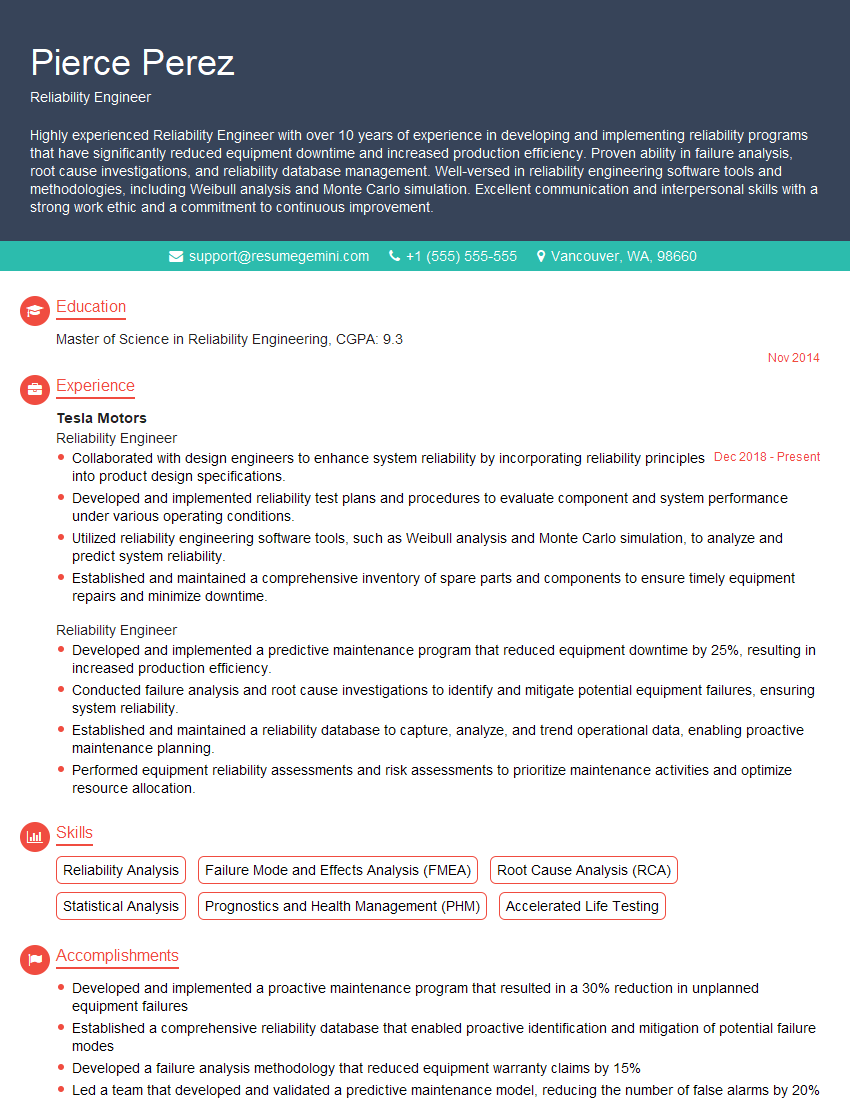
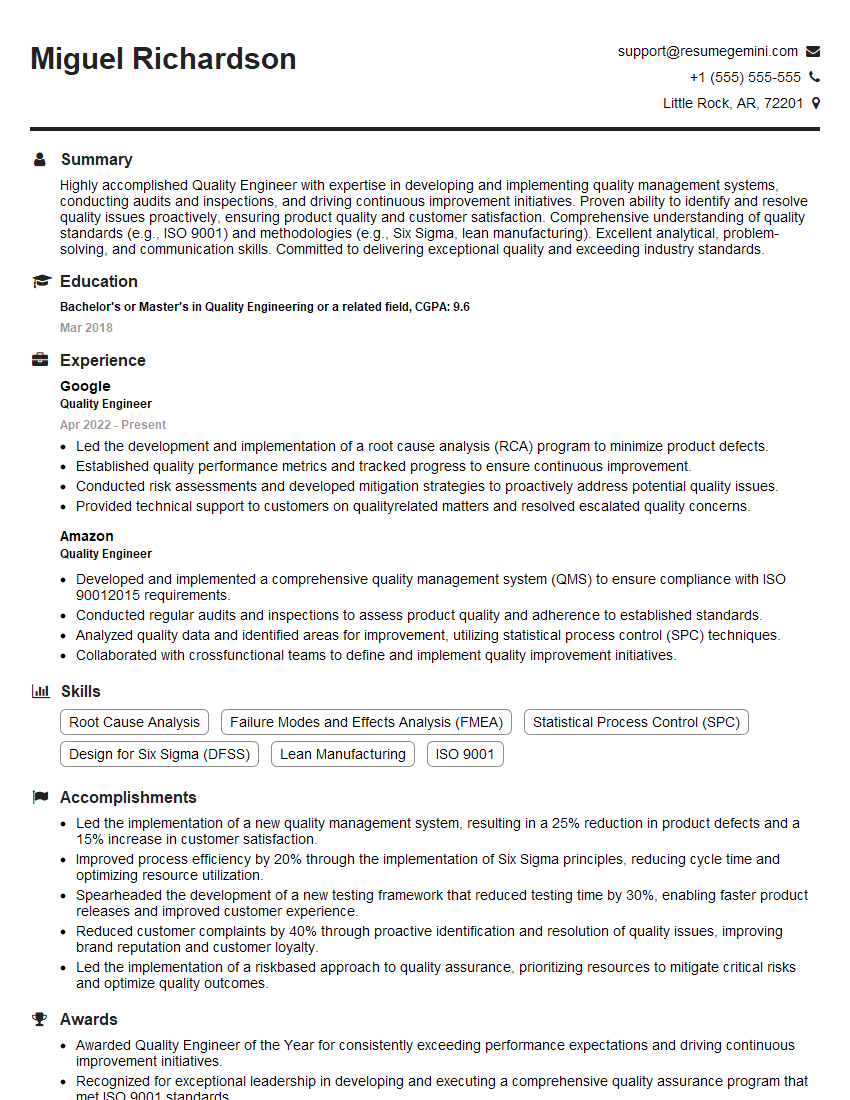
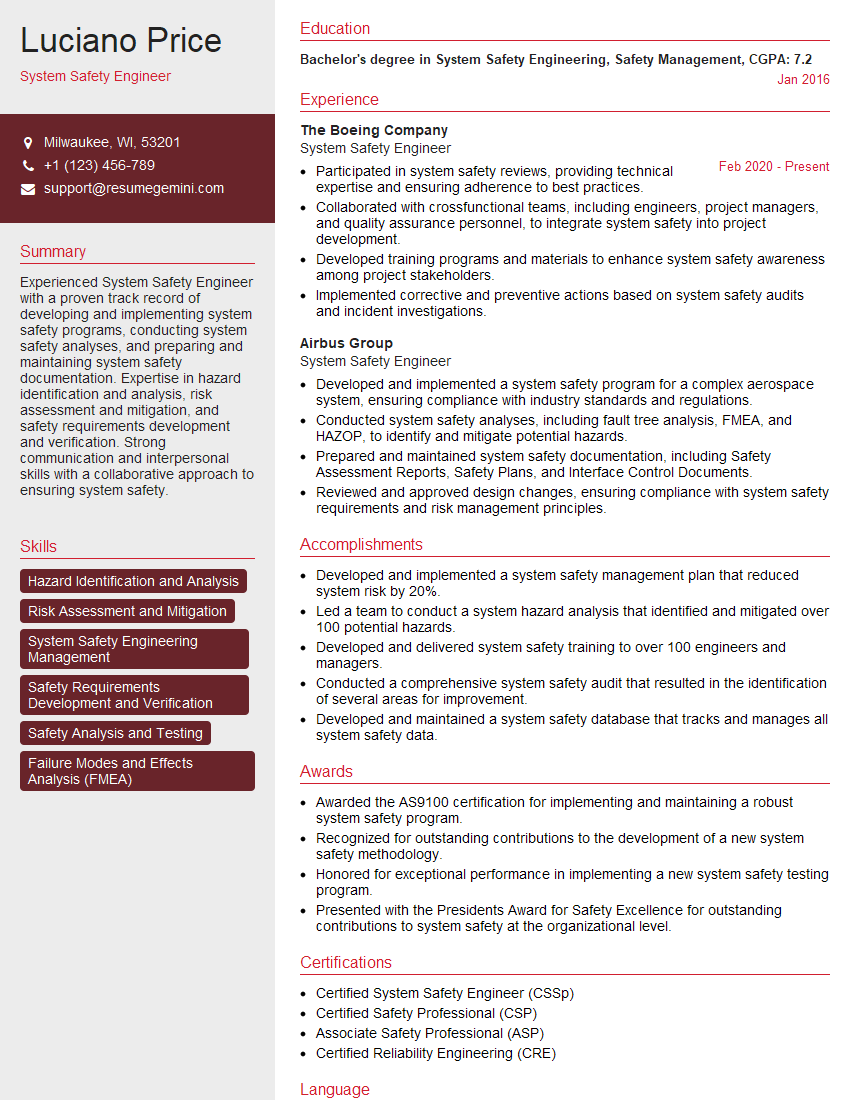
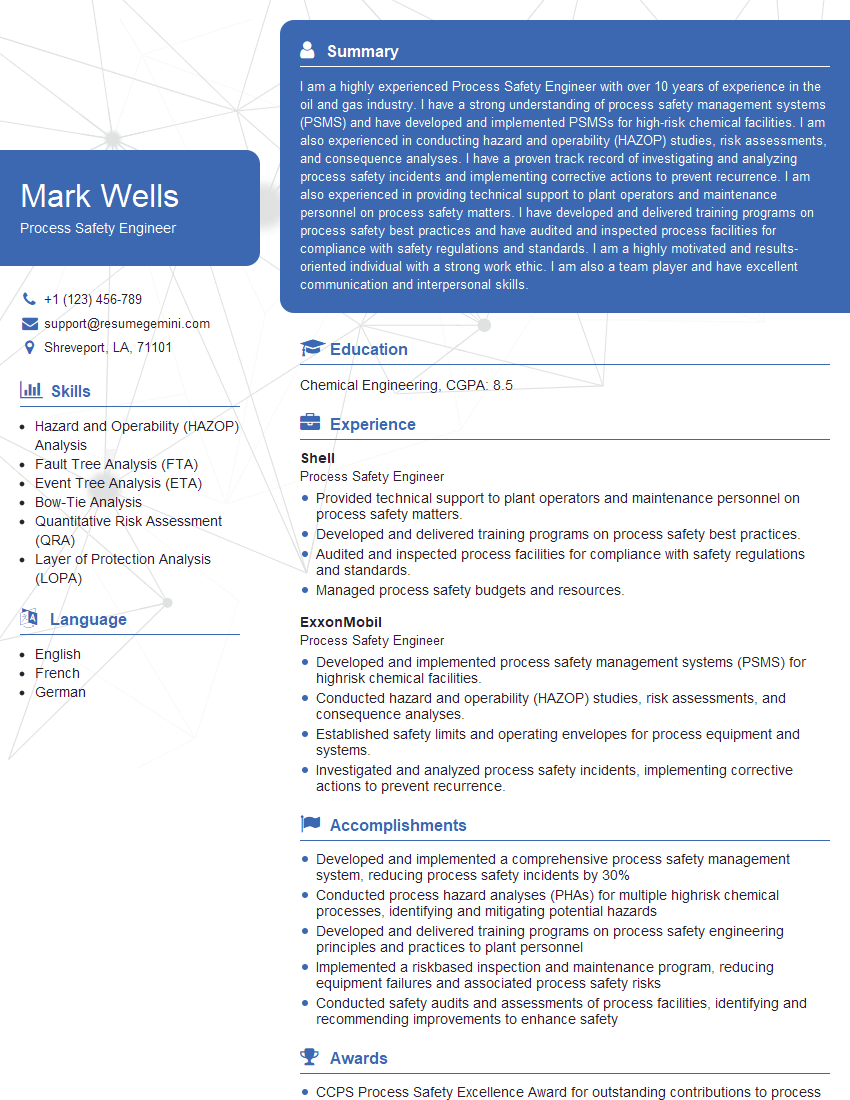
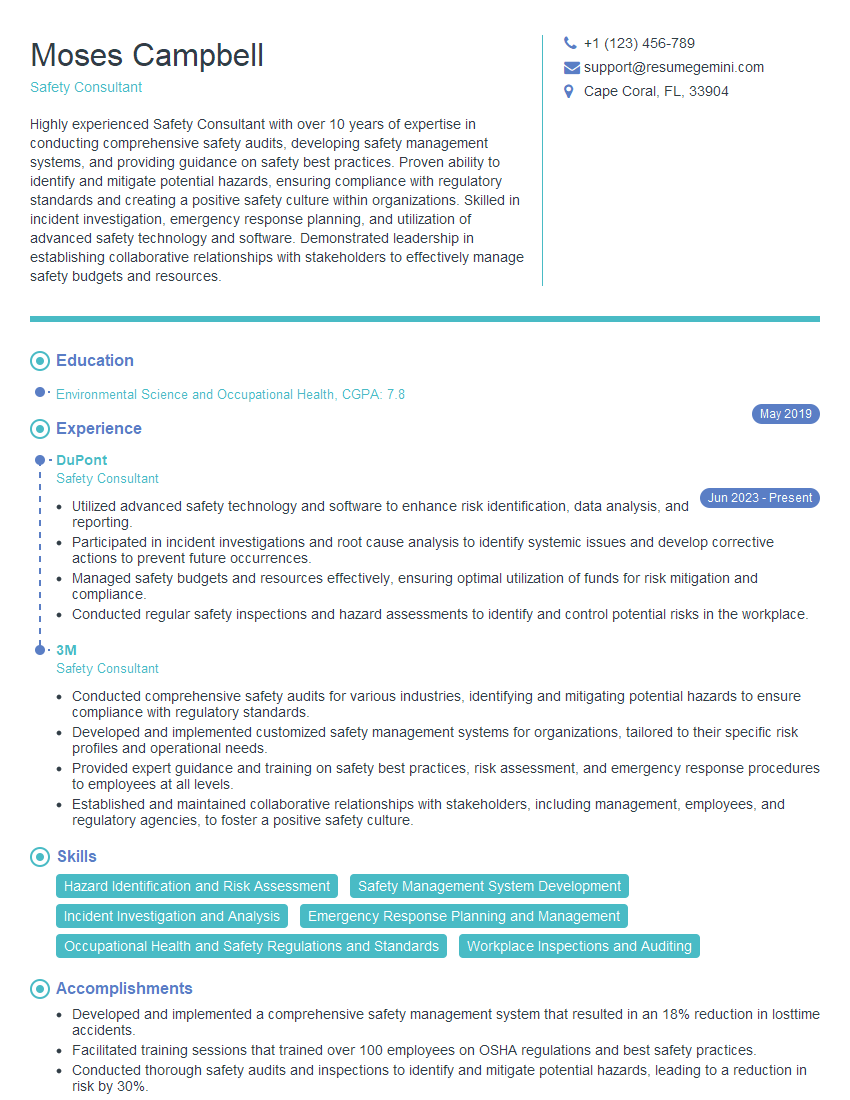
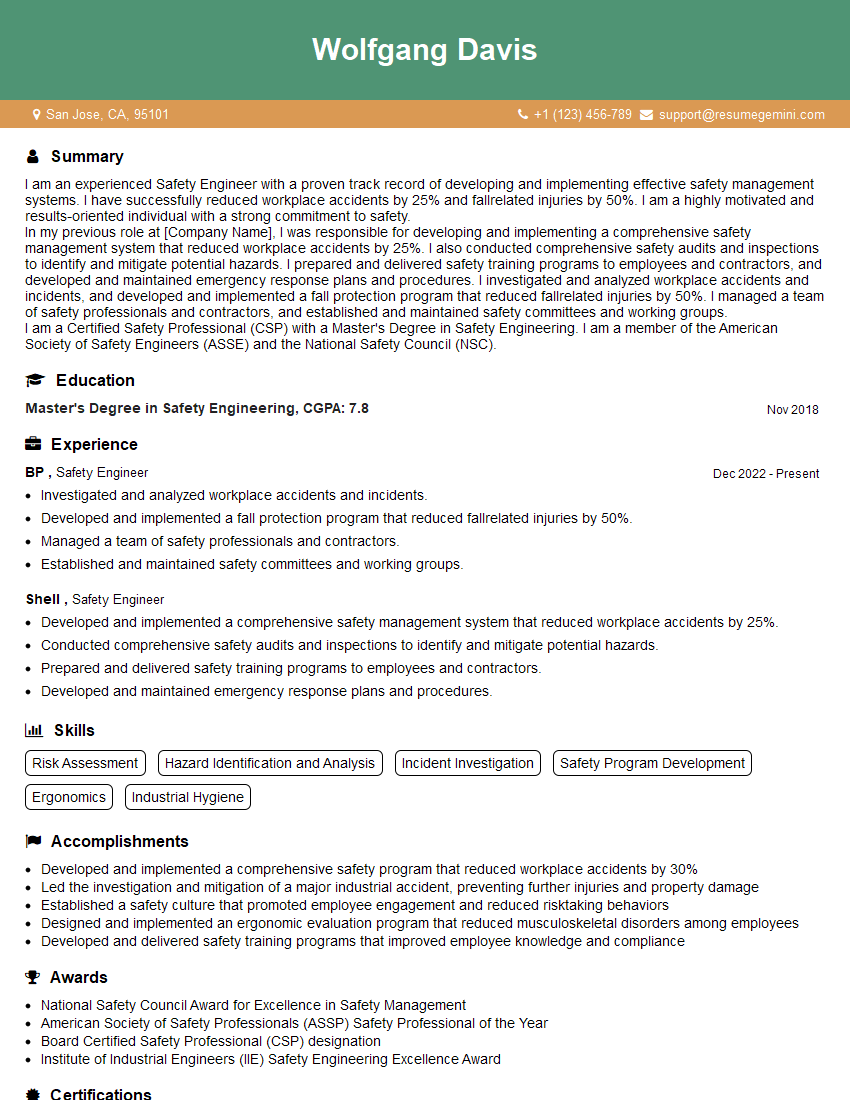
Mastering HAZOP and FMEA significantly enhances your value to any engineering or safety-focused organization, opening doors to advanced roles and increased earning potential. A well-crafted resume is crucial for showcasing this expertise to potential employers. Building an ATS-friendly resume increases your chances of getting your application noticed. We highly recommend using ResumeGemini to create a professional and impactful resume that highlights your HAZOP and FMEA skills. ResumeGemini provides examples of resumes tailored to HAZOP and FMEA roles, helping you present your qualifications effectively.
Explore more articles
Users Rating of Our Blogs
Share Your Experience
We value your feedback! Please rate our content and share your thoughts (optional).
What Readers Say About Our Blog
Very informative content, great job.
good