Every successful interview starts with knowing what to expect. In this blog, we’ll take you through the top Health Code Compliance interview questions, breaking them down with expert tips to help you deliver impactful answers. Step into your next interview fully prepared and ready to succeed.
Questions Asked in Health Code Compliance Interview
Q 1. What are the key components of a food safety management system?
A food safety management system (FSMS) is a comprehensive approach to ensuring food safety throughout the entire food production and service process. It’s not just about reacting to problems, but proactively preventing them. Key components include:
- Hazard Analysis and Critical Control Points (HACCP): A systematic approach to identifying and controlling biological, chemical, and physical hazards.
- Good Manufacturing Practices (GMPs): Basic sanitation, hygiene, and operational procedures that minimize contamination risks. Think clean facilities, proper equipment maintenance, and pest control.
- Standard Operating Procedures (SOPs): Detailed, step-by-step instructions for critical tasks, ensuring consistency and minimizing human error. For example, an SOP for handwashing or proper temperature monitoring.
- Supplier Management: Verifying the safety and quality of ingredients from suppliers through audits or certifications.
- Staff Training: Educating employees on food safety principles, procedures, and hygiene practices. Regular refresher training is essential.
- Monitoring and Record-Keeping: Continuously monitoring critical control points and maintaining detailed records of temperatures, cleaning schedules, and employee training. This allows for traceability and identification of potential issues.
- Corrective Actions: Procedures for addressing and resolving identified food safety issues or deviations from established procedures. This could include cleaning a spill, discarding contaminated food, or retraining staff.
- Verification and Validation: Regular checks and audits to ensure that the FSMS is working effectively and meeting its objectives. This might involve internal audits, external inspections, or laboratory testing.
Imagine a restaurant – a strong FSMS would ensure the kitchen is impeccably clean, staff meticulously follow handwashing procedures, food is stored at correct temperatures, and any food safety issues are dealt with immediately and documented.
Q 2. Explain the importance of proper handwashing in food handling.
Proper handwashing is paramount in preventing the spread of foodborne illnesses. Hands can easily transfer pathogens (disease-causing microorganisms) from surfaces, equipment, or even other people directly to food. Think of all the things your hands touch throughout the day – door handles, phones, money – all potential sources of contamination.
Effective handwashing involves:
- Wetting hands with warm water.
- Applying soap and scrubbing thoroughly for at least 20 seconds (sing the ‘Happy Birthday’ song twice).
- Rinsing hands well under warm water.
- Drying hands with a clean towel or air dryer.
Handwashing should be done frequently, especially:
- Before starting work.
- After using the restroom.
- After handling raw meat, poultry, or seafood.
- After touching garbage or dirty surfaces.
- After touching hair, face, or body.
- Before and after handling ready-to-eat food.
Failure to wash hands properly can lead to cross-contamination, causing serious foodborne illnesses in customers. It’s a fundamental practice in any food safety system.
Q 3. Describe your experience with HACCP principles and their application.
HACCP (Hazard Analysis and Critical Control Points) is a preventative system that identifies and controls hazards that can cause foodborne illness. My experience with HACCP involves developing and implementing HACCP plans for various food establishments. This includes:
- Hazard Analysis: Identifying potential biological, chemical, and physical hazards at each step in the food production process. For example, in a bakery, potential hazards might include bacterial contamination from improperly stored ingredients or cross-contamination from raw eggs.
- Critical Control Point (CCP) Identification: Determining the points in the process where hazards can be controlled or prevented. In the bakery example, this might include the baking temperature (to kill bacteria) and the handwashing procedure.
- Establishing Critical Limits: Defining the acceptable limits for each CCP. For baking, this might be a minimum temperature and baking time.
- Monitoring Procedures: Establishing procedures for regularly monitoring CCPs. This could involve taking temperature readings and recording them.
- Corrective Actions: Determining actions to take if a CCP is not within the established limits. If the bread isn’t baking to the right temperature, corrective action may involve adjusting the oven or discarding the batch.
- Verification Procedures: Establishing procedures to ensure that the HACCP plan is effective. This might include regular reviews and audits.
- Record Keeping: Maintaining detailed records of all aspects of the HACCP plan.
I’ve successfully applied HACCP principles to reduce the risk of foodborne illness in various settings, from small restaurants to large-scale food processing facilities. The process of implementing a HACCP plan requires a thorough understanding of food safety principles and a systematic approach to risk management.
Q 4. How do you handle a situation where a food establishment violates health codes?
When a food establishment violates health codes, a systematic approach is crucial. The steps I would take include:
- Initial Assessment: Conducting a thorough inspection to identify the specific violations. This would involve observing practices, checking temperatures, reviewing records, and potentially collecting samples.
- Documentation: meticulously documenting all observed violations with photos or videos as evidence.
- Communication: Clearly communicating the violations to the establishment’s management, explaining the health code requirements and the potential consequences of non-compliance.
- Corrective Action Plan: Working with the establishment to develop a corrective action plan to address the violations. This plan should detail the steps they will take to rectify the situation and prevent future occurrences. This might include staff retraining, equipment repair, or facility cleaning.
- Follow-up Inspection: Conducting a follow-up inspection to verify that the corrective actions have been implemented effectively and the violations have been resolved.
- Enforcement: If the establishment fails to comply, enforcement actions might be necessary, ranging from warnings to fines, temporary closure, or even permanent closure, depending on the severity and nature of the violations and local regulations.
The goal isn’t simply to punish, but to ensure that the establishment takes the necessary steps to protect public health and comply with food safety regulations.
Q 5. What is your understanding of temperature control for food safety?
Temperature control is critical for food safety because it directly impacts the growth of harmful bacteria. Bacteria thrive in the ‘danger zone,’ generally considered to be between 40°F (4°C) and 140°F (60°C). Keeping food out of this temperature range is crucial to prevent the rapid multiplication of bacteria and the potential for foodborne illness.
Key aspects of temperature control include:
- Cold Holding: Refrigerating food at 40°F (4°C) or below to slow bacterial growth. Regular monitoring of refrigerator temperatures is essential.
- Hot Holding: Keeping hot food at 140°F (60°C) or above to prevent bacterial growth. Using warming equipment properly is vital.
- Thawing: Thawing food safely in the refrigerator or using the microwave or cold running water to prevent the growth of bacteria in the danger zone.
- Cooling: Cooling cooked food rapidly to prevent bacterial growth. This usually involves dividing large quantities of food into shallow containers and refrigerating them quickly.
- Temperature Monitoring: Regularly monitoring temperatures using calibrated thermometers and accurately recording the readings. This includes logging temperatures during cooking, storage and service.
Imagine leaving a chicken salad out at room temperature for a few hours – the bacteria will multiply rapidly, potentially causing illness. Strict temperature control minimizes this risk.
Q 6. Explain the different types of foodborne illnesses and their prevention.
Several types of foodborne illnesses exist, caused by various pathogens. Prevention strategies focus on controlling contamination and minimizing bacterial growth:
- Salmonella: Often found in poultry, eggs, and meat. Prevention involves proper cooking temperatures, thorough handwashing, and avoiding cross-contamination.
- E. coli: Commonly associated with undercooked ground beef and contaminated produce. Prevention involves thorough cooking of meat, washing fruits and vegetables, and avoiding cross-contamination.
- Listeria: Can survive in cold temperatures, often found in ready-to-eat foods like deli meats and soft cheeses. Prevention focuses on proper refrigeration and avoiding consumption of risky foods for vulnerable groups like pregnant women.
- Campylobacter: Often found in undercooked poultry. Proper cooking and handwashing are crucial for prevention.
- Norovirus: A virus that causes gastroenteritis, often spread through contaminated food or surfaces. Good hygiene practices, handwashing, and proper sanitation are paramount for prevention.
Prevention strategies generally involve: practicing good personal hygiene, cooking food to the proper temperature, keeping hot food hot and cold food cold, using safe sources of food, preventing cross-contamination, and practicing proper food storage and handling techniques.
Q 7. How do you conduct a thorough food safety inspection?
A thorough food safety inspection is a systematic process that evaluates a food establishment’s compliance with health codes and food safety regulations. My approach involves a multi-faceted assessment including:
- Pre-inspection Review: Reviewing past inspection reports and any complaints to identify potential areas of concern.
- Facility Walkthrough: A visual inspection of the facility, including the kitchen, storage areas, restrooms, and dining areas. This involves checking for cleanliness, proper ventilation, pest control measures, and the proper storage of food.
- Equipment Inspection: Assessing the condition and cleanliness of food preparation equipment, such as refrigerators, ovens, and cutting boards. This includes verifying proper temperature readings.
- Food Handling Observation: Observing food handling practices, including handwashing, proper food storage and preparation techniques and adherence to time/temperature control.
- Employee Interview: Briefly interviewing staff to check their understanding of food safety principles and practices.
- Temperature Checks: Measuring the temperature of food, refrigerators, and freezers using calibrated thermometers.
- Food Sampling (if necessary): Collecting food samples for laboratory testing if potential violations or unsafe conditions are observed.
- Record Review: Examining food safety records, including temperature logs, cleaning logs, and staff training records.
- Documentation and Reporting: Carefully documenting all observations, violations, and corrective actions with photographs and/or videos. This information is then compiled into a comprehensive report that outlines the findings of the inspection and provides recommendations for improvement.
The inspection aims to identify potential hazards and ensure that the facility is operating safely and complying with all applicable regulations. It’s a critical tool for protecting public health.
Q 8. What is your experience with pest control measures in food facilities?
Pest control is paramount in food facilities to prevent contamination and ensure public health. My experience encompasses developing and implementing Integrated Pest Management (IPM) plans, which focus on preventing pest infestations rather than solely reacting to them. This involves regular inspections to identify potential entry points, implementing sanitation practices to eliminate food sources, and utilizing appropriate pest control methods.
For example, I’ve worked with facilities to install mesh screens on windows and doors, regularly clean up spills and crumbs, and strategically place traps and bait stations. I also have experience working with licensed pest control operators to ensure compliance with regulations and proper documentation of treatments. Crucially, I understand the importance of choosing pest control methods that don’t compromise food safety, such as avoiding pesticides near food preparation areas or during food handling.
In one instance, I helped a bakery identify a rodent infestation by meticulously tracing droppings and gnaw marks. Implementing an IPM plan involving improved sanitation, sealing entry points, and using snap traps led to a complete eradication of the problem within weeks, preventing potential contamination of their baked goods.
Q 9. Describe your knowledge of proper sanitation procedures for food equipment.
Proper sanitation of food equipment is crucial to prevent cross-contamination and the growth of harmful microorganisms. My knowledge includes the three-compartment sink method, the use of chemical sanitizers (following manufacturer’s instructions and concentration checks), and the importance of proper cleaning procedures. This includes pre-rinsing to remove food debris, washing with hot, soapy water, rinsing thoroughly, and finally sanitizing.
I understand that different equipment requires different cleaning procedures. For example, delicate equipment like blenders might require disassembly and hand washing, while larger equipment like dishwashers necessitate regular maintenance and chemical cleaning. Documentation is crucial; maintaining accurate records of cleaning and sanitizing procedures is vital for demonstrating compliance during inspections.
Imagine a restaurant kitchen: failing to properly sanitize a cutting board after preparing raw chicken can lead to cross-contamination and foodborne illness. My experience ensures that staff are trained to follow these procedures diligently and that the necessary tools and chemicals are readily available.
Q 10. How do you interpret and enforce health codes?
Interpreting and enforcing health codes involves a deep understanding of the specific regulations relevant to the establishment type and location. I begin by thoroughly reviewing the applicable codes, which often vary by jurisdiction. I then conduct on-site inspections, checking for compliance with these codes regarding food handling, storage, preparation, and employee hygiene. This includes reviewing temperature logs, inspecting equipment, and observing employee practices.
When violations are found, I document them meticulously and work with the establishment to develop a corrective action plan. This might involve issuing warnings, ordering temporary closures for severe violations, or imposing fines. The approach is educational and collaborative, aiming to ensure compliance while prioritizing public health.
For instance, if a restaurant is found to be storing food at unsafe temperatures, I’d explain the risk and provide guidance on proper temperature control measures. I would also ensure they establish a system for monitoring and recording temperatures moving forward.
Q 11. What is your experience with food labeling regulations?
My experience with food labeling regulations is extensive, covering requirements for accurate and truthful labeling. This includes ensuring accurate ingredient lists (including allergens), net weight declarations, nutritional information (following FDA guidelines), and appropriate labeling for potentially hazardous foods. I understand the nuances of different labeling requirements for various food types, such as those with added preservatives or genetically modified ingredients.
I’m familiar with the legal consequences of non-compliance, which can range from warnings and recalls to significant fines. I’ve assisted numerous businesses in reviewing their labels to ensure compliance, helping to avoid costly mistakes and potential legal issues.
A crucial example is ensuring proper allergen labeling. Failure to clearly label a product containing peanuts, for example, could have severe consequences for customers with allergies and expose the business to liability.
Q 12. How do you handle complaints regarding food safety violations?
Handling complaints regarding food safety violations follows a systematic approach. Upon receiving a complaint, I gather detailed information including the nature of the violation, date, time, location, and the complainant’s contact information. I then conduct a thorough investigation, which may involve on-site inspections, interviews with staff and customers, and reviewing relevant documentation.
Based on the findings, I determine the appropriate course of action. This might involve issuing warnings, ordering corrective actions, or taking more stringent measures such as imposing fines or temporary closures depending on the severity of the violation. Throughout the process, I maintain transparent communication with the complainant and the establishment to keep them informed and address their concerns.
For instance, a complaint about spoiled food would trigger an immediate investigation to verify the complaint and determine its cause, whether due to improper storage, handling, or food spoilage. The investigation’s results would then dictate whether corrective actions are needed to prevent recurrence.
Q 13. What is your understanding of food storage and handling regulations?
Food storage and handling regulations focus on preventing contamination and ensuring food safety. This includes understanding temperature requirements for different food types (danger zone awareness), FIFO (First-In, First-Out) inventory management to minimize spoilage, proper storage techniques to prevent cross-contamination (e.g., separating raw and cooked meats), and appropriate packaging to maintain food quality and prevent contamination.
My expertise extends to understanding the requirements for different types of food establishments, from small retail stores to large-scale food processing plants. I understand how to assess a facility’s storage and handling practices and identify areas for improvement. I’ve worked with businesses to design effective storage layouts, implement proper inventory management systems, and provide staff training on food handling best practices.
Consider a scenario where a restaurant is storing perishable items at room temperature. This would be a critical violation, easily avoidable through proper refrigeration and compliance with temperature guidelines. I would work with the establishment to address this, teaching staff on proper temperature control and monitoring.
Q 14. Describe your experience with investigating foodborne illness outbreaks.
Investigating foodborne illness outbreaks requires a multi-faceted approach. It starts with identifying the suspected pathogen, the affected individuals, and the potential source of contamination. This often involves collaborating with public health officials, reviewing medical records, conducting interviews with affected individuals, and performing epidemiological investigations to identify common links between those who fell ill.
The investigation might involve collecting food samples from the suspected source for laboratory analysis, inspecting the food establishment, and reviewing food handling and preparation procedures. The goal is to identify the root cause of the outbreak and implement preventive measures to stop the spread and prevent future occurrences.
For instance, an outbreak linked to a specific restaurant would involve examining their food preparation practices, ingredient sources, employee hygiene, and temperature logs. This detailed investigation would identify the source of contamination, allowing us to take appropriate action, such as issuing a recall or requiring sanitation upgrades.
Q 15. Explain the importance of employee training in food safety.
Employee training in food safety is paramount for preventing foodborne illnesses and ensuring a safe dining experience. Thorough training equips employees with the knowledge and skills to handle food properly, maintain sanitary conditions, and follow health codes diligently. Think of it as building a strong foundation for food safety within the establishment.
- Proper food handling: This includes understanding temperature control (danger zone awareness), preventing cross-contamination, and following FIFO (First-In, First-Out) principles for inventory management.
- Sanitation procedures: Employees need training on proper handwashing techniques, cleaning and sanitizing equipment and surfaces, and maintaining pest control measures.
- Allergen awareness: With increasing food allergies, training must cover identifying and handling allergens to prevent cross-contamination and ensure customer safety. This includes knowing how to read labels and understand ingredient lists.
- Waste disposal: Correct waste disposal practices are essential to avoid attracting pests and maintaining a clean environment. Employees should know how to properly dispose of different types of waste.
For example, a poorly trained employee might not wash their hands thoroughly after handling raw meat, leading to cross-contamination and potentially causing illness. Regular training, coupled with ongoing assessments, significantly reduces this risk.
Career Expert Tips:
- Ace those interviews! Prepare effectively by reviewing the Top 50 Most Common Interview Questions on ResumeGemini.
- Navigate your job search with confidence! Explore a wide range of Career Tips on ResumeGemini. Learn about common challenges and recommendations to overcome them.
- Craft the perfect resume! Master the Art of Resume Writing with ResumeGemini’s guide. Showcase your unique qualifications and achievements effectively.
- Don’t miss out on holiday savings! Build your dream resume with ResumeGemini’s ATS optimized templates.
Q 16. How do you maintain accurate records during inspections?
Maintaining accurate records during inspections is crucial for demonstrating compliance and building a strong case in the event of a violation. This involves meticulous record-keeping of all relevant aspects of food safety practices.
- Temperature logs: Detailed temperature logs for refrigerators, freezers, and hot holding units are essential. These logs should be consistently monitored and any deviations investigated and documented.
- Pest control records: Records of pest control treatments and inspections should be readily available. This shows proactive measures taken to prevent pest infestations.
- Employee health records: Documentation of employee health screenings and training records must be up-to-date and readily accessible during inspections.
- Corrective action logs: Any identified food safety issues should be documented along with the corrective actions taken to rectify the problems. This shows proactive problem-solving.
- Supplier documentation: Maintaining records of food suppliers and their certifications ensures that food sources are safe and meet health standards.
Digital record-keeping systems, using software or apps designed for this purpose, improve accuracy and organization, simplifying the process of providing necessary documentation during inspections. This eliminates the possibility of missing records or having illegible handwriting.
Q 17. How do you communicate effectively with food establishment owners and employees?
Effective communication is vital for ensuring compliance and fostering a positive working relationship with food establishment owners and employees. It’s about building trust and working collaboratively to achieve a common goal – food safety.
- Clear and concise language: Avoid technical jargon and explain health code requirements in a straightforward manner. Using visual aids like diagrams or checklists can enhance understanding.
- Active listening: Carefully listen to concerns or questions from owners and employees and address them respectfully and professionally. This shows empathy and respect.
- Collaborative approach: Work with owners and employees to find solutions to identified problems. A collaborative approach is far more effective than a purely adversarial one.
- Constructive feedback: Offer specific and actionable feedback, focusing on solutions rather than solely highlighting deficiencies.
- Regular communication: Maintain regular communication through inspections, follow-up calls, and educational materials to address any questions or concerns promptly.
For example, rather than simply stating ‘Your refrigerator temperature is too high’, I would say ‘The refrigerator temperature is currently at 45°F, which is above the recommended 41°F or lower. Let’s work together to identify the cause and find a solution to bring the temperature back within the safe range.’
Q 18. What are your strategies for ensuring compliance with health codes?
Ensuring compliance involves a multifaceted strategy combining proactive measures, regular monitoring, and swift corrective actions. It’s an ongoing process, not a one-time event.
- Risk assessment: Conducting regular risk assessments identifies potential hazards and vulnerabilities in the food handling process. This allows for proactive measures to mitigate those risks.
- Scheduled inspections: Regular inspections – both announced and unannounced – ensure consistent compliance and prompt identification of issues. The frequency depends on the establishment’s risk profile.
- Training and education: Providing comprehensive food safety training to all staff is essential for promoting good practices and maintaining high standards.
- Corrective action plans: When non-compliance is discovered, developing and implementing robust corrective action plans is crucial to address the issue effectively.
- Follow-up inspections: Follow-up inspections verify that corrective actions have been implemented and are effective in preventing future issues.
Imagine a restaurant with recurring issues related to handwashing. My strategy would be to provide additional training on handwashing techniques, implement visual aids near sinks, and conduct more frequent inspections to ensure compliance. If issues persist, more stringent measures might be necessary.
Q 19. Describe your experience with different types of food service establishments (e.g., restaurants, grocery stores).
My experience encompasses a wide range of food service establishments, from small family-owned restaurants to large grocery chains. Each establishment presents unique challenges and requires tailored approaches to health code compliance.
- Restaurants: Focus is on proper food handling, temperature control, sanitation, and pest control. I’ve inspected various types – from fast-food joints to fine dining establishments – each with specific needs.
- Grocery stores: Inspection emphasis is on proper storage and handling of perishable goods, temperature control in refrigerated sections, and effective pest control. I’ve worked with both large supermarkets and smaller neighborhood stores.
- Catering services: Compliance focuses on safe food preparation and transport, maintaining proper temperatures during delivery, and ensuring the safety of food served at off-site locations.
- Schools and institutions: Special attention is paid to ensuring meal preparation meets the specific dietary needs of students and employees, along with maintaining high standards of hygiene.
These varying experiences provide a holistic understanding of the diverse challenges faced by different food establishments, allowing me to adapt my approach to specific needs while maintaining a consistently high level of enforcement.
Q 20. How do you stay updated on changes in health codes and regulations?
Staying updated on changes in health codes and regulations is essential for maintaining competence and ensuring the effectiveness of my work. This requires a proactive and multi-pronged approach.
- Professional organizations: Membership in professional organizations like the Association of Food and Drug Officials provides access to publications, training, and networking opportunities that keep me updated on the latest changes in health regulations.
- Government websites: Regularly checking relevant government websites at the local, state, and federal levels provides official updates and changes to health codes.
- Industry publications: Staying current with industry publications, journals, and newsletters provides insights into best practices and emerging trends in food safety.
- Conferences and workshops: Attending conferences and workshops provides opportunities for professional development and staying abreast of current issues and best practices in the field.
For example, recent changes in allergen labeling or new guidelines regarding foodborne illness outbreaks are tracked through these channels to ensure my inspections remain current and effective.
Q 21. What are the penalties for violating health codes?
Penalties for violating health codes vary widely depending on the severity and nature of the violation, the jurisdiction, and the establishment’s history of compliance. They can range from minor warnings to significant fines and even legal action.
- Warnings: For minor infractions, a warning might be issued with instructions to correct the issue.
- Fines: More serious violations result in fines, which can vary significantly depending on the severity of the infraction and the jurisdiction.
- Closure orders: In cases of severe or repeated violations posing a significant health risk, the establishment may be temporarily or permanently closed.
- Legal action: In extreme cases, legal action, including court appearances and possible jail time, may be pursued against the establishment owner or manager.
The specific penalties are outlined in local health codes and regulations, and it’s crucial for food establishments to understand these implications to ensure compliance. Proactive compliance through proper training and adherence to guidelines is the best method of avoiding penalties.
Q 22. How do you prioritize inspection activities?
Prioritizing health code inspections requires a strategic approach balancing risk and resource allocation. We utilize a risk-based system, prioritizing establishments with higher potential for foodborne illness outbreaks.
- High-Risk Establishments: These include facilities handling high-risk foods (e.g., raw meats, dairy) or serving vulnerable populations (e.g., hospitals, nursing homes). They receive more frequent and thorough inspections.
- Moderate-Risk Establishments: These might include restaurants with a good track record but potentially minor violations. Inspections are less frequent, but still crucial.
- Low-Risk Establishments: These are establishments with minimal food preparation, like some bakeries or small grocery stores selling packaged goods. Inspections are least frequent but still necessary to ensure basic compliance.
- Complaint-Driven Inspections: Any establishment receiving a credible complaint concerning food safety practices warrants immediate attention regardless of its risk category.
This system ensures that resources are effectively allocated to maximize public health protection.
Q 23. Describe a time you had to deal with a difficult situation during an inspection.
During an inspection of a large catering facility, I discovered significant issues with temperature control. Many prepared foods were stored at unsafe temperatures, and there was a complete lack of documentation. The owner became defensive and dismissive of the findings.
To address the situation, I remained calm and professional. I clearly explained the potential health hazards associated with improper temperature control, referencing specific health codes and providing examples of past outbreaks linked to similar violations. I presented the evidence objectively, showing photographs of the incorrect temperatures displayed on thermometers, and explained the critical importance of record-keeping. I offered support and resources to help them achieve compliance – providing educational materials and suggesting temperature monitoring systems. This approach led to a collaborative resolution, and the facility implemented the necessary corrective actions.
Q 24. What software or tools do you use for tracking compliance?
We utilize a comprehensive software system specifically designed for health code compliance tracking. It allows us to:
- Schedule inspections: The software automates scheduling based on risk assessment and inspection history.
- Document findings: We use digital forms and images to record violations, corrective actions, and follow-up details directly in the system.
- Track compliance: The system generates reports on inspection history, violation trends, and overall compliance levels for each establishment. This helps identify patterns and areas needing attention.
- Manage follow-up: The software ensures timely follow-up inspections to verify corrective actions and prevents recurring violations. This system provides valuable data for continuous improvement in our inspection processes.
The system provides real-time data and reports, enhancing our efficiency and effectiveness in ensuring food safety.
Q 25. Explain your understanding of cross-contamination and its prevention.
Cross-contamination is the transfer of harmful bacteria or other pathogens from one food or surface to another. Preventing it is fundamental to food safety. It can occur through direct contact, indirect contact (e.g., via utensils or surfaces), or airborne transmission.
Effective prevention strategies include:
- Proper handwashing: Frequent and thorough handwashing is essential, particularly after handling raw meat or poultry.
- Separate cutting boards: Using different cutting boards for raw and cooked foods prevents cross-contamination.
- Cleaning and sanitizing: Regular cleaning and sanitizing of work surfaces, utensils, and equipment is critical.
- Temperature control: Properly chilling or heating foods to safe temperatures inhibits bacterial growth and reduces the risk of contamination.
- Storage practices: Storing raw and cooked foods separately, preferably at different heights in refrigeration, prevents dripping or contact.
Think of it like this: Imagine a paintbrush used to paint a red apple and then used to paint a white wall – the red paint (bacteria) contaminates the white wall (other food). The same principle applies to food safety. By following these strategies, we minimize the risk of contamination and protect public health.
Q 26. How do you ensure objectivity and fairness during inspections?
Objectivity and fairness are cornerstones of our inspection process. We achieve this through several key strategies:
- Using standardized checklists: Every inspection uses a detailed checklist based on relevant health codes to ensure consistent evaluation across all establishments.
- Evidence-based decisions: All findings must be supported by documented evidence, such as photos or temperature readings, removing subjective biases.
- Consistent application of regulations: We apply the health code regulations equally to all establishments, regardless of size or type.
- Transparency and communication: We provide clear and concise explanations of findings and corrective actions, allowing businesses the opportunity to respond.
- Appeals process: A clear appeals process is in place to ensure fairness and address any potential discrepancies.
By adhering to these principles, we maintain the integrity and trustworthiness of our inspection program.
Q 27. Describe your experience with risk assessment in food safety.
Risk assessment in food safety involves identifying hazards, evaluating their likelihood and severity, and determining appropriate control measures. This is a systematic approach to minimizing foodborne illness risks.
My experience involves conducting hazard analysis and critical control points (HACCP) assessments for various food establishments. This includes identifying potential hazards at each stage of food production, from procurement to service. For example, in a restaurant setting, we might identify hazards such as improper temperature control during food storage, cross-contamination during food preparation, or inadequate handwashing practices. We then evaluate the likelihood and severity of these hazards occurring and determine critical control points (CCPs) where controls must be implemented to eliminate or reduce these risks. This could involve temperature monitoring at CCPs, regular sanitation procedures, staff training, and record-keeping. The process is iterative; regular monitoring and reviews ensure the continued effectiveness of the implemented controls.
Q 28. What are your strengths and weaknesses related to health code compliance?
Strengths: My strengths include my extensive knowledge of health codes, my meticulous attention to detail during inspections, my strong communication and interpersonal skills which allow me to build rapport with establishment owners and effectively address concerns, and my ability to quickly identify and address potential risks. I am also highly organized and proficient in using technology for inspection and compliance tracking.
Weaknesses: One area I’m continuously working to improve is my time management skills, especially during complex or lengthy inspections. However, I am implementing strategies like improved prioritization and delegation to mitigate this.
Key Topics to Learn for Health Code Compliance Interview
- Food Safety Regulations: Understanding federal, state, and local regulations regarding food handling, storage, and preparation. This includes temperature control, proper sanitation practices, and preventing cross-contamination.
- Inspection Procedures: Knowing the steps involved in a typical health code inspection, including documentation requirements, corrective action plans, and the different levels of violations.
- Risk Assessment and Mitigation: Applying your knowledge to identify potential hazards in food service establishments and developing strategies to minimize risks, including implementing HACCP principles.
- Sanitation and Hygiene: Demonstrating a thorough understanding of proper handwashing techniques, cleaning and sanitizing procedures, pest control, and waste disposal methods.
- Record Keeping and Documentation: Understanding the importance of accurate and complete record-keeping, including temperature logs, employee health records, and inspection reports. This includes familiarity with different record-keeping software and systems.
- Legal and Regulatory Frameworks: Being familiar with relevant legislation and court cases related to health code violations and enforcement.
- Communication and Interpersonal Skills: Effective communication with food service operators, inspectors, and the public, as well as conflict resolution and negotiation skills.
- Problem-Solving and Critical Thinking: Analyzing complex situations, identifying root causes of health code violations, and recommending solutions that are both effective and practical.
Next Steps
Mastering Health Code Compliance opens doors to rewarding careers with significant impact on public health. To maximize your job prospects, creating a strong, ATS-friendly resume is crucial. ResumeGemini is a trusted resource that can help you build a professional resume that highlights your skills and experience effectively. We offer examples of resumes tailored to Health Code Compliance to guide you. Take advantage of these resources to showcase your qualifications and land your dream job.
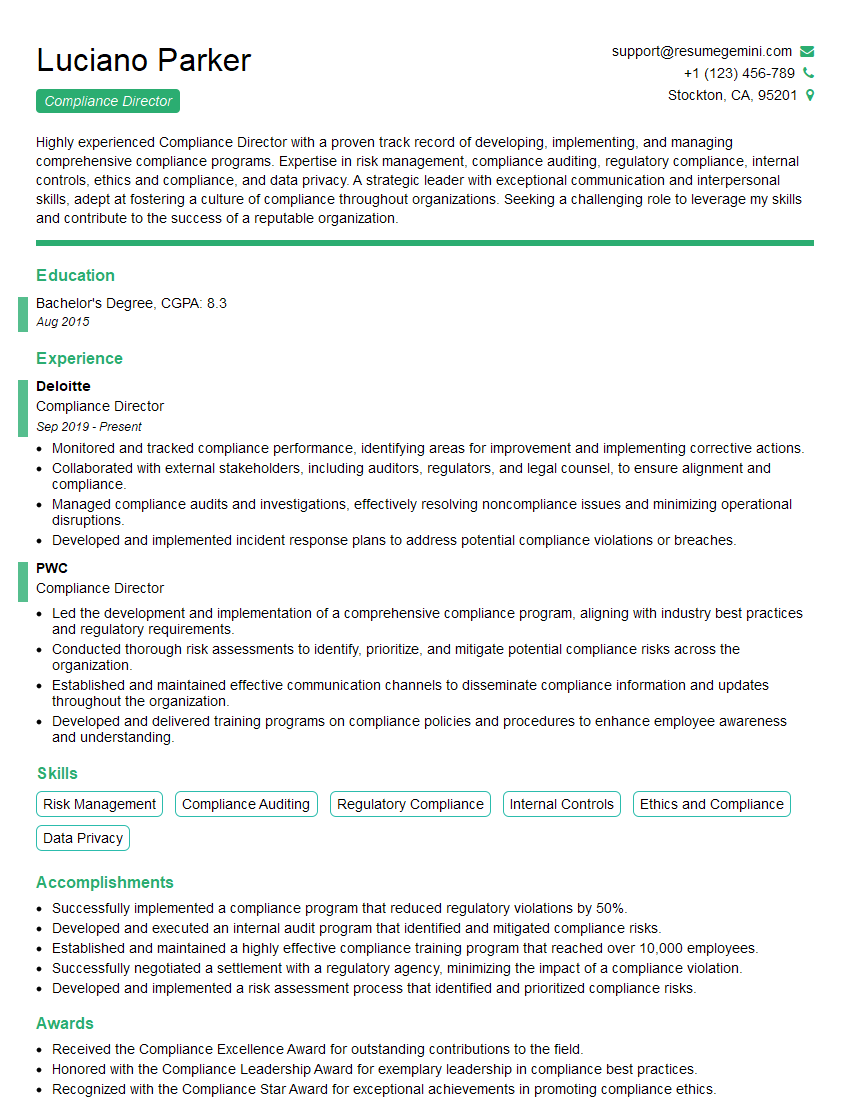
Compliance Director Resume Sample
Quality Assurance Manager Resume Sample
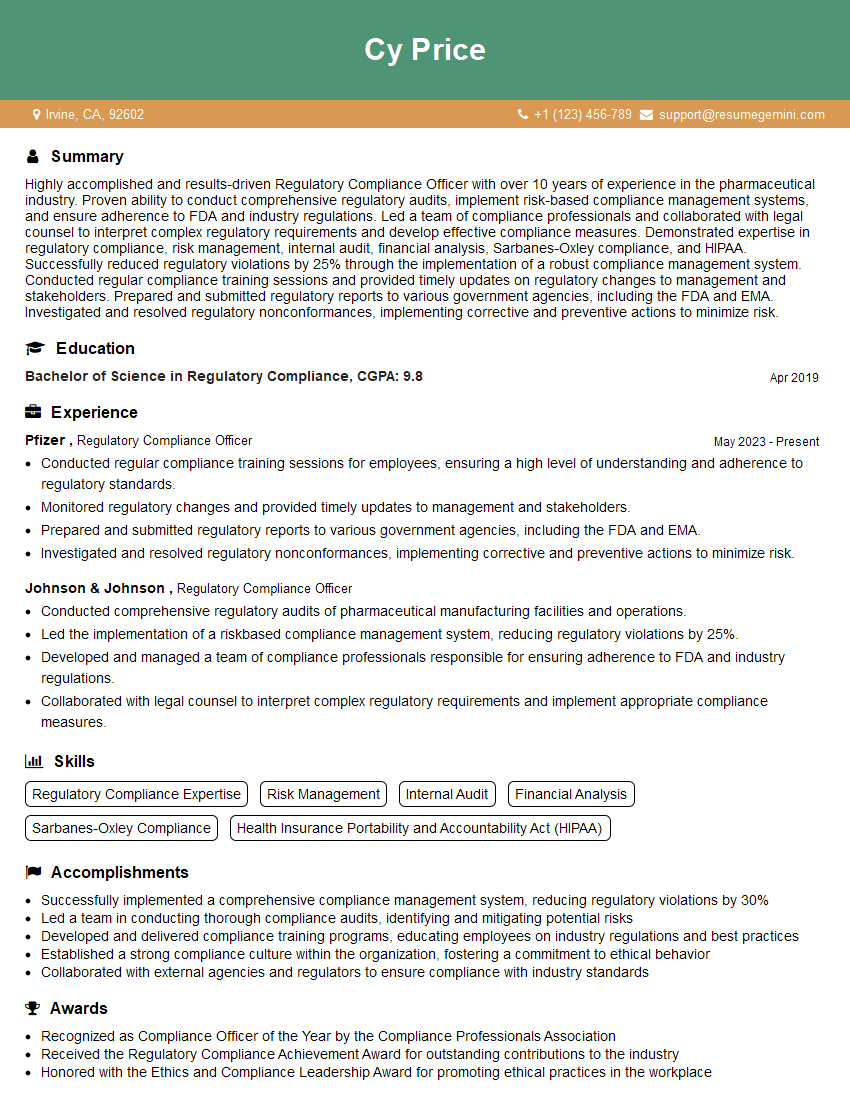
Regulatory Compliance Officer Resume Sample
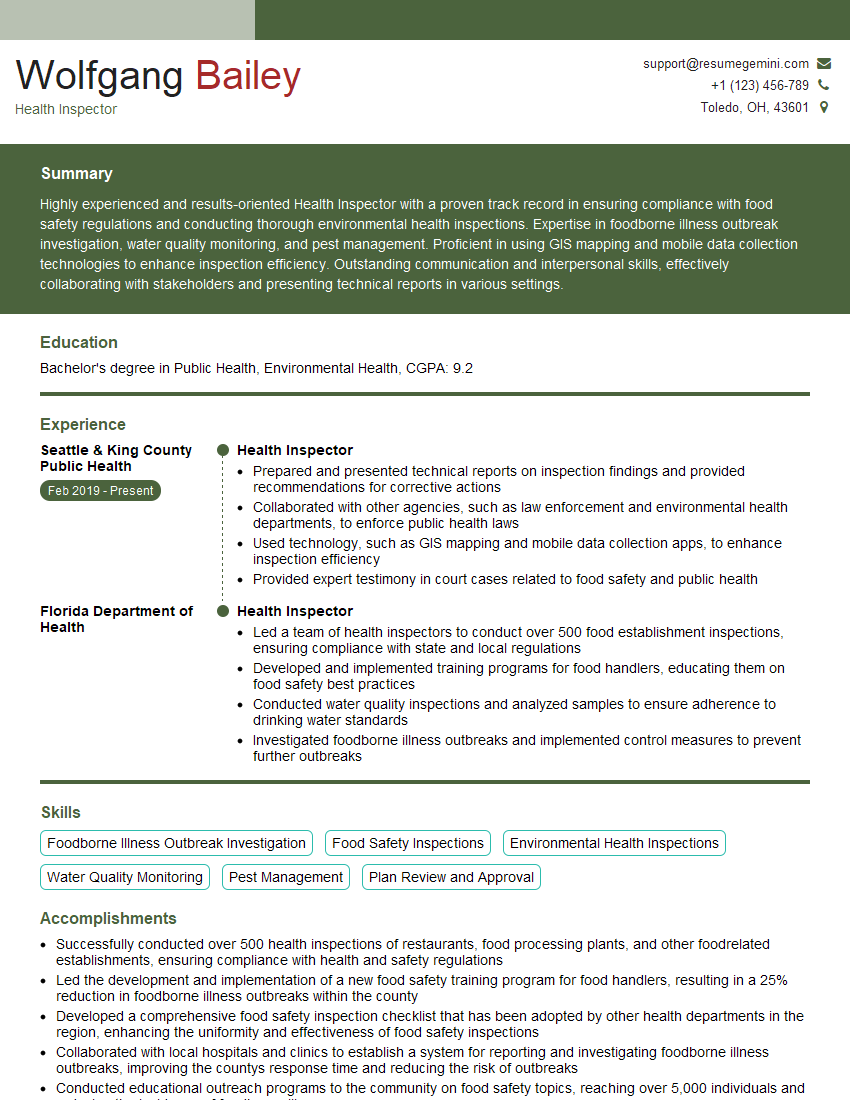
Health Inspector Resume Sample
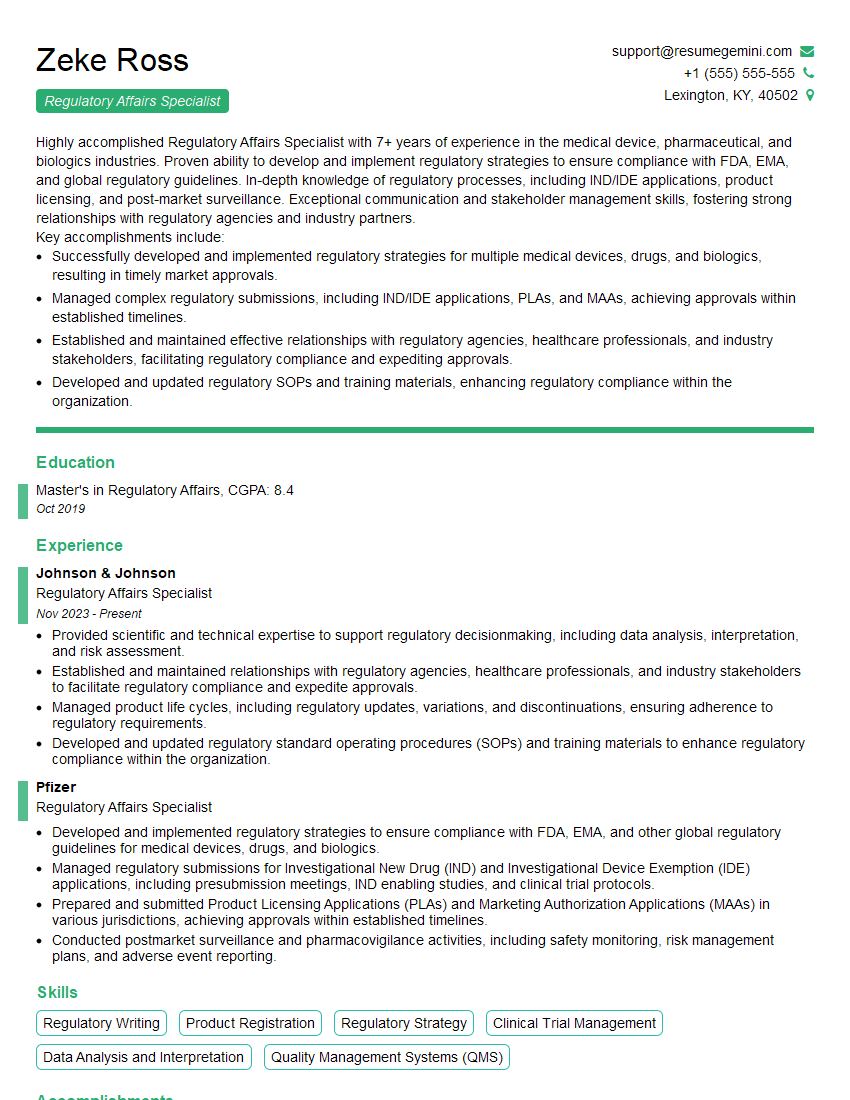
Regulatory Affairs Specialist Resume Sample
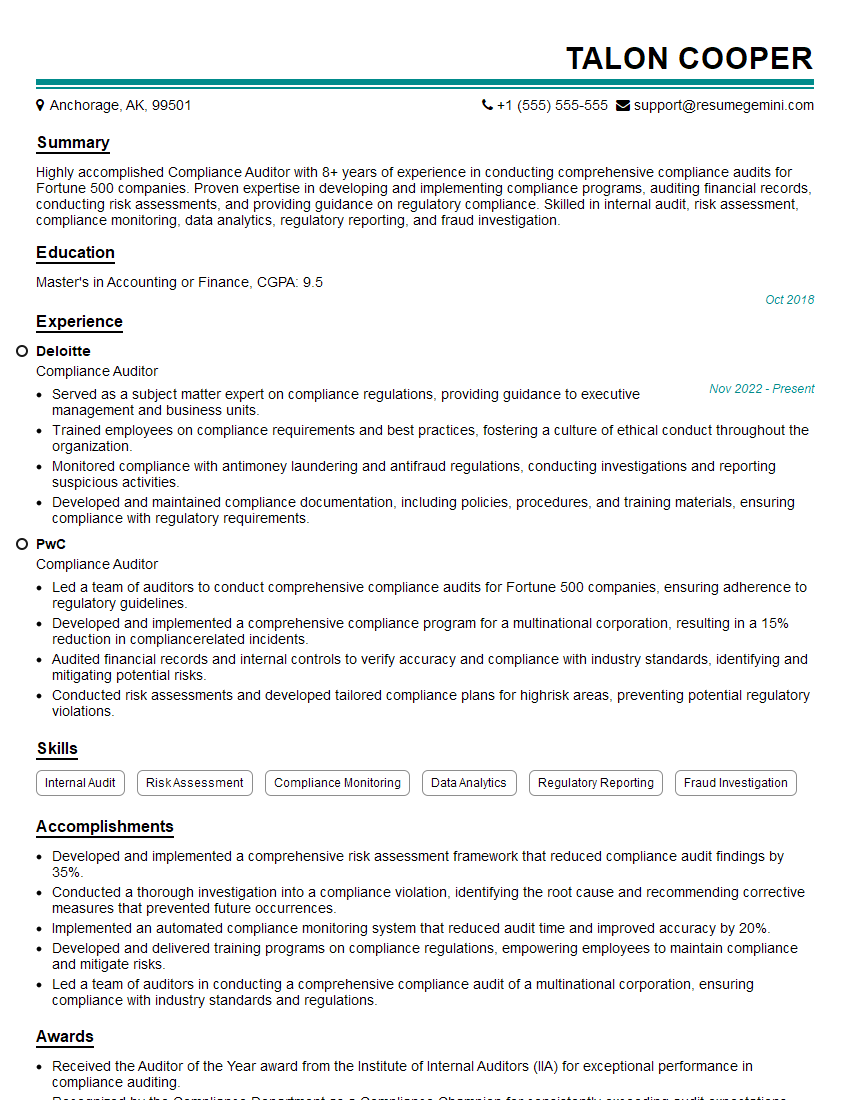
Compliance Auditor Resume Sample
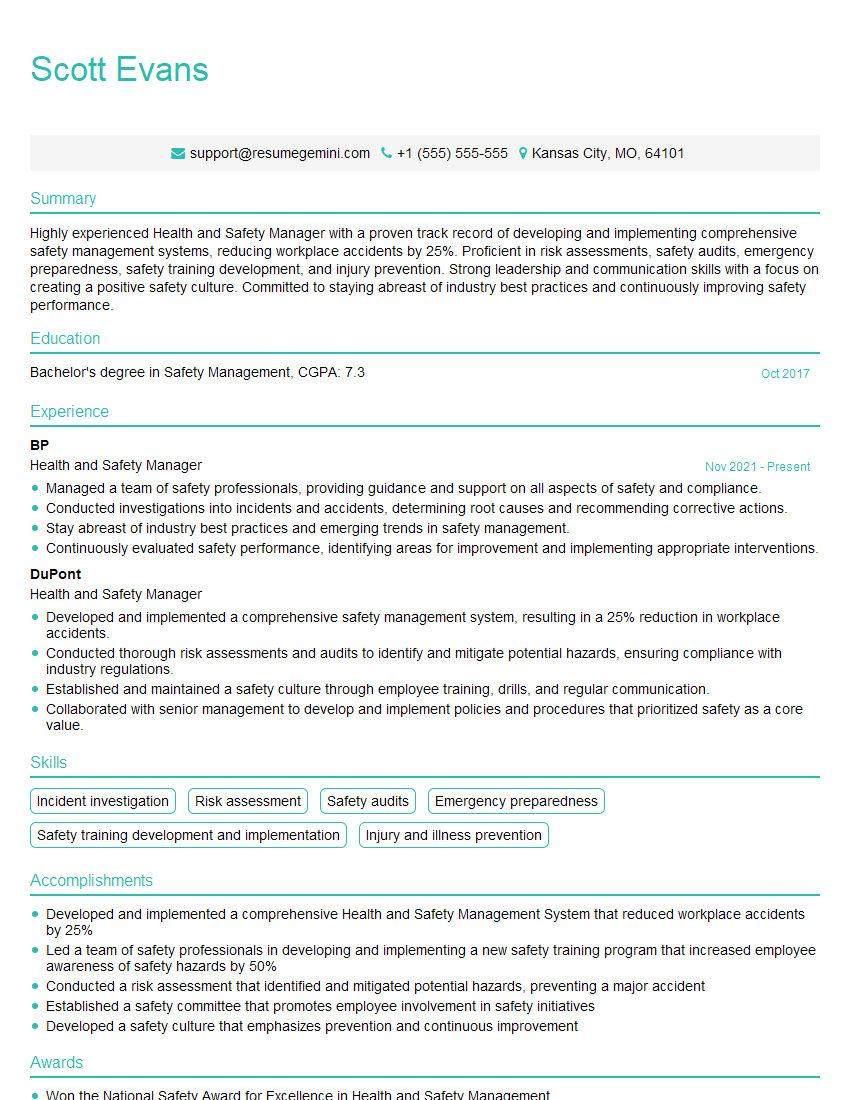
Health and Safety Manager Resume Sample
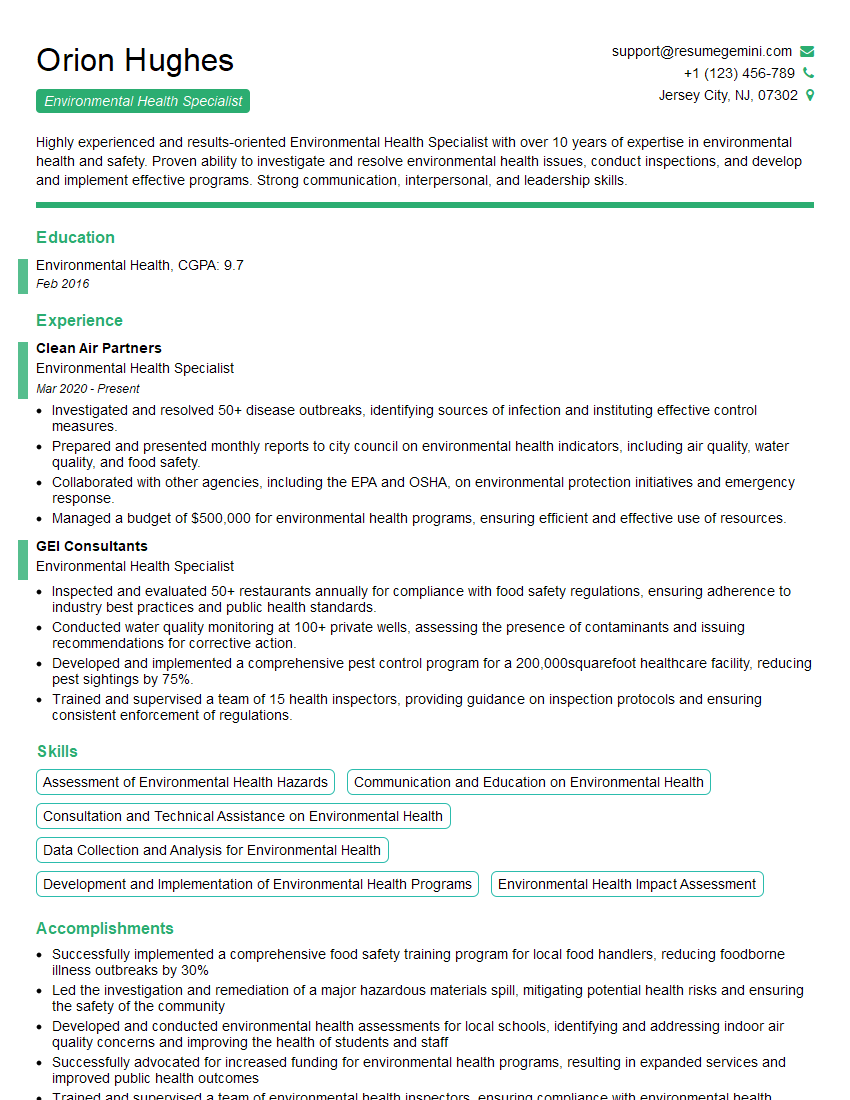
Environmental Health Specialist Resume Sample
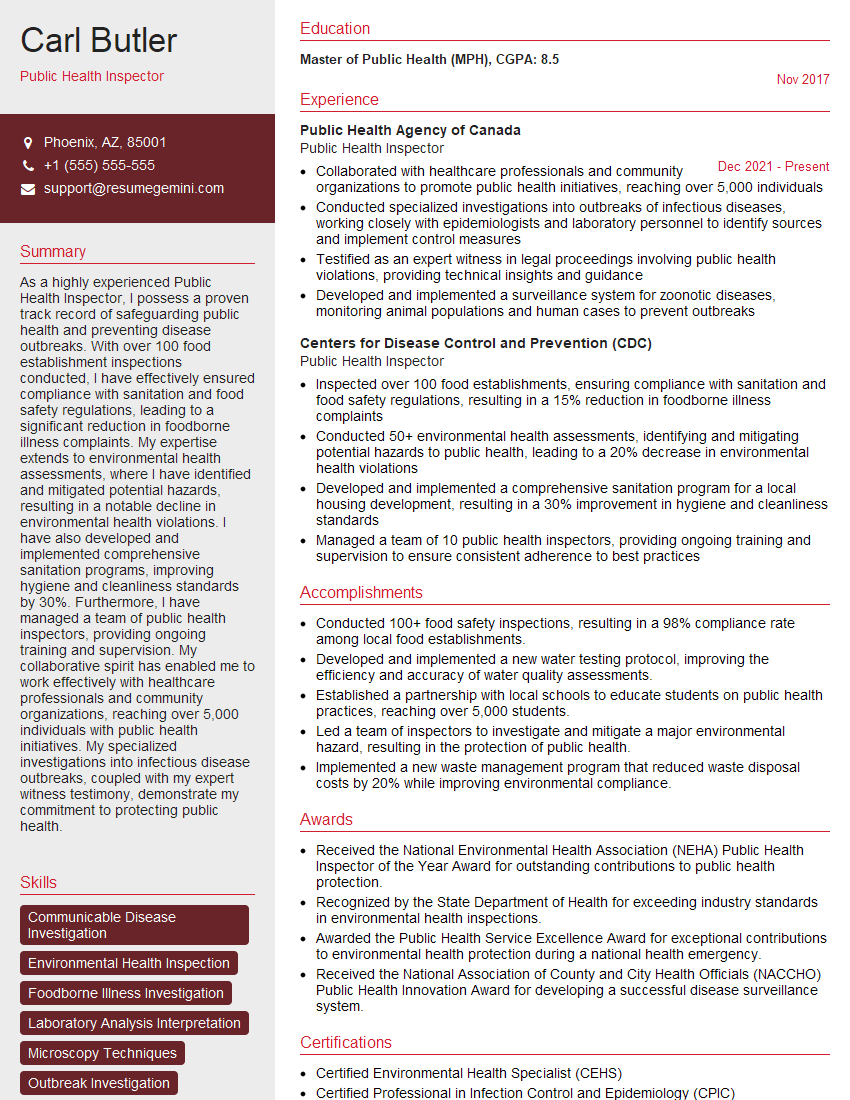
Public Health Inspector Resume Sample
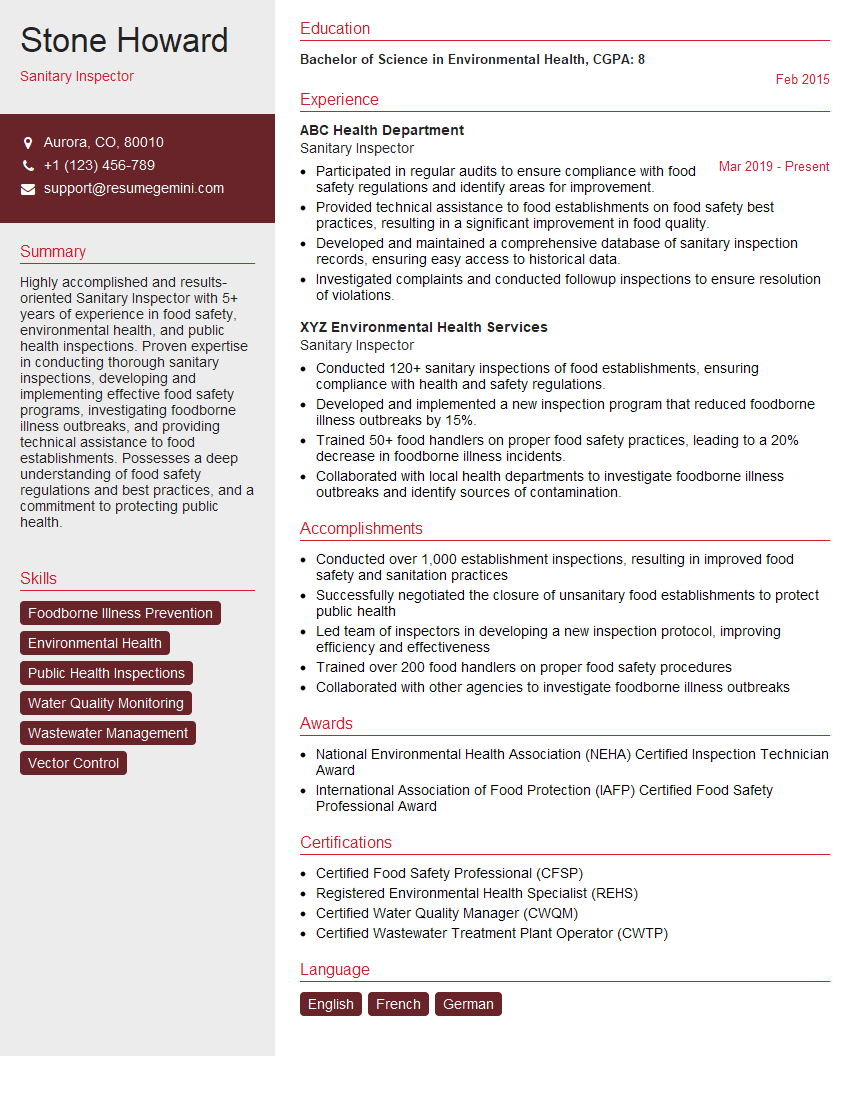
Sanitary Inspector Resume Sample
Explore more articles
Users Rating of Our Blogs
Share Your Experience
We value your feedback! Please rate our content and share your thoughts (optional).
What Readers Say About Our Blog
Very informative content, great job.
good