The right preparation can turn an interview into an opportunity to showcase your expertise. This guide to Heating Load Calculations interview questions is your ultimate resource, providing key insights and tips to help you ace your responses and stand out as a top candidate.
Questions Asked in Heating Load Calculations Interview
Q 1. Explain the difference between sensible and latent heat loads.
Sensible and latent heat loads represent different ways heat affects a space. Sensible heat is the heat we can feel and measure with a thermometer – it changes the air temperature. Think of turning up your heater; the air gets warmer, that’s sensible heat. Latent heat is the heat absorbed or released during a phase change, like water evaporating or condensing. This doesn’t change the air temperature directly, but it impacts the moisture content, influencing comfort and energy needs. For example, if you have a lot of moisture in the air, your heater has to work harder to remove that moisture, even if the temperature is already comfortable.
Imagine a glass of iced tea on a hot day. The ice melting (latent heat) cools the drink without significantly changing the surrounding air temperature. In contrast, the sun warming the air around the glass (sensible heat) increases the temperature of the air itself.
Q 2. Describe the methods used to calculate heating loads.
Heating load calculations employ several methods, often used in combination. The most common include:
- Degree-day method: This simpler approach uses historical weather data (heating degree-days) to estimate the energy needed to maintain a desired indoor temperature. It’s useful for preliminary estimations, but lacks the detail of more sophisticated methods.
- Manual J (or equivalent): This detailed method considers various factors like building characteristics (insulation, window types, wall constructions), climate data, and internal heat gains (people, appliances) to precisely determine the heating load. It’s a step-by-step process, often involving complex calculations.
- Software-based methods: Specialized software packages automate the manual J process, calculating loads based on inputted building data and climate conditions. These tools significantly streamline the process and reduce the likelihood of errors.
The choice of method depends on the project’s complexity and the level of accuracy required. A quick preliminary estimate might use degree-days, while a larger, more complex building will necessitate a detailed manual J calculation or software analysis.
Q 3. What are the key factors influencing heating load calculations?
Numerous factors influence heating load calculations. Key among them are:
- Climate data: Outdoor temperature, wind speed, solar radiation, and humidity all significantly impact heating needs.
- Building envelope: The building’s insulation levels (walls, roof, floors), window type and area, and air leakage rates directly affect heat loss.
- Internal heat gains: Occupancy, lighting, equipment, and appliances generate heat within the building, reducing the heating load.
- Building geometry and orientation: Shape, size, and orientation (relative to the sun) influence heat loss and solar gains.
- Desired indoor temperature: A higher desired temperature increases the heating load.
- Ventilation rates: The amount of fresh air introduced impacts the heating load as it needs to be heated to the desired indoor temperature.
A well-insulated building with minimal air leakage will have a lower heating load than a poorly insulated building with significant air infiltration.
Q 4. How do you account for infiltration and exfiltration in heating load calculations?
Infiltration (uncontrolled air leakage into the building) and exfiltration (air leakage out of the building) are crucial in heating load calculations as they represent significant heat loss. These are accounted for by:
- Air leakage testing: A blower door test measures the building’s air tightness, quantifying infiltration and exfiltration rates (typically in cubic feet per minute per square foot of building envelope area – CFM/ft²).
- Air changes per hour (ACH): This metric represents how many times the building’s air volume is replaced per hour due to infiltration/exfiltration. It is directly incorporated into load calculations.
- Crack methods: Less precise but can be used as a first approximation to estimate the air leakage, estimating the air leakage through various openings.
The higher the ACH, the greater the heat loss and the higher the heating load. Software packages often include modules for calculating the impact of infiltration/exfiltration based on building design and air leakage measurements.
Q 5. Explain the role of climate data in heating load calculations.
Climate data is essential for accurate heating load calculations. It provides the foundation for determining the heating requirements based on expected outdoor conditions. This data typically includes:
- Hourly or daily temperatures: Used to determine the temperature difference between inside and outside, a key driver of heat loss.
- Wind speed and direction: Wind increases heat loss from the building envelope, and its direction can affect which surfaces lose heat most significantly.
- Solar radiation: Solar gains can reduce the heating load, particularly during the day on south-facing walls.
- Humidity: Affects latent heat load calculations.
This data is usually obtained from local weather stations or meteorological databases. Accurate climate data is crucial to avoid over- or under-sizing the heating system, ensuring efficient and comfortable heating.
Q 6. How do you calculate the heating load for a building with different zones?
Buildings with different zones (e.g., a living room, bedrooms, bathroom) require a zonal heating load calculation. This involves calculating the individual heating load for each zone, considering its unique characteristics:
- Individual room dimensions and thermal properties: Each zone’s size, insulation levels, window area, and orientation all affect its heat loss.
- Internal heat gains: Occupancy and equipment usage vary between zones, impacting their individual heating requirements.
- Zone interactions: Heat can transfer between adjacent zones, influencing the overall load.
The total heating load for the building is the sum of the individual zonal loads. This approach allows for optimizing the heating system design by tailoring the heating capacity to the specific needs of each zone, improving efficiency and comfort.
For example, a large south-facing living room might receive enough solar heat to require less supplemental heating compared to a north-facing bedroom.
Q 7. What software or tools are you familiar with for performing heating load calculations?
I’m proficient in several software packages commonly used for heating load calculations. These include:
- Carrier HAP (Heating, Air-Conditioning, and Refrigeration): A widely-used industry-standard software.
- eQUEST (EnergyPlus Quick Simulation Tool): Powerful software for energy modeling, capable of detailed heating load calculations.
- Trace 700: Another comprehensive energy modeling software with heating load calculation capabilities.
- EnergyPlus: An open-source software allowing for high-level simulation and highly accurate heating load calculations.
My experience with these tools allows me to accurately model building energy performance and design optimal heating systems tailored to specific building needs and climate conditions. The choice of software depends on project complexity, accuracy needs, and client preferences. I always ensure the selected software aligns with industry best practices and relevant codes.
Q 8. Describe your experience with Manual J or similar calculation methods.
Manual J, or similar load calculation methods like ACCA Manual J, are the industry standard for accurately determining the heating and cooling needs of a building. My experience spans over ten years, encompassing countless residential and commercial projects. I’m proficient in using both manual calculations and software programs based on these methodologies. The process involves meticulously gathering data on the building’s construction, climate, and occupancy, then using established formulas and algorithms to predict heat loss during the coldest periods and heat gain during the hottest. I’ve used this method to size HVAC systems to ensure optimal efficiency and comfort, avoiding oversizing or undersizing that leads to wasted energy and discomfort.
For example, recently I was working on a historic building renovation. The Manual J calculation highlighted significant heat loss through poorly insulated walls and single-pane windows. This information informed the design specifications, ensuring the new HVAC system was appropriately sized for the building’s actual needs and energy efficiency targets were met. I have experience using different software packages which automate these calculations, like HAP, but I maintain a strong understanding of the underlying principles to validate results and effectively troubleshoot discrepancies.
Q 9. How do you handle unusual building geometries in heating load calculations?
Unusual building geometries present a unique challenge, requiring a more nuanced approach to heating load calculations. I handle these by breaking down complex shapes into simpler, manageable sections. For example, a building with a multi-faceted roof might be divided into several rectangular or triangular segments, each calculated separately. I utilize advanced software, often using CAD integrations, that can handle irregular shapes more efficiently than manual methods. Specialized software allows for the input of complex shapes and detailed surface area calculations, thereby improving the accuracy of the final load estimate. The software performs the complex geometric calculations, and I review the results for accuracy and reasonableness. For instance, in a recent project involving a geodesic dome, I used a specialized software program to accurately model the surface area and calculate the heat transfer through its unique structure. The software also helps consider the thermal bridging effect, which plays an important role in irregularly shaped buildings.
Q 10. What are the implications of inaccurate heating load calculations?
Inaccurate heating load calculations have significant implications, leading to several undesirable outcomes. An undersized system struggles to maintain comfortable temperatures, resulting in higher energy bills, occupant discomfort, and potential equipment failure due to overworking. Conversely, an oversized system cycles on and off frequently, leading to temperature swings, poor humidity control, and reduced energy efficiency because it doesn’t run long enough to dehumidify properly. This contributes to higher energy bills and reduced comfort. Moreover, an incorrectly sized system might affect warranty validity in some cases. Ultimately, this impacts the building’s overall operational cost and the occupant’s satisfaction.
For instance, I once reviewed a project where an undersized system was installed based on faulty calculations. The result was that the occupants were perpetually cold, and the heating system was running constantly, leading to high energy consumption and an early system failure. The financial consequences for the homeowner were substantial.
Q 11. How do you validate the accuracy of your heating load calculations?
Validating the accuracy of heating load calculations is crucial. I employ several methods: First, I rigorously check my data inputs for accuracy. This includes verifying the building’s dimensions, insulation types and R-values, window types and U-factors, and climate data. Secondly, I compare the results from different calculation methods or software packages. A discrepancy between the results warrants a thorough review of the input data and the calculation process. Finally, where possible, I compare calculated loads with historical energy consumption data of similar buildings to establish a reasonable benchmark. If the difference is significant, a deeper investigation is carried out. This multifaceted approach ensures confidence in the final results and helps identify and correct errors early on.
Q 12. Explain the concept of heat loss and heat gain.
Heat loss refers to the transfer of heat energy from the inside of a building to the outside environment. This occurs primarily through conduction (heat transfer through direct contact), convection (heat transfer through movement of air or fluids), and radiation (heat transfer through electromagnetic waves). Heat gain, conversely, is the transfer of heat energy from the outside environment into the building. This is often caused by solar radiation (sunlight), conduction through building materials (like walls or roofs exposed to sunlight), and infiltration (air leakage).
Think of it like this: In winter, heat loss is like a leaky bucket; your warm indoor air is constantly escaping, making your home colder. In summer, heat gain is like a constantly filling bucket; the outside heat keeps pouring into your home, making it warmer.
Q 13. Describe the different types of insulation and their impact on heating loads.
Various insulation types significantly impact heating loads. The R-value (thermal resistance) is a key indicator of a material’s effectiveness in resisting heat flow. Higher R-values mean better insulation. Common types include fiberglass batt insulation (used in walls and attics), spray foam insulation (offering excellent air sealing and R-value), cellulose insulation (made from recycled paper), and rigid foam board insulation (often used for exterior walls or foundations). The choice of insulation depends on factors like the application, cost, environmental impact, and desired R-value. For instance, spray foam is often preferred for its superior air sealing properties, reducing air leakage, a significant contributor to heat loss. Using inadequate insulation results in increased heating loads, escalating energy bills and decreased occupant comfort.
Q 14. How do windows and doors affect heating loads?
Windows and doors are significant contributors to heat loss, especially in colder climates. Their impact is determined by their U-factor (the rate of heat transfer) and their surface area. Lower U-factors represent better insulation. Double- or triple-paned windows with low-E coatings significantly reduce heat transfer compared to single-pane windows. Doors, similarly, affect heating load; solid-core doors provide better insulation than hollow-core doors. Air leaks around windows and doors can also substantially increase heat loss. In my work, I always emphasize the importance of properly sealing these gaps with weather stripping or caulk. Poorly insulated windows and doors can increase heating loads by up to 30% or more, emphasizing their substantial impact on energy efficiency and overall heating costs. I routinely recommend energy-efficient window and door upgrades as a cost-effective strategy to improve the building’s thermal envelope.
Q 15. What is the significance of the building’s thermal envelope in heating load calculations?
The building’s thermal envelope is essentially its skin – the components that separate the conditioned indoor space from the unconditioned outdoor environment. In heating load calculations, its significance lies in its ability to resist heat transfer. A well-insulated and airtight envelope minimizes heat loss, reducing the heating load and ultimately the energy required to maintain a comfortable indoor temperature. Think of it like a thermos: a well-designed thermos keeps your drink hot for a long time because its double-walled construction and vacuum insulation minimize heat transfer. Similarly, a well-designed building envelope minimizes heat loss to the outside.
Factors within the thermal envelope that heavily influence heating load calculations include:
- Insulation levels: Higher R-values (resistance to heat flow) in walls, roofs, and floors mean less heat loss.
- Window type and glazing: Double or triple-paned windows with low-E coatings significantly reduce heat loss compared to single-pane windows.
- Air leakage: Air infiltration through cracks and gaps in the building envelope contributes significantly to heat loss. Air tightness is crucial.
- Thermal bridging: Continuous conductive paths, like metal studs, can bypass insulation and create areas of increased heat loss.
Ignoring the thermal envelope’s properties in heating load calculations will lead to inaccurate sizing of the heating system, potentially resulting in under-heating (uncomfortable conditions) or over-heating (increased energy costs and potential system issues).
Career Expert Tips:
- Ace those interviews! Prepare effectively by reviewing the Top 50 Most Common Interview Questions on ResumeGemini.
- Navigate your job search with confidence! Explore a wide range of Career Tips on ResumeGemini. Learn about common challenges and recommendations to overcome them.
- Craft the perfect resume! Master the Art of Resume Writing with ResumeGemini’s guide. Showcase your unique qualifications and achievements effectively.
- Don’t miss out on holiday savings! Build your dream resume with ResumeGemini’s ATS optimized templates.
Q 16. Explain the concept of U-value and its role in heating load calculations.
The U-value, or overall heat transfer coefficient, represents the rate of heat transfer through a building component like a wall or window, expressed in watts per square meter-Kelvin (W/m²K). A lower U-value indicates better insulation and less heat loss. Think of it as the inverse of R-value (thermal resistance). A low U-value means high resistance to heat flow.
In heating load calculations, the U-value is crucial because it directly determines the amount of heat lost through each building element. For each component (walls, roof, windows, floors), we calculate the heat loss using the formula:
Heat Loss = U-value × Area × (Indoor Temperature - Outdoor Temperature)For example, a wall with a U-value of 0.3 W/m²K, an area of 10 m², and a temperature difference of 20°C (indoor 20°C, outdoor 0°C) would have a heat loss of 60 watts. Summation of heat loss across all building components gives the total building heat loss.
Accurate U-values are essential for precise heating load calculations, and different building materials and construction techniques lead to varying U-values, influencing the overall heating demand.
Q 17. How do you account for internal heat gains in heating load calculations?
Internal heat gains are heat sources within the building that contribute to the overall thermal balance. They reduce the heating load by offsetting some of the heat lost to the outside. Accurate accounting for internal heat gains is crucial for avoiding oversizing the heating system, leading to energy savings and improved system efficiency.
Sources of internal heat gains include:
- People: Each person generates a certain amount of heat.
- Lighting: Incandescent and fluorescent lights generate significant heat.
- Appliances: Ovens, refrigerators, computers, and other appliances produce heat as a byproduct.
- Equipment: Industrial machinery or specialized equipment adds to the internal heat gain.
These gains are usually estimated based on occupancy levels, appliance types, and lighting wattage. Heating load calculation software often includes databases with typical values for these sources. These values are often expressed in watts or BTU/hr and are added to the calculation to compensate for the reduction in heating needed.
For example, in a well-insulated building with high internal heat gains from occupants and appliances, the calculated heating load might be much lower than in a poorly insulated building with few internal heat sources.
Q 18. What is the impact of occupancy on heating loads?
Occupancy significantly impacts heating loads because people generate sensible heat (body heat) and latent heat (moisture from breathing and perspiration). This heat adds to the internal heat gains, reducing the heating load required. A building with more occupants will require less heating than an identical building with fewer occupants, provided all other factors are equal.
The impact of occupancy is usually estimated using a per-person heat gain factor. This factor accounts for the metabolic rate and clothing levels, producing a typical heat gain in watts or BTU/hr per person. This value is then multiplied by the number of occupants to determine the total heat gain contribution from people.
For example, in a school, the heating load during school hours will be considerably lower than during unoccupied hours due to the substantial heat generated by the students and staff. This needs to be factored into the design calculations to ensure an appropriate system is selected.
Q 19. How do you determine the appropriate heating system size based on heating load calculations?
Determining the appropriate heating system size involves several steps after completing the heating load calculation:
- Calculate the total heating load: This is the sum of all heat losses through the building envelope, considering internal heat gains and other factors like climate data.
- Add safety factors: Add a safety margin (typically 10-20%) to account for uncertainties and future changes in occupancy or building use. This prevents undersizing the system, ensuring the building can meet its heating demand under various conditions.
- Select a heating system: Choose a suitable system (e.g., furnace, heat pump, boiler) based on fuel availability, building type, and budget.
- Consider system efficiency: Select a system with a high efficiency rating to minimize energy consumption and operational costs.
- Size the system: Select a system with a capacity (BTU/hr or kW) that comfortably meets the calculated heating load plus the safety factor.
- Verify system sizing: Use system sizing software or consult with a heating professional to ensure that the selected system properly matches the calculated load. This should include checking the system’s capacity curve to see if the peak demand can be met.
Undersizing the system leads to inadequate heating, while oversizing it leads to higher initial costs, potential cycling issues (short on-off cycles), and reduced efficiency. Careful system sizing based on accurate load calculations ensures optimal performance and cost-effectiveness.
Q 20. Explain the difference between design and peak heating loads.
The design heating load represents the estimated heating demand under typical design conditions. It is usually calculated for the coldest day of the year, assuming specific outside temperature, wind speed, and solar radiation. It provides a basis for sizing the heating system. It aims to provide sufficient heating to maintain a comfortable indoor temperature under average worst-case conditions.
The peak heating load, on the other hand, represents the maximum heating demand the system might experience at any point during the heating season. This accounts for the combination of extremely cold outdoor temperatures coupled with exceptionally low internal heat gains. The peak heating load is generally higher than the design heating load.
The difference is important because the design heating load is used for sizing the system, whereas the peak heating load is helpful in determining whether the system has sufficient capacity to handle extreme conditions and if the system’s operation will be within tolerable limits under various scenarios.
Q 21. How do you account for solar heat gain in heating load calculations?
Solar heat gain refers to the heat entering a building through its windows, walls, and roof as a result of direct sunlight. It’s a significant factor, particularly in buildings with south-facing windows. In heating load calculations, solar heat gain acts as a positive heat input, reducing the amount of heating required. Ignoring it leads to an overestimation of the heating load.
Accounting for solar heat gain involves several steps:
- Determine solar radiation: Use weather data to obtain hourly or daily solar radiation data for the building’s location and orientation.
- Calculate solar heat gain through windows: Use the window’s solar heat gain coefficient (SHGC) to determine how much solar radiation passes through the glazing. A lower SHGC means less heat gain.
- Calculate solar heat gain through walls and roofs: Use the absorptivity and thermal properties of the building’s exterior surfaces to estimate solar heat gain. Dark-colored materials absorb more solar radiation than light-colored materials.
- Apply solar heat gain to the load calculation: Deduct the calculated solar heat gain from the overall heat loss to obtain a more accurate heating load.
Sophisticated heating load calculation software uses sophisticated algorithms to incorporate solar radiation data, building orientation, shading factors (from trees, buildings), and material properties to obtain precise estimates of solar heat gain.
By properly considering solar heat gain, we get a more efficient, cost-effective, and appropriately sized heating system.
Q 22. Explain the role of air changes per hour (ACH) in heating load calculations.
Air changes per hour (ACH) represent the rate at which the air within a building is exchanged with outside air. In heating load calculations, ACH is crucial because it directly impacts heat loss. A higher ACH means more heated air escapes, necessitating a larger heating system to compensate. Imagine a house with leaky windows and doors – the higher the ACH, the more frequently the warm air inside is replaced with cold outside air.
We determine ACH through various methods, including air infiltration testing (using blower doors) which measures the rate of air leakage, and calculation based on building construction and climate data. This value is then used in the load calculation to determine the heating system size needed to maintain the desired indoor temperature. For instance, a well-sealed home might have an ACH of 0.5, while a poorly sealed home could have an ACH of 3 or more. A higher ACH directly translates into a higher heating load, requiring a more powerful heating system or increased energy consumption.
Q 23. What are some common mistakes to avoid in heating load calculations?
Common mistakes in heating load calculations often stem from oversimplification or neglecting crucial factors. Here are some key errors to avoid:
- Ignoring climate data: Using outdated or inaccurate local climate data leads to significant discrepancies in calculated heating loads. You need precise heating degree days (HDD) and design temperatures to properly size a heating system.
- Inaccurate building dimensions and construction details: Incorrect measurements of wall areas, window sizes, or insulation levels directly affect heat loss calculations. This results in an undersized or oversized heating system.
- Neglecting infiltration and exfiltration: Failing to account for air leakage through cracks and openings underestimates the heating load substantially. A proper air infiltration test is crucial.
- Overlooking internal heat gains: Sources like people, appliances, and lighting generate heat. Ignoring these internal heat gains can lead to oversizing the heating system.
- Using outdated calculation methods: Modern building codes and standards often incorporate sophisticated software and modeling techniques. Sticking to outdated methods can lead to inaccurate results.
Q 24. How do you incorporate energy efficiency measures into heating load calculations?
Incorporating energy efficiency measures into heating load calculations is essential for designing sustainable and cost-effective heating systems. We do this by modifying the input parameters within the calculation. For example:
- Improved insulation: Higher R-values for walls, roofs, and floors directly reduce heat loss, leading to a lower calculated heating load and a smaller, more energy-efficient system. We adjust the U-values (overall heat transfer coefficient) accordingly in the calculations.
- High-performance windows: Windows with low U-values significantly reduce heat transfer. The calculation software will directly incorporate the window U-value to adjust the heat loss from the glazing.
- Air sealing: Reducing air infiltration (lower ACH) lowers the heating load. We update the air infiltration rate based on the planned air sealing improvements.
- Heat recovery ventilation: Systems that recover heat from exhaust air reduce the heating load needed to replace that lost heat. These systems are often incorporated into the ventilation model used in the calculation.
By modifying the input parameters to reflect these improvements, the calculated heating load accurately reflects the reduced energy demand of the more efficient building. This allows for the selection of a smaller, potentially less expensive, and more efficient heating system.
Q 25. Discuss the importance of considering local building codes and standards.
Local building codes and standards are paramount in heating load calculations because they dictate minimum requirements for energy efficiency, safety, and system performance. Ignoring these standards can lead to systems that are non-compliant, potentially unsafe, and subject to penalties. These codes often specify minimum insulation levels, window performance requirements, and ventilation standards, all of which significantly influence the heating load calculation. For example, a stricter code might mandate higher R-value insulation, leading to a lower heating load calculation compared to a less stringent code. Always consult the relevant codes and standards for the specific geographic location and type of building being considered.
Q 26. Explain how climate change might affect future heating load calculations.
Climate change is altering weather patterns, leading to shifts in heating degree days (HDD) and design temperatures. Future heating load calculations will need to account for these changes. In some regions, we might see a decrease in the average HDD, suggesting less heating might be needed. However, other regions could experience more extreme temperature swings, potentially requiring increased heating capacity during colder periods or more robust systems capable of handling larger variations in temperature. Incorporating climate change projections into future load calculations is essential to ensure heating systems are adequately sized and resilient to changing climate conditions. This might involve using climate models to predict future HDD and temperature variations.
Q 27. How do you explain complex heating load calculations to a non-technical audience?
Explaining complex heating load calculations to a non-technical audience requires simplification and analogy. I’d start by explaining that it’s like figuring out how much fuel your car needs for a specific trip. We consider factors like the size of the house (like the size of the car’s gas tank), how well insulated it is (like the car’s fuel efficiency), and how cold it gets outside (like the distance of the trip). The calculation determines the size of the ‘engine’ (heating system) needed to keep your house warm, ensuring it’s neither too small (leading to cold houses) nor too large (wasting energy and money).
I might use visual aids like diagrams showing heat flow through the building envelope. Focus on the key takeaways: a properly sized heating system saves energy and money, and a poorly sized one leads to discomfort and increased utility bills. The ultimate goal is to clearly communicate the importance of accurate calculations for comfort and cost savings.
Q 28. Describe a situation where you had to troubleshoot an issue related to heating load calculations.
I once encountered a situation where a newly installed heating system in a renovated building was significantly underperforming. The initial heating load calculation had been done by another engineer. During a site visit, I discovered that the actual insulation levels in the walls and roof were significantly lower than what was specified in the original calculations. Additionally, the air sealing had been inadequate, leading to a much higher air change rate than accounted for. These omissions resulted in a significant underestimation of the heating load.
My solution involved performing a thorough site audit, including air infiltration testing and detailed measurements of insulation levels. Using this updated information, I recalculated the heating load, which showed a substantial increase compared to the initial estimate. We then determined that the underperforming heating system needed to be replaced with a larger unit, and corrective actions were taken to improve the air sealing. The project was completed successfully with a significantly improved outcome. This case highlighted the importance of meticulous site assessment and the potential for significant errors if initial calculations aren’t accurate and up-to-date.
Key Topics to Learn for Heating Load Calculations Interview
- Heat Transfer Mechanisms: Understanding conduction, convection, and radiation – their impact on building heat loss and gain.
- Building Envelope Components: Analyzing the thermal performance of walls, roofs, windows, and floors; applying U-values and R-values in calculations.
- Infiltration and Ventilation Losses: Calculating heat loss due to air leakage and the impact of ventilation rates on heating load.
- Internal Heat Gains: Accounting for heat generated by occupants, appliances, and lighting.
- Climate Data and Design Conditions: Utilizing weather data to determine design temperatures and their influence on heating load calculations.
- Heating System Selection and Sizing: Understanding how heating load calculations inform the selection and sizing of appropriate heating equipment.
- Software and Tools: Familiarity with common software used for heating load calculations (mentioning general categories rather than specific software names to avoid bias).
- Practical Application: Working through sample calculations and interpreting results; understanding the implications of different calculation methods.
- Troubleshooting and Error Analysis: Identifying and addressing potential sources of error in calculations and interpreting unusual results.
- Energy Codes and Standards: Awareness of relevant building codes and energy efficiency standards related to heating systems.
Next Steps
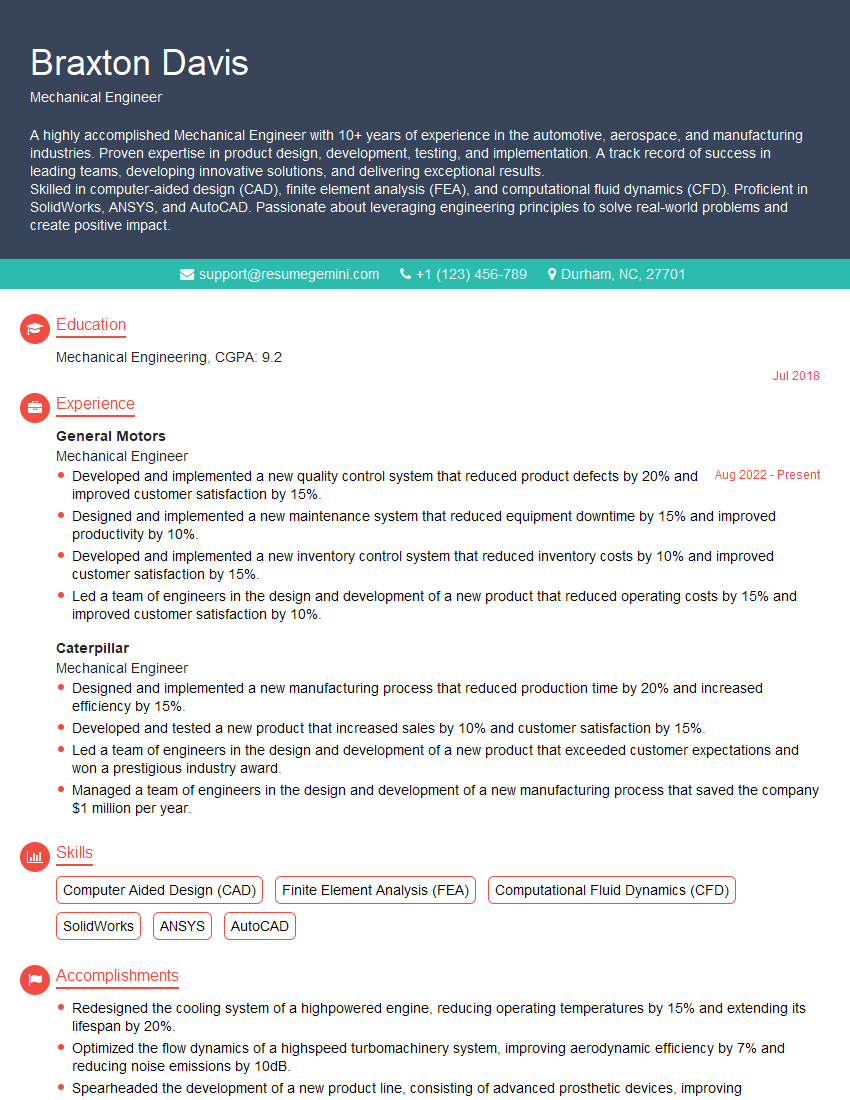
Mastering heating load calculations is crucial for career advancement in HVAC engineering and related fields. A strong understanding of these principles demonstrates a solid technical foundation and problem-solving abilities highly valued by employers. To significantly boost your job prospects, create an ATS-friendly resume that showcases your skills and experience effectively. ResumeGemini is a trusted resource to help you build a professional and impactful resume. We provide examples of resumes tailored to Heating Load Calculations to guide you in crafting your own compelling application. Take the next step towards your dream career – start building your resume today!




Explore more articles
Users Rating of Our Blogs
Share Your Experience
We value your feedback! Please rate our content and share your thoughts (optional).
What Readers Say About Our Blog
Very informative content, great job.
good