Every successful interview starts with knowing what to expect. In this blog, we’ll take you through the top Heavy Equipment Operator Certification interview questions, breaking them down with expert tips to help you deliver impactful answers. Step into your next interview fully prepared and ready to succeed.
Questions Asked in Heavy Equipment Operator Certification Interview
Q 1. Describe your experience operating an excavator.
My excavator operating experience spans over eight years, encompassing a wide range of projects, from residential site preparation to large-scale commercial construction. I’m proficient in various excavator models, including both conventional hydraulic excavators and those with advanced control systems. I’ve worked extensively on projects requiring precise digging, trenching, and material handling. For example, on a recent highway expansion project, I was responsible for precisely excavating the foundation for a large bridge abutment, requiring meticulous control and an understanding of soil conditions to prevent collapse. This involved coordinating with other equipment operators and ensuring minimal disruption to the existing roadway. Another project involved delicate excavation around existing utilities, which demanded a high level of precision and situational awareness to avoid damage.
Q 2. Explain the pre-operational checks you perform before operating heavy equipment.
Pre-operational checks are crucial for safety and equipment longevity. My routine involves a methodical approach, starting with a visual inspection of the entire machine for any visible damage, leaks, or loose components. I then check fluid levels (hydraulic oil, engine oil, coolant) and ensure they’re within the manufacturer’s recommended ranges. I inspect the tires or tracks for proper inflation and wear, examine the undercarriage for any obstructions. The next step is checking the operational systems: testing all controls (boom, stick, bucket), ensuring smooth movement and response. I’ll also confirm the functionality of the safety systems, including the emergency shut-off, horns, lights, and backup alarms. Finally, I perform a brief engine run-up to check for unusual noises or vibrations. Think of it like a pilot conducting a pre-flight check; a thorough inspection is paramount to a safe and productive operation.
Q 3. How do you ensure safety while operating heavy machinery?
Safety is my top priority. This begins with adherence to all site-specific safety regulations and the company’s safety protocols. I always wear the appropriate Personal Protective Equipment (PPE), including a hard hat, safety glasses, hearing protection, and high-visibility clothing. Before commencing any operation, I conduct a thorough site assessment, identifying potential hazards like overhead power lines, underground utilities, or unstable ground conditions. I maintain a safe operating distance from other equipment and personnel, constantly communicating with others on the site using hand signals or two-way radios. Smooth, controlled movements are crucial; I avoid jerky operations that could cause instability or accidents. Regular maintenance and pre-operational checks are key to preventing equipment-related accidents. Furthermore, I’m always aware of my surroundings, constantly scanning for potential hazards and adjusting my operations accordingly. It’s about proactive risk assessment and responsible operation.
Q 4. What are the different types of excavator attachments and their uses?
Excavators can be equipped with a variety of attachments to expand their versatility. A common example is the hydraulic breaker, used for demolition and rock breaking. Rippers are used for loosening compacted soil or breaking up hard surfaces. Grapples are excellent for handling loose materials like scrap metal or logs. Augers are used for drilling holes for foundation piling or planting. Thumbs are added to the bucket for added control and material handling, particularly for picking up and placing irregularly shaped objects. The choice of attachment depends entirely on the specific task; for instance, a ripper is ideal for breaking up rocky terrain before excavation, while a grapple is necessary for handling bulky, uneven material. The selection process involves understanding the job requirements and choosing the appropriate attachment to optimize efficiency and safety.
Q 5. Describe your experience with grading and leveling.
Grading and leveling is a significant part of my experience. I’ve been involved in numerous projects requiring precise grading for road construction, site preparation, and landscaping. I’m proficient in using both conventional methods and GPS-guided systems for accurate grading. My experience includes working with various soil types and understanding how to achieve the desired level of compaction. For example, on a recent residential development project, I used a laser-guided grading system to ensure precise leveling across multiple lots, guaranteeing proper drainage and a stable foundation for building construction. This demands a keen eye for detail and an understanding of how different grading techniques affect the final result. Understanding soil composition and its impact on the grading process is also paramount for success.
Q 6. How do you handle unexpected equipment malfunctions?
In case of unexpected equipment malfunction, my first step is to immediately shut down the machine and ensure the safety of myself and others in the vicinity. I then conduct a preliminary assessment of the problem, trying to identify the cause and its severity. If the issue is minor and I’m capable of addressing it safely (e.g., a minor hydraulic leak), I’ll attempt a repair after consulting with a supervisor or mechanic. However, if the issue is significant or beyond my expertise, I immediately report the problem to my supervisor, providing as much detail as possible regarding the circumstances and potential causes. I’ll follow the company’s established procedures for equipment malfunction, ensuring the safety of the machine until a qualified technician can address it. Safety always comes first – a hasty attempt at repair could lead to further damage or injury.
Q 7. What are the common causes of heavy equipment breakdowns?
Heavy equipment breakdowns can stem from various factors. Lack of regular maintenance is a significant contributor; neglecting routine checks and servicing can lead to premature wear and tear on components. Operator misuse can also be a factor, such as operating the machine beyond its capacity or engaging in aggressive maneuvers. Environmental factors play a role too: extreme weather conditions (e.g., excessive heat or cold) can affect the performance of hydraulic systems and engines. Wear and tear on components like hydraulic hoses, pumps, and engines is inevitable with prolonged use. And finally, poor-quality fuel or lubricants can negatively impact the engine’s performance and lifespan. Regular maintenance, proper operator training, and using high-quality fluids can significantly minimize breakdowns.
Q 8. Explain your experience with different types of soil and their impact on operation.
Understanding soil conditions is paramount for efficient and safe heavy equipment operation. Different soil types present unique challenges regarding traction, stability, and the potential for equipment damage. For example, clay soil, when wet, becomes extremely sticky and can cause significant issues with ground engagement and maneuverability. Conversely, sandy soil can be unstable, leading to equipment sinkage and reduced efficiency.
- Clay: Requires careful consideration of speed and traction. I often use lower gears and wider tracks to distribute weight and prevent excessive slippage. If the clay is very wet, I might need to wait for better conditions or consider using a different piece of equipment altogether.
- Sandy Soil: Presents a different set of problems. The lack of cohesion leads to instability. I’d adjust the blade angle on a bulldozer to create a more stable base and avoid aggressive maneuvers that could cause the machine to tip.
- Rocky Soil: This requires careful operation to avoid damage to the equipment’s undercarriage. Slower speeds and precise movements are crucial. Protecting the equipment’s tracks or wheels from sharp rocks is a top priority.
- Gravel: Similar to sandy soil, proper grading and maintaining appropriate speed are key to ensure a stable base and avoid slippage.
My experience allows me to quickly assess soil conditions and adapt my operating techniques accordingly, ensuring both efficiency and safety.
Q 9. Describe your proficiency in operating a bulldozer.
I possess extensive experience operating bulldozers, including both tracked and wheeled models. My proficiency encompasses a wide range of tasks, from land clearing and site preparation to fine grading and finish work. I’m comfortable with various blade types and their applications, understanding how each affects ground engagement, material movement, and final grading results.
For instance, I’ve used a bulldozer to clear large tracts of land for construction projects, carefully navigating around obstacles and ensuring the safe and efficient removal of trees, brush and other debris. I’ve also performed precise grading work for road construction, achieving specific slopes and elevations with millimeter accuracy. This involved understanding the principles of blade control, understanding the characteristics of the soil, and maintaining proper balance and control of the equipment.
My skills extend beyond basic operation; I also understand preventative maintenance schedules and troubleshooting common mechanical issues on bulldozers.
Q 10. How do you maintain accurate measurements and tolerances during operation?
Maintaining accurate measurements and tolerances is crucial in heavy equipment operation. I use a combination of techniques to ensure precision. This includes:
- Precise Equipment Calibration: Regularly checking and calibrating the machine’s measuring devices, like blade height indicators and GPS systems.
- Reference Points: Establishing clear reference points on the ground using survey markers or lasers to guide my work, especially during tasks that require precise alignment or grading.
- Visual Checks and Adjustments: Continuously monitoring my progress using visual cues and making small, incremental adjustments to maintain accuracy. This often involves using the machine’s onboard systems and understanding the implications of blade angle, tilt and position.
- Leveraging Technology: Utilizing GPS-guided systems for automated grading and precise earthmoving. This gives incredible accuracy and efficiency to a project.
For example, during the construction of a road, I would use a combination of GPS guidance and visual checks to ensure the roadbed met the exact specifications, maintaining consistent slopes and elevations within the specified tolerances. This level of precision ensures the integrity and safety of the finished product.
Q 11. What safety measures do you take when working near power lines?
Safety near power lines is paramount. My approach involves several key steps:
- Awareness and Planning: Before starting any work near power lines, I thoroughly assess the area, identifying the location and voltage of all lines. I also check for any potential hazards such as downed wires.
- Maintaining Distance: I maintain a safe distance from power lines at all times, following all specified safety regulations and using spotters when necessary.
- Communication: I communicate clearly with the power company and other workers on site to coordinate activities and avoid any potential conflicts.
- Emergency Procedures: I am familiar with emergency procedures in the event of a power line contact, including immediate evacuation and reporting.
Simply put, when working near power lines, I prioritize safety above all else. I’d rather take extra time and precautions than risk an accident.
Q 12. How do you ensure the stability of heavy equipment on uneven terrain?
Ensuring stability on uneven terrain requires careful planning and execution. My approach involves:
- Site Assessment: I carefully assess the terrain before beginning any operation, identifying potential hazards and areas of instability.
- Gradual Movements: I use slow, deliberate movements to avoid sudden changes in balance and potential tipping.
- Weight Distribution: I carefully manage the weight distribution of the equipment, avoiding overloading one side or concentrating weight on unstable areas.
- Proper Techniques: Employing techniques such as using the machine’s counterweights and adjusting the blade or bucket position to maintain balance.
- Using Stabilizers: When available, I use stabilizers to improve stability on sloping or uneven ground.
For example, when working on a steep hillside, I would position the equipment carefully, making sure the tracks are firmly planted and moving slowly and steadily. I’d always try to work with the contours of the hill, making adjustments to the blade angle to distribute the pressure across a broader area.
Q 13. What is your experience with GPS-guided equipment?
I have significant experience with GPS-guided equipment, including bulldozers and excavators. This technology greatly enhances accuracy and efficiency. I’m proficient in using GPS systems to guide earthmoving operations, achieve precise grading, and automate certain tasks.
For example, I’ve used GPS-guided systems to create accurate roadbeds, ensuring consistent slopes and elevations while greatly minimizing the manual effort involved. The automation and precision delivered by GPS enhances efficiency and reduces the potential for human error. My understanding extends to both the operational and the maintenance aspects of these systems.
Q 14. How do you handle challenging weather conditions during operation?
Operating heavy equipment in challenging weather conditions demands extra caution and skill. My strategy depends on the specific conditions:
- Rain: Reduced visibility and slippery conditions necessitate slower speeds, increased caution, and improved communication with the team.
- Snow/Ice: Requires careful maneuvering and additional measures such as using chains or tire chains to maximize traction. I avoid operations if conditions are deemed unsafe.
- High Winds: These can cause equipment instability and create hazardous conditions. In such cases, I either postpone the operation or take extra precautions such as reducing speed, securing equipment, and utilizing additional support or counterweights.
- Extreme Temperatures: I always take into account extreme heat or cold, ensuring equipment is well-maintained and operators are appropriately attired and hydrated. I might limit operation during peak heat of the day.
Safety is always my top priority. If conditions are too hazardous, I will always postpone work until conditions improve.
Q 15. Explain your experience with load capacity and weight distribution.
Understanding load capacity and weight distribution is fundamental to safe and efficient heavy equipment operation. It involves knowing the maximum weight a machine can handle and how that weight is distributed across its different components. Exceeding these limits can lead to equipment failure, damage to the load, or serious injury.
My experience includes regularly checking load charts before any lift to ensure the weight is within the machine’s operational capacity. I also consider the weight distribution – a load that’s unevenly distributed can destabilize the machine even if the total weight is within limits. For instance, when lifting a long steel beam, I’d ensure it’s properly centered to maintain stability. I’ve encountered situations where uneven loads required using additional equipment like counterweights or employing specialized rigging techniques. Always prioritizing safety and ensuring the load is securely fastened is paramount.
Career Expert Tips:
- Ace those interviews! Prepare effectively by reviewing the Top 50 Most Common Interview Questions on ResumeGemini.
- Navigate your job search with confidence! Explore a wide range of Career Tips on ResumeGemini. Learn about common challenges and recommendations to overcome them.
- Craft the perfect resume! Master the Art of Resume Writing with ResumeGemini’s guide. Showcase your unique qualifications and achievements effectively.
- Don’t miss out on holiday savings! Build your dream resume with ResumeGemini’s ATS optimized templates.
Q 16. Describe your knowledge of load charts and safe working limits.
Load charts are essential documents that specify the safe working limits for a particular piece of equipment. They outline maximum lifting capacities under various conditions, including boom angle, radius, and load center. Understanding these charts is crucial to prevent accidents. Safe working limits are not just about the maximum weight; they also account for factors such as ground conditions, stability, and the type of load being handled.
My knowledge of load charts involves more than just reading the numbers. I understand how different factors such as boom length and angle affect lifting capacity. I regularly cross-reference the load chart with the job site conditions and the specific load characteristics to determine the safest and most effective lifting procedure. For example, if I’m working on a sloped terrain, I will adjust my approach and reduce my lift capacity to compensate for the reduced stability.
Q 17. How do you communicate effectively with other crew members on a worksite?
Effective communication is critical on a construction site, where many people are working concurrently. On a heavy equipment site, clear and concise communication can prevent accidents and ensure smooth workflow. I utilize a multi-pronged approach.
- Hand Signals: For direct communication with spotters or other team members close by, standardized hand signals are essential for precise instructions during lifting or maneuvering operations.
- Two-Way Radios: For longer distances or in noisy environments, two-way radios enable clear communication even during complex operations. I always confirm instructions and acknowledge receipt.
- Pre-Job Briefings: Before commencing any task, a brief discussion outlines the plan, highlighting potential hazards and identifying clear communication channels for everyone involved.
- Verbal Confirmation: I always verbally confirm instructions received to avoid misunderstandings. A simple ‘copy that’ or ‘understood’ goes a long way.
I have worked in teams where clear communication prevented potential accidents. Once, a spotter noticed a slight shift in the load, and by immediately communicating with me, we were able to adjust the position before any damage occurred.
Q 18. What is your experience with preventative maintenance?
Preventative maintenance is key to ensuring the longevity and reliability of heavy equipment. It’s more than just routine checks; it involves proactively identifying and addressing potential problems before they escalate into major breakdowns. This saves time, money, and reduces the risk of accidents.
My experience involves performing daily pre-operational checks, including inspecting fluid levels (oil, coolant, hydraulic fluid), checking tire pressure, examining the condition of belts and hoses, and listening for unusual noises. I also participate in scheduled maintenance activities, including lubrication, filter changes, and component inspections, all as per the manufacturer’s recommendations. I maintain detailed records of all maintenance activities, noting any issues or repairs undertaken. This ensures that the equipment remains in optimal working condition, minimizing downtime and enhancing safety.
Q 19. Describe your experience working with different types of materials (e.g., rock, soil, concrete).
Working with different materials requires adapting techniques and understanding material properties. Different materials have different densities, strengths, and behavior. My experience includes handling rock, soil, and concrete using various heavy equipment such as excavators, bulldozers, and loaders.
- Rock: Requires powerful equipment and careful maneuvering to avoid damaging the machine. Breaking up large rocks may involve using specialized attachments or techniques.
- Soil: The type of soil significantly impacts the equipment’s operation. Clay soil may require different bucket attachments or techniques compared to sandy or gravelly soil.
- Concrete: Handling concrete requires understanding its properties – it’s heavy and can be abrasive. Special buckets and techniques might be required depending on whether it is wet or cured.
Each material presents unique challenges and demands different approaches to ensure efficient and safe operation. For instance, moving large boulders required using a ripper attachment on the excavator. Precise maneuvering was crucial to prevent damage to the machine and surroundings.
Q 20. How do you handle tight deadlines and demanding workloads?
Handling tight deadlines and demanding workloads in heavy equipment operation requires effective planning, prioritization, and efficient execution. I approach this by breaking down large tasks into smaller, manageable steps.
My strategy includes careful planning to optimize workflows and avoid unnecessary delays. I prioritize tasks based on urgency and importance, focusing on completing critical activities first. I also proactively communicate any potential delays or challenges to my supervisor to ensure everyone is informed. Teamwork is also crucial – coordinating effectively with other crew members enables a more efficient and timely completion of projects. I’ve consistently delivered projects under tight deadlines by remaining focused, proactive, and maintaining open communication with the team.
Q 21. Explain your understanding of relevant safety regulations and standards.
Safety is paramount in heavy equipment operation. My understanding of relevant safety regulations and standards is comprehensive and up-to-date. I’m familiar with OSHA regulations (or equivalent in your location) pertaining to heavy equipment operation, including pre-operational inspections, personal protective equipment (PPE) requirements, and safe operating procedures.
This includes knowing and adhering to rules concerning load capacity, load securing, communication protocols, and emergency procedures. I regularly review safety manuals and attend safety training sessions to stay updated on best practices and new regulations. I always prioritize safety, both for myself and for others working in the vicinity. For example, always ensuring that the work area is properly barricaded and that PPE is worn consistently, is an integral part of my daily operation.
Q 22. Describe your experience with different types of crane operations.
My experience encompasses a wide range of crane operations, including tower cranes, mobile cranes, and overhead cranes. I’m proficient in various lifting techniques, from simple lifts to complex rigging operations involving multiple lifts and specialized equipment. For example, I’ve successfully managed the lifting of prefabricated building sections using a tower crane, coordinating with the ground crew to ensure precise placement. Another example involves using a mobile crane to lift and place heavy HVAC units on the roof of a high-rise building, requiring careful consideration of wind speed and load capacity. My experience with overhead cranes includes operating them in manufacturing settings, requiring meticulous attention to detail and precise maneuvering within a confined space to avoid collisions.
- Tower Cranes: Extensive experience in high-rise construction projects.
- Mobile Cranes: Proficient in various lifting techniques and load calculations.
- Overhead Cranes: Skilled in precise maneuvering in manufacturing and industrial settings.
Q 23. How do you perform a site assessment before commencing work?
A thorough site assessment is crucial for safety and efficiency. Before commencing any work, I meticulously inspect the area, paying close attention to several key factors. This includes identifying potential hazards such as overhead power lines, underground utilities, unstable ground conditions, and any obstructions that could hinder operation or pose a safety risk. I also assess the accessibility of the site, including the availability of suitable access roads and working space. I always verify the load bearing capacity of the ground where the equipment will be positioned. I document my findings, including photographs and notes, to create a comprehensive record and share it with the team. For example, on one project, I identified a hidden underground gas line during the site assessment, preventing a potentially catastrophic accident. The detailed assessment allowed us to adjust our work plan and ensure safety.
- Hazard Identification: Power lines, unstable ground, obstructions.
- Accessibility Assessment: Access roads, working space.
- Ground Conditions: Load-bearing capacity verification.
- Documentation: Photographs and detailed notes.
Q 24. What is your experience with operating equipment in confined spaces?
Operating equipment in confined spaces demands heightened awareness and precise control. I have extensive experience working in such environments, adhering strictly to safety protocols. This includes utilizing smaller, more maneuverable equipment suitable for confined spaces. Communication with the ground crew and other workers becomes even more critical to ensure everyone is aware of the machine’s movements and potential blind spots. I always ensure adequate ventilation and assess potential hazards specific to confined spaces, like limited visibility or lack of escape routes. For instance, I’ve used a small excavator with a narrow bucket to dig trenches within a tight urban environment, focusing on precision to avoid damaging adjacent structures.
- Specialized Equipment: Smaller, more maneuverable machines.
- Enhanced Communication: Constant communication with ground crews.
- Safety Protocols: Strict adherence to safety regulations.
- Hazard Assessment: Specific risks of confined spaces.
Q 25. How do you manage fuel consumption efficiently?
Efficient fuel management is essential for both cost savings and environmental responsibility. My strategies include proper pre-operational checks to ensure the equipment is functioning optimally, minimizing unnecessary idling, and selecting the appropriate equipment for the task. For example, using a smaller machine for lighter jobs instead of a larger, more fuel-intensive one is crucial. I also practice smooth operation, avoiding sudden acceleration or braking. Regular maintenance, particularly of the engine and hydraulic systems, significantly improves fuel efficiency. Furthermore, I track fuel consumption and analyze the data to identify areas for improvement.
- Preventative Maintenance: Regularly scheduled maintenance checks.
- Operational Efficiency: Avoiding idling, smooth operation.
- Equipment Selection: Choosing appropriately sized equipment.
- Data Analysis: Monitoring and analyzing fuel consumption data.
Q 26. Describe your troubleshooting skills related to hydraulic systems.
Troubleshooting hydraulic systems requires a systematic approach. I start with a visual inspection, checking for leaks, damaged hoses, or loose connections. Then, I listen for unusual noises, which could indicate problems within the pump, valves, or cylinders. If the problem involves a loss of pressure, I might check the fluid level and look for air in the system. I’m familiar with using diagnostic tools to identify more complex issues. For example, recently a piece of equipment experienced a sudden loss of hydraulic function. By systematically checking the system, I quickly pinpointed a faulty valve which was easily replaced. My experience with various hydraulic systems from different manufacturers makes me adept at addressing the nuances involved.
- Visual Inspection: Leaks, damaged hoses, loose connections.
- Auditory Inspection: Unusual noises indicating potential problems.
- Diagnostic Tools: Utilizing tools to identify complex issues.
- Systematic Troubleshooting: A step-by-step approach to problem solving.
Q 27. What is your experience with operating equipment at night or in low visibility conditions?
Operating equipment at night or in low visibility conditions requires extra caution and specialized safety measures. I utilize appropriate lighting systems on the equipment itself and supplement with external lighting as needed. Visibility is crucial; this includes employing additional spotters to ensure clear sightlines during operations. I always reduce speed and increase the distance between the machine and any nearby obstacles, maintaining careful attention to prevent accidents. Wearing high-visibility clothing and using effective communication methods such as radios are crucial for collaboration with team members. For example, during a night-time bridge construction project, we employed multiple high-intensity lights and a dedicated spotter team to ensure safety.
- Lighting Systems: Adequate lighting on equipment and surrounding area.
- Spotters: Trained personnel to assist with visibility.
- Reduced Speed: Slower operation to compensate for reduced visibility.
- Communication: Clear communication channels.
- High-Visibility Clothing: Wearing appropriate safety attire.
Q 28. Explain your understanding of environmental regulations related to equipment operation.
My understanding of environmental regulations related to equipment operation is comprehensive. I’m aware of regulations concerning fuel emissions, noise pollution, and the proper disposal of hazardous materials like oils and hydraulic fluids. I ensure all equipment is compliant with relevant emission standards and that regular maintenance is performed to minimize environmental impact. Before starting any work, I review the site-specific environmental protection plans and ensure all operations are carried out accordingly. Furthermore, I am familiar with spill response procedures and know how to handle and report any environmental incidents properly. For instance, I make sure that all used oil and filters are collected and disposed of by licensed contractors in accordance with all environmental laws and regulations.
- Emission Standards: Compliance with relevant emission regulations.
- Waste Management: Proper disposal of hazardous materials.
- Spill Response: Awareness of and preparation for environmental incidents.
- Site-Specific Plans: Adherence to site-specific environmental protection plans.
Key Topics to Learn for Heavy Equipment Operator Certification Interview
- Equipment Operation: Mastering the safe and efficient operation of various heavy equipment types (e.g., excavators, bulldozers, loaders). This includes understanding operational controls, safety protocols, and preventative maintenance procedures.
- Safety Regulations and Procedures: Demonstrate a thorough understanding of OSHA regulations and industry best practices for safety, including pre-operational checks, hazard identification, and emergency response protocols. Practical application involves describing real-world scenarios and how you’d react to prevent accidents.
- Site Surveying and Planning: Explain your ability to interpret blueprints, site plans, and grading specifications. Showcase your understanding of how to plan efficient work sequences to minimize downtime and maximize productivity.
- Soil Mechanics and Material Handling: Discuss the different types of soil and their properties, and how this knowledge impacts equipment selection and operation. Practical application would be explaining how you’d handle specific materials (e.g., loose soil, rock, heavy loads) safely and efficiently.
- Troubleshooting and Maintenance: Explain your ability to identify and address common equipment malfunctions, perform basic maintenance tasks, and communicate effectively with mechanics regarding repairs. Discuss preventative maintenance strategies to minimize downtime.
- Environmental Awareness: Understanding and adhering to environmental regulations and best practices related to erosion control, waste management, and fuel efficiency. This includes explaining how your work minimizes environmental impact.
Next Steps
Mastering Heavy Equipment Operator Certification opens doors to a rewarding career with excellent earning potential and growth opportunities. A strong resume is crucial for showcasing your skills and experience to potential employers. To maximize your job prospects, create an ATS-friendly resume that highlights your qualifications effectively. ResumeGemini is a trusted resource that can help you build a professional, impactful resume. Examples of resumes tailored to Heavy Equipment Operator Certification are available to guide you through this process.

Crane Operator Resume Sample
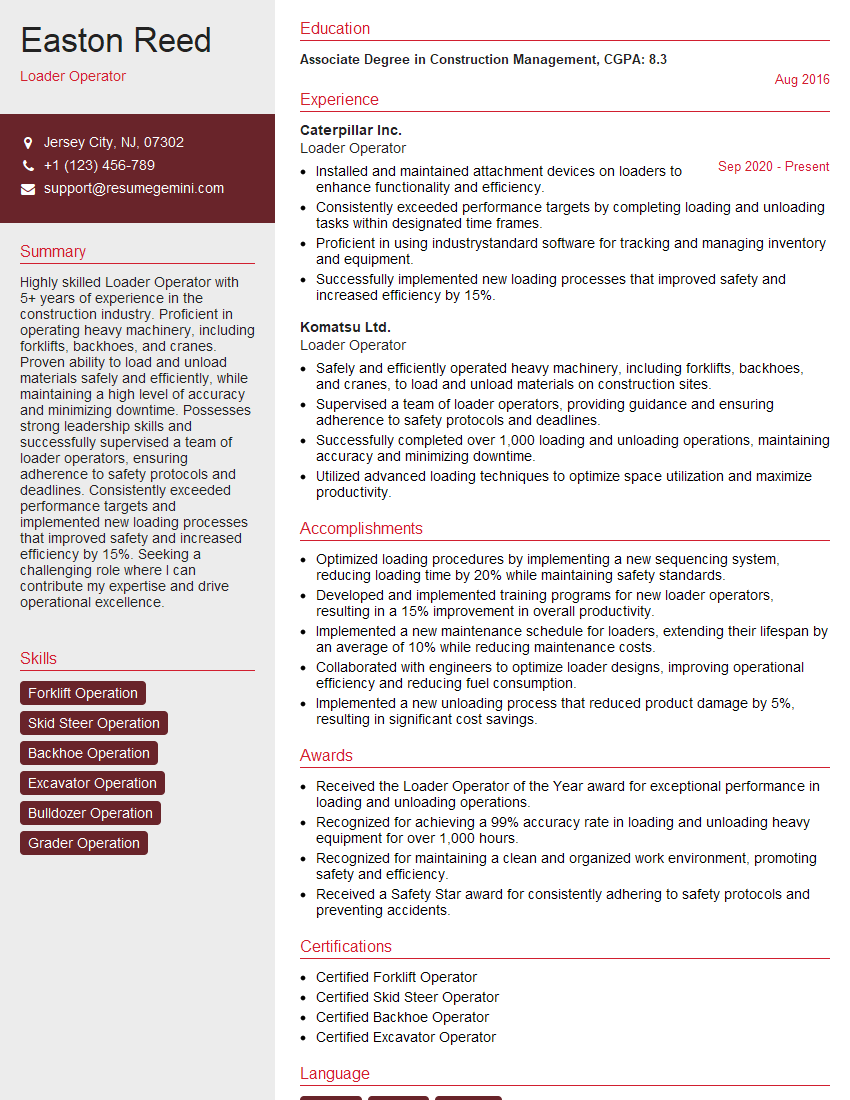
Loader Operator Resume Sample

Heavy Equipment Operator Resume Sample

Roller Operator Resume Sample
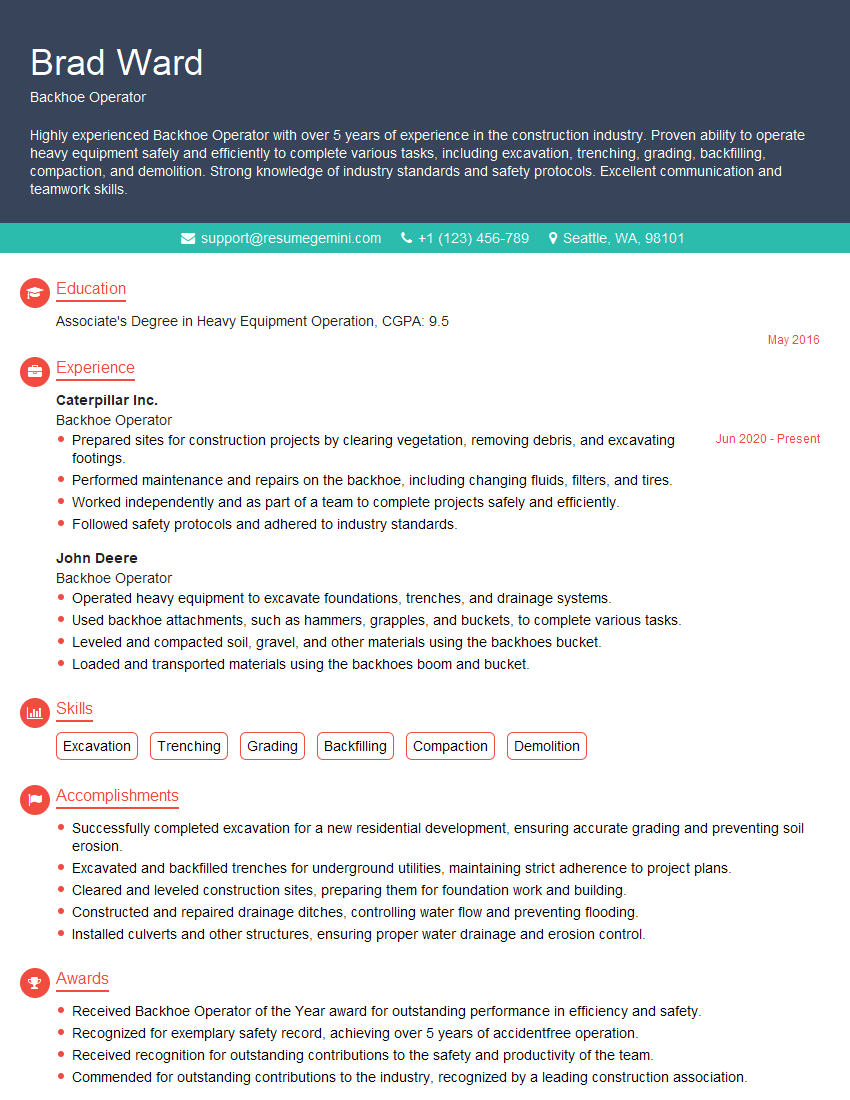
Backhoe Operator Resume Sample
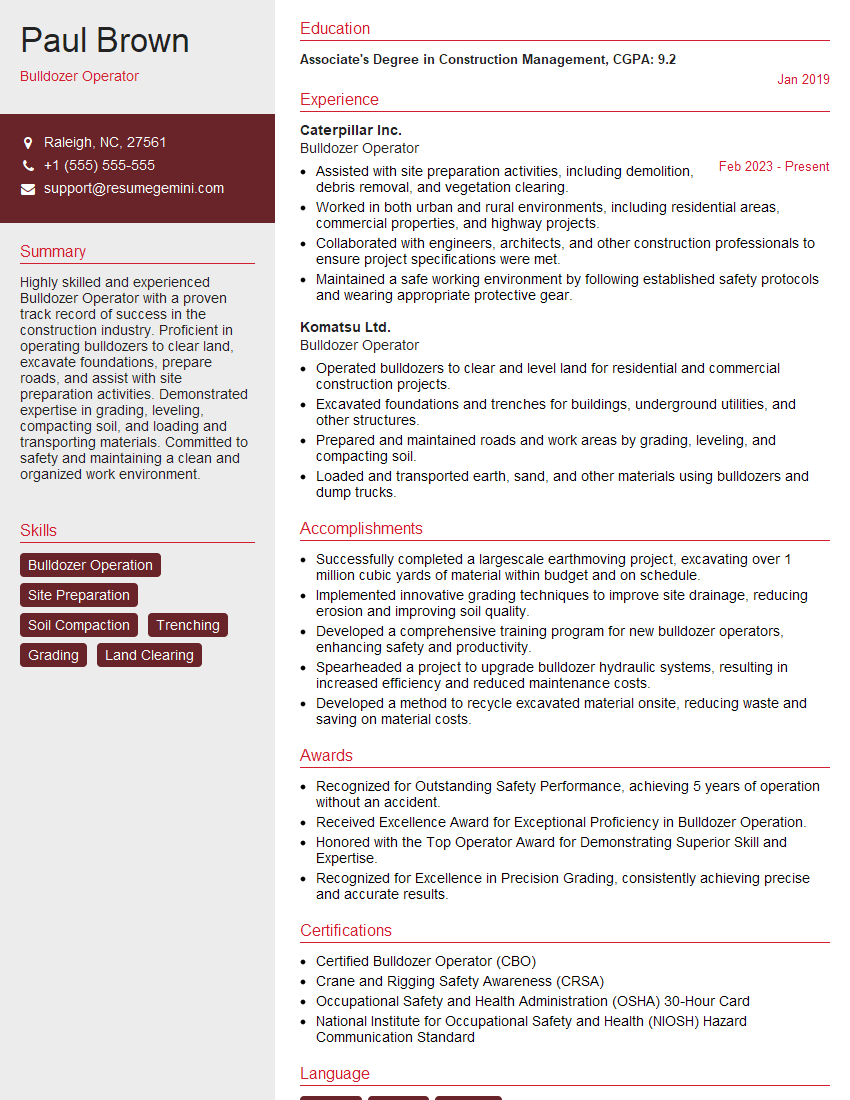
Bulldozer Operator Resume Sample
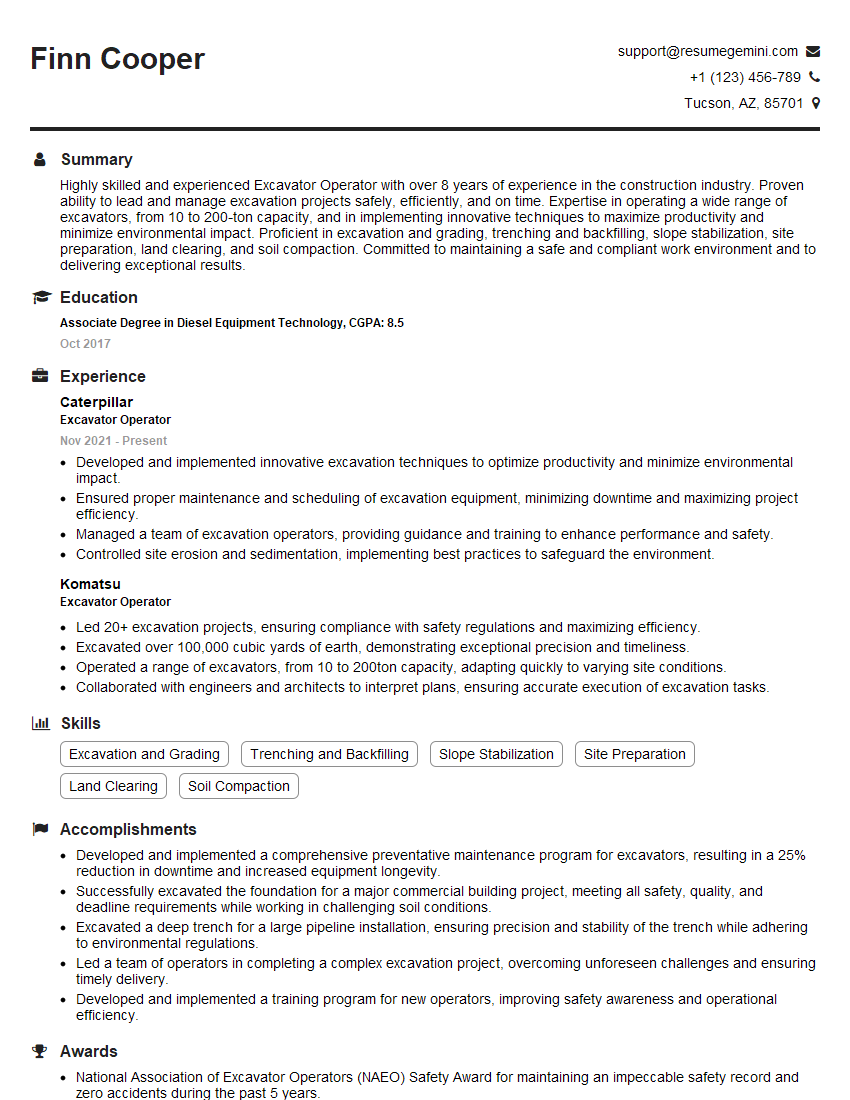
Excavator Operator Resume Sample
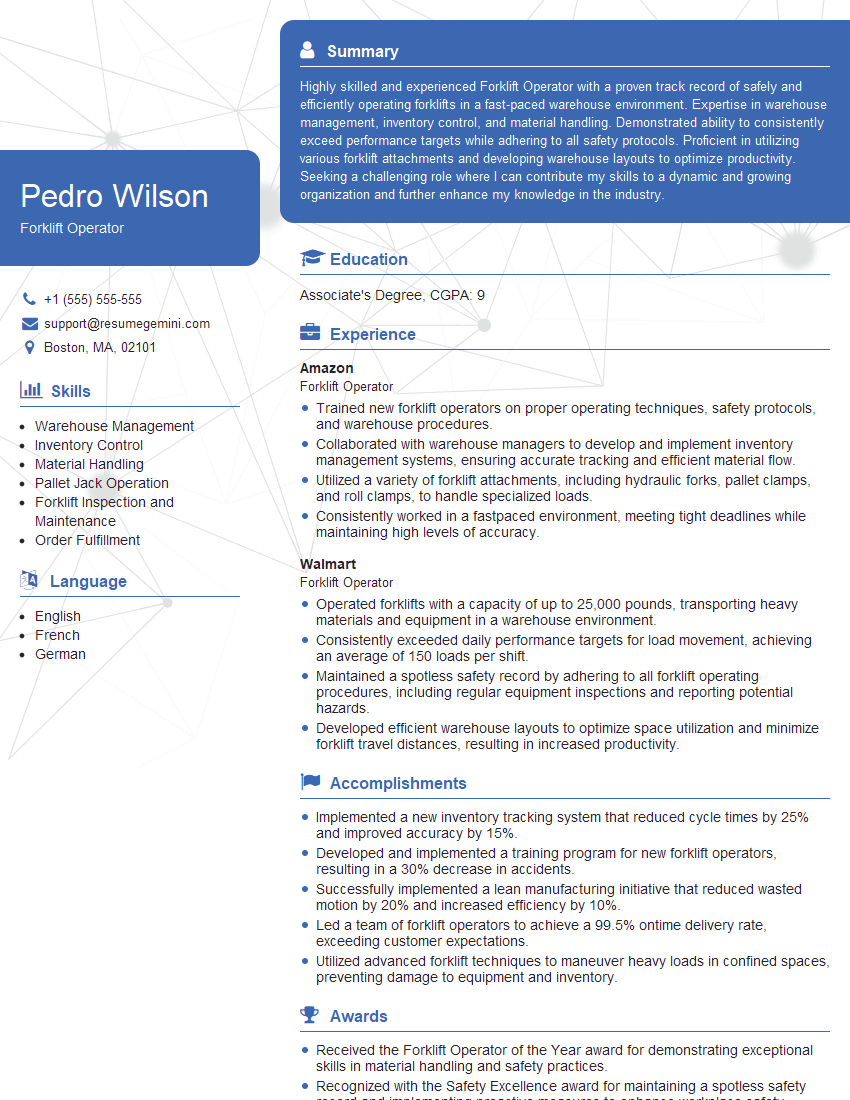
Forklift Operator Resume Sample
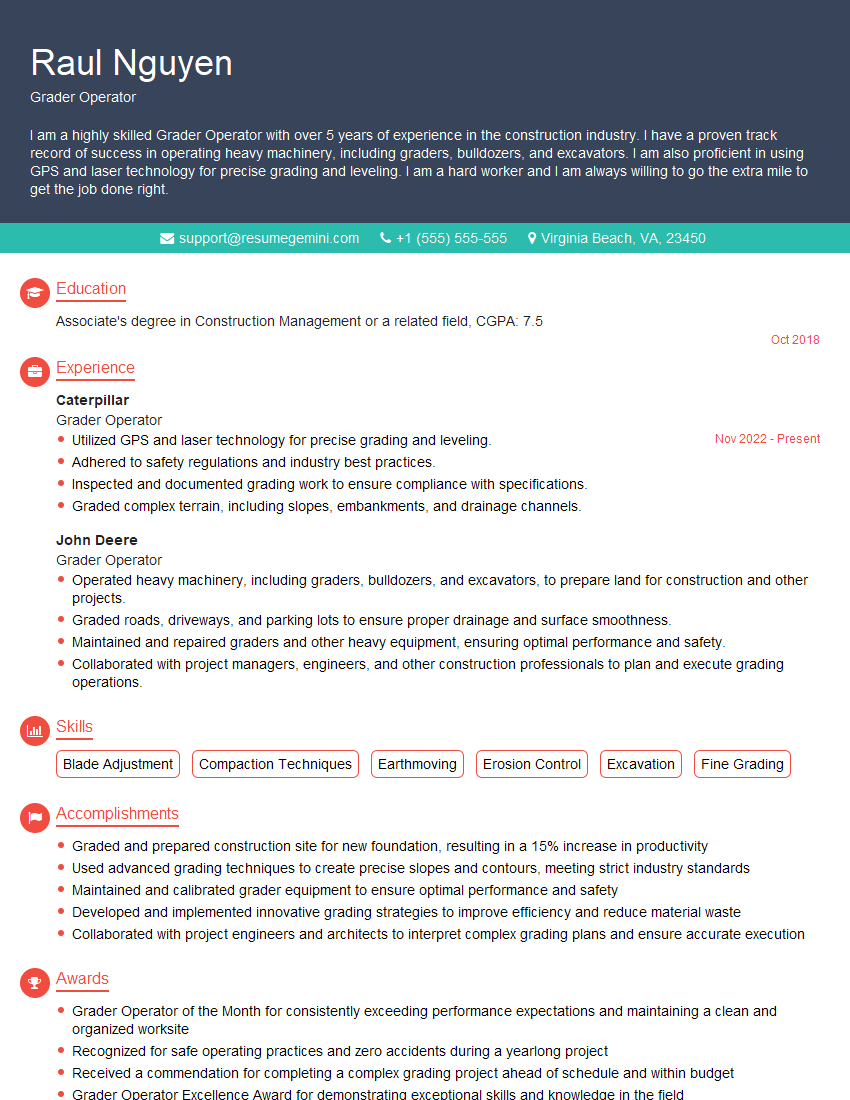
Grader Operator Resume Sample
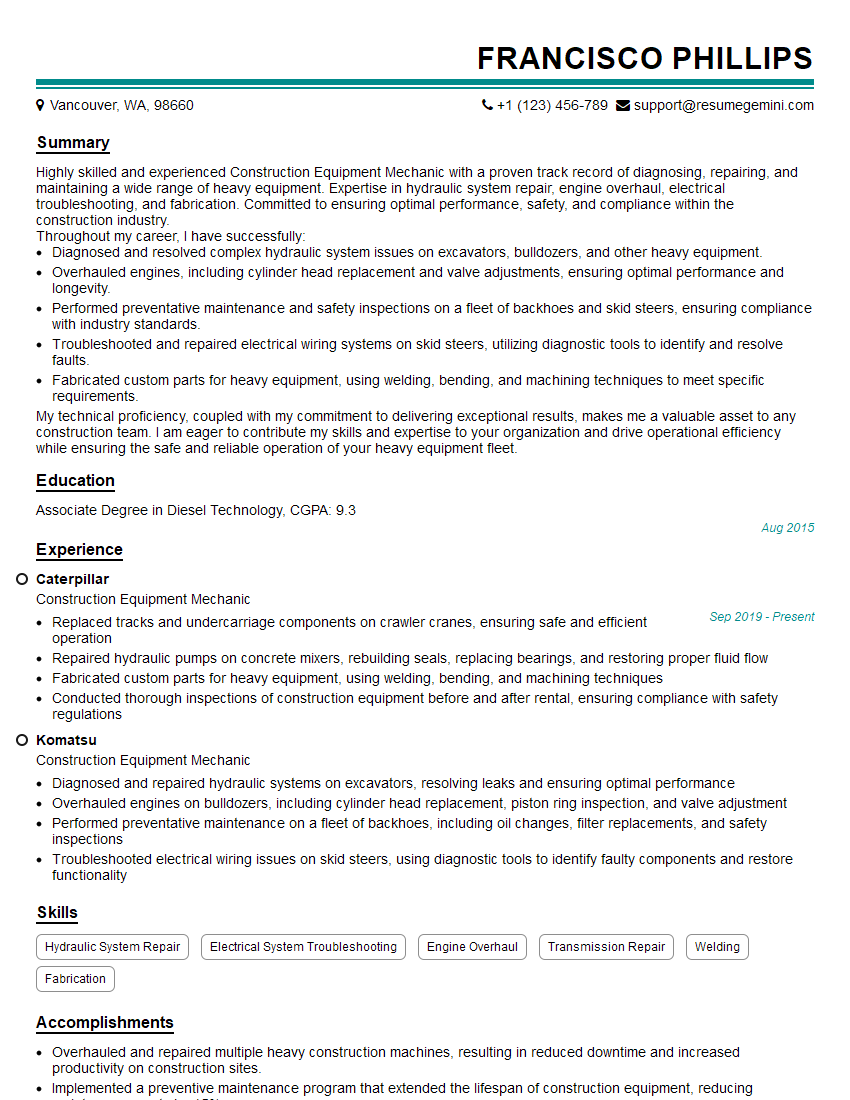
Construction Equipment Mechanic Resume Sample
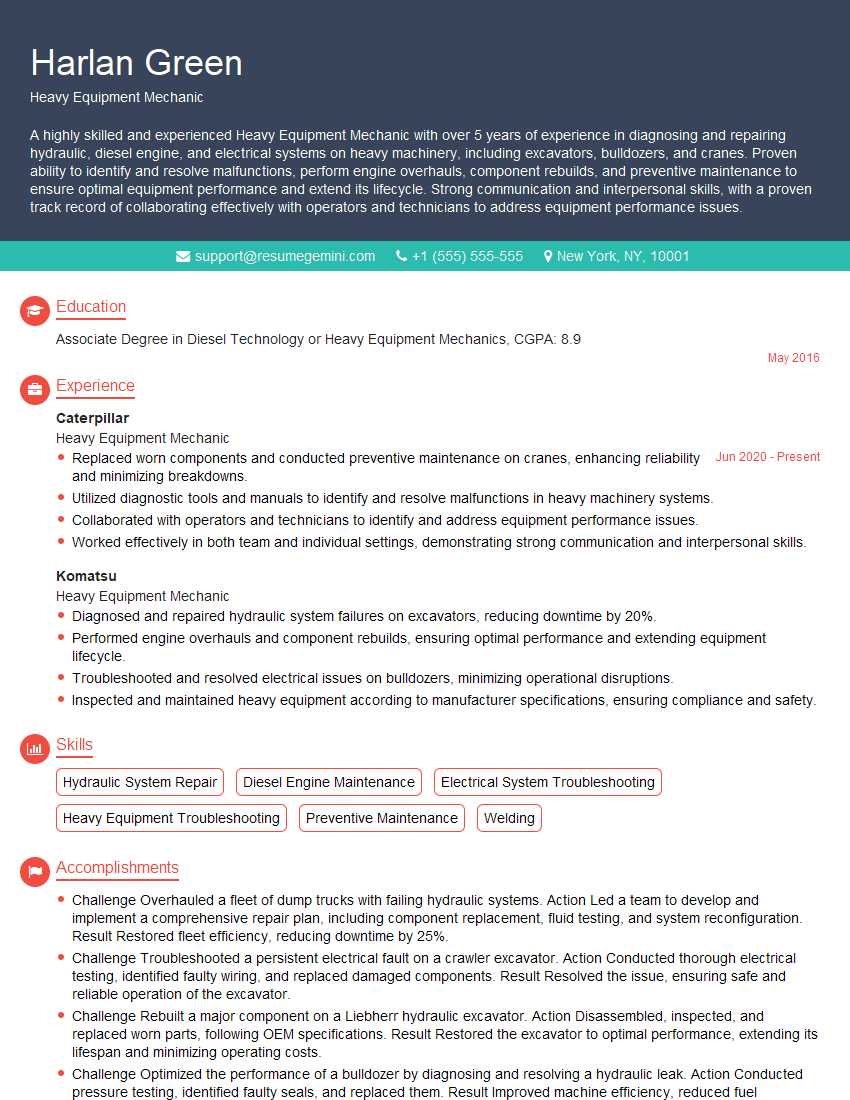
Heavy Equipment Mechanic Resume Sample
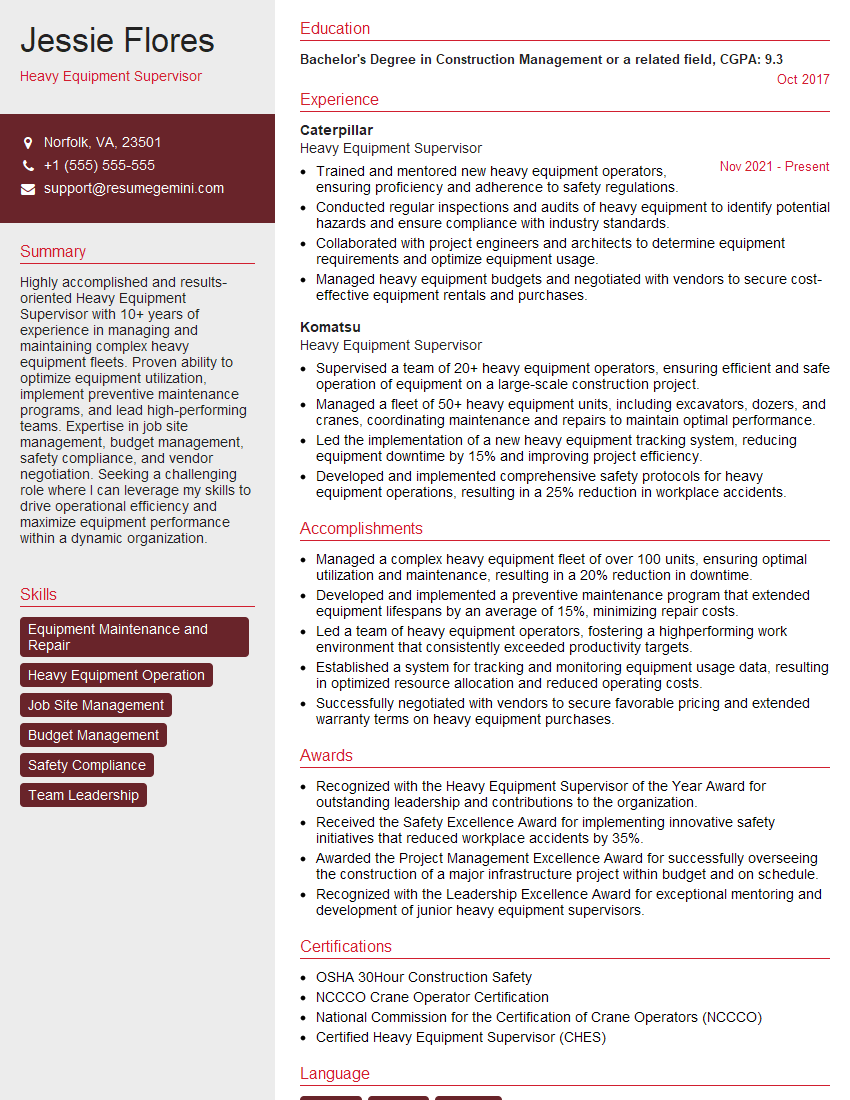
Heavy Equipment Supervisor Resume Sample
Explore more articles
Users Rating of Our Blogs
Share Your Experience
We value your feedback! Please rate our content and share your thoughts (optional).
What Readers Say About Our Blog
Very informative content, great job.
good