Are you ready to stand out in your next interview? Understanding and preparing for Heavy Lifting and Maneuvering interview questions is a game-changer. In this blog, we’ve compiled key questions and expert advice to help you showcase your skills with confidence and precision. Let’s get started on your journey to acing the interview.
Questions Asked in Heavy Lifting and Maneuvering Interview
Q 1. Describe your experience with different types of lifting equipment.
My experience encompasses a wide range of lifting equipment, from basic hand tools like chain hoists and come-alongs to complex machinery such as overhead cranes, forklifts, and mobile cranes. I’ve worked extensively with hydraulic jacks and various types of lifting slings, including wire rope, chain, and webbing slings. Each piece of equipment demands a different level of understanding and skill for safe and efficient operation. For instance, understanding the safe working load (SWL) for each component is critical – exceeding this limit can lead to catastrophic equipment failure.
During a project involving the installation of a large industrial generator, we utilized a 150-ton mobile crane coupled with specialized spreader beams to carefully maneuver the generator into place. This required precise coordination and meticulous adherence to safety protocols, including regular inspections of all rigging and lifting equipment. In another instance, I supervised the use of a fleet of forklifts during a large-scale warehouse relocation. This involved training operators on safe operation procedures and ensuring proper load distribution for stability.
Q 2. Explain the safe operating procedures for a forklift.
Safe forklift operation is paramount for preventing accidents. It begins with pre-operational checks: ensure the forklift is in good working order; check tires, brakes, lights, and hydraulics; verify the load capacity is sufficient for the task at hand. Always remember the forklift’s SWL and never exceed it. Load must be properly centered and secured to avoid tipping.
- Operator Training: Only trained and certified operators should operate forklifts.
- Load Stability: The load’s center of gravity must be maintained within the forklift’s stability limits. Avoid overloading or uneven loads.
- Speed and Maneuvering: Operate at a safe speed, appropriate for the conditions. Avoid sharp turns or sudden braking, especially with a load.
- Workplace Awareness: Maintain awareness of surroundings, pedestrian traffic, and potential obstacles. Use horns and signals as needed.
- Load Securing: The load should be properly secured using appropriate straps, chains, or other methods to prevent shifting during transit.
- Post-Operational Checks: Conduct post-operational inspections to identify any issues needing attention.
Failure to follow these procedures can lead to accidents, damage to property, and even serious injury or death. A good example is using a forklift to move a pallet that’s unevenly loaded. This can easily cause the forklift to tilt, resulting in a potential accident.
Q 3. What are the different types of rigging hardware and their applications?
Rigging hardware plays a crucial role in safely lifting and maneuvering heavy loads. Selection depends greatly on the load’s characteristics and the lifting method employed.
- Slings: Wire rope slings offer high strength and durability, while chain slings provide excellent abrasion resistance. Webbing slings are versatile and are less prone to damage from sharp edges.
- Shackles: Used to connect slings to loads and other rigging components. Bow shackles are common, but other types exist depending on the application.
- Hooks: A variety of hooks, like clevis hooks and grab hooks, are utilized for attaching slings to lifting points. It is very important to inspect hooks for damage.
- Turnbuckles: Allow for adjusting the length of a sling, critical for achieving the correct alignment.
- Spreader Beams: Distribute the load across multiple attachment points, enhancing stability and reducing stress on individual slings.
- Eye Bolts: Provide secure attachment points on the load.
Choosing the right hardware is essential. Using a sling with an inadequate SWL can result in failure under load. For instance, using a chain sling rated for 5 tons to lift a 10-ton load is extremely dangerous.
Q 4. How do you calculate the center of gravity of a load?
Calculating the center of gravity (CG) is vital for safe lifting. It’s the point where the weight of an object is considered to be concentrated. For simple, regularly shaped objects, the CG is easily determined. For complex loads, calculations are more involved.
Simple Objects: The CG of a uniform, symmetrical object is at its geometric center. For example, a square steel plate’s CG is at the intersection of its diagonals.
Complex Objects: For irregular shapes, the CG can be calculated by dividing the object into smaller, manageable sections, determining the CG of each section, and then using the weighted average of these CGs to find the overall CG.
Practical Application: During a lift involving several components of varying weights and positions on a single pallet, one must determine the combined CG to ensure the load is properly balanced and that it does not exceed the lifting capacity of the crane or forklift. If this process isn’t done properly the load could tip during movement.
Q 5. What safety precautions do you take when working with heavy loads?
Safety is paramount in heavy lifting operations. My precautions encompass:
- Risk Assessment: Thorough risk assessments identifying potential hazards before initiating any lift.
- Proper Equipment Selection: Choosing equipment with sufficient capacity for the load, considering factors like SWL and stability.
- Pre-Lift Inspections: Rigorous inspections of all lifting equipment, including slings, shackles, and the lifting machine itself, before each lift to identify potential issues.
- Clear Communication: Maintaining clear communication among all personnel involved in the lift, employing hand signals or radios as necessary.
- Personal Protective Equipment (PPE): Wearing appropriate PPE, including safety helmets, gloves, and safety shoes.
- Emergency Procedures: Having well-defined emergency procedures in place and ensuring all personnel are familiar with them.
- Load Securing: Using the correct load securing techniques to prevent shifting during transit.
For instance, during a recent project, we discovered a damaged sling during a pre-lift inspection. Replacing the damaged sling prevented a potential accident that could have resulted in serious injury or equipment damage.
Q 6. Describe your experience with load securing techniques.
My experience encompasses diverse load securing techniques, adapting the methodology to the type of load, the transportation method, and environmental conditions. I’m proficient in using various securing devices such as ratchet straps, chains, and webbing.
For example, when securing steel beams on a flatbed truck, we use chains strategically placed to prevent shifting during transit. We utilize multiple attachment points, ensuring the chains are properly tensioned and the load is distributed evenly. For less sturdy loads, we may utilize a combination of ratchet straps and padding to protect the load and prevent damage. In each instance, proper documentation and verification are conducted to ensure compliance with safety standards and regulations. Failure to secure loads properly can result in accidents, cargo damage, and injuries.
Q 7. How do you identify and mitigate potential hazards in heavy lifting operations?
Identifying and mitigating hazards in heavy lifting is a proactive process. It involves a multi-faceted approach.
- Site Survey: A detailed site survey to identify potential obstacles, uneven ground, overhead obstructions, and proximity to power lines or other hazards.
- Ground Conditions: Assess the ground’s stability to avoid tipping or sinking of equipment.
- Weather Conditions: Account for wind speed, rain, or snow, which can affect stability and visibility.
- Load Characteristics: Understanding the load’s weight, dimensions, center of gravity, and any special handling requirements.
- Equipment Limitations: Being aware of the limitations of the lifting equipment, including SWL and stability limits.
- Personnel Training: Ensuring all personnel are adequately trained and understand their responsibilities.
- Emergency Preparedness: Having a well-defined emergency response plan and ensuring access to emergency equipment.
For example, if working near overhead power lines, we would implement specific safety protocols, including establishing exclusion zones and using insulated tools. By consistently addressing potential hazards, we can ensure a safe and efficient lifting operation.
Q 8. What is your experience with load charts and weight limits?
Load charts and weight limits are fundamental to safe heavy lifting. A load chart details the safe working load (SWL) for a piece of lifting equipment under various configurations. This SWL is the maximum weight that can be lifted safely without exceeding the equipment’s structural limits. Weight limits are also crucial for slings, attachments, and even the ground itself. Ignoring these limits can lead to catastrophic equipment failure, injury, or even death.
For example, a crane’s load chart will specify different SWLs depending on the boom length, radius, and the angle of the boom. Similarly, a sling’s load capacity will vary based on its material, diameter, and the angle of the lift. I always meticulously check the load chart against the actual weight of the load and adjust the lifting plan accordingly, ensuring a significant safety factor is maintained. I’ve had instances where a seemingly straightforward lift required recalculating based on wind speed, impacting the crane’s SWL and demanding a more cautious approach.
Q 9. Explain the process of pre-lift planning.
Pre-lift planning is a critical step, often likened to a surgeon’s meticulous preparation before an operation. It involves a thorough risk assessment, detailed load calculations, equipment selection, site survey, and communication with the team.
- Risk Assessment: Identifying potential hazards such as obstructions, overhead power lines, unstable ground, and weather conditions.
- Load Calculations: Precisely determining the weight of the load, considering its center of gravity and distribution. This often involves using specialized software or calculations to factor in rigging, attachments, and other weight-adding elements.
- Equipment Selection: Choosing the right crane, slings, and other equipment based on the load’s weight, dimensions, and the environment. This includes considering factors like crane capacity, reach, and stability.
- Site Survey: Inspecting the lifting area for any potential hazards or limitations, including access, ground conditions, and proximity to structures.
- Team Communication: Establishing clear communication protocols and responsibilities amongst all team members involved.
In one project involving lifting a massive transformer, we conducted a thorough pre-lift planning session, including a detailed 3D model to visualize the lift path and potential obstacles. This prevented near misses with overhead power lines, which would have had devastating consequences.
Q 10. How do you handle unexpected issues during a lift?
Unexpected issues are inevitable in heavy lifting. My approach is based on calm assessment, swift action, and effective communication.
- Assess the Situation: Immediately stop the lift and identify the nature of the problem. This often involves a quick check of the equipment, the load, and the environment.
- Implement Corrective Actions: Based on the assessment, take necessary steps. This may involve adjusting the rigging, changing the lifting plan, calling for additional equipment, or even abandoning the lift entirely.
- Communicate with the Team: Maintain clear and concise communication with all team members to ensure everyone understands the situation and the chosen course of action.
- Document the Incident: Thoroughly document the unexpected issue, corrective actions, and any potential contributing factors. This information is valuable for future planning and improving safety protocols.
Once, during a bridge beam lift, a unexpected gust of wind caused the load to swing dangerously close to a nearby building. Immediately we halted the operation, secured the load with additional rigging, and waited for the wind to subside before resuming. The incident highlighted the importance of real-time risk assessment and flexibility in responding to changing conditions.
Q 11. What are the different types of slings and their appropriate uses?
Several types of slings exist, each with its own properties and applications. Choosing the right sling is crucial for a safe lift.
- Wire Rope Slings: Durable and strong, suitable for heavy, sharp or abrasive loads. However, they can be damaged by kinking or crushing.
- Chain Slings: Resistant to abrasion and impact, often used for high-temperature applications. They should be inspected regularly for wear and elongation.
- Synthetic Web Slings: Lightweight, easy to handle and less likely to damage delicate loads. They offer good flexibility but are susceptible to UV degradation and cutting.
- Round Slings: Versatile and easy to use, suitable for various load shapes and handling types. However, they have lower SWL than other types for the same diameter.
Selecting the appropriate sling involves considering the load’s weight, shape, and material. A sharp object might require a chain sling to prevent damage, whereas a delicate piece of equipment may necessitate a synthetic web sling. Using the wrong sling can lead to load slippage, damage to the sling, or even the load itself.
Q 12. Describe your experience with different types of cranes.
My experience encompasses a variety of cranes, including:
- Tower Cranes: Used for high-rise construction, offering high lifting capacity and reach. They are excellent for repetitive lifts on a single site but have limitations in terms of mobility.
- Mobile Cranes: Versatile and highly mobile, suited for various lifting tasks at different locations. Their versatility depends on size and capacity. Different types include rough terrain, all-terrain, and crawler cranes.
- Overhead Cranes: Commonly found in factories and workshops, ideal for moving loads horizontally within a defined area. They are highly efficient for repetitive lifts in a controlled environment.
- Floating Cranes: Utilized for offshore lifting operations and projects involving water transport. They are essential for various marine construction and maintenance operations.
Each crane type has its strengths and weaknesses. For example, while tower cranes excel in vertical lifting capacity, mobile cranes offer greater flexibility. My experience in utilizing these diverse crane types ensures I can select the most appropriate equipment for a given task, optimizing safety and efficiency.
Q 13. What are the limitations of different lifting equipment?
Every lifting equipment has limitations. These limitations are crucial to understand to prevent accidents.
- SWL: Every piece of equipment has a safe working load limit, which should never be exceeded. Exceeding this limit can cause catastrophic failure.
- Reach and Height: Cranes have limited reach and lifting height, depending on the model and configuration. Attempting lifts outside these limits is unsafe.
- Ground Conditions: The stability of the ground significantly impacts the lifting capacity of any equipment. Soft or unstable ground can lead to equipment instability.
- Environmental Factors: Wind, rain, and temperature can affect the safe operation of equipment. High winds can significantly reduce lifting capacity and lead to load sway.
- Equipment Age and Condition: Older or poorly maintained equipment is prone to malfunctions and has a higher risk of failure.
Understanding these limitations is paramount. In one instance, ignoring the impact of high winds on the crane’s SWL almost resulted in a serious accident. We had to halt the operation and reassess the risks until conditions improved. Regular inspections and maintenance are essential in ensuring that equipment remains within safe operational parameters.
Q 14. How do you communicate effectively with your team during a heavy lift?
Effective communication is paramount during heavy lifts. My communication strategy focuses on clarity, precision, and non-verbal cues.
- Pre-Lift Briefing: A thorough briefing before any lift ensures every team member understands the plan, their roles, and potential hazards. This briefing includes clear visual aids like diagrams or 3D models.
- Hand Signals: Standard hand signals are used during the lift to communicate instructions clearly and immediately between the crane operator and the ground crew, eliminating reliance on potentially unreliable voice communication in noisy environments.
- Two-Way Radios: Clear communication channels are essential for coordinating actions and addressing unexpected issues in real-time. Redundant communication systems are employed where possible.
- Post-Lift Debrief: A post-lift debrief allows the team to discuss successes, lessons learned, and potential improvements for future lifts. This continuous feedback loop is crucial for improving safety and efficiency.
I always prioritize a culture of open communication, where team members feel empowered to raise concerns or questions. This collaborative approach helps minimize risks and ensures everyone is on the same page.
Q 15. What is your understanding of OSHA regulations related to heavy lifting?
OSHA regulations regarding heavy lifting are paramount to ensuring workplace safety. They cover a wide range of aspects, focusing on minimizing risks associated with lifting, carrying, pushing, and pulling heavy objects. Key regulations emphasize the importance of proper lifting techniques, the use of personal protective equipment (PPE) like safety harnesses and gloves, and the implementation of engineering controls such as mechanical lifting devices to reduce the physical strain on workers. Specific regulations often address load limits, the use of lifting aids, and the need for comprehensive training programs. Non-compliance can lead to hefty fines and, more importantly, serious injuries or fatalities. For example, OSHA’s emphasis on ergonomic principles guides employers to design jobs and workstations that minimize risk factors contributing to musculoskeletal disorders (MSDs) often associated with heavy lifting.
Imagine trying to lift a heavy engine block without proper training or equipment; the risk of back injury is significant. OSHA’s regulations are designed to prevent such scenarios by mandating proper training, risk assessments, and the use of appropriate equipment.
Career Expert Tips:
- Ace those interviews! Prepare effectively by reviewing the Top 50 Most Common Interview Questions on ResumeGemini.
- Navigate your job search with confidence! Explore a wide range of Career Tips on ResumeGemini. Learn about common challenges and recommendations to overcome them.
- Craft the perfect resume! Master the Art of Resume Writing with ResumeGemini’s guide. Showcase your unique qualifications and achievements effectively.
- Don’t miss out on holiday savings! Build your dream resume with ResumeGemini’s ATS optimized templates.
Q 16. Describe your experience with using lifting plans and permits.
Lifting plans and permits are crucial for any heavy lift operation, particularly those involving complex maneuvers or significant risk. My experience encompasses developing, reviewing, and implementing these plans for various projects. A typical lifting plan details the load characteristics (weight, center of gravity, dimensions), the equipment to be used (cranes, slings, rigging), the lifting sequence, personnel roles and responsibilities, and safety precautions. Permits, often issued by a designated authority, officially authorize the lift after ensuring all safety requirements are met and the plan is deemed appropriate. I’ve been involved in creating plans for everything from lifting large industrial components in a factory to placing heavy HVAC units on building rooftops. Each plan is tailored to the specific project, considering factors like the environment, available resources, and potential hazards.
For instance, during the installation of a large transformer, the lifting plan specified the use of a specific crane with sufficient lifting capacity, detailed the placement of multiple load-bearing points for stability, and outlined the emergency procedures should any issues arise. The permit ensured compliance with all relevant regulations and ensured everyone involved had the necessary authorizations.
Q 17. How do you inspect lifting equipment for defects?
Inspecting lifting equipment is a critical part of pre-lift safety checks. My inspection process involves a thorough visual examination followed by a functional test, if appropriate. The visual check includes assessing the structural integrity of the equipment, checking for cracks, corrosion, wear and tear, and ensuring that all safety devices are in place and functioning. This applies to everything from chains and slings to cranes and hoists. For chains, I check for elongation, kinks, and broken links. For slings, I look for fraying, burns, and cuts. For cranes, I check the hydraulics, the boom, and the control mechanisms. A functional test, where feasible, verifies the equipment’s operational capability under controlled conditions, often involving a test lift with a known weight. Detailed records are kept documenting the inspection results and any necessary maintenance or repairs.
Imagine discovering a small crack in a crane’s boom during a pre-lift inspection. This seemingly minor defect could have catastrophic consequences. Thorough inspections prevent such accidents by proactively identifying and addressing potential hazards.
Q 18. What is your experience with different types of winches and hoists?
My experience with winches and hoists encompasses various types, including electric, hydraulic, and manual systems. Electric winches are powerful and efficient for heavier loads, ideal for construction sites and industrial applications. Hydraulic winches offer precise control and are often used in situations requiring fine adjustments. Manual winches, while less powerful, are versatile and useful for smaller lifts where a power source isn’t readily available. Hoists, similar to winches, come in a range of types and lifting capacities—chain hoists, lever hoists, and electric hoists being common examples. The selection of the appropriate winch or hoist depends on the specific needs of the lifting operation, considering factors like load weight, lift height, available power, and operational environment.
For instance, in a confined space, a lever hoist might be preferable over a larger electric winch due to its compact size. Conversely, lifting a heavy piece of machinery onto a high-rise building would necessitate a powerful electric winch or crane system.
Q 19. Describe your experience with load balancing and distribution.
Load balancing and distribution are fundamental aspects of safe heavy lifting. Uneven weight distribution can lead to structural failure and accidents. My experience involves strategically positioning slings, using multiple lifting points, and calculating the load center of gravity to ensure even weight distribution. This process minimizes stress on the lifting equipment and reduces the risk of tipping or instability. Specialized software and engineering calculations can be employed for complex lifts, helping determine the optimum load distribution for maximum safety and efficiency. Knowing where the center of gravity lies is crucial; an improperly balanced load can swing unpredictably, posing a significant risk to personnel and equipment.
Think of lifting a large, irregularly shaped object. Instead of using a single lifting point, I would employ multiple slings strategically placed to distribute the load evenly, preventing undue stress on any single point and ensuring stability during the lift.
Q 20. How do you ensure the safety of personnel during a heavy lift?
Ensuring personnel safety during a heavy lift is my top priority. This involves meticulous planning, clear communication, and strict adherence to safety protocols. Before commencing a lift, a thorough risk assessment is conducted, identifying potential hazards and implementing mitigating measures. Designated safety personnel monitor the lifting operation, ensuring everyone maintains a safe distance. Clear communication channels are established to facilitate smooth coordination among the team. Appropriate PPE, such as hard hats, safety glasses, and high-visibility clothing, is mandatory. Exclusion zones are implemented to keep personnel out of harm’s way. Emergency procedures, including communication protocols and evacuation plans, are outlined and practiced.
One instance involved lifting a massive steel beam. We implemented a strict exclusion zone, ensuring that only authorized personnel, equipped with appropriate PPE, were within a designated area. Regular communication ensured everyone was aware of the lift’s progress and potential risks.
Q 21. Explain your experience with different types of lifting techniques.
My experience with lifting techniques includes various methods tailored to the specific requirements of the task. These include traditional methods like using cranes, hoists, and slings, and more specialized techniques like using vacuum lifters for delicate loads, air bags for confined spaces, or specialized rigging for unique shapes and weights. I’m proficient in calculating safe working loads, selecting appropriate equipment, and employing safe lifting practices to minimize risks. My knowledge extends to the use of specialized tools, such as spreader beams for distributing weight across multiple lifting points and shackles for connecting different parts of the rigging system.
For example, lifting a delicate piece of machinery might require a vacuum lifter, ensuring it remains stable and free from damage. Conversely, placing a heavy container into a truck would involve a forklift or a crane with a suitable lifting attachment.
Q 22. What is your understanding of load stability and how to maintain it?
Load stability refers to the secure and balanced state of a heavy object during lifting and maneuvering. Maintaining it is paramount to prevent accidents. It’s all about ensuring the load’s center of gravity remains within its support base throughout the entire operation.
- Proper Rigging: Using the correct type and size of slings, chains, or straps is crucial. Incorrect rigging can lead to uneven weight distribution and instability. For instance, using a single sling to lift a long, heavy beam is risky; you’d need multiple slings strategically placed to keep the center of gravity centered.
- Secure Attachments: Ensure the load is properly secured to the lifting equipment. This involves using appropriate shackles, hooks, and other connectors, and checking for any signs of wear or damage. Imagine lifting a delicate piece of machinery; you wouldn’t want it to shift or fall due to loose attachments.
- Load Center of Gravity Identification: Before the lift, carefully determine the load’s center of gravity. This point should be clearly marked and visible to the crane operator. A miscalculation here can lead to serious problems. Think of it as the balance point – if it shifts outside the support base, the load can tip over.
- Slow and Controlled Movements: Sudden movements can disrupt load stability. Lifting and lowering should be done slowly and deliberately. This is particularly important when navigating tight spaces or uneven terrain. Imagine a skyscraper’s prefabricated parts – precision is key in placing them correctly and safely.
- Environmental Factors: Wind, rain, or uneven ground can affect stability. These factors should be accounted for during the planning and execution of the lift.
Q 23. How do you handle different weather conditions during a lift?
Weather significantly impacts heavy lifting. Mitigation strategies are crucial for safety and operational efficiency.
- Wind: High winds can cause loads to sway, increasing the risk of accidents. In these situations, we might postpone the lift, use additional rigging to secure the load further, or reduce the lift’s height to minimize the impact of wind gusts. We’ll often consult wind speed charts and make decisions based on established safety limits.
- Rain and Snow: Rain or snow can make surfaces slippery, potentially affecting the stability of the crane or the load. We employ measures like additional counterweights for the crane, use anti-slip materials, and ensure clear communication among team members. Visibility is vital in such conditions.
- Temperature: Extreme temperatures can affect materials’ strength and cause operational issues. We consider these factors when selecting equipment and materials and plan for adjustments as needed; extreme cold, for instance, may impact crane hydraulics.
- Visibility: Reduced visibility due to fog or heavy snowfall necessitates additional safety precautions, such as using backup lighting systems, and increasing the number of spotters to compensate for limited sight lines.
Ultimately, the decision of whether to proceed with a lift in adverse weather conditions is made through a careful risk assessment, considering the specific conditions and the potential consequences.
Q 24. Explain your experience with using various signaling systems.
Effective signaling is the cornerstone of safe heavy lifting operations. I’m proficient in various systems.
- Hand Signals: I am well-versed in the standard hand signals used in the industry, ensuring clear communication between the crane operator and the ground crew, even in noisy environments. It’s a visual language we’re all fluent in.
- Radio Communication: I utilize two-way radios for clear communication, especially in large projects or when hand signals might be obstructed. This is often preferable when coordinating multiple lifting teams.
- Lifting Software Integration: In some projects, software interfaces allow digital communication and load monitoring – providing real-time data to the operator and the ground crew. These modern tools can integrate with GPS, load sensors, and even weather data for enhanced safety.
Regardless of the signaling system employed, clear and consistent communication is always prioritized. Misunderstandings can be disastrous; therefore, open and timely communication is crucial in every phase.
Q 25. Describe a time you had to solve a complex problem involving heavy lifting.
During a refinery upgrade, we had to lift a massive distillation column—weighing over 300 tons—into position with extremely tight clearances. The existing crane wasn’t sufficient for the height and precise placement required, leading to logistical difficulties.
Our solution involved a multi-crane lift, using two cranes to lift the column simultaneously. The precise synchronization was critical, and we developed a detailed lifting plan with multiple checkpoints and safety protocols, utilizing specialized software to model the lift and address potential issues beforehand. We simulated the lift multiple times digitally to validate the plan. Furthermore, we established a clear communication protocol between crane operators and riggers, along with a comprehensive safety briefing for all personnel involved. This meticulous planning and flawless execution resulted in a successful lift and contributed to the project’s timely completion.
Q 26. How do you manage stress and pressure in high-stakes lifting situations?
High-stakes lifting demands composure and focus. My approach involves a combination of preparation and mental strategies.
- Thorough Planning and Risk Assessment: A well-defined plan minimizes surprises and reduces stress. Identifying potential hazards beforehand allows for proactive mitigation strategies.
- Teamwork and Communication: A strong team is essential. Open communication channels, clear roles and responsibilities, and mutual trust reduce individual stress levels.
- Maintaining a Safety-First Mindset: Focusing on safety protocols and adhering strictly to established procedures calms nerves and builds confidence. Prioritizing safety is a powerful stress reducer.
- Regular Breaks and Self-Care: In physically demanding jobs, prioritizing adequate rest, hydration, and healthy nutrition are crucial for maintaining physical and mental endurance.
- Debriefing and Lessons Learned: Post-lift reviews help address areas for improvement and learn from challenges, further increasing confidence and competence for the future.
Q 27. What are your skills in using lifting software or technology?
I’m proficient in several lifting software packages, including those focused on: load simulation, crane capacity calculation, and rigging design. These tools are invaluable for planning and executing complex lifts.
For example, I’ve utilized software that performs stress analysis on lifting configurations and provides critical data on sling angles and load distribution. These digital tools provide enhanced visualization, greatly improving our understanding of potential issues and helping refine our lifting plans to ensure safety and efficiency. They often allow us to check for interference issues with existing structures and other equipment before a lift even begins.
Q 28. Describe your experience with training other personnel in heavy lifting safety.
I have extensive experience in training personnel, focusing on both theoretical knowledge and practical skills.
- Safety Orientation: I start with comprehensive safety training, emphasizing hazard recognition, risk assessment, and emergency procedures.
- Hands-on Training: Practical training sessions include demonstrations, supervised practice, and scenario-based exercises to develop skills and confidence.
- Equipment Familiarization: Training includes detailed familiarization with various types of lifting equipment, including cranes, slings, and other rigging components.
- Regulatory Compliance: I ensure that all training aligns with current industry regulations and safety standards.
- Continuous Improvement: Regular feedback sessions and ongoing assessment ensure that trainees maintain a high level of competency.
My approach is to create a supportive learning environment where personnel feel comfortable asking questions and practicing their skills until they reach a high level of proficiency and competence. I firmly believe that continuous learning is vital for upholding safe and effective operations.
Key Topics to Learn for Heavy Lifting and Maneuvering Interview
- Safety Procedures and Regulations: Understanding and applying relevant safety standards, including OSHA regulations, risk assessment, and hazard identification for various lifting scenarios.
- Lifting Techniques and Mechanics: Mastering proper body mechanics, lifting techniques (e.g., power lifting, squat lifting), and using assistive devices to minimize risk of injury and maximize efficiency.
- Equipment Operation and Maintenance: Familiarity with various lifting equipment (cranes, forklifts, hoists), their safe operation, maintenance procedures, and recognizing signs of malfunction.
- Load Securing and Transportation: Understanding principles of load stability, securing techniques using appropriate straps, chains, and other equipment, and safe transportation methods.
- Material Handling Principles: Knowledge of different materials, their properties (weight, fragility, etc.), and appropriate handling methods to prevent damage and ensure safe movement.
- Problem-Solving and Troubleshooting: Ability to identify and resolve lifting challenges, adapt to unexpected situations, and implement corrective actions in a safe and efficient manner.
- Teamwork and Communication: Effective communication within a team environment, following instructions, and coordinating lifting operations safely and effectively.
- Weight Estimation and Calculations: Accurately estimating the weight of objects and using calculations to determine the appropriate lifting equipment and techniques.
Next Steps
Mastering Heavy Lifting and Maneuvering skills significantly enhances your career prospects in numerous industries, opening doors to higher-paying positions and greater responsibility. A strong resume is crucial for showcasing your expertise and securing interviews. Building an ATS-friendly resume that highlights your skills and experience is key to getting noticed by potential employers. To help you create a professional and effective resume, we recommend using ResumeGemini. ResumeGemini provides a streamlined process and resources to help you build a powerful resume. Examples of resumes tailored to Heavy Lifting and Maneuvering are available to guide you.

Crane Operator Resume Sample
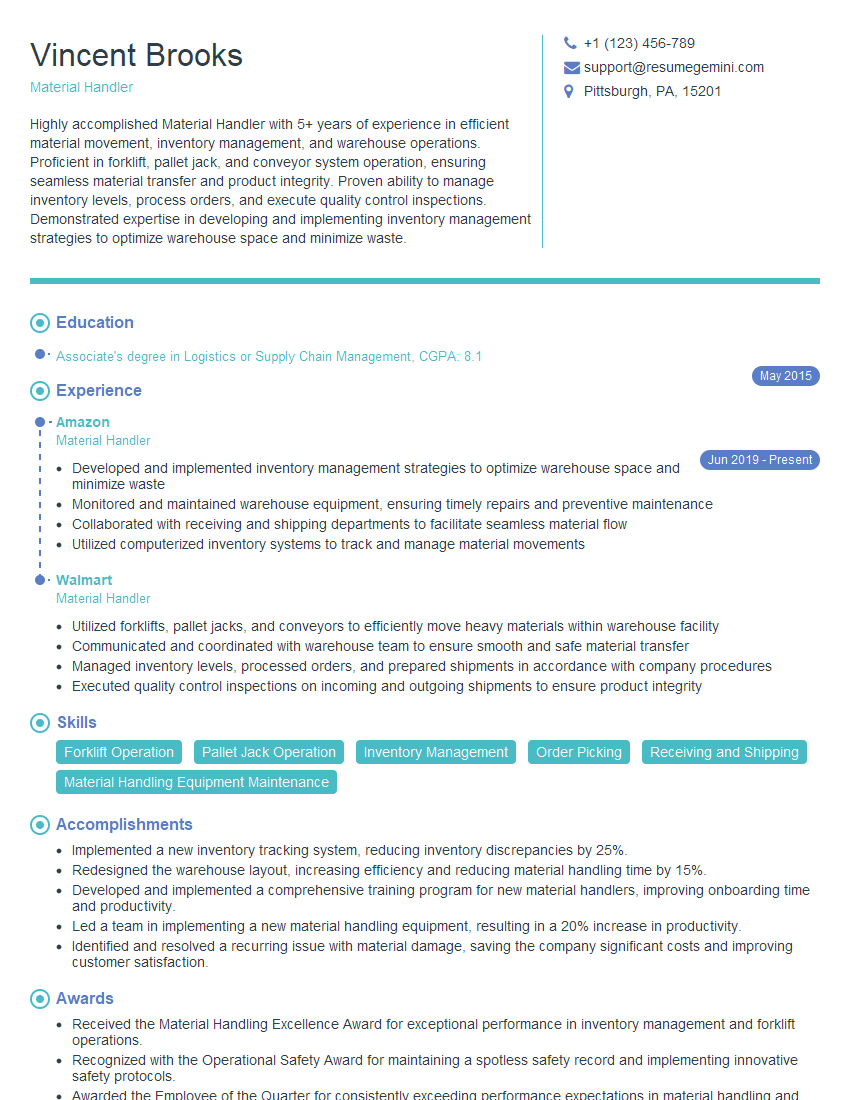
Material Handler Resume Sample

Heavy Equipment Operator Resume Sample
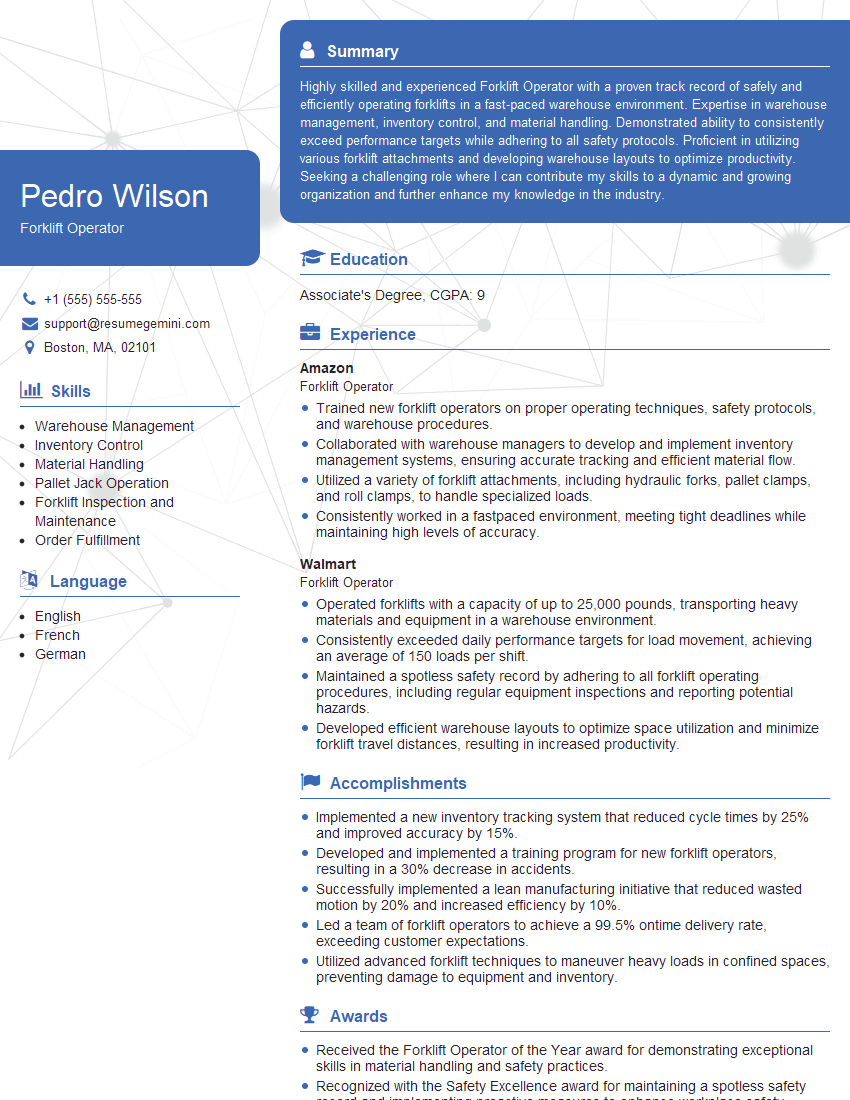
Forklift Operator Resume Sample
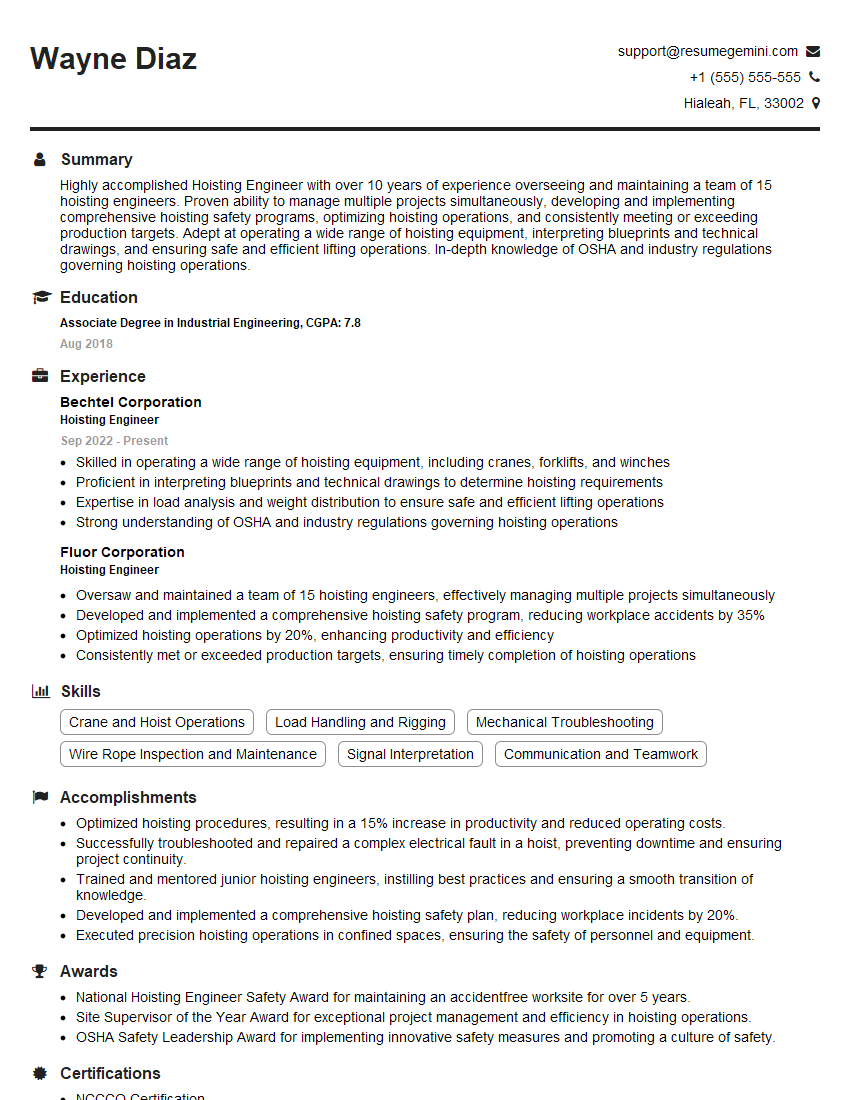
Hoisting Engineer Resume Sample

Rigger Resume Sample
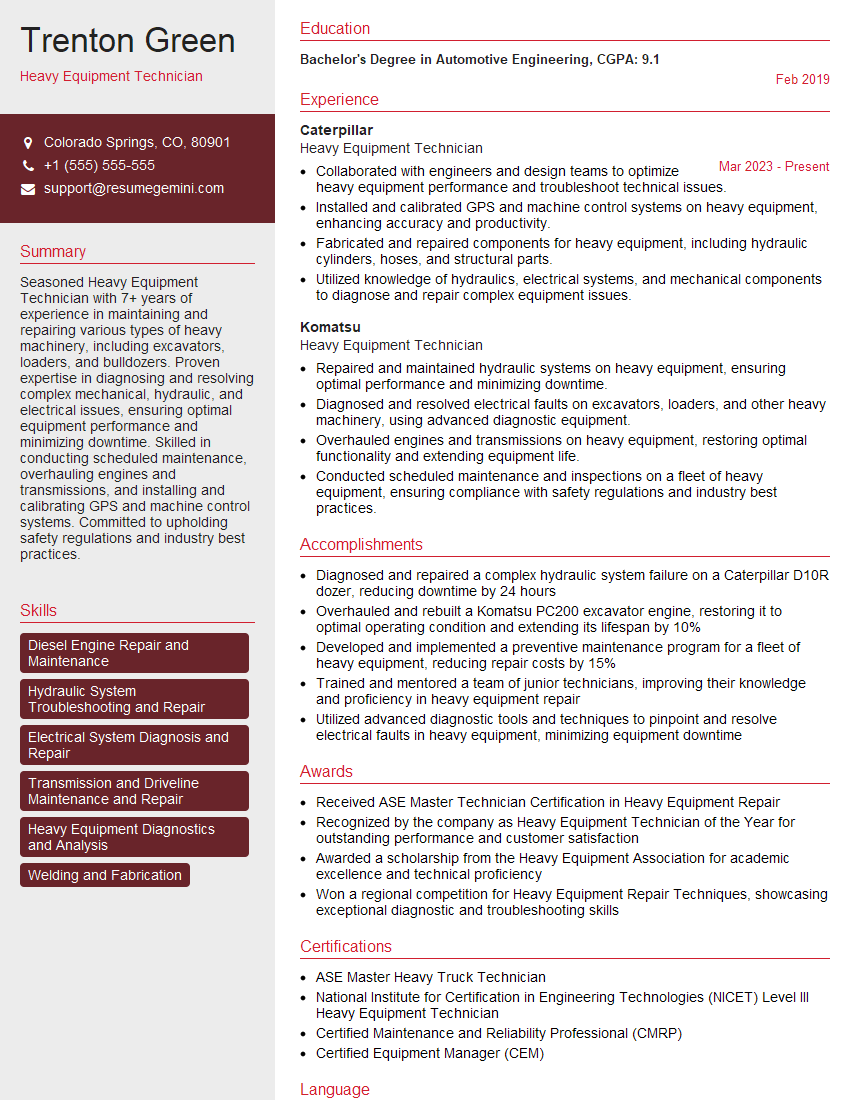
Heavy Equipment Technician Resume Sample
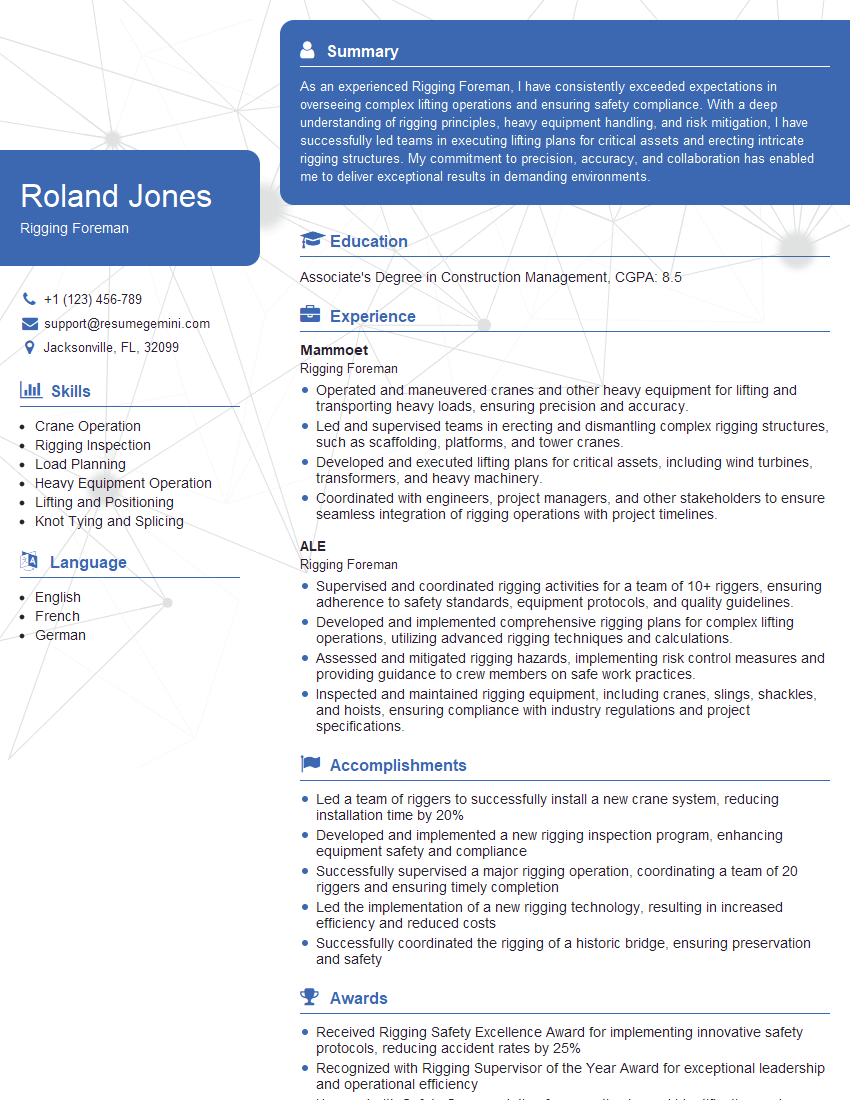
Rigging Foreman Resume Sample
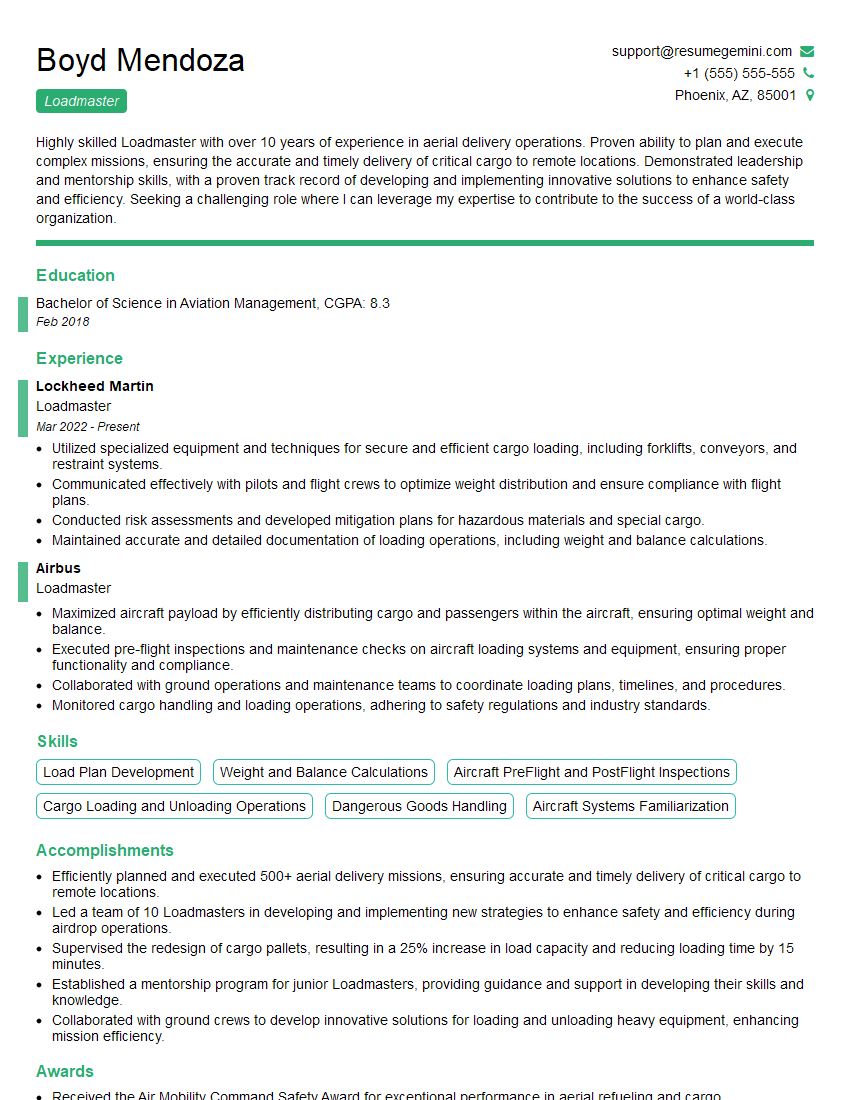
Loadmaster Resume Sample

Derrickman Resume Sample
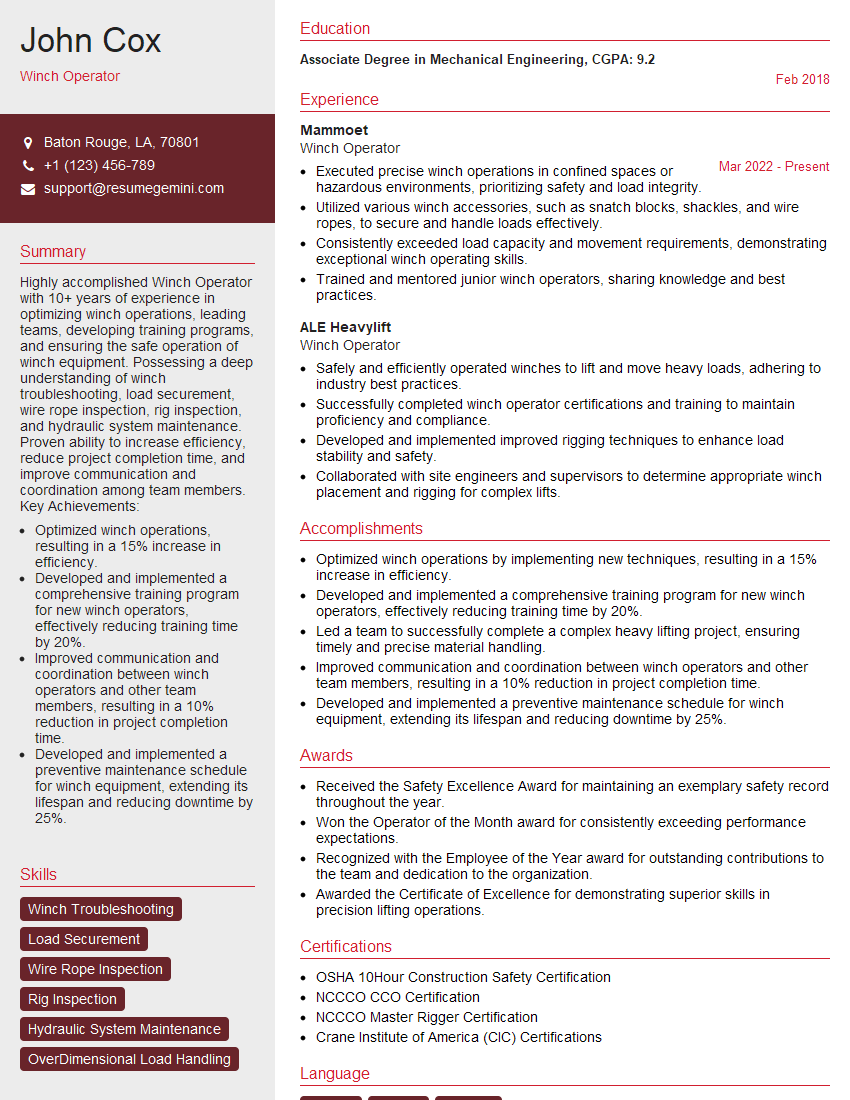
Winch Operator Resume Sample
Explore more articles
Users Rating of Our Blogs
Share Your Experience
We value your feedback! Please rate our content and share your thoughts (optional).
What Readers Say About Our Blog
Very informative content, great job.
good