Interviews are opportunities to demonstrate your expertise, and this guide is here to help you shine. Explore the essential Heavy Machine Operation interview questions that employers frequently ask, paired with strategies for crafting responses that set you apart from the competition.
Questions Asked in Heavy Machine Operation Interview
Q 1. Describe your experience operating an excavator.
My excavator operating experience spans over eight years, encompassing various projects from residential site preparation to large-scale infrastructure development. I’m proficient in operating both hydraulic excavators and those with mechanical controls. I’ve worked with different sizes of excavators, from compact machines used in tight urban areas to larger models for mass excavation. A particularly memorable project involved excavating the foundation for a multi-story building in a densely populated area. This required precise maneuvering to avoid damaging existing utilities and structures, showcasing my ability to adapt to challenging conditions and work safely in confined spaces. My expertise extends to various attachments, such as breakers, rippers, and thumbs, enabling me to handle diverse tasks efficiently and effectively.
For instance, using a hydraulic breaker on a larger excavator allowed us to quickly and safely demolish a section of an old concrete structure during a road widening project. In contrast, a smaller excavator with a thumb attachment proved invaluable in carefully sorting and positioning materials during a landscaping project.
Q 2. Explain the pre-operational checks you perform on a bulldozer.
Pre-operational checks on a bulldozer are crucial for both safety and machine longevity. I follow a strict checklist, starting with a visual inspection for any leaks, damage, or loose parts. This includes checking the tracks for wear and tear, ensuring proper lubrication, and inspecting the blade for any damage. I then move to the engine compartment, checking fluid levels (oil, coolant, fuel) and the condition of the belts and hoses. Next, I test the steering, brakes, and blade operation, ensuring they function smoothly and reliably. This involves several checks: engaging and disengaging the blade, testing the steering response at low and high speeds, and carefully checking braking action, making sure it’s consistent and not binding. Finally, I check the warning lights and gauges on the dashboard before starting the engine. I also meticulously review the job site conditions, ensuring visibility and awareness of any potential hazards, like trenches, underground utilities, or other personnel.
Think of it like a pre-flight check for a pilot – thoroughness is non-negotiable. A seemingly small oversight can have significant consequences.
Q 3. How do you ensure safety while operating heavy machinery?
Safety is my paramount concern. My approach to safe heavy machinery operation is multi-faceted. It starts with a thorough understanding of the machine’s operating limits and capabilities. I always wear the required personal protective equipment (PPE), including hard hats, safety glasses, high-visibility clothing, and hearing protection. Before starting any work, I perform a comprehensive pre-operational check, as previously described. I ensure a clear communication plan with colleagues, using hand signals and two-way radios where necessary. I maintain awareness of my surroundings, constantly scanning for potential hazards such as pedestrians, other equipment, and unstable ground. I never operate a machine when fatigued or under the influence of drugs or alcohol. I also strictly adhere to all relevant safety regulations and company policies. Regular maintenance of the equipment also contributes significantly to safety, minimizing the risk of malfunctions.
On one occasion, I noticed a slight vibration in the excavator’s arm, which I immediately reported to the supervisor, preventing a potential breakdown and avoiding a possible accident. This proactive approach to safety is something I always prioritize.
Q 4. What are the different types of loaders and their applications?
Loaders are categorized based on their application and method of operation. Common types include:
- Wheel Loaders: These use wheels for mobility and are highly versatile, used for material handling in various applications such as construction, agriculture, and mining. Their front-mounted bucket allows for quick loading and unloading cycles.
- Backhoe Loaders: These feature both a front-mounted bucket and a rear-mounted backhoe, providing dual functionality for digging and loading. This makes them ideal for tasks that require both excavation and material handling, like trenching and backfilling.
- Skid Steer Loaders: Compact and maneuverable, skid steers use tracks or wheels and are excellent for tight spaces. They are used in various applications, from landscaping to demolition, thanks to their compatibility with a wide array of attachments.
- Telehandlers: These have an extendable boom, offering the ability to lift and place materials at height, making them useful in construction and warehousing.
The choice of loader depends on the specific job requirements, considering factors such as terrain, material type, and the need for maneuverability. For instance, a wheel loader is ideal for moving large quantities of bulk materials over paved surfaces, whereas a skid steer would be preferable for working in confined areas.
Q 5. Explain the principles of safe load handling with a crane.
Safe load handling with a crane relies on understanding and applying several key principles. First, the crane’s capacity and stability must be considered, ensuring the load weight doesn’t exceed the crane’s rated lifting capacity. The load chart provided with the crane is crucial for determining safe operating parameters. The center of gravity of the load should be carefully considered, preventing tipping or instability. Proper rigging techniques are paramount; using appropriate slings and ensuring even weight distribution are essential to avoid accidents. The crane operator needs excellent situational awareness, constantly monitoring the load, surrounding environment, and any potential obstructions. The area surrounding the crane should be cleared to ensure safe operation and to avoid collision risks. The communication between the crane operator, signal person (if needed), and other workers is essential to ensure safe handling and placement of the load. Weather conditions and wind speeds also play a critical role, and the operation should be stopped if the conditions are unsafe.
An example of this would be a critical lift with multiple points of attachment. Careful planning and a precise lift plan, reviewed by multiple trained personnel, would be implemented to eliminate any risk of failure.
Q 6. Describe your experience with GPS-guided machinery.
I have significant experience with GPS-guided machinery, primarily in large-scale earthmoving projects. Using GPS-guided systems dramatically increases accuracy and efficiency. These systems provide real-time position data, allowing for precise grading, excavation, and other operations. The level of accuracy surpasses traditional methods by a considerable margin. I am proficient in using various GPS systems and understanding their data displays. My experience includes working with both 3D models and using the system’s guidance to ensure cuts and fills are completed to exact specifications. This reduces rework, minimizes material waste, and significantly improves project timelines. The GPS guidance not only helps with accuracy but also improves safety, especially during night operations or in poor visibility. The system’s automated functions, such as automatic grade control, reduce operator fatigue and potential human error.
For example, a recent project required the creation of precisely contoured embankments for a large highway project. Using GPS guidance, we achieved the desired grade with minimal deviation, resulting in significant cost savings and improved environmental impact.
Q 7. How do you handle challenging terrain while operating a grader?
Operating a grader on challenging terrain requires a combination of skill, experience, and adaptability. The primary challenge is maintaining control and stability, especially on slopes, uneven surfaces, and in loose or soft soil. I adjust the grader’s speed and blade angle according to the terrain conditions, minimizing the risk of skidding or tipping. Understanding the grader’s limitations and choosing appropriate working speeds are critical in avoiding accidents. I assess the ground stability before proceeding, looking for potential signs of instability, and adjusting the machine’s position to ensure stable operation. Careful use of the grader’s differential locks and other features can be utilized to gain better traction in adverse conditions. Maintaining constant awareness of the grader’s weight distribution is key to preventing rollovers, especially on slopes.
For example, while grading a steep slope with loose soil, I used a combination of low speed, careful blade adjustments, and controlled maneuvering techniques to ensure stability and prevent the grader from sliding or getting stuck.
Q 8. What are the common maintenance checks for a backhoe?
Regular maintenance is crucial for a backhoe’s longevity and safe operation. Think of it like a regular checkup for your car – preventative measures save you from bigger problems later. My typical pre-operation checks include:
- Fluid Levels: Checking engine oil, hydraulic fluid, coolant, and transmission fluid levels. Low levels indicate leaks or potential problems requiring immediate attention. I always use the dipstick correctly to ensure accurate readings.
- Tire Pressure: Ensuring proper inflation prevents uneven wear and improves stability. Under-inflation can lead to tire damage, and over-inflation can cause premature wear.
- Leaks: A visual inspection for any hydraulic fluid leaks, oil leaks, or fuel leaks. Even small leaks can escalate into major issues.
- Brake System: Testing the braking system’s functionality and responsiveness. A non-responsive brake is a serious safety hazard.
- Steering System: Checking for smooth and responsive steering. Any binding or stiffness needs to be addressed promptly.
- Attachments: Inspecting the bucket, backhoe, and any other attachments for wear and tear, making sure they are securely attached and functioning correctly. A loose attachment is a safety hazard.
- Lights and Signals: Verifying that all lights and signals are working properly to ensure visibility and safety.
Post-operation checks often include cleaning the machine, checking for any new damage, and noting anything unusual for reporting to the maintenance team.
Q 9. Explain the different types of rollers and their uses.
Rollers are essential components in heavy machinery like bulldozers and excavators, providing support and smooth movement over uneven terrain. Different types are designed for specific applications:
- Idler Rollers: These rollers are positioned at the end of the undercarriage and guide the tracks, reducing friction and wear. They are crucial for the efficient operation of the tracks.
- Carrier Rollers: Located between the drive sprockets and idlers, carrier rollers support the track’s weight and distribute it evenly across the undercarriage. Think of them as the backbone of the track system.
- Support Rollers: Similar to carrier rollers, support rollers further distribute the load and improve track guidance. Their placement adds to overall stability.
- Track Rollers: Specifically designed for track-type machines, these rollers reduce ground pressure and improve mobility on various terrains. Different types are made for various conditions, some being aggressive for rough surfaces, others more smooth for even terrain.
The choice of roller depends on factors like ground conditions, machine type, and application. For instance, a bulldozer working in rocky terrain would benefit from more robust rollers than one operating on a smooth construction site.
Q 10. Describe your experience with different types of excavators (e.g., hydraulic, cable)
I’ve had extensive experience operating both hydraulic and cable excavators. Hydraulic excavators, by far the more common type, use hydraulic pressure to control the movement of the boom, stick, and bucket. They’re incredibly versatile and precise, perfect for intricate tasks like trenching or delicate demolition work. I’ve worked extensively with Caterpillar and Komatsu hydraulic excavators, becoming proficient in their various features, from precise joystick controls to advanced automated systems.
Cable excavators, on the other hand, are less common nowadays but still employed in certain applications. They use a system of cables and drums to control the movement of the digging mechanism. While they are simpler in design, they are less precise and slower than their hydraulic counterparts. I remember working on a cable excavator during a large-scale pipeline project, where its strong lifting capability was preferable to the smaller size of the hydraulic excavators available then. While my experience is more focused on hydraulic systems due to their prevalence, my understanding of cable excavators ensures I can tackle different challenges across various projects.
Q 11. How do you troubleshoot common mechanical problems on a bulldozer?
Troubleshooting a bulldozer requires a systematic approach, similar to a doctor diagnosing a patient. My approach involves:
- Identify the Problem: Carefully observe the symptoms – Is the engine failing to start? Is the blade not responding correctly? Is there excessive smoke or unusual noises? This initial assessment is key.
- Check the Obvious: Start with the simplest solutions. Is there fuel? Are the tracks clear of debris? Are the hydraulic fluid levels correct? Sometimes, the simplest issues are overlooked.
- Systematic Checks: Once the obvious is ruled out, I move to more detailed checks, following the maintenance manual, beginning with the fuel and ignition systems for starting problems, then moving to hydraulic systems, tracks, and blade mechanisms.
- Testing and Observation: I’ll test different systems and closely observe the machine’s behavior during operation, carefully noting any changes or reactions. This helps to pinpoint the problem area.
- Utilize Diagnostic Tools: If the problem is more complex, diagnostic tools such as pressure gauges and electronic fault detectors might be needed to diagnose the issue.
- Seek Expert Help: If I cannot identify and resolve the issue, I seek expert advice from a mechanic.
For example, if the bulldozer’s blade isn’t responding, I’d check hydraulic fluid levels, examine for leaks in the hydraulic lines, inspect the control valves, and check the blade’s linkage for any damage or obstructions. This step-by-step process prevents guessing and ensures a thorough diagnosis.
Q 12. What safety measures do you take when working near power lines?
Safety near power lines is paramount. It’s not just about avoiding contact; it’s about understanding the risks. My safety measures always start with:
- Awareness: I always identify the location of overhead power lines before starting any work. A pre-job site survey is mandatory, and if there is any uncertainty, I always consult with a qualified electrician or safety officer.
- Safe Distances: I maintain a safe distance from power lines, adhering to all applicable regulations and company guidelines. These distances vary depending on voltage and equipment, and I’m thoroughly familiar with these regulations.
- Spotters: In situations where heavy equipment is operating near power lines, dedicated spotters are deployed to monitor proximity and alert the operator of any potential hazards. Communication is crucial.
- Emergency Procedures: I know the emergency procedures in case of equipment contact with power lines, including immediate evacuation and emergency contact protocols. The safety of myself and my colleagues is always my top priority.
- Proper Training: Continuous safety training and regular updates on power line safety protocols are essential to maintaining the highest safety standards.
Ignoring these measures can lead to serious injury or death; safety around power lines is never a compromise.
Q 13. Explain your experience with different types of soil and how it affects operation.
Soil type significantly impacts heavy machinery operation. Different soils have varying densities, cohesiveness, and moisture content, all of which affect productivity and machine wear.
- Clay: Clay soils are very sticky when wet, making excavation difficult and potentially damaging the bucket. It can also lead to increased tire slippage. I will ensure my machine has appropriate traction and adjust techniques for efficient digging.
- Sandy Soil: Sandy soil is easier to excavate than clay, but it can be unstable and prone to collapse. Proper grading and support measures may be needed to prevent accidents. Adjusting bucket angle and speed becomes crucial here.
- Rocky Soil: Rocky soil presents significant challenges, requiring specialized tools and potentially increasing the risk of equipment damage. I would use caution to avoid significant damage to buckets and other parts. Selection of the right tools is critical for success.
- Loam: Loam is a well-balanced soil type that is usually relatively easy to work with. It’s ideal for digging and moving earth. However, even loam can cause difficulties when wet or dry. I always check moisture content to adjust techniques.
My experience allows me to adapt my operating techniques to the specific soil conditions. For example, I use different bucket angles and speeds depending on the soil type and its moisture content to optimize efficiency and minimize machine stress.
Q 14. How do you manage fuel efficiency while operating heavy machinery?
Fuel efficiency is a key concern in heavy machinery operation, both economically and environmentally. My strategies for maximizing fuel efficiency include:
- Proper Machine Maintenance: Regular maintenance, including timely servicing and repairs, significantly improves fuel efficiency. A well-maintained machine runs smoother, requiring less fuel.
- Operator Skill: Smooth and controlled operation minimizes fuel consumption. Sudden acceleration and braking waste fuel, just like in a car. Efficient use of the machine’s features and minimizing idling is essential.
- Terrain Management: Planning routes to minimize uphill operation, avoiding unnecessary travel, and choosing the most appropriate gear for the terrain significantly improves fuel efficiency.
- Load Optimization: Carrying only the necessary load reduces fuel consumption. Overloading puts extra strain on the engine, increasing fuel usage and decreasing efficiency.
- Engine Management: Understanding and utilizing the machine’s engine settings, such as the engine speed, can help optimize fuel consumption.
By consistently implementing these strategies, I can significantly reduce fuel consumption, contributing to both cost savings and environmental responsibility.
Q 15. Describe your experience with working in confined spaces with heavy machinery.
Working in confined spaces with heavy machinery demands meticulous planning and execution, prioritizing safety above all else. It’s not just about operating the machine; it’s about understanding the limitations of the space and the machine’s capabilities within those constraints. This includes assessing potential hazards like limited maneuverability, reduced visibility, and the risk of striking overhead obstructions or surrounding structures.
For example, during a recent project involving excavating a basement foundation in a densely populated urban area, we had to use a mini-excavator with a specialized narrow bucket. Before starting, we meticulously mapped out the workspace, identifying all potential obstacles—nearby buildings, underground utilities, and existing structures. We then developed a detailed plan specifying the machine’s movements, including slow, deliberate passes and frequent checks for any unexpected obstructions. Communication with the spotters was crucial, using hand signals and two-way radios to ensure everyone was aware of the excavator’s position and movements at all times. We implemented strict safety protocols, including ensuring proper ventilation and atmospheric monitoring, given the confined nature of the space.
Furthermore, regular safety briefings and refresher training on confined space entry procedures, including rescue protocols, were mandated before commencing any work.
Career Expert Tips:
- Ace those interviews! Prepare effectively by reviewing the Top 50 Most Common Interview Questions on ResumeGemini.
- Navigate your job search with confidence! Explore a wide range of Career Tips on ResumeGemini. Learn about common challenges and recommendations to overcome them.
- Craft the perfect resume! Master the Art of Resume Writing with ResumeGemini’s guide. Showcase your unique qualifications and achievements effectively.
- Don’t miss out on holiday savings! Build your dream resume with ResumeGemini’s ATS optimized templates.
Q 16. What is your experience with preventative maintenance schedules?
Preventative maintenance is the backbone of efficient and safe heavy machinery operation. It’s not just about extending the lifespan of the equipment; it’s about preventing catastrophic failures that can lead to accidents, downtime, and project delays. My approach involves adherence to manufacturer-recommended schedules, complemented by regular visual inspections and proactive checks based on operational conditions.
I’m proficient in utilizing Computerized Maintenance Management Systems (CMMS) to track and schedule maintenance tasks. These systems allow for precise tracking of service intervals, recording of maintenance activities, and generating reports on equipment performance and potential issues. A typical preventative maintenance schedule would include regular lubrication of moving parts, inspection of hydraulic systems for leaks, checking for wear and tear on components like belts and chains, and regular engine servicing, as per the manufacturer’s specifications.
For example, on a large earthmoving project, our team utilized a CMMS to manage the maintenance of our fleet of bulldozers and excavators. This ensured that all lubrication, fluid checks and component inspections occurred according to the manufacturer’s prescribed intervals and that all required maintenance was meticulously documented.
Q 17. How do you maintain accurate records of your work?
Maintaining accurate work records is crucial for accountability, traceability, and compliance. I utilize a combination of digital and paper-based methods to ensure completeness and accuracy. This includes meticulously documenting daily operational logs, capturing relevant data points such as machine hours, fuel consumption, and any maintenance performed. All completed work is logged through the daily paperwork process as well as the CMMS.
Digital tools, like specialized construction management software, play a vital role. I use them to create detailed reports, track progress against schedules, manage inventory, and document any incidents or near misses. Data is securely stored and readily accessible for review and analysis. Photographs and videos are integrated as a visual record, particularly for documenting the progress of projects and highlighting any anomalies.
For instance, when working on a bridge construction project, I used a dedicated software to document each stage, from material delivery and foundation work to the final assembly and structural integrity checks. The software created reports showing the equipment used, working hours, and any issues or delays. This allowed all stakeholders to easily understand the project’s progress.
Q 18. How do you communicate effectively with other crew members on a construction site?
Effective communication is paramount on a construction site, especially when operating heavy machinery. It’s about clear, concise messaging, active listening, and a shared understanding of safety protocols. I prioritize using a combination of methods to ensure everyone is on the same page.
On site, hand signals are essential for quick and unambiguous communication, particularly in noisy environments. These signals, standardized across the team, are complemented by two-way radios for longer-range communication and updates on progress or any potential hazards. Pre-job briefings are crucial for aligning everyone on task assignments, timelines, safety concerns, and any specific procedures. Regular updates during the workday keep communication flowing smoothly.
For example, during a road widening project, using hand signals to direct the movements of dump trucks and communicating with the excavator operator through a two-way radio ensured smooth and accident-free material handling throughout the project.
Q 19. Describe your experience with working under pressure and tight deadlines.
Working under pressure and tight deadlines is an inherent part of the construction industry. My approach involves meticulous planning, efficient resource allocation, and a proactive attitude. This means understanding the project scope, identifying potential bottlenecks, and developing contingency plans to mitigate unexpected delays.
Prioritization is key. I focus on critical tasks that directly impact project timelines and allocate resources accordingly. Open communication with the project management team and other crew members is vital to identify any potential issues early and address them proactively. A calm and systematic approach, even under stress, is crucial to maintain accuracy and safety. This is balanced with decisive action when needed to move the project forward.
For example, during a pipeline installation project with a strict deadline, I implemented a phased approach to the work, prioritizing critical sections to ensure the timely completion of the project without compromising safety.
Q 20. How do you handle unexpected equipment malfunctions?
Unexpected equipment malfunctions are inevitable, and my approach focuses on immediate response, safety, and efficient problem-solving. The first step is always to secure the area, shutting down the equipment and ensuring the safety of all personnel in the vicinity. This includes clearing the area around the malfunctioning equipment.
Next, I perform a preliminary assessment, identifying the nature of the malfunction and potential causes. This often involves visual inspection, checking gauges and warning lights, and consulting operation manuals. If the problem is minor and within my skill set, I’ll attempt a repair, documenting all actions taken. If the problem is complex, or if the repair requires specialized skills or tools, I immediately contact the maintenance team or relevant service provider. Safety is paramount, and if there’s any doubt about my ability to safely resolve the issue, I prioritize calling for expert assistance.
For instance, during a demolition project, a hydraulic line on the excavator failed. After securing the area, I performed a visual inspection, identified the leak, and used clamps to temporarily stop the leak, preventing further damage. This allowed the project to proceed with minimal downtime while awaiting replacement parts.
Q 21. What are your methods for ensuring the stability of the load during crane operation?
Ensuring load stability during crane operation is paramount, and it involves a multi-faceted approach encompassing pre-lift planning, proper rigging techniques, and vigilant monitoring. Thorough planning starts with a detailed assessment of the load’s weight, center of gravity, and dimensions. The appropriate lifting gear, including slings, hooks, and shackles, is selected to ensure a secure and balanced lift.
Rigging must follow established safety protocols. This includes using properly rated equipment, employing appropriate hitching points on the load, and ensuring the slings are evenly distributed to prevent the load from swinging or tipping. Throughout the lift, constant monitoring is essential, observing the load’s movement, checking for any signs of instability, and communicating effectively with the crane operator and ground crew. Weather conditions, particularly wind, are significant factors that affect stability, and lifts may be delayed or cancelled in adverse weather. Load capacity limits must always be respected, and never exceeded.
For example, when lifting prefabricated sections of a building, we employed multiple load straps ensuring even weight distribution. A detailed pre-lift plan that took into account wind speed and load weight ensured stability and safe movement of the components.
Q 22. Explain the different types of blades used on a bulldozer and their purpose.
Bulldozer blades come in various designs, each optimized for specific tasks. The choice depends heavily on the type of material being moved and the desired outcome.
- Straight Blade: This is the most common type, ideal for general-purpose tasks like moving earth, leveling ground, and pushing materials. Its flat design allows for efficient material movement and spreading.
- Universal Blade: A versatile option with a curved design that combines aspects of both straight and angle blades. It’s effective for both pushing and spreading materials, making it suitable for a wider range of applications.
- Angle Blade: This blade is angled, allowing for efficient side-casting of materials. It’s particularly useful for creating berms, ditches, or for moving materials to the side, away from the bulldozer’s path. The angle can be adjusted for precise control.
- U-Blade: The U-shape effectively holds and carries large volumes of loose materials like sand or gravel. This design is less useful for precise grading or pushing heavy objects, but very efficient at material transport.
Think of it like choosing the right tool for a job: you wouldn’t use a screwdriver to hammer a nail; similarly, a straight blade is best for leveling, while an angle blade excels at creating ditches.
Q 23. How do you calculate the capacity and weight limitations of a crane?
Calculating crane capacity and weight limitations involves several factors, all intricately tied together. It’s not a simple calculation but rather an assessment involving several crucial steps.
- Crane’s Rated Capacity Chart: This chart, provided by the manufacturer, specifies the maximum load the crane can lift at different boom lengths and angles. This is the fundamental starting point.
- Boom Length and Angle: The longer the boom and the higher the angle, the less weight the crane can safely lift. This is due to the increased stress on the boom and the crane structure.
- Wind Speed and Direction: High winds significantly reduce the crane’s lifting capacity. Operating a crane in strong winds is very dangerous and often prohibited.
- Load Radius: The distance from the crane’s center of rotation to the load also influences capacity. Greater distance reduces the safe lifting weight.
- Ground Conditions: The stability of the ground underneath the crane is paramount. Soft or uneven ground can reduce the crane’s stability and its safe lifting capacity.
- Additional Weights: Any additional weights carried on the crane, such as counterweights, need to be considered to ensure they are within the crane’s operational parameters.
In practice, this often means consulting the crane’s load chart, taking accurate measurements of boom length and angle, considering wind speed, and assessing the site conditions. Failure to perform this thorough analysis can lead to accidents and serious injuries.
Q 24. Describe your experience with operating machinery in various weather conditions.
Operating heavy machinery in diverse weather conditions requires a different approach and a high level of safety awareness. My experience covers a wide range of situations.
- Extreme Heat: In extreme heat, dehydration is a major concern. Staying hydrated, taking frequent breaks, and wearing appropriate protective clothing are critical. Additionally, machinery performance can be affected by heat, requiring adjustments to operation.
- Cold Weather: Cold weather poses risks like frostbite and hypothermia. Layered clothing, regular movement, and frequent breaks in heated spaces are crucial. Cold temperatures affect hydraulic fluids and engines, potentially impacting performance and safety.
- Rain and Snow: Reduced visibility and slippery surfaces are the primary challenges in rainy or snowy conditions. Operating at a reduced speed, using extra caution, and ensuring proper visibility are vital. Also, ensuring proper drainage around the equipment is vital.
- Strong Winds: High winds increase the risk of tipping over and reduce visibility and control, and can affect the structural integrity of the crane and the stability of the load.
Adaptability and preparedness are essential. I always conduct thorough pre-operational checks, adjust my techniques based on conditions, and never operate beyond my capabilities or safety limits.
Q 25. Explain your understanding of OSHA regulations related to heavy machinery operation.
OSHA (Occupational Safety and Health Administration) regulations are paramount for safe heavy machinery operation. My understanding encompasses various key aspects:
- Pre-Operational Inspections: Thorough pre-shift inspections are mandatory, checking for fluid leaks, tire pressure, damage, and proper functionality of all safety devices. Documentation is critical.
- Personal Protective Equipment (PPE): Wearing appropriate PPE, including hard hats, safety glasses, gloves, and hearing protection is non-negotiable. Specific PPE might vary depending on the task.
- Safe Operating Procedures: Adherence to all safe operating procedures is essential. This includes awareness of blind spots, communication with other workers, and maintaining safe distances from power lines and other hazards.
- Training and Certification: Operators must undergo proper training and obtain necessary certifications to demonstrate proficiency and competency.
- Emergency Procedures: Knowledge of emergency procedures, including how to respond to accidents or malfunctions, is vital. This often includes knowing how to shut down equipment safely and how to communicate with emergency services.
- Hazard Communication: Understanding and implementing proper hazard communication practices, including the use of warning signs and labels, is crucial.
OSHA compliance is not just a set of rules; it’s a commitment to safety. I meticulously follow these regulations to maintain a safe working environment for myself and others.
Q 26. How do you adapt your operating techniques to different types of projects?
Adapting operating techniques to different projects involves understanding the specific demands of each job. This adaptability relies on a strong understanding of both the machinery and the project requirements.
- Site Assessment: A thorough assessment of the job site, including terrain, material types, and potential hazards, is the first step. This informs decisions about machinery selection and operating techniques.
- Attachment Selection: The choice of attachments, like buckets, rippers, or blades, directly influences efficiency. A project involving excavation will require different attachments than one requiring material spreading.
- Speed and Technique: Operating speed and technique are adjusted based on the material being handled and the desired outcome. Precise grading requires slower, more controlled movements, while mass excavation permits faster operation.
- Communication and Teamwork: Effective communication with other workers and project managers is vital. Clear communication helps to avoid collisions and ensure everyone’s safety.
For example, a road construction project demands precision and controlled movements, while a mining operation requires a different approach focused on high volume and efficiency. My experience allows me to seamlessly transition between these differing requirements, optimizing performance and ensuring safety.
Q 27. Describe a time you had to problem-solve a difficult situation while operating heavy machinery.
During a large-scale earthmoving project, a sudden, unexpected rockslide partially buried the front end of my bulldozer. This presented a critical situation, as the machine was partially disabled and potentially unstable.
My immediate actions were to:
- Assess the Situation: I carefully evaluated the extent of the damage and the stability of the machine, ensuring my own safety and avoiding any further risks.
- Communicate the Emergency: I immediately contacted the site supervisor and other workers, explaining the situation and requesting assistance.
- Attempt Safe Extraction: I cautiously attempted to use the bulldozer’s own power to dislodge itself, proceeding with extreme care. I used controlled movements to avoid further damage or instability.
- Utilize Support Equipment: Once additional machinery arrived (an excavator), we worked together to clear the remaining debris and safely recover the bulldozer. Collaboration was essential for success.
This experience highlighted the importance of assessing risks, making sound judgments under pressure, and effectively collaborating with a team to address unforeseen difficulties. It also reinforced the need for regular safety checks and maintenance of equipment.
Q 28. What are your career goals in the field of heavy machine operation?
My career goals in heavy machine operation center around continuous improvement, expertise, and leadership. I aim to become a highly skilled and versatile operator, capable of handling complex projects with precision and safety.
Specifically, I would like to:
- Obtain advanced certifications and specializations: I intend to expand my expertise into specialized areas like pipeline construction or heavy lifting operations.
- Develop leadership skills: I aspire to mentor and train new operators, sharing my knowledge and experience to improve overall safety and efficiency.
- Contribute to innovative techniques and safety protocols: I want to help improve the industry’s safety standards and explore ways to optimize heavy machinery operation through new techniques and technologies.
- Become a respected expert in my field: My long-term goal is to achieve recognition for my skills, expertise, and contributions to safe and efficient heavy machinery operation.
I am dedicated to my profession and I see this career path as a continuous process of learning and improvement.
Key Topics to Learn for Your Heavy Machine Operation Interview
- Machine Operation Fundamentals: Understanding the mechanics, controls, and safety procedures of various heavy machinery (e.g., excavators, bulldozers, loaders). Consider the differences in operation between different machine types.
- Practical Application: Describe scenarios where you’ve used specific machines to complete tasks efficiently and safely. Highlight your experience with grading, excavation, material handling, and site preparation.
- Safety Procedures and Regulations: Demonstrate your knowledge of OSHA regulations and industry best practices related to heavy equipment operation, including pre-operational checks, site safety, and emergency procedures.
- Maintenance and Troubleshooting: Explain your ability to perform basic maintenance checks and identify common mechanical issues. Be prepared to discuss your troubleshooting skills and problem-solving approach.
- Blueprint Reading and Site Surveying: Showcase your understanding of interpreting blueprints and plans to effectively operate machinery within designated areas and meet project specifications.
- GPS and Technology Integration: Discuss your experience with using GPS systems and other technologies commonly used in modern heavy machine operation, highlighting your ability to adapt to new technologies.
- Environmental Awareness: Explain how you incorporate environmental considerations into your operations, such as minimizing soil erosion, managing waste, and adhering to environmental regulations.
Next Steps: Power Your Career with a Strong Resume
Mastering heavy machine operation opens doors to rewarding and high-demand careers in construction, mining, and infrastructure development. To maximize your job prospects, it’s crucial to present your skills and experience effectively. An ATS-friendly resume is key to getting your application noticed by hiring managers.
ResumeGemini can help you create a powerful, professional resume that highlights your achievements and catches the attention of recruiters. We provide examples of resumes tailored to Heavy Machine Operation to guide you in showcasing your unique qualifications. Use ResumeGemini to build the resume that will land you your dream job!

Crane Operator Resume Sample
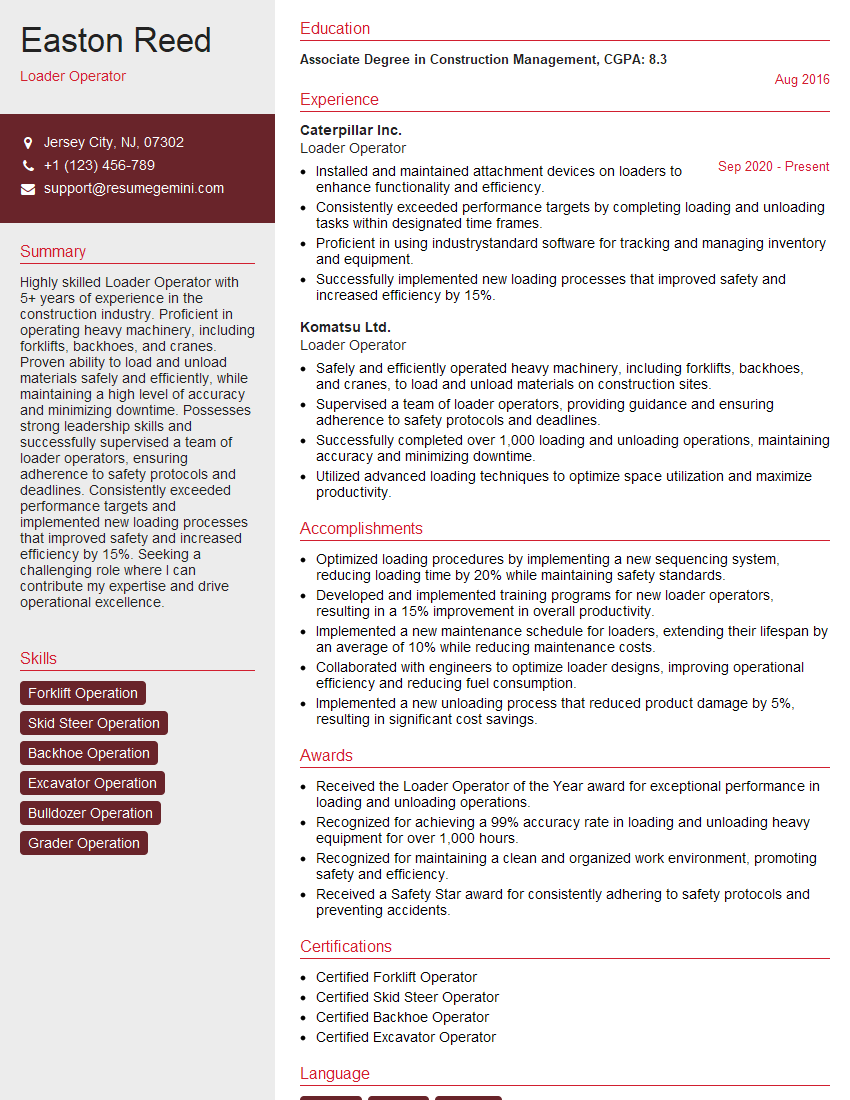
Loader Operator Resume Sample

Heavy Equipment Operator Resume Sample

Roller Operator Resume Sample

Backhoe Operator Resume Sample

Bulldozer Operator Resume Sample

Excavator Operator Resume Sample
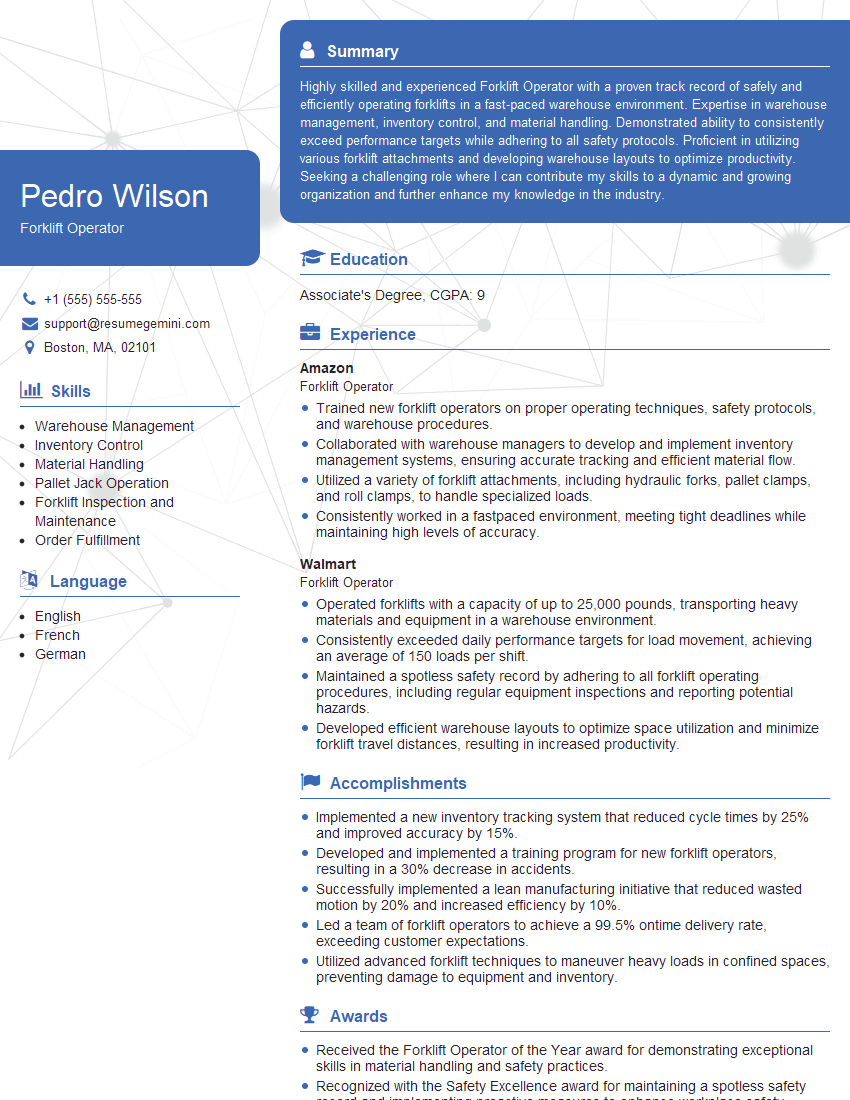
Forklift Operator Resume Sample

Grader Operator Resume Sample
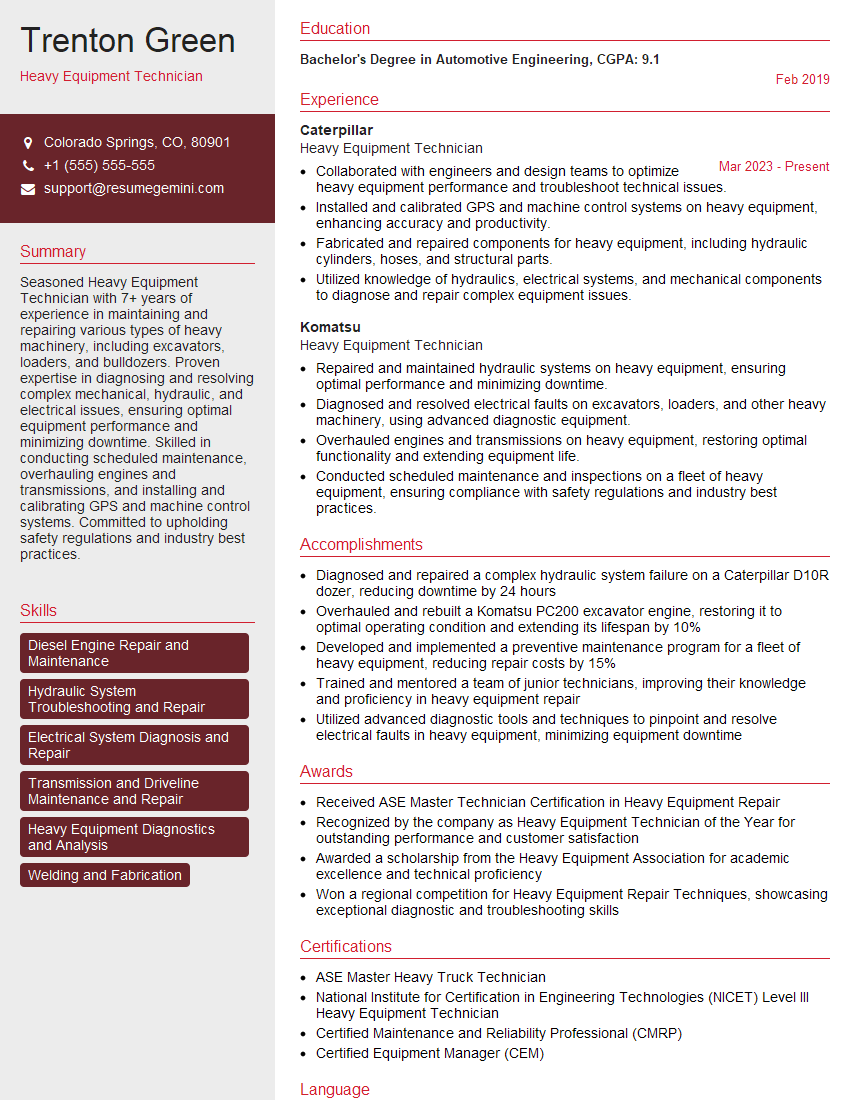
Heavy Equipment Technician Resume Sample
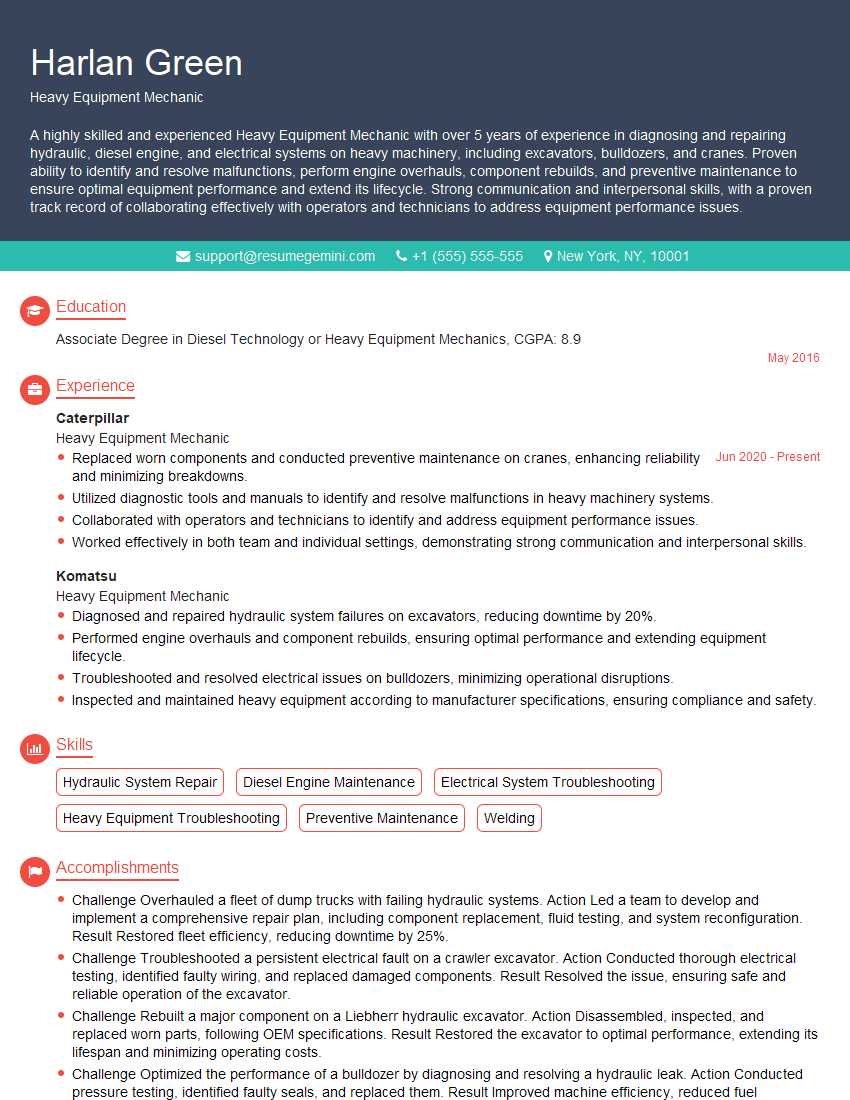
Heavy Equipment Mechanic Resume Sample

Heavy Equipment Supervisor Resume Sample
Explore more articles
Users Rating of Our Blogs
Share Your Experience
We value your feedback! Please rate our content and share your thoughts (optional).
What Readers Say About Our Blog
Very informative content, great job.
good