Interviews are opportunities to demonstrate your expertise, and this guide is here to help you shine. Explore the essential Heel Reshaping interview questions that employers frequently ask, paired with strategies for crafting responses that set you apart from the competition.
Questions Asked in Heel Reshaping Interview
Q 1. Describe the different types of heel reshaping procedures.
Heel reshaping, or surgical correction of heel deformities, encompasses several procedures depending on the specific issue. These procedures aim to improve the cosmetic appearance and/or function of the heel.
- Osteotomy: This involves surgically cutting and reshaping the heel bone (calcaneus) to correct deformities like a prominent heel or a valgus deformity (heel turned outward). Different osteotomy techniques exist, selected based on the specific deformity.
- Soft tissue procedures: These address soft tissue imbalances that contribute to heel deformities. Examples include releasing tight plantar fascia (the thick band of tissue on the bottom of the foot) or removing excess fat pads.
- Implant procedures: In some cases, implants may be used to augment or reshape the heel, especially if there’s significant bone loss or deformity.
- Combination procedures: Often, a combination of bone and soft tissue procedures is necessary to achieve optimal results. For example, an osteotomy might be combined with plantar fascia release.
The choice of procedure depends on a thorough assessment of the patient’s specific anatomy, the nature of the deformity, and their functional goals.
Q 2. Explain the pre-operative assessment process for heel reshaping.
Pre-operative assessment is crucial for successful heel reshaping. It involves a detailed history, physical examination, and imaging studies.
- Patient History: This includes understanding the patient’s symptoms, the duration of the problem, previous treatments, and their expectations of surgery.
- Physical Examination: A comprehensive assessment of the foot and ankle, including range of motion, alignment, and palpation for tenderness or abnormalities.
- Imaging Studies: X-rays are essential for evaluating the bone structure and the degree of deformity. Other imaging like CT scans or MRI scans may be used to assess soft tissues and further clarify the diagnosis.
- Neurovascular assessment: Checking the blood supply and nerve function in the foot is crucial to ensure proper healing and to avoid complications.
- Patient Education and Shared Decision-Making: The surgeon discusses the different surgical options, potential benefits, risks, and limitations with the patient, fostering shared decision-making to ensure alignment with patient goals.
This thorough evaluation helps in determining the best surgical approach, managing expectations, and identifying any potential risks.
Q 3. What are the common complications associated with heel reshaping surgery?
While heel reshaping is generally safe, complications can occur. These include:
- Infection: Infection at the surgical site is a potential risk, requiring treatment with antibiotics and possibly further surgery.
- Nerve damage: Damage to the nerves in the heel can cause numbness, tingling, or pain.
- Poor wound healing: Delayed or impaired wound healing can lead to complications like skin breakdown or infection.
- Nonunion (failure of the bone to heal): In osteotomy procedures, the bone fragments may not heal properly, requiring revision surgery.
- Malunion (bone healing in an incorrect position): This can result in persistent deformity or altered foot function.
- Pain and stiffness: Persistent pain or stiffness in the heel is possible even after successful surgery.
- Recurrence of the deformity: In some cases, the deformity may recur, especially if underlying biomechanical factors are not addressed.
The surgeon will discuss these potential complications with the patient pre-operatively, emphasizing the importance of adhering to post-operative instructions to minimize the risk.
Q 4. How do you manage post-operative pain and swelling?
Post-operative pain and swelling are common. Management strategies include:
- Pain medication: Prescription pain relievers, such as opioids or non-steroidal anti-inflammatory drugs (NSAIDs), are often used initially to manage pain.
- Elevation: Keeping the foot elevated above the heart helps reduce swelling.
- Ice: Applying ice packs to the heel several times a day can help control inflammation.
- Compression: Using a compression bandage can help minimize swelling and support the wound.
- Rest: Adequate rest is crucial for healing. The patient will be advised to avoid weight-bearing activities as instructed.
- Physical therapy: Once the incision has healed sufficiently, physical therapy is recommended to restore range of motion, strength, and function.
Regular follow-up appointments are essential to monitor progress, address any concerns, and adjust pain management as needed. Open communication between the patient and the surgeon is key to effective pain control.
Q 5. Describe the rehabilitation protocol following heel reshaping surgery.
Rehabilitation after heel reshaping is crucial for optimal recovery. It is a gradual process that typically includes:
- Initial Non-Weight Bearing: Initially, the patient may be required to avoid weight-bearing on the affected foot to allow the incision to heal properly. This period can last several weeks, depending on the procedure.
- Gradual Weight Bearing: Once the wound is healed, the patient gradually increases weight-bearing, as guided by the surgeon and physical therapist.
- Physical Therapy: A customized physical therapy program is implemented to improve range of motion, strength, and flexibility in the foot and ankle. This might involve exercises, stretching, and modalities such as ultrasound or electrical stimulation.
- Custom Orthotics: Custom orthotics can help support the heel and improve biomechanics, reducing stress on the affected area.
- Activity Modification: Patients are advised to avoid high-impact activities during the initial phase of recovery and gradually return to normal activity levels as tolerated.
The duration and intensity of the rehabilitation protocol vary depending on the procedure performed and the patient’s individual progress. Close follow-up with the physical therapist is essential for monitoring progress and making adjustments as needed.
Q 6. What are the indications for heel reshaping surgery?
Heel reshaping surgery is indicated for various conditions affecting the heel’s structure and function. These include:
- Prominent heel bone: A prominent heel bone can cause pain, pressure, and cosmetic concerns.
- Heel deformities: Conditions such as valgus deformity (heel turned outward), varus deformity (heel turned inward), or pes planus (flat feet) with heel pain can be addressed through reshaping procedures.
- Heel pain associated with bone deformities: Pain resulting from structural issues in the heel bone can be alleviated by reshaping the bone.
- Cosmetic concerns: Patients may opt for heel reshaping to improve the appearance of their heel, particularly if the deformity affects their self-confidence.
The decision to proceed with surgery should be made in consultation with a qualified foot and ankle surgeon, who will assess the patient’s specific case and discuss the potential benefits and risks.
Q 7. What are the contraindications for heel reshaping surgery?
Certain factors can contraindicate heel reshaping surgery. These include:
- Poor medical condition: Patients with uncontrolled diabetes, peripheral vascular disease, or other significant medical problems may not be suitable candidates due to increased risk of complications.
- Active infection: The presence of an active infection in the foot or elsewhere in the body would increase the risk of post-operative infection.
- Unrealistic expectations: Patients with unrealistic expectations regarding the outcome of surgery may not be good candidates, as this can lead to dissatisfaction.
- Inadequate bone quality: Poor bone quality, for example, due to osteoporosis, can compromise healing and increase the risk of complications after osteotomy.
- Neurological deficits: Significant neurological deficits in the foot can increase the risk of post-operative complications.
A thorough pre-operative assessment by the surgeon is crucial to identify any contraindications and ensure the patient’s safety and the success of the procedure. Open communication between the surgeon and patient is key to making the best decisions.
Q 8. How do you select the appropriate surgical technique for a particular patient?
Selecting the appropriate surgical technique for heel reshaping is a crucial step, requiring a thorough understanding of the patient’s specific deformity, their overall health, and their functional goals. It’s not a one-size-fits-all approach. We carefully consider the severity of the deformity, the presence of any associated conditions like arthritis or nerve damage, the patient’s age and activity level, and their expectations from the surgery.
For instance, a young, active patient with a significant calcaneal fracture requiring significant bone remodeling might benefit from an open reduction and internal fixation with bone grafting, while an older, less active patient with a mild plantar fasciitis-related heel spur might be better suited for a less invasive procedure like a plantar fascia release.
We often use a combination of techniques depending on the individual needs. A patient might require a combination of osteotomy (bone cutting) to correct the angle, and an implant such as a calcaneal wedge to restore height and alignment. The surgical plan is always individualized and discussed extensively with the patient before proceeding.
Q 9. What imaging modalities are used to assess heel deformities?
Imaging plays a vital role in assessing heel deformities. We routinely utilize several modalities to obtain a comprehensive view of the anatomy and pathology. Standard anteroposterior and lateral radiographs are the cornerstone, providing information about bone alignment, fracture lines (if present), and the presence of spurs or degenerative changes.
Further, we often employ computed tomography (CT) scans to obtain detailed three-dimensional images of the bone structure, especially helpful for complex fractures or assessing the extent of bone loss. Magnetic resonance imaging (MRI) is used to evaluate soft tissue structures like the plantar fascia, tendons, and ligaments, crucial in cases where soft tissue involvement is suspected or in evaluating the presence of inflammation.
Finally, sometimes we may utilize fluoroscopy during the operation itself to ensure precise placement of implants and screws. This dynamic imaging technique provides real-time visualization during the procedure allowing for adjustments as needed.
Q 10. Describe your experience with different types of bone grafts used in heel reshaping.
My experience with bone grafts in heel reshaping encompasses a wide range of materials, each with its own advantages and disadvantages. Autografts, harvested from the patient’s own body (typically the iliac crest), are the gold standard due to their excellent integration and low risk of rejection. However, they require a second surgical site, increasing the recovery time and potential for complications at the donor site.
Allografts, derived from a donor, offer a readily available alternative, eliminating the need for a second incision. However, the risk of disease transmission and slower integration need to be considered. Synthetic bone graft substitutes, made from materials like hydroxyapatite or calcium phosphate, are also utilized. They offer the benefits of readily available supply and easy handling, but their integration rate might be slightly slower compared to autografts.
The choice of graft depends on factors like the size of the bone defect, the patient’s overall health, and the availability of resources. For instance, in a large segmental bone defect following a severe fracture, an autograft may be the preferred choice for better integration, while a smaller defect could be successfully filled with an allograft or synthetic substitute.
Q 11. How do you manage infection following heel reshaping surgery?
Infection is a serious complication after any surgery, and heel reshaping is no exception. Prophylactic antibiotics are routinely administered before, during, and sometimes after the surgery to minimize this risk. Maintaining meticulous surgical technique and sterile conditions in the operating room is paramount.
Post-operatively, diligent wound care is crucial. This includes regular wound dressings, monitoring for signs of infection (such as increased pain, swelling, redness, or pus), and prompt administration of appropriate antibiotics if an infection is suspected. In some cases, surgical debridement (removal of infected tissue) might be necessary to control the infection. Early diagnosis and aggressive treatment are key to preventing serious complications.
For instance, if a patient presents with signs of infection, I would immediately assess the wound, obtain wound cultures to identify the causative organism, and start intravenous antibiotics targeted at the identified pathogen. If the infection is severe, surgical drainage or debridement might be required.
Q 12. What are the long-term outcomes of heel reshaping surgery?
Long-term outcomes of heel reshaping surgery are generally positive for most patients, with significant improvement in pain, function, and quality of life. Successful surgery often leads to improved gait, reduced pain during weight-bearing activities, and increased participation in recreational activities.
However, it’s important to acknowledge that outcomes vary depending on factors such as the severity of the initial deformity, the patient’s compliance with post-operative instructions, and the presence of any pre-existing conditions. Some patients may experience persistent pain or stiffness, although this is less common with meticulous surgical technique and proper rehabilitation.
Long-term follow-up appointments are essential to monitor healing progress, assess functional outcomes, and address any potential complications. Regular radiographic assessments help evaluate the stability of the correction and the integration of any bone grafts or implants.
Q 13. How do you counsel patients on the risks and benefits of heel reshaping surgery?
Patient counseling is a critical aspect of my practice. I always begin by thoroughly explaining the nature of the heel deformity, discussing its causes and its impact on the patient’s daily life. This conversation is structured to ensure the patient understands their condition and its potential treatment options.
I then detail the surgical procedure, explaining the steps involved, the anesthesia type, and the expected recovery period. The risks associated with the surgery, including infection, nerve damage, non-union (failure of bone to heal), and implant failure, are openly and honestly discussed. Realistic expectations regarding pain relief, functional improvement, and potential limitations are set.
I present alternative non-surgical treatment options, such as physical therapy, orthotics, and medications, and weigh their benefits and limitations against surgery. Finally, I allow ample time for the patient to ask questions and express their concerns, ensuring they feel informed and empowered to make an educated decision about their treatment.
Q 14. What are the different types of implants used in heel reshaping?
Several types of implants are used in heel reshaping, primarily focused on restoring the optimal biomechanics of the heel and correcting deformities. Calcaneal wedges, made from materials like metal or polyethylene, are commonly used to increase the height of the heel and improve alignment. These wedges are chosen based on the precise measurements and the patient’s anatomy to achieve the correct correction.
Other implants include screws and plates used in fracture fixation and osteotomy procedures to stabilize bone fragments and maintain the desired alignment. The materials chosen are biocompatible and designed for long-term stability within the body. The selection of a specific implant depends on the nature of the deformity, the severity of bone loss (if any), and the surgeon’s preference, always keeping the patient’s specific requirements in mind. For example, in a severe fracture, a combination of a plate and screws might be utilized for better stability.
Q 15. Describe your experience with minimally invasive heel reshaping techniques.
Minimally invasive heel reshaping techniques have revolutionized the field, offering patients faster recovery times and reduced scarring compared to traditional open surgery. My experience encompasses a wide range of these procedures, primarily focusing on techniques that utilize small incisions and specialized instruments. For example, I frequently employ arthroscopy for correcting deformities like plantar fasciitis or heel spurs. This involves inserting a small camera and specialized tools through tiny incisions to visualize and correct the underlying issue. Another example is percutaneous procedures, where small needles are used to perform procedures like fat pad augmentation or release of contracted tissues, minimizing tissue trauma and reducing post-operative pain.
The advantages of these techniques are numerous. Patients experience less pain, smaller scars, shorter hospital stays, and a quicker return to normal activities. A typical example would be a patient with a prominent heel spur. With a minimally invasive approach, we can precisely target and remove the spur, alleviating pain and restoring normal heel morphology, with the patient potentially walking comfortably within a few days post-operation. Compared to open surgery, this technique is vastly superior in terms of recovery and cosmetic outcome.
Career Expert Tips:
- Ace those interviews! Prepare effectively by reviewing the Top 50 Most Common Interview Questions on ResumeGemini.
- Navigate your job search with confidence! Explore a wide range of Career Tips on ResumeGemini. Learn about common challenges and recommendations to overcome them.
- Craft the perfect resume! Master the Art of Resume Writing with ResumeGemini’s guide. Showcase your unique qualifications and achievements effectively.
- Don’t miss out on holiday savings! Build your dream resume with ResumeGemini’s ATS optimized templates.
Q 16. How do you address patient concerns and anxieties about heel reshaping surgery?
Addressing patient anxieties about heel reshaping surgery is crucial. I begin by establishing a strong doctor-patient relationship built on trust and open communication. I take the time to listen to their concerns, thoroughly explain the procedure, including potential risks and benefits, and answer their questions patiently and honestly. Visual aids like anatomical models and before-and-after photos can be very helpful in alleviating anxieties. I also discuss realistic expectations for the outcome and the recovery process.
For particularly anxious patients, I might recommend a pre-operative consultation with a psychologist or psychiatrist. In my practice, I’ve found that a calm, reassuring demeanor and a collaborative approach to treatment planning significantly reduce pre-operative stress. For instance, I had a patient deeply afraid of needles. We spent extra time discussing the minimally invasive nature of the procedure and the use of local anesthesia, which significantly eased their concerns. Post-surgery, regular follow-up visits and open lines of communication are essential to continue building trust and addressing any remaining anxieties.
Q 17. What are the latest advancements in heel reshaping techniques?
The field of heel reshaping is constantly evolving. Recent advancements include the use of advanced imaging techniques like 3D CT scans, allowing for more precise pre-operative planning and surgical guidance. This ensures a more accurate correction of the deformity and improves surgical outcomes. There’s also been a significant focus on developing new biomaterials and implants for use in heel reshaping procedures, enhancing the effectiveness and durability of the treatments. The use of platelet-rich plasma (PRP) therapy in conjunction with surgical techniques is showing promise in reducing recovery time and improving tissue healing.
Minimally invasive techniques are also being refined with the development of smaller, more sophisticated instruments that allow for greater precision and less tissue trauma. Furthermore, robotic-assisted surgery is showing potential, providing increased accuracy and control during complex procedures. These innovations lead to better outcomes, less pain, and quicker return to normal activities for patients. For example, the use of navigation systems guided by 3D imaging allows for incredibly precise placement of implants during heel bone lengthening procedures, resulting in improved aesthetic and functional outcomes.
Q 18. How do you assess patient satisfaction after heel reshaping surgery?
Assessing patient satisfaction after heel reshaping surgery involves a multi-faceted approach. I use a combination of objective and subjective measures. Objective measures include assessing range of motion, gait analysis, and pain levels using validated pain scales. Subjective measures involve questionnaires and direct patient interviews to gauge their satisfaction with the cosmetic outcome, functional improvement, and overall experience. We also collect data on patient reported outcome measures (PROMs) at regular intervals post-surgery to track progress and address any concerns.
A key aspect is the use of validated patient-reported outcome measures (PROMs) like the Foot and Ankle Outcome Score (FAOS) which allows for objective quantification of improvements in patient-reported function and quality of life. Beyond questionnaires, I regularly meet with patients to discuss their experiences and address any issues. This provides a valuable qualitative assessment of their satisfaction. For instance, I recently had a patient with significant heel pain due to a plantar spur. Following surgery, her FAOS score improved dramatically, and her subjective feedback indicated a significantly enhanced quality of life and ability to resume her normal activities. Regular follow-up enables us to continuously monitor and optimize patient outcomes.
Q 19. Describe your experience with managing complications during heel reshaping surgery.
Managing complications during heel reshaping surgery requires careful planning and a proactive approach. Potential complications include infection, nerve damage, bleeding, and delayed wound healing. Prevention is key, and meticulous adherence to sterile surgical techniques is paramount. I have a detailed protocol in place to mitigate risks and promptly address any complications that may arise. This includes regular monitoring of vital signs, careful wound management, and prompt administration of appropriate antibiotics if necessary.
Should complications occur, a swift and decisive response is crucial. For example, if infection is suspected, prompt intravenous antibiotics are administered, and further surgical intervention might be necessary to debride infected tissue. Similarly, nerve damage requires immediate action to minimize lasting effects. I always strive to provide a supportive and reassuring environment for patients experiencing complications, providing them with clear information and a collaborative plan for management. My extensive experience enables me to rapidly assess, diagnose, and manage complications effectively, ensuring optimal patient outcomes. Open communication with the patient and their family is key during these situations.
Q 20. What are the ethical considerations in providing heel reshaping surgery?
Ethical considerations in heel reshaping surgery are central to my practice. Informed consent is paramount. Patients must fully understand the risks, benefits, and alternatives to the procedure before making a decision. I ensure that patients are provided with clear, unbiased information and ample opportunity to ask questions. It’s crucial to avoid overpromising or creating unrealistic expectations about the outcomes. Furthermore, I must respect patient autonomy and their right to refuse treatment, even if they’ve already undergone initial consultations.
Another key ethical consideration is ensuring equitable access to care. I believe that all patients should have access to high-quality heel reshaping surgery regardless of their socioeconomic background. Furthermore, I maintain meticulous records, adhering to strict privacy regulations and ensuring the confidentiality of patient information. Finally, I constantly strive to stay updated with the latest research and advancements in the field to ensure I’m providing patients with the safest and most effective treatment options available. Ethical practice also involves carefully considering the indications for surgery and ensuring it aligns with the patient’s needs and expectations.
Q 21. How do you maintain sterile conditions during heel reshaping surgery?
Maintaining sterile conditions during heel reshaping surgery is critical to preventing infection and ensuring patient safety. My surgical team and I strictly adhere to a comprehensive protocol which begins with thorough hand hygiene using an antiseptic scrub. The operating room is meticulously prepared, ensuring all surfaces are disinfected and sterile drapes are used to cover the surgical field. All surgical instruments are sterilized using an autoclave before the procedure.
During the procedure, sterile gloves, gowns, and masks are worn by all members of the surgical team. Strict aseptic techniques are maintained throughout the procedure. The surgical site is continually monitored for any signs of contamination, and any breach in sterile technique is addressed immediately. Regular checks of sterility, including bacterial counts in the air and on surfaces are monitored. Post-surgery, meticulous wound care is provided to prevent infection. This multi-layered approach is essential to guarantee the safety and well-being of our patients and maintain the highest standards of surgical practice.
Q 22. Describe your experience working with a multidisciplinary team in the context of heel reshaping.
Heel reshaping, often involving complex procedures like osteotomy or soft tissue release, necessitates a highly coordinated multidisciplinary approach. My experience involves seamless collaboration with orthopedic surgeons, podiatrists, anesthesiologists, physical therapists, and nurses. For instance, in a recent case of a patient with a severe plantar fasciitis and heel spur, the orthopedic surgeon performed the osteotomy, I managed the intraoperative aspects focusing on meticulous bone preparation and precise implant placement, while the podiatrist handled pre-operative assessment and post-operative wound care. The anesthesiologist ensured patient comfort and safety during the procedure. Post-operatively, the physical therapist played a crucial role in designing a tailored rehabilitation program to optimize functional recovery, closely monitored by the nursing staff. This collaborative spirit ensures the best possible patient outcomes, significantly reducing complications and enhancing patient satisfaction.
Q 23. How do you document the surgical procedure and post-operative care?
Comprehensive documentation is paramount for legal and medical reasons. Our system involves detailed preoperative notes including patient history, physical examination findings, radiographic imaging (X-rays, CT scans), and the surgical plan. Intraoperatively, we meticulously document the surgical technique used, including measurements, implant details (type, size, location), and any unexpected findings. Post-operative documentation includes details on anesthesia management, blood loss, drain output, immediate post-operative complications, and a detailed post-operative care plan. Follow-up visits are documented, including pain assessment, range of motion, weight-bearing status, and any complications. Digital imaging of the surgical site, both pre- and post-operatively, is also included. We utilise a standardized electronic health record system that allows easy access and sharing of this information between the multidisciplinary team.
Q 24. How do you ensure patient safety during and after heel reshaping surgery?
Patient safety is our utmost priority. Pre-operatively, this includes thorough patient evaluation to identify any risk factors, such as co-morbidities. We optimize the patient’s medical status before surgery and conduct appropriate blood tests. Intraoperatively, stringent sterile techniques are followed, and continuous monitoring of vital signs is implemented. We use image guidance techniques wherever possible for precision and minimize trauma. Post-operatively, careful monitoring for signs of infection, bleeding, or nerve damage is crucial. Patients receive detailed instructions on wound care, medication regimen, and activity restrictions. Regular follow-up appointments allow for prompt detection and management of any potential complications. For example, we use compression bandages and prophylactic antibiotics to reduce infection risk. We also provide patients with clear instructions and emergency contact information.
Q 25. What is your experience with different types of anesthesia used in heel reshaping surgery?
The choice of anesthesia depends on various factors, including the extent of the procedure, patient age, and overall health. Regional anesthesia, such as ankle or posterior tibial nerve block, is frequently used for its effectiveness in providing adequate pain relief with minimal systemic side effects. This allows for better patient control and a faster recovery. General anesthesia is used in more extensive procedures or when regional anesthesia is contraindicated. We also consider patient preferences and discuss the pros and cons of each option thoroughly. The anesthesiologist plays a vital role in selecting and managing the anesthetic technique to ensure patient safety and comfort throughout the procedure.
Q 26. How do you manage potential bleeding complications during heel reshaping?
Bleeding complications, while relatively uncommon, are addressed proactively. Careful hemostasis (control of bleeding) is maintained throughout the surgical procedure using techniques such as meticulous dissection, electrocautery, and the use of bone wax. Post-operatively, close monitoring for excessive drainage or hematoma formation is crucial. If significant bleeding occurs, appropriate measures such as surgical exploration and drainage, or even blood transfusion, are taken immediately. We use a standardized approach based on the severity of bleeding to ensure prompt and effective management. For example, a small hematoma may be managed conservatively with ice packs and compression, while significant bleeding requires surgical intervention.
Q 27. What are the recovery times and expectations for patients undergoing heel reshaping?
Recovery times vary depending on the type and extent of the procedure, the individual patient’s healing capacity, and adherence to the post-operative care plan. Patients are typically non-weight-bearing initially, progressing gradually to partial and then full weight-bearing as directed by the surgeon and physical therapist. Pain management is usually achieved through a combination of analgesics and physical therapy. Most patients experience significant pain reduction within a few weeks. Return to normal activities may take several weeks to several months. Realistic expectations are set pre-operatively to avoid disappointment and ensure patient compliance with the recovery plan. Regular follow-up appointments are vital to monitor progress and address any concerns.
Q 28. How do you select appropriate footwear post-surgery for optimal healing?
Appropriate footwear is crucial for optimal healing. Immediately post-surgery, patients typically require a supportive, non-restrictive, and comfortable shoe, often a surgical shoe or a post-operative orthopedic boot. These shoes provide adequate support and cushioning to protect the surgical site. As healing progresses, patients can transition to supportive shoes with a low heel and a broad, stable base. Avoidance of high heels, pointed-toe shoes, and shoes with inadequate support is important to prevent recurrence of deformity and promote proper weight distribution. This is discussed in detail with patients before discharge, ensuring they understand the importance of footwear choices throughout the healing process. We often provide personalized recommendations and adjust footwear selection based on the patient’s recovery.
Key Topics to Learn for Heel Reshaping Interview
- Anatomy and Biomechanics of the Heel: Understanding the structure and function of the heel, including bones, ligaments, tendons, and muscles involved in heel reshaping procedures.
- Heel Reshaping Techniques: Familiarize yourself with various surgical and non-surgical techniques, including their indications, contraindications, and potential complications. Consider the differences between conservative and invasive approaches.
- Patient Assessment and Diagnosis: Mastering the skills necessary for accurately assessing patient needs, diagnosing heel deformities (e.g., plantar fasciitis, heel spurs), and determining the most appropriate treatment plan.
- Post-operative Care and Rehabilitation: Understand the protocols for post-operative management, including wound care, pain management, and physical therapy, to ensure optimal patient recovery.
- Materials and Technologies: Become familiar with the various materials and technologies used in heel reshaping procedures, including implants, surgical instruments, and imaging techniques.
- Ethical Considerations and Professional Standards: Understand the ethical implications of heel reshaping procedures and adhere to professional standards of practice.
- Problem Solving and Case Studies: Practice analyzing hypothetical scenarios and devising appropriate treatment strategies. Review case studies to enhance your understanding of real-world applications.
- Technological Advancements in Heel Reshaping: Stay updated on the latest advancements in techniques, materials, and technologies used in heel reshaping.
Next Steps
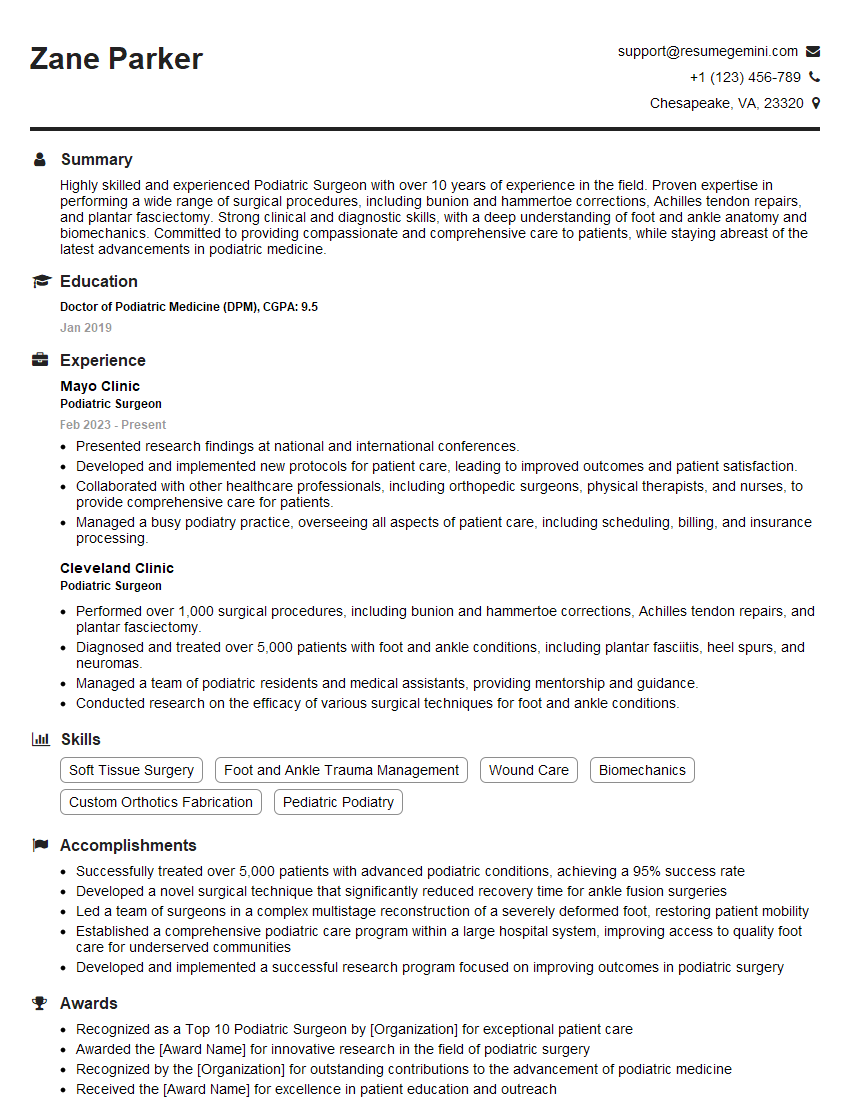
Mastering Heel Reshaping opens doors to exciting career opportunities in a specialized and in-demand field. A strong understanding of these concepts will significantly improve your interview performance and increase your chances of securing your desired role. To further strengthen your application, creating an ATS-friendly resume is crucial. This ensures your qualifications are effectively highlighted to potential employers. We highly recommend using ResumeGemini, a trusted resource for building professional resumes. ResumeGemini offers examples of resumes tailored specifically to the Heel Reshaping field to help you create a compelling application that showcases your expertise.
Explore more articles
Users Rating of Our Blogs
Share Your Experience
We value your feedback! Please rate our content and share your thoughts (optional).
What Readers Say About Our Blog
Very informative content, great job.
good