Interviews are more than just a Q&A session—they’re a chance to prove your worth. This blog dives into essential Hemming and Seaming interview questions and expert tips to help you align your answers with what hiring managers are looking for. Start preparing to shine!
Questions Asked in Hemming and Seaming Interview
Q 1. Explain the difference between blind hemming and a standard hem.
The key difference between a blind hem and a standard hem lies in the visibility of the stitching. A standard hem involves folding the fabric’s edge and stitching it down visibly. Think of the hem on a simple t-shirt – the stitching is clearly seen. In contrast, a blind hem is designed to be invisible or nearly invisible. The stitches are cleverly concealed within the fabric fold, creating a clean, professional finish, often seen in tailored garments like trousers or skirts.
Imagine sewing a button – a standard hem is like sewing the button on with a big, obvious stitch. A blind hem is more like using a hidden stitch to attach the button, leaving the final result seamless.
Q 2. Describe your experience with various hemming techniques (e.g., rolled hem, double-fold hem).
My experience encompasses a wide range of hemming techniques. I’m proficient in the classic double-fold hem, a reliable method for most fabrics, where the fabric is folded twice before stitching, creating a neat, durable hem. I also regularly employ the rolled hem, ideal for lightweight sheer fabrics like chiffon or organza. This technique involves rolling the raw edge of the fabric inwards before stitching, creating a delicate, barely-there finish. For heavier fabrics, a machine hem using a serger or a specialized hemmer foot is efficient and creates a professional look. I’ve also worked extensively with hand-stitched hems, particularly when dealing with delicate fabrics or intricate designs requiring a refined touch. Each technique demands a nuanced understanding of fabric weight, drape, and overall garment design.
Q 3. How do you ensure even stitching while hemming?
Achieving even stitching in hemming requires precision and attention to detail. First, ensure the fabric is properly pressed to eliminate wrinkles and create a crisp, consistent fold. Then, utilize guiding tools like a tailor’s ham or a sleeve board to maintain a flat, even surface during stitching. I often use a walking foot on my sewing machine to prevent the fabric layers from shifting. Consistent stitch length and tension are crucial – using a test swatch beforehand helps determine the optimal settings. Finally, taking small, consistent stitches and regularly checking your work for evenness contributes to a perfectly hemmed garment. For hand-stitching, employing a consistent stitch length and using a thimble ensures both speed and evenness.
Q 4. What types of fabrics are most challenging to hem, and why?
Some fabrics present more challenges than others. Very stretchy fabrics like jersey knit can be tricky because they tend to roll and stretch unevenly during hemming, often requiring stabilizing techniques such as stay-stitching. Similarly, heavy fabrics like denim or canvas can be difficult to manage due to their thickness and stiffness; they can sometimes jam the sewing machine unless you use special needles and techniques. Fraying fabrics, such as linen or silk, require pre-treatment such as pinking or serging to prevent unraveling. Finally, bulky fabrics with complex weaves can sometimes make it difficult to get a neat and flat hem.
Q 5. How do you handle curved seams when hemming?
Hemming curved seams requires a more nuanced approach than straight seams. The key is to avoid any bulk or puckering. I start by carefully clipping curves in the seam allowance to ensure flexibility. Instead of one continuous stitch, I use smaller, more manageable sections, following the curve closely. A tailor’s ham or curved sleeve board is invaluable in providing support and even distribution of pressure as I stitch, thereby preventing puckers. I often use a very small stitch length for better control and a more accurate fit to the curve. The goal is to create a flowing, smooth hem that maintains the garment’s shape.
Q 6. Explain different types of seams (e.g., French seam, flat-felled seam).
Seams are the foundation of garment construction, and different seam types offer unique advantages. A French seam encloses raw edges completely, providing a neat, durable, and professional finish, especially suitable for lightweight fabrics. A flat-felled seam is extremely strong and durable, ideal for workwear or items needing robust construction. It’s characterized by one seam allowance being encased within the other, resulting in a flat, clean finish on the outside. Other common seam types include the seam allowance which is simply where two edges meet, the plain seam that is simply stitched and pressed, and the serged seam which provides overlocking and a finish.
Q 7. What are the advantages and disadvantages of different seam types?
The choice of seam type depends largely on the fabric, garment type, and desired finish. French seams, while beautiful, can be time-consuming and are best suited for fine fabrics. Their enclosed raw edges prevent fraying and create a luxurious look. Flat-felled seams are incredibly durable but more labor-intensive, making them ideal for sturdy garments that need to withstand wear and tear. Plain seams are efficient but may require additional finishing to prevent fraying. Serged seams provide quick finishing and prevent fraying, making them a time-efficient option. The trade-off is usually between time and durability; a stronger seam generally requires more work.
Q 8. How do you select the appropriate stitch length and tension for various fabrics?
Selecting the right stitch length and tension is crucial for achieving strong, durable seams and a professional finish. Think of it like choosing the right glue for a project – the wrong one will lead to a weak bond. The ideal settings depend heavily on the fabric’s weight, type, and weave.
- Lightweight fabrics (silk, chiffon): Require shorter stitch lengths (10-12 stitches per inch) and lower tension to prevent puckering or damage. Too much tension will pull the fabric, causing it to distort.
- Medium-weight fabrics (cotton, linen): A medium stitch length (14-18 stitches per inch) and medium tension usually work well. Experiment slightly to find the best balance for the specific fabric.
- Heavyweight fabrics (denim, canvas): Longer stitch lengths (18-22 stitches per inch) and higher tension are necessary to create strong seams. The heavier fabric needs a more robust stitch to hold.
Always test your stitch length and tension on a scrap of the same fabric before starting your project. This prevents costly mistakes and ensures a perfect outcome.
Q 9. How do you prevent seam puckering?
Seam puckering is a common problem, often caused by uneven fabric tension or incorrect stitch settings. Imagine trying to sew two pieces of fabric together that are fighting each other – the result is puckering! To prevent this:
- Use the correct needle: The right needle size is vital for the fabric weight. A needle that’s too small can cause breakage, while one that’s too large can create holes and puckering.
- Pre-wash fabric: Pre-washing prevents shrinkage after the garment is sewn, eliminating potential puckering later.
- Match stitch length and tension: As discussed earlier, use appropriate settings based on the fabric type.
- Pin accurately: Precise pinning minimizes fabric shifting during sewing, resulting in smooth, even seams.
- Use a walking foot (if available): A walking foot helps feed multiple layers of fabric evenly, preventing puckering, especially with layered fabrics.
- Press seams open or to one side: Pressing helps to flatten the seams and remove any tension.
Understanding fabric behavior and paying attention to detail are key to avoiding seam puckering.
Q 10. How do you repair a damaged seam?
Repairing a damaged seam depends on the extent of the damage. Minor repairs can often be done by hand, while more extensive damage may require machine sewing. Think of it like fixing a small crack versus a large hole in a wall – the repair methods differ.
- Minor damage (loose stitches): Carefully hand-sew the loose stitches back in place, matching the original stitch pattern.
- Moderate damage (torn seam): Rip the seam open a short distance beyond the damage. Press the seam allowance open, then re-sew, using the original stitch length and tension. Ensure precise alignment of the fabric edges.
- Extensive damage (large tear): This may necessitate patching. Cut away any severely damaged fabric, and then stitch in a patch of matching fabric. Carefully blend the patch with the original fabric to minimize visibility.
In all cases, using matching thread and appropriate needle size is crucial. A neat, invisible repair should be the goal. If you lack confidence in your skills, professional help may be advisable.
Q 11. Describe your experience with industrial sewing machines.
I have extensive experience operating various industrial sewing machines, including single-needle, double-needle, and overlock machines. My experience spans diverse applications, from producing high-volume runs of garments to handling specialized projects needing intricate stitching. I’m proficient in adjusting machine settings like stitch length, tension, and differential feed to accommodate various fabrics and patterns.
For instance, in a previous role, I was responsible for managing the production line for a high-end denim manufacturer. I mastered the nuances of using a heavy-duty industrial sewing machine for stitching thick denim seams with consistent precision. This involved optimizing the machine’s settings to minimize needle breakage and thread jams while maintaining high production standards.
Q 12. How do you maintain and troubleshoot sewing machine issues?
Regular maintenance is vital for keeping sewing machines running smoothly and preventing costly repairs. Think of it like maintaining a car – regular servicing prevents breakdowns.
- Daily Cleaning: Remove lint and thread scraps from the bobbin area, needle plate, and feed dogs. A small brush and compressed air are helpful tools.
- Regular Lubrication: Use the recommended sewing machine oil in appropriate areas to keep moving parts lubricated. This significantly reduces friction and wear.
- Needle Changes: Replace needles regularly, as dull or bent needles can cause damage to the fabric and machine.
- Troubleshooting: Common issues such as skipped stitches, thread jams, and inconsistent tension are frequently resolved by cleaning, oiling, or adjusting tension settings. The user’s manual is an invaluable resource for troubleshooting specific issues. In complex situations, professional servicing may be required.
Proactive maintenance ensures the longevity and optimal performance of sewing machines, leading to increased productivity and improved product quality.
Q 13. What safety precautions do you follow while operating sewing machines?
Safety is paramount when operating sewing machines. Here’s my approach to ensure a safe working environment:
- Proper machine setup: Ensure the machine is securely placed on a stable surface and is properly grounded to prevent electric shocks.
- Hand and finger protection: Never put fingers near the needle while the machine is running. Use a finger guard if available.
- Needle safety: Handle needles with care and dispose of them safely in designated containers to prevent injuries.
- Clothing safety: Avoid wearing loose clothing or jewelry that could get caught in the machine.
- Eye protection: Consider wearing safety glasses to prevent eye injuries from flying debris.
- Regular machine checks: Before operating, always check that the machine is functioning correctly and is free of any obstructions.
Following these simple safety guidelines helps prevent accidents and ensures a safe work environment.
Q 14. How do you ensure quality control during hemming and seaming?
Quality control in hemming and seaming is essential for producing professional-looking and durable garments. It involves a multi-step process starting before the sewing machine even turns on.
- Fabric Inspection: Before starting, check the fabric for any defects that may affect the final product.
- Precise Cutting and Marking: Accurate cutting and marking are paramount. Using rulers and patterns ensures precision.
- Consistent Stitching: Maintain consistent stitch length and tension throughout the project.
- Regular Seam Checking: Periodically check the seams for accuracy and strength during sewing. This allows for immediate correction of any problems.
- Final Inspection: Once completed, thoroughly examine the finished seams for any inconsistencies. Pressing is the final step to ensure a professional look and to set the stitching.
This rigorous approach ensures high-quality workmanship and minimizes the need for corrections later in the process. It also leads to improved efficiency and customer satisfaction.
Q 15. What are the common quality issues related to hemming and seaming, and how do you address them?
Common quality issues in hemming and seaming stem from inconsistencies in stitch length, seam allowance, and overall finish. Uneven stitching can create a messy and unprofessional look, while incorrect seam allowances can lead to garment distortion or poor fit. A poorly finished hem might unravel or look unfinished.
- Addressing Uneven Stitching: This often arises from inconsistent pressure on the foot pedal of the sewing machine. The solution is consistent, slow, and deliberate sewing, combined with regular machine maintenance. Practicing on scrap fabric is crucial.
- Addressing Inconsistent Seam Allowances: This can be remedied by using a seam guide on your sewing machine or marking the seam allowance with tailor’s chalk or a washable fabric marker before sewing. Accuracy is key.
- Addressing Poorly Finished Hems: This requires attention to detail. Using the appropriate hem techniques for the fabric (e.g., blind hem stitch for lightweight fabrics, rolled hem for delicate fabrics) prevents fraying and creates a neat finish. Pressing is also vital.
For example, a poorly finished rolled hem on a sheer fabric can unravel quickly and ruin the garment. Therefore, using the right tools like a rolled hem foot and paying extra attention to securing the stitches makes a huge difference.
Career Expert Tips:
- Ace those interviews! Prepare effectively by reviewing the Top 50 Most Common Interview Questions on ResumeGemini.
- Navigate your job search with confidence! Explore a wide range of Career Tips on ResumeGemini. Learn about common challenges and recommendations to overcome them.
- Craft the perfect resume! Master the Art of Resume Writing with ResumeGemini’s guide. Showcase your unique qualifications and achievements effectively.
- Don’t miss out on holiday savings! Build your dream resume with ResumeGemini’s ATS optimized templates.
Q 16. How do you handle inconsistencies in fabric weight or texture during seaming?
Inconsistencies in fabric weight and texture during seaming demand careful consideration of stitch type and tension. Heavier fabrics require stronger stitches and potentially different needle sizes than lightweight fabrics. For example, seaming a heavy denim requires a heavier-duty needle and a stronger stitch than seaming a delicate silk.
- Matching Stitch Types: For fabrics with significantly different weights, a technique like a French seam can ensure a clean, professional finish by encasing the raw edges.
- Adjusting Tension: If the fabrics are too different, you might need to adjust the sewing machine tension to prevent puckering or pulling. For example, if seaming a heavy linen to a light cotton, you might need to reduce the tension on the heavier linen to prevent the lighter cotton from being pulled.
- Using Stabilizers: Using a lightweight interfacing or fusible web can stabilize the seams and reduce the risk of puckering, particularly when working with delicate fabrics combined with heavier ones. For example, seaming a chiffon to a crepe de chine can benefit from a lightweight interfacing along the seam allowance.
Q 17. Describe your experience working with different types of thread.
My experience with different types of thread is extensive. The choice of thread is critical to the final outcome of the project. I frequently utilize cotton thread for woven fabrics like cotton and linen. Its strength and versatility make it a staple for many projects. Polyester thread is useful for its durability and resistance to shrinking or stretching, which is ideal for garments that will undergo repeated washing. Silk thread adds a luxurious touch to high-end projects, especially those made with fine silks or other delicate fabrics. Rayon thread adds sheen and drape. For heavy-duty projects like denim, I use a stronger thread specifically designed for this purpose.
I consider factors like fiber content, strength, and color when selecting a thread. The color should complement, and ideally match, the fabric. A wrong thread choice can severely compromise the quality of the finished product—imagine using a weak cotton thread on a heavy canvas bag!
Q 18. How do you manage large-scale production runs in terms of hemming and seaming?
Managing large-scale production runs necessitates efficient workflow processes and quality control measures. This often involves utilizing industrial sewing machines, employing multiple skilled sewers, and implementing a structured quality control system. The key is to break down the work into smaller, manageable tasks.
- Work Breakdown Structure: This involves dividing the hemming and seaming process into distinct steps (e.g., cutting, marking, sewing, pressing, quality check). Each step can be assigned to a specific team member or machine.
- Quality Control: Regular checks at each stage help catch errors early and prevent large-scale defects. This may include using checklists or visual inspection processes.
- Industrial Machinery: Industrial sewing machines with features like automatic tension controls and high sewing speeds are vital for efficient production.
For instance, in a large production run of jeans, the stitching of the inseam might be automated to some degree, but final quality control would still be a critical manual step. The quality of the finished product depends on the combination of efficiency and precision.
Q 19. How do you adapt your hemming and seaming techniques to meet specific design requirements?
Adapting my techniques to meet specific design requirements is a core aspect of my work. Designers often demand unique finishes, and a skilled sewer needs to know multiple hemming and seaming methods.
- Seam Finishes: A French seam provides a clean finish for high-end garments, while a serged edge is more appropriate for casual wear. Overlocking or zig-zag stitching prevents fraying and ensures a durable finish, while flat felled seams are suitable for outdoor wear.
- Hem Finishes: Different hems suit different styles and fabrics; a blind hem is virtually invisible and suitable for delicate fabrics while a double-fold hem offers durability for heavier fabrics.
- Special Techniques: Some designs might require decorative stitching or unique seam treatments for specific aesthetic results. For example, topstitching can add visual interest, while bound seams create a tailored look.
For example, a designer might request a specific topstitching pattern on a couture garment—adapting my skills to meticulously execute that design adds value.
Q 20. What types of fabrics are you most comfortable working with?
I’m comfortable working with a wide variety of fabrics, from delicate silks and chiffons to heavy wools and denims. My experience encompasses natural fibers like cotton, linen, wool, and silk, as well as synthetic fabrics such as polyester, nylon, and blends. Each fabric requires a unique approach to hemming and seaming based on its weight, drape, and texture.
Experience with various fabric types allows me to adapt quickly to different projects. I know the appropriate needle size, stitch length, and seam finish for each fabric type, making my work efficient and high-quality.
Q 21. How do you determine the correct seam allowance?
Determining the correct seam allowance is crucial for a well-fitting garment. It depends on several factors: the type of fabric, the type of seam, the garment style, and the designer’s specifications.
- Fabric Type: Heavier fabrics often require a larger seam allowance for durability, while delicate fabrics might need a smaller allowance to avoid bulk.
- Seam Type: Different seam types require different seam allowances. For example, a French seam needs a smaller allowance than a standard seam.
- Garment Style: A tailored garment might have smaller seam allowances compared to a more casual garment.
- Designer’s Specifications: The designer’s pattern usually provides the recommended seam allowance; deviating from it could affect the fit and final look of the garment.
For instance, a tailored jacket might require a 5/8 inch seam allowance, while a casual shirt might only require a 1/4 inch allowance. A lack of understanding can lead to ill-fitting garments. Understanding these factors ensures consistent results.
Q 22. Explain your process for preparing fabric before hemming or seaming.
Preparing fabric before hemming or seaming is crucial for a professional finish. It involves several key steps, ensuring the fabric is ready to accept stitches and maintain its shape. Think of it like preparing a canvas before painting – you wouldn’t start without prepping the surface!
Pre-washing: Always pre-wash the fabric to remove any sizing or finishes that might affect the final outcome. This prevents shrinkage after the garment is completed. Different fabrics require different washing methods; delicate fabrics need hand-washing, while sturdy cottons can be machine-washed.
Pressing: A well-pressed fabric makes for crisp seams and a professional finish. I use a steam iron to remove wrinkles and creases, always testing the iron’s temperature on a hidden seam allowance first to prevent damage.
Checking for flaws: I meticulously check the fabric for any imperfections like holes, loose threads, or stains, addressing them before starting the hemming or seaming process. This prevents wasted time and effort later.
Cutting and marking: Precise cutting and accurate marking of seam lines and hems are vital. I use sharp shears for clean cuts and tailor’s chalk or a marking pen to accurately transfer pattern markings onto the fabric. This is where the foundation of the garment is laid!
Q 23. How do you handle pressing and finishing after hemming and seaming?
Pressing and finishing are just as important as the initial construction. They elevate the garment from good to exceptional. Think of it as the final polish on a piece of jewelry.
Seams: I press seams open or to one side, depending on the fabric and garment style. This prevents bulk and ensures a flat, smooth surface. For delicate fabrics, I use a press cloth to avoid scorching.
Hems: Hems are pressed to create a crisp, professional edge. I use a tailor’s ham or sleeve roll to shape curved hems, achieving a beautifully tailored look. The technique depends heavily on the type of hem – a rolled hem is pressed differently than a double-folded hem.
Overall garment: After hemming and seaming, I give the entire garment a final pressing, ensuring all seams are flat and the garment hangs correctly. This final press is what brings everything together for a professional finish.
Q 24. Describe your experience with pattern interpretation and garment construction.
Pattern interpretation and garment construction are fundamental skills. I’m proficient in reading and understanding various pattern types, including slopers and commercial patterns. I adapt and alter patterns as needed to achieve the desired fit and style. Consider it like reading a detailed recipe – you need to understand it completely before starting to cook!
My experience encompasses a wide range of garment construction techniques, from basic seams to intricate details. I’m skilled in various seam finishes, such as French seams, Hong Kong seams, and serged seams, choosing the appropriate finish based on the fabric and garment style. I’ve worked with various fabrics, from delicate silks to durable denim, adapting my techniques to suit each material’s characteristics. This experience has taught me the importance of precision, patience, and attention to detail.
Q 25. How do you use different types of needles for various fabrics?
Choosing the right needle is crucial for achieving quality stitches and preventing damage to the fabric. The wrong needle can lead to skipped stitches, broken needles, or even holes in the fabric – imagine trying to sew silk with a denim needle!
Fine fabrics (silk, chiffon): Require very fine needles, size 60/8 or smaller, to avoid piercing holes.
Medium-weight fabrics (cotton, linen): Typically use needles in the size 70/10 to 80/12 range.
Heavyweight fabrics (denim, canvas): Demand heavier needles, size 90/14 or larger, to penetrate the dense material without bending.
Stretch fabrics (knit, jersey): Usually require ballpoint needles to glide between the fabric loops rather than piercing them.
I always select the needle type and size recommended by the manufacturer for the specific fabric I am working with. This attention to detail ensures excellent results and prevents unnecessary frustration.
Q 26. What are your strengths and weaknesses concerning hemming and seaming?
My strengths lie in precision and attention to detail. I consistently deliver high-quality hemming and seaming, ensuring clean, durable results. My experience working with diverse fabrics and techniques allows me to adapt quickly to various projects. I also pride myself on my ability to troubleshoot and problem-solve effectively, often finding creative solutions to unexpected challenges.
A potential area for improvement is expanding my knowledge in advanced couture techniques. While proficient in many hemming and seaming methods, I am always keen to learn and refine my skills, particularly in intricate, hand-stitching methods used in high-end garment making. Continuous learning is key to maintaining a competitive edge in this field.
Q 27. How do you stay updated with the latest trends in hemming and seaming techniques?
Staying updated in this ever-evolving field requires continuous learning. I achieve this through several avenues:
Industry publications: I regularly read trade magazines and online resources focused on sewing and garment construction.
Workshops and seminars: I attend workshops and seminars led by expert seamstresses and designers to learn new techniques and best practices.
Online communities: I actively participate in online forums and communities, exchanging ideas and learning from experienced professionals.
Experimentation: I actively experiment with new techniques and fabrics, pushing my boundaries and honing my skills.
This commitment to continuous learning ensures I’m always equipped with the latest knowledge and trends in hemming and seaming.
Q 28. Describe a challenging hemming or seaming task you’ve completed and how you overcame the challenges.
One challenging task involved hemming a silk charmeuse gown with an intricate, asymmetrical design. The sheer nature of the fabric and the irregular hemline made traditional hemming techniques difficult. The challenge was to create an invisible hem that wouldn’t distort the drape or show through the delicate fabric.
To overcome this, I opted for a hand-rolled hem, which requires meticulous patience and precision. I used a very fine needle and thread, matching the fabric’s color precisely. I carefully rolled the raw edge of the fabric, using my fingertips to create a consistent, narrow roll. Each stitch was placed delicately, ensuring the hem lay perfectly and remained invisible. The result was a flawlessly finished garment, a testament to careful planning and the application of the right technique.
Key Topics to Learn for Hemming and Seaming Interview
- Understanding Hemming Techniques: Explore various hemming methods, including machine and hand hemming, blind hemming, and decorative hemming. Consider the suitability of each technique for different fabrics and garment types.
- Seaming Proficiency: Master different seam types like French seams, flat-felled seams, and Hong Kong seams. Understand the strengths and weaknesses of each seam and how to select the appropriate seam for a specific garment construction.
- Fabric Selection and Manipulation: Learn about different fabric types and their properties. Understand how fabric choice influences the choice of hemming and seaming techniques and the overall garment construction.
- Pattern Alterations and Adjustments: Develop skills in adjusting patterns to fit different body types and sizes. This is crucial for achieving clean and professional hems and seams.
- Quality Control and Finishing: Understand the importance of precise cutting, accurate stitching, and meticulous finishing techniques to produce high-quality garments. Practice identifying and correcting common errors in hemming and seaming.
- Troubleshooting and Problem-Solving: Develop the ability to identify and resolve common issues encountered during hemming and seaming, such as uneven stitching, puckering, and fabric distortion.
- Advanced Techniques: Explore advanced hemming and seaming techniques such as decorative stitching, topstitching, and the use of interfacing to enhance the durability and appearance of garments.
Next Steps
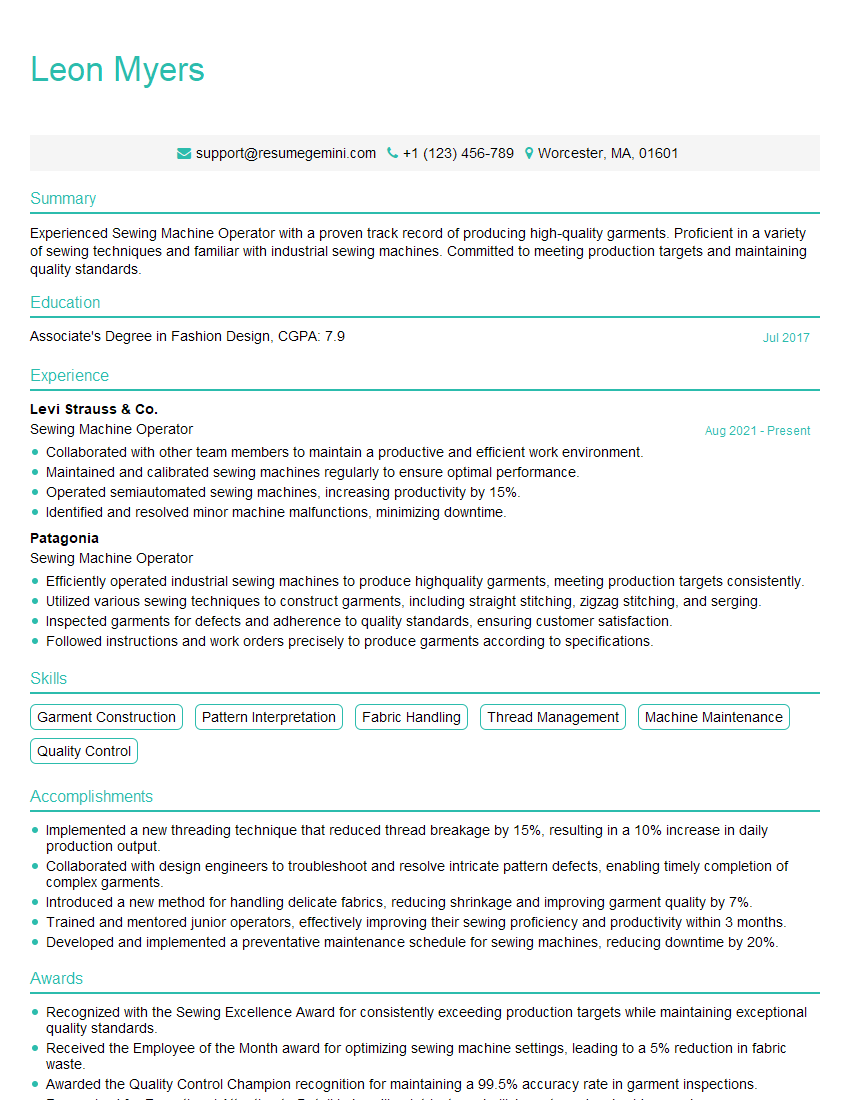
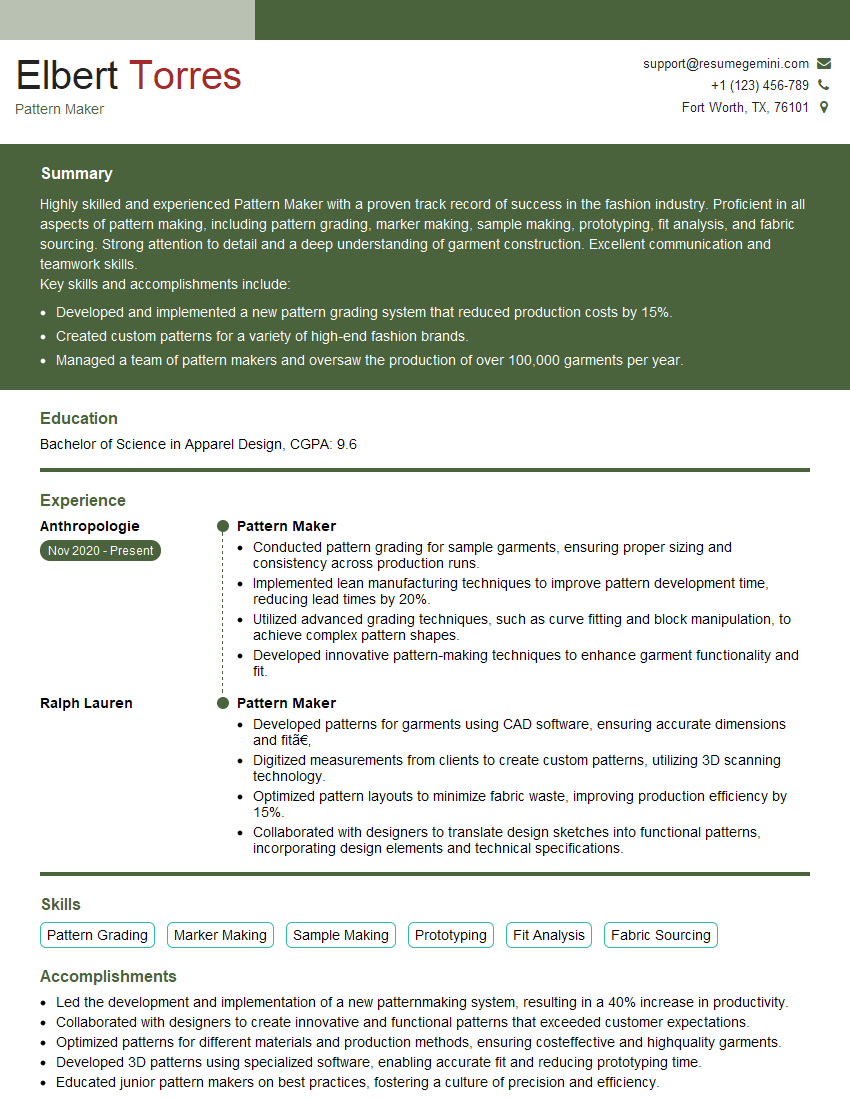
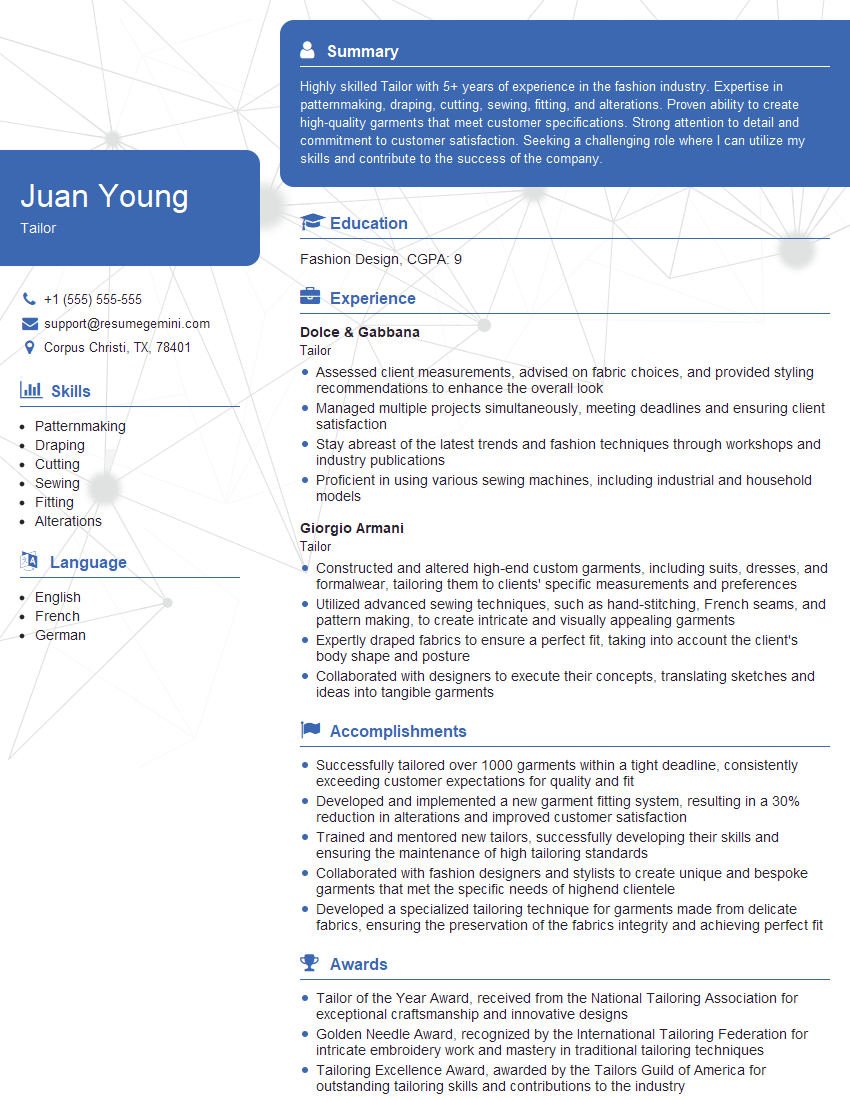
Mastering hemming and seaming is essential for success in the garment industry, opening doors to a wide range of exciting career opportunities. A strong foundation in these techniques demonstrates a commitment to quality and precision, highly valued by employers. To significantly boost your job prospects, crafting an ATS-friendly resume is crucial. ResumeGemini is a trusted resource to help you build a professional and impactful resume that will get noticed. Examples of resumes tailored to Hemming and Seaming are available to guide you in creating a compelling application.




Explore more articles
Users Rating of Our Blogs
Share Your Experience
We value your feedback! Please rate our content and share your thoughts (optional).
What Readers Say About Our Blog
Very informative content, great job.
good