Interviews are more than just a Q&A session—they’re a chance to prove your worth. This blog dives into essential High Level of Technical Aptitude interview questions and expert tips to help you align your answers with what hiring managers are looking for. Start preparing to shine!
Questions Asked in High Level of Technical Aptitude Interview
Q 1. Explain the difference between a process and a thread.
A process is an independent, self-contained execution environment, while a thread is a smaller unit of execution within a process. Think of a process as a whole apartment building, where each apartment is a thread. Each apartment (thread) can operate somewhat independently, but they share the building’s common resources (process resources like memory).
- Process: Has its own memory space, system resources, and is relatively heavyweight to create and manage. If one thread crashes, the entire process might crash. Processes are isolated from each other.
- Thread: Shares the memory space and resources of its parent process. It’s lightweight and faster to create than a process. If one thread crashes, others within the same process might continue running. Threads within a process can communicate easily through shared memory.
For example, a web browser might be a process, with each open tab running as a separate thread. If one tab crashes, it won’t necessarily bring down the entire browser (the process).
Q 2. Describe your experience with Agile development methodologies.
I have extensive experience with Agile development methodologies, primarily Scrum and Kanban. In my previous role at Acme Corp, we transitioned from a waterfall model to Scrum, which significantly improved our project delivery and team collaboration.
My Scrum experience includes participating in daily stand-ups, sprint planning, sprint reviews, and sprint retrospectives. I’ve played various roles within Scrum teams, including Scrum Master and Developer, which has given me a comprehensive understanding of the framework. I’m proficient in using Agile project management tools like Jira and Trello to track progress and manage tasks effectively. With Kanban, I’ve been involved in visualizing workflows, limiting work in progress (WIP), and continuously improving the process through regular cadences and feedback loops. In one project, adopting Kanban allowed us to better manage urgent bug fixes while still making progress on new features.
My Agile philosophy is centered around iterative development, continuous feedback, and adapting to changing requirements. I believe in transparency, collaboration, and delivering value quickly and incrementally.
Q 3. How would you approach debugging a complex system?
Debugging a complex system is a systematic process. I would employ a structured approach that combines automated tools with careful manual investigation.
- Reproduce the bug consistently: This is crucial. The more consistently I can reproduce the problem, the easier it will be to identify the root cause.
- Isolate the problem area: Use logging, debugging tools (like debuggers and profilers), and monitoring to narrow down the scope of the issue. I would examine logs for error messages, look for unusual resource consumption, or identify specific code sections that might be involved.
- Employ debugging tools: Debuggers allow stepping through code line by line, inspecting variables, and identifying where the error occurs. Profilers help pinpoint performance bottlenecks.
- Use logging effectively: Strategically placed log messages can provide valuable insight into the program’s execution flow and help identify the point of failure.
- Divide and conquer: If the system is modular, I would test each component independently to isolate the faulty part.
- Code reviews and peer help: A fresh set of eyes can often spot errors that the original developer might have overlooked.
- Version control: Having a good version control system (Git) makes it easy to revert to earlier versions if needed.
For example, I once debugged a memory leak in a large C++ application by using a memory profiler and carefully examining the allocation and deallocation patterns of different parts of the application. This systematic approach, combined with the use of appropriate tools, allowed me to quickly find and fix the bug.
Q 4. What are some common design patterns and when would you use them?
Many design patterns exist, each addressing specific problems. Here are a few common ones:
- Singleton: Ensures only one instance of a class exists. Useful for managing resources like database connections or logging services.
//Example (Conceptual): class Database { private static Database instance; public static Database getInstance() { ... } ... } - Factory: Creates objects without specifying the exact class. This makes the code more flexible and extensible. Useful when dealing with multiple subclasses with shared functionalities.
- Observer: Defines a one-to-many dependency between objects. Useful for building event-driven systems where changes in one object automatically update others. Think of a spreadsheet application where cells depend on each other.
- Decorator: Attaches additional responsibilities to an object dynamically. Useful for adding functionalities to existing objects without altering their core behavior.
- Strategy: Defines a family of algorithms, encapsulates each one, and makes them interchangeable. Useful for handling different algorithms or approaches to a problem.
The choice of design pattern depends heavily on the specific requirements of the project. Each pattern has trade-offs, and it’s essential to choose the pattern that best fits the current context and the long-term needs of the system.
Q 5. Explain the concept of Big O notation and its importance in algorithm design.
Big O notation describes the upper bound of the growth rate of an algorithm’s runtime or space requirements as the input size grows. It expresses the efficiency of an algorithm in terms of input size (n).
For instance, O(n) represents linear time complexity – runtime increases linearly with the input size. O(1) signifies constant time complexity – runtime remains constant regardless of input size. O(n^2) indicates quadratic time complexity – runtime increases proportionally to the square of the input size.
Importance in Algorithm Design:
- Performance analysis: Helps compare algorithms and choose the most efficient one for a given task.
- Scalability: Predicts how an algorithm will perform with larger datasets.
- Optimization: Guides optimization efforts by identifying bottlenecks in the algorithm.
For example, comparing a linear search (O(n)) with a binary search (O(log n)) for a large dataset shows that binary search is significantly more efficient as the input size grows because its runtime increases much slower.
Q 6. Describe your experience with version control systems (e.g., Git).
I have extensive experience using Git, both for personal projects and collaborative team development. I’m proficient in using Git commands for branching, merging, committing, pushing, and pulling. I understand the importance of clear commit messages and good branching strategies.
In my work at Beta Solutions, we used Git extensively for managing our codebase. I frequently used feature branches to develop new functionalities while keeping the main branch stable. We employed pull requests to review code changes before merging them into the main branch, ensuring code quality and reducing errors. I’m comfortable resolving merge conflicts and using Git for collaborative development with multiple team members working on the same project simultaneously. I also use Git’s history features to track down bugs and understand how the code evolved over time.
I am familiar with various Git workflows including Gitflow and Github Flow and select the one which is most suited to the project requirements.
Q 7. How would you handle a critical production issue?
Handling a critical production issue requires a calm, systematic approach. My steps would be:
- Acknowledge and assess: The first step is to understand the severity and scope of the issue. How many users are affected? What are the potential business impacts?
- Gather information: Collect data from monitoring tools, logs, error reports, and user feedback. This will help pinpoint the root cause.
- Communicate: Inform relevant stakeholders (developers, operations, management, and potentially customers) about the issue and the ongoing efforts to resolve it. Transparency is critical.
- Contain the damage: If possible, take steps to limit the impact of the issue, such as implementing a workaround or rerouting traffic.
- Investigate and diagnose: Use debugging and diagnostic tools to identify the root cause of the problem. If needed, consider stepping through code, inspecting memory, etc.
- Implement a fix: Once the root cause is understood, develop and test a fix thoroughly, preferably in a staging or test environment before deploying it to production.
- Monitor and evaluate: After deploying the fix, monitor the system to ensure that the problem is resolved and doesn’t reappear. Perform post-incident analysis to prevent similar issues in the future.
- Document and communicate: Document the entire incident, including the steps taken to resolve it. Share this information with the team to aid in preventing future occurrences.
For instance, in a previous incident involving a database outage, I followed this process to swiftly restore service, minimizing downtime and user disruption. The post-incident analysis revealed a vulnerability in the database replication process, leading to improvements in our infrastructure and monitoring.
Q 8. What are your preferred programming languages and why?
My preferred programming languages are Python and Java. This isn’t a matter of arbitrary preference; it’s a strategic choice based on their strengths and the demands of various projects.
Python excels in its readability and versatility. Its extensive libraries, particularly in data science (NumPy, Pandas, Scikit-learn) and machine learning (TensorFlow, PyTorch), make it incredibly efficient for tackling complex problems quickly. I’ve used Python extensively for building data pipelines, developing machine learning models, and automating tasks. For instance, in a recent project involving image recognition, Python’s rich ecosystem significantly reduced development time compared to other languages.
Java, on the other hand, is a powerhouse for building robust and scalable enterprise applications. Its strong emphasis on object-oriented programming and mature ecosystem makes it ideal for projects requiring high performance and maintainability. I leverage Java’s capabilities when working on large-scale systems where reliability and concurrency are paramount, such as developing backend services for high-traffic websites.
While I’m proficient in other languages like C++ and JavaScript, Python and Java form the core of my skillset due to their broad applicability and efficiency in addressing a wide range of challenges.
Q 9. Explain the difference between SQL and NoSQL databases.
SQL and NoSQL databases represent fundamentally different approaches to data management. The key difference lies in their data model.
SQL (Relational) Databases organize data into tables with rows and columns, establishing relationships between tables using keys. This structured approach ensures data integrity and consistency. Examples include MySQL, PostgreSQL, and Oracle. SQL is excellent for managing structured data with well-defined relationships, making it suitable for applications requiring ACID properties (Atomicity, Consistency, Isolation, Durability) – like financial transactions.
NoSQL (Non-Relational) Databases offer flexible schemas and are better suited for handling large volumes of unstructured or semi-structured data. They often prioritize scalability and availability over strict data consistency. Popular NoSQL databases include MongoDB (document database), Cassandra (wide-column store), and Redis (in-memory data structure store). I’ve used MongoDB for applications where flexibility in data structure and high scalability are critical, such as storing user profiles in a social media platform.
Choosing between SQL and NoSQL depends entirely on the application’s needs. For instance, a simple inventory management system might benefit from a SQL database, while a real-time analytics platform would likely utilize a NoSQL solution.
Q 10. How do you ensure code quality and maintainability?
Ensuring code quality and maintainability is a continuous process, not a one-time effort. My approach is multi-faceted and incorporates several key practices:
- Following coding standards and style guides: Consistency in code style improves readability and reduces ambiguity. I adhere to established guidelines (like PEP 8 for Python) to ensure uniformity across projects.
- Writing modular, well-documented code: Breaking down complex tasks into smaller, independent modules enhances reusability and makes debugging easier. Comprehensive documentation, including comments and docstrings, is crucial for understanding the code’s purpose and functionality.
- Employing version control (Git): Git is essential for tracking changes, collaborating effectively, and rolling back to previous versions if necessary. I use branching strategies to manage parallel development and integrate changes seamlessly.
- Conducting code reviews: Peer reviews help identify potential bugs, improve code quality, and share knowledge within the team. I actively participate in code reviews and provide constructive feedback.
- Utilizing automated testing: Unit tests, integration tests, and end-to-end tests help ensure code correctness and prevent regressions. I use testing frameworks (like pytest for Python or JUnit for Java) and strive for high test coverage.
- Using linters and static code analysis tools: These tools automatically detect potential errors, style violations, and code smells, ensuring early detection of issues.
These practices, applied consistently, significantly contribute to creating robust, maintainable, and high-quality software.
Q 11. Describe your experience with cloud computing platforms (e.g., AWS, Azure, GCP).
I have extensive experience with AWS (Amazon Web Services), specifically working with EC2 (virtual servers), S3 (object storage), Lambda (serverless computing), and RDS (relational database service). I’ve also worked with Azure, leveraging their virtual machines, blob storage, and cloud functions. My experience spans designing, deploying, and managing applications on these platforms.
A recent project involved migrating a legacy on-premise application to AWS. This required careful planning, including database migration, infrastructure provisioning, and security configuration. We utilized Infrastructure as Code (IaC) tools like Terraform to manage our AWS infrastructure, ensuring consistency and repeatability. This migration improved scalability, reliability, and reduced operational costs.
My experience extends to utilizing cloud-native services, leveraging managed databases and serverless functions to enhance efficiency and reduce operational overhead. I understand the importance of choosing the right services based on specific project requirements, considering factors like cost, scalability, and security.
Q 12. Explain the concept of RESTful APIs.
RESTful APIs (Representational State Transfer Application Programming Interfaces) are a standardized architectural style for building web services. They rely on HTTP methods (GET, POST, PUT, DELETE) to interact with resources, represented by URIs (Uniform Resource Identifiers).
Key features of a RESTful API include:
- Client-server architecture: Clearly separates the client and server components.
- Statelessness: Each request contains all the information needed to process it; the server doesn’t store client context between requests.
- Cacheability: Responses can be cached to improve performance.
- Uniform interface: Uses standard HTTP methods for consistent interaction with resources.
- Layered system: Allows for intermediary servers to be added without affecting clients.
- Code on demand (optional): The server can extend client functionality by transferring executable code.
For example, a RESTful API for managing blog posts might use the following endpoints:
GET /posts: Retrieve all blog posts.GET /posts/{id}: Retrieve a specific blog post.POST /posts: Create a new blog post.PUT /posts/{id}: Update an existing blog post.DELETE /posts/{id}: Delete a blog post.
The use of standard HTTP methods and a consistent URI structure simplifies the design and implementation of web services, making them easier to use and understand.
Q 13. How would you design a scalable and reliable system?
Designing a scalable and reliable system requires a holistic approach, considering various factors throughout the design and implementation process. Here’s a breakdown of my strategy:
- Modular Design: Divide the system into independent, loosely coupled modules. This allows for independent scaling and easier maintenance. Each module can be scaled horizontally by adding more instances.
- Horizontal Scaling: Instead of increasing the resources of a single server (vertical scaling), add more servers to handle increasing load. This is generally more cost-effective and resilient.
- Load Balancing: Distribute incoming traffic across multiple servers to prevent overload on any single server. Techniques include round-robin, least connections, and IP hash.
- Caching: Store frequently accessed data in a cache (e.g., Redis, Memcached) to reduce database load and improve response times. Caching strategies need to consider cache invalidation and update mechanisms.
- Database Design: Choose the appropriate database technology (SQL or NoSQL) based on data characteristics and scalability requirements. Consider sharding or replication for database scalability.
- Asynchronous Processing: Handle non-critical tasks asynchronously using message queues (e.g., RabbitMQ, Kafka) to prevent blocking operations and improve responsiveness.
- Monitoring and Logging: Implement robust monitoring and logging to track system performance, identify bottlenecks, and diagnose issues quickly. Tools like Prometheus and Grafana are invaluable.
- Redundancy and Fault Tolerance: Build redundancy into the system to handle server failures and ensure high availability. This includes using multiple availability zones and implementing failover mechanisms.
These principles, applied systematically, contribute significantly to building a robust, scalable, and reliable system capable of handling growing demands.
Q 14. Describe your experience with data structures and algorithms.
My experience with data structures and algorithms is extensive, forming the foundation of my problem-solving approach. I understand the trade-offs between different data structures and choose the most appropriate one based on the specific requirements of the problem.
I’m proficient with various data structures, including:
- Arrays and Linked Lists: Understand their strengths and weaknesses regarding access time, insertion, and deletion.
- Trees (Binary Trees, AVL Trees, B-Trees): Proficient in using trees for efficient searching, sorting, and hierarchical data representation.
- Graphs (Directed and Undirected): Experienced in using graph algorithms (e.g., Dijkstra’s algorithm, breadth-first search) for solving pathfinding and network problems.
- Hash Tables: Understand their application in efficient key-value storage and retrieval.
- Heaps: Proficient in using heaps for priority queue implementations.
In terms of algorithms, I have a strong understanding of:
- Sorting Algorithms (Merge Sort, Quick Sort, Heap Sort): Know their time and space complexity and when to apply each algorithm.
- Searching Algorithms (Binary Search, Depth-First Search, Breadth-First Search): Understand their efficiency and applications in various scenarios.
- Dynamic Programming: Experienced in solving optimization problems by breaking them down into smaller overlapping subproblems.
- Greedy Algorithms: Understand their application in finding locally optimal solutions.
I regularly apply my knowledge of data structures and algorithms to design efficient and scalable solutions for complex problems, ensuring optimal performance and resource utilization. For example, in a recent project involving route optimization, I utilized Dijkstra’s algorithm to find the shortest path between locations, significantly improving delivery efficiency.
Q 15. Explain your approach to testing and quality assurance.
My approach to testing and quality assurance is multifaceted and emphasizes a proactive, preventative strategy rather than solely reactive debugging. It’s built on a foundation of several key principles.
- Comprehensive Test Planning: Before any code is written, I collaborate with developers and stakeholders to define clear testing objectives, identify potential risks, and create a detailed test plan. This includes defining test cases covering various scenarios, including positive, negative, and edge cases.
- Multiple Testing Levels: I advocate for a multi-layered approach, incorporating unit testing (developer-led), integration testing (verifying interactions between components), system testing (end-to-end functionality), and user acceptance testing (UAT) with real users. Each level has specific goals and methodologies.
- Automation: Wherever feasible, I automate testing processes using tools like Selenium, JUnit, or pytest. This significantly speeds up testing cycles, reduces human error, and allows for frequent regression testing. For example, I recently automated API testing for a payment gateway, leading to a 70% reduction in testing time.
- Continuous Integration/Continuous Delivery (CI/CD): I’m a strong proponent of CI/CD pipelines, which automate the build, test, and deployment process. This enables rapid feedback loops and facilitates early detection of bugs.
- Defect Tracking and Management: I meticulously track and manage defects using a system like Jira or similar tools. This ensures that issues are properly documented, prioritized, and resolved. Crucially, root cause analysis is a key part of this process, to prevent recurring issues.
- Performance Testing: I include load, stress, and performance testing to ensure the application can handle anticipated user traffic and remains responsive under pressure. Tools like JMeter are invaluable here.
Ultimately, my goal is not just to find bugs but to contribute to building a robust, reliable, and high-quality product through a well-defined and repeatable QA process.
Career Expert Tips:
- Ace those interviews! Prepare effectively by reviewing the Top 50 Most Common Interview Questions on ResumeGemini.
- Navigate your job search with confidence! Explore a wide range of Career Tips on ResumeGemini. Learn about common challenges and recommendations to overcome them.
- Craft the perfect resume! Master the Art of Resume Writing with ResumeGemini’s guide. Showcase your unique qualifications and achievements effectively.
- Don’t miss out on holiday savings! Build your dream resume with ResumeGemini’s ATS optimized templates.
Q 16. What is your experience with containerization technologies (e.g., Docker, Kubernetes)?
I have extensive experience with containerization technologies, primarily Docker and Kubernetes. I’ve used them in various projects to build, deploy, and manage applications across different environments.
- Docker: I leverage Docker to create lightweight, portable containers that package applications and their dependencies. This ensures consistent execution across different platforms (development, testing, production). I’m proficient in creating Dockerfiles, managing images, and optimizing container size and resource utilization. For instance, I recently optimized a Docker image for a web application, reducing its size by 40% and improving startup time.
- Kubernetes: I use Kubernetes to orchestrate and manage Docker containers at scale. This includes deploying, scaling, and managing containerized applications across clusters of machines. I’m familiar with concepts like deployments, services, pods, and namespaces, and have experience with various Kubernetes tools and best practices, such as using Helm for managing application releases. I’ve successfully used Kubernetes to deploy and manage a microservices architecture for a large-scale e-commerce platform, ensuring high availability and scalability.
My understanding extends beyond basic usage to include advanced concepts like managing persistent volumes, configuring network policies, and implementing monitoring and logging within the Kubernetes environment.
Q 17. How would you optimize database queries for performance?
Optimizing database queries for performance is crucial for application responsiveness and scalability. My approach involves a combination of techniques, focusing on both query writing and database design.
- Proper Indexing: Creating appropriate indexes on frequently queried columns significantly speeds up data retrieval. Choosing the right index type (B-tree, hash, full-text) depends on the query pattern.
- Query Optimization Techniques: I use techniques like query rewriting, using
EXPLAIN PLAN(or equivalent) to analyze query execution plans, and identifying and eliminating unnecessary joins or subqueries. For example, replacing a nested loop join with a hash join often results in significant performance improvements. - Data Type Selection: Choosing the appropriate data types for columns minimizes storage space and improves query performance. Using smaller data types when possible leads to faster processing.
- Caching: Implementing caching mechanisms, such as Redis or Memcached, can significantly reduce database load by storing frequently accessed data in memory.
- Database Tuning: I adjust database parameters, such as buffer pool size and connection pool size, to optimize resource usage and performance based on the application’s workload characteristics. This often involves monitoring database metrics and making adjustments as needed.
- Query Rewriting: Identifying and fixing poorly written queries is critical. For example, replacing
SELECT *with selecting only the required columns reduces the data transferred and improves speed. - Normalization: Proper database normalization eliminates redundancy and improves data integrity. This indirectly improves query performance by reducing the amount of data that needs to be processed.
Example: Instead of SELECT * FROM users WHERE country = 'USA'; use SELECT id, name, email FROM users WHERE country = 'USA';
A combination of these strategies, guided by performance monitoring tools, ensures that queries are efficient and the database operates at peak performance.
Q 18. Describe your experience with cybersecurity best practices.
Cybersecurity best practices are fundamental to any software development lifecycle. My experience covers several key areas:
- Secure Coding Practices: I follow secure coding guidelines to prevent common vulnerabilities such as SQL injection, cross-site scripting (XSS), and cross-site request forgery (CSRF). This includes using parameterized queries, input validation, and output encoding.
- Authentication and Authorization: I employ robust authentication mechanisms (e.g., OAuth 2.0, OpenID Connect) and authorization strategies (e.g., role-based access control) to control access to sensitive resources.
- Data Protection: I implement measures to protect sensitive data at rest and in transit, including encryption, data masking, and access control lists. I also adhere to relevant data privacy regulations (e.g., GDPR, CCPA).
- Vulnerability Scanning and Penetration Testing: Regularly using automated vulnerability scanners and performing penetration testing identify and mitigate security weaknesses before attackers can exploit them. Tools like OWASP ZAP are frequently utilized.
- Security Monitoring and Logging: I implement robust monitoring and logging to detect suspicious activity and potential security breaches. Centralized log management and security information and event management (SIEM) systems are crucial here.
- Incident Response Planning: Having a well-defined incident response plan is critical. This plan outlines procedures for handling security incidents, including identifying the root cause, containing the breach, and recovering from the incident.
I believe that a proactive security posture, built into every phase of development, is far more effective and less costly than reacting to breaches after they occur. Security is not an afterthought; it’s an integral part of the development process.
Q 19. Explain the concept of microservices architecture.
Microservices architecture is a design pattern where a large application is broken down into smaller, independent services. Each service focuses on a specific business function and communicates with other services through well-defined APIs.
- Independent Deployments: Each microservice can be developed, deployed, and scaled independently, without affecting other services. This increases agility and allows for faster release cycles.
- Technology Diversity: Different services can be built using different technologies best suited for their specific tasks, providing flexibility and optimal performance.
- Fault Isolation: If one service fails, it does not necessarily bring down the entire application. This enhances resilience and improves overall system availability.
- Scalability: Individual services can be scaled independently to meet specific demands, optimizing resource utilization.
- Maintainability: Smaller, focused services are easier to understand, maintain, and debug than a large monolithic application.
Example: An e-commerce platform might have separate microservices for user accounts, product catalog, shopping cart, payment processing, and order management. Each service has its own database and can be scaled independently based on demand.
However, microservices introduce complexity in terms of inter-service communication, data consistency, and monitoring. Careful planning and the use of appropriate tools and technologies are essential for successful implementation.
Q 20. How would you handle conflicting priorities or deadlines?
Handling conflicting priorities and deadlines requires a structured and proactive approach. I typically follow these steps:
- Prioritization: I use a prioritization framework (e.g., MoSCoW method – Must have, Should have, Could have, Won’t have) to assess the relative importance of each task. This involves collaborating with stakeholders to understand the business impact of each item.
- Communication: Open and transparent communication is vital. I proactively communicate with stakeholders to explain the situation, discuss potential trade-offs, and negotiate priorities.
- Scope Management: If deadlines are unrealistic, I will work with stakeholders to adjust the scope of work. This might involve identifying tasks that can be deferred or removed to meet the deadlines.
- Time Management: I employ effective time management techniques (e.g., timeboxing, Pomodoro technique) to allocate time efficiently and ensure tasks are completed within reasonable constraints.
- Risk Assessment: I identify potential risks associated with prioritizing certain tasks over others and develop mitigation strategies to minimize their impact.
- Documentation: Maintaining detailed documentation of decisions and trade-offs ensures transparency and accountability.
For example, in a previous project, I had to prioritize bug fixes for a critical production issue over the development of a new feature. By communicating this clearly and obtaining agreement from stakeholders, I was able to manage expectations and ensure the most important tasks were addressed.
Q 21. What is your experience with machine learning or AI?
My experience with machine learning (ML) and artificial intelligence (AI) focuses on applying these techniques to solve practical problems. I have experience in several areas:
- Model Selection and Training: I’m proficient in selecting appropriate ML models (e.g., linear regression, logistic regression, decision trees, neural networks) based on the problem and dataset characteristics. I have experience training these models using various libraries such as scikit-learn, TensorFlow, and PyTorch.
- Data Preprocessing and Feature Engineering: I understand the importance of preparing data for model training, including cleaning, transforming, and engineering features to improve model accuracy and performance.
- Model Evaluation and Tuning: I utilize various techniques to evaluate the performance of ML models (e.g., accuracy, precision, recall, F1-score, AUC) and employ hyperparameter tuning methods (e.g., grid search, cross-validation) to optimize model performance.
- Deployment and Monitoring: I have experience deploying trained ML models into production environments, integrating them into applications, and monitoring their performance over time.
- Specific Applications: I have applied ML to various tasks, including predictive maintenance (predicting equipment failures), fraud detection, and customer churn prediction.
While I don’t claim to be a dedicated ML engineer, I’m comfortable applying ML techniques to solve problems within my software development projects and understand the underlying principles and best practices.
Q 22. Describe a complex technical challenge you overcame.
One of the most challenging projects I tackled involved optimizing the performance of a high-traffic e-commerce website. The site was experiencing significant slowdowns during peak hours, leading to lost sales and frustrated customers. The initial investigation revealed several bottlenecks: inefficient database queries, slow server response times, and poorly optimized front-end code.
My approach involved a multi-faceted strategy. First, I used profiling tools to pinpoint the exact locations of performance bottlenecks within the database queries and application code. This involved using tools like SQL Profiler and application performance monitoring (APM) systems to identify slow queries and code segments. I then optimized the database schema, indexing, and queries, reducing query execution times significantly. For instance, we replaced inefficient JOIN operations with more optimized ones and implemented caching mechanisms to store frequently accessed data.
On the server-side, we upgraded to more powerful hardware and implemented load balancing across multiple servers to distribute the traffic more effectively. This significantly reduced the server response time. Finally, we optimized the front-end code by minimizing HTTP requests, compressing images, and leveraging browser caching. We also implemented techniques like lazy loading to improve the initial page load time.
The result was a dramatic improvement in website performance. Peak hour slowdowns were virtually eliminated, leading to increased sales conversions and improved customer satisfaction. This project highlighted the importance of a holistic approach to performance optimization, combining database tuning, server-side improvements, and front-end optimization.
Q 23. How do you stay up-to-date with the latest technologies?
Staying current in the rapidly evolving tech landscape requires a multifaceted approach. I leverage several key strategies:
- Following industry blogs and publications: I regularly read blogs and articles from reputable sources like InfoQ, Hacker News, and publications specific to my areas of expertise (e.g., cloud computing, AI). This provides insights into emerging trends and new technologies.
- Participating in online communities: Active participation in forums, online communities (like Stack Overflow), and professional networking sites (like LinkedIn) exposes me to diverse perspectives and real-world challenges faced by other professionals. I also contribute to these communities, reinforcing my own learning and helping others.
- Attending conferences and webinars: Conferences offer an excellent opportunity to learn from industry experts, network with peers, and discover the latest advancements firsthand. Webinars provide a more convenient and often more focused way to stay up-to-date on specific technologies.
- Taking online courses and certifications: Platforms like Coursera, edX, and Udemy offer a wide range of courses on various technologies. Pursuing relevant certifications demonstrates commitment to continuous learning and validates my skills.
- Experimentation and side projects: I dedicate time to personal projects where I can experiment with new technologies and frameworks in a risk-free environment. This practical application of knowledge helps me solidify my understanding.
Q 24. Explain your experience with software development lifecycle (SDLC).
I have extensive experience with various SDLC methodologies, including Agile (Scrum, Kanban), Waterfall, and DevOps. My understanding encompasses the entire process, from initial requirements gathering to deployment and maintenance.
- Requirements Gathering and Analysis: This involves collaborating with stakeholders to define project scope, objectives, and functionalities. Tools like user stories and use cases are crucial here.
- Design: This stage focuses on system architecture, database design, API design, and UI/UX design. UML diagrams and other design tools are often employed.
- Development: This involves writing, testing, and integrating code. Version control systems (like Git) are essential for managing code changes.
- Testing: Thorough testing is crucial to ensure software quality. This includes unit testing, integration testing, system testing, and user acceptance testing.
- Deployment: This involves deploying the software to the production environment. This often involves automation using tools like Jenkins or GitLab CI/CD.
- Maintenance and Support: Post-deployment, ongoing maintenance and support are vital. This involves addressing bugs, enhancing functionality, and monitoring system performance.
In my experience, Agile methodologies, particularly Scrum, have been highly effective for managing complex projects and adapting to changing requirements. The iterative nature of Agile allows for continuous feedback and improvement throughout the development process.
Q 25. What are your strengths and weaknesses as a technical professional?
Strengths: My key strengths lie in my problem-solving abilities, my ability to quickly learn and adapt to new technologies, and my strong communication skills. I’m adept at breaking down complex problems into manageable components and developing effective solutions. My proactive nature allows me to anticipate potential challenges and address them proactively. I’m also a strong team player and collaborate effectively with others to achieve common goals.
Weaknesses: While I’m generally adaptable, I sometimes struggle with delegating tasks, preferring to handle everything myself to ensure quality. I am actively working to overcome this by improving my leadership skills and trusting my team members’ abilities. I also recognize the need to consistently refine my knowledge in emerging areas, and I am committed to dedicating time to continuous learning to address this.
Q 26. How do you approach learning new technologies?
My approach to learning new technologies is systematic and practical. I don’t just passively consume information; I actively engage with the material. My process typically follows these steps:
- Identify the core concepts: I start by identifying the fundamental concepts and principles of the technology. This often involves reading documentation, tutorials, and introductory materials.
- Hands-on practice: I believe that the best way to learn is by doing. I create small projects or exercises to apply the concepts I’ve learned. This helps to solidify my understanding and identify any gaps in my knowledge.
- Build a small project: Once I have a grasp of the fundamentals, I build a small, self-contained project to further test my skills and integrate the technology into a real-world context. This could be anything from a simple web application to a small script.
- Seek feedback and collaborate: I actively seek feedback from peers and mentors, and I participate in relevant online communities to discuss challenges and share best practices.
- Continuous learning: I recognize that technology is constantly evolving, so I make continuous learning a priority by staying updated through the methods described in my previous answer.
Q 27. Describe your experience working in a team environment.
I thrive in collaborative team environments. My experience working in various teams has taught me the importance of effective communication, mutual respect, and shared responsibility. I believe in a collaborative, open approach where everyone’s input is valued. In past projects, I’ve contributed to team success by:
- Clearly communicating my ideas and actively listening to others: This helps ensure everyone is on the same page and that diverse perspectives are considered.
- Taking initiative and proactively identifying and solving problems: I don’t wait for someone else to identify issues; I proactively seek them out and develop solutions.
- Mentoring junior team members: Sharing my knowledge and experience with others helps the team grow and strengthens collaboration.
- Supporting my teammates and celebrating successes: A supportive team atmosphere promotes collaboration and fosters a sense of shared accomplishment.
I find that teamwork is not just about completing tasks; it’s about building relationships and fostering a positive and productive environment. A strong team is more than the sum of its parts; it’s a force multiplier.
Q 28. Explain your understanding of system design principles.
My understanding of system design principles centers around creating robust, scalable, and maintainable systems. Key principles I apply include:
- Scalability: Designing systems that can handle increasing workloads and user demand. This often involves techniques like load balancing, horizontal scaling, and distributed architectures.
- Reliability: Building systems that are resilient to failures and can continue operating even in the face of unforeseen issues. This involves redundancy, fault tolerance, and disaster recovery planning.
- Maintainability: Designing systems that are easy to understand, modify, and extend. This requires well-documented code, modular design, and adherence to coding standards.
- Security: Incorporating security considerations throughout the design process. This includes authentication, authorization, data encryption, and protection against common vulnerabilities.
- Availability: Ensuring the system is readily accessible to users when needed. High availability requires careful planning of infrastructure, including failover mechanisms.
- Performance: Designing systems that respond quickly and efficiently to user requests. Optimization at all levels (database, network, application) is crucial.
For example, when designing a distributed system, I would carefully consider the use of microservices, message queues, and appropriate database technologies. I would also prioritize proper error handling and logging to aid in debugging and monitoring. In essence, my focus is on building systems that are not just functional but also robust, efficient, and easily maintainable in the long run.
Key Topics to Learn for High Level Technical Aptitude Interview
Demonstrating high-level technical aptitude in an interview requires a blend of theoretical understanding and practical application. Focus your preparation on these key areas:
- Data Structures and Algorithms: Understand the complexities of various data structures (arrays, linked lists, trees, graphs, hash tables) and common algorithms (searching, sorting, graph traversal). Practice implementing these in your preferred language.
- System Design: Develop the ability to design scalable and efficient systems. Consider aspects like database design, API design, and load balancing. Practice designing systems for common scenarios.
- Object-Oriented Programming (OOP) Principles: Master the core principles of OOP, including encapsulation, inheritance, polymorphism, and abstraction. Be prepared to discuss how you apply these principles in your coding.
- Software Design Patterns: Familiarize yourself with common design patterns (e.g., Singleton, Factory, Observer) and understand when and how to apply them to solve specific problems.
- Problem-Solving and Critical Thinking: Practice breaking down complex problems into smaller, manageable parts. Develop your ability to articulate your thought process clearly and efficiently.
- Coding Proficiency: Demonstrate fluency in at least one programming language relevant to the role. Be prepared to write clean, efficient, and well-documented code.
- Databases and SQL: Understand database fundamentals and be proficient in writing SQL queries for data retrieval and manipulation.
Next Steps
Mastering high-level technical aptitude is crucial for career advancement in today’s competitive tech landscape. It opens doors to more challenging roles, higher salaries, and greater career satisfaction. To maximize your job prospects, create an ATS-friendly resume that effectively highlights your skills and experience. ResumeGemini is a trusted resource to help you build a professional and impactful resume. We provide examples of resumes tailored to showcase high-level technical aptitude, helping you present your qualifications in the best possible light.
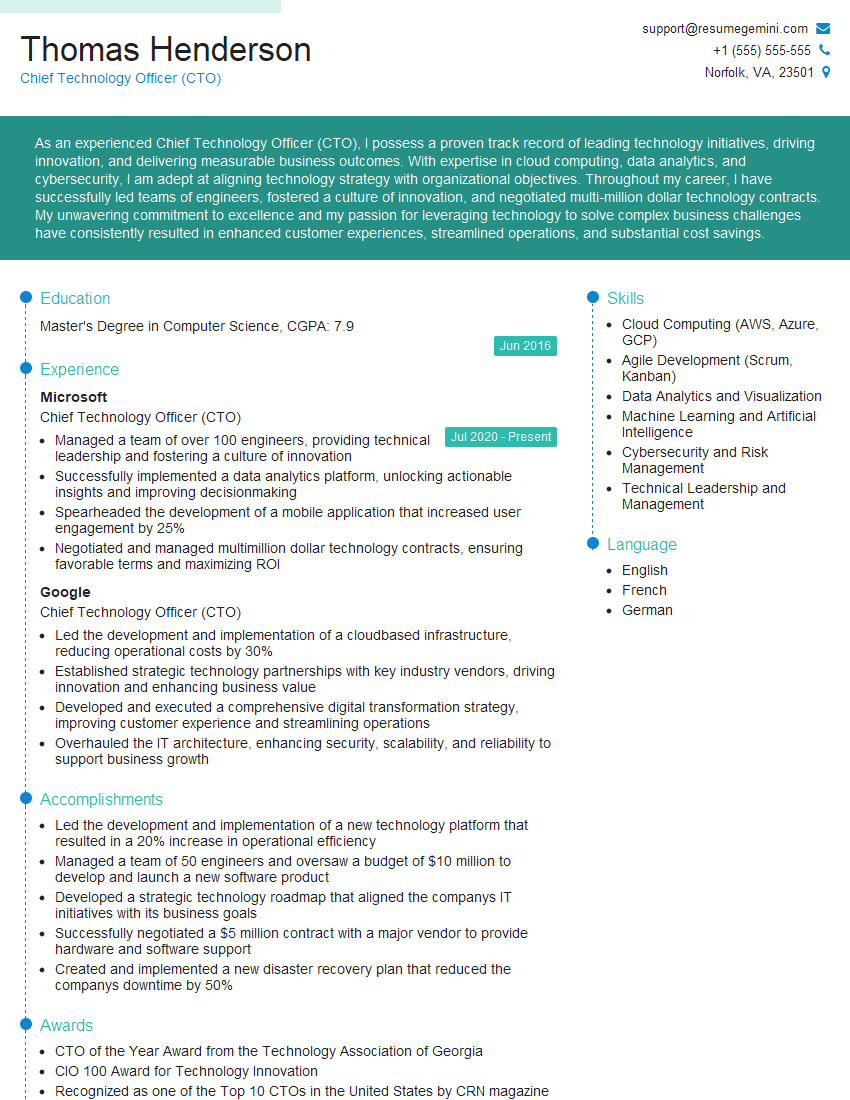
Chief Technology Officer (CTO) Resume Sample
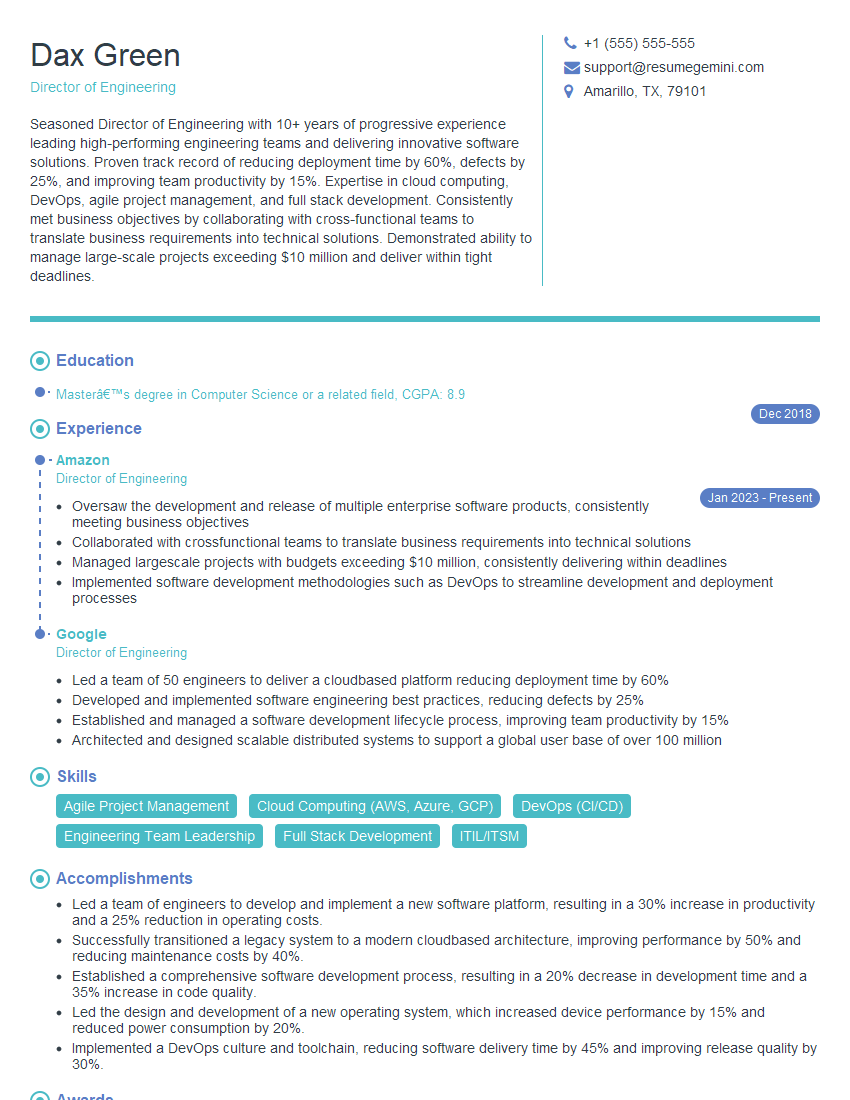
Director of Engineering Resume Sample
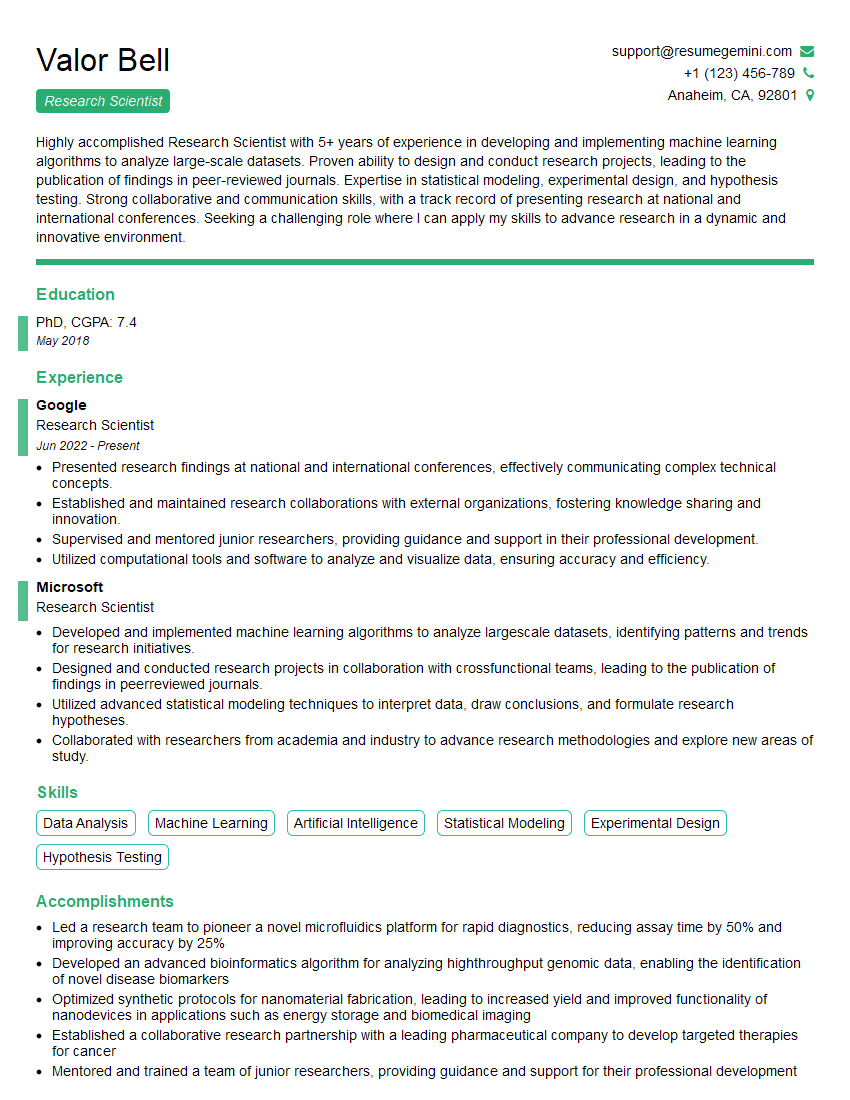
Research Scientist Resume Sample
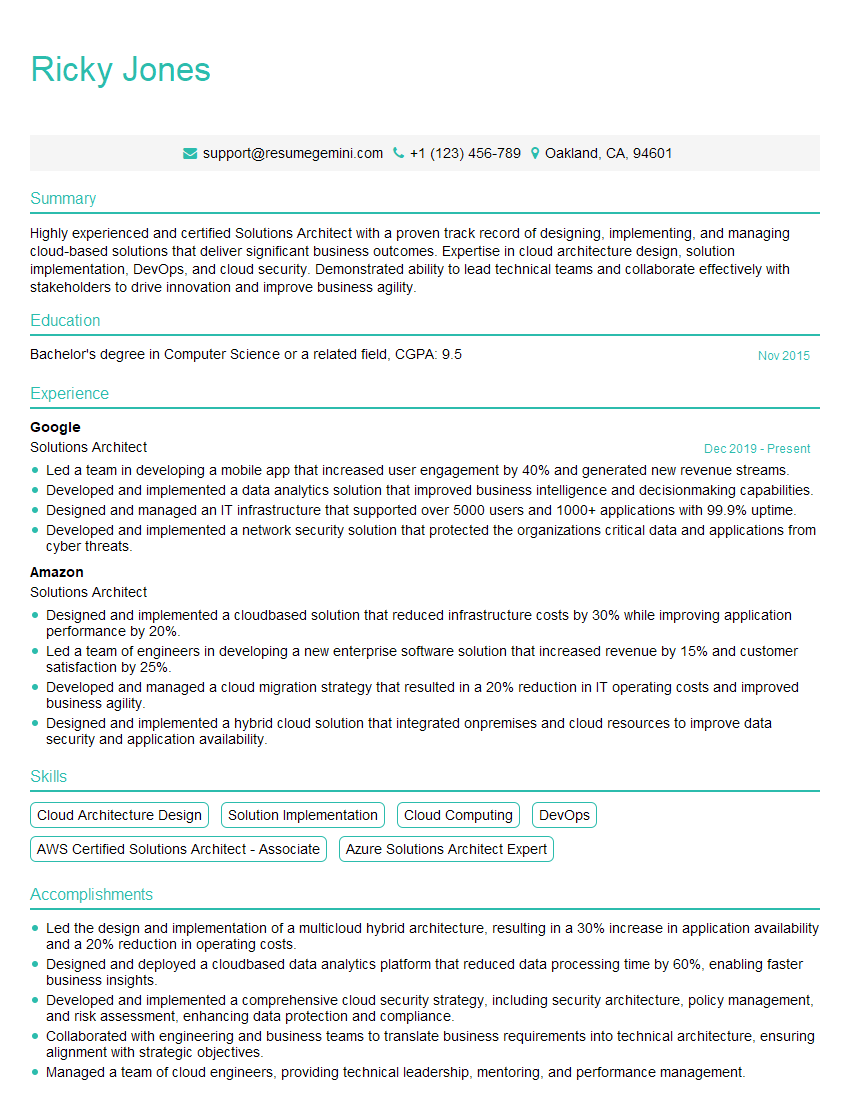
Solutions Architect Resume Sample
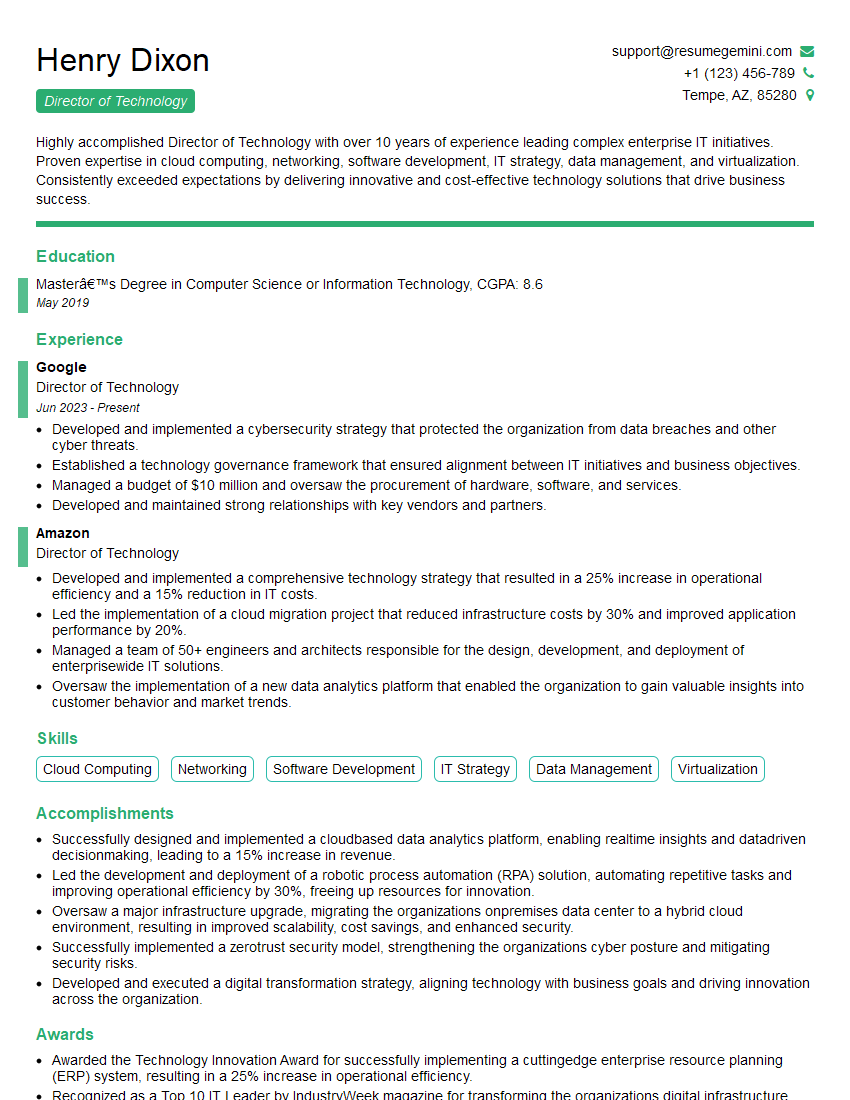
Director of Technology Resume Sample
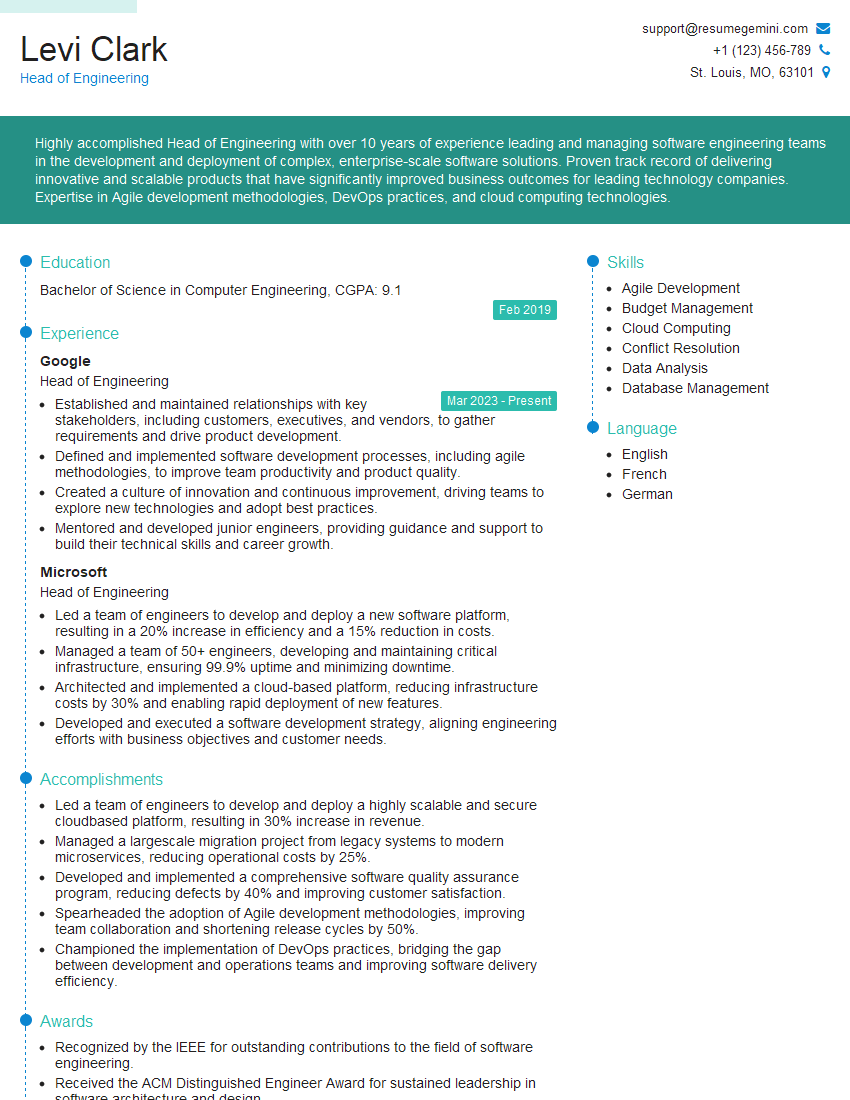
Head of Engineering Resume Sample
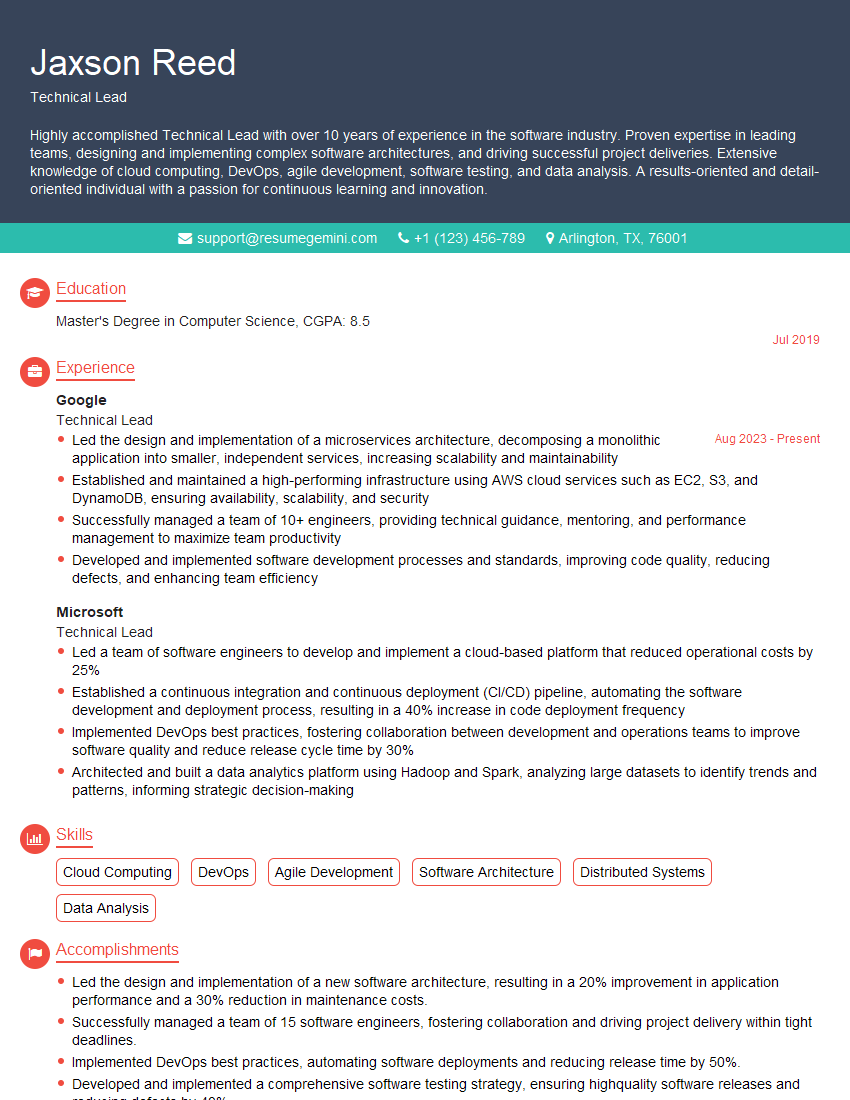
Technical Lead Resume Sample
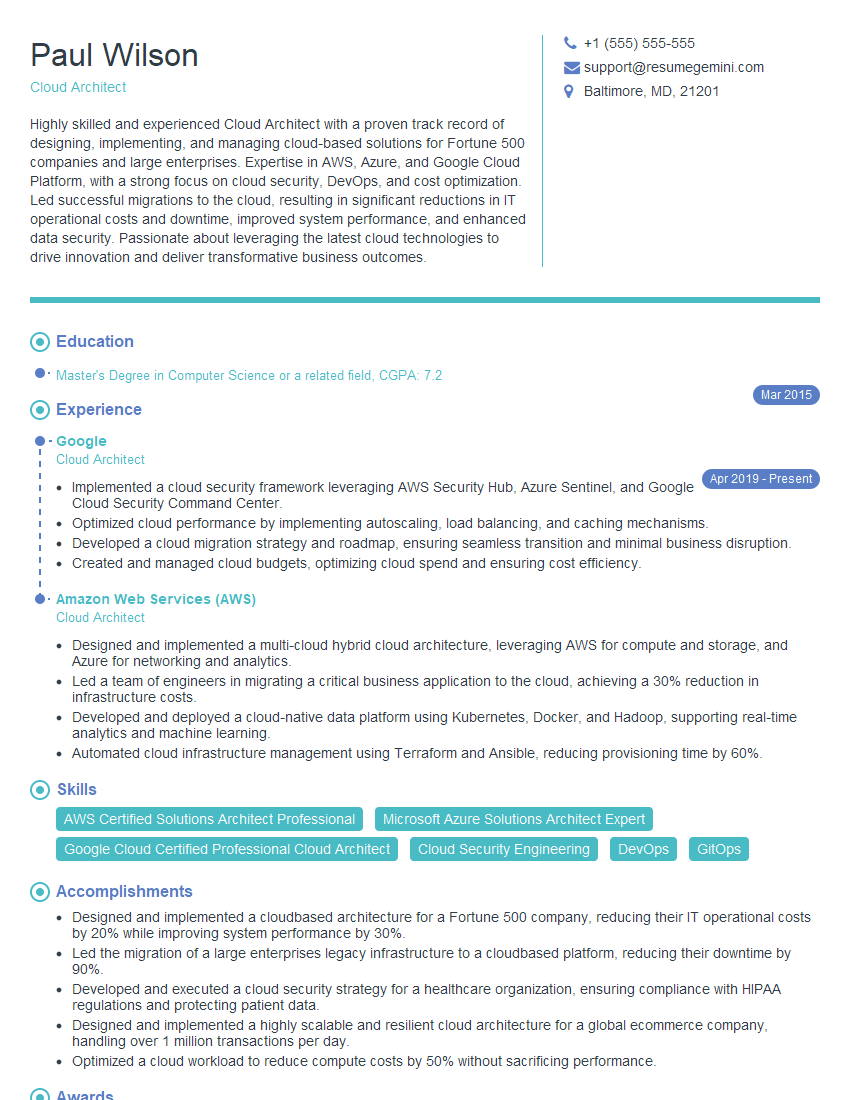
Cloud Architect Resume Sample
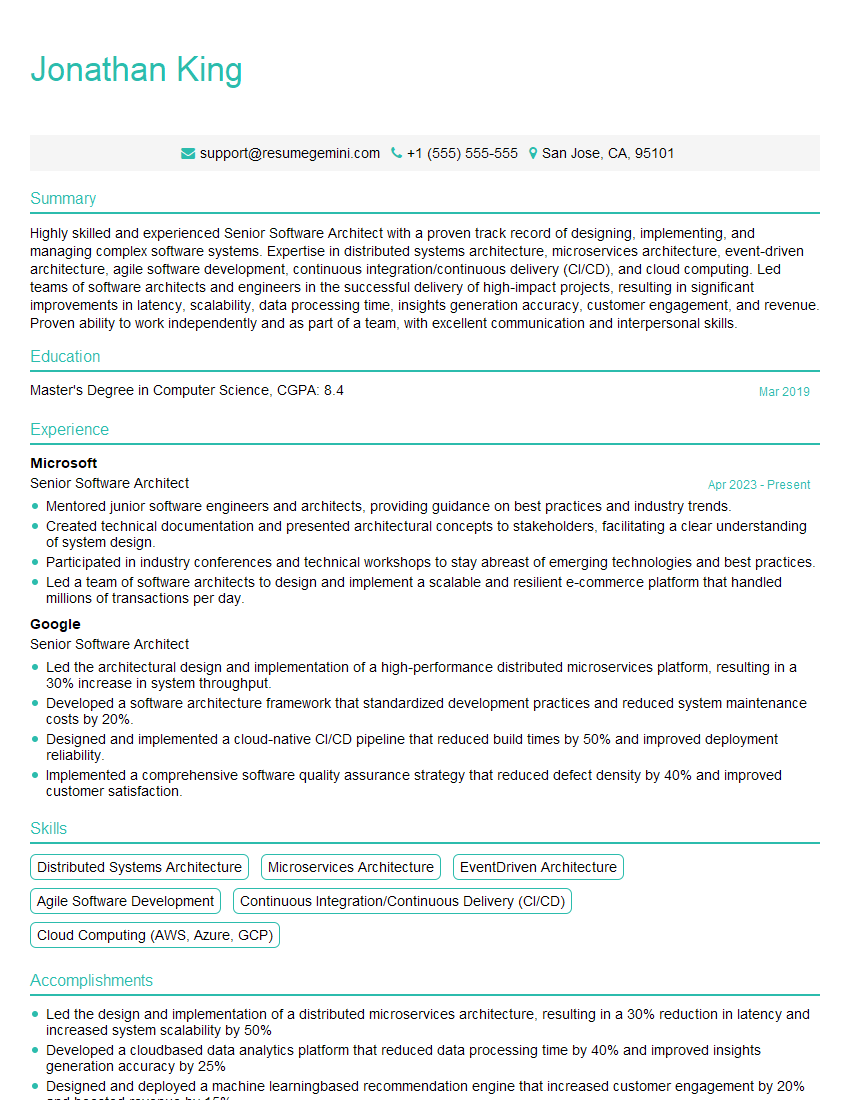
Senior Software Architect Resume Sample
Explore more articles
Users Rating of Our Blogs
Share Your Experience
We value your feedback! Please rate our content and share your thoughts (optional).
What Readers Say About Our Blog
Very informative content, great job.
good