Interviews are more than just a Q&A session—they’re a chance to prove your worth. This blog dives into essential High-Volume Production Environment interview questions and expert tips to help you align your answers with what hiring managers are looking for. Start preparing to shine!
Questions Asked in High-Volume Production Environment Interview
Q 1. Describe your experience optimizing high-volume production lines.
Optimizing high-volume production lines involves a multifaceted approach focused on maximizing output while minimizing waste and defects. It’s like orchestrating a complex symphony, where every instrument (machine, process, worker) must play in harmony. My experience involves identifying bottlenecks, improving workflow, implementing automation, and leveraging data analytics for continuous improvement.
For example, in a previous role at a beverage manufacturing plant, we identified a significant bottleneck in the bottling line. Through detailed analysis of production data, we discovered that the labeling machine was the limiting factor. We addressed this by implementing a faster, more reliable labeling system, resulting in a 15% increase in overall production output. This involved not only the purchase of new equipment but also careful planning of the integration process to avoid further downtime.
Another instance involved optimizing the material handling process. By implementing a new automated guided vehicle (AGV) system to transport materials between production stages, we reduced material handling time by 20%, minimizing delays and increasing efficiency. This involved careful consideration of the AGV’s route optimization, ensuring minimal interference with other processes.
Q 2. How have you improved efficiency in a high-volume production setting?
Improving efficiency in high-volume production requires a systematic approach. It’s not just about working harder; it’s about working smarter. My approach combines process optimization, technology integration, and employee empowerment.
- Process Optimization: This involves streamlining workflows, eliminating unnecessary steps, and reducing waste through techniques like lean manufacturing (discussed later). For instance, in a food processing plant, we redesigned the assembly line layout to minimize the distance materials traveled, resulting in a 10% improvement in throughput.
- Technology Integration: Implementing automation, such as robotic arms for repetitive tasks, and using real-time data analytics to monitor performance and identify areas for improvement is crucial. We used predictive maintenance software in a textile factory to anticipate equipment failures and schedule maintenance proactively, minimizing unplanned downtime and reducing costs.
- Employee Empowerment: Engaging employees in the improvement process through Kaizen events (continuous improvement workshops) fostered a culture of problem-solving and ownership. This resulted in numerous small, incremental improvements that collectively had a significant impact on overall efficiency.
Q 3. Explain your approach to managing bottlenecks in high-volume production.
Managing bottlenecks is critical in high-volume production, as even a small delay can have a ripple effect throughout the entire process. Think of it like a traffic jam – one bottleneck can bring the whole system to a standstill. My approach involves a three-step process:
- Identify the Bottleneck: This often involves analyzing production data, observing the production line, and interviewing workers. Using tools like value stream mapping helps visualize the entire process and pinpoint the constraint.
- Analyze the Root Cause: Once identified, we need to understand *why* the bottleneck exists. Is it due to equipment limitations, insufficient staffing, process inefficiencies, or poor material flow? Data analysis, combined with on-the-ground observation, is crucial here.
- Implement Solutions: Solutions can range from simple process adjustments and operator training to investing in new equipment or implementing automation. In one instance, we resolved a bottleneck in a packaging line by implementing a new, faster packing machine and adjusting the operator’s workflow to improve speed and efficiency. This required careful planning and employee training to ensure a smooth transition.
Q 4. What metrics do you use to measure the success of high-volume production?
Measuring success in high-volume production requires a balanced scorecard, combining quantitative and qualitative metrics. Key metrics include:
- Overall Equipment Effectiveness (OEE): This measures the percentage of time equipment is actually producing good parts. A higher OEE indicates better equipment utilization and efficiency.
- Throughput: This measures the rate at which products are produced, often expressed as units per hour or per day.
- Defect Rate: This measures the percentage of defective products produced. A lower defect rate indicates higher quality and reduces waste.
- Production Costs: Tracking costs per unit allows for identifying areas of improvement and assessing the financial impact of optimization initiatives.
- Inventory Turnover: Efficient production should maintain optimal inventory levels, minimizing storage costs and avoiding stockouts.
- Employee Satisfaction: A happy and engaged workforce is essential for sustained high performance. Regular feedback mechanisms are crucial to gauge this.
These metrics provide a holistic view of the production process’s health and help identify areas for improvement.
Q 5. How do you handle unexpected downtime in a high-volume production environment?
Unexpected downtime is inevitable in high-volume production, but its impact can be minimized through proactive planning and a well-defined response strategy. Think of it like a fire drill – the better prepared you are, the smoother the response.
- Preventive Maintenance: Regularly scheduled maintenance significantly reduces the likelihood of unexpected breakdowns. This involves proactive checks, lubrication, and part replacements.
- Redundancy: Having backup systems or equipment in place allows for quick switching in case of failure, minimizing downtime.
- Rapid Response Team: A dedicated team trained to quickly diagnose and resolve issues is crucial. This team should be equipped with the necessary tools and expertise to handle various types of equipment malfunctions.
- Root Cause Analysis (RCA): After any downtime, a thorough RCA is needed to identify the root cause of the failure and implement corrective actions to prevent future occurrences.
- Supplier Relationships: Strong relationships with suppliers are important for obtaining timely parts and support in case of equipment breakdowns.
Having a clear communication protocol ensures that all relevant personnel are informed promptly during downtime, allowing for coordinated action.
Q 6. Describe your experience with lean manufacturing principles in a high-volume setting.
Lean manufacturing principles are essential for high-volume production efficiency. It’s all about eliminating waste and maximizing value. Think of it as a sculptor carefully removing excess material to reveal the masterpiece within. My experience involves applying various lean tools such as:
- Value Stream Mapping: Visualizing the entire production process to identify waste (e.g., transportation, inventory, motion, waiting). This helps pinpoint areas for improvement.
- 5S Methodology: Organizing the workplace to improve efficiency and reduce waste through systematic sorting, setting in order, shining, standardizing, and sustaining.
- Kaizen Events: Engaging employees in continuous improvement initiatives through focused workshops to identify and implement small, incremental changes.
- Kanban: Using visual signals to manage workflow and inventory, preventing overproduction and reducing waste.
In a previous project, we implemented Kanban in a packaging facility, reducing inventory by 25% while maintaining production output. This reduced storage costs and improved overall efficiency.
Q 7. What is your experience with Six Sigma methodologies in high-volume production?
Six Sigma methodologies provide a structured approach to process improvement and defect reduction in high-volume production. It’s like using a precise measuring tool to ensure quality and consistency. My experience includes using various Six Sigma tools such as:
- DMAIC (Define, Measure, Analyze, Improve, Control): A structured problem-solving framework used to systematically address process defects.
- Statistical Process Control (SPC): Using statistical methods to monitor and control process variations, ensuring consistent product quality.
- Control Charts: Visual tools to track process variations and identify trends, allowing for timely intervention.
In one project, we used DMAIC to reduce the defect rate in a semiconductor manufacturing process by 80%. This involved using SPC charts to identify and address the root causes of variations in the manufacturing process, resulting in significant cost savings and improved product quality.
Q 8. How do you ensure quality control in a high-volume production environment?
Quality control in high-volume production is paramount. It’s not just about catching defects at the end; it’s about building quality into every step of the process. Think of it like baking a cake – if you use poor ingredients or skip a step, the final product suffers. We use a multi-pronged approach:
Statistical Process Control (SPC): We continuously monitor key process variables using control charts. This allows us to identify trends and deviations from the norm before they lead to widespread defects. For example, if the diameter of a component consistently drifts outside acceptable limits, we can adjust the machinery or process parameters to correct it proactively.
In-process inspection: We conduct regular checks at various stages of production, not just at the end. This allows us to catch defects early, minimizing waste and rework. Think of it as a quality ‘checkpoint’ at each stage of the assembly line.
Total Quality Management (TQM): This philosophy emphasizes continuous improvement and employee involvement in quality control. Everyone from the production line worker to the management team shares responsibility for maintaining high standards. We implement regular training and empower employees to stop the line if they identify a quality issue.
Automated testing and inspection: Where possible, we leverage automated systems for testing and inspection, ensuring consistency and speed. For instance, using vision systems to detect flaws in printed circuit boards is much faster and more accurate than manual inspection.
By combining these methods, we create a robust quality control system that minimizes defects and maximizes customer satisfaction.
Q 9. Describe your experience with inventory management in high-volume production.
Effective inventory management is the lifeblood of high-volume production. Think of it as a finely tuned orchestra – each instrument (material) must be in the right place at the right time. My experience involves:
Just-in-Time (JIT) inventory: We minimize inventory holding costs by receiving materials only when needed. This requires close collaboration with suppliers and precise forecasting. For example, a JIT system ensures we don’t have mountains of raw materials clogging our warehouse, tying up capital.
Material Requirements Planning (MRP): This system helps us determine the quantity and timing of material needs based on production schedules. It’s like a detailed recipe that tells us exactly how much of each ingredient (material) is needed and when.
Inventory tracking and management systems: We use sophisticated software to track inventory levels in real-time, providing visibility into stock levels and helping prevent stockouts or overstocking. Barcodes and RFID technology enhance accuracy and efficiency.
Warehouse optimization: Efficient warehouse layout and management are critical. We strategically locate materials to minimize handling time and optimize workflow.
By implementing these strategies, we ensure we have the right amount of materials available at the right time, minimizing storage costs and production disruptions.
Q 10. How do you manage material flow in a high-volume production environment?
Managing material flow in a high-volume environment is like directing traffic in a busy city. Smooth flow prevents bottlenecks and maximizes efficiency. My approach involves:
Lean manufacturing principles: Eliminating waste and optimizing processes is key. This includes minimizing unnecessary movement of materials, reducing wait times, and improving overall workflow.
Kanban systems: Visual signaling systems that guide the flow of materials between workstations. Think of it as a simple visual cue that tells the next station when more materials are needed.
Automated guided vehicles (AGVs) and conveyor systems: We utilize automation to transport materials quickly and efficiently between different stages of production. This reduces manual handling and improves accuracy.
Optimized warehouse layout: Strategic placement of materials and equipment minimizes travel time and improves efficiency.
By carefully planning and optimizing the movement of materials, we ensure a smooth, efficient production process. A well-managed material flow minimizes delays and maximizes productivity.
Q 11. What is your experience with scheduling and planning in high-volume production?
Scheduling and planning in high-volume production requires meticulous attention to detail and a strategic approach. It’s like creating a complex puzzle where each piece (task) must fit perfectly to complete the picture (production target). My experience includes:
Master Production Schedule (MPS): This high-level schedule outlines the overall production plan, specifying quantities and deadlines for finished goods.
Capacity requirements planning (CRP): Ensuring we have the necessary resources (machines, labor, etc.) to meet the production schedule is crucial. This involves analyzing production capacity and identifying potential bottlenecks.
Advanced Planning and Scheduling (APS) software: We utilize sophisticated software to optimize scheduling, taking into account factors like machine availability, material availability, and labor constraints. The software helps in identifying and resolving potential conflicts in the schedule.
Production monitoring and control: Continuous monitoring of production progress against the schedule is essential. Deviations are identified and addressed proactively.
Effective scheduling and planning minimize delays, maximize resource utilization, and ensure on-time delivery.
Q 12. How do you handle capacity planning in a high-volume manufacturing setting?
Capacity planning in high-volume manufacturing is about ensuring we have the right resources to meet current and future demand. It’s a proactive strategy, not a reactive one. Think of it as sizing your kitchen appropriately for the number of guests you expect at a party. My approach involves:
Demand forecasting: Accurately predicting future demand is essential. This involves analyzing historical data, market trends, and other relevant factors.
Capacity analysis: Assessing the current capacity of our production facilities and identifying potential bottlenecks is crucial. This might involve evaluating machine capacity, labor availability, and warehouse space.
Scenario planning: We develop various scenarios based on different demand levels and assess the required capacity for each scenario. This helps us prepare for unexpected changes in demand.
Capacity expansion strategies: If capacity is insufficient, we consider various options, such as investing in new equipment, expanding facilities, or outsourcing part of the production. Each option is analyzed based on cost-benefit considerations.
Through proactive capacity planning, we can ensure we have the resources to meet demand, avoid bottlenecks, and maintain a high level of efficiency.
Q 13. Explain your experience with production forecasting.
Production forecasting is the art and science of predicting future production needs. It’s like predicting the weather – you can’t be 100% accurate, but a good forecast can help you prepare. My experience includes using a variety of techniques:
Time series analysis: Analyzing historical production data to identify trends and patterns is fundamental. This allows us to project future demand based on past performance.
Causal modeling: Identifying factors that influence demand, such as seasonality, economic conditions, and marketing campaigns. This allows us to build more accurate forecasts by incorporating external factors.
Market research and sales data: We closely monitor market trends and sales data to gain insights into future demand. This helps us anticipate changes in consumer preferences and adjust our production accordingly.
Collaborative forecasting: Involving various departments, including sales, marketing, and operations, ensures a holistic view and improves forecast accuracy.
Accurate forecasting minimizes waste, optimizes inventory levels, and ensures we can meet customer demand effectively.
Q 14. Describe your experience with implementing and managing ERP systems.
Enterprise Resource Planning (ERP) systems are the central nervous system of a high-volume production environment. They integrate various business functions, providing a holistic view of the entire operation. My experience spans the entire lifecycle:
Implementation: This involves selecting the appropriate ERP system, customizing it to meet our specific needs, and configuring it for optimal performance. This requires careful planning and close collaboration with vendors and internal teams.
Data migration: Migrating data from legacy systems to the new ERP system is a crucial and often challenging task. This involves ensuring data accuracy and integrity throughout the migration process.
Training and user adoption: Effective training is essential for user adoption. We provide comprehensive training to ensure employees understand and effectively utilize the system. Continuous support and updates are also provided.
System maintenance and upgrades: Regular maintenance and upgrades are critical for optimal system performance. This involves addressing bugs, applying security patches, and ensuring the system remains up-to-date with the latest features.
Process improvement and optimization: ERP systems offer opportunities to improve and streamline business processes. We use data analytics from the ERP system to identify areas for improvement and enhance efficiency.
A well-implemented and managed ERP system is a powerful tool for improving efficiency, reducing costs, and enhancing decision-making in a high-volume production environment.
Q 15. How do you improve team morale and productivity in a high-pressure production environment?
Maintaining high morale and productivity in a high-pressure production environment is crucial for success. It’s not just about hitting targets; it’s about fostering a culture of collaboration, recognition, and continuous improvement. I approach this using a multi-pronged strategy:
- Open Communication: Regular team meetings, both formal and informal, are essential. This allows for open dialogue, addressing concerns, and providing updates transparently. I encourage feedback and actively solicit suggestions for process improvements.
- Recognition and Rewards: Celebrating successes, both big and small, is vital. This could involve public acknowledgment during meetings, small team bonuses, or even informal appreciation for hard work. Recognizing individual contributions boosts morale significantly.
- Fair workload distribution: Uneven workloads lead to burnout and resentment. I strive for a balanced distribution of tasks, considering individual skills and capacity. This may involve implementing workflow management tools to track progress and redistribute workloads effectively.
- Training and Development: Investing in employee training not only improves skills but also demonstrates commitment to their growth. This fosters loyalty and increases job satisfaction. Regular skill-building sessions can also help alleviate pressure by equipping employees with the tools they need.
- Promoting a healthy work-life balance: Encouraging breaks, offering flexible work arrangements where possible, and promoting the use of vacation time are crucial for preventing burnout and maintaining productivity in the long run.
For example, in a previous role, we implemented a peer-recognition program where employees could nominate colleagues for outstanding contributions. This significantly boosted morale and created a more positive and collaborative work environment.
Career Expert Tips:
- Ace those interviews! Prepare effectively by reviewing the Top 50 Most Common Interview Questions on ResumeGemini.
- Navigate your job search with confidence! Explore a wide range of Career Tips on ResumeGemini. Learn about common challenges and recommendations to overcome them.
- Craft the perfect resume! Master the Art of Resume Writing with ResumeGemini’s guide. Showcase your unique qualifications and achievements effectively.
- Don’t miss out on holiday savings! Build your dream resume with ResumeGemini’s ATS optimized templates.
Q 16. Describe a time you had to solve a complex production problem.
In my previous role, we experienced a critical system failure during peak production. The automated packaging line completely shut down, causing a significant backlog and threatening to delay a major client shipment. The initial diagnosis pointed to a hardware failure, but after hours of troubleshooting, we discovered the root cause was a software bug interacting unexpectedly with a recent firmware update.
My approach was systematic:
- Isolate the problem: We quickly divided the team into smaller groups, each focusing on a specific component of the system – hardware, software, network – to pinpoint the source of the issue.
- Gather data: We collected logs, error messages, and system performance data to identify patterns and potential culprits.
- Develop a temporary fix: While the software team worked on a permanent solution, we implemented a temporary workaround by disabling the problematic software module and reverting to a manual packaging process. This mitigated the immediate impact on production.
- Implement the permanent fix: The software team successfully identified and fixed the bug. We thoroughly tested the updated software in a controlled environment before deploying it to the production line.
- Post-mortem analysis: After resolving the issue, we conducted a thorough post-mortem analysis to identify systemic weaknesses and prevent similar occurrences in the future. This included enhancing our change management process and implementing more robust testing protocols.
This experience highlighted the importance of collaborative troubleshooting, robust data analysis, and a well-defined incident management process in high-volume production environments.
Q 17. What is your experience with automated production systems?
I have extensive experience with automated production systems, encompassing both implementation and maintenance. My expertise spans various technologies, including Programmable Logic Controllers (PLCs), Supervisory Control and Data Acquisition (SCADA) systems, and Robotic Process Automation (RPA).
In previous roles, I’ve been involved in:
- Designing and implementing automated assembly lines: This involved selecting appropriate automation technologies, integrating different systems, and programming PLCs to control the production process.
- Integrating automated systems with ERP and MES software: This ensures seamless data flow and real-time visibility into production metrics.
- Troubleshooting and maintaining automated systems: This requires a strong understanding of electrical, mechanical, and software components, as well as the ability to diagnose and resolve malfunctions quickly.
- Developing and implementing preventive maintenance schedules: This reduces downtime and improves the lifespan of automated equipment.
I’m proficient in various programming languages commonly used in industrial automation, such as Ladder Logic (for PLCs) and Python (for scripting and data analysis). For example, I once led a project that implemented a vision system into an automated packaging line, improving accuracy and reducing waste by 15%.
Q 18. How do you manage change in a high-volume production setting?
Managing change in a high-volume production environment requires careful planning, clear communication, and a phased approach. Sudden changes can disrupt workflows and lead to errors. I typically follow these steps:
- Assess the impact: Before implementing any change, a thorough impact assessment is critical. This involves identifying potential disruptions to production, safety implications, and the need for retraining.
- Develop a detailed plan: A comprehensive change management plan outlines the steps involved, timelines, resources required, and potential risks. This plan should be well-documented and shared with all relevant stakeholders.
- Phased implementation: Instead of a complete overhaul, a phased approach minimizes disruption. This involves testing the changes in a controlled environment before full deployment.
- Communication and training: Clear and consistent communication is crucial. Employees need to understand the reasons behind the change, the process, and their roles. Comprehensive training is essential to ensure they can adapt effectively.
- Monitoring and feedback: After implementing the change, ongoing monitoring is vital to track performance and identify any unexpected issues. Feedback mechanisms should be in place to gather insights and make necessary adjustments.
For example, during a recent upgrade of our ERP system, we followed a phased rollout, starting with a pilot group before a full-scale deployment. This allowed us to address any unforeseen problems before impacting the entire production process.
Q 19. How do you ensure safety regulations are met in a high-volume production environment?
Ensuring safety regulations are met in a high-volume production environment is paramount. It’s not just a matter of compliance; it’s a fundamental responsibility. My approach is multi-faceted:
- Regular safety audits: Conducting regular safety audits, both planned and impromptu, helps identify potential hazards and areas for improvement. These audits should cover machinery, workspaces, and employee practices.
- Comprehensive safety training: Employees must receive thorough training on safe operating procedures, use of personal protective equipment (PPE), and emergency response protocols. This training should be ongoing and tailored to specific job roles.
- Implementing safety protocols: Strict adherence to safety protocols, including lockout/tagout procedures, machine guarding, and proper handling of hazardous materials, is non-negotiable. These protocols must be clearly defined and readily accessible.
- Investing in safety equipment: Providing employees with the necessary PPE and ensuring that machinery is equipped with appropriate safety features is a vital investment in their well-being.
- Promoting a safety culture: Cultivating a culture where safety is a top priority requires consistent reinforcement and active employee participation. This involves regular safety meetings, open communication channels for reporting hazards, and a zero-tolerance policy for unsafe practices.
In a previous role, we implemented a comprehensive safety management system that resulted in a significant reduction in workplace accidents. This involved not just implementing new procedures, but also fostering a culture where employees felt empowered to identify and report potential hazards.
Q 20. What are your experience with different production methodologies (e.g., JIT, Kanban)?
I have practical experience with various production methodologies, including Just-in-Time (JIT) and Kanban. Understanding and selecting the appropriate methodology is crucial for optimizing efficiency and minimizing waste.
- Just-in-Time (JIT): JIT aims to minimize inventory by producing goods only when needed. This requires close coordination with suppliers and precise production scheduling. The benefits include reduced storage costs and minimized waste, but it demands accurate forecasting and a highly efficient supply chain. I’ve successfully implemented JIT in environments where demand was relatively stable and predictable.
- Kanban: Kanban is a visual system for managing workflow. It uses Kanban boards to track tasks and limit work-in-progress (WIP). This improves efficiency and reduces bottlenecks. Kanban is highly adaptable and can be integrated with other methodologies. I’ve used Kanban to improve workflow in several projects, particularly those involving complex and iterative processes.
The choice between JIT and Kanban (or a hybrid approach) depends on various factors, including the nature of the product, demand variability, and the complexity of the production process. For example, in one project, we combined elements of JIT with Kanban to optimize production in a highly dynamic environment where demand fluctuated frequently.
Q 21. Describe your understanding of production cost accounting.
Production cost accounting is essential for understanding the profitability of a production process. It involves tracking and analyzing all costs associated with producing goods, from raw materials to labor and overhead. This information is crucial for pricing decisions, cost control, and continuous improvement.
My understanding encompasses various aspects:
- Direct costs: These are directly attributable to production, such as raw materials, direct labor, and manufacturing supplies.
- Indirect costs (overhead): These are not directly traceable to specific products but are necessary for production, such as rent, utilities, and depreciation of equipment. These are often allocated based on methods like machine hours or direct labor costs.
- Cost accounting methods: I’m familiar with various methods, including job-order costing (for unique products), process costing (for mass production), and activity-based costing (ABC) which assigns costs based on specific activities.
- Cost variance analysis: Analyzing variances between actual and budgeted costs helps identify areas for improvement and cost reduction.
In my experience, effective production cost accounting requires a robust system for tracking costs, accurate data collection, and a thorough understanding of the production process. I’ve used this knowledge to identify areas of cost inefficiency and implement strategies for cost reduction, leading to improved profitability.
Q 22. How do you handle production line balancing?
Production line balancing aims to distribute workload evenly across all workstations to maximize efficiency and minimize idle time. It’s like a well-orchestrated symphony, where each instrument (workstation) plays its part smoothly without any jarring pauses.
The process typically involves:
- Analyzing Task Times: Accurately measuring the time required for each task in the production process.
- Determining Task Precedence: Identifying the sequential order in which tasks must be performed.
- Calculating Cycle Time: Determining the maximum allowable time for completing one unit of production, often based on demand.
- Assigning Tasks to Workstations: Distributing tasks to workstations, aiming for equal workload and minimizing cycle time. This might involve combining tasks, splitting tasks, or adjusting the number of workstations.
- Optimizing the Line: Iterative refinement of task assignments and workstation arrangements using techniques like the Ranked Positional Weight method or simulation software.
For example, in a manufacturing plant producing smartphones, line balancing might involve ensuring that the screen assembly, battery installation, and software loading stages all have roughly equal processing times, preventing bottlenecks.
Q 23. How do you prioritize tasks in a high-volume production environment?
Prioritizing tasks in a high-volume environment requires a structured approach, considering factors like urgency, impact, and resource availability. Think of it as a triage system in a hospital – the most critical cases get attention first.
Common prioritization methods include:
- Urgent-Important Matrix (Eisenhower Matrix): Categorizing tasks based on urgency and importance, focusing on urgent and important tasks first.
- Prioritization Matrices (e.g., MoSCoW method): Classifying tasks as Must have, Should have, Could have, and Won’t have, guiding resource allocation.
- Value Stream Mapping (VSM): Identifying value-adding and non-value-adding activities, allowing for prioritization based on value contribution.
- Production Scheduling Software: Utilizing sophisticated software that optimizes task sequencing based on real-time data and constraints.
In a food processing plant, for instance, ensuring timely processing of perishable ingredients might take precedence over less time-sensitive packaging tasks.
Q 24. Explain your experience with root cause analysis in production issues.
Root cause analysis (RCA) is crucial for resolving production issues effectively and preventing recurrence. It’s like detective work, tracing the problem back to its source, not just treating the symptoms.
I’ve used various RCA methodologies, including:
- 5 Whys: Repeatedly asking “Why?” to progressively drill down to the root cause. Example: Why is the production line stopped? Because the machine malfunctioned. Why did the machine malfunction? Because of a faulty sensor. Why was the sensor faulty? Because it wasn’t calibrated properly. Why wasn’t it calibrated? Due to lack of training.
- Fishbone Diagram (Ishikawa Diagram): Identifying potential causes categorized by factors like materials, methods, manpower, machinery, measurement, and environment.
- Fault Tree Analysis (FTA): Mapping out possible failure modes and their contributing factors to determine the most likely root causes.
In a previous role, a significant production delay was traced back to a seemingly minor issue – inconsistent raw material quality. Using the 5 Whys, we uncovered a supplier issue that was resolved through improved supplier relationship management.
Q 25. How do you utilize data analytics to improve high-volume production?
Data analytics is essential for optimizing high-volume production, providing insights into areas for improvement. It’s like having a crystal ball, predicting potential problems and suggesting optimal solutions.
I’ve leveraged data analytics to:
- Monitor Key Performance Indicators (KPIs): Tracking metrics like production output, defect rates, downtime, and cycle time to identify trends and areas for improvement.
- Predictive Maintenance: Using machine learning algorithms to anticipate equipment failures based on historical data, reducing downtime.
- Optimize Production Scheduling: Leveraging historical data and demand forecasting to optimize production schedules and resource allocation.
- Improve Quality Control: Analyzing quality data to identify sources of defects and implement corrective actions.
For example, by analyzing sensor data from assembly line robots, we identified a pattern of increased error rates during specific work shifts, leading to adjustments in worker training and shift schedules that significantly reduced defects.
Q 26. What is your experience with different types of production equipment?
My experience encompasses a wide range of production equipment, from automated assembly lines to specialized machinery. Each type presents unique challenges and opportunities for optimization.
Examples include:
- Automated Guided Vehicles (AGVs): Experience in managing and optimizing AGV fleets for material handling in large warehouses.
- CNC Machines: Proficiency in programming and maintaining Computer Numerical Control machines for precise part manufacturing.
- Robotic Arms: Expertise in integrating and programming robotic arms for assembly and other repetitive tasks.
- Conveyor Systems: Experience in optimizing conveyor system layouts and configurations for efficient material flow.
This broad experience allows me to quickly adapt to new technologies and challenges in a variety of high-volume production environments.
Q 27. Describe your experience with preventative maintenance programs.
Preventative maintenance programs are crucial for minimizing downtime and ensuring consistent production. It’s like regular car servicing – preventing small problems from becoming major breakdowns.
My experience includes:
- Developing and Implementing PM Schedules: Creating detailed schedules based on equipment specifications and historical data, outlining preventative measures for each piece of equipment.
- Training Maintenance Personnel: Providing training on proper maintenance procedures and troubleshooting techniques.
- Managing Spare Parts Inventory: Optimizing spare parts inventory levels to ensure timely repairs and minimize downtime.
- Utilizing CMMS Software: Employing Computerized Maintenance Management Systems (CMMS) to track maintenance activities, schedule work orders, and manage spare parts.
In a previous role, implementing a robust preventative maintenance program reduced unplanned downtime by 30%, leading to significant cost savings and increased production output.
Q 28. How do you deal with supplier issues that impact production?
Supplier issues can severely impact production, requiring proactive management. It’s like managing a complex supply chain – any disruption anywhere can cause problems.
My approach involves:
- Building Strong Supplier Relationships: Establishing open communication channels and collaborative partnerships with key suppliers.
- Supplier Performance Monitoring: Regularly monitoring supplier performance against agreed-upon metrics, including quality, delivery, and responsiveness.
- Implementing Contingency Plans: Developing alternative sourcing strategies to mitigate risks associated with single-source dependency.
- Negotiating Service Level Agreements (SLAs): Establishing clear expectations regarding quality, delivery, and responsiveness in formal agreements.
In one instance, a supplier’s delivery delays threatened to halt production. By proactively engaging with the supplier and exploring alternative sourcing options, we successfully mitigated the impact and minimized production disruptions.
Key Topics to Learn for High-Volume Production Environment Interview
- Production Optimization: Understand techniques for maximizing throughput, minimizing downtime, and improving overall efficiency in high-volume settings. Consider lean manufacturing principles and process improvement methodologies.
- Scalability and Capacity Planning: Explore strategies for scaling production to meet fluctuating demands. This includes understanding capacity limits, resource allocation, and potential bottlenecks.
- Quality Control and Assurance in High-Volume Production: Discuss methods for maintaining consistent product quality while producing large quantities. This involves statistical process control (SPC), quality metrics, and defect reduction strategies.
- Automation and Robotics: Familiarize yourself with the role of automation in high-volume production, including robotic process automation (RPA), programmable logic controllers (PLCs), and other automated systems. Be prepared to discuss their benefits and challenges.
- Supply Chain Management: Understand the critical role of efficient supply chain management in supporting high-volume production. This includes inventory management, procurement, and logistics.
- Troubleshooting and Problem-Solving in High-Pressure Environments: Practice your ability to identify, analyze, and resolve production issues quickly and effectively under pressure. This includes root cause analysis techniques and proactive problem prevention.
- Teamwork and Communication in a Production Setting: High-volume production requires seamless collaboration. Be prepared to discuss your experience working effectively in teams and communicating clearly with colleagues at all levels.
- Safety Regulations and Procedures: Demonstrate knowledge of relevant safety regulations and best practices in high-volume production environments. This includes understanding and adhering to safety protocols and reporting procedures.
Next Steps
Mastering the complexities of a High-Volume Production Environment is crucial for career advancement in many manufacturing and industrial sectors. It demonstrates your ability to handle challenges, optimize processes, and contribute to a successful and efficient operation. To maximize your job prospects, creating an ATS-friendly resume is essential. A well-structured resume, tailored to highlight your relevant skills and experience, significantly increases your chances of getting noticed by recruiters. ResumeGemini is a trusted resource to help you build a professional and impactful resume. We provide examples of resumes tailored specifically to High-Volume Production Environment roles to guide you through the process. Take advantage of these resources to showcase your capabilities effectively and land your dream job.

Operations Manager Resume Sample
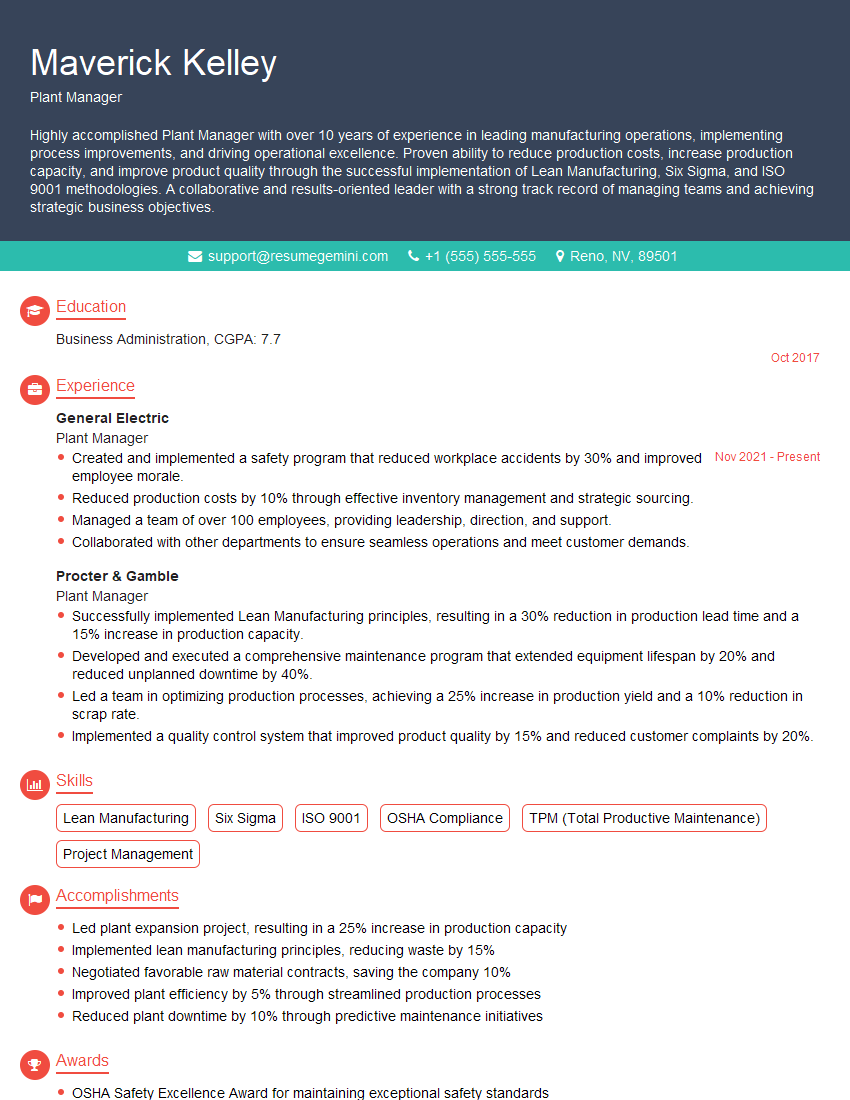
Plant Manager Resume Sample
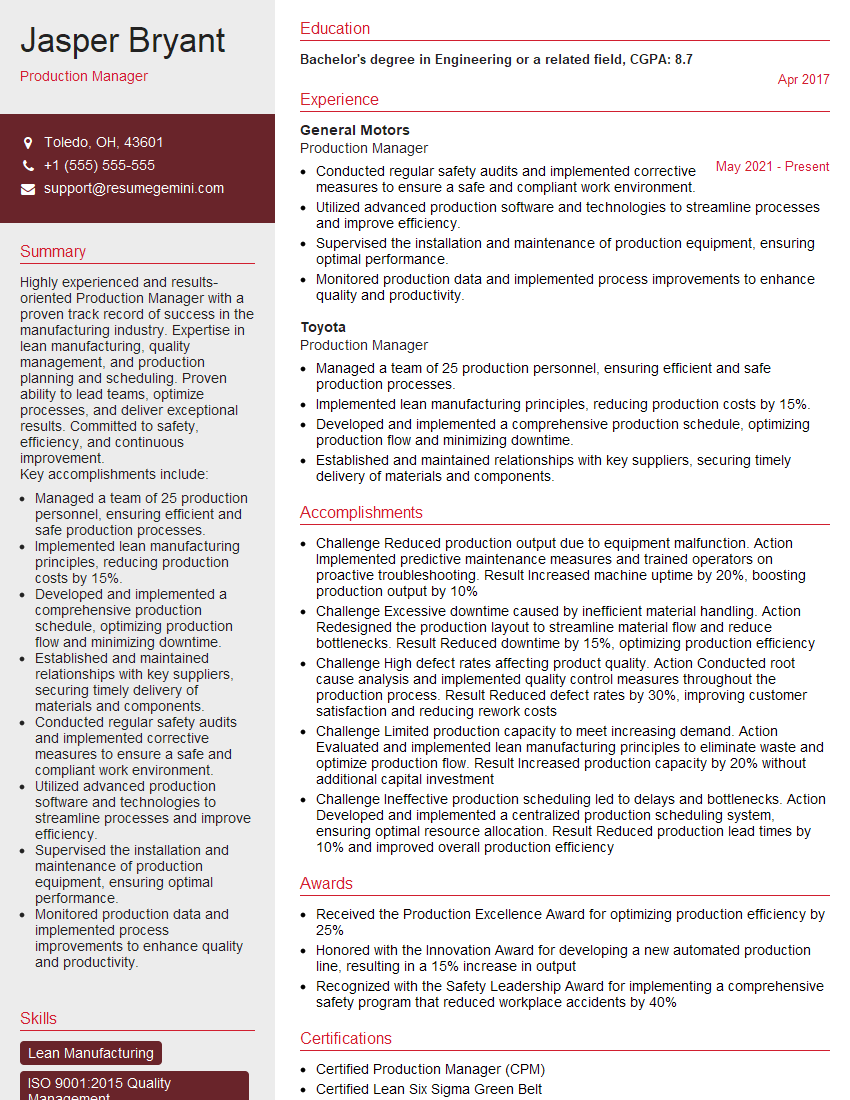
Production Manager Resume Sample
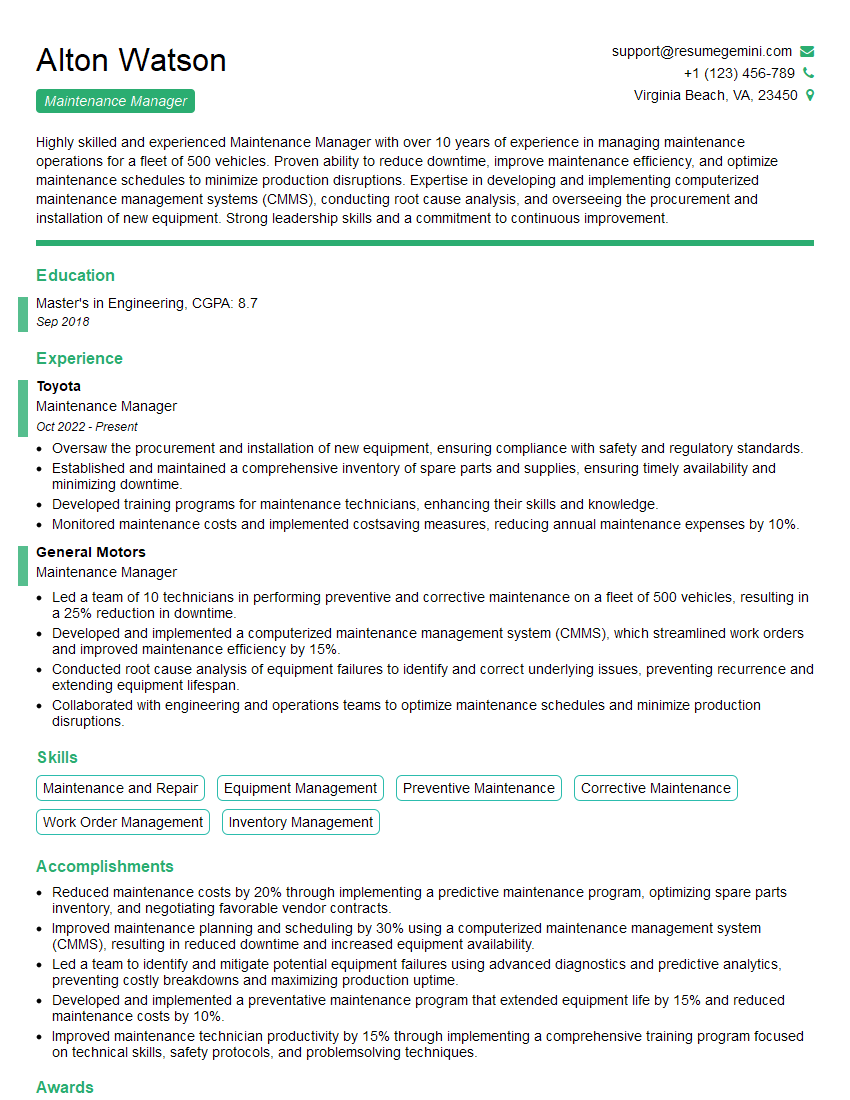
Maintenance Manager Resume Sample
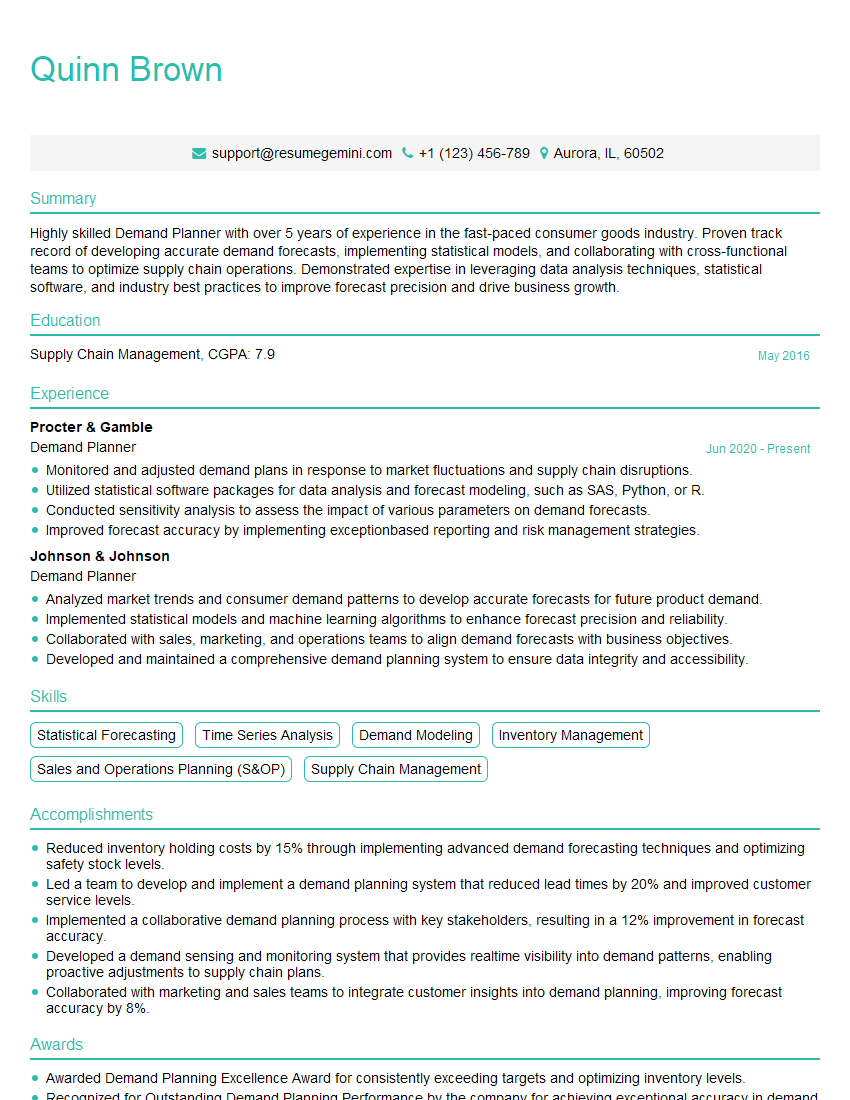
Demand Planner Resume Sample
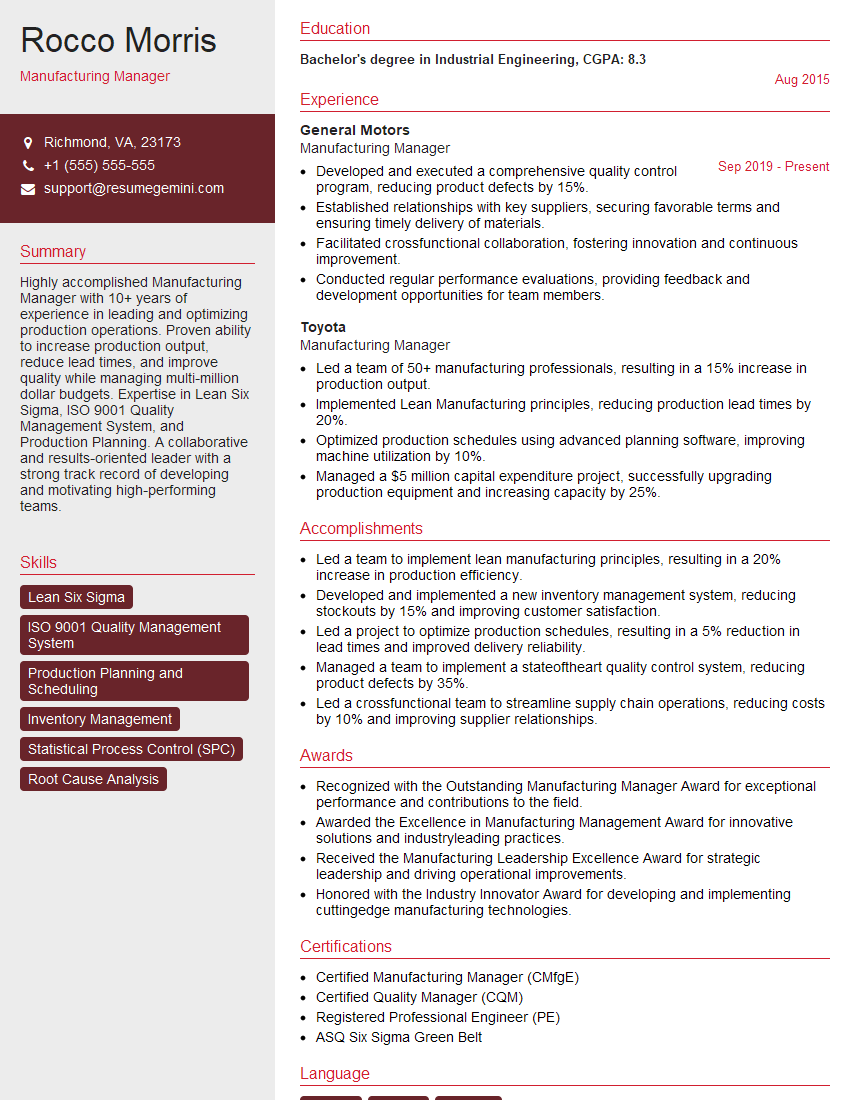
Manufacturing Manager Resume Sample
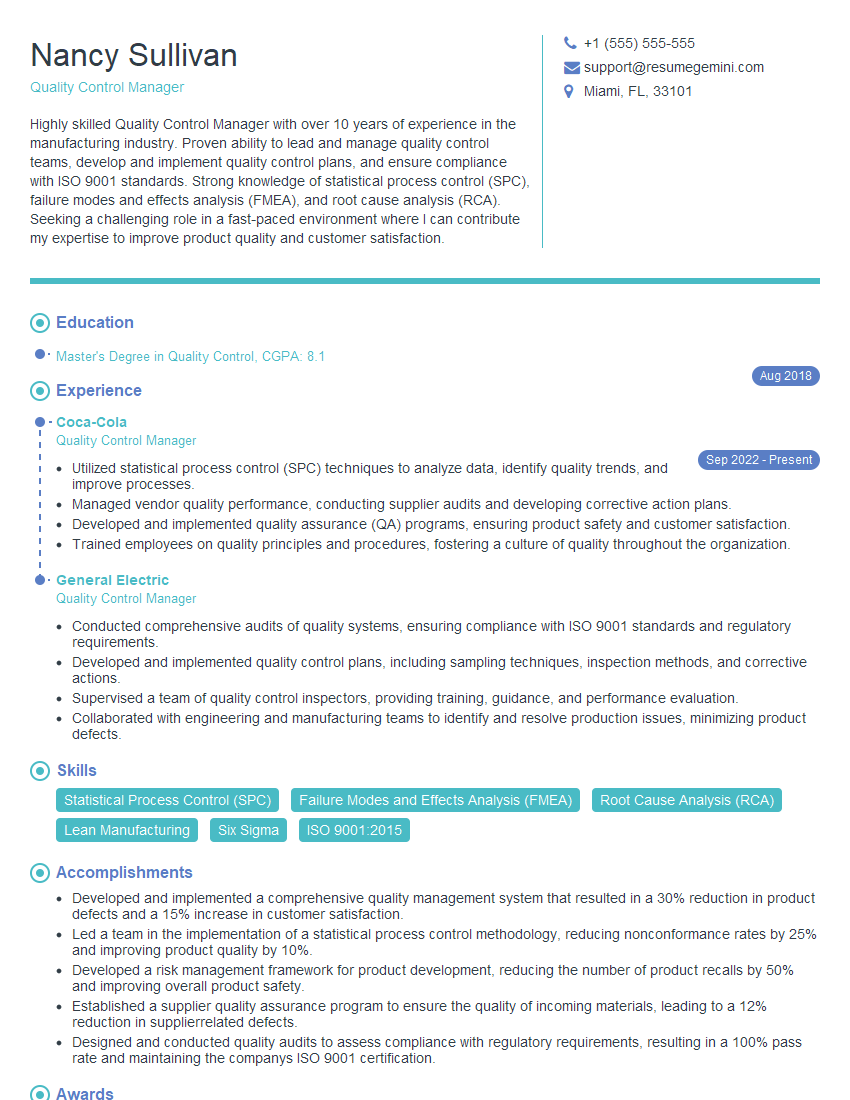
Quality Control Manager Resume Sample
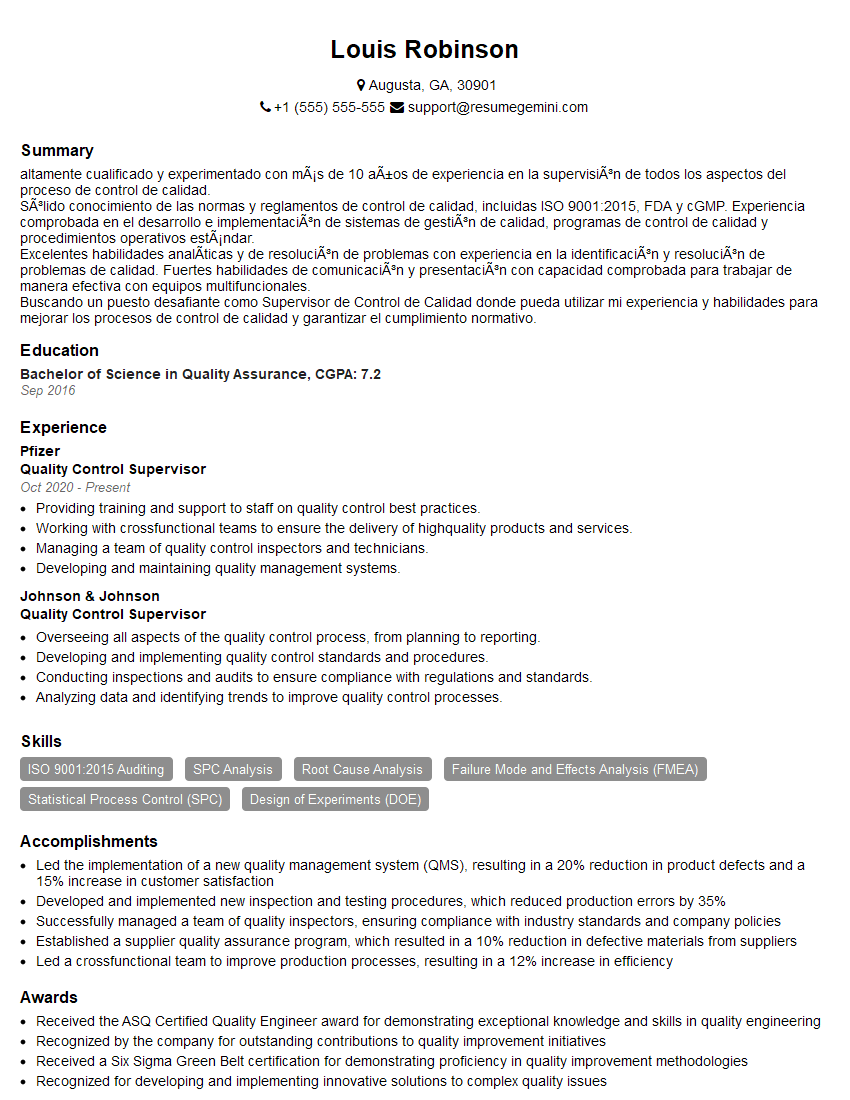
Quality Control Supervisor Resume Sample
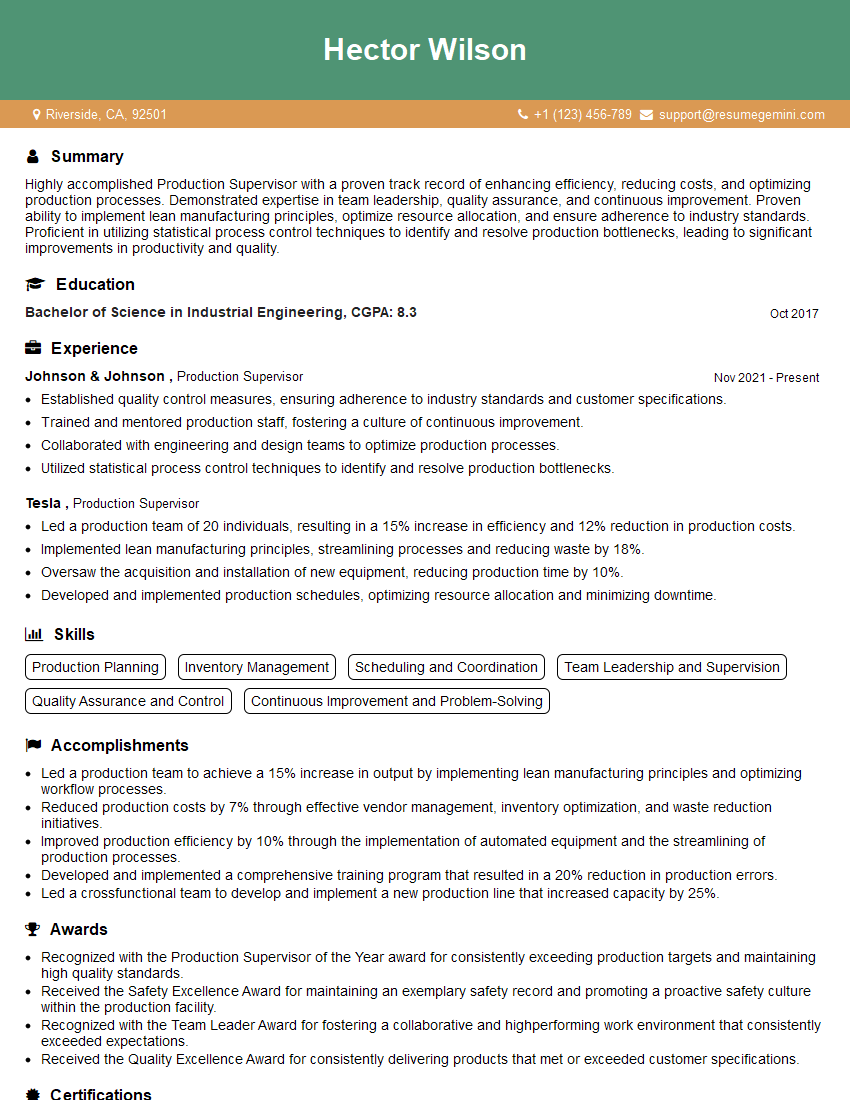
Production Supervisor Resume Sample
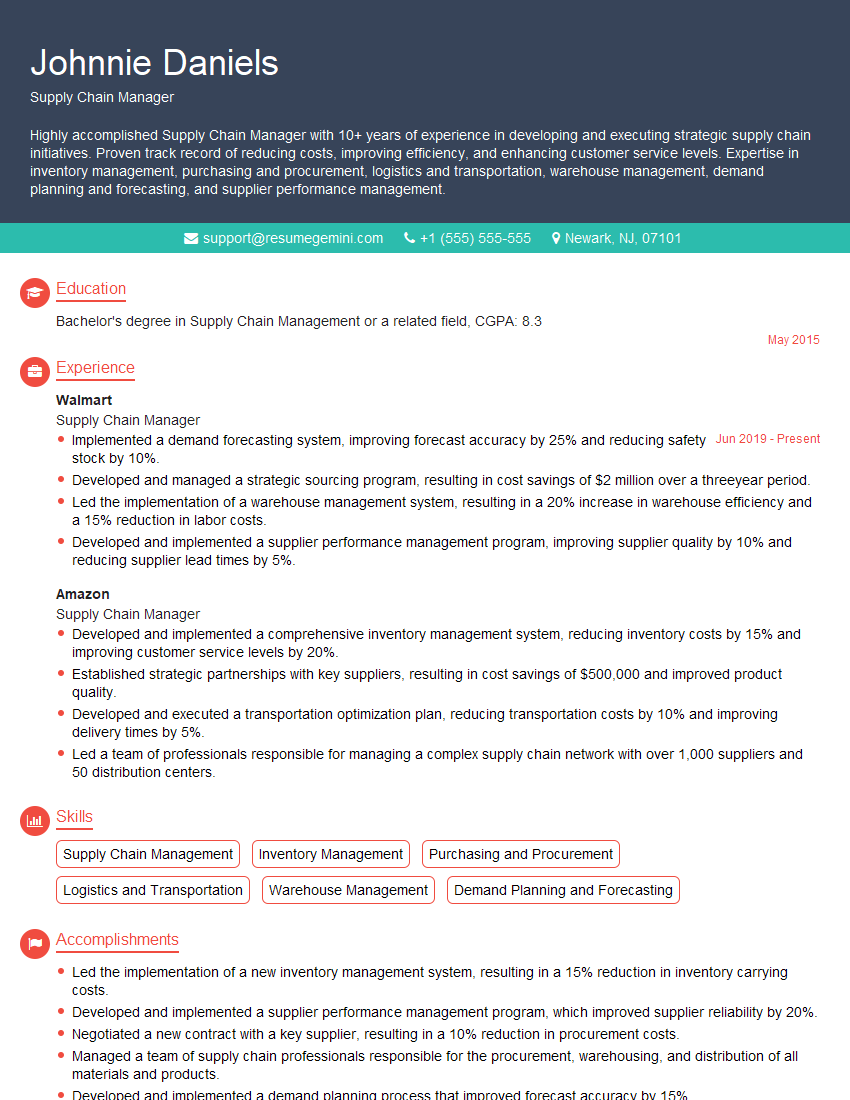
Supply Chain Manager Resume Sample
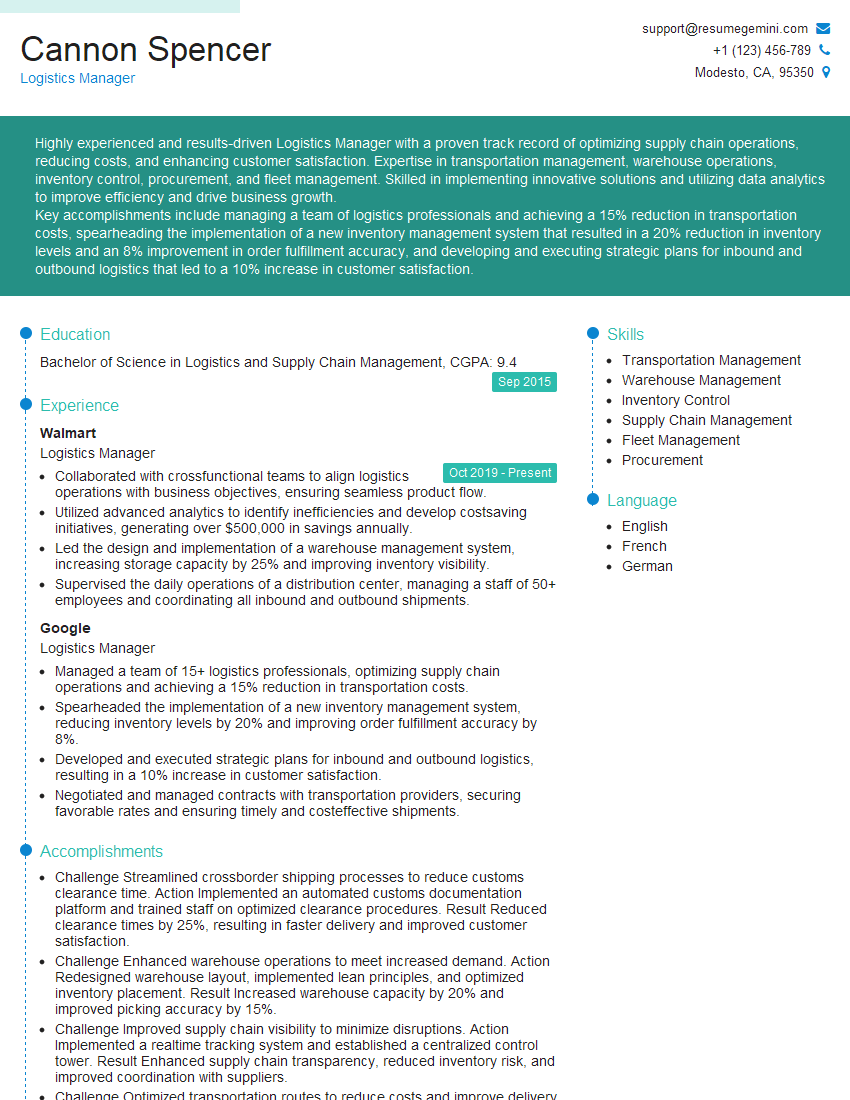
Logistics Manager Resume Sample
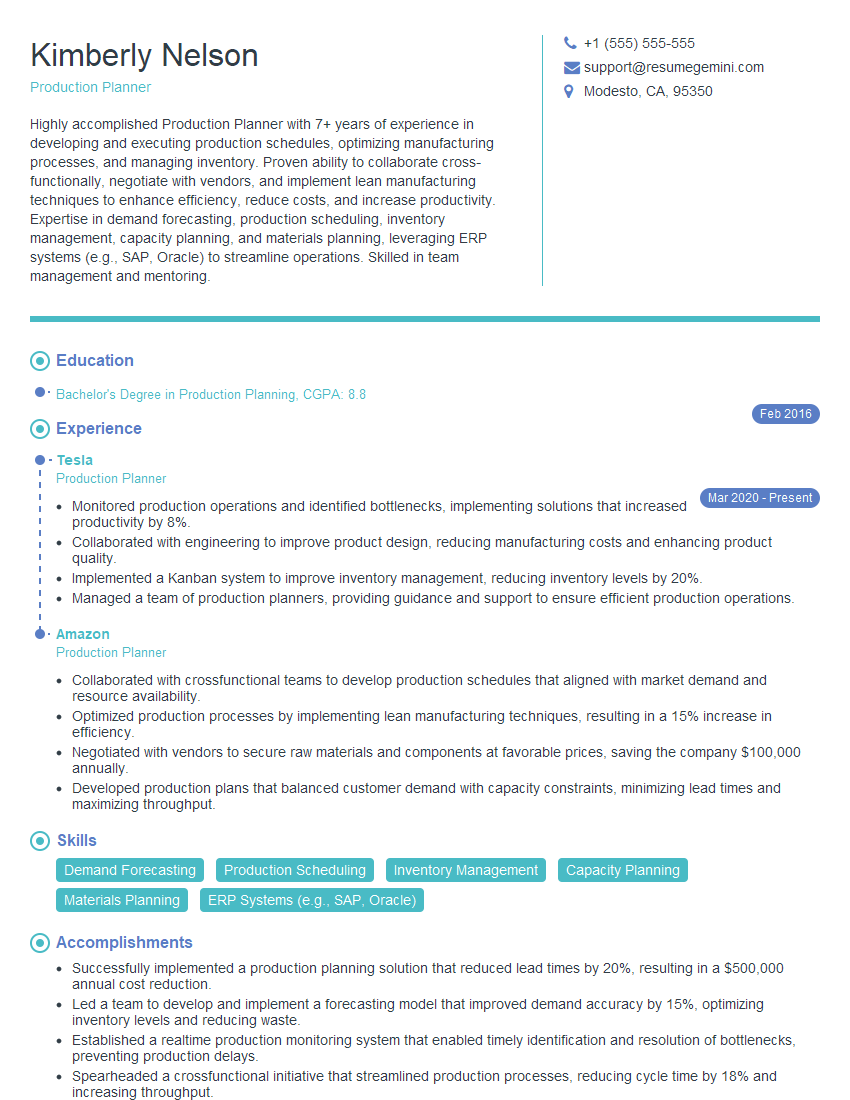
Production Planner Resume Sample
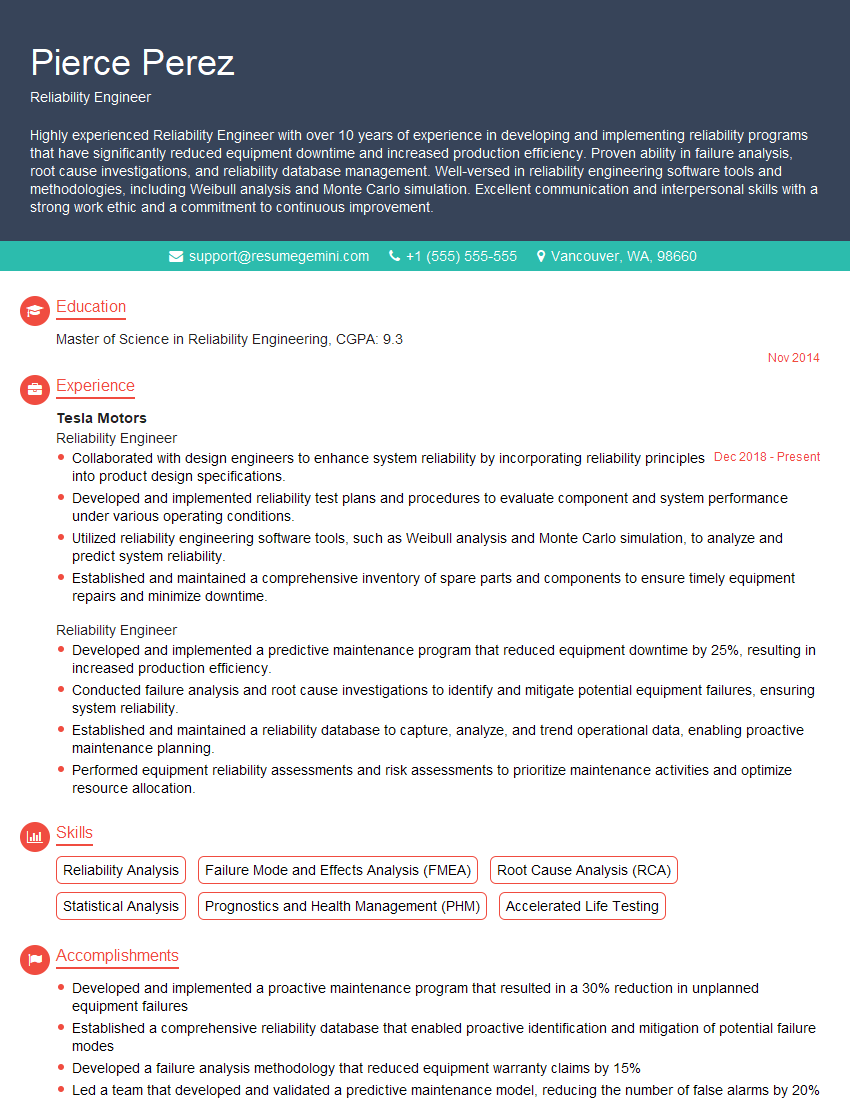
Reliability Engineer Resume Sample
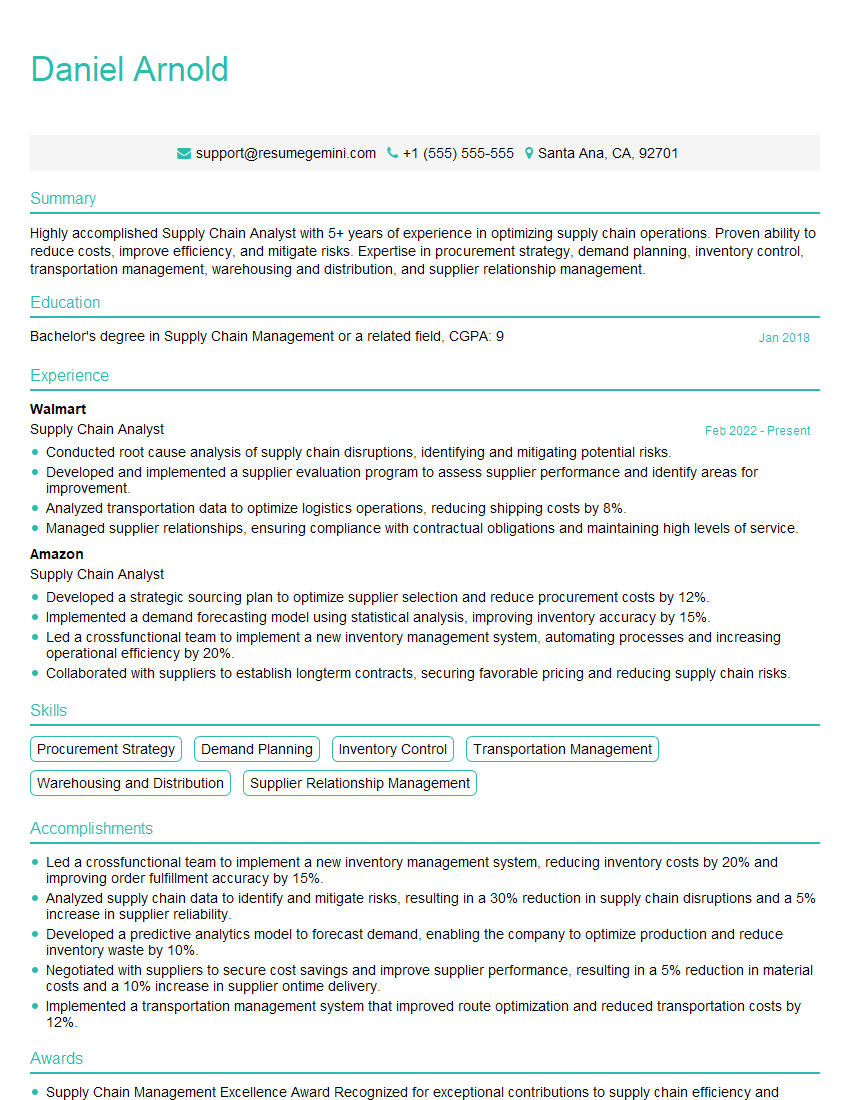
Supply Chain Analyst Resume Sample
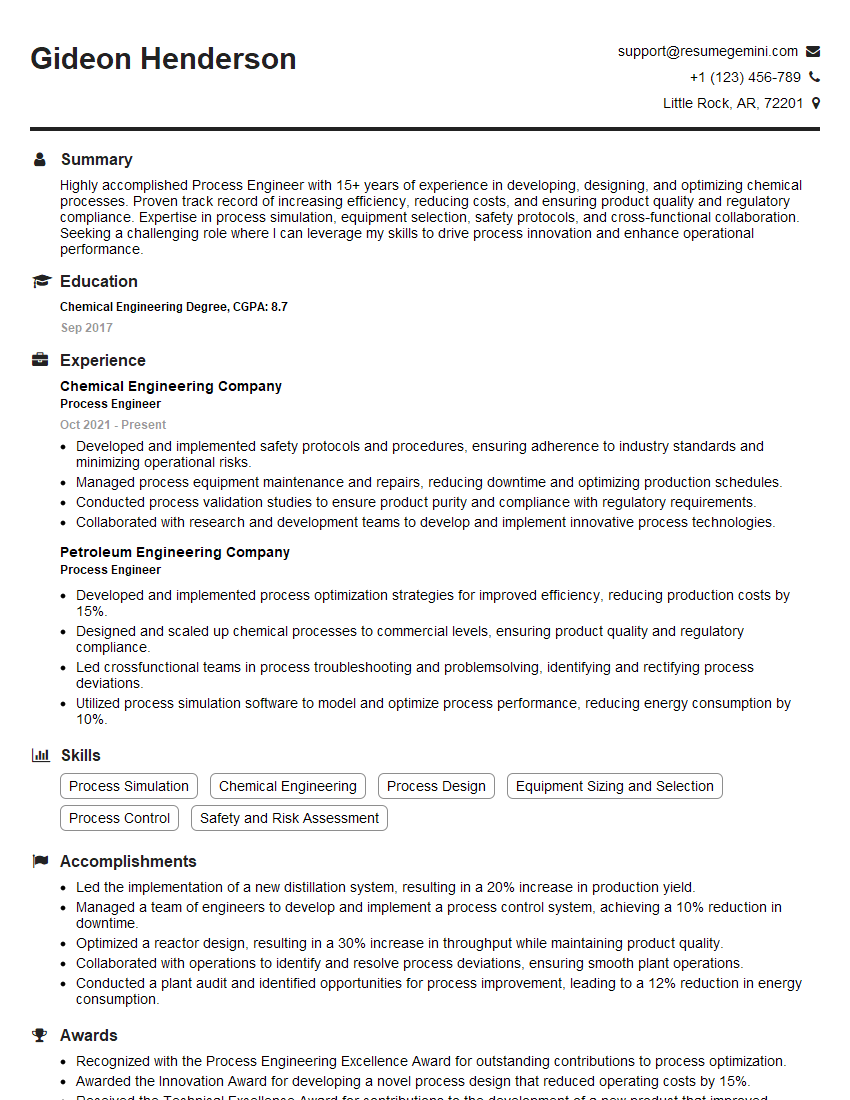
Process Engineer Resume Sample
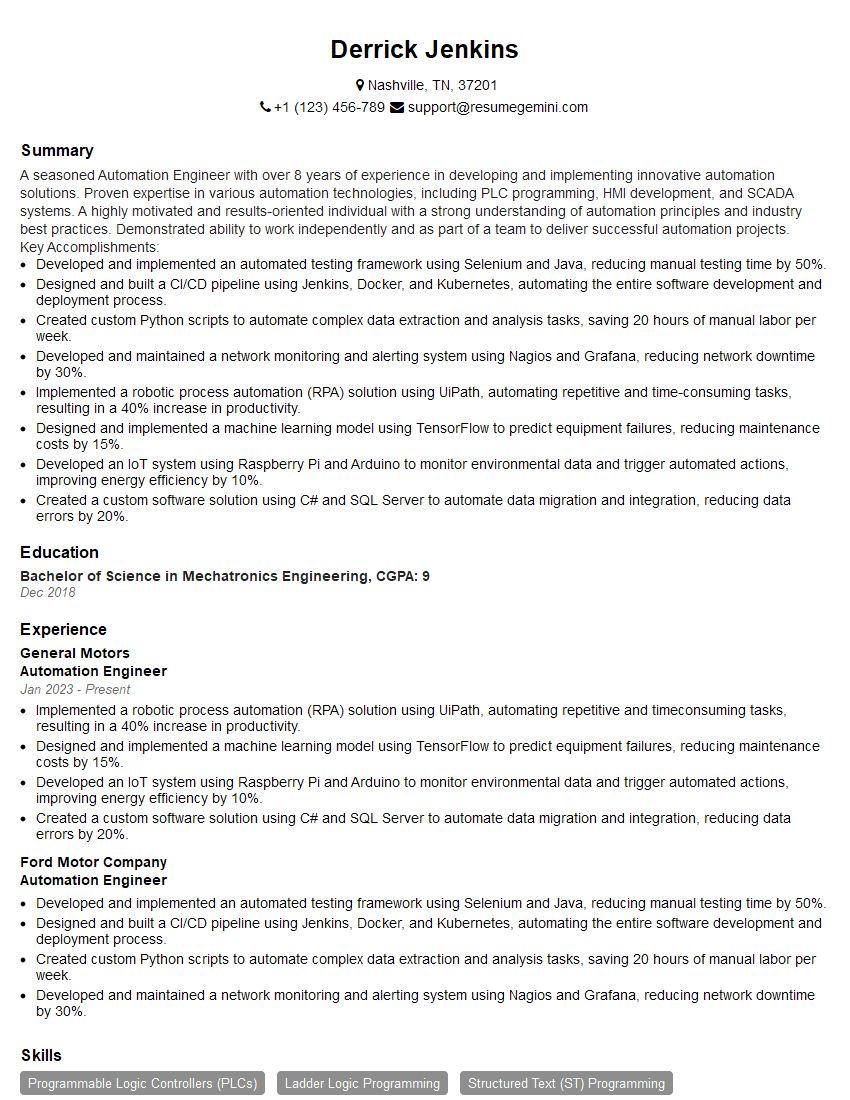
Automation Engineer Resume Sample
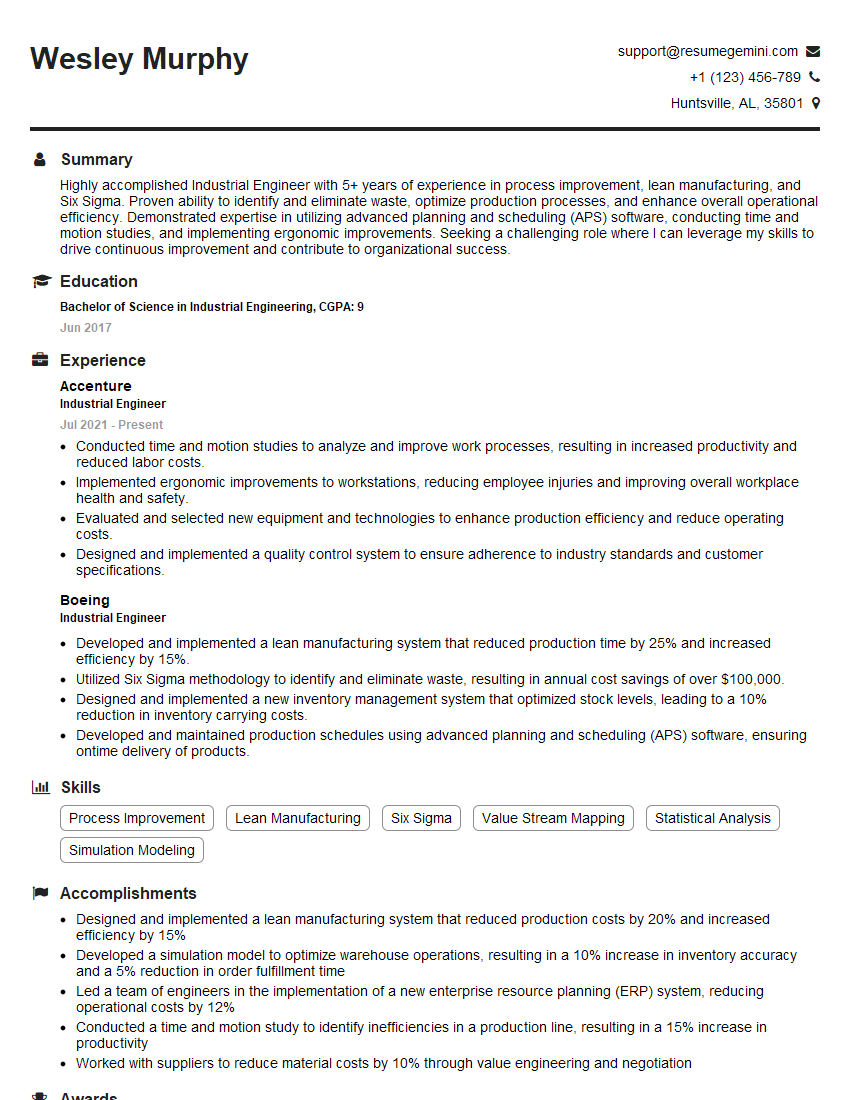
Industrial Engineer Resume Sample
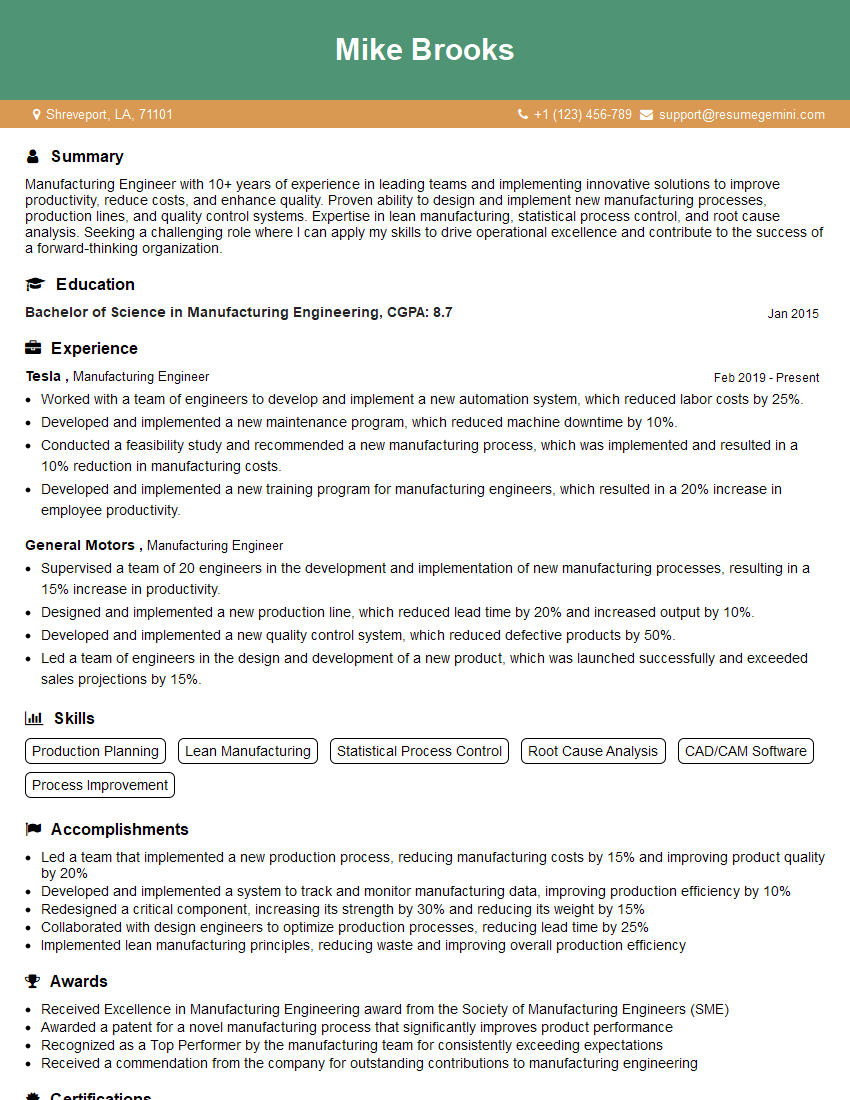
Manufacturing Engineer Resume Sample
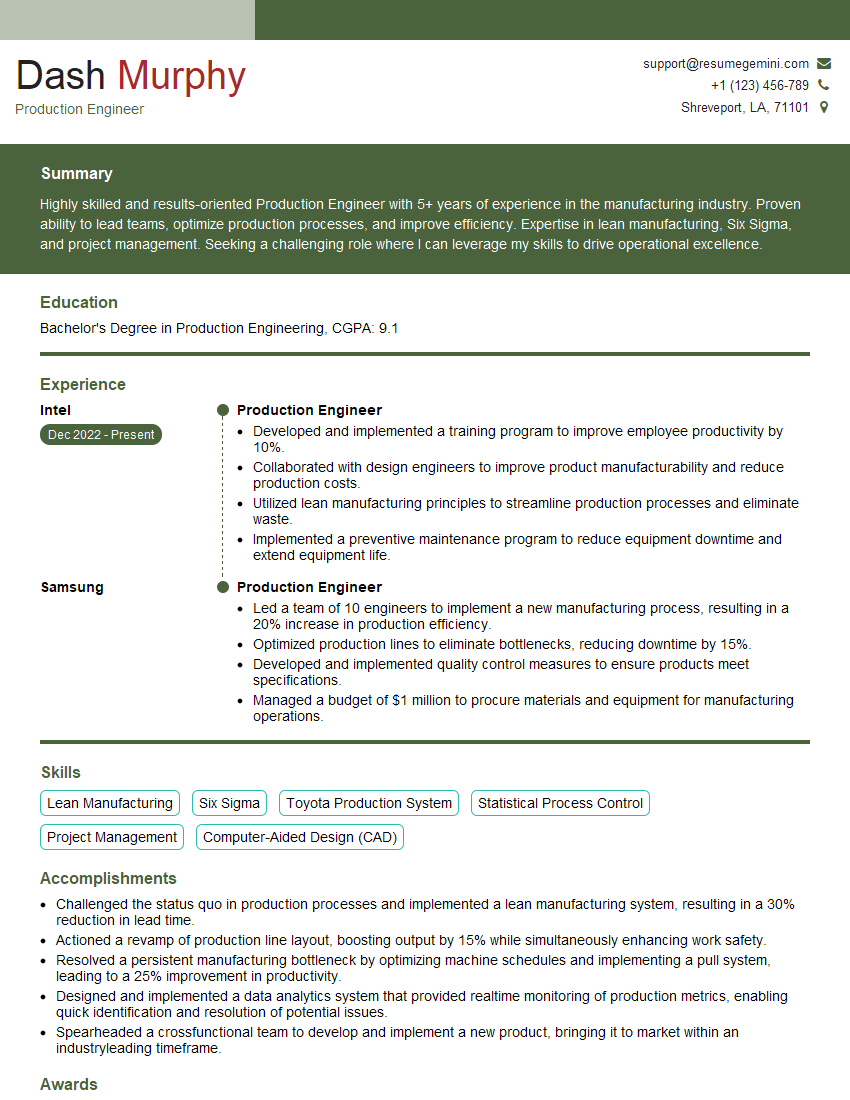
Production Engineer Resume Sample
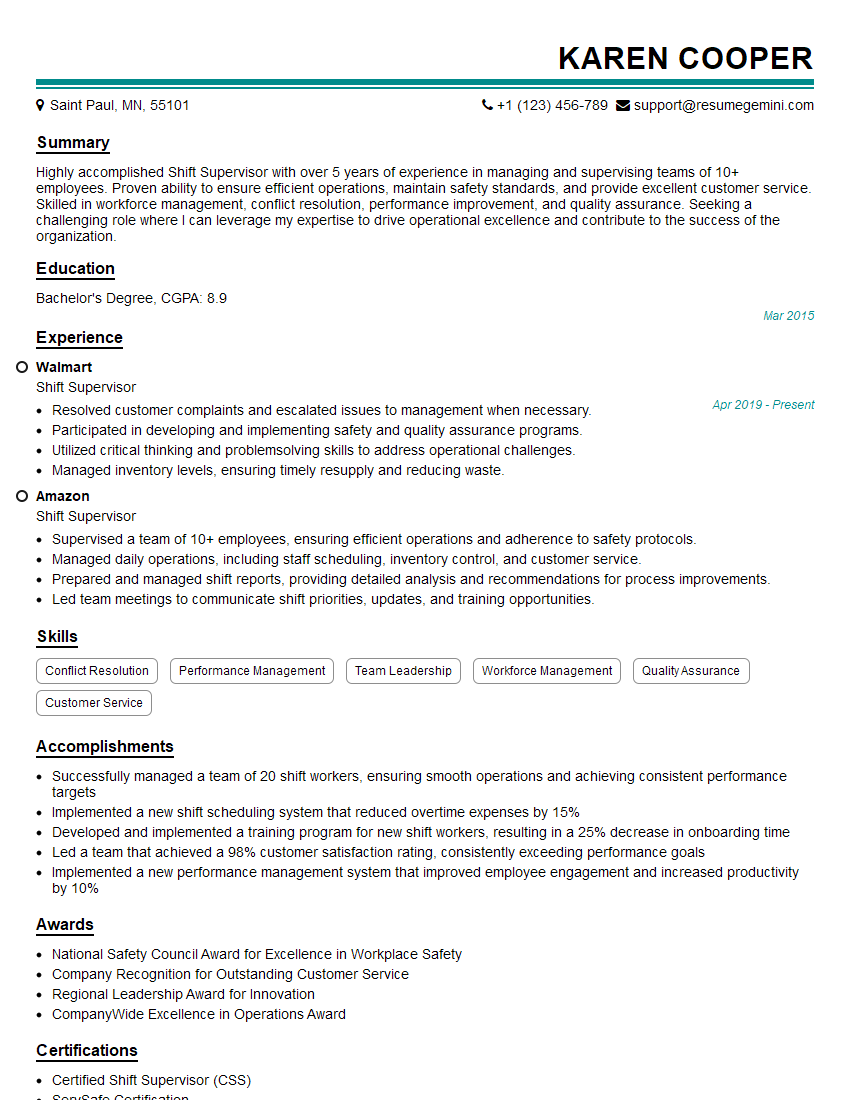
Shift Supervisor Resume Sample
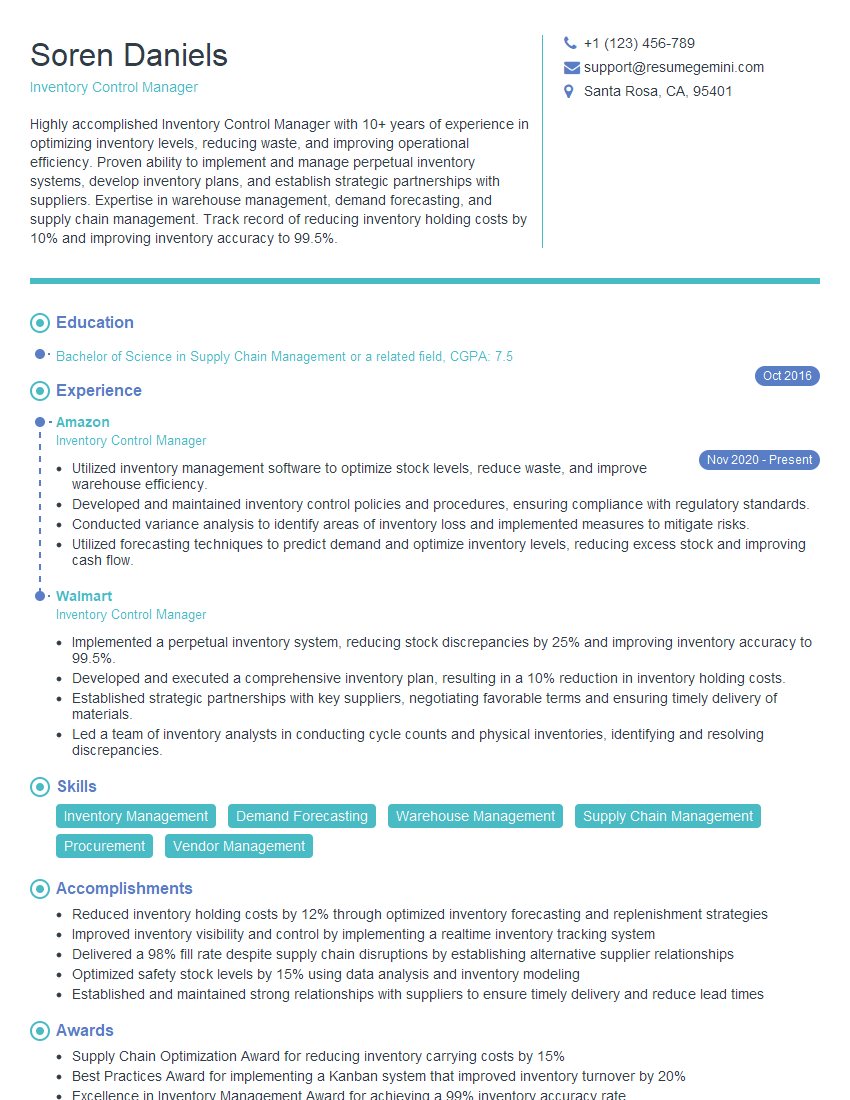
Inventory Control Manager Resume Sample
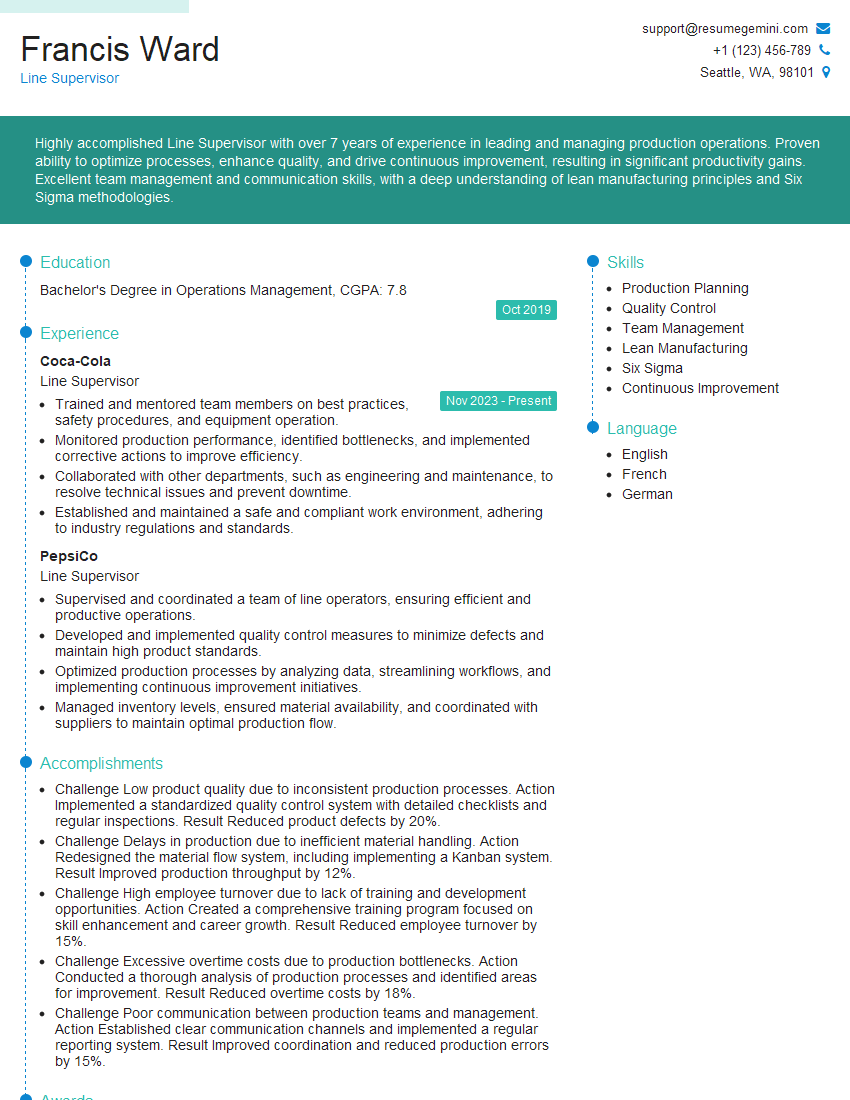
Line Supervisor Resume Sample
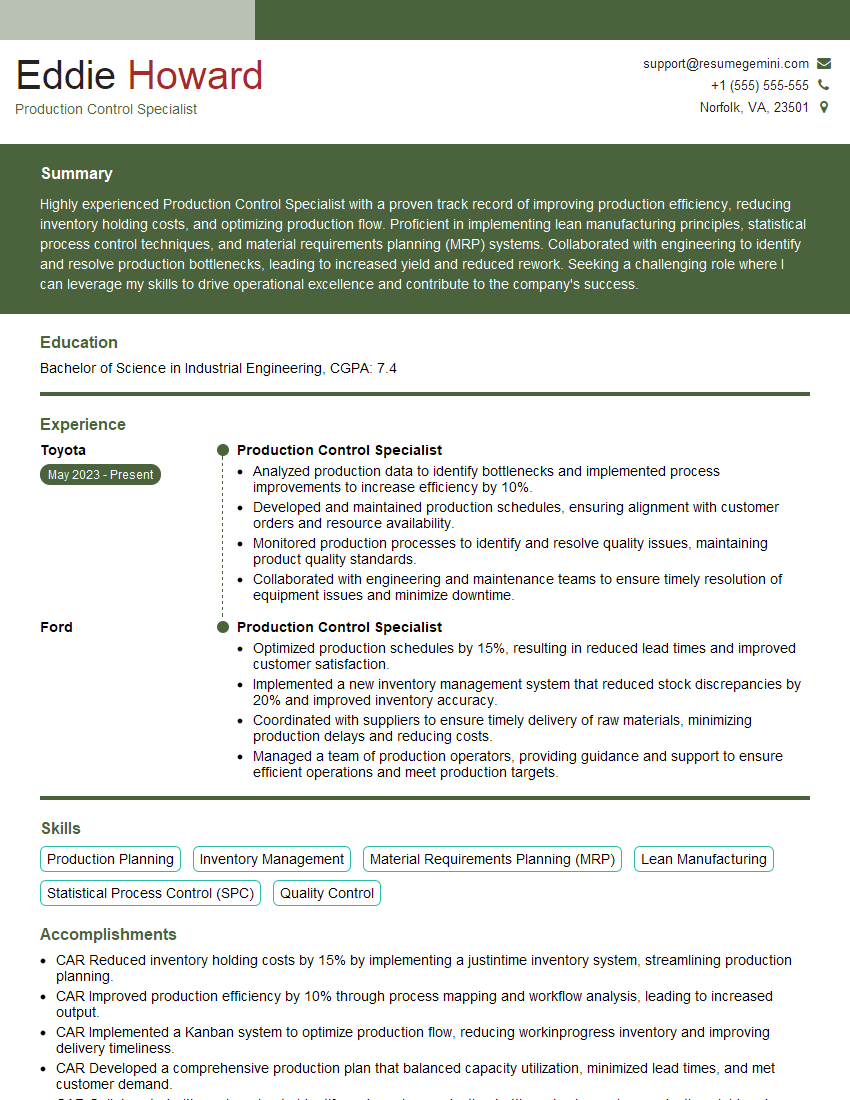
Production Control Specialist Resume Sample
- Operations Manager
- Plant Manager
- Production Manager
- Maintenance Manager
- Demand Planner
- Manufacturing Manager
- Quality Control Manager
- Quality Control Supervisor
- Production Supervisor
- Supply Chain Manager
- Logistics Manager
- Production Planner
- Reliability Engineer
- Supply Chain Analyst
- Process Engineer
- Automation Engineer
- Industrial Engineer
- Manufacturing Engineer
- Production Engineer
- Shift Supervisor
- Inventory Control Manager
- Line Supervisor
- Production Control Specialist
Explore more articles
Users Rating of Our Blogs
Share Your Experience
We value your feedback! Please rate our content and share your thoughts (optional).
What Readers Say About Our Blog
Very informative content, great job.
good