Preparation is the key to success in any interview. In this post, we’ll explore crucial Histological Technique Development interview questions and equip you with strategies to craft impactful answers. Whether you’re a beginner or a pro, these tips will elevate your preparation.
Questions Asked in Histological Technique Development Interview
Q 1. Describe the steps involved in tissue processing for paraffin embedding.
Tissue processing for paraffin embedding is a crucial step in histology, preparing tissue samples for microscopic examination. It involves a series of steps that ensure the tissue is properly preserved, dehydrated, and infiltrated with paraffin wax, creating a firm block suitable for sectioning.
- Fixation: This initial step preserves the tissue’s morphology and prevents autolysis (self-digestion) and putrefaction. Common fixatives include formalin.
- Processing: This involves dehydration using increasing concentrations of alcohol (e.g., 70%, 95%, 100%), followed by clearing with a solvent miscible with both alcohol and paraffin (e.g., xylene). This removes the alcohol and prepares the tissue for paraffin infiltration.
- Infiltration: The tissue is immersed in molten paraffin wax, replacing the clearing agent. This process imbeds the tissue in a supportive medium.
- Embedding: The paraffin-infiltrated tissue is placed in a mold with fresh paraffin wax, oriented for optimal sectioning, and allowed to cool and solidify into a paraffin block.
Imagine it like baking a cake: fixation is like preparing the ingredients, processing is mixing and baking, and embedding is letting it cool into a solid form ready to be sliced.
Q 2. Explain the purpose of fixation in histology.
Fixation in histology is the critical first step in preserving the tissue’s structure and composition. It stops autolysis (self-destruction of cells) and bacterial degradation, preventing artifacts and ensuring the tissue retains its natural form for accurate microscopic analysis. It cross-links proteins, stabilizing cellular structures and preventing them from degrading during subsequent processing steps. Without proper fixation, the tissue would essentially fall apart, rendering it useless for microscopic examination.
Think of it like preserving a delicate flower. Fixation helps ‘freeze’ the flower’s structure in time, keeping it from wilting and decaying, so it can be studied later.
Q 3. What are the common fixatives used in histology and their advantages/disadvantages?
Several fixatives are commonly used in histology, each with its own advantages and disadvantages:
- Formalin (Formaldehyde): Widely used, inexpensive, and relatively easy to handle. However, it can create artifacts, particularly with prolonged exposure, and is a known carcinogen.
- Glutaraldehyde: Excellent for electron microscopy due to its superior preservation of ultrastructure. However, it’s more expensive and penetrates tissues slower than formalin.
- Bouin’s solution: A good all-around fixative, particularly useful for preserving nuclear detail and tissue architecture. However, it is acidic and can cause tissue shrinkage.
- Alcohol (e.g., ethanol, methanol): Used for cytological preparations (e.g., blood smears) and small tissue biopsies. It provides good nuclear preservation but can cause tissue shrinkage and hardening.
The choice of fixative depends on the type of tissue, the intended application (e.g., light microscopy, electron microscopy, immunohistochemistry), and the desired level of preservation.
Q 4. Describe the process of microtomy and the types of microtomes used.
Microtomy is the process of cutting extremely thin sections of tissue embedded in paraffin wax, typically 3-5 micrometers thick. These sections are mounted on glass slides for staining and microscopic examination. This precision is essential for visualizing cellular details clearly.
Different types of microtomes exist, each designed for specific applications:
- Rotary microtome: The most common type, it uses a rotating wheel to advance the tissue block across a fixed knife, producing serial sections.
- Sliding microtome: The knife is stationary, and the tissue block moves across it. It’s often used for cutting larger or softer tissues.
- Cryostat microtome: Used for frozen sections, allowing for rapid processing and preservation of tissue antigens for immunohistochemistry. It operates at low temperatures to keep the tissue frozen.
- Vibratome: Used for cutting thicker sections of unfixed tissue, often for immunohistochemistry or neuroscience studies. It employs a vibrating blade to create sections.
Choosing the right microtome depends on the type of tissue, the desired section thickness, and the downstream application.
Q 5. What are the different types of stains used in histology and their applications?
Histology employs a wide variety of stains, each designed to highlight specific tissue components. Here are some examples:
- Hematoxylin and Eosin (H&E): A routine stain used for general tissue morphology, staining nuclei blue/purple and cytoplasm pink.
- Periodic Acid-Schiff (PAS): Stains carbohydrates (glycogen, mucus) magenta.
- Masson’s Trichrome: Differentiates collagen (green), muscle (red), and nuclei (black).
- Silver stains: Highlight reticulin fibers (collagen type III) in black.
- Immunohistochemical stains: Utilize antibodies to detect specific proteins within tissues.
The selection of stain depends on the specific cellular or tissue components of interest.
Q 6. Explain the principles of Hematoxylin and Eosin (H&E) staining.
Hematoxylin and Eosin (H&E) staining is the gold standard in histology, providing a fundamental overview of tissue morphology. Hematoxylin, a basic dye, binds to negatively charged molecules like DNA and RNA in the nucleus, staining it a dark blue or purple. Eosin, an acidic dye, binds to positively charged components in the cytoplasm, staining it various shades of pink or red. This combination allows for the visualization of both the nuclei (blue/purple) and the cytoplasm (pink/red) of cells, highlighting tissue architecture and cellular detail.
Think of it as a basic color-coding system for cells: blue for the nucleus (the ‘control center’) and pink for the cytoplasm (the ‘working area’).
Q 7. Describe the process of immunohistochemistry (IHC) and its applications.
Immunohistochemistry (IHC) is a powerful technique that utilizes antibodies to detect specific proteins or antigens within tissues. This allows for the localization of molecules of interest at a cellular and subcellular level. It’s a crucial tool in diagnosing various diseases, such as cancer.
The process involves several steps:
- Tissue preparation: Tissue is processed and sectioned as in routine histology.
- Antigen retrieval: This step often involves heat or enzymatic treatment to unmask antigens that may be masked during tissue processing.
- Incubation with primary antibody: The tissue is incubated with a primary antibody that is specific to the target antigen.
- Incubation with secondary antibody: The secondary antibody, conjugated to an enzyme (e.g., horseradish peroxidase) or a fluorophore, binds to the primary antibody.
- Visualization: The enzyme or fluorophore is detected using a chromogen (e.g., DAB, which produces a brown precipitate) or fluorescence microscopy.
IHC has numerous applications, including cancer diagnosis (identifying tumor markers), infectious disease diagnostics (detecting pathogens), and research (studying protein expression and localization). For example, IHC can help diagnose breast cancer by identifying estrogen receptor expression.
Q 8. Explain the principles of in-situ hybridization (ISH) and its applications.
In situ hybridization (ISH) is a powerful molecular cytogenetic technique used to detect specific DNA or RNA sequences within cells and tissues. Think of it like a highly specific ‘search and find’ operation within the complex landscape of a tissue sample. It works by using labeled probes, typically single-stranded DNA or RNA, that are complementary to the target sequence. These probes bind to their target sequences through base pairing (A with T, G with C), effectively highlighting the location of the target gene or transcript.
The principles are straightforward: you design a probe complementary to your gene of interest, label it (e.g., with fluorescent dye, radioactive isotopes, or enzymes), hybridize it to the tissue sample, and then detect the signal. The strength of the signal directly correlates with the amount of target sequence present.
- Applications: ISH has extensive applications in various fields, including:
- Cancer research: Detecting specific genes or transcripts associated with tumorigenesis, prognosis, and treatment response.
- Infectious disease diagnostics: Identifying viral or bacterial nucleic acids in infected tissues.
- Developmental biology: Studying the spatiotemporal expression of genes during development.
- Neuroscience: Localizing specific mRNA transcripts within the brain.
For example, in cancer research, ISH can be used to detect HER2 gene amplification in breast cancer tissue, which has significant implications for treatment decisions. Another example is using ISH to identify the presence of specific viral RNA in a tissue biopsy, confirming a viral infection.
Q 9. What are special stains and when are they used?
Special stains are histological techniques used to highlight specific tissue components that are not easily visualized with routine hematoxylin and eosin (H&E) staining. Think of H&E as providing a general overview, while special stains offer a zoomed-in, detailed view of specific structures. They leverage the chemical properties of different tissue components to selectively bind dyes, enhancing contrast and visibility.
Examples of Special Stains and their Applications:
- Periodic acid-Schiff (PAS): Detects carbohydrates, like glycogen and fungi, useful in identifying certain infections or storage diseases.
- Masson’s trichrome: Differentiates collagen fibers from other tissue components, helpful in assessing fibrosis in various organs.
- Silver stains: Highlight reticulin fibers (supporting framework of tissues) and microorganisms, often used in neuropathology.
- Oil red O: Detects lipids and fats, critical in identifying fat deposits in tissues.
- Immunohistochemistry (IHC): While technically an immunoassay, IHC is used as a special stain to detect specific proteins within tissues, providing crucial information about cell type and activity. This differs from ISH as it targets proteins rather than nucleic acids.
For instance, a PAS stain might reveal the presence of Pneumocystis jirovecii in lung tissue, crucial for diagnosing a specific type of pneumonia. Masson’s trichrome is valuable in assessing the extent of liver fibrosis in patients with chronic liver disease. The choice of special stain depends entirely on the specific diagnostic question.
Q 10. How do you troubleshoot common problems encountered during tissue processing?
Troubleshooting tissue processing is a crucial skill for any histotechnologist. Issues can arise at many steps, from fixation to embedding. Effective troubleshooting requires a systematic approach, carefully examining each step of the process.
Common Problems and Solutions:
- Poor Fixation: Artifacts like shrinkage, poor nuclear detail, and uneven staining often stem from inadequate fixation. Solution: Ensure proper fixation time and ratio of fixative to tissue, use appropriate fixative (formalin is common), and avoid overcrowding the container.
- Tissue Degradation: Autolysis (self-digestion) or putrefaction (bacterial decomposition) can severely compromise tissue quality. Solution: Prompt fixation is paramount. Refrigerate or freeze tissues until processing if immediate fixation is impossible.
- Incomplete infiltration of paraffin: This results in crumbly or cracked blocks. Solution: Ensure the tissue is fully dehydrated before paraffin infiltration, possibly extending infiltration time. Check the paraffin wax quality and temperature.
A methodical approach, careful observation of tissue samples at each step, and keeping detailed processing logs are essential for effective troubleshooting. Addressing problems promptly minimizes the impact on diagnostic accuracy.
Q 11. How do you troubleshoot common problems encountered during microtomy?
Microtomy, the process of sectioning embedded tissue, presents its own set of challenges. The goal is to produce thin, even sections without compression or tearing. Common problems often indicate issues with the microtome, the blade, or the tissue block itself.
Common Problems and Solutions:
- Thick or uneven sections: This could be due to a dull blade, incorrect microtome settings, or a poorly trimmed block. Solution: Change the blade, adjust the thickness setting, and ensure the block face is smooth and even before sectioning.
- Chatter (vibrations): Results in wavy sections. Solution: Check for loose parts on the microtome, tighten screws, ensure proper lubrication, and use a sharp blade.
- Compression or folding of sections: Happens when the tissue is too hard, the blade angle is incorrect, or the tissue block is not firmly clamped. Solution: Use a softer wax, adjust the blade angle, ensure the block is securely clamped and the temperature is appropriate.
- Torn or fragmented sections: This often points to hard or brittle tissue, a dull blade or improper handling. Solution: Address tissue processing issues (see previous answer), use a sharper blade and handle sections gently with forceps.
Regular maintenance of the microtome, proper blade handling, and attention to detail in block preparation are vital for successful microtomy.
Q 12. How do you troubleshoot common problems encountered during staining?
Staining is a critical step, and problems can lead to inaccurate or uninterpretable results. Troubleshooting staining problems requires careful analysis of the staining procedure and reagents used.
Common Problems and Solutions:
- Uneven staining: This might indicate problems with tissue processing, reagent quality, or staining technique. Solution: Ensure proper tissue processing (see previous answers), check for expired or degraded reagents, and carefully follow staining protocols, including appropriate rinsing times.
- Background staining: Excess background color obscures the target structures. Solution: Check for contamination, use appropriate counterstains, and optimize washing steps to remove unbound dye.
- Faint or weak staining: Could be caused by old reagents, inadequate staining time, or problems with the antigen retrieval (in IHC). Solution: Use fresh reagents, extend staining times within recommended limits, or optimize antigen retrieval protocols if applicable (e.g., using different enzymes or temperatures).
- Precipitation of stain: Visible dye deposits in the tissue. Solution: Filter reagents before use, carefully rinse tissue sections, and ensure correct reagent concentration and temperature.
Regular quality control of staining reagents, appropriate maintenance of equipment, and meticulous adherence to protocols are key to avoiding staining issues.
Q 13. Describe quality control measures in histology.
Quality control (QC) in histology is paramount for ensuring accurate and reliable results. A comprehensive QC program includes various measures, each contributing to the overall accuracy and reliability of diagnostic results. This program should be routinely monitored and documented.
QC Measures:
- Reagent QC: Regularly checking the expiry dates and appearance of all reagents, including stains, fixatives, and processing chemicals.
- Equipment Maintenance: Scheduled maintenance of all equipment, such as the microtome, tissue processor, and stainer. This may include preventative measures, calibrations and documentation.
- Proficiency Testing: Participating in external quality assurance programs, which involve analyzing samples of unknown origin and comparing results to a larger network of labs. This allows for objective assessment of laboratory performance.
- Record Keeping: Meticulous documentation of all procedures, reagents used, and results. This is vital for identifying potential errors or trends.
A robust QC program minimizes errors, enhances diagnostic accuracy, and maintains a high standard of quality in a histology lab.
Q 14. Explain the importance of proper documentation in histology.
Proper documentation is the backbone of a reliable histology laboratory. It serves multiple critical purposes, ranging from patient safety to troubleshooting and quality control. Think of it as the lab’s memory, crucial for accuracy, accountability, and continuous improvement.
Importance of Documentation:
- Accuracy and Traceability: Detailed records allow for tracing each step of the process, from sample accessioning to final diagnosis. If there is an error it allows pinpointing of exactly where it happened.
- Legal and Regulatory Compliance: Many regulatory bodies require thorough documentation for accreditation and compliance.
- Quality Control and Improvement: Documentation is essential for identifying trends, detecting errors, and implementing corrective actions.
- Auditing and Accreditation: Detailed records are required for internal and external audits, ensuring adherence to quality standards.
- Patient Safety: Accurate documentation ensures that patient samples are correctly processed and interpreted, minimizing the risk of misdiagnosis.
A well-maintained documentation system is not merely a regulatory requirement but an essential component of a high-quality histology laboratory. It promotes accuracy, facilitates effective troubleshooting, ensures patient safety, and contributes to the overall credibility of the lab.
Q 15. What are the safety precautions in a histology laboratory?
Safety in a histology lab is paramount. We’re dealing with hazardous chemicals like formalin (formaldehyde), xylene, and alcohols, so proper personal protective equipment (PPE) is crucial. This includes lab coats, gloves (nitrile is preferred), eye protection (goggles), and potentially respirators depending on the task. We also need to be mindful of sharps – needles, blades, and broken glass – requiring careful handling and disposal in designated containers. Proper ventilation is essential to mitigate the risk of inhaling harmful fumes. Each chemical has a specific safety data sheet (SDS) that outlines handling procedures, storage requirements, and emergency response protocols. Regular safety training is mandatory, covering spill response, fire safety, and the proper use of equipment. For example, we always use a fume hood when working with formalin to prevent exposure. Regular safety inspections ensure the lab environment remains safe and compliant with all regulations.
Career Expert Tips:
- Ace those interviews! Prepare effectively by reviewing the Top 50 Most Common Interview Questions on ResumeGemini.
- Navigate your job search with confidence! Explore a wide range of Career Tips on ResumeGemini. Learn about common challenges and recommendations to overcome them.
- Craft the perfect resume! Master the Art of Resume Writing with ResumeGemini’s guide. Showcase your unique qualifications and achievements effectively.
- Don’t miss out on holiday savings! Build your dream resume with ResumeGemini’s ATS optimized templates.
Q 16. What is the difference between frozen section and paraffin embedding?
Frozen sections and paraffin embedding are two contrasting methods for preparing tissue samples for microscopy. Frozen sections are rapid, allowing for immediate analysis, particularly crucial in intraoperative consultations during surgery. The tissue is frozen, sectioned on a cryostat (a specialized microtome for frozen tissue), and stained. It’s a quick process ideal for rapid diagnosis, but the quality of the sections isn’t as high as paraffin sections. In contrast, paraffin embedding is a more time-consuming but higher-quality method. Tissues are processed through a series of solutions, dehydrated with alcohol, cleared with xylene, and infiltrated with paraffin wax. The paraffin-embedded tissue is then sectioned using a microtome and mounted onto slides for staining. The paraffin embedding provides better support for thin sectioning, leading to sharper images and better preservation of tissue morphology. The choice between the two depends entirely on the clinical need; speed versus quality.
Q 17. Describe the process of preparing frozen sections.
Preparing frozen sections involves several steps. First, a small tissue sample is obtained and quickly frozen using liquid nitrogen or isopentane cooled by dry ice. This rapid freezing minimizes ice crystal formation, which can damage the tissue. The frozen tissue block is then mounted onto the cryostat chuck using a freezing medium. The cryostat’s temperature is carefully regulated to maintain the tissue at an optimal cutting temperature, typically between -18°C and -20°C. Using a cryomicrotome, thin sections (typically 5-10 µm thick) are cut. These sections are then picked up on glass slides, air-dried briefly, and stained. The entire process from tissue freezing to stained slide is often completed within minutes, making it particularly valuable for immediate diagnostic purposes such as intraoperative consultations where quick pathology results are vital for the surgical plan. Careful attention to temperature control is crucial during this process to avoid artifacts.
Q 18. What are the advantages and disadvantages of different embedding media?
Different embedding media, like paraffin wax and resin, each have advantages and disadvantages. Paraffin wax, the most common embedding medium, is relatively inexpensive and easy to use, providing good tissue support for sectioning. However, it can shrink tissues slightly, and the lower melting point limits the temperature during staining and mounting. Resins, such as epoxy resins, offer superior preservation of tissue ultrastructure and allow for extremely thin sectioning, making them ideal for electron microscopy. However, resins are more expensive, require specialized equipment and more complex processing steps, and the sectioning process is more demanding. For example, paraffin is perfect for routine histology while resin is essential for high-resolution microscopy. The choice hinges on the desired resolution and the overall project goals. Other embedding media include agar and gelatin, each suited to particular needs, such as embedding delicate tissues.
Q 19. Explain the principles of digital pathology.
Digital pathology involves the creation, viewing, management, and interpretation of pathology data in a digital format. Instead of glass slides, tissue sections are scanned at high resolution to create whole-slide images (WSIs). These WSIs are then viewed and analyzed on computer screens, allowing for remote consultations, quantitative image analysis, and improved data management. The principles rest on high-resolution scanning technology, powerful image management systems, and specialized software for image analysis. It offers several benefits: improved efficiency, remote collaboration, quantitative analysis, easier storage and retrieval of cases, and the potential for AI-driven diagnostic support. For instance, digital pathology allows pathologists to review cases remotely, enhancing access to expertise, especially in underserved areas. Image analysis software can also assist in identifying subtle patterns or features that might be missed in traditional microscopy.
Q 20. How do you maintain and calibrate histological equipment?
Maintaining and calibrating histological equipment is essential for consistent, high-quality results. Microtomes, for example, require regular cleaning, lubrication, and blade changes. Calibration involves using precision gauges to ensure the section thickness is accurate. Similar care is needed for staining equipment, including automated stainers and slide dryers. Regular preventative maintenance, including checking fluid levels and cleaning systems, significantly reduces downtime and improves longevity. For example, a microtome’s knife angle and section thickness must be precisely set and periodically verified to ensure consistent sectioning. Calibration involves checking these parameters with specialized tools and adjusting them as needed. Furthermore, regular preventative maintenance schedules and logbooks are essential for quality control and troubleshooting.
Q 21. What is your experience with different types of microscopes?
My experience encompasses a variety of microscopes. I’m proficient with brightfield microscopes, which are the workhorse of histology labs, used for routine examination of stained tissue sections. I also have extensive experience with fluorescence microscopy, which is essential for immunofluorescence techniques that allow visualization of specific proteins or structures within the tissue. Additionally, I’ve used confocal microscopy for higher-resolution imaging and 3D reconstruction of tissues. Polarizing microscopy has been employed for visualizing birefringent structures, and I am familiar with the principles and applications of electron microscopy though my hands-on experience is limited. The specific microscope utilized depends on the research question and the required level of detail and information. For example, if I need high-resolution imaging, I would choose a confocal microscope instead of a brightfield microscope.
Q 22. Describe your experience with image analysis software.
My experience with image analysis software is extensive, encompassing both qualitative and quantitative analyses. I’m proficient in using industry-standard software like ImageJ/Fiji, HALO, and Aperio ImageScope. I’ve used these tools for various tasks, including:
- Morphometric analysis: Measuring tissue areas, cell counts, and nuclear size to quantify disease progression or treatment response. For example, I’ve used ImageJ to measure the area of cancerous tissue in breast biopsy samples to assess tumor burden.
- Immunohistochemistry (IHC) quantification: Analyzing staining intensity and distribution to determine protein expression levels. I’ve used HALO to automate the quantification of IHC staining for specific markers, reducing subjectivity and increasing throughput.
- Image stitching and deconvolution: Creating high-resolution images from multiple smaller images and improving image clarity, respectively. This is particularly important when analyzing large tissue sections.
- 3D reconstruction: Generating three-dimensional models of tissue structures from z-stack images using software such as Imaris. This allows for a deeper understanding of spatial relationships within the tissue.
Beyond basic image manipulation, I’m adept at scripting and macro development within these platforms to automate repetitive tasks and streamline workflows. This efficiency is crucial for handling large datasets common in histological studies.
Q 23. How do you ensure the accuracy and reliability of histological results?
Ensuring the accuracy and reliability of histological results is paramount, and relies on a multifaceted approach. It starts with meticulous sample handling, proper fixation, and precise processing techniques. Every step, from tissue acquisition to final image analysis, must be carefully controlled to minimize artifacts and biases.
- Quality Control (QC): Implementing stringent QC checks at each step of the process is essential. This includes regular checks on reagent quality, equipment calibration, and microscopic evaluation of tissue sections for proper staining and morphology. For example, we regularly assess the consistency of Hematoxylin and Eosin (H&E) staining using control slides to ensure proper nuclear and cytoplasmic staining.
- Standardization: Establishing standardized protocols and operating procedures (SOPs) is critical. This minimizes variability between technicians and experiments. We maintain detailed SOPs for each histological technique to ensure consistent results across all projects.
- Positive and Negative Controls: Using positive and negative controls in each experiment is crucial to validate the results. Positive controls confirm the effectiveness of the staining reagents and procedures, while negative controls ensure the absence of non-specific signals.
- Blind Testing: To reduce observer bias, samples are often coded and analyzed blindly, particularly for subjective assessments. This technique ensures that interpretation is not influenced by pre-existing knowledge about the samples.
- Statistical Analysis: Employing appropriate statistical methods allows for the objective interpretation of quantitative data obtained through image analysis. This helps us identify statistically significant differences between groups and ensures that our conclusions are robust.
Ultimately, a combination of meticulous technique, rigorous QC, and appropriate data analysis are key to obtaining reliable histological results that can be confidently used for research and diagnostic purposes.
Q 24. What are your skills in troubleshooting and problem-solving in a histology lab?
Troubleshooting is an integral part of daily life in a histology lab. My skills encompass a systematic approach to identifying and resolving problems. I begin by meticulously reviewing each step of the process to pinpoint the potential source of error.
- Example 1: If a batch of slides exhibits uneven staining, I would systematically investigate the factors involved: reagent quality, incubation times, washing steps, and equipment malfunction. I would check the reagents for contamination or degradation, ensure proper timing of steps, and inspect the equipment for calibration issues or clogging.
- Example 2: If a specific antibody is not working optimally, I would first verify its storage conditions, expiration date, and concentration. I would then troubleshoot the antigen retrieval method, blocking steps, and the antibody incubation parameters before considering alternative antibodies or approaches.
- Documentation: Meticulous documentation of every step is crucial in troubleshooting. A detailed lab notebook, clearly outlining the procedures and results obtained, helps to track the problem systematically.
My approach is not limited to technical issues. I also actively participate in team discussions to brainstorm solutions and leverage the collective knowledge and experience of the team to overcome complex problems. This collaborative environment strengthens our problem-solving capabilities.
Q 25. Describe your experience working in a team environment in a histology lab.
Teamwork is fundamental to success in a histology lab. I thrive in collaborative environments and have consistently demonstrated the ability to work effectively with diverse teams. My contributions include:
- Knowledge Sharing: I actively share my knowledge and expertise with colleagues, particularly in advanced techniques. For example, I’ve trained junior technicians on immunofluorescence microscopy and confocal imaging analysis.
- Task Coordination: I’m adept at coordinating tasks within a team, ensuring efficient workflow and timely project completion. I’ve often taken a leadership role in organizing the lab’s workflow, improving sample throughput, and minimizing delays.
- Communication: Clear and effective communication is essential. I maintain open communication channels with my colleagues and supervisors to resolve conflicts, update on progress, and proactively address potential issues.
- Collaboration: I’ve successfully collaborated with researchers from various disciplines to develop and optimize histological techniques for specific experimental needs. For example, I’ve worked with cancer biologists to develop a new protocol for staining tumor microenvironments.
My experience highlights my commitment to teamwork and my ability to contribute effectively in a collaborative setting. I believe that a supportive and collaborative environment is crucial to the overall productivity and success of any histology lab.
Q 26. What are your knowledge of relevant safety regulations and compliance standards in histology?
I have a comprehensive understanding of safety regulations and compliance standards relevant to histology, including those related to hazardous materials, waste disposal, and infection control. My knowledge encompasses:
- OSHA Regulations: I am familiar with OSHA guidelines regarding the handling of hazardous chemicals (e.g., formaldehyde, xylene), appropriate personal protective equipment (PPE), and safe waste disposal procedures. This includes the proper use of fume hoods and biosafety cabinets when handling potentially hazardous materials.
- Biosafety Levels: I understand the different biosafety levels and the corresponding safety protocols and procedures. I’m adept at working with human and animal tissue samples, following strict guidelines to prevent contamination and exposure to infectious agents.
- Waste Management: I’m proficient in proper disposal of histological waste, including formalin, hazardous chemicals, and biohazardous materials, in compliance with all relevant regulations and institutional guidelines.
- Chemical Hygiene Plan: I understand the importance and contents of a Chemical Hygiene Plan (CHP) and how to follow these regulations to ensure safe handling of all chemicals used in the laboratory.
- CLIA Regulations (if applicable): In clinical settings, I have a good understanding of CLIA regulations (Clinical Laboratory Improvement Amendments) governing laboratory testing procedures and quality control practices.
Safety is my top priority. I always follow the required safety protocols and proactively identify and mitigate potential hazards. I regularly attend safety training and stay updated on the latest regulations to ensure compliance.
Q 27. How do you stay updated with the latest advancements in histological techniques?
Staying current with advancements in histological techniques is crucial for maintaining expertise in this ever-evolving field. I utilize several strategies to keep my knowledge updated:
- Scientific Literature: I regularly read peer-reviewed scientific journals such as the Journal of Histochemistry and Cytochemistry, Histochemistry and Cell Biology, and the Journal of Pathology. I also actively search for relevant articles using databases like PubMed and Google Scholar.
- Professional Organizations: I am a member of professional organizations like the United States and Canadian Academy of Pathology (USCAP) and the Histochemical Society, which provides access to conferences, workshops, and newsletters with the latest research and techniques.
- Conferences and Workshops: I actively participate in conferences, workshops, and short courses related to histology and related fields. This allows for direct interaction with leading experts and exposure to the latest developments in the field.
- Online Resources: I leverage online resources, including webinars and online courses offered by institutions and professional organizations, to further enhance my skills and stay updated on new technologies.
- Collaboration: Networking and collaboration with other professionals in the field provide valuable opportunities to learn about new methods and techniques.
Continuous learning is not just a priority but an essential element of my professional development as a histology expert.
Q 28. Describe a challenging situation you faced in histology and how you overcame it.
One of the most challenging situations I faced involved optimizing a novel immunofluorescence (IF) staining protocol for a very weakly expressed protein in a specific tissue. Initial attempts resulted in low signal-to-noise ratio and inconsistent staining. The challenge was to obtain clear and reproducible staining without increasing background noise.
My approach to overcome this challenge involved a systematic optimization strategy:
- Antigen Retrieval: I systematically tested different antigen retrieval methods (heat-induced epitope retrieval, enzymatic digestion) to determine the optimal technique for unmasking the epitope of the target protein.
- Antibody Concentration and Incubation Time: I optimized the antibody concentration and incubation time to maximize signal intensity. This involved performing titration experiments to determine the optimal concentration of both the primary and secondary antibodies.
- Blocking Reagents: I experimented with various blocking reagents (e.g., normal serum, BSA) and blocking conditions to minimize non-specific binding and background noise.
- Secondary Antibody Selection: I tested different secondary antibodies (e.g., fluorophore type and source) to improve signal-to-noise ratio. This included testing antibodies that were highly specific and had very low cross-reactivity with other tissue components.
- Imaging Parameters: I adjusted the imaging parameters on the confocal microscope, such as laser power and gain, to optimize image acquisition and minimize photobleaching.
Through careful experimentation and systematic optimization, I successfully developed a reproducible and reliable IF protocol that yielded high-quality images with strong signal and minimal background noise. This experience reinforced my methodical approach to troubleshooting and my commitment to achieving high-quality results in challenging situations.
Key Topics to Learn for Histological Technique Development Interview
- Tissue Processing: Understanding fixation methods (formalin, other fixatives), optimal processing times and schedules, and the impact of processing on tissue morphology and antigen retrieval.
- Embedding and Sectioning: Mastering paraffin embedding techniques, microtome operation, troubleshooting sectioning issues (e.g., compression, chatter), and optimizing section thickness for various staining methods.
- Staining Techniques: Comprehensive knowledge of H&E staining, special stains (e.g., PAS, Trichrome, Immunohistochemistry), their applications, and troubleshooting staining artifacts.
- Microscopy and Image Analysis: Understanding light microscopy principles, image acquisition techniques, and basic image analysis for evaluating tissue morphology and staining quality.
- Quality Control and Assurance: Implementing and maintaining quality control measures throughout the histological process, including documentation, troubleshooting, and adherence to regulatory guidelines.
- Troubleshooting and Problem-Solving: Developing a systematic approach to identifying and resolving common problems encountered in histological techniques, such as tissue artifacts, staining inconsistencies, and equipment malfunctions. This includes understanding the root cause analysis and implementing corrective actions.
- New Technique Development and Validation: Familiarize yourself with the process of developing and validating new histological techniques, including experimental design, data analysis, and documentation.
- Safety and Regulatory Compliance: Understanding and adhering to laboratory safety protocols, handling hazardous materials, and complying with relevant regulations (e.g., OSHA, CLIA).
Next Steps
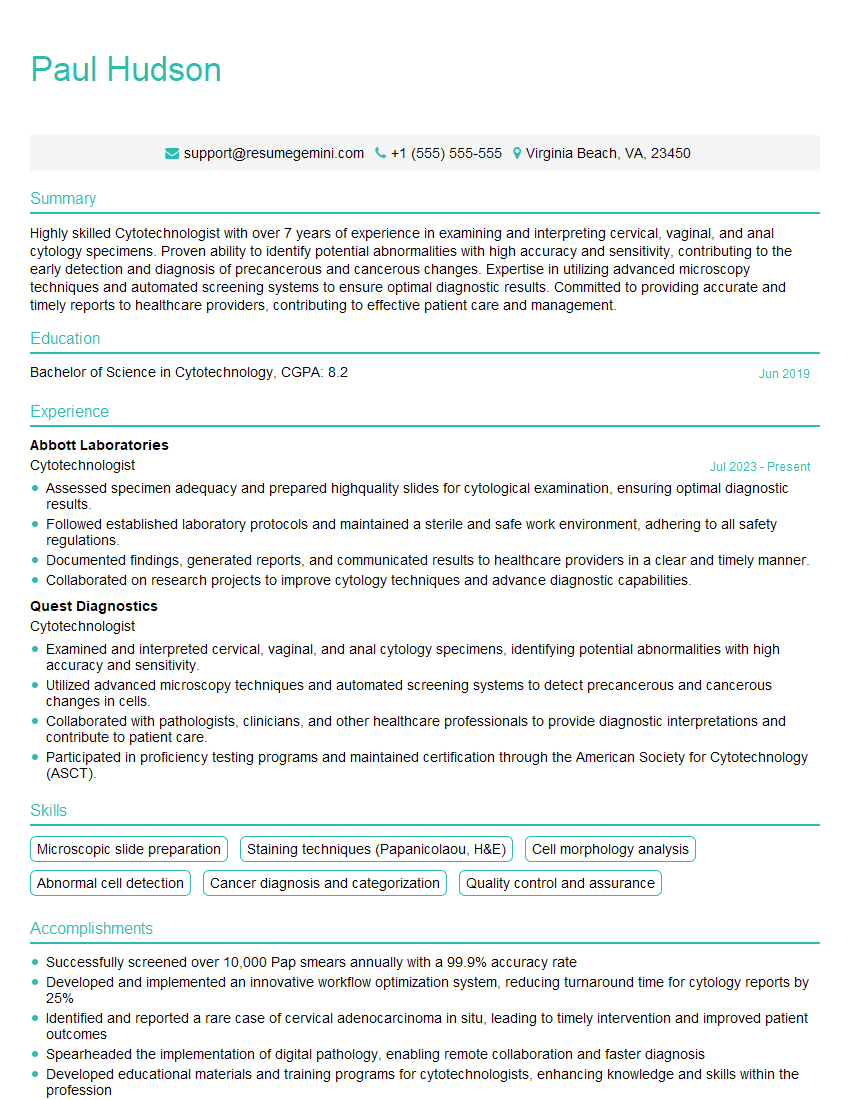
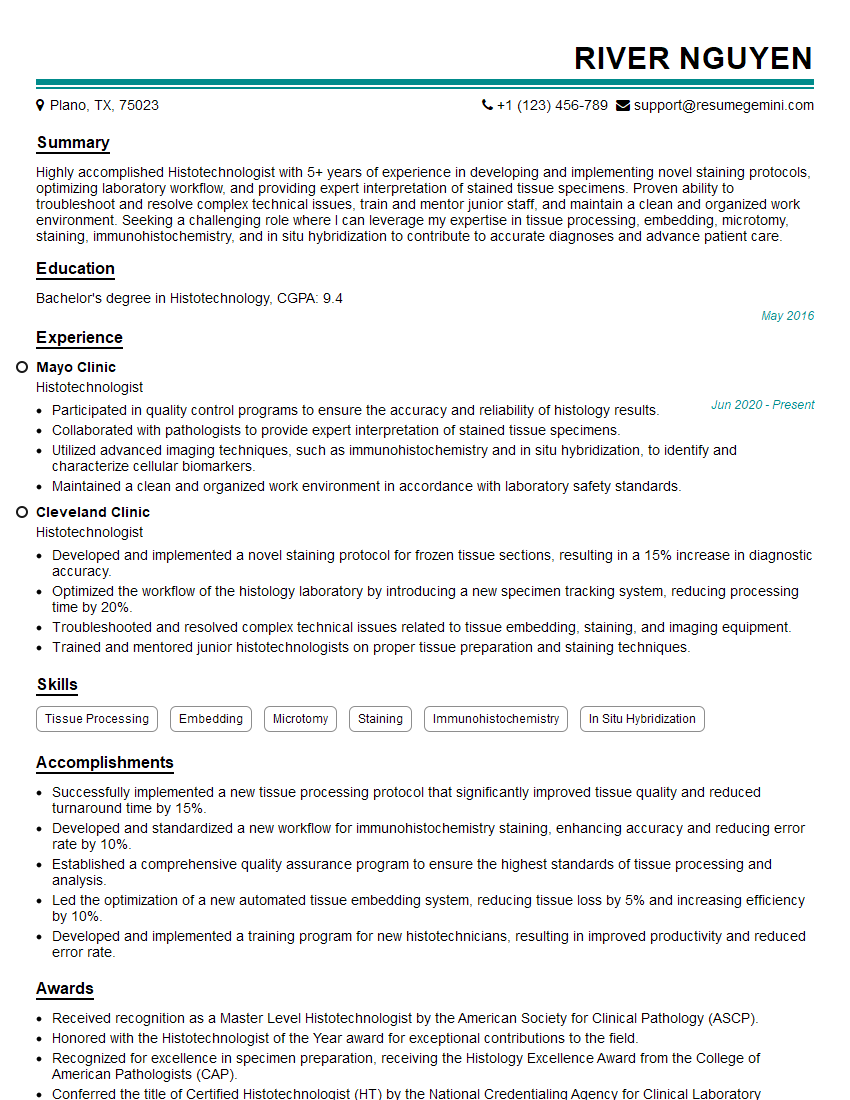
Mastering Histological Technique Development opens doors to exciting career advancements, offering opportunities for specialization, leadership roles, and contributions to cutting-edge research. To maximize your job prospects, a well-crafted, ATS-friendly resume is crucial. ResumeGemini is a trusted resource to help you build a professional resume that highlights your skills and experience effectively. ResumeGemini provides examples of resumes tailored to Histological Technique Development to guide you in crafting your own compelling application. Invest time in creating a strong resume – it’s your first impression on potential employers.

Explore more articles
Users Rating of Our Blogs
Share Your Experience
We value your feedback! Please rate our content and share your thoughts (optional).
What Readers Say About Our Blog
Very informative content, great job.
good