Are you ready to stand out in your next interview? Understanding and preparing for Hockey Rules and Regulations interview questions is a game-changer. In this blog, we’ve compiled key questions and expert advice to help you showcase your skills with confidence and precision. Let’s get started on your journey to acing the interview.
Questions Asked in Hockey Rules and Regulations Interview
Q 1. Explain the difference between a major and a minor penalty.
The key difference between a major and a minor penalty in hockey lies in the length of the penalty and its impact on the game. A minor penalty results in a two-minute penalty, during which the penalized player’s team plays shorthanded. Think of it like a traffic ticket – it’s a relatively less serious infraction. Examples include tripping, hooking, or slashing. A major penalty, however, carries a five-minute penalty and often results in a power play for the opposing team. Major penalties are reserved for more serious offenses, such as fighting, boarding, or spearing. Imagine this as a more severe offense, like reckless driving, deserving a more substantial punishment.
The distinction is crucial because major penalties significantly impact the game’s momentum and can lead to a shift in power dynamics. A team scoring on a major power play can totally change the game’s flow.
Q 2. Describe the procedure for a face-off.
The face-off is the procedure used to restart play after a stoppage. It involves two players from opposing teams, each positioned on their respective sides of a central dot on the ice. The referee drops the puck between them, and the players attempt to gain possession. The location of the face-off depends on where the previous play stopped.
Here’s a step-by-step breakdown:
- Positioning: Players face each other across the center dot, sticks on the ice.
- Referee’s drop: The referee drops the puck between their sticks.
- Competition: Players attempt to gain control of the puck.
- Play resumes: Once a player gains control, play resumes.
Think of it like a jump ball in basketball – it’s the fair and neutral way to restart play after an interruption.
Q 3. What are the rules regarding icing?
Icing is called when a player shoots the puck from behind the center red line and it crosses the opponent’s goal line before any other player touches it. The key here is that the puck must cross the goal line before any other player touches it. There are some exceptions. The most common is that if the defending team plays the puck and it goes over the goal line, it’s not icing. The purpose of the icing rule is to prevent teams from simply dumping the puck into the offensive zone to gain a line change.
Consequences: Icing results in a stoppage of play, and the offending team must retrieve the puck from the opposing team’s end and play will restart with a faceoff in their defensive zone. There are some exceptions to this rule, as well, based on whether or not the ref deems the puck is going to be played by the other team and if play is otherwise disrupted.
Q 4. Explain the offside rule and its exceptions.
The offside rule dictates that a player cannot enter the offensive zone before the puck. In simpler terms, a player’s skates or any part of their body must be behind the puck as it crosses the red line. If a player enters the offensive zone before the puck, the referee will whistle for an offside infraction.
Exceptions:
- Accidental Offside: If a player accidentally enters the zone before the puck due to an unavoidable circumstance, and the referee deems that play is not being manipulated, the offside call can be waived.
- Simultaneous Entry: If both a player from the attacking team and the puck cross the line at almost the same time, the play usually is allowed to continue. The referee must have no doubt that a team is clearly offside before making the call.
Imagine a race; the puck needs to win the race to the zone in order to prevent an offside.
Q 5. How is a goal scored legally?
A goal is scored legally when the entire puck completely crosses the goal line, between the goalposts, and under the crossbar, providing no other infractions occurred, such as goalie interference or high-sticking. The puck must not be deflected by a player’s high stick or hand while crossing the goal line.
Any part of the puck crossing the goal line is not sufficient. The entire puck must cross the plane of the goal line. The goal is only valid if the referee deems that the entire puck crossed the goal line under normal circumstances. This can sometimes be determined by the goaltender’s position or by the referee’s observation. The replay official makes sure there is a proper adjudication of the goal based on these factors.
Q 6. What are the various types of penalties in hockey?
Hockey penalties are numerous and categorized by severity and type of infraction. Here are some key examples:
- Minor Penalties (2 minutes): Tripping, hooking, slashing, holding, interference, roughing, elbowing.
- Major Penalties (5 minutes): Boarding, charging, checking from behind, spearing, fighting.
- Misconducts (10 minutes): Unsportsmanlike conduct, misconduct (usually given for unsportsmanlike behaviour).
- Match Penalties (Game Misconduct): Generally given for egregious infractions, particularly those causing significant injury. The penalized player is ejected from the game, and the team is shorthanded for the remainder of the game.
- Double Minor Penalties: Two consecutive minor penalties.
The exact penalty called depends on the referee’s judgment of the infraction’s severity. Some penalties result in a penalty shot, a rare opportunity for a player to shoot alone against the goaltender.
Q 7. Describe the process of reviewing a goal.
The process of reviewing a goal involves a thorough examination by the video replay officials to ensure it was scored legally. The referee on the ice will initiate the review if there’s uncertainty or a challenge from a coach. The review looks at several factors; puck location, goalie interference, high sticking, etc. If necessary, slow-motion replays and multiple camera angles are used.
The process typically follows these steps:
- Initiation: The referee on the ice initiates a review or a coach issues a coach’s challenge.
- Review: The video replay officials review the play from various angles.
- Decision: The video replay officials make the final call as to whether or not the goal is valid.
- Announcment: The decision is announced to the officials, players and spectators.
The goal stands if the replay review deems that the goal was scored legally; otherwise, the goal is disallowed.
Q 8. How does a coach challenge a referee’s call?
Coaches in professional hockey leagues like the NHL have the ability to challenge certain referee calls. This is done using a coach’s challenge. A coach can only challenge specific types of calls, typically involving a potential goal, or a penalty called that might have been a missed call. Think of it as a ‘video replay’ system.
The process usually involves the coach immediately indicating their intent to challenge by using a designated signal (often a hand signal) to the referee, within a specific timeframe after the play in question. A video review is then conducted by the officials using available technology to assess whether the referee’s original call is correct. A challenge that is deemed unsuccessful results in a penalty, usually a bench minor, being assessed against the team. So using a challenge strategically is critical.
For example, if the referee awards a goal but the coach believes there was goalie interference, he can challenge it. If the review overturns the original call, the goal will be disallowed. If the review upholds the original call, the team challenging will be penalized and will have to play short-handed. It’s a high-stakes gamble that requires careful consideration.
Q 9. What is the role of the linesman in a hockey game?
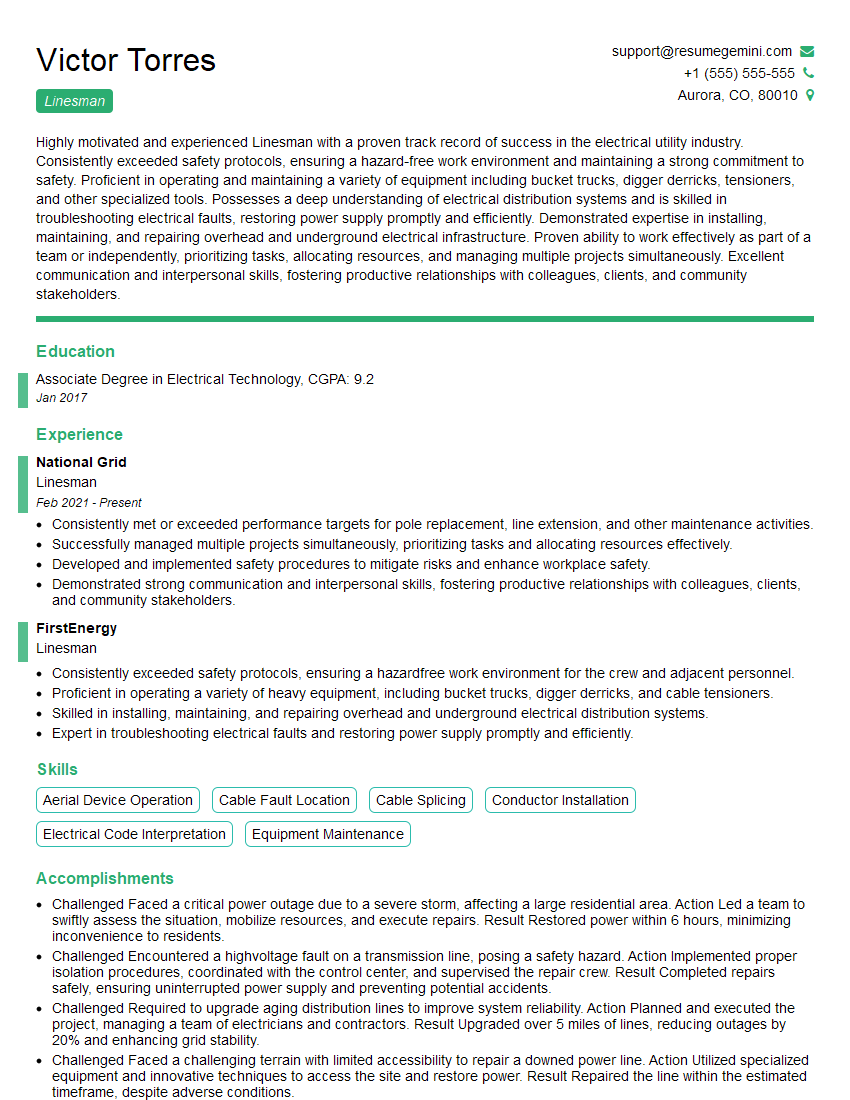
Linesmen in hockey are crucial for offsides and icing calls. They are responsible for patrolling the two side boards throughout the game, tracking the play and enforcing those rules. Imagine them as the referee’s assistants, primarily focusing on off-ice aspects of the game.
Their primary responsibilities include:
- Offsides: Determining whether a player enters the offensive zone before the puck. This requires careful observation of the puck and the players’ positions, often involving split-second judgements.
- Icing: Calling icing, which happens when a player shoots the puck from behind the center red line all the way across the opposing team’s goal line, provided it’s not touched by an attacking player.
- Face-offs: Assisting the referee in conducting face-offs at the start of each period, after goals, and following various stoppages in play.
- Tracking Puck and Players: Keeping a constant eye on the puck and the players, particularly near the blue lines to help call offsides.
Without linesmen efficiently performing their duties, the game could become chaotic, with potential for incorrect calls impacting the outcome of games.
Q 10. Explain the rules surrounding fighting in hockey.
Fighting in hockey is a complex issue. While it’s tolerated to a certain extent, it’s strictly regulated and penalized. The rules aim to prevent serious injury while also acknowledging that, historically, fighting has been a part of the game’s culture (though this acceptance is diminishing).
Key rules surrounding fighting include:
- Initiation: Players who initiate a fight typically receive a major penalty (5 minutes). If the other player retaliates, they usually also receive a major penalty.
- Mutual Combat: If both players participate willingly, a major penalty is typically handed out to both.
- Severity of Penalties: The severity of the penalties can vary depending on the nature of the fight, injuries sustained, and the players’ past disciplinary records. Game misconducts (expulsion from the game) and suspensions (which extend to future games) are frequent outcomes.
- Equipment: Players are not allowed to use their sticks or other equipment as weapons during a fight. That would result in additional penalties.
While fighting remains part of the game, the penalties associated with it aim to discourage excessive or overly violent behavior. The focus is increasingly shifting towards player safety and reducing the prevalence of fighting.
Q 11. Describe the procedure for a power play.
A power play in hockey occurs when a team has a numerical advantage due to an opposing player being sent to the penalty box. The penalized team plays with one less player on the ice (short-handed), allowing the other team a better chance to score.
Here’s the typical procedure:
- Penalty: A player commits a penalty (e.g., tripping, slashing, hooking), resulting in the referee sending them to the penalty box for a specified time (e.g., 2 minutes).
- Power Play: The non-penalized team plays with a full complement of players while the penalized team is shorthanded.
- Game Clock: The game clock continues to run during a power play.
- Power Play Time: The power play lasts for the duration of the penalty (unless a goal is scored, which usually ends it). If the team doesn’t score they continue playing short handed for the rest of the time.
- Offensive Strategy: Teams employ specific power play strategies (set plays), with their offensive players positioned to optimize their chances of scoring.
Power plays are crucial moments in the game, often resulting in critical goals. Teams constantly work on their power play and penalty kill (short-handed) strategies to maximize their chances of success.
Q 12. What are the rules regarding goaltender interference?
Goaltender interference is a penalty called when a player from the attacking team makes contact with the goaltender, interfering with their ability to defend their net while the goalie is in their crease, preventing them from making a save. It’s a rule designed to protect the goalie, who is a vulnerable position in the game.
The rules are complex and often interpreted with judgement by the officials, focusing on whether the contact directly affected the ability to make a save. For example:
- Contact in the Crease: Any contact with the goalie in their crease, even if accidental, can be considered interference depending on the nature of the contact and whether it directly impacts the goalie’s ability to defend the goal. A incidental touch usually isn’t a penalty
- Intentional Contact: Deliberate contact with the goalie is almost always deemed interference and penalized accordingly.
- Impact on Play: Referees consider whether the contact prevented the goalie from making a save. If contact clearly caused the goal to happen it’s a penalty.
The penalty for goalie interference can vary depending on the severity and intent. It can range from a minor penalty to a major penalty or even a game misconduct. The rules ensure that goaltenders are not subjected to unnecessary physical contact or rough play.
Q 13. How is a penalty shot awarded?
A penalty shot is awarded when a player has a clear breakaway opportunity towards the net, and a defending player commits a penalty that prevents a very high likelihood of a goal. It’s a rare but exciting scenario.
Here’s how it typically works:
- Clear Breakaway: A player must have a clear path to the goal without any defenders close enough to make a meaningful play.
- Penalty: A defending player commits a penalty that stops the player’s scoring opportunity, such as tripping, hooking, or slashing.
- Penalty Shot Awarded: The referee awards a penalty shot to the attacking player. This means the offensive player gets a one-on-one attempt against the goaltender, without any other players on the ice. This is much like a shootout attempt.
- Penalty Shot Execution: The player attempts to score a goal in the given attempt. The players usually have a maximum number of attempts. No goalie interference or other penalties are allowed during the attempt.
A penalty shot is awarded to reward the attacking team for a clear scoring opportunity negated by a foul. It’s a significant advantage, offering a high chance of scoring with only the goaltender to defend.
Q 14. Explain the role of the referee in enforcing the rules.
The referee in hockey has the ultimate authority to enforce the rules during a game. They are the primary official on the ice and their job is complex, requiring expertise, good judgement, and the ability to maintain order and fairness.
Their key roles include:
- Interpreting and Enforcing Rules: The referee makes decisions based on interpretations of the rulebook. They must ensure fair play, enforcing penalties when infractions occur.
- Calling Penalties: They identify and penalize infractions, such as tripping, slashing, or fighting. Fairness and consistency are key attributes.
- Managing the Game: They control the flow of the game, addressing stoppages and ensuring the game runs smoothly.
- Goal Judgements: They oversee goals to verify if the puck fully crossed the goal line.
- Interaction with Players: They interact with players to explain penalties, enforce rule adherence, and maintain order.
- Communication with Linesmen: They work closely with the linesmen to ensure consistent enforcement of rules across the ice.
The referee is the keystone of fair play. Their decisions, though sometimes controversial, help ensure a level playing field and the integrity of the sport. Their judgement is paramount, based on an accurate understanding of the rulebook and a commitment to fair play.
Q 15. What constitutes a tripping penalty?
A tripping penalty occurs when a player uses their stick, leg, or body to deliberately impede the progress of an opponent. Imagine a player reaching out with their stick and causing an opponent to lose their balance and fall. That’s a clear tripping infraction.
Key Elements:
- Deliberate action: Accidental contact is not considered tripping. The referee needs to determine intent.
- Impeding progress: The action must significantly hinder the opponent’s ability to move forward or play the puck.
- Using stick, leg, or body: The method of tripping doesn’t limit it to just the stick; a player can also trip using their leg or body.
Penalty: A minor penalty (two minutes).
Example: A defender extends their stick and catches the legs of a forward breaking into the offensive zone. This results in a tripping penalty, regardless of whether the forward falls or not if the referee judges the action as deliberate.
Career Expert Tips:
- Ace those interviews! Prepare effectively by reviewing the Top 50 Most Common Interview Questions on ResumeGemini.
- Navigate your job search with confidence! Explore a wide range of Career Tips on ResumeGemini. Learn about common challenges and recommendations to overcome them.
- Craft the perfect resume! Master the Art of Resume Writing with ResumeGemini’s guide. Showcase your unique qualifications and achievements effectively.
- Don’t miss out on holiday savings! Build your dream resume with ResumeGemini’s ATS optimized templates.
Q 16. Describe the rules regarding boarding.
Boarding is a dangerous penalty that occurs when a player checks an opponent into the boards from behind with forceful contact. The key is the element of surprise and the forceful nature of pushing someone into the boards.
Key Elements:
- From behind: The check must originate from behind the opponent, leaving the opponent unable to protect themselves.
- Forceful contact: A light bump isn’t considered boarding. The contact must be significant enough to cause injury or risk of injury.
- Into the boards: The opponent must be driven into the boards, typically the protective glass surrounding the rink.
Penalty: A major penalty (five minutes) and a game misconduct penalty (automatic ejection from the game).
Example: A player approaches an opponent from behind and delivers a powerful hit sending the opponent directly into the boards. This is a clear-cut boarding penalty, often leading to a game misconduct based on the severity of the hit. Referees watch very closely for this, because it has a high risk of injury.
Q 17. What is the difference between a delay of game and a too many men penalty?
Both delay of game and too many men are penalties, but they stem from different rule violations.
Delay of Game: This penalty occurs when a player deliberately delays the game’s progress. Think of it like stalling. It is designed to prevent the other team from scoring or gaining momentum.
- Intentional actions: Examples include shooting the puck out of the playing area to stop a rush, or deliberately breaking a stick to stop play.
- Penalty: Minor penalty (two minutes).
Too Many Men: This penalty is called when a team has more than the maximum number of players allowed on the ice (typically six, including the goalie). An extra player joins the play on the ice.
- Over the limit: A quick substitution error or a player staying on the ice after a line change can lead to this penalty.
- Penalty: Minor penalty (two minutes).
Key Difference: Delay of game is about manipulating the pace of the game, while too many men is about violating the roster limit on the ice.
Q 18. Explain the rule about playing the puck with a high stick.
Playing the puck with a high stick is a penalty where a player’s stick is above the height of their shoulders when making contact with the puck.
Key Elements:
- Above shoulder height: The most crucial aspect is the height of the stick. It’s not about the intent, but the height of the stick relative to the player’s shoulders.
- Contact with the puck: The penalty is incurred the moment the puck is contacted with a high stick.
Penalty: The penalty varies depending on the circumstances. It can range from a minor penalty to a major penalty, depending on the severity and intent.
Example: If a player reaches high above their shoulders to shoot the puck, it is a high-sticking penalty. The referee will judge where the height of the stick is in relation to the player’s shoulders at the moment of contact with the puck.
Q 19. What are the procedures for handling an injured player on the ice?
When a player is injured on the ice, the referee immediately stops play. The injured player is assisted off the ice by on-ice medical personnel or other players. The game is stopped until the player receives immediate attention and is either removed from the ice or deemed able to continue.
Procedures:
- Immediate stoppage of play: The referee will whistle to stop the game as soon as an injury is evident.
- Medical attention: Trained medical personnel (if available) attend to the injured player on the ice. Otherwise, team trainers rush to the player.
- Removal from the ice: The injured player is carefully removed from the ice, using a stretcher if necessary.
- Game resumption: The referee will assess the situation and restart the game once the injured player is off the ice and appropriate medical attention has been given.
Example: If a player gets a significant cut, the referee stops the game. Medical personnel arrive, tend to the wound, and remove the injured player. Once they are removed from the ice, the game is usually resumed where it left off. Depending on the severity, a game could also be delayed.
Q 20. Describe the process of determining a game misconduct penalty.
A game misconduct penalty is a severe penalty resulting in the automatic ejection of a player from the game. It’s issued for major infractions of the rules or unacceptable behavior.
Determining a Game Misconduct:
Referees determine game misconduct penalties based on factors such as:
- Severity of the infraction: Boarding, fighting, or violent conduct often leads to game misconducts.
- Intent: Deliberate actions that endanger opponents.
- Previous misconduct: Players with a history of misconduct are more likely to receive a game misconduct for lesser infractions.
- Unsportsmanlike conduct: Repeated verbal abuse or taunting towards officials or opponents.
Process: The referee will review the incident and determine if a game misconduct is warranted. Usually, this is a clear decision by the referee based on the violation that occurred, and it is often accompanied by a major penalty or other penalty.
Example: A player delivers a vicious check from behind, resulting in a player injury. The referee likely assesses a game misconduct penalty for boarding in addition to the major penalty.
Q 21. Explain the rules related to equipment violations.
Equipment violations occur when a player’s equipment doesn’t conform to league regulations. This could affect safety or give a player an unfair advantage.
Common Violations:
- Illegal sticks: Sticks that are too long or too curved.
- Improper padding: Missing or inadequate protective equipment like helmets, shoulder pads, elbow pads, gloves, and pants.
- Unsecured equipment: Loose or improperly fastened equipment.
Enforcement: Referees inspect equipment before and during the game. A player found with an equipment violation may be penalized.
Penalties: Usually, a minor penalty (two minutes) and, in some cases, the player may be required to leave the ice and repair the equipment violation.
Example: A player’s stick is too long. The referee will stop the game, order the player off the ice, and measure the stick. If it’s too long, the player receives a minor penalty for equipment violation. They then must either replace their stick or shorten it before returning to play.
Q 22. How are penalties assessed and served?
Penalties in hockey are assessed by referees for infractions of the rules. The type and length of the penalty depend on the severity of the infraction. Penalties range from minor penalties (two minutes), to major penalties (five minutes), to match penalties (game ejection).
Once a penalty is called, the penalized player must serve their penalty in the penalty box. Their team plays shorthanded (with fewer players) for the duration of the penalty. During a power play, the team that wasn’t penalized has a numerical advantage. For example, if a player receives a two-minute minor penalty for tripping, their team will play with one fewer player for those two minutes. Multiple penalties can be served concurrently, leading to longer periods of shorthanded play.
The penalty clock starts immediately after the referee blows the whistle to signal the penalty. The penalty time is served continuously, even if play is stopped for other reasons during that time. If a player is penalized multiple times consecutively, they will serve those penalties back-to-back. If a player commits a penalty after another penalty was already assessed, the referee might elect to give them a more severe penalty.
Q 23. What is the difference between a bench minor and a bench major?
Both bench minors and bench majors are penalties assessed against a team, not a specific player. They’re called when the team, as a whole, commits an infraction.
- Bench Minor: This is a minor penalty, typically lasting two minutes. Common causes include too many players on the ice, delay of game (e.g., covering the puck to stop play), or unsportsmanlike conduct from the bench (coaching staff or players not on the ice).
- Bench Major: This is a more serious penalty, usually lasting five minutes, and can often lead to additional penalties or game misconducts. It often results from more egregious violations of sportsmanship, such as bench-clearing brawls, or actions that endanger the safety of players. Imagine a coach throwing his water bottle at a referee – That is a serious bench penalty.
The key difference lies in the severity of the offense and the resulting penalty time. A bench minor is usually for less severe infractions, whereas a bench major indicates a serious breach of conduct.
Q 24. Describe the role of video review in hockey games.
Video review in hockey is used to help officials make accurate calls on specific game situations. It’s not used to review subjective calls, like whether or not a player was interfered with.
The situations eligible for video review commonly include: goals (was the puck completely over the goal line?), penalties (e.g., checking from behind), and icing (did the puck fully cross the centre red line?). The process involves a designated official reviewing the footage to determine whether the original call was correct. If the replay clearly and conclusively proves the on-ice call wrong, the call is overturned. If the replay is inconclusive, the original call stands.
The use of video review aims to improve the accuracy of officiating and increase fairness in the game. However, it also adds some delay to the game while reviews take place. The available camera angles and quality can influence this decision.
Q 25. How is overtime played in different hockey leagues?
Overtime rules vary significantly between different hockey leagues. Here are a few examples:
- National Hockey League (NHL): A four-on-four sudden-death overtime period is played. The first team to score wins. If there is no goal after a 5-minute overtime period, the game proceeds to a shootout.
- National Collegiate Athletic Association (NCAA): Overtime periods are often five-minute, sudden-death periods at 3-on-3. If there’s still a tie, the overtime periods continue until a team scores.
- Other leagues: Many minor leagues and international leagues employ a variety of sudden death overtime formats ranging from 5 minutes 4-on-4 to 5 minutes 3-on-3, with additional periods if needed. Some use shootouts to determine a winner if no goals occur during overtime.
The variations reflect the different priorities and philosophies of each league. The NHL, for example, prioritizes a quick resolution to games.
Q 26. Explain the rules concerning substitutions.
Substitutions in hockey happen during stoppages in play. A team can make substitutions freely without penalty only when the play has been stopped by the referee. Players may only enter the ice once the puck is completely stopped and the whistle has been blown. Teams cannot make substitutions while the play is active, except in the cases of injured players.
Players exiting the ice must do so before a substitute can enter the ice. If an illegal substitution occurs, a minor penalty is assessed to the offending team. The referee will stop the play and announce the penalty.
A common example of an illegal substitution is a team having too many players on the ice at the same time. The referee will immediately stop play and assess a penalty to the team with too many players. This often results from a miscommunication between players during a quick line change. Teams need to communicate effectively, time their changes precisely and maintain a clear count of players on and off the ice.
Q 27. Describe situations where a player might receive a match penalty.
A match penalty is the most serious penalty in hockey, resulting in immediate ejection from the game. It is given for extremely serious infractions that go beyond simple violations of the rules and that usually demonstrate intent to injure or reckless endangerment.
Common situations that warrant a match penalty include:
- Fighting: While fighting is allowed under certain circumstances, it could result in match penalties, and this is particularly likely if one player clearly initiates a fight, it goes on for too long or injuries are involved.
- Checking from behind: Deliberately checking an opponent from behind, especially if it causes a significant injury, is a common reason for a match penalty.
- Spearing: Intentionally using the stick to poke or jab an opponent below the waist.
- Charging: Penalties for charging are usually less severe, but aggressive actions that could result in serious injuries can trigger a match penalty.
- Boarding: The deliberate and dangerous act of driving an opponent forcefully into the boards and/or resulting in injury.
- Illegal checks to the head: Any check that targets the head could result in a match penalty, depending on the severity and intent.
A match penalty carries significant consequences, often including suspensions for future games depending on the league’s rules.
Q 28. What are the common mistakes made by beginning hockey officials?
Beginning hockey officials often make several common mistakes, primarily due to inexperience and the fast-paced nature of the game. Some frequent errors include:
- Misjudging Offsides and Icing: Accurately judging offsides and icing requires precise timing and observation. New officials may struggle to identify when a player enters the offensive zone before the puck, or when the puck fully crosses the centre line. This requires a great amount of attention, experience, and understanding of the rules.
- Inconsistency in Calling Penalties: Inexperienced officials may call some penalties while missing others, leading to inconsistent gameplay. Maintaining consistent standards is crucial. This is something that only improves with experience and time on the ice.
- Missed Calls or Incorrect Calls: The speed and physicality of the game can make it hard to see everything at once. Officials may miss infractions or make incorrect judgments, particularly in close or fast-paced plays.
- Poor Communication with Other Officials: Good communication among referees is necessary. It ensures consistent interpretations and helps manage game flow. New officials sometimes fail to communicate effectively with their colleagues.
- Poor Game Management: Maintaining control of the game and ensuring fair play requires experience and understanding of when and how to interact with players and coaches. Beginning officials sometimes find it challenging to manage all the things at once.
These mistakes are often addressed through training, experience, and continuous feedback. Consistent practice and mentorship from veteran officials are critical for improvement.
Key Topics to Learn for Hockey Rules and Regulations Interview
- On-Ice Officiating: Understanding the roles and responsibilities of referees and linesmen, including signaling, penalties, and game management.
- Penalties and Infractions: Thorough knowledge of various penalties (e.g., tripping, slashing, hooking, boarding), their severity, and how they impact gameplay. Practical application: Analyzing game situations and correctly identifying infractions.
- Game Procedures: Mastering the rules surrounding face-offs, icing, offsides, and other game procedures. Practical application: Explaining the rationale behind these rules and their impact on strategic gameplay.
- Equipment Regulations: Familiarity with the rules and regulations governing player equipment, including sticks, pads, and helmets, and the implications of non-compliance.
- Rule Interpretations and Judgement Calls: Understanding the nuances of rule interpretation and the subjective nature of certain calls. Practical application: Discussing grey areas in the rulebook and offering reasoned judgements.
- Player Safety and Conduct: Knowledge of rules related to player safety, fighting, and unsportsmanlike conduct. Practical application: Analyzing situations involving player safety and determining appropriate penalties.
- International Ice Hockey Federation (IIHF) Rules: If applicable to the role, a solid understanding of IIHF rules and their differences from other governing bodies’ rules.
Next Steps
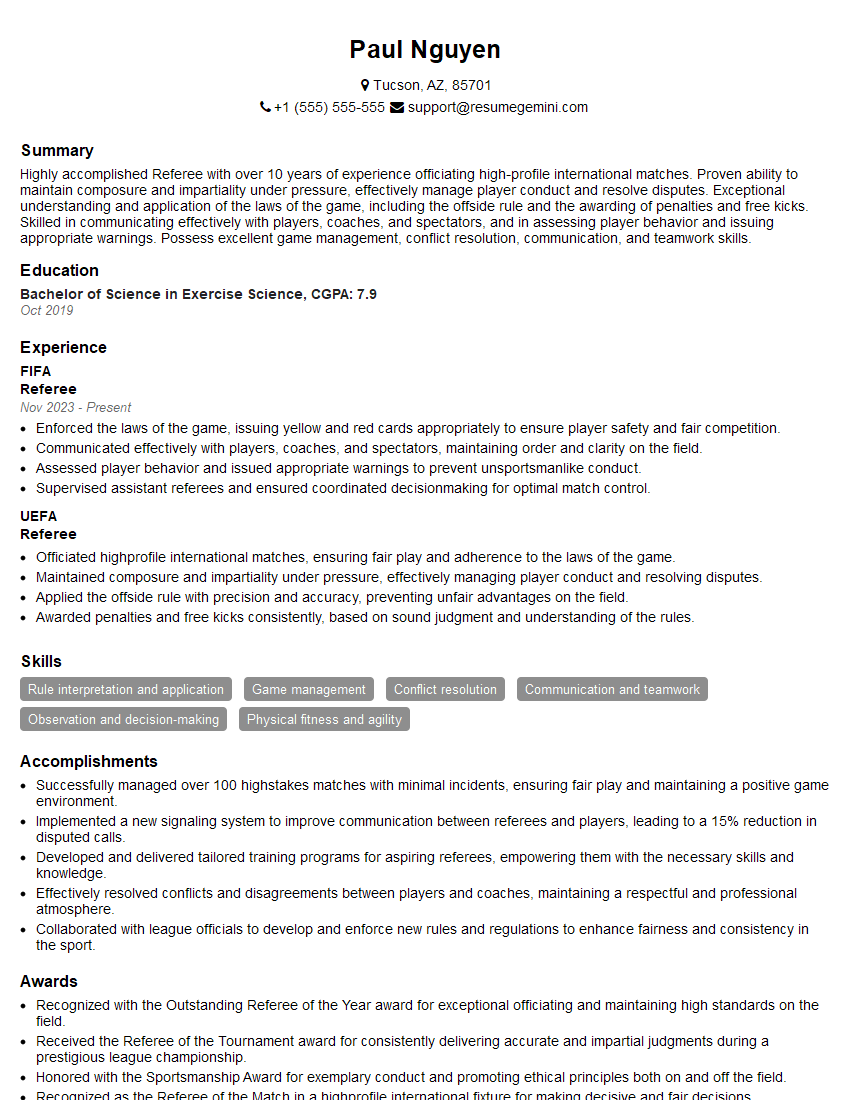
A strong understanding of Hockey Rules and Regulations is crucial for career advancement in officiating, coaching, management, or any role requiring deep knowledge of the game. This expertise demonstrates professionalism, attention to detail, and a commitment to upholding fair play. To maximize your job prospects, it’s essential to present your skills effectively. Creating an ATS-friendly resume is key to getting noticed by recruiters. We strongly encourage you to utilize ResumeGemini, a trusted resource for building professional resumes that highlight your qualifications. ResumeGemini provides examples of resumes tailored to Hockey Rules and Regulations, helping you craft a compelling document that showcases your expertise and lands you that interview.
Explore more articles
Users Rating of Our Blogs
Share Your Experience
We value your feedback! Please rate our content and share your thoughts (optional).
What Readers Say About Our Blog
Very informative content, great job.
good