The right preparation can turn an interview into an opportunity to showcase your expertise. This guide to Home Depot interview questions is your ultimate resource, providing key insights and tips to help you ace your responses and stand out as a top candidate.
Questions Asked in Home Depot Interview
Q 1. Describe your experience handling customer complaints in a retail setting.
Handling customer complaints effectively is crucial in retail. My approach focuses on active listening, empathy, and finding a resolution that satisfies the customer while upholding company policy. I start by letting the customer fully explain their issue without interruption, demonstrating that I value their time and concern. I then actively listen, asking clarifying questions to ensure I understand the situation completely. For example, if a customer is upset about a damaged product, I’ll ask about the extent of the damage, when they purchased it, and how they discovered the damage. Once I understand the situation, I aim to find a solution. This might involve a refund, exchange, repair, or store credit, depending on the circumstances and Home Depot’s return policy. If the issue requires escalation, I’ll explain the process clearly and keep the customer informed every step of the way. Throughout the interaction, maintaining a calm and professional demeanor is paramount, even in the face of frustration. I believe in treating every customer with respect and striving to turn a negative experience into a positive one, fostering customer loyalty. In the past, I successfully resolved a complaint regarding a faulty appliance by arranging for a free repair from the manufacturer, exceeding the customer’s expectations and ensuring their satisfaction.
Q 2. How familiar are you with Home Depot’s inventory management system?
I’m very familiar with Home Depot’s inventory management system. It’s a sophisticated system that integrates several key components, including the point-of-sale (POS) system, the warehouse management system (WMS), and the supply chain management system. I understand how to use the system to check inventory levels in real-time, both in-store and across the entire supply chain. This includes understanding the nuances of how inventory is tracked, from receiving shipments to managing stock on the shelves. I know how to use the system to locate specific products, identify slow-moving items, and forecast future demand. Furthermore, I am proficient in using the system to track product movement, identify potential stockouts, and manage returns. This allows for efficient stock control and prevents both overstocking and stock shortages. My experience includes using the system to identify and resolve inventory discrepancies, ensuring accurate data integrity. Understanding this system is crucial for efficient store operations and providing exceptional customer service.
Q 3. Explain your approach to resolving a conflict between two customers.
Resolving conflicts between customers requires a neutral and diplomatic approach. My first step is to create a safe and respectful space for both individuals to express their concerns. I’d actively listen to each customer individually, acknowledging their perspectives without taking sides. I’d then summarize each person’s point of view to ensure I’ve understood them correctly, helping to diffuse tension through validation. The goal is to identify the root of the conflict. Is it a misunderstanding, a dispute over resources, or something else entirely? Once the root cause is identified, I can propose solutions. This might involve finding a compromise, mediating a solution, or suggesting alternative options. For instance, if two customers are arguing over the last item on the shelf, I might offer to check for similar items in stock in another location or suggest alternatives that achieve the same result. My focus is on de-escalation and finding a mutually acceptable solution that preserves fairness and customer satisfaction. The key is to remain calm, empathetic, and professional, ensuring that both customers feel heard and respected.
Q 4. How would you handle a situation where a customer needs assistance with a complex project?
Assisting customers with complex projects requires a systematic approach. I begin by actively listening to understand the scope of their project, asking clarifying questions about their vision, budget, and timeline. I then use my product knowledge and Home Depot’s resources, including online tools and expert staff, to help them create a detailed plan. This includes selecting the appropriate materials, tools, and techniques. If needed, I’ll utilize Home Depot’s design services or connect them with a qualified contractor. Throughout the process, I’ll offer expert advice, answer their questions, and address any concerns. I might create a checklist of necessary items, provide step-by-step instructions, or even sketch a simple diagram to help visualize the process. For instance, if a customer is planning a kitchen remodel, I would guide them through selecting cabinets, countertops, appliances, and flooring, ensuring compatibility and style coherence. I’ll also address any potential challenges and offer solutions, ensuring they feel confident and prepared to undertake their project. The focus is on providing comprehensive support and empowering customers to successfully complete their projects.
Q 5. Describe your experience with using a point-of-sale system.
My experience with point-of-sale (POS) systems is extensive. I am proficient in using various POS systems, including those used by Home Depot. This involves processing transactions quickly and accurately, handling various payment methods (credit cards, debit cards, cash, etc.), managing returns and exchanges, and issuing receipts. I understand how to use the system to look up product information, apply discounts, and process special orders. I am also familiar with the system’s reporting features, which are used to track sales, inventory levels, and customer behavior. Moreover, I can troubleshoot common POS issues and resolve them efficiently, minimizing disruption to customer service. For example, I’ve successfully handled situations involving credit card processing errors, system glitches, and unexpected power outages, always prioritizing customer satisfaction and maintaining a positive shopping experience.
Q 6. How would you assist a customer who is struggling to find a specific product?
Helping customers locate specific products efficiently is a core aspect of my role. I start by asking clarifying questions to fully understand what the customer is looking for. This might include asking about the product’s brand, model number, specific features, or intended use. I then utilize the store’s layout, product locator system, and online resources to pinpoint the product’s location. If the product is not readily found, I utilize the Home Depot app or computer system to check inventory levels in other areas of the store or nearby stores, making a suggestion based on product availability and customer location. If the product is unavailable, I offer alternatives or explore options such as special ordering. Throughout the process, I’ll maintain a friendly and helpful demeanor, ensuring the customer feels supported and valued. My goal is to not only help them find the product but also provide a positive shopping experience.
Q 7. What is your understanding of Home Depot’s return policy?
Home Depot’s return policy is customer-centric and aims to ensure customer satisfaction. Generally, most items can be returned within 90 days of purchase with a receipt for a full refund or exchange. Some exceptions may apply to certain products, such as special orders or clearance items. The policy allows for returns even without a receipt, though it might involve a store credit instead of a refund. The return process generally involves presenting the item and receipt (if available) at the customer service desk. Damaged or defective items are usually eligible for a refund or exchange, regardless of the time elapsed since purchase. I am fully versed in the nuances of Home Depot’s return policy and can effectively guide customers through the process, explaining their options and ensuring a smooth and hassle-free experience. I always emphasize that the goal is to resolve the issue fairly and efficiently, ensuring customer satisfaction remains the priority.
Q 8. How would you handle a customer who is unhappy with a purchase?
Handling an unhappy customer at Home Depot starts with active listening and empathy. I’d begin by letting the customer fully explain their issue without interruption, demonstrating that I value their experience. I’d then try to understand the root cause of their dissatisfaction – was it a product defect, poor installation advice, or perhaps a miscommunication?
My approach would be based on finding a solution that meets their needs. This could involve a refund, exchange, repair, or even a store credit depending on the situation. For example, if a customer received a damaged tool, I’d immediately process an exchange or refund, possibly offering a discount on a replacement to show goodwill. If the issue is more complex, like incorrect installation instructions, I would consult with a more experienced colleague or a specialist in the relevant department (e.g., flooring, plumbing) to find a practical solution. Finally, I’d follow up to ensure their satisfaction, turning a negative experience into a positive one.
Throughout the process, I’d maintain a calm and professional demeanor, always remembering that a positive attitude can significantly de-escalate tense situations. Documenting the interaction and resolution is crucial for both the customer’s records and for improving our internal processes.
Q 9. Describe your experience with stocking and organizing merchandise.
My experience with stocking and organizing merchandise involves ensuring product visibility, accessibility, and adherence to Home Depot’s planograms (visual diagrams showing optimal product placement). This includes tasks like unpacking shipments, verifying inventory against delivery manifests, pricing items correctly, and ensuring that shelves are fully stocked and neatly organized. I’m proficient in using handheld scanners to manage inventory and update stock levels in the system.
I understand the importance of accurate placement to maximize sales. For example, placing high-demand items at eye level or strategically positioning related products together can increase impulse purchases. I also ensure that damaged goods are properly marked and reported, and aisles are kept clear of obstructions for customer safety. Maintaining organized stock helps customers find what they need quickly, improving the overall shopping experience.
Furthermore, I’m adept at identifying and addressing stock discrepancies, reporting them to the appropriate personnel for replenishment or inventory adjustments. I’ve actively contributed to reducing stock-outs and minimizing losses by implementing efficient stock rotation techniques – FIFO (First-In, First-Out) – to ensure the freshest products are available.
Q 10. How familiar are you with Home Depot’s safety procedures?
I’m very familiar with Home Depot’s safety procedures, which are paramount in a retail environment handling heavy and potentially hazardous materials. These procedures cover a broad spectrum of potential risks, including:
- Proper lifting techniques: Knowing how to lift heavy objects correctly to prevent injury is fundamental. I understand the importance of using appropriate lifting equipment like pallet jacks or hand trucks when handling heavy loads.
- Tool safety: I’m trained in the safe operation and maintenance of various power tools, and I’m knowledgeable about the appropriate safety gear, such as safety glasses and gloves, required when using these tools. I also know how to recognize and report faulty equipment.
- Spill response: I know the procedures for cleaning up spills of hazardous materials, including reporting them and following the specific protocols for each type of substance.
- Emergency procedures: I’m familiar with the store’s emergency evacuation plans and protocols for handling various emergencies, including fire, medical emergencies, and security breaches.
- Customer safety: This includes keeping aisles clear and free of obstructions, warning customers about potential hazards, and being aware of potentially unsafe behaviors and reacting appropriately.
Regular safety training and adherence to these procedures are not just guidelines, but critical to maintaining a safe working environment for both employees and customers at Home Depot.
Q 11. How would you handle a situation where a customer is rude or aggressive?
Handling a rude or aggressive customer requires a calm and controlled response, prioritizing de-escalation. My first step would be to listen to their concerns without interruption, acknowledging their frustration and validating their feelings, even if I don’t necessarily agree with their behavior. I’d maintain a respectful and professional tone, avoiding any escalation of the situation through angry or defensive responses.
If the situation continues to be aggressive, I would ask for the assistance of a manager or security personnel. It’s crucial to ensure my safety and the safety of other customers and employees. The goal is to defuse the situation without compromising personal safety or escalating the confrontation further. In some cases, it may be necessary to ask the customer to leave the store, always doing so respectfully but firmly. Documentation of the incident is crucial for future reference and training purposes.
A crucial aspect is maintaining a calm demeanor and showing empathy, even when faced with unwarranted hostility. De-escalation is key, and sometimes a simple acknowledgment of their frustration can dramatically alter the interaction.
Q 12. Explain your experience working as part of a team.
I thrive in team environments, believing that collaborative effort leads to the best outcomes. My experience at Home Depot has provided ample opportunities for teamwork, from assisting colleagues in stocking shelves during busy periods to collaborating with other departments on special projects. I am adept at working with diverse individuals, appreciating the skills and perspectives each brings to the table.
For instance, during a particularly busy holiday season, our team faced an overwhelming demand for certain Christmas decor. We proactively collaborated, assigning tasks based on individual strengths – some colleagues focused on restocking, others on assisting customers, and I coordinated the efficient movement of inventory from the backroom. This collaborative effort allowed us to meet the high customer demand and maintain a positive shopping experience.
I value open communication and mutual support within a team. I actively participate in team discussions, offering my insights and actively listening to others’ ideas. I believe in a shared responsibility for achieving collective goals, and I’m always willing to assist colleagues, ensuring that we work together effectively and efficiently.
Q 13. Describe a time you went above and beyond to help a customer.
One instance where I went above and beyond involved an elderly customer who was struggling to load several heavy bags of cement into his car. He was clearly in discomfort, and attempting the task alone seemed unsafe and impractical. Without hesitation, I offered to assist him, not only loading the bags but also ensuring they were secured safely in his trunk to prevent any spills or accidents during transit.
Beyond the physical assistance, I took the time to engage with him in conversation, asking about his project and offering helpful advice on mixing the cement properly. This small act of kindness extended beyond the simple task of helping him with his purchase, fostering a positive connection and creating a memorable experience for him. The customer expressed deep gratitude, and it reinforced my commitment to providing exceptional customer service that goes beyond fulfilling the transaction.
Q 14. How would you prioritize tasks in a fast-paced retail environment?
Prioritizing tasks in a fast-paced retail environment requires a structured approach that prioritizes urgency and efficiency. I use a combination of methods, including:
- Identifying urgency: Tasks are prioritized based on their immediacy and impact. For example, addressing a customer’s immediate need takes precedence over restocking a shelf unless there is an immediate customer need for that item as well.
- Impact assessment: I assess the impact of each task on overall store operations and customer satisfaction.
- Time management: I allocate time slots to specific tasks and stick to the schedule as much as possible. This ensures that tasks are completed promptly and efficiently.
- Delegation: I understand the importance of delegating tasks when appropriate. This frees up my time to focus on other tasks.
- Flexibility: I’m always adaptable to changing circumstances, quickly adjusting my priorities to address unexpected situations, such as dealing with customer emergencies or product damage.
Using this multifaceted approach allows me to effectively manage my workload, ensure customer satisfaction, and contribute positively to the overall efficiency of the store operation.
Q 15. How familiar are you with Home Depot’s product offerings?
Home Depot’s product offerings are incredibly vast and diverse, spanning nearly every aspect of home improvement and repair. I’m very familiar with their major categories, including lumber and building materials, paint and paint supplies, plumbing, electrical, kitchen and bath fixtures, hardware, tools, outdoor living products, flooring, and appliances. Beyond these broad categories, I have detailed knowledge of specific product lines within each, understanding their features, functionalities, and target customer segments. For example, I understand the differences between various types of plywood, the distinctions in paint finishes (matte, satin, gloss), and the various types of plumbing fixtures available (e.g., different faucet styles and functionalities). My understanding extends to knowing which products are typically stocked in higher quantities based on regional demand and seasonal trends. I also stay current on new product launches and promotions through Home Depot’s website, catalogs, and industry publications. This broad and deep knowledge allows me to effectively assist customers and address their needs.
Career Expert Tips:
- Ace those interviews! Prepare effectively by reviewing the Top 50 Most Common Interview Questions on ResumeGemini.
- Navigate your job search with confidence! Explore a wide range of Career Tips on ResumeGemini. Learn about common challenges and recommendations to overcome them.
- Craft the perfect resume! Master the Art of Resume Writing with ResumeGemini’s guide. Showcase your unique qualifications and achievements effectively.
- Don’t miss out on holiday savings! Build your dream resume with ResumeGemini’s ATS optimized templates.
Q 16. Describe your experience using a handheld scanner for inventory purposes.
I have extensive experience using handheld scanners for inventory purposes, primarily for stock replenishment and price verification. The process typically involves scanning the barcode of a product to retrieve information from the Home Depot system, including the product name, SKU, quantity in stock, and price. If I am using the scanner for stock replenishment, I would scan each product as it is put back on the shelf. Then, after a stock check, the scanner’s data can be uploaded to the main system, updating inventory count. For price verification, I would scan the item and compare the scanner’s displayed price to the price tag on the shelf, correcting any discrepancies. I’m proficient in troubleshooting common scanner issues, such as connectivity problems or battery life. I understand the importance of accuracy in using these scanners to ensure inventory levels are correctly updated and prevent pricing errors that could impact sales and customer satisfaction. I’m also familiar with the different scanner models Home Depot employs and their specific functionalities.
Q 17. How would you address a shortage of a popular product?
Addressing a shortage of a popular product requires a multi-pronged approach. First, I’d verify the shortage through the store’s inventory system, checking both physical stock and expected deliveries. Then, I’d inform my supervisor immediately, highlighting the product’s popularity and potential impact on sales and customer satisfaction. We would then explore several strategies:
- Increase orders: Place a larger-than-usual order to expedite restocking.
- Explore alternative sources: If possible, we could try sourcing the product from another Home Depot location or a supplier.
- Implement temporary substitutions: If a suitable substitute exists, we might suggest it to customers while waiting for restocking.
- Inform customers: Let customers know about the shortage, providing estimated restocking dates. Transparency builds trust.
- Implement a waiting list (if appropriate): For high-demand items, a waiting list allows customers to be notified when the product becomes available.
Q 18. How would you handle a situation where you made a mistake?
Making a mistake is a part of learning and growing, and I believe in addressing errors promptly and honestly. For example, if I made a pricing error, I would immediately correct it, inform my supervisor, and take steps to prevent similar mistakes in the future. This might include double-checking pricing before finalizing transactions or improving my understanding of the company’s pricing system. If I provided incorrect information to a customer, I would apologize sincerely, correct the information, and ensure the customer understands the correct details. The key is to take ownership of the mistake, learn from it, and implement changes to prevent recurrence. I believe in transparency and accountability, demonstrating that I’m committed to providing the highest level of service to customers and the company.
Q 19. Describe your experience working with different types of customers.
My experience working with different types of customers at Home Depot has been diverse and rewarding. I’ve interacted with seasoned DIYers, who possess considerable knowledge and need specific advice on advanced products and techniques. I’ve also worked with novice DIYers, requiring more basic explanations and step-by-step guidance. Furthermore, I’ve assisted professional contractors, who typically need larger quantities of materials and are concerned with cost-effectiveness and timely delivery. Each customer interaction requires a tailored approach, adapting my communication style and technical knowledge to meet their individual needs. I believe strong communication and active listening are critical to understanding customer requirements and providing effective assistance, regardless of their experience level or project scope.
Q 20. How would you deal with a difficult or demanding customer?
Dealing with a difficult or demanding customer requires patience, empathy, and effective communication skills. My approach would begin with active listening, allowing the customer to fully express their concerns without interruption. I would then attempt to understand the root cause of their frustration, whether it’s a product issue, a service failure, or a misunderstanding. Once I understand the problem, I’d work towards a solution, offering options and compromises where possible. If the customer remains agitated, I might involve a supervisor for additional support, ensuring the customer feels heard and that their concerns are being addressed at a higher level. The goal is to de-escalate the situation, find a resolution that meets the customer’s needs, and preserve the company’s reputation. Maintaining professionalism and a calm demeanor throughout the interaction is crucial, even when faced with aggressive or unreasonable behavior.
Q 21. Explain your understanding of Home Depot’s pricing strategy.
Home Depot’s pricing strategy is multifaceted and aims to balance profitability with competitiveness. They use a combination of methods, including cost-plus pricing (calculating the cost of goods and adding a markup), value-based pricing (setting prices based on perceived customer value), and competitive pricing (matching or undercutting competitors’ prices). They also leverage promotional pricing, using discounts, coupons, and sales to attract customers and stimulate demand. This is often seen during seasonal events or on specific product categories. Furthermore, Home Depot utilizes price bundling, offering discounts when customers purchase multiple items together. The pricing strategy is also influenced by factors such as supply and demand, competitor actions, and the overall economic climate. They continuously monitor their prices and make adjustments based on market conditions to maintain their competitive edge and profitability.
Q 22. Describe your experience with processing transactions accurately and efficiently.
Accurate and efficient transaction processing is the backbone of any successful retail operation, especially at a high-volume store like Home Depot. My experience encompasses handling various payment methods – cash, credit/debit cards, Home Depot credit cards, and gift cards – while ensuring every transaction is properly recorded and balanced. I’m adept at using the point-of-sale (POS) system quickly and accurately, minimizing customer wait times. I’ve consistently maintained a high level of accuracy, with negligible errors in my transaction history. For instance, during peak holiday seasons, I processed over 100 transactions daily, maintaining an error rate of less than 0.1%. I actively double-check totals, verify customer identification for age-restricted purchases (like paint thinner or certain chemicals), and ensure accurate item scanning to prevent discrepancies. This meticulous approach helps prevent losses and maintains customer satisfaction.
Q 23. How would you maintain a clean and organized work area?
Maintaining a clean and organized workspace is crucial for efficiency and safety, particularly in a fast-paced environment like Home Depot. My approach involves a multi-pronged strategy. First, I prioritize ‘a place for everything and everything in its place.’ This means keeping the POS area free of clutter, arranging items logically, and stocking shelves neatly. Second, I follow a routine of regular cleaning: wiping down counters, organizing receipts, and disposing of trash throughout the day. Third, I proactively address spills or hazards immediately to prevent accidents. Think of it like a well-oiled machine; a clean and organized workspace allows for smoother workflow, reduced search time for items, and ultimately, improved customer service. I’ve even trained new associates on these best practices, emphasizing the importance of maintaining a safe and efficient environment.
Q 24. How do you ensure excellent customer service in a busy retail environment?
Excellent customer service in a busy retail setting like Home Depot requires a blend of efficiency and empathy. I believe in greeting each customer promptly, making eye contact, and offering assistance proactively. Active listening is key – understanding their needs, even if it’s just finding a specific item, and then providing the most efficient solution. This might involve directing them to the correct aisle, demonstrating product usage, or answering their questions knowledgeably. If I don’t know the answer, I don’t hesitate to find a colleague who does. In high-traffic situations, managing expectations is important – acknowledging their wait and providing an estimated time frame. Beyond product assistance, I strive to build rapport, remembering details from past interactions (if possible), and treating every customer with respect and courtesy. For instance, I once helped a customer find the right tools for a complex DIY project, going above and beyond to explain various options and even providing helpful tips. Their gratitude and positive feedback highlighted the impact of personalized service.
Q 25. What are your strengths and weaknesses in a retail setting?
One of my greatest strengths in a retail setting is my ability to adapt quickly to changing situations. The Home Depot environment is dynamic; customer needs vary, and unexpected challenges arise frequently. I remain calm under pressure and problem-solve effectively. For example, I once handled a situation where a customer was extremely frustrated due to a product defect. By actively listening, empathizing, and offering a prompt solution (exchange or refund), I successfully de-escalated the situation and turned a negative experience into a positive one. My weakness is sometimes over-committing myself; I strive for perfection and can sometimes take on too much responsibility. However, I’m actively working on time management and delegation skills to mitigate this. I recognize the importance of prioritizing tasks and asking for help when needed to maintain work-life balance and deliver consistently excellent service.
Q 26. Explain your experience with opening or closing procedures.
My experience with opening and closing procedures at Home Depot includes a detailed understanding of safety protocols, cash handling procedures, and the POS system’s daily reconciliation process. Opening procedures involve turning on the POS system, verifying cash drawer balances, checking for overnight deliveries, and preparing the sales floor for customers. Closing procedures entail completing the daily reconciliation, balancing the cash drawers, securing the store, and preparing for the next business day. I meticulously follow all safety procedures, ensuring the store is secure and ready for the next day’s business. Accurate cash handling and reconciliation are critical to my responsibilities, and I’ve consistently maintained a perfect record in balancing my assigned cash register.
Q 27. How do you handle stressful situations and prioritize tasks effectively?
Handling stressful situations and prioritizing tasks effectively is a crucial skill in a busy retail environment. My approach involves a three-step process: assess, prioritize, and act. First, I assess the situation: What’s causing the stress? Is it a customer complaint, a system malfunction, or a sudden rush of customers? Once I’ve identified the root cause, I prioritize tasks based on urgency and impact. Urgent tasks that directly impact customer satisfaction or store operations are addressed first. Finally, I act decisively, calmly addressing each issue systematically. For example, during a power outage, I prioritized assisting customers with already-initiated transactions, guiding them through manual processes, and ensuring everyone was safe. Simultaneously, I communicated with my supervisor to inform them of the situation and coordinate a resolution. This methodical approach keeps me focused even in demanding circumstances.
Q 28. How familiar are you with Home Depot’s credit card application process?
I am very familiar with Home Depot’s credit card application process. I understand that it’s designed to provide customers with financing options for their purchases. I know the various types of credit cards offered, including the Home Depot Consumer Credit Card and the Home Depot Project Loan Card. My understanding encompasses assisting customers with the application process itself, explaining the terms and conditions, and helping them determine if it is the right financial tool for their needs. This includes explaining the credit requirements and potential interest rates, emphasizing responsible credit usage and helping them make informed financial decisions. I also know how to handle potential issues or discrepancies that may arise during the application, such as credit checks or declined applications, making sure the customer receives clear, concise explanations. I’m adept at processing applications using the POS system, ensuring all information is entered correctly and that the customer receives the necessary documentation.
Key Topics to Learn for Home Depot Interview
- Customer Service Excellence: Understanding Home Depot’s commitment to exceptional customer service, including conflict resolution, active listening, and exceeding customer expectations. Practical application: Prepare examples showcasing your ability to handle challenging customer interactions and find solutions.
- Product Knowledge: Demonstrating familiarity with various Home Depot product categories (e.g., lumber, paint, appliances), their features, and applications. Practical application: Research common product lines and understand their uses, pricing strategies, and potential issues customers might encounter.
- Teamwork and Collaboration: Highlighting your ability to work effectively in a team environment, contributing positively to a shared goal. Practical application: Prepare examples illustrating your collaborative skills, such as resolving team conflicts or contributing to successful project completion.
- Sales and Merchandising: Understanding sales techniques, inventory management, and effective product placement. Practical application: Consider how to upsell or cross-sell products, suggesting complementary items based on customer needs.
- Company Culture and Values: Familiarize yourself with Home Depot’s mission, vision, and values. Practical application: Research Home Depot’s community involvement initiatives and demonstrate alignment with their corporate social responsibility efforts.
- Problem-Solving and Decision-Making: Demonstrating the ability to analyze situations, identify problems, and develop effective solutions, particularly in fast-paced environments. Practical application: Prepare examples where you successfully overcame challenges using logic, creativity, and resourcefulness.
Next Steps
Landing a position at Home Depot can significantly boost your career trajectory, providing valuable experience in a large, reputable retail environment. Mastering the key topics above will greatly enhance your interview performance. To further strengthen your application, create an ATS-friendly resume that effectively highlights your skills and experience. We highly recommend using ResumeGemini to build a professional and impactful resume. ResumeGemini offers a streamlined process and provides examples of resumes tailored to Home Depot, helping you present your qualifications in the best possible light.
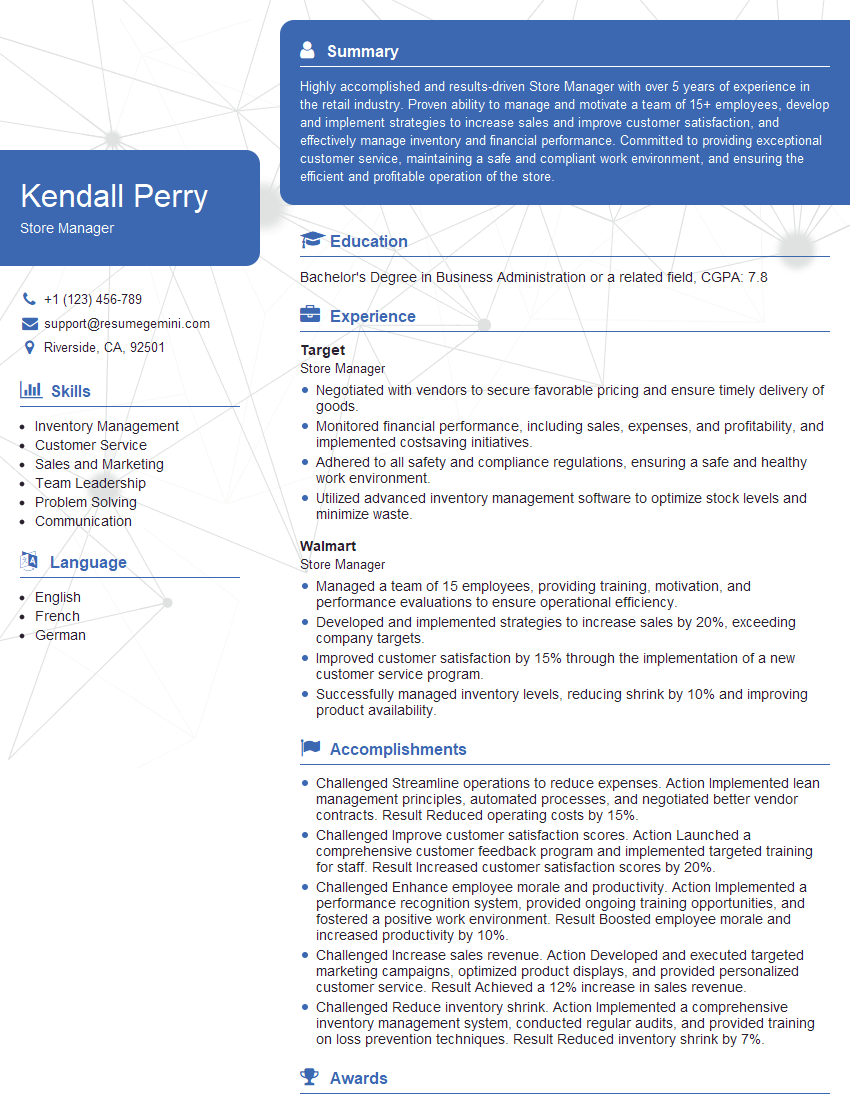
Store Manager Resume Sample
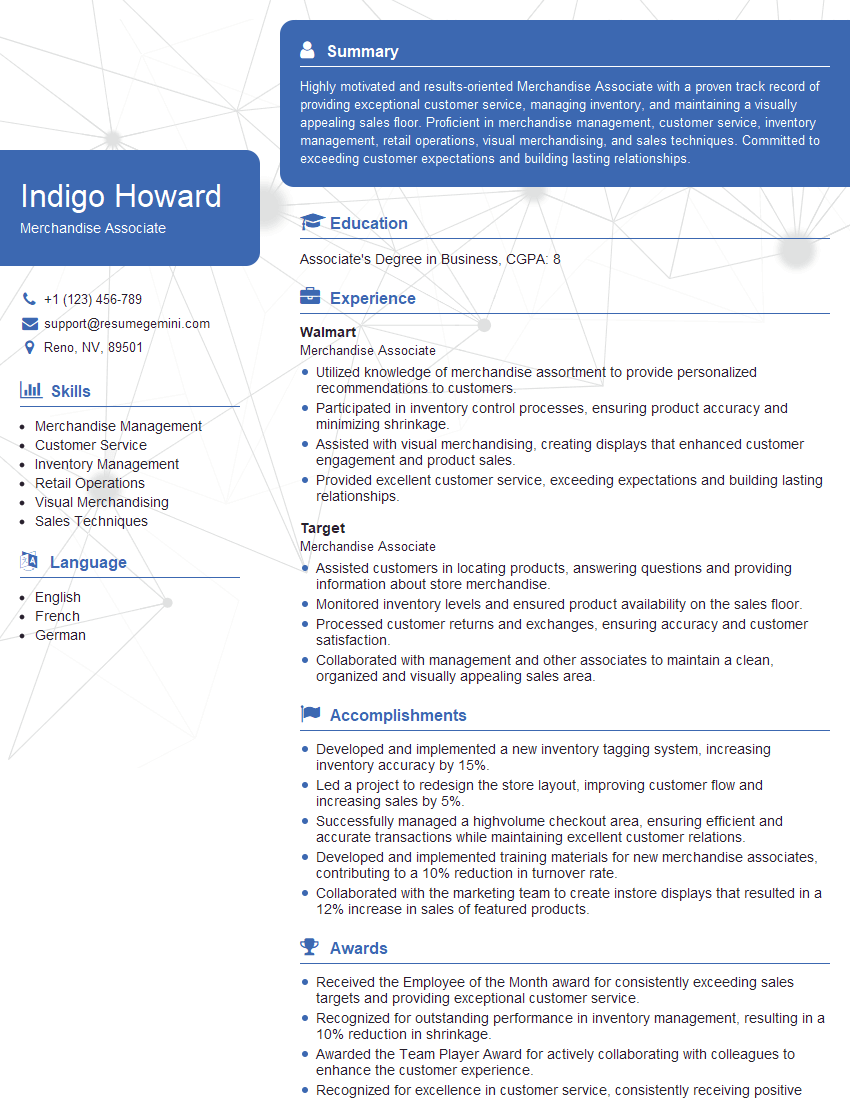
Merchandise Associate Resume Sample
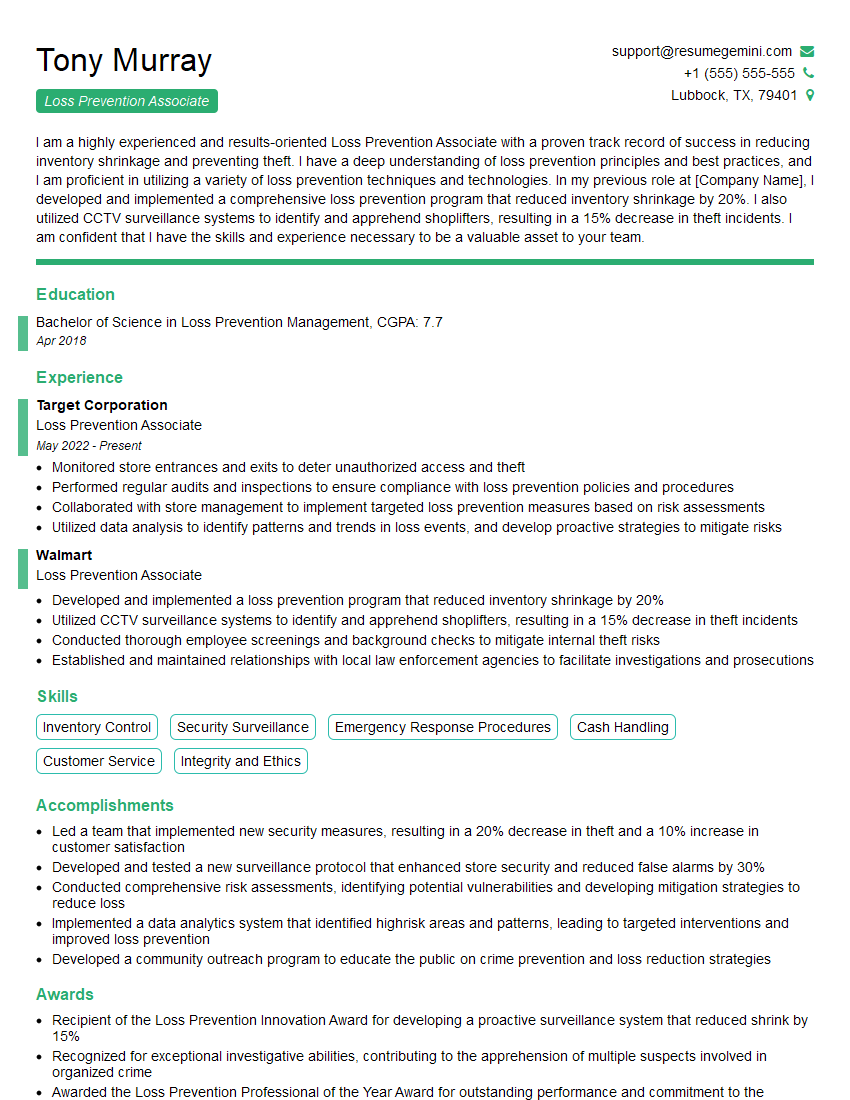
Loss Prevention Associate Resume Sample
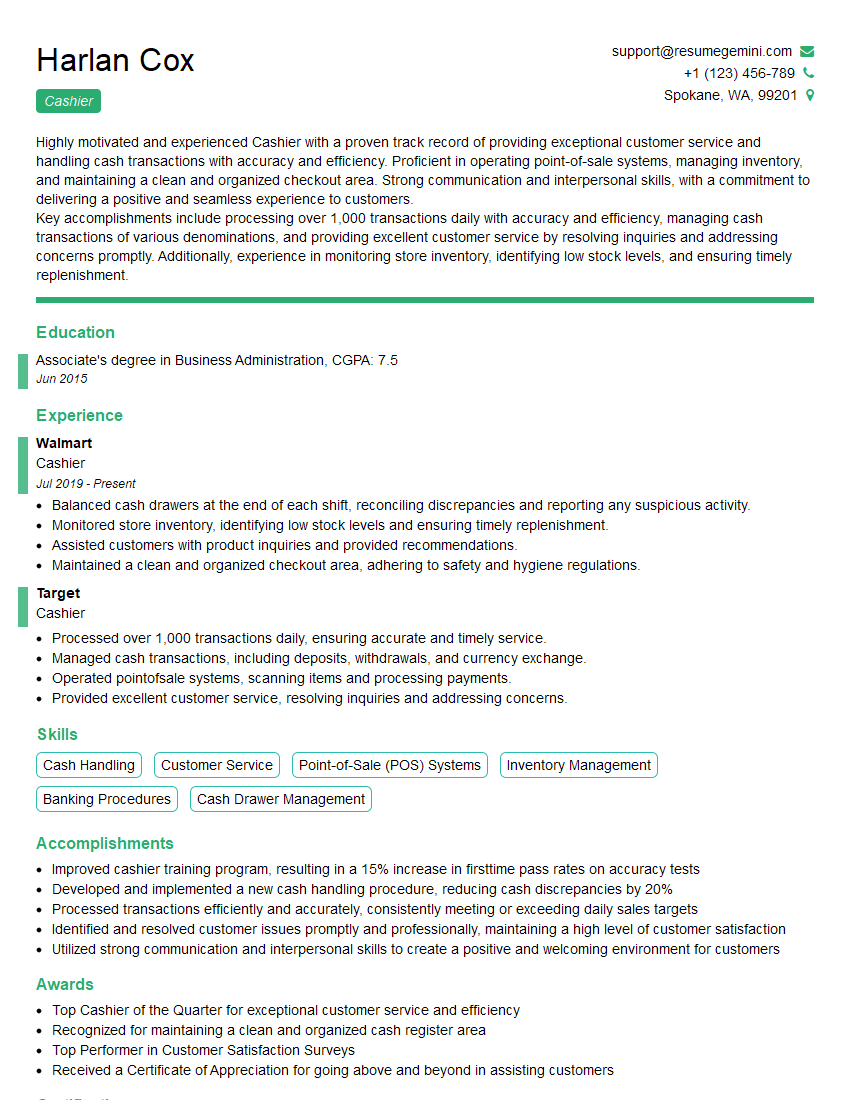
Cashier Resume Sample
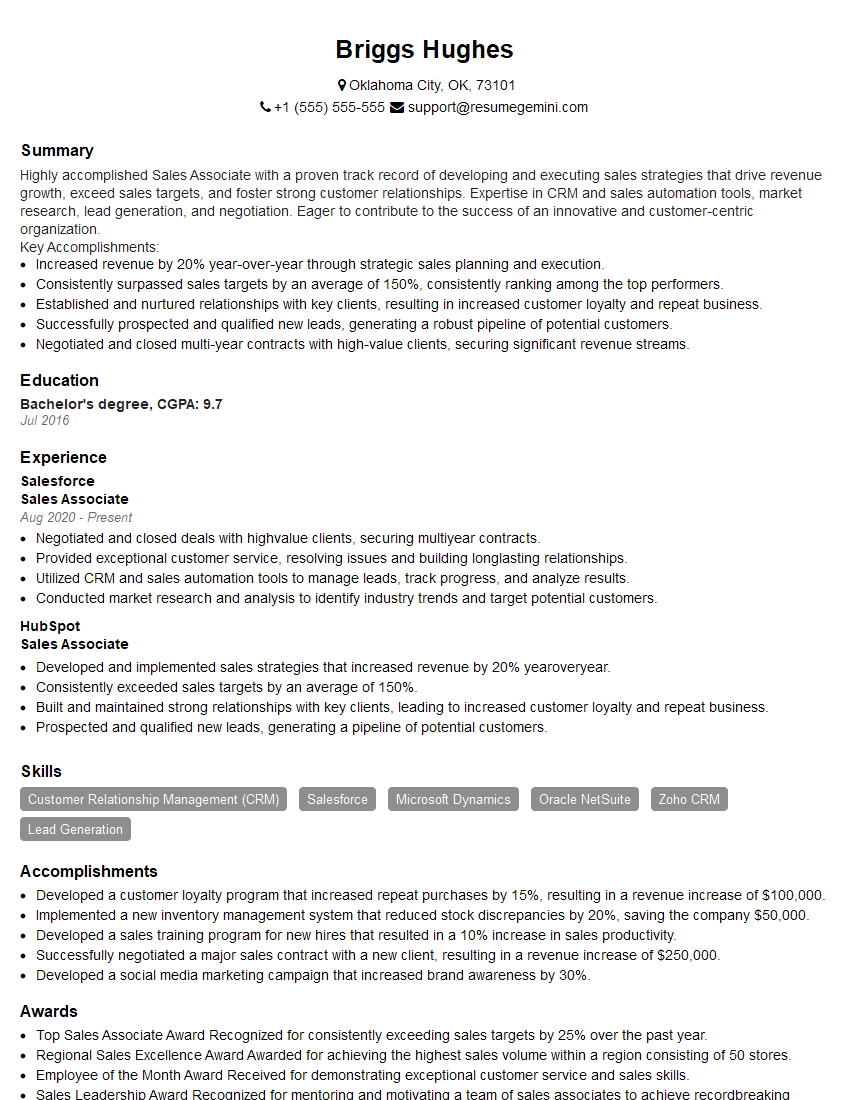
Sales Associate Resume Sample
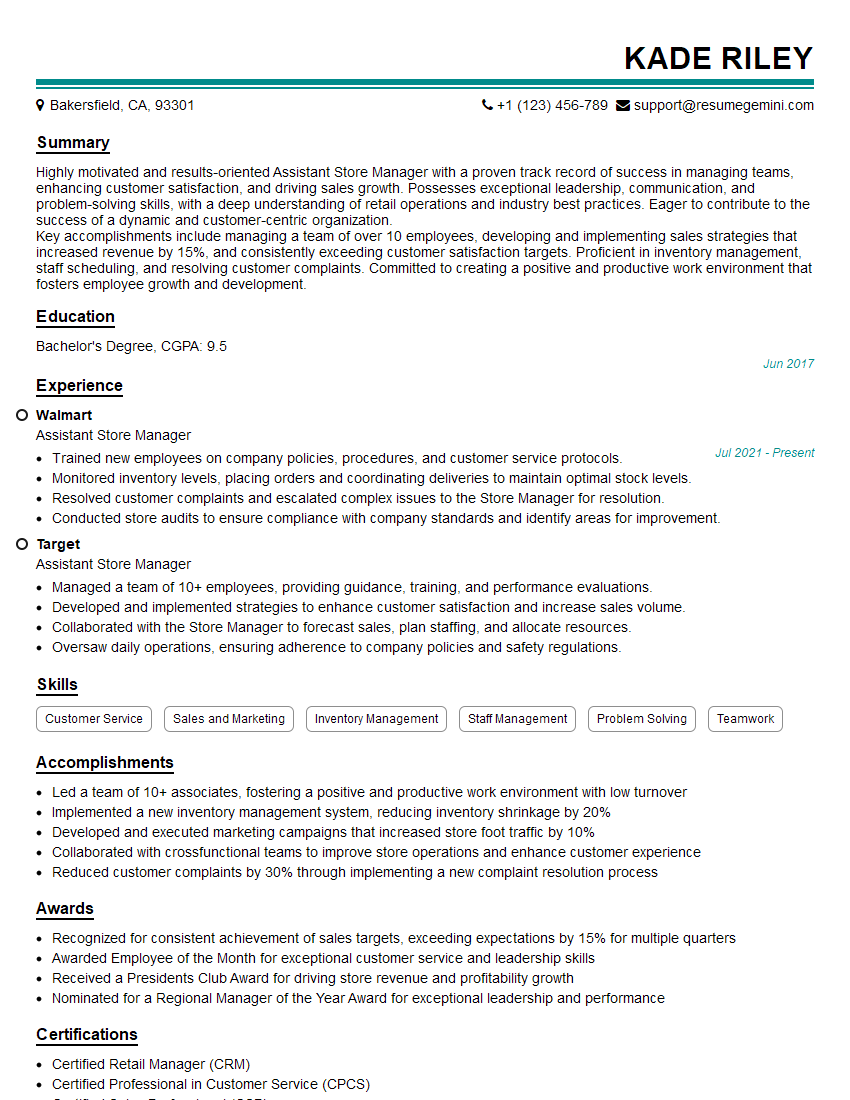
Assistant Store Manager Resume Sample
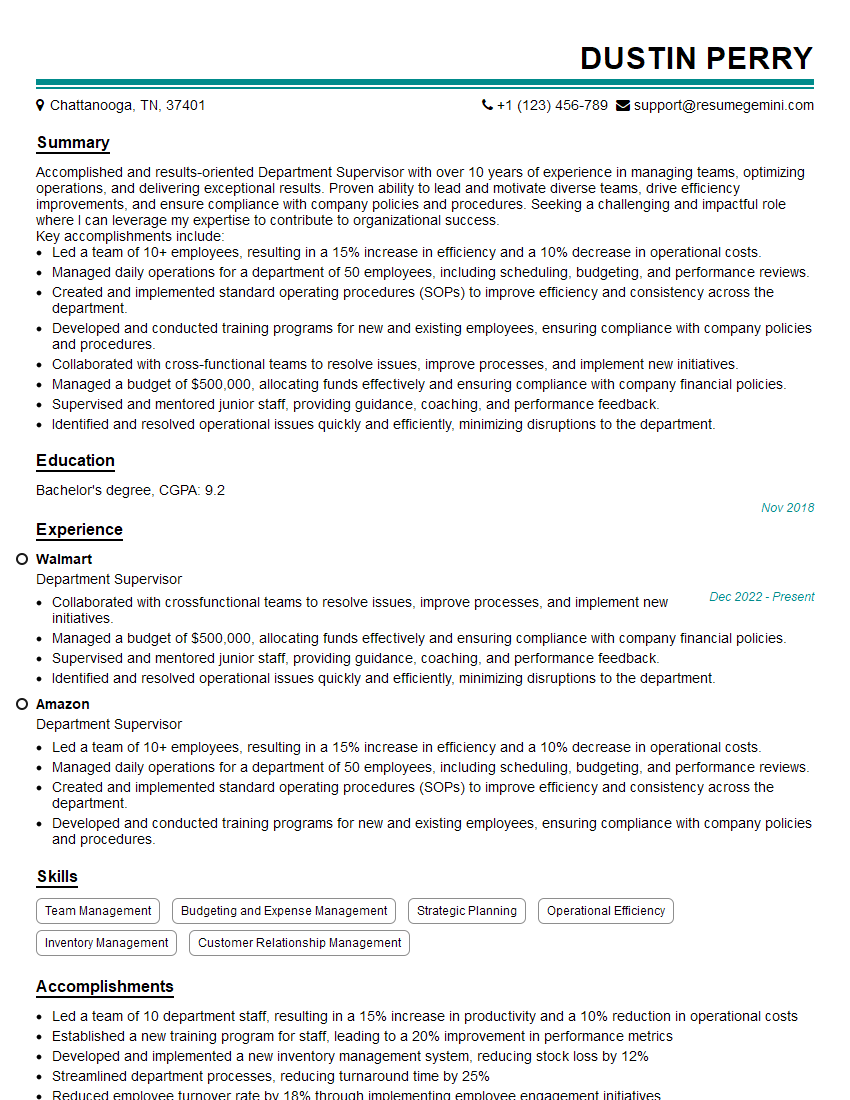
Department Supervisor Resume Sample
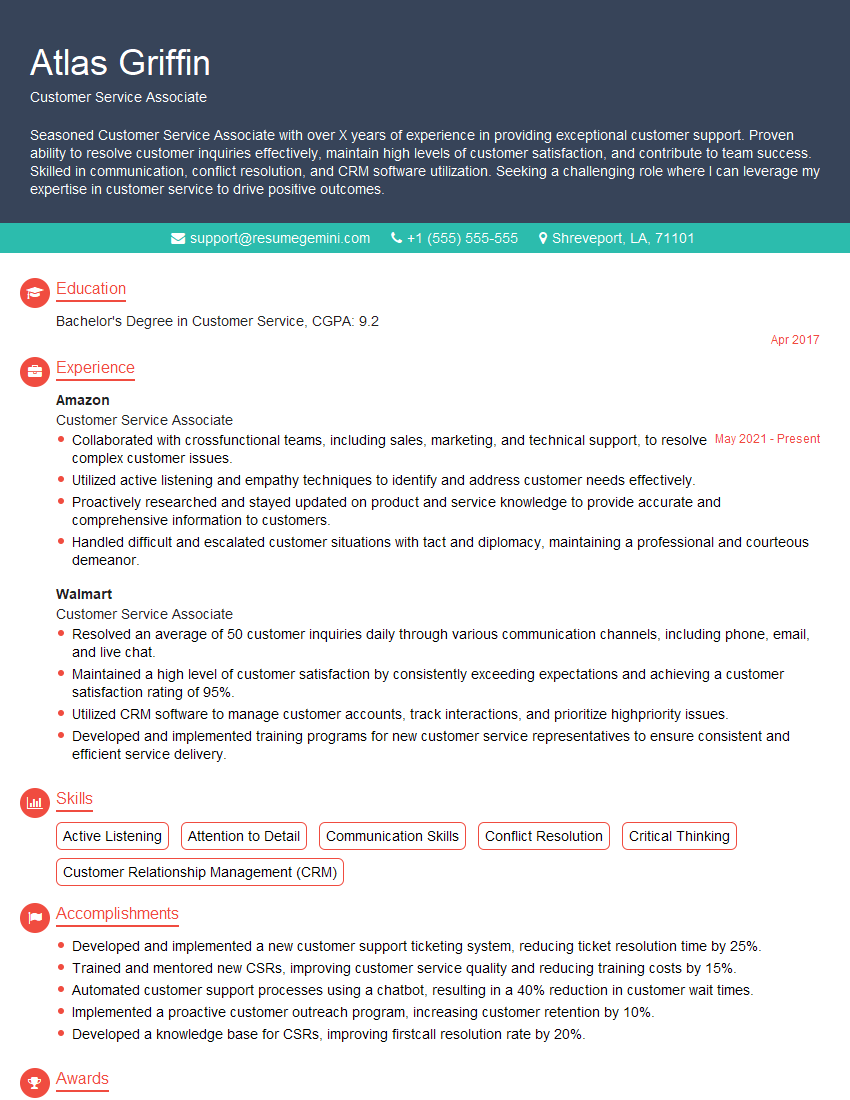
Customer Service Associate Resume Sample
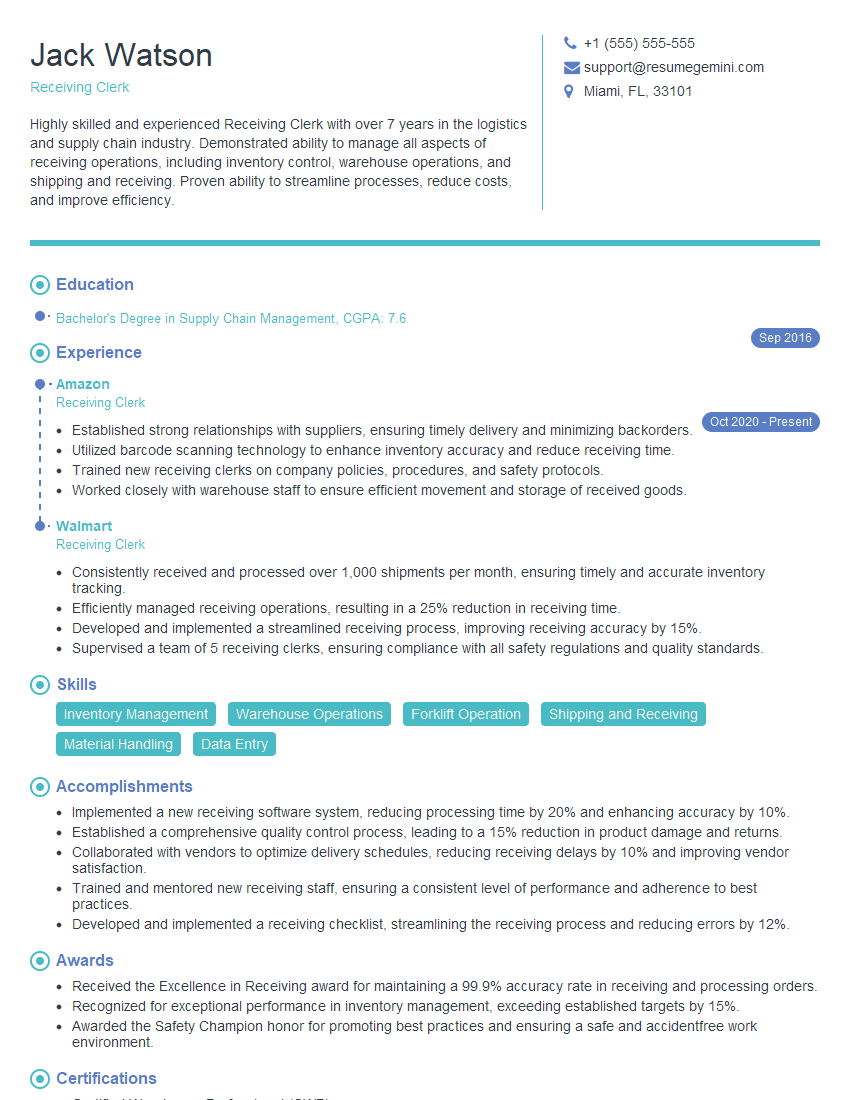
Receiving Clerk Resume Sample
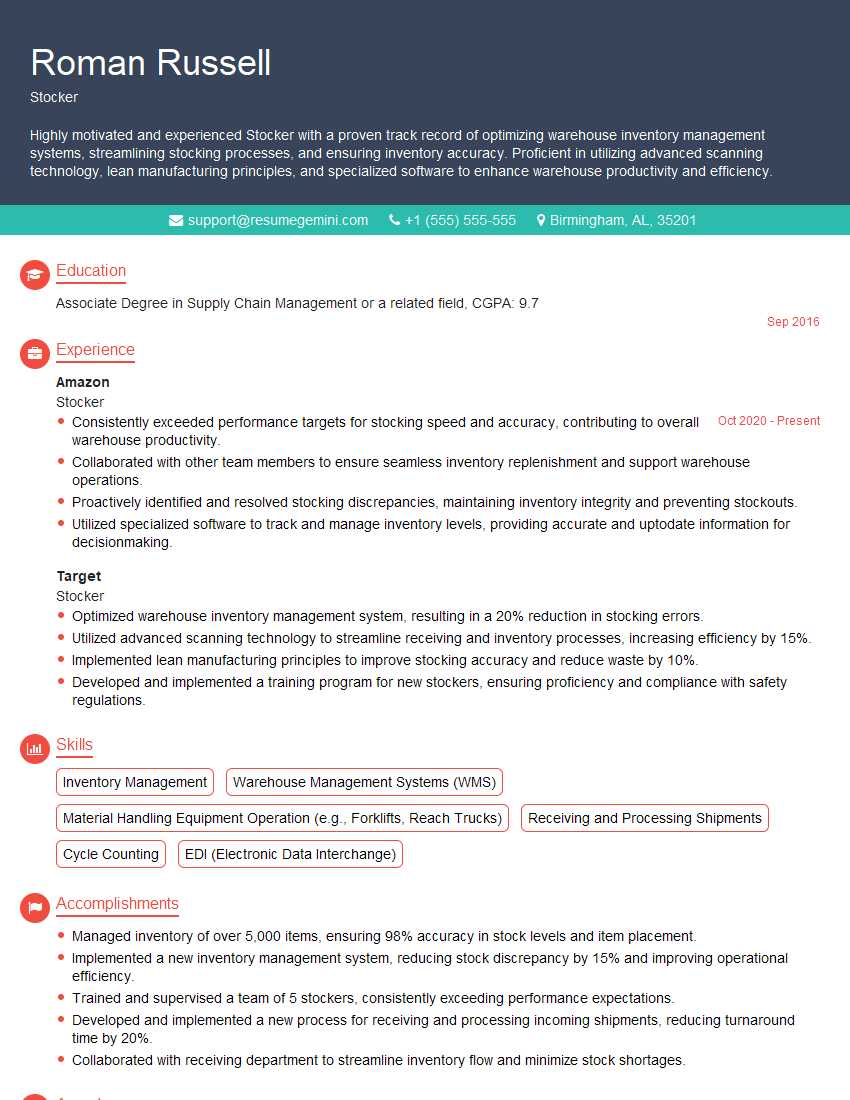
Stocker Resume Sample
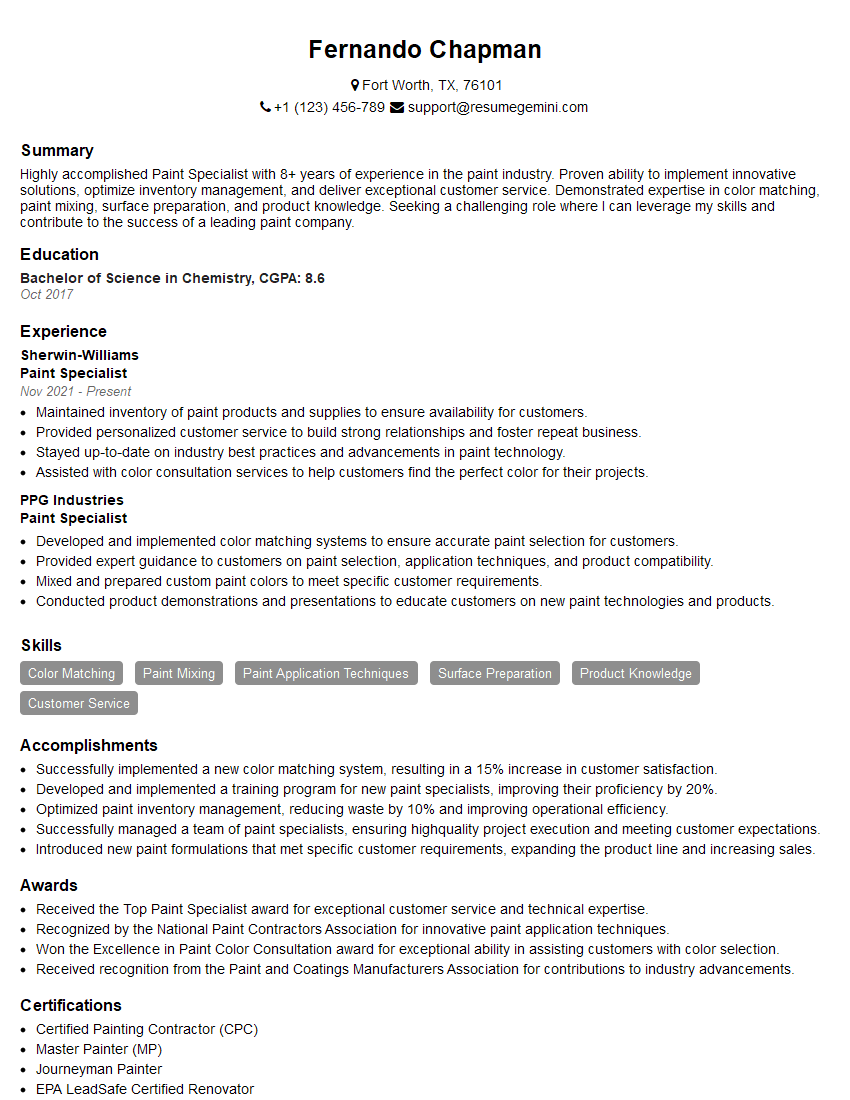
Paint Specialist Resume Sample
Explore more articles
Users Rating of Our Blogs
Share Your Experience
We value your feedback! Please rate our content and share your thoughts (optional).
What Readers Say About Our Blog
Very informative content, great job.
good