Every successful interview starts with knowing what to expect. In this blog, we’ll take you through the top Horse Training and Development interview questions, breaking them down with expert tips to help you deliver impactful answers. Step into your next interview fully prepared and ready to succeed.
Questions Asked in Horse Training and Development Interview
Q 1. Describe your experience with different horse training methods (e.g., classical, natural horsemanship).
My experience encompasses a broad range of horse training methods, allowing me to tailor my approach to each horse’s individual needs and temperament. I’m proficient in both classical dressage techniques, emphasizing precision and refinement through systematic exercises, and natural horsemanship methods, focusing on building trust and understanding through communication and positive reinforcement.
Classical dressage, for example, involves meticulously developing the horse’s physical and mental capabilities through specific movements like lateral work and collection. It’s a highly structured approach, requiring patience and consistent application. Conversely, natural horsemanship prioritizes the horse’s natural instincts and uses techniques like groundwork and body language to establish a strong, cooperative relationship. I often integrate elements from both approaches, creating a bespoke training plan that leverages the strengths of each.
For instance, I might use classical dressage exercises to improve a horse’s balance and suppleness, while employing natural horsemanship techniques to build confidence and address any anxieties the horse may have during training.
Q 2. How do you identify and address behavioral problems in horses?
Identifying and addressing behavioral problems requires a systematic approach that starts with careful observation. I begin by analyzing the horse’s environment, diet, and overall health, as these factors can significantly influence behavior. Is the horse’s stall cramped? Is their feed appropriate? Are they showing any signs of discomfort?
Once I’ve ruled out any underlying physical issues, I look at the horse’s behavior itself. Is it exhibiting aggression, fear, or anxiety? What triggers these behaviors? By carefully documenting the frequency, duration, and context of the problematic behaviors, I can begin to understand their root cause.
My approach then focuses on modifying the environment, adjusting training methods, and employing positive reinforcement to encourage desired behaviors. For example, a horse exhibiting crib-biting might benefit from changes in its diet or management. A fearful horse might require desensitization exercises to help it overcome its anxieties. Positive reinforcement, rewarding desired behaviors with praise and treats, is crucial in shaping the horse’s behavior and building trust.
Q 3. Explain your approach to training young horses.
Training young horses is all about establishing a solid foundation of trust and respect. My approach emphasizes early socialization, exposing the foal to various sights, sounds, and experiences in a controlled and safe manner. This helps prevent the development of fear and anxiety later in life.
Groundwork is crucial in the early stages, focusing on developing the foal’s handling skills and responsiveness to cues. I start with basic commands like leading, yielding to pressure, and desensitizing to touch. These exercises build the foal’s confidence and lay the groundwork for future riding training.
Once the foal is comfortable with groundwork, I gradually introduce saddle and bridle work, always ensuring that each step is gradual and stress-free. I avoid rushing the process, allowing the foal to adapt at its own pace. The goal is to build a willing and responsive partner, not to force compliance. Patience and consistent positive reinforcement are key to success.
Q 4. What are the key signs of illness or injury in a horse?
Recognizing signs of illness or injury in horses requires a keen eye and a good understanding of equine anatomy and physiology. Many subtle changes in behavior, gait, or appearance can indicate underlying problems.
Key signs to watch for include:
- Changes in appetite or drinking habits
- Lethargy or unusual depression
- Lameness or stiffness
- Coughing or nasal discharge
- Fever
- Changes in manure or urine
- Swelling or heat in any part of the body
- Abnormal respiratory rate or heart rate
If I observe any of these signs, I immediately consult a veterinarian to rule out any serious health issues. Early detection and intervention are crucial in ensuring the horse’s well-being and preventing complications.
Q 5. How do you maintain a safe and productive training environment?
Maintaining a safe and productive training environment is paramount. This involves creating a well-maintained facility with secure fencing, adequate lighting, and appropriate footing. All equipment should be regularly inspected and maintained to prevent accidents. The training area should be free from hazards such as sharp objects or uneven terrain.
Safety procedures are also crucial. I always prioritize my own safety and the horse’s safety. This includes wearing appropriate protective gear, such as a helmet and riding boots, and using safe handling techniques. Horses should be handled calmly and confidently, avoiding any actions that might startle or frighten them. A clear understanding of the horse’s temperament and potential reactions is essential.
Clear communication and consistent training methods help create a productive environment. The training sessions should be structured and well-paced, allowing the horse sufficient breaks to rest and recover. Regularly assessing the horse’s progress and adjusting the training plan as needed helps ensure efficient and rewarding training.
Q 6. Describe your experience with different riding disciplines.
My experience extends across various riding disciplines, including dressage, jumping, and western riding. This diverse background allows me to adapt my training to a wide range of horses and riders. I’ve worked with horses competing at various levels, from amateur to professional.
In dressage, my focus is on developing the horse’s suppleness, balance, and responsiveness to subtle aids. In jumping, the emphasis is on developing the horse’s athleticism, coordination, and courage. And in western riding, I focus on building a strong partnership between horse and rider based on communication and cooperation.
Each discipline requires a unique set of skills and techniques, but the core principles remain consistent: building trust, clear communication, and consistent training.
Q 7. What is your approach to building trust and rapport with a horse?
Building trust and rapport with a horse is a gradual process that requires patience, understanding, and empathy. I begin by observing the horse’s behavior and personality, identifying its strengths and weaknesses. I approach each horse with respect, avoiding any forceful or intimidating actions.
I start with groundwork, spending time grooming, handling, and leading the horse. These activities allow me to build a physical connection and establish a sense of mutual trust. Positive reinforcement, such as praise and rewards, strengthens the bond and encourages desired behaviors. I also pay close attention to the horse’s body language, learning to recognize its cues and respond appropriately.
The process takes time. Building trust isn’t something you can rush. Consistent positive interactions, combined with a sensitive approach, create a foundation of mutual respect and understanding, resulting in a strong and willing partnership.
Q 8. How do you handle a horse that is resistant to training?
Resistance in training often stems from fear, pain, misunderstanding, or poor communication. My approach is built on a foundation of patience, trust, and clear communication. I start by thoroughly assessing the horse for any underlying physical issues – a vet check is crucial. Once we rule out pain, I focus on building a positive relationship based on reward-based training.
For example, if a horse is refusing to yield its hindquarters, instead of forcing the issue, I might start with desensitization exercises, gradually introducing pressure to the hindquarters while rewarding any relaxation or yielding. We might begin with gentle touches and progress to more assertive cues only after the horse demonstrates understanding and comfort. Positive reinforcement, such as verbal praise and treats, is key to building confidence and motivation. If the resistance persists, I might adjust the training approach, considering different methods like clicker training or using a different type of cue. The goal is always to help the horse understand what is being asked of it, and to do so in a way that builds its confidence and trust in me.
Q 9. Describe your experience with loading and transporting horses.
Loading and transporting horses safely and comfortably requires careful planning and execution. My experience encompasses everything from loading nervous youngsters to transporting highly strung competition horses. I always prioritize safety – ensuring the trailer is properly maintained, appropriately sized for the horse, and equipped with adequate ventilation and padding.
Before loading, I assess the horse’s temperament and adjust my approach accordingly. A calm, gentle approach is usually most effective. I might use a target stick to guide the horse into the trailer or offer positive reinforcement in the form of treats. If a horse is particularly anxious, I might use calming techniques like soft talking or gentle massage. During transport, I regularly check on the horse to ensure its wellbeing and address any issues promptly. Regular stops for water and rest breaks are vital, especially on longer journeys. Proper tie-down and securing of the horse within the trailer are paramount to prevent injuries during transport.
Q 10. How do you assess a horse’s fitness level?
Assessing a horse’s fitness level involves a multi-faceted approach, combining visual observation with performance tests. I start by examining the horse’s physical condition – looking for things like muscle definition, body condition score (BCS), and overall body symmetry. A BCS of 5 out of 9, indicating a healthy weight, is ideal for most horses. I also check the horse’s coat, checking for shine and healthy texture, which can indicate good nutrition and overall health.
Performance-wise, I might assess the horse’s heart rate and recovery time after exercise. This involves checking its pulse before, during, and after a standardized workout, such as a short period of trotting or cantering. I also assess the horse’s respiratory rate, looking for signs of labored breathing. In addition, I observe the horse’s gait and movement for any signs of lameness or stiffness. Finally, I take into consideration the horse’s age, breed, and training history, understanding that fitness levels vary greatly depending on these factors.
Q 11. What are your methods for conditioning a horse for competition?
Conditioning a horse for competition requires a carefully structured program that builds both fitness and stamina gradually. This program should be tailored to the specific demands of the discipline. For example, a dressage horse will require different conditioning than an eventing horse. I start with a thorough assessment of the horse’s current fitness level.
The training program gradually increases the intensity and duration of workouts over time. This might involve a combination of activities, such as interval training, hill work, and longer endurance rides. It’s important to incorporate rest days into the training schedule to allow the horse’s body to recover and rebuild. I regularly monitor the horse’s progress, adjusting the training schedule as needed. This involves close observation of the horse’s performance, heart rate, and recovery time. I will also incorporate vet check-ups to ensure the horse remains healthy throughout the conditioning process. Careful nutrition and hydration are also critical components of effective conditioning.
Q 12. How do you manage a horse’s diet and nutrition?
Managing a horse’s diet and nutrition is crucial for its overall health, performance, and well-being. The diet should be tailored to the individual horse’s needs, taking into consideration factors such as age, breed, activity level, and any health conditions. A balanced diet typically consists of high-quality forage, such as hay or pasture, supplemented with grain or other concentrates if necessary.
For example, a young, growing horse will require a diet richer in protein and calories than an older horse that is in light work. I carefully monitor the horse’s weight and body condition score (BCS), adjusting the diet as needed to maintain a healthy weight. I ensure the horse has access to fresh, clean water at all times. I also consider the horse’s individual preferences and any potential dietary sensitivities or allergies. Regular dental check-ups are vital to ensure the horse can effectively chew and digest its food. In some cases, I might consult with a veterinary nutritionist to develop a customized feeding plan for a horse with specific dietary requirements.
Q 13. Explain your understanding of equine anatomy and physiology.
My understanding of equine anatomy and physiology is comprehensive and informs every aspect of my training and care practices. I have a detailed understanding of the skeletal, muscular, respiratory, circulatory, and digestive systems. This knowledge allows me to recognize signs of lameness or illness, assess fitness levels accurately, and tailor training programs appropriately.
For example, knowledge of the horse’s musculoskeletal system helps me identify potential issues that might impact its movement and performance. Understanding the digestive system allows me to formulate appropriate feeding strategies. Knowledge of the cardiovascular system helps me assess the horse’s fitness level and monitor its response to exercise. A deep understanding of these systems enables me to make informed decisions to ensure the horse’s safety and well-being. I continuously update my knowledge by reading professional journals and attending relevant training courses and seminars.
Q 14. Describe your experience with hoof care and farrier work.
Hoof care and farrier work are integral to a horse’s health and performance. I have extensive experience working closely with farriers to ensure my horses receive proper hoof care. This includes regular hoof trimming and shoeing, tailored to the individual horse’s needs and discipline.
I know that proper hoof balance is essential for correct movement and to prevent lameness. I regularly inspect my horses’ hooves for any signs of injury or disease. I am familiar with different types of shoes and shoeing techniques, and I can work with my farrier to select the best option for each horse. I also understand the importance of maintaining good hygiene practices for hoof care to prevent infection. Recognising early signs of hoof problems allows for prompt intervention, preventing more serious issues and ensuring the horse’s comfort and performance.
Q 15. How do you create and implement a training plan for a horse?
Creating a successful horse training plan requires a holistic approach, considering the horse’s age, breed, temperament, and intended discipline. It’s not a one-size-fits-all approach; each horse is an individual.
Step 1: Assessment: Begin with a thorough assessment of the horse. This includes evaluating its physical condition, temperament, current skill level, and any pre-existing behavioral or physical issues. Observe how it responds to handling, leading, and basic commands.
Step 2: Setting Goals: Establish clear, achievable, and measurable goals. These should be broken down into smaller, manageable steps. For example, instead of aiming for ‘perfect dressage movements’ immediately, start with ‘consistent acceptance of the bit’ and gradually progress.
Step 3: Training Plan Development: Outline a detailed plan, specifying exercises, training methods, and a timeline. Consider incorporating positive reinforcement techniques, such as rewarding desired behaviors with treats or verbal praise. This encourages cooperation and builds a positive relationship. Include regular rest days to prevent burnout and injury.
Step 4: Implementation and Monitoring: Consistent, patient implementation is crucial. Regularly monitor the horse’s progress, adjusting the plan as needed. Document the training sessions, noting successes, challenges, and any changes in the horse’s behavior or physical condition. Professional veterinary oversight is beneficial, particularly for young horses or those with pre-existing conditions.
Step 5: Evaluation and Adjustment: Continuously evaluate the effectiveness of the plan. Are the goals being met? Is the horse progressing steadily without showing signs of stress or injury? Flexibility is key; be prepared to modify the plan based on the horse’s individual needs and responses.
Example: Training a young horse for trail riding might involve initially focusing on desensitization to different sights and sounds, followed by introducing basic commands like ‘walk,’ ‘stop,’ and ‘turn,’ before moving to more advanced maneuvers like navigating obstacles.
Career Expert Tips:
- Ace those interviews! Prepare effectively by reviewing the Top 50 Most Common Interview Questions on ResumeGemini.
- Navigate your job search with confidence! Explore a wide range of Career Tips on ResumeGemini. Learn about common challenges and recommendations to overcome them.
- Craft the perfect resume! Master the Art of Resume Writing with ResumeGemini’s guide. Showcase your unique qualifications and achievements effectively.
- Don’t miss out on holiday savings! Build your dream resume with ResumeGemini’s ATS optimized templates.
Q 16. What are the common causes of lameness in horses?
Lameness in horses, signifying impaired mobility, can stem from various causes. Identifying the root cause requires a comprehensive veterinary examination.
- Orthopedic Issues: These include fractures, osteoarthritis (degenerative joint disease), navicular syndrome (pain in the navicular bone), and ringbone (bony growths on the pastern).
- Soft Tissue Injuries: Tendinitis (inflammation of tendons), strains, sprains, and muscle tears are common. These can be caused by overuse, sudden trauma, or improper training techniques.
- Infectious Diseases: Some diseases can cause lameness. Examples include laminitis (inflammation of the laminae in the hoof), abscesses, and infections in joints or bones.
- Metabolic Conditions: Conditions like Cushing’s disease and equine metabolic syndrome can contribute to lameness through their effects on the musculoskeletal system.
- Neurological Problems: Neurological disorders can manifest as lameness or ataxia (lack of coordination).
Diagnosis: Veterinarians use various methods, including palpation (feeling the affected areas), observation of gait, radiographs (X-rays), ultrasound, and blood tests, to pinpoint the source of lameness.
Q 17. How do you recognize and respond to signs of colic?
Colic, a general term for abdominal pain in horses, is a serious condition requiring immediate veterinary attention. Early recognition and prompt action are critical.
Recognizing Colic: Signs can vary in severity, but common indicators include:
- Pawing at the ground
- Rolling
- Restlessness
- Looking at their flanks
- Kicking at their abdomen
- Increased heart rate
- Sweating
- Loss of appetite
- Depression
Responding to Colic:
- Contact a veterinarian immediately. Do not attempt self-treatment.
- Keep the horse in a safe, open area. Avoid letting it roll excessively, as this can cause further injury.
- Monitor the horse’s vital signs. Note the severity and frequency of symptoms.
- Do not feed or water the horse until instructed by your veterinarian.
- Provide a quiet, calm environment to reduce stress.
The severity of colic ranges from mild to life-threatening. Prompt veterinary intervention is crucial for the best outcome.
Q 18. How do you handle emergencies involving horses?
Handling horse emergencies requires quick thinking, decisive action, and a thorough understanding of equine anatomy and behavior. My approach emphasizes safety for both the horse and myself.
Common Emergencies:
- Colic (as detailed above): Immediate veterinary attention is paramount.
- Lameness: Rest, veterinary assessment, and appropriate treatment.
- Wounds and Injuries: Clean, disinfect, and bandage appropriately. Seek veterinary advice.
- Falls and Trapped Horses: Assess the situation carefully. Do not attempt to move an injured horse without expert assistance.
- Respiratory Distress: Ensure clear airways, and seek immediate veterinary assistance.
Emergency Procedures:
- Remain calm and assess the situation. A panicked response can make matters worse.
- Prioritize safety. Protect yourself and others from injury.
- Summon veterinary help immediately. Provide them with a detailed description of the emergency.
- Follow veterinary instructions carefully. Do not attempt anything beyond your training.
Regular training in emergency procedures and maintaining a strong working relationship with a veterinarian are crucial for effectively handling horse emergencies.
Q 19. Describe your experience working with different breeds of horses.
My experience spans a wide range of breeds, from the spirited Thoroughbreds and versatile Quarter Horses to the calm and gentle draft breeds like Clydesdales and Percherons. Each breed possesses unique characteristics that influence training approaches.
Thoroughbreds: Known for their athleticism and sensitivity, they require a balanced approach combining assertive leadership with consistent positive reinforcement. Their intelligence requires clear communication and precise cues.
Quarter Horses: Exceptionally adaptable, they excel in various disciplines. Their willingness to please makes them relatively easy to train, but they also benefit from consistent and clear instruction.
Draft Breeds: Despite their size, these breeds are generally docile and receptive to training. However, their strength necessitates careful handling and a focus on building trust.
Other Breeds: I’ve also worked with various other breeds, learning to adapt my training methods to their unique temperaments and physical characteristics. This adaptable approach ensures I can work effectively with almost any horse.
Q 20. How do you ensure the safety of yourself and others when working with horses?
Safety is paramount when working with horses. My approach involves a combination of proactive measures and a thorough understanding of equine behavior.
Proactive Safety Measures:
- Appropriate attire: Always wear sturdy boots with a heel, long pants, and a helmet. Avoid loose clothing that could get caught.
- Safe handling practices: Use proper techniques for leading, grooming, and handling equipment. Approach horses calmly and confidently.
- Secure environment: Ensure the stable and riding areas are free from hazards and well-maintained.
- Awareness of surroundings: Always be aware of the horse’s body language and movements. Respect their personal space.
- Emergency plan: Have a plan in place for handling potential emergencies and know the location of emergency contact information.
Understanding Equine Behavior: Recognizing subtle signs of stress, fear, or aggression is crucial in preventing accidents. Understanding flight zones and reacting appropriately is equally important.
Q 21. What is your experience with using different training equipment?
My experience with training equipment is extensive, encompassing both traditional and modern methods. I always prioritize the well-being of the horse when selecting and utilizing equipment.
Traditional Equipment: I’m proficient with bits, bridles, saddles, and other traditional riding gear. Understanding the nuances of different bits and their impact on a horse’s mouth is fundamental.
Modern Equipment: I’ve incorporated modern tools such as specialized lunging equipment, clicker training devices, and various types of ground-work tools. These aids can enhance communication and promote positive reinforcement.
Ethical Considerations: It’s crucial to select and use equipment responsibly and ethically, ensuring it doesn’t cause pain or discomfort to the horse. The goal is always to work in partnership with the horse, never dominance or force.
Examples: I’ve successfully utilized different types of bits, from snaffles to double bridles, tailoring my choices to the horse’s conformation and the specific riding discipline. Clicker training has proven highly effective in shaping positive behaviors and building a strong horse-handler bond.
Q 22. How do you adapt your training techniques to different horse personalities?
Adapting my training techniques to different horse personalities is crucial for success. Horses, much like people, have unique temperaments, learning styles, and sensitivities. I don’t believe in a one-size-fits-all approach. Instead, I observe each horse carefully, assessing its responses to different stimuli. This includes noting their body language – subtle shifts in ear position, tail swishes, and muscle tension – which are critical indicators of their emotional state and comfort level.
For example, a naturally anxious horse might benefit from a gentler, more patient approach, focusing on building trust and confidence through groundwork exercises before mounting. I might use positive reinforcement techniques heavily, rewarding even the smallest progress. Conversely, a bold and confident horse might respond well to a more assertive style, with clear, consistent cues and expectations. With this type of horse, a structured and challenging training program would be beneficial.
Ultimately, my goal is to create a training program that is tailored to the individual horse’s needs and personality, fostering a positive learning environment where the horse feels safe, understood, and motivated to learn.
Q 23. How do you communicate effectively with horse owners and clients?
Effective communication with horse owners is paramount. It involves clear, concise explanations of my training methods, realistic expectations about the horse’s progress, and open dialogue throughout the training process. I utilize several communication strategies:
- Regular Updates: I provide regular updates to the owners, either through phone calls, emails, or written reports, detailing the horse’s progress, any challenges encountered, and the planned training schedule. I also encourage them to participate in training sessions.
- Visual Aids: I sometimes utilize videos or photos to showcase the horse’s progress, especially for owners who are unable to attend sessions regularly. It allows them to actively participate even at distance.
- Active Listening: I believe in active listening and answering all owner concerns honestly and transparently. Understanding their goals and expectations ensures that our efforts are aligned.
- Transparency and Honesty: I’m transparent about both successes and challenges, offering realistic timelines and expectations. Honesty builds trust.
By fostering this open and transparent communication, I ensure that everyone is on the same page and that the horse receives the best possible care and training.
Q 24. Describe a challenging training situation and how you resolved it.
One challenging situation involved a young, spirited Andalusian stallion with a strong flight response. He was highly sensitive to pressure and would easily spook, making it difficult to perform even basic groundwork. His previous training had been inconsistent, leading to ingrained bad habits.
My approach involved building trust first. I started with extensive groundwork, focusing on desensitization exercises, exposing him to gradually increasing stimuli in a controlled manner. Instead of forcing him, I used positive reinforcement, rewarding calm behavior with treats and praise. I incorporated a lot of ‘clicker training’ to associate specific behaviors with positive outcomes. We spent several weeks solely on groundwork before even thinking about riding.
Once he demonstrated a higher level of calmness and responsiveness, I slowly introduced riding, focusing on building his confidence and trust in my guidance. This involved short, frequent sessions that consistently ended on a positive note. Over time, his flight response diminished, and he became a much more confident and willing riding partner. The key was patience, understanding his sensitivities, and creating a safe, positive learning environment.
Q 25. What are your career goals in horse training?
My career goals encompass several aspects of equine training and development. I aim to continue honing my skills in classical dressage and working equitation, eventually competing at a high level. Beyond competition, I’m passionate about developing educational programs for aspiring horse trainers, sharing my expertise and experience through workshops and clinics.
I also envision establishing my own training facility that emphasizes ethical and humane training practices, prioritizing the horse’s well-being above all else. Ultimately, I want to contribute significantly to the advancement of equine training methodologies, promoting positive reinforcement techniques and a holistic approach to horse care.
Q 26. How do you stay up-to-date with current trends and best practices in horse training?
Staying current in the ever-evolving field of equine training requires continuous learning. I achieve this through several avenues:
- Professional Development: I regularly attend workshops, seminars, and clinics presented by renowned trainers and equine professionals. This exposes me to new techniques and best practices.
- Industry Publications: I actively subscribe to equine training journals and magazines. These publications provide up-to-date information on research, new training techniques, and advancements in equine health and welfare.
- Networking: Networking with other professionals at conferences and events allows me to learn from their experiences, share knowledge, and stay abreast of the latest developments in the field.
- Online Resources: I utilize online resources, such as reputable websites and forums, to access current research and training methodologies. However, I’m careful to ensure credibility and validity of these resources.
Combining these strategies ensures I consistently update my knowledge and refine my training approach to meet the latest standards of care and efficacy.
Q 27. What is your experience with breeding and foaling?
My experience with breeding and foaling is extensive. I’ve assisted in numerous breeding processes, from selecting suitable breeding partners and overseeing the mating process to monitoring mares during pregnancy and assisting with foaling. This includes being present for foaling, ensuring the safe arrival of the foal, and providing immediate postpartum care for both mare and foal.
I’m experienced in recognizing normal and abnormal birthing patterns, as well as handling potential complications that could require veterinary intervention. My hands-on experience encompasses early foal development, neonatal care, and managing the transition to weaning.
This experience has been invaluable in understanding equine development from its earliest stages and informs my training approach, as I have firsthand knowledge of the physical and developmental considerations necessary when training young horses.
Q 28. Describe your experience with equine first aid and emergency procedures.
Equine first aid and emergency procedures are crucial components of my skill set. I’m certified in equine first aid and CPR, and have practical experience handling various emergencies. This includes wound care, managing colic symptoms, recognizing signs of lameness, and responding to respiratory distress.
I understand the importance of immediate action in emergency situations and am proficient in stabilizing an injured horse until veterinary assistance arrives. This includes safely immobilizing an injured limb, administering basic first aid measures (like applying pressure to a wound), and ensuring the horse’s airway remains open.
My experience encompasses recognizing subtle signs of illness or injury, prompt veterinary contact, and effective communication with veterinary professionals. Prioritizing the horse’s safety and well-being is always my top priority.
Key Topics to Learn for Horse Training and Development Interview
- Classical Dressage Principles: Understanding the foundational movements and training scales. Practical application: Explaining how to correctly execute a half-halt and its impact on the horse’s performance.
- Natural Horsemanship Techniques: Familiarize yourself with different approaches like Parelli or Monty Roberts. Practical application: Describing a situation where you used a natural horsemanship technique to resolve a specific training challenge.
- Equine Behavior and Psychology: Understanding horse body language, herd dynamics, and common behavioral issues. Practical application: Analyzing a video clip of a horse demonstrating specific behaviors and diagnosing potential underlying causes.
- Safety Procedures and Risk Management: Demonstrating knowledge of safe handling techniques and emergency protocols in various training scenarios. Practical application: Outlining your approach to managing a potentially dangerous situation during a training session.
- Training Plans and Program Development: Ability to create tailored training plans based on individual horse needs and goals. Practical application: Developing a sample training plan for a young horse learning basic dressage movements.
- Equine Anatomy and Physiology: Understanding the horse’s physical structure and how it relates to movement and training. Practical application: Explaining how understanding equine anatomy can help prevent injuries during training.
- Stable Management and Healthcare: Knowledge of routine stable management practices and common health issues in horses. Practical application: Describing your experience with maintaining a healthy stable environment and recognizing signs of illness.
Next Steps
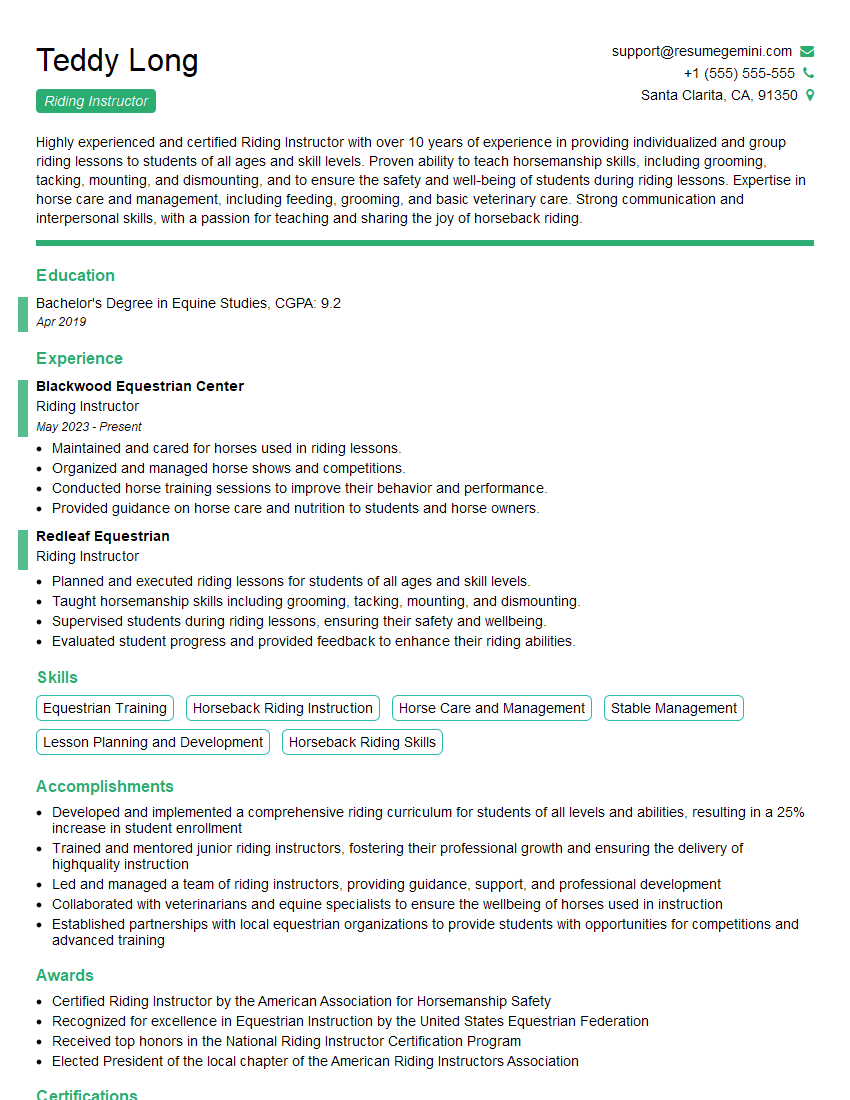
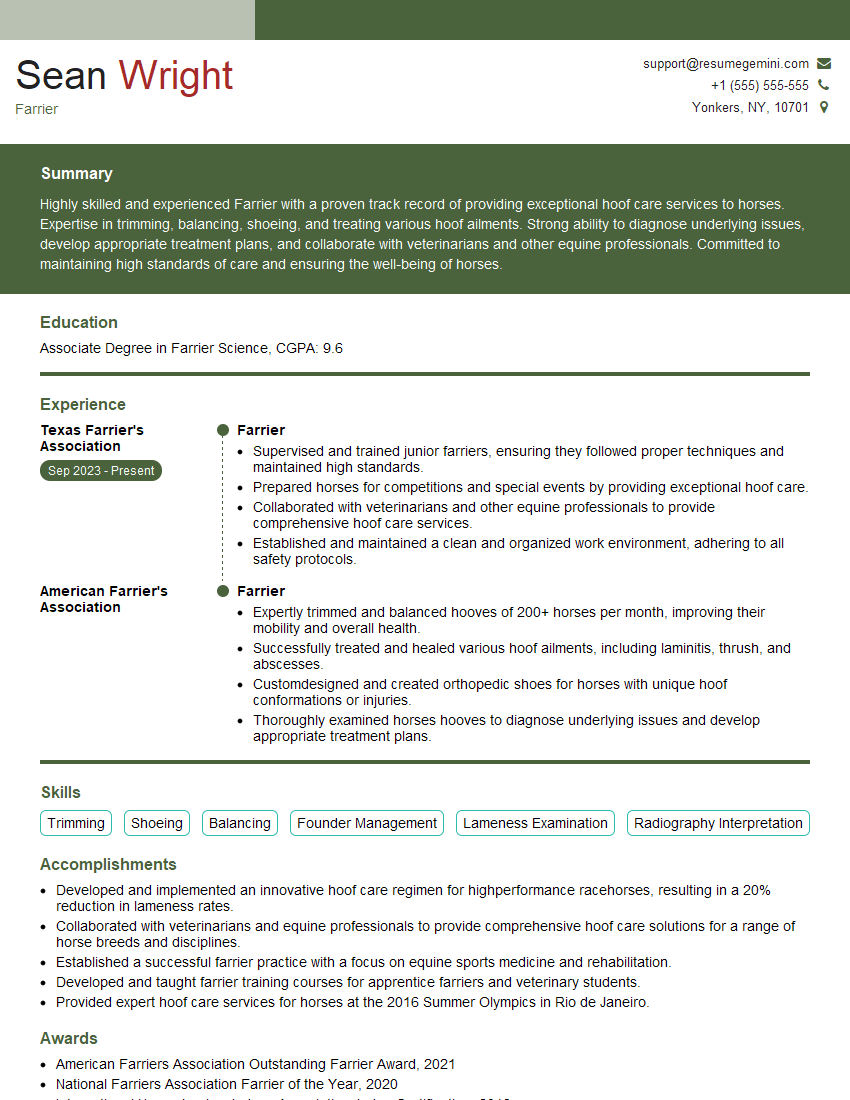
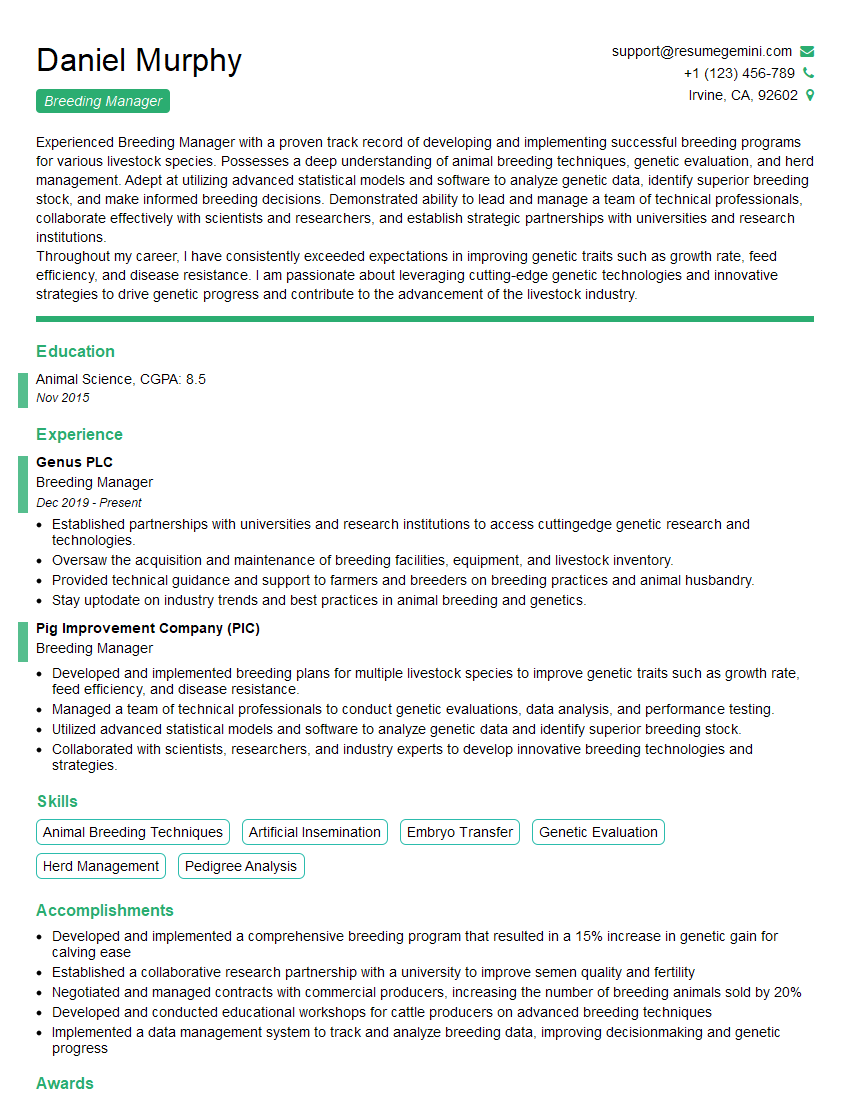
Mastering Horse Training and Development opens doors to rewarding careers with diverse opportunities for growth and specialization. A strong resume is crucial for showcasing your skills and experience to potential employers. Creating an ATS-friendly resume is essential for getting your application noticed. ResumeGemini is a trusted resource to help you build a professional and effective resume that highlights your unique qualifications. Examples of resumes tailored to Horse Training and Development are available to guide you in crafting your perfect application.


Explore more articles
Users Rating of Our Blogs
Share Your Experience
We value your feedback! Please rate our content and share your thoughts (optional).
What Readers Say About Our Blog
Very informative content, great job.
good