Preparation is the key to success in any interview. In this post, we’ll explore crucial Horseback Riding and Handling interview questions and equip you with strategies to craft impactful answers. Whether you’re a beginner or a pro, these tips will elevate your preparation.
Questions Asked in Horseback Riding and Handling Interview
Q 1. Describe your experience with different horse breeds and their temperaments.
My experience spans a wide range of horse breeds, each with its unique temperament. Understanding these temperamental differences is crucial for safe and effective handling. For instance, the calm and docile temperament of a Fjord horse contrasts sharply with the spirited and potentially more challenging nature of a Thoroughbred. Arabians are known for their intelligence and sensitivity, requiring a gentle and understanding approach, while Quarter Horses often exhibit a calm, dependable disposition, making them popular for various disciplines. I’ve worked extensively with Warmbloods, appreciating their athleticism and willingness to work, though their powerful build necessitates careful handling. Each breed’s temperament is influenced by genetics, training, and individual experiences, so observing and adapting my approach to each horse is essential.
- Thoroughbreds: High-strung, energetic, require experienced riders.
- Quarter Horses: Calm, dependable, versatile in many disciplines.
- Arabians: Intelligent, sensitive, require a gentle and understanding hand.
- Fjord Horses: Calm, docile, suitable for beginners.
- Warmbloods: Athletic, powerful, require skilled handling.
Q 2. Explain your approach to handling a fractious or aggressive horse.
Handling a fractious or aggressive horse demands patience, knowledge, and a calm demeanor. Aggression can stem from fear, pain, or learned behavior. My approach begins with a thorough assessment to identify the cause. Is the horse in pain? Is there a specific trigger? Once I understand the root cause, I adapt my strategy. For example, if fear is the issue, I’ll use desensitization techniques, gradually exposing the horse to the fearful stimulus in a controlled manner. If pain is the factor, veterinary attention is paramount. For learned aggression, consistent, positive reinforcement training is key, focusing on building trust and rewarding calm behavior.
Safety is paramount. I’ll always prioritize personal safety and utilize appropriate safety equipment like a helmet and sturdy boots. I might enlist the help of experienced colleagues for particularly challenging cases, employing techniques like using a calm, confident voice, maintaining a respectful distance, and employing proper body language to avoid escalating the situation.
Q 3. How do you assess a horse’s fitness and soundness?
Assessing a horse’s fitness and soundness involves a systematic approach encompassing visual inspection, palpation, and observation of movement. I begin by visually examining the horse’s conformation, looking for any asymmetries or abnormalities in structure. I’ll then palpate the legs and joints, checking for heat, swelling, or any signs of lameness. The horse’s gait is crucial. I observe its movement at various gaits (walk, trot, canter) to detect any lameness or stiffness. Veterinary assessment might be necessary for in-depth diagnostics, including X-rays or blood tests.
Examples of what I look for:
- Conformation: Straight legs, correct shoulder angle, balanced body.
- Muscle Condition: Well-developed muscles indicate good fitness.
- Respiration Rate: Elevated respiratory rate might suggest underlying issues.
- Gait: Smooth, even movement without hesitation or signs of pain.
A thorough assessment ensures I can match the horse appropriately to its intended use and prevent potential injuries.
Q 4. What are the common signs of colic in horses?
Colic, a general term for abdominal pain in horses, manifests in various ways, and early recognition is critical. Common signs include pawing at the ground, rolling, kicking at the abdomen, restlessness, sweating, and changes in appetite or defecation. The severity varies considerably; some horses display mild discomfort, while others exhibit intense pain and distress. More severe cases might present with signs of shock, such as pale gums and a rapid weak pulse.
Important Note: Colic is a veterinary emergency. Immediate veterinary attention is vital if you suspect colic. Delaying treatment can lead to serious complications.
Q 5. Detail your experience with different riding disciplines (e.g., dressage, jumping, western).
My riding experience encompasses various disciplines, each demanding distinct skills and techniques. In dressage, I focus on developing the horse’s suppleness, balance, and obedience, striving for elegance and precision in the movements. Jumping requires a different approach, emphasizing the horse’s athleticism, agility, and responsiveness to control over varied obstacles. Western riding, with its focus on horsemanship and working cattle, involves techniques such as reining, roping, and cutting, where a strong bond and communication with the horse are paramount. The experience in each discipline has enriched my overall horsemanship and understanding of horse behavior.
Q 6. How would you handle a horse spooking during a ride?
A spooking horse requires a calm and controlled response from the rider. My immediate reaction involves maintaining a steady seat and keeping my hands and legs still. I avoid jerking the reins or tightening my legs, which could escalate the situation. I will speak in a soothing voice, offering reassurance to the horse. Once the horse has calmed, I would gently redirect it to continue the ride. It’s crucial to understand the cause of the spook. Was it a specific object or noise? Addressing the underlying cause might involve desensitization training to help the horse overcome its fear.
Q 7. Describe your experience with saddle fitting and adjustments.
Proper saddle fitting is essential for both the horse’s comfort and the rider’s safety. I have extensive experience in evaluating saddle fit, considering factors like the saddle’s shape, size, and placement on the horse’s back. A poorly fitting saddle can cause discomfort, leading to sores and lameness. I look for proper placement of the saddle over the horse’s withers and evenly distributed weight. I know how to adjust girths and billets to ensure optimal comfort. Regular saddle checks are vital to prevent issues. If adjustments are needed, a professional saddler might be consulted for more complex modifications.
Example of a problem: A saddle that sits too far back can put pressure on the horse’s kidneys, while a saddle that’s too narrow can cause pinching and pressure points along the spine.
Q 8. What are the key elements of safe horse handling practices?
Safe horse handling hinges on respect, understanding, and a predictable approach. Think of it like building trust – you need to communicate clearly and calmly with the horse at all times.
- Approach from the left: Horses are typically led and handled from their left side. This is a universally understood convention that minimizes confusion and risk.
- Speak softly and calmly: Horses respond well to a quiet, reassuring voice. Avoid sudden movements or loud noises that could startle them.
- Maintain a safe distance: Never approach a horse from behind or directly in front, especially if it’s unknown. Give them ample personal space to avoid triggering a flight response.
- Use appropriate equipment: This includes well-fitting halters and leads, and knowing how to properly use them. A broken halter or lead rope is a safety hazard for both horse and handler.
- Be aware of your surroundings: Pay close attention to your environment. Are there any obstacles that could cause a horse to spook or injure itself? Is the ground even and stable?
- Assess the horse’s temperament: Each horse has a unique personality. Some are more sensitive than others, and it’s essential to adjust your approach accordingly.
For instance, I once had a young, energetic horse that was prone to spooking. By understanding his temperament and using consistent, calm handling, I was able to build trust and manage his behavior effectively.
Q 9. How do you maintain proper hoof care?
Proper hoof care is crucial for a horse’s overall health and well-being. Think of hooves as the horse’s foundation—neglecting them can lead to lameness and other serious problems.
- Regular cleaning: The hooves should be cleaned daily to remove mud, manure, and debris that can harbor bacteria and cause infection.
- Trimming: Regular trimming by a farrier (a professional hoof trimmer) is essential. They shape and balance the hooves to prevent uneven wear and tear.
- Inspection: Regularly inspect the hooves for any signs of cracks, bruises, abscesses, or foreign objects embedded in the sole or frog.
- Treatment: If you notice any issues, address them promptly. This might involve cleaning and treating a minor injury, or contacting your veterinarian for more serious problems.
I’ve seen firsthand the difference proper hoof care can make. A horse I worked with had a minor crack in his hoof that went untreated. It eventually developed into a painful abscess, requiring veterinary intervention and a lengthy recovery period. A regular farrier schedule would have prevented it.
Q 10. Explain your knowledge of equine nutrition and feeding.
Equine nutrition is a complex subject, but the basic principle is to provide a balanced diet that meets the horse’s individual needs based on factors such as age, activity level, and health status.
- Forage: The cornerstone of a horse’s diet should be high-quality forage, such as hay or pasture. This provides essential fiber for digestive health.
- Concentrates: Grains and other concentrates should be fed sparingly, especially to horses not involved in strenuous activities. Overfeeding concentrates can lead to obesity and other health problems.
- Supplements: Vitamins and minerals may be necessary to supplement a diet lacking in essential nutrients. These should only be given after consulting with a veterinarian.
- Water: Access to fresh, clean water is crucial. Dehydration can quickly become life-threatening.
A common mistake is overfeeding grain. Imagine a human eating only sugary snacks – it’s not balanced! Just like humans, horses need the right balance of nutrients for optimal health. I carefully tailor each horse’s feeding plan to their specific requirements, using high-quality hay, supplementing with grains only when necessary, and always ensuring they have plenty of water.
Q 11. Describe your experience with basic equine first aid.
Basic equine first aid is a vital skill for any horse owner or handler. While not a replacement for veterinary care, it can help stabilize a horse until professional help arrives.
- Wound care: Cleaning and bandaging minor wounds to prevent infection. This involves gently cleaning the wound with saline solution and applying a sterile bandage.
- Controlling bleeding: Applying direct pressure to a bleeding wound to stop the flow of blood.
- Treating colic: Recognizing the signs of colic (severe abdominal pain) and contacting a veterinarian immediately. This might involve keeping the horse calm and warm.
- Handling minor injuries: Recognizing and providing initial care for minor injuries like cuts, scrapes, and bruises.
Once, a horse I was working with cut his leg on a fence. I immediately cleaned and bandaged the wound, preventing infection until the vet could arrive. Quick action in these situations can make a huge difference.
Q 12. How do you identify and address common horse health issues?
Identifying and addressing common horse health issues requires a keen eye and knowledge of equine anatomy and physiology. Early detection is key to successful treatment.
- Lameness: Observing changes in gait, such as limping or favoring one leg. This could indicate an injury to the leg, hoof, or foot.
- Respiratory problems: Noticing any signs of coughing, nasal discharge, or difficulty breathing. These could be signs of infection or other respiratory issues.
- Colic: Observing any signs of abdominal pain, such as pawing, rolling, or kicking at the abdomen.
- Parasites: Regularly checking for signs of parasites, such as worms or lice.
I’ve learned that even subtle changes in a horse’s behavior can be indicative of a health problem. For example, a slight reluctance to move or a change in appetite might signal a developing issue, and prompt attention by a vet is essential.
Q 13. What is your experience with training horses (different levels)?
My experience in horse training spans various levels, from basic groundwork to advanced riding techniques. It’s a journey that requires patience, consistency, and a deep understanding of equine behavior and learning.
- Groundwork: This forms the foundation of any training program. It involves teaching the horse basic obedience and handling skills, such as leading, yielding to pressure, and accepting the bridle.
- Basic riding: Teaching the horse to respond to the rider’s aids, such as reins, legs, and seat.
- Advanced riding: Training the horse for more complex maneuvers, such as jumping, dressage movements, or western riding disciplines.
I’ve worked with horses ranging from young, inexperienced animals to highly-trained competition horses. Each horse learns at its own pace, and I tailor my training methods to the individual’s personality and abilities. Positive reinforcement is always key – think of it as building a partnership based on mutual respect and trust, not dominance.
Q 14. How do you ensure the safety of both the horse and the rider?
Ensuring the safety of both horse and rider requires a multifaceted approach that starts with proper preparation and extends to every aspect of the riding experience.
- Safe riding habits: This includes wearing appropriate safety equipment (helmet, riding boots), performing a pre-ride check of the tack (saddle, bridle, reins), and selecting a suitable riding area.
- Assessing the horse’s fitness and temperament: Only ride a horse that is physically and mentally suitable for the activity planned. Avoid riding a horse that’s showing signs of illness or distress.
- Proper tack fitting: Make sure that the saddle and bridle are correctly fitted and adjusted to prevent injury to both horse and rider.
- Emergency preparedness: Having a plan in place in case of an accident, including knowing how to call for help and providing basic first aid.
For example, I always inspect my tack before every ride, ensuring everything is securely fastened and in good condition. I also carefully assess the horse’s fitness and temperament to determine whether it’s suitable for the activity planned. A careful and prepared approach is paramount to safety.
Q 15. What is your experience with different types of horse tack?
My experience with horse tack encompasses a wide range, from basic English and Western saddles to specialized equipment for specific disciplines. I’m familiar with the construction, fitting, and appropriate use of various saddles, bridles, bits, reins, girths, breastplates, and other tack components. For example, I understand the differences between a dressage saddle’s deep seat and close contact design compared to the flatter, more open seat of a western saddle. I’ve worked with saddles made of leather, synthetic materials, and even specialized materials like those used in endurance riding saddles. Proper tack fitting is crucial to both horse comfort and rider safety; I know how to ensure a saddle fits correctly, preventing pressure points and ensuring the horse’s freedom of movement. I also have experience with specialized tack, such as specialized bits for horses with specific mouth sensitivities and therapeutic boots for horses recovering from injuries.
Career Expert Tips:
- Ace those interviews! Prepare effectively by reviewing the Top 50 Most Common Interview Questions on ResumeGemini.
- Navigate your job search with confidence! Explore a wide range of Career Tips on ResumeGemini. Learn about common challenges and recommendations to overcome them.
- Craft the perfect resume! Master the Art of Resume Writing with ResumeGemini’s guide. Showcase your unique qualifications and achievements effectively.
- Don’t miss out on holiday savings! Build your dream resume with ResumeGemini’s ATS optimized templates.
Q 16. Describe your experience with loading and transporting horses.
Loading and transporting horses requires careful planning and execution to ensure their safety and well-being. I have extensive experience loading horses into trailers of various sizes and designs, using different loading techniques depending on the horse’s temperament and training. This includes safely securing the horse within the trailer using appropriate tie-down methods to prevent injury during transit. I’m adept at recognizing signs of stress in horses during transport, such as sweating or restlessness, and know how to alleviate these issues using techniques like offering reassurance and providing adequate ventilation. I also understand the importance of proper trailer maintenance and safety checks before each journey, ensuring brakes are functioning correctly and the trailer is well-maintained. For example, I always check the ramp is secure and free of debris before loading any horses. I understand the legal requirements around transportation, including appropriate documentation and permits.
Q 17. How do you manage a stable environment for optimal horse health?
Maintaining an optimal stable environment is paramount for horse health and well-being. This involves several key aspects: Firstly, cleanliness is crucial. Regular mucking out of stalls prevents the build-up of ammonia and bacteria, reducing the risk of respiratory problems and hoof infections. Secondly, proper ventilation is essential to prevent the accumulation of harmful gases and maintain a comfortable temperature. Thirdly, adequate bedding – such as straw or shavings – provides comfort and absorbs urine and manure. The type of bedding needs to be chosen carefully, considering allergies and potential health problems that certain bedding may cause to specific horses. Fourthly, sufficient space is necessary to allow horses to move freely and avoid stress. Finally, regular pest control measures are essential to protect horses from parasites and diseases. I ensure that each horse’s individual needs are met, taking into account factors like age, breed, and health status. For example, a geriatric horse may require softer bedding and more frequent cleaning than a younger horse.
Q 18. Explain your knowledge of equine anatomy and physiology.
My understanding of equine anatomy and physiology is thorough, going beyond basic knowledge. I know the skeletal structure, musculature, and digestive system of the horse in detail. I can identify key anatomical landmarks and understand their functional significance. I understand the horse’s respiratory system, including how it works during exercise, and recognize signs of respiratory distress. My knowledge extends to the cardiovascular system and how it adapts to physical exertion. I also understand the intricacies of the horse’s digestive system and its implications for feeding and nutrition, including the importance of fiber in the diet. I have a deep understanding of equine locomotion and gait analysis and can identify subtle signs of lameness or other abnormalities. For instance, I know the difference between a smooth, balanced gait and a gait that indicates a potential injury. This knowledge is critical for identifying and addressing health problems promptly.
Q 19. How would you handle a horse with lameness?
Handling a horse with lameness requires a careful and methodical approach. First, I would observe the horse’s gait carefully, noting any signs of stiffness, limping, or reluctance to move. I would then palpate the legs and joints, checking for heat, swelling, or pain. Depending on the severity and suspected cause of the lameness, I would then contact a veterinarian for a thorough examination. While waiting for the vet, I would ensure the horse’s comfort and minimize further stress. This may involve restricting movement with stall rest, applying cold compresses to reduce inflammation, and providing pain relief as directed by the veterinarian. I would also keep detailed records of the horse’s behavior and any changes in symptoms. I would also make sure to follow all the recommendations given by the vet during and after the treatment. The goal is to identify the underlying cause of lameness and develop a treatment plan that promotes healing and prevents further injury.
Q 20. What is your experience with different types of bridles and bits?
My experience with bridles and bits is extensive, covering various types and their appropriate applications. I’m familiar with different bridle types, such as English snaffles, double bridles, and Western bridles. Understanding the functionality and impact of each is crucial. For bits, I have experience with snaffles, curb bits, pelhams, and various other types, each designed to influence the horse’s response in different ways. I understand the importance of proper bit fitting to prevent discomfort and potential injury. I know how to select a bit that suits the horse’s mouth conformation, temperament, and training level. For example, a sensitive horse may require a gentler bit, such as a loose-ring snaffle, while a stronger horse might need a more assertive bit, such as a curb bit (used correctly and appropriately). Incorrect bitting can lead to discomfort, resistance and ultimately, damage to the horse’s mouth. My selection process always prioritizes the horse’s well-being and correct communication.
Q 21. Describe your experience with horse behavior and psychology.
Understanding horse behavior and psychology is fundamental to effective horsemanship. I’m experienced in recognizing equine body language, including subtle cues like ear position, tail carriage, and eye movements. This allows me to assess a horse’s mood and intentions accurately, predicting potential behavioral problems and adapting my approach accordingly. I’m proficient in using positive reinforcement techniques, focusing on rewarding desired behaviors instead of relying solely on punishment. I’m adept at handling horses of different temperaments and training levels. I use my knowledge to build trust and rapport, making interactions safe and productive. For instance, I understand the importance of a calm and consistent approach when dealing with an anxious horse, while a more assertive approach may be needed for a dominant horse. Safety is paramount; I always prioritize a calm and patient demeanor and maintain a safe distance to avoid provoking any negative reactions. I consider the horse’s individual history, as past experiences can significantly influence behavior.
Q 22. How do you assess and address a horse’s behavioral problems?
Assessing and addressing a horse’s behavioral problems requires a systematic approach combining observation, understanding equine behavior, and consistent training. It’s crucial to first identify the root cause – is it pain, fear, lack of training, or a combination of factors? For example, a horse constantly nipping might be due to boredom, unmet social needs, or even underlying dental issues.
My method involves:
- Detailed Observation: I meticulously observe the horse’s behavior in various situations – in the paddock, during riding, and while handling. I note the frequency, intensity, and context of the problematic behavior. Video recording can be invaluable here.
- Veterinary Check-up: Ruling out any underlying medical conditions is paramount. Pain or discomfort can significantly alter a horse’s temperament.
- Behavioral Assessment: I use established behavioral assessment tools to identify patterns and potential triggers. This includes assessing the horse’s response to different stimuli and social interactions.
- Targeted Training: Once the root cause is identified, I implement tailored training methods. This may involve desensitization techniques (gradually exposing the horse to the feared stimulus), positive reinforcement (rewarding desired behaviors), or addressing underlying training gaps. For example, a horse that rears might benefit from groundwork exercises focusing on respect for personal space and confident leadership.
- Consistent Approach: Consistency is key. All handlers and riders must work together using the same communication and training techniques to avoid confusing the horse.
If I am unsure about a diagnosis or treatment plan, I will always seek advice from a veterinarian or certified equine behaviorist.
Q 23. What is your experience with working with horses of different ages?
My experience spans working with horses across their lifespan, from foals to senior horses. Each age group presents unique challenges and rewards.
- Foals and Young Horses: Working with young horses involves early socialization, establishing a strong foundation of trust and respect, and gently introducing them to handling and riding techniques. It’s a delicate balance between encouraging natural curiosity and providing clear boundaries.
- Mature Horses: Mature horses bring experience and established habits. My focus shifts to reinforcing positive behaviors, addressing any ingrained bad habits through retraining, and adapting my training methods to accommodate their physical capabilities and potential age-related limitations.
- Senior Horses: Senior horses require careful management, attention to their physical comfort, and adapted training programs that recognize their decreased energy levels and potential health issues. The emphasis is on maintaining their mobility, comfort, and mental wellbeing.
I adapt my approach according to each horse’s individual personality, temperament, and physical condition. I have found that building a strong rapport based on mutual trust and respect is crucial at all ages.
Q 24. Explain your method for teaching riding techniques to beginners.
Teaching riding to beginners involves a gradual progression, emphasizing safety, correct posture, and effective communication with the horse. I begin with groundwork, building a strong foundation of horsemanship before mounting.
My method follows these steps:
- Groundwork: Learning to lead, groom, and handle the horse safely and confidently. This builds trust and respect between the beginner and the horse.
- Mounting and Dismounting: Safe and controlled mounting and dismounting techniques are taught with constant supervision.
- Basic Posture and Balance: Correct posture and balance in the saddle are crucial for both rider safety and effective communication with the horse. This is practiced initially at a walk.
- Basic Aids: Beginners learn the basic aids (legs, seat, reins) for controlling the horse’s movement, starting with simple commands like walk, halt, and turn. We emphasize the ‘feel’ and correct timing of these aids.
- Progressive Exercises: As confidence and skill develop, we gradually introduce more challenging exercises, such as transitions between gaits and simple turns.
- Safety First: Throughout the lesson, safety is paramount. The use of helmets and appropriate attire is always mandatory. Constant supervision and clear instructions are essential.
Each session is carefully structured and tailored to the individual’s progress, ensuring they develop confidence and competence at their own pace.
Q 25. How do you tailor your teaching style to different learning styles?
Recognizing different learning styles is vital for effective teaching. Some learners are visual, others kinesthetic (hands-on), and some auditory. I adapt my instruction accordingly.
- Visual Learners: I use demonstrations, diagrams, and videos to illustrate techniques. I ensure they can clearly see my actions and the horse’s response.
- Kinesthetic Learners: I encourage hands-on practice and provide physical guidance. I might use touch and adjustments to help them feel the correct posture and aids.
- Auditory Learners: I provide clear, concise verbal instructions and explanations. I offer frequent feedback and use analogies to help them understand complex concepts.
I use a mix of teaching methods to cater to all learners, often employing a combination of visual, kinesthetic, and auditory techniques within a single lesson. Regular feedback and progress checks ensure each student is learning and progressing effectively.
Q 26. Describe your experience with emergency procedures related to horses.
Experience with equine emergencies is crucial. My training includes handling various scenarios, from minor injuries to life-threatening situations. I’m proficient in basic first aid for horses, including wound care, controlling bleeding, and recognizing signs of colic or other emergencies.
- Wound Management: I am adept at cleaning and bandaging wounds, applying appropriate antiseptic solutions, and determining when veterinary intervention is necessary.
- Colic Management: I can recognize the signs of colic (severe abdominal pain) and implement appropriate first aid measures, including keeping the horse comfortable and contacting a veterinarian immediately.
- Fracture Management: I understand the importance of immobilizing a fractured limb and contacting emergency veterinary services immediately.
- Emergency Procedures: I am familiar with emergency procedures, including how to safely control a panicked horse and how to utilize appropriate equipment.
I understand the importance of quick thinking and decisive action during emergencies and always prioritize the safety of both the horse and myself. I am familiar with contacting and coordinating with emergency veterinary services.
Q 27. How would you create a safe and effective riding lesson plan?
Creating a safe and effective riding lesson plan requires careful planning and consideration of several factors.
- Warm-up: Begin with a thorough warm-up for both horse and rider, including groundwork and light exercises to prepare both physically and mentally.
- Specific Objectives: Clearly define the learning objectives for the lesson. What specific skills or techniques will be taught?
- Progressive Exercises: Structure the lesson with a progressive sequence of exercises, gradually increasing difficulty and challenge.
- Safety Precautions: Integrate safety precautions throughout the lesson. This includes checking tack, ensuring appropriate attire, and supervising students closely.
- Cool-down: End the lesson with a cool-down period for both horse and rider, including light walking and stretching exercises.
- Feedback and Assessment: Provide constructive feedback throughout the lesson and assess the students’ progress. Adjust the plan as needed to accommodate individual needs and learning styles.
A well-structured lesson plan ensures a safe, productive, and enjoyable learning experience for all involved. For example, a beginner lesson might focus on mounting, dismounting, and walking in a straight line. More advanced lessons might incorporate jumping, lateral movements or advanced dressage patterns.
Q 28. What is your approach to managing a team of riders or stable hands?
Managing a team of riders or stable hands requires effective communication, clear delegation, and a focus on creating a positive and safe working environment.
- Clear Communication: I maintain open and transparent communication with the team, ensuring everyone understands their roles and responsibilities. Regular team meetings are crucial.
- Delegation of Tasks: Tasks are delegated effectively, taking into account individual strengths and abilities. I provide clear instructions and expectations for each task.
- Training and Development: I provide opportunities for training and development to enhance the skills and knowledge of team members. This ensures consistency in approach and skill.
- Positive Reinforcement: Positive reinforcement is crucial for maintaining morale and motivation. Recognizing and rewarding good work helps to build a strong and cohesive team.
- Conflict Resolution: I address conflicts promptly and fairly, focusing on finding solutions that benefit the team as a whole.
- Safety Procedures: Safety procedures are clearly established and consistently enforced. Regular safety checks and training are essential.
A well-managed team is essential for providing quality care to horses and a positive learning experience for riders. Open dialogue and teamwork ensure a safe and efficient stable operation.
Key Topics to Learn for Horseback Riding and Handling Interview
- Equine Anatomy and Physiology: Understanding horse anatomy is crucial for safe and effective handling. This includes knowing the skeletal structure, muscle groups, and vital organs to identify potential problems.
- Horse Behavior and Psychology: Learn to recognize and interpret equine body language, understanding their moods and reactions to different stimuli. This is vital for safe and effective interaction.
- Safe Handling Techniques: Master various handling techniques, including leading, grooming, saddling, and mounting, emphasizing safety for both horse and handler.
- Riding Skills and Disciplines: Demonstrate knowledge of different riding styles (e.g., English, Western) and their respective techniques. Highlight your proficiency level and experience.
- Tack and Equipment Knowledge: Familiarize yourself with different types of tack, their proper use, and maintenance. Be able to discuss their impact on horse comfort and performance.
- Equine First Aid and Emergency Procedures: Knowing how to handle common injuries and emergencies is essential for responsible horse handling. Be prepared to discuss your knowledge of wound care and emergency protocols.
- Stable Management and Hygiene: Understanding stable management practices, including feeding, mucking stalls, and maintaining a clean and safe environment, demonstrates responsible horsemanship.
- Problem-Solving and Decision-Making: Be ready to discuss how you approach challenges in handling horses, demonstrating your ability to adapt to unexpected situations and maintain safety.
Next Steps
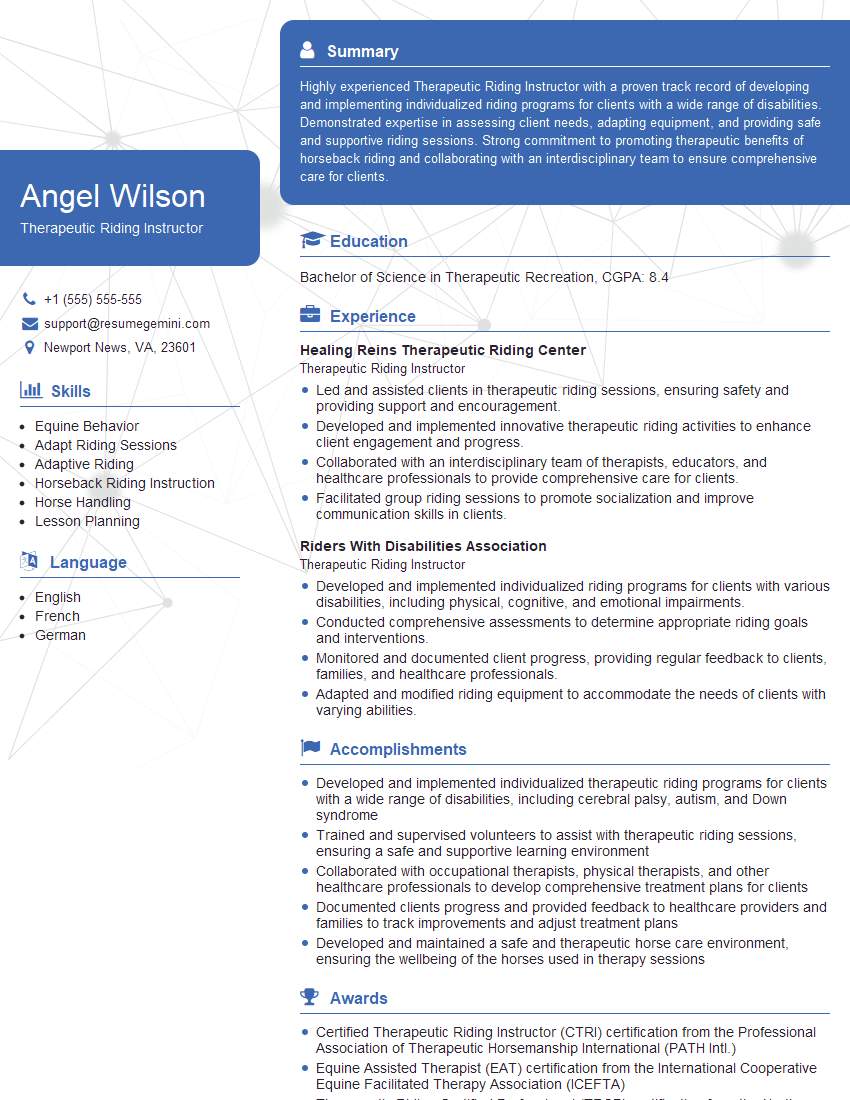
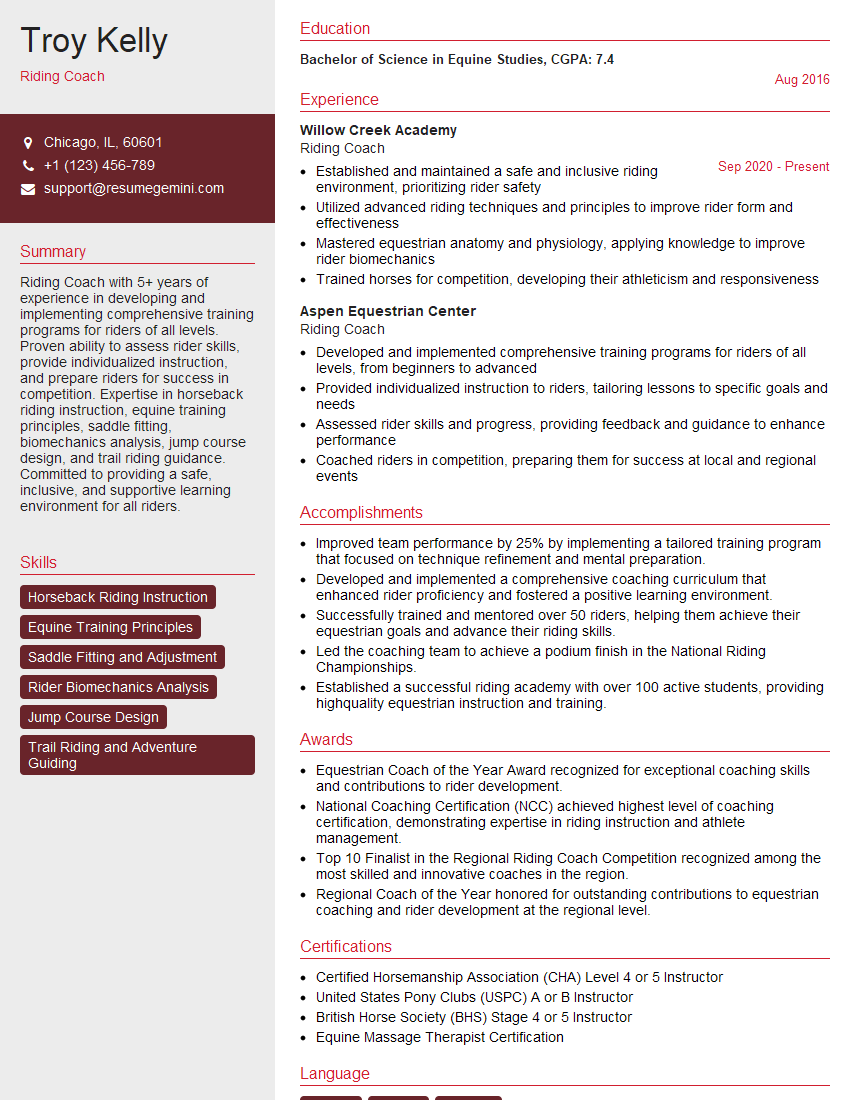
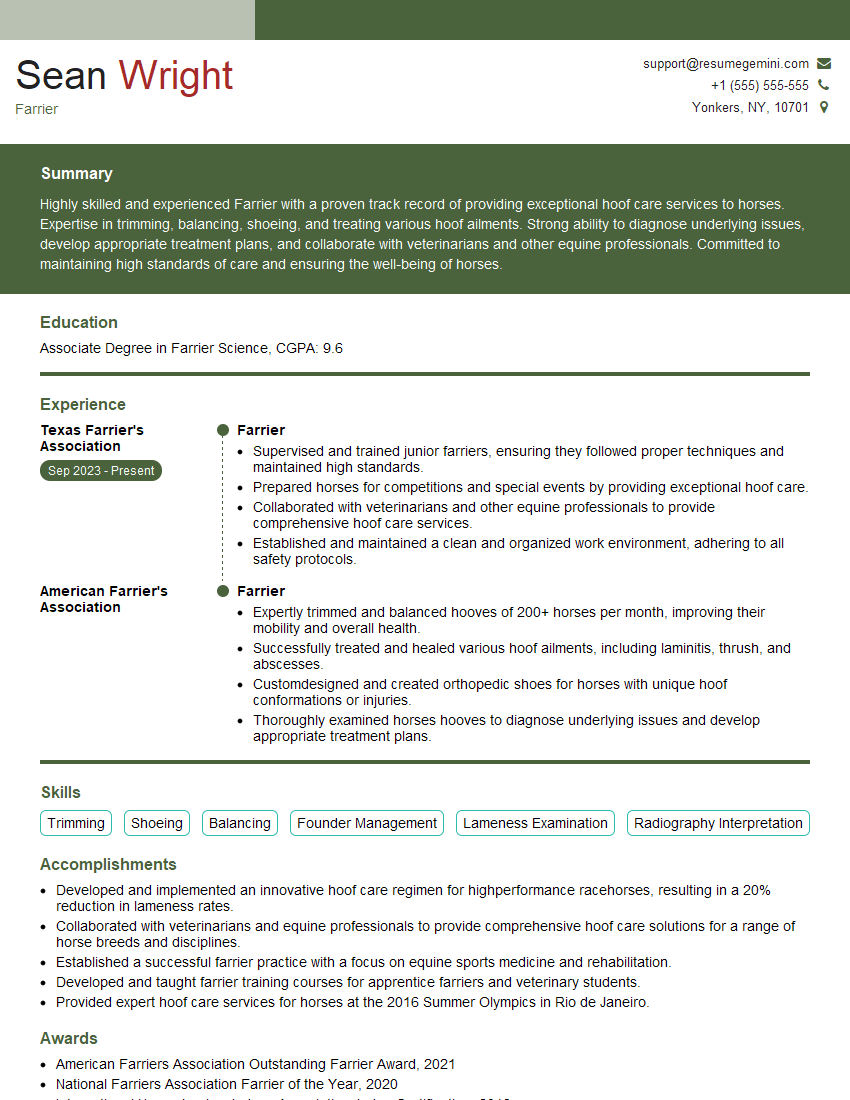
Mastering horseback riding and handling opens doors to exciting careers in various equestrian fields, from instructing and training to therapeutic riding and stable management. A strong resume is your key to unlocking these opportunities. Creating an ATS-friendly resume that highlights your skills and experience is vital for getting noticed by potential employers. ResumeGemini is a trusted resource to help you build a professional and impactful resume that showcases your unique qualifications. Examples of resumes tailored to Horseback Riding and Handling are available to guide you, helping you present yourself effectively to prospective employers.




Explore more articles
Users Rating of Our Blogs
Share Your Experience
We value your feedback! Please rate our content and share your thoughts (optional).
What Readers Say About Our Blog
Very informative content, great job.
good