Every successful interview starts with knowing what to expect. In this blog, we’ll take you through the top HVAC and Ventilation interview questions, breaking them down with expert tips to help you deliver impactful answers. Step into your next interview fully prepared and ready to succeed.
Questions Asked in HVAC and Ventilation Interview
Q 1. Explain the difference between a heat pump and a furnace.
The core difference between a heat pump and a furnace lies in how they heat a space. A furnace burns fuel (natural gas, propane, or oil) to generate heat, which is then distributed through ductwork. Think of it as a giant, controlled bonfire. It’s simple, effective, and provides intense heat quickly. However, it’s not energy efficient for all climates.
A heat pump, on the other hand, moves heat rather than generating it. It uses a refrigerant cycle (explained in the next question) to absorb heat from the outside air (even in cold weather) and transfer it inside, and vice versa in the summer. Imagine it as a sophisticated air conditioner that can work in reverse. Heat pumps are generally more energy-efficient than furnaces, especially in milder climates, but their heating capacity can decrease significantly in extreme cold.
In short: Furnaces create heat, while heat pumps move heat.
Q 2. Describe the refrigeration cycle.
The refrigeration cycle is the heart of a heat pump and air conditioner. It’s a closed-loop process involving four key components: the compressor, condenser, expansion valve, and evaporator.
- Compressor: This component compresses the refrigerant, raising its temperature and pressure.
- Condenser: The high-pressure, high-temperature refrigerant releases heat to the outside air (in cooling mode) or to the indoor air (in heating mode).
- Expansion Valve: This valve reduces the pressure of the refrigerant, causing it to cool significantly.
- Evaporator: The low-pressure, low-temperature refrigerant absorbs heat from the inside air (in cooling mode) or from the outside air (in heating mode). This absorbed heat is then carried through the cycle.
The cycle repeats continuously, moving heat from one location to another. In cooling mode, heat is extracted from inside and released outside. In heating mode, the process reverses, with heat from outside being moved inside. Think of it as a sophisticated pump for heat energy!
Q 3. What are the common types of ductwork materials and their applications?
Ductwork materials are chosen based on factors such as cost, durability, air tightness, and fire resistance. Common types include:
- Galvanized Steel: Strong, durable, and resistant to corrosion. Commonly used in larger commercial applications and areas requiring high durability.
- Aluminum: Lighter than steel, less prone to rust, but can be more susceptible to dents. Often used in residential and some commercial settings.
- Fiberglass: Flexible and lightweight, making it easier to install in tight spaces. More affordable but less durable and potentially less airtight than metal ducts.
- Flexible Duct (typically foil-faced): Used for short runs or connections where flexibility is crucial. It’s often the least energy efficient due to air leakage.
The choice of material often depends on the budget, the size and type of the building, and the desired level of energy efficiency. For example, while fiberglass is cheaper, the energy loss from leakage may outweigh the initial cost savings in the long run.
Q 4. How do you troubleshoot a malfunctioning thermostat?
Troubleshooting a malfunctioning thermostat involves a systematic approach. Here’s a step-by-step process:
- Check the Power: Ensure the thermostat is receiving power. Look for a tripped circuit breaker or a blown fuse.
- Check the Batteries (if applicable): For battery-powered thermostats, replace the batteries.
- Verify Wiring Connections: Carefully inspect all wiring connections at the thermostat and furnace. Loose or incorrect wiring is a common cause of malfunctions.
- Inspect the Display: Look for error codes or unusual displays. Consult the thermostat’s manual for troubleshooting these codes.
- Test the System: Try to manually switch the system on and off at the thermostat and furnace (if accessible). If only one works, this points to the problem location.
- Check the Furnace and Air Handler: Ensure the furnace or air handler is operating correctly. Listen for unusual noises or check for error codes displayed on the furnace control board.
- Calibration: If the temperature reading is wildly off, the thermostat might need calibration (check the manual).
If the problem persists after these checks, it’s advisable to contact a qualified HVAC technician.
Q 5. Explain the principles of air balancing.
Air balancing ensures that the right amount of air flows through each branch of a duct system. This is crucial for maintaining even temperatures and proper ventilation throughout a building. Poorly balanced air distribution leads to some areas being too hot or too cold.
Air balancing involves measuring the airflow at various points in the duct system using an anemometer. Then, adjustments are made to dampers within the ductwork to control airflow and achieve the desired balance. This might involve increasing or decreasing the opening of dampers to fine-tune air distribution. Think of it as carefully regulating the flow of water in a network of pipes to ensure an even supply to every faucet.
Professional air balancing is essential for newly constructed or renovated buildings to ensure optimal comfort and efficiency. It’s a critical aspect of commissioning HVAC systems.
Q 6. What are the different types of ventilation systems?
Ventilation systems are categorized by how they introduce and remove air. Common types include:
- Natural Ventilation: Relies on natural forces like wind and temperature differences to move air. Simple, cost-effective, but relies on favorable weather conditions.
- Mechanical Exhaust Ventilation: Uses fans to exhaust stale air from a space. Effective for removing pollutants but requires a supply of fresh air to avoid creating negative pressure.
- Mechanical Supply Ventilation: Uses fans to supply fresh air into a space. Often combined with exhaust systems to create a balanced ventilation system.
- Balanced Ventilation Systems: Combine both supply and exhaust ventilation, providing a controlled flow of fresh air and removing stale air simultaneously. This is the most common type for larger buildings.
- Heat Recovery Ventilation (HRV): These systems exchange heat between incoming fresh air and outgoing stale air, reducing energy loss. Energy efficient and preferred for cold climates.
The best ventilation system depends on factors such as building design, climate, occupancy, and the level of air quality control required.
Q 7. How do you calculate the cooling load for a building?
Calculating the cooling load for a building is a complex process that considers various factors affecting heat gain. It’s not something easily done without specialized software and experience, but here’s a simplified overview.
The calculation involves determining the total heat gain from different sources:
- Solar Heat Gain: Heat entering through windows and walls due to solar radiation.
- Internal Heat Gain: Heat generated by occupants, lighting, appliances, and equipment.
- Infiltration Heat Gain: Heat entering the building through air leakage.
- Conduction Heat Gain: Heat transferred through walls, roofs, and floors.
Each of these factors is estimated using detailed calculations that consider factors like building materials, insulation levels, window types, climate data, and occupancy patterns. Professionals use sophisticated software to model these factors and generate a comprehensive cooling load calculation. The result is expressed in BTU/hr (British Thermal Units per hour) or kW (kilowatts), representing the cooling capacity needed to maintain a desired indoor temperature.
Q 8. What are the safety precautions when working with refrigerants?
Working with refrigerants demands strict adherence to safety protocols due to their potential health and environmental hazards. Many refrigerants are flammable, toxic, or contribute to ozone depletion. Before starting any work, always identify the specific refrigerant using the equipment labels and safety data sheets (SDS). This is crucial because handling procedures vary depending on the refrigerant type.
- Personal Protective Equipment (PPE): Always wear appropriate PPE, including safety glasses, gloves (specifically designed for refrigerant handling), and protective clothing. In some cases, respirators may be necessary, especially when dealing with leaks or potential exposure to high concentrations.
- Proper Ventilation: Ensure adequate ventilation in the work area to prevent the buildup of refrigerant vapor. This is especially important in enclosed spaces. Consider using exhaust fans or opening windows to promote airflow.
- Leak Detection and Repair: Use specialized leak detection equipment to identify refrigerant leaks accurately. Never attempt repairs without proper training and equipment. Repairing a leak involves properly evacuating the system, isolating the section with the leak, and then replacing or repairing the damaged component, ensuring proper evacuation and charging afterward.
- Refrigerant Recovery and Recycling: Always recover and recycle used refrigerants instead of venting them into the atmosphere. This minimizes environmental impact and conserves valuable resources. Specialized equipment is required for this process. Proper disposal of refrigerant cylinders is also important, following all relevant environmental regulations.
- Emergency Procedures: Be prepared for emergencies, such as accidental exposure or leaks. Know the location of safety showers and eye wash stations and understand the appropriate emergency response procedures. Have readily available emergency contact information.
For example, handling R-22 requires specific precautions due to its ozone depletion potential, while R-410A requires attention to its flammability characteristics. Always consult the SDS for detailed safety information specific to the refrigerant in use.
Q 9. Explain the function of a Variable Refrigerant Flow (VRF) system.
A Variable Refrigerant Flow (VRF) system is a type of air conditioning system that provides precise temperature control to individual zones within a building. Unlike traditional HVAC systems, which use a single refrigerant flow rate, a VRF system uses variable-speed compressors and individual refrigerant lines to regulate the amount of refrigerant flowing to each zone. This allows for highly efficient and individualized climate control.
Here’s how it works: A VRF system typically consists of one or more outdoor units containing compressors and an array of indoor units, each serving a separate zone or room. The outdoor units house compressors that regulate refrigerant flow to the various indoor units. Each indoor unit has a modulating valve that controls the precise amount of refrigerant supplied to it. This allows for individual zone temperature control, meaning one zone can be cooled while another is heated simultaneously within the same system.
Advantages of VRF systems:
- Precise Zone Control: Provides accurate temperature control in individual zones.
- Energy Efficiency: Only supplies the refrigerant needed for the specific zones in operation, resulting in lower energy consumption compared to traditional systems.
- Flexibility: Easily adaptable to various building layouts and design requirements.
- Compact Design: Outdoor units are generally smaller compared to traditional systems.
Example: Imagine an office building. A VRF system allows each office to have its own temperature setting, optimizing comfort and energy efficiency without influencing other spaces. One zone might be heated, while another zone is cooled concurrently, maximizing energy saving, a key benefit over traditional systems.
Q 10. Describe different types of air filters and their efficiency ratings.
Air filters are crucial components of HVAC systems, removing airborne particles and contaminants to improve indoor air quality. Different types offer varying degrees of efficiency. The Minimum Efficiency Reporting Value (MERV) rating is a common standard used to quantify filter efficiency, ranging from 1 (low efficiency) to 16 (high efficiency).
- Fiberglass Filters (MERV 1-4): These are the least expensive and most common type. They’re effective at removing larger particles like dust and pet dander but are less efficient at removing smaller particles such as pollen and mold spores.
- Pleated Filters (MERV 5-10): These filters have more surface area than fiberglass filters, resulting in improved efficiency. They effectively capture a wider range of particles, including pollen, mold spores, and some dust mites. These are suitable for homes and offices seeking moderate filtration.
- HEPA Filters (MERV 17-20): High-Efficiency Particulate Air filters are designed to remove extremely small particles (0.3 microns or larger), capturing up to 99.97% of these particles. HEPA filters are recommended for environments requiring exceptional air quality, such as hospitals or homes with occupants suffering from allergies or respiratory illnesses.
- Electrostatic Filters: These filters use electrostatic charge to attract and capture dust and other particles. They are generally more effective than fiberglass filters but less efficient than pleated or HEPA filters.
- Activated Carbon Filters: These filters are primarily used to remove gases and odors from the air. They’re often combined with other filter types to provide comprehensive filtration.
The choice of air filter depends on the specific needs of the environment and occupants. A higher MERV rating indicates improved filtration but may also lead to increased airflow restriction, requiring more powerful HVAC equipment to maintain the desired air volume.
Q 11. What is the significance of psychrometrics in HVAC design?
Psychrometrics is the study of the thermodynamic properties of moist air. It’s fundamental to HVAC design because it allows engineers to understand and predict how air behaves under different conditions of temperature, humidity, and pressure. This knowledge is crucial for designing efficient and comfortable HVAC systems.
In HVAC design, psychrometric charts and software are invaluable tools. They help determine the required cooling or heating load, optimize airflow rates, and select appropriate equipment. By analyzing the moist air properties, engineers can design systems that meet specific requirements for temperature, humidity, and air quality, ensuring optimal thermal comfort and energy efficiency. For instance, designing an air conditioning system for a humid climate requires a deep understanding of how to dehumidify the air effectively. Psychrometrics enables engineers to precisely calculate and manipulate air properties to achieve the desired results.
Example: A psychrometric chart can help determine the amount of moisture that needs to be removed from the air to achieve a specific relative humidity level at a particular temperature. This information is crucial for selecting the right type of air conditioning unit and designing its cooling capacity.
Q 12. How do you diagnose and repair a leaking refrigerant line?
Diagnosing and repairing a leaking refrigerant line requires a systematic approach, prioritizing safety and accuracy. Improper handling can lead to injury and environmental damage. The process typically follows these steps:
- Safety First: Ensure proper ventilation and wear appropriate PPE, including safety glasses and gloves.
- Locate the Leak: Use a refrigerant leak detector (electronic or soap-and-water method) to pinpoint the exact location of the leak. Electronic detectors are more sensitive and accurate, especially for small leaks.
- Isolate the System: Turn off the HVAC system and isolate the affected section of the refrigerant line to prevent further refrigerant loss. This typically involves closing valves upstream and downstream of the leak.
- Recover Refrigerant: If possible, recover the remaining refrigerant using specialized recovery equipment. This is vital for environmental compliance and to prevent further refrigerant loss.
- Repair or Replace: Depending on the nature and severity of the leak, repair the line (using brazing or specialized fittings) or replace the damaged section entirely. Brazing requires expertise and proper safety precautions, ensuring proper purging of the system prior to charging.
- Pressure Test: After the repair, perform a pressure test to ensure the system is leak-free and that the repair has been successful.
- Evacuate and Recharge: Evacuate the repaired section of the system to remove any air or moisture before recharging it with the appropriate amount of refrigerant. Accurate refrigerant charging is essential for proper system operation.
- System Check: After recharging, monitor the system for any further leaks or operational issues.
Example: A small pinhole leak in a copper refrigerant line might be repaired by brazing. A large rupture might require cutting out the damaged section and installing a new piece of copper tubing using compression fittings. Remember that brazing requires specialized equipment and expertise. Improper brazing can create weak points that could lead to future leaks or system failure.
Q 13. Explain the difference between sensible and latent heat.
Sensible heat and latent heat are two forms of heat energy that affect the temperature and moisture content of air. Understanding the difference is essential for designing and troubleshooting HVAC systems.
- Sensible Heat: This is the heat that causes a change in temperature without changing the state of matter (e.g., solid, liquid, or gas). When you heat or cool air, you’re changing its sensible heat. You can feel a change in temperature with sensible heat. For example, warming a room by 5°F increases its sensible heat.
- Latent Heat: This is the heat energy absorbed or released during a change of state, such as the evaporation or condensation of water. Latent heat doesn’t directly change the temperature; it changes the moisture content of the air. Evaporation requires energy (absorbs latent heat), while condensation releases it. For example, the conversion of liquid water to water vapor during evaporation requires energy and this absorbed energy is called latent heat.
Example: On a humid day, a significant portion of the cooling load of an air conditioning system is dedicated to removing latent heat. The system chills the air, causing condensation of water vapor from the air (latent heat release), leading to dehumidification. This allows the sensible cooling component to be more effective in reducing the temperature. If only sensible cooling occurred, a space may feel chilly, but still be uncomfortably humid.
Q 14. What are the common causes of low airflow in an HVAC system?
Low airflow in an HVAC system can be caused by several factors, impacting both heating and cooling effectiveness. Diagnosing the issue requires a systematic approach.
- Dirty Air Filters: Clogged air filters restrict airflow, significantly reducing the system’s capacity. Replacing or cleaning filters is usually the simplest solution.
- Frozen Evaporator Coil: In air conditioning systems, a frozen evaporator coil restricts airflow. This usually indicates a problem with the refrigerant charge or airflow across the coil (often caused by restricted airflow due to other factors like dirty filters or coils).
- Blocked Supply or Return Registers: Furniture or debris blocking supply or return air registers can severely restrict airflow. Checking for obstructions is a basic troubleshooting step.
- Ductwork Problems: Leaky or restricted ductwork reduces airflow. Leaky ducts can impact efficiency, and blockages from debris or improper installation can significantly restrict airflow.
- Problems with the Blower Motor or Belt: A malfunctioning blower motor or a broken belt can drastically reduce airflow. Checking the blower motor operation and its belts for wear and tear is a crucial part of diagnosis.
- Improperly Sized Ductwork: Ductwork that is too small for the system’s capacity will restrict airflow. This is often a design issue and requires major modifications.
Troubleshooting Steps:
- Check the air filter for cleanliness and replace if necessary.
- Inspect supply and return registers for any obstructions.
- Examine the evaporator coil (in air conditioning systems) for ice buildup. Addressing the root cause of the freezing is important; not just defrosting the coil.
- Check the blower motor for proper operation.
- Visually inspect the ductwork for leaks or obstructions. Consider using specialized tools to check for leaks in the ductwork.
Addressing the cause of low airflow is crucial for proper system operation and energy efficiency. Ignoring it can lead to system damage and higher energy bills.
Q 15. How do you perform a pressure test on an HVAC system?
A pressure test on an HVAC system is crucial for identifying leaks in the ductwork and verifying the system’s airtightness. Think of it like checking for leaks in a bicycle tire – if there are holes, the pressure drops. We use a pressure gauge and a blower door or specialized fan to pressurize the ductwork.
Here’s a step-by-step process:
- Isolate the system: Close all dampers and registers to seal off the ductwork.
- Seal access points: Cover any openings (like access panels) with airtight materials.
- Introduce pressure: Connect a blower door or fan to the ductwork and pressurize it to a specified pressure (typically 0.2 inches of water column or as per the manufacturer’s recommendation).
- Monitor pressure: Observe the pressure gauge for any pressure drops. A steady pressure indicates a leak-free system. A significant drop suggests leaks.
- Locate leaks: Use a smoke pen or other leak detection tools to pinpoint the location of leaks.
- Repair leaks: Seal the leaks using mastic sealant, foil tape, or other appropriate materials.
- Retest: Repeat the pressure test to ensure the repairs have been effective.
Failing to properly pressure test can lead to inefficient system performance, wasted energy, and even the growth of mold due to increased humidity in leaky ducts.
Career Expert Tips:
- Ace those interviews! Prepare effectively by reviewing the Top 50 Most Common Interview Questions on ResumeGemini.
- Navigate your job search with confidence! Explore a wide range of Career Tips on ResumeGemini. Learn about common challenges and recommendations to overcome them.
- Craft the perfect resume! Master the Art of Resume Writing with ResumeGemini’s guide. Showcase your unique qualifications and achievements effectively.
- Don’t miss out on holiday savings! Build your dream resume with ResumeGemini’s ATS optimized templates.
Q 16. Describe the function of a building management system (BMS).
A Building Management System (BMS) is the central nervous system of a building, monitoring and controlling various systems including HVAC, lighting, security, and fire safety. Imagine it as a sophisticated control panel for the entire building. It collects data from various sensors, analyzes it, and makes adjustments to optimize performance and energy efficiency.
Key functions of a BMS include:
- Monitoring: Real-time monitoring of temperature, humidity, pressure, airflow, and other critical parameters.
- Control: Automated control of HVAC equipment, including chillers, boilers, fans, and dampers, based on pre-set schedules or real-time conditions.
- Energy Management: Optimizing energy consumption by adjusting system operation based on occupancy, weather conditions, and energy prices.
- Alarm Management: Generating alerts and notifications in case of equipment malfunctions or abnormal operating conditions.
- Data Logging and Reporting: Recording system performance data for analysis and reporting purposes.
A well-implemented BMS helps reduce energy costs, improve comfort, and ensure the reliable operation of building systems. For instance, a BMS can automatically reduce cooling during off-peak hours or adjust ventilation based on occupancy levels.
Q 17. Explain the principles of energy efficiency in HVAC systems.
Energy efficiency in HVAC systems focuses on minimizing energy consumption while maintaining optimal comfort levels. This involves a multi-pronged approach.
Key Principles:
- Proper System Sizing: Oversized systems cycle on and off frequently, wasting energy; undersized systems struggle to maintain desired temperatures. Accurate load calculations are essential.
- High-Efficiency Equipment: Using equipment with high SEER (Seasonal Energy Efficiency Ratio) ratings for air conditioners and AFUE (Annual Fuel Utilization Efficiency) ratings for furnaces significantly reduces energy use.
- Improved Insulation and Air Sealing: Reducing air infiltration and heat transfer through walls, roofs, and windows minimizes the load on the HVAC system.
- Variable-Speed Equipment: Variable-speed fans and compressors modulate output based on demand, preventing energy waste during periods of low demand.
- Smart Controls and Automation: Utilizing smart thermostats, occupancy sensors, and BMS to optimize system operation based on occupancy and real-time conditions.
- Regular Maintenance: Routine maintenance, including filter changes, coil cleaning, and system inspections, optimizes efficiency and prevents premature failure.
Imagine trying to heat or cool a drafty house – it’s significantly more challenging and energy-intensive than heating or cooling a well-insulated home. Similarly, a well-maintained, efficient HVAC system requires less energy to achieve the same level of comfort.
Q 18. What is the role of a damper in an HVAC system?
A damper is essentially a valve that controls the flow of air within an HVAC system. Think of it like a faucet for air. They can be manually operated or automatically controlled via a BMS or other control systems.
Functions of Dampers:
- Zone Control: Directing airflow to specific areas or zones within a building, allowing for independent temperature control in different rooms or sections.
- Balancing Airflow: Adjusting airflow within the ductwork to ensure even distribution throughout the system. This is crucial for maintaining consistent temperatures.
- System Shutdown: Completely blocking airflow to specific sections during maintenance or emergencies.
- Outdoor Air Intake Control: Regulating the amount of outside air introduced into the system for ventilation.
For example, a damper could be used to reduce airflow to an unoccupied room, saving energy. Or, during maintenance, a damper might be closed to isolate a section of ductwork for repairs.
Q 19. How do you troubleshoot a system with inconsistent temperature distribution?
Inconsistent temperature distribution is a common HVAC problem. Troubleshooting involves a systematic approach.
Troubleshooting Steps:
- Check the thermostat: Ensure the thermostat is correctly calibrated and positioned away from heat sources or drafts.
- Inspect air filters: Clogged filters restrict airflow, causing uneven heating or cooling. Replace them regularly.
- Verify damper operation: Ensure dampers are functioning correctly and are properly adjusted for even airflow distribution.
- Inspect ductwork: Check for leaks, blockages, or improper sizing in the ductwork. Leaks can lead to significant pressure drops and uneven airflow.
- Examine the blower motor: A malfunctioning blower motor can cause inadequate airflow. Listen for unusual noises or vibrations.
- Check the refrigerant levels (for air conditioners): Low refrigerant levels can impact cooling performance and lead to uneven cooling.
- Analyze the system’s static pressure: High static pressure could be indicating a problem with restricted airflow somewhere in the system.
- Evaluate zoning system function: If there’s a zoning system in place, check the operation of the zone valves and dampers.
If the problem persists after these checks, professional help from an HVAC technician is necessary to diagnose the issue accurately.
Q 20. Explain the importance of proper duct sealing.
Proper duct sealing is paramount for an efficient and effective HVAC system. Leaky ducts lead to significant energy loss, reduced comfort, and potential health issues.
Importance of Duct Sealing:
- Energy Savings: Leaky ducts allow conditioned air to escape into unconditioned spaces, forcing the HVAC system to work harder and consume more energy. It’s like having holes in a water bucket – you constantly need to refill it.
- Improved Indoor Air Quality (IAQ): Leaks can pull in dust, pollen, and other pollutants from unconditioned spaces, compromising IAQ and potentially triggering allergies or respiratory problems.
- Consistent Temperature Distribution: Leaks disrupt airflow, leading to uneven temperatures throughout the building.
- Reduced System Strain: By minimizing air leaks, duct sealing reduces the load on the HVAC system, extending its lifespan and preventing premature wear and tear.
Sealing ducts is often done using mastic sealant, foil tape, or specialized sealants. Regular inspections for leaks and prompt repairs are essential for maintaining a properly sealed system.
Q 21. What are the different types of chillers and their applications?
Chillers are essential components in large HVAC systems, responsible for providing chilled water to air handling units for cooling. There are several types, each with specific applications.
Types of Chillers and Applications:
- Centrifugal Chillers: These use high-speed rotating impellers to compress refrigerant. They’re suitable for large buildings with high cooling loads, offering high efficiency at larger capacities.
- Reciprocating Chillers: These utilize compressors with reciprocating pistons. They are relatively compact and are often chosen for smaller applications or where modularity is important.
- Screw Chillers: These utilize helical screw compressors for refrigerant compression. They offer a balance between efficiency, capacity, and operating costs, making them popular for medium-sized installations.
- Absorption Chillers: These use heat as the energy source instead of electricity. They are often used where waste heat is readily available, such as in industrial processes or cogeneration plants.
- Scroll Chillers: These use scroll compressors, known for their quiet operation and reliability. They are suitable for smaller to medium-sized buildings.
The choice of chiller depends on factors such as building size, cooling load, energy costs, and environmental considerations. For example, a large hospital might opt for a high-capacity centrifugal chiller, whereas a small office building might utilize a smaller scroll chiller. Absorption chillers would be particularly suitable in a facility with ample waste heat.
Q 22. Describe the function of a condenser and evaporator.
The condenser and evaporator are the heart of any refrigeration cycle, including those used in HVAC systems. They work in tandem to transfer heat, cooling or heating a space. Think of them as the ‘hot’ and ‘cold’ sides of the process.
Evaporator: This component absorbs heat from the space to be cooled. Inside the evaporator, a low-pressure refrigerant absorbs heat, causing it to evaporate from a liquid to a gas. This is akin to how sweat cools your skin – the evaporation process takes heat away. The cold refrigerant then circulates, absorbing heat from the air blown across its coils. The colder the refrigerant, the more efficient the cooling.
Condenser: The condenser is responsible for rejecting the heat absorbed by the evaporator. The high-pressure gaseous refrigerant from the compressor flows through the condenser coils. A fan blows air across these coils, dissipating the heat into the external environment. The refrigerant releases this heat and condenses back into a liquid, ready to start the cycle again. This is similar to the condensation you see on a cold glass on a humid day.
In a heat pump, these components reverse their roles to provide heating; the evaporator becomes the condenser, and vice versa. The outdoor unit becomes the heat source in heating mode, transferring heat into the indoor space.
Q 23. What are the different types of HVAC controls?
HVAC controls manage the operation of the system to maintain the desired temperature and air quality. These range from simple thermostats to sophisticated building management systems (BMS).
- Thermostats: These are the most basic controls, allowing users to set a desired temperature. They can be mechanical (using a dial) or digital (with a digital display and programmable settings).
- Programmable Thermostats: These allow for customized temperature schedules throughout the day or week, optimizing energy efficiency.
- Smart Thermostats: These are networked devices that can learn user preferences, integrate with other smart home systems, and provide detailed energy usage data.
- Building Management Systems (BMS): In larger buildings, BMS offer centralized control over multiple HVAC units, allowing for monitoring and adjustment of various parameters like temperature, humidity, and air quality. They often integrate sensors to monitor conditions and automatically adjust accordingly.
- Variable Refrigerant Flow (VRF) systems: These use advanced electronic controls to precisely adjust the refrigerant flow to individual zones, enhancing efficiency and user comfort.
The choice of control system depends on the size and complexity of the HVAC system, budget, and user requirements. A small residential unit might only require a simple thermostat, while a large commercial building needs a sophisticated BMS to manage multiple zones efficiently.
Q 24. How do you identify and address a refrigerant leak?
Refrigerant leaks can significantly impact system efficiency and cause environmental damage. Identifying and addressing them requires a systematic approach.
- Visual Inspection: Check for visible signs of leakage, such as oil stains or frost on the refrigerant lines. Pay close attention to connections and fittings.
- Electronic Leak Detectors: These devices use sensors to detect refrigerant in the air. They are very effective at pinpointing leaks, even small ones.
- Pressure Testing: The system is pressurized with nitrogen to check for pressure drops, indicating a leak.
- UV Dye Tracing: A UV dye is added to the refrigerant, making leaks visible under a UV lamp. This is extremely helpful for locating leaks in hard-to-reach places.
Once the leak is located, it must be repaired by a qualified technician. This might involve replacing a faulty component, tightening fittings, or welding a damaged line. After repairs, the system must be vacuumed and recharged with the correct amount of refrigerant.
Example: I once encountered a refrigerant leak in a large commercial chiller. Using a combination of electronic leak detection and UV dye tracing, we were able to pinpoint a small leak in a soldered joint. Repairing this joint and recharging the system restored the chiller to full operation.
Q 25. Explain the importance of regular HVAC maintenance.
Regular HVAC maintenance is crucial for extending the lifespan of the system, ensuring optimal performance, and improving energy efficiency. Neglecting maintenance can lead to costly repairs and premature system failure.
- Improved Efficiency: Clean coils and filters reduce airflow resistance, optimizing energy consumption. Regular servicing ensures all components operate at their peak efficiency.
- Extended Lifespan: Regular maintenance prevents minor issues from escalating into major problems, adding years to the system’s operational life. Early detection of wear and tear allows for timely replacement or repair.
- Enhanced Air Quality: Cleaning or replacing filters regularly removes dust, allergens, and other pollutants, improving indoor air quality and occupant health.
- Preventative Measures: Maintenance identifies and addresses potential problems before they cause major disruptions or costly repairs.
- Warranty Compliance: Regular maintenance is often a requirement to maintain warranty coverage.
A typical maintenance schedule involves filter changes, coil cleaning, belt inspections, and refrigerant checks. The frequency of maintenance depends on the type of system and usage.
Q 26. What are the environmental considerations in HVAC design?
Environmental considerations are paramount in modern HVAC design. The industry is increasingly focusing on sustainable practices to minimize the impact on the environment.
- Refrigerant Selection: The use of refrigerants with low global warming potential (GWP) is crucial. HFC refrigerants are being phased out in favor of natural refrigerants like CO2 or propane, which have significantly lower environmental impact.
- Energy Efficiency: Designing systems with high efficiency ratings is essential to reduce energy consumption and greenhouse gas emissions. This involves optimizing component selection, airflow design, and control strategies.
- Reduced Energy Consumption: Utilizing smart controls and efficient equipment can dramatically reduce a building’s energy consumption and carbon footprint. This could involve demand-controlled ventilation, occupancy sensors, and smart thermostats.
- Renewable Energy Integration: Incorporating renewable energy sources, such as solar panels, to power HVAC systems reduces reliance on fossil fuels.
- Waste Management: Proper disposal of refrigerants and other components during system decommissioning is essential to prevent environmental pollution.
The design process should strive for a holistic approach, integrating all environmental considerations to create sustainable HVAC systems that minimize their overall impact.
Q 27. Describe your experience with different HVAC equipment brands.
Throughout my career, I’ve worked extensively with various HVAC equipment brands, gaining a thorough understanding of their strengths and weaknesses. Some examples include:
- Carrier: Known for their reliable and efficient chillers and rooftop units, particularly in large commercial applications. Their extensive range and robust engineering are valuable assets. I’ve found their customer support to be very responsive and helpful.
- Trane: Trane offers a wide array of HVAC equipment, known for innovative technology and superior energy efficiency. Their focus on energy-saving solutions makes them a favored choice in many projects.
- York: York equipment is a reliable workhorse often used in industrial and commercial applications. Their focus on durability is a significant advantage.
- Daikin: Daikin excels in VRF technology, offering flexible and efficient solutions for large buildings with multiple zones. Their advanced controls and precision air distribution are notable features.
My experience with these brands allows me to effectively specify, troubleshoot, and maintain a wide range of HVAC systems, selecting the best solution based on the specific needs of each project.
Q 28. Explain your troubleshooting methodology for complex HVAC issues.
My troubleshooting methodology for complex HVAC issues follows a systematic approach, prioritizing safety and efficiency:
- Gather Information: Begin by collecting all relevant information, including the nature of the problem, symptoms, error codes (if any), and the history of the system.
- Visual Inspection: Conduct a thorough visual inspection of all components, checking for obvious problems like leaks, damaged wires, or loose connections. I always prioritize safety first, ensuring all power is disconnected before working on electrical components.
- Data Acquisition: Use specialized tools like multimeters, pressure gauges, and temperature sensors to collect data about various system parameters. This helps to identify anomalies and narrow down the possible causes.
- Component Testing: Isolate and test individual components to pinpoint the source of the problem. This may involve testing motors, compressors, sensors, or control circuits.
- Systematic Elimination: Work through the possibilities, systematically eliminating potential causes based on the data gathered. This approach avoids wild guesses and ensures an efficient solution.
- Documentation: Meticulously document all findings, tests, and repairs made. This aids in future troubleshooting and helps to track system history.
Example: I recently diagnosed a problem in a large air handling unit that was exhibiting intermittent cooling failure. By systematically testing the components, I identified a failing temperature sensor that was sending incorrect signals to the control system. Replacing the sensor resolved the issue.
Key Topics to Learn for Your HVAC and Ventilation Interview
- Fundamentals of Thermodynamics: Understanding heat transfer (conduction, convection, radiation), psychrometrics, and the principles governing refrigeration cycles is crucial for analyzing HVAC system performance.
- HVAC System Components and Operation: Familiarize yourself with the function and interaction of components like compressors, condensers, evaporators, expansion valves, air handlers, and ductwork. Be prepared to discuss their maintenance and troubleshooting.
- Air Quality and Ventilation: Understand ventilation strategies, indoor air quality (IAQ) standards, and the impact of different ventilation systems on occupant health and comfort. Discuss filtration methods and their effectiveness.
- Refrigerant Handling and Safety: Demonstrate knowledge of safe handling procedures, environmental regulations (like EPA regulations), and the properties of various refrigerants. This is essential for safety and compliance.
- Control Systems and Automation: Understand building automation systems (BAS), programmable logic controllers (PLCs), and various control strategies used to optimize HVAC system performance and energy efficiency. Be ready to discuss examples.
- Energy Efficiency and Sustainability: Discuss different approaches to improving HVAC system energy efficiency, including variable speed drives, heat recovery systems, and smart controls. Knowledge of green building practices is highly valued.
- Troubleshooting and Problem-Solving: Practice diagnosing common HVAC system issues and explaining your approach to identifying and resolving problems. Discuss your experience with diagnostic tools and techniques.
- Building Codes and Regulations: Be aware of relevant building codes and safety regulations pertaining to HVAC and ventilation systems in your region. Understanding compliance is critical.
Next Steps
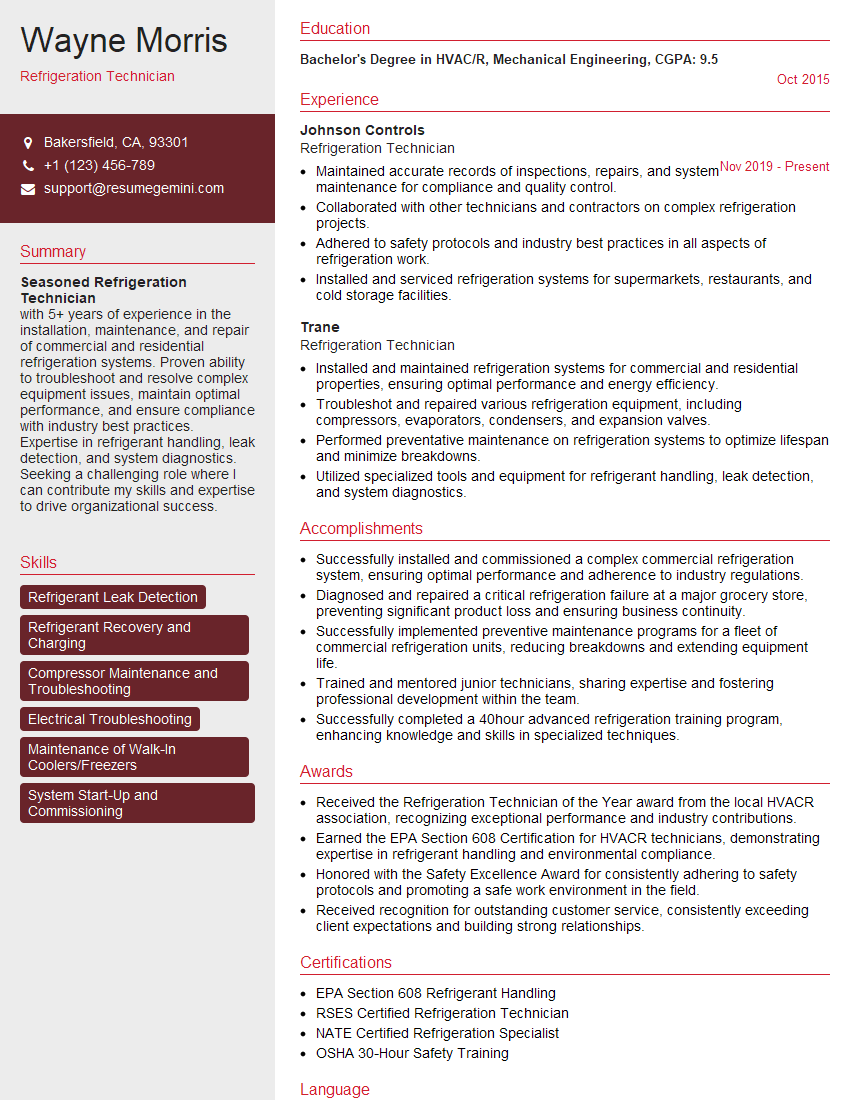
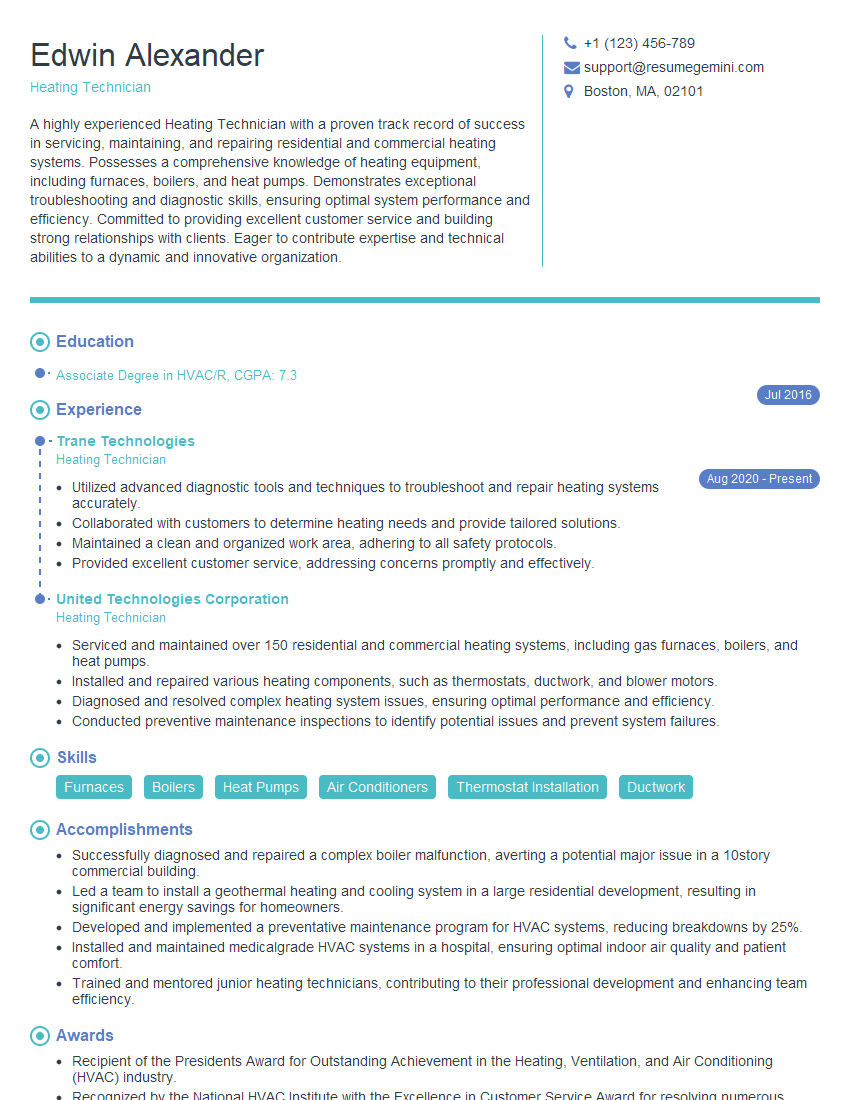
Mastering HVAC and ventilation principles opens doors to exciting career opportunities in a constantly evolving industry. To maximize your job prospects, it’s vital to present your skills and experience effectively. Creating an Applicant Tracking System (ATS)-friendly resume is crucial for getting your application noticed. ResumeGemini is a trusted resource that can help you build a professional and impactful resume, ensuring your qualifications shine. Examples of resumes tailored to HVAC and ventilation roles are available to help you get started.
Explore more articles
Users Rating of Our Blogs
Share Your Experience
We value your feedback! Please rate our content and share your thoughts (optional).
What Readers Say About Our Blog
Very informative content, great job.
good