Interviews are more than just a Q&A session—they’re a chance to prove your worth. This blog dives into essential HVAC Work interview questions and expert tips to help you align your answers with what hiring managers are looking for. Start preparing to shine!
Questions Asked in HVAC Work Interview
Q 1. Explain the difference between a heat pump and a furnace.
The primary difference between a heat pump and a furnace lies in how they produce heat. A furnace burns fuel (natural gas, propane, or oil) to generate heat, which is then distributed throughout a building via a duct system. Think of it like a big, efficient stove heating your entire home. It’s a one-way system: it only heats.
A heat pump, on the other hand, moves heat rather than generating it. In the winter, it extracts heat from the outside air (even if it’s cold outside, there’s still some heat present) and transfers it indoors. In the summer, it reverses the process, moving heat from inside to outside, providing cooling. It’s like a highly efficient refrigerator working in reverse for heating.
In essence, furnaces are primarily heating systems, while heat pumps can provide both heating and cooling. Heat pumps are generally more energy-efficient for heating in milder climates, while furnaces might be more suitable in extremely cold regions where heat pump efficiency drops significantly.
Q 2. Describe the refrigeration cycle and its key components.
The refrigeration cycle is the heart of air conditioning and heat pump systems. It’s a continuous loop that involves four key components working in concert to transfer heat:
- Compressor: This is the workhorse, compressing refrigerant vapor, increasing its temperature and pressure.
- Condenser: Here, the high-pressure, high-temperature refrigerant releases heat to the outside air, changing from a gas to a liquid.
- Expansion Valve (or metering device): This restricts the flow of liquid refrigerant, causing a significant drop in pressure and temperature.
- Evaporator: The low-pressure, low-temperature refrigerant absorbs heat from the indoor air, changing from a liquid to a gas. This cool refrigerant is then circulated back to the compressor, completing the cycle.
Imagine a water fountain: the pump (compressor) increases the pressure, the water flows down (condenser), releasing energy, then it drops down (expansion valve) and flows up again (evaporator), gaining energy from the surrounding environment. The process is analogous.
Q 3. How do you troubleshoot a malfunctioning thermostat?
Troubleshooting a malfunctioning thermostat involves a systematic approach:
- Check Power: Ensure the thermostat is receiving power. Look for a tripped breaker or a loose wire connection.
- Verify Wiring: Examine the wiring connections at the thermostat and the HVAC unit. Loose or incorrect wiring can cause malfunctions. Use a voltage tester to be sure wires are correctly wired to the correct terminal.
- Battery Check (if applicable): If it’s a battery-powered thermostat, replace the batteries.
- Test the Thermostat: Try changing the temperature setting. If the system doesn’t respond, the thermostat itself might be faulty.
- Check the HVAC Unit: If the thermostat appears to be working correctly, the problem may lie with the furnace or air conditioner itself. Check the system’s circuit breaker or fuses.
- Consult the Manual: The thermostat manual may offer troubleshooting tips specific to the model.
- Call a Technician: If you can’t isolate the problem, contact a qualified HVAC technician.
A common problem is a faulty wire connection that leads to inconsistent readings, or a dead battery in the case of a battery-operated thermostat.
Q 4. What are the different types of refrigerants and their environmental impact?
Refrigerants have evolved significantly due to environmental concerns. Older refrigerants like R-22 (Freon) are being phased out because they contribute to ozone depletion and global warming.
- R-22 (HCFC): High ozone depletion potential, being phased out.
- R-410A (HFC): Lower ozone depletion potential but still a significant greenhouse gas, widely used but being phased down.
- R-32 (HFC): Lower global warming potential than R-410A, becoming increasingly popular.
- Natural Refrigerants (e.g., ammonia, CO2, propane): Environmentally friendly with zero or very low ozone depletion and global warming potential. However, they might require specialized handling and safety precautions.
The trend is towards refrigerants with lower global warming potential (GWP) and zero ozone depletion potential (ODP). The choice of refrigerant depends on factors like efficiency, safety, and environmental regulations.
Q 5. Explain the principles of air conditioning.
Air conditioning works on the principle of the refrigeration cycle (explained above). It removes heat and humidity from the indoor air, making it cooler and more comfortable. The process involves:
- Heat Absorption: The refrigerant absorbs heat from the indoor air in the evaporator.
- Heat Rejection: The refrigerant releases this absorbed heat to the outside air in the condenser.
- Air Circulation: Fans circulate the air over the evaporator to cool the indoor space and over the condenser to dissipate heat outdoors.
- Dehumidification: As the refrigerant cools, it causes condensation (moisture in the air turns into liquid). The condensate is typically drained outside.
It’s essentially a controlled heat transfer process that keeps your indoor environment at a desirable temperature and humidity level. The size and capacity of the air conditioner are critical factors in its effectiveness.
Q 6. How do you diagnose and repair a leaking refrigerant line?
Diagnosing a leaking refrigerant line starts with a visual inspection. Look for signs of oil stains, frost, or bubbling near joints or pipes. Then use a leak detection device. These devices use electronic sensors to identify refrigerant leaks. Once the leak is located:
- Isolate the Leak: Turn off the HVAC system to prevent further refrigerant loss and safety hazards.
- Repair or Replace: Minor leaks might be repaired by brazing or soldering, but more significant leaks might require replacing sections of the line. This often requires specialized equipment and expertise.
- Evacuate the System: After repairs, the system needs to be completely evacuated to remove any remaining air and moisture.
- Recharge the Refrigerant: The appropriate amount of refrigerant must be added to restore system performance. Using a charging scale is crucial to avoid overcharging which can also damage the system.
- Test and Monitor: After repair, observe the system closely to confirm the leak is fully resolved.
Working with refrigerant requires proper safety precautions, including using appropriate personal protective equipment (PPE) and understanding the safety and environmental regulations applicable for refrigerants being handled.
Q 7. Describe the process of installing a new HVAC system.
Installing a new HVAC system is a complex process requiring expertise and adherence to safety standards. It typically involves:
- Site Assessment: Determining the heating and cooling load of the building to select the right sized equipment.
- Equipment Selection: Choosing the appropriate furnace, air conditioner, or heat pump based on size, efficiency, and the client’s budget.
- Ductwork Installation or Modification: This involves routing and connecting the ducts from the HVAC unit to different rooms.
- Unit Installation: Securing the outdoor and indoor units in appropriate locations, ensuring proper ventilation and access for maintenance.
- Refrigerant Charging: Adding the correct amount of refrigerant to the system.
- Electrical Connections: Connecting the system to the electrical supply.
- Testing and Commissioning: Thoroughly testing all components and functions to confirm proper operation.
- Start-up and Training: Providing instructions and demonstrating the operation to the client.
Proper installation is crucial for optimal efficiency and longevity of the system. Failure to follow best practices might result in performance issues, reduced lifespan, and safety hazards.
Q 8. What safety precautions do you take when working with refrigerants?
Working with refrigerants demands strict adherence to safety protocols. Refrigerants, depending on their type, can be toxic, flammable, or contribute to ozone depletion. My safety practices always begin with a thorough understanding of the refrigerant I’m handling, consulting the Material Safety Data Sheet (MSDS) for specific hazards and precautions. This includes understanding its toxicity, flammability, and potential health effects.
- Personal Protective Equipment (PPE): I always wear appropriate PPE, including safety glasses, gloves (specifically designed for refrigerant compatibility), and a respirator in enclosed spaces or when dealing with leaks, to prevent inhalation. In some cases, a full-body suit might be necessary for larger leaks or system malfunctions.
- Proper Ventilation: Adequate ventilation is crucial to prevent the buildup of refrigerant vapor, which can displace oxygen and cause asphyxiation. Before starting any work, I ensure the work area is well-ventilated or utilize appropriate ventilation equipment.
- Leak Detection and Repair: I use specialized leak detection equipment, such as electronic leak detectors, to identify and promptly repair any leaks. Repairing leaks prevents refrigerant release into the atmosphere and protects both myself and the environment.
- Recovery and Recycling: I meticulously recover and recycle refrigerants according to EPA regulations. This involves using approved equipment to capture the refrigerant and prevent its release during maintenance or system decommissioning.
- Emergency Preparedness: I’m trained in emergency response procedures in case of accidents involving refrigerants. This includes knowing how to properly handle spills, and contacting emergency services if necessary.
For example, once I was working on a system with R-22, an ozone-depleting substance. Before even opening the system, I confirmed the ventilation was sufficient and donned my PPE. During the process, I detected a small leak. Immediately, I employed a leak detector to precisely locate the breach, repaired it using the correct procedure and recovered the refrigerant using recovery equipment before safely disposing it of through a certified recycling center.
Q 9. How do you perform a system pressure test?
A system pressure test is crucial for identifying leaks and verifying the integrity of an HVAC system. The process involves pressurizing the system with nitrogen gas (never refrigerant) and observing for pressure drops. The specific procedure varies depending on the system type, but the general steps are as follows:
- Isolate the System: First, isolate the system completely from the compressor, condenser, and evaporator, preventing refrigerant from entering the testing area. This often involves closing valves on the lines.
- Purge the System: Next, purge the system with nitrogen to remove any residual air or refrigerant. Air in the system can interfere with the accuracy of the test. I usually do this through a manifold gauge set.
- Pressurize the System: Connect a nitrogen tank to the system through a pressure gauge and carefully pressurize the system to a specific pressure— typically 15 to 40 PSI depending on system design and manufacturer recommendations.
- Monitor Pressure: Observe the pressure gauge closely over a specific period (30 minutes to an hour), noting any significant pressure drop. A significant pressure drop indicates a leak.
- Leak Detection: If a leak is suspected, use leak detection equipment like an electronic leak detector or soapy water to pinpoint the location of the leak.
- Repair and Retest: Once the leak is repaired, repeat the purging and pressurization process to verify the system’s integrity.
I always document the pressure readings at different points and take photos of any identified leaks, along with the repair made. Accurate record-keeping is essential for future reference and troubleshooting. For instance, on a recent commercial HVAC job, a pressure test revealed a leak in a soldered joint. I properly repaired the joint, re-pressurized, and monitored the system for 30 minutes before continuing installation. This pressure test saved us from potentially significant issues and costly repair down the line.
Q 10. Explain the importance of proper airflow in an HVAC system.
Proper airflow is the lifeblood of any HVAC system. It’s essential for efficient heating, cooling, and dehumidification. Think of it like the circulatory system in your body – without adequate blood flow, your organs wouldn’t function properly.
- Effective Heat Transfer: Sufficient airflow ensures proper heat exchange between the air and the heating/cooling coils. Inadequate airflow can lead to reduced efficiency, temperature inconsistencies, and increased energy consumption.
- Humidity Control: Proper airflow over the evaporator coil is critical for dehumidification. If airflow is restricted, moisture won’t be effectively removed from the air, leading to discomfort and potential mold growth.
- System Lifespan: Balanced airflow protects the components of the HVAC system. Restricted airflow can cause overheating of components, leading to premature failure and costly repairs.
- Indoor Air Quality: Proper airflow ensures that conditioned air is circulated evenly throughout the space, maximizing comfort and promoting better indoor air quality. It helps prevent stagnant air and promotes better distribution of fresh air.
Imagine a system where the supply registers are improperly sized or blocked. This would cause restricted airflow in some areas while other zones over cool or overheat. In such situations, I would adjust the dampers, inspect ductwork for blockages and check the blower motor and fan to ensure proper functioning. Addressing this issue would improve the system’s overall performance and prevent unnecessary wear and tear on the equipment.
Q 11. What are the common causes of a frozen evaporator coil?
A frozen evaporator coil is a common HVAC problem, often stemming from restricted airflow, refrigerant issues, or other malfunctions. Here are some key culprits:
- Insufficient Airflow: This is the most frequent cause. Dirty air filters, clogged registers, or restricted ductwork severely limit the airflow over the evaporator coil, preventing proper heat absorption, and causing ice buildup.
- Low Refrigerant Charge: A low refrigerant charge reduces the coil’s ability to absorb heat effectively. The coil becomes too cold and the moisture in the air freezes on its surface.
- Faulty Refrigerant Flow: Problems with the expansion valve, capillary tube, or compressor can lead to insufficient refrigerant flow to the evaporator coil, resulting in freezing.
- Frozen Drain Line: A clogged drain line prevents condensate from draining properly, leading to ice buildup.
- Improperly Sized Equipment: An oversized system might cool too quickly, leading to low suction pressures and freezing.
For example, I once encountered a frozen evaporator coil in a residential system. My diagnosis started with checking the air filter (severely clogged!), examining the airflow (restricted due to a partially blocked duct), and checking the refrigerant charge (slightly low). After addressing these issues—cleaning the filter, clearing the duct blockage, and adding a small amount of refrigerant—the system returned to normal operation. Before making repairs, I always ensure the system is turned off and safe to work on.
Q 12. How do you balance airflow in a multi-zone HVAC system?
Balancing airflow in a multi-zone HVAC system requires precision and attention to detail. The goal is to ensure each zone receives the appropriate amount of conditioned air based on its size and heating/cooling load.
- Zone Dampers: Multi-zone systems use dampers to regulate the airflow to each zone. I adjust these dampers to achieve the desired airflow balance using a manometer or airflow measuring instrument.
- Manometer Readings: A manometer measures the pressure difference across the dampers, allowing me to precisely adjust them for equal pressure drops across all zones.
- Airflow Measurement: Using an airflow hood or other flow measurement tools, I can determine the actual airflow in each zone. This allows for fine-tuning of the dampers to achieve the design airflow for each zone.
- Static Pressure Considerations: Maintaining proper static pressure across the system is crucial. Too much static pressure indicates duct restrictions, while too low may result in poor airflow.
- System Monitoring: After balancing, I monitor the system to verify that the airflow remains balanced over time. Any adjustments are carefully documented.
In one project involving a large office building, I used a manometer to balance the airflow in 15 different zones. By carefully adjusting the dampers and verifying the pressure differentials, I ensured that each office received the appropriate amount of conditioned air for consistent comfort. Precise balancing is crucial for efficiency and occupant satisfaction.
Q 13. What are the different types of HVAC control systems?
HVAC control systems have evolved significantly. The choice depends on factors like building size, complexity, and budget. Common types include:
- Thermostats: These are the simplest, used for individual-room or zone control, ranging from basic mechanical to advanced programmable and smart thermostats.
- Building Management Systems (BMS): These are centralized systems for large buildings, managing multiple HVAC units, lighting, and other building systems. They offer advanced monitoring, control, and energy management capabilities.
- Direct Digital Control (DDC) Systems: These microprocessor-based systems provide precise control over HVAC equipment. They allow for sophisticated algorithms and optimization strategies.
- Variable Air Volume (VAV) Systems: These use variable-speed fans to adjust airflow based on the needs of individual zones. VAV systems are very energy-efficient and are common in larger commercial settings.
- Pneumatic Control Systems: These older systems use compressed air to control dampers and other HVAC components. While less common now, they are still found in some older buildings.
For example, in a recent renovation project, we upgraded an older building’s pneumatic control system to a DDC system. This improved control precision, reduced energy waste, and simplified system monitoring, resulting in significant cost savings and improved comfort for occupants.
Q 14. Describe your experience with ductwork installation and repair.
My experience with ductwork installation and repair spans over [Number] years, encompassing a wide range of projects from residential to commercial settings. My expertise covers all aspects, from initial design and layout to final installation and repair.
- Installation: I’m proficient in installing various types of ductwork, including sheet metal, fiberglass, and flexible ducts. This includes proper sizing, sealing, and connections to ensure optimal airflow and minimize air leakage.
- Repair: I routinely diagnose and repair leaks, damaged sections, and other issues with existing ductwork. This often involves patching, replacing sections, and sealing joints to restore proper airflow.
- Troubleshooting: I can identify airflow problems caused by improperly installed or damaged ductwork. My troubleshooting skills involve inspecting the entire ductwork system, identifying restrictions, and implementing solutions.
- Material Selection: I understand the properties of different duct materials and can select the appropriate material based on the project’s specific requirements and budget.
- Safety Procedures: I always prioritize safety during ductwork installation and repair, complying with all relevant safety regulations and using appropriate PPE.
One notable project involved repairing significant ductwork damage caused by water leakage. I meticulously inspected the entire system, removed the damaged sections, replaced them with new appropriately sized ducts, and ensured all joints were properly sealed. This prevented further water damage and restored the system’s efficiency and effectiveness. I always aim for the most practical solution that is also cost-effective for the client.
Q 15. How do you identify and address refrigerant leaks?
Identifying refrigerant leaks is crucial for efficient and safe HVAC operation. We use several methods, starting with a visual inspection for obvious signs like frost or oil around joints. However, most leaks are subtle. Electronic leak detectors are invaluable; these devices use sensors to detect the presence of refrigerant in the air. They’re particularly useful for pinpointing the exact location of a leak. For larger systems, we might employ dye tracing. A dye is injected into the refrigerant, and then a UV light is used to locate the dye’s presence, revealing the leak path. Addressing the leak involves repairing or replacing the damaged component, ensuring proper evacuation and charging of the system afterwards to restore optimal performance.
For example, I once found a tiny pinhole leak in a copper line that was practically invisible to the naked eye. The electronic leak detector quickly located it, saving significant time and preventing further refrigerant loss. After brazing the repair, we used a vacuum pump to remove any air and moisture from the system before recharging it with the correct amount of refrigerant.
Career Expert Tips:
- Ace those interviews! Prepare effectively by reviewing the Top 50 Most Common Interview Questions on ResumeGemini.
- Navigate your job search with confidence! Explore a wide range of Career Tips on ResumeGemini. Learn about common challenges and recommendations to overcome them.
- Craft the perfect resume! Master the Art of Resume Writing with ResumeGemini’s guide. Showcase your unique qualifications and achievements effectively.
- Don’t miss out on holiday savings! Build your dream resume with ResumeGemini’s ATS optimized templates.
Q 16. Explain the principles of heat transfer.
Heat transfer is the movement of thermal energy from a region of higher temperature to a region of lower temperature. There are three primary modes: conduction, convection, and radiation.
- Conduction: Heat transfer through direct contact. Think of a metal spoon getting hot when placed in a hot cup of coffee; the heat flows directly from the coffee to the spoon.
- Convection: Heat transfer through the movement of fluids (liquids or gases). This is how your home heating system works: heated air rises, displacing cooler air, and creating a circulation pattern.
- Radiation: Heat transfer through electromagnetic waves. This is how the sun warms the earth; no medium is required for the transfer of heat.
In HVAC, we utilize all three. Conduction happens within the walls of ductwork, convection in the air movement within the duct system, and radiation from the sun heating the building (and which we then try to remove with AC).
Q 17. What are the different types of HVAC filters and their effectiveness?
HVAC filters come in various types, each with different effectiveness in removing airborne particles. Common types include:
- Fiberglass filters: These are the least expensive and least effective, primarily trapping larger particles. They’re often used in disposable air filters.
- Pleated filters: These have more surface area than fiberglass filters and capture more particles, offering better efficiency than fiberglass. They’re also often disposable.
- HEPA filters (High-Efficiency Particulate Air): These are the most effective, capturing a significantly higher percentage of airborne particles, including allergens and pollutants. They’re often used in specialized applications or for people with allergies.
- Electrostatic filters: These filters use electrostatic charge to attract and trap particles. They often provide a good balance between efficiency and cost.
Filter effectiveness is measured by the Minimum Efficiency Reporting Value (MERV) rating, a scale from 1 to 16. Higher MERV ratings indicate greater efficiency. The appropriate filter type and MERV rating depends on the specific needs of the system and the occupants, balancing efficiency with airflow restriction.
Q 18. Describe your experience with various HVAC equipment brands.
Throughout my career, I’ve worked extensively with various HVAC equipment brands, including Trane, Carrier, Lennox, and Rheem. Each brand has its strengths and weaknesses, affecting factors like reliability, efficiency, and maintenance requirements. For example, I find Trane units to be generally robust and reliable, often requiring less frequent maintenance. Carrier offers a wide range of models catering to diverse needs, while Lennox often features technologically advanced features. Rheem provides good value for the price point. Experience with these brands helps me to diagnose problems, select the right replacement parts, and offer informed recommendations to clients.
One specific instance involved troubleshooting a malfunctioning Lennox heat pump. My familiarity with the brand’s control system helped me quickly pinpoint a faulty sensor, saving time and reducing repair costs. This underscores the importance of extensive experience across different brands in efficient troubleshooting.
Q 19. How do you troubleshoot a system with low cooling capacity?
Low cooling capacity can stem from several sources. My troubleshooting approach is systematic. First, I check the refrigerant charge using gauges, ensuring the system has the correct amount. Low refrigerant points to a leak that needs to be addressed. Then I inspect the airflow; restricted airflow through dirty filters, coils, or blocked vents reduces cooling efficiency. Next, I’ll check the compressor’s operation: a malfunctioning compressor significantly reduces cooling capacity. I use specialized tools to measure the compressor’s amperage draw, which should be within the manufacturer’s specifications. Finally, I examine the condenser coils for cleanliness, checking for restricted airflow, which may cause the system to overheat and reduce its cooling power.
Imagine a scenario where the cooling is poor. Following this process, I might find a dirty condenser coil drastically reducing its heat dissipation. After cleaning the coils, the cooling capacity is restored to its expected level.
Q 20. Explain the importance of regular HVAC maintenance.
Regular HVAC maintenance is paramount for several reasons. Firstly, it extends the lifespan of the equipment. By regularly cleaning coils, checking refrigerant levels, and lubricating moving parts, we prevent premature wear and tear, saving on expensive repairs or replacements down the line. Secondly, maintenance improves efficiency. A well-maintained system operates at peak performance, reducing energy consumption and lowering utility bills. Finally, regular maintenance enhances indoor air quality by reducing the buildup of dust, allergens, and other contaminants in the system. This is particularly important for people with allergies or respiratory issues.
Think of it like servicing a car – regular oil changes and inspections ensure it runs smoothly and lasts longer. The same principle applies to your HVAC system.
Q 21. How do you interpret a psychrometric chart?
A psychrometric chart is a graphical representation of the thermodynamic properties of moist air. It displays relationships between temperature, humidity, and other properties like enthalpy and specific volume. We use it to understand and analyze air conditioning processes. For example, we can use the chart to determine the effect of cooling and dehumidification on air, to design proper air conditioning systems, or to troubleshoot issues related to humidity levels in a building.
Imagine you need to design an air conditioning system for a specific climate. Using the psychrometric chart, you can determine the initial state of the air, the desired final state (temperature and humidity), and the processes (like cooling and dehumidification) needed to achieve it. The chart shows you the energy required and the changes in properties during the process.
Q 22. Describe your experience with energy-efficient HVAC systems.
My experience with energy-efficient HVAC systems is extensive. I’ve worked extensively with systems designed to minimize energy consumption, focusing on several key areas. This includes installing and maintaining high-efficiency heat pumps, which offer significantly better Coefficient of Performance (COP) compared to traditional systems. I’m proficient in working with variable-speed drives (VSDs) that adjust the blower motor speed according to the heating or cooling demands, reducing energy waste. Furthermore, I’m well-versed in the installation and maintenance of systems incorporating smart thermostats, allowing for precise temperature control and automated scheduling, contributing to significant energy savings. For example, I recently helped a client switch from an older, inefficient furnace to a high-efficiency model with a VSD, resulting in a 30% reduction in their energy bills. This involved not only the physical installation but also careful consideration of ductwork optimization to maximize efficiency.
Beyond specific equipment, my approach to energy efficiency involves a holistic understanding of the system. This means thoroughly assessing the building’s insulation, sealing air leaks, and optimizing the ductwork to prevent energy loss. I always recommend and implement energy audits, ensuring that the HVAC system is correctly sized for the building and the clients’ needs, preventing both oversizing (wasteful energy usage) and undersizing (inefficient heating and cooling).
Q 23. What is your experience with commercial HVAC systems?
My experience with commercial HVAC systems spans several years and diverse building types, from small office spaces to large industrial facilities. I’m familiar with a wide range of equipment, including large-capacity chillers, air handlers, and complex ventilation systems. My work has included not only installation and maintenance but also troubleshooting and repair of sophisticated control systems. For example, I recently worked on a project involving the replacement of a failing chiller in a large shopping mall, requiring careful planning and coordination to minimize disruption to the business operations. This included detailed system analysis, precise equipment selection, and meticulous installation to ensure seamless integration.
Beyond the technical aspects, I understand the unique challenges of working in commercial settings, including strict deadlines, safety regulations, and the need for minimal disruption to the occupants. I’m adept at managing multiple projects concurrently, coordinating with other tradespeople, and adhering to strict safety protocols. I’m also skilled in using Building Management Systems (BMS) to monitor and control various aspects of the HVAC system, providing real-time data analysis for preventative maintenance and optimal performance.
Q 24. How do you handle difficult customers or challenging situations?
Handling difficult customers or challenging situations requires patience, empathy, and effective communication. My approach is to actively listen to their concerns, explain technical issues in a clear and understandable manner, and collaboratively find solutions that meet their needs. For example, I once dealt with a client who was frustrated with inconsistent cooling in their home. After carefully investigating, I discovered a problem with their ductwork, a situation easily misunderstood without explanation. I patiently explained the issue and the necessary repair work, ensuring the client understood the process and why it was important. By thoroughly explaining the cause of the problem and offering a straightforward, effective solution, I was able to not only resolve the HVAC issue but also build trust and improve client satisfaction. This proactive communication is crucial in diffusing tension and turning a negative experience into a positive one.
In situations where disagreements persist, I always aim to escalate the issue appropriately, involving supervisors or other relevant personnel to ensure a fair and effective resolution. I believe in professional conduct and maintaining a respectful demeanor, regardless of the circumstances. My goal is to always find a mutually agreeable solution and leave a positive impression, even in challenging situations.
Q 25. What are your strengths and weaknesses as an HVAC technician?
My strengths as an HVAC technician lie in my problem-solving abilities, my detailed knowledge of various HVAC systems, and my commitment to providing excellent customer service. I’m highly proficient in diagnosing and repairing a wide range of HVAC equipment, and I’m adept at troubleshooting complex problems. My attention to detail ensures I identify even subtle issues, preventing future problems. I am a quick learner, always staying up to date with the latest technologies and best practices.
My area for improvement is time management, particularly when dealing with multiple urgent requests. While I am capable of handling a significant workload, I sometimes struggle to prioritize tasks efficiently. I’m actively working on improving my time management skills through task prioritization techniques and effective scheduling to ensure projects are completed on time and with high quality.
Q 26. Describe your experience with troubleshooting electrical issues in HVAC systems.
Troubleshooting electrical issues in HVAC systems is a critical aspect of my work. I possess a solid understanding of electrical circuits, wiring diagrams, and safety protocols. I’m familiar with the common electrical problems encountered in HVAC systems, such as faulty wiring, malfunctioning capacitors, and issues with control boards. My approach involves systematically testing components, using multimeters and other diagnostic tools to pinpoint the root cause of the problem. For example, I recently diagnosed a faulty capacitor in a rooftop unit that was causing the compressor to fail to start. Using a multimeter, I confirmed the capacitor’s failure, safely replaced it, and verified the system’s proper functioning. This required not only technical expertise but also a careful understanding of electrical safety procedures to avoid any potential hazards.
Beyond specific repairs, my approach emphasizes prevention. I conduct regular inspections to identify potential electrical problems before they lead to significant failures, reducing downtime and maintenance costs. This preventative approach often involves reviewing wiring, checking for loose connections, and verifying the proper grounding of the system. A well-maintained electrical system is crucial for the safe and efficient operation of an HVAC system.
Q 27. What are your salary expectations?
My salary expectations are commensurate with my experience and skills, and are in line with the industry standards for a skilled and experienced HVAC technician with my qualifications. I am open to discussing a competitive compensation package that reflects my contributions to the company’s success. I am confident that my skills and experience will provide significant value to your organization. I would be happy to discuss my salary expectations further once I have a better understanding of the full scope of the position and the company’s compensation structure.
Key Topics to Learn for Your HVAC Work Interview
- Refrigeration Cycles: Understand the principles of vapor-compression refrigeration, including the four key components (compressor, condenser, evaporator, expansion valve) and their functions. Be prepared to discuss different refrigerants and their environmental impact.
- Air Distribution Systems: Familiarize yourself with various ductwork designs, air handling units (AHUs), and ventilation strategies. Be able to discuss the importance of proper airflow and balancing for optimal system performance.
- Troubleshooting and Diagnostics: Practice identifying common HVAC problems, such as refrigerant leaks, compressor failures, and control system malfunctions. Be ready to explain your systematic approach to diagnosing and resolving issues.
- HVAC Controls and Automation: Gain a working knowledge of thermostats, programmable logic controllers (PLCs), and building automation systems (BAS). Understanding basic electrical schematics is beneficial.
- Safety Procedures and Regulations: Demonstrate familiarity with relevant safety regulations, including proper handling of refrigerants, electrical safety, and lockout/tagout procedures. This showcases your commitment to safe work practices.
- Energy Efficiency and Sustainability: Discuss different strategies for improving the energy efficiency of HVAC systems, such as utilizing variable-speed drives, implementing proper insulation, and selecting high-efficiency equipment. This highlights your awareness of current industry trends.
- Specific Equipment Knowledge: Depending on the job description, research specific brands or types of equipment that the company utilizes. Showing familiarity with their preferred systems demonstrates initiative.
Next Steps
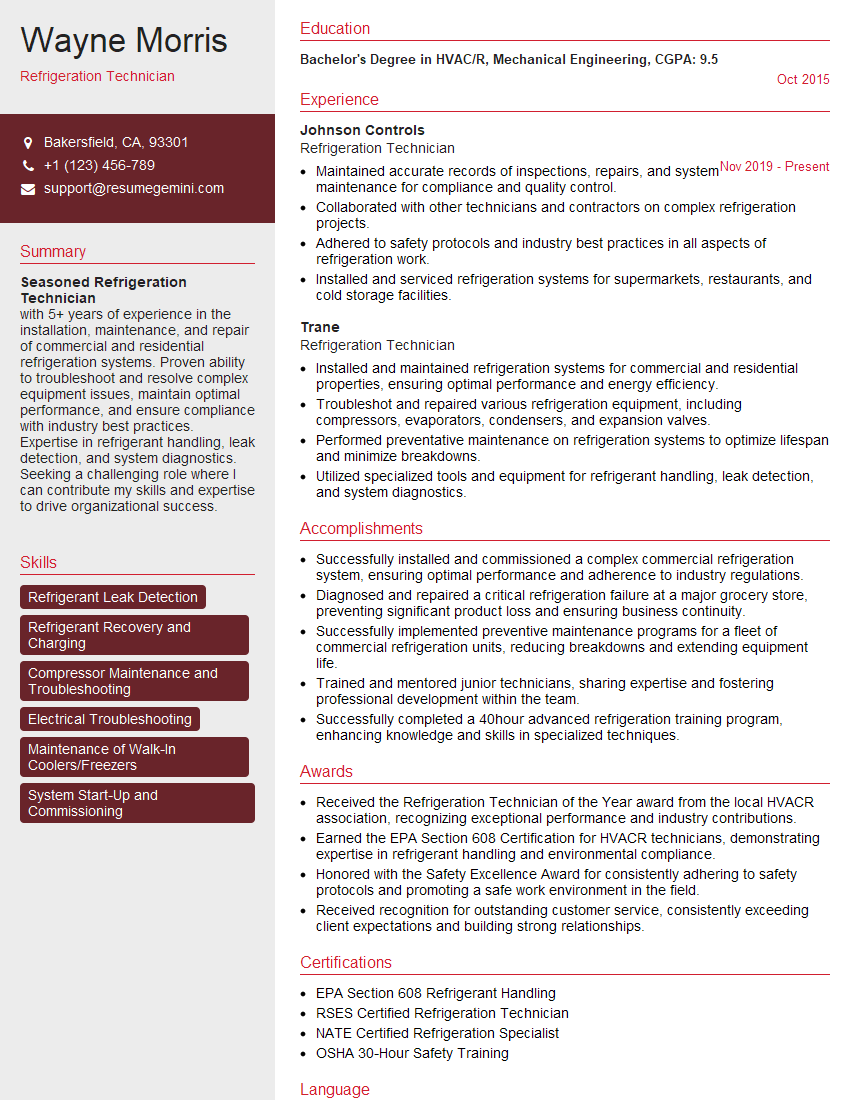
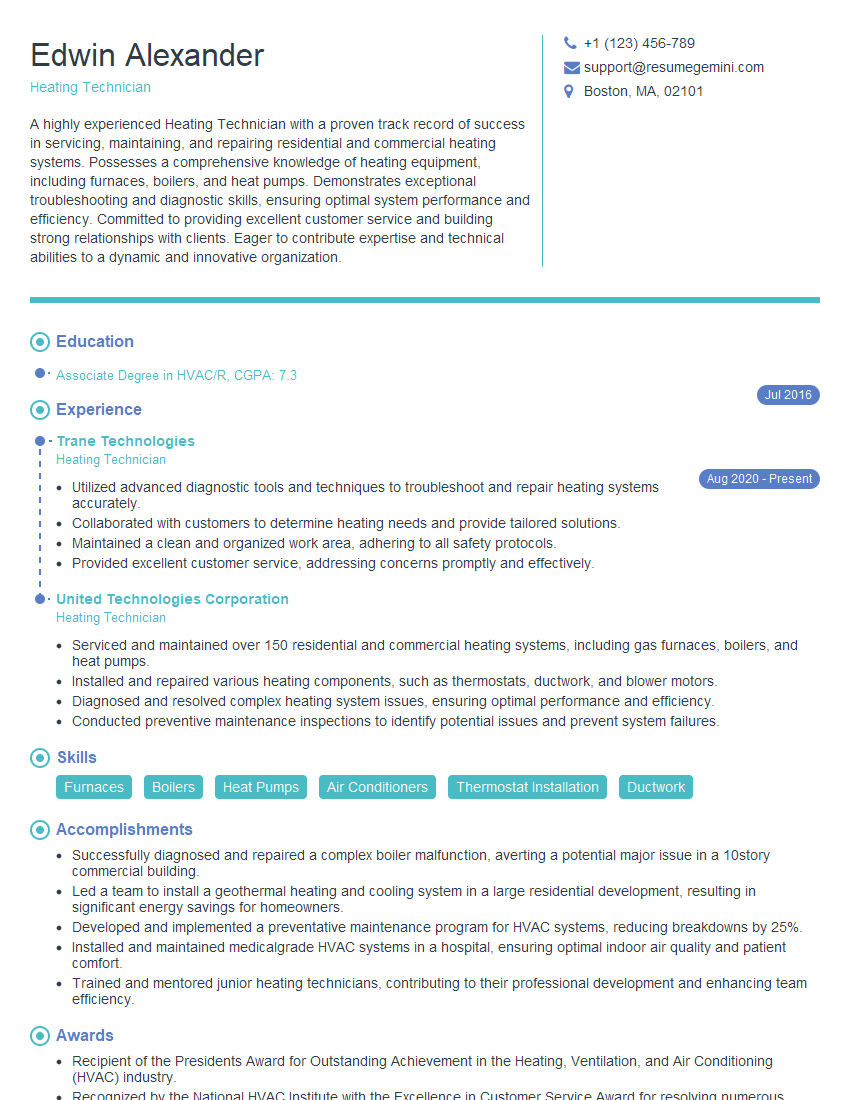
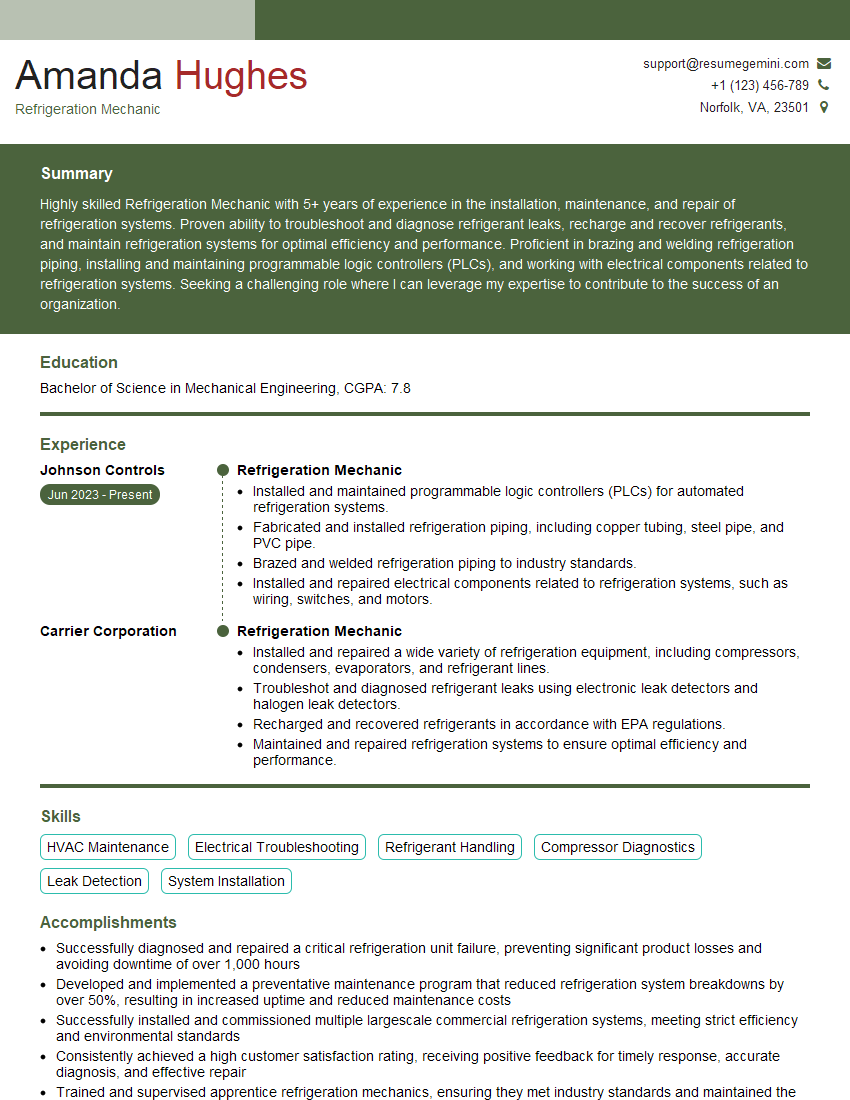
Mastering HVAC work opens doors to a rewarding and consistently in-demand career with excellent growth potential. As you advance your skills, your earning potential and career opportunities will expand significantly. To maximize your chances of landing your dream HVAC job, it’s crucial to present yourself professionally. Crafting an ATS-friendly resume is key to getting your application noticed by hiring managers. ResumeGemini is a trusted resource that can help you build a strong, impactful resume tailored to the HVAC industry. Examples of resumes specifically designed for HVAC work are available to help you get started.
Explore more articles
Users Rating of Our Blogs
Share Your Experience
We value your feedback! Please rate our content and share your thoughts (optional).
What Readers Say About Our Blog
Very informative content, great job.
good