Cracking a skill-specific interview, like one for Ideation and Brainstorming, requires understanding the nuances of the role. In this blog, we present the questions you’re most likely to encounter, along with insights into how to answer them effectively. Let’s ensure you’re ready to make a strong impression.
Questions Asked in Ideation and Brainstorming Interview
Q 1. Describe your preferred ideation process.
My preferred ideation process is a multi-stage approach that blends structured and free-flowing techniques. It begins with a clear definition of the problem or challenge, ensuring everyone understands the context. This is followed by a divergent phase using techniques like brainwriting (individual brainstorming followed by sharing), mind mapping, and SCAMPER (Substitute, Combine, Adapt, Modify, Put to other uses, Eliminate, Reverse). This ensures a wide range of initial ideas. The next stage involves convergent thinking – we analyze the generated ideas, grouping similar concepts, prioritizing based on feasibility and potential impact, and refining the most promising ones. Finally, we prototype and test the top ideas, iterating based on feedback.
For example, when tasked with improving user engagement on a software platform, we’d start by defining key metrics (e.g., time spent on platform, feature usage). Then, brainwriting would help generate a broad spectrum of ideas. Following that, we’d group ideas focused on improving user interface, gamification, and personalized content. We would then prototype a few selected ideas, such as a new onboarding flow or an in-app reward system, and test them with users before implementation.
Q 2. What techniques do you use to overcome brainstorming blocks?
Brainstorming blocks are common. To overcome them, I employ several strategies. One is to change the environment – a walk outside or a change of room can stimulate fresh thinking. Another is to use prompts or constraints; for example, ‘What would a child do?’ or limiting solutions to a specific budget. Techniques like the ‘worst possible idea’ exercise can also be surprisingly effective; it encourages thinking outside the box by intentionally generating unconventional, even impractical ideas which can then spark more relevant ones. Finally, I encourage participants to build upon each other’s ideas – even seemingly unrelated suggestions can be combined to create something innovative.
For instance, if a team is stuck on improving a product’s packaging, we might try a ‘worst possible idea’ exercise – perhaps completely illogical packaging like a giant inflatable ball. This outlandish idea might spark discussion on innovative and unexpected solutions, perhaps inspiring a more practical idea such as using biodegradable and reusable packaging.
Q 3. How do you ensure diverse perspectives are incorporated during brainstorming sessions?
Diverse perspectives are crucial for truly innovative solutions. I achieve this by deliberately forming teams with individuals from different backgrounds, departments, and levels of experience. I also employ techniques like ‘anonymous idea generation’ – participants submit ideas anonymously to avoid hierarchical biases. Structured approaches like the ‘6-3-5 method’ (six participants, three ideas each, five minutes to write) also help generate a broader range of ideas. Furthermore, I encourage active listening and create a safe space for all participants to contribute without fear of judgment. Asking targeted questions to specific individuals, based on their expertise, can be particularly helpful.
For example, when brainstorming a marketing campaign, I’d include team members from marketing, sales, product development, and even customer service. This mix ensures we consider the campaign’s impact from various angles; for instance, how a specific campaign message might influence sales, customer feedback, or the product development roadmap.
Q 4. Explain how you evaluate the feasibility of ideas generated during a brainstorming session.
Evaluating feasibility involves a structured approach. We assess each idea against several criteria: technical feasibility (can we build it?), economic feasibility (can we afford it?), market feasibility (is there demand?), legal feasibility (is it compliant with regulations?), and time feasibility (can we deliver it on schedule?). This can be done through simple checklists or more sophisticated scoring systems. We also consider potential risks and mitigation strategies for each idea. Prototyping and testing (even if just low-fidelity prototypes) are essential for determining true feasibility and often reveal unexpected challenges or opportunities.
For a new mobile app, we would examine whether the required technology is available and cost-effective, assess market trends and competitor analysis to determine demand, and ensure the app adheres to relevant data privacy laws. We’d create mockups and test user interfaces to identify potential usability issues.
Q 5. Describe a time you successfully generated innovative solutions to a complex problem.
During a project aimed at improving customer onboarding for a complex software platform, the team was struggling with high drop-off rates during the initial setup. Existing tutorials were lengthy and technical. Using a combination of brainwriting and SCAMPER, we explored alternative approaches. Applying ‘Adapt’ from SCAMPER, we looked at successful onboarding processes from different industries (e.g., gaming). The idea of a gamified onboarding process emerged – we introduced a point system, badges, and progress bars to encourage users. We also simplified the initial steps, focusing on core functionality. This resulted in a significant reduction in drop-off rates and a marked increase in user engagement.
Q 6. How do you manage competing ideas during a brainstorming session?
Managing competing ideas requires a structured approach to prioritize and refine options. Instead of directly rejecting ideas, we encourage participants to explain the rationale behind their preferences. We facilitate a discussion to understand the underlying needs and objectives that each idea addresses. This often reveals common ground, leading to a synthesis of the best elements of competing ideas. We might also use voting or scoring methods to objectively rank ideas, or break down large problems into smaller, more manageable sub-problems, allowing concurrent brainstorming on different aspects.
For example, if one team member champions a complex solution while another suggests a simpler, faster solution, we’d analyze both, perhaps discovering that the complex solution offers more long-term benefits while the simpler solution addresses immediate needs. We might then create a hybrid approach that combines elements from both.
Q 7. What metrics do you use to assess the success of an ideation process?
The success of an ideation process isn’t solely measured by the number of ideas generated. Instead, we evaluate based on several key metrics. These include the number of viable ideas (ideas that are feasible and align with business objectives), the quality of implemented solutions (measured through user feedback and business outcomes such as increased efficiency or revenue), and the team’s engagement and satisfaction throughout the process. We also track the time spent on ideation relative to the value generated, and assess the level of innovation achieved (measured by the novelty and impact of the solutions implemented).
For example, for a product redesign project, success would be measured by a combination of factors: improvements in customer satisfaction scores (quality), successful launch of the redesigned product on schedule (efficiency), and the number of novel features implemented (innovation).
Q 8. How do you differentiate between good and bad ideas during an ideation process?
Differentiating between good and bad ideas isn’t about inherent quality at the initial ideation stage; it’s about feasibility, relevance, and impact. A ‘bad’ idea at this point might simply be impractical or misaligned with the goals. We use a multi-faceted approach:
Feasibility Assessment: Does the idea have the potential to be implemented given available resources, technology, and time constraints? For example, proposing a Mars colonization project for a small marketing team is infeasible.
Relevance Check: Does the idea directly address the problem or opportunity we’re tackling? An idea to improve customer satisfaction by redesigning the website is relevant if declining satisfaction is the core issue.
Impact Analysis: What is the potential positive impact of this idea? A minor improvement might be less impactful than a disruptive solution. We use metrics to quantify this, such as potential revenue increase or customer acquisition cost reduction.
Criteria Matrix: We often create a simple matrix outlining these criteria (Feasibility, Relevance, Impact) and score each idea. This provides a structured way to compare and prioritize.
Essentially, we aim for ‘good enough’ ideas to begin with, understanding that refinement and iteration will follow.
Q 9. Describe your experience with different brainstorming techniques (e.g., mind mapping, SCAMPER).
I’ve extensively used various brainstorming techniques, tailoring my approach to the specific context and group dynamics.
Mind Mapping: This visual technique is fantastic for exploring connections and branching off from a central theme. I’ve used it successfully in developing marketing campaigns, starting with a central idea (e.g., ‘increase brand awareness’) and branching out to different tactics (social media, influencer marketing, content creation). The visual representation helps everyone see the big picture and potential interrelationships.
SCAMPER: This checklist (Substitute, Combine, Adapt, Modify, Put to other uses, Eliminate, Reverse) is excellent for generating innovative variations on existing ideas. For example, when brainstorming new product features, we might use SCAMPER to adapt an existing feature from a competitor (Adapt), combine two existing features into one (Combine), or eliminate a non-essential feature to simplify the product (Eliminate).
Brainwriting: This is particularly useful for large or shy groups, as it allows for asynchronous idea generation. Each participant writes down their ideas independently before sharing, reducing the pressure of immediate verbal contribution.
I find that the most effective approach often combines several techniques to leverage their strengths. For instance, I might use mind mapping to initially explore the problem space and then SCAMPER to refine the resulting ideas.
Q 10. How do you facilitate a brainstorming session with a large, diverse group?
Facilitating brainstorming with large, diverse groups requires careful planning and execution. Here’s my approach:
Pre-Session Preparation: Clearly define the problem statement and distribute it beforehand. This allows participants to come prepared with initial thoughts.
Structured Approach: Employ techniques like brainwriting or round-robin brainstorming to ensure everyone gets a chance to contribute, even in larger groups.
Group Division (if necessary): For extremely large groups, consider dividing them into smaller, more manageable subgroups to brainstorm independently, then regroup to consolidate ideas.
Clear Guidelines and Rules: Establish ground rules upfront, emphasizing respect, active listening, and the importance of building on each other’s ideas. No idea is a bad idea at this stage; the goal is quantity over quality initially.
Technology Integration: Tools like online whiteboards or collaborative document platforms can facilitate idea capture and sharing, making the process more inclusive.
Summarization & Consolidation: Regularly summarize the key ideas generated to keep everyone focused and track progress.
The key is to create an inclusive and structured environment where everyone feels comfortable and empowered to share their ideas.
Q 11. How do you handle disagreements or conflicts during a brainstorming session?
Disagreements are inevitable and can be valuable if managed constructively. I use a few strategies:
Active Listening and Clarification: I encourage participants to listen carefully and seek clarification if needed. Often, disagreements stem from misunderstandings.
Focus on the ‘Why’: Instead of dismissing opposing views, I encourage participants to explain the reasoning behind their perspectives. This allows us to explore underlying assumptions and identify common ground.
Neutral Facilitation: I act as a neutral facilitator, ensuring that everyone feels heard and respected. I might reframe disagreements as opportunities for exploring different solutions.
Prioritization and Voting: If disagreements persist, we might use a simple voting system to prioritize ideas based on feasibility or impact. This provides a structured way to move forward.
Separate Discussion: If a disagreement is particularly complex or disruptive, I might suggest a separate discussion after the main brainstorming session to avoid derailing the flow.
The goal is to transform conflict into productive dialogue leading to better, more robust ideas.
Q 12. How do you ensure that the ideas generated during a brainstorming session are actionable?
Ensuring generated ideas are actionable involves a multi-step process that begins during the ideation phase itself:
SMART Criteria: Frame ideas using the SMART criteria (Specific, Measurable, Achievable, Relevant, Time-bound). This ensures clarity and allows for easier prioritization and execution.
Resource Mapping: During the brainstorming session, encourage participants to consider the resources required (budget, personnel, technology) to implement each idea.
Prioritization Matrix: Develop a matrix that ranks ideas based on factors such as impact, feasibility, and resource requirements. This helps focus on the most promising and achievable solutions.
Post-brainstorming, a thorough review and refinement process is crucial:
Detailed Planning: Develop detailed plans outlining the steps required for implementing the selected ideas.
Timeline and Milestones: Set realistic timelines and identify key milestones to track progress and ensure accountability.
Risk Assessment: Identify potential risks and develop mitigation strategies. This proactive approach makes the execution process smoother.
By integrating actionability into every stage, from ideation to implementation, we significantly increase the likelihood of successful outcomes.
Q 13. Describe a time you had to defend a controversial idea.
During a project revamp, I proposed eliminating a long-standing, but inefficient, internal process. It was controversial because it was familiar and comfortable for the team, even if it was unproductive. To defend my idea:
Data-driven Argument: I presented data demonstrating the process’s low efficiency and its negative impact on productivity and project timelines.
Alternative Solution: I didn’t simply criticize the old process; I presented a well-defined alternative solution, outlining its benefits and demonstrating its feasibility.
Addressing Concerns: I anticipated potential concerns (e.g., resistance to change) and addressed them proactively, outlining training plans and providing reassurance.
Collaboration and Compromise: I actively sought feedback and incorporated suggestions from the team, demonstrating my willingness to adapt and collaborate. This ultimately led to a modified version of my initial proposal that addressed some of the concerns.
Ultimately, the modified proposal was adopted and resulted in significant improvements to project efficiency.
Q 14. How do you encourage participation from quieter members during a brainstorming session?
Encouraging participation from quieter members requires creating a safe and inclusive environment:
Individual Check-ins: Before the session, I might have a brief, informal chat with quieter members to understand their perspectives and alleviate any potential anxieties.
Structured Techniques: Using techniques like brainwriting or anonymous idea submission allows quieter members to contribute without the pressure of public speaking.
Non-Verbal Cues: Pay attention to non-verbal cues like body language and eye contact. If someone seems hesitant, offer encouragement or directly ask for their input.
Positive Reinforcement: Publicly acknowledge and appreciate contributions from quieter members. This encourages them and signals to others the value of their input.
One-on-One Follow-up: After the session, I might have follow-up conversations with quieter members to gather additional ideas or insights that they might not have shared during the group session.
The goal is to create a space where everyone feels valued and comfortable expressing their ideas, regardless of their communication style.
Q 15. How do you prioritize ideas generated during a brainstorming session?
Prioritizing ideas after a brainstorming session is crucial for focusing resources effectively. I typically use a multi-stage approach. First, we categorize ideas based on their feasibility, impact, and alignment with overall goals. Feasibility considers factors like resources, time, and technical limitations. Impact assesses the potential positive effects on the business or user experience. Alignment ensures the ideas directly contribute to the project’s objectives. After categorizing, we use a scoring system. Each category (feasibility, impact, alignment) receives a score (e.g., 1-5), and the total score determines the priority. We might also use a weighted scoring system, giving more importance to certain criteria depending on the project’s context. Finally, we discuss and refine the prioritized list, considering potential synergies or conflicts between ideas. For example, in a project aimed at improving customer satisfaction, an idea with high impact on customer experience but low feasibility might be delayed until other, more immediate improvements are implemented.
Visual tools like a prioritization matrix (a simple two-by-two chart with impact and effort) can greatly aid this process. This allows for a quick visual representation of which ideas are ‘low-hanging fruit’ (high impact, low effort) versus those that require more significant investment.
Career Expert Tips:
- Ace those interviews! Prepare effectively by reviewing the Top 50 Most Common Interview Questions on ResumeGemini.
- Navigate your job search with confidence! Explore a wide range of Career Tips on ResumeGemini. Learn about common challenges and recommendations to overcome them.
- Craft the perfect resume! Master the Art of Resume Writing with ResumeGemini’s guide. Showcase your unique qualifications and achievements effectively.
- Don’t miss out on holiday savings! Build your dream resume with ResumeGemini’s ATS optimized templates.
Q 16. Explain your understanding of design thinking principles.
Design thinking is a human-centered problem-solving approach that emphasizes empathy, experimentation, and iteration. It’s a five-stage process: Empathize, Define, Ideate, Prototype, and Test. Empathize involves deeply understanding the user’s needs and context through research methods like interviews and observations. Define focuses on clearly articulating the problem based on the empathize stage. Ideate is where brainstorming and idea generation happen. Prototype involves creating tangible representations of ideas – sketches, mockups, etc. – to test and refine them. Finally, Test involves gathering feedback on the prototypes and iterating based on that feedback. Each stage informs the next, creating a cyclical process of refinement and improvement. For instance, in a project to redesign a website, the empathize stage might involve user interviews to understand their frustrations with the current site, leading to a clear problem definition (e.g., ‘users find it difficult to navigate to product information’). The ideate phase would then explore different solutions, and the prototype phase would involve building clickable mockups to test those solutions before full-scale development.
Q 17. How do you incorporate user feedback into the ideation process?
User feedback is integral to successful ideation. We incorporate it throughout the process, not just at the end. Early user feedback, obtained even during the empathize and define stages, helps refine the problem definition and ensure we’re solving the right problem for the right users. During the ideate stage, we can present early concepts or sketches to users for initial reactions. This prevents investing time and resources into ideas that are fundamentally flawed. The test stage is crucial for gathering comprehensive feedback on prototypes. We use a mix of methods, including usability testing (watching users interact with the prototype), surveys (collecting quantitative and qualitative data), and A/B testing (comparing different design options). We analyze this data to identify areas for improvement and iterate on our designs. For example, during a mobile app redesign, early user feedback revealed that users struggled with the navigation. By incorporating this feedback, we modified the navigation scheme in the prototype and saw significant improvements in usability during subsequent testing.
Q 18. Describe your experience with prototyping and iteration in an ideation context.
Prototyping and iteration are at the heart of my ideation process. I believe in building low-fidelity prototypes early and often. These don’t need to be polished; they’re primarily for testing core concepts and gathering feedback. Tools like paper sketches, whiteboards, or low-fidelity digital mockups are excellent for this. Iteration happens continuously based on the feedback from each prototype. This is an iterative cycle where we refine, improve, and test until we reach a satisfactory solution. For example, while designing a new product feature, we might start with a simple paper prototype to visualize the user flow and get initial feedback. Based on this feedback, we would iterate, perhaps creating a digital mockup with more detail and functionality before moving towards a high-fidelity prototype. This iterative approach minimizes risks and ensures the final product meets user needs.
Q 19. How do you handle situations where the initial ideas are not successful?
When initial ideas fail, it’s not a setback, but an opportunity to learn and adapt. The first step is a thorough analysis of why the initial ideas didn’t work. We examine user feedback, market research, and technical constraints to identify the root causes. This analysis might reveal flaws in our initial assumptions or unmet needs. We then re-examine the problem definition, perhaps revisiting the empathize stage to gather additional user insights. This often requires a fresh perspective, sometimes involving a different team or brainstorming techniques. We might use techniques like ‘reverse brainstorming’ (identifying what shouldn’t be done) or SCAMPER (Substitute, Combine, Adapt, Modify, Put to other uses, Eliminate, Reverse) to generate new ideas. For instance, if an initial marketing campaign failed, we would analyze the data to understand why—was the messaging unclear? Was the target audience wrong? Then we’d use that data to refine our approach and create a more effective campaign.
Q 20. How do you measure the impact of ideas generated through brainstorming?
Measuring the impact of ideas requires a well-defined set of metrics. The metrics will vary depending on the project goals. For example, if the goal is to increase website conversions, we might track metrics like conversion rates, bounce rates, and time spent on site. If the goal is to improve customer satisfaction, we might use customer satisfaction scores (CSAT), Net Promoter Score (NPS), or qualitative feedback from user interviews. We establish these metrics before the ideation phase to ensure we measure the right things. After implementing an idea, we track these metrics to quantify the impact. A/B testing allows for direct comparison between the impact of different ideas. Qualitative data, such as user feedback, provides valuable insights that complement quantitative metrics. For example, we might see a 15% increase in website conversions after implementing a redesigned checkout process, but user interviews might also reveal that the new process is perceived as more user-friendly.
Q 21. What is your experience with using technology to support ideation?
Technology plays a significant role in modern ideation. I’ve used various tools to enhance the process. Mind mapping software helps organize and visualize ideas. Online brainstorming platforms facilitate collaborative idea generation, even with geographically dispersed teams. Prototyping tools allow for quick creation of digital mockups and prototypes. Collaboration platforms enable efficient sharing and feedback on designs. Data analytics tools help analyze user feedback and measure the impact of implemented ideas. For example, we might use Miro for collaborative brainstorming, Figma for prototyping, and Google Analytics to track website performance after implementing a new design. These tools streamline the ideation process, improve collaboration, and enable data-driven decision-making. Choosing the right tools depends on the project’s specific needs and the team’s preferences.
Q 22. How do you ensure that the brainstorming process remains focused and productive?
Maintaining focus and productivity during brainstorming is crucial for generating valuable ideas. It’s like trying to bake a cake – you need the right ingredients (focused participants) and a clear recipe (defined objective). My approach involves several key steps:
- Clearly Defined Objective: Before we begin, I ensure everyone understands the challenge or opportunity we’re addressing. A well-defined problem statement acts as our compass, preventing us from wandering off-topic. For example, instead of ‘improve sales,’ we’d use ‘increase sales of product X by 15% in the next quarter by targeting a new demographic.’
- Structured Brainstorming Techniques: We don’t just free-associate. I often employ techniques like mind mapping, SCAMPER (Substitute, Combine, Adapt, Modify, Put to other uses, Eliminate, Reverse), or the 6-3-5 method to encourage structured idea generation and prevent idea dilution.
- Timeboxing: Dedicated time blocks keep the energy high and prevent brainstorming from dragging on. Short, focused bursts are often more effective than lengthy, unfocused sessions.
- Role Assignment: Assigning specific roles (e.g., facilitator, timekeeper, note-taker) ensures everyone contributes effectively and the session stays on track.
- Positive and Inclusive Environment: Creating a safe space where participants feel comfortable sharing ideas, even seemingly ‘out there’ ones, is essential. I actively discourage judgment or criticism during the idea generation phase.
By combining these methods, we channel our collective creativity towards a shared goal, maximizing output and minimizing wasted time.
Q 23. Describe your process for translating ideas into concrete action plans.
Translating brainstormed ideas into actionable plans requires a structured approach. It’s like building a house – you need a blueprint (action plan) before you start laying bricks (implementation). My process typically involves:
- Idea Prioritization: We evaluate each idea based on criteria such as feasibility, impact, and resource requirements. This could involve scoring each idea using a simple rubric or more sophisticated methods like a weighted decision matrix.
- Actionable Steps: For prioritized ideas, we break them down into smaller, manageable steps. This involves defining clear tasks, assigning responsibilities, and setting realistic deadlines. Using project management tools like Trello or Asana can significantly enhance this step.
- Resource Allocation: We identify the resources (budget, personnel, time) needed for each action item and allocate them accordingly.
- Risk Assessment: We anticipate potential roadblocks or challenges and develop contingency plans to mitigate them.
- Monitoring and Evaluation: We establish key performance indicators (KPIs) to track progress and assess the effectiveness of the implemented actions. Regular reviews and adjustments are crucial for success.
This step-by-step process ensures that our creative ideas aren’t just abstract concepts but translate into tangible, measurable results.
Q 24. How do you deal with the pressure of generating innovative solutions under tight deadlines?
Generating innovative solutions under pressure requires a strategic approach. Think of it like a high-stakes game – you need to manage your resources (time, energy, brainpower) effectively to win. My strategy focuses on:
- Focused Time Management: I prioritize tasks and allocate time effectively using time management techniques like the Pomodoro Technique. This ensures I dedicate focused blocks to ideation and avoid getting bogged down in less important tasks.
- Rapid Prototyping: Instead of perfecting one idea, I encourage the team to quickly develop prototypes of multiple ideas, allowing for faster iteration and feedback. This approach enables rapid testing and early elimination of non-viable options.
- Leveraging Technology: I use tools like mind mapping software, collaborative whiteboards, and online brainstorming platforms to facilitate rapid idea generation and documentation.
- Prioritization and Constraint-Based Thinking: I emphasize identifying the most critical constraints (time, budget, resources) and focus our creative energy on solutions that address them directly.
- Mindfulness and Stress Management: I prioritize self-care to maintain focus and creativity under pressure. Techniques like mindfulness exercises can enhance cognitive function and decision-making.
By strategically managing time, embracing rapid prototyping, and maintaining a clear focus, I can navigate the pressures of tight deadlines while still producing high-quality innovative solutions.
Q 25. What are your strengths and weaknesses in the context of ideation and brainstorming?
My strengths lie in my ability to facilitate collaborative brainstorming sessions, structure the process effectively, and translate abstract ideas into concrete action plans. I’m adept at identifying and mitigating potential roadblocks, and I excel at creating inclusive environments that encourage diverse perspectives. I am also comfortable adapting my approach based on the context and personalities involved.
However, my weakness can be a tendency towards perfectionism, which sometimes requires conscious effort to overcome. I’m actively working on embracing a more iterative approach, accepting that not every idea will be perfect from the start.
Q 26. Describe a time you had to adapt your ideation approach due to changing circumstances.
During a product development project, our initial ideation focused on a sophisticated, feature-rich application. However, due to unexpected budget cuts, we had to adapt. We originally planned a complex user interface; however, the budget cut necessitated a change. We shifted to a simpler, Minimum Viable Product (MVP) approach, focusing on core functionality and delaying less crucial features. This involved a complete reevaluation of our initial ideas, prioritizing features based on user impact and development cost. We used a prioritization matrix to rank the features. This adaptability allowed us to launch a successful product, even under constrained circumstances. The MVP allowed us to gather real-world user feedback which then informed the development of the fuller product at a later stage.
Q 27. How do you foster a culture of innovation within a team?
Cultivating a culture of innovation requires a multi-faceted approach. Think of it as nurturing a garden – you need the right soil (environment), sunlight (resources), and water (support) for the seeds (ideas) to flourish.
- Psychological Safety: Creating a space where team members feel comfortable taking risks, sharing ideas, and even failing without fear of judgment is paramount. This involves actively promoting open communication and celebrating both successes and learning from failures.
- Empowerment and Autonomy: Giving team members ownership of projects and the autonomy to explore their ideas fosters a sense of responsibility and encourages creativity.
- Knowledge Sharing: Establishing regular knowledge-sharing sessions, workshops, and access to relevant resources keeps the team updated and inspired.
- Cross-functional Collaboration: Encouraging collaboration across different departments breaks down silos and introduces diverse perspectives into the ideation process.
- Recognition and Reward: Acknowledging and rewarding innovative contributions, even small ones, motivates the team and reinforces the value of creative thinking.
By fostering a supportive, empowering, and collaborative environment, we can unlock the team’s full innovative potential.
Q 28. How do you stay updated with the latest trends and techniques in ideation and brainstorming?
Staying current in the field of ideation and brainstorming is crucial. I employ a variety of methods to stay informed:
- Professional Development Courses: I regularly participate in online courses and workshops offered by platforms like Coursera, edX, and LinkedIn Learning to enhance my skills and knowledge on the latest ideation techniques.
- Industry Publications and Blogs: I follow industry publications, blogs, and podcasts that focus on innovation, creativity, and design thinking to stay abreast of current trends and best practices.
- Conferences and Workshops: Attending industry conferences and workshops provides opportunities to network with peers, learn from experts, and discover emerging trends.
- Networking with Peers: I actively participate in professional communities and networks to share ideas, discuss challenges, and learn from the experiences of others.
- Experimentation and Continuous Improvement: I constantly experiment with new tools and techniques, and I reflect on my own experiences to refine my approach and incorporate learnings.
This continuous learning process ensures that my ideation and brainstorming skills remain sharp and aligned with the latest advancements in the field.
Key Topics to Learn for Ideation and Brainstorming Interviews
- Understanding Different Brainstorming Techniques: Explore various methods like brainwriting, mind mapping, SCAMPER, and reverse brainstorming. Consider their strengths and weaknesses in different contexts.
- Defining the Problem Clearly: Learn to articulate the core problem concisely and accurately. Practice identifying underlying issues and reframing challenges for more effective brainstorming.
- Generating Diverse Ideas: Master techniques for encouraging diverse perspectives and avoiding premature judgment. Understand the importance of quantity over quality in the initial ideation phase.
- Evaluating and Selecting Ideas: Develop criteria for evaluating ideas based on feasibility, impact, and innovation. Practice using prioritization matrices and decision-making frameworks.
- Prototyping and Iteration: Understand the value of quickly prototyping ideas to test their viability and gather feedback. Learn how to iterate on initial concepts based on feedback and learnings.
- Collaboration and Communication: Practice effectively communicating ideas, both verbally and visually. Learn how to facilitate collaborative brainstorming sessions and manage group dynamics.
- Overcoming Barriers to Ideation: Identify common obstacles like groupthink, fear of failure, and lack of creativity. Develop strategies to overcome these challenges and foster a more innovative environment.
Next Steps
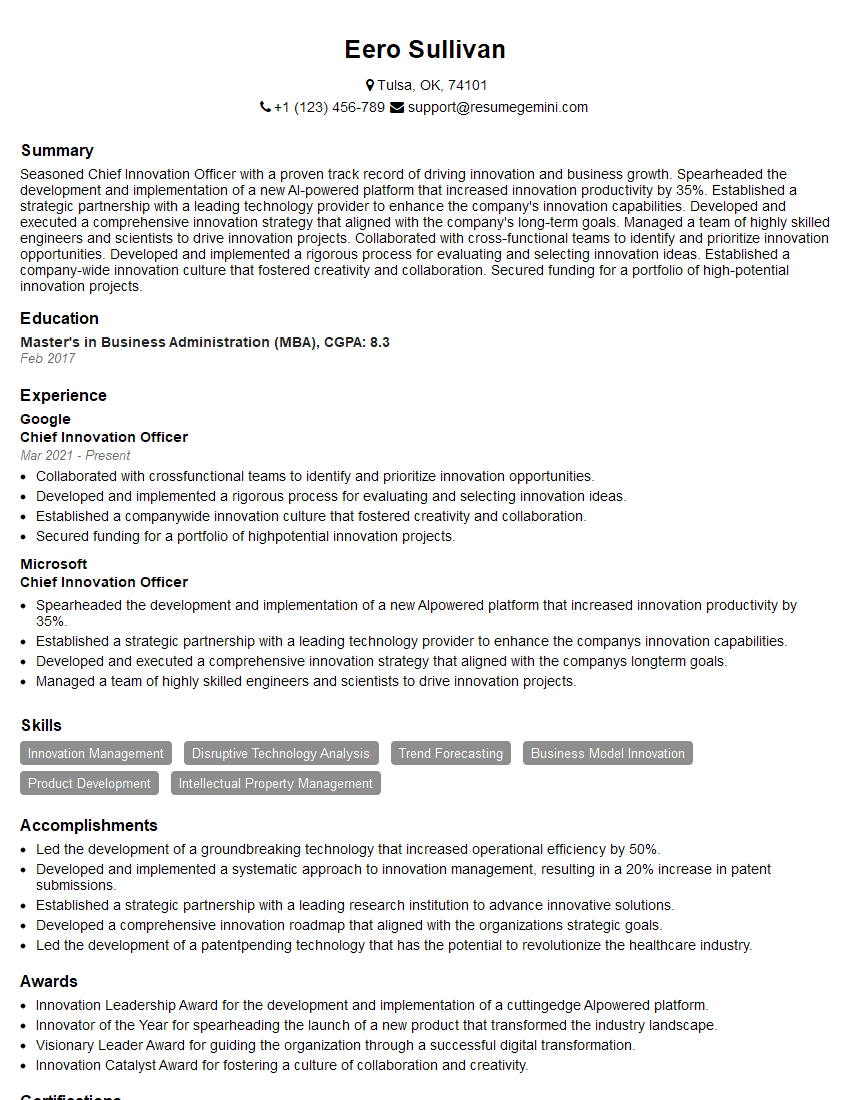
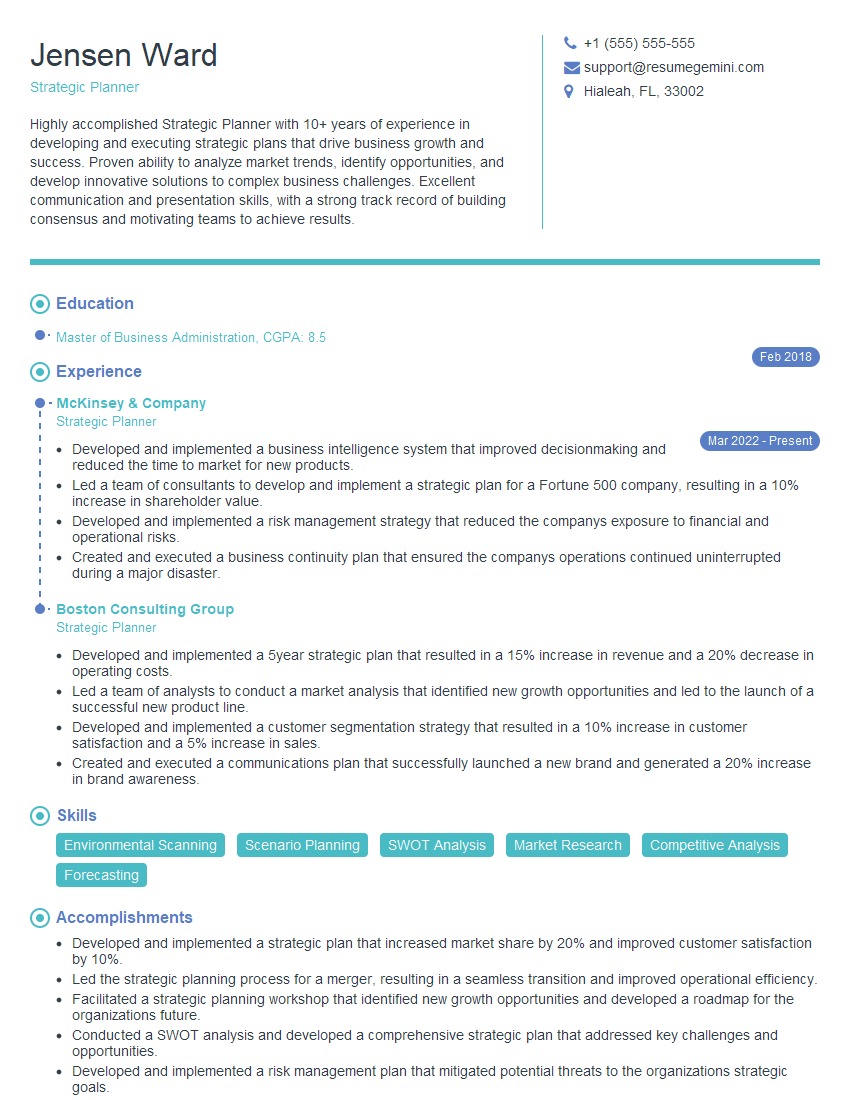
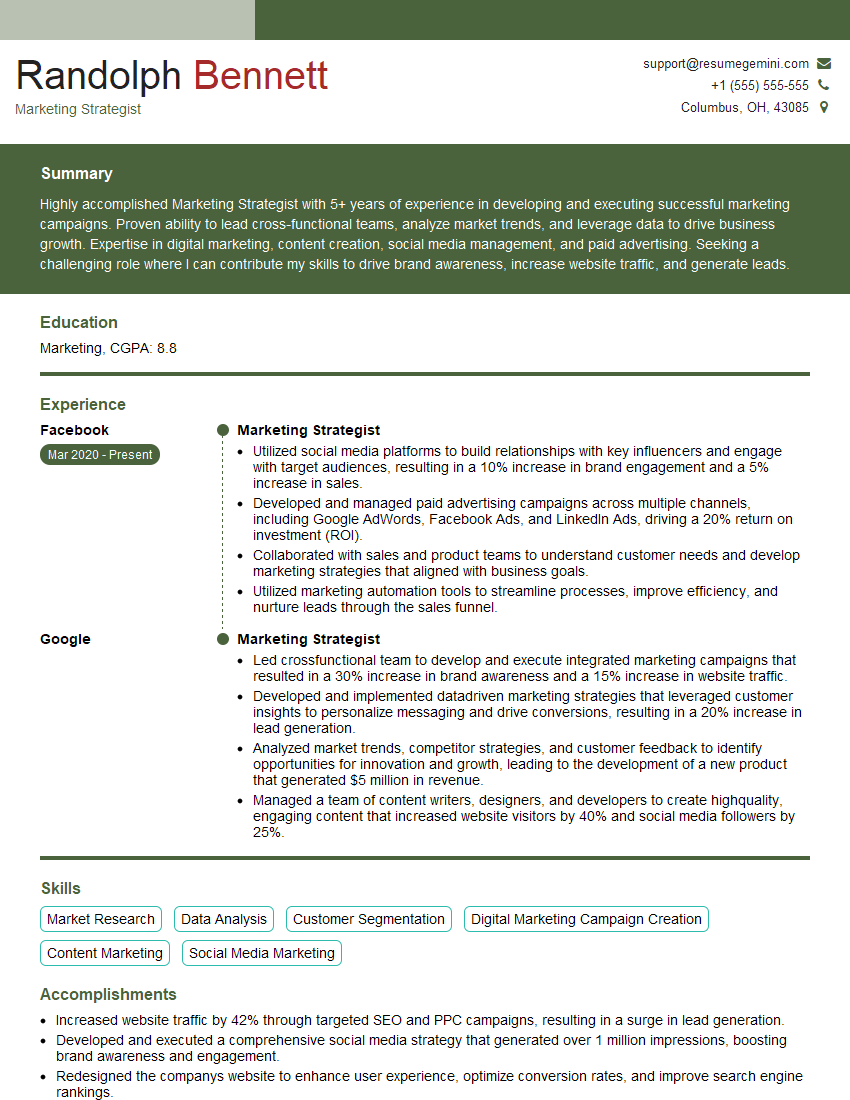
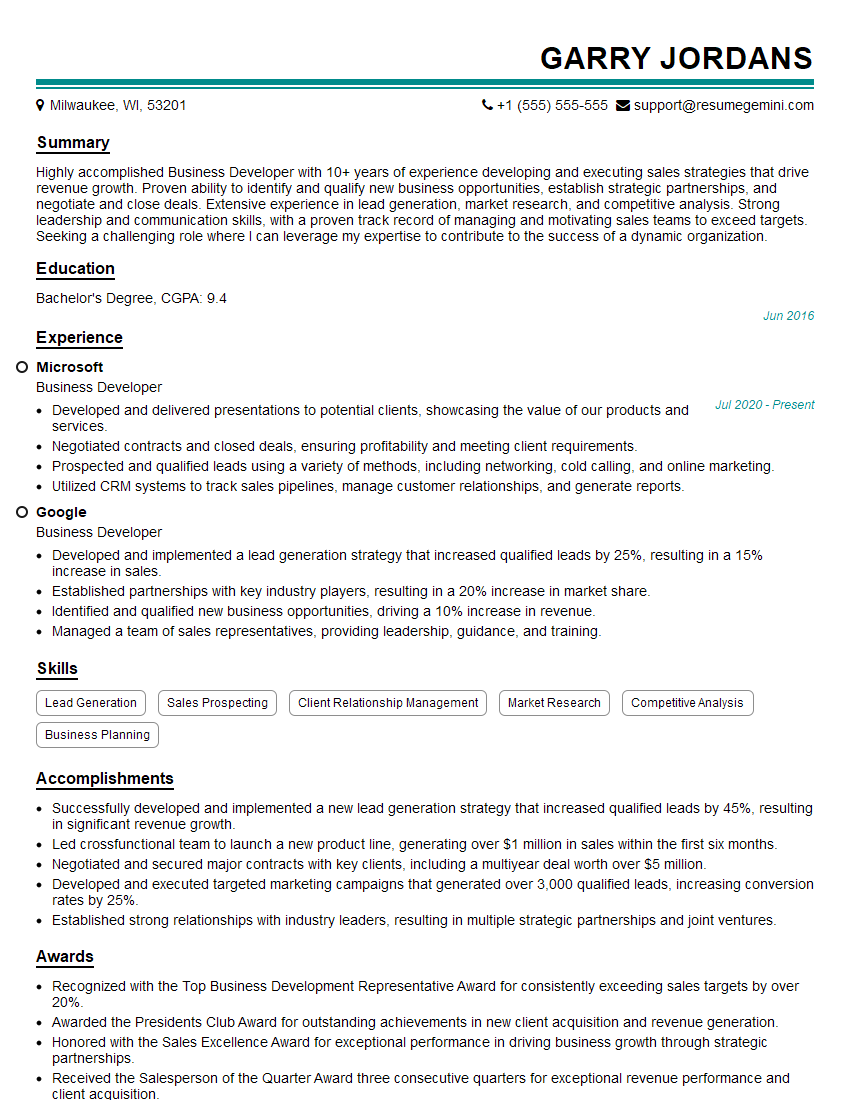
Mastering ideation and brainstorming is crucial for career advancement, opening doors to roles requiring creative problem-solving and innovative thinking. To enhance your job prospects, building an ATS-friendly resume is essential. This ensures your skills and experience are effectively communicated to recruiters. ResumeGemini is a trusted resource that can significantly improve your resume, making it stand out from the competition. We provide examples of resumes tailored to highlight ideation and brainstorming skills, helping you present yourself effectively to potential employers.

Explore more articles
Users Rating of Our Blogs
Share Your Experience
We value your feedback! Please rate our content and share your thoughts (optional).
What Readers Say About Our Blog
Very informative content, great job.
good