Interviews are opportunities to demonstrate your expertise, and this guide is here to help you shine. Explore the essential Image Consultancy interview questions that employers frequently ask, paired with strategies for crafting responses that set you apart from the competition.
Questions Asked in Image Consultancy Interview
Q 1. Explain the difference between personal styling and image consulting.
While both personal styling and image consulting focus on enhancing a person’s appearance, they differ in scope. Personal styling primarily concentrates on clothing selection, wardrobe curation, and outfit creation. It’s about helping someone look and feel their best through clothing choices. Think of it as focusing on the ‘what to wear’. Image consulting, however, is a broader field encompassing personal styling but also extending to other aspects of personal presentation. This includes color analysis, body shape analysis, makeup application advice, hair styling recommendations, and even communication skills and etiquette. It’s about creating a holistic and cohesive image that aligns with a person’s goals and personality. It’s the ‘whole package’, addressing how someone presents themselves visually and even behaviorally.
For example, a personal stylist might help a client choose the perfect outfit for a job interview, while an image consultant would guide the client on their entire presentation – from attire and makeup to posture and confidence.
Q 2. Describe your process for conducting a color analysis for a client.
My color analysis process begins with a consultation to understand the client’s lifestyle, profession, and personal preferences. I then use a draping method, holding various fabrics of different colors against their skin in natural light. This allows me to observe how different colors affect their skin tone, highlighting its best features and minimizing any imperfections. I analyze their undertones (cool, warm, or neutral) and determine their season (Spring, Summer, Autumn, or Winter) based on their coloring (hair, eyes, skin). This season determines the palette of colors that best complement their natural features. The process culminates in a personalized color palette, providing a range of shades and hues the client can use in their clothing, makeup, and accessories. We then discuss how to integrate these colors effectively into their wardrobe and everyday style.
For instance, a client with warm undertones and golden-brown hair might be classified as an Autumn. Their palette would include earthy tones like olive green, burnt orange, and deep browns. Conversely, someone with cool undertones and ash-blonde hair might be a Winter, suited to cool colors like icy blue, black, and deep fuchsia.
Q 3. How do you determine a client’s body shape and recommend appropriate clothing styles?
Determining a client’s body shape involves careful observation and measurement. I typically use a combination of visual assessment and body measurements to categorize their shape into one of the common body types (e.g., rectangle, hourglass, triangle, inverted triangle, round). Once the body shape is determined, I recommend clothing styles that emphasize their best features and minimize areas they may want to downplay. This involves selecting silhouettes, necklines, and details that create balance and harmony. For example, someone with an hourglass figure might benefit from fitted clothing that accentuates their waist, while someone with a rectangle shape might be advised to create curves with details like ruffles or belts.
The key is to empower clients to dress in ways that make them feel confident and comfortable. We discuss the benefits of different cuts and styles, ensuring they understand the rationale behind my recommendations. This collaborative approach builds trust and creates a positive experience.
Q 4. What are some common wardrobe mistakes you see and how do you address them?
Some common wardrobe mistakes I encounter include wearing ill-fitting clothes, neglecting proper proportions, clinging to outdated trends, and not having a versatile, functional wardrobe. For instance, ill-fitting clothes can completely detract from even the most stylish garments. Clothing that is too tight or too baggy can appear sloppy and unflattering. In terms of proportions, wearing overly large prints or patterns relative to one’s body can also be overpowering. Holding onto outdated trends can make a person appear out of touch.
To address these, I work with clients to identify their body shape, refine their style, and build a practical, timeless wardrobe. We declutter their existing wardrobe, edit what’s already there, and then carefully select new items that fit properly, flatter their figure, and reflect their personal style. I educate clients on how to choose colors, patterns, and fabrics that create the desired effect, and together we curate a wardrobe that’s both functional and fashionable.
Q 5. How do you handle clients with conflicting style preferences?
Handling conflicting style preferences requires a delicate approach that prioritizes open communication and understanding. I begin by having a thorough discussion with the client to explore their style preferences and identify the root of the conflict. This might involve looking at inspiration images together, understanding their lifestyle, and discussing their personal aspirations. The goal is to find a style that integrates elements of both preferred aesthetics while remaining true to their personality and needs.
Often, the solution lies in creating a balanced approach that incorporates different aspects of their preferences. Perhaps we can integrate bolder colours with classic cuts or blend contemporary items with timeless pieces. This process is less about compromise and more about creating a cohesive and personally expressive style that works for them in all aspects of their life.
Q 6. Explain your approach to creating a client’s style guide.
Creating a client’s style guide is a comprehensive process designed to provide a clear roadmap for their future clothing choices. The guide includes a personalized color palette, detailed body shape analysis, and a curated selection of clothing styles, silhouettes, patterns, and fabrics that best flatter their figure and complement their coloring. It also outlines key shopping strategies, providing a framework for making informed decisions and preventing future wardrobe mistakes. It’s essentially a personalized style bible.
I typically include visual inspiration – mood boards showing outfits, examples of specific silhouettes, and images of fabrics and patterns to further clarify the recommendations. The guide is a living document, allowing for adjustments and refinements as the client’s style evolves or their circumstances change.
Q 7. How do you stay up-to-date with current fashion trends and industry best practices?
Staying current in image consulting requires continuous learning. I attend industry conferences and workshops, subscribe to relevant fashion publications, and follow influential fashion bloggers and designers. I regularly browse fashion websites and magazines, not just for trend awareness but also to understand the evolution of classic style. This holistic approach ensures I’m not only aware of fleeting trends but also understand the underlying principles of good style.
Furthermore, I actively network with other image consultants and professionals in related fields to exchange insights and best practices. This collaborative approach allows me to learn from different perspectives and expand my knowledge base.
Q 8. Describe your experience with different styling software and tools.
My experience with styling software and tools is extensive. I’m proficient in various platforms, ranging from basic image editing software like Adobe Photoshop and Lightroom for enhancing client photos and creating mood boards, to more specialized tools. For example, I utilize programs like Stylebook to create virtual closets for clients, helping them visualize their existing wardrobe and identify gaps. I also leverage online resources such as Pinterest and trend forecasting websites to research current styles and find inspiration tailored to individual client preferences. This digital fluency enables me to effectively communicate my styling vision and provide clients with concrete, visually engaging recommendations.
Furthermore, I’m familiar with virtual styling platforms that allow for remote consultations and collaborative styling projects. This digital proficiency is essential in today’s fast-paced environment and allows me to serve clients regardless of geographical location.
Q 9. What is your approach to working with clients of diverse backgrounds and body types?
My approach to working with clients from diverse backgrounds and body types is centered on inclusivity and celebrating individuality. I believe that style is a powerful tool for self-expression, and it’s crucial to approach each client with an open mind, understanding their unique preferences, lifestyle, and cultural context. I avoid imposing my personal style but instead act as a guide, helping them to discover and refine their own unique aesthetic.
When it comes to body types, I focus on emphasizing each client’s best features and minimizing areas of concern. This involves understanding body proportions and using clothing strategically to create a balanced and flattering silhouette. For instance, I might recommend A-line dresses for clients with pear-shaped bodies or suggest vertical stripes to create a lengthening effect for clients who want to appear taller. Ultimately, my goal is to empower clients to feel confident and comfortable in their clothing, irrespective of their shape or size.
I actively seek knowledge and resources to further my understanding of diverse cultures and body types, continually refining my approach to ensure my services are sensitive, culturally appropriate, and truly inclusive.
Q 10. How do you manage client expectations regarding budget and timeline?
Managing client expectations regarding budget and timeline is crucial for a successful collaboration. Before embarking on any project, I conduct a thorough consultation to understand the client’s needs, aspirations, and budget constraints. This involves discussing realistic pricing structures, outlining different package options, and setting clear expectations. For instance, a complete wardrobe overhaul will naturally require a larger budget and a more extensive timeline than a single personal shopping trip.
Regarding timelines, I provide transparent estimates, outlining key milestones and deliverables. If unforeseen circumstances arise that may impact the timeline, I communicate proactively with the client, keeping them informed and collaboratively finding solutions. For example, if a desired garment is out of stock, we may explore alternative options or adjust the timeline accordingly. Open communication and clear expectations are paramount to avoiding misunderstandings and ensuring client satisfaction.
Q 11. How would you handle a client who is unhappy with your styling recommendations?
Handling client dissatisfaction requires tact, empathy, and a problem-solving approach. First, I would actively listen to the client’s concerns without interruption, validating their feelings and showing genuine empathy. Then, I would calmly and respectfully address their specific points of concern. Perhaps their discomfort stems from a misunderstanding of the styling recommendations or a disconnect between their expectations and the delivered services.
I would then seek to clarify any misunderstandings, revisiting the initial consultation and discussing the rationale behind my recommendations. I might offer alternative styling options that better align with their preferences or suggest adjustments to the existing recommendations. If the issue is related to a specific garment, I would explore options for return, exchange, or alterations, depending on the circumstances. The goal is to find a mutually agreeable solution that leaves the client feeling heard, understood, and valued.
If the issue cannot be resolved amicably, I would offer a partial refund or other compensation to demonstrate my commitment to client satisfaction. Even if a particular project doesn’t end perfectly, maintaining professional conduct and demonstrating a willingness to rectify any problems are paramount.
Q 12. How do you build rapport and trust with your clients?
Building rapport and trust with clients is fundamental to my work. I achieve this through a combination of active listening, empathy, and a personalized approach. The initial consultation is key. I begin by creating a safe and comfortable space where clients feel free to share their aspirations, concerns, and style preferences. I ask open-ended questions, encouraging them to share their personal stories and fashion history, showing genuine interest in their lives beyond the styling context.
I also emphasize transparency and clear communication throughout the process, keeping clients informed every step of the way. This includes providing regular updates, explaining the rationale behind my recommendations, and involving clients in decision-making processes whenever possible. I believe that building a collaborative relationship, rather than a purely transactional one, is crucial for fostering trust and achieving optimal results.
Finally, I strive to maintain consistent communication and follow-up even after the completion of the styling project, demonstrating my ongoing commitment to their style journey. This builds loyalty and allows for future collaborations based on mutual respect and understanding.
Q 13. Describe your experience with personal shopping and sourcing garments.
My experience with personal shopping and sourcing garments is a significant part of my image consultancy practice. I regularly assist clients in selecting and acquiring clothing that complements their personal style and body type. This involves understanding their needs, preferences, and budget, and then expertly navigating various retail environments to find the perfect pieces. My network includes a range of stores, from high-street retailers to independent boutiques and online marketplaces, allowing me to offer a diverse range of options. I am skilled in identifying high-quality garments that will stand the test of time and offer exceptional value.
Beyond simply shopping, I also assist clients with understanding fabric composition, construction, and fit. This ensures they are making informed purchasing decisions and acquiring garments that are not only stylish but also durable and well-made. I can also manage alterations and tailoring to ensure the perfect fit, enhancing the overall client experience. This holistic approach ensures that every garment selected contributes to a cohesive and well-curated wardrobe.
Q 14. Explain your understanding of different fabric types and their suitability for various occasions.
Understanding fabric types and their suitability for various occasions is crucial for effective image consulting. Different fabrics have varying properties, influencing their drape, texture, breathability, and overall appearance. For example, linen is a breathable, lightweight fabric ideal for summer wear, while wool provides warmth and structure, making it suitable for colder months. Silk offers a luxurious drape and sheen, perfect for formal events, whereas cotton is versatile and comfortable for everyday wear.
When recommending fabrics, I consider the occasion, the client’s body type, and their personal style. For a business meeting, I might suggest structured fabrics like crepe or gabardine, offering a professional and polished look. A summer wedding might call for lighter fabrics such as linen or silk, ensuring comfort and style. Understanding the properties of different fabrics allows me to guide clients towards choices that are not only aesthetically pleasing but also practical and appropriate for the intended purpose. For instance, I would avoid recommending delicate fabrics for active lifestyles and would suggest durable and easy-to-care-for materials for busy professionals.
- Cotton: Versatile, breathable, comfortable.
- Linen: Breathable, lightweight, perfect for warm weather.
- Silk: Luxurious, drapes well, suitable for formal occasions.
- Wool: Warm, durable, ideal for colder weather.
- Cashmere: Luxurious, soft, warm.
Q 15. What is your process for developing a brand image for a corporate client?
Developing a corporate brand image is a multifaceted process that goes beyond simply choosing colors and logos. It’s about crafting a visual identity that reflects the company’s values, mission, and target audience, ultimately influencing how the public perceives the brand. My process involves several key stages:
- Discovery and Analysis: This initial phase involves deep dives into the client’s business – its history, current market position, competitors, target demographics, and aspirations. I use questionnaires, interviews with key stakeholders, and market research to gain a comprehensive understanding.
- Brand Strategy Definition: Based on the discovery phase, I help define the brand’s core values, personality, and unique selling proposition (USP). This involves identifying the brand’s voice, tone, and the message it wishes to convey.
- Visual Identity Development: This is where we translate the brand strategy into a tangible visual identity. We explore logo design, color palettes, typography, and overall design style that accurately represents the brand’s personality. We also consider the applications across different platforms (website, social media, marketing materials).
- Style Guide Creation: A comprehensive style guide is essential for maintaining brand consistency across all platforms and applications. This guide provides detailed specifications for logo usage, color palettes, typography, and imagery.
- Implementation and Refinement: Once the visual identity is approved, we work with the client to implement it across all aspects of their brand. This includes website design, marketing collateral, and employee branding. We continuously monitor and refine the brand image based on feedback and market performance.
For example, I recently worked with a tech startup that wanted to project innovation and trustworthiness. Through the process, we established a clean, minimalist visual identity using a modern font and a vibrant yet sophisticated color palette. The result was a brand that effectively communicated their technological expertise while building trust with potential investors and customers.
Career Expert Tips:
- Ace those interviews! Prepare effectively by reviewing the Top 50 Most Common Interview Questions on ResumeGemini.
- Navigate your job search with confidence! Explore a wide range of Career Tips on ResumeGemini. Learn about common challenges and recommendations to overcome them.
- Craft the perfect resume! Master the Art of Resume Writing with ResumeGemini’s guide. Showcase your unique qualifications and achievements effectively.
- Don’t miss out on holiday savings! Build your dream resume with ResumeGemini’s ATS optimized templates.
Q 16. How do you incorporate sustainability and ethical considerations into your work?
Sustainability and ethical considerations are paramount in my work. They are not just trendy buzzwords but integral to creating a responsible and impactful brand. I integrate these factors in several ways:
- Sourcing Sustainable Materials: When recommending products or suggesting design elements, I prioritize suppliers who use sustainable and ethically sourced materials. This includes things like eco-friendly printing options, organic cotton for apparel, and recycled paper for stationery.
- Promoting Ethical Practices: I encourage clients to adopt ethical labor practices throughout their supply chains. This includes fair wages, safe working conditions, and transparency in manufacturing processes. For example, I might suggest sourcing clothing from companies committed to fair-trade practices.
- Reducing Environmental Impact: I advocate for minimizing the environmental footprint of brand communications. This includes using digital marketing strategies to reduce paper consumption, choosing sustainable packaging options, and promoting digital versions of marketing materials whenever possible.
- Supporting Ethical Causes: I often suggest clients align their brand with ethical causes that resonate with their target audience. This can involve partnering with charities or non-profit organizations, thereby strengthening brand reputation and social impact.
For instance, I helped a fashion company switch to organic cotton and implement a carbon offsetting program, significantly improving their environmental and social responsibility image.
Q 17. Describe a challenging client situation and how you overcame it.
One challenging client was a CEO who initially had very rigid ideas about his personal style, resisting suggestions for even subtle adjustments. He believed his current image, which was somewhat dated and mismatched, reflected his strength and authority. This presented a challenge as his appearance was hindering his ability to connect with a younger, more modern target demographic for his company.
To overcome this, I took a collaborative approach. Instead of imposing changes, I focused on building rapport and understanding his underlying concerns. I listened carefully to his rationale and presented my recommendations in a way that respected his preferences while highlighting the potential benefits of a more updated style. I showcased examples of successful executives with similar backgrounds who had successfully transitioned to a more contemporary look, emphasizing that style evolution could strengthen his authority, not diminish it. We started with small, incremental changes, like updating his accessories or incorporating modern elements into his existing wardrobe. This gradual approach, combined with clear communication and demonstrating the positive results, allowed for a successful transformation that suited both his personality and business objectives.
Q 18. How do you measure the success of your image consulting services?
Measuring the success of image consulting services requires a multi-faceted approach. It’s not just about aesthetic changes but about achieving tangible business results. I use a combination of methods:
- Client Feedback: Regular feedback sessions are crucial to assess client satisfaction and track their progress. This includes evaluating their confidence levels, comfort with their new image, and any positive changes in their professional and personal lives.
- Quantitative Data: Where applicable, I track quantifiable metrics such as website traffic, sales conversions, or social media engagement after implementing brand image changes to assess their impact.
- Qualitative Data: I gather qualitative data through observation, interviews, and surveys to gauge the perception of the client’s new image amongst their colleagues, clients, and stakeholders.
- Before-and-After Comparisons: Visual comparisons of the client’s initial image versus their transformed image help demonstrate the success of the transformation and showcase the tangible results.
For example, I tracked a client’s increased networking opportunities and secured business deals after a significant image overhaul, which demonstrated a direct correlation between image improvement and business success.
Q 19. What is your pricing strategy for your services?
My pricing strategy is tailored to the scope and complexity of each project. It’s based on a combination of factors:
- Project Scope: The extent of the services provided, including the number of consultations, styling sessions, and the creation of any collateral materials, directly influences the price.
- Client Needs: More intensive projects requiring in-depth analysis, extensive wardrobe updates, or more frequent sessions will naturally command higher fees.
- Client Type: The scale and complexity of the client’s business (individual vs. large corporation) can also affect pricing.
- Market Rates: I stay informed about industry standards and maintain competitive pricing while reflecting the value of my expertise and experience.
I offer different packages to cater to varying budgets and requirements. I believe in transparency and provide detailed pricing breakdowns upfront to ensure clarity and avoid any surprises.
Q 20. What marketing strategies do you use to attract new clients?
My marketing strategy focuses on establishing credibility and attracting high-quality clients who value my expertise. I utilize several strategies:
- Networking: I actively participate in industry events and build relationships with other professionals in related fields, such as photographers, stylists, and marketing agencies.
- Professional Website and Portfolio: A well-designed website showcasing my work, client testimonials, and service offerings is essential for attracting potential clients.
- Content Marketing: Creating valuable content, such as blog posts, articles, and social media updates, on topics related to image consulting positions me as an expert in my field and attracts organic traffic.
- Public Relations: I seek opportunities to be featured in relevant publications or media outlets to increase brand awareness and build credibility.
- Referrals: Satisfied clients are my best advocates. I encourage referrals and cultivate long-term relationships to build a strong network of trust.
By consistently delivering high-quality services and building strong relationships, I’ve successfully grown my client base organically.
Q 21. How would you handle a client’s request for a style outside your expertise?
Handling a client’s request outside my expertise requires professionalism and integrity. I wouldn’t pretend to have skills I don’t possess. My approach involves:
- Honest Assessment: I would openly acknowledge the limitation of my expertise in that particular area. Transparency and honesty are vital in building trust.
- Referral Network: I would leverage my network of contacts to recommend a qualified professional who specializes in the requested style or service. This demonstrates my commitment to the client’s needs even if I cannot personally fulfill them.
- Collaborative Approach: In some instances, I might collaborate with another professional whose skills complement mine. This could involve a joint project where we both contribute our specific expertise.
- Setting Clear Expectations: I’d make it clear that my role will be limited to my areas of expertise and that the other professional will be responsible for the specific request outside my scope.
This approach ensures client satisfaction while maintaining professional ethics and avoiding any misleading claims about my abilities. Referrals also build strong relationships with other professionals within the industry.
Q 22. Explain the importance of understanding a client’s lifestyle and personal goals.
Understanding a client’s lifestyle and personal goals is paramount in image consulting because it forms the foundation of a truly effective and personalized transformation. It’s not just about aesthetics; it’s about aligning their outward presentation with their inner aspirations and daily realities.
For example, a high-powered executive who travels frequently will have different image needs than a stay-at-home parent. The executive might prioritize tailored suits, efficient accessories, and a polished, professional look. The parent might value comfort, practicality, and versatility in their wardrobe. By understanding their lifestyle – work demands, social activities, family commitments – we can create an image strategy that supports their daily lives and enhances their goals. A thorough lifestyle assessment helps to determine their personal style, the time they have for getting ready each day, and the kind of image they want to project to the world.
Understanding personal goals – career advancement, finding a romantic partner, building confidence – is crucial for tailoring the image plan to achieve tangible results. If a client wants to project more authority in their career, we’ll focus on wardrobe pieces, grooming, and body language that communicate confidence and competence. If their goal is to feel more confident in social situations, we may prioritize a style that reflects their personality and makes them feel comfortable and stylish.
Q 23. How do you adapt your approach to different age groups and demographics?
Adapting my approach to different age groups and demographics is essential for effective image consulting. What works for a twenty-something might not resonate with a sixty-something, and cultural nuances must be carefully considered.
- Younger Clients (Teens & Young Adults): Focus is often on self-discovery, exploring personal style, and building confidence. The approach is collaborative and emphasizes experimentation while establishing a foundation of good grooming habits and versatile wardrobe choices.
- Middle-Aged Clients (30s-50s): This group often seeks to refine their existing style, update their wardrobe for career advancement or personal growth, and reflect their maturity. The focus might include addressing changes in body shape, adjusting to new career roles, and selecting timeless pieces that remain stylish for years to come.
- Older Clients (50+): Comfort, practicality, and maintaining a stylish appearance with age-appropriate clothing are key. We focus on dressing strategically to flatter their body shape and emphasizing quality over quantity in their wardrobe choices. Understanding potential mobility needs and preferences for fabrics is important.
Beyond age, demographic factors like cultural background, lifestyle, and budget significantly impact my approach. For example, I adapt my recommendations for clients from different cultural backgrounds to respect their traditions and preferences while achieving their desired image goals. I always strive to understand a client’s budget and suggest affordable solutions whenever possible.
Q 24. What are the ethical considerations in image consulting?
Ethical considerations in image consulting are paramount. Maintaining integrity and respecting client autonomy are key principles.
- Honesty and Transparency: I provide realistic expectations and avoid making promises I can’t keep. I am upfront about costs, timelines, and the limits of image consulting’s impact.
- Respect for Diversity: I celebrate individuality and help clients express their unique personalities through their style, rather than imposing my own aesthetic preferences or trying to force them into a mold.
- Client Confidentiality: I treat all client information with strict confidentiality (discussed more in the next question).
- Avoiding Harmful Stereotypes: I never make assumptions based on age, gender, race, or any other demographic factor. I avoid perpetuating harmful stereotypes about what constitutes an “ideal” image.
- Professional Boundaries: I maintain clear professional boundaries at all times, avoiding overly personal relationships with clients.
Ethical practice ensures building trust, fostering positive client relationships, and maintaining the credibility of the profession.
Q 25. How do you maintain client confidentiality?
Client confidentiality is a cornerstone of my practice. I take several steps to protect sensitive information:
- Confidentiality Agreements: I utilize written confidentiality agreements with all clients outlining the scope of information sharing and the obligation to maintain privacy.
- Secure Data Storage: All client data, including images, measurements, and personal details, are stored securely, either digitally with password protection or physically in locked files.
- Limited Information Sharing: I only share client information with necessary third parties (e.g., a tailor) with explicit consent and under conditions of confidentiality.
- Professional Discretion: I never discuss client matters with others outside the context of professional work.
My commitment to confidentiality is unwavering; it fosters trust and allows clients to feel comfortable sharing personal details necessary for effective image consulting.
Q 26. How do you handle negative feedback?
Handling negative feedback professionally is crucial for growth and maintaining client satisfaction. I follow a structured approach:
- Active Listening: I carefully listen to the feedback without interrupting, seeking to fully understand the client’s concerns.
- Empathy and Validation: I acknowledge the client’s feelings and validate their perspective, even if I disagree with the specific criticism.
- Seeking Clarification: I ask clarifying questions to ensure I understand the nature of the feedback and the areas needing improvement.
- Offering Solutions: I propose concrete solutions to address the client’s concerns. This may involve making adjustments to the image plan, providing additional support, or offering alternative options.
- Following Up: I follow up with the client to check on their satisfaction and ensure their concerns have been adequately addressed.
Negative feedback, when handled constructively, provides valuable learning opportunities and strengthens my ability to serve clients more effectively.
Q 27. What are your long-term career goals in Image Consultancy?
My long-term career goals in image consulting involve establishing myself as a leading expert in the field, known for my innovative approach and exceptional client outcomes. I aim to expand my expertise to include online image consulting and develop a robust online presence to reach a wider audience.
I plan to build a strong team of skilled professionals, sharing my knowledge and mentoring future image consultants. I also envision creating educational resources, such as workshops and online courses, to help individuals develop their personal style and confidence. Ultimately, I aspire to create a positive and lasting impact on the lives of my clients, empowering them to feel confident, successful, and authentic in their self-presentation.
Q 28. Describe your experience working with diverse client needs and preferences.
I have extensive experience working with diverse client needs and preferences. I have helped professionals revamp their wardrobes for career advancement, assisted individuals with disabilities to develop accessible and stylish looks, and supported clients from various cultural backgrounds in expressing their unique identities through their style.
For example, I recently worked with a client who used a wheelchair and wanted to feel fashionable and confident. We focused on clothing that complemented her body type, was easy to manage with her wheelchair, and expressed her personality. Another example involved helping an executive woman transition her style from a corporate to a more entrepreneurial image, focusing on pieces that reflected her creative and business-savvy personality. My approach always starts with in-depth consultations to truly understand their needs and preferences, resulting in image plans tailored to their specific circumstances and aspirations.
Key Topics to Learn for Your Image Consultancy Interview
- Color Analysis and Personal Branding: Understanding color theory and its impact on personal image; applying this knowledge to create a cohesive and impactful brand for clients. Practical application: Analyzing a client’s complexion and features to determine their best color palette.
- Body Shape and Style: Identifying different body types and recommending appropriate silhouettes and clothing styles; understanding the principles of proportion and balance. Practical application: Advising a client on clothing styles that flatter their figure and enhance their confidence.
- Wardrobe Planning and Organization: Developing strategies for efficient wardrobe management; creating capsule wardrobes and recommending seasonal updates. Practical application: Creating a personalized wardrobe plan for a client, considering their lifestyle, budget, and personal style.
- Personal Styling and Image Strategy: Developing a holistic approach to personal image, encompassing clothing, accessories, grooming, and nonverbal communication. Practical application: Guiding a client on creating a professional image for a job interview or a specific event.
- Client Communication and Consultation: Mastering effective communication techniques for building rapport with clients and understanding their needs. Practical application: Conducting a thorough client consultation to determine their goals and expectations.
- Image and Confidence Building: Understanding the psychological impact of image on self-esteem and confidence; developing strategies to empower clients. Practical application: Helping clients develop a positive self-image and overcome self-consciousness.
- Current Trends and Industry Knowledge: Staying updated on the latest fashion trends, style influences, and industry best practices. Practical application: Incorporating current trends into client consultations while maintaining a personalized approach.
Next Steps
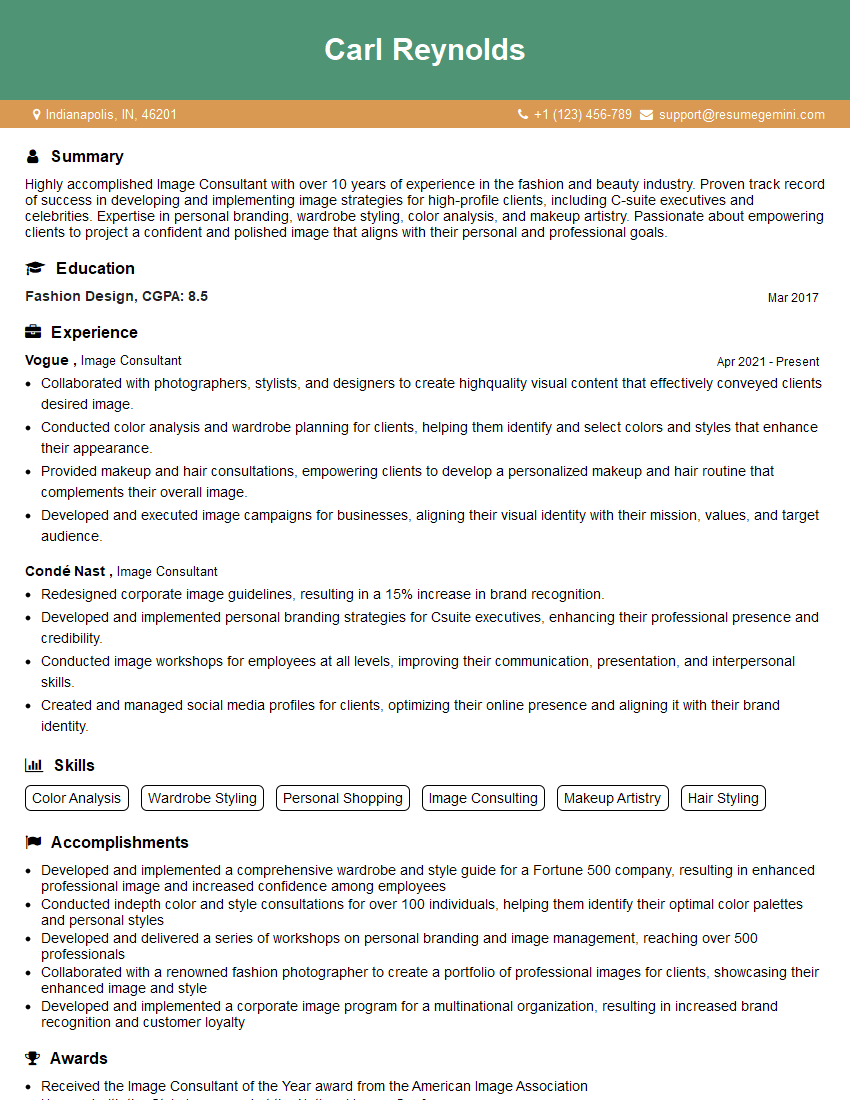
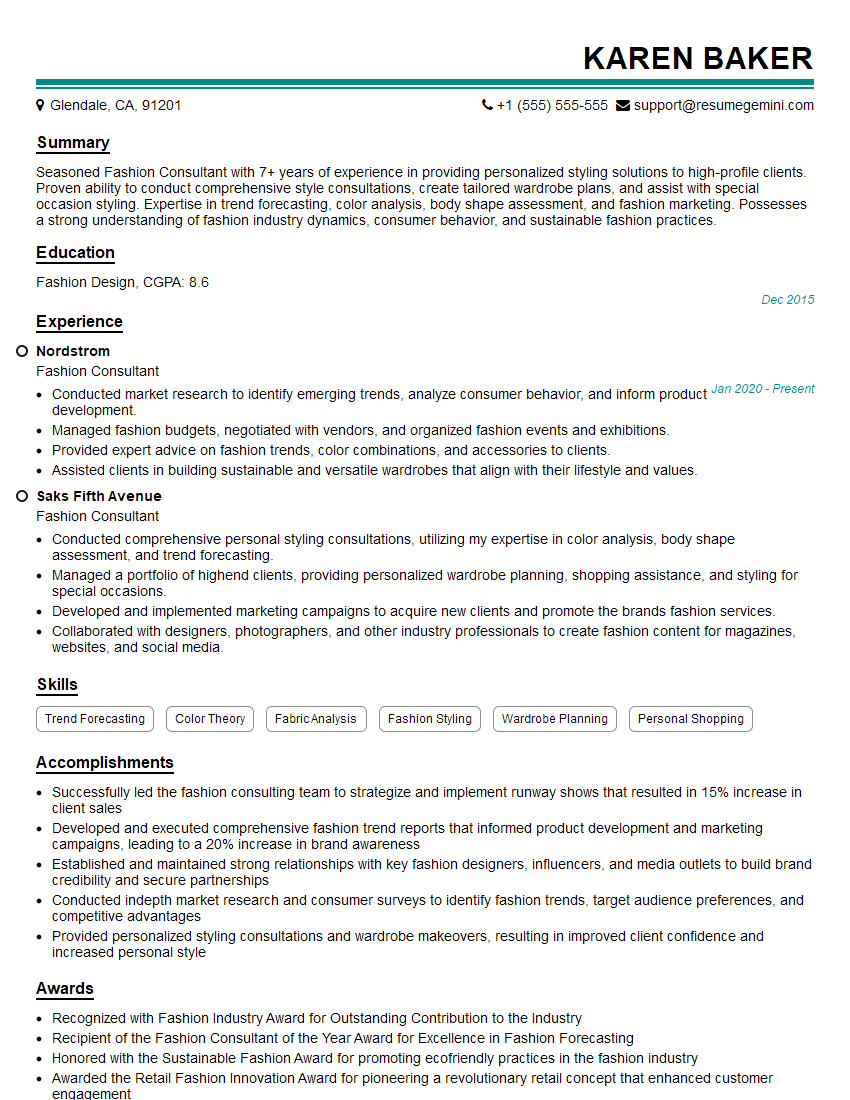
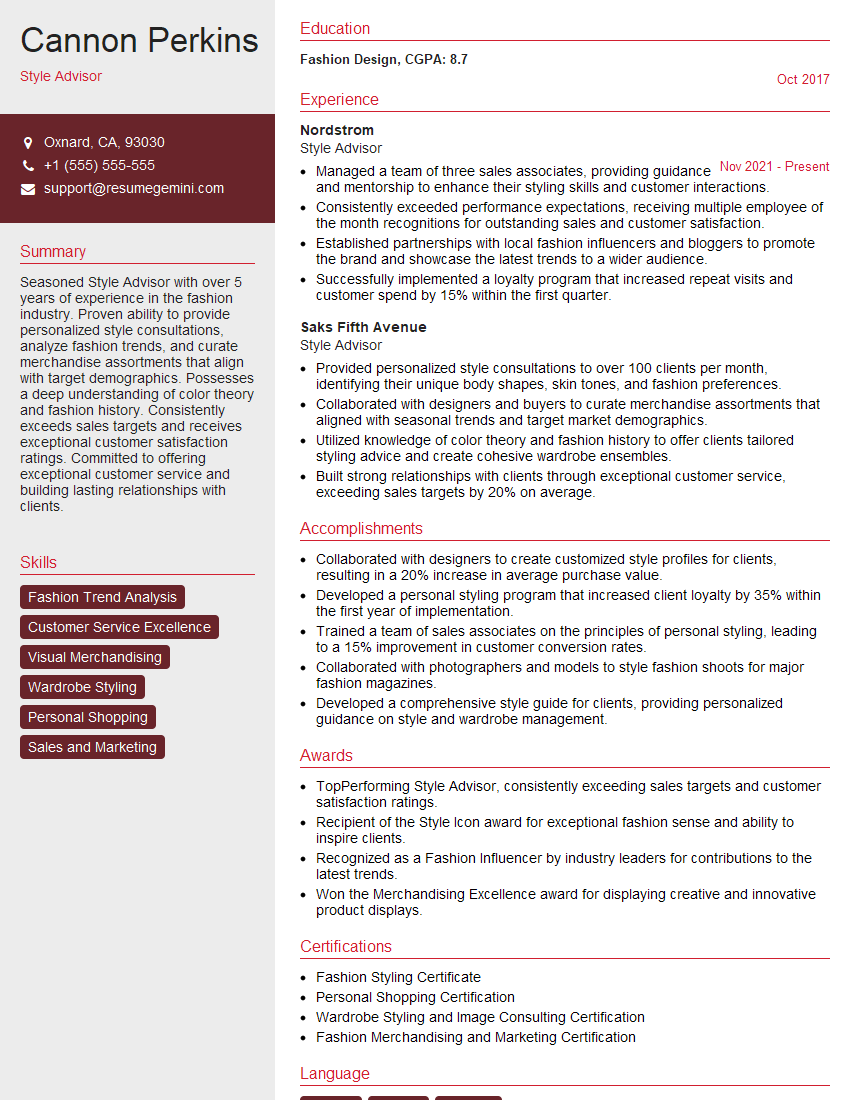
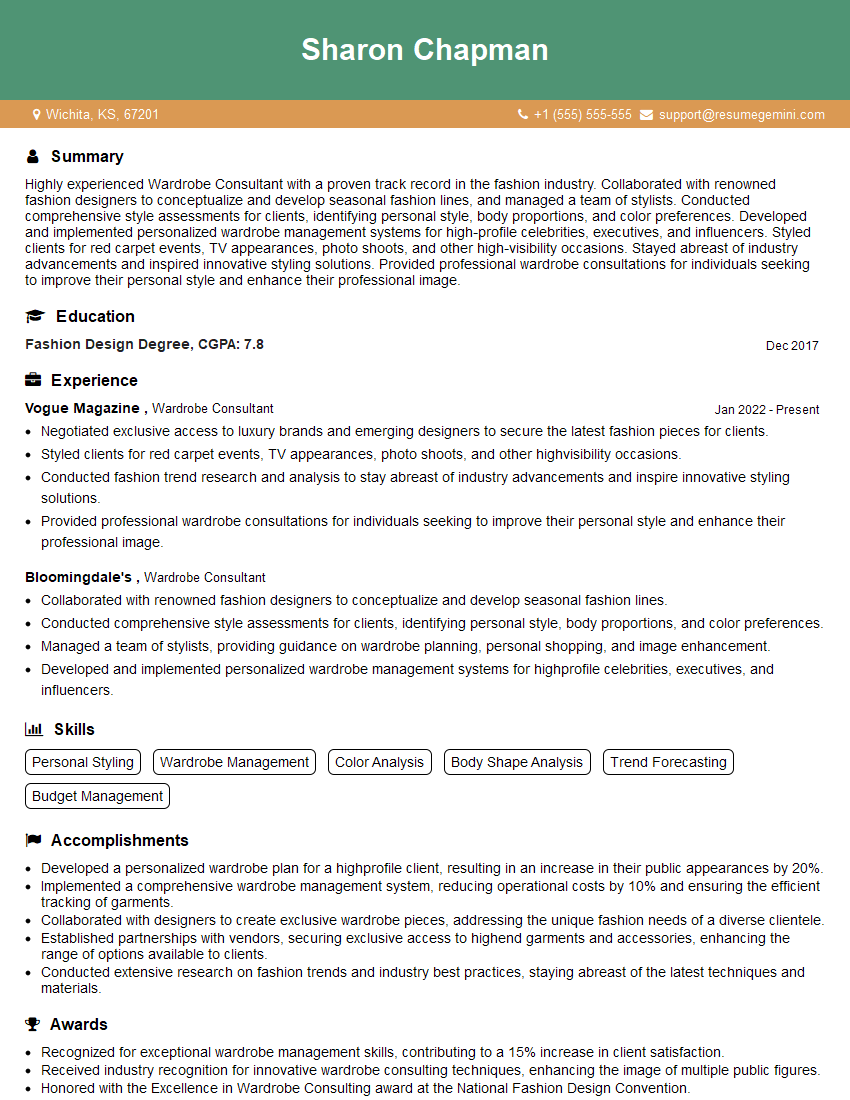
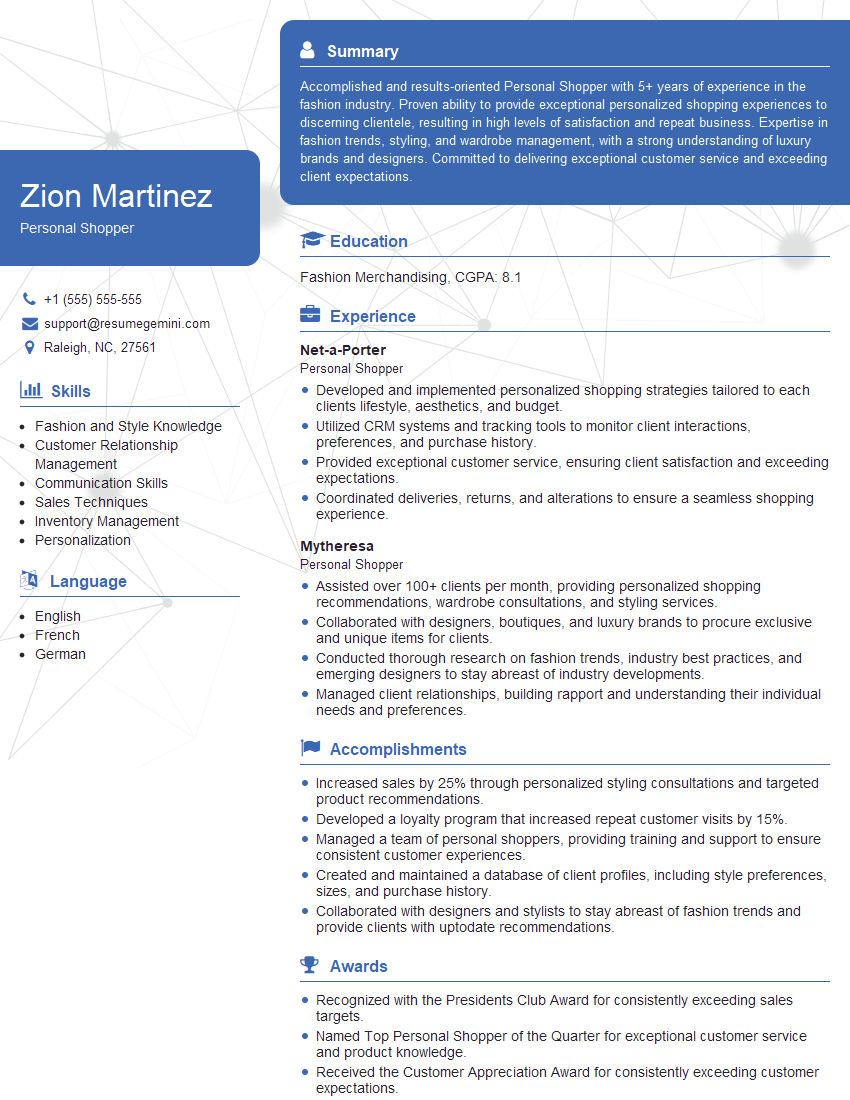
Mastering Image Consultancy opens doors to exciting career opportunities, offering a blend of creativity and personal development. To enhance your job prospects, it’s crucial to present yourself professionally. An ATS-friendly resume is your first impression – make it count! ResumeGemini is a trusted resource to help you build a compelling and effective resume that highlights your skills and experience in Image Consultancy. Examples of resumes tailored to this field are available to help you get started.
Explore more articles
Users Rating of Our Blogs
Share Your Experience
We value your feedback! Please rate our content and share your thoughts (optional).
What Readers Say About Our Blog
Very informative content, great job.
good