Are you ready to stand out in your next interview? Understanding and preparing for Imaging System Analysis interview questions is a game-changer. In this blog, we’ve compiled key questions and expert advice to help you showcase your skills with confidence and precision. Let’s get started on your journey to acing the interview.
Questions Asked in Imaging System Analysis Interview
Q 1. Explain the difference between spatial and frequency domain image processing.
Spatial domain image processing directly manipulates the pixels of an image. Think of it like painting on a canvas – you’re directly altering the colors and intensities at specific locations. Frequency domain processing, on the other hand, works with the image’s transform, like its Fourier transform. This represents the image as a sum of sine and cosine waves of different frequencies. Modifying these frequencies alters the image’s characteristics. Imagine adjusting the bass and treble on a stereo – you’re not changing individual notes directly (spatial domain), but the overall tonal balance (frequency domain).
For example, sharpening an image in the spatial domain might involve enhancing the contrast of neighboring pixels. In the frequency domain, the same sharpening could be achieved by boosting the higher frequency components which represent edges and fine details. Spatial domain methods are generally simpler to implement but can be computationally more expensive for complex operations. Frequency domain methods excel at operations that affect the entire image, such as noise reduction or blurring, because they operate on the frequency components responsible for those effects.
Q 2. Describe different image filtering techniques and their applications.
Image filtering modifies an image by altering pixel values based on a defined kernel (a small matrix). Different kernels achieve different effects.
- Averaging filters (Low-pass): These blur images by replacing each pixel’s value with the average of its neighbors. This reduces noise but also blurs edges. Think of it as smoothing out wrinkles in a picture.
- Median filters: These replace each pixel with the median value of its neighbors. Excellent for removing salt-and-pepper noise (randomly scattered black and white pixels) while preserving edges better than averaging.
- Gaussian filters (Low-pass): Similar to averaging but uses a weighted average based on a Gaussian distribution. This creates a softer blur with less abrupt transitions.
- High-pass filters (Sharpening): These enhance edges and details by emphasizing differences between neighboring pixels. Imagine using a pencil to accentuate the outlines of a drawing. The Laplacian filter is a common example.
- Sobel and Prewitt operators (Edge detection): These filters are designed to detect edges in images. They use kernels that calculate the gradient of the image intensity, highlighting areas of rapid change.
Applications are widespread: blurring is used to reduce noise or create artistic effects, sharpening enhances image details, edge detection is crucial in object recognition and medical image analysis. For example, Gaussian filtering is frequently used in medical imaging to reduce noise before further processing. Edge detection is essential in automated quality control, allowing systems to identify defects on a production line based on the edges of components.
Q 3. How do you handle noise in images? Explain different denoising methods.
Noise in images degrades quality, making interpretation difficult. Several denoising methods exist:
- Spatial filtering: Techniques like averaging, median, and Gaussian filtering discussed earlier can reduce noise, particularly Gaussian noise. The choice depends on the type of noise.
- Wavelet denoising: This method transforms the image into a wavelet representation, identifies and removes noise coefficients, and then reconstructs the image. It’s effective for various noise types and preserves edges better than simple filtering.
- Total Variation (TV) denoising: This method minimizes the total variation of the image, effectively reducing noise while preserving sharp edges. It’s particularly useful for images with significant textures.
- Non-local means (NLM) denoising: This sophisticated technique averages pixels based on their similarity to pixels in other parts of the image. It’s very effective but can be computationally intensive.
The selection of a denoising method is usually dictated by the type of noise present and the desired trade-off between noise reduction and preservation of details. For instance, in medical imaging where preserving fine details is critical, wavelet or TV denoising might be preferred over simple averaging.
Q 4. Explain the concept of image segmentation and various segmentation algorithms.
Image segmentation partitions an image into meaningful regions or segments. Think of it like creating a map with different colored regions representing various features. It’s a crucial step in many image analysis tasks.
- Thresholding: The simplest method, it assigns pixels to different segments based on their intensity values exceeding a predefined threshold. This is easy to implement but might not work well for complex images.
- Region-based segmentation: This approach starts with seed points and grows regions based on similarity criteria, such as intensity or texture. Region growing is an example.
- Edge-based segmentation: This method identifies boundaries (edges) between regions using edge detection operators like Sobel or Canny. The edges define the segment boundaries.
- Clustering-based segmentation (e.g., K-means): This treats pixels as data points and uses clustering algorithms to group them into segments based on their features (intensity, color, texture). K-means is a common example.
- Graph-based segmentation: This method represents the image as a graph where nodes represent pixels and edges represent relationships (e.g., similarity in intensity). Algorithms then partition the graph into segments.
- Level set methods: These employ an evolving curve or surface to segment an image. This is particularly useful for segmenting objects with complex shapes.
The best algorithm depends on the image characteristics and the application. For example, thresholding might suffice for simple images, while clustering or graph-based methods are better for complex scenes. In medical imaging, level-set methods are often used for segmenting organs or tumors due to their ability to handle complex shapes.
Q 5. What are feature extraction techniques used in image analysis?
Feature extraction is the process of identifying and quantifying meaningful characteristics (features) from an image. These features are then used for further analysis, classification, or recognition. Think of it as summarizing the image’s key information.
- Texture features: These describe the spatial arrangement of gray levels or colors in an image. Examples include Gabor filters, Gray-Level Co-occurrence Matrices (GLCM), and wavelet features.
- Shape features: These quantify the geometric properties of objects, such as area, perimeter, circularity, and moments.
- Color features: These describe the color distribution in an image, often using color histograms or color moments.
- Local binary patterns (LBP): These capture local texture information by comparing each pixel to its neighbors. They are rotation invariant and computationally efficient.
- Scale-invariant feature transform (SIFT) and Speeded-Up Robust Features (SURF): These are robust features used for object recognition that are invariant to scale, rotation, and viewpoint changes.
- Histogram of Oriented Gradients (HOG): This features descriptor quantifies the distribution of gradient orientations in localized portions of an image. It is particularly popular in object detection.
The selection of features depends on the application. For example, texture features are important in classifying different types of terrain in satellite images, while shape features are crucial in identifying objects in medical scans.
Q 6. Describe different image registration methods.
Image registration aligns two or more images of the same scene taken from different viewpoints, at different times, or with different sensors. Imagine aligning two maps of the same area but with different projections.
- Translation: Simple shift of the image.
- Rotation: Rotating the image around a point.
- Scaling: Changing the size of the image.
- Affine transformation: A combination of translation, rotation, and scaling.
- Perspective transformation (Homography): Accounts for perspective distortion. This is important when images are taken from different viewpoints.
- Elastic registration: Allows for non-rigid transformations, useful when images have deformations.
Methods range from simple geometric transformations (translation, rotation) to complex non-rigid methods using deformable models or optical flow. Feature-based methods use matching points or regions between images to compute the transformation. Intensity-based methods use image intensity information to directly compute the alignment. The choice of method depends on the type and extent of image deformation and the accuracy required. In medical imaging, registration is crucial for comparing images acquired at different times or using different modalities (e.g., MRI and CT).
Q 7. Explain the concept of image compression and different compression techniques.
Image compression reduces the size of image files while preserving visual quality. This is essential for efficient storage and transmission of images.
- Lossless compression: Recovers the original image without any loss of information. Examples include Run-Length Encoding (RLE) and lossless wavelet compression.
- Lossy compression: Some image information is discarded to achieve higher compression ratios. JPEG is the most common example. It works by discarding less important frequency components in the image’s frequency representation.
Lossless compression is used when preserving every detail is critical (e.g., medical images). Lossy compression is acceptable when some minor loss in quality is tolerable (e.g., images on a website). The choice depends on the application and the acceptable level of compression artifacts. Modern compression algorithms often combine lossless and lossy techniques to achieve a balance between compression ratio and quality.
Q 8. What are the challenges of working with medical images?
Working with medical images presents a unique set of challenges compared to other image types. These challenges stem from the high stakes involved in medical diagnosis and treatment, along with the inherent complexities of the images themselves.
- Noise and Artifacts: Medical imaging is often noisy, containing artifacts from the acquisition process (e.g., motion blur in MRI, scattering in X-ray). This noise can obscure important details and hinder accurate analysis. For example, a small region of high intensity in a mammogram might be a tumor, but it could also be noise. Careful preprocessing and noise reduction techniques are critical.
- Variability and Inconsistency: Images vary greatly depending on the imaging modality, patient anatomy, and acquisition parameters. This variability makes it difficult to develop algorithms that work well across a wide range of data. A CT scan of a lung may look drastically different from a chest X-ray of the same patient.
- High Dimensionality and Data Volume: Medical images, especially 3D scans, are often very large and require substantial computational resources for processing and storage. Efficient algorithms and data management strategies are essential to overcome this.
- Ethical and Privacy Concerns: Medical images contain sensitive patient information, requiring strict adherence to privacy regulations (like HIPAA) and ethical considerations regarding data usage and security. Anonymization and secure storage are paramount.
- Interpretability and Explainability: It’s crucial to ensure that the results of image analysis are interpretable by medical professionals. Black-box algorithms, while potentially accurate, can be difficult to trust if their decision-making process is opaque.
Q 9. How do you evaluate the performance of an image processing algorithm?
Evaluating the performance of an image processing algorithm requires a rigorous approach that combines quantitative metrics with qualitative assessments. The choice of metrics depends heavily on the specific application.
- Quantitative Metrics: These metrics provide objective measurements of algorithm performance. Common examples include:
- Accuracy, Precision, Recall, F1-score: These are particularly relevant for image segmentation or classification tasks. For example, in detecting tumors, we’d want high precision (few false positives – misidentifying healthy tissue as cancerous) and high recall (few false negatives – missing actual tumors).
- Mean Squared Error (MSE) and Peak Signal-to-Noise Ratio (PSNR): Used to measure the difference between the processed image and a ground truth image, particularly useful for image restoration tasks. Lower MSE and higher PSNR generally indicate better performance.
- Dice Similarity Coefficient (DSC): A measure of overlap between two segmentations (e.g., an algorithm’s output and a manual segmentation by an expert).
- Qualitative Assessment: Visual inspection by experts is crucial to assess the quality and interpretability of the results. It helps identify shortcomings that quantitative metrics might miss. For example, even with high accuracy, an algorithm might produce results that are not clinically meaningful or visually appealing.
- Cross-Validation: To avoid overfitting, the algorithm should be evaluated on data not used for training, using techniques like k-fold cross-validation. This ensures generalizability to unseen data.
A holistic evaluation involves combining these quantitative and qualitative aspects, providing a comprehensive understanding of the algorithm’s performance and its suitability for the specific medical application.
Q 10. Explain your experience with different image formats (e.g., DICOM, TIFF, JPEG).
My experience encompasses a wide range of medical and general image formats. I understand their strengths and limitations and can choose appropriately for a given task.
- DICOM (Digital Imaging and Communications in Medicine): This is the industry standard for medical imaging. It’s highly versatile and supports a variety of modalities (CT, MRI, X-ray, etc.), containing rich metadata essential for clinical interpretation. I’m proficient in working with DICOM files, including accessing metadata and handling various transfer syntaxes.
- TIFF (Tagged Image File Format): A flexible format supporting lossless and lossy compression. It’s commonly used for high-resolution images where maintaining image quality is crucial. I’ve utilized TIFF for storing processed images, particularly in scenarios demanding high fidelity.
- JPEG (Joint Photographic Experts Group): A commonly used format known for its lossy compression. While suitable for web applications, it’s less suitable for medical imaging due to potential loss of crucial information. I generally avoid JPEG for medical imaging unless a low resolution preview is sufficient.
Understanding the nuances of these formats, particularly DICOM’s metadata richness, is vital for ensuring data integrity and facilitating accurate analysis.
Q 11. Describe your experience with image analysis software (e.g., MATLAB, ImageJ, OpenCV).
I have extensive experience with various image analysis software packages, each offering unique strengths:
- MATLAB: A powerful environment offering extensive image processing toolboxes, excellent for developing and testing new algorithms. I have used it to develop and implement complex image segmentation and registration methods, leveraging its strong mathematical capabilities.
- ImageJ: A user-friendly, open-source software, great for interactive image manipulation and basic analysis. I’ve used it for tasks such as image visualization, measurement, and simple preprocessing steps in many projects. Its plugin ecosystem is invaluable for specific tasks.
- OpenCV (Open Source Computer Vision Library): A versatile library with a focus on real-time image processing. I’ve used OpenCV for performance-critical applications requiring fast image processing, such as real-time image enhancement and object detection in video streams. Its availability on multiple platforms adds to its versatility.
My expertise extends to choosing the most appropriate software based on project needs, leveraging the strengths of each package for maximum efficiency and effectiveness.
Q 12. How do you handle large image datasets?
Handling large image datasets requires strategic planning and the use of efficient techniques:
- Data Compression: Using lossless compression techniques (e.g., lossless JPEG, LZW) to reduce storage space without sacrificing data integrity.
- Distributed Computing: Partitioning the dataset and processing subsets in parallel across multiple machines using frameworks like Hadoop or Spark significantly reduces processing time.
- Cloud Computing: Utilizing cloud-based storage (AWS S3, Google Cloud Storage) and computing resources (AWS EC2, Google Compute Engine) offers scalability and flexibility for handling extremely large datasets.
- Database Management: Storing and managing metadata associated with images using a database system (e.g., relational databases, NoSQL databases) ensures efficient data retrieval and organization.
- Data Augmentation: Generating additional training data from existing data (e.g., rotations, flips) is crucial for training deep learning models effectively on limited datasets. This can reduce the need to collect an excessively large dataset in the first place.
The best approach depends on the size and characteristics of the dataset, available resources, and project requirements. Careful consideration of storage, processing, and retrieval speeds is essential for project success.
Q 13. Explain your understanding of different color spaces (e.g., RGB, HSV, CIE).
Understanding different color spaces is fundamental in image analysis. Each space represents color in a different way, offering advantages for specific tasks.
- RGB (Red, Green, Blue): An additive color model commonly used for displaying images on screens. It’s intuitive but doesn’t always reflect how humans perceive color.
- HSV (Hue, Saturation, Value): A more perceptually uniform color space. Hue represents color, saturation represents color intensity, and value represents brightness. It’s advantageous for tasks like color segmentation, where separating colors based on hue is easier than in RGB.
- CIE (Commission Internationale de l’Éclairage) color spaces (e.g., CIE XYZ, CIE Lab): These are designed to be perceptually uniform, accurately representing how humans see colors. They are crucial for colorimetric measurements and applications requiring precise color reproduction. CIE Lab, for instance, is useful for objective color difference calculation.
The choice of color space depends entirely on the application. For instance, RGB might be fine for display, while HSV is better suited for color-based image segmentation, and CIE Lab for precise color comparisons.
Q 14. What are the ethical considerations in using imaging data?
Ethical considerations in using imaging data are paramount. The potential benefits of medical imaging must always be carefully weighed against potential risks to patient privacy and well-being.
- Privacy and Confidentiality: Strict adherence to privacy regulations (like HIPAA) is mandatory. Data must be anonymized, de-identified, or securely stored to protect patient confidentiality. Even seemingly insignificant details can compromise anonymity.
- Data Security: Robust security measures must be in place to prevent unauthorized access or breaches. Encryption, access control, and regular security audits are essential.
- Informed Consent: Patients must provide informed consent before their data is used for research or analysis. This means clearly explaining the purpose of the data usage and potential risks.
- Bias and Fairness: Algorithms trained on biased data can perpetuate and even amplify existing health disparities. Careful attention should be paid to the diversity and representativeness of the training data to ensure fairness and equity.
- Transparency and Accountability: The methods used for data collection, analysis, and interpretation should be transparent and auditable. This builds trust and allows for scrutiny of the results.
Ethical considerations should be an integral part of every stage of the imaging analysis process, from data acquisition to result interpretation. Prioritizing patient privacy and ensuring responsible data handling are not just ethical imperatives; they are essential for building trust and advancing the field ethically.
Q 15. Describe your experience with machine learning techniques in image analysis.
My experience with machine learning in image analysis spans several years and diverse projects. I’ve extensively utilized techniques like Support Vector Machines (SVMs) for image classification tasks, achieving high accuracy in identifying specific features within medical images. I’ve also worked with Random Forests for object detection, leveraging their robustness to noisy data and ability to handle high dimensionality. More recently, I’ve focused heavily on deep learning methods, particularly Convolutional Neural Networks (CNNs), which I’ll discuss further. For example, in one project, I employed a Random Forest classifier to analyze satellite imagery for identifying deforestation patterns with impressive results exceeding 90% accuracy. In another, I used SVMs to classify microscopic images of cancerous cells, contributing to improved diagnostic accuracy.
Career Expert Tips:
- Ace those interviews! Prepare effectively by reviewing the Top 50 Most Common Interview Questions on ResumeGemini.
- Navigate your job search with confidence! Explore a wide range of Career Tips on ResumeGemini. Learn about common challenges and recommendations to overcome them.
- Craft the perfect resume! Master the Art of Resume Writing with ResumeGemini’s guide. Showcase your unique qualifications and achievements effectively.
- Don’t miss out on holiday savings! Build your dream resume with ResumeGemini’s ATS optimized templates.
Q 16. Explain the concept of deep learning for image analysis.
Deep learning, a subfield of machine learning, utilizes artificial neural networks with multiple layers (hence ‘deep’) to extract increasingly complex features from data. In image analysis, this means a deep learning model can learn hierarchical representations of images, starting from simple edges and textures in the initial layers and progressing to more abstract concepts like objects and scenes in deeper layers. This is achieved through a process of learning millions, even billions, of parameters from vast amounts of training data. Think of it like a child learning to recognize objects: they start by recognizing basic shapes, then combine those shapes to recognize more complex objects, and finally learn to differentiate between similar objects. Deep learning mimics this process, allowing for remarkably accurate image analysis capabilities that surpass traditional methods.
Q 17. What are convolutional neural networks (CNNs) and their applications in image processing?
Convolutional Neural Networks (CNNs) are a specialized type of deep learning architecture particularly well-suited for image processing. They employ convolutional layers that use filters to scan across the image, detecting patterns like edges, corners, and textures. These filters act as feature extractors, learning to identify specific features relevant to the task at hand. The output of these convolutional layers is then passed through pooling layers that reduce the spatial dimensions, making the network more efficient and robust to variations in object location and size. Finally, fully connected layers combine these extracted features to make predictions. CNNs have revolutionized various image processing applications, including:
- Image Classification: Identifying the object(s) in an image (e.g., classifying images of cats vs. dogs).
- Object Detection: Locating and classifying multiple objects within an image (e.g., identifying cars, pedestrians, and traffic lights in a street scene).
- Image Segmentation: Partitioning an image into multiple meaningful regions (e.g., segmenting a medical image to isolate a tumor).
- Image Generation: Creating new images based on learned patterns (e.g., generating realistic faces or landscapes).
For example, a CNN could be trained to identify cancerous cells in microscopic images with higher accuracy than human pathologists, assisting in early diagnosis and treatment.
Q 18. How would you approach a problem of identifying objects in an image?
Identifying objects in an image is a multifaceted problem, typically addressed using a combination of techniques. My approach would involve these steps:
- Data Acquisition and Preprocessing: Gathering a large, diverse dataset of images relevant to the objects of interest. This includes cleaning, resizing, and augmenting the data to increase robustness and prevent overfitting.
- Model Selection: Choosing a suitable model architecture, such as a CNN, depending on the complexity of the task and the available data. For simpler problems, a less complex model might suffice, while more complex scenarios necessitate sophisticated architectures like ResNet or Inception.
- Training and Validation: Training the chosen model on the prepared dataset, using appropriate optimization techniques and hyperparameter tuning. Regular validation on a separate dataset ensures the model generalizes well to unseen images and prevents overfitting.
- Performance Evaluation: Assessing the model’s performance using metrics like precision, recall, and F1-score. Analyzing the model’s predictions on a test set provides insights into its strengths and weaknesses.
- Deployment and Monitoring: Deploying the trained model to a production environment and continuously monitoring its performance to detect any degradation and retrain if necessary.
For instance, if the task was identifying defects in manufactured parts, I would use a CNN trained on images of both defective and non-defective parts. The model would then be deployed on a production line to automate quality control.
Q 19. Describe your experience with image enhancement techniques.
My experience with image enhancement techniques involves a wide range of methods aimed at improving image quality for better analysis or visualization. I’ve worked with techniques like:
- Noise Reduction: Applying filters such as Gaussian smoothing or median filtering to remove noise while preserving important image details.
- Sharpening: Using techniques like unsharp masking or high-pass filtering to enhance edges and details.
- Contrast Enhancement: Employing histogram equalization or adaptive histogram equalization to improve the dynamic range and visibility of image features.
- Color Correction: Adjusting color balance and saturation to achieve more natural-looking images.
In a medical imaging project, for example, I applied noise reduction and contrast enhancement techniques to improve the visibility of subtle anatomical structures, leading to a significant improvement in diagnostic accuracy. In another project involving satellite imagery, I used sharpening techniques to improve the clarity of land features for more accurate geographic analysis.
Q 20. Explain the differences between supervised, unsupervised, and semi-supervised learning in the context of image analysis.
The three main learning paradigms – supervised, unsupervised, and semi-supervised – differ significantly in how they use labeled data during training:
- Supervised Learning: This approach uses a labeled dataset, where each image is associated with a corresponding label or annotation (e.g., ‘cat,’ ‘dog’). The model learns to map images to their correct labels. This is ideal for tasks like image classification and object detection.
- Unsupervised Learning: Here, the model learns from an unlabeled dataset, without explicit labels. The goal is to discover hidden patterns or structures in the data. Techniques like clustering (e.g., K-means) or dimensionality reduction (e.g., Principal Component Analysis) are commonly used. This can be useful for tasks like image segmentation or anomaly detection.
- Semi-supervised Learning: This approach combines aspects of both supervised and unsupervised learning. It utilizes a small labeled dataset and a larger unlabeled dataset to improve model performance. This is beneficial when labeled data is scarce or expensive to obtain. This technique might be used for scenarios where obtaining labeled images is costly, so a smaller set of labeled images is supplemented with a much larger unlabeled dataset.
Choosing the appropriate learning paradigm depends on the availability of labeled data, the specific task, and the desired outcome.
Q 21. How do you address overfitting and underfitting in image classification models?
Overfitting and underfitting are common challenges in machine learning. They represent opposite ends of the model’s ability to generalize to new data:
- Overfitting: Occurs when the model learns the training data too well, including its noise and idiosyncrasies. This leads to high accuracy on the training set but poor performance on unseen data. Imagine memorizing the answers to a test instead of understanding the underlying concepts; you’ll do well on that specific test but fail on a similar one.
- Underfitting: Happens when the model is too simple to capture the complexity of the data. It fails to learn the underlying patterns and performs poorly on both the training and test sets. This is like trying to describe a complex painting using only a few simple colors and brushstrokes.
Addressing these issues involves several strategies:
- Regularization: Techniques like L1 or L2 regularization add penalties to the model’s complexity, discouraging overfitting.
- Cross-validation: Using techniques like k-fold cross-validation helps to evaluate the model’s performance on multiple subsets of the data, providing a more robust estimate of its generalization ability.
- Data Augmentation: Increasing the size and diversity of the training dataset by creating modified versions of existing images (e.g., rotations, flips, crops) can reduce overfitting.
- Dropout: Randomly ignoring neurons during training can prevent the model from relying too heavily on any single feature, thus reducing overfitting.
- Model Selection: Choosing a model with appropriate complexity for the given task can help address both overfitting and underfitting. A simpler model may be better for underfitting while a more complex model might be required for more complex scenarios.
Careful monitoring of training and validation performance is crucial in identifying and addressing overfitting and underfitting. Techniques like early stopping, where training is halted when the validation performance starts to degrade, can help mitigate overfitting.
Q 22. Explain the concept of transfer learning and its benefits in image analysis.
Transfer learning is a powerful technique in machine learning where a pre-trained model, typically trained on a large dataset for a general task, is adapted for a new, related task with a smaller dataset. Think of it like learning to ride a bicycle – once you’ve mastered that, learning to ride a motorcycle is much easier because you already possess fundamental skills. In image analysis, this means leveraging a model trained on ImageNet (a massive dataset of images) to then classify medical images, for example, instead of starting from scratch. This significantly reduces the training time and data requirements for the new task.
The benefits are numerous:
- Reduced training time: Instead of training a model from random weights, we start with a model that already has learned useful features from a massive dataset.
- Improved performance with limited data: Transfer learning shines when labeled data is scarce. The pre-trained model provides a strong foundation that can be fine-tuned with the smaller dataset.
- Reduced computational resources: Training deep learning models is computationally expensive. Transfer learning reduces this burden by requiring less training.
For instance, a model trained on ImageNet for object detection can be fine-tuned to detect specific medical anomalies in X-ray images, utilizing the pre-trained features for edge detection and object localization to speed up the training process and potentially improve accuracy.
Q 23. Describe your experience with different hardware platforms for image processing.
My experience spans various hardware platforms for image processing, from embedded systems to high-performance computing clusters. I’ve worked with:
- Embedded systems (e.g., Raspberry Pi, NVIDIA Jetson): Ideal for resource-constrained applications like real-time image analysis in robotics or edge devices. I’ve used these platforms for tasks such as object detection and image classification, optimizing code for low-power consumption and fast processing. For example, I optimized a YOLOv5 object detection model for real-time traffic monitoring on a Raspberry Pi.
- GPUs (e.g., NVIDIA GPUs): Essential for deep learning applications requiring massive parallel processing. I’ve extensively used CUDA and frameworks like TensorFlow and PyTorch to accelerate image processing pipelines, particularly for computationally intensive tasks like deep learning model training and inference. For instance, I trained a U-Net model for medical image segmentation on a high-end NVIDIA GPU.
- Cloud computing platforms (e.g., AWS, Google Cloud): These provide scalable resources for large-scale image analysis projects. I’ve leveraged cloud-based services to handle large datasets and distribute computationally intensive tasks across multiple machines. This is particularly beneficial for training complex deep learning models or processing massive image datasets.
The choice of platform depends heavily on the specific application’s requirements – processing speed, memory constraints, power consumption, and cost are all key factors to consider.
Q 24. How would you optimize an image processing pipeline for speed and efficiency?
Optimizing an image processing pipeline for speed and efficiency requires a multi-pronged approach. It’s like streamlining a factory production line – every step matters.
- Algorithm Selection: Choosing computationally efficient algorithms is paramount. For instance, using fast Fourier transforms (FFTs) instead of naive implementations for filtering operations can drastically improve speed.
- Data Structure Optimization: Using appropriate data structures (e.g., NumPy arrays in Python) can significantly improve access and manipulation speeds. Avoid unnecessary copying or data conversions.
- Parallel Processing: Leveraging multi-core processors or GPUs through libraries like OpenMP or CUDA can parallelize computationally intensive tasks, significantly speeding up processing.
- Code Optimization: Profiling the code to identify bottlenecks is crucial. Techniques like vectorization and loop unrolling can optimize computationally intensive parts of the code. Using optimized libraries is essential; consider libraries like OpenCV which provide highly optimized functions for image processing.
- Hardware Acceleration: Employing specialized hardware like FPGAs or ASICs, when cost-effective, can further accelerate certain operations.
- Data Reduction: Reducing the size of images (e.g., through downsampling or compression) can drastically reduce processing time if acceptable in terms of quality loss.
For example, in a medical image analysis pipeline, I might use a combination of GPU acceleration for deep learning inference, efficient data structures for image manipulation, and optimized algorithms to achieve real-time or near real-time processing.
Q 25. Explain your understanding of image quality metrics (e.g., PSNR, SSIM).
Image quality metrics quantify the difference between two images, a reference image, and a processed or distorted image. They provide objective measures to assess image quality. Two common metrics are:
- Peak Signal-to-Noise Ratio (PSNR): Measures the ratio between the maximum possible power of a signal and the power of corrupting noise. Higher PSNR generally indicates better image quality. However, PSNR doesn’t always correlate well with perceived visual quality, as it is highly sensitive to pixel-level differences.
- Structural Similarity Index (SSIM): Compares images based on their luminance, contrast, and structure. SSIM is generally considered more perceptually relevant than PSNR as it reflects the human visual system’s sensitivity to these aspects. An SSIM value of 1 indicates perfect similarity. SSIM is less sensitive to pixel-level differences that don’t affect the overall visual structure.
Other metrics exist, such as Mean Squared Error (MSE), which is related to PSNR, and various metrics focusing on specific image characteristics like sharpness or texture. The best metric to use depends on the specific application and the type of image distortions being evaluated. For example, in medical imaging, where subtle differences are crucial, SSIM might be preferred over PSNR.
Q 26. Describe your experience with image analysis in a specific application domain (e.g., medical imaging, remote sensing).
I have extensive experience in medical image analysis, specifically in the field of brain tumor segmentation from MRI scans. This involves using deep learning models, primarily U-Net architectures, to automatically segment brain tumor regions (enhancing the accuracy and speed of diagnosis). My work involved:
- Data preprocessing: Cleaning, normalizing, and augmenting the MRI data to improve the robustness and generalization of the models. This included skull stripping, intensity normalization, and data augmentation techniques like rotations and flips.
- Model development and training: Designing, training, and evaluating U-Net-based models using frameworks like TensorFlow and PyTorch, incorporating techniques such as transfer learning and data augmentation to enhance model performance.
- Model evaluation: Using metrics like Dice coefficient, Jaccard index, and Hausdorff distance to evaluate the accuracy and performance of the segmentation models. These metrics are critical in medical applications, emphasizing the precision and overlap with ground truth.
- Collaboration with radiologists: Working closely with radiologists to understand clinical requirements, validate model results, and incorporate their feedback into the development process. The feedback loop between algorithm development and clinical validation is critical for deploying these models effectively.
This experience highlighted the importance of robust data handling, meticulous model validation, and effective collaboration with domain experts for successful deployment of image analysis solutions in medical settings. The aim was to reduce the workload of radiologists while ensuring high accuracy and consistency in tumor delineation.
Q 27. How would you troubleshoot a problem with an imaging system?
Troubleshooting an imaging system involves a systematic approach, much like diagnosing a medical problem. Here’s a framework:
- Identify the symptoms: Describe the problem precisely. Is it a software issue, a hardware malfunction, or a problem with the image acquisition process? Document everything clearly, including error messages and relevant image examples.
- Isolate the source: Try to determine which component of the system is causing the problem. Is it the camera, the processing unit, the software, or the connections? Test individual components to isolate the source of the error. For example, if the problem is blurry images, check the focus of the camera, the lighting conditions, and the image processing settings.
- Check the basics: Verify the basic functionality of each component. Ensure proper power supply, connections, and configurations. Examine the image acquisition parameters (exposure time, gain, etc.) to ensure they are within the optimal range.
- Systematic testing: Perform tests with known good inputs (images or signals) to determine if the problem lies in the input, processing, or output stages of the system. Compare the results with expected outputs.
- Use diagnostic tools: Utilize logging tools to track the system’s behavior. Employ image processing software to analyze image quality and identify potential artifacts.
- Consult documentation and experts: Review the system’s documentation and online resources for known issues. If necessary, seek help from experienced colleagues or manufacturers.
Thorough documentation and a systematic approach are key to effectively resolving imaging system problems.
Q 28. Explain your experience with version control systems for managing image analysis projects.
Version control systems are essential for managing the complexities of image analysis projects. I have extensive experience with Git, a distributed version control system. Git allows for:
- Tracking changes: Every modification to the code, data, and models is tracked, enabling easy rollback to previous versions if necessary. This is crucial when dealing with complex image analysis workflows, where many iterations might occur before obtaining satisfactory results.
- Collaboration: Multiple team members can work simultaneously on the project, merging their changes efficiently. Git’s branching system allows for parallel development without interfering with each other’s work.
- Reproducibility: Git ensures that the project’s state can be reproduced at any point in time. This is critical for ensuring the reproducibility of results, a cornerstone of reliable scientific research.
- Backup and recovery: Git provides an efficient mechanism for backing up the project, reducing the risk of data loss. Local and remote repositories ensure that the project is protected against unexpected failures.
I commonly use Git along with platforms like GitHub or GitLab for collaborative project management and remote code storage. I also leverage Git for managing large datasets, often using Git LFS (Large File Storage) to handle large image files efficiently.
Key Topics to Learn for Imaging System Analysis Interview
- Image Formation and Acquisition: Understand the physics behind image formation, different imaging modalities (e.g., X-ray, CT, MRI, Ultrasound), and the principles of signal acquisition and digitization. Consider the limitations and artifacts associated with each modality.
- Image Processing and Enhancement: Explore techniques for noise reduction, image filtering (spatial and frequency domain), image segmentation, and feature extraction. Be prepared to discuss practical applications like contrast enhancement and artifact removal.
- Image Segmentation and Analysis: Master various segmentation methods (thresholding, region growing, edge detection) and their application in analyzing medical images. Discuss approaches to quantify image features and extract meaningful information.
- Image Registration and Fusion: Understand the principles of aligning images from different sources or modalities. Discuss techniques and challenges related to image registration and the benefits of fusing registered images for improved analysis.
- Quantitative Image Analysis: Be prepared to discuss techniques for extracting quantitative measurements from images, such as calculating tissue volumes, measuring distances, and characterizing texture. Understand the importance of accuracy and reproducibility in quantitative analysis.
- 3D Image Reconstruction and Visualization: Discuss techniques for reconstructing 3D images from 2D slices (e.g., in CT and MRI). Be familiar with different visualization methods and their applications in medical image analysis.
- Deep Learning in Medical Image Analysis: Familiarize yourself with the application of deep learning techniques (CNNs, RNNs) for tasks such as image classification, object detection, and segmentation in medical imaging. Understand the strengths and limitations of these approaches.
- Image Quality Assessment: Understand metrics and methods for assessing image quality, including spatial resolution, contrast-to-noise ratio, and other relevant parameters. Be ready to discuss the impact of image quality on diagnostic accuracy.
Next Steps
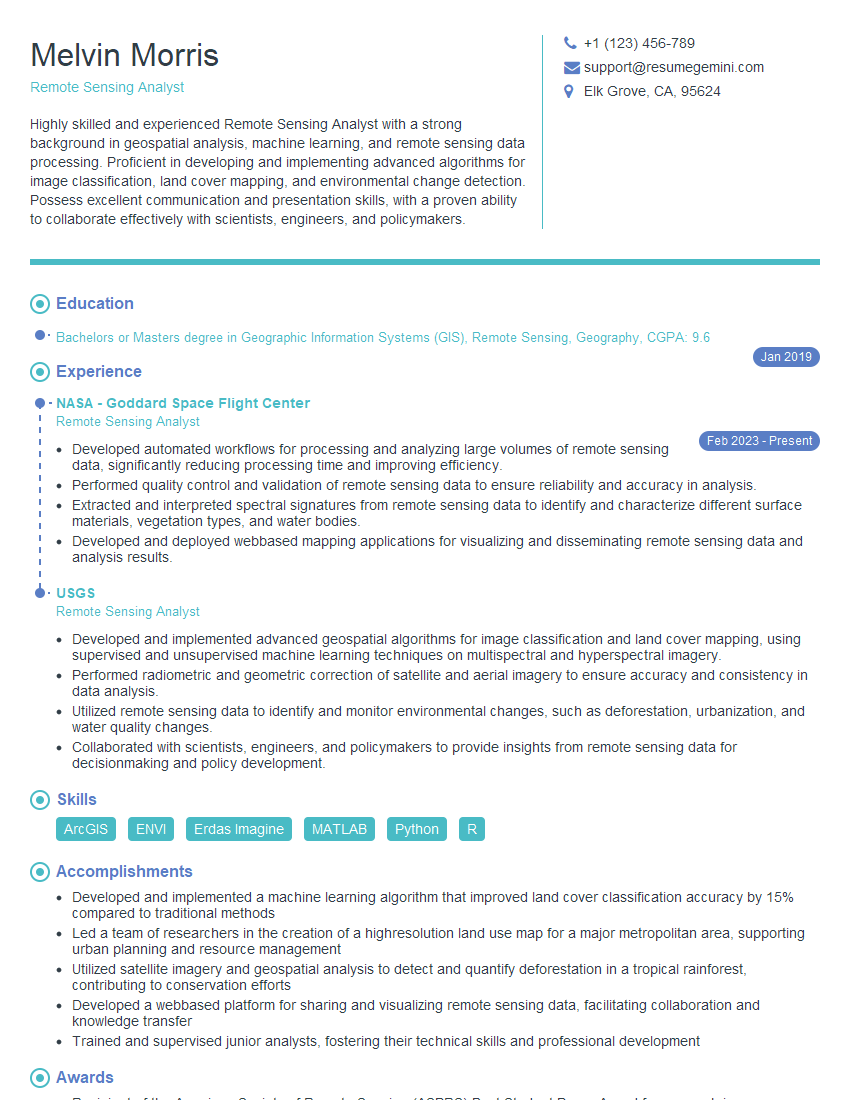
Mastering Imaging System Analysis opens doors to exciting careers in healthcare, research, and technology. A strong foundation in this field is highly sought after, leading to rewarding opportunities and career advancement. To maximize your job prospects, it’s crucial to present your skills effectively. Creating an ATS-friendly resume is essential for getting your application noticed by recruiters and hiring managers. ResumeGemini is a trusted resource that can help you build a professional, impactful resume tailored to the Imaging System Analysis field. Examples of resumes specifically designed for this area are available to guide you. Take the next step towards your dream career – build a winning resume with ResumeGemini!
Explore more articles
Users Rating of Our Blogs
Share Your Experience
We value your feedback! Please rate our content and share your thoughts (optional).
What Readers Say About Our Blog
Very informative content, great job.
good