Interviews are opportunities to demonstrate your expertise, and this guide is here to help you shine. Explore the essential Implementation of Training Programs interview questions that employers frequently ask, paired with strategies for crafting responses that set you apart from the competition.
Questions Asked in Implementation of Training Programs Interview
Q 1. Describe your experience in needs analysis for training programs.
Needs analysis is the cornerstone of any successful training program. It’s the process of identifying the gap between current performance and desired performance. This involves systematically investigating the organization’s training needs to determine what training is required, who needs it, and what the training should cover.
My approach involves a multi-faceted strategy. First, I conduct interviews with stakeholders at all levels – from managers to employees – to understand their perspectives on performance challenges and training opportunities. Second, I analyze performance data such as sales figures, customer feedback, and error rates to identify areas needing improvement. Third, I use observation techniques to directly witness workplace processes and identify areas for improvement. Finally, I review existing documentation like job descriptions, training records, and organizational charts to further inform my analysis.
For example, in a recent project with a customer service team, interviews revealed high call abandonment rates. Analyzing call recordings then showed that agents lacked the skills to effectively handle complex customer issues. This combination of qualitative and quantitative data pointed directly towards a training need focused on advanced problem-solving and de-escalation techniques.
Q 2. Explain your process for developing a training program budget.
Budgeting for a training program requires careful planning and consideration of various cost factors. I typically start by defining the scope of the training, including the number of participants, the duration of the program, and the training methods to be used.
- Instructor fees: This covers the cost of hiring trainers or subject matter experts.
- Materials and resources: This includes costs for training manuals, workbooks, software, and online learning platforms.
- Venue and logistics: This includes the cost of renting a training facility, catering, and travel expenses for participants and trainers (if applicable).
- Technology costs: This could involve the cost of online learning platforms, software licenses, or hardware upgrades.
- Evaluation and measurement: Setting aside budget for pre and post training assessments, surveys, and other evaluation methods is crucial.
- Administrative costs: These include the time spent on planning, coordination, and follow-up.
Once all costs are identified, I create a detailed budget spreadsheet, breaking down each cost element. This allows for easy tracking of expenses and potential cost-saving measures. I also build in a contingency buffer to account for unforeseen expenses. For instance, a 10-15% contingency can help cover unexpected costs or price increases.
Q 3. How do you measure the effectiveness of a training program?
Measuring the effectiveness of a training program is crucial to demonstrate its return on investment (ROI) and identify areas for improvement. My approach involves a multi-pronged strategy using Kirkpatrick’s four levels of evaluation as a framework.
- Level 1: Reaction: Measuring participant satisfaction and their perception of the training’s value through post-training surveys and feedback forms.
- Level 2: Learning: Assessing the knowledge and skills gained by participants through tests, quizzes, and practical exercises before and after training.
- Level 3: Behavior: Observing changes in on-the-job performance, such as improved efficiency, reduced errors, or increased productivity. This often involves supervisor feedback and performance reviews.
- Level 4: Results: Measuring the overall impact of the training on organizational outcomes, such as increased sales, improved customer satisfaction, or reduced costs. This often requires gathering data from various sources.
For example, in a sales training program, I would measure reaction through post-training surveys, learning through a knowledge test, behavior through sales performance data, and results through an increase in overall sales figures. This comprehensive approach provides a holistic view of the training’s effectiveness.
Q 4. What methods do you use to ensure training content is engaging and effective?
Engaging and effective training content is key to successful knowledge transfer. I use a variety of methods to achieve this:
- Storytelling: Real-world examples and case studies make the learning more relatable and memorable.
- Interactive activities: Incorporating group discussions, role-playing, simulations, and games actively involves participants and encourages knowledge application.
- Variety of learning modalities: Combining visual aids (videos, infographics), auditory elements (podcasts, discussions), and kinesthetic activities (hands-on exercises) caters to different learning styles.
- Gamification: Introducing elements of competition, rewards, and progress tracking can increase motivation and engagement.
- Technology integration: Using online platforms, interactive simulations, and mobile apps provides diverse and accessible learning opportunities.
For instance, in a technical training program, I might use a simulated environment for hands-on practice, followed by a group discussion of real-world case studies, then reinforce concepts with short videos.
Q 5. How do you handle resistance to training initiatives within an organization?
Resistance to training is common, often stemming from fear of change, lack of time, or perceived irrelevance. Addressing this requires a proactive and empathetic approach.
- Communication and education: Clearly communicating the purpose and benefits of the training, addressing concerns, and involving employees in the planning process.
- Addressing concerns: Actively listening to employees’ concerns and addressing them directly. Offering flexibility and adjustments where possible.
- Building buy-in: Demonstrating the value proposition and securing support from management and key stakeholders.
- Incentives and recognition: Providing incentives for participation and recognizing successful completion of the training.
- Pilot programs: Conducting pilot training programs with a smaller group to test the program’s effectiveness and address any issues before wider rollout.
For example, if employees are resistant due to time constraints, offering flexible training schedules or online modules can help overcome this barrier.
Q 6. Describe your experience with different training delivery methods (e.g., online, in-person, blended).
I have extensive experience in various training delivery methods, each with its strengths and weaknesses.
- In-person training: Provides opportunities for immediate feedback, interaction, and networking. Ideal for highly interactive or hands-on training.
- Online training: Offers flexibility, accessibility, and cost-effectiveness, especially for geographically dispersed participants. Ideal for self-paced learning and delivering large volumes of content.
- Blended learning: Combines in-person and online methods, leveraging the advantages of each. Ideal for balancing theoretical knowledge with practical application and catering to diverse learning styles.
For example, a leadership training program might include in-person workshops for interactive sessions, supplemented with online modules for theoretical concepts and self-paced learning.
Q 7. How do you adapt training materials for diverse learners?
Adapting training materials for diverse learners is crucial for inclusivity and effectiveness. This involves understanding and catering to different learning styles, cultural backgrounds, and abilities.
- Multilingual materials: Providing training materials in multiple languages to cater to the language preferences of participants.
- Accessible formats: Offering materials in accessible formats such as large print, audio, or screen reader-compatible versions for learners with disabilities.
- Diverse content: Using examples and scenarios that reflect the diverse backgrounds and experiences of participants to promote relevance and inclusivity.
- Differentiated instruction: Providing various learning activities to cater to different learning styles – visual, auditory, and kinesthetic learners.
- Universal design principles: Applying design principles to create inclusive and accessible learning environments.
For instance, when designing a training program for a global workforce, I would ensure the training materials are available in multiple languages, utilize various learning modalities, and include diverse case studies to ensure relevance across cultures.
Q 8. Explain your experience using learning management systems (LMS).
My experience with Learning Management Systems (LMS) spans several years and various platforms, including Moodle, Canvas, and TalentLMS. I’m proficient in all aspects of LMS administration, from user management and course creation to content uploading and performance tracking. I understand the importance of selecting the right LMS to meet specific training needs. For example, in my previous role, we transitioned from a basic LMS to a more sophisticated platform to accommodate a rapidly growing employee base and the need for more advanced reporting capabilities. This involved a meticulous migration of existing training content, user training on the new platform, and the development of new courses optimized for the new system’s features. I’m comfortable creating engaging online modules using various media, including videos, quizzes, and interactive exercises. Moreover, I leverage the LMS’s analytics to monitor learner progress, identify areas needing improvement in the training materials, and fine-tune the learning experience for greater effectiveness.
Q 9. How do you ensure training aligns with organizational goals?
Aligning training with organizational goals is paramount for maximizing ROI. My approach begins with a thorough understanding of the organization’s strategic objectives and key performance indicators (KPIs). I then work closely with stakeholders from various departments to identify the skills gaps that are hindering progress toward those goals. For instance, if the organization aims to improve customer satisfaction, I would identify training needs related to customer service skills, conflict resolution, and product knowledge. Once the training needs are identified, I design a curriculum that directly addresses these gaps, using a blend of learning methods – online modules, instructor-led training, workshops, mentoring – to cater to diverse learning styles. The training objectives are always explicitly linked to the overall organizational goals, and post-training evaluations measure the impact on the relevant KPIs. This ensures that the training program is not just a stand-alone activity but a strategic lever for achieving business objectives.
Q 10. What is your approach to evaluating the ROI of a training program?
Evaluating the Return on Investment (ROI) of a training program isn’t just about measuring completion rates; it’s about demonstrating the tangible benefits. My approach involves a multi-faceted evaluation strategy. First, I establish clear, measurable objectives before the training commences. These objectives should be directly tied to business outcomes, such as improved efficiency, reduced errors, or increased sales. Next, I gather baseline data on the relevant KPIs before the training. After the training, I collect data on the same KPIs to measure the improvement. This data can be quantitative (e.g., sales figures, error rates) or qualitative (e.g., employee surveys, manager feedback). I also utilize cost-benefit analysis, considering the cost of development, delivery, and administration against the financial gains resulting from the improved performance. Finally, I present the ROI findings in a clear, concise report to stakeholders, highlighting the impact of the training on the organization’s bottom line. For example, I once demonstrated an ROI of 300% on a sales training program by showing that the increased sales generated by the trained employees significantly outweighed the cost of the program.
Q 11. Describe a time you had to troubleshoot a technical issue during a training session.
During a large-scale online training session on a new software platform, we encountered an unexpected technical glitch. The LMS experienced intermittent connectivity issues, preventing some participants from accessing the training materials. My immediate response was to switch to a backup plan – we moved the session to a video conferencing platform (Zoom) and shared the training materials via a cloud storage service. Simultaneously, I contacted the LMS support team to identify and resolve the root cause of the problem. While the support team worked on fixing the LMS, I ensured participant engagement by facilitating interactive discussions and Q&A sessions using the video conferencing tool. This quick thinking and proactive problem-solving minimized disruption and ensured the training remained effective, despite the unforeseen technical challenges. Following the incident, we implemented redundancy measures to prevent similar issues in the future, including testing our backup systems and having alternative delivery methods readily available.
Q 12. How do you handle unexpected challenges during training delivery?
Unexpected challenges are inevitable in training delivery. My approach involves preparedness, adaptability, and effective communication. For example, if a key speaker cancels, I have backup speakers or alternative learning activities prepared. If participants struggle with a specific concept, I adjust the pacing and provide additional examples or clarification. If the technology fails, I have backup plans and resources, as mentioned earlier. Throughout the process, open and transparent communication with participants is crucial. Keeping them informed about any changes or delays prevents confusion and maintains their engagement. I also actively solicit feedback to address unexpected issues proactively. Ultimately, successful handling of unexpected challenges requires a blend of planning, resourcefulness, and the ability to think on one’s feet.
Q 13. How do you maintain and update training materials over time?
Maintaining and updating training materials is an ongoing process to ensure they remain relevant, accurate, and engaging. My strategy involves establishing a clear content update schedule, incorporating feedback from participants, and leveraging technology to streamline the process. For example, I use version control systems to track changes and maintain historical records. I also create a feedback mechanism through surveys and informal communication to gather input on what’s working and what needs improvement. Regularly reviewing and updating content based on this feedback ensures that the training remains aligned with best practices, industry standards, and technological advancements. Furthermore, I use a learning content management system (LCMS) to organize and manage training materials, simplifying the update process and ensuring consistency across all versions.
Q 14. What are some common challenges in implementing training programs, and how have you overcome them?
Common challenges in implementing training programs often include securing buy-in from stakeholders, allocating sufficient resources (budget, time, personnel), and ensuring learner engagement. To overcome these, I employ a multi-pronged approach. I start by building a strong case for the training, demonstrating its alignment with business goals and potential ROI. I then collaborate closely with stakeholders to secure their buy-in and support. For resource allocation, I prioritize essential elements and seek creative solutions such as leveraging existing resources, using cost-effective training methods, and demonstrating the potential for long-term cost savings through improved performance. To boost learner engagement, I use a variety of interactive methods, gamification, personalized learning paths, and regular feedback mechanisms. By proactively addressing these challenges, I ensure successful training program implementation and maximize the chances of achieving desired outcomes.
Q 15. Describe your experience with different training assessment methods.
Assessing training effectiveness is crucial. I’ve employed a variety of methods, tailoring my approach to the specific training program and learning objectives. These include:
- Kirkpatrick’s Four Levels of Evaluation: This framework provides a comprehensive approach, starting with Reaction (trainee satisfaction), progressing to Learning (knowledge gained), Behavior (application on the job), and finally Results (impact on organizational goals). For example, in a sales training program, we’d measure reaction through post-training surveys, learning through knowledge tests, behavior through sales performance data, and results through overall sales revenue increase.
- Pre- and Post-Tests: These are straightforward methods to assess knowledge gain. A pre-test identifies baseline knowledge, while a post-test measures the improvement after the training. I often use a combination of multiple-choice, true/false, and short-answer questions to provide a holistic assessment.
- Observations and Simulations: For skill-based training, observing trainees in simulated work environments provides valuable insights into their application of learned skills. This might involve role-playing scenarios or using a realistic simulation software.
- 360-Degree Feedback: This gathers input from various stakeholders – supervisors, peers, and even subordinates – to provide a more comprehensive view of the impact of the training on the employee’s performance.
- Return on Investment (ROI) Analysis: This crucial metric helps quantify the financial benefits of the training program. For instance, calculating the cost savings from reduced errors or improved productivity resulting from the training helps demonstrate its value.
Choosing the right assessment method requires careful consideration of the training goals and resources available. A blended approach, combining several methods, often yields the most comprehensive and reliable results.
Career Expert Tips:
- Ace those interviews! Prepare effectively by reviewing the Top 50 Most Common Interview Questions on ResumeGemini.
- Navigate your job search with confidence! Explore a wide range of Career Tips on ResumeGemini. Learn about common challenges and recommendations to overcome them.
- Craft the perfect resume! Master the Art of Resume Writing with ResumeGemini’s guide. Showcase your unique qualifications and achievements effectively.
- Don’t miss out on holiday savings! Build your dream resume with ResumeGemini’s ATS optimized templates.
Q 16. How do you manage stakeholder expectations throughout the training implementation process?
Managing stakeholder expectations is paramount. I proactively engage stakeholders early in the process and maintain open communication throughout. This involves:
- Clearly Defined Objectives and Scope: Working collaboratively with stakeholders to define specific, measurable, achievable, relevant, and time-bound (SMART) objectives ensures everyone is on the same page from the start. This includes documenting expectations regarding content, delivery method, and timelines.
- Regular Progress Updates: I provide consistent updates through regular meetings and reports, highlighting progress, challenges, and any necessary adjustments to the plan. This transparency fosters trust and prevents surprises.
- Proactive Communication: I am quick to address concerns and proactively communicate any potential delays or changes. This includes both written communication (e.g., email updates) and face-to-face discussions.
- Feedback Mechanisms: Establishing feedback loops allows stakeholders to provide input throughout the process. This could be through surveys, focus groups, or individual meetings. This demonstrates a commitment to their input and ensures that the final product meets their needs.
- Realistic Expectations: I ensure realistic expectations are set regarding timelines, resources, and the potential impact of the training. Over-promising can lead to disappointment and damage trust.
For example, during a recent leadership development program, I held regular check-in meetings with senior management, updating them on participant progress, addressing any concerns, and gathering feedback on the curriculum. This led to a highly successful and well-received program.
Q 17. How do you ensure compliance with relevant regulations and policies in training development and delivery?
Compliance is non-negotiable. I ensure adherence to all relevant regulations and policies through a multi-faceted approach:
- Thorough Needs Analysis: This initial phase identifies the legal and regulatory requirements relevant to the training content and delivery. This includes reviewing relevant laws, industry standards, and internal company policies.
- Content Development: Ensuring the training materials accurately reflect the required regulations and policies. This might involve legal review of materials before deployment.
- Documentation and Record-Keeping: Maintaining comprehensive records of all training activities, including participant attendance, assessment results, and any necessary certifications. This is crucial for audits and demonstrating compliance.
- Regular Updates: Staying abreast of changes in regulations and policies and incorporating necessary updates into training programs. This includes subscribing to relevant newsletters and attending industry conferences.
- Risk Assessment: Identifying and mitigating potential compliance risks. This might involve developing contingency plans to address potential non-compliance issues.
For instance, in a healthcare training program, ensuring compliance with HIPAA regulations regarding patient data privacy is critical. This necessitates carefully reviewing all materials to ensure no sensitive information is disclosed and implementing security measures to protect data privacy.
Q 18. Explain your experience with creating training materials for different audiences (e.g., executives, frontline employees).
Adapting training materials to different audiences is key. My approach involves:
- Audience Analysis: Understanding the specific needs, learning styles, and prior knowledge of each audience is crucial. For example, executives need concise, strategic information, while frontline employees may need more detailed, practical instructions.
- Content Tailoring: Adjusting the content, delivery method, and language to suit each audience. This might involve using different visuals, examples, and levels of detail.
- Format Variation: Employing various formats such as presentations, interactive exercises, case studies, videos, and job aids to cater to diverse learning preferences.
- Learning Objectives Alignment: Ensuring that the learning objectives are appropriate and relevant for each target audience.
- Feedback Incorporation: Gathering feedback from each audience group to make improvements and ensure the materials are effective and engaging.
For instance, when developing a software training program, I would create a high-level overview for executives focusing on strategic implications, while providing hands-on tutorials and detailed troubleshooting guides for frontline employees.
Q 19. Describe your experience with designing training for specific software or technologies.
Designing software and technology training requires a structured approach:
- Software Proficiency: A strong understanding of the software or technology is essential. This involves hands-on experience and a deep knowledge of its functionalities.
- Needs Analysis: Identifying the specific skills and knowledge required by users. This might involve surveys, interviews, or observation of current workflows.
- Curriculum Design: Creating a structured curriculum that progresses logically from basic concepts to advanced features. This includes defining learning objectives, sequencing modules, and choosing appropriate training methods.
- Hands-on Activities: Incorporating ample opportunities for hands-on practice, simulations, and real-world applications. This is crucial for skill development and retention.
- Testing and Feedback: Thoroughly testing the training materials and gathering feedback from users to ensure effectiveness and identify areas for improvement.
For example, when developing training for a new Customer Relationship Management (CRM) system, I’d create modules covering data entry, report generation, and customer interaction, with hands-on exercises and simulated scenarios to reinforce learning. I would also incorporate opportunities for participants to customize their user profiles and dashboards to facilitate more engaged learning and retention.
Q 20. How do you track learner progress and provide feedback?
Tracking learner progress and providing feedback is crucial for ensuring training effectiveness. My approach involves:
- Learning Management System (LMS): Utilizing an LMS to track learner progress, including completion rates, scores on assessments, and time spent on modules. Many LMS platforms offer robust reporting features to provide insights into individual and group performance.
- Automated Feedback Mechanisms: Incorporating automated feedback mechanisms, such as quizzes with immediate results, to provide learners with instant reinforcement. This helps to identify knowledge gaps early on and promotes self-directed learning.
- Personalized Feedback: Providing personalized feedback based on individual learner performance, identifying areas of strength and weakness. This feedback can be delivered through written comments, one-on-one meetings, or targeted coaching.
- Progress Reports: Generating regular progress reports for learners and managers, highlighting achievements, areas for improvement, and next steps. These reports provide transparency and accountability.
- Continuous Improvement: Using data from learner progress and feedback to continuously improve the training program and address any knowledge gaps or areas of confusion.
For instance, in an online training program, the LMS would automatically track completion rates and scores on quizzes, providing immediate feedback to learners and generating reports for managers to monitor progress.
Q 21. What is your approach to selecting appropriate training technologies and tools?
Selecting appropriate training technologies and tools requires a strategic approach:
- Needs Assessment: Clearly defining the training objectives, target audience, and budget constraints. This will inform the choice of technology.
- Technology Evaluation: Evaluating the available technologies based on factors such as functionality, cost, ease of use, scalability, and integration with existing systems. This often involves comparing different LMS platforms, authoring tools, and video conferencing software.
- User Experience (UX): Prioritizing user experience to ensure the chosen technologies are intuitive and engaging for learners. This may include considering accessibility features for users with disabilities.
- Technical Support: Assessing the availability of technical support to address any issues that may arise during implementation or use. This may involve reviewing vendor support policies and reviewing online community forums for users.
- Scalability and Maintainability: Choosing technologies that can easily scale to accommodate increasing numbers of learners and that are easy to maintain and update over time.
For example, for a large-scale training program, a robust LMS with advanced reporting capabilities might be chosen, while for a smaller, more focused program, a simpler platform or even a combination of tools might suffice. The decision is guided by the specific needs of the training program and the organization.
Q 22. How do you ensure the accessibility of your training materials?
Ensuring accessibility in training materials is crucial for inclusivity and maximizing impact. My approach involves a multi-faceted strategy focusing on diverse learning styles and abilities. This starts with using clear and concise language, avoiding jargon, and structuring content logically. I incorporate various media formats – videos with captions, audio descriptions for visuals, and transcripts for all audio content – to cater to different preferences. For individuals with visual impairments, I ensure sufficient color contrast, alternative text for images, and compatibility with screen readers. For those with auditory impairments, I provide detailed written instructions and visual aids. Furthermore, I utilize accessible document formats like PDFs tagged for accessibility and ensure compatibility with assistive technologies. For example, in a recent training program on data analysis, we provided the same content in video format with captions, audio-only versions, and a detailed text-based manual with images described in the alternative text. This allowed participation from individuals with a wide range of abilities.
Q 23. How familiar are you with adult learning principles?
I’m very familiar with adult learning principles, particularly Knowles’ Andragogy. Understanding that adults are self-directed, experienced learners is paramount. My training programs are designed to tap into their existing knowledge and experiences. I focus on relevance – showing learners how the training directly applies to their jobs and daily challenges. I incorporate active learning methods like group discussions, problem-solving activities, and simulations, rather than passive lectures. For instance, instead of simply lecturing on a new software, I’d design a hands-on workshop where participants use the software to complete realistic tasks. I also encourage learner autonomy by providing choices and opportunities for self-paced learning. Regular feedback and opportunities for reflection are built-in to enhance the learning process and ensure continuous improvement.
Q 24. Describe your experience with project management methodologies in the context of training implementation.
I’ve extensively used Agile and Waterfall methodologies in training implementation, adapting my approach based on project scope and complexity. For smaller, time-sensitive projects, Agile’s iterative nature allows for flexibility and rapid adjustments. This involves breaking down the project into smaller sprints, with frequent feedback loops to ensure the training remains aligned with stakeholder needs. Larger, more complex projects often benefit from the structured approach of Waterfall, with clearly defined phases for analysis, design, development, implementation, and evaluation. For example, while designing a large-scale leadership training program, we used Waterfall to ensure systematic progress. We started with needs analysis, followed by curriculum design, development of training materials, pilot testing, and then full-scale deployment with post-training evaluation. Regardless of the methodology, I always emphasize robust project planning, risk management, and effective communication throughout the process.
Q 25. How do you communicate the value of training programs to stakeholders?
Communicating the value of training is critical. I use a data-driven approach, demonstrating the return on investment (ROI) through metrics like improved employee performance, increased productivity, reduced errors, and enhanced employee satisfaction. I present this information clearly and concisely to stakeholders, using visuals like charts and graphs to highlight key achievements. I also focus on aligning training objectives with organizational goals, illustrating how the training contributes to the overall strategic direction. For example, when presenting a proposal for customer service training, I demonstrated how improved customer satisfaction scores directly translate to increased sales and customer retention, quantifying the predicted return on investment.
Q 26. Describe your experience with using data to inform training program design and improvement.
Data plays a vital role in shaping and refining training programs. I leverage various data sources, including pre- and post-training assessments, learner feedback surveys, performance data, and learning analytics from our Learning Management System (LMS). This data helps me assess the effectiveness of training modules, identify areas for improvement, and tailor future training programs to better meet learners’ needs. For instance, if post-training assessments reveal that learners are struggling with a particular concept, I would revise that module, incorporating additional examples, interactive exercises, or alternative explanations. Regularly analyzing learner engagement metrics from the LMS helps optimize the online learning experience and enhance course design.
Q 27. What are your preferred methods for gathering feedback on training programs?
I employ a mixed-methods approach to gather feedback, combining quantitative and qualitative data. Quantitative data comes from surveys with rating scales and multiple-choice questions to measure learner satisfaction and knowledge gain. Qualitative data is collected through focus groups, individual interviews, and open-ended questions in surveys to gain deeper insights into learner experiences and perceptions. For example, after a training program, I might conduct a short survey measuring satisfaction using a Likert scale, alongside open-ended questions allowing learners to describe their experiences and offer suggestions for improvement. Analyzing both quantitative and qualitative data provides a comprehensive understanding of the training’s effectiveness and areas for enhancement.
Q 28. How do you prioritize different training initiatives based on organizational needs?
Prioritizing training initiatives involves a strategic approach that aligns training needs with business objectives. I use a needs analysis process to identify skills gaps and performance issues, weighing the impact of each training need against the organization’s strategic goals and available resources. I often employ a prioritization matrix, considering factors such as the impact of the training on business outcomes, the urgency of the need, the feasibility of implementation, and the cost-benefit ratio. High-impact, urgent training needs with feasible implementation and a strong ROI are given top priority. For instance, if the organization is facing a significant increase in customer complaints, customer service training would likely be prioritized over a less urgent training initiative, even if both are valuable.
Key Topics to Learn for Implementation of Training Programs Interview
- Needs Analysis & Design: Understanding how to identify training needs through surveys, interviews, and performance data. Designing training programs that effectively address these needs, considering learning styles and objectives.
- Curriculum Development: Creating engaging and effective training materials, including presentations, workshops, online modules, and hands-on activities. Applying instructional design principles (ADDIE, etc.) to ensure learning transfer.
- Logistics & Delivery: Planning and managing all aspects of training delivery, including scheduling, venue selection, resource allocation, and technology integration. Handling participant registration and communication.
- Training Evaluation & Measurement: Developing methods for evaluating the effectiveness of training programs, using metrics such as participant satisfaction, knowledge gain, skill improvement, and return on investment (ROI). Analyzing data to make improvements.
- Technology Integration in Training: Utilizing learning management systems (LMS), e-learning platforms, and other technologies to enhance training effectiveness and accessibility. Understanding various online learning methodologies.
- Budget Management & Resource Allocation: Creating and managing training budgets, securing necessary resources, and tracking expenses. Justifying training investments to stakeholders.
- Stakeholder Management: Effectively communicating with and managing expectations of various stakeholders, including trainees, managers, and senior leadership. Addressing concerns and resolving conflicts.
- Change Management & Implementation: Understanding the principles of change management and how to integrate training initiatives effectively into the overall organizational strategy. Addressing resistance to change.
Next Steps
Mastering the implementation of training programs is crucial for career advancement in human resources, learning and development, and related fields. It demonstrates valuable skills in project management, communication, and strategic planning. To significantly boost your job prospects, create a compelling and ATS-friendly resume that highlights your relevant experience and skills. ResumeGemini is a trusted resource that can help you build a professional and effective resume tailored to your specific career goals. Examples of resumes tailored to Implementation of Training Programs are available to guide you in creating your own.
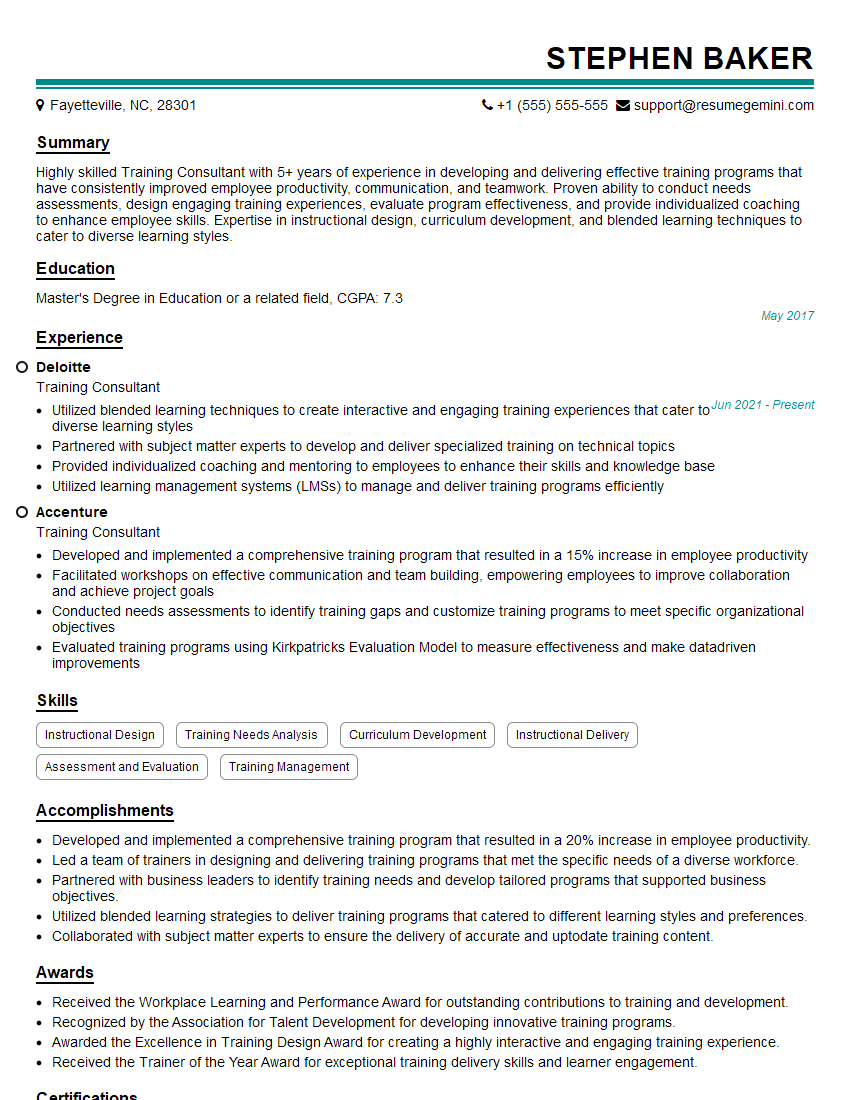
Training Consultant Resume Sample
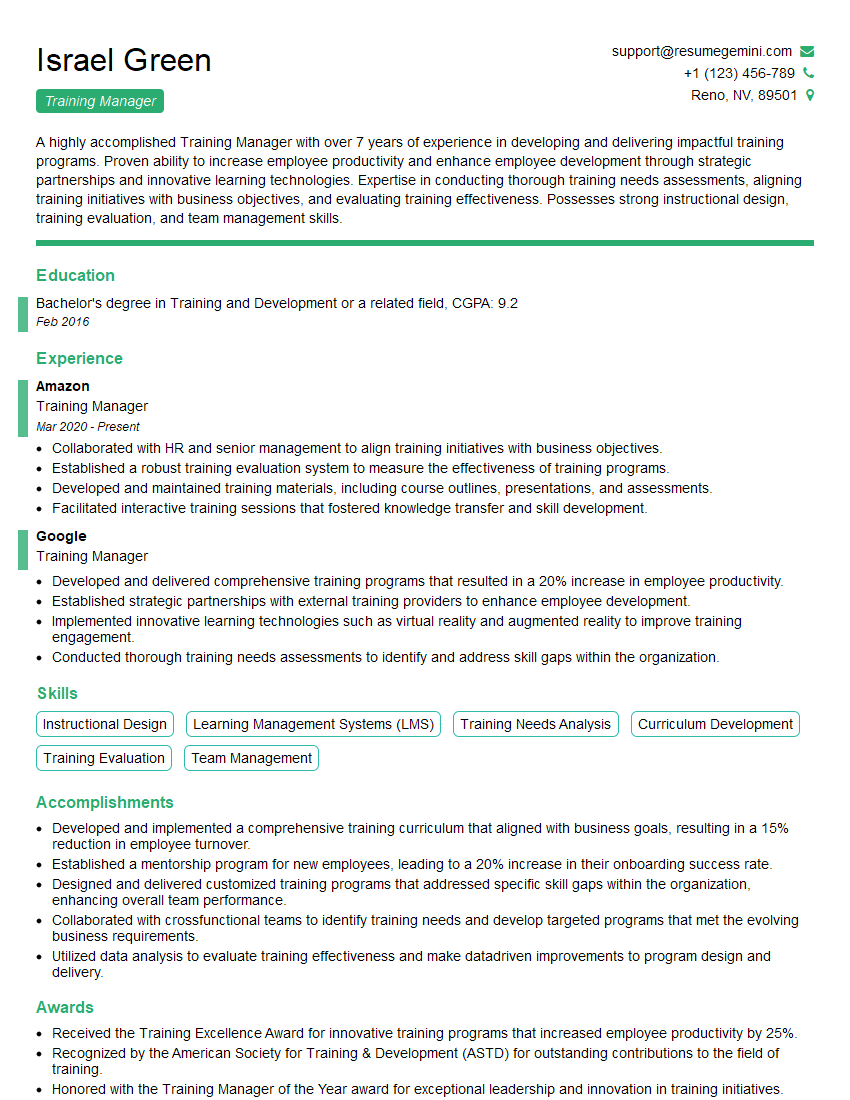
Training Manager Resume Sample
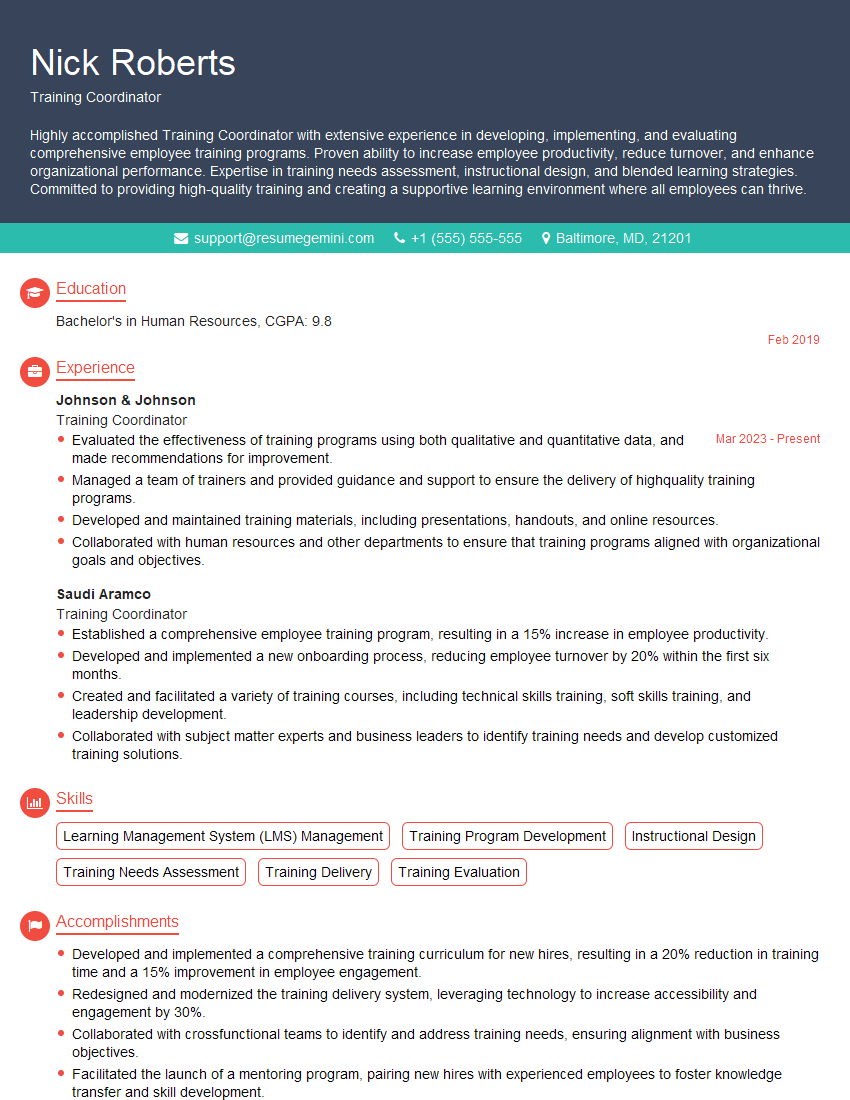
Training Coordinator Resume Sample
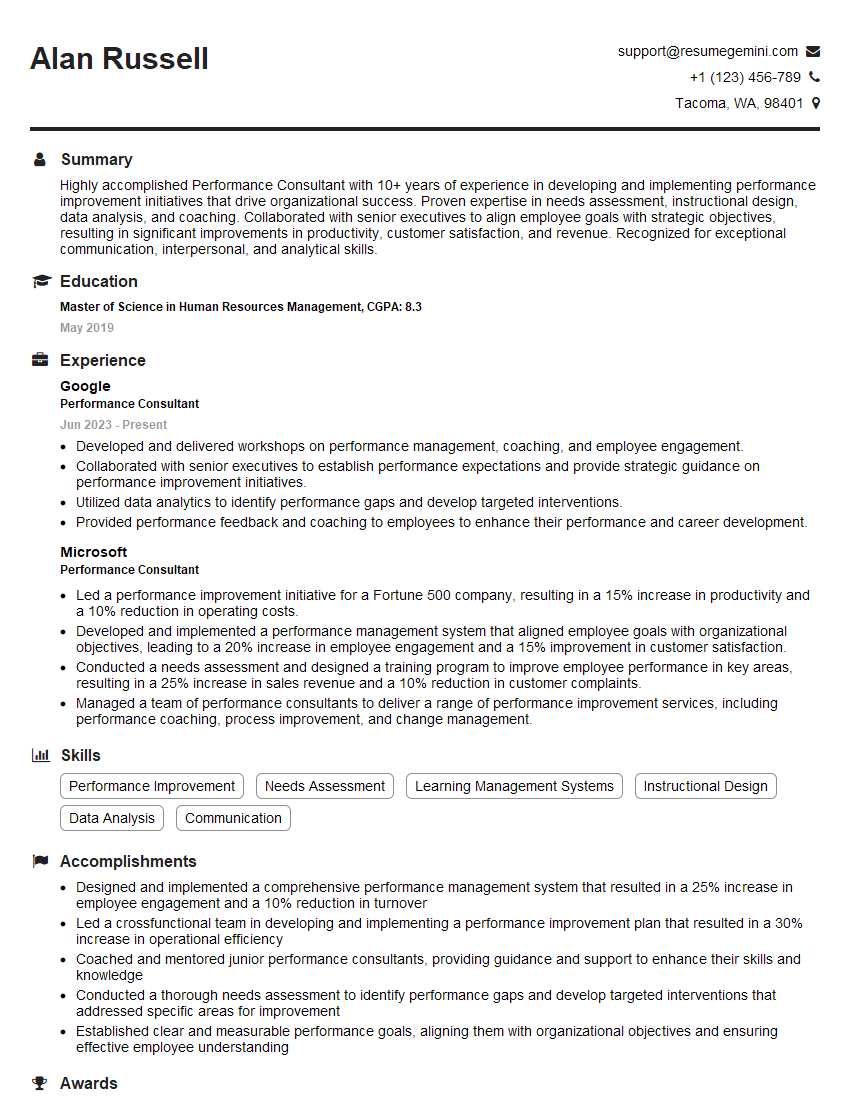
Performance Consultant Resume Sample
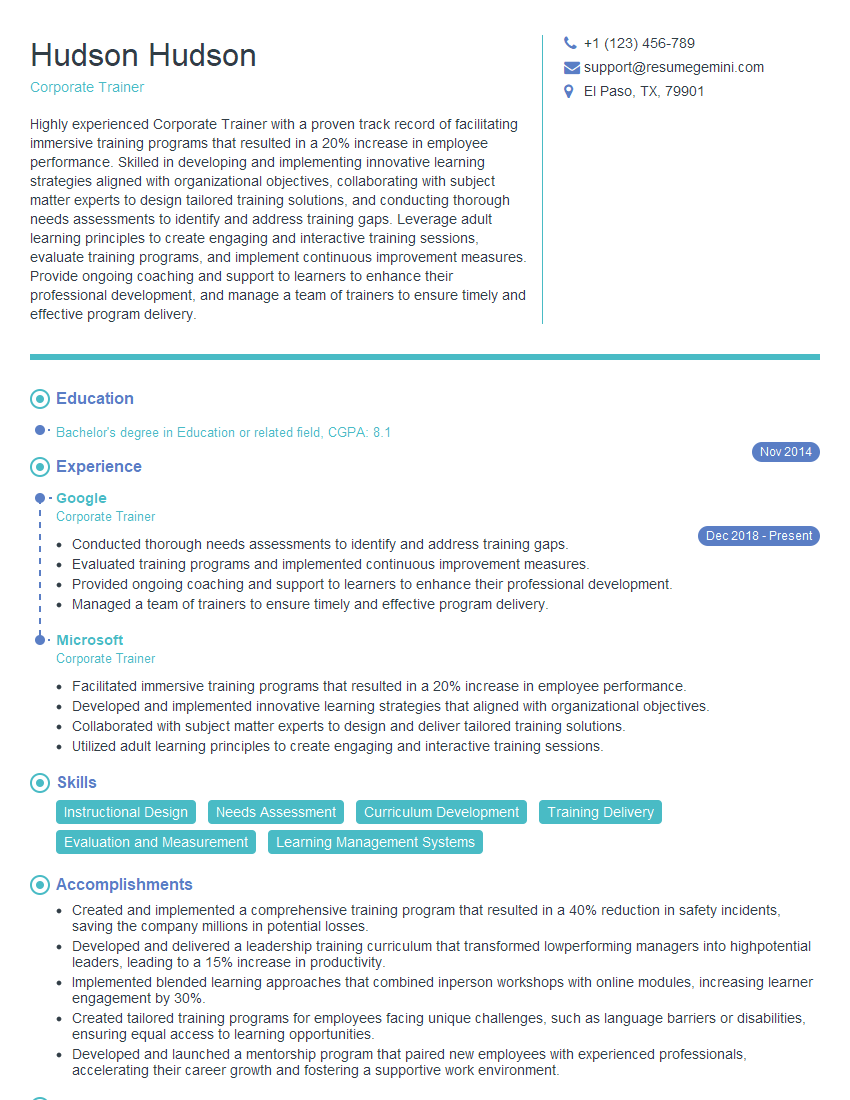
Corporate Trainer Resume Sample

Curriculum Developer Resume Sample

Training Specialist Resume Sample
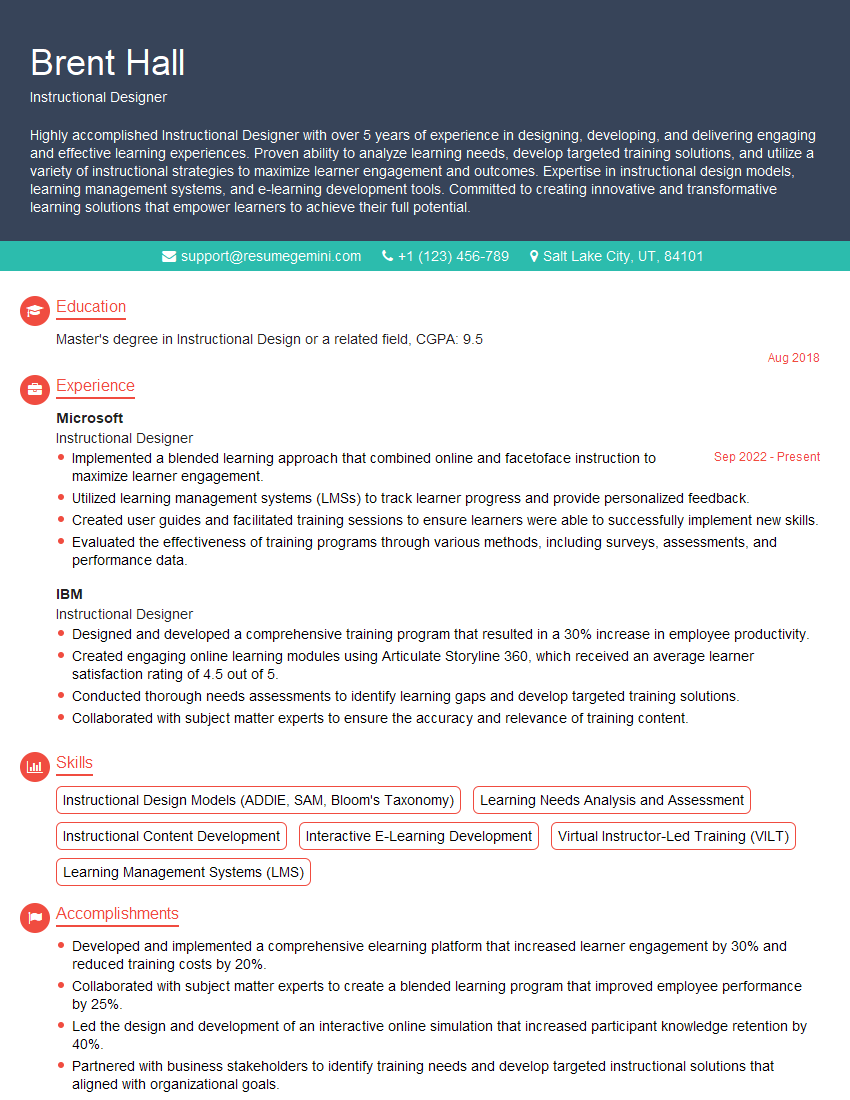
Instructional Designer Resume Sample
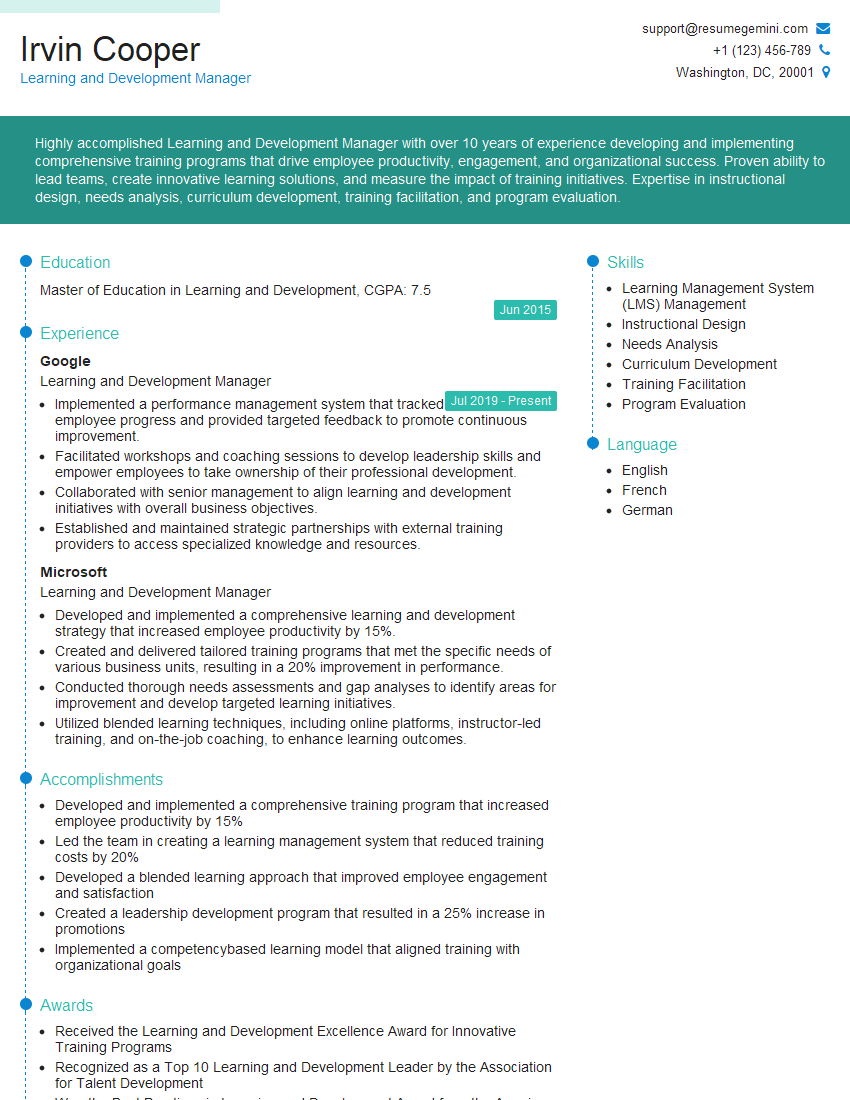
Learning and Development Manager Resume Sample
Explore more articles
Users Rating of Our Blogs
Share Your Experience
We value your feedback! Please rate our content and share your thoughts (optional).
What Readers Say About Our Blog
Very informative content, great job.
good